Affordable Romantic Bedroom Styling That Feels Way Above Your Budget
02 november 2026Luxury romantic bedroom ideas can stay within a $200-$800 budget when you spend on texture, scale, and light first. I learned that after buying pretty accents that made my room feel busier, not richer. Your bedroom doesn't need more stuff. It needs softer layers and one confident focal point.
Start with the layered bed, then improve the light stack. Those two changes usually do more than a cart full of decorative accessories.
- Layer the Bed With the Three-Texture Rule
- Could a Soft Plaster Tone Change the Whole Room?
- Float a Slim Upholstered Headboard
- Build the Three-Height Light Stack
- Why Let the Rug Extend Past the Bed?
- Hang Linen Drapes Higher Than the Window
- The Two-Wood Rule Keeps the Room Collected
- Style Nightstands With the Rule of Three
- How Can a Symmetrical Pair Frame the Bed?
- Why Swap Bright Metal for Patinated Details?
- Should You Paint the Ceiling for a Cocoon Effect?
- Hang One Oversized Artwork Moment
- Add a Soft Bench With Real Function
1Layer the Bed With the Three-Texture Rule
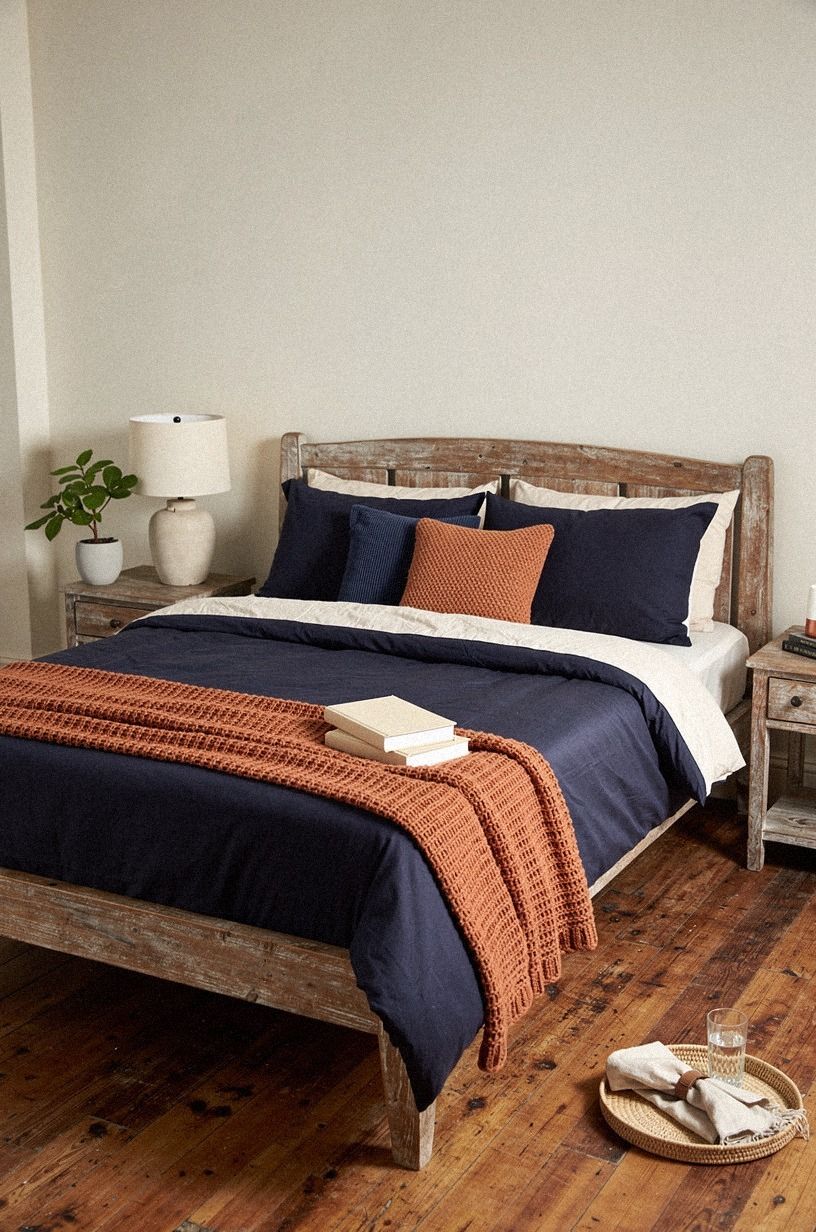
Your bed will look more luxurious when you combine three different surfaces instead of buying a matching bedding set. Start with midnight-blue cotton sheets, add an ivory Belgian flax linen duvet, then fold a copper-toned 600gsm Turkish cotton coverlet across the bottom third. The contrast feels warm, organic, and inviting against a reclaimed weathered teak frame.
You don't need a mountain of pillows. Two sleeping pillows, two 22-inch euro inserts, and one narrow lumbar pillow are enough for a queen bed, which measures 60x80 inches.
I tried six decorative pillows once, and making the bed became a nightly chore. You’ll want the room to feel serene, not staged.
Choose ivory, midnight blue, or muted copper rather than bright white if your room gets cool morning light. IKEA has affordable cotton basics, while West Elm linen can be an investment piece. And if your current duvet is in good shape, keep it and replace only the cover.
The bed should feel inviting before it feels styled. If you need to save money, keep the insert and upgrade only the cover, sheets, or throw. That small change can also make a simple upholstered headboard look more considered.
2Could a Soft Plaster Tone Change the Whole Room?
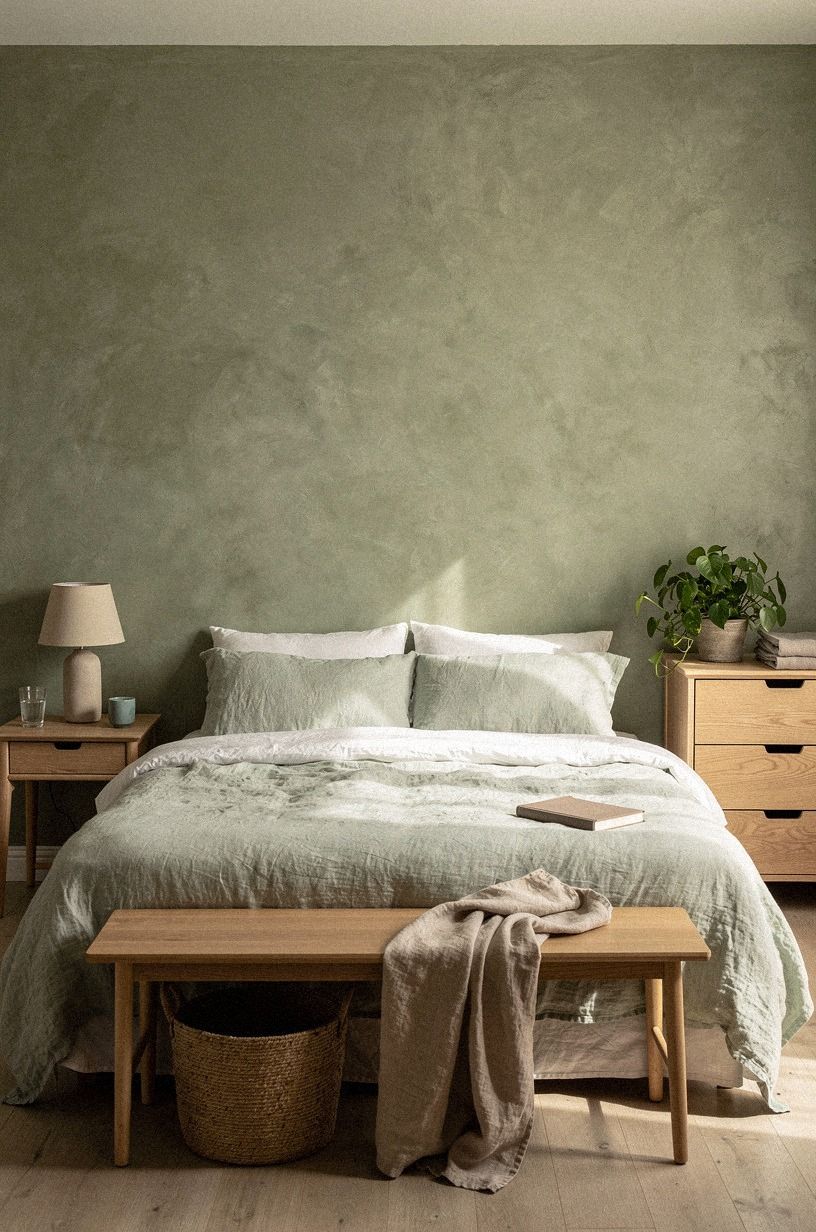
Paint gives you the biggest visual shift for the least money, especially if your walls are builder beige or stark white.
3Float a Slim Upholstered Headboard
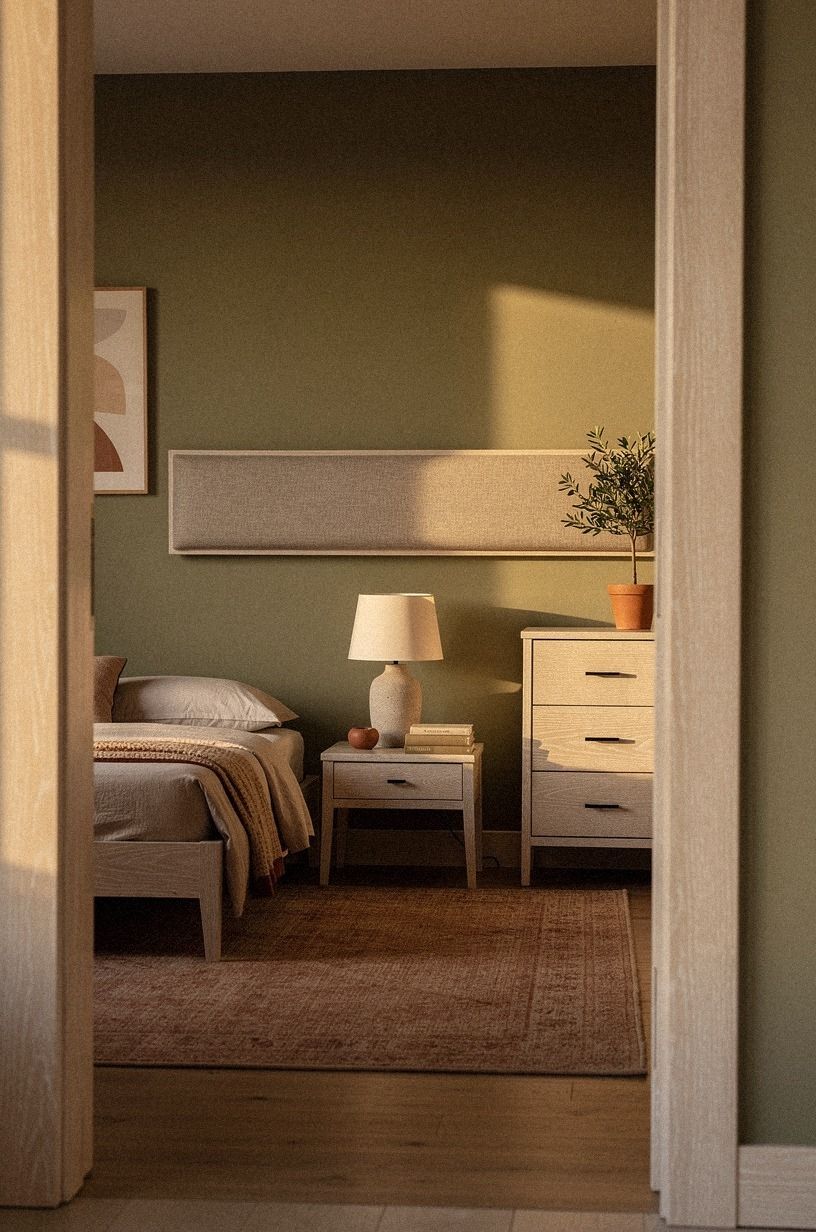
A tall upholstered headboard makes your bed feel custom, even when the frame underneath is inexpensive. Look for a headboard with a clean rectangular profile, rounded corners, and dense foam rather than deep button tufting. Performance linen in warm stone, terracotta, or muted olive gives you a soft, refined backdrop that won’t overwhelm a small bedroom.
For a queen bed, keep the headboard close to the 60-inch mattress width unless you want a dramatic hotel effect. You’ll want at least a little breathing room beside it for nightstands. I prefer a cerused white oak or wall-mounted version because it keeps the floor visible and makes your room feel more airy.
A full upholstered headboard typically costs about $250-$900, but you can spend less with an IKEA bed frame and a removable slipcover. Don’t choose shiny faux leather if you’re chasing a quiet, romantic mood. It reflects every lamp and usually looks cheaper than a textured textile.
If a headboard is outside your budget, mount a wide curtain rod behind the bed and hang a length of washed linen. It creates the same sense of height while leaving money for soft drapes.
4Build the Three-Height Light Stack
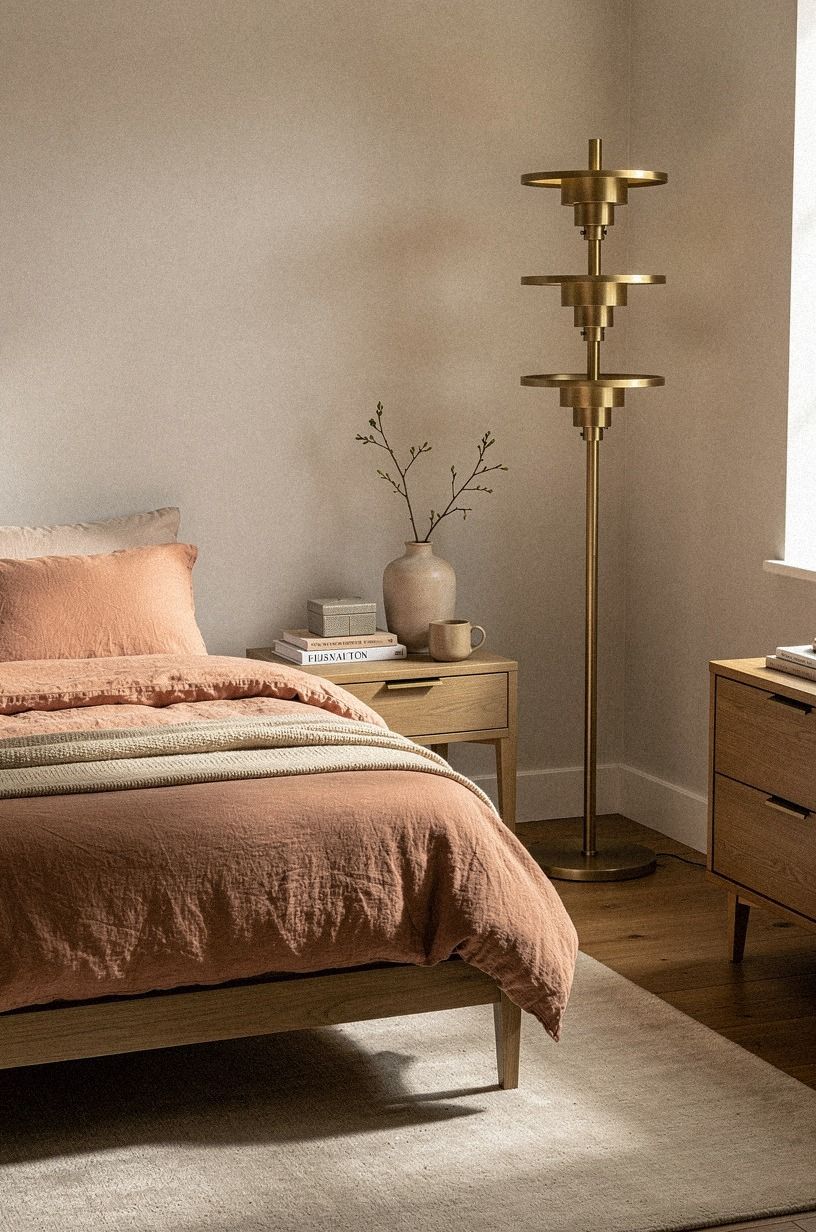
Your bedroom needs light at three levels: ceiling, bedside, and low ambient glow. Start with a dimmable overhead fixture, add matching bedside lamps, then place one small lamp or candle-height light on a dresser.
This stack makes your room feel warm and sophisticated because your eye moves gently around the space. Good light does more than decorate!
Aged brass works beautifully with clay-toned walls and linen shades. Add a small shagreen tray or box for texture, and use opaque shades so the light doesn’t hit your eyes. You’re creating pools of light, not illuminating every corner.
I once used only a ceiling fixture in a bedroom with pale walls. It looked clean at noon and vaguely clinical at night. And honestly, that single overhead bulb was doing too much work.
If you’re renting, choose plug-in sconces with cord covers and place them high enough to free your nightstand.
Use one finish on the lamps and repeat it somewhere else, perhaps in the patinated hardware. You’ll get continuity without buying a coordinated set.
5Why Let the Rug Extend Past the Bed?
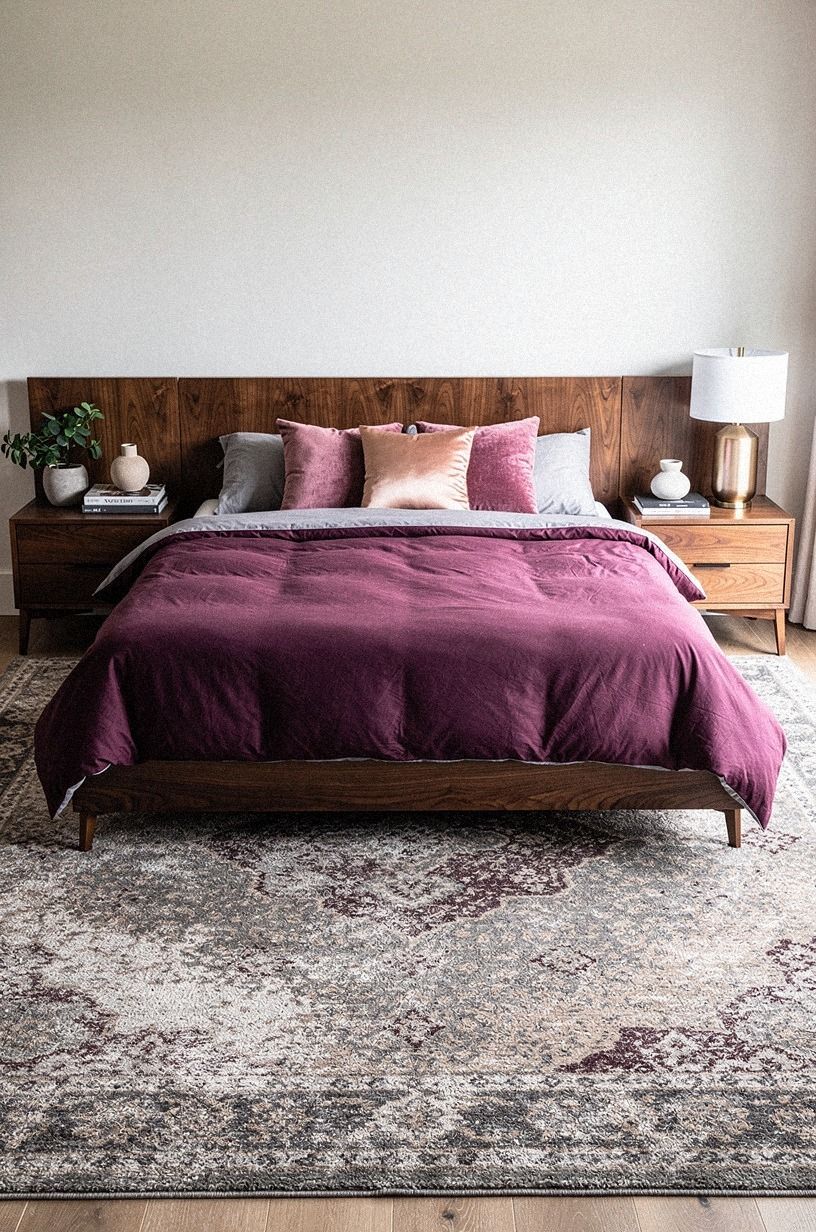
A rug makes the first step out of bed feel intentional, but the size matters more than the pattern. Let your rug extend 18-24 inches past the sides and foot of the mattress. For a queen bed, an 8x10 rug usually gives you the generous border that makes the whole room feel settled.
Hand-knotted wool has a soft, slightly irregular surface that looks expensive under low light. Choose a restrained plum-and-grey pattern with a little rose-gold warmth if you want the palette to feel richer. A wool rug often costs $400-$1,500, so you can place a smaller runner along each side if a full rug isn’t possible.
You’ll want the rug to relate to your bedding without matching it exactly. A muted plum pattern can warm grey linens, while a soft rose-gold detail keeps a colorful room peaceful.
Skip a tiny rug floating under the center of the bed. It makes your furniture look stranded.
A book-matched walnut bench or dresser can reinforce the rug’s warmth without making the room too dark. Keep the pattern restrained if your three-texture bedding already provides plenty of movement.

6Hang Linen Drapes Higher Than the Window
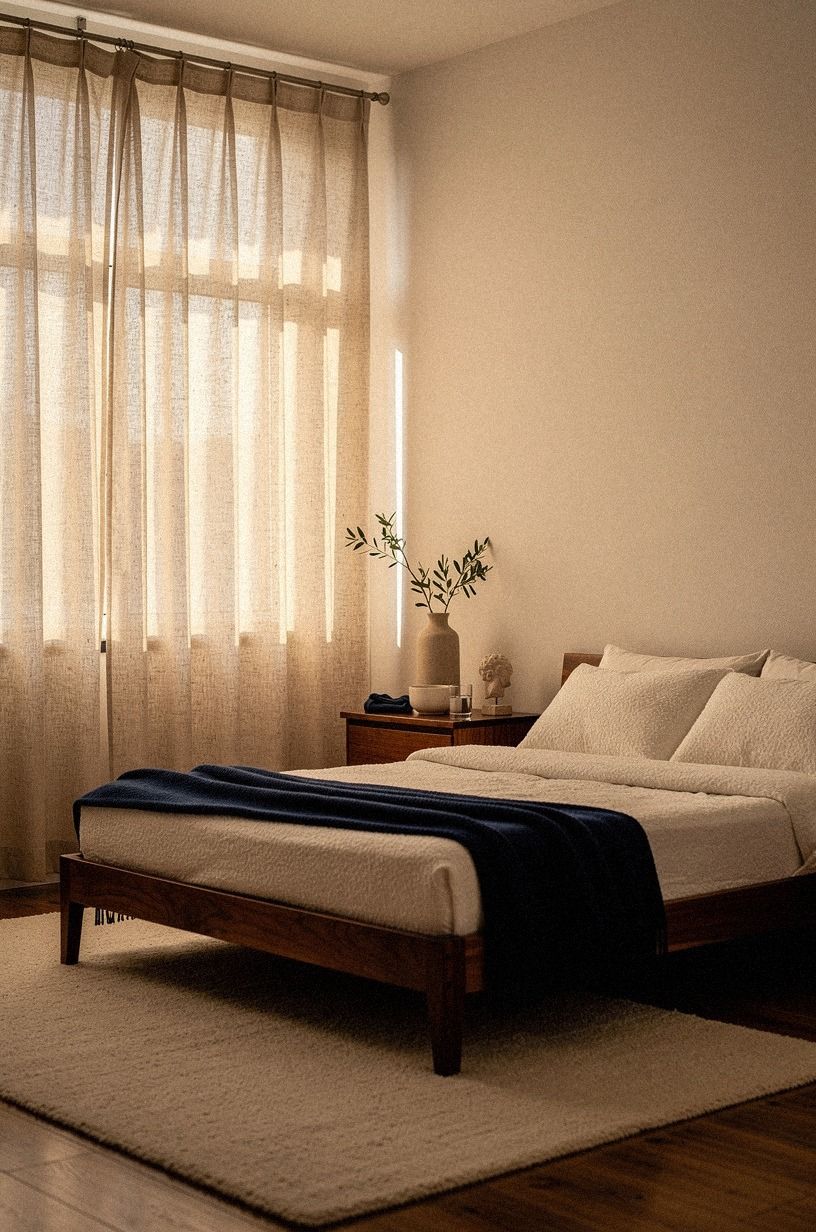
Long curtains make your ceiling feel taller and give your bedroom that relaxed hotel softness. Hang the rod several inches above the window frame and let the panels reach the floor with a slight break. Navy linen drapes filter daylight into a dreamy haze against white walls and a walnut dresser.
A pair of linen drapes typically costs $120-$400. If you need a budget version, use cotton panels in a soft white or deep navy and add blackout shades behind them. Your room will still feel bright and airy during the day, but you won’t sacrifice sleep on summer mornings.
Don’t use short curtains that end at the sill or radiator unless the layout forces you to. They cut the wall into awkward sections.
I’d also avoid heavy velvet here unless your room is large. It can feel dramatic, but it swallows daylight and makes a small bedroom feel closed in.
Choose a rod that repeats a finish already used in the room. Organic bouclé on a nearby chair or cushion adds softness, while a dark walnut dresser keeps the palette grounded.
7The Two-Wood Rule Keeps the Room Collected
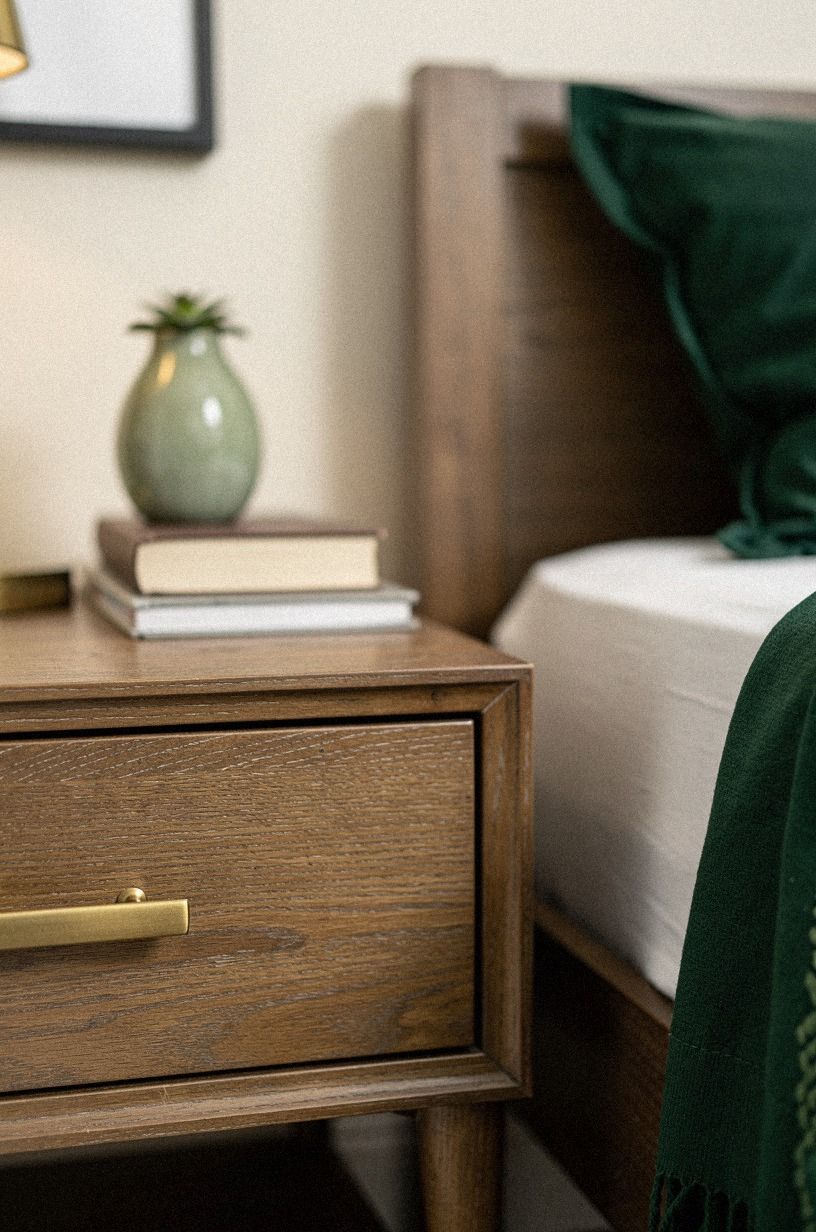
A romantic bedroom shouldn’t look like it came from a single catalog page. Mix a light wood with a deeper tone so your furniture feels collected. Natural oak on a nightstand can sit beside a walnut bench, provided the shapes stay simple and the undertones don’t fight.
Your bed may be painted, your dresser may be oak, and your picture frames may be dark wood. That’s enough variation.
Add emerald textiles, cream walls, and a few gold details so the room feels layered rather than flat. If you’re buying new pieces, choose one hero finish first, then let the other wood appear in smaller doses.
The Two-Wood Rule works best when you repeat each finish twice. Try a walnut dresser with walnut frames, then natural oak nightstands with a pale wood tray and unlacquered brass pulls. I learned this after placing four unrelated woods in one room.
It wasn’t collected. It was noisy.
The rule also makes secondhand shopping easier. You can look for shape and condition first, then decide whether a piece belongs in the lighter or deeper wood family.
8Style Nightstands With the Rule of Three
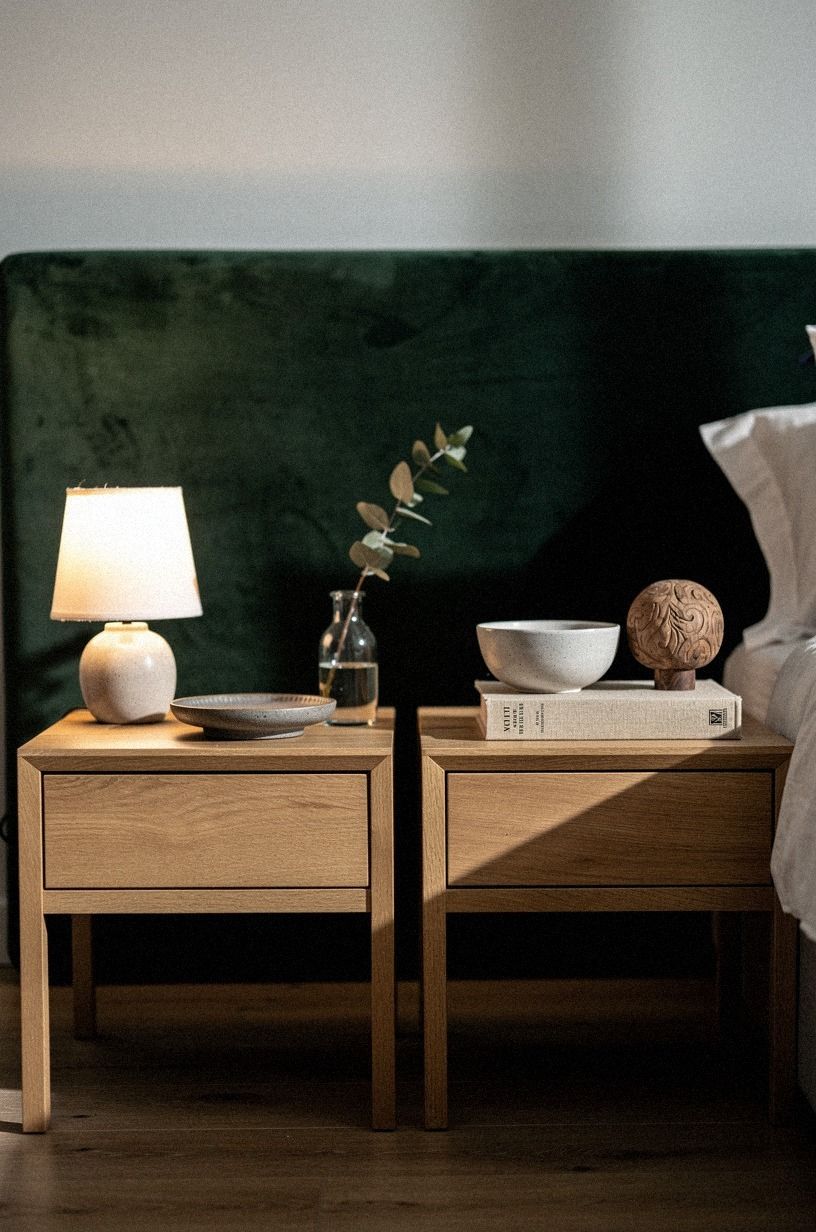
Your nightstand should hold what you use, not every small object you like. Use three layers: one vertical item, one low tray, and one soft or organic element. A forest-green deep-pile mohair velvet cushion provides softness, a shallow ceramic dish catches jewelry, and a small rust-colored branch brings shape without clutter.
A nightstand around 24-28 inches tall will sit near mattress height, which keeps the arrangement comfortable to reach. You’ll want at least one drawer for chargers, medication, or the paperback you’re reading. Open shelving can work, but only if you’re willing to keep it edited.
Put your alarm and water inside the drawer when you can. The surface should still have room for a cup.
But don’t fill the empty space just because it’s there. One lamp, one vessel, one useful object can feel more luxurious than a crowded arrangement.
If your nightstands are mismatched, repeat their scale rather than their exact style. A similar lamp height or shared wood finish will make the pairing feel deliberate.
9How Can a Symmetrical Pair Frame the Bed?
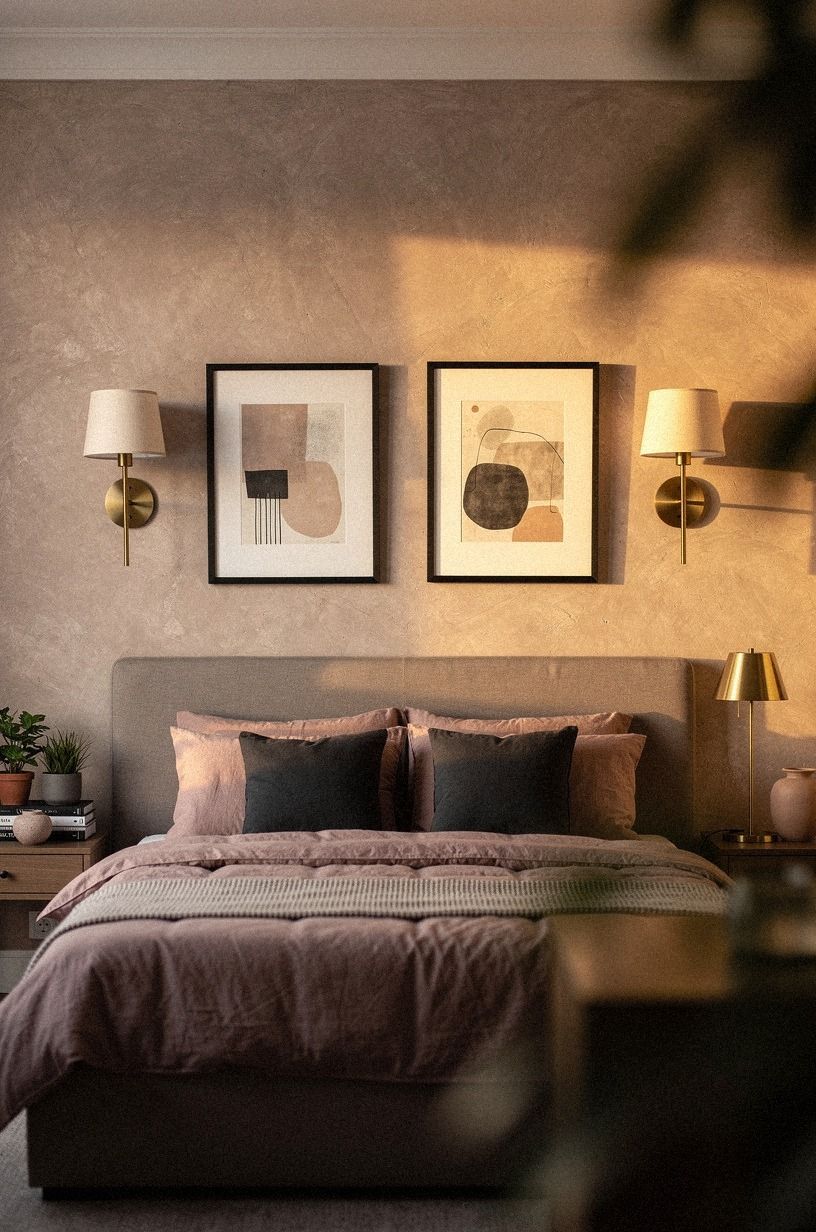
Symmetry gives your bedroom an immediate sense of calm, especially when the architecture is plain.
10Why Swap Bright Metal for Patinated Details?
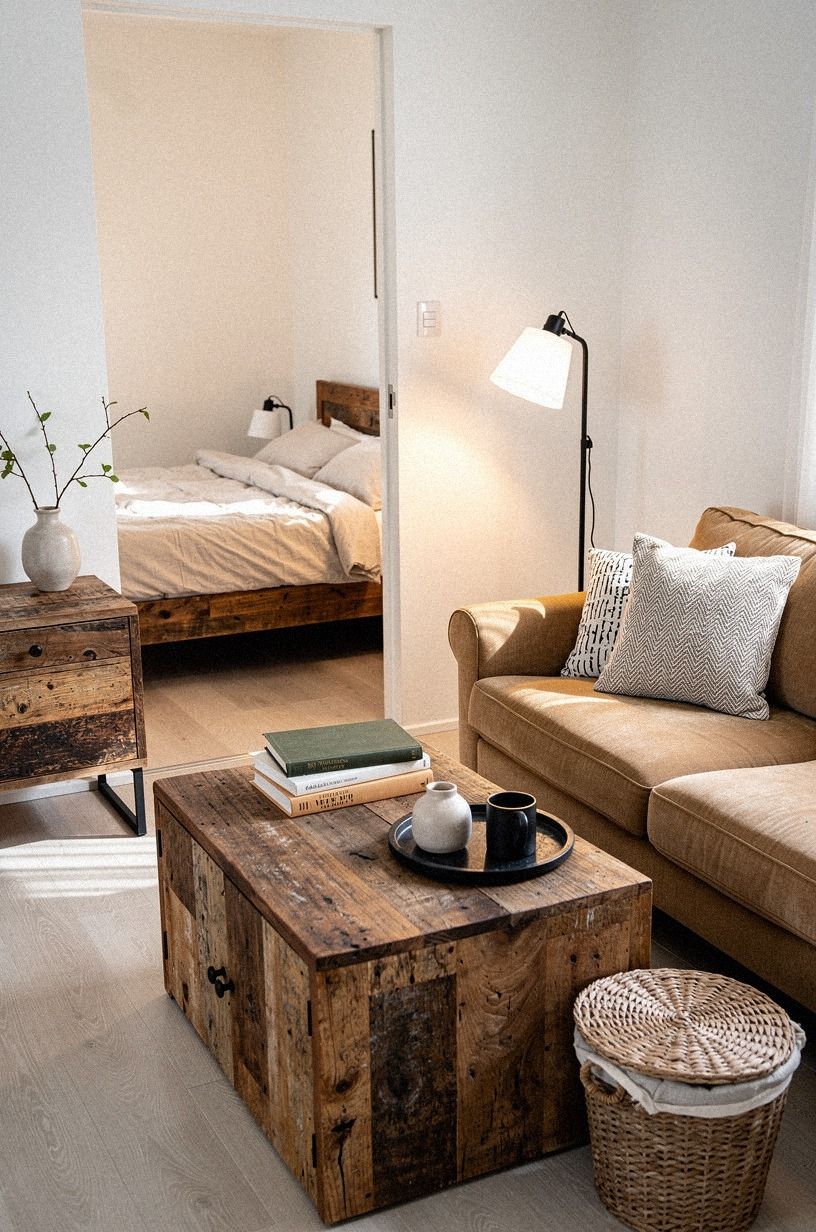
Metal finishes change how your room catches light. Replace shiny chrome and thin yellow gold with antique brass or aged bronze, then ground the combination with reclaimed weathered teak. Warm white walls, camel textiles, and black accents keep the palette balanced while the wood adds depth.
You don’t need to replace every handle. Start with the dresser pulls, lamp bases, or curtain rod.
Your existing furniture may look completely different once the reflective hardware becomes softer. A set of six simple pulls can be a modest expense, while a full furniture replacement can push your budget far beyond the $200-$800 range.
And don’t mix five metals in one room. Choose one dominant finish and one quiet supporting finish.
I prefer aged bronze with a little brass because the pairing feels earthy and elegant. Polished gold beside chrome usually reads more showroom than romantic.
This is one of the easiest changes to make gradually. Replace the pieces you touch most often, then let the finish spread through small details over time.
11Should You Paint the Ceiling for a Cocoon Effect?
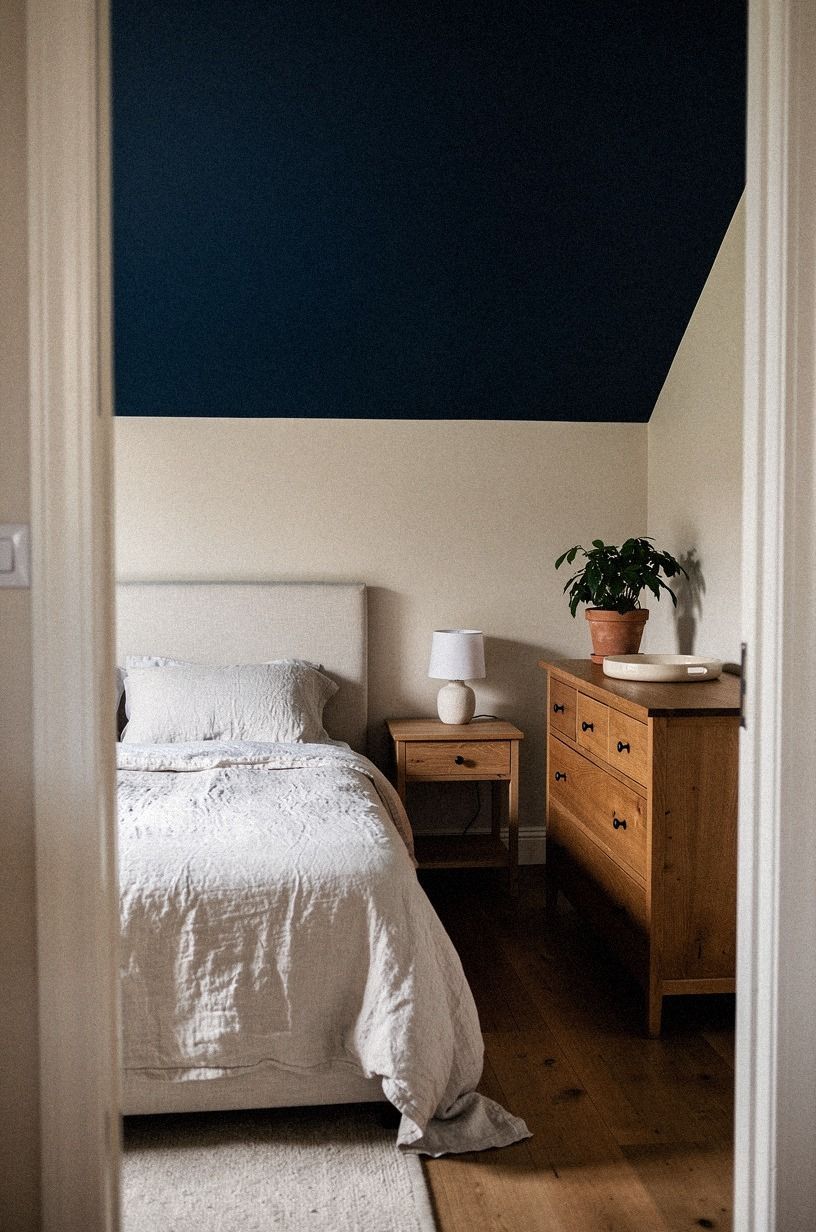
A colored ceiling can make a bedroom feel intimate instead of plain.
12Hang One Oversized Artwork Moment
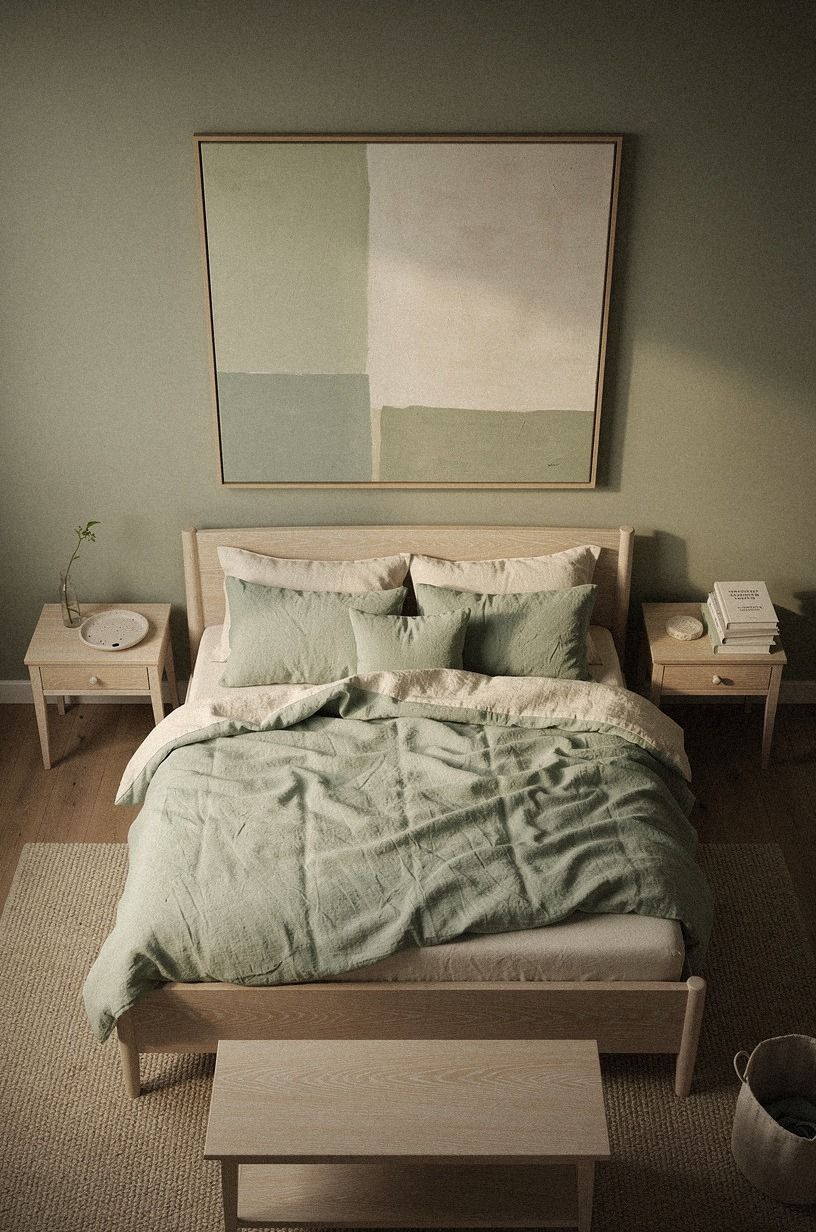
One large artwork piece often looks more luxurious than a wall covered with small signs and random frames. Choose a piece that fills roughly two-thirds of the width above your headboard, then hang it low enough to connect visually with the bed. A cerused white oak frame adds texture without competing with your bedding.
Your art can be a sage-green landscape, a charcoal study, or a vintage botanical print against a warm cream wall. Search thrift shops, estate sales, and Facebook Marketplace before buying new.
You may find a strong frame that only needs fresh paper inside it. That’s a more personal route, and the room won’t look copied from a showroom.
Skip generic motivational text. It rarely supports a serene bedroom, and you’ll tire of it quickly. A moody landscape can make your space feel sophisticated, while a pale abstract keeps it bright and serene.
Ask yourself what you want to see first when you wake up.
Hang the piece lower than you think, especially above a tall headboard. The goal is to connect the artwork to the bed rather than leave a large empty gap.
13Add a Soft Bench With Real Function
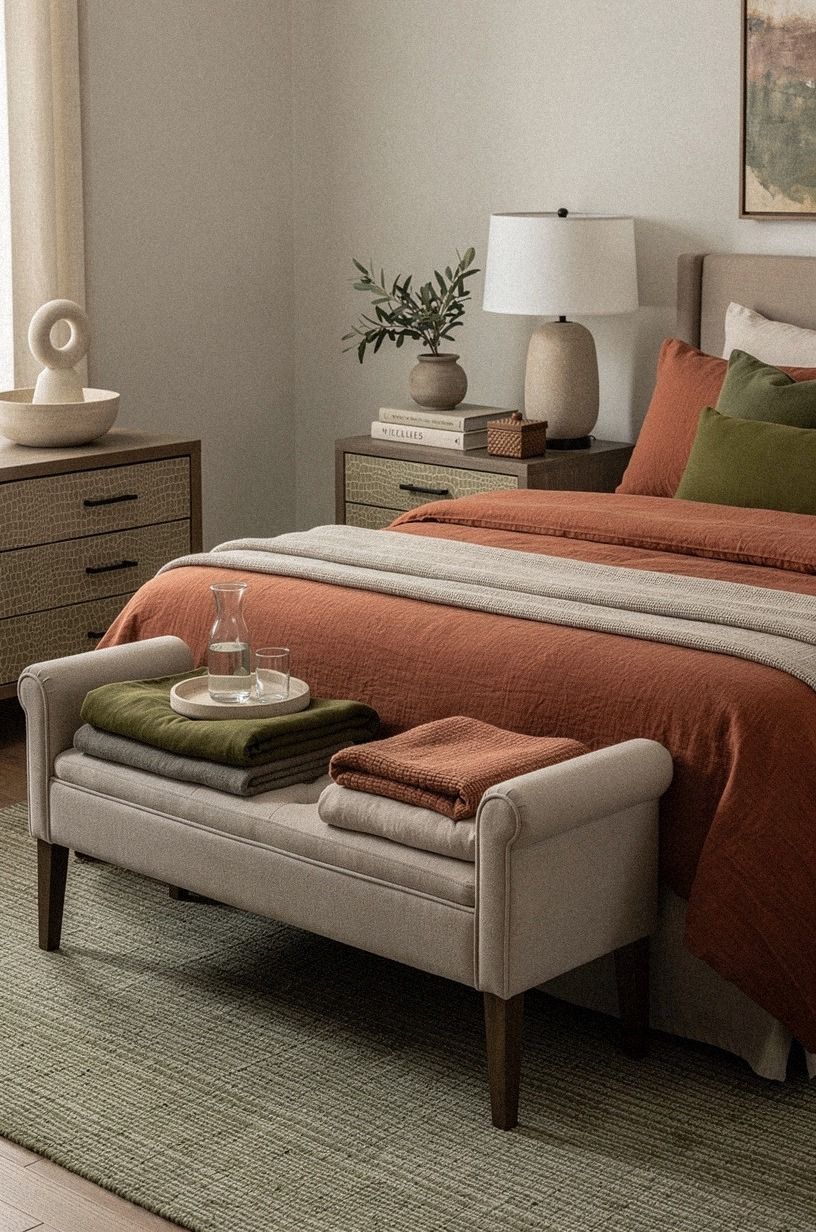
A bench at the foot of the bed gives you a place to sit, fold laundry, or set tomorrow’s clothes. Choose a piece with a slim profile so it doesn’t block the walking path. Stone-toned upholstery with terracotta or olive accents feels luxurious, while a small shagreen detail adds texture without overwhelming the room.
Your bench should be slightly narrower than the bed, leaving a visible margin on both sides. For a queen bed, a 48-54 inch bench usually feels proportionate without crowding the room. You’ll want enough clearance to walk around it easily, especially in a compact layout.
I’d choose a simple upholstered bench over a storage ottoman with bulky rolled arms. The ottoman may hold more, but it can make the foot of the bed feel heavy. A slim bench keeps the room airy and gives you one inviting place to pause.
Choose a bench that supports a real habit. If you fold laundry there, use a durable textile. If you sit to put on shoes, prioritize a firm seat and the right height.
That practicality keeps the room from becoming a staged set.
What These Bedroom Choices Cost
Your bedroom can look luxurious without requiring a full renovation. The typical US ranges below show where the money goes. If you’re working with less, keep your existing furniture and spend first on bedding, paint, and lighting.
If you’re choosing one investment, make it the item your body touches every day. Washed-linen bedding can improve the whole room because it softens the bed, adds natural texture, and doesn’t need perfect pressing. You can keep your old dresser and still make the space feel more refined.
A budget room also benefits from restraint. Your existing mirror, thrifted frame, and secondhand nightstand may be more interesting than three new pieces with no history. The expensive feeling comes from proportion and editing, not from filling every surface.
For a $200-$800 refresh, divide the money between one textile upgrade, one gallon of paint, warmer bulbs, and a small piece of art. The three-height lighting plan often creates more atmosphere than a costly fixture.
Why This Romantic Bedroom Style Is Having a Moment
Bedrooms are becoming quieter because people are tired of rooms that look polished but don’t help them rest. A romantic bedroom gives you a place with lower light, softer edges, and fewer competing objects. It feels peaceful because the materials work together instead of shouting for attention.
The shift isn’t about buying antique furniture or covering everything in floral fabric. It’s about making practical choices feel sensuous.
A linen curtain moves when the window is open. Wool feels warm under your feet.
A dim lamp makes ordinary walls look richer. Those small experiences are what make your bedroom feel personal.
I think this is why warm neutrals, muted pinks, and earthy browns are replacing hard gray schemes. They’re flexible, but they’re not blank. If you’re decorating now, choose the colors that make you slow down.
A room that looks good but feels restless isn’t doing its job.
The style also works because it leaves room for real life. A worn book, a folded sweater, or a slightly uneven vintage frame can add warmth. You don’t need to hide every sign that the bedroom belongs to someone.
My Honest Take on the Luxury Look
I used to think a luxury bedroom needed expensive furniture, matching nightstands, and a headboard wide enough to swallow the wall. That idea cost me money and made my rooms feel strangely anonymous. The better approach is to spend on what changes your daily experience, then let the rest stay simple.
Start with the bed because it occupies the largest visual area and the most important physical one. Your sheets, cover, pillows, and headboard should feel like one soft composition.
You don’t need every layer to be premium. A good duvet cover can carry an inexpensive insert, and a thrifted bench can look polished with a new cushion.
Then look at the light. I’d rather see a modest room with two warm lamps and a dim ceiling fixture than a costly room lit by one harsh bulb.
Light reveals the texture of your bedding, the grain of your wood, and the shape of your artwork. It’s the detail that makes your choices visible.
I’ve also learned that romantic doesn’t mean fragile. Performance velvet, washable cotton, and sturdy wood can still feel intimate. Your bedroom needs to survive real life, including coffee on the nightstand and laundry on the chair.
If a room demands constant perfection, it won’t feel welcoming for long.
What should you skip? Matching sets, tiny rugs, and decorative clutter.
They cost more than they give back. A simple bed, one strong artwork piece, soft curtains, and a warm palette will take you farther than a room packed with accessories.
That restraint is where the refined feeling starts.
The Questions Worth Answering First
What is the best luxury romantic bedroom idea for a small bedroom?
The best choice is a slim upholstered headboard paired with wall-mounted lamps. Vertical softness draws your eye upward while keeping the floor open. Choose a queen bed at 60x80 inches, narrow nightstands, and pale plaster-toned walls so your room feels inviting rather than crowded.
Where can I buy luxury bedroom pieces on a budget?
Look at IKEA, Target, Wayfair, thrift shops, and Facebook Marketplace. Secondhand furniture can give you better wood and stronger proportions for less money. Search by material and size, not just style, and check every measurement before you buy.
How much does a luxury romantic bedroom makeover cost?
A simple makeover can cost about $200-$800, depending on what you already own. Free improvements include editing clutter, rearranging furniture, washing textiles, and changing lamp placement. Paint, bedding, shades, and art usually create the largest visible shift within that range.
Can I create a luxury romantic bedroom on a budget?
Yes, and you should start with three low-cost moves: paint one wall, layer your existing bedding with a textured throw, and replace cool bulbs with warm ones. Smart editing matters more than quantity. Move one chair out if it blocks circulation, too.
Is this bedroom style worth it in a small space?
Yes, because a small room needs fewer pieces to feel complete. Clear proportions help more than extra storage furniture. Use a rug that extends 18-24 inches beyond the bed where possible, then keep the nightstands close to mattress height.
Is a luxury romantic bedroom a good idea for a rental?
Yes. Use peel-and-stick wallpaper on one accent wall, tension rods for linen panels, removable hooks for art, and plug-in sconces.
No-damage updates can change the light and texture without permanent work. Keep paint and hardware reversible if your lease requires it.
Where I’d Start First
If I had to pick one, I’d start with the layered bed. It occupies the room’s largest surface, changes how you rest, and makes every other choice look more intentional.
Use the bedding you own, add one tactile cover, and let the room grow slowly. Pin this idea for later and begin with texture tonight.