How to Choose a Fragrance: A Practical Guide to Scent Families, Testing, and Wearability
02 november 2026Why Choosing a Fragrance Requires More Than Liking the First Spray
Picking a fragrance often feels like a snap decision—one spray, a pleasant whiff, and you're reaching for your wallet. But there's actually a lot more going on beneath that first impression: personal taste, how a scent shifts and settles over several hours, the setting you're dressing for, and your own skin chemistry and sensitivities all play a part. Nice branding and eye-catching packaging can certainly draw you in, but none of that tells you how a scent will actually behave once it's on you. While browsing options, you might come across various product lines, such as creed fragrances, simply as one example of the many fragrance ranges available for comparison. This guide isn't here to push specific products—it's meant to help you evaluate any fragrance methodically, so your final choice comes down to genuine fit rather than clever marketing copy.
Understand How Fragrance Is Structured
Top, heart, and base notes
Fragrances are traditionally mapped out using a pyramid structure. Top notes make the first impression—often bright, citrusy, or fleeting—and they tend to fade within the opening minutes of wear. Heart notes take over from there, forming the central character of the scent as the top notes dissipate. Base notes are the slow-moving, longer-lasting elements—think woods or resins—that anchor the final dry-down. Keep in mind that note lists describe an intended impression or the ingredients used, not a guaranteed, linear experience; how it all plays out depends on the formula and on your own skin. It's also worth knowing the difference between a single "note" and an "accord," the latter being a blended effect built from multiple materials to create one unified impression, like a "leather" or "powdery" accord.
Concentration and wear time
Labels such as eau de toilette, eau de parfum, parfum, and cologne simply refer to how concentrated the aromatic compounds are relative to the carrier. A higher concentration often hints at greater intensity or staying power, but that's never a sure thing—formula composition, how much you apply, your skin type, the climate, and even your own sense of smell all factor into how long and how strongly a fragrance actually registers.
Learn the Main Fragrance Families
Fragrance families are useful for sorting scents into general categories, not rigid scientific classifications. Some of the most commonly referenced groups include:
|
Family |
Typical Impressions |
Starting Point
|
|---|---|---|
|
Fresh |
Citrus, aquatic, green |
Light daytime wear |
|
Floral |
Airy, powdery, or rich flowers |
Versatile, many occasions |
|
Woody |
Cedar, sandalwood, vetiver |
Cooler weather, evening |
|
Amber |
Warm, resinous, spicy |
Cold weather, special occasions |
|
Gourmand |
Vanilla, caramel, cocoa |
Casual or evening wear |
|
Aromatic |
Herbal, lavender, minty |
Everyday or office settings |
These categories tend to overlap, and different fragrance wheels use slightly different terminology, but the wheel concept remains a widely used way to organize related families and their subfamilies.
Match a Fragrance to Personal Preferences and Context
Start with scent characteristics, not marketing language
Instead of leaning on vague buzzwords like "luxury" or "classic," try describing what you actually enjoy: bright or deep, dry or sweet, clean or earthy, soft or bold, straightforward or ever-changing. Familiar references—soaps, candles, tea, wood, or spices—can help you pin down what appeals to you even before you test a single bottle.
Consider occasion and environment
Context matters quite a bit here. A subtle, low-projection scent is better suited to a shared office, while a bolder application might make more sense for an evening event outdoors. Formal settings generally call for restraint, whereas casual daytime wear leaves more room to experiment. And in warm, humid, or enclosed spaces, fragrances tend to project further than usual, so going easy on the application is simply a matter of consideration for the people around you.
Test Fragrance Properly Before Buying
Use blotters first
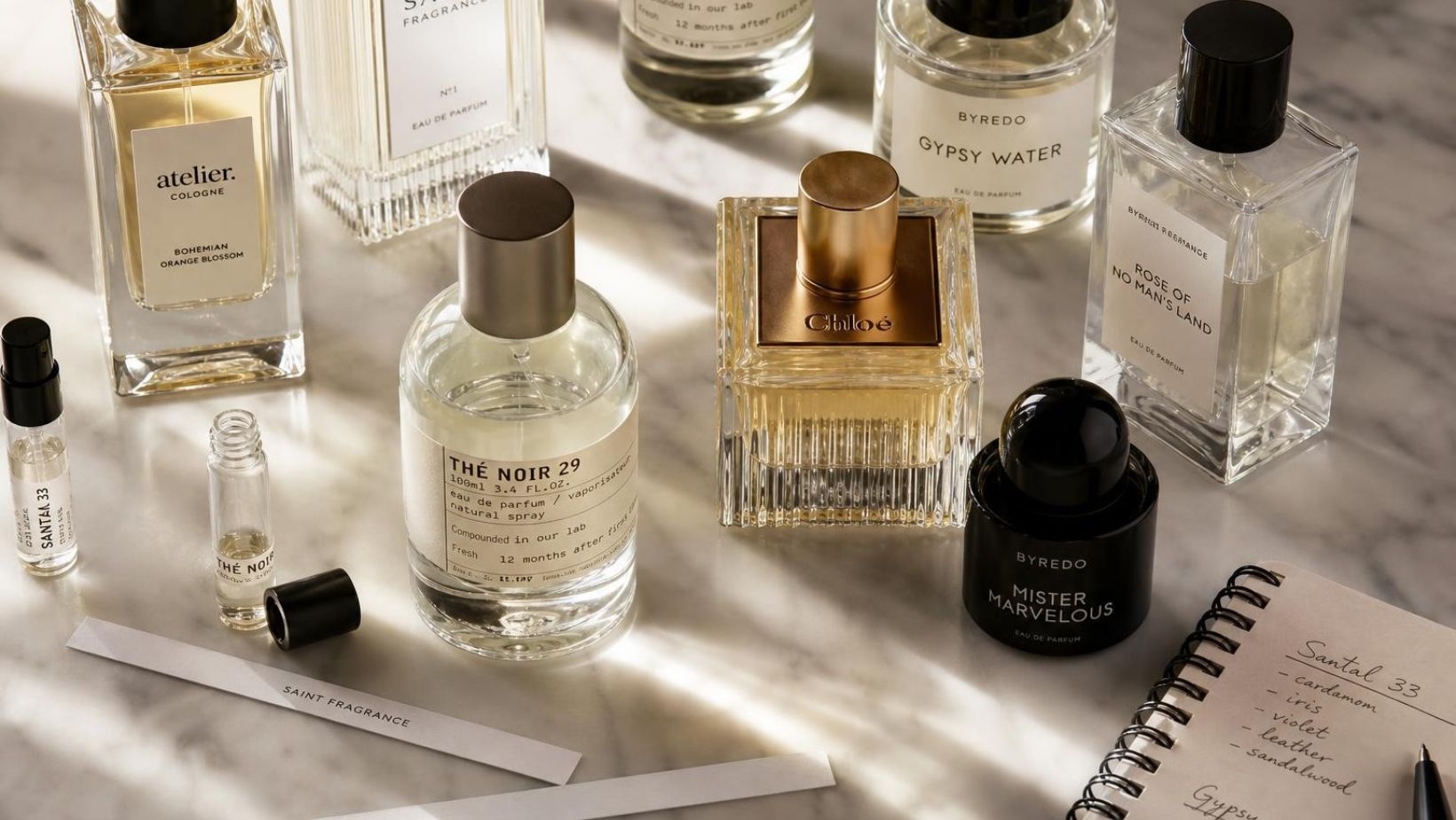
Testing on paper strips lets you compare several scents side by side without mixing them together on your skin. Jot down the fragrance name, the time you tested it, your opening impression, and how it dries down—paper is handy for comparison, though it won't fully capture how a scent actually develops on skin.
Test selectively on skin
Apply a small amount to clean, unscented skin, and limit yourself to just a few fragrances at a time to avoid olfactory fatigue. Give it time to unfold, resist the urge to rub it in, and consider testing on different days and in the environment where you'd normally wear it.
Key takeaway: Do not judge a fragrance solely by its first five minutes.
Evaluate more than longevity
A simple checklist can help:
- Initial impression
- Development over time
- Projection, or how far it's noticeable
- Longevity, or how long it remains detectable
- Comfort and appropriateness
- Whether you still enjoy it hours later
Stronger projection or longer wear isn't automatically the better choice—comfort and suitability generally matter more.
Account for Skin, Climate, and Application
Skin moisture, temperature, natural oils, and whatever skincare products you're using can all shape how a fragrance develops. Heat tends to amplify a scent's presence, while cooler conditions can dial back how much it diffuses. Pulse points are the go-to application areas, though no single spot works better than the rest for everyone. Unscented moisturizer can help some fragrances last longer, but scented lotions may change the final result entirely. Avoid spraying near the eyes or any irritated skin. Skin chemistry is just one of several factors affecting how a scent is perceived—there's no simple, predictable "pH effect" doing all the work here.
Use Fragrance Responsibly and Check for Sensitivities
Fragrance ingredients are required to meet applicable safety standards when used as directed, though some people may still experience sensitivity or allergic reactions. Read the labels, follow the manufacturer's directions, and stop using a product if it causes irritation. Symptoms like itching, redness, rash, swelling, or trouble breathing call for proper medical attention. It's also worth respecting fragrance-free spaces and people who are sensitive to scent—an irritation, an allergy, and a simple dislike are three very different things, not interchangeable complaints.
Build a Simple Personal Fragrance Wardrobe
You don't need a sprawling collection—just a handful of options organized by function: a light everyday scent, a versatile daytime pick, a richer option for evenings or cold weather, and maybe something seasonal. Keep notes on what's worked for you, including the family, the dominant impressions, and how it performed, and always sample before committing to a full-size bottle.
Making an Informed Final Choice
Choosing fragrance well comes down to knowing your preferred characteristics, exploring the different families, testing thoroughly on both paper and skin, waiting out the dry-down, and factoring in setting and sensitivity along the way. Keep a small testing record and give scents time to prove themselves rather than buying on impulse. In the end, the right fragrance is simply the one that fits your preferences and circumstances while still being comfortable for the people around you.


