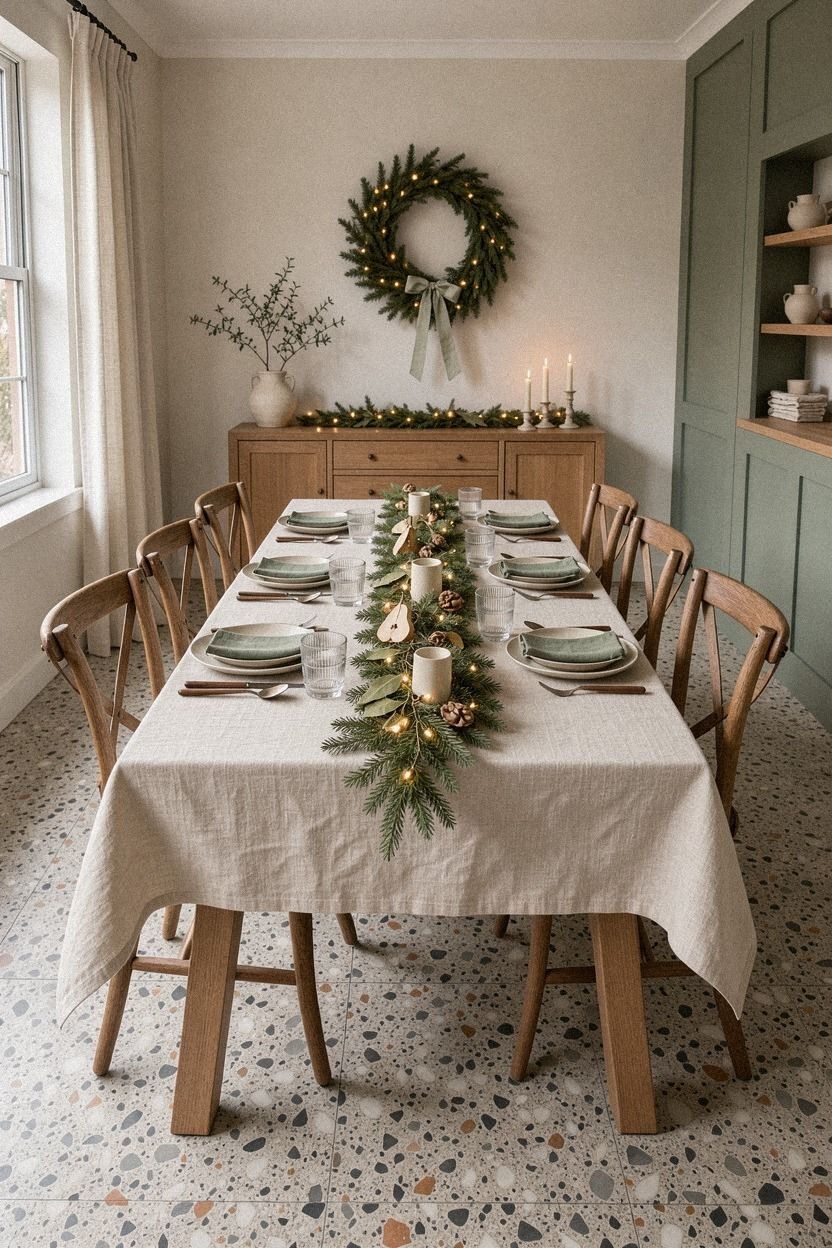
14 Christmas Table Ideas to Set a Holiday Spread in 20 Minutes Flat
13 october 2026How to set a Christmas table in 20 minutes flat comes down to three moves: one textile, one low centerpiece, and repeated color. I learned that after spending an hour on a table nobody could comfortably reach across. Your table should feel warm and generous, not like a museum display. Start the timer.
Editor's note: Choose the mood first, then repeat it through fabric, candlelight, ceramics, and one natural detail. You won't need a matching collection or a cart full of seasonal decorations.
- Layer the Table with One Generous Textile
- Which Three Colors Will Carry the Tablescape?
- The Low Garland Rule Makes the Centerpiece Faster
- Soft Contrast or Matched Napkins?
- Float the Candlelight Instead of Filling the Table
- How Can You Build a Three-Height Light Stack?
- Frame Each Place Setting with Practical Layers
- Add One Natural Detail to Every Place
- Weathered Teak and Black: The Easiest Warm-Cool Balance
- Paint the Background, Not the Table
- Grandma's Silver with New Ceramics
- What Should You Spend on a Twenty-Minute Table?
- Serve from One Warm, Textured Zone
- Finish with a Two-Minute Host Check
1Layer the Table with One Generous Textile
Begin with a tablecloth, runner, or folded throw. You don't need all three. A softly rumpled layer gives the Christmas table a finished foundation in less than two minutes, and it hides the small scratches that appear when serving gets busy.
I prefer a sage green linen runner over a warm cream cloth because it gives the eye somewhere to rest. Let the natural wood show at both ends.
Set one low oversized-chip terrazzo tray at the serving end if you need a defined landing place. If your table is narrow, run the textile lengthwise so guests can still reach the serving dishes.
A runner that's too wide will crowd the plates, and nobody wants to eat around a decorative traffic jam.
For a more relaxed setting, use warm cream cotton gauze with frayed edges. It doesn't need ironing, which is a genuine holiday gift!
A folded Belgian flax throw can work just as well on a long farmhouse table. Keep the textile matte and tactile.
Shiny fabric reflects every light source and can make a simple arrangement feel fussy.
If you're shopping, measure the table first. The best value is usually one versatile runner you can reuse through winter, rather than a novelty Christmas cloth that spends eleven months in a drawer. A slightly oversized textile can feel luxurious, but it isn't worth the cost if guests keep catching their sleeves on it.
2Which Three Colors Will Carry the Tablescape?
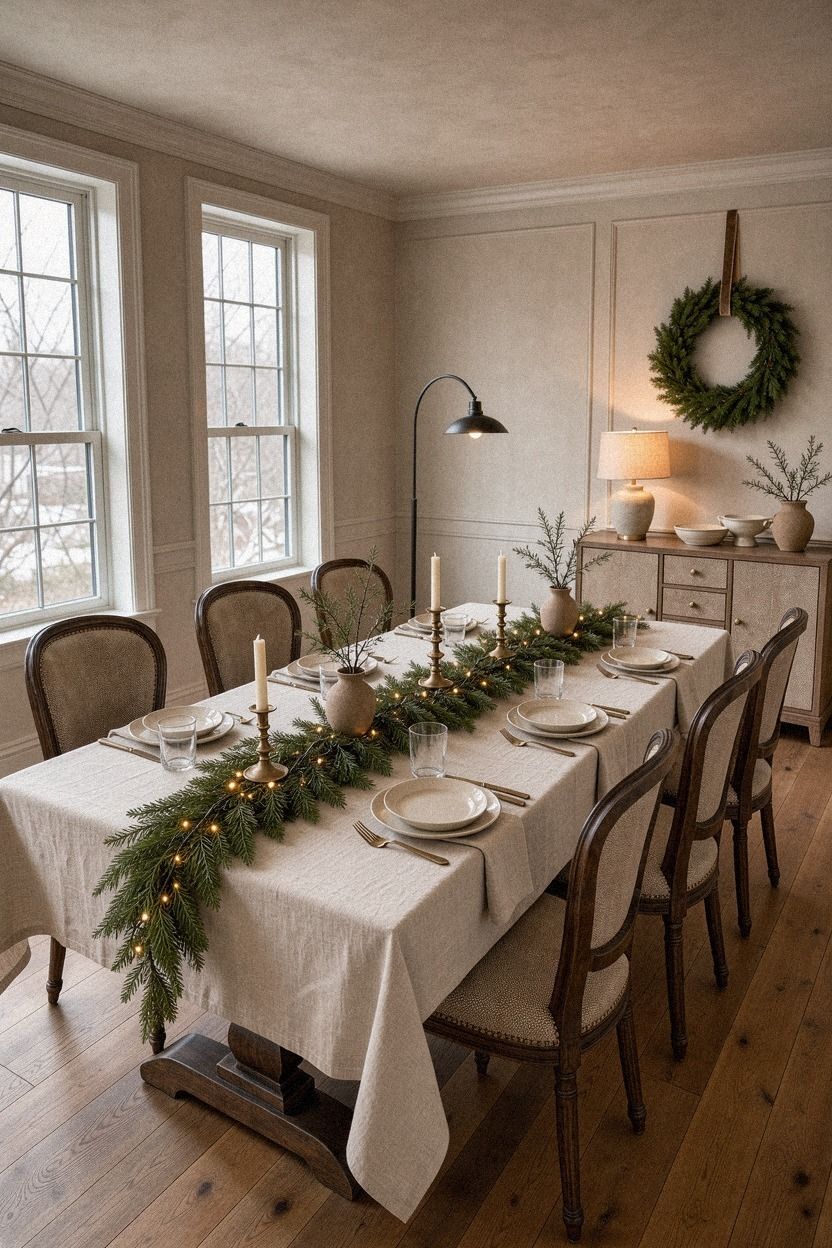
Pick three colors before you touch the dishes. Terracotta, stone, and olive make a grounded trio, especially against hand-applied Venetian plaster.
3The Low Garland Rule Makes the Centerpiece Faster
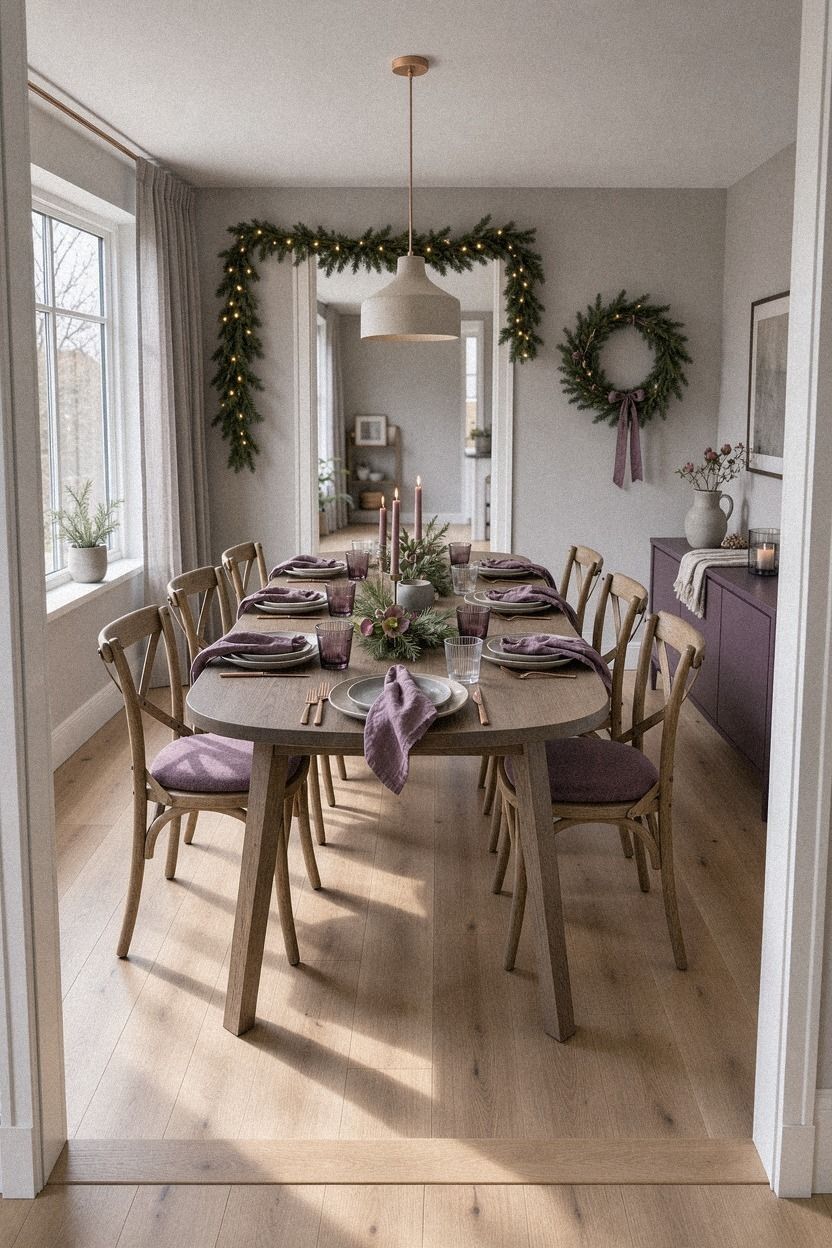
A centerpiece should sit low enough that you can see your cousin across the table. For a 20-minute table, lay a loose line of cedar and eucalyptus garland down the center, then tuck in three small clay vessels with aged-brass details.
That's all you need. Your centerpiece doesn't have to be symmetrical, and honestly, symmetry takes too long.
I made the mistake of using tall branches one Christmas. They looked dramatic from the doorway, but nobody could talk around them. Now I use short clay bud vases, each with one stem or a clipped evergreen branch.
Rest one small shagreen accent among them. Add a few pinecones if you've got them, but skip anything glittery that sheds into the butter.
The clay vessels, aged brass, and tactile shagreen create an earthy, inviting texture without demanding floral-arranging skills. If the garland feels too dense, remove a third of it. Negative space is useful here.
You want the table to look generous, not overfed.
For a narrow table, place the greenery in two broken sections instead of one continuous line. That gives serving dishes a natural landing place and lets the wood remain visible between them. Fresh greenery is usually worth buying if it prevents you from fussing with a complicated arrangement, but preserved stems can offer better long-term value.
4Soft Contrast or Matched Napkins?
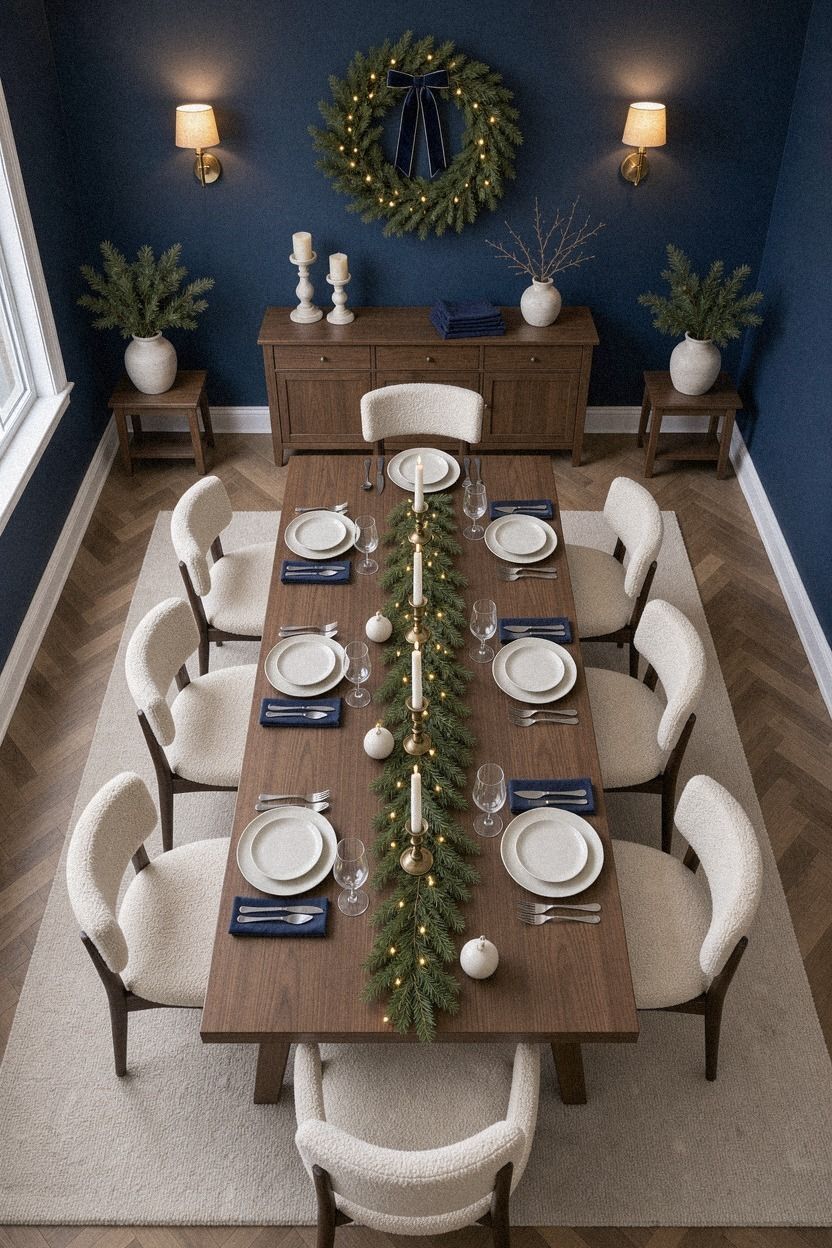
Matching napkins can make a table feel staged, especially if every fold has been pressed into the same stiff triangle. Mix two fabrics instead. Your guests will notice the texture before they notice that the napkins aren't identical.
Try plum velvet at the head seats and washed Belgian linen for everyone else, or combine cream cotton with muted plaid. I wouldn't use shiny polyester satin unless your goal is a formal hotel look. It slides off your lap and catches every reflection from the lights.
Fold each napkin once, set it beside the plate, and tuck a small rosemary sprig underneath. If you're working with paper napkins, choose a substantial matte design and fold it into a rectangle. It will still feel warm, and you'll finish before the potatoes are ready!
A slightly mismatched set can look especially good when the colors share an undertone. Pair grey linen with plum velvet, or dusty rose with washed Belgian linen. The contrast should feel discovered, not manufactured.
If you need to buy napkins, four to eight washable ones are a smarter investment than disposable seasonal prints. Choose a color you can use for birthdays, Sunday lunches, and winter dinners too.
5Float the Candlelight Instead of Filling the Table
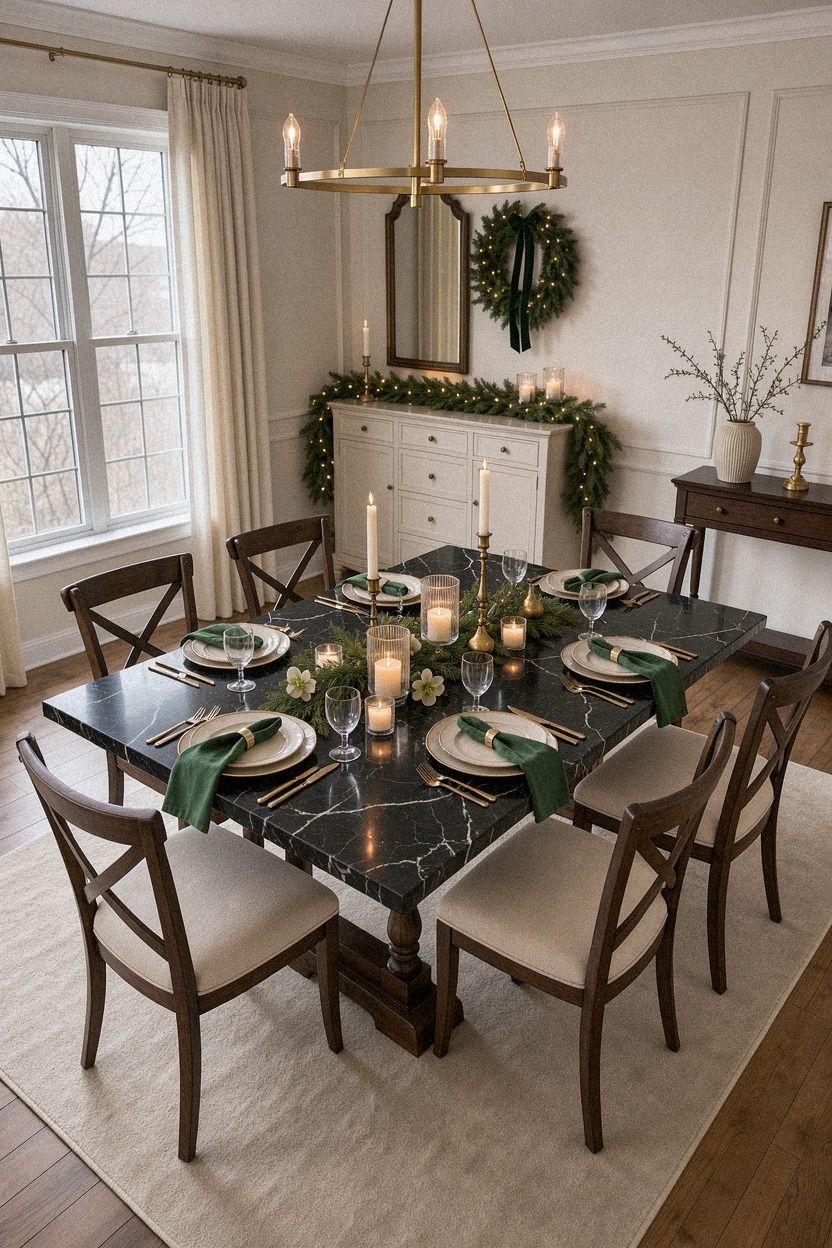
Candles make a Christmas table feel intimate, but a forest of taper holders can eat up your serving space. Use three or five low navy glass votives and scatter them through the garland. Your table will glow at eye level, and the warm pools of light won't block conversation.
Battery candles are perfectly practical if you have young children, pets, or a table covered in dry greenery. Choose ones with a visible flicker rather than a blue-white bulb. I prefer white beeswax tapers when I can keep them in sturdy holders, because the faint honey scent feels natural beside cedar.
Don't place candles directly beside loose napkins. A small walnut saucer beneath each holder gives you a safer, more finished arrangement. Keep the flame spacing irregular.
Three candles are enough for a small table!
If you use real flames, light them only after the food is ready. The table will feel calmer when you aren't leaning across it with a match while everyone is finding a seat.
A candle purchase is worth it when the holder works beyond Christmas. Navy glass, white ceramic, and walnut details can move onto a mantel or bedside table later, so the cost feels less temporary.
6How Can You Build a Three-Height Light Stack?
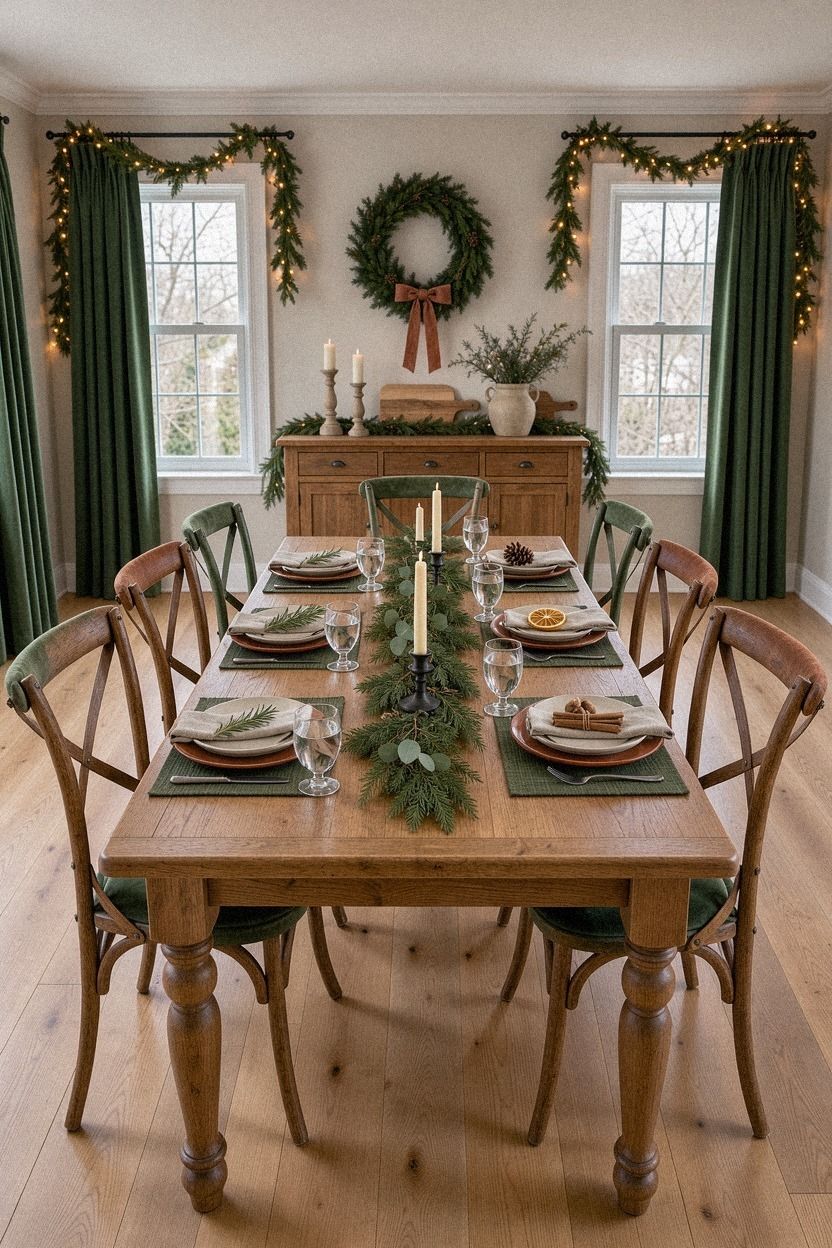
If your dining room has one ceiling fixture, your Christmas table can still feel soft. Create three light levels: the existing overhead source, candlelight at table height, and a nearby lamp or sideboard glow. Your room will feel warmer because the light isn't landing from one harsh direction.
For the lamp, use a cream-shaded table lamp with a gold base and a warm bulb already in your home. Set it near a slim Nero Marquina marble accent if you have one. You don't need to purchase a new fixture for one dinner.
If your sideboard is close by, move the lamp so its glow reaches the wall rather than shining straight into your guests' faces.
The standard design rule is three sources per room, overhead, task, and ambient, and this little stack follows it without electrical work. I'd turn off the bright overhead fixture once everyone sits. It flattens the candlelight and makes the table feel like a lunchroom.
You can also leave a hallway light on behind the dining room door. That small secondary glow helps people move around without flooding the table with brightness. Warm light is doing much of the decorating here, so don't underestimate it.
Before you spend money on a new pendant, test the room with lamps you already own. Better light usually delivers more value than another decorative object.
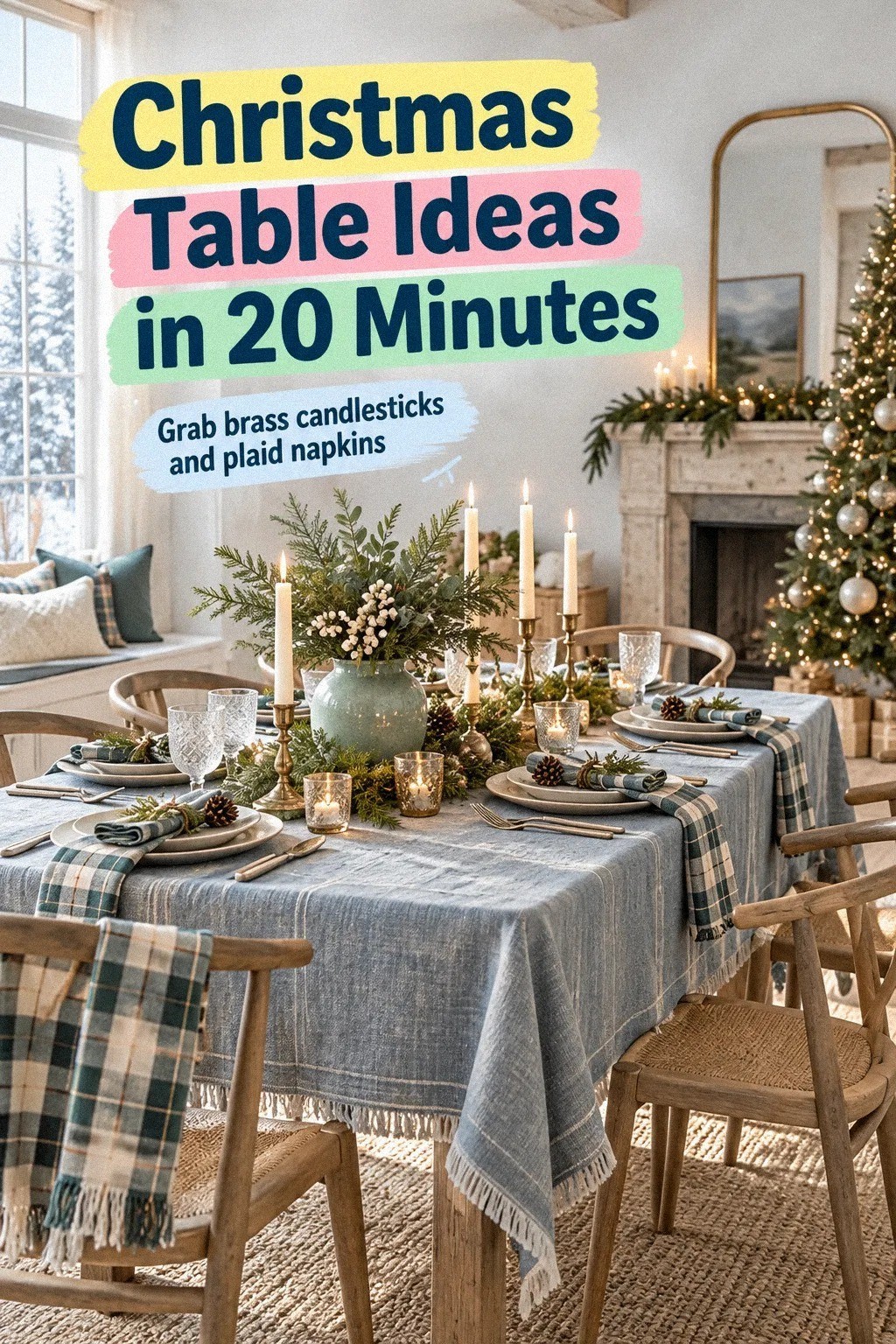
7Frame Each Place Setting with Practical Layers
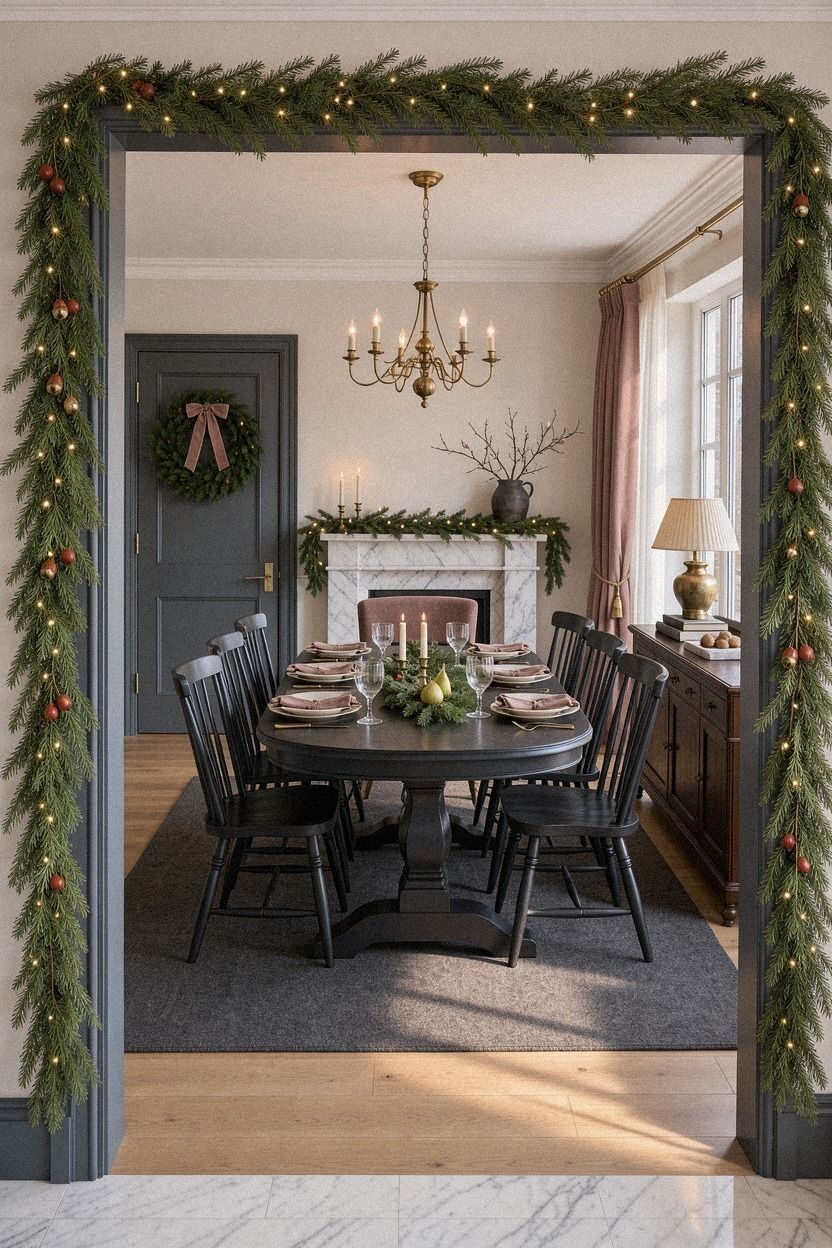
A strong place setting has a base, a plate, a napkin, and one small personal detail.
8Add One Natural Detail to Every Place
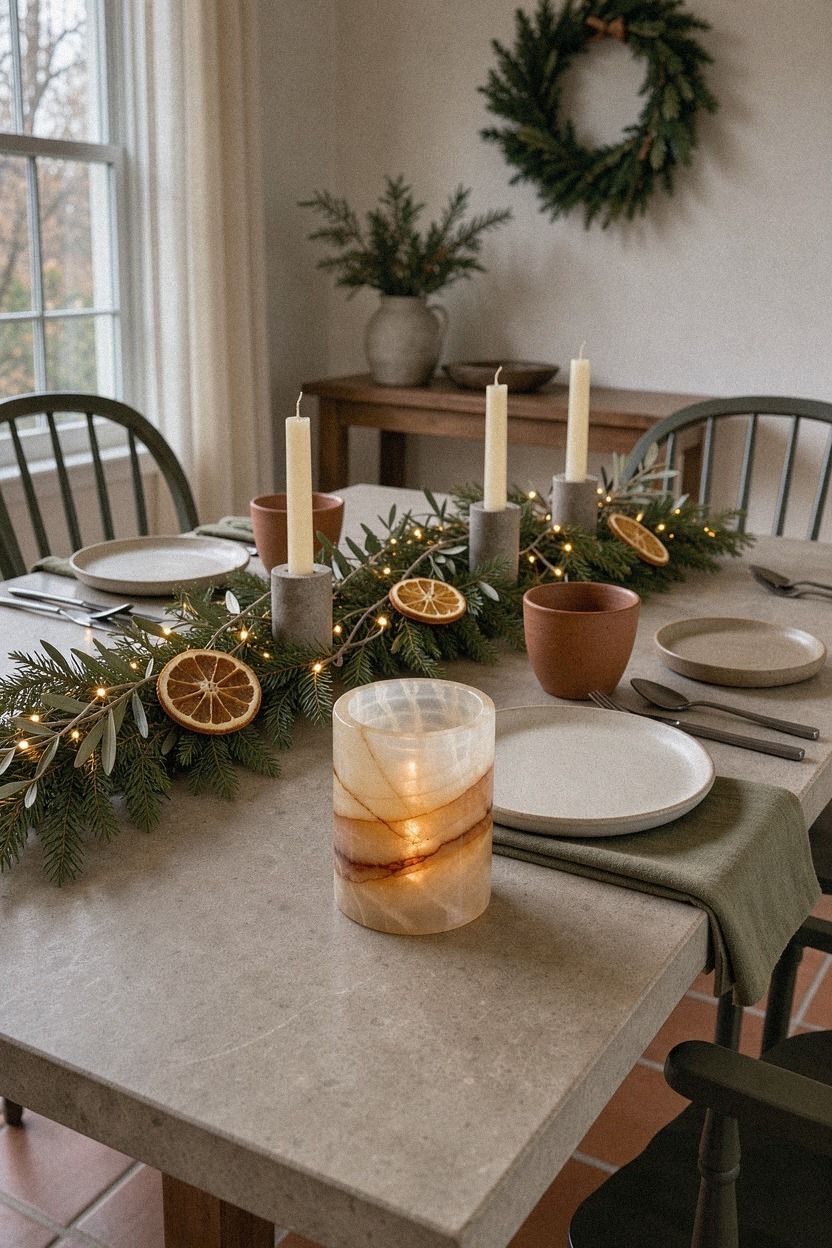
You can make fourteen settings look connected with one tiny repeated element. Set a small Carrara marble coaster with subtle grey veining beside every water glass, or tuck a dusty-rose ribbon beneath each napkin. Your guests will see the rhythm immediately, and you'll finish the whole table in a couple of minutes.
Dried citrus gives you color and a faint spicy scent, while rosemary feels greener and more traditional. I wouldn't use fresh cranberries loose on the table. They roll under plates, end up on the floor, and create work nobody asked for.
If you want a darker note, use one charcoal velvet ribbon tied around the stem of each glass. The detail should be easy for you to repeat, easy for guests to move, and inexpensive enough that you won't worry about losing one.
A small handwritten place card can work when the dinner is formal, but it isn't necessary for a casual gathering. The natural detail should make the setting feel considered, not turn each plate into a craft project.
My favorite budget move is clipping a few branches from an existing arrangement and dividing them among the settings. It costs nothing, looks personal, and gives the table a charming sense of continuity.
9Weathered Teak and Black: The Easiest Warm-Cool Balance
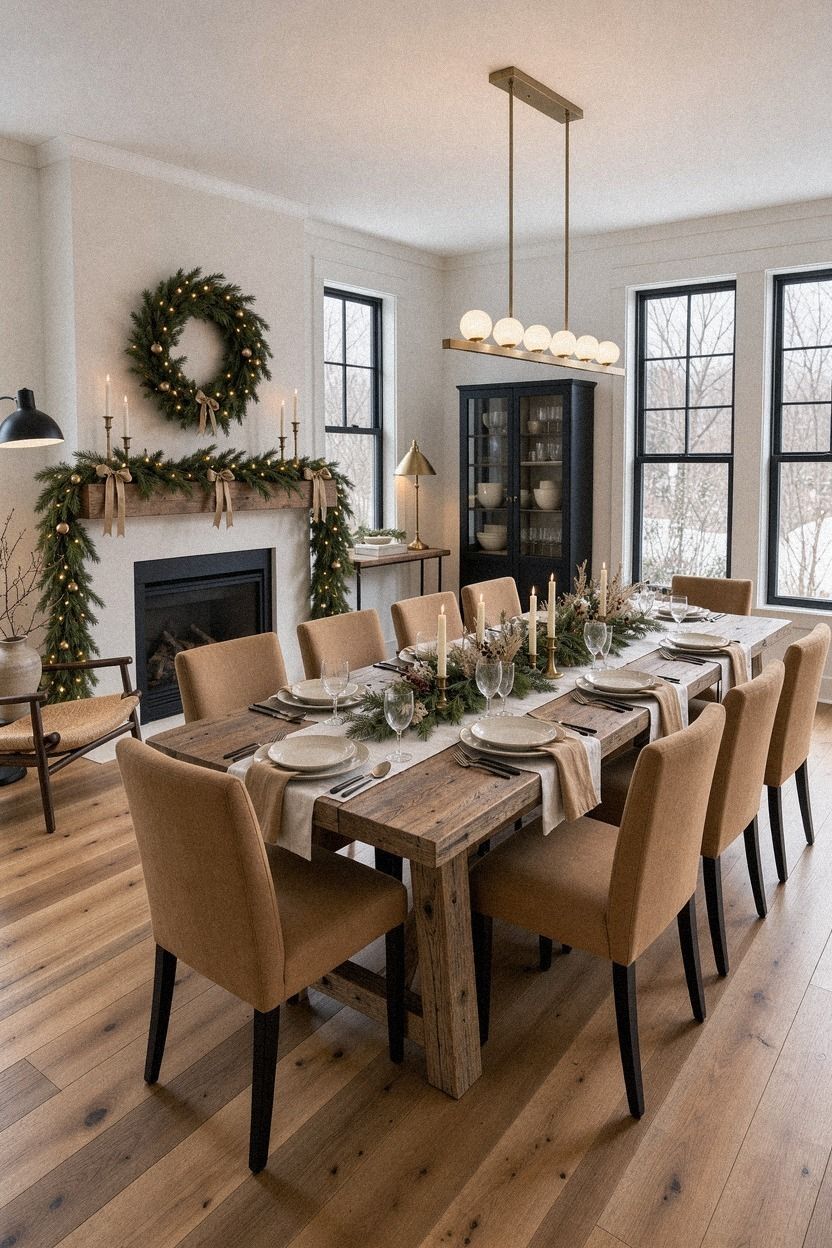
Reclaimed weathered teak keeps warm white from feeling stark, while black accents add clean punctuation. A camel napkin or runner softens the contrast without making it sugary.
10Paint the Background, Not the Table
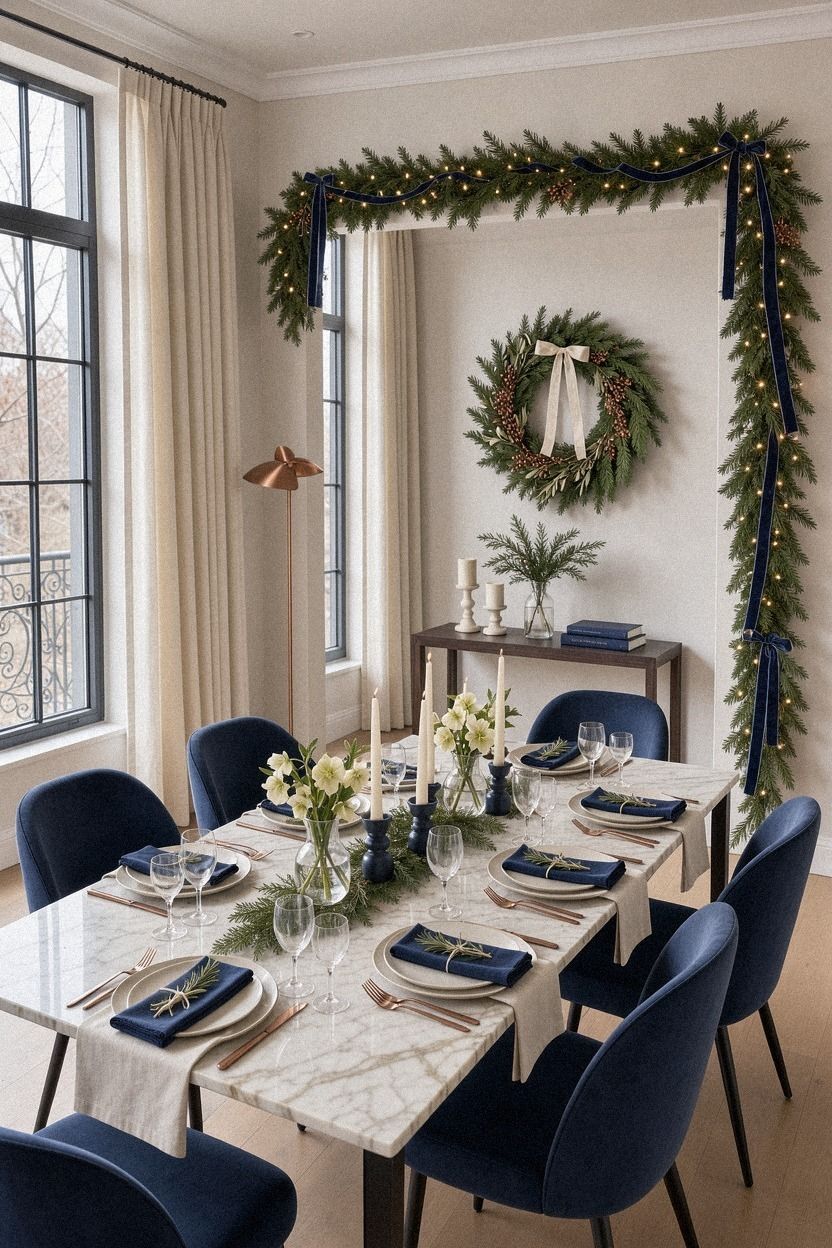
A quick tablescape can look underwhelming if the wall behind it is stark white and the overhead light is cool. You don't need to repaint the dining room before dinner, but you can borrow a richer backdrop with art, fabric, or a folded blanket over a nearby chair.
For a longer-term change, Farrow & Ball Hague Blue No.30 gives a dining room a deep midnight-blue background that works with evergreen branches, ivory dishes, and copper accents. I tested a similar muted shade beside red napkins, and the red looked less loud because the wall absorbed some of the contrast.
Benjamin Moore Hale Navy HC-154 is the safer choice if your room gets little daylight. I'd skip a brilliant white accent wall for this look. It can make candlelight seem yellow instead of warm, especially after sunset.
You can also set a copper lamp on a Calacatta marble console or lean an ivory textile against the wall. The background doesn't need to announce Christmas. It only needs to support the table and make the light feel intentional.
Paint is a larger investment, so test a sample in morning, afternoon, and evening light before buying a full gallon. The right shade can transform the room, but the wrong undertone can make cream dishes look dull.
11Grandma's Silver with New Ceramics
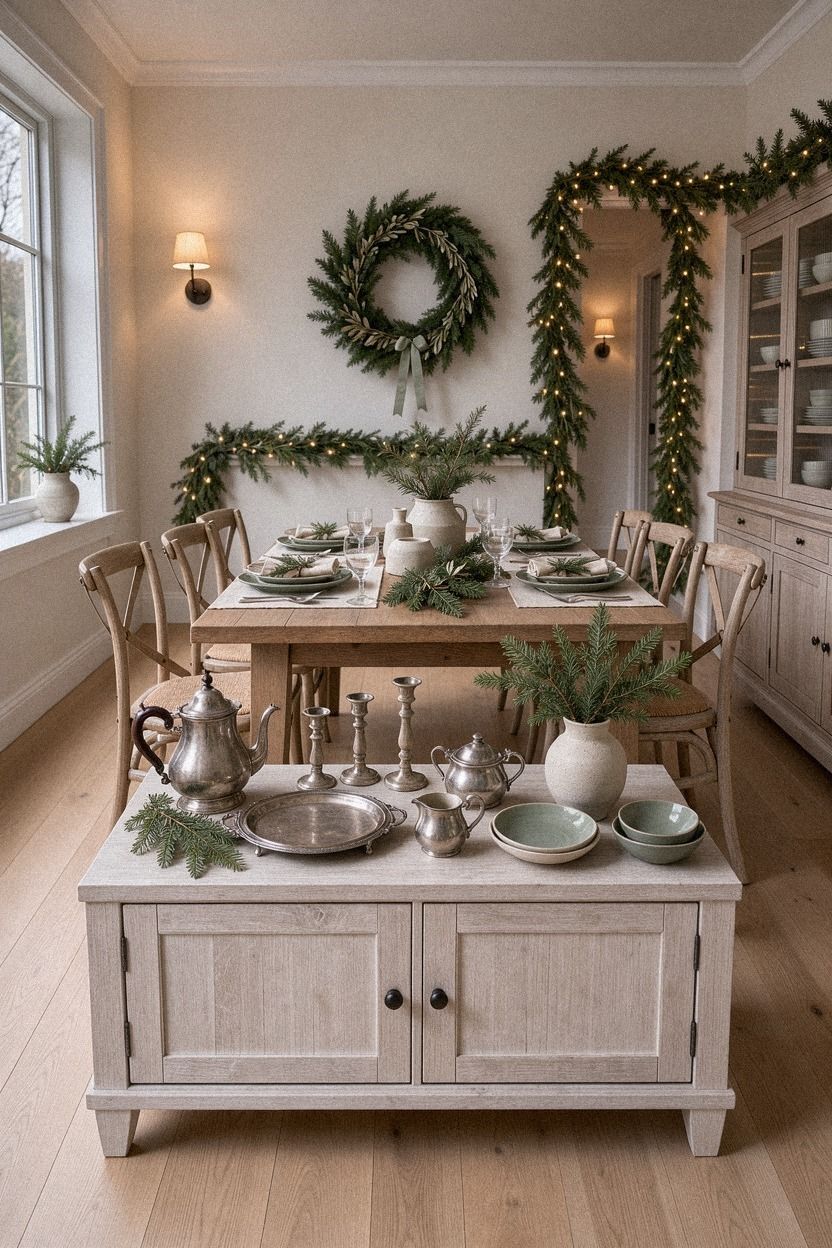
Your Christmas table doesn't need a matching collection. Combine the silver candlesticks from your grandmother, everyday ceramics, and one cerused white oak serving bowl. That tension gives your tablescape more personality than a complete boxed set ever could.
Look for hand-glazed ivory stoneware with a slightly irregular rim. The tiny variations catch the candlelight and hide the fact that one plate has been used for years. If you own silver pieces, polish only the parts that need attention.
A little tarnish around the engraving can look handsome beside matte pottery. I wouldn't pair every vintage object with another vintage object. Your table needs one clean, quiet element to keep the history from becoming clutter.
If one fork doesn't match, let it go. Dinner is not a museum audit. A warm cream tumbler beside an old silver spoon can look more thoughtful than a perfectly coordinated set because it suggests that the table belongs to real people.
The smartest budget is often no budget at all. Use inherited pieces, thrifted ceramics, and everyday glasses before you buy a coordinated service. The result usually feels more distinctive, and you'll have fewer fragile items to store.
12What Should You Spend on a Twenty-Minute Table?
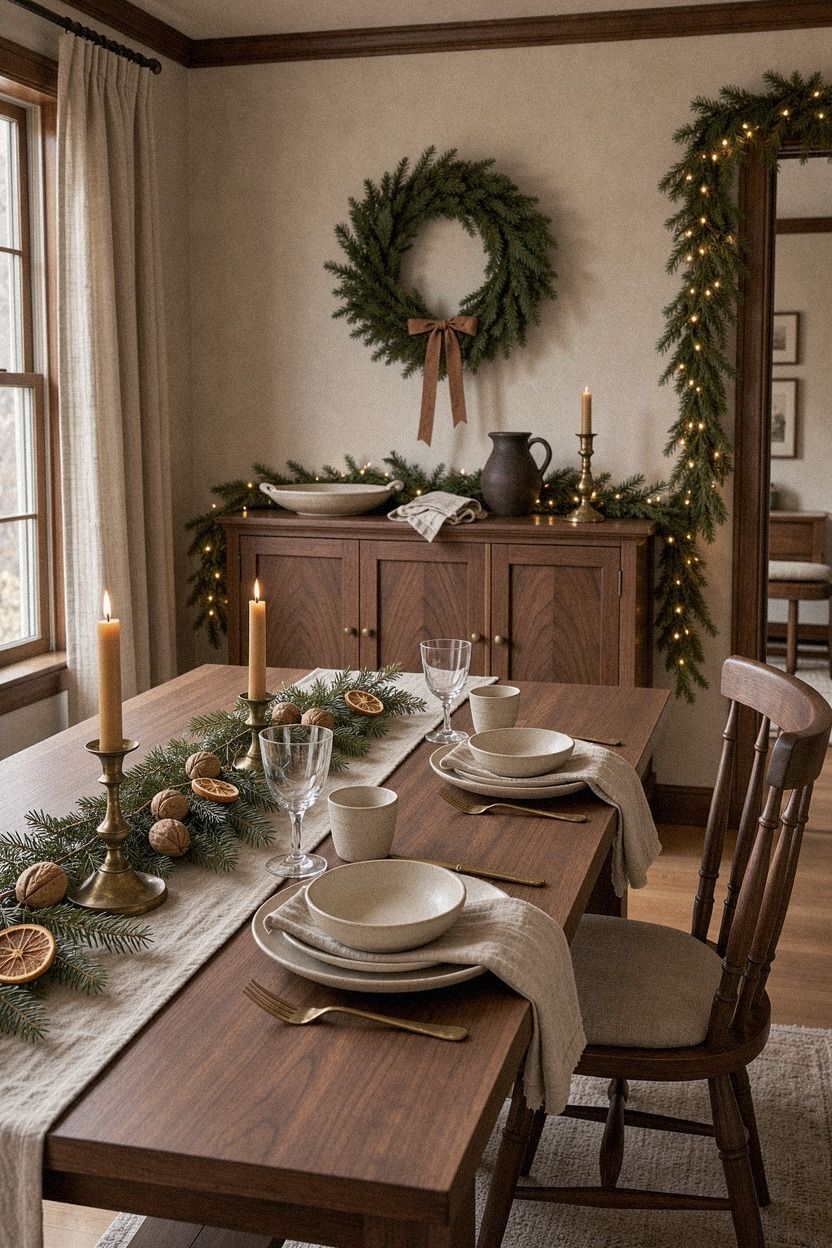
The fastest way to lose your 20-minute table is to start buying random seasonal pieces. If one piece deserves the budget, make it a useful focal point, such as a backlit translucent onyx tray or a stone serving board.
13Serve from One Warm, Textured Zone
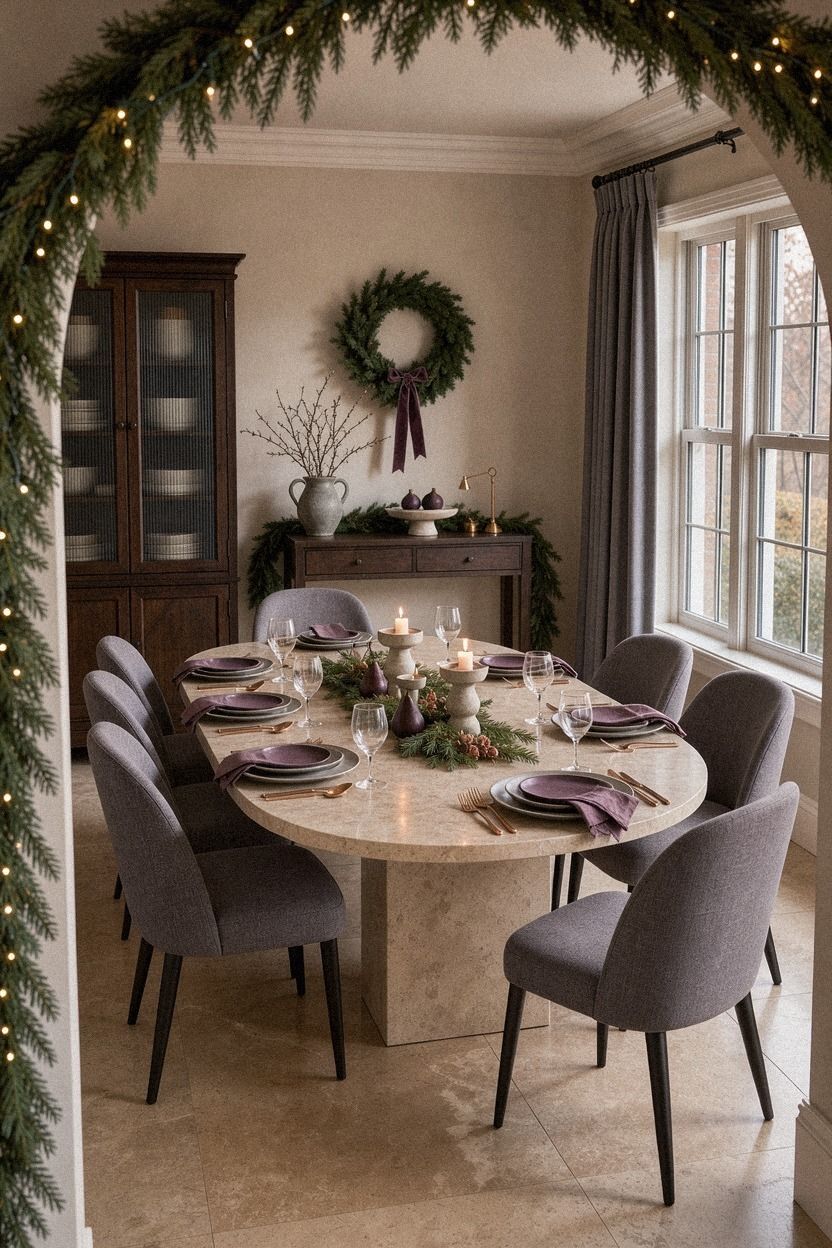
A table looks more relaxed when the food has a clear landing place. Move serving dishes to one end or to a nearby sideboard, then keep the center open for conversation. Your guests won't have to pass every bowl across the candles, and you'll have room for water glasses.
Create a serving zone with a book-matched walnut tray, a linen mat, or even a folded tea towel beneath hot dishes. I like mixing walnut with cream ceramics and aged-brass details because it gives the food a warm, textured frame.
Don't place every dish on the table just because you cooked it. Keep backup portions in the kitchen and refill as needed. That choice makes your Christmas table feel less crowded, and you'll enjoy dinner more when you're not guarding a tower of gravy beside someone's elbow.
A woven bread basket can hold rolls, napkins, or extra cutlery before dinner begins. Once everyone is seated, move anything unnecessary away. The table should support the meal, not display every item in the kitchen.
This is one of the cheapest improvements you can make. Clearing even twelve inches of space can make the entire setting feel more generous and comfortable.
14Finish with a Two-Minute Host Check
Set a timer for two minutes after everything is placed. Walk around the table and look at it from a seated position, not from the doorway. Your eye will catch the low candle that needs moving, the plate with no fork, and the centerpiece branch blocking someone's view.
Check four things: every guest has a clear place, every flame is secure, the serving dishes have room, and the colors repeat without taking over. A warm travertine bowl can hold water or greenery, while plum linen, grey ceramics, and one rose-gold detail repeat the palette.
Look at the table from both ends. One side may feel heavier because the tallest vase or darkest dish is concentrated there.
Move one object, then stop. Constant adjusting usually makes the arrangement less confident.
I wouldn't keep adjusting after that. At some point, you have to sit down. The slightly crooked napkin won't matter once people are laughing, and your table will feel more inviting because it was made for living, not inspection.
That final check is worth more than another purchase. It protects the practical details that make a beautiful table genuinely enjoyable.
Why a Fast Christmas Table Still Feels Personal
I used to believe a holiday table needed a grand centerpiece, matching china, and a full afternoon of preparation. That idea made me avoid hosting because the imagined version of Christmas looked expensive and exhausting.
Then I watched people ignore the centerpiece and talk for three hours about the bowl of clementines in the middle. The table wasn't memorable because it was flawless.
It was memorable because nothing stopped anyone from reaching, eating, or lingering.
My best tables now begin with one decision: what should guests feel when they sit down? If I want warmth, I use tactile linen, low candlelight, and wood.
If I want a sharper, more elegant mood, I reduce the greenery and bring in dark ceramics. The palette follows the feeling, not a seasonal shopping list.
That's why Farrow & Ball Hague Blue No.30 works so well with ivory, copper, and brass. It doesn't shout Christmas, but it gives the room a quiet winter depth. You can create the same effect with a muted runner, a shaded lamp, or a large bowl of green branches.
I've also learned that speed improves the design. When you have twenty minutes, you can't pile on every idea you saved. You choose the runner, the dishes, the light, and one natural detail.
That restraint makes the table breathe.
A crowded centerpiece can be impressive, but it makes conversation awkward and serving annoying. I'd rather see the wood of the table, the shine of a spoon, and the little mark left by a handmade bowl. Those details make a setting feel inhabited.
If your table feels unfinished, don't buy another ornament. Change the light or remove one object. The biggest improvement often comes from subtraction, especially when your room already has seasonal color in the tree, stockings, or nearby furniture.
Your guests won't count the candles. They'll remember that the room felt soft, the food was easy to reach, and you sat down with them. That is the real luxury of a fast Christmas table.
A Few Things Worth Answering
What is the best way to set a Christmas table in 20 minutes for a small room?
I use a low garland with cream dishes because it keeps sightlines open. Add IKEA 365+ white plates, one narrow runner, and three low candleholders.
Keep serving dishes on a sideboard if possible. The table feels warm without losing space for elbows or conversation.
Where can I find Christmas table pieces on a budget?
I look at thrift shops, IKEA, Target, local resale groups, and my own cupboards first. I choose cotton napkins and everyday white dishes over novelty sets. Secondhand candleholders often add more character than new seasonal décor, and I don't need a complete matching collection.
How much does a twenty-minute Christmas table makeover cost?
I usually spend about $20 to $100 when I already have dishes and buy only a runner, candles, or greenery. A larger dining-room update can reach $200 to $800 if it includes paint, lighting, textiles, and art. I decide the budget before shopping so small extras don't quietly take over.
Can I create a Christmas table on a very small budget?
Yes. I begin with three free moves: rearrange the dishes, clip greenery from what I already have, and use glass jars as candle vessels. If I want a richer finish, I add one rust-colored linen napkin or thrifted brass piece instead of replacing everything.
Is this approach worth using in a small space?
Yes, because a small table forces me to choose useful pieces. I keep the centerpiece low, use one narrow runner, and move extra serving dishes to a sideboard. Guests have more room, and the table feels intimate instead of crowded.
Can I create this look in a rental?
Yes. I use no-damage changes such as a removable tablecloth, battery candles, a tension rod for nearby fabric, and leaning art behind the table. I can create a warm teak and cream palette without painting, drilling, or changing the rental light fixture.
Where I'd Start First
If I had to pick one, I'd start with the low garland. It gives your table texture, scent, and a clear center without stealing conversation space.
Add three candles and stop there. Your guests came for dinner, and the table will feel better once you’re sitting at it too.


