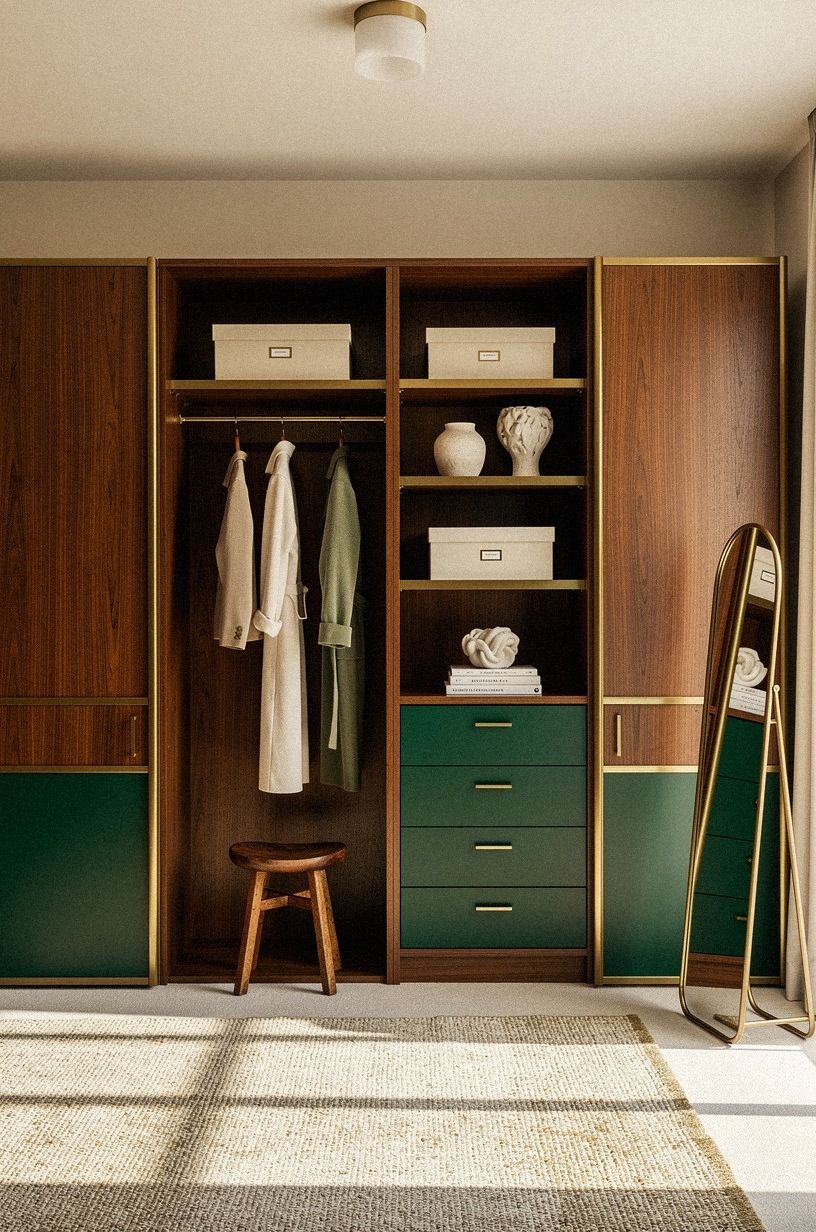
12 Spare Room Dressing Room Ideas to Finally Use That Empty Room
13 october 2026A spare room dressing room works best when you treat it like a real room, not a storage closet. I learned that after cramming one wall with mismatched racks and leaving the center useless. With a 6x8-foot room, thoughtful lighting, and one strong material choice, you can build something warm, practical, and inviting. Start smaller than you think.
If you’re planning the layout first, begin with the empty-center principle, then build storage around it. Your lighting plan matters just as much as the racks.
- Float a Modular Wall for Spare Room Dressing Room Ideas
- How Can You Layer the Three-Height Light Stack?
- Choose Open Rails Over a Bulky Wardrobe
- Paint the Walls, Then Let the Clothes Work
- Why Protect the Empty-Center Principle?
- Frame Your Mirror With a Material Moment
- Sort Clothing by Color, Then by Function
- Pair Two Woods, Not Three
- What Can Every Door Hold?
- Create a Soft Seating Landing Spot
- Make the Ceiling Earn Its Space
- Style the Dressing Room Display
1Float a Modular Wall for Spare Room Dressing Room Ideas
A wall-mounted system gives your clothes a home while keeping the floor airy. Leave enough breathing room below the hanging garments so the room doesn’t feel like a retail stockroom. A cream-finished modular unit can hold folded pieces, shoes, and baskets without demanding a full built-in budget.
Open cubbies work well here because you’ll see what you own before buying another black sweater. Use double-hang rods at 42 inches and 84 inches when your ceiling allows it. Those heights cover shirts, trousers, and shorter jackets without wasting the upper wall.
Reserve one section for dresses and coats, even if it’s smaller. A single cream shelf with an unlacquered brass rail across the top creates a warm horizontal line and keeps bags within reach. Repeat that finish on a bench or picture frame so the storage feels designed.
If you’re installing the system yourself, mark every stud before drilling. A basic rail-and-shelf arrangement may cost $300 to $900, while a larger modular setup with drawers can reach $2,000. Spend first on the parts you’ll touch every morning.
A slim drawer tower can sit at one end without closing off the room. Choose drawers that are no deeper than 18 inches, and keep the walkway at least 30 inches wide. That little bit of discipline will make the seating area easier to place later.
You don’t need every accessory on day one. Install the hanging rail, live with it for a week, and notice where bags, belts, or folded knits naturally land.
Then add the pieces that solve actual friction. That’s a relief!
2How Can You Layer the Three-Height Light Stack?
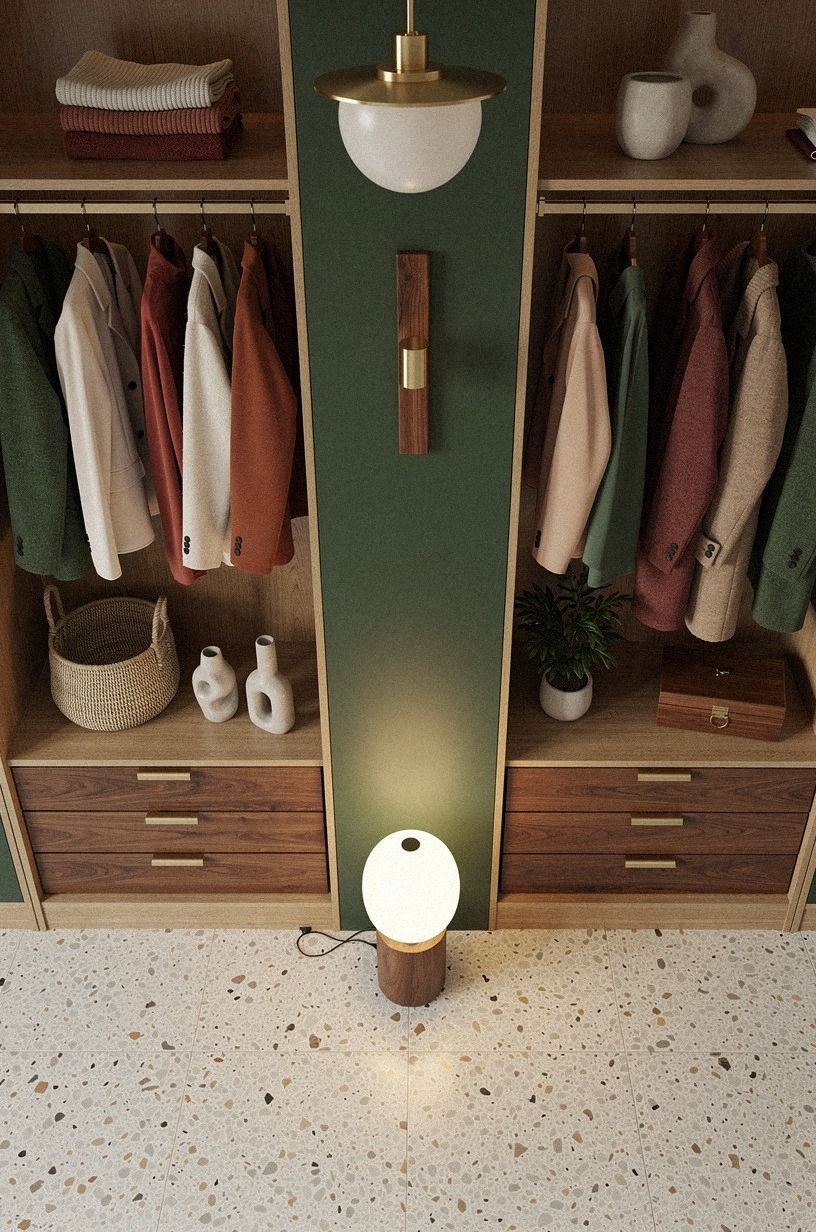
Overhead lighting alone makes a dressing room feel flat and oddly harsh. Build light in three levels: a ceiling fixture, a wall or mirror light, and a low lamp on a dresser. This small bedroom dressing room change is easy to notice because the room becomes softer before the fixtures become obvious.
A warm bulb reflecting off natural oak will keep the room grounded without making it icy. Choose bulbs around 2700K for atmosphere, then add brighter task lighting near the mirror. You’ll want accurate color when comparing forest green, rust, and charcoal clothing.
Hang a slim picture light above the mirror, then add a small table lamp on an oversized-chip terrazzo dresser. A simple LED rod lighting strip can brighten dark hanging sections, especially if the room has one window. Side light will show color more honestly than a single bulb directly above your head.
A flush-mount fixture may cost $80 to $250, while plug-in picture lights often stay below $100. You don’t need a chandelier. You need light that reaches your face, your clothes, and the floor.
Look for bulbs with a color-rendering index of 90 or higher if you can find them. Your clothes won’t shift strangely between the mirror and the window, and makeup will be easier to judge. Good light changes the room!
If your electrical layout is limited, use one hardwired ceiling fixture and two plug-in sources. Hide cords with paintable raceways or place the lamp near existing outlets. You’ll get the layered effect without opening the walls.
3Choose Open Rails Over a Bulky Wardrobe
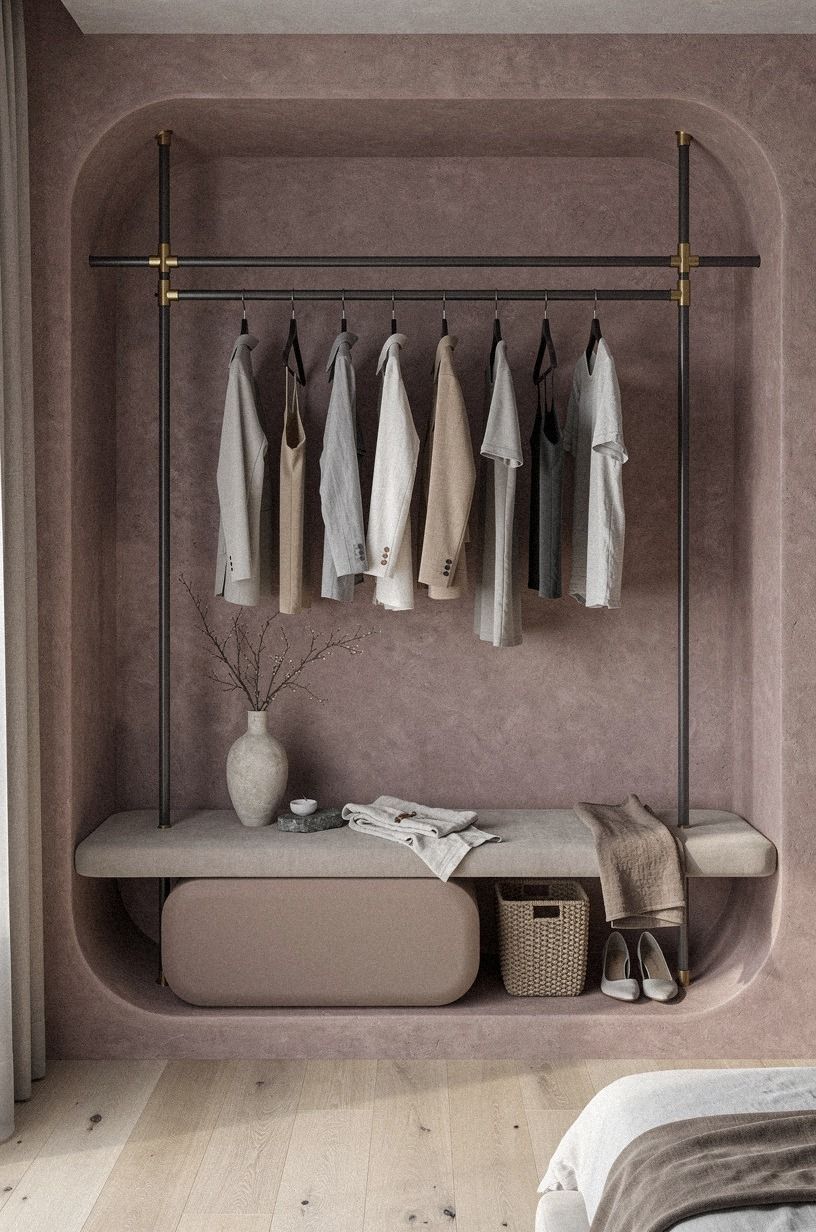
Open rails make a dressing room spare bedroom feel larger because your eye can travel through the clothing instead of stopping at a heavy cabinet.
4Paint the Walls, Then Let the Clothes Work
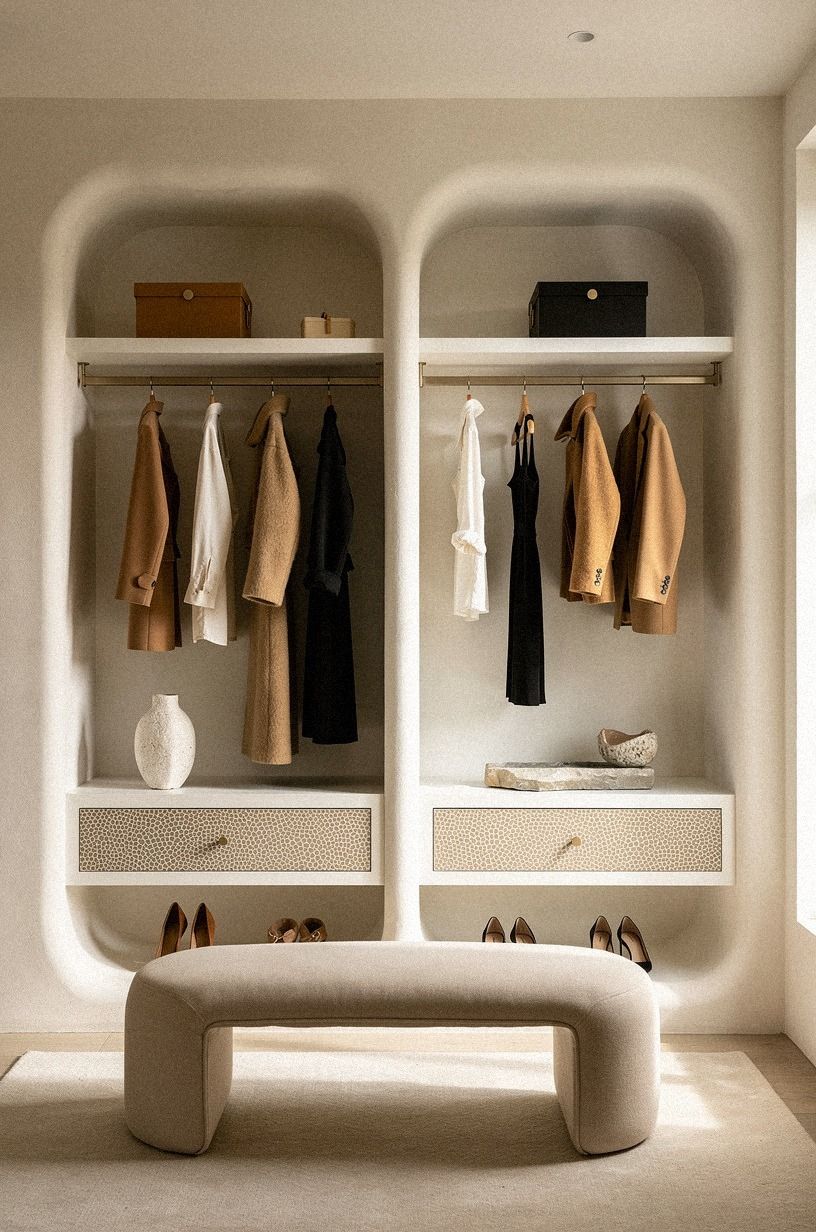
Paint can make an empty room feel intentional before you install a single shelf. My strongest pick is Benjamin Moore Pale Oak OC-20 for a small room with limited daylight. It’s gentle and warm enough to flatter clothing, while still quiet beside patterned dresses or colorful shoes.
For a deeper look, try Sherwin-Williams Alabaster SW 7008 on the walls and reserve darker color for the trim or ceiling. In a room with strong morning light, camel or soft black can feel remarkably calm. Test every sample beside the mirror, not only near the window.
The color you see at noon won’t be the color you see while getting ready at night. Paint two-foot squares and live with them for at least one full day. A quart of sample paint usually costs $8 to $15, which is cheaper than correcting a whole room.
Don’t paint every surface before planning your storage. Measure, mark, install, then finish the edges. I made that mistake once, then had to touch up around a rail system that sat lower than expected.
If the room has little natural light, keep the ceiling one shade lighter than the walls. A soft Benjamin Moore Swiss Coffee OC-45 can add warmth without making the room feel yellow. A camel shagreen accent or black hardware can supply the visual contrast.
A small room can handle color, but it needs one quiet surface to absorb the visual noise. If you choose saturated walls, keep the shelving simple. If you choose pale walls, let the bench or ceiling carry more personality.
5Why Protect the Empty-Center Principle?
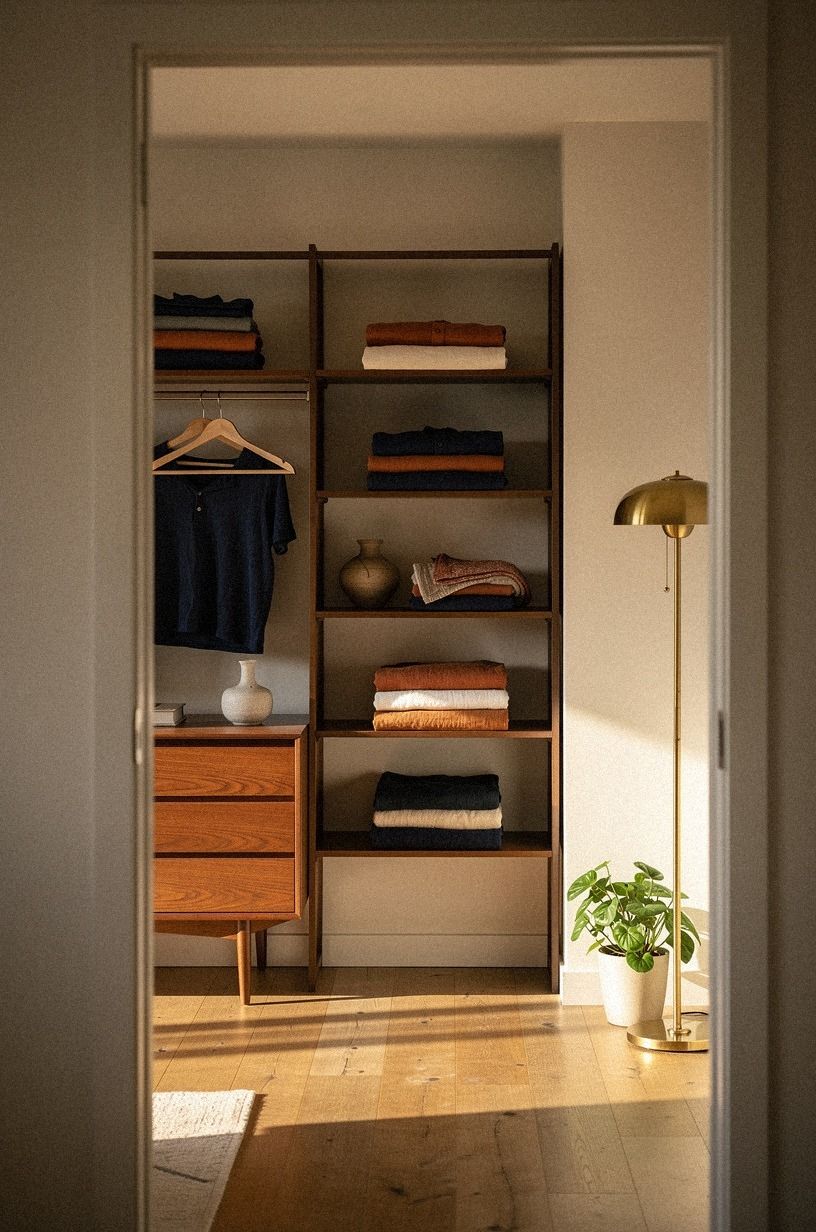
A dressing room needs a clear center more than it needs one more cabinet.
6Frame Your Mirror With a Material Moment
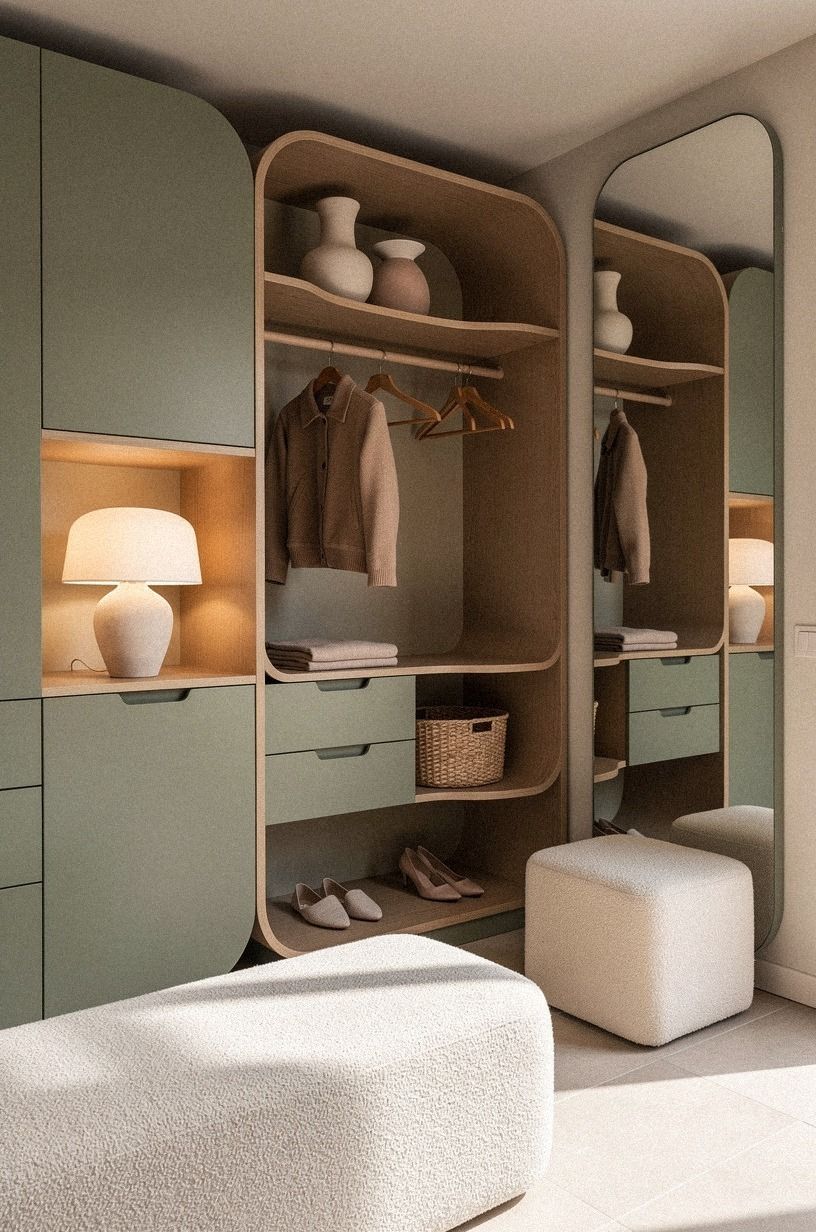
A full-length mirror can become the anchor of your spare room ideas when you give it enough presence. Choose a wide mirror with a natural wood frame or a thin wood surround, then position it where daylight reaches the glass.
You’ll see texture, color, and proportion more clearly there than beside a dark corner. A mirror between 24 and 30 inches wide usually feels useful without overwhelming a compact room. Leaning mirrors can work, but secure them carefully.
Add a small bench beneath the mirror if you have room. A sage organic bouclé cushion gives you a soft place to sit while pulling on shoes and introduces a luxurious note without demanding a full furniture overhaul.
You don’t need matching upholstery elsewhere. One textured seat often feels more inviting than a room of identical fabric. A framed full-length mirror typically costs $150 to $500, while custom detailing can push the price much higher.
If you prefer a built-in look, mount a simple mirror between two narrow shelves. That arrangement creates a practical station for perfume, jewelry, and daily accessories. Keep the shelf depth shallow so the mirror remains the visual focus.
A narrow mirror can be more useful than a huge one if it leaves room for a hook rail beside it. Put tomorrow’s outfit there, along with a small catchall for earrings or keys. The mirror then becomes part of your routine instead of a decorative afterthought.
7Sort Clothing by Color, Then by Function
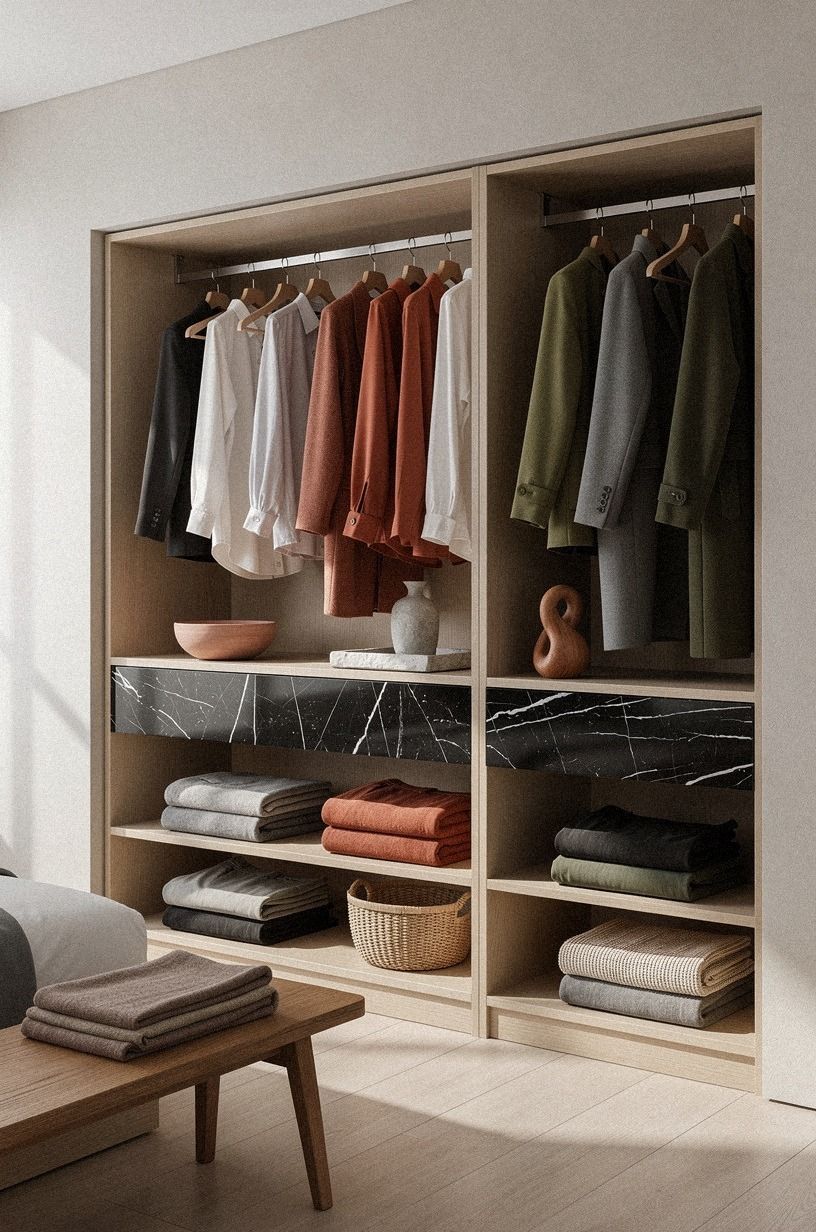
Organizing clothes by color creates a bold visual line, but sorting only by color can make your daily routine annoying.
8Pair Two Woods, Not Three
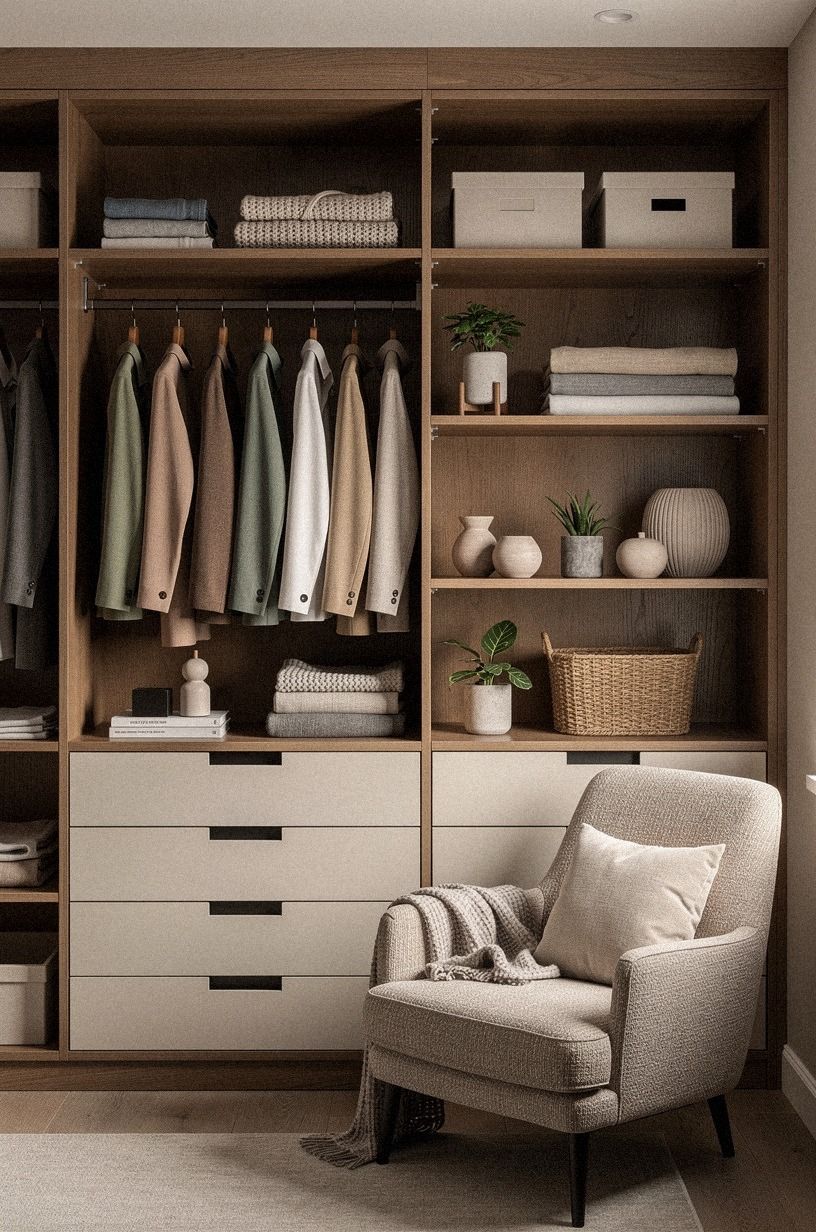
The Two-Wood Rule keeps a dressing room from looking accidental: choose one main wood and one supporting tone. Pair warm clay-toned oak shelving with a darker oak bench, then repeat aged brass in a frame or handle.
You’ll get contrast without turning the room into a sample board. Avoid mixing three or four wood finishes because a small room rarely has enough visual distance to absorb them. Let one finish carry most of the room.
If you’re buying pieces over time, bring home a linen sample or photograph before committing. Lighting can make one finish look orange and another look gray. A compact bench in deep-pile mohair velvet can warm pale shelving, while a painted dresser keeps the palette softer.
Repeat each wood at least twice so your choices look deliberate. The second appearance can be small: a tray, picture frame, stool leg, or drawer pull. That repetition creates connection without making the room feel matched.
For a lower-cost version, use a painted dresser as the supporting element. A deep mushroom, muted green, or warm charcoal finish can bridge different woods. A quart of cabinet paint may cost $25 to $50, and new hardware can change the entire piece.
Metal can act as the third material without becoming a third wood. Choose either aged brass or matte black for the rods, hooks, and light fixture. The repeated metal detail will pull the room together more quietly than another furniture finish.
9What Can Every Door Hold?
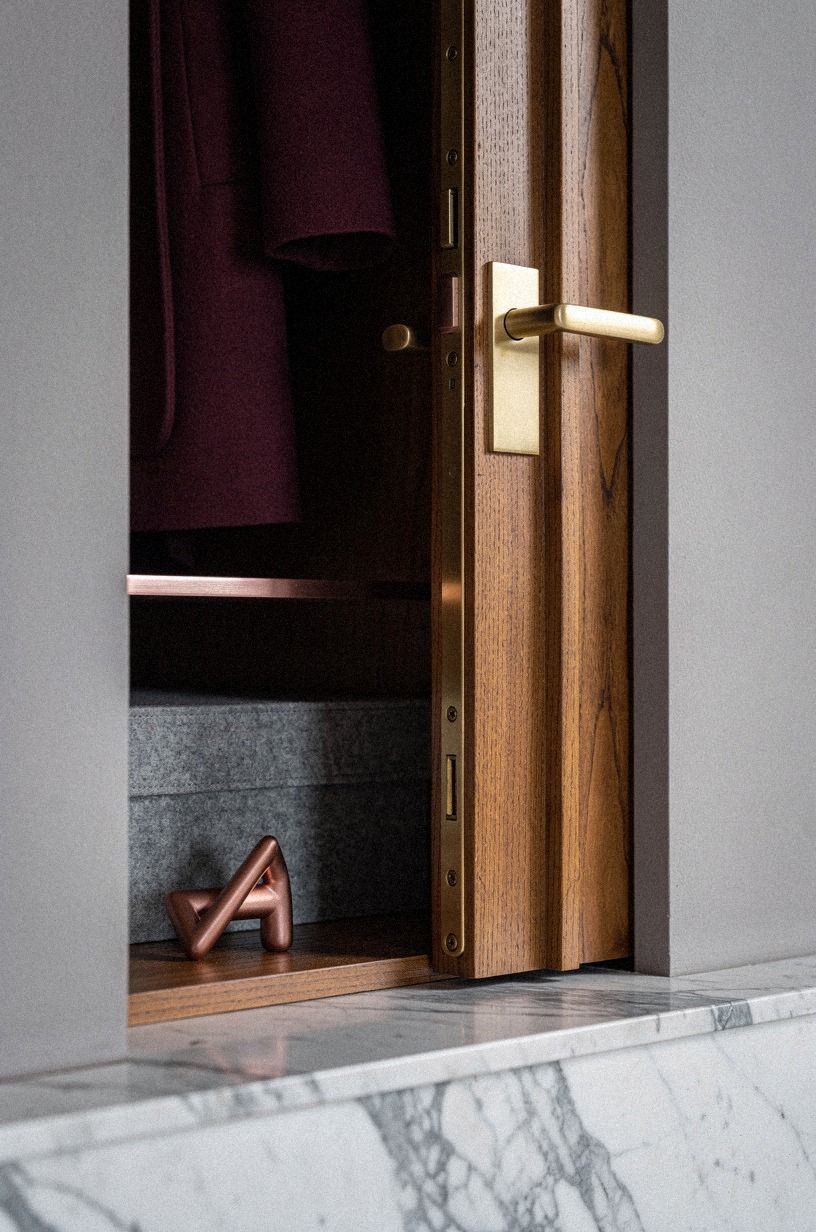
The back of a door is valuable storage in a small bedroom dressing room, especially when your walls are already full.
10Create a Soft Seating Landing Spot
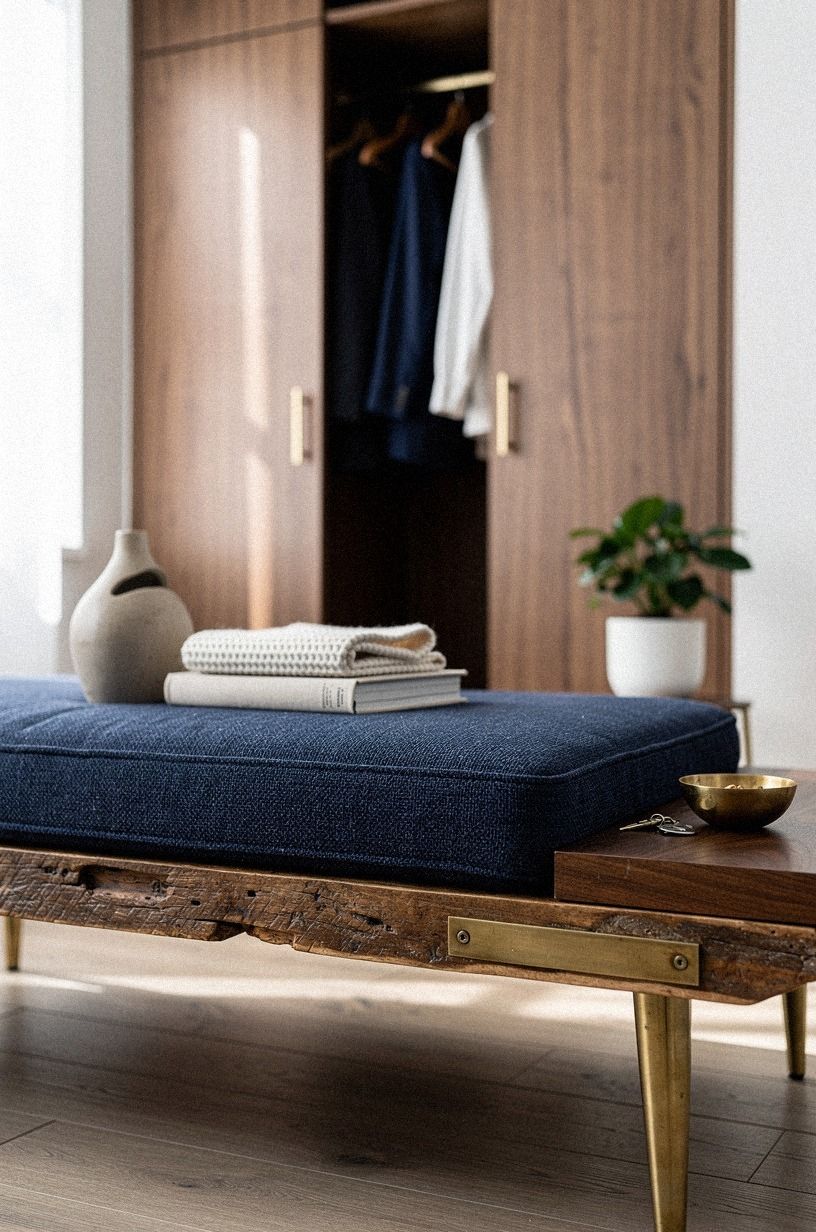
A dressing room feels more welcoming when you can sit down, even briefly. Place a narrow bench or slipper chair near the mirror, but keep the finish practical. Reclaimed weathered teak has enough character for regular use and gives the room a warm, grounded finish.
If you have very little floor area, a small stool can do the same job without interrupting the walkway. Look for a seat under 18 inches deep. A simple upholstered stool may cost $80 to $250, while a custom bench can exceed $700.
Choose one seating color that relates to the clothes you wear most. Navy, soft white, and walnut stay useful longer than a trend-driven shade. You won’t gain much from adding a chair that blocks a drawer.
Test the path with a laundry basket before buying anything. If you can move through the room while carrying clothes, your choice is probably right. If you can’t, choose the smaller seat.
A bench with hidden storage can hold shoes, folded denim, or seasonal accessories. Keep the interior organized with shallow bins so the storage doesn’t become another place for clutter to disappear.
If the mirror is opposite the bench, leave enough space to stand back and see your full outfit. That distance can matter more than the bench’s silhouette. The room should help you make decisions, not force you against the wall.
11Make the Ceiling Earn Its Space
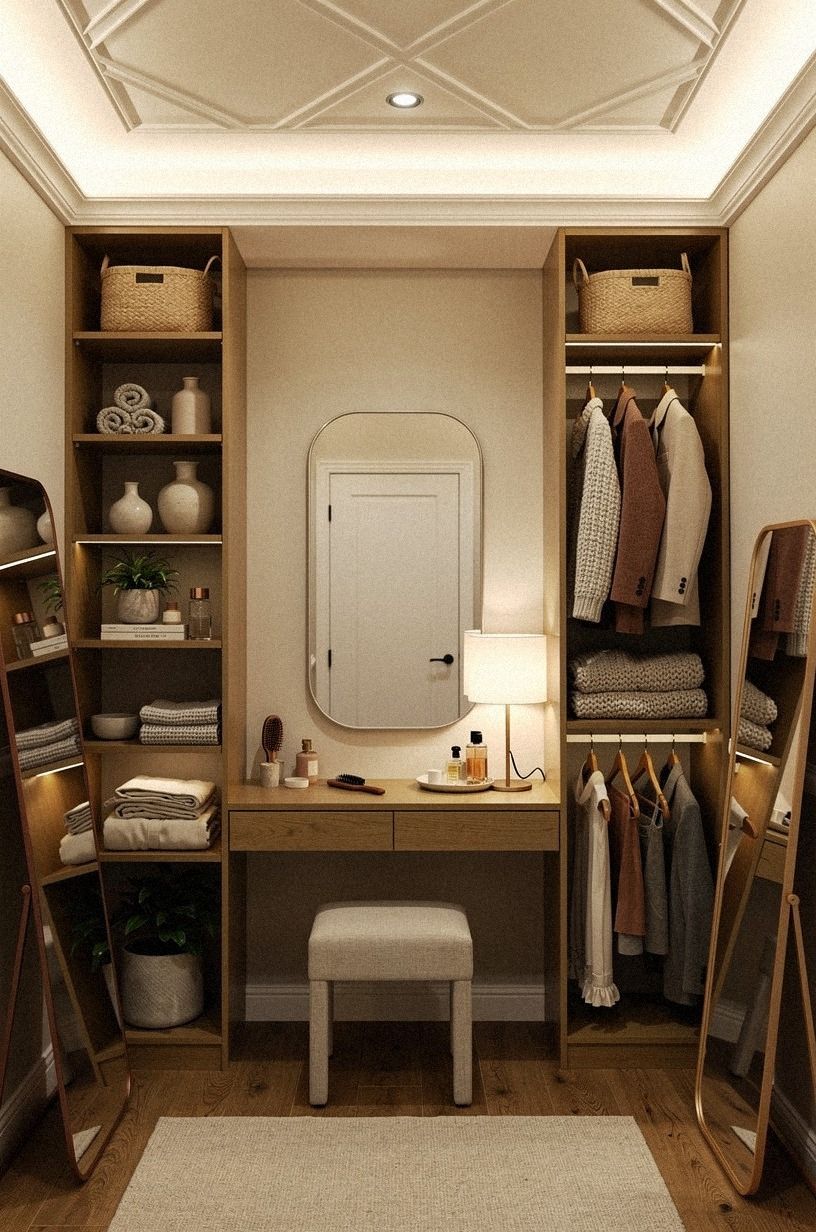
The ceiling is often ignored in spare room dressing room ideas, yet a painted ceiling can make a compact room feel more finished. Use the wall color at full strength for a moody effect, or choose a lighter version if you want the ceiling to recede.
Sherwin-Williams Alabaster SW 7008 can keep a low room bright, while a pale warm neutral creates a peaceful envelope around darker cabinetry. In a taller room, a muted ceiling color can make the proportions feel more intimate.
You can also add a simple flush mount with a cream shade or Calacatta marble detail with gold veining. Skip anything too ornate if your storage is already visually busy. The ceiling fixture should give useful light without competing with the mirror or clothing.
A good flush mount often costs $100 to $350. Installation may cost more if the electrical box needs adjustment, so check the existing fixture before choosing a replacement.
If you’re renting, a removable fixture swap may be possible with the landlord’s approval. Your room doesn’t need expensive architecture to feel sophisticated. It needs a few deliberate surfaces that agree with one another.
A painted ceiling can also help define the dressing room as a destination rather than an overflow space. Even a subtle shift in tone tells your eye that the room has been designed as a whole.
12Style the Dressing Room Display
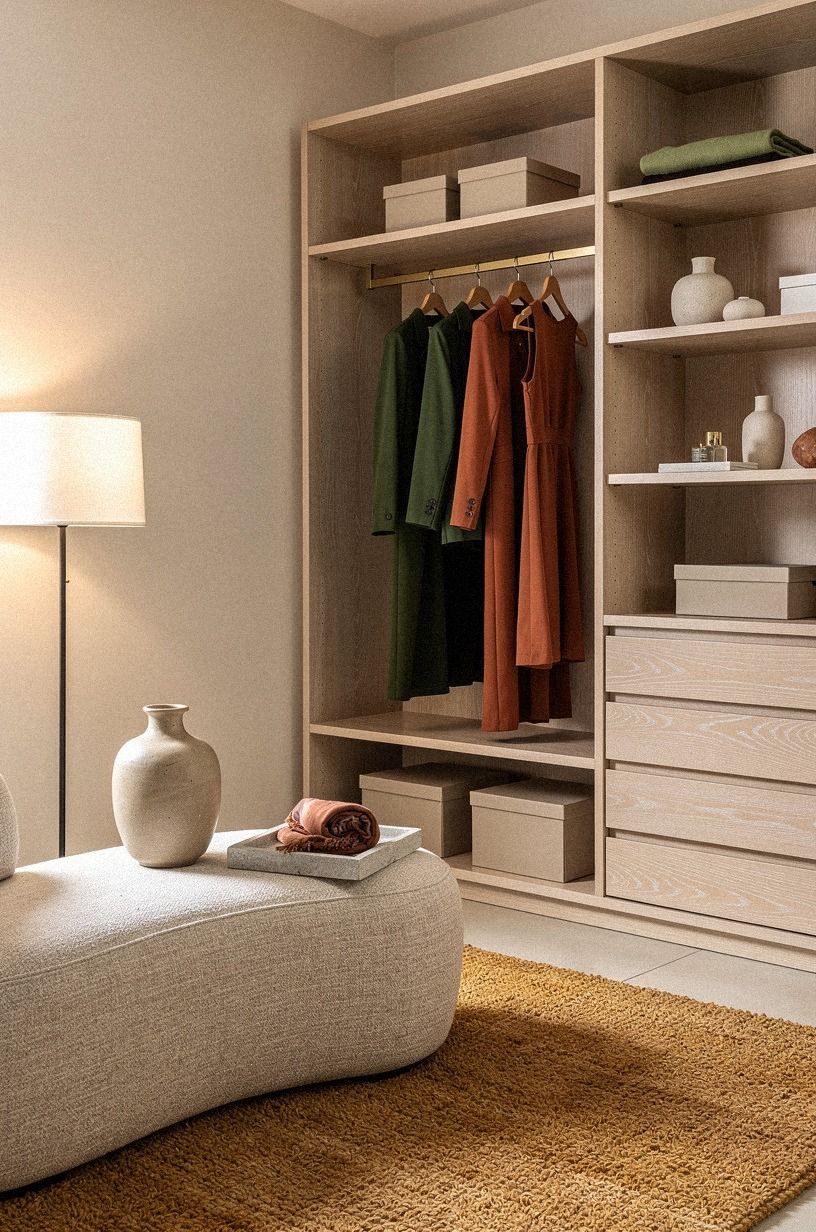
A dressing room can show personality without becoming a showroom.
What These Spare Room Ideas Cost in Real Life
The honest answer is that your budget can land anywhere from a few hundred dollars to a custom-room investment, depending on whether you’re adding storage or commissioning cabinetry. A free version might use furniture you already own, a rearranged rail, and paint left from another project.
A budget system can still feel warm if you spend first on the pieces you touch every day. Lighting, a good mirror, and practical storage usually matter more than decorative upgrades.
A few specific items can help you decide where your money belongs:
If your room is smaller than 6x8 feet, measure every opening before ordering storage. A 4x4-foot room can still work, but you’ll need to protect the center path. You can save on cabinetry and spend on lighting, or choose open rails and invest in one beautiful mirror.
I’d rather see a simple system with good light than expensive drawers hidden in a dim room. The room needs to help you get dressed, find things, and reset easily. That practical comfort is where the design starts to feel special!
For most people, the best first purchase is a reliable light source or a full-length mirror. Those two changes improve the room immediately, even before the storage is finished. A polished finish can wait until the layout proves itself.
Why the Spare Room Dressing Room Is Having a Moment
The spare room dressing room is returning because many homes have one underused room that doesn’t need to become another guest bedroom. People want storage that feels personal, and they’re tired of keeping every garment in a dark closet.
A warm, organized room can support dressing, packing, folding laundry, and planning outfits without asking you to renovate the entire house. Even a narrow room can feel valuable when the layout respects movement.
I’ve also noticed a shift away from storage that hides everything behind identical doors. Open rails, fabric panels, painted shelves, and small islands feel more inviting because they let the room behave like a room.
You’ll still need discipline, but the space gives you a reason to maintain it. That’s a better trade than building a rigid system you never enjoy using.
Your empty room already has value. The design simply makes that value visible!
The most successful versions feel personal rather than staged. They have useful light, a place to sit, and enough clear floor to move without thinking. That combination makes the room feel like part of the home instead of an expensive closet.
The Questions Worth Answering First
What is the best spare room dressing room idea for a small closet?
The best choice is a wall-mounted modular system with double-hang rods, one full-length mirror, and a clear center path. An IKEA KALLAX unit can handle folded items and accessories, while open rails keep a small room airy. Choose shallow shelves and leave enough space for your body to move comfortably.
Where can I buy spare room dressing room pieces on a budget?
You can find useful pieces at IKEA, Wayfair, and Target, then fill gaps through Facebook Marketplace or a local thrift shop. Look for solid dressers, narrow benches, and mirrors with sturdy frames. Your best savings usually come from reusing furniture, rather than buying the cheapest complete system.
How much does a spare room dressing room makeover cost?
A basic US setup typically runs $150-$800 for rods, shelves, bins, and lighting. A mid-range modular system with drawers often reaches $2,000-$6,000, while custom millwork, an island, and lighting can cost $8,000-$25,000. You can spend nothing on furniture if you already own suitable pieces.
Can I create a spare room dressing room on a budget?
Yes, and you can begin with three low-cost moves: rearrange existing furniture, use the back of the door for hooks, and improve the light before buying storage. Paint can wait. Start with a clear walking path, then add rails, bins, or a secondhand dresser as your needs become obvious.
Is a spare room dressing room worth it in a small space?
Yes, because a small room forces you to edit your storage and protect useful floor space. Keep the center open, use double-hang rods at 42 and 84 inches, and choose shelves around 14 inches deep. Your room will feel more peaceful when every item has a reachable place.
Is a spare room dressing room a good idea for a rental?
Yes, especially when you use removable or low-impact changes. Try tension rods, freestanding racks, peel-and-stick paint alternatives, and furniture that doesn’t require wall mounting. Confirm the lease before drilling, and keep heavy bags on freestanding supports rather than temporary hooks.
The Change I’d Make First
If I had to pick one, I’d start with the lighting. You can’t judge clothing in a gloomy room, and better light makes even basic rails feel intentional. Move one lamp into your spare room tonight and see what changes.


