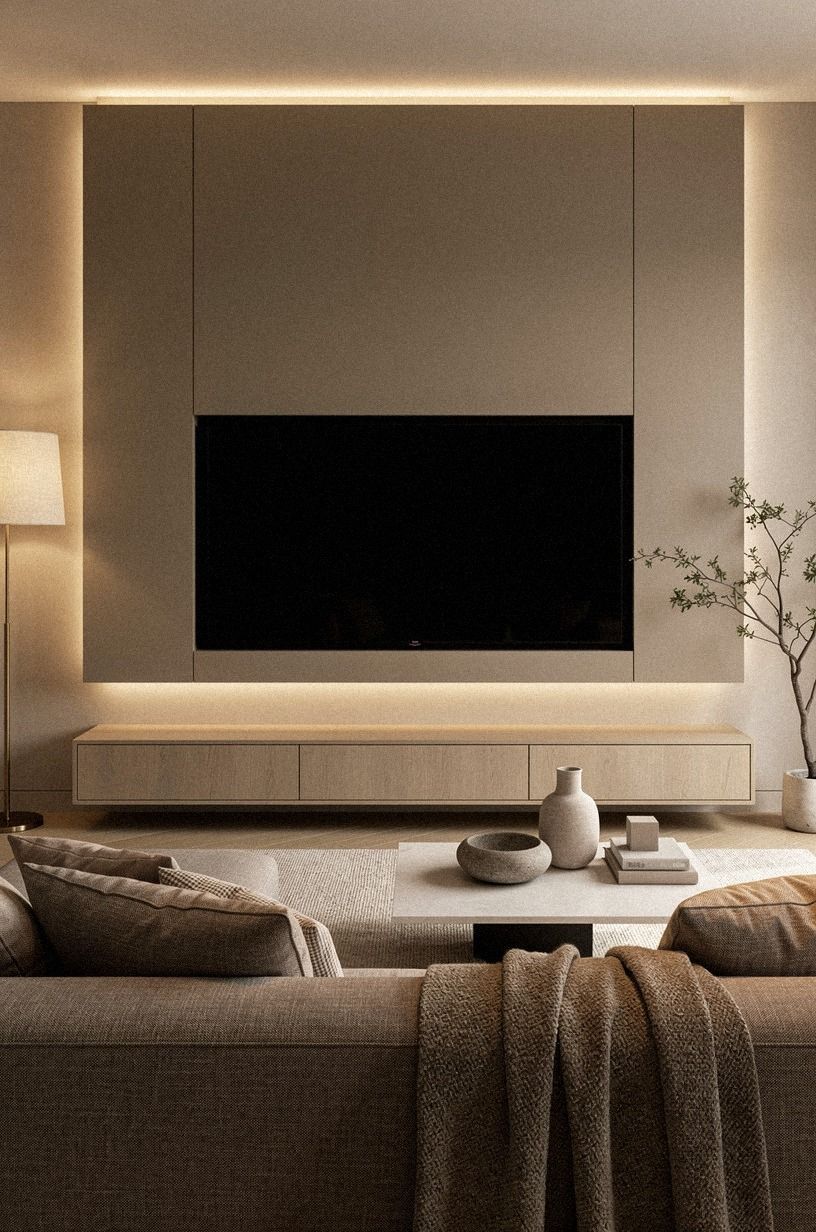
I Built a Lounge Media Wall for a Relaxed, Cinematic Vibe at Home
13 october 2026Lounge Media Wall Ideas for a Relaxed, Cinematic Vibe can work in a living room for about $300-$1,200 at the budget tier when paint, lighting, and proportion come first. I built mine around a narrow wall, one oversized screen, and a sofa that had nowhere to hide. The result feels warmer, calmer, and far more intentional.
Editor's note: Start with the background, then solve glare, storage, and seating distance. The wall doesn't need custom cabinetry to feel finished.
Here's what it looked like before
The wall held a television on a temporary bracket, two visible cables, a glossy black console, and a ceiling light that made every evening feel like a waiting room. I’d pushed the sofa too close to the screen because the room was narrow, and the problem was obvious from the doorway.
I didn’t want a full renovation. I wanted the wall to feel calmer without losing storage or making the screen disappear completely. My first instinct was a dramatic built-in, but that would’ve swallowed the room.
The better decision was smaller: improve the background, lower the glare, and give your eye somewhere softer to land.
That shift matters. A media wall can feel considered without looking like a showroom installation. If your room has a similar problem, compare its proportions with these small living room ideas before buying anything.
- Frame the screen with a calm, matte surround
- Float the console using the Two-Wood Rule
- Can Three Heights Make a Lounge Feel Softer?
- Lower Is Better: Finding the Right Screen Height
- Let the Cerused Oak Moment Carry the Texture
- What the Amber Wash Does After Sunset
- Quiet Luxury Comes From Restraint
- Anchor the Sofa with the Right Rug Size
- The Three-Object Pause Keeps the Console Calm
- Should the Adjacent Walls Stay Light?
- Mix the TV Room Design with One Personal Object
1Frame the screen with a calm, matte surround
I started with the background because the television looked harsh against plain white paint. Farrow & Ball Green Smoke No.47 gave the wall a muted sage field without making the lounge gloomy during the day. I painted the entire media zone instead of outlining a rectangle, and you’ll want to do the same if your wall is narrow.
A partial block can make the screen look stuck on.
The first coat looked too gray under the ceiling light. The second coat changed everything, especially once I switched off the overhead fixture.
That was my first emotional click, the moment the screen stopped shouting and started belonging. If your room gets little daylight, test a large sample first because sage paint can look almost olive by late afternoon. These living room paint colors are useful if you’re comparing warmer and cooler undertones.
I’d skip a high-gloss finish here. It catches every lamp reflection and every fingerprint. A washable matte finish gives you the cinematic depth you want, while your screen remains the only crisp rectangle on the wall.
For a softer variation, consider Benjamin Moore Saybrook Sage HC-114, Sherwin-Williams Evergreen Fog SW 9130, or a warm olive-sage paint. They’ll all create depth, but they’ll behave differently at night. The right shade should feel enveloping, not oppressive.
2Float the console using the Two-Wood Rule
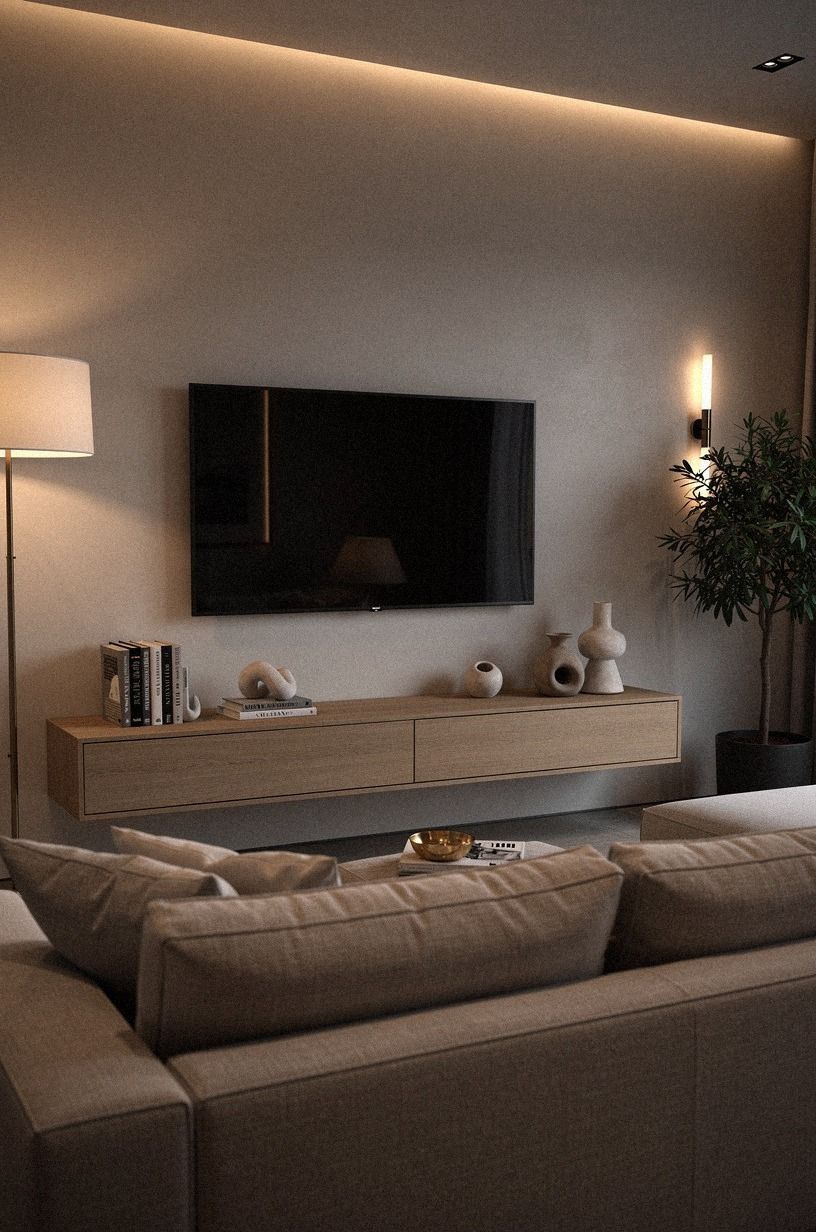
I wanted storage, but a heavy floor console made the whole wall feel bottom-heavy. I chose a floating terracotta-toned cabinet with subtle shagreen accents and kept the wall beneath it open.
That gap matters. You can see the floor, the shadows change through the evening, and your lounge feels less crowded without losing somewhere for controllers and blankets. A floating unit can also sharpen the ideas in this guide to living room storage.
The Two-Wood Rule became my guardrail: one restrained natural wood tone for the coffee table, one darker wood nearby, and no third wood tone competing. I let terracotta, stone, and olive carry the color instead of adding several competing wood finishes. Your eye needs one clear relationship.
Inside the cabinet, I kept the contents boring. Streaming boxes, spare cables, and a small power strip disappeared behind the doors. If you’re renting, a low Article Lenia media unit can create a similar line without drilling into the wall, though the floating version gives you more visible floor and a lighter silhouette.
The cabinet itself doesn’t need to be expensive. A clean shagreen accent, recessed handle, and quiet silhouette will usually look more polished than ornate doors or excessive open shelving. Keep the practical items hidden and let the negative space do some of the decorating.
3Can Three Heights Make a Lounge Feel Softer?
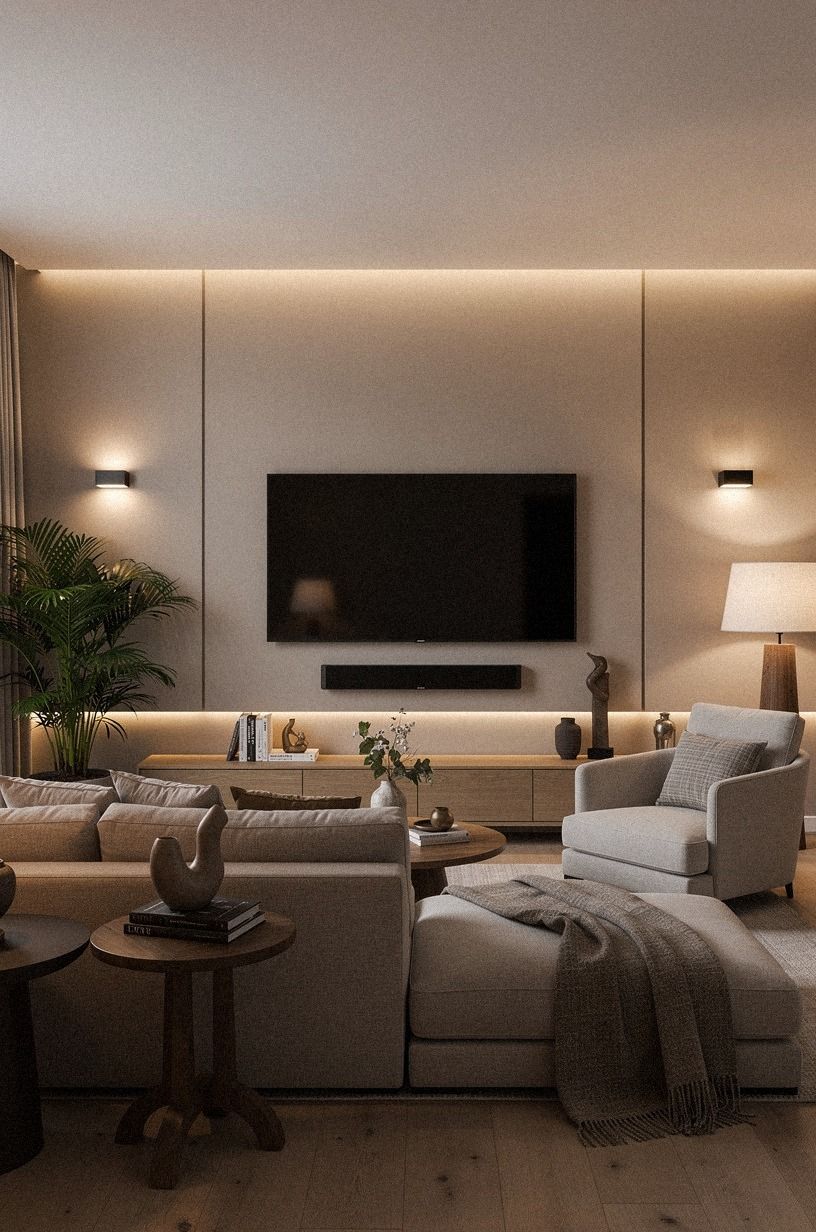
A lounge media wall needs more than one lamp.
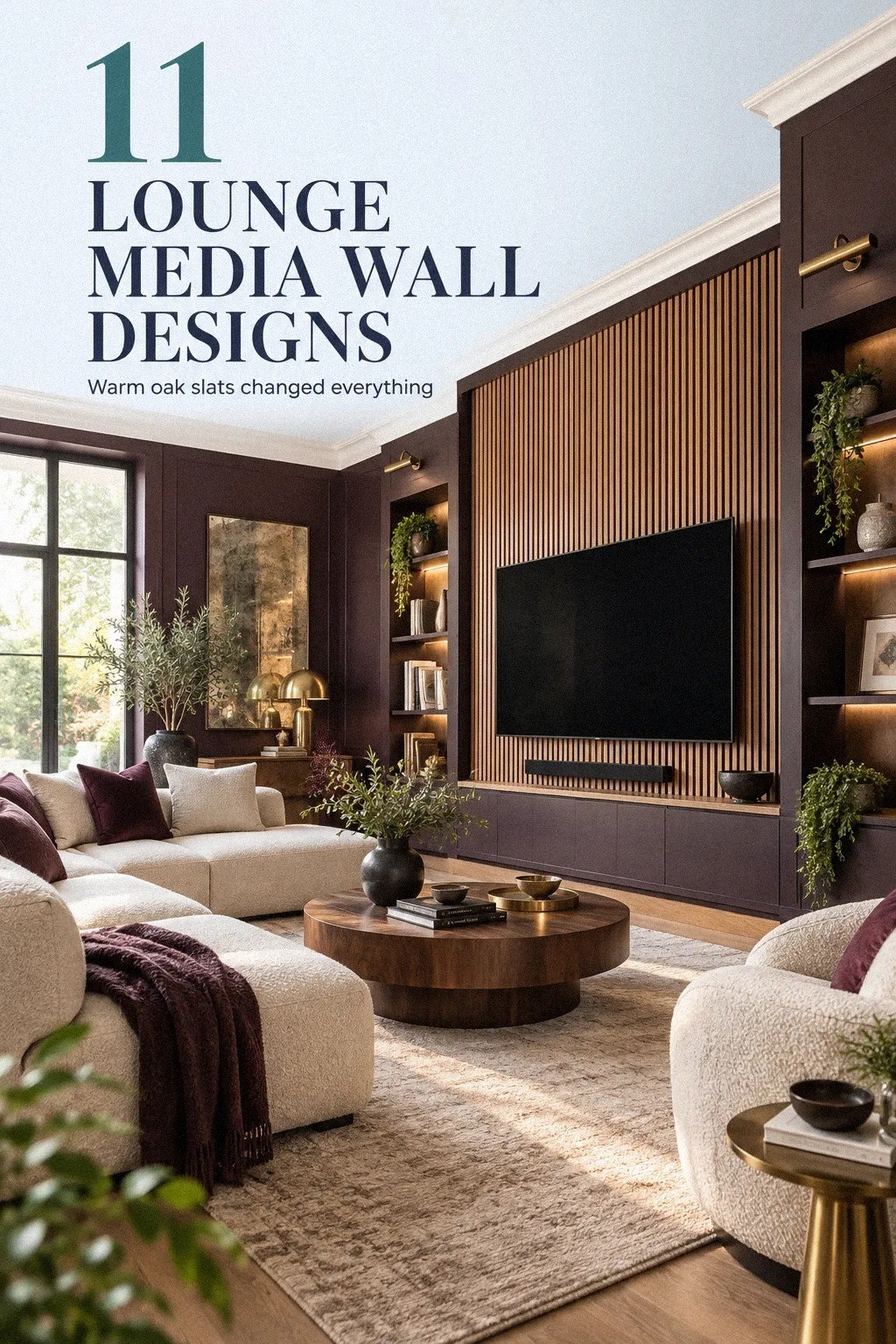
4Lower Is Better: Finding the Right Screen Height
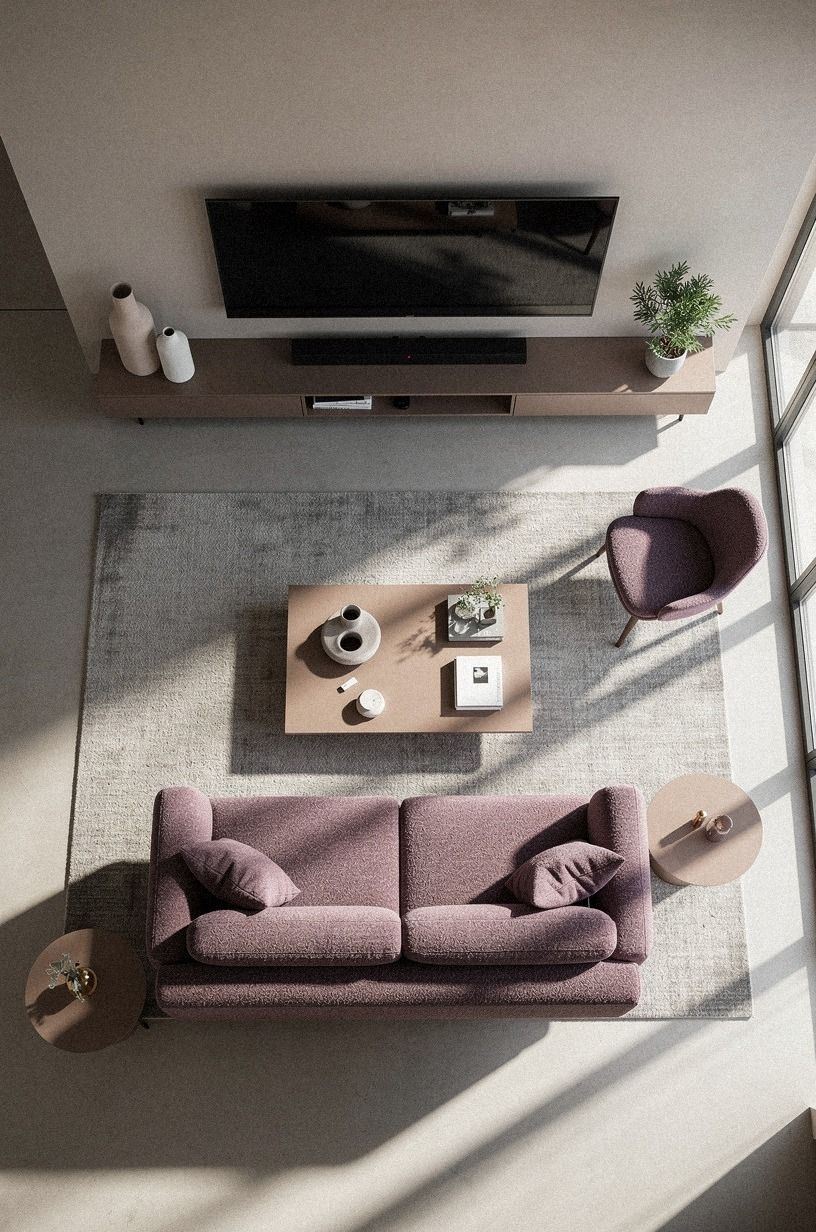
The screen was originally mounted too high, so I lowered it until the center sat near seated eye level. That modest adjustment made the entire wall feel more relaxed. My neck stopped tilting upward, and the television no longer dominated the room from every angle.
People often treat mounting height as a purely technical decision. It’s also visual.
A screen mounted too high creates a large dead zone below it, which makes the console look disconnected. A lower position lets the cabinet, artwork, and seating read as one composition.
The same principle appears in many TV wall ideas.
Before drilling, sit on your actual sofa and look straight ahead. Don’t use a dining chair or stand in the middle of the room. Your everyday posture is the one that matters.
If you use a soundbar, leave enough clearance for the audio to project without creating a thick horizontal stripe. A slim rose-gold soundbar or a gray model can sit more naturally with plum, gray, and soft upholstery, while a pale one may need more deliberate placement.
5Let the Cerused Oak Moment Carry the Texture
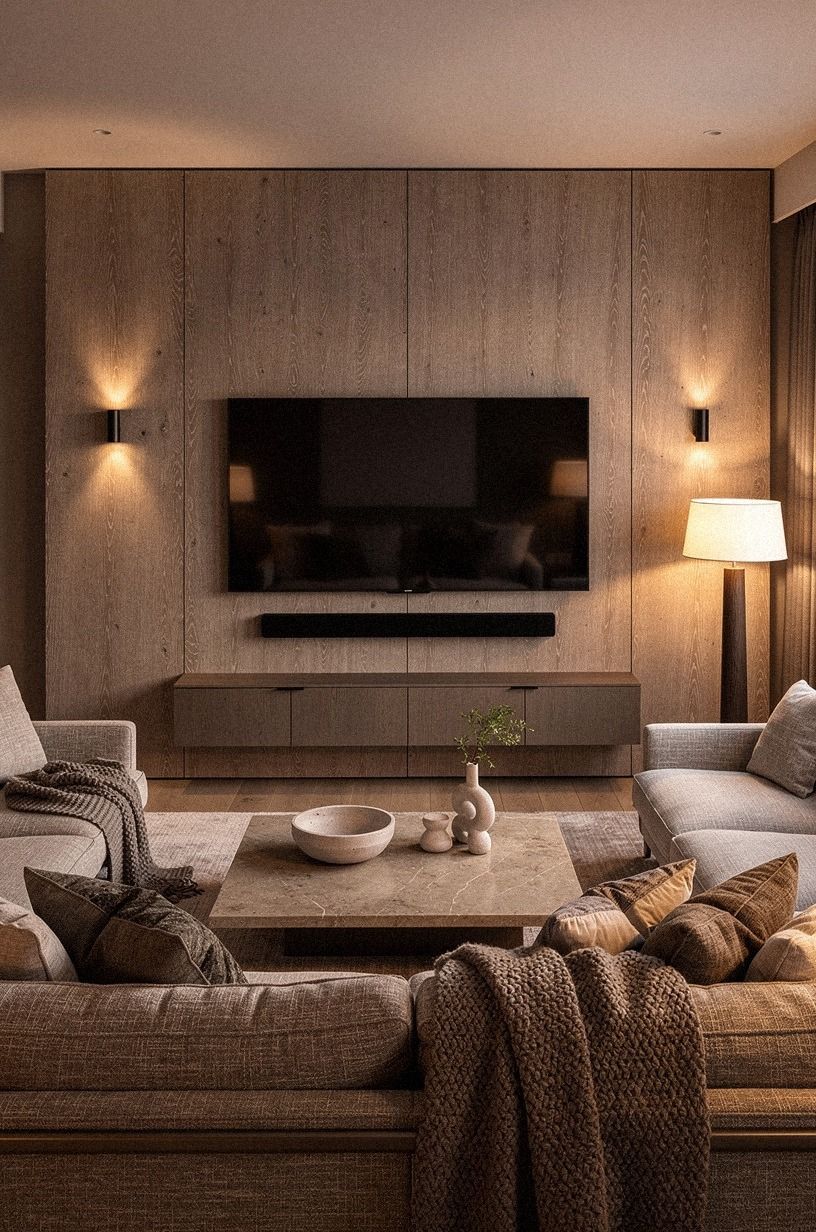
The wall needed texture, but I didn’t want a busy slat wall competing with the screen. I chose a narrow panel of book-matched walnut on one side and a smooth painted surface on the other.
That gave me contrast without covering every inch in an accent material. You can create the same effect with a woven panel or a framed textile.
The Two-Texture Rule kept the decision clean: one hard texture, one soft texture, and no more than two strong patterns nearby. My hard texture is the walnut panel. The soft texture comes from an organic bouclé throw folded over the sofa arm.
When the lamp hits both surfaces, the wall feels layered rather than decorated. That’s the difference between texture with a purpose and texture added because an empty wall feels uncomfortable.
I’d pass on faux-brick panels for this room. They often add too much visual noise and can make a television wall look like a restaurant backdrop. Your lounge needs one believable material moment, not five competing finishes.
A slim reeded wood panel, hand-troweled plaster, or woven grasscloth can all work. Choose the material that suits the architecture. A modern apartment may need a restrained panel, while an older home can handle more irregularity.
For more restrained combinations, browse these modern living room ideas.
6What the Amber Wash Does After Sunset
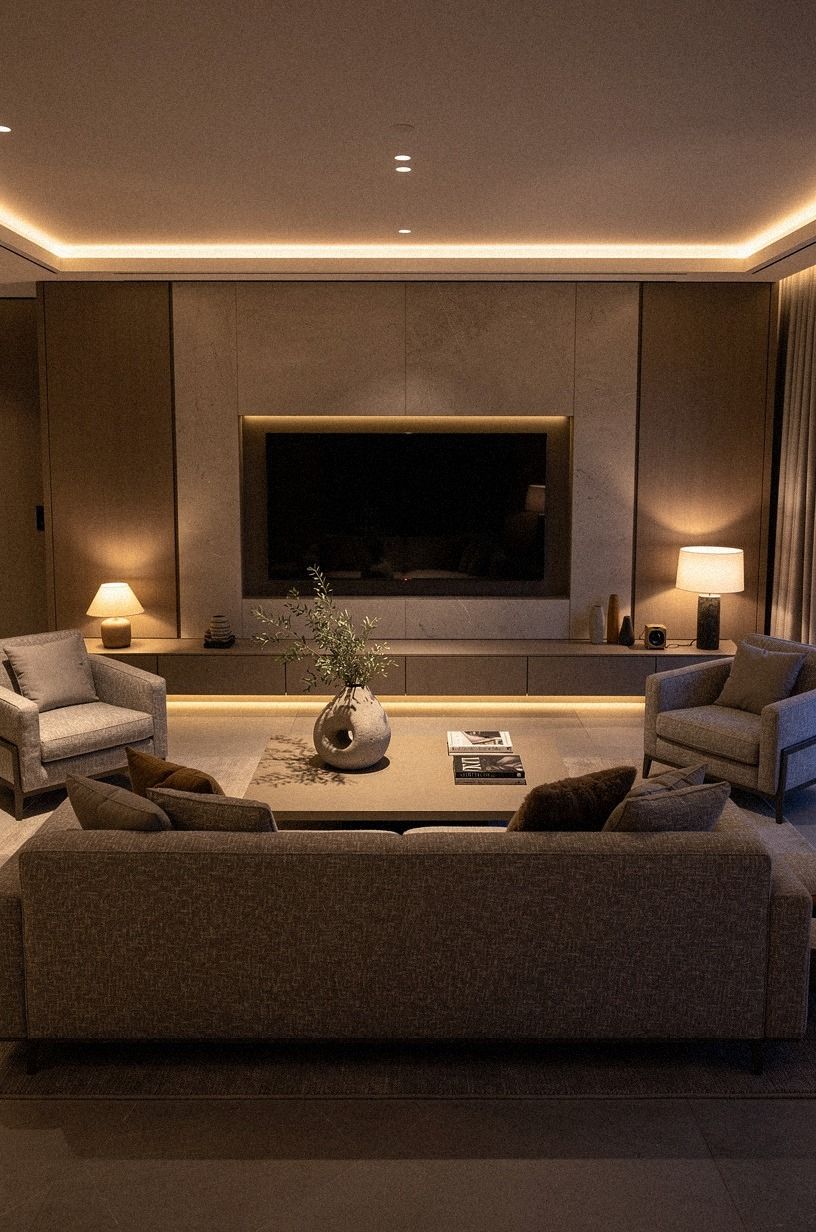
The ceiling fixture was the least flattering part of the room, so I stopped using it after sunset. Instead, I relied on warm amber light against emerald, cream, and gold accents.
7Quiet Luxury Comes From Restraint
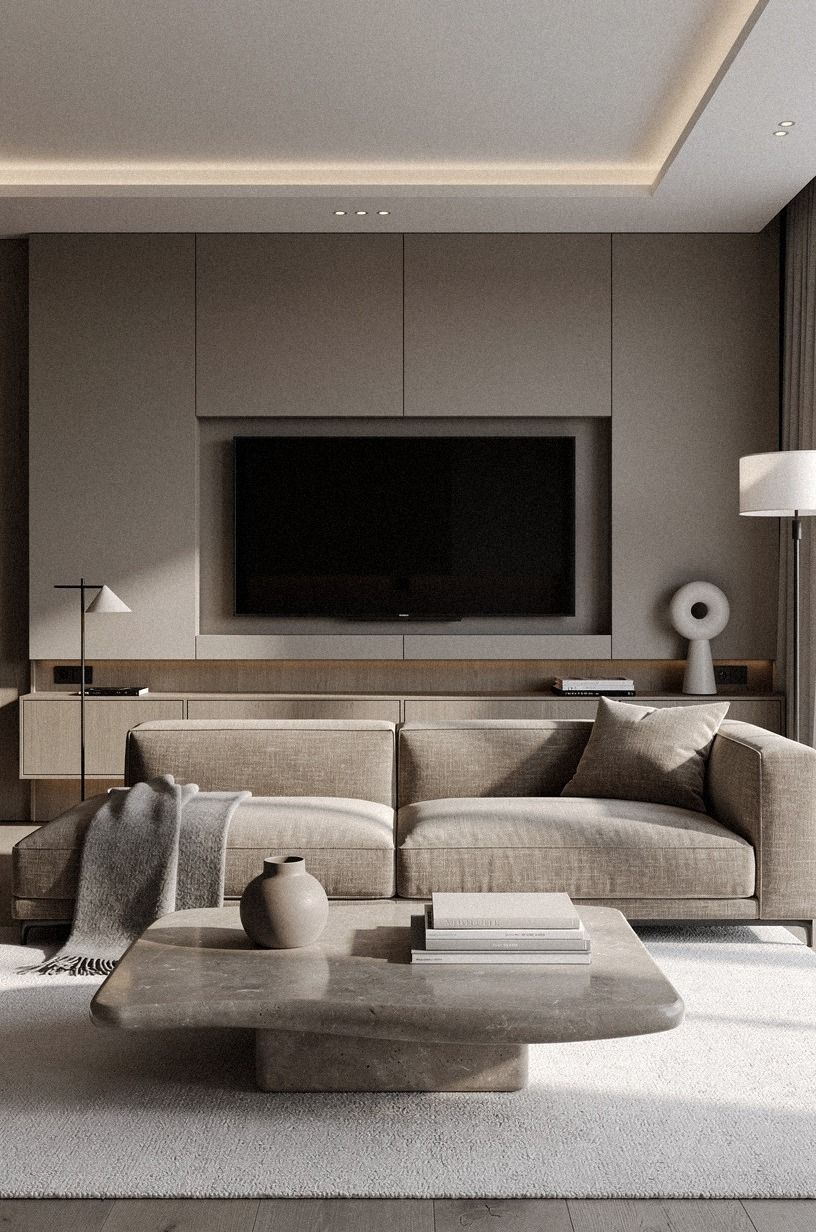
The expensive-looking version wasn’t the one with the most stone, brass, or cabinetry. It was the version with the clearest decisions. I used one forest-green wall color, natural oak, one tactile textile, and a restrained piece of art.
That combination felt more luxurious than adding a second metal finish or a dramatic stone slab. The room had visual confidence because nothing was competing for attention. The result felt polished, calm, and generous.
If you want a more elevated result, spend on the surfaces you touch and the light you live with. A solid oak shelf, a wool rug, a comfortable sofa, and a well-made lamp will be noticed more often than decorative trim.
I’d be careful with glossy marble, mirrored panels, and too much polished brass. They can look glamorous in isolation but restless when the screen is already the room’s strongest rectangle. Quiet luxury comes from proportion, weight, and repetition.
The best version should feel composed, not overly precious. A useful starting point is this collection of modern living room design ideas, especially if your current room feels visually scattered.
8Anchor the Sofa with the Right Rug Size
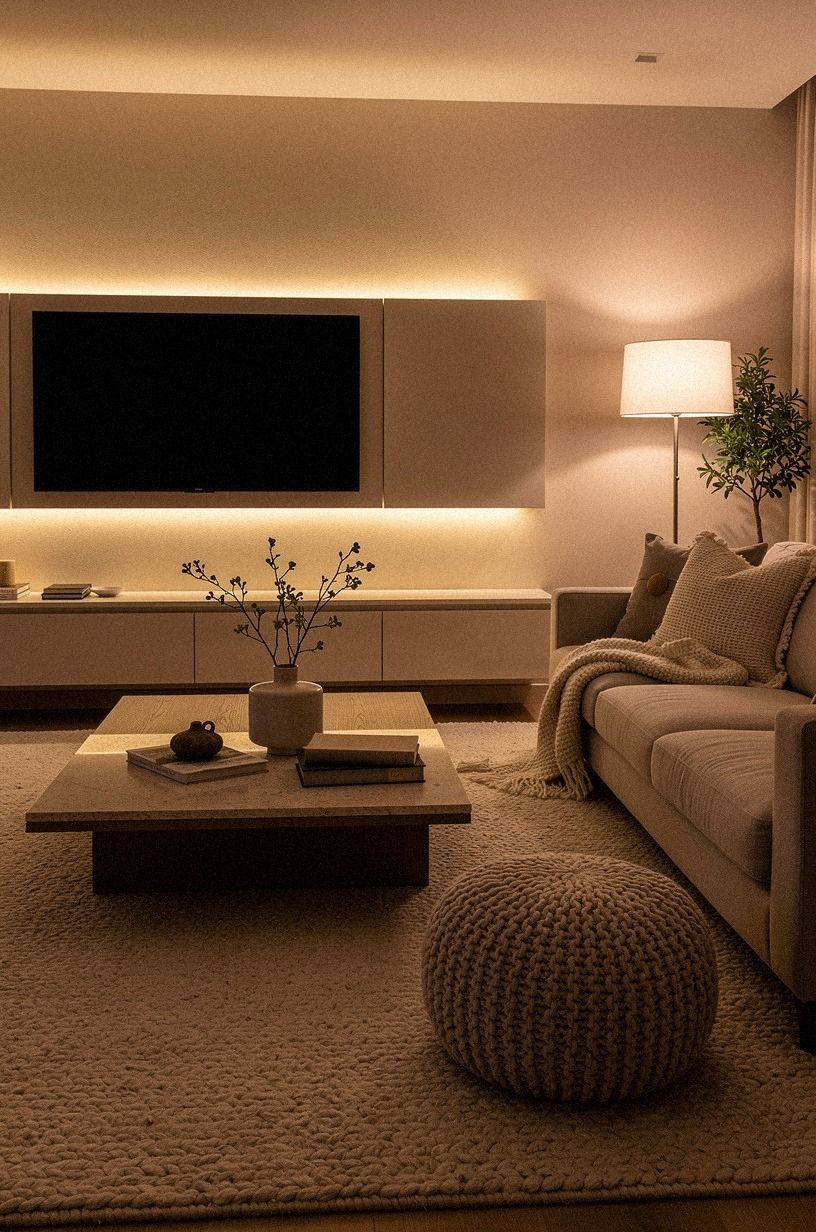
The media wall looked finished, but the sofa still floated awkwardly in the room. I pulled it forward and placed the front legs on an 8x10 wool rug, which connected the seating to the screen. A 9x12 would work in a larger lounge, but your rug should follow the furniture, not simply fill empty floor.
I chose a low-pile rug in dusty rose and charcoal, then repeated the brass in a small lamp. A reclaimed weathered-teak table added warmth without introducing another bright color.
The rug also absorbed the sharp sound that bounced between the television, wall, and hardwood floor, so the room became more comfortable to sit in. Compare the scale with these living room rug ideas before ordering.
I’d skip a tiny rug floating in front of the sofa. It makes your furniture look temporary, even when the pieces cost more. If you’re working with a tight budget, keep your existing rug and turn the front legs onto it before buying anything new.
A flatweave wool rug works well when you need a cleaner profile, while a plush wool rug gives a more enveloping feeling. In either case, make sure the rug has enough visual weight to balance the dark wall.
9The Three-Object Pause Keeps the Console Calm
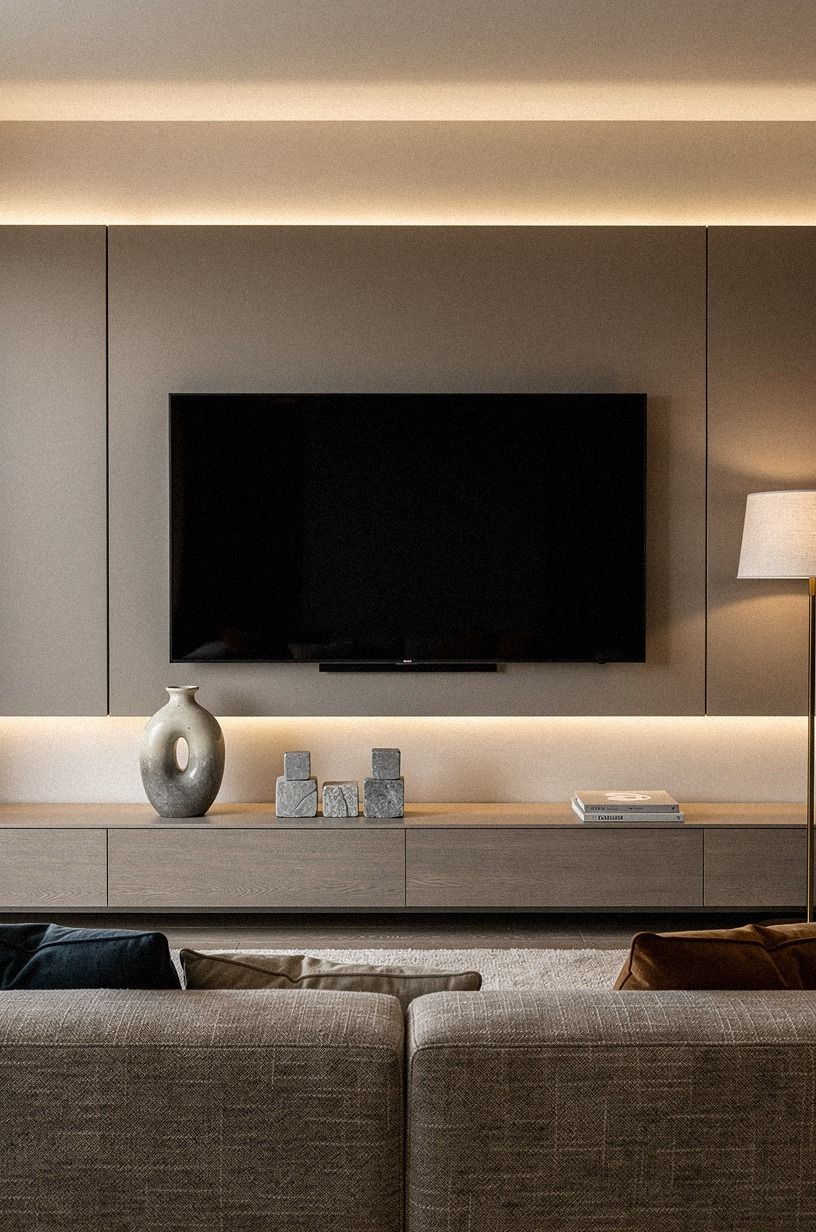
The console needed styling, but I didn’t want a row of objects fighting the screen. I placed a low warm-white ceramic bowl, a small camel-colored linen-covered box, and one black sculptural object at different heights. Then I stopped.
The Three-Object Pause is useful because it gives you a moment to assess before the surface becomes cluttered. Leave open space around the objects. The cabinet should still look usable, especially if you regularly set down a drink or remote.
I’d avoid lining up candles, books, framed prints, and plants across the entire cabinet. That arrangement creates a second horizontal stripe below the television. A small grouping at one side feels more natural.
One personal object is worth more than several generic accessories. Use a ceramic piece from a trip, a small framed photograph, or a bowl you actually reach for. Those details make the room feel inhabited rather than staged.
If you like collected rooms, these living room decor ideas can help you edit the finishing pieces.
10Should the Adjacent Walls Stay Light?
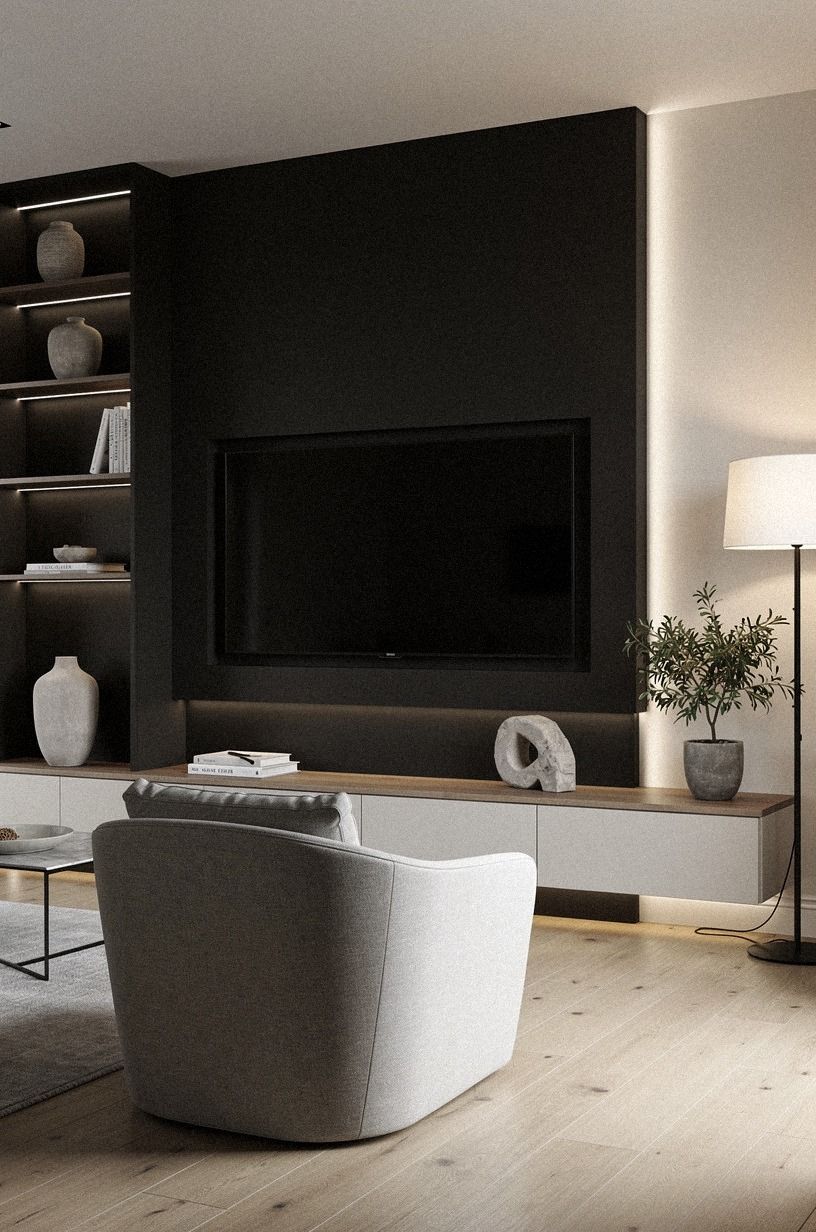
The media wall was midnight blue, but the rest of the lounge needed to stay bright enough for morning coffee. I chose an ivory connecting wall, kept the trim warm ivory, and repeated cerused white oak near the cabinet. A small copper lamp made the blue wall feel intentional instead of isolated.
I’d avoid painting every surface dark unless your room has enough daylight and plenty of breathing room. Your goal is contrast, not enclosure. A lighter neighboring wall sets the screen apart while keeping the lounge open during the day.
The paint also changed how the furniture looked. The tan sofa became warmer, the oak cabinet looked less orange, and the copper light felt quieter. That was the emotional turning point for me because the room finally looked like one space instead of several unrelated purchases.
For a lighter direction, try Benjamin Moore Pale Oak OC-20 beside a deeper midnight-blue media wall. For a moodier direction, use muted copper accents and cerused oak nearby. The adjacent color doesn’t need to match.
It only needs to make the main wall feel connected to the rest of the room. These living room color ideas are helpful when you’re testing more than one palette.
11Mix the TV Room Design with One Personal Object
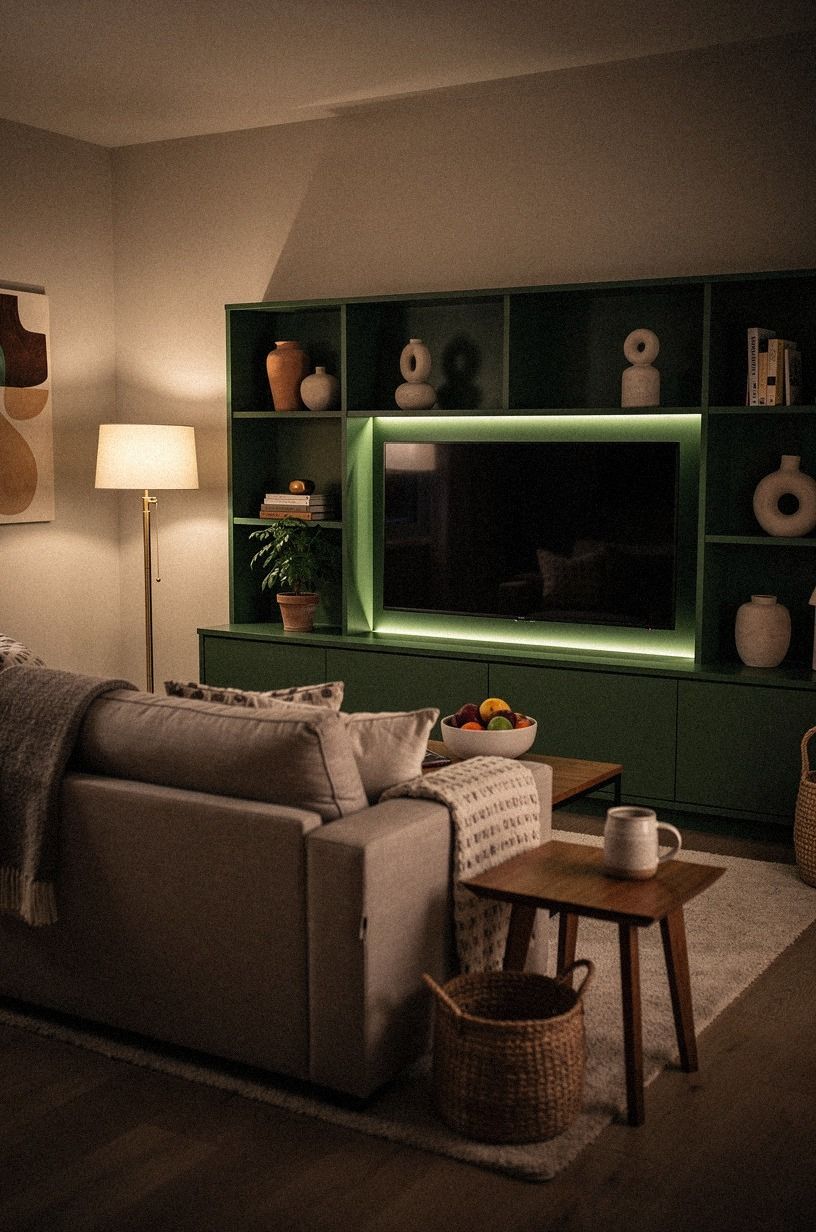
The final layer was not another product. It was a framed photograph from a trip, printed in a soft black-and-white finish and placed beside the cabinet. I added a sage linen cushion on the sofa and a small shagreen tray on the console because its texture catches the light without looking shiny.
Your media wall should support your life, not erase it. One personal object keeps the design from feeling staged, while one luxurious-feeling textile gives the room a tactile note. I’d choose something with a story over generic art that only matches the paint.
When we watched the first film in the finished room, nobody mentioned the wall. They talked about how comfortable the room felt, then stayed through the credits.
That was the result I wanted. The design worked because it made the evening easier, not because it demanded attention.
A black-and-white photograph, a hand-thrown vessel, or a slightly imperfect vintage frame can all bring character. The object doesn’t have to be valuable. It has to mean something to you.
A few ideas from these gallery wall ideas can work beside a media unit too.
The small-room proportion check
Before buying anything, measure the wall, sofa, console, and walking path. A media wall can look grand in a wide room but cramped when the cabinet projects too far into circulation. This basic living room layout guide can help you test the arrangement first.
I kept at least one clear route beside the sofa and avoided furniture that was deeper than necessary. A shallow console creates storage without making the room feel pinched. The screen also benefits from breathing room on both sides.
If the wall is narrow, use vertical light and a restrained cabinet. If the wall is wide, a longer low unit can make the screen feel less isolated. The correct answer depends on proportion, not on the size of the television alone.
Before you buy anything
I’d begin with three free changes: turn off the overhead light, move the sofa into a comfortable viewing position, and hide the loose cables. Those steps reveal whether the room’s main problem is decoration or layout.
Then test paint in the evening. Daylight can make a color appear airy and forgiving, while lamplight reveals whether it feels muddy, blue, or unexpectedly green.
Finally, choose the one upgrade that changes the mood most. In my room, that was paint and layered lighting. In yours, it might be a larger rug or a better console.
If you’re planning a broader refresh, start with these living room makeover ideas.
How much it cost
I kept the makeover inside the budget tier by prioritizing paint, lighting, and the rug before considering custom work. The typical US ranges below helped me decide where to spend and where to stop.
A performance-fabric sofa typically runs $1,200-$4,000, while a wool rug in a 9x12 size usually lands around $600-$2,500. An oak coffee table is often $300-$1,200, and a pair of linen drapes can cost $120-$400.
Those numbers add up quickly, so you’ll want to decide which item changes the room most. A beautiful lamp may do more for the evening mood than a decorative panel. A properly sized rug may do more than a new coffee table.
For my own approach, the first money went toward interior paint and lighting, then the rug. I kept the sofa, reused the art, and delayed the custom cabinet. If you’re working with less, use your current console, move the front sofa legs onto the rug, and turn off the overhead light.
The viewing-distance check
A screen can feel oversized when the sofa is too close, even if the television is correctly proportioned for the wall. I moved the seating back slightly and made sure the screen didn’t force everyone to turn their heads.
There’s no single perfect distance for every household. Your eyesight, screen size, and viewing habits matter. Sit where you’ll actually watch and check whether subtitles feel comfortable without leaning forward.
A comfortable sofa depth, supportive cushions, and a clear sightline are part of the media wall design too. The wall may be the visual focus, but the seating decides whether the room is pleasant.
The cable problem
Visible cables were one of the reasons the original wall felt unfinished. I grouped them, shortened the excess, and routed them through a concealed channel before styling the cabinet.
If you’re renting, use a paintable cable raceway or removable clips. If you own the home, a recessed box can create a cleaner result, but it isn’t necessary for a calm room. Renters may also find these rental living room ideas useful.
The goal isn’t technical perfection. It’s removing the small distractions your eye keeps finding. Once the cables disappeared, the paint, cabinet, and television finally read as one arrangement.
The design decision I’d make again
I went back and forth between building a full wall of cabinetry and keeping the screen visible. A built-in would’ve looked impressive, but it would’ve reduced the room’s flexibility and made the lounge feel fixed around one device. I chose the quieter route because our furniture needs to move when friends come over.
The most useful lesson was that a media wall isn’t really about hiding a television. It’s about deciding what your eye sees before and after the screen turns on. Paint, texture, and low light can make the wall feel calm, while the cabinet gives you somewhere for the practical mess to disappear.
I also learned that restraint isn’t the same as minimalism. I still used oak, stone, linen, brass, books, and art.
I just gave each material enough space to be noticed. If your lounge feels busy, remove one finish before buying another.
There’s a temptation to chase the most dramatic luxury TV wall photograph, especially when every image shows floor-to-ceiling millwork and a perfect fireplace. But your home has different light, proportions, and habits. The right design is the one that works when you’re eating takeout, watching a second episode, or looking for the remote at midnight.
A Few Things Worth Answering
What is the best Lounge Media Wall Ideas for a Relaxed, Cinematic Vibe for a small living room?
A floating IKEA BESTÅ cabinet or a slim Article Lenia media unit works well because both keep the floor visible. Choose the narrower option, mount the screen at seated eye level, and use one dark paint color behind it. You’ll gain visual depth without filling every wall with cabinetry.
Where can I buy Lounge Media Wall Ideas for a Relaxed, Cinematic Vibe pieces on a budget?
Look at IKEA, Wayfair, and Target for cabinets, lamps, and textiles, then check Facebook Marketplace or a local thrift store for solid wood pieces. A secondhand oak coffee table can bring more warmth than a new low-cost table, especially after a light sanding and fresh finish.
How much does a Lounge Media Wall Ideas for a Relaxed, Cinematic Vibe makeover cost?
A budget makeover typically falls between $300 and $1,200 in the US, depending on the rug, paint, art, and lighting you choose. You can spend nothing on the layout, reuse your cabinet, and still improve the room by lowering the screen and switching off the overhead light.
Can I create a Lounge Media Wall Ideas for a Relaxed, Cinematic Vibe on a budget?
Yes, and you can begin with three free changes: move the sofa to the right viewing distance, hide loose cables, and group existing lamps at different heights. For a paid upgrade, choose paint first, then a secondhand linen shade or a washable throw.
Is a Lounge Media Wall Ideas for a Relaxed, Cinematic Vibe worth it in a small space?
Yes, because a small room benefits from fewer visual interruptions. A floating console, an 8x10 rug with the sofa’s front legs on it, and a screen placed around 1.5 to 2.5 times its diagonal viewing distance will make your layout feel more deliberate.
Is a Lounge Media Wall Ideas for a Relaxed, Cinematic Vibe a good idea for a rental?
Yes. Use peel-and-stick paintable wallpaper, a tension rod for linen drapes, removable cable channels, and a freestanding Target console instead of permanent millwork. You’ll get the layered look without losing your deposit, and you can take the best pieces with you later.
Where I’d Start First
If I had to pick one, I’d start with the wall color. A calm, dark background makes the screen, rug, lamps, and sofa feel connected instead of scattered.
Then I’d lower the screen, solve the cables, and replace the overhead glare with two warm lamps. Test your paint after sunset, when the lounge has to do its real work.
The finished wall doesn’t need to be dramatic. It needs to make the room feel more comfortable, more grounded, and easier to live in. Pin the idea for later, but start with the change you’ll notice tonight.


