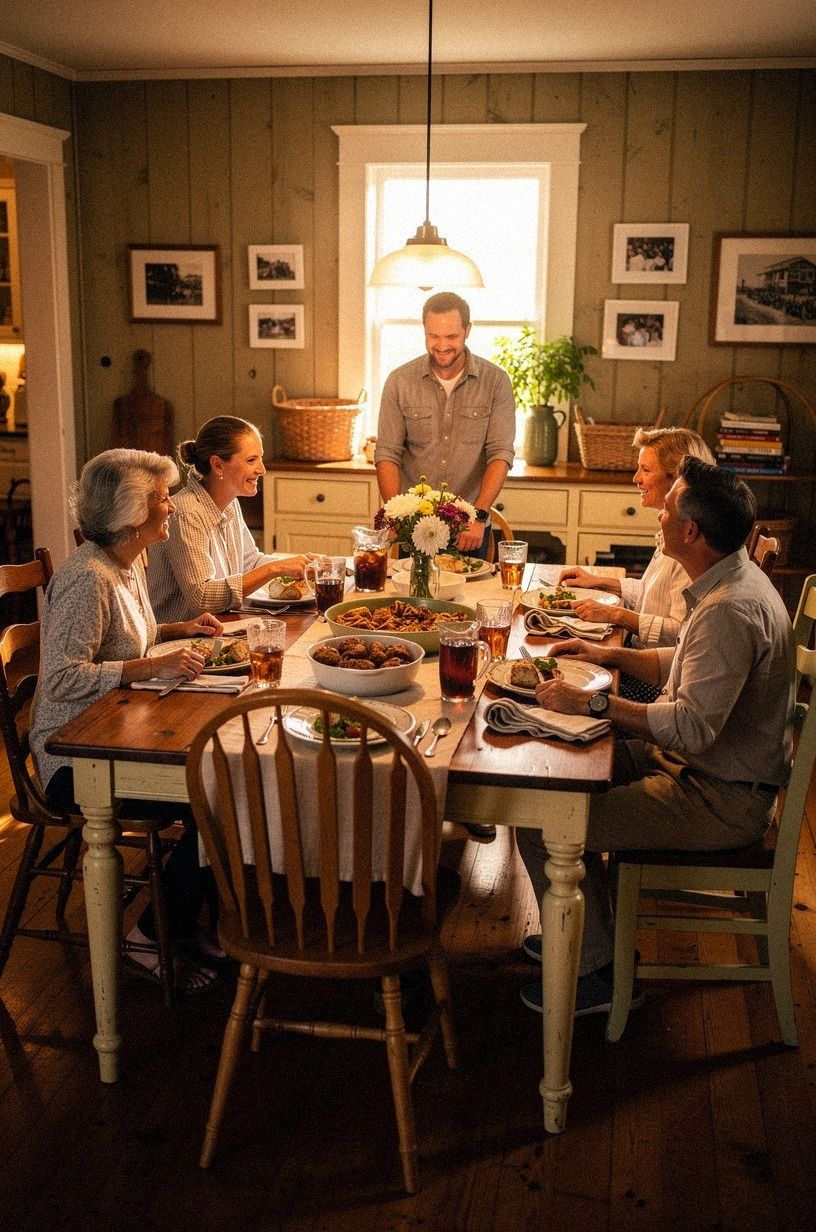
I Turned My Southern Dining Room Into a Sunday-Supper Gathering Spot
13 october 2026My Southern dining room makeover cost $2,000 at the low end of a mid-range refresh, and it changed how we host Sunday supper. I started with a cramped table, harsh light, and too many matching pieces. Then I gave the room warmth, breathing space, and a reason to linger. The result surprised me!
- Start with a table that leaves breathing room
- Paint the walls with the Two-Tone Hearth Rule
- Layer linen and cotton where hands can reach
- Choose cane over upholstered chairs
- Hang the Three-Height Light Stack
- Build a sideboard that works before it decorates
- Mix old silver with one bold ceramic piece
- Anchor the room with an earthy rug
Here's what it looked like before:
The room had the full starter-home package: beige walls, a dark table pushed against one side, four chairs that never quite sat level, and a ceiling light that made every meal feel like paperwork. Empty corners, a crowded walkway, and one small window losing a fight with the overhead bulb made the room feel bleak.
I lived with it longer than I should have. I kept moving the table, buying small accessories, and hoping the room would suddenly feel inviting.
It didn’t. The layout was wrong, the light was wrong, and I hadn’t given you or myself a clear place to look when we walked in.
That was the first thing I changed. I stopped treating the room as a collection of furniture and started treating it as a place for generous, memorable gatherings.
- Start with a table that leaves breathing room
- Paint the walls with the Two-Tone Hearth Rule
- Layer linen and cotton where hands can reach
- Choose cane over upholstered chairs
- Hang the Three-Height Light Stack
- Build a sideboard that works before it decorates
- Mix old silver with one bold ceramic piece
- Anchor the room with an earthy rug
- Frame the window with the Southern Porch Principle
- Swap matching art for a collected gallery
- Use Benjamin Moore Hale Navy below the chair rail
- Add a small bar station instead of a larger cabinet
- What makes a small dining room feel welcoming?
- Finish with Sherwin-Williams Urbane Bronze details
1Start with a table that leaves breathing room
I moved the table away from the wall and centered it on the window, even though that meant losing a little floor space near the sideboard. A dining table should let you walk around it without turning sideways. I measured for 36 in of chair clearance behind each seat, and that one decision made the room feel airy instead of pinched.
My table is a simple natural-oak base with a Calacatta marble top marked by soft gold veining. It catches crumbs, candle wax, and the occasional sauce mark, which is exactly why I prefer it to a glossy finish.
You don’t need a dramatic table if your room is small. You need one that lets your guests pull out a chair without bumping their knees.
I considered an extendable table, but I skipped it. The moving hardware felt fussy, and I wanted the room to look settled every Sunday, not prepared only when company arrives. You can still host six people if you allow 24 in of table width per guest and keep the center clear.
That simple change felt surprisingly powerful. The table stopped looking like an obstacle and began to feel like the generous heart of the room.
2Paint the walls with the Two-Tone Hearth Rule
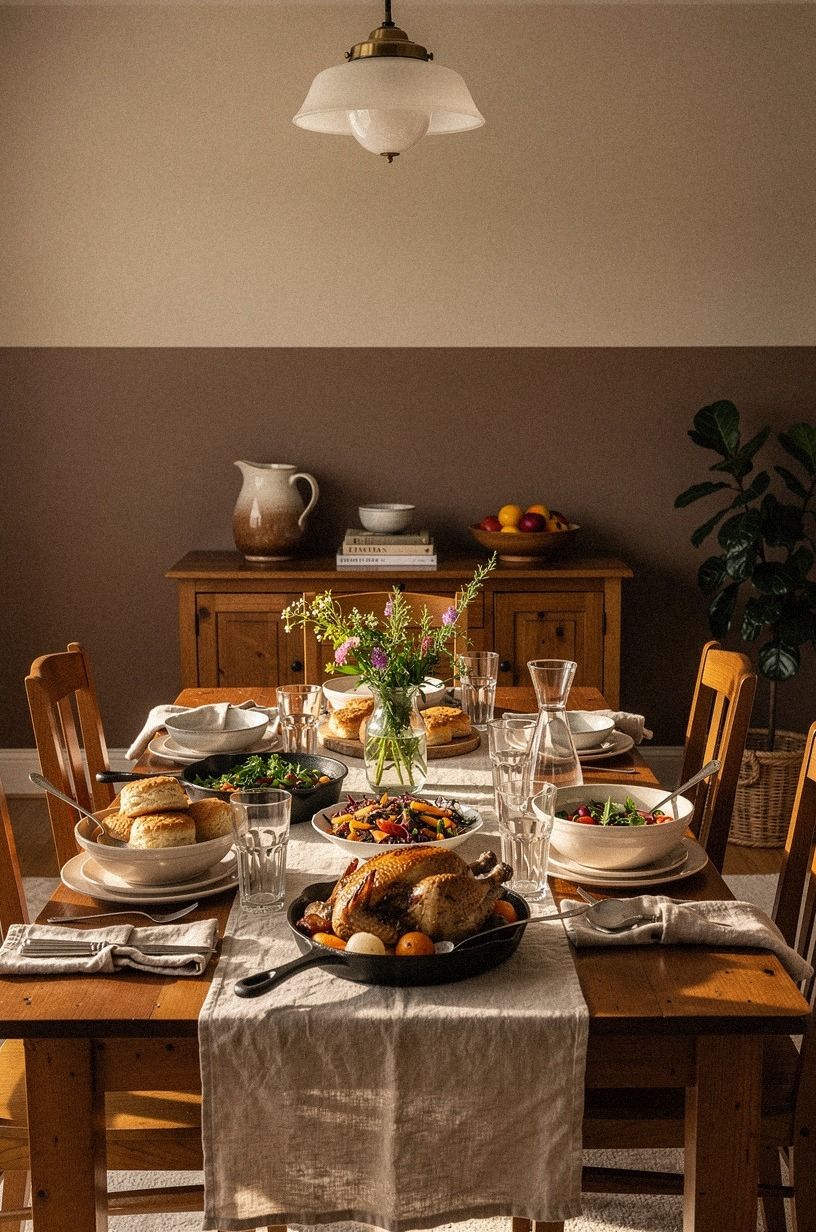
I tested three paint cards before choosing a dusty rose above a charcoal lower section. The combination gave the room the warmth I wanted without making the walls feel heavy. I added slim cerused white-oak trim at the transition and repeated brass in the hardware.
The dusty rose catches afternoon light beautifully, while the charcoal grounds the table after sunset. Together, they create the feeling of a hearth even though this room has no fireplace. That visual weight helped the dining area feel intentional.
I used a satin finish below the rail and eggshell above it. The lower wall wipes clean more easily, which you’ll appreciate after a crowded meal. If your room lacks a chair rail, a crisp painted line can still work.
Take your time with the tape. A crooked line will bother you every time the lamp comes on.
3Layer linen and cotton where hands can reach
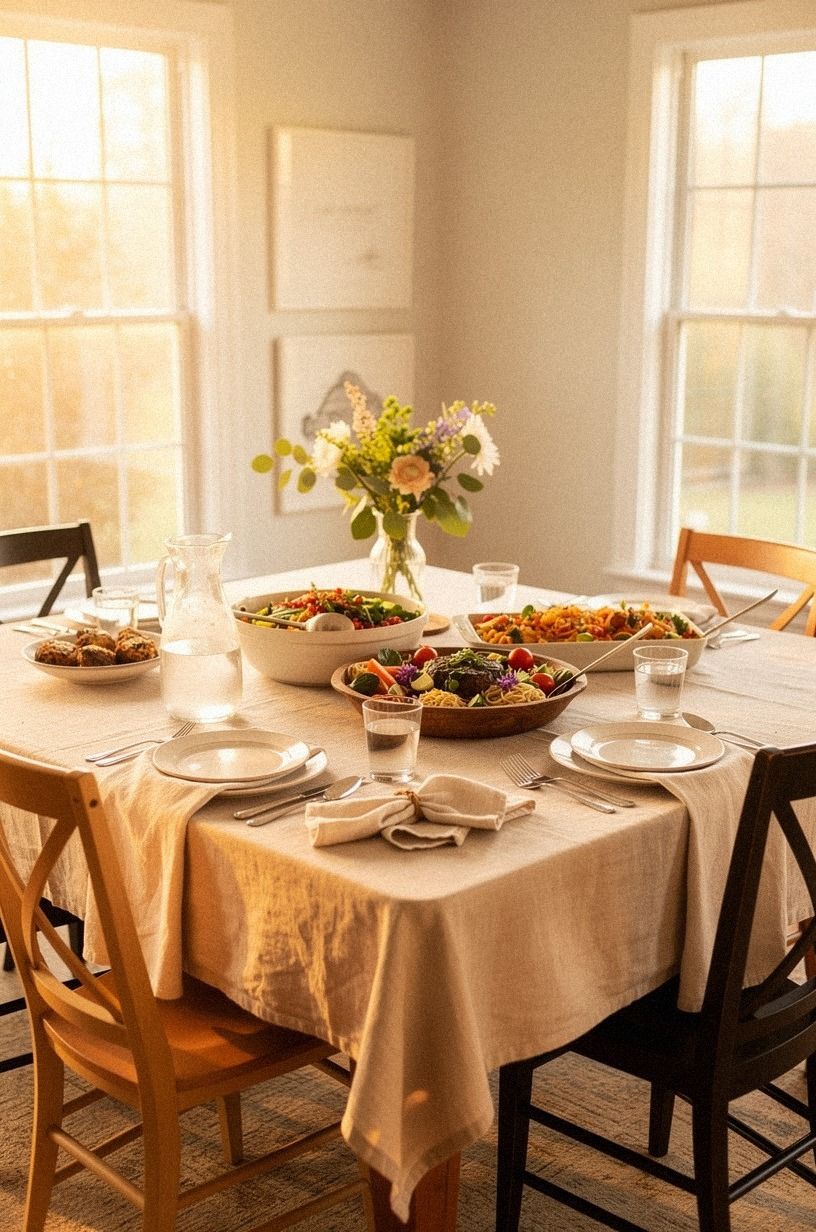
I wanted the room to feel collected, so I used a slim backlit translucent onyx panel near the window and 600gsm Turkish cotton for the napkins. The onyx gives the room a soft glow after sunset, while the heavier napkins feel substantial in your hand. That tactile difference matters when you want people to slow down.
I bought the curtains from a local home shop and washed them before hanging them. They shrank slightly, which was my fault, but the shorter hem ended up sitting just above the floor and looked more relaxed.
You don’t need a full textile package. One substantial table runner, four cloth napkins, and a washable rug can shift the mood.
I skipped matching placemats because they made the table look staged. Instead, I used napkins in two nearby shades of cream and rust.
Your table can handle a little variation. It shouldn’t look as if every piece came home in the same bag.
The result is soft without becoming precious. The room feels tactile, welcoming, and ready for real hands.
4Choose cane over upholstered chairs
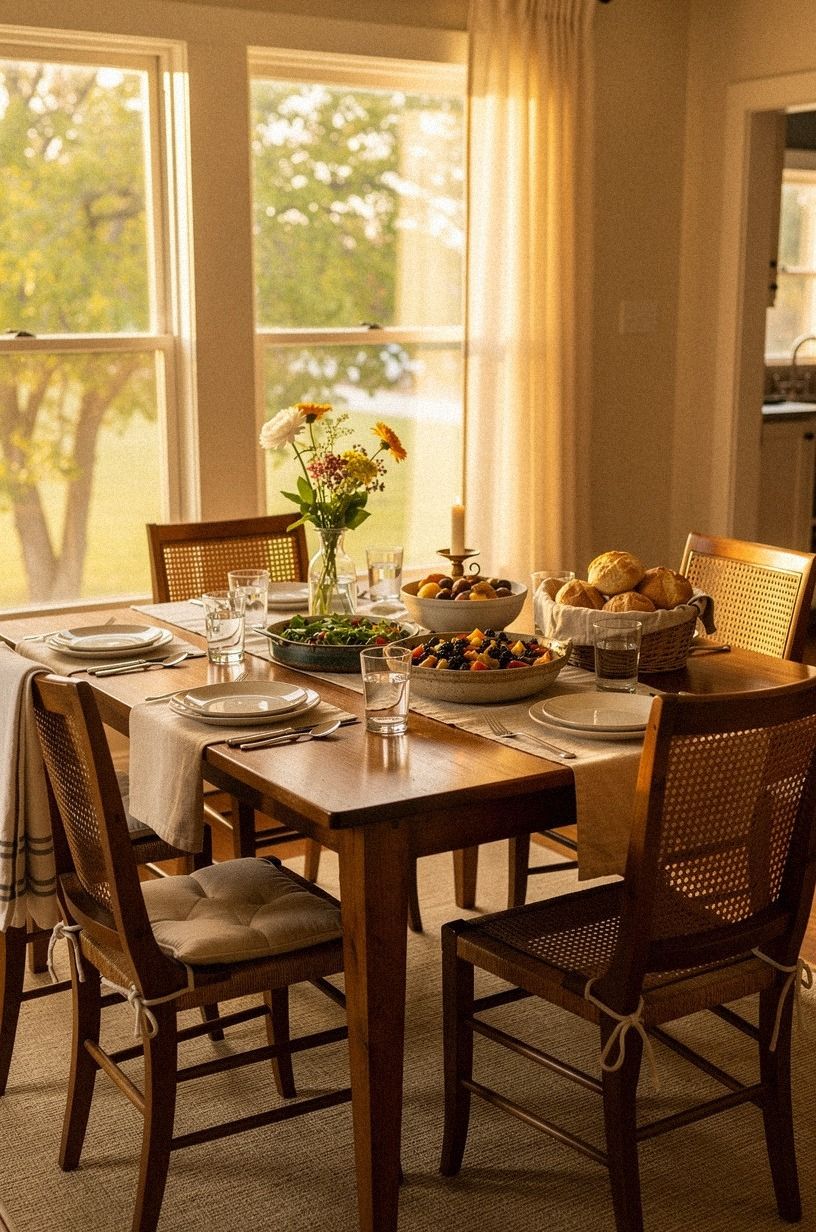
I replaced two bulky upholstered chairs with book-matched walnut chairs and added four cane-seat chairs from a local vintage shop. The walnut brings depth to the room, while the cane keeps the seating visually light.
I chose chairs with open backs because they make the walkway feel wider. That matters in a dining room where someone is always passing behind the table with a serving dish.
The vintage chairs needed only a gentle cleaning and new glides. Their small imperfections made the room feel more relaxed than a matching set would have.
5Hang the Three-Height Light Stack
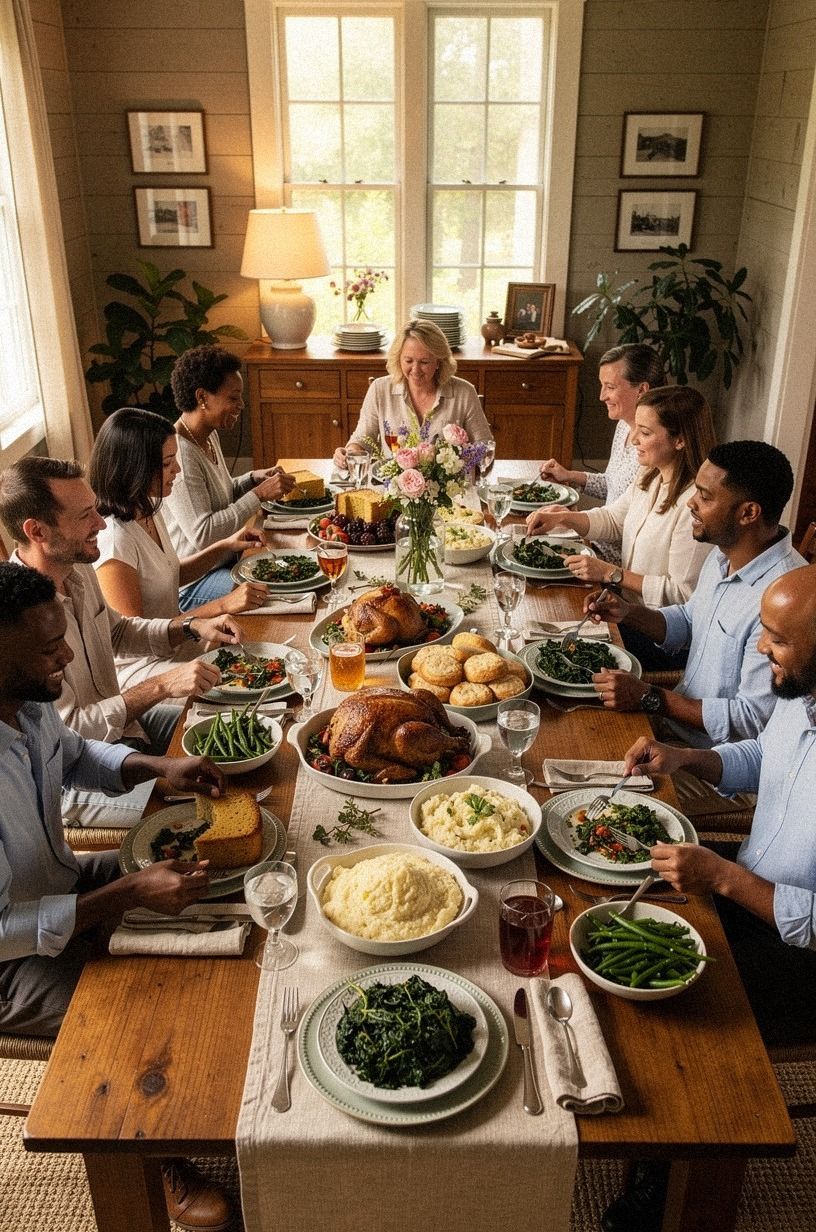
The old ceiling fixture sat too high and threw a bright circle straight onto the center of the table. I replaced it with a French country 6-light wood chandelier, then added a small lamp with a warm travertine base on the sideboard and two low candles. Those three heights created the Three-Height Light Stack: overhead glow, waist-level glow, and tabletop flicker.
I hung the chandelier 30 to 36 in above the table, measuring from the tabletop to the lowest point of the fixture. That range kept it close enough to feel intimate without blocking anyone’s view. You can have the prettiest pendant in the room, but if it hangs too high, your dinner still feels exposed.
The lamp uses a warm bulb, not a blue-white one. I learned that after one meal where everyone looked washed out and the roast looked gray. You want the light to pool on the table and fade gently at the rug’s edge.
A dimmer made the biggest difference, and I’d choose that before buying a more expensive fixture. It’s the least glamorous upgrade, but it creates the most comforting atmosphere.
6Build a sideboard that works before it decorates
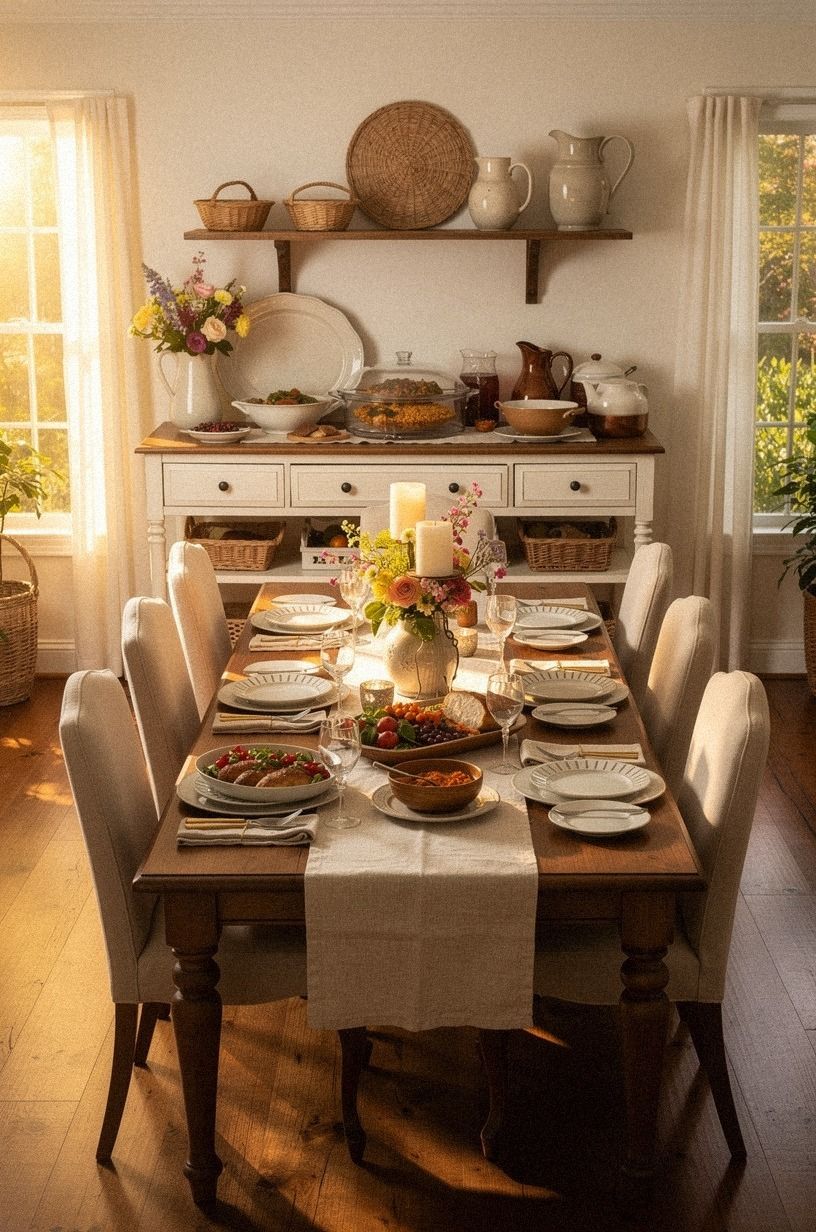
I chose a narrow West Elm Anton sideboard because it gave me closed storage without stretching across the whole wall. Its terracotta-toned finish sits comfortably with the room’s stone and olive accents.
I replaced the original pulls with unlacquered brass hardware. It has already begun developing a soft patina, which makes the piece feel more personal over time.
Inside, I keep serving platters, extra napkins, and the table linens I use only on holidays. The top stays mostly clear except for the lamp, a shallow bowl, and one small arrangement.
Storage should make hosting easier before it makes the room prettier. This one does both.
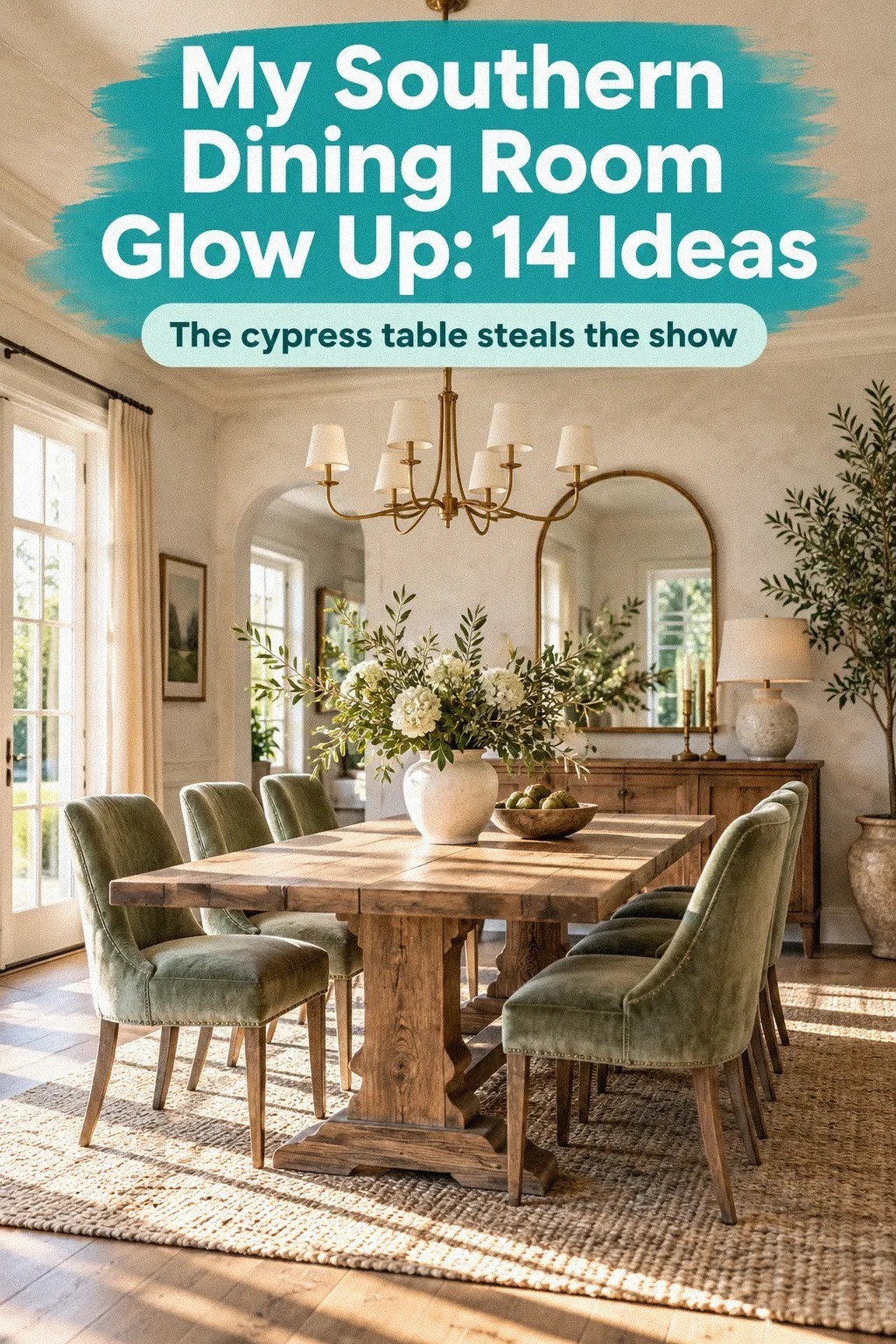
7Mix old silver with one bold ceramic piece
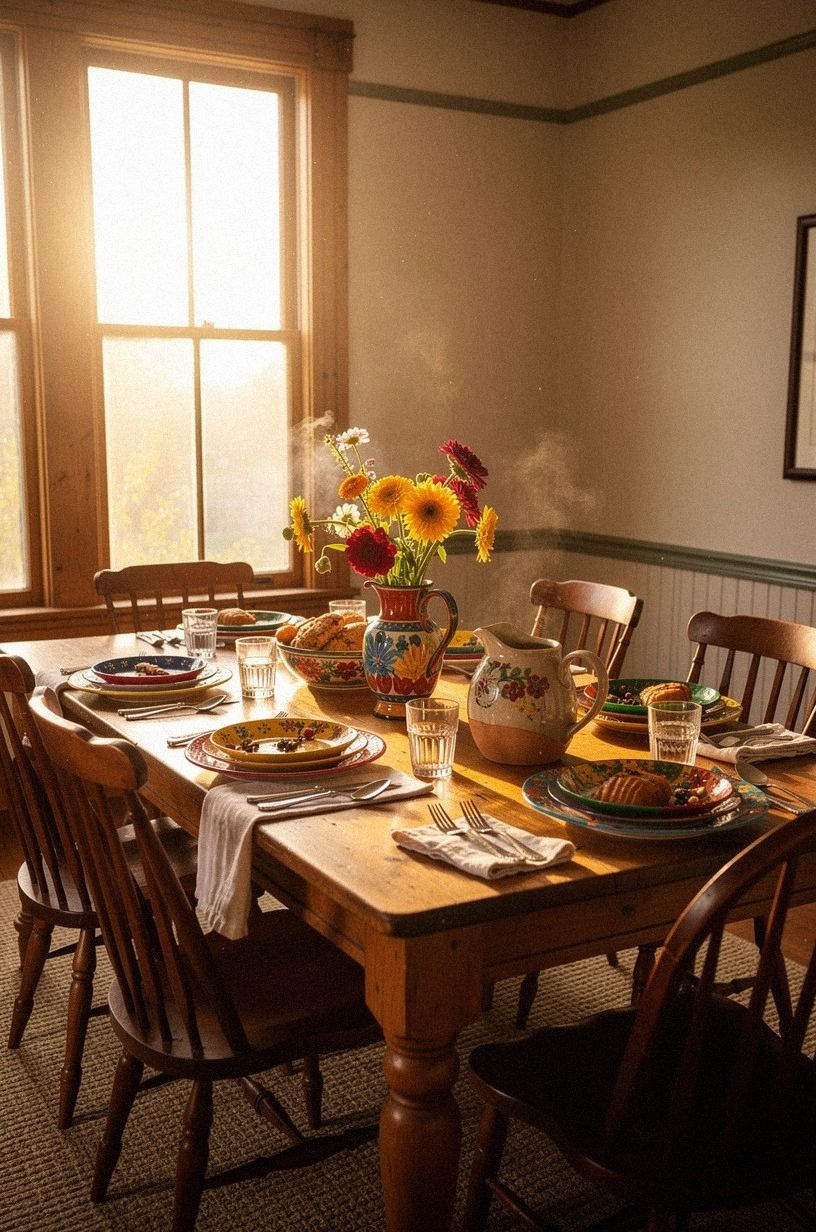
My grandmother’s aged-brass serving spoon became the starting point for the tabletop. Beside it, I placed one oversized-chip terrazzo bowl from a small pottery studio. The warm metal and rough stone chips bring clay, linen, and aged-brass tones into the room without making the table feel matched.
I don’t use every heirloom at once. Too much polished metal can make your dining room feel formal in a way that discourages second helpings. One old piece is enough to bring history to the table.
You can borrow the same idea with a thrifted brass candlestick or a wooden breadboard.
The bowl holds lemons during the week and dinner rolls on Sunday. That double duty matters to me. I want every object in your dining room to earn its space, especially if your room is small.
A decorative piece that can’t hold anything still needs to be wonderful enough to justify the dusting. This bowl is useful, distinctive, and a little imperfect, which is exactly why I love it.
8Anchor the room with an earthy rug

I placed a low-pile rug beneath the table in a muted plum and grey pattern with a hint of rose gold. The color works with the hand-applied Venetian plaster on the walls, and the short weave lets chairs move without catching. A thick shag rug would have felt soft, but you’d be fighting it every time someone pulled back a chair.
The rug isn’t precious. That was intentional.
I wanted a forgiving surface that could take dropped pasta, a wet boot, and a rushed vacuum without making me tense. The muted pattern also hides the little marks that come with real Sunday supper.
Peaceful rooms aren’t always spotless rooms. Sometimes the most beautiful choice is the one that lets you relax.
I measured the rug so the front legs of every chair stayed on it when someone sat down. You need enough material beneath the table to keep the room visually grounded, but you don’t need a dramatic border.
I nearly chose a pale cream rug, then remembered who uses this room. The plum one won.
9Frame the window with the Southern Porch Principle
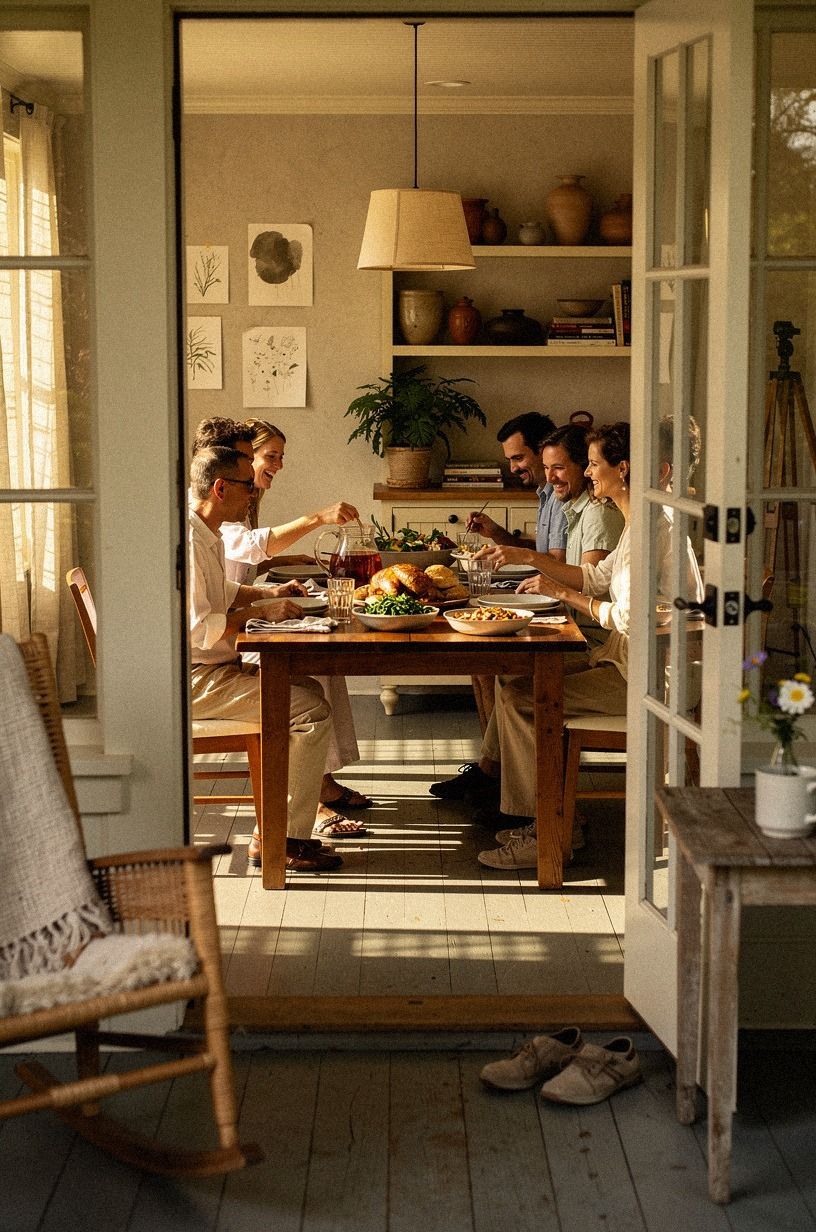
I treated the dining room window like a porch opening instead of a blank wall. A simple textured shagreen shade filters the hard afternoon sun, and linen panels soften the sides. The combination feels charming without turning the room into a theme.
I mounted the curtain rod higher than the window casing and extended it slightly past both sides. That made the window feel wider and gave your eye a clean vertical line. You don’t need a large window to get this effect.
You need fabric that reaches close to the floor and doesn’t stop at the sill.
I skipped the heavy floral curtain I first loved. It was gorgeous on the sample, but the scale overwhelmed the table and made the room look busy. If you’re styling a country farm dining room, let one pattern lead.
Your room needs a quiet surface somewhere, and here it was the wall of fabric. The finished window feels breezy, graceful, and connected to the rest of the room.
10Swap matching art for a collected gallery
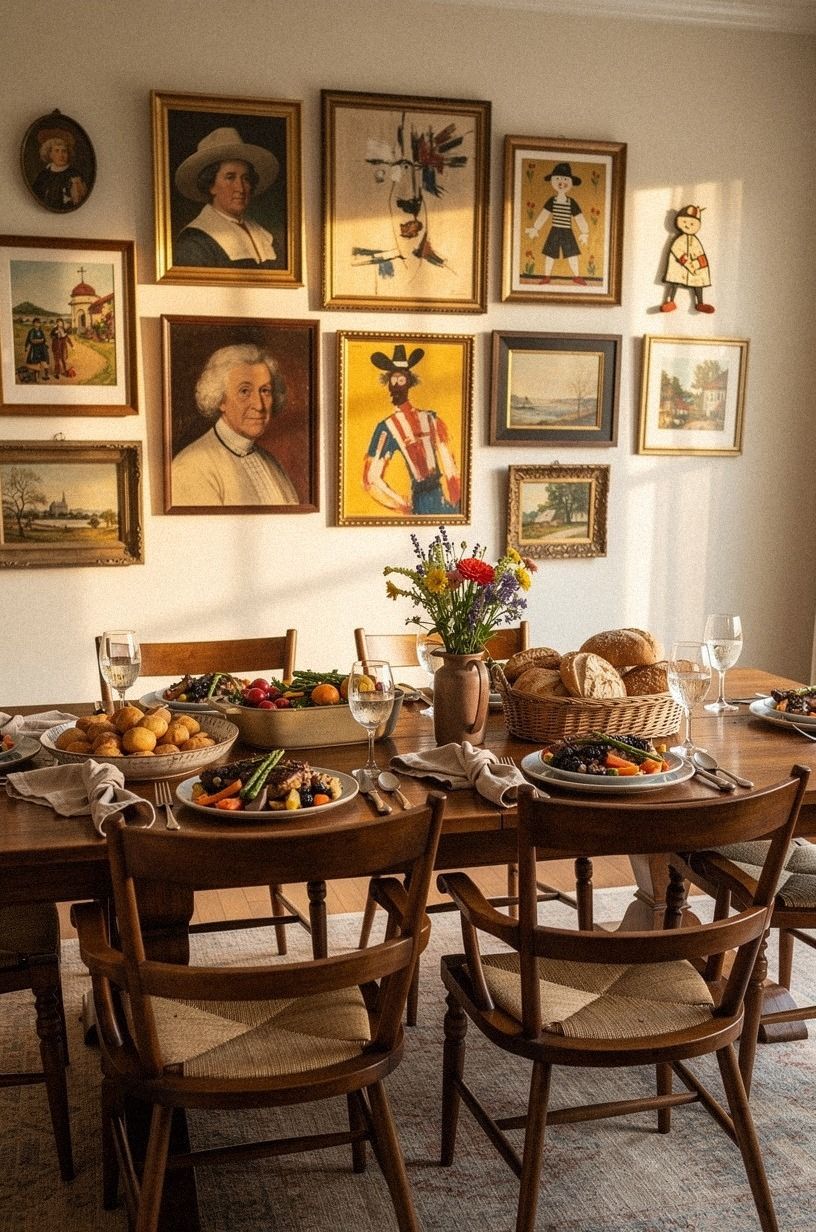
The room needed art, but a matching print set felt too polished. I gathered botanical studies, a small landscape, and one abstract piece with emerald, gold, and cream accents.
I arranged them around a washed Belgian linen textile rather than lining every edge perfectly. The linen softened the contrast between the walnut furniture and the painted walls. It also gave the collection a more relaxed Southern character.
I kept the frames simple: two thin gold frames, one dark wood frame, and one cream-painted frame. The mix feels collected because the colors repeat without every finish being identical.
Start with the largest piece, then place the smaller works around it. Leave enough breathing room for each piece to register. A gallery wall should reward a second look, not overwhelm the first one.
11Use Benjamin Moore Hale Navy below the chair rail
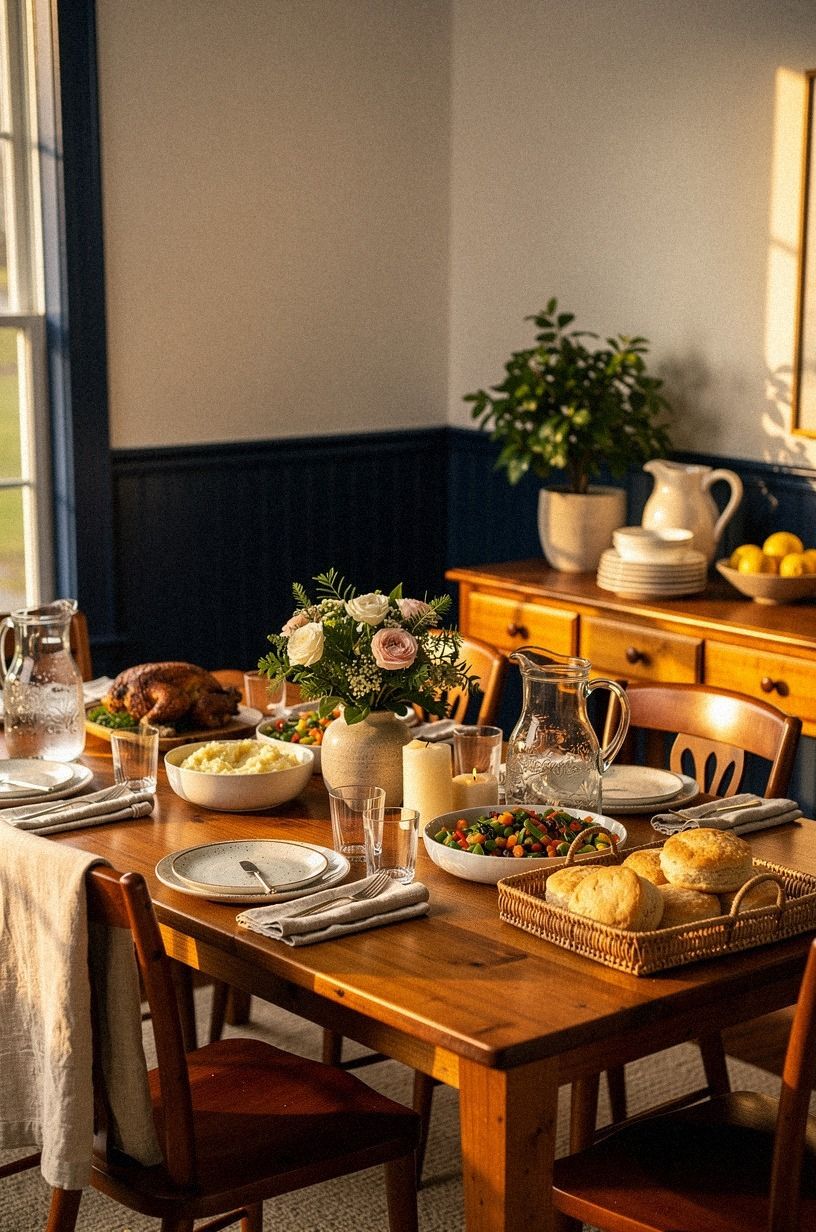
I kept the spirit of the Hale Navy idea but chose a deep forest green below the chair rail and a warm rust tone above it. The darker band protects the wall from chair marks and gives the table a stronger visual anchor. It also made the room feel more intimate without adding more furniture.
I worried the two colors would look busy, but the natural oak table bridged them. Your eye moves from the warm wood to the green, then up to the rust. That sequence feels sophisticated because the materials do some of the work.
I added organic bouclé cushions to two of the dining chairs. Their soft texture breaks up the harder wood and paint without making the seating look formal.
If your room lacks a chair rail, a crisp painted line can still work. Take your time with the tape. A crooked line will bother you every time the lamp comes on.
The contrast is moody but not gloomy. It gives the room a confident, layered character.
12Add a small bar station instead of a larger cabinet
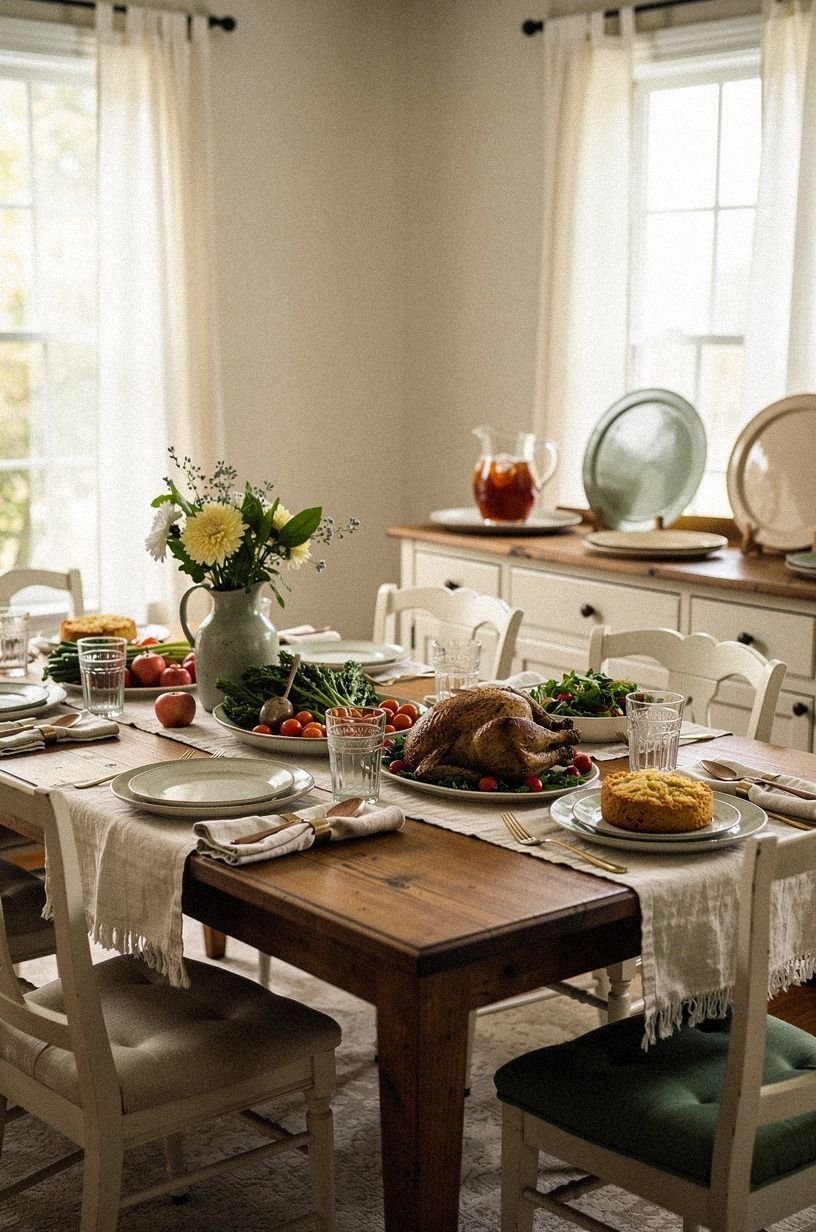
I wanted a place for water, tea, and wine, but another full cabinet would have narrowed the room. A slim CB2 Primitivo console with a Nero Marquina black marble top marked by white veins became the bar station. Its surface holds a glass pitcher, a ceramic cup for corks, and one brass tray.
The console is useful before guests arrive and almost invisible once dinner starts. I keep extra glasses underneath, so you don’t have to send someone into the kitchen every time a glass breaks or a cousin arrives late. That small convenience changed the rhythm of hosting.
I considered a rolling cart, but I skipped it. Wheels made the room feel more like a service area, and the cart blocked the walkway whenever I moved it.
You can create the same station with a narrow shelf if your room is tight. Just leave enough space to open drawers and pass behind the chairs. Practical can still be elegant when the proportions are right.
13What makes a small dining room feel welcoming?
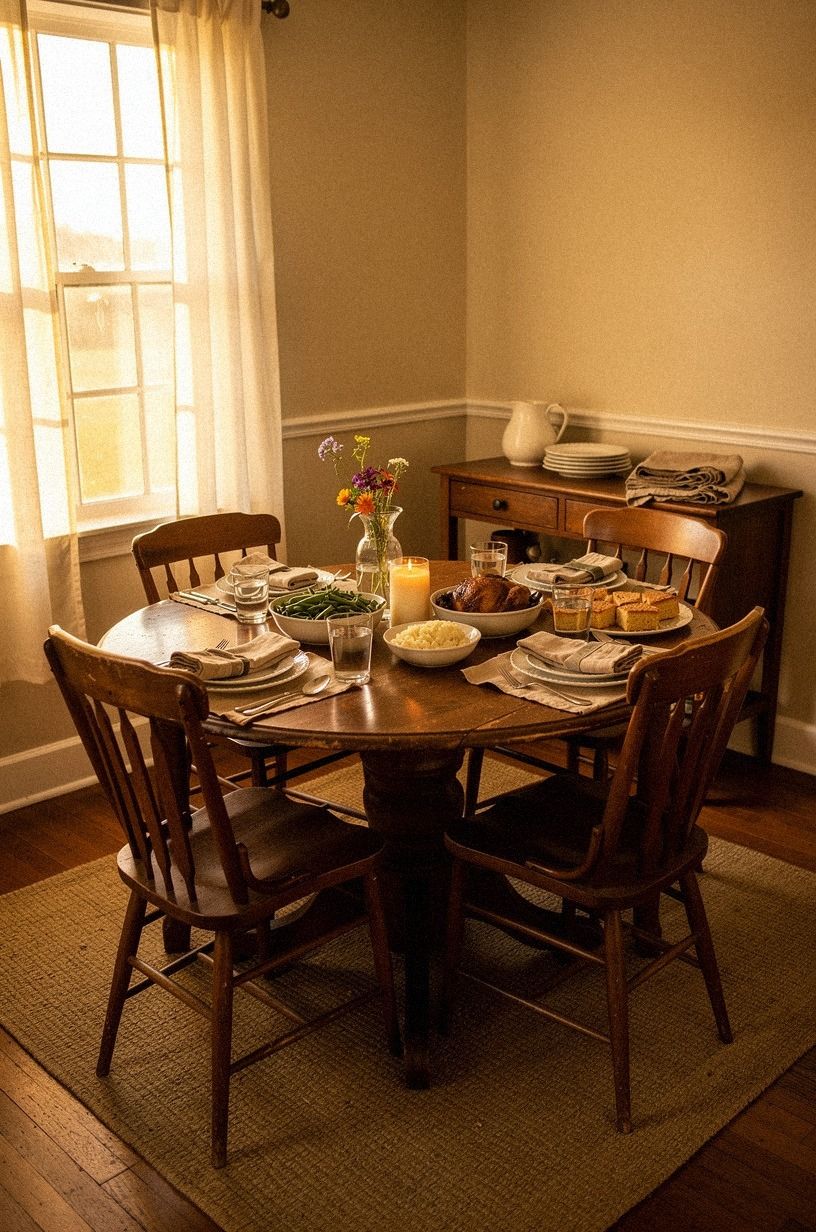
The answer was not more furniture. It was a clear path, a softer light source, and a table set with enough restraint that people could imagine sitting down.
Warm white walls, camel upholstery, and black accents kept the room feeling calm. I removed one chair, two vases, and a large mirror. The room instantly felt brighter and more peaceful.
I also let the table remain partly empty. Three low candles, a linen runner, and a bowl of pears are enough for your eye to read the surface. If every inch is filled, you won’t have room for serving dishes or elbows.
A Sunday-supper table should invite movement, not demand perfect placement. That difference makes the room feel generous instead of staged.
And I stopped trying to make the room look finished. The best moment came when my neighbor set down a bowl of greens, moved the flowers aside, and pulled up a chair.
Your dining room is working when people rearrange it without asking permission. That was the feeling I wanted all along.
14Finish with Sherwin-Williams Urbane Bronze details
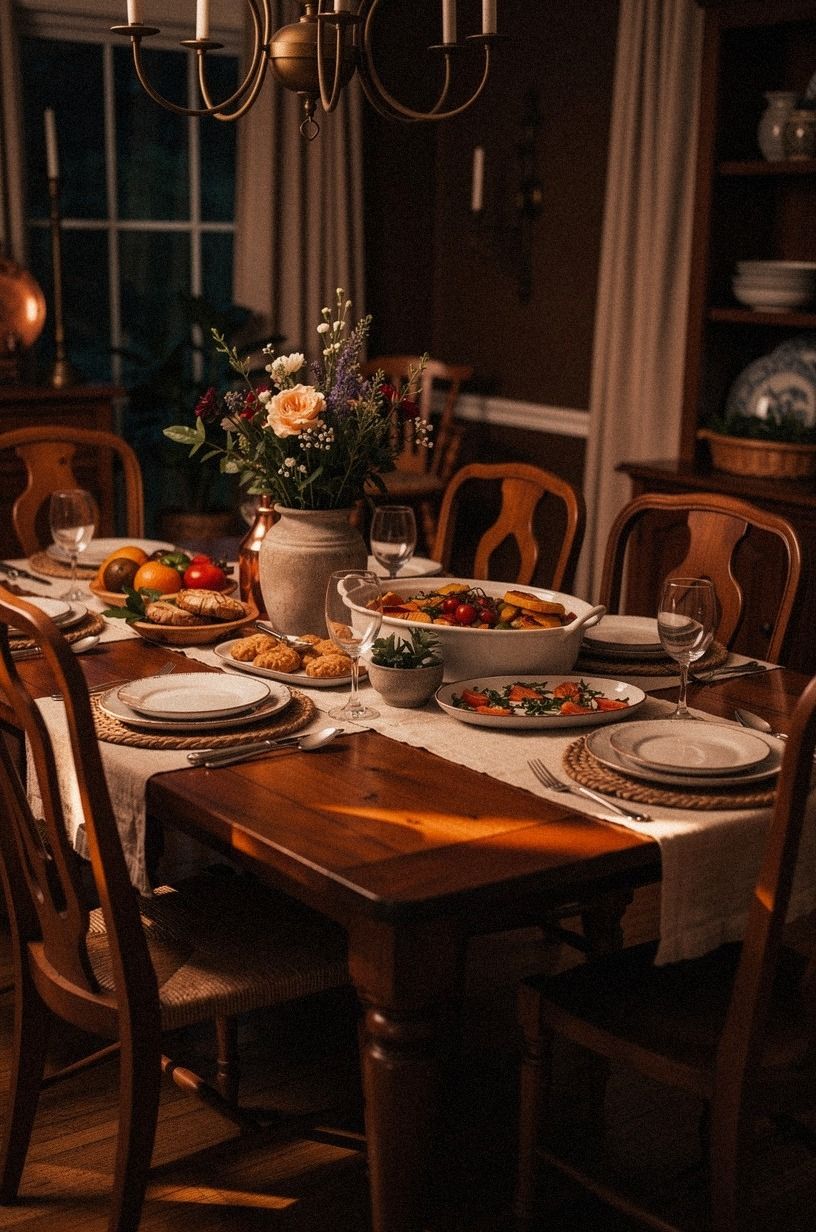
The last layer was Sherwin-Williams Urbane Bronze SW 7048 on the small interior door and one narrow trim section. I used it sparingly, then balanced it with midnight blue details, copper hardware, and ivory textiles. That kept the room grounded without making it feel closed.
I repeated the copper in the curtain rod, picture frames, and candleholders. A Carrara marble tray on the sideboard added a quieter surface with subtle grey veining. Repetition made the room feel harmonious without forcing every finish to match.
My final addition was a bowl of late-season apples. Their red skins looked bright against the darker wall and smelled faintly sweet near the table. It was a small, welcoming detail, but it gave the room a seasonal pulse.
Your finishing touch should be something people can see, smell, or use. Mine happens to be delicious.
How much it cost
I kept my exact makeover budget at $2,000, the low end of the typical US mid-range tier. That covered the table direction, lighting, storage, paint, textiles, chairs, and the pieces I already owned. I bought the vintage chairs locally, sourced the console from a furniture showroom, and spent one weekend painting and rearranging.
The table and chairs took the largest share of attention, while paint and textiles changed the room fastest. If your budget is smaller, you can keep your existing table and spend first on lighting, a washable rug, and curtains. Those choices change what you see every time you enter.
For individual pieces, these are the typical ranges I used while planning:
I didn’t wallpaper this room because the painted two-tone treatment gave me enough depth. You may prefer wallpaper if your walls are in good shape and you want a stronger pattern. I’d save that investment for a room where the pattern can be seen from several angles.
The best budget decision was choosing pieces that solved real problems. A dimmer softened the room, a sideboard reduced kitchen trips, and the rug made chairs easier to move. Those improvements felt more valuable than decorative upgrades alone.
Why I stopped designing for the photograph
I used to think a dining room makeover succeeded when every surface looked finished. I would style the table, step back, and remove anything that interrupted the picture. Then someone would come over, and I’d spend half the meal moving serving bowls around because there was nowhere practical to put them.
That taught me more than any styling rule. A real Sunday-supper room has to absorb movement.
Someone will bring in a pie before the table is ready. Someone else will sit down with a sweater over one arm.
A child will put a pencil beside the napkins.
Those details aren’t damage to the design. They’re proof that the room has become part of your life.
I also learned that warmth doesn’t come from piling on rustic objects. My first attempt had too much distressed wood, too many baskets, and a chandelier that looked like it belonged in a lodge.
I removed half of it and kept the oak, linen, and one old serving spoon. The room became calmer because the materials could breathe.
If you’re deciding where to spend, choose the thing that changes how you use the room. A good table helps conversation.
A dimmer changes the evening. A sideboard keeps you from walking back to the kitchen twelve times.
Decorative pieces matter, but they should support the gathering rather than compete with it. That’s the difference between a beautiful room and a useful one.
The room now looks slightly different every Sunday. In fall, I add a wool runner and amber glass.
In spring, I use white flowers and lighter napkins. You don’t need a permanent look.
You need a foundation that can handle your seasons, your guests, and your imperfect habits.
The Questions Worth Answering First
What is the best Southern Dining Room Ideas for Sunday-Supper Gatherings for a small dining room?
A narrow oak table and open-back IKEA TONSTAD chairs are strong picks because they preserve walking space and keep sightlines light. Choose one slim console instead of a deep cabinet, then leave 36 in behind each chair so your guests can move comfortably.
Where can I buy Southern Dining Room Ideas for Sunday-Supper Gatherings pieces on a budget?
Look at IKEA, Wayfair, and Target for basic furniture and textiles, then check Facebook Marketplace or a local thrift shop for chairs and art. Secondhand seating often brings better character than a matching new set, especially after a careful cleaning and fresh cushion.
How much does a Southern Dining Room Ideas for Sunday-Supper Gatherings makeover cost?
A typical makeover runs about $300-$1,000 at the budget tier and $2,000-$6,000 for a mid-range room. Paint, rearranging, and using dishes you already own can cost nothing, while a solid-oak table or pendant raises the total quickly.
Can I create a Southern Dining Room Ideas for Sunday-Supper Gatherings on a budget?
Yes, and you can start with three changes: move the table for better clearance, soften the light with a warmer bulb, and use thrifted chairs or framed art. A washable runner and cloth napkins add warmth without requiring a full furniture replacement.
Is a Southern Dining Room Ideas for Sunday-Supper Gatherings worth it in a small space?
Yes, because a small room can feel more intimate and easier to gather in. Keep the center open, use a slim table, and choose open chair backs. Your best layout may be the one that removes one chair instead of squeezing in another.
Is Southern Dining Room Ideas for Sunday-Supper Gatherings a good idea for a rental?
Yes. Use removable wallpaper on one small wall, a tension rod for linen curtains, and freestanding storage instead of built-ins. No-damage updates can still bring color, softer lighting, and a welcoming table without changing permanent finishes.
Where I’d Start First
If I had to pick one, I’d start with the lighting. A dimmable pendant at 30 to 36 in above the table changes how your food, faces, and walls look after sunset.
Then I’d move the table, clear one surface, and add the softest textile you can afford. Start there!


