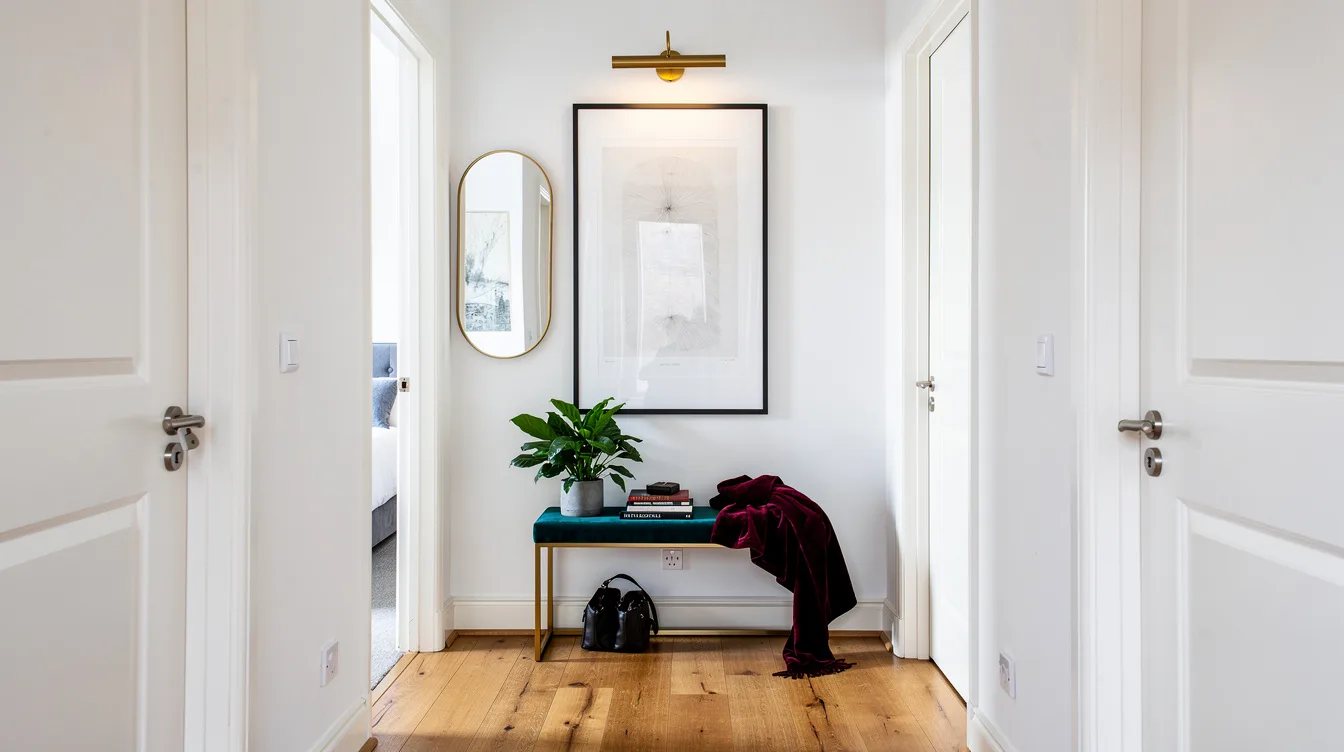
Narrow Rental Hallway? 13 Hotel-Style Art Tricks That Open It Up
12 october 2026The hallway may be only about 36 inches wide, yet its artwork can make that passage feel either tailored or boxed in. Hotel designers understand the tension: every frame must add character without stealing the few inches the rental has.
The strongest solutions use vertical rhythm, reflected light, and generous breathing room. We gathered the placement rules that make narrow rental corridors read wider, calmer, and far more deliberate.
What you will find inside
- Stretch the Wall With a Tall Print
- Repeat Slim Frames Down the Corridor
- Hang a Mirror Like a Picture
- Choose Panoramic Art for the Long Wall
- Use Pale Mats to Add Breathing Room
- Light the Artwork From Above
- Match Frame Lines to Door Hardware
- Build a Gallery Rail Without Heavy Damage
- Keep the Bottom Edges Aligned
- Reserve the End Wall for Contrast
- Repeat One Color Across Separate Pieces
- Frame Lightweight Prints for Flexibility
- Edit the View From the Living Room
Stretch the Wall With a Tall Print
A narrow rental benefits from artwork that reinforces height before it tries to add width. Choose a portrait-oriented print around 24 inches tall, then hang its center near eye level so the hallway feels intentionally proportioned.
A simple light oak frame keeps the piece warm without creating a dark vertical stripe. A typical framed print in this size costs about $40 at Target, and removable hanging strips make the setup renter-friendly.
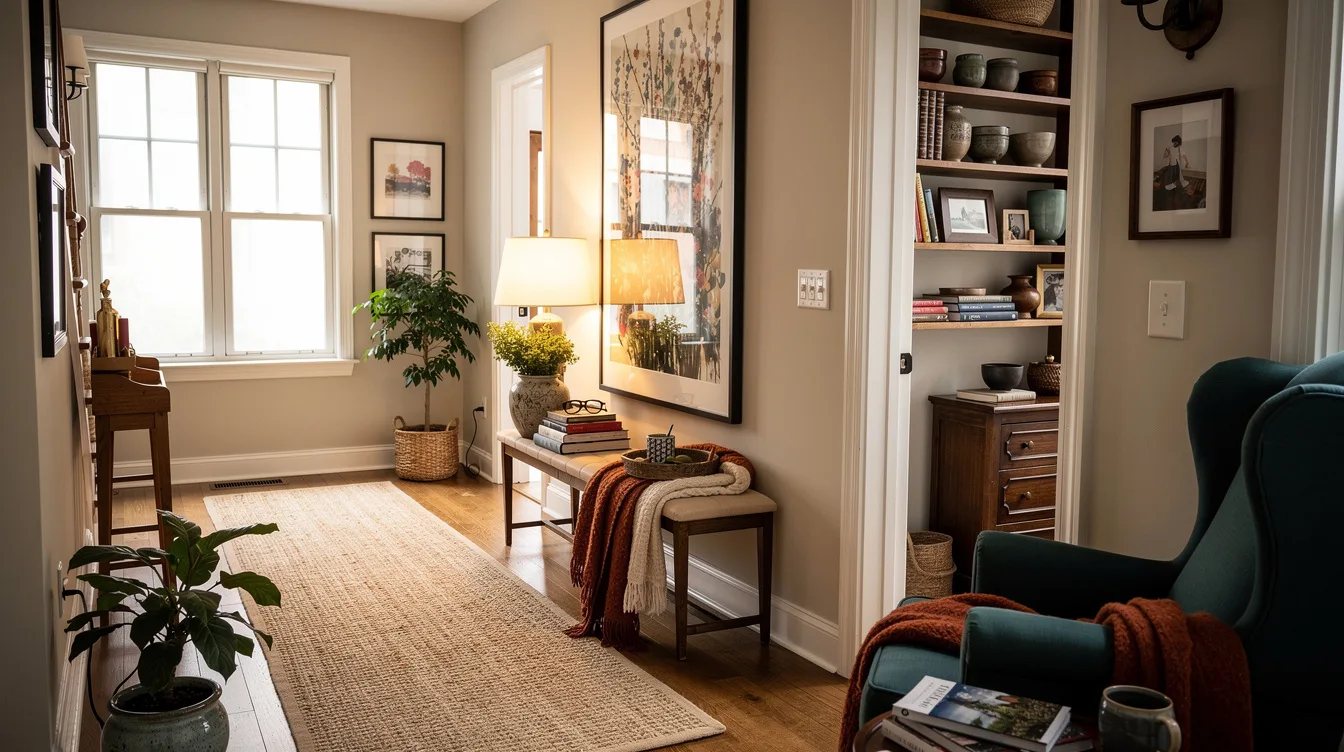
Repeat Slim Frames Down the Corridor
Hotel hallways feel longer because their artwork repeats at a steady rhythm. Use four or five slim frames with similar proportions, leaving about 18 inches between centers instead of filling every open patch.
Wayfair sells narrow black metal frames in coordinated sets for about $60 to $90, typically. Keep the artwork varied enough to feel collected, but let the frame width do the visual organizing.
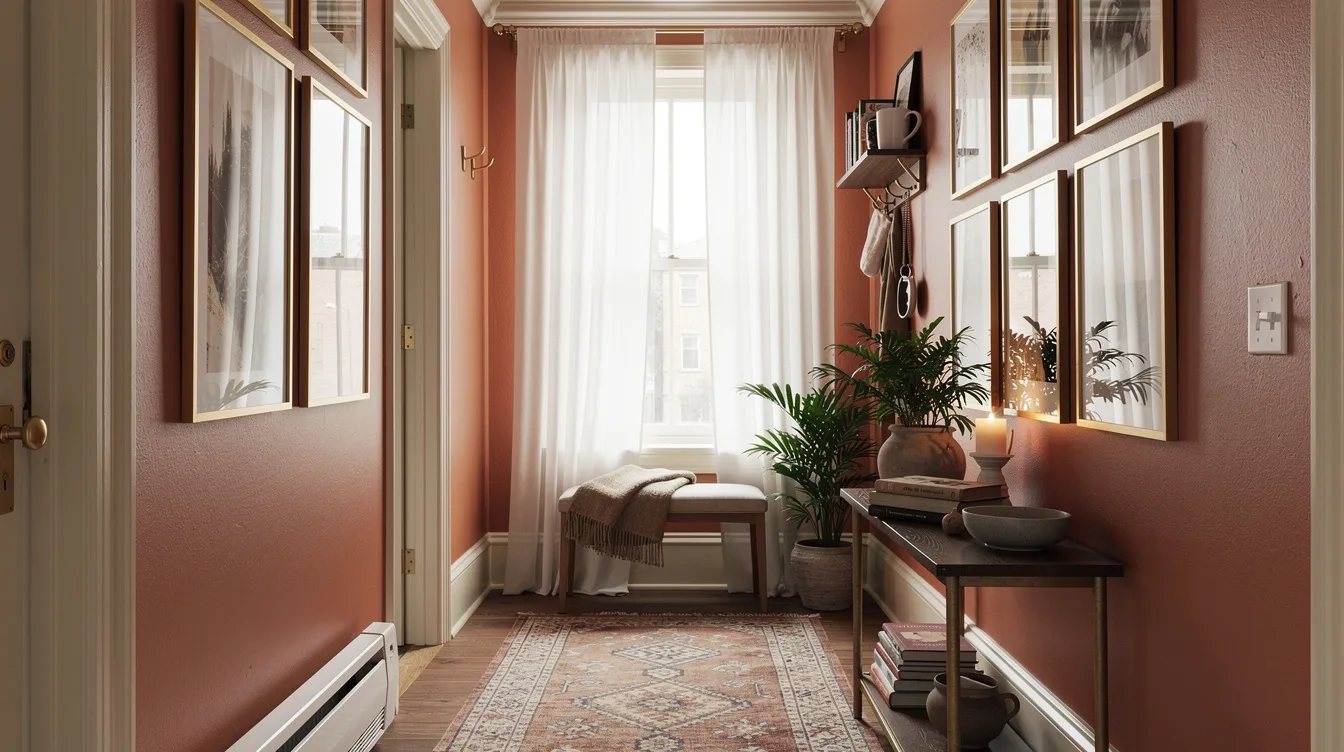
Hang a Mirror Like a Picture
A mirror can widen a rental hallway when it is treated as artwork, not as a full wall installation. Place one rounded rectangle opposite the brightest doorway or window, where it can reflect light and a clean sightline.
A roughly 20-inch-wide arched mirror from IKEA usually costs about $35 to $60. Avoid placing it opposite a coat pile or crowded shoe rack, because the reflection will multiply the clutter instead of the space.
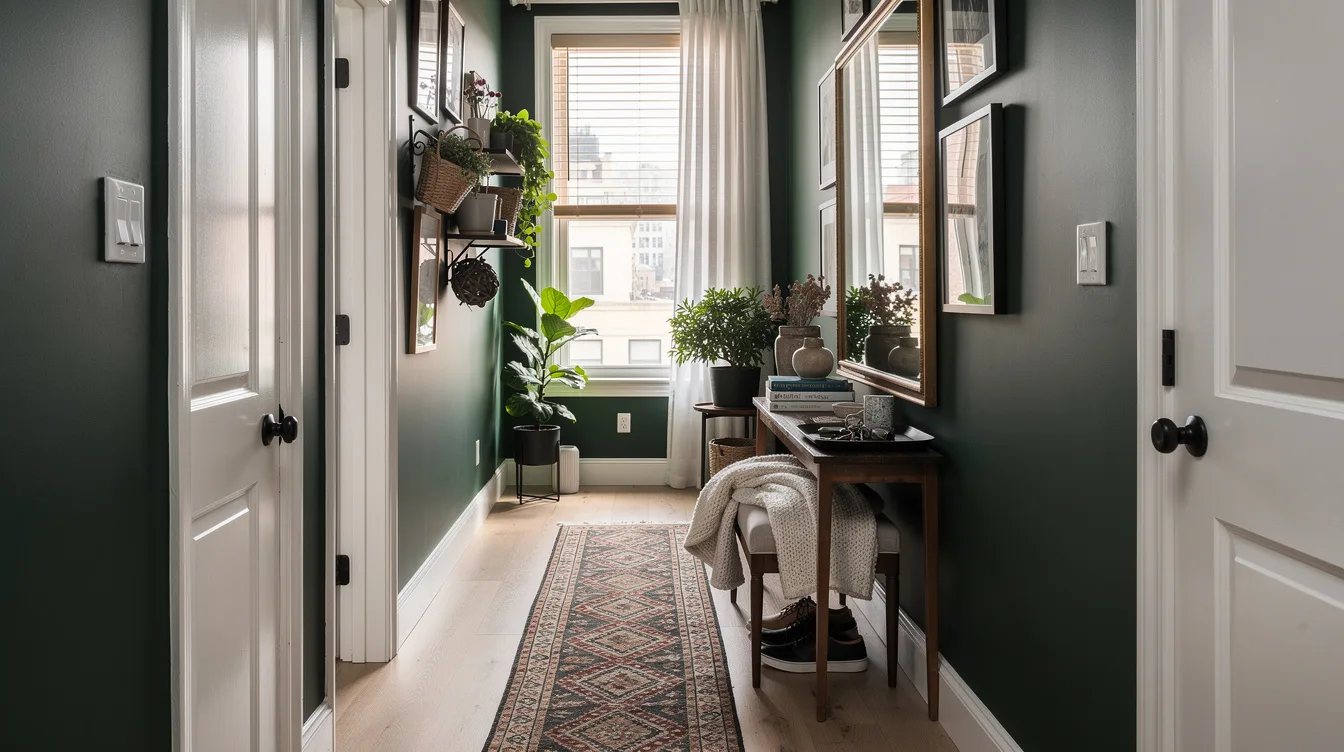
Choose Panoramic Art for the Long Wall
One wide, shallow composition can make a hallway wall read as broader than it is. Look for a landscape print around 36 inches wide and 12 inches tall, with a quiet horizon or architectural view.
Amazon carries panoramic canvas artwork for about $30 to $70, typically. Hang it slightly above the midpoint of the wall, and skip thick gallery frames that make the corridor feel tighter.
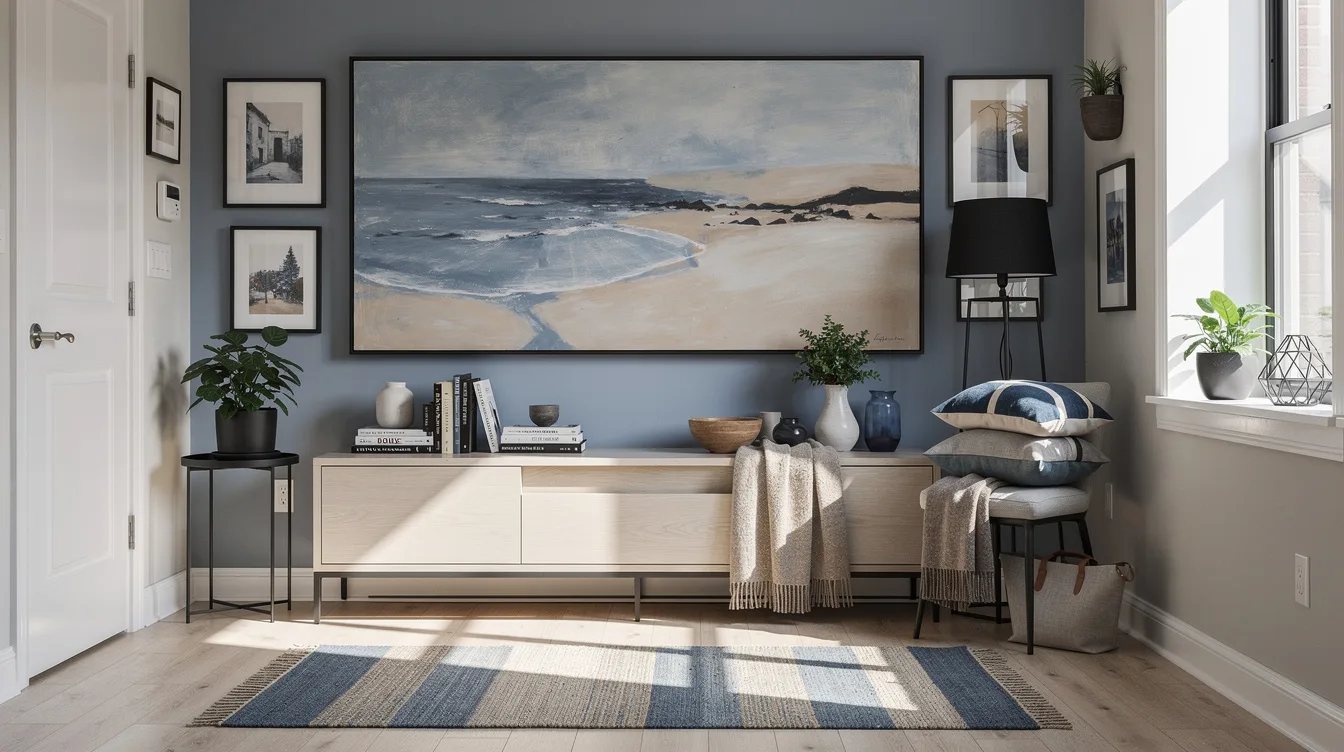
Use Pale Mats to Add Breathing Room
A generous mat creates a band of empty space between the image and the wall, which is especially useful when a rental hallway has busy doors and trim. Choose an opening that leaves about 2 inches of pale mat around a small print.
A white cotton mat from an art-supply section at Walmart can cost about $8 to $15, depending on size. This move works best with one restrained image, not a crowded collage of tiny photographs.
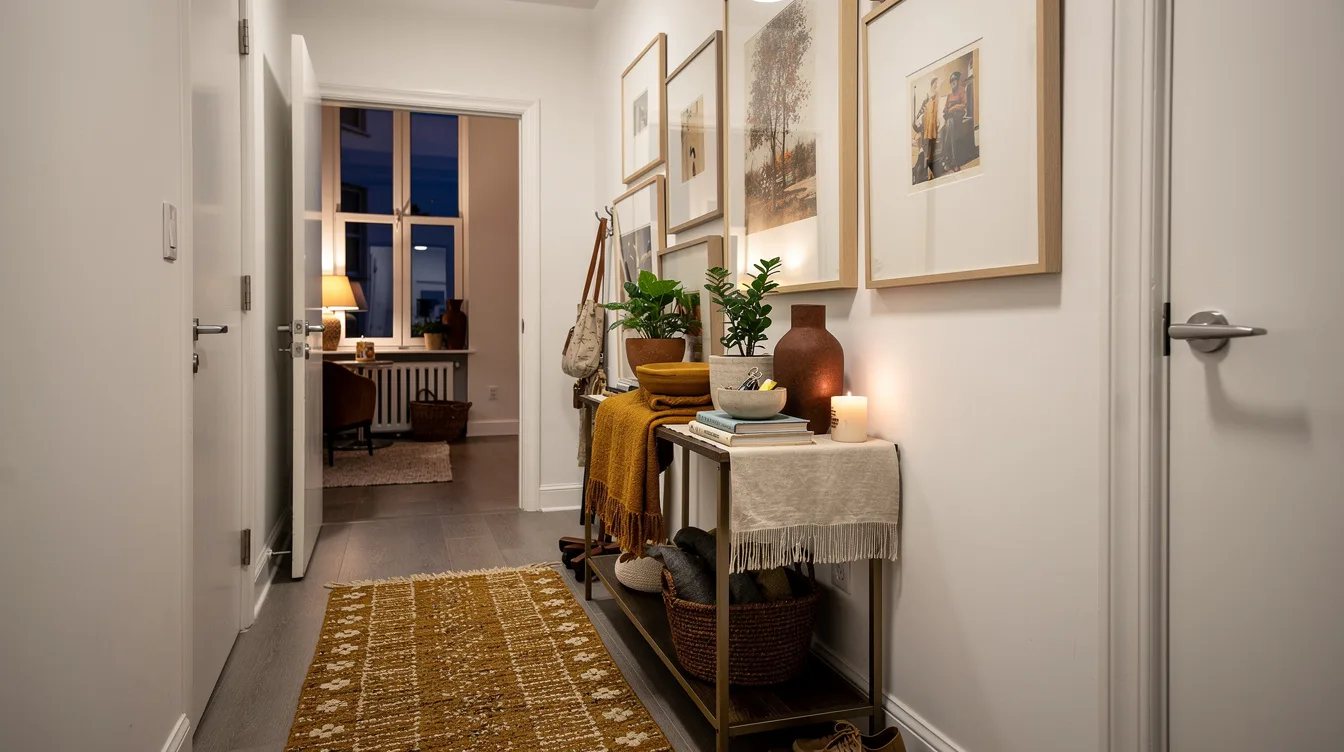
Light the Artwork From Above
A small picture light draws attention across the wall and gives the hallway a hotel-like finish after dark. Mount it above the focal piece, aiming the beam down the artwork rather than straight into the walkway.
Home Depot carries plug-in brass picture lights for about $25 to $50, typically, so renters can avoid hardwiring. Choose a warm bulb around 2700K, and hide the cord inside a slim paintable cord cover.
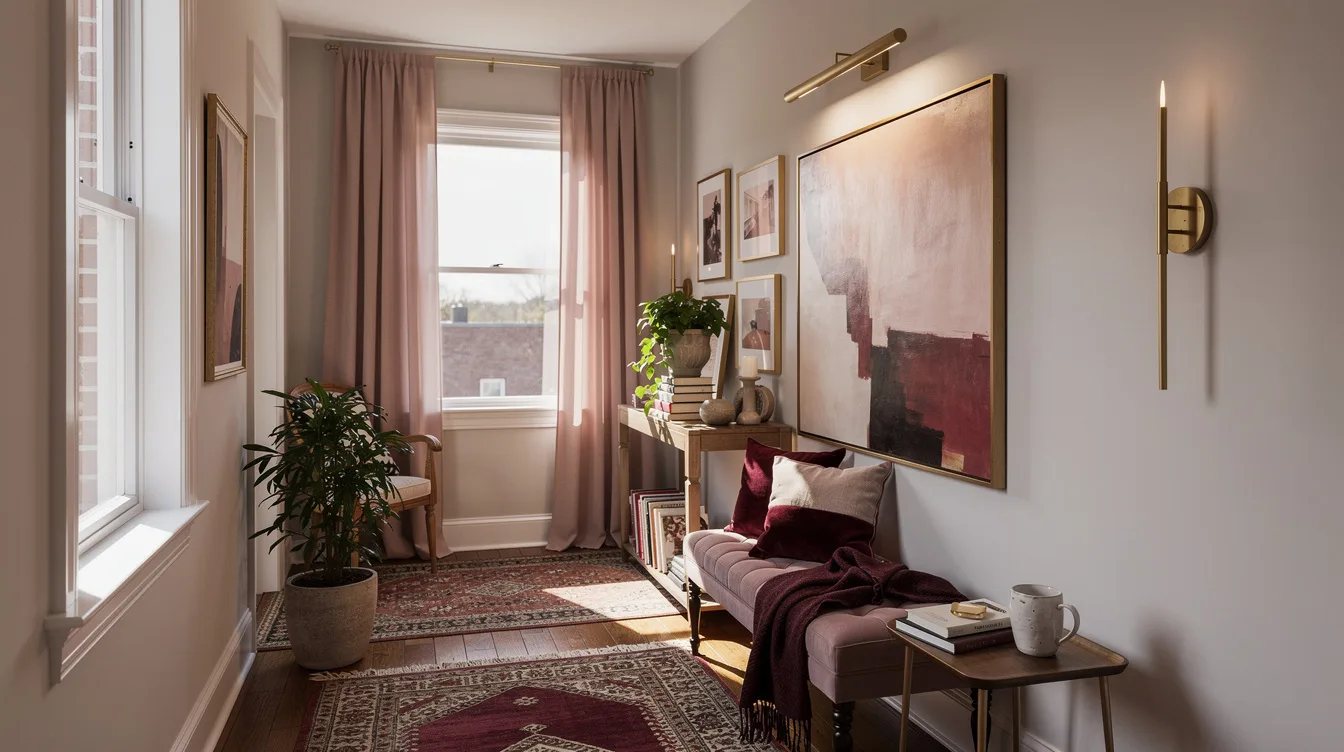
Match Frame Lines to Door Hardware
Hallway artwork looks calmer when its metal details acknowledge what is already in the rental. If the door levers are satin nickel, choose silver-toned frames; if the hardware is dark, repeat that finish in one narrow border.
A matte black frame from Lowe's usually runs about $15 to $30 for a medium size. The match should be subtle, not a showroom theme, so keep the artwork itself softer than the hardware.
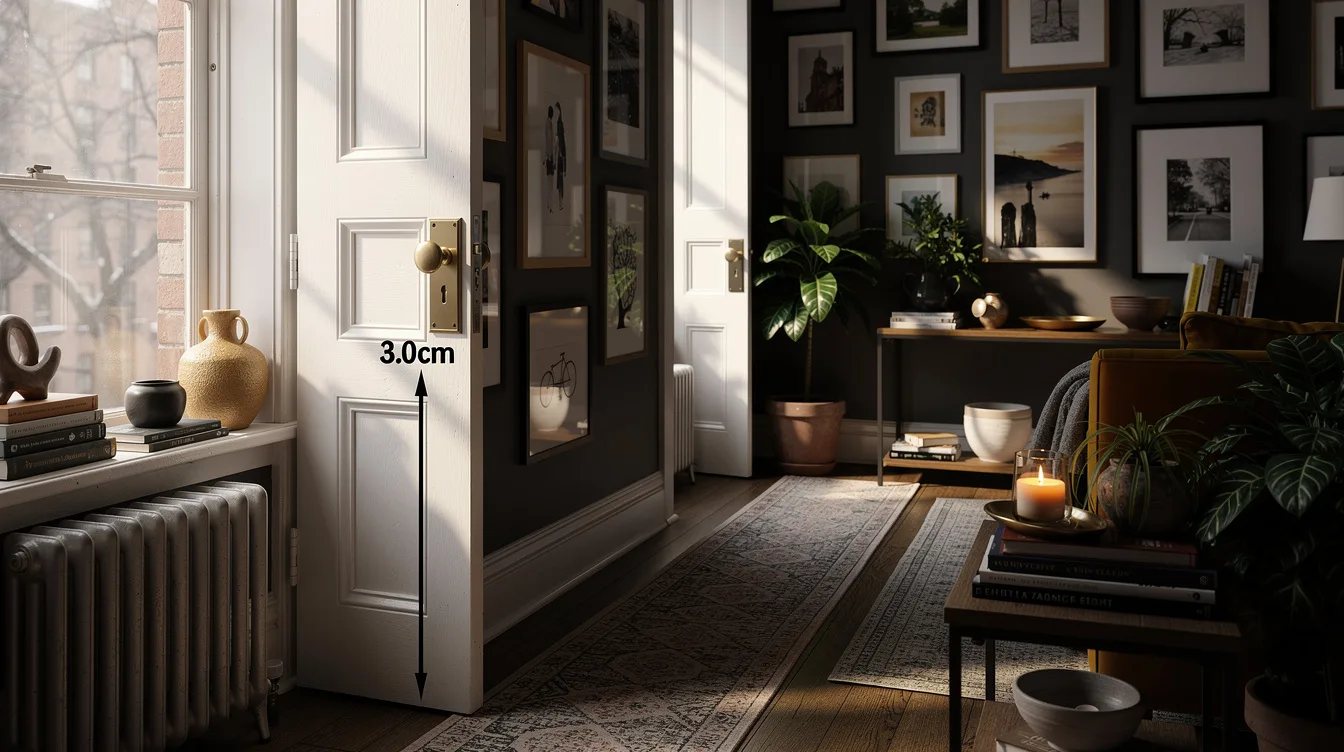
Build a Gallery Rail Without Heavy Damage
A gallery rail lets artwork sit slightly forward from the wall and gives a narrow corridor the polished layering seen in boutique hotels. Use one rail near the ceiling, then hang two or three small pieces at staggered heights.
Look for a white picture rail at Ace Hardware for about $20 to $45, typically, and secure it according to the rental agreement. If drilling is prohibited, use removable hooks with lightweight frames and keep the arrangement lower.
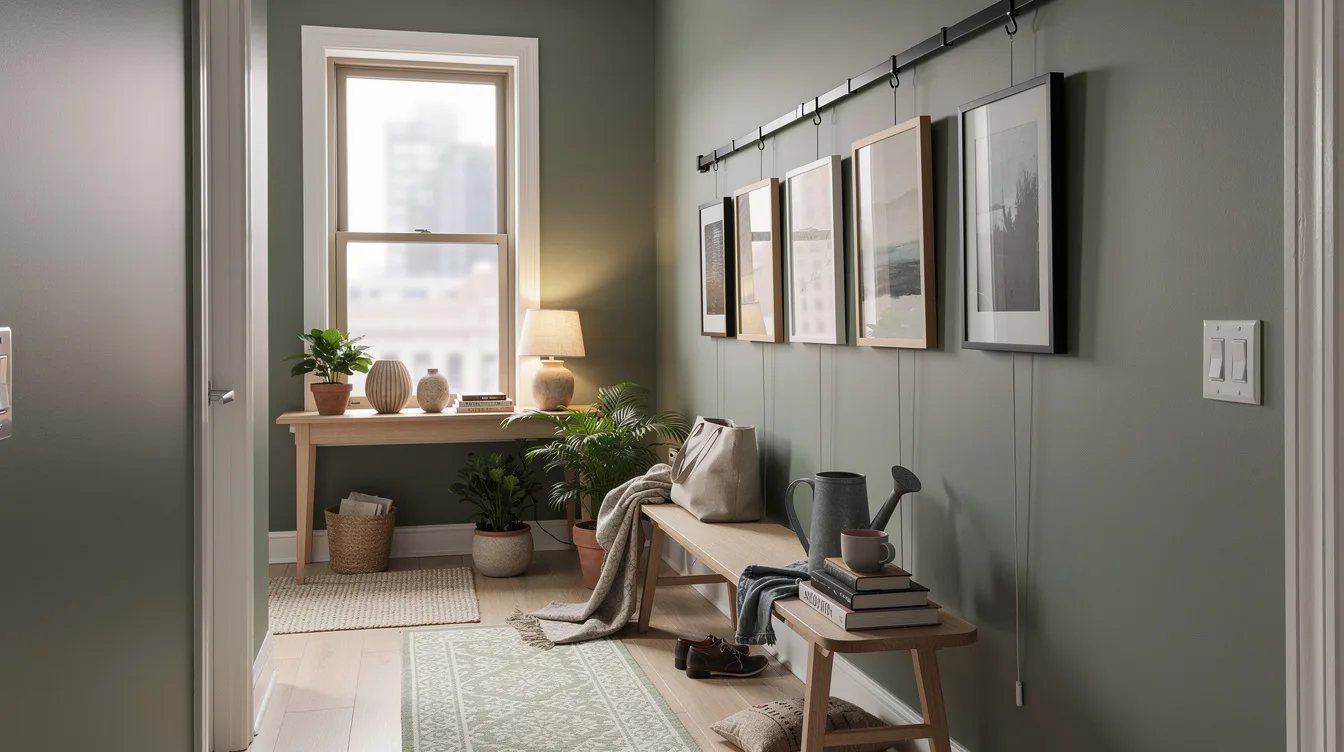
Keep the Bottom Edges Aligned
Uneven artwork bottoms make a tight hallway feel restless because the eye has too many directions to follow. Align the lower edges of a pair of prints about 8 to 12 inches above the top of the baseboard.
Two matching linen-matted prints from Target may cost about $25 to $45 each. This hotel-style line works particularly well beside bedroom doors, where consistency can make several small transitions feel like one composition.
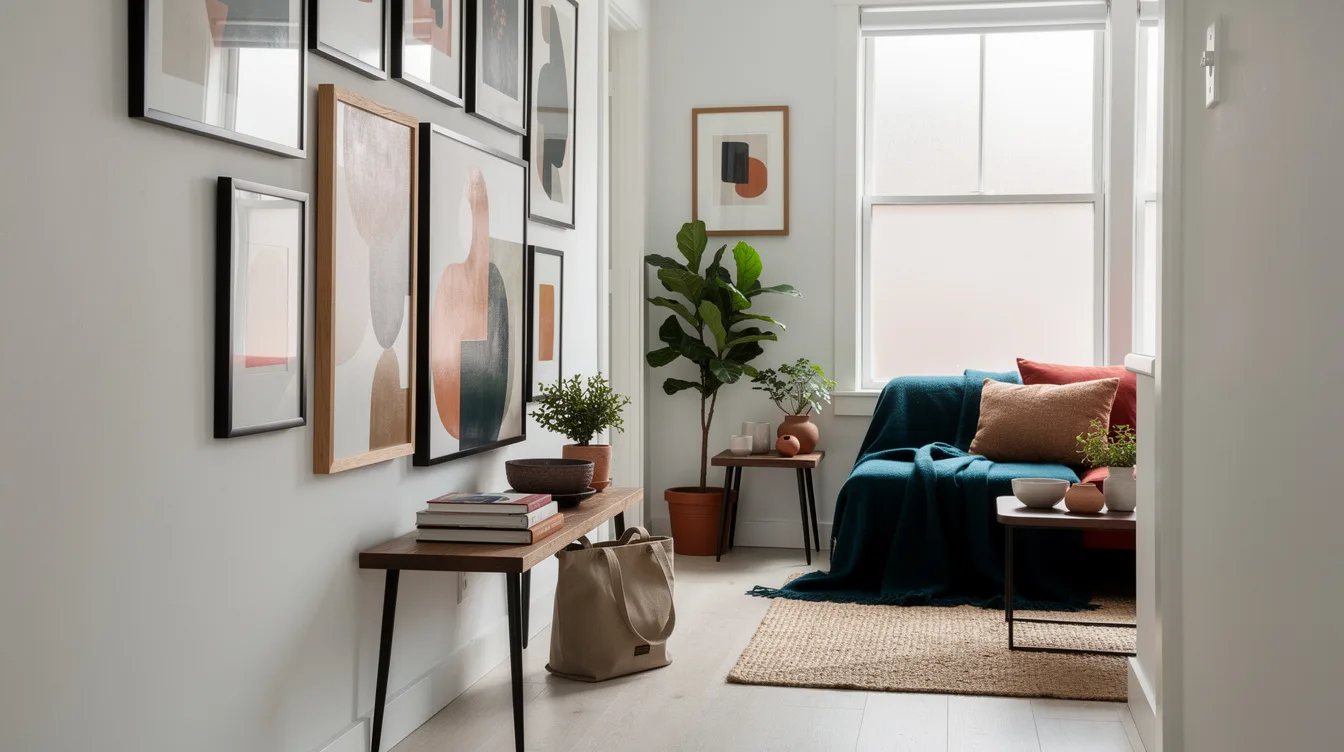
Reserve the End Wall for Contrast
The wall at the end of a hallway is the natural destination for the eye, so give it the strongest artwork in the rental. A deep blue abstract print or a shadowy architectural photograph can create depth without adding physical bulk.
A navy art print from Wayfair typically costs about $20 to $50 before framing. Keep the side walls quieter, because competing focal points make the corridor feel shorter and more crowded.
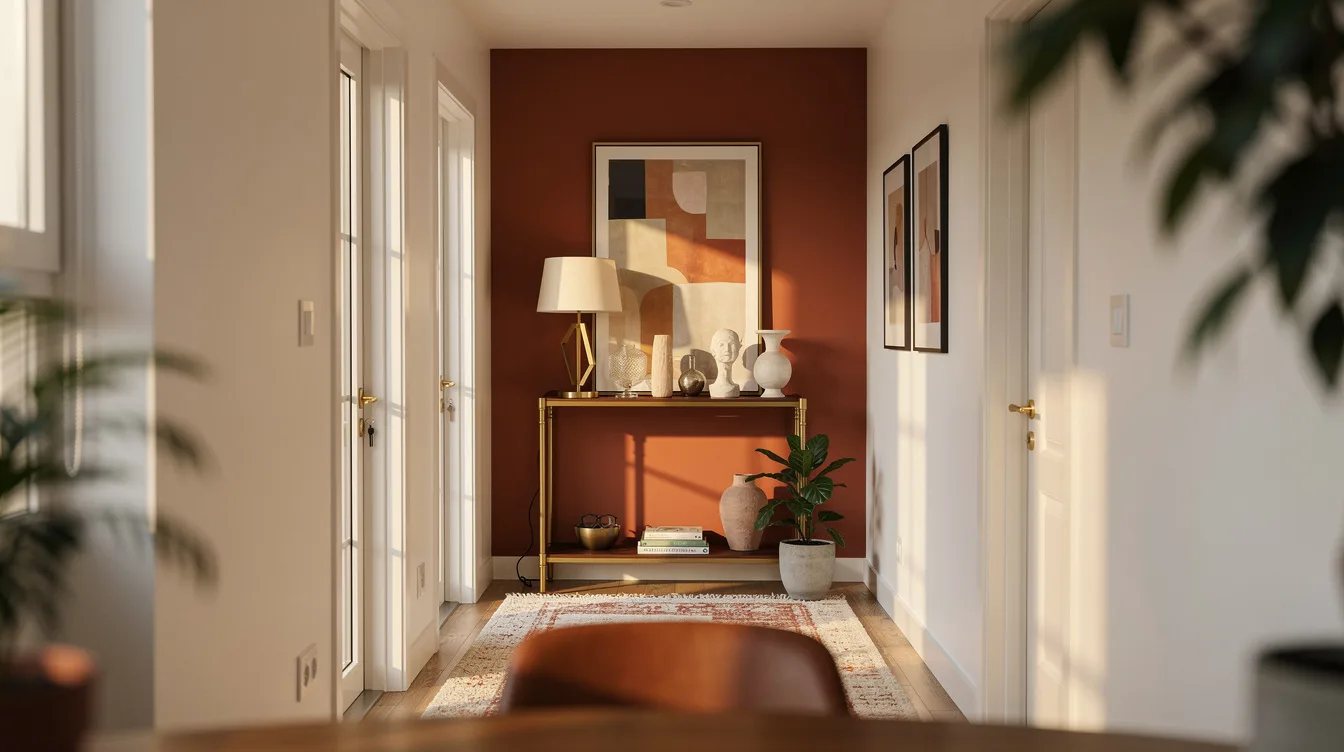
Repeat One Color Across Separate Pieces
Artwork can connect mismatched rental finishes when one color appears in every piece. Try a rust accent in a botanical print, a small abstract, and a vintage-style travel image, while changing the imagery and scale.
A rust velvet-toned print from Amazon may cost about $15 to $35, typically. Repeat the color only once or twice in each image, then let the wall and frame colors stay quiet.
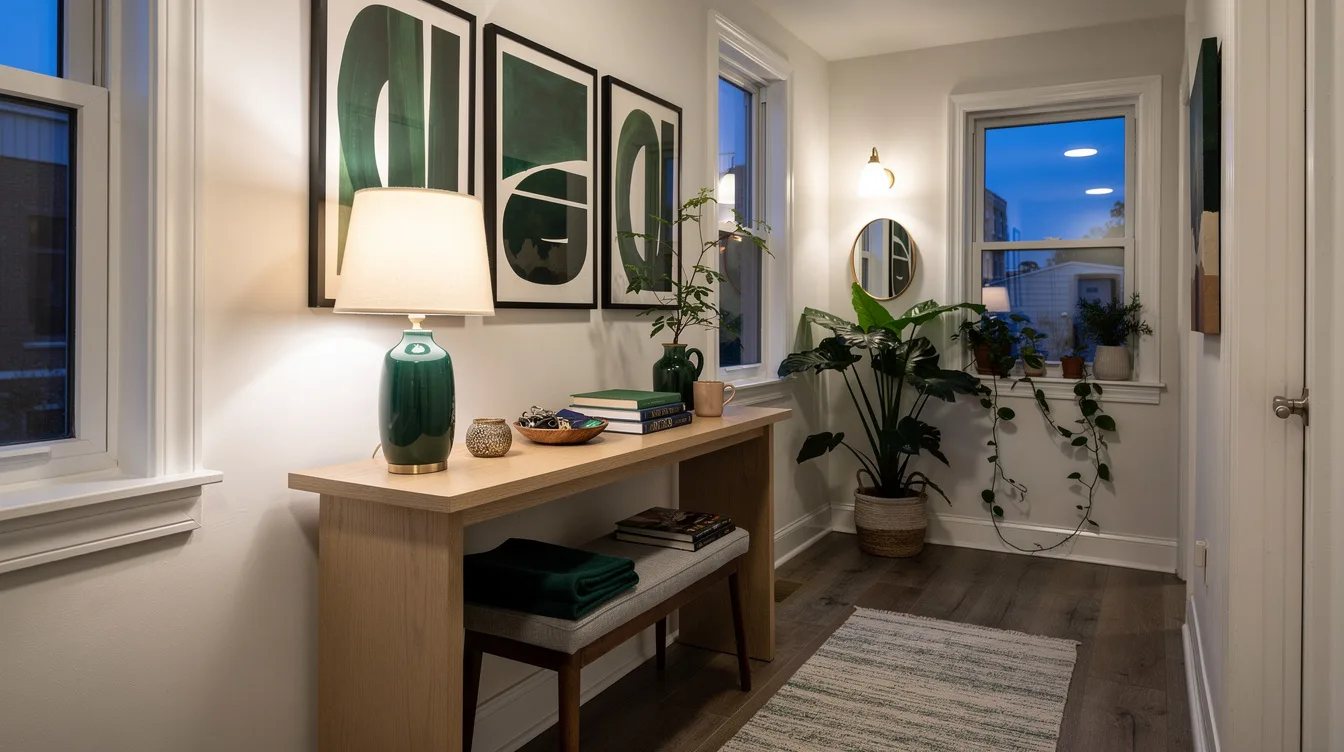
Frame Lightweight Prints for Flexibility
Heavy art creates unnecessary restrictions in a rental hallway, especially when the wall is drywall or the lease limits anchors. Paper prints in acrylic or thin wood frames are easier to move, replace, and keep secure near a busy doorway.
An acrylic poster frame from Walmart usually costs about $12 to $25. Choose a clear front with a narrow border, and avoid glossy glazing where overhead lights could create distracting reflections.
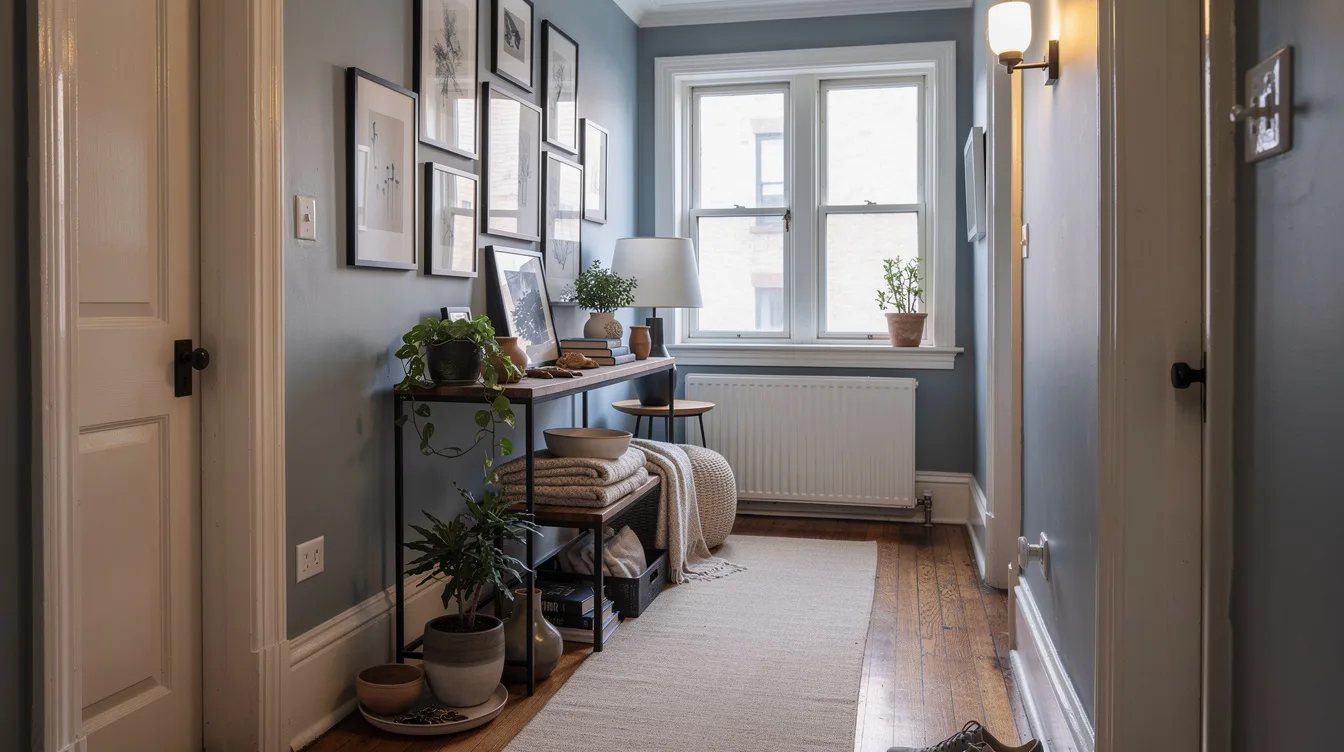
Edit the View From the Living Room
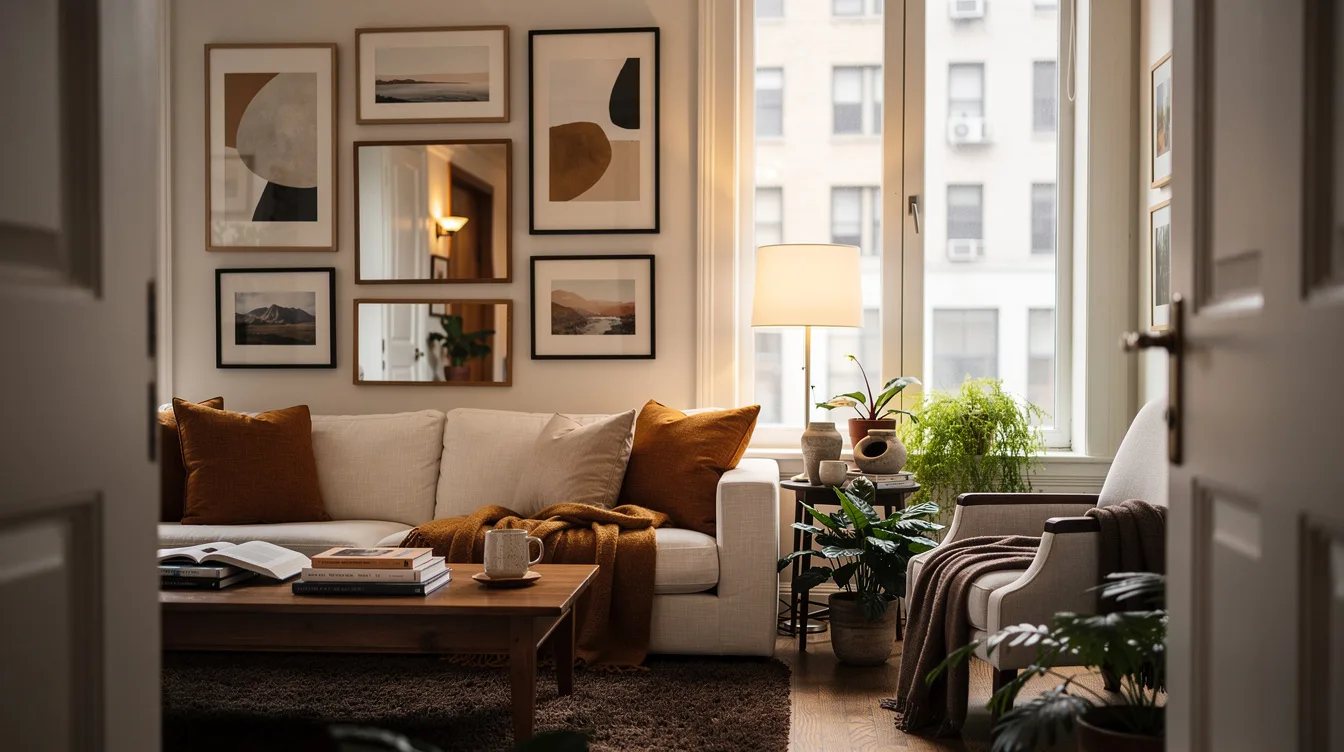
Stand at the living room entrance and study the hallway as a single sightline before buying anything. The first visible piece should support the room beyond it, while the last piece should give the eye a reason to travel forward.
A single oversized architectural print from IKEA can cost about $20 to $40, typically, and often works harder than a crowded cluster. Remove any frame that repeats a color or shape already competing with the main room.
Keep reading
- 12 Hotel-Style Nightstand Rules That Make a Bedroom Feel Finished
- 12 Open Shelving Mistakes Making Your Small Kitchen Feel Cluttered
- Narrow Hallway Eating Your Entryway? 13 elfa Kits Fix It
Start with the view from the living room, then choose one focal piece for the far wall before adding anything along the sides. That order keeps the hallway open while giving every frame a job.
Spend first on the correct scale and hanging height, not on a large collection. A single well-positioned print can change the passage before a second nail ever touches the wall.


