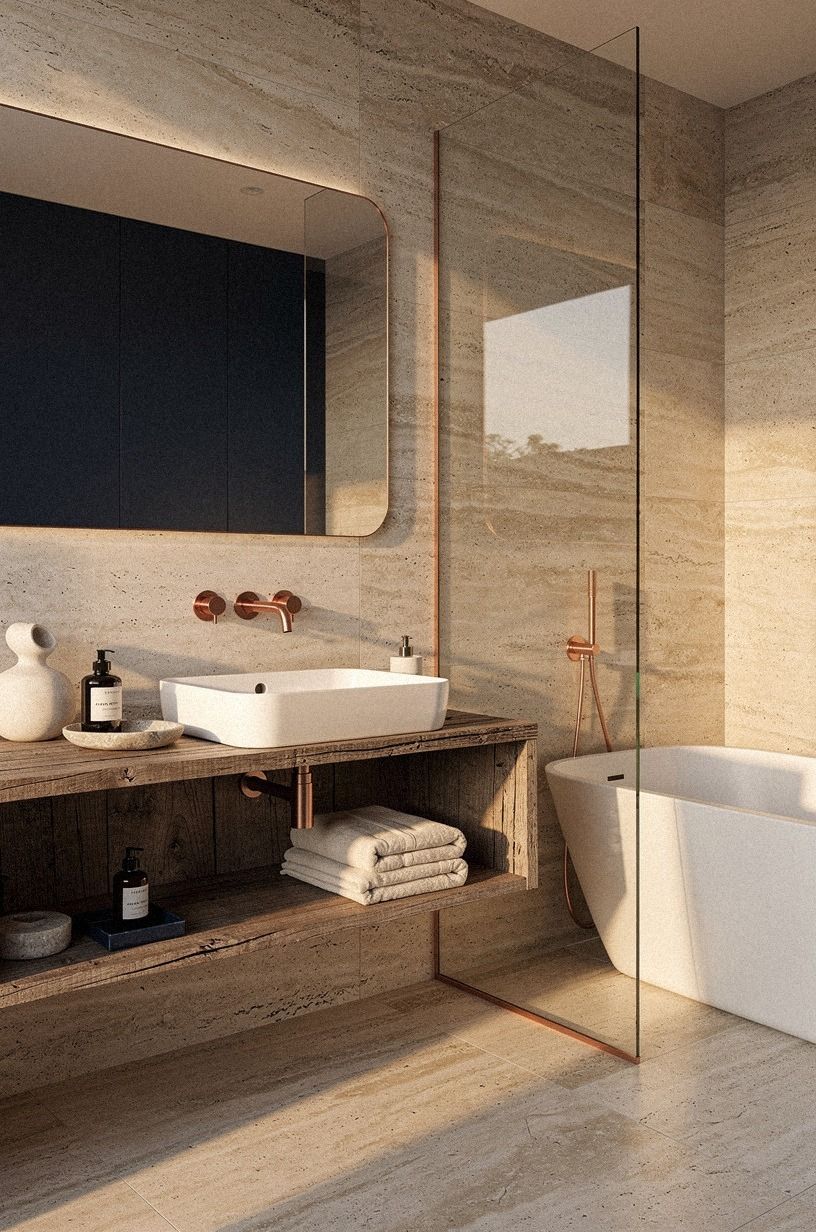
12 Travertine & Wood Bathroom Ideas for Natural Warmth Without a Full Reno
10 october 2026Travertine & wood bathroom ideas for natural warmth can work without replacing every fixture, especially when you pair one earthy surface with quiet oak or walnut. I once sealed travertine too late and spent a Saturday cleaning stains from the pores. The fix was simpler than the mistake: choose the focal surface first, then let your lighting and storage support it. Start small.
Don’t overthink: Float a bathroom walnut vanity at the right height.
- Layer travertine with one calm wood tone
- Float a bathroom walnut vanity at the right height
- Use The Two-Wood Rule beside natural stone
- Swap shiny chrome for unlacquered brass
- Build The Three-Height Light Stack
- Frame the mirror with a warm wood surround
- Paint the ceiling when the walls feel too busy
- Choose a compact shower with stone texture
- Price the natural warmth before you demo
- Can a rental get the travertine and wood look?
- Mix small accessories with large surfaces
- Choose wood and stone over faux rustic décor
1Layer travertine with one calm wood tone
Travertine brings movement, so your bathroom needs a wood finish that lets the stone breathe. I’d choose honed travertine with creamy pits and soft beige variation beside reclaimed weathered teak. Your eye gets texture without having to process five competing colors, and the room feels warm, earthy, and inviting.
Keep the wood tone consistent across your vanity, stool, and one framed print. Reclaimed weathered teak works well in a bright bathroom because its grain catches daylight without turning orange. If your room faces north, a deep midnight blue such as Farrow & Ball Hague Blue No. 30 can add a grounded note beside copper and ivory accents.
And don’t cover every surface with stone. Your bathroom will feel more refined when one wall, backsplash, or shower niche carries the travertine and the rest stays quiet. I’d skip a busy mosaic floor here because the small pieces fight the natural pores you paid to see.
2Float a bathroom walnut vanity at the right height
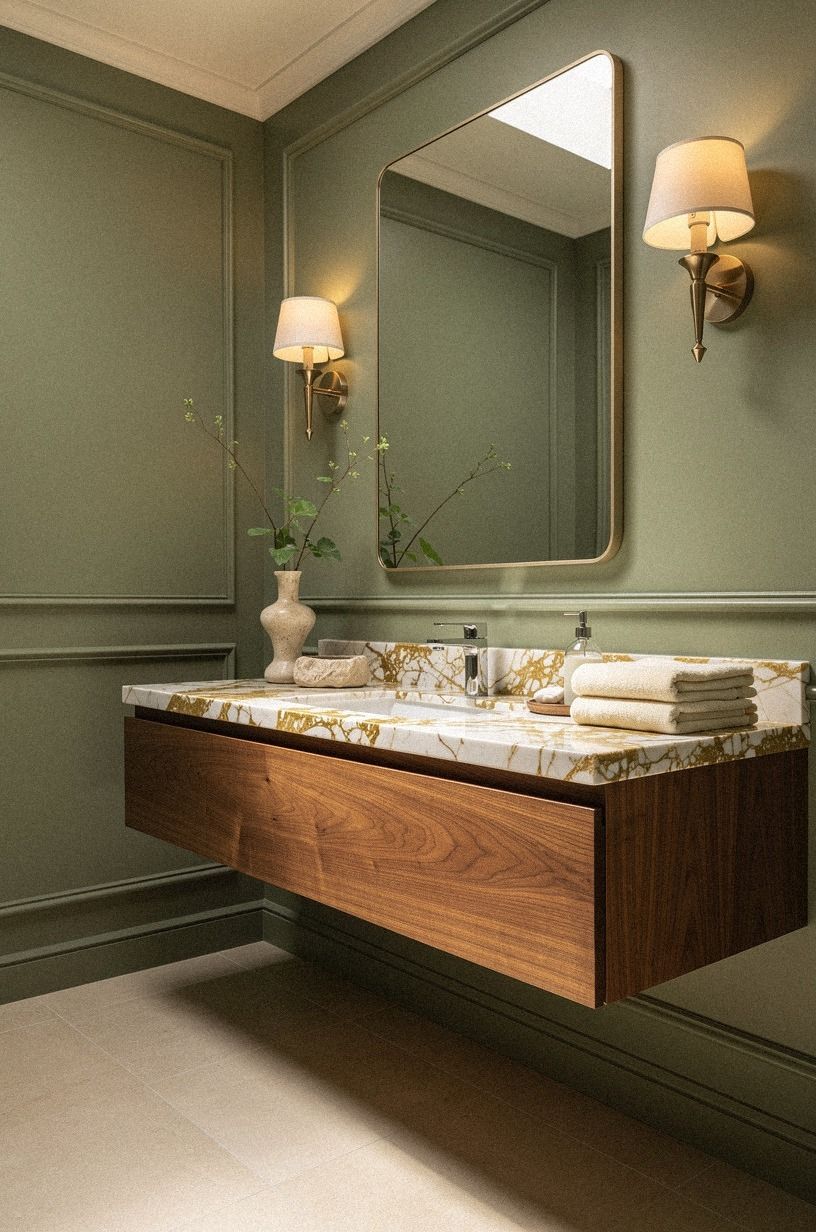
A floating vanity makes a small bathroom feel more open because your floor continues underneath it. Set the top around 32 to 36 inches, the standard vanity-height range, so your sink works for you without making the room feel cramped. A wall-mounted walnut vanity also gives you a clean place for baskets and folded towels.
Look for a simple slab-front line such as an IKEA TONSTAD piece or a walnut-finished custom cabinet with a visible grain. I prefer flat doors over shaker detailing in this setting. Your Calacatta marble already supplies enough visual information, especially with its gold veining, and extra grooves can collect dust around the sink.
You’ll want to protect the wood from standing water. A matte clear coat, sealed edges, and a small stone tray near the faucet help more than a deep overhang.
I made the mistake of leaving a damp hand towel against a wood drawer once, and the raised edge reminded me for weeks. Dry your surfaces quickly, and the vanity will age with character instead of damage.
3Use The Two-Wood Rule beside natural stone
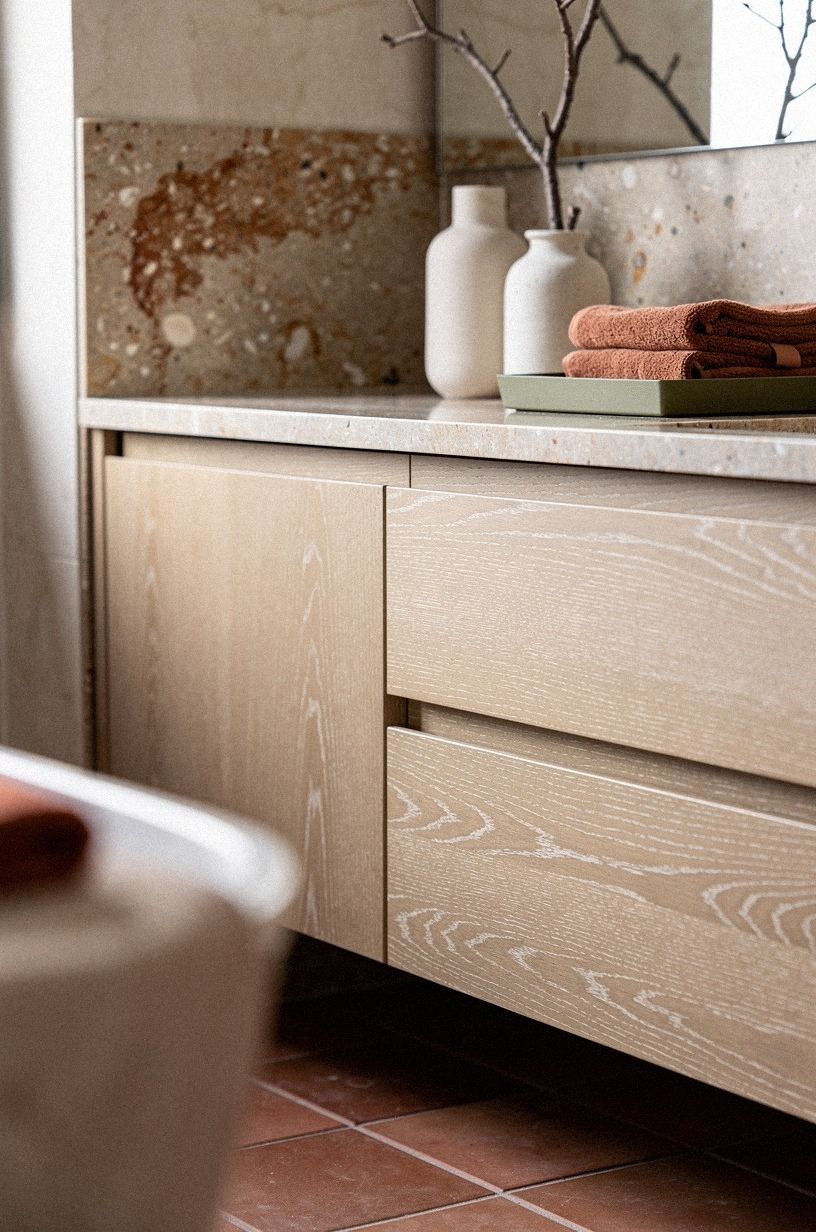
The Two-Wood Rule is simple: use one dominant wood and one small supporting wood, then stop. Your main tone might be cerused white oak, while a darker walnut stool or frame supplies contrast. I wouldn’t add bamboo, rattan, ash, and painted wood all in the same bathroom because the room starts to look assembled rather than lived-in.
Choose the dominant finish for the largest piece, usually your vanity or linen cabinet. A West Elm Anton solid wood vanity in a cerused oak tone gives you enough grain to carry the room, while a walnut-framed mirror can act as the quieter second note. Keep both finishes matte so the stone remains the brightest surface.
But don’t make every wood item match perfectly. Slight variation keeps your bathroom relaxed, especially when terracotta and olive accents meet the stone. Your goal is a related family, not a showroom set.
Add one Belgian flax linen hand towel, and the contrast between dry grain, porous stone, and soft fabric becomes wonderfully calming.
4Swap shiny chrome for unlacquered brass
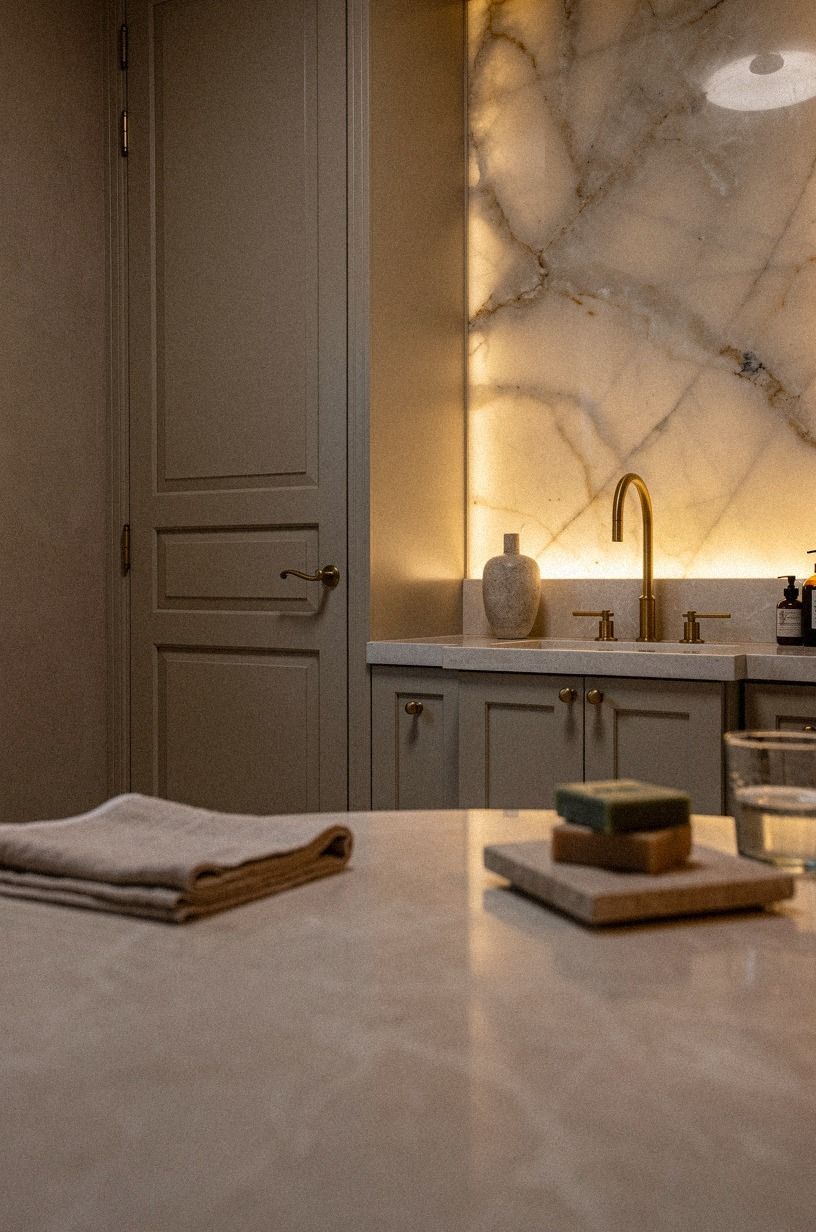
A backlit translucent onyx panel and wood can look flat under cold chrome, particularly in a bathroom with white bulbs. I’d swap the faucet, cabinet pulls, and towel ring for unlacquered brass with a soft patina. The warmer metal picks up the clay tones in the onyx, and your wood finish will look richer beside linen accents.
You don’t need to replace every fixture at once. Start with one faucet, then let your existing mirror or shower trim remain plain if the finishes are close enough. Delta Trinsic Champagne Bronze can give you a similar warm effect when you need a low-maintenance finish, but I prefer unlacquered brass when you want visible aging.
Your hardware should feel used, not polished for a catalog. Wipe the faucet after washing your hands, but don’t panic over small water marks.
I’d skip bright gold plating because it can read yellow beside translucent stone. A brushed, changing finish looks more organic and gives your bathroom that peaceful hotel feeling without copying one too literally.
5Build The Three-Height Light Stack
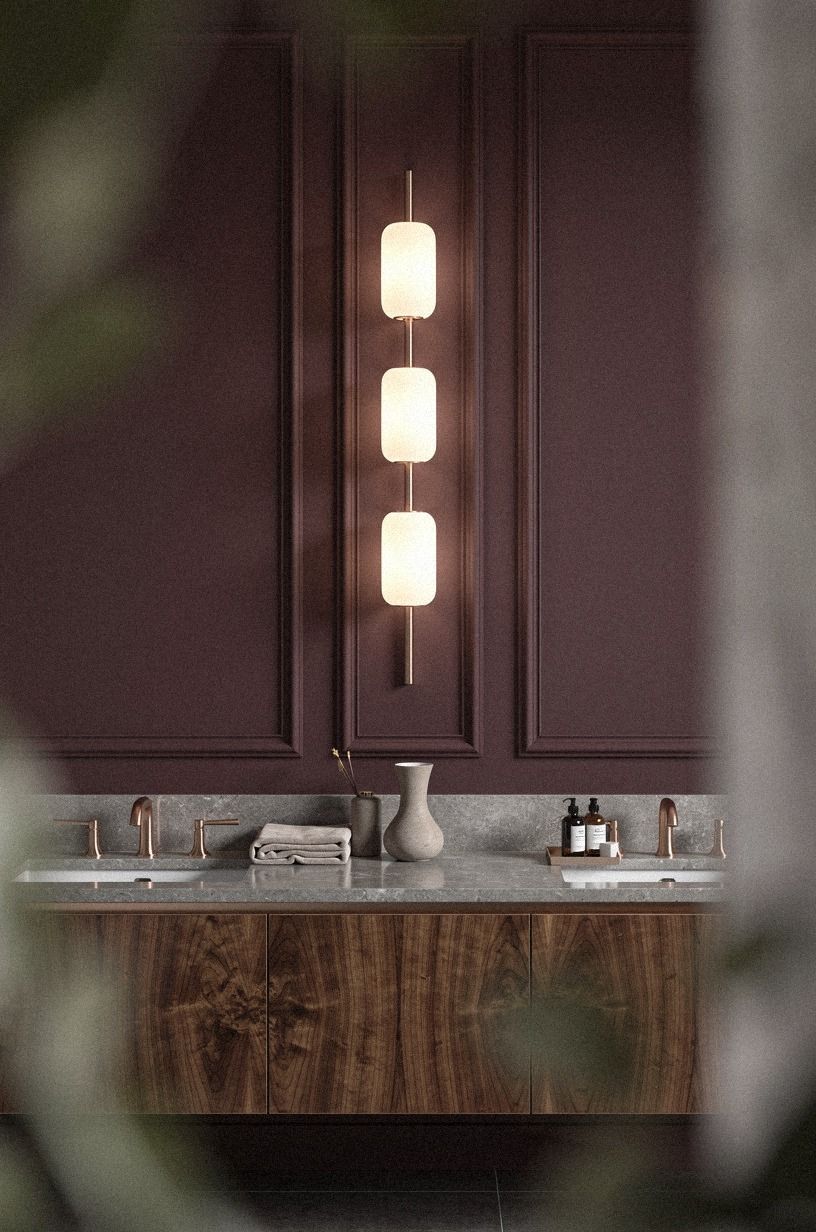
The Three-Height Light Stack uses a ceiling fixture, eye-level sconces, and a low glow near the floor or vanity. Your bathroom needs all three because one overhead light creates shadows under your eyes while a single sconce can leave the floor gloomy. The result should feel bright in the morning and soft at night.
Place rose-gold sconces beside the mirror rather than directly above it when your wall allows. Add a dimmable ceiling fixture, then use a small plug-in lamp on a protected shelf if the outlet and moisture rating make sense. Your lighting plan should follow local electrical rules, especially near a tub or shower.
And choose bulbs around 2700K to 3000K for a warm, natural look. I’ve tested cooler bulbs beside book-matched walnut, and the wood turned gray within minutes.
A CB2 Alabaster Globe sconce or a similar opal-glass shape diffuses the light across your face instead of throwing a hard spot on the wall. That small change feels luxurious every single evening!
6Frame the mirror with a warm wood surround
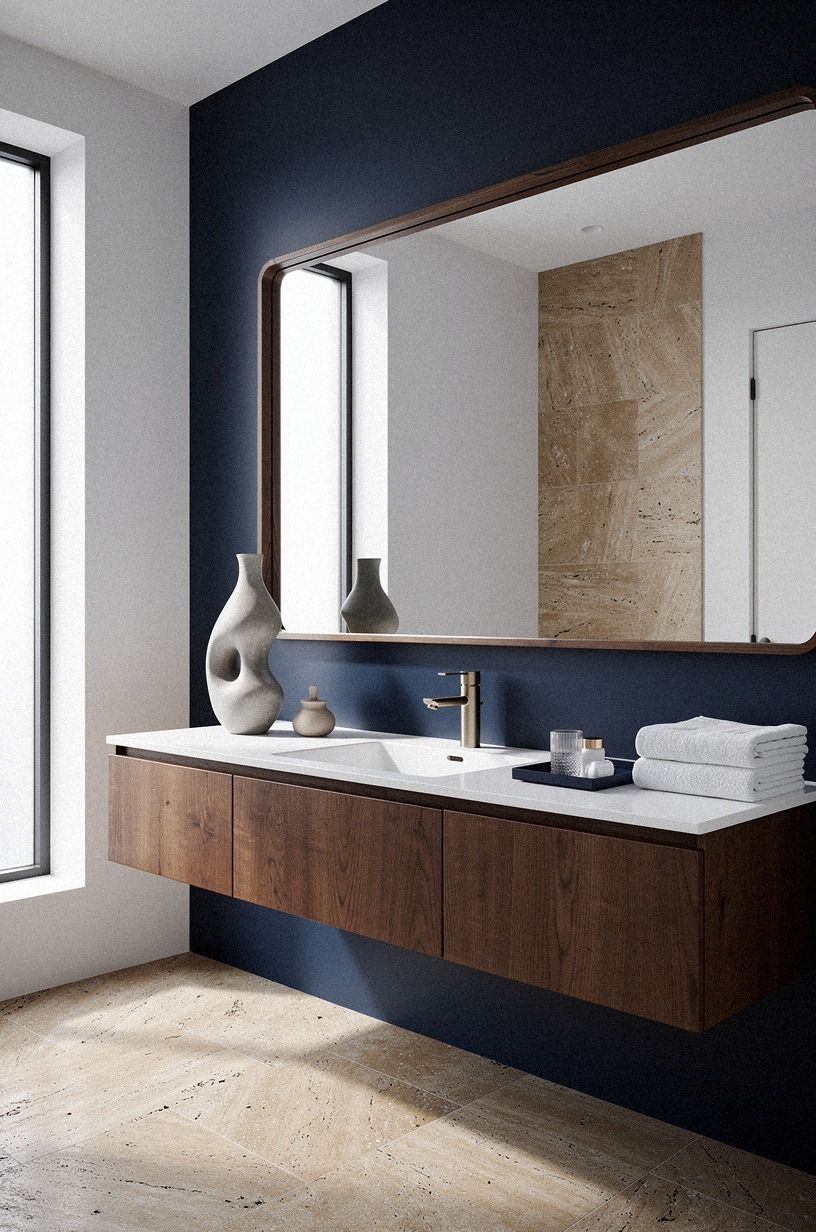
A wood-framed mirror is one of the easiest ways to bring the material into your bathroom without demolition. Choose a frame with enough depth to cast a small shadow, such as solid walnut with a 3/4-inch profile. Your eye will read it as furniture, not another flat rectangle above the sink.
The frame should be wider than the faucet zone but not so wide that it crowds your wall sconces. If your vanity is 36 inches wide, a mirror around that width usually feels balanced, though your wall and light placement matter more than a rigid rule. Use a rounded frame when the stone has sharp edges and a rectangular frame when the room needs structure.
I’d avoid distressed wood with fake knots. Your warm travertine already has natural variation, so manufactured wear can make the room feel rustic in a forced way.
A walnut frame inspired by Article Lenia oak offers a cleaner reference point, and you can soften it with a small linen towel or a quiet ceramic vessel. Your mirror should reflect the room’s warmth, not compete with it.
7Paint the ceiling when the walls feel too busy
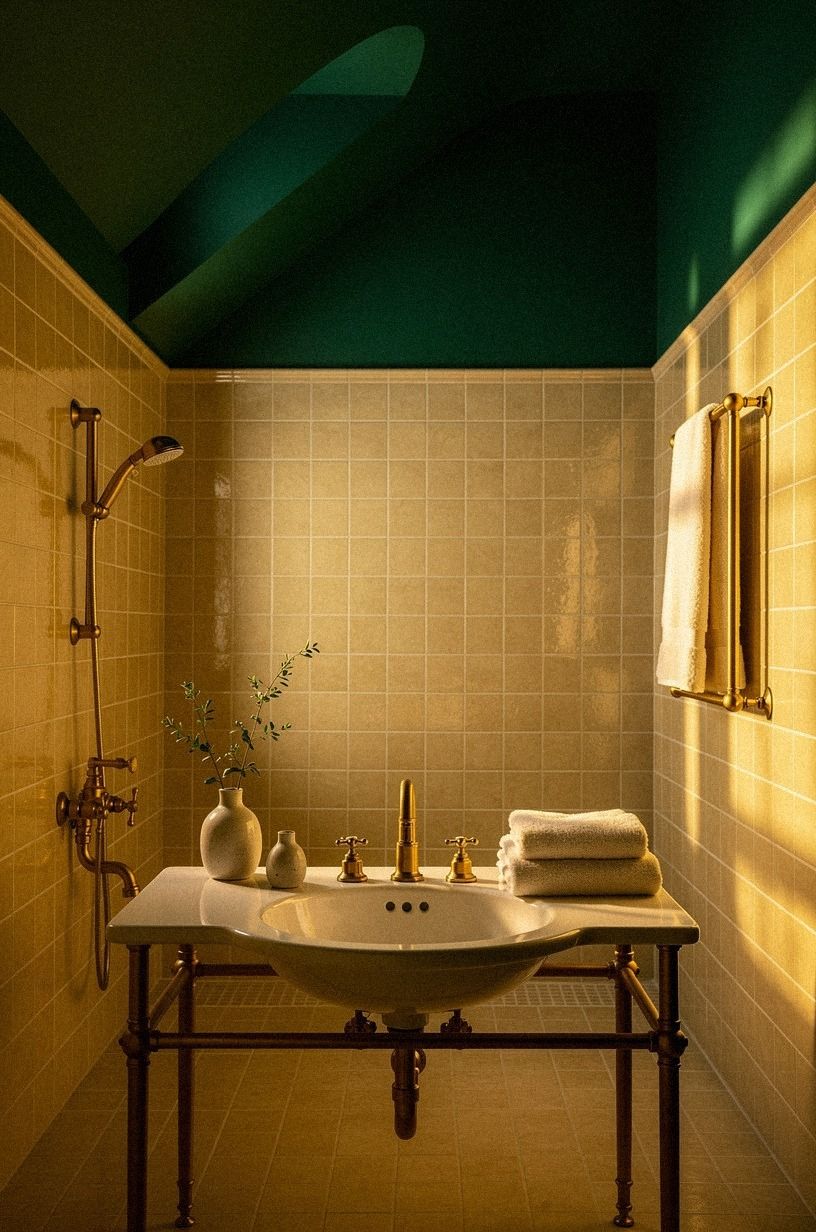
If your travertine backsplash, floor, and wood vanity already carry texture, painting every wall a new color may push the bathroom too far. A warm cream ceiling with small emerald and gold accents can give the room depth while letting the unlacquered brass develop its natural patina.
8Choose a compact shower with stone texture
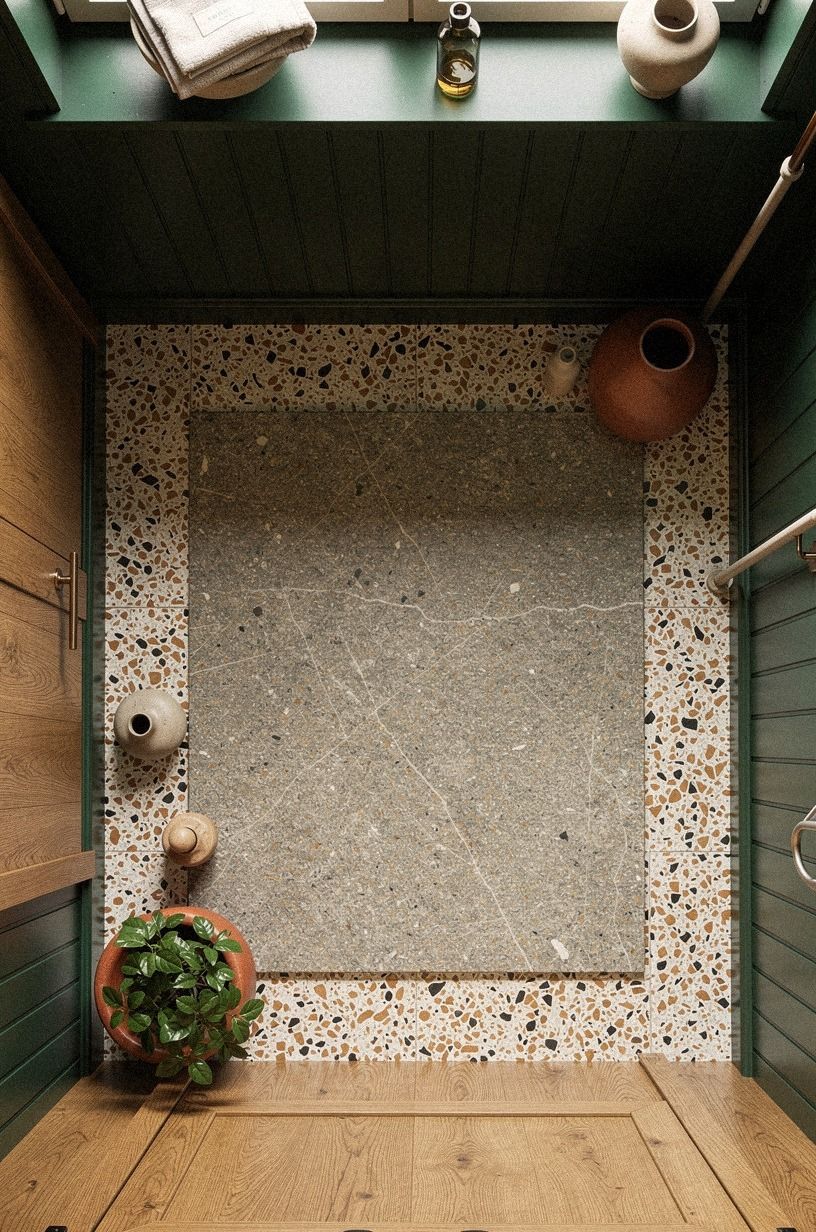
A comfortable shower needs at least 36 by 36 inches, so measure your clear interior before choosing a bench, niche, or wood-look accent. Your shower can feel generous when the tile runs continuously across the walls, even if the footprint stays modest. I’d use oversized-chip terrazzo when real stone maintenance doesn’t suit your routine.
Keep the wood appearance outside the wettest zone unless the material has been specifically rated for repeated moisture. A natural oak stool can work when it dries fully between uses, but a decorative wood shelf inside a constantly wet shower may become a chore. Your bathroom should support your habits, not create another weekly task.
Use one recessed niche with a terrazzo shelf, then place your daily bottles inside it. Forest green tile with rust accents can add a small reflective note around the niche, though I’d skip it across every wall if your terrazzo already has strong movement. The warm, earthy mix works best when you can see where each material begins and ends.
9Price the natural warmth before you demo
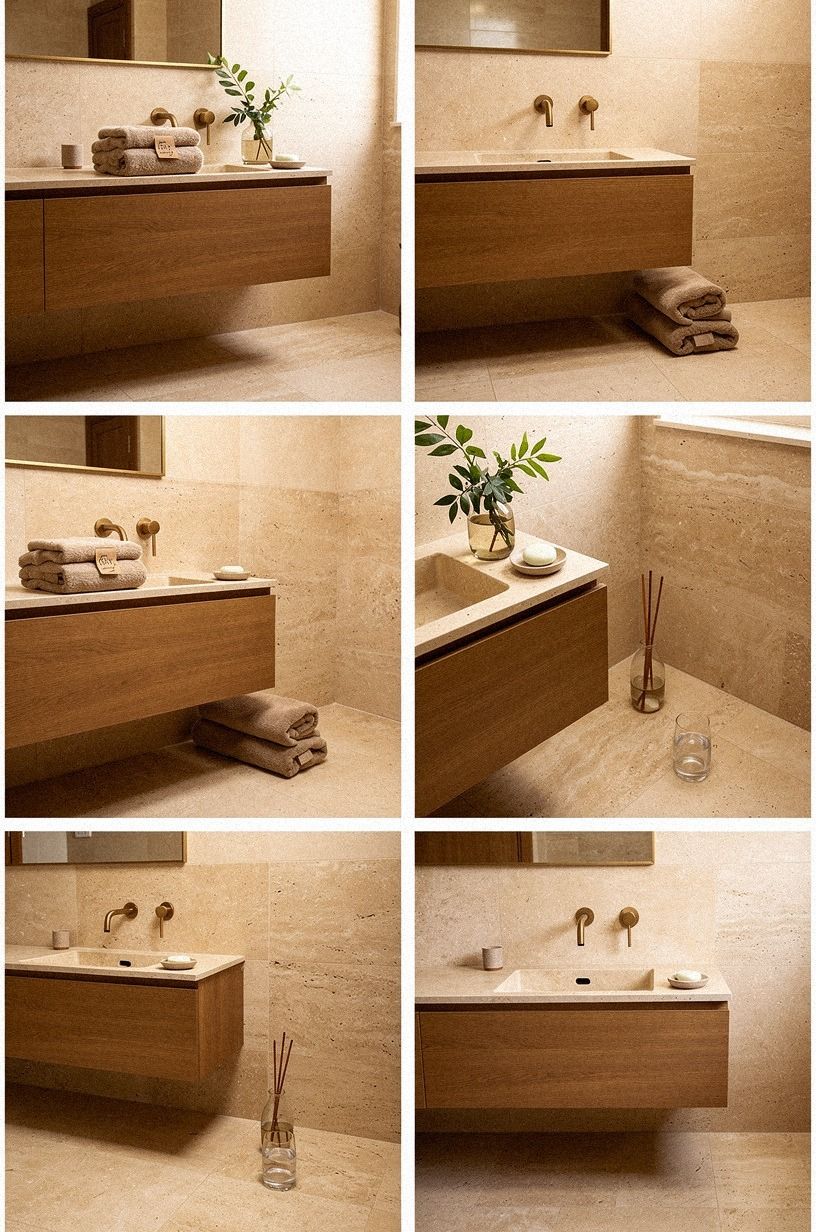
Before you remove tile, write down what your bathroom truly needs. Your project might be a paint refresh, a new mirror, and a vanity, or it might involve plumbing and a full shower rebuild. The difference is enormous, so I’d make a short scope before buying samples or calling a contractor.
A budget project can still feel warm when your materials have a clear order. Spend first on the surface you see most, then choose plain supporting pieces.
Brushed brass faucet pricing commonly falls around $120-$450, while hand-applied Venetian plaster may cost more than basic paint but can carry a wall beautifully. Your choices should follow the room’s strongest need.
And don’t call every change a renovation. Swapping a mirror, painting a wall, and adding a wood stool can shift the whole mood without touching plumbing.
I’d keep the existing floor if it’s sound and spend that money on better lighting. The glow on your plaster will matter more than a new surface nobody sees after the door closes.
10Can a rental get the travertine and wood look?
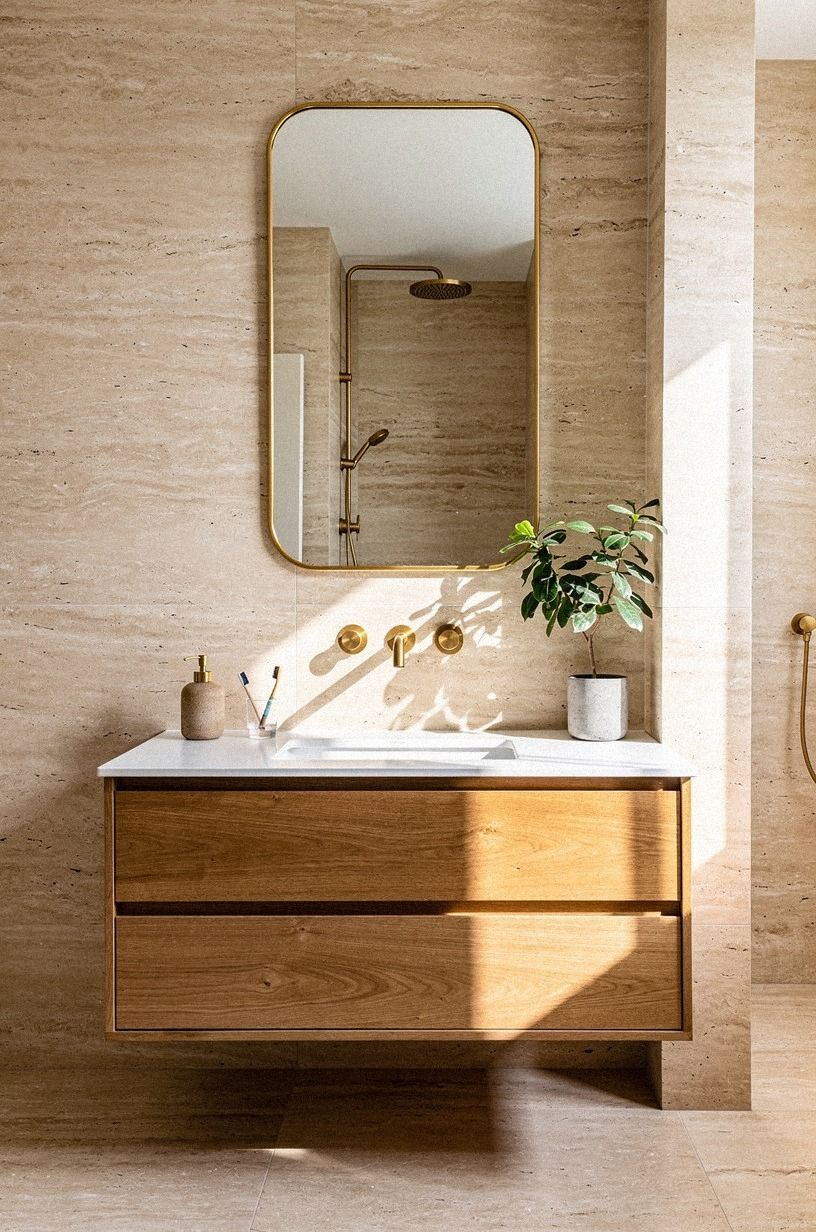
Yes, your rental can carry this palette without permanent work. Add a warm white textile, a camel stool, a black-framed mirror, and one removable shagreen accent such as a tray or cabinet pull cover.
11Mix small accessories with large surfaces
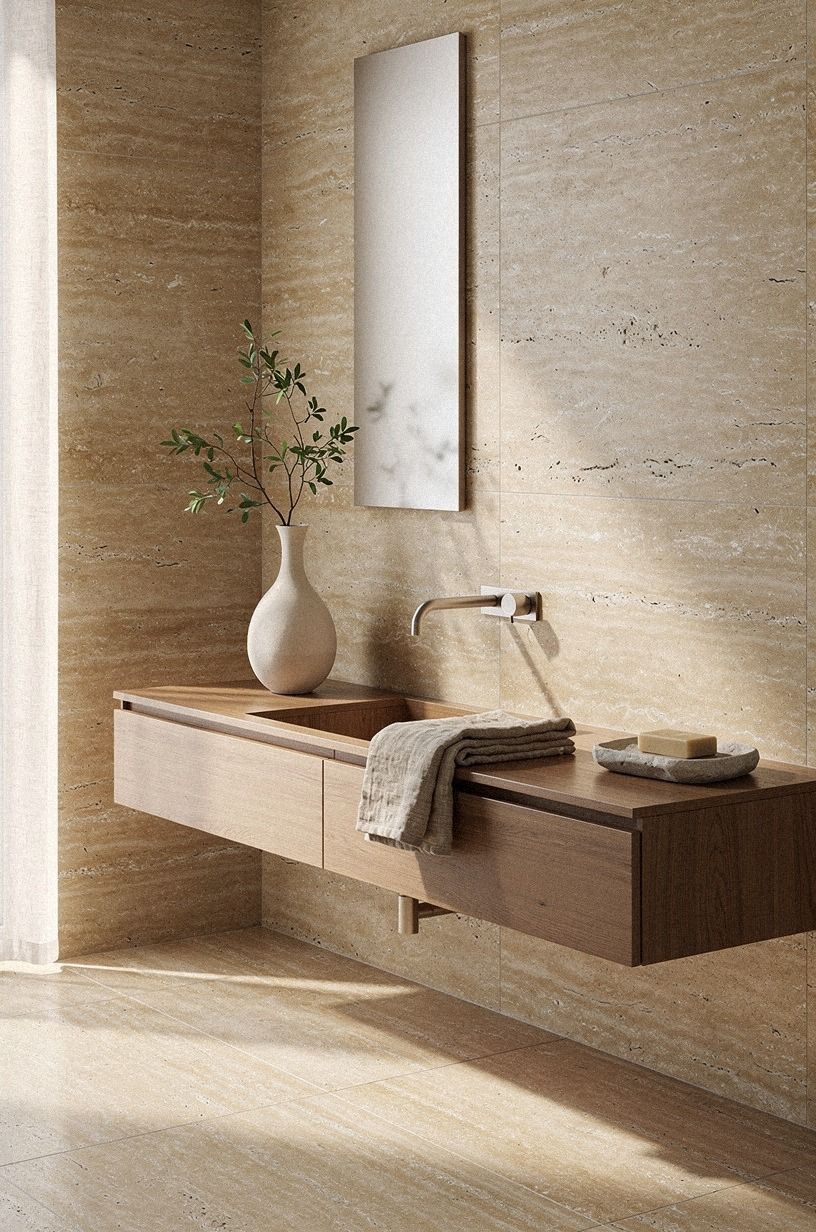
Large surfaces establish the room, but your smaller pieces supply the lived-in texture. Add one washed Belgian linen bath mat, a walnut stool, and a ceramic cup for toothbrushes. Your eye will move between soft, porous, and polished materials, which keeps a neutral bathroom from feeling empty.
Keep the accessory colors close to the palette’s midnight blue, copper, and ivory undertones. Cream, rust, muted olive, and warm gray work better here than icy white or saturated jewel tones. Target Threshold towels can handle everyday use, while a smaller washed Belgian linen hand towel adds a drier, more relaxed texture near the sink.
You’ll want to edit the counter carefully. A soap bottle, one tray, and a small branch are enough for most vanities.
I’d remove the decorative stack of books because steam and water will ruin it, and the extra height doesn’t help your morning routine. Your bathroom should feel inviting when you walk in, not like you need to clear a display before brushing your teeth.
12Choose wood and stone over faux rustic décor
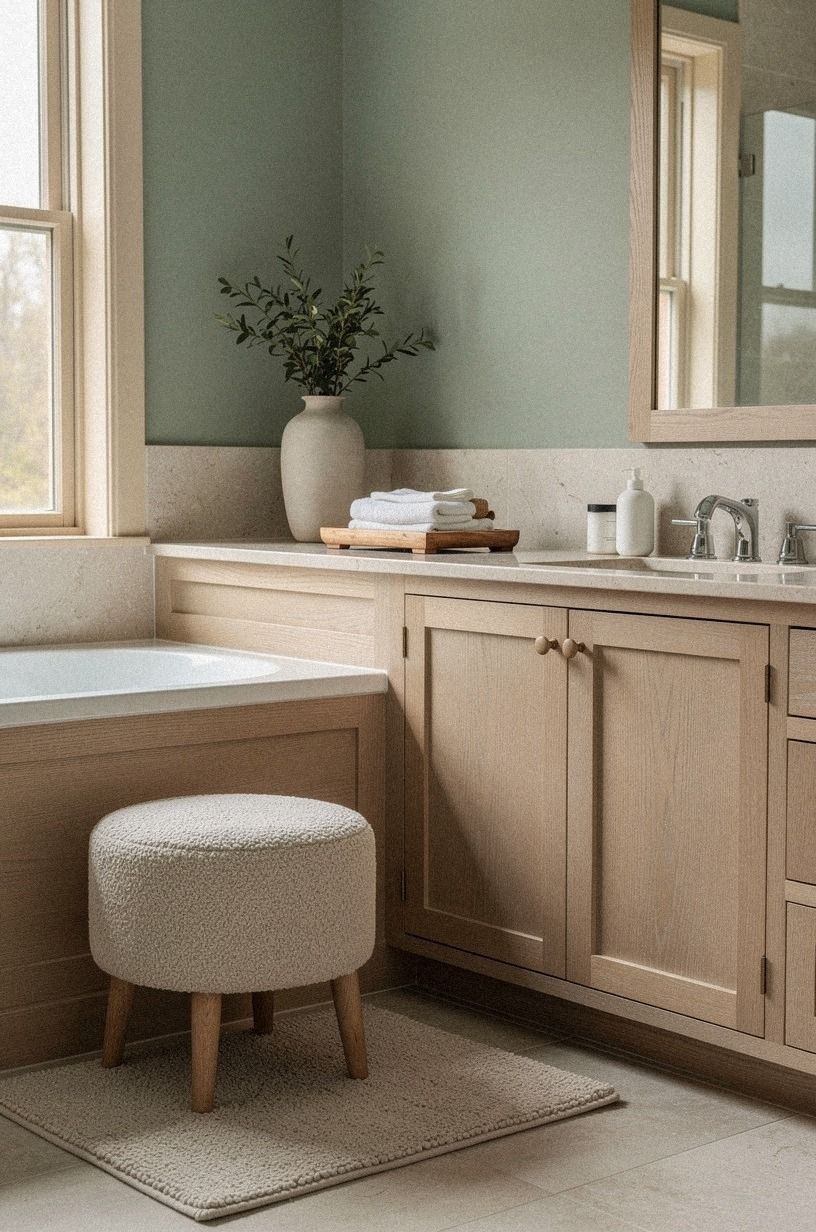
The wood and stone bathroom look works when the materials feel honest. Choose real wood where your hand touches it, such as a vanity drawer, stool, or mirror frame, and use honed travertine where the natural variation can be appreciated.
Add an organic bouclé stool or bench for softness. Your room doesn’t need antlers, farmhouse signs, or artificial distressing to feel warm.
A simple Article Seno walnut console can inspire the right proportion even if you choose a bathroom-specific cabinet. Let the grain run horizontally on a narrow vanity to make your wall feel wider, then repeat the walnut once in a frame or stool. I’d skip matching every accessory because repetition can make the space stiff.
The best version is quiet but not plain. Your eye should notice the stone first, the wood second, and the small metal details last.
Sage green, warm cream, and natural wood keep the palette relaxed. And if you’re unsure, remove one decorative object before adding another.
I’ve found that the room usually improves when the materials get more attention and the accessories stop asking for it!
The Natural-Material Choice I’d Make
I used to think natural warmth came from adding more texture, but bathrooms taught me to edit harder. Travertine already has pores, tonal shifts, and little fossil-like marks.
Wood brings grain and softness. Add too many woven baskets, patterned tiles, and dark metals, and the room loses the quiet quality that made the materials appealing in the first place.
My favorite combination is pale honed travertine, medium walnut, and one aged metal. It’s warm without looking yellow, and it works in both a small powder room and a larger primary bath. I’d choose this over a full rustic treatment because the stone stays architectural while the wood keeps it human.
Your bathroom can feel collected without looking themed.
I made my most expensive mistake when I treated the vanity as an afterthought. The stone was right, the paint was right, but the cabinet had an orange finish that caught every bit of afternoon light.
Replacing it changed more than the new accessories ever could. If you’re choosing where to spend, put your money into the largest visible wood piece.
There’s also a practical reason to keep the palette restrained. Your towels, soap bottles, and everyday clutter will add color whether you plan for it or not. A calm background gives those ordinary things somewhere to land.
That’s why Benjamin Moore White Dove OC-17, warm linen, and softly veined stone keep showing up in my own projects. They leave room for real life.
A Few Things Worth Answering
What is the best Travertine & Wood Bathroom Ideas for Natural Warmth for a small bathroom?
A floating walnut vanity and a framed mirror are the strongest picks for your small bathroom because they preserve floor space and add warmth at eye level. Choose IKEA TONSTAD or a slim oak cabinet, then keep your stone pale. You’ll get texture without making the room feel crowded.
Where can I buy Travertine & Wood Bathroom Ideas for Natural Warmth pieces on a budget?
Look at IKEA, Wayfair, and Target for wood-look vanities, stools, and towels. Your best secondhand finds may come from Facebook Marketplace or a local thrift shop. Search for solid wood frames and small tables, then inspect the finish before bringing anything into your bathroom.
How much does a Travertine & Wood Bathroom Ideas for Natural Warmth makeover cost?
A light refresh typically runs about $200 to $1,200 for paint, a mirror, a faucet, and textiles. Your free changes include editing clutter, rearranging storage, and changing bulbs. A larger project with tile and plumbing can reach $3,000 to $30,000 or more.
Can I create a Travertine & Wood Bathroom Ideas for Natural Warmth on a budget?
Yes, you can start with three low-cost moves: paint one dry wall, add a wood-framed mirror, and replace cold bulbs with warm dimmable ones. A stone tray and Turkish cotton towels can carry the palette without requiring new tile or plumbing.
Is a Travertine & Wood Bathroom Ideas for Natural Warmth worth it in a small space?
Yes, because a small room lets you use natural materials in focused amounts. Your best layout keeps the floor visually open, uses one wood tone, and places texture at eye level. A 36-by-36-inch shower can still feel comfortable when the tile lines continue cleanly.
Is Travertine & Wood Bathroom Ideas for Natural Warmth a good idea for a rental?
Yes, your rental can use removable or freestanding pieces such as a wood stool, tension-rod linen curtain, peel-and-stick backsplash, and framed mirror. Check the wall finish first, and keep adhesive away from wet areas unless your lease allows it.
Where I’d Start First
If I had to pick one, I’d start with the wood-framed mirror. It brings warmth to eye level, costs less than replacing tile, and softens travertine’s harder edges without taking floor space. Pin this idea for later, then test the frame beside your actual stone before you buy.