No Room for a Minibar? IKEA’s Tiny-Kitchen Setup Makes It Work
03 october 2026A luxury hotel minibar works because it edits the experience down to one narrow service zone: cold drinks below, coffee and glassware above, and nothing awkwardly exposed. In a tiny kitchen, a 16- to 24-inch landing surface can create that same rhythm without turning the room into a home bar.
The smart version hides or visually quiets the refrigerator, uses one tray, and gives every category a reset point. The goal is hospitality with a small footprint, not a collection of appliances pretending to be design.
What you will find inside
- Hide the Fridge Without Sealing It In
- Reserve a 16- to 24-Inch Landing Zone
- Build Around Five Useful Functions
- Edit the Display to One Tray
- Choose Refrigeration by Depth First
- Add Warm Light Under the Shelf
- Place Coffee at the Easiest Reach
- Separate Snacks From Bar Tools
- Give Glassware a Stable Home
- Create a Real Ice Solution
- Give Cleanup Its Own Bin
- Keep Finishes Quiet and Durable
- Limit the Appliance Count Deliberately
Hide the Fridge Without Sealing It In
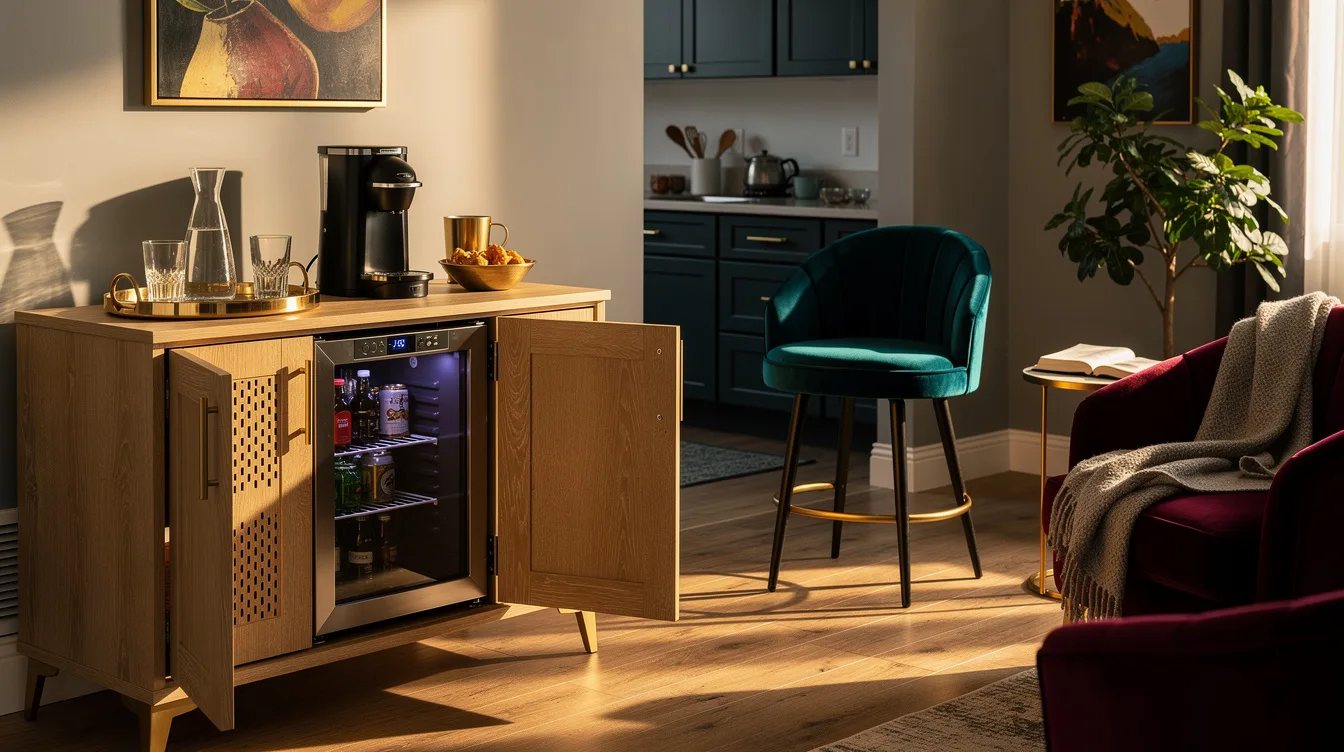
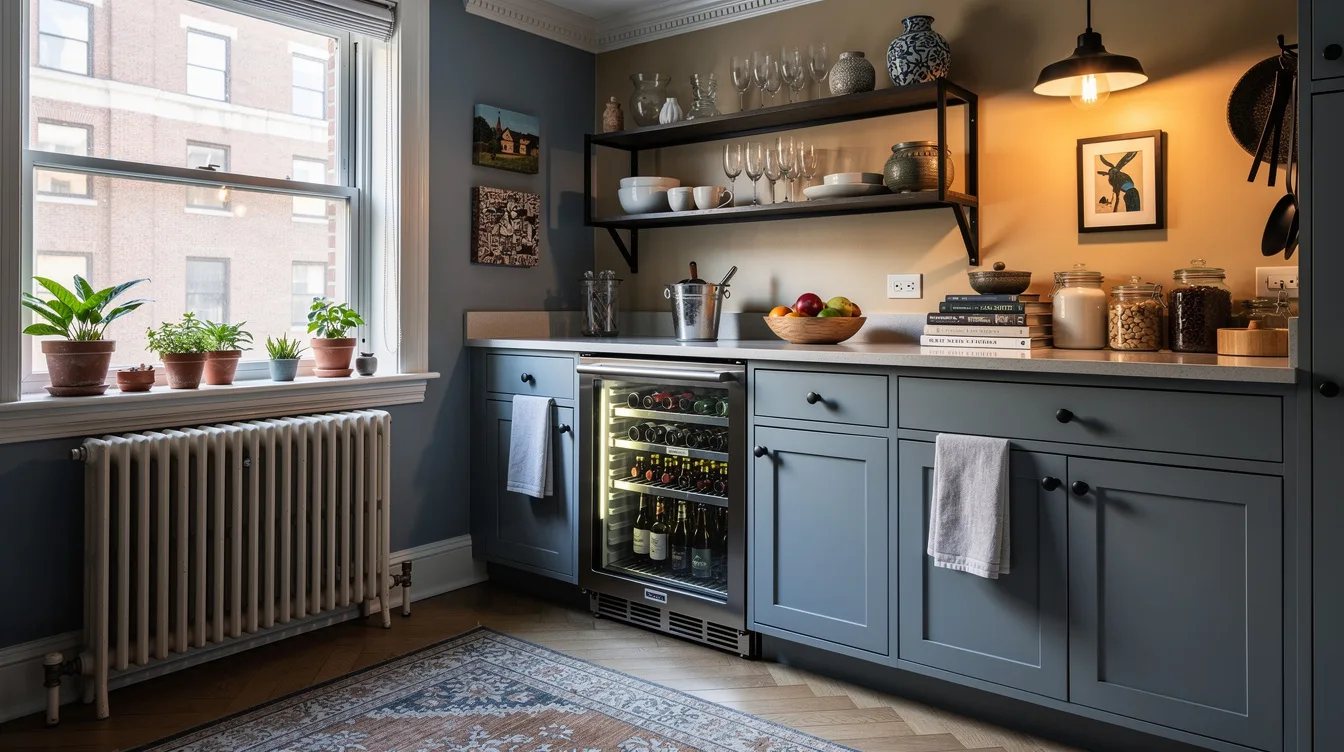
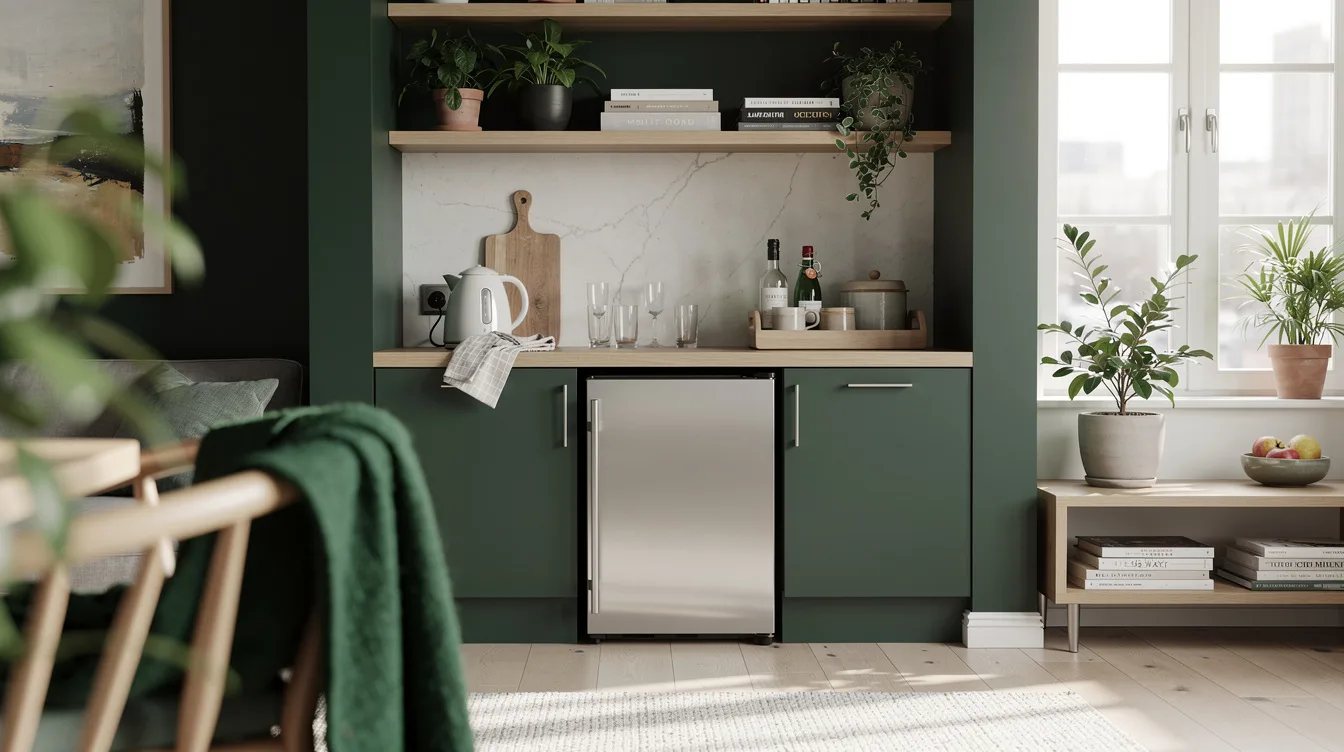
The first mistake is treating a compact fridge like a decorative box. Place a Walmart compact refrigerator inside a 24- to 30-inch-wide sideboard, cart bay, or lower cabinet, but leave the back vented and follow the appliance manual’s clearance rules.
A 8- to 10.5-gallon hotel-style unit is a practical target for sparkling water, milk, cans, and small snacks. A typical compact minibar fridge costs roughly $170 to $500, while premium quiet models can run higher, so noise and ventilation matter more than the lowest price.
Reserve a 16- to 24-Inch Landing Zone
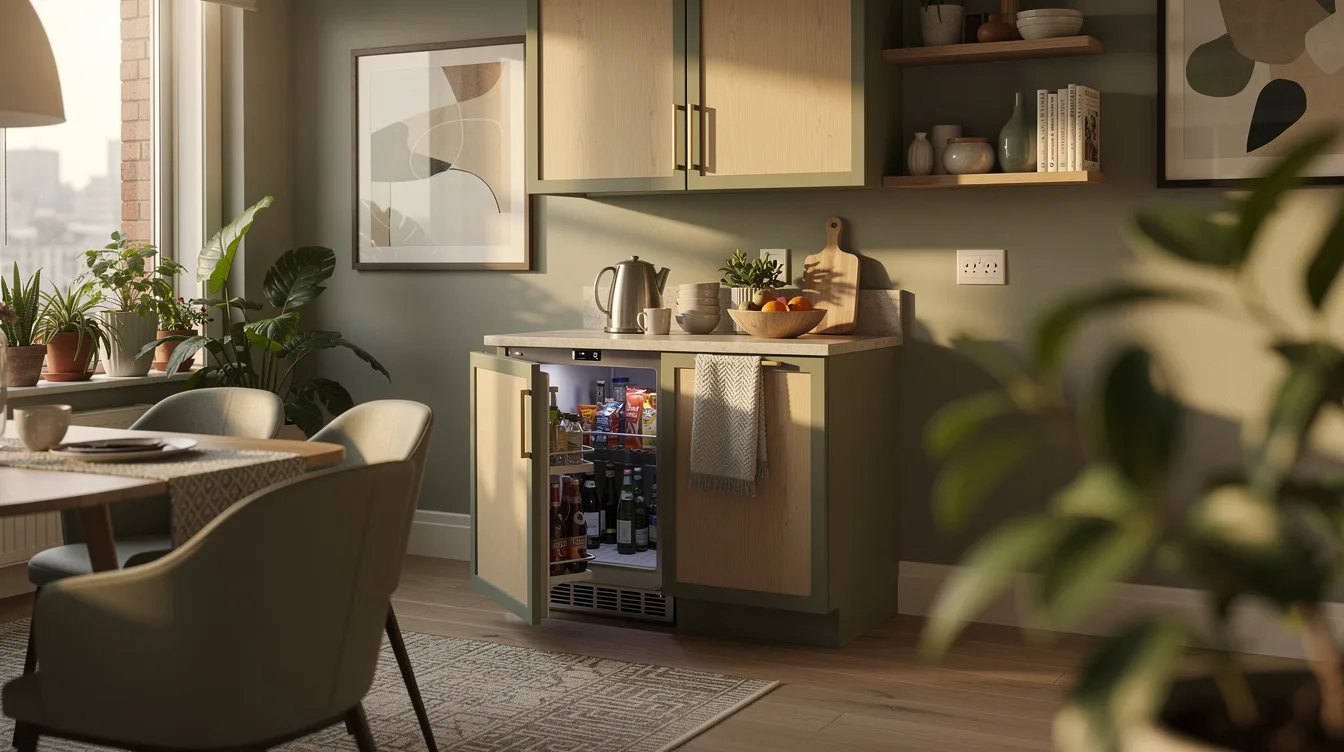
A minibar needs a service surface, even when the kitchen has almost no counter space. Give the station a wood countertop or stone-look top about 16 to 24 inches deep, then reserve it for the coffee machine, water carafe, or drink tray.
That surface should feel intentional rather than like leftover counter. A 20- to 22-inch cabinet depth is usually more forgiving, especially when the fridge is deeper than the furniture around it.
Build Around Five Useful Functions
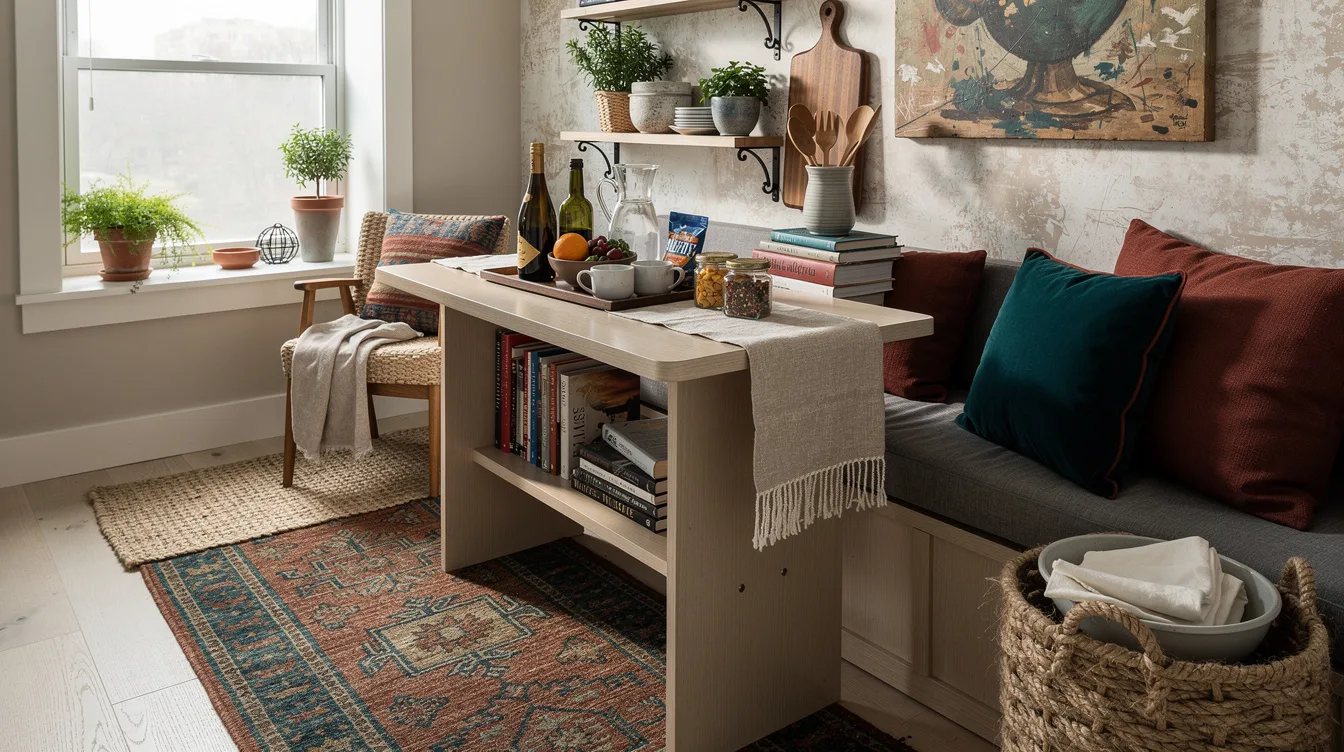
Luxury hotels make the minibar work because every inch supports a job: cooling, serving, displaying, lighting, or resetting. Copy that logic with one compact station that handles cold drinks, coffee, glassware, snacks, ice, and cleanup.
A Wayfair sideboard can hold the refrigerator below, a service surface above, and a shallow shelf overhead. Skip any feature that has no daily use, because a tiny kitchen cannot hide unnecessary equipment.
Edit the Display to One Tray
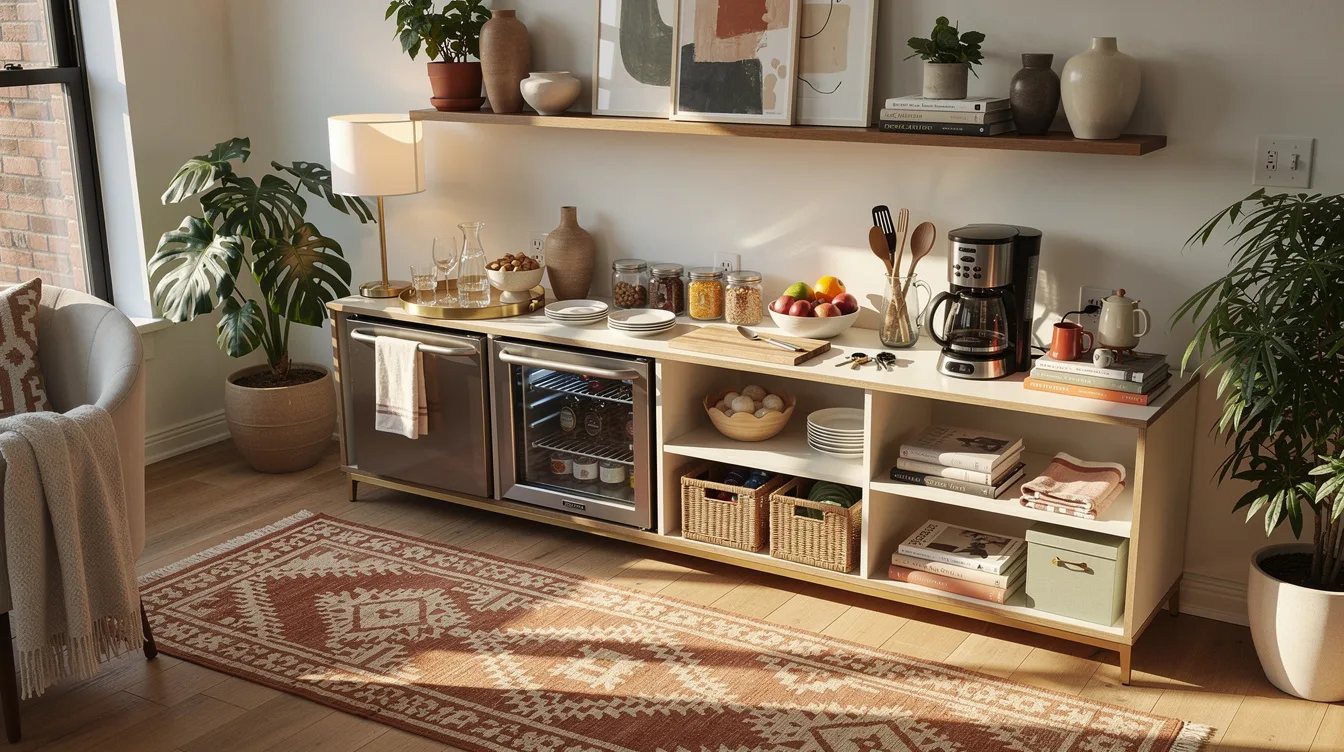
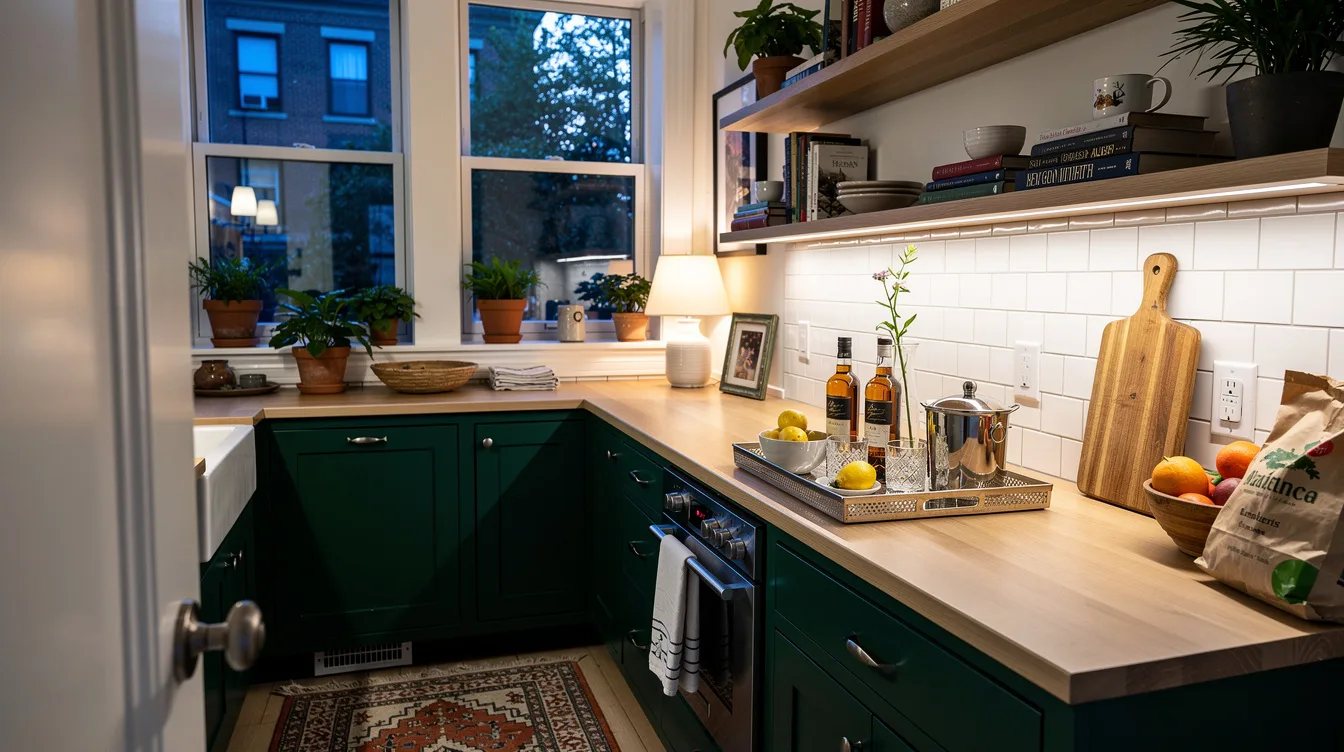
Open shelving becomes cluttered when every drink accessory stays visible. Use one Target serving tray for the items used most often, then return everything else to a drawer or bin after service.
Two to four glasses, a water carafe, and a small snack bowl are enough for the visible layer. The hotel effect comes from restraint, not from filling the shelf with bottles and novelty barware.
Choose Refrigeration by Depth First
Shopping by capacity alone is a reliable way to buy the wrong appliance. Compact hospitality fridges commonly measure roughly 15 to 22 inches wide, about 14 to 21 inches deep, and around 14 to 22 inches high, so measure the furniture bay before comparing features.
A representative 10.5-gallon unit is about 17 inches wide, 18 inches deep, and 22 inches high, with adjustable shelves, an LED light, a reversible door, and automatic defrost. A Home Depot beverage refrigerator can work, but verify the actual depth and door swing before ordering.
Add Warm Light Under the Shelf
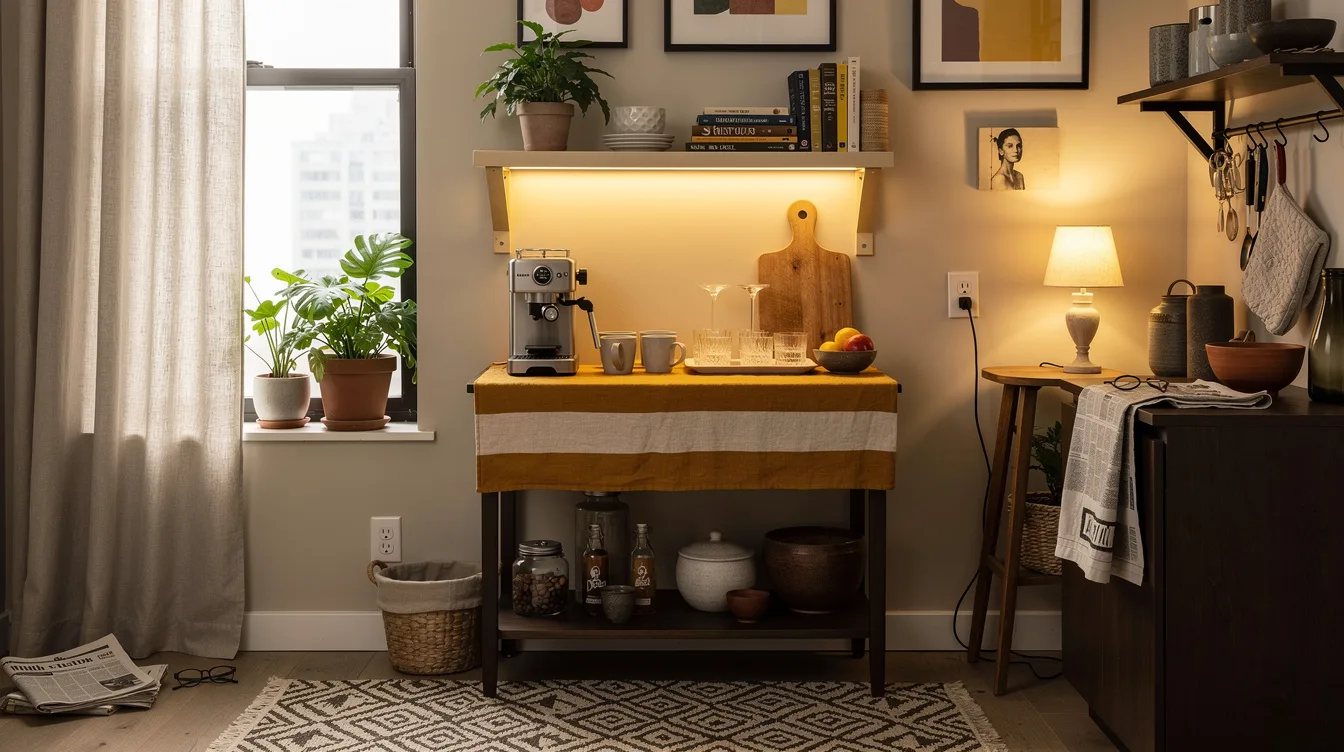
Cold overhead lighting makes a compact minibar look like an appliance corner. Install a rechargeable Amazon warm LED puck or strip beneath the shelf so the tray and glassware receive a soft pool of light.
Keep the fixture hidden from direct view and choose a warm tone that suits the cabinet finish. Rechargeable lighting is especially useful for renters because it avoids wiring changes and can move when the station does.
Place Coffee at the Easiest Reach
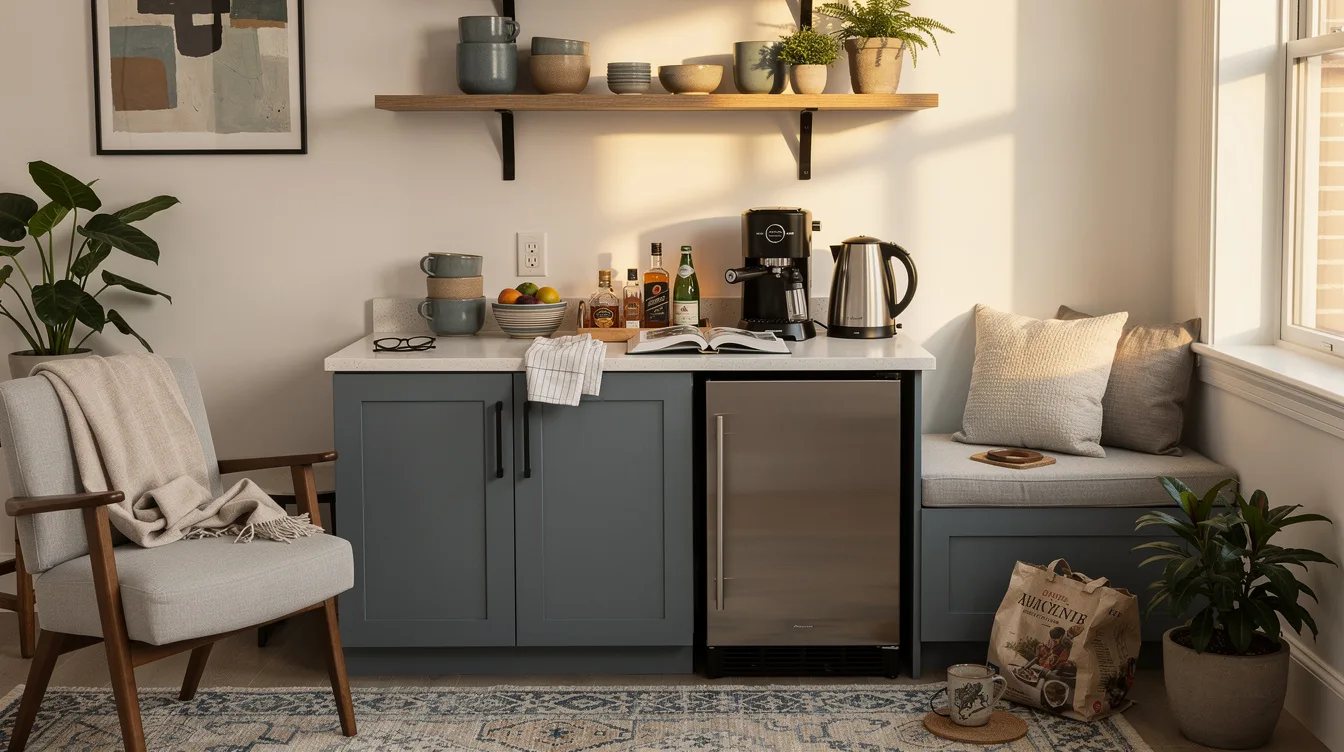
Coffee equipment should sit on the landing zone, not in a cabinet that requires daily unpacking. A small black coffee maker beside the water carafe creates a clear morning station and keeps the fridge area from becoming a general storage shelf.
Store filters, pods, sugar, and stirrers together in one shallow drawer or lidded box. The arrangement should take seconds to reset, because a station that requires sorting every morning will quickly become a dumping ground.
Separate Snacks From Bar Tools
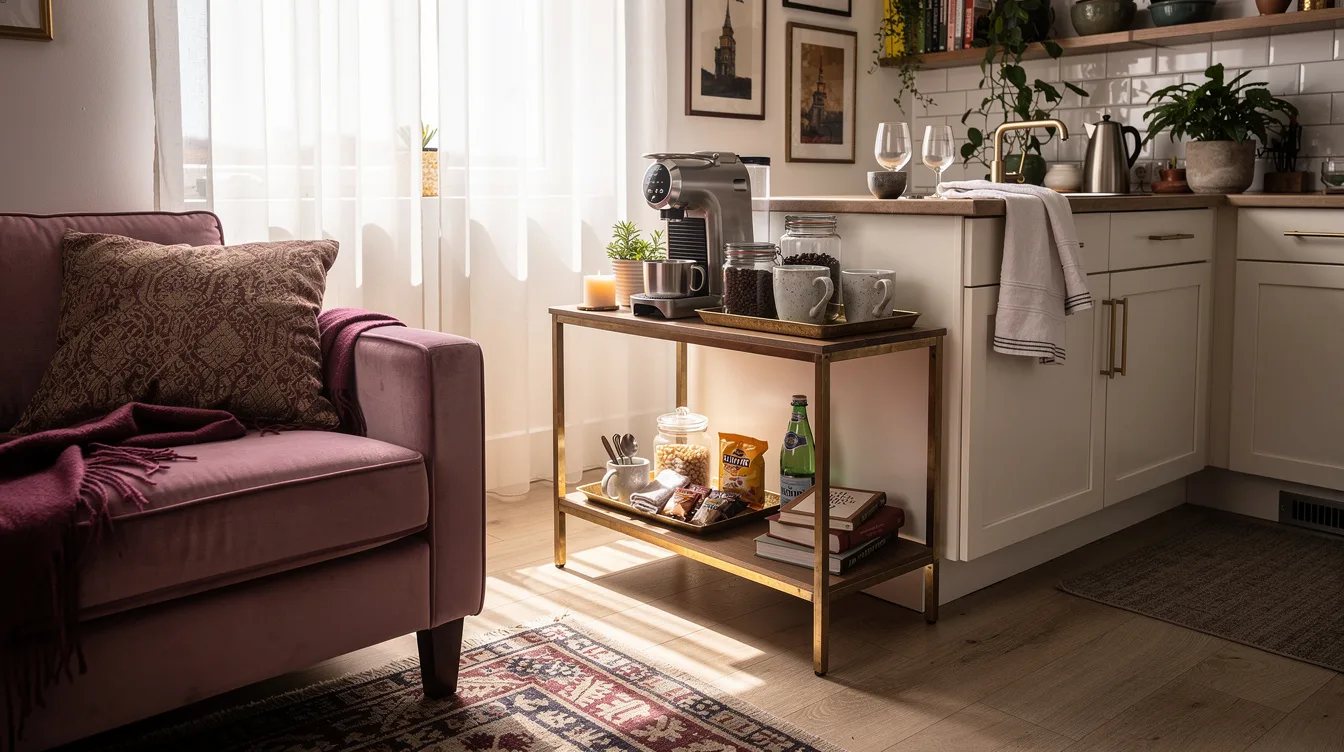
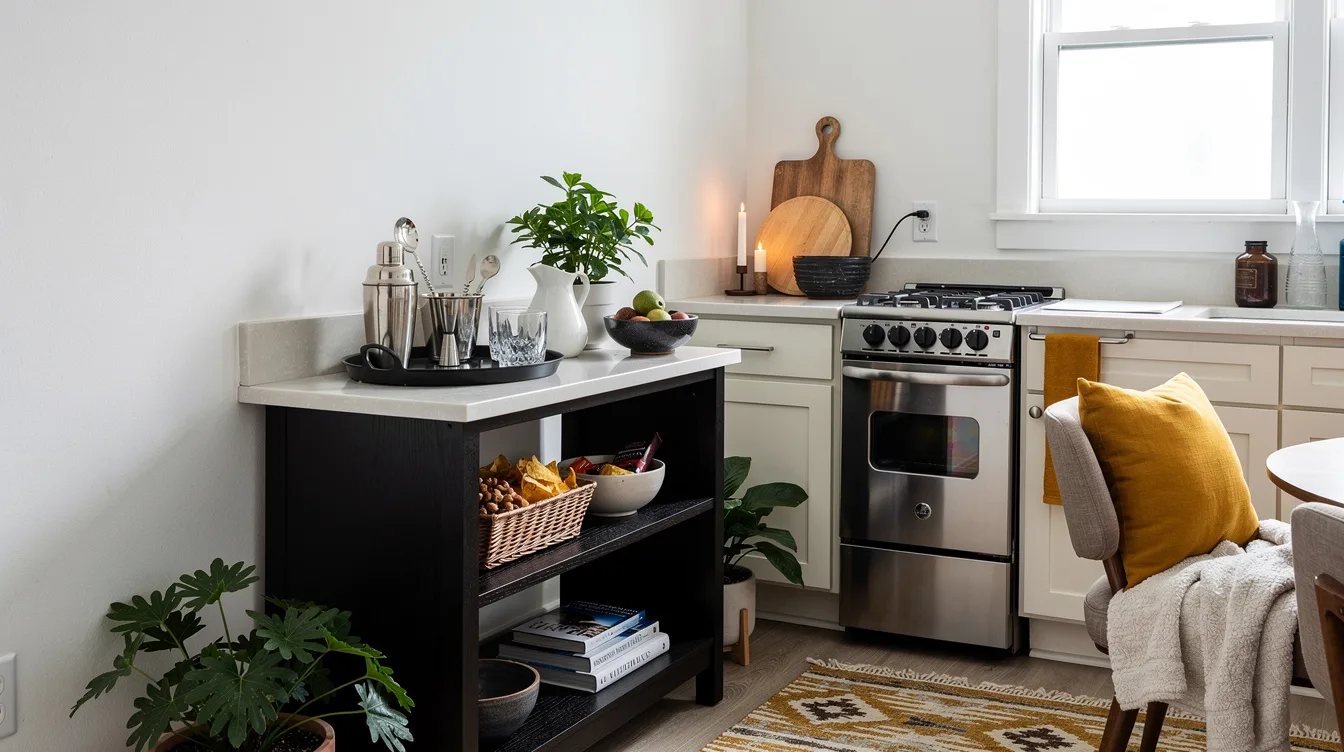
Hotels keep food and drink service close, but they do not mix every category in one bin. Use a Costco snack basket for individually wrapped foods and a separate container for bottle openers, cocktail napkins, and measuring tools.
Choose snacks that fit the actual household, such as nuts, crackers, chocolate, or fruit bars. Four reliable options beat a crowded basket of items nobody reaches for.
Give Glassware a Stable Home
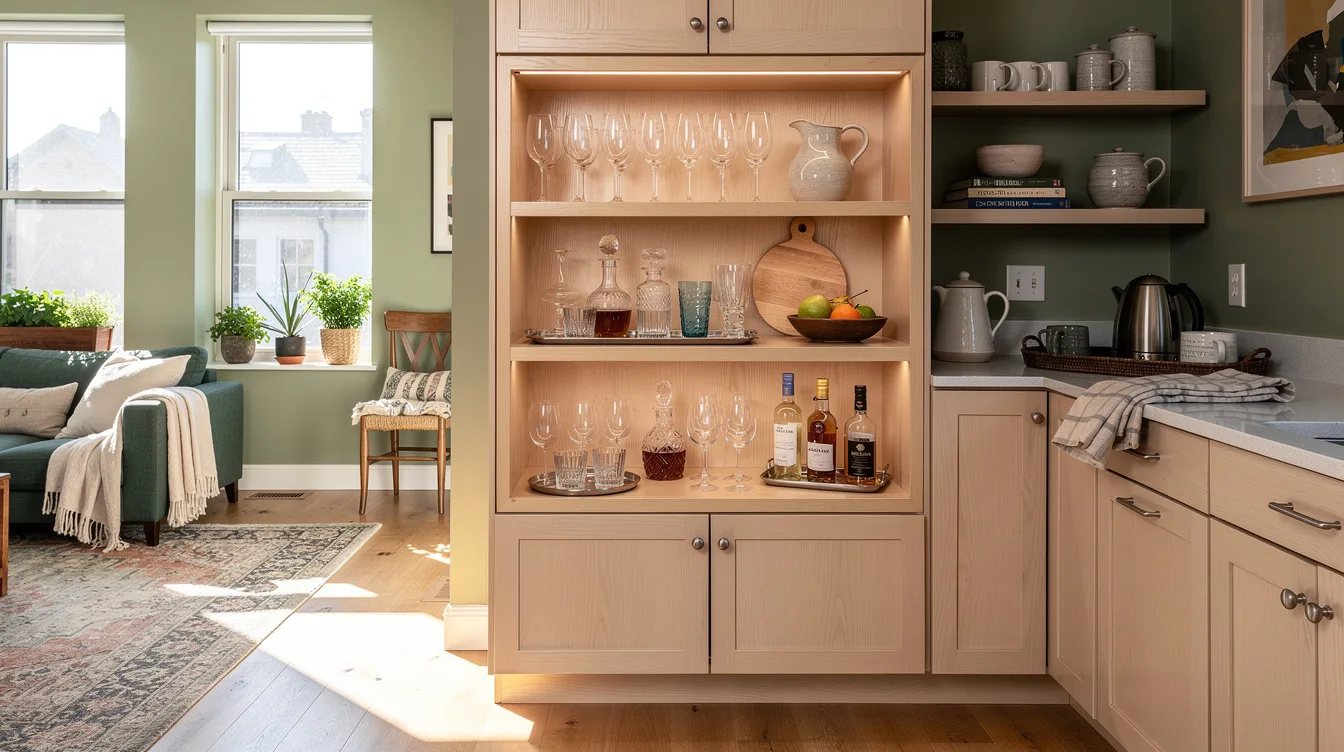
Glassware should be easy to reach and difficult to knock over. A shallow IKEA wall shelf above the station can hold two to four everyday glasses, provided the shelf is properly anchored and leaves room for the refrigerator door to open.
Use matching shapes when possible, but do not buy a special collection for the look alone. A pair of tumblers, two stemless wine glasses, and one water carafe can cover most small-kitchen service.
Create a Real Ice Solution
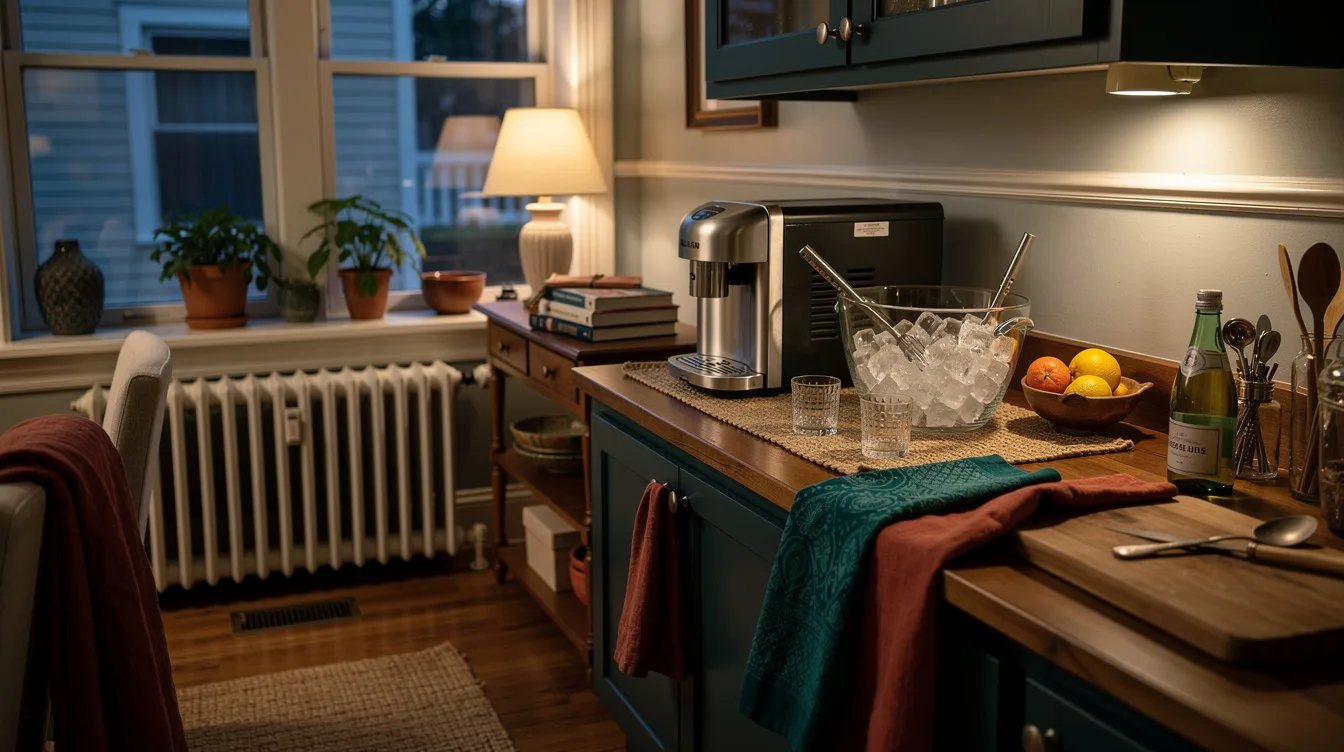
Ice is often forgotten until the first drink is served. Keep a small insulated stainless steel ice bucket near the station when entertaining, and store it elsewhere the rest of the time so it does not consume permanent counter space.
For daily use, the compact fridge can hold chilled cans and bottled drinks without an ice maker. That is quieter, simpler, and more faithful to the edited hotel-minibar idea than adding another appliance.
Give Cleanup Its Own Bin
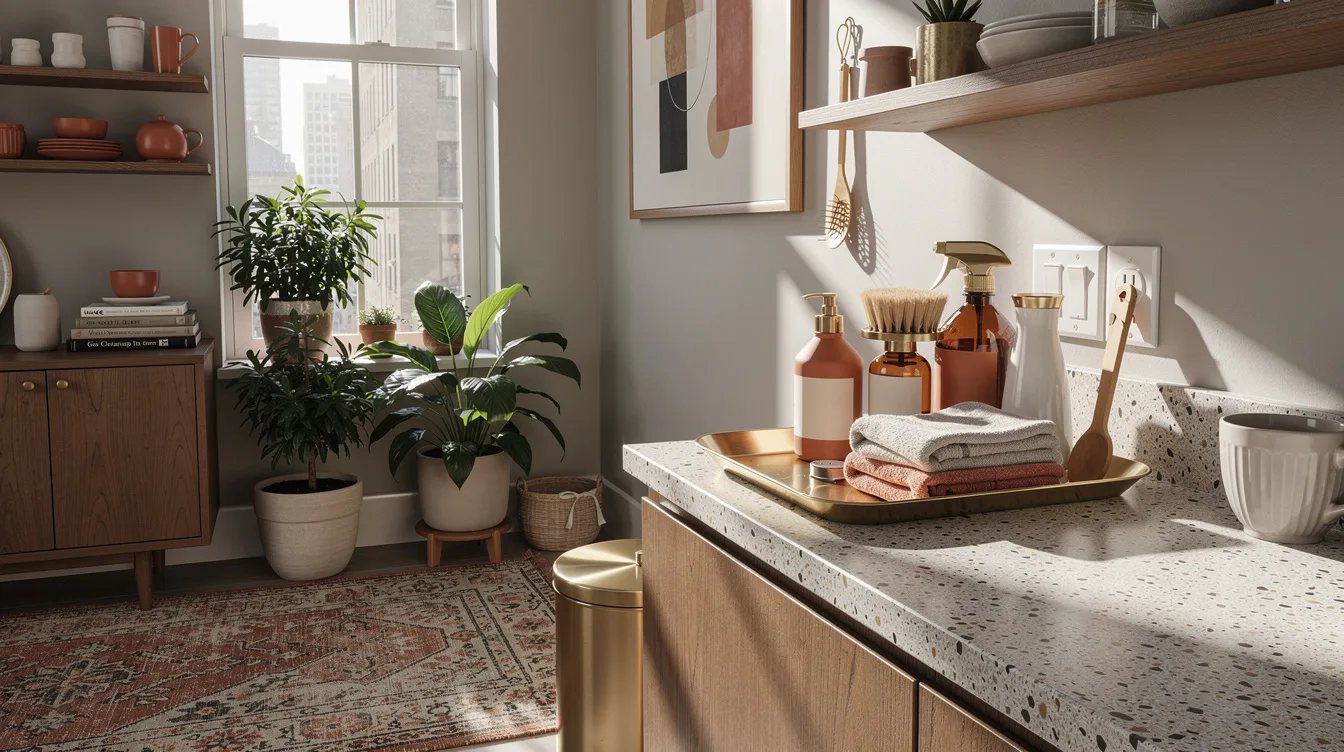
A service station feels finished only when used items have somewhere to go. Place a Lowe's recycling bin or narrow pullout container below the counter for cans, wrappers, and coffee grounds, with cleaning cloths stored in a separate compartment.
Use one bin for coffee, one for snacks, one for bar tools, and one for recycling if the cabinet allows it. The categories should be obvious enough that anyone in the home can reset the station without asking where something belongs.
Keep Finishes Quiet and Durable
The minibar should recede into the kitchen when it is not serving. Matte laminate, light oak veneer, or a painted Home Depot cabinet creates a calmer backdrop than glossy doors covered with labels and handles.
A typical basic cabinet or sideboard costs about $120 to $350, while better veneer, solid wood, or custom-look furniture can run roughly $400 to $1,200. Spend more on the surface and ventilation when the station will receive daily coffee spills.
Limit the Appliance Count Deliberately
The final mistake is expanding the minibar into a second kitchen. Choose one compact fridge, one coffee appliance, and only the tools that genuinely earn their place, such as a kettle if hot water is used every day.
We would skip a dedicated wine cooler, ice maker, and countertop display fridge in a very small room. A quiet Target electric kettle or compact coffee machine is enough to complete the service without sacrificing the kitchen’s working counter.
Keep reading
- 12 IKEA Kitchen Storage Finds Designers Use in Tiny Spaces
- Dated Rental Kitchen? These 12 IKEA Finds Refresh It Without Damage
- Tiny Balcony Eating Your Floor Space? 14 IKEA Foldable Finds
Start by measuring the refrigerator bay and protecting the ventilation path, then build the tray, lighting, and storage around that footprint. Once the station resets in under a minute, the luxury-minibar idea is doing its job.