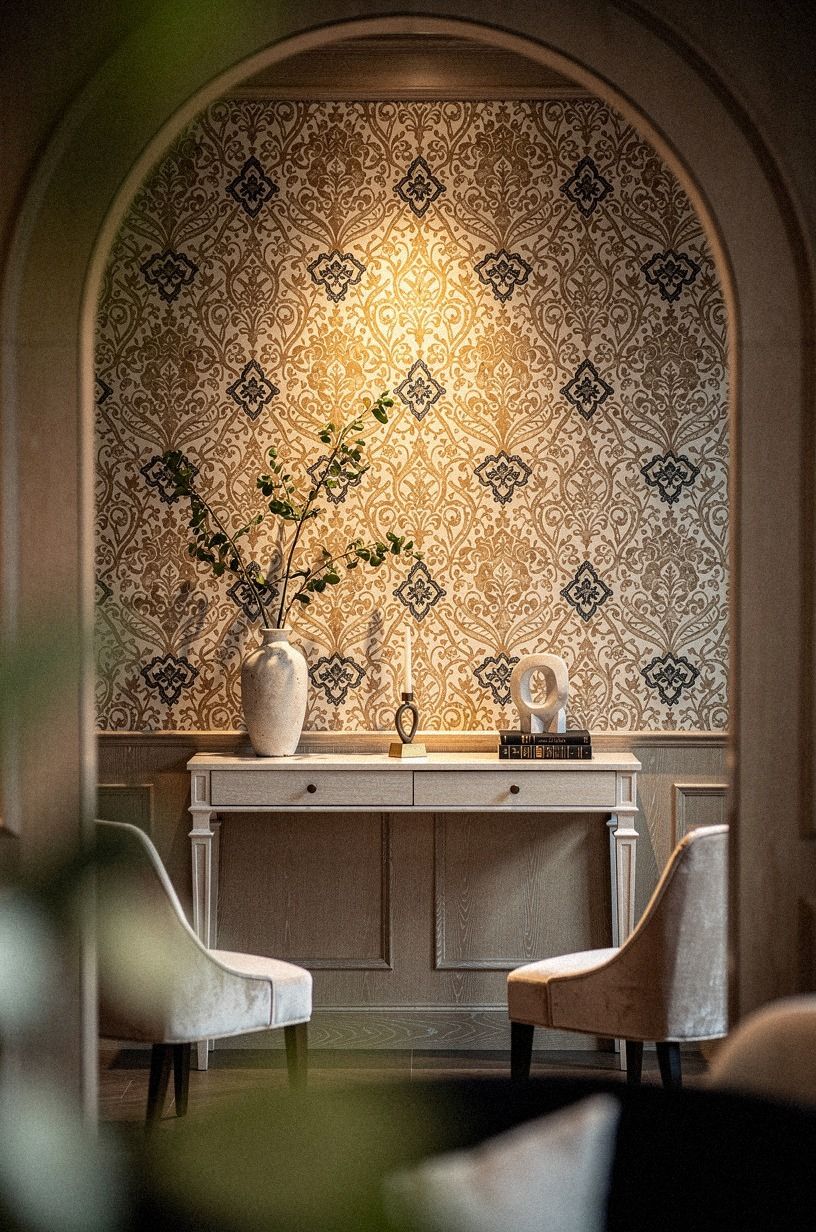
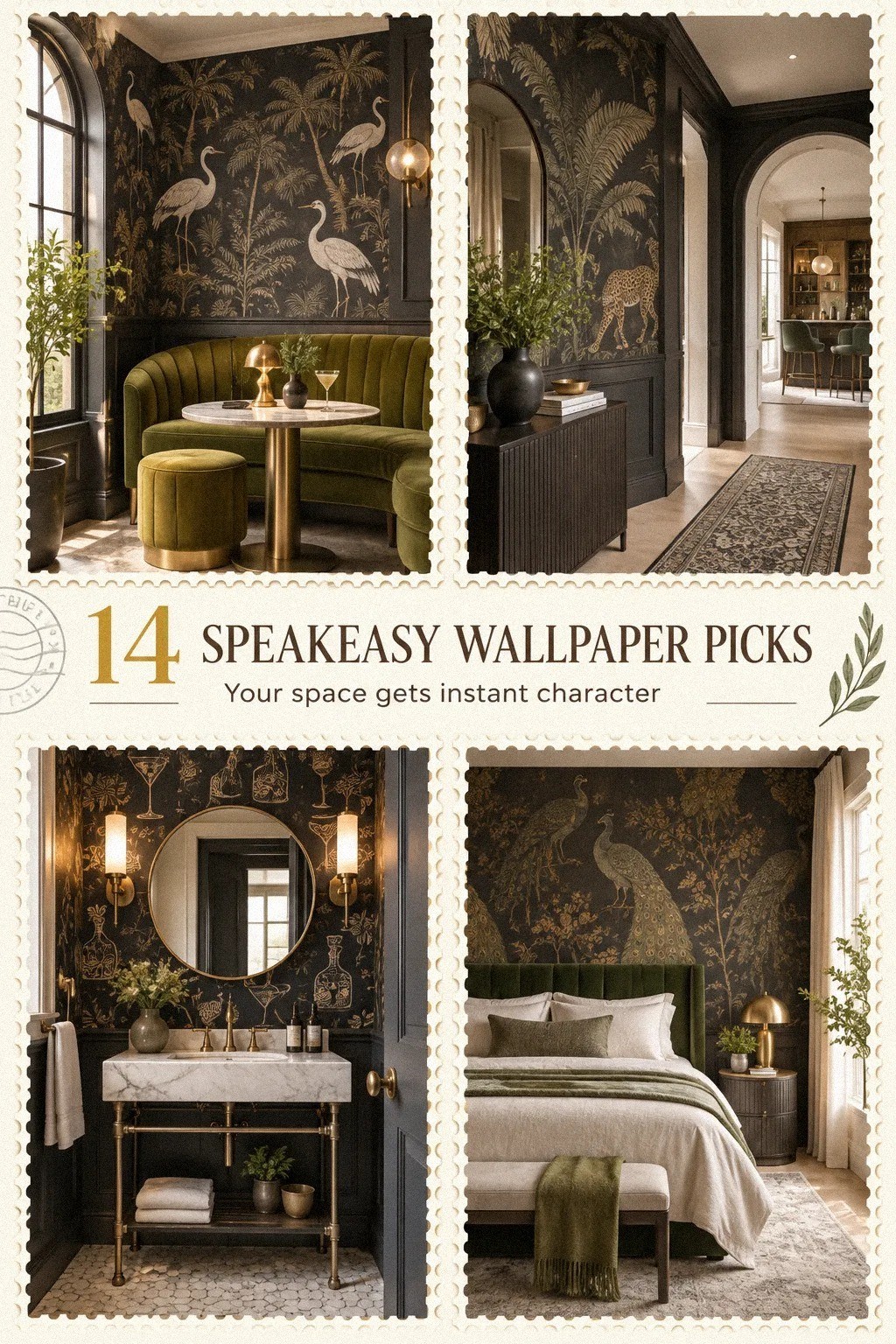
14 Speakeasy Wallpaper Ideas for Rich, Dramatic Walls That Feel Luxe
01 october 2026A speakeasy wallpaper wall can feel warm and luxurious with a budget of $200 to $800, depending on the room and finish. I once chose a dramatic print without testing it first, and the pattern swallowed the space by sunset. You don’t need a full renovation. You need scale, light, and restraint!
- Layer a Velvet Box Around the Speakeasy Wall
- Paint the Trim Against the Paper
- Use the Two-Wood Rule for 1920 Room Decor
- Frame the Pattern With Brass and Black
- Swap Open Shelves for a Hidden Bar Cabinet
- Build the Three-Height Light Stack
- Choose Wallpaper Over Paint for a Narrow Room
- Hang a Mirror Where the Pattern Can Travel
- Mix Velvet Speakeasy Decor With Linen
- Go Darker Than You Think, Then Add One Light Note
- Create a Ceiling-to-Floor Speakeasy Moment
- Borrow the Hotel-Lounge Seating Plan
- Build a Budget Around the Wall
- Make the Wallpaper the Quietest Conversation
1Layer a Velvet Box Around the Speakeasy Wall
Start with wallpaper that has a deep, tactile ground, then echo it with cerused white oak on one chair or small table. A warm white print with camel and black accents will make your room feel intimate instead of merely dark. You’ll want the pattern to carry the mood while the wood softens the edges.
I’d skip glossy lacquer here. A camel cushion has more depth, especially beside warm white trim. That softer paint creates a quiet, sophisticated bridge between the wall and the furniture.
Keep the rest edited. One black leather chair, one small table, and a lamp with a warm bulb are enough.
If you’re working with a small room, let the wallpaper do the talking and give your eye somewhere calm to rest. For a related approach, compare it with this layered light strategy, then borrow the restraint of the Two-Wood Rule or the practicality of a hidden bar cabinet.
2Paint the Trim Against the Paper
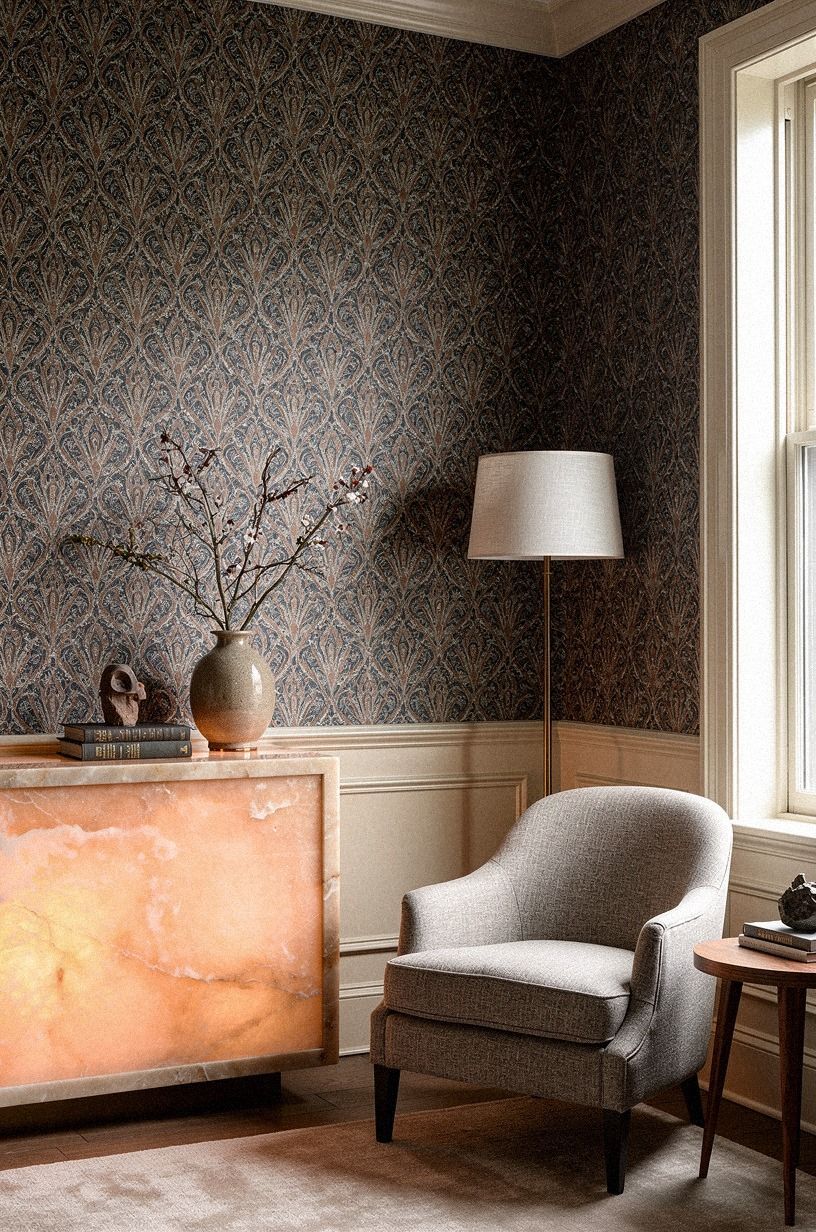
Painted trim can make wallpaper look custom, even if you hung it on a Saturday afternoon.
3Use the Two-Wood Rule for 1920 Room Decor
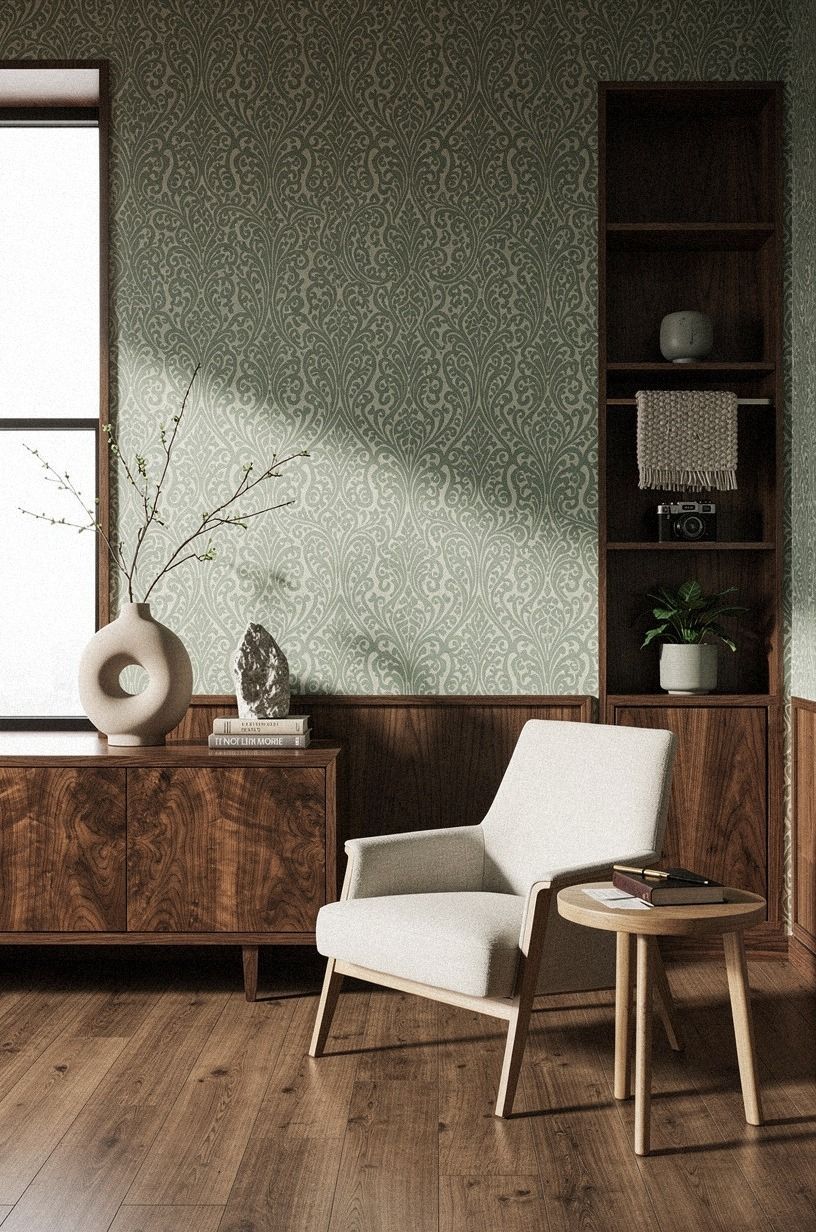
The Two-Wood Rule keeps a dramatic wallpaper room from looking like a themed restaurant. Choose one warm wood and one dark wood, then stop. Book-matched walnut brings a rich, continuous grain, while darker furniture adds the shadow your speakeasy wall needs.
You’ll get the best result when the woods have different textures, not merely different stains. A ribbed oak cabinet beside a smooth walnut table feels gathered and intentional. Three glossy brown pieces, however, will make your room look heavy and dated.
I’d choose IKEA KALLAX birch-effect storage over a matching dark bookcase if your room is tight. It gives you useful shelving without adding another dense block. Your wallpaper can be moody, but your circulation still needs to feel easy.
A woven basket, aged leather handle, or cane panel can soften the harder lines. The result feels collected, handsome, and quietly luxurious. See how the same restraint works with a hidden bar cabinet, then balance the scheme with velvet and linen and a focused budget plan.
4Frame the Pattern With Brass and Black
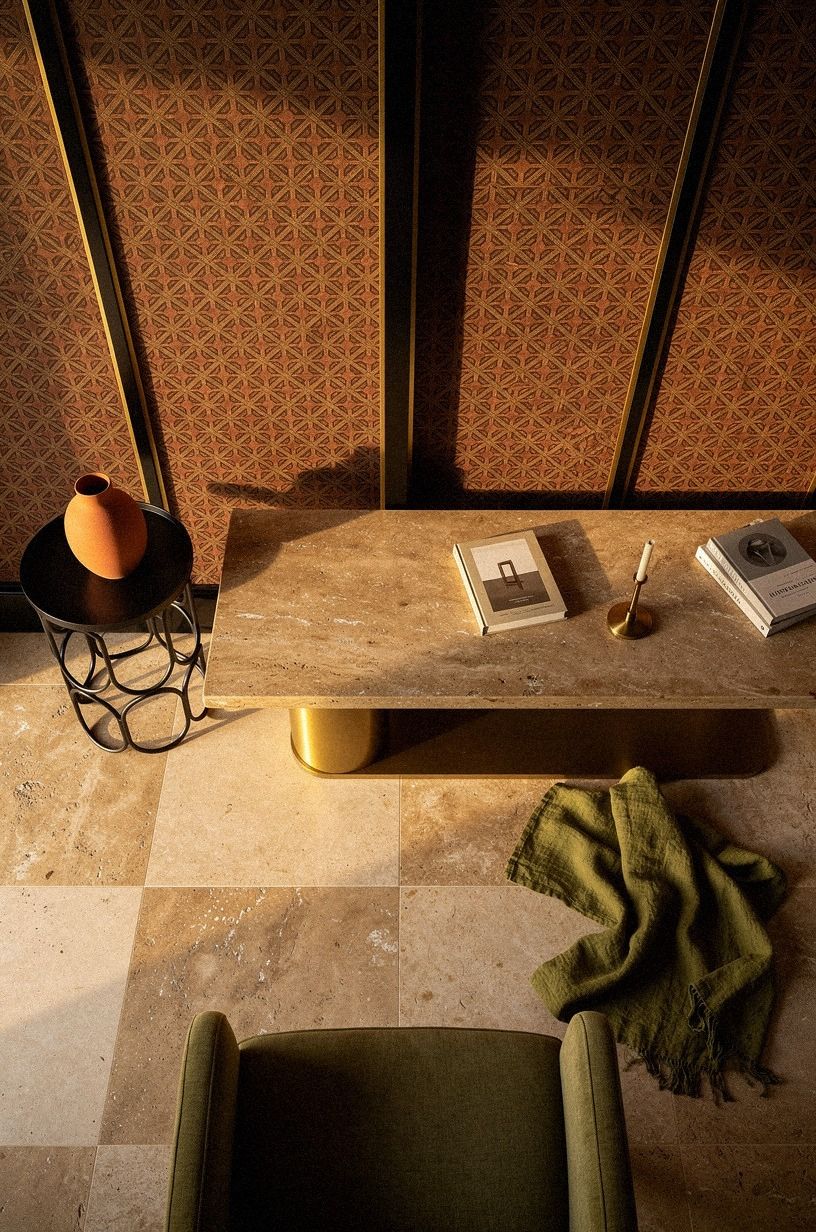
A wallpaper mural needs a visual border, and warm travertine does the job with more character than polished stone. Pair it with olive accents, a stone lamp, or a slim table. You’re creating contrast, not collecting finishes.
The travertine’s natural variation brings warmth without looking too bright against a smoky print. I’d skip repeating the stone everywhere. One lamp, one small tray, and a single ledge are enough for your eye to notice the texture.
But don’t hang every frame in a rigid grid. Speakeasy rooms benefit from a slightly relaxed arrangement, especially when the wallpaper has movement. Leave the center of your art about 57 to 60 inches from the floor, and you’ll keep the display comfortable to view.
The combination is dramatic without becoming flashy. A small touch of stone can make an ordinary wall feel remarkably atmospheric! For a softer companion, use the mirror placement approach and add another layer with the light stack.
5Swap Open Shelves for a Hidden Bar Cabinet
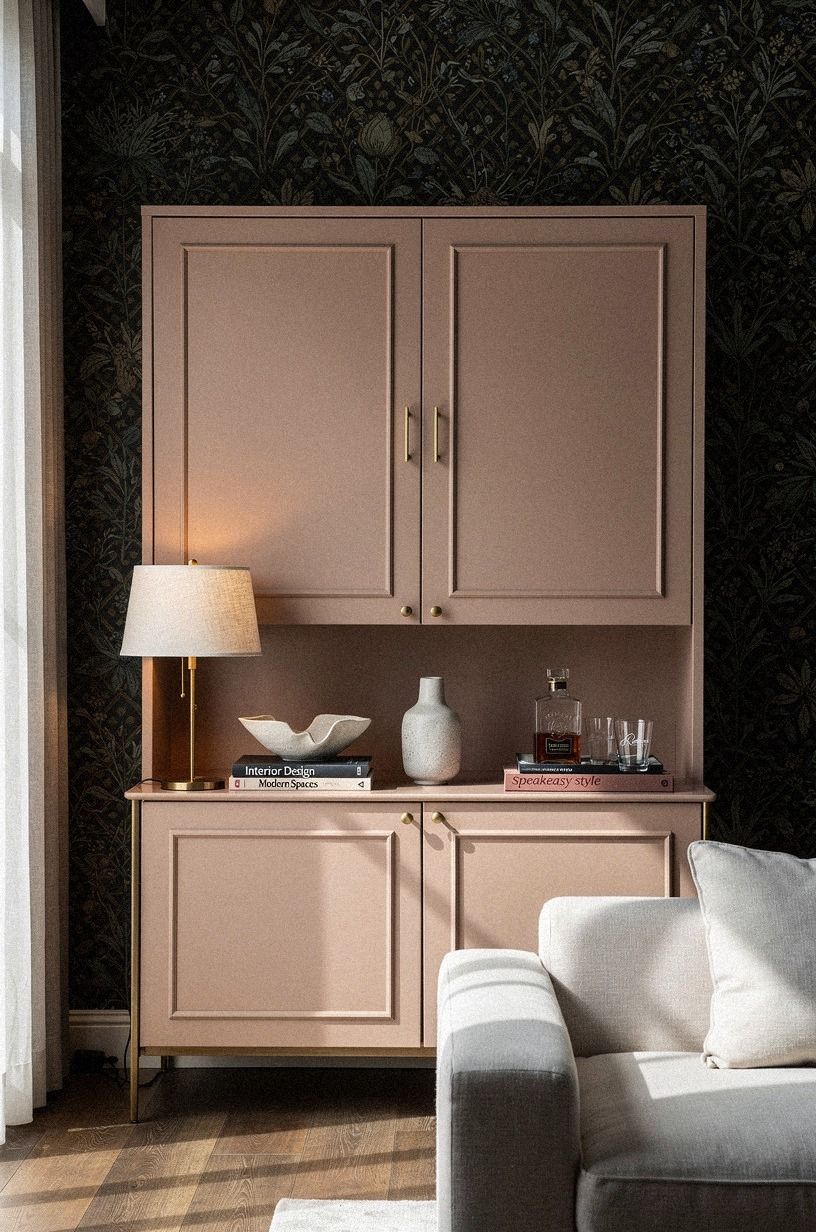
A concealed bar cabinet gives your speakeasy wall a reason to exist. Look for fluted doors, dark veneer, or cane panels, then place the cabinet against the loudest section of wallpaper. The furniture anchors the pattern, so your wall won’t feel like decoration floating without purpose.
You don’t need a full drinks setup. A tray, two glasses, a small carafe, and an unlacquered brass coaster can suggest the idea without turning your room into a prop set.
I’d avoid open shelves packed with bottles. They gather dust and make the corner feel busy.
If you’re renting, a freestanding cabinet works better than built-ins. You can move it later, and you won’t lose your deposit. Your best arrangement might be surprisingly small, especially if the cabinet is tall enough to give the wall a strong vertical line.
Keep the cabinet useful for your actual habits. It might hold board games, linens, or serving pieces when you’re not entertaining. That little bit of practicality keeps the room from feeling staged.
Pair it with the three-height light stack, and check the budget plan before choosing custom millwork.
6Build the Three-Height Light Stack
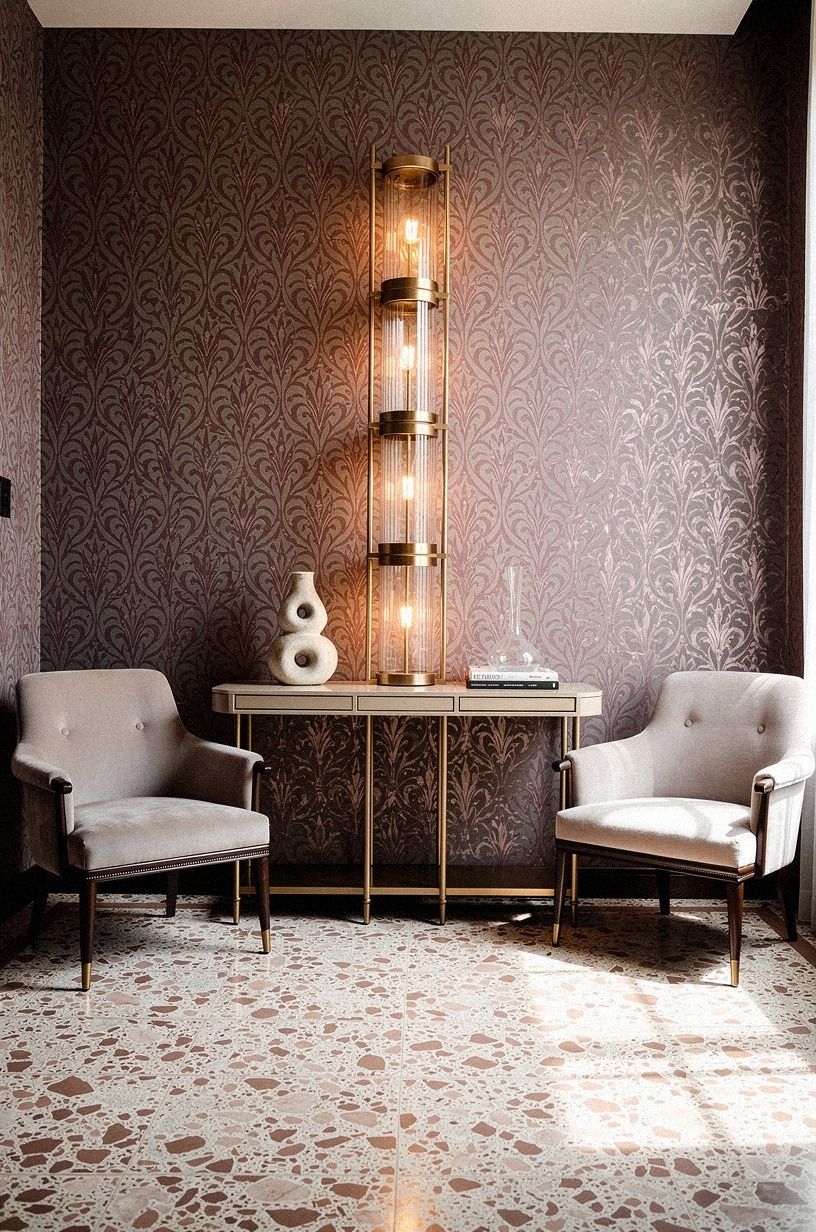
The Three-Height Light Stack makes a dark wallpaper room usable after sunset. You’ll want one overhead source, one task source, and one ambient source, because a single ceiling fixture flattens the pattern and leaves corners dull.
Try a shaded ceiling light, a table lamp at seated eye level, and a low lamp on a cabinet. An oversized-chip terrazzo lamp base will add texture, while rose-gold hardware will keep the room from looking sugary. Three sources give your wall depth without demanding a complicated electrical plan.
And honestly, I’d switch off the overhead light first. The wallpaper looks richest when the light skims across it from the side. If you’re adding dimmable sconces, choose versions whose glow lands on the paper rather than directly into your eyes.
A warm LED bulb around 2700K will usually flatter plum, grey, and rose-gold patterns. This is the move that makes the room feel inviting instead of gloomy. Good news: you may already own everything needed to test it tonight!
7Choose Wallpaper Over Paint for a Narrow Room
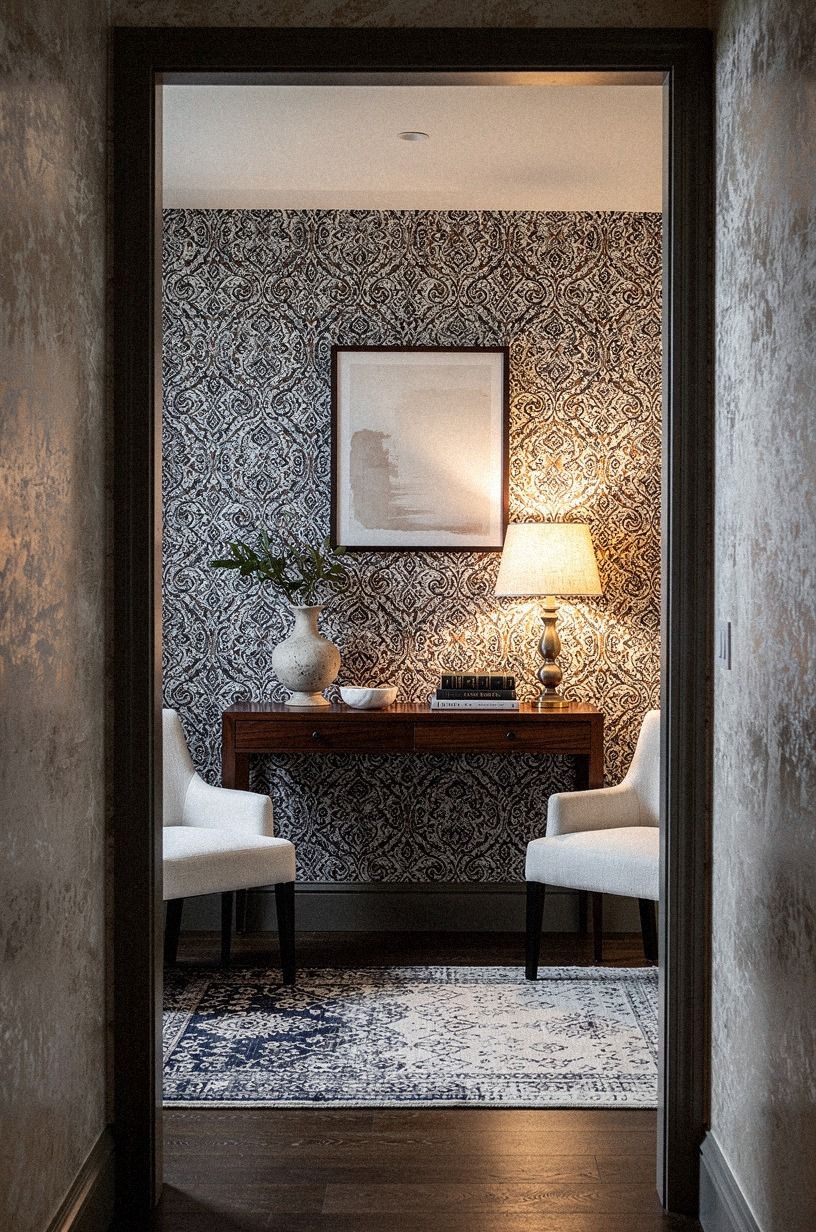
Wallpaper over paint can be the better choice in a narrow room because it adds pattern without taking floor space. Pick a small-scale botanical, a faded geometric, or a paper with a hand-applied Venetian plaster effect that rewards close viewing. You’ll notice more detail as you move through the room.
A flat paint color can make a hallway feel longer, but it can also leave it visually empty. I’d skip a huge mural with oversized flowers if your passage is only a few steps wide. The scale will feel louder than the architecture, and you won’t have enough distance to read it comfortably.
Use the paper on one long wall and keep the opposite side calm. A warm white on adjacent walls can quiet the composition. You’re not trying to make the space look larger at all costs.
You’re making the narrowness feel deliberate.
A peel-and-stick wallpaper sample is worth testing in morning, afternoon, and evening light. If the pattern still feels appealing when the hall is dim, you’ve found a keeper. You can also borrow the calmer proportions from this two-wood arrangement, then use the same mirror placement logic to extend the pattern.
8Hang a Mirror Where the Pattern Can Travel
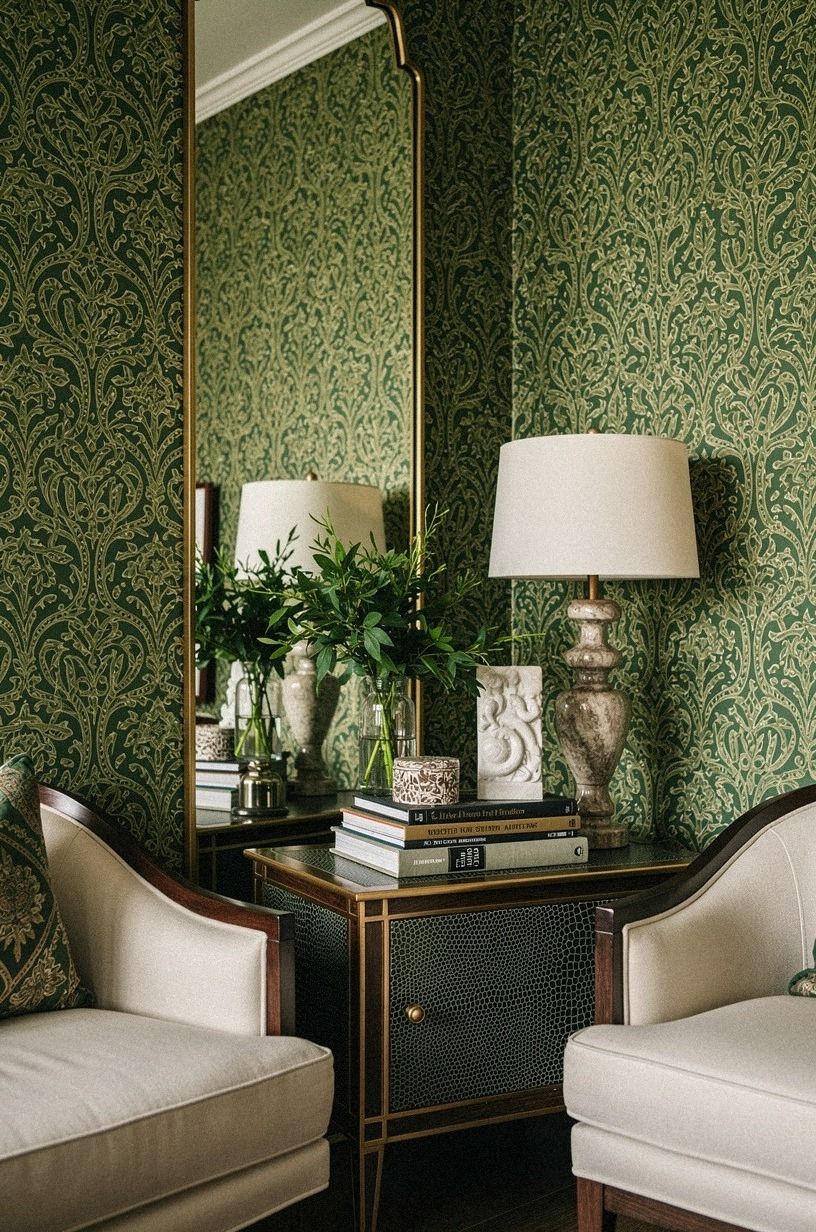
A mirror lets your wallpaper repeat itself without adding another print. Choose an antique-style mirror, a rounded gold frame, or a modest shagreen panel, then hang it where it reflects the richest part of the wall.
You’ll want to check the reflection from the doorway. If the mirror catches a blank ceiling or a pile of laundry, it won’t help your room. I made that mistake in a dining nook, and the reflection doubled the clutter instead of the atmosphere.
Place the mirror above a console or beside a lamp so the reflected light has somewhere to go. A 57 to 60 inch center height usually feels natural for wall art, but your sightline matters more than a rigid rule. Your room should feel comfortable when you walk in, not measured by a ruler.
A narrow console table keeps the arrangement useful without crowding the floor. Add one bowl or a small lamp, then stop. The pattern should remain the star.
9Mix Velvet Speakeasy Decor With Linen
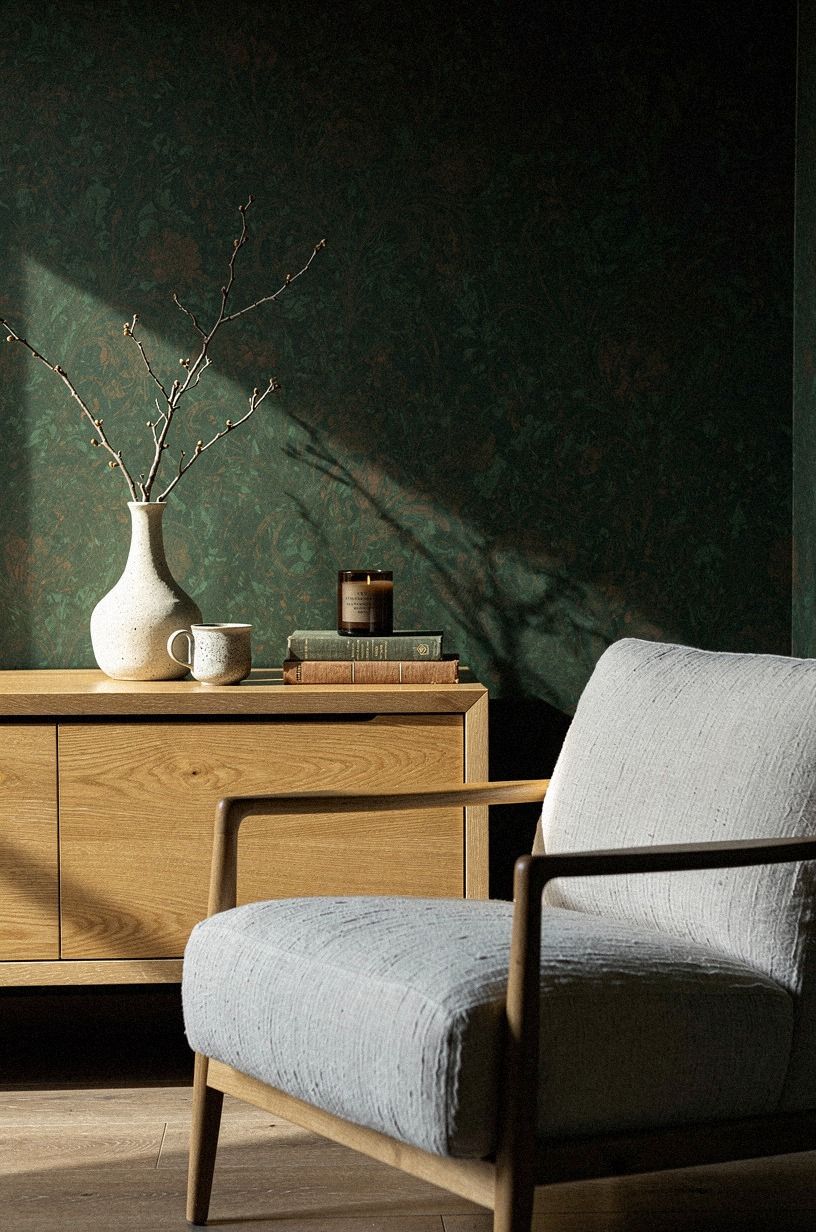
Velvet brings drama, but too much of it makes a room feel stiff. Balance one forest green mohair velvet chair with washed Belgian linen curtains, a cotton lampshade, or a loose rust cushion. The contrast gives your wallpaper room to breathe.
You’ll notice the difference by touch. Velvet absorbs light and looks deep, while linen catches daylight and softens the window.
I’d skip velvet curtains unless your room is large enough to handle their weight. In a compact space, they can close in the walls.
Hang your curtain rod 4 to 6 inches above the window frame and take the panels down to the floor. That length makes the room feel finished without competing with the wallpaper. Your fabric doesn’t need to match the paper.
It only needs to share one quiet color.
A cotton lampshade can repeat the lighter texture without making the room feel pale. The result is sensual, relaxed, and much more livable than a room covered in one theatrical fabric. If the room still feels heavy, use the one light note approach and let the light stack handle the evening mood.
10Go Darker Than You Think, Then Add One Light Note
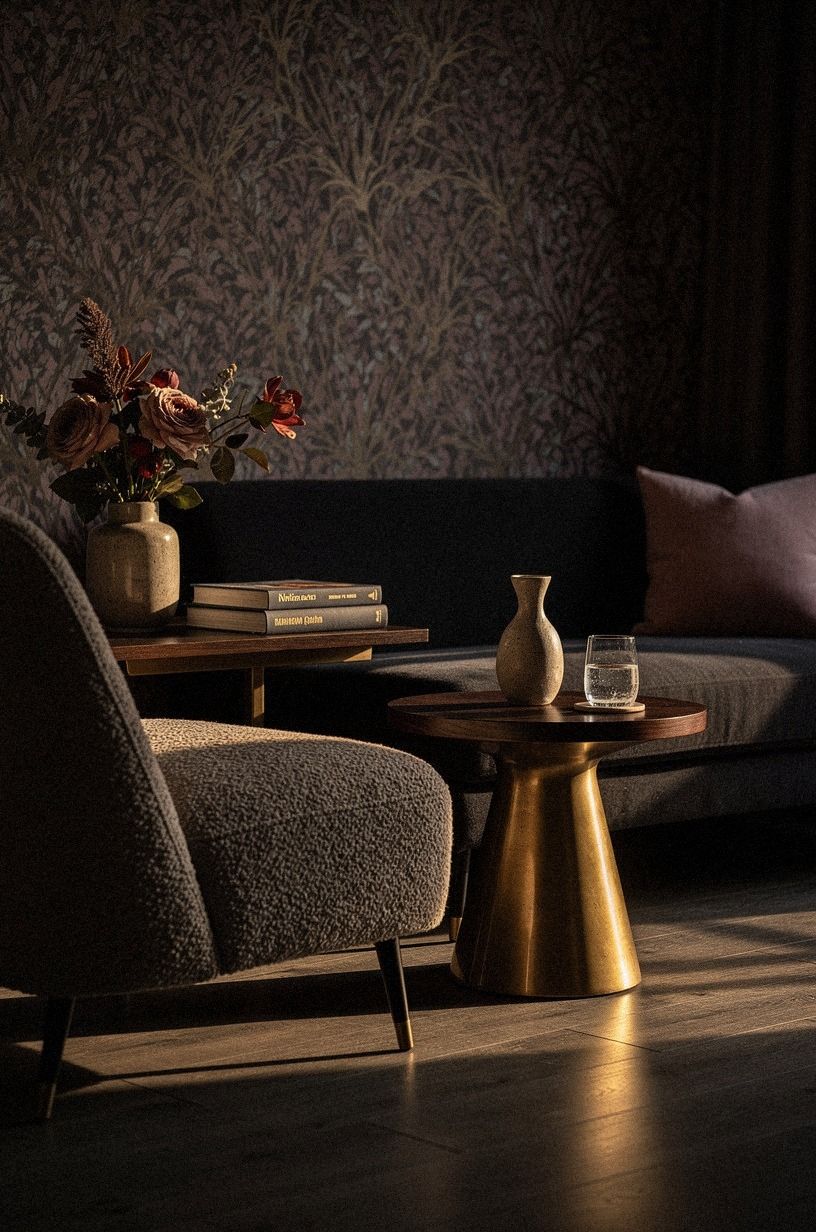
A rich wallpaper can be darker than your first instinct, especially if the room gets afternoon sun. Try a dusty rose or charcoal pattern with warm flecks, then add one light note through a wool rug, ceramic lamp, or brass table.
The mistake is not darkness. It’s darkness without a place for light to land.
You’ll need a reflective surface, a warm bulb, or a lighter textile so the room doesn’t become visually flat. I’d rather see one pale object with purpose than six random bright accessories.
But don’t force a white sofa into the room just to create contrast. It can look disconnected from the wall and demand constant maintenance. A charcoal chair or cream organic bouclé bench will give you softness without breaking the mood.
One light note is often enough to make the entire scheme feel luminous. A pale rug near the seating area can also make the room more comfortable underfoot, which is a small luxury you’ll notice every day. For a related wall treatment, compare this with wallpaper over paint.
11Create a Ceiling-to-Floor Speakeasy Moment
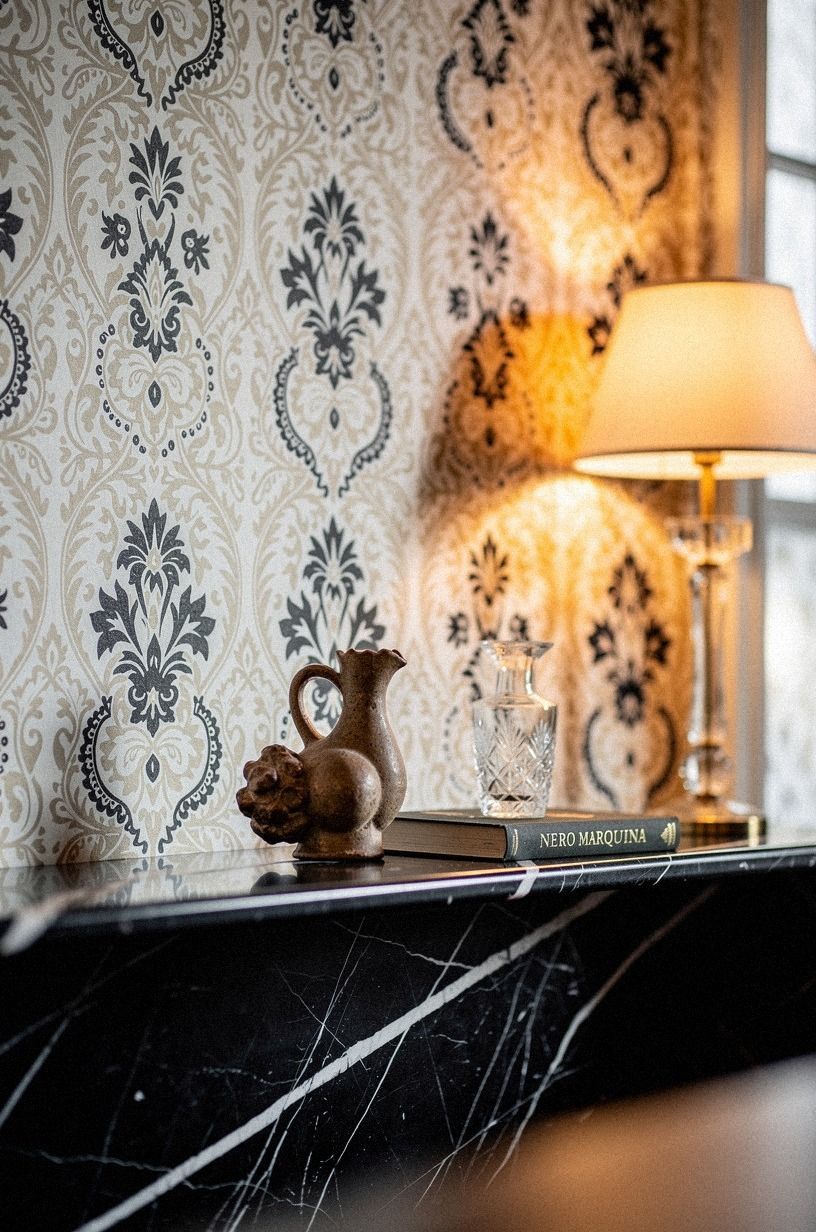
Carry one color from the wallpaper into the ceiling, baseboards, or door trim when you want a more immersive speakeasy wall. Warm white, camel, and black can make the whole room feel collected instead of stopping at a rectangle of paper.
You’ll want to test the color in morning and evening light. I once assumed a warm white would stay soft, but it changed noticeably after sunset.
That wasn’t a disaster, though it did change the lamp plan. Your paint sample should live on the wall for a full day.
Keep the floor calmer. Nero Marquina black marble with white veins or a plain medium-toned wood will support the ceiling-to-floor effect.
Pattern on every surface can feel restless. A quiet floor gives your wallpaper the authority it deserves.
If painting the ceiling feels too bold, start with the door trim or baseboards. That smaller gesture still feels distinctive and architectural.
The room gains a cocooning quality without becoming overwhelming. A hidden bar cabinet can anchor the treatment, while the three-height light stack keeps it from feeling closed in.
12Borrow the Hotel-Lounge Seating Plan
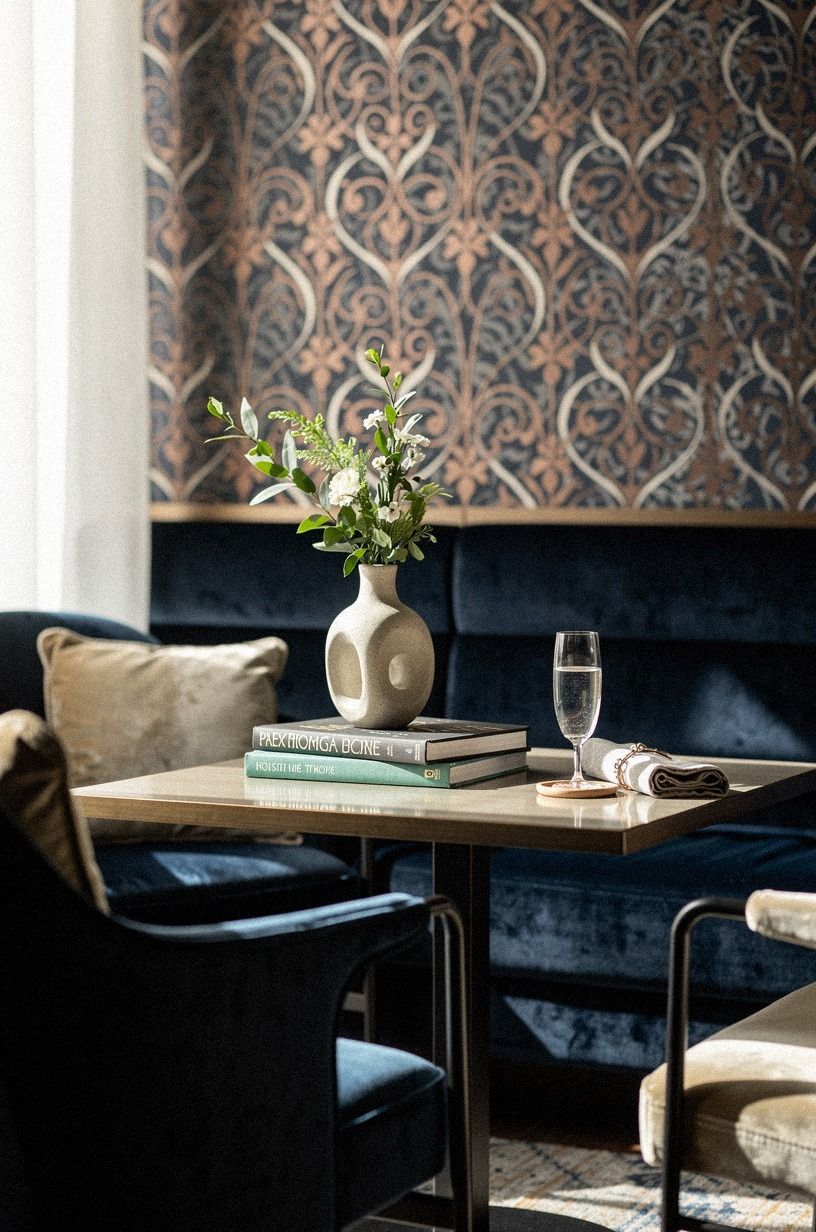
Hotel lounges understand how to make a small room feel social.
13Build a Budget Around the Wall
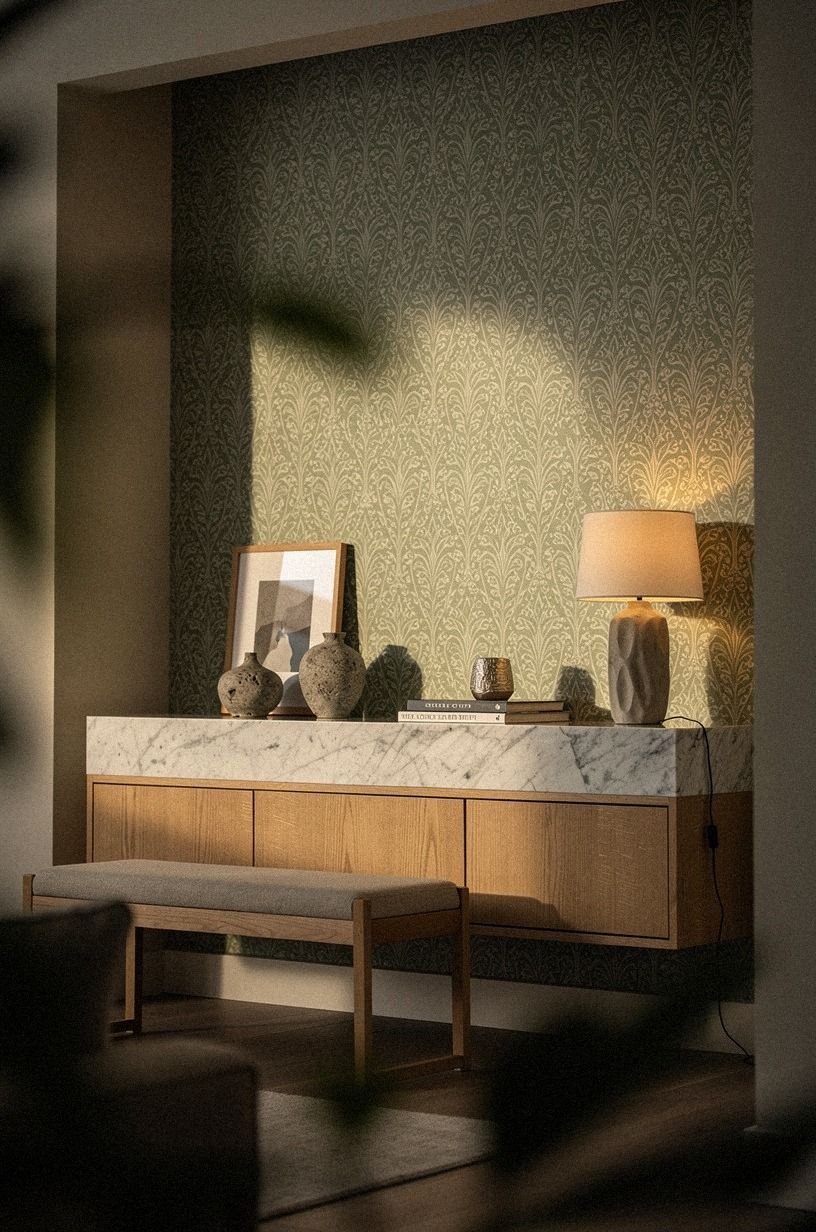
A speakeasy wallpaper makeover can stay manageable when you choose one investment and let the rest be useful, secondhand, or already owned. The typical US ranges below are a helpful starting point, not a promise. Your paper, labor, room size, and furniture choices will change the total.
You’ll get more atmosphere from a strong wall and good lighting than from five small accessories. A wool rug may run $400-$1,500, while linen drapes for a pair can cost $120-$400. I’d spend first on what changes the room after dark.
For a lighter refresh, a statement fixture typically falls around $150-$800, and DIY room paint can land around $200-$600. Your free upgrade is editing. Remove anything that competes with the wallpaper, and the whole wall will look more expensive.
A secondhand wood cabinet or vintage mirror can add far more character than a collection of inexpensive décor. The goal is a memorable room with one clear point of view.
That usually costs less than trying to decorate every surface. If you’re weighing paint against paper, revisit wallpaper over paint before spending.
14Make the Wallpaper the Quietest Conversation
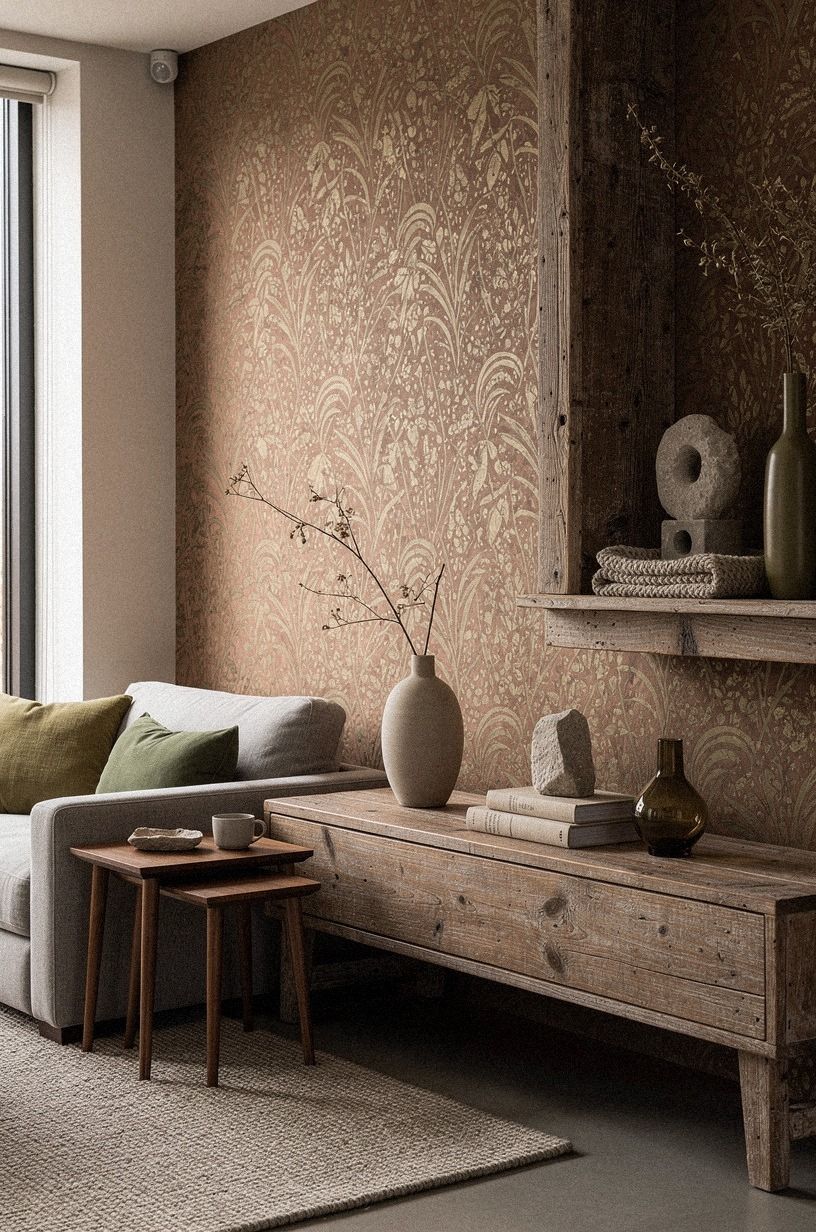
The best speakeasy wall doesn’t shout from every corner. Let the paper carry the pattern, then repeat one color in a chair, one material in a table, and one shape in the lighting. That restraint makes the room feel sophisticated and warm.
You’ll know the arrangement works when the wallpaper is the first thing you notice, but not the only thing you remember. Reclaimed weathered teak, a worn book, and a ceramic bowl can give the room a lived-in edge.
I’d skip novelty signs and printed cocktails. They explain the theme too loudly.
And if your room is small, keep the visual path clear from the entry to the main seat. A dramatic wall should invite you in, not block you. Your goal is an intimate room with a little mystery, not a stage set.
A ceramic bowl or small framed print is enough to make the cabinet feel finished. Give the room one final edit before adding anything else. That last pause often makes the scheme feel refined!
The Wallpaper Rule I’d Keep
I’ve learned that dramatic wallpaper works best when it’s treated as architecture. It doesn’t need to be repeated on pillows, art, curtains, and dishes. In fact, I think that’s where many rooms lose their nerve.
The wall can hold the pattern while the rest of the room handles comfort, storage, and light.
My own mistake was choosing the paper before thinking about evening lighting. In daylight, the print looked soft and smoky.
At night, the ceiling fixture made the colors look dull and gray. I changed the lamp placement, added a shaded side light, and suddenly the same paper had depth again. The lesson wasn’t “choose lighter wallpaper.” It was “choose light that respects the paper.”
You’ll also want to decide how much maintenance you can tolerate. A dark velvet chair hides some living, while pale linen shows every careless coffee moment.
A concealed cabinet may look calmer than open shelving, but it needs enough storage for your actual habits. Design should support the way you live, even when the room is meant to feel a little theatrical.
For color, I’d rather see one named paint used with confidence than a room full of indecisive samples. Benjamin Moore White Dove OC-17 can soften warm prints. Farrow & Ball Pigeon No.25 can connect gray, green, and brown.
If your wallpaper already has strong color, your trim doesn’t need a second opinion.
The best choice is the one that still feels good when the candles are out, the glasses are in the sink, and you’re sitting there on an ordinary Tuesday. That’s where the luxe feeling proves itself.
Not in theory. In the daily use.
A Few Things Worth Answering
What is the best Speakeasy Wallpaper Ideas for Rich, Dramatic Walls for a small speakeasy wallpaper rich dramatic?
A small-scale botanical or faded geometric usually works best because it gives your eye detail without crowding the room. A layered pattern from a brand such as IKEA can pair with a compact Article chair, a shaded lamp, and one pale wood surface. I’d test the paper in evening light before committing.
Where can I buy Speakeasy Wallpaper Ideas for Rich, Dramatic Walls pieces on a budget?
Look at IKEA, Wayfair, Target, Facebook Marketplace, and local thrift shops for useful furniture and lighting. Secondhand wood often has more depth than new flat-pack pieces. I don’t use affiliate links here, so the site is supported by display advertising rather than commissions.
How much does a Speakeasy Wallpaper Ideas for Rich, Dramatic Walls makeover cost?
A smaller refresh can cost about $200 to $800, while a room with new furniture, lighting, and a rug often reaches $1,500 to $5,000. Editing is free, so start by moving furniture, removing clutter, and testing your lamps before buying anything.
Can I create a Speakeasy Wallpaper Ideas for Rich, Dramatic Walls on a budget?
Yes, and you can start with paint, secondhand furniture, and textiles you already own. A focused wall costs less than furnishing the whole room. Try a thrifted mirror, a warm lamp, and one rich cushion before committing to larger pieces.
Is a Speakeasy Wallpaper Ideas for Rich, Dramatic Walls worth it in a small space?
Yes, because a small room can make a dramatic pattern feel intentional instead of scattered. Vertical wallpaper detail can draw your eye upward. Keep the floor open, use furniture with visible legs, and avoid placing a large cabinet on every patterned wall.
Is Speakeasy Wallpaper Ideas for Rich, Dramatic Walls a good idea for a rental?
Yes, especially when you use removable peel-and-stick paper or limit the treatment to a single wall. No-damage swaps include a tension rod, a freestanding bar cabinet, and removable lighting options. Test the paper first, and check your lease before installation.
Where I’d Start First
If I had to pick one, I’d start with the three-height light stack. Wallpaper can’t look rich under one harsh ceiling bulb, but layered light brings out every quiet color after sunset. Pin the idea for later, then move one lamp tonight and see what changes.