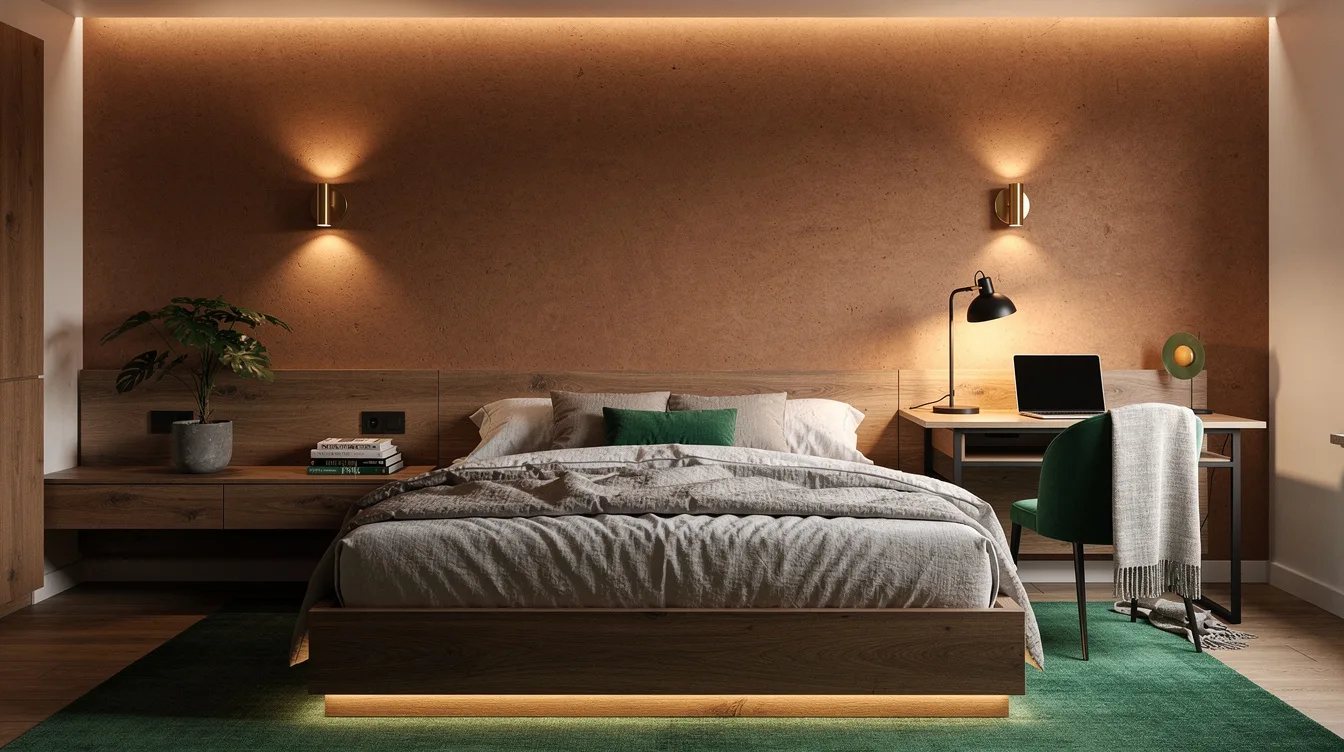
No Windows? These 11 Lighting Layers Make Rooms Feel Less Flat
26 august 2026A windowless room can feel painfully flat even after a new coat of paint and a powerful ceiling fixture. In a roughly 120-square-foot bedroom or office, the missing ingredient is usually not more wattage, it is light arriving from more than one height.
Designers build a controllable sequence: soft indirect ambient light overhead, focused task light where hands and eyes work, then a warmer low layer that gives the walls somewhere to recede. One bright center fixture creates the dreaded bright-box effect, and we would skip it as the main plan every time.
What you will find inside
- Build an Indirect Ceiling Glow
- Give Every Layer Its Own Control
- Wash the Longest Wall With Light
- Hide the Dots Inside a Proper Channel
- Aim Task Light at the Actual Work
- Set Reading Lamps at a Useful Height
- Create a Low Floating Glow
- Make One Focal Point Brighter
- Use Daytime White Only Where It Helps
- Choose Shallow Fixtures for Low Ceilings
- Light Shelves From the Front Edge
- Keep Decorative Lamps at Eye Level
Build an Indirect Ceiling Glow
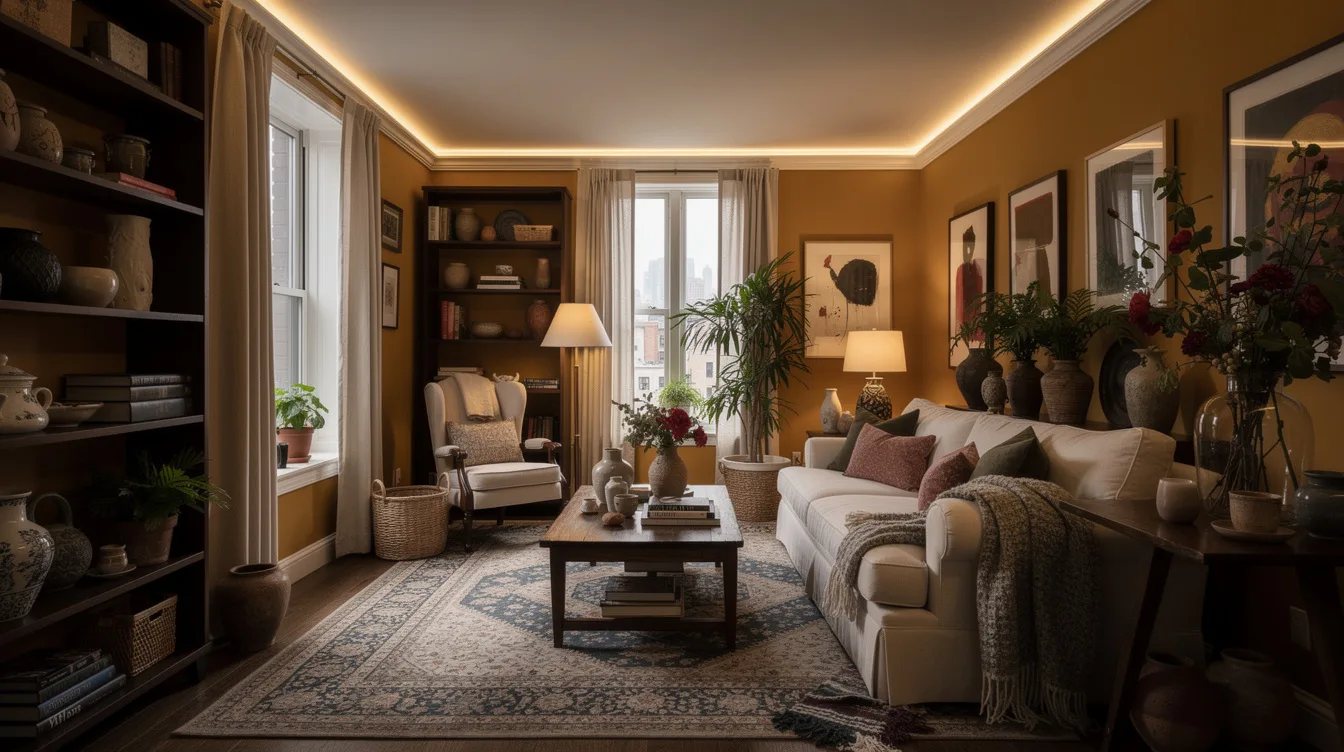
Hide a dimmable LED strip in a perimeter cove so the beam lands on the ceiling rather than in anyone’s eyes. A soft reflected ceiling is the closest substitute for daylight that a sealed room can get.
Set the cove roughly 3 to 6 inches below the ceiling and keep the strip about 2 to 6 inches back from the wall, adjusting for beam spread. Choose 2700K to 3000K with CRI 90 or higher, because harsh cool white makes a windowless room feel clinical fast.
Painted MDF, drywall, or a purpose-made extrusion can form the cove. The fixture itself should disappear from normal standing and sitting views.
Give Every Layer Its Own Control
Put cove light, task light, and accent light on separate dimmers or scenes. This is the rule that turns a collection of fixtures into a room that works morning through late night.
A single switch forces every lamp to perform the same job at the same time. We prefer a quiet work setting with bright desk light and low cove output, then a night setting with the task lamp off and only Leviton-controlled accents running.
Smart bulbs are useful for plug-in lamps, but hardwired layers deserve dedicated wall controls. Buy dimmable fixtures and bulbs together, since mismatched components can flicker or hum.
Wash the Longest Wall With Light
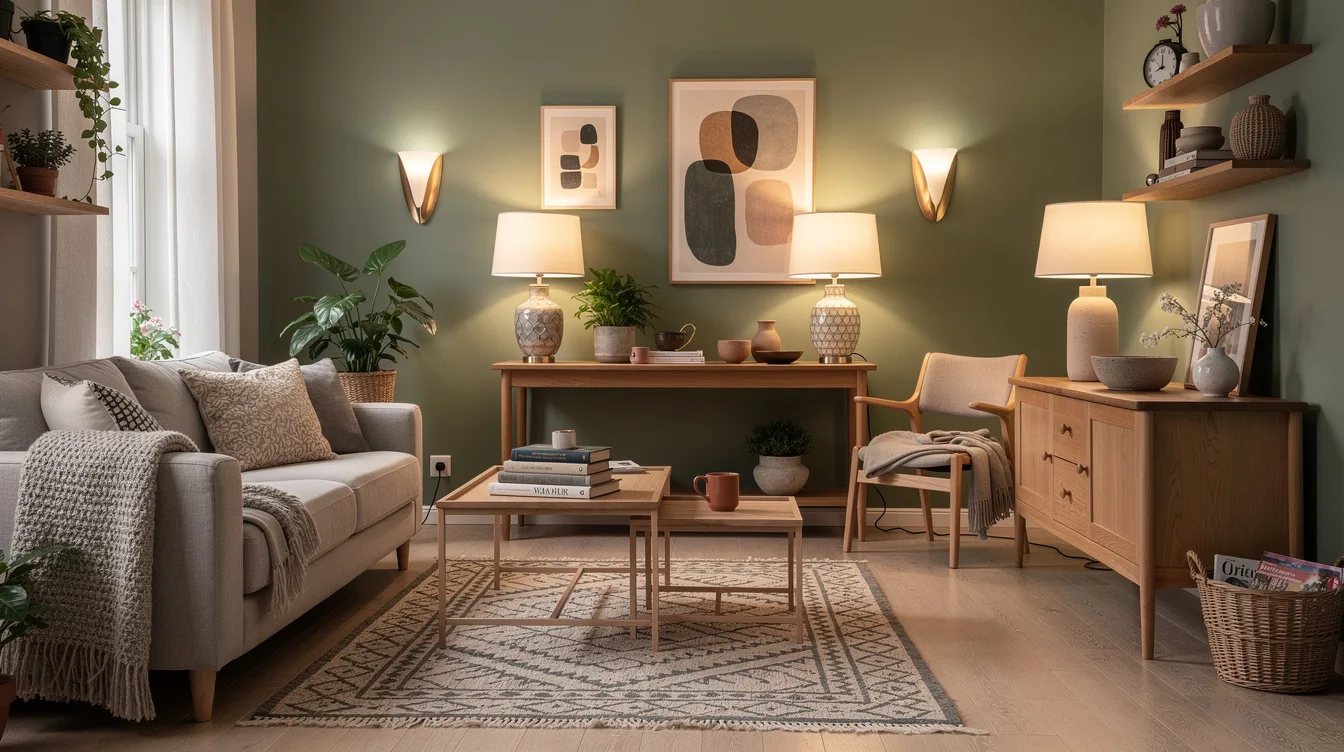
Light one major vertical plane, not only the floor beneath it. Two wall sconces or directional wall-wash spots on the longest wall make the boundaries feel farther away.
Use them to illuminate art, bookshelves, textured paint, timber slats, or a full curtain panel. A bright wall gives the eye distance to travel, which matters more than adding another decorative object.
Place sconce centers roughly 57 to 67 inches above the finished floor, then adjust for the headboard, sofa, or console beneath. The right height is where the glow feels intentional rather than like a hallway fixture that wandered into the room.
Hide the Dots Inside a Proper Channel
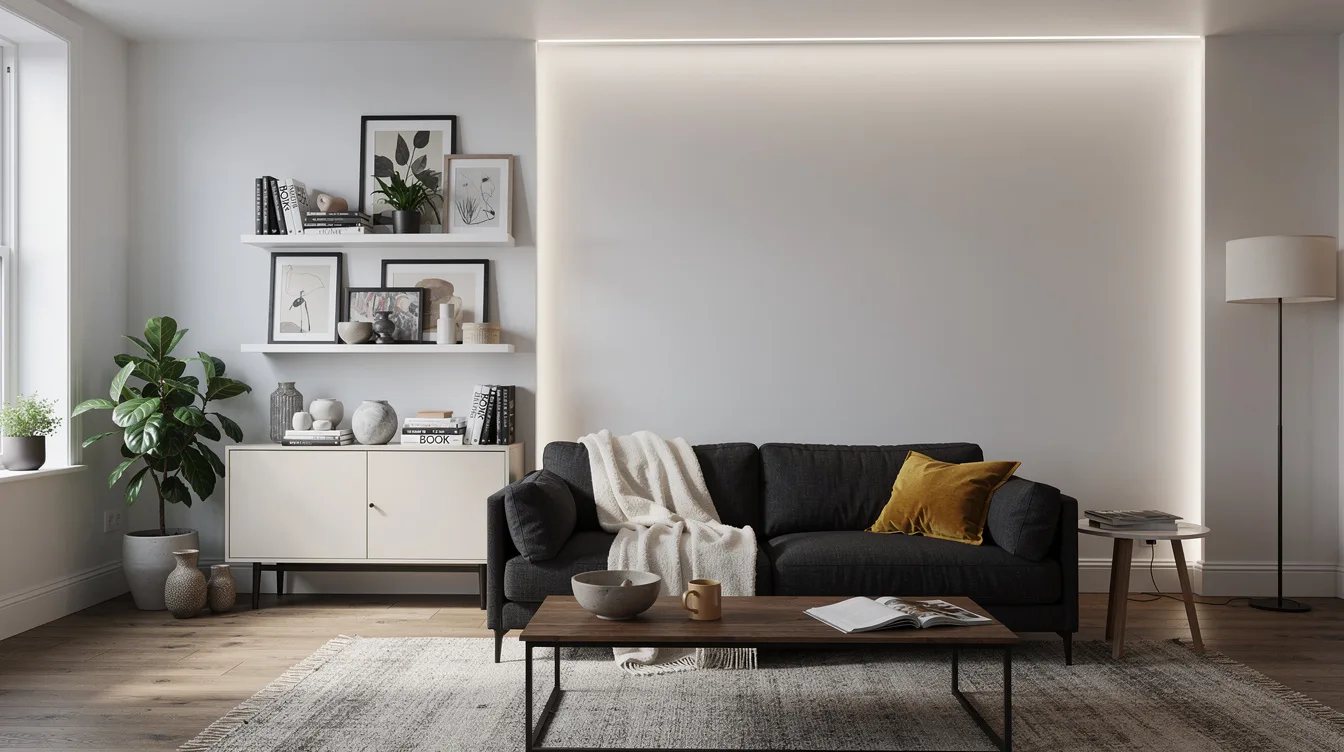
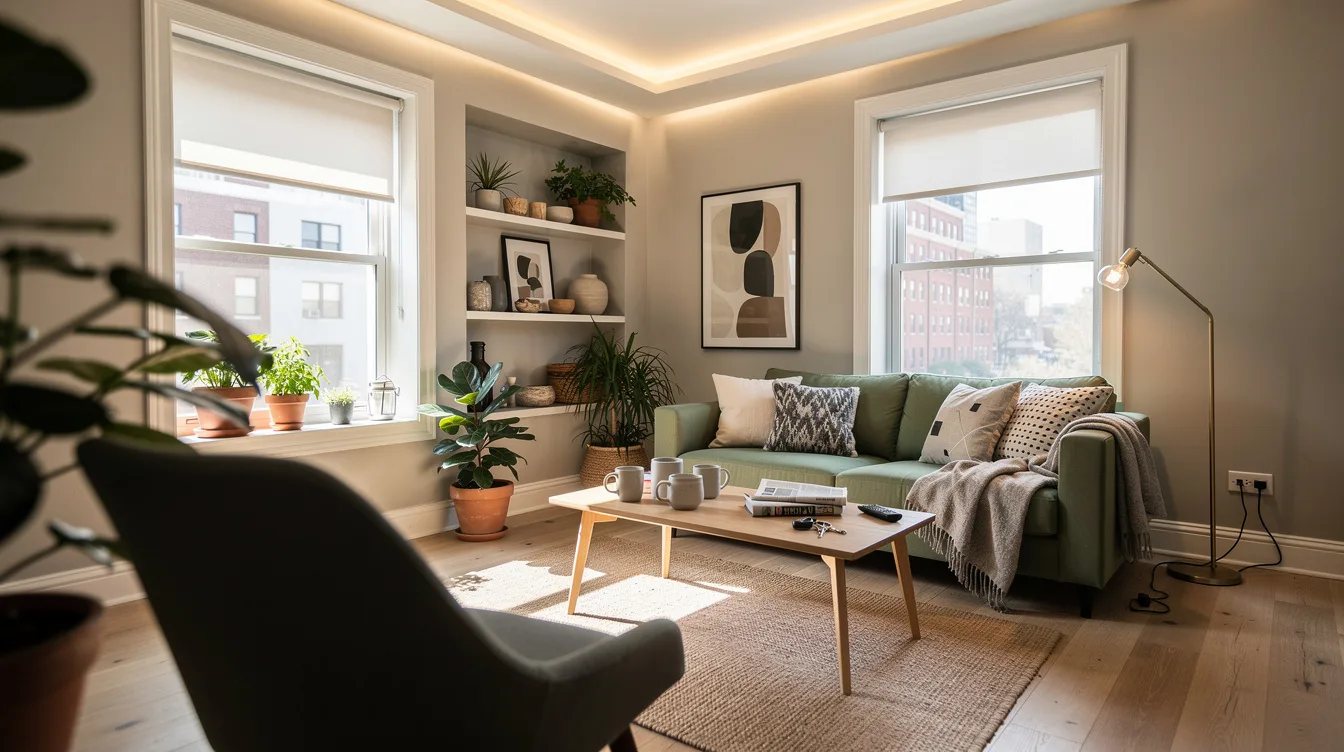
Never stick bare tape lights under a shelf and call it finished. Put the strip in an aluminum LED profile with an opal diffuser, which protects the tape and softens individual diode dots.
For most strips, an internal channel around 1/2 to 11/16 inch wide works well, with a visible diffuser around 11/16 to 7/8 inch wide. Give the LEDs at least about 3/8 to 3/4 inch of depth before the lens, because deeper channels create a smoother line of light.
This detail is worth spending on even in a budget room. Cheap exposed dots read like equipment, while a continuous glow reads like architecture.
Aim Task Light at the Actual Work
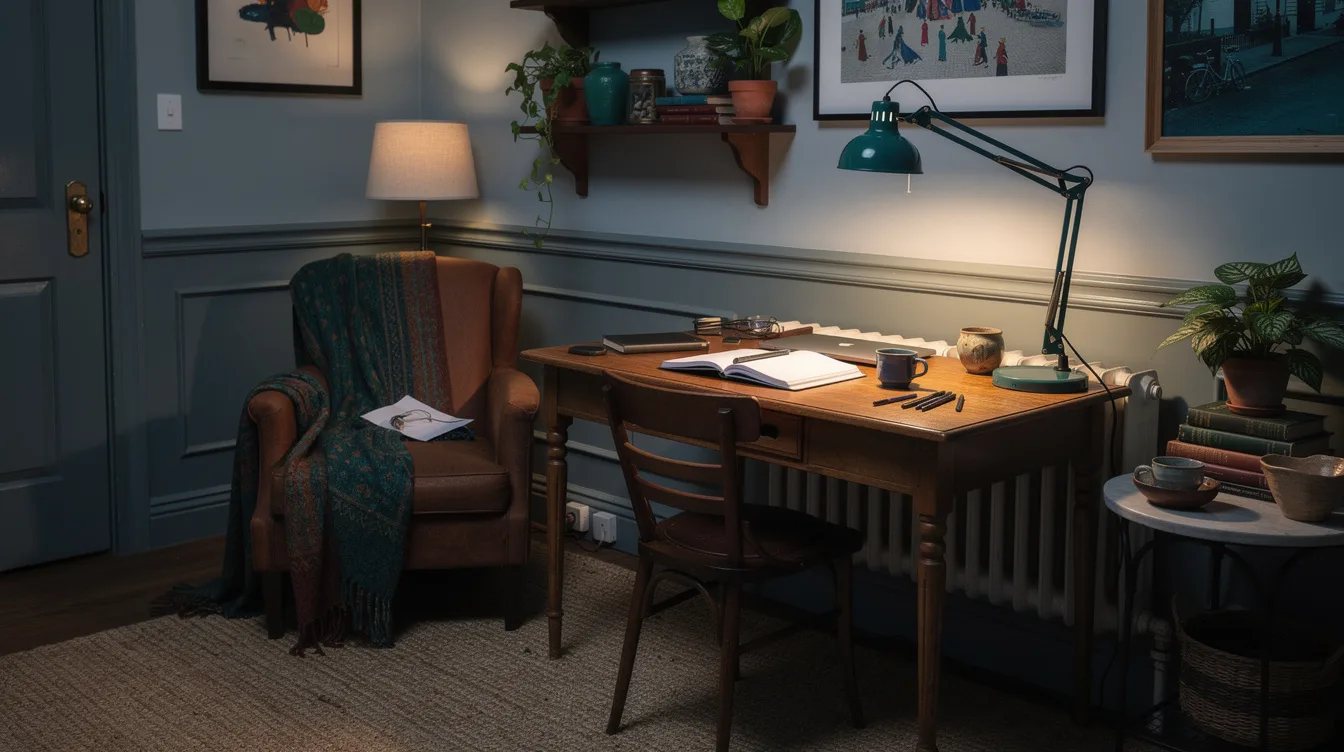
A ceiling fixture cannot properly light a keyboard, book, vanity, or hobby table. Add an adjustable desk lamp, reading light, mirror bar, or under-shelf bar where the work happens.
A serious desk or reading surface typically needs around 300 to 500 lux, and 3000K to 4000K can make sense during focused daytime work. Position the lamp behind or beside the shoulder so its beam does not bounce into a monitor or cast the working hand into shadow.
An about $40 adjustable lamp from Target or Amazon can solve a real visual problem better than an expensive decorative ceiling fixture. We favor an articulated shade over an exposed bulb for screens and paperwork.
Set Reading Lamps at a Useful Height
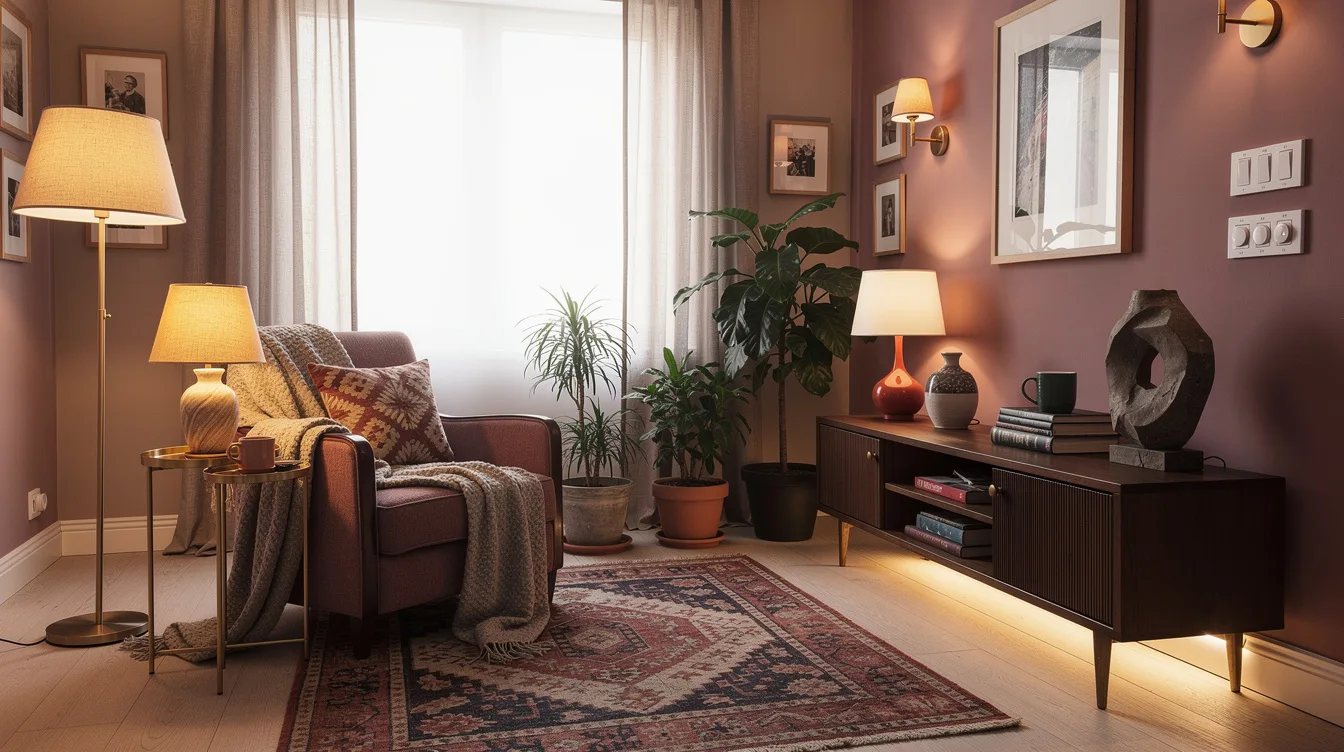
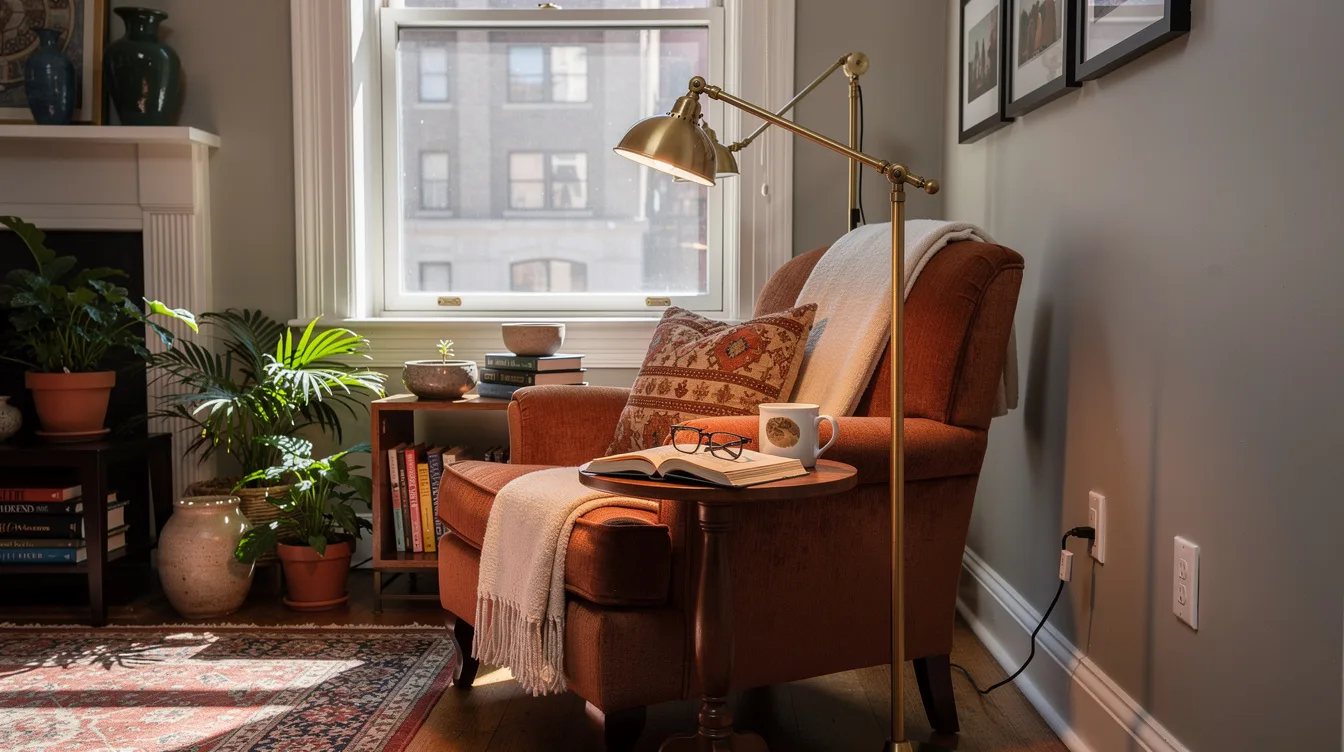
Floor lamps need to illuminate the page, not the top of a room. For a reading chair, aim for a shade bottom roughly 39 to 47 inches above the floor.
A brass floor lamp with a directed shade belongs slightly behind the chair, close enough that the beam reaches the book without shining across the seat. A broad uplighter may look sculptural, but it rarely does the reading job well on its own.
Place it before choosing side tables and art. The lamp’s footprint and cord route affect the whole seating arrangement in a compact room.
Create a Low Floating Glow
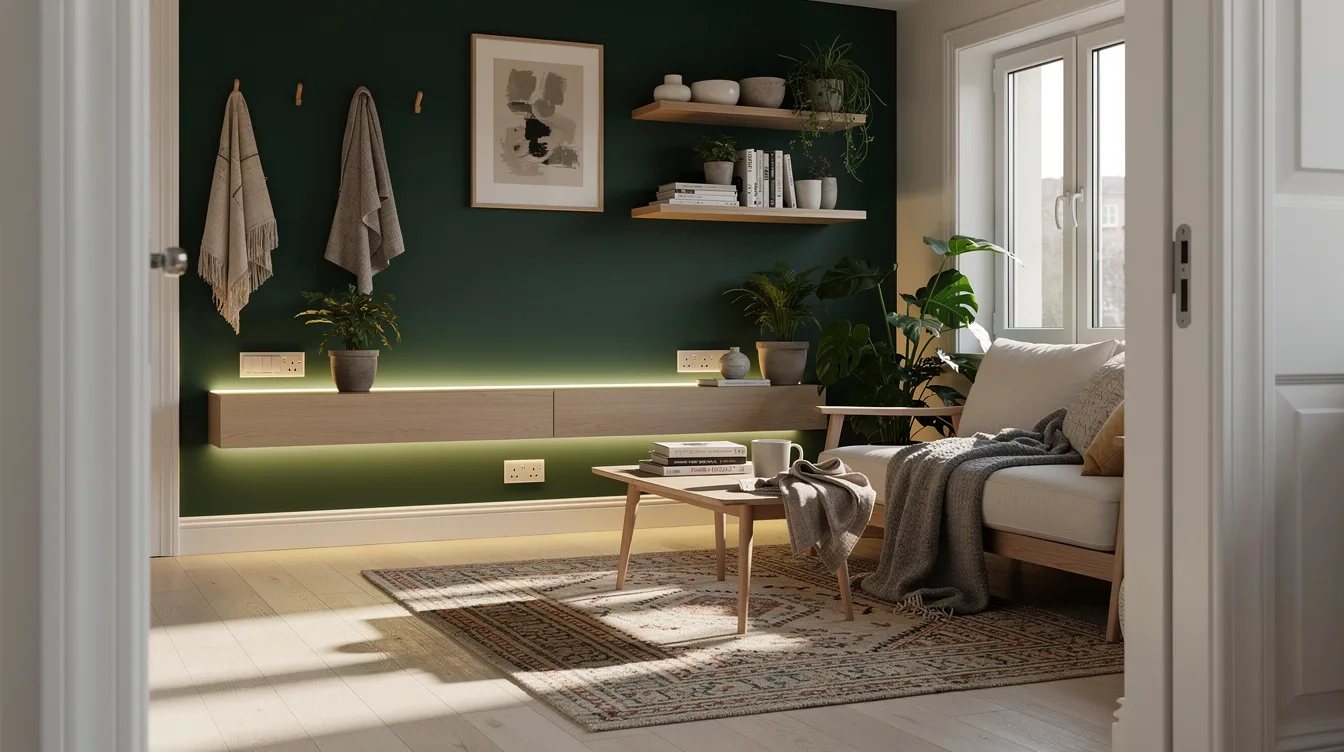
Install a low, hidden layer beneath a bed frame, media unit, bench, shelf, or sideboard. This light is atmosphere, not general illumination, and that distinction keeps it from looking theatrical.
Set the under-bed LED strip roughly 2 to 4 inches back from the visible edge, or hide it behind a 3/4- to 2-inch front lip. The source should stay invisible while the floor receives a soft pool of warmth.
Choose 2200K to 3000K and dim it deeply. A low glow helps people navigate at night without waking the entire room with overhead light.
Make One Focal Point Brighter
Give the room a destination for the eye: a framed print, a textured wall, a bookcase, or the headboard. Light that focal point at roughly three times the level of the surrounding ambient light when the room needs extra depth.
A slim picture light over a large print is more convincing than random downlights scattered across the ceiling. The effect is simple: contrast creates shadows, and shadows make a small enclosed room feel dimensional.
Keep the rest of the room quieter. Lighting every surface equally is the fastest route to the flat, overlit look designers avoid.
Use Daytime White Only Where It Helps
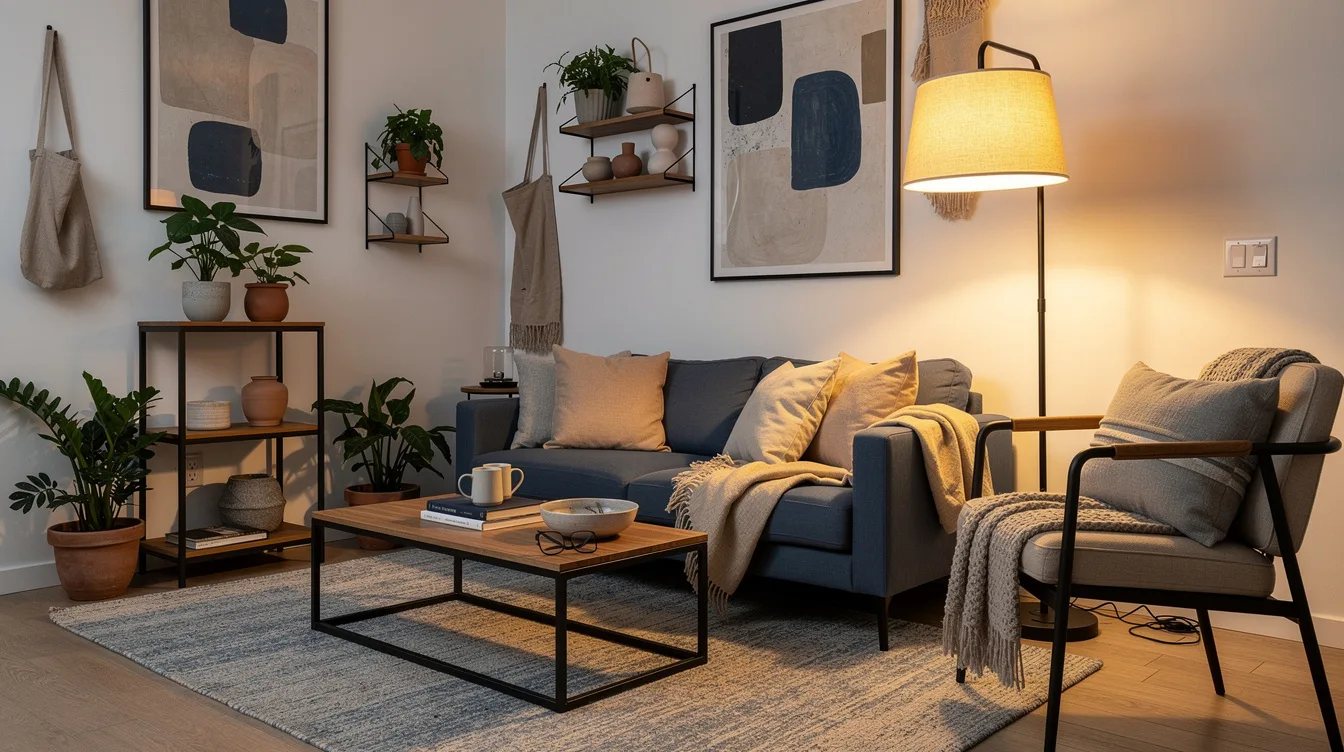
A windowless office can benefit from a high-CRI tunable-white source during working hours. Run that layer around 3500K to 4000K when concentration matters, then return the room to about 2700K at night.
Use a dimmable tunable-white ceiling light or wall-wash source rather than filling every fixture with cool bulbs. Cool white across an entire room tends to make skin, wood, and upholstered pieces look drained.
Keep the warm decorative layer available even during the day. A room needs visual comfort as well as enough light to work.
Choose Shallow Fixtures for Low Ceilings
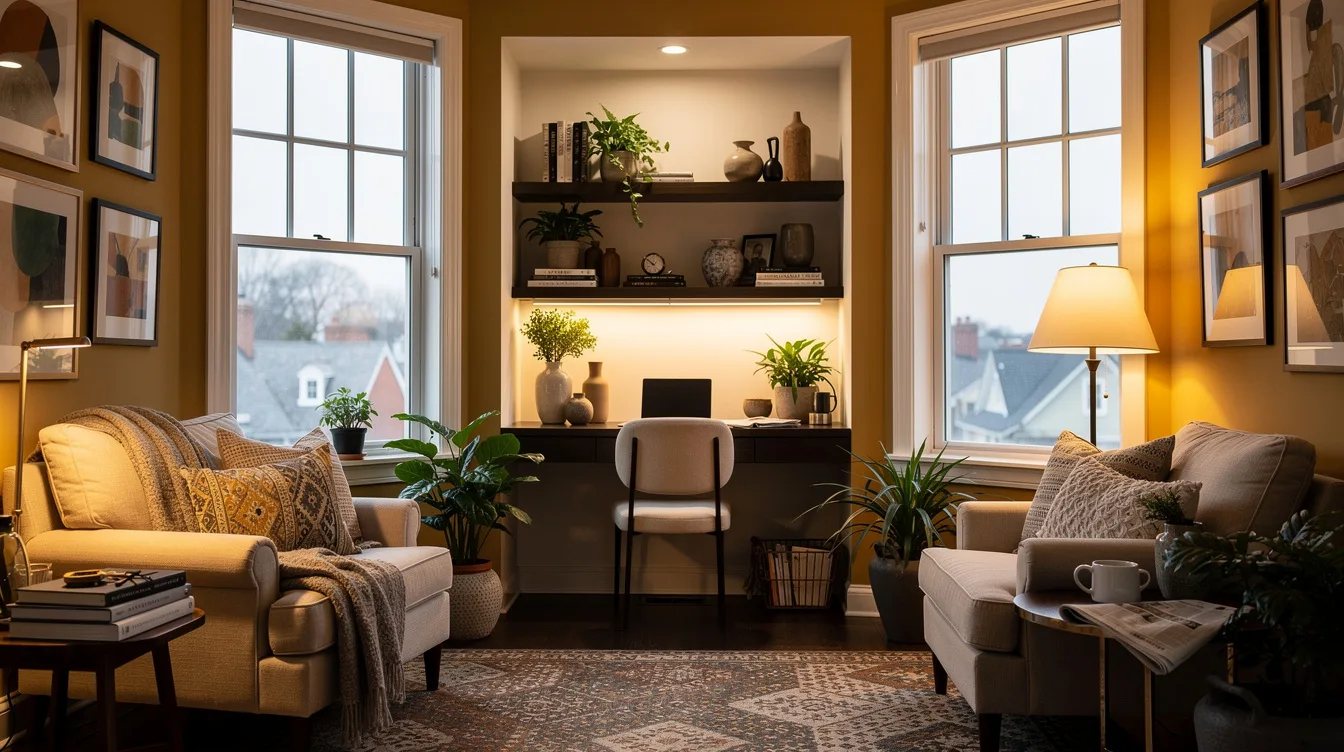
When ceiling height is limited, choose a shallow, dimmable flush mount to support the indirect layer instead of relying on a hanging statement fixture. A compact IKEA ceiling fixture can work when it stays visually quiet and uses a warm high-CRI bulb.
Save the pendant for a defined table or island where it can direct light toward a surface. In a low windowless room, a large pendant in the center often makes the ceiling feel closer.
Matte glass or a fabric-like diffuser gives a softer result than clear exposed bulbs. This is one place where restraint looks more expensive.
Light Shelves From the Front Edge
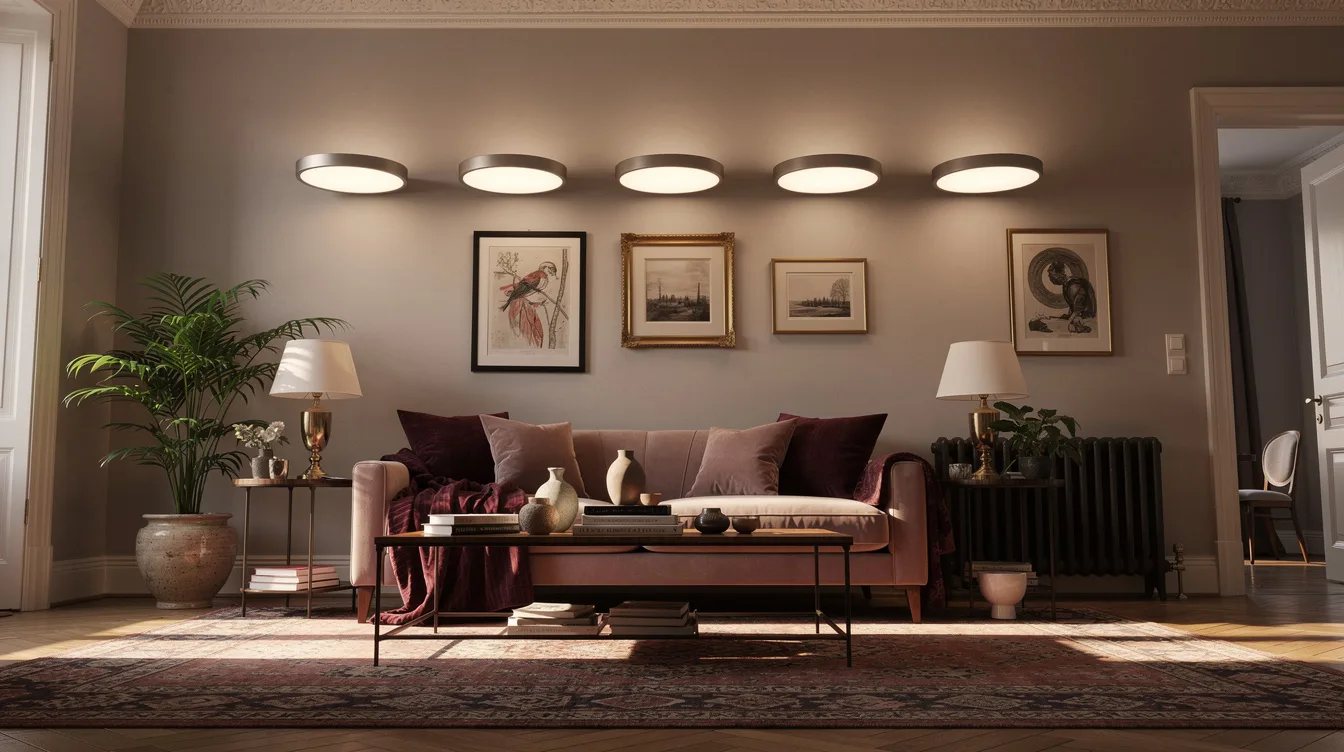
Shelf lighting needs concealment and direction. Tuck a diffused LED bar behind a front lip roughly 3/4 to 2 inches deep so the beam falls down the back wall and across displayed objects.
Use it on only a few shelves, especially those holding ceramics, books, or framed photos. Lighting every shelf bay can turn a cozy media wall into a retail display.
A warm strip at low brightness creates the depth that a windowless room lacks. It also gives a dark corner purpose after the main lights are lowered.
Keep Decorative Lamps at Eye Level
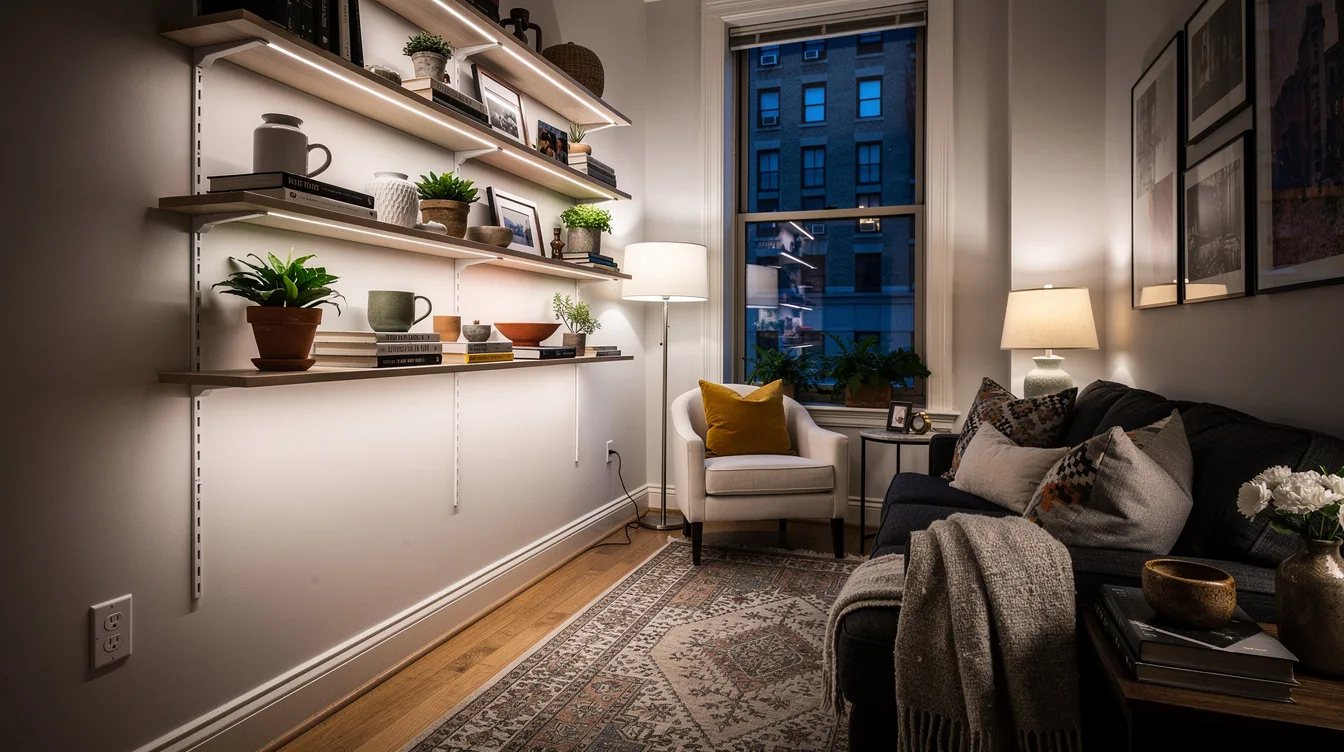
Table lamps and sconces should live where people experience the room, around seated and standing eye level. A ceramic table lamp on a sideboard, bedside table, or desk brings warmth into the middle of the room instead of leaving all illumination overhead.
Choose opaque or linen shades that diffuse the bulb, and use warm dimmable lamps from Walmart, Wayfair, or Home Depot. A typical lamp costs about $35 to $90, but the shade quality matters more than a trendy base.
One lamp beside a chair. Another near the bed or console. That uneven rhythm is what makes a room feel occupied rather than uniformly lit.
Keep reading
- 12 Ways To Make a Narrow Victorian Room Feel Less Cramped
- 12 Living Room Lighting Mistakes That Make Your Space Feel Smaller
- 14 Ways to Make Your Bedroom Feel Like an Aman Resort for Less
Start with the layer that is hardest to add later: a concealed, separately dimmable ceiling wash. Once the room has that soft overhead base, choose task light for the exact activity and add one low warm glow where the eye needs a place to land.