Tupperware Avalanche? This Amazon Lid Organizer Is Under $18
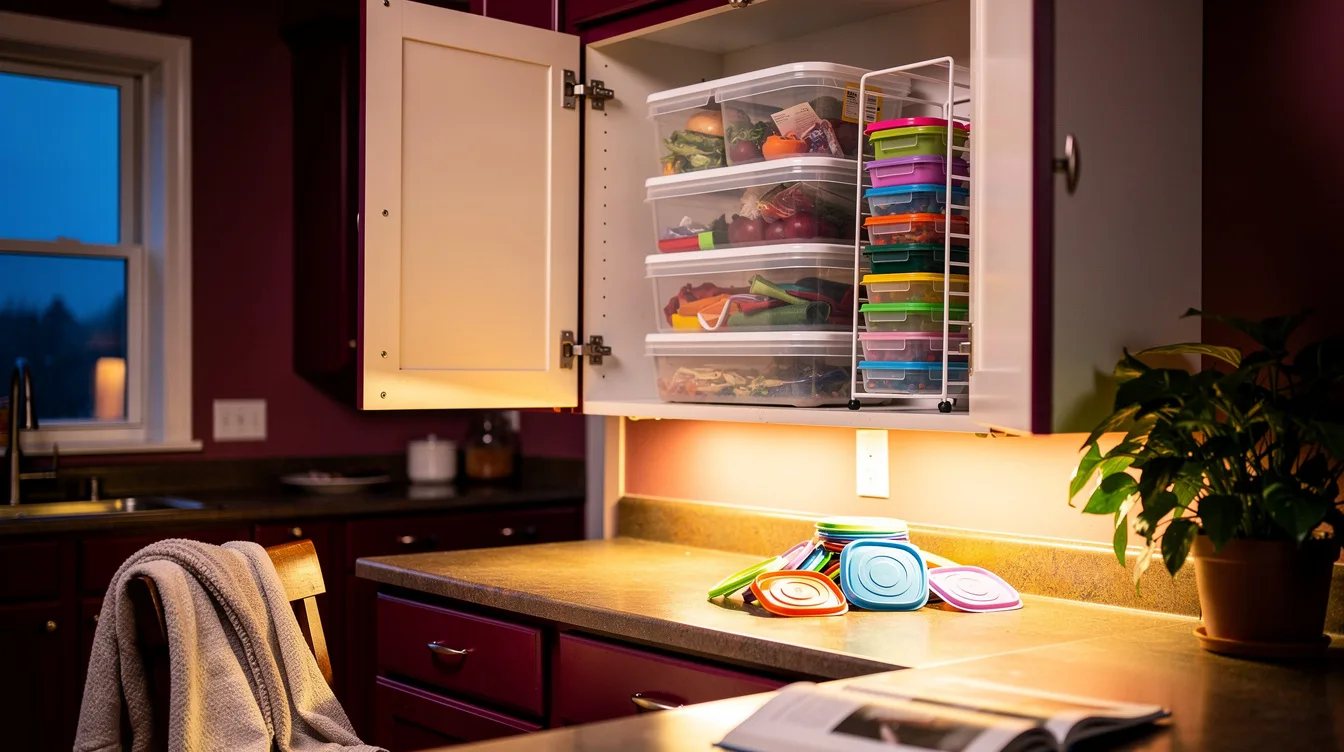
13 october 2026The cabinet door closes, then a loose lid slides forward and starts a plastic avalanche onto the floor. An under-$18 Amazon lid organizer can calm that one failure point, but the bigger fix is deciding which containers deserve reachable space.
Designers treat food storage like any other visible part of a kitchen: every piece needs a home, a purpose, and enough room to come out cleanly. These common mistakes make a small cabinet feel crowded, even when the collection itself is modest.
What you will find inside
- Stacking Every Container in One Tower
- Tossing Lids Into a Loose Pile
- Matching Lids by Memory Alone
- Keeping Containers You Never Reach For
- Mixing Round and Square Shapes
- Filing Lids Flat Under Heavy Pieces
- Filling the Cabinet to Its Ceiling
- Ignoring the Shelf Depth
- Letting Warped Lids Stay in Rotation
- Storing Wet Pieces Before They Dry
- Using One Bin for Every Small Piece
- Replacing Order With More Containers
Stacking Every Container in One Tower
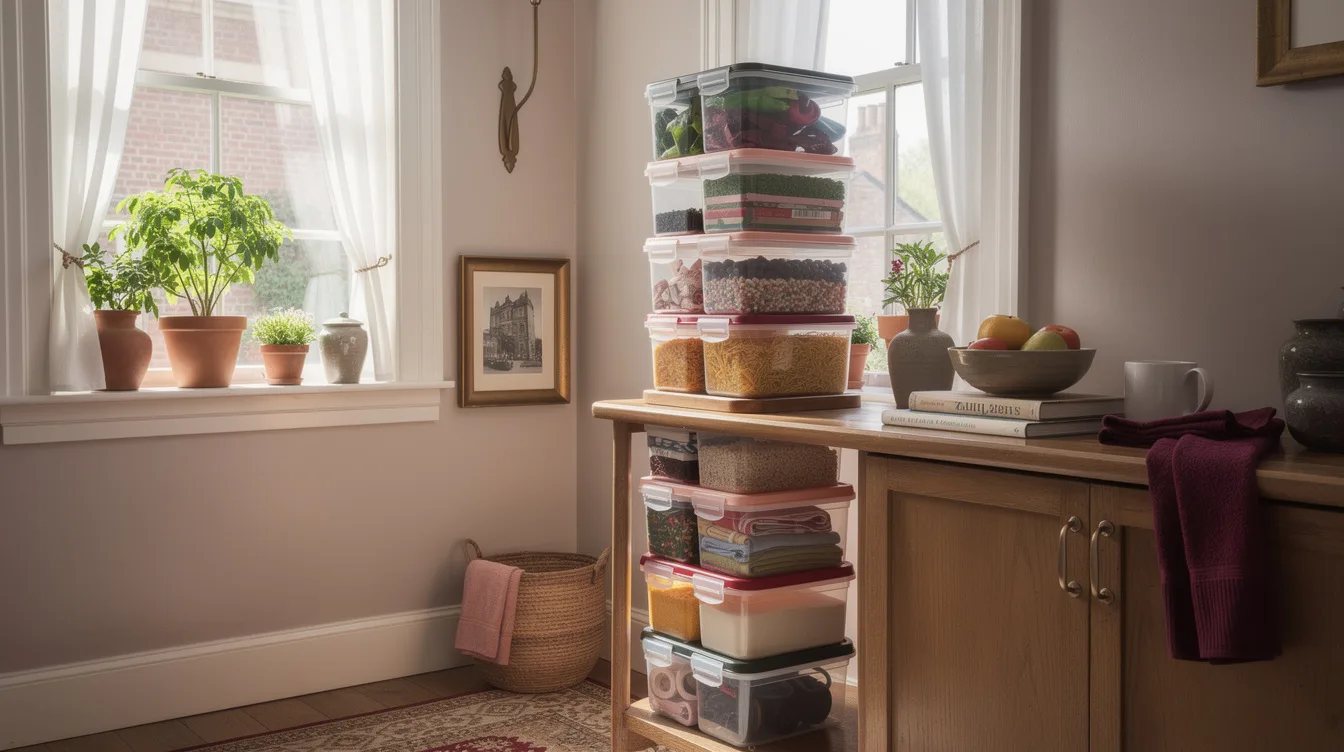
A tall tower looks efficient until the container you need lands at the bottom. The weight above it turns a quick lunch-packing task into a cabinet excavation, especially when lightweight polypropylene containers slide against one another.
Group containers by footprint instead. Keep the largest bases low, place medium pieces beside them, and reserve a separate zone for small snack containers. A stable stack should let you lift one piece without moving four others.
Tossing Lids Into a Loose Pile
Loose lids create the avalanche because their flat shapes catch on every nearby edge. A round lid can block a square container, while a warped lid forces the whole pile forward when the cabinet opens.
Use the under-$18 Amazon lid organizer as a dedicated landing place for lids, then return each one upright after washing. For a typical cabinet reset, spending under $18 on a single-purpose organizer is a sensible first move, provided the listing's measurements fit your shelf.
Matching Lids by Memory Alone
Matching by memory wastes time and encourages overfilling the cabinet. A lid that looks close enough may flex at the corners, leak in a bag, or leave an awkward gap that pushes neighboring pieces out of line.
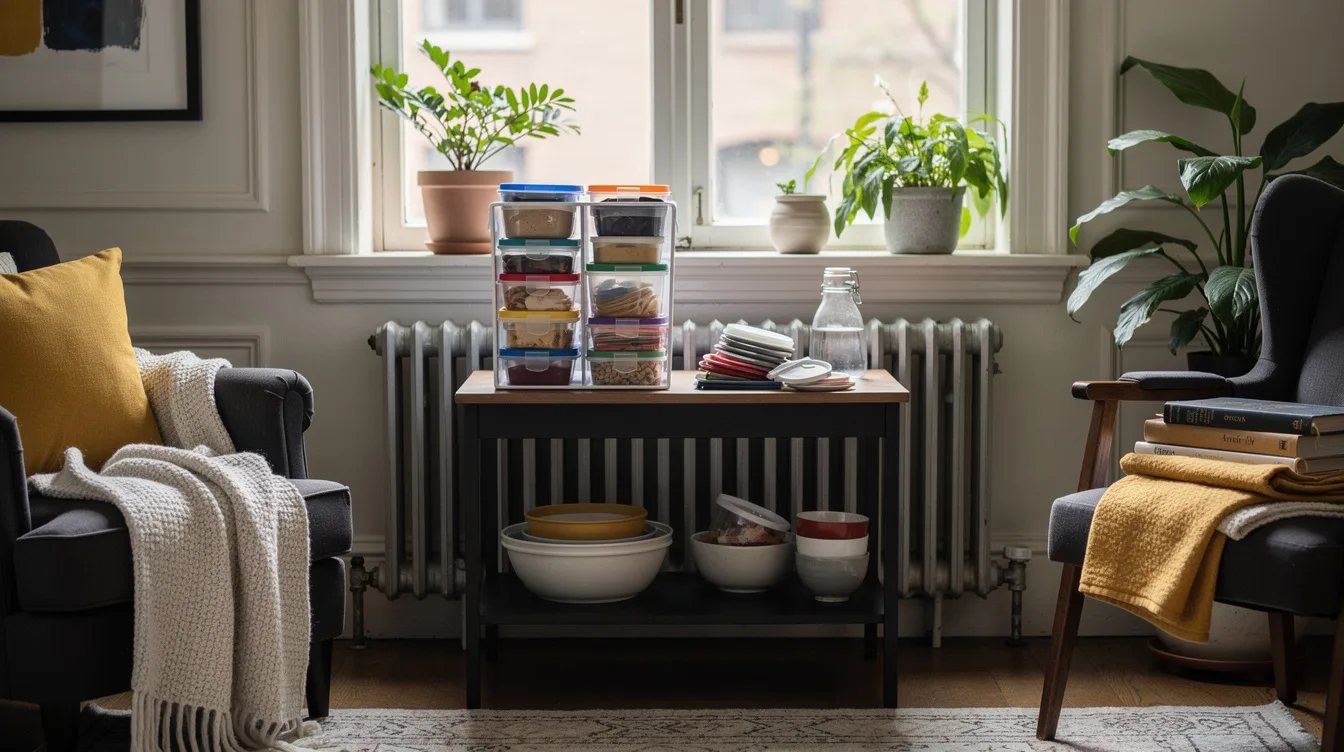
Pair each lid with its container while unloading the dishwasher, then store the pair together or in adjacent zones. A shallow bamboo tray can hold the containers while the organizer keeps their lids visible, making the match obvious at a glance.
Keeping Containers You Never Reach For
Every cabinet has a few containers that survive because they are technically usable. They may be missing lids, stained from tomato sauce, or too shallow for anything your household actually stores.
Remove those pieces before arranging the keepers. A scratched glass container with a missing seal does not deserve prime shelf space, and neither does a takeout tub that has turned cloudy after repeated heating.
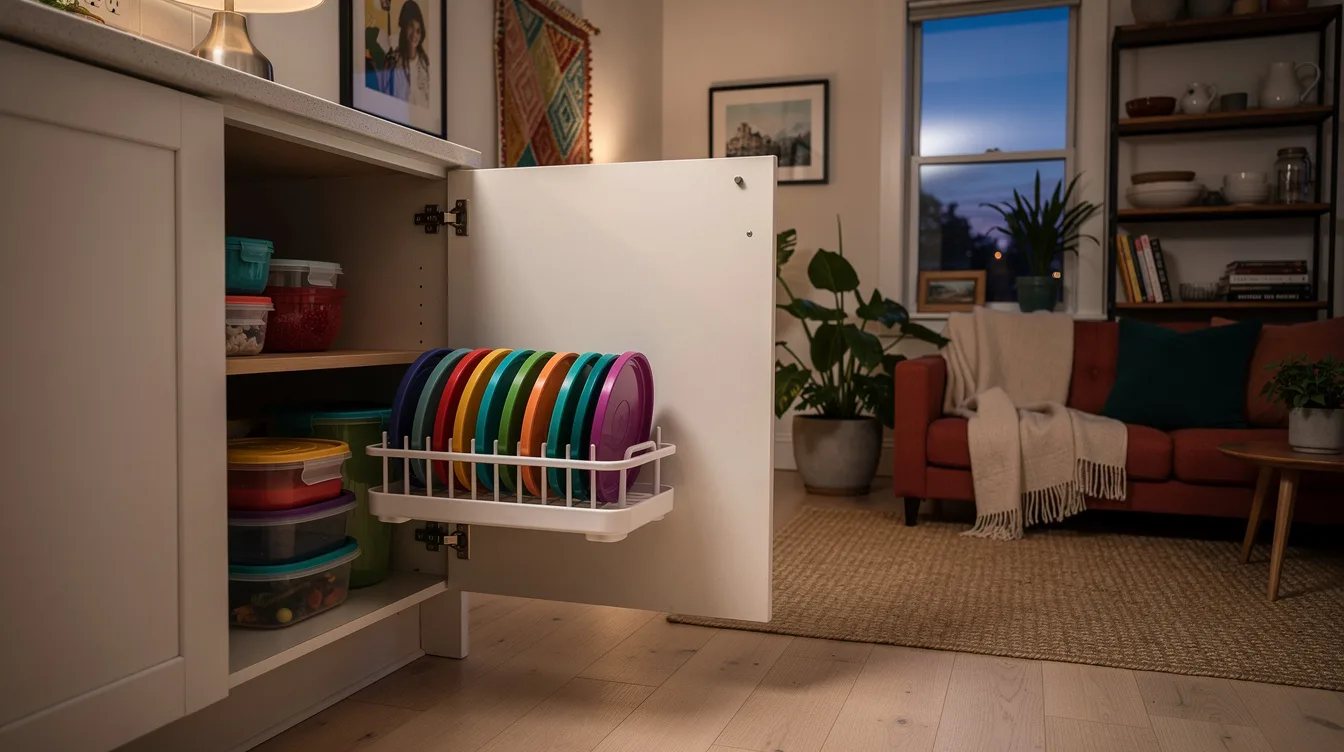
Mixing Round and Square Shapes
Round and square containers behave differently in a cabinet, so combining them in one stack creates dead space. The circular pieces roll and leave corners unused, while square pieces catch on their rims.
Give each shape its own section, even if that means leaving a small gap. A square wire shelf riser can create a second level for matching bases, while round containers stay in a low bin where they cannot roll into the door.
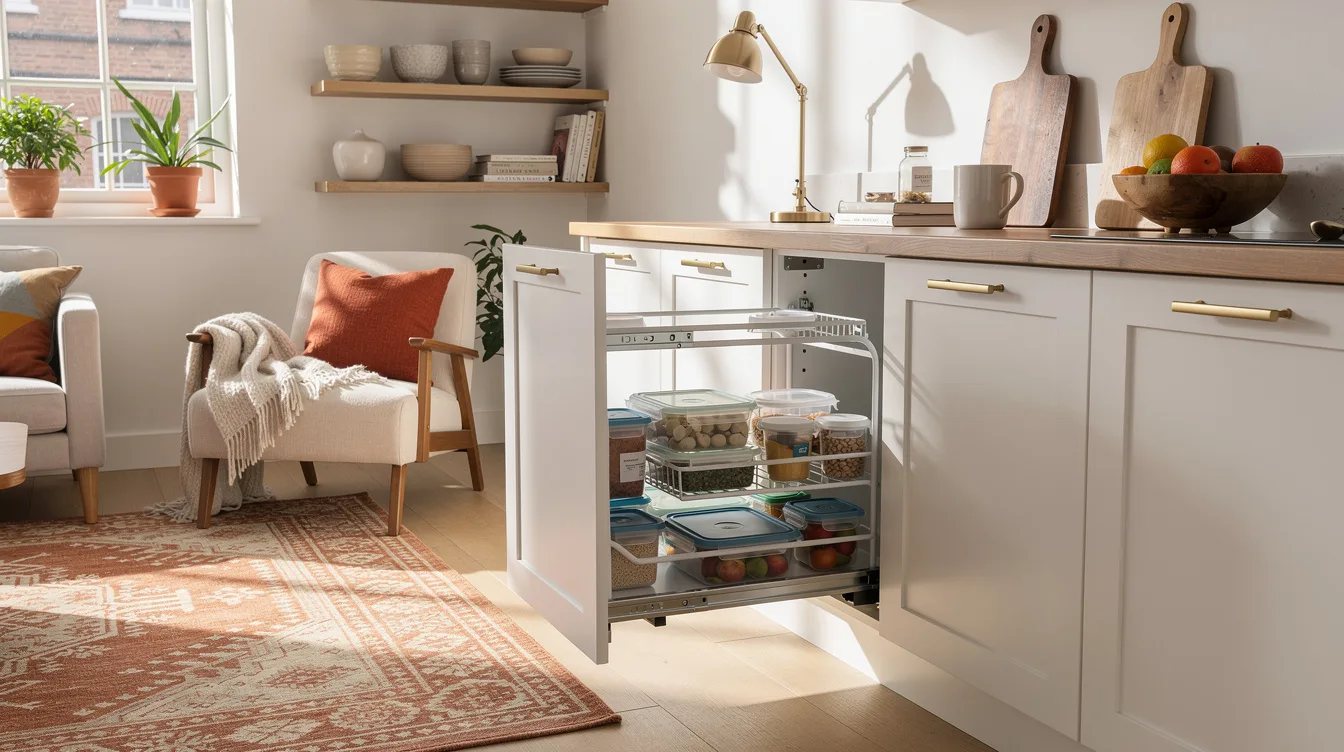
Filing Lids Flat Under Heavy Pieces
Flat lids seem easy to stack beneath containers, but the lower pieces disappear and the lids bow under pressure. Repeated bending can damage flexible seals long before the container itself looks worn.
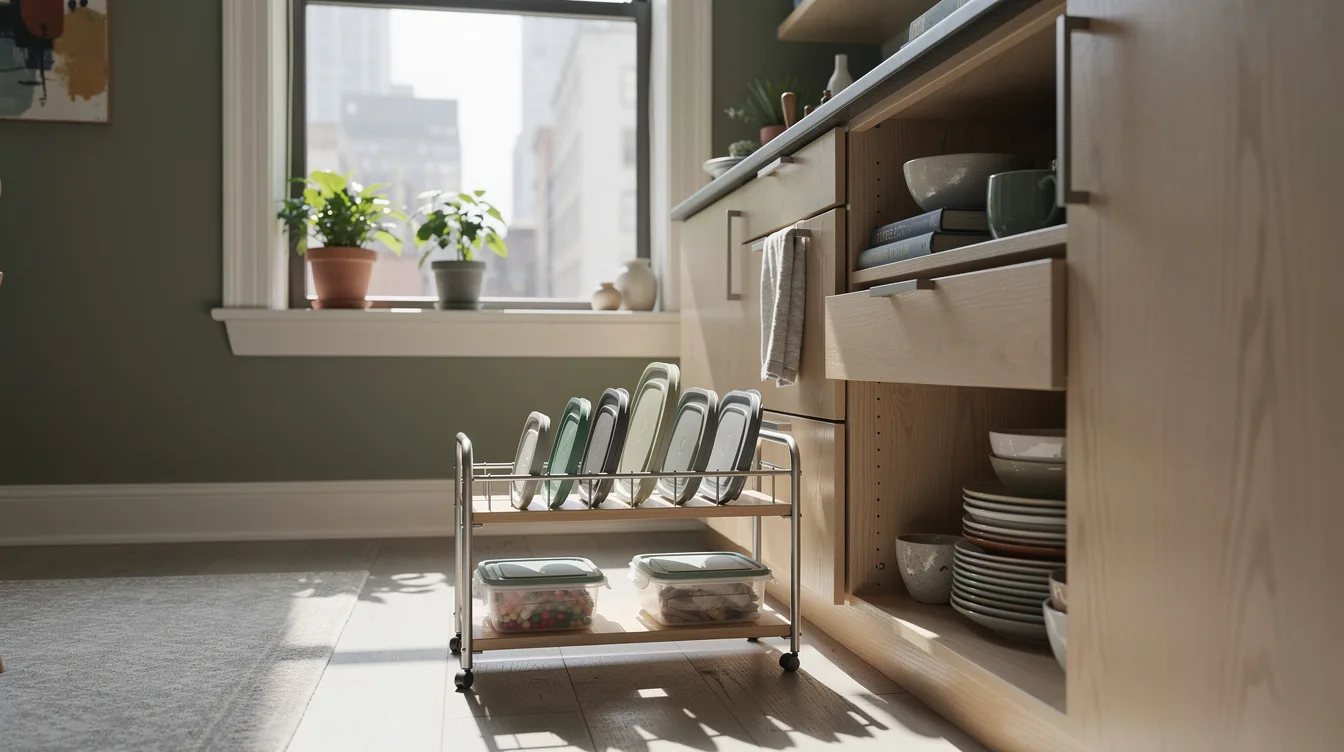
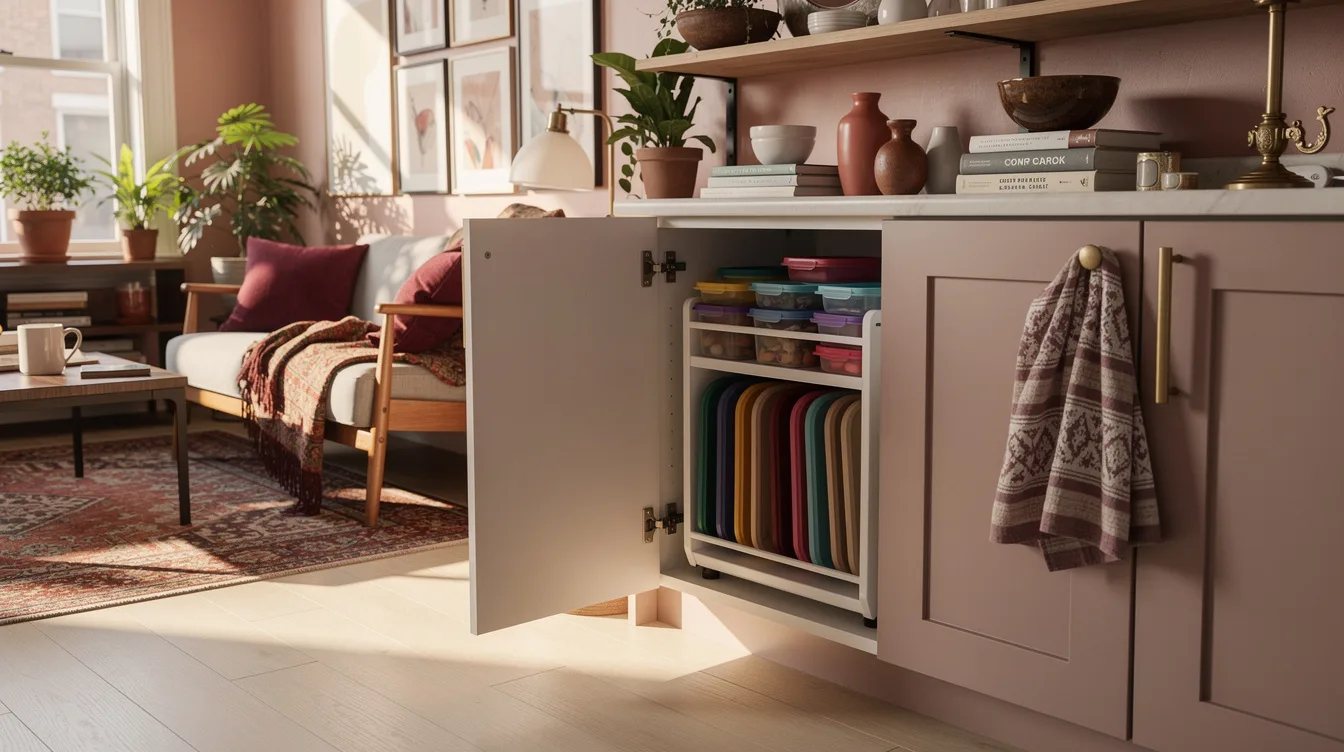
Store lids vertically, with their edges supported, so each one remains visible. A narrow stainless steel file holder can work for firm lids if its openings are wide enough, though the Amazon organizer is a cleaner choice when its slots match your collection.
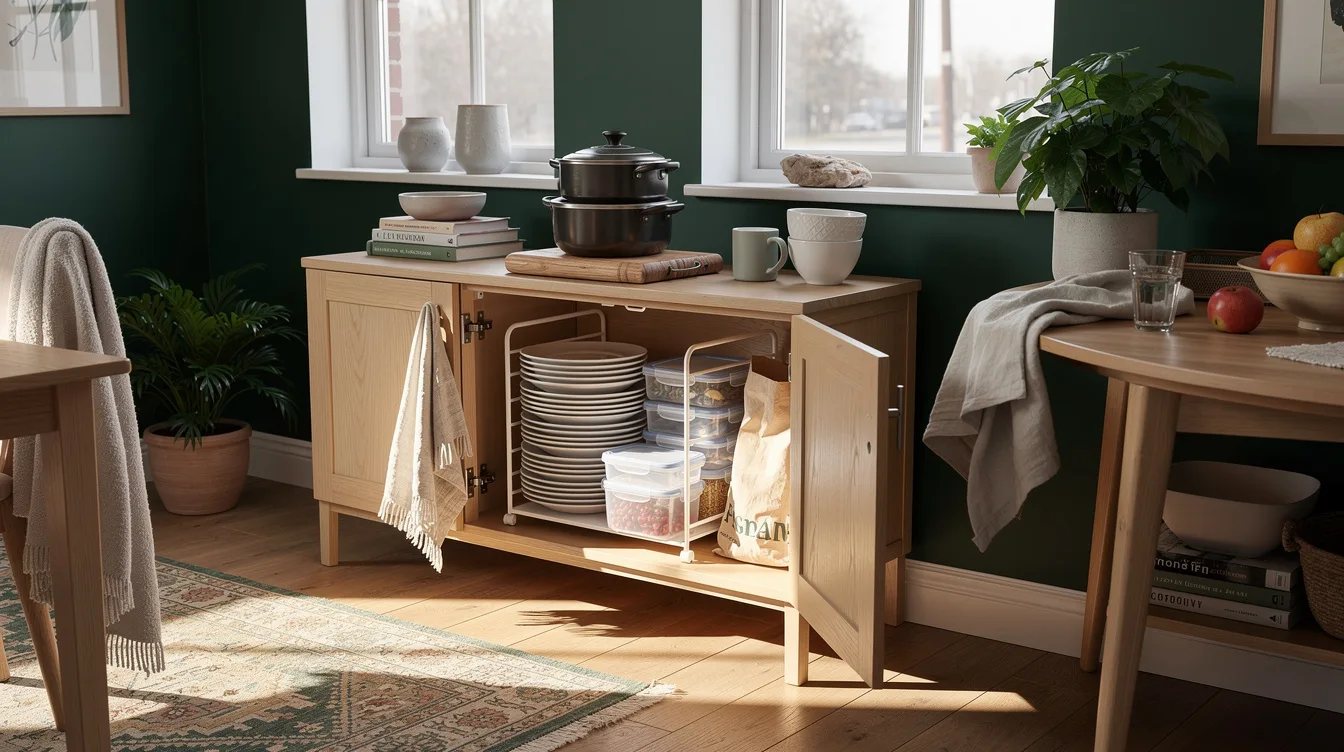
Filling the Cabinet to Its Ceiling
Unused air above a stack is useful working room. When containers reach the cabinet ceiling, your hand cannot grip the top piece, and one small adjustment can send the whole row forward.
Leave enough clearance to lift the tallest item without scraping the shelf above. A melamine shelf may look sturdy, but its slick surface still needs breathing room, so stop stacking when removal requires two hands.
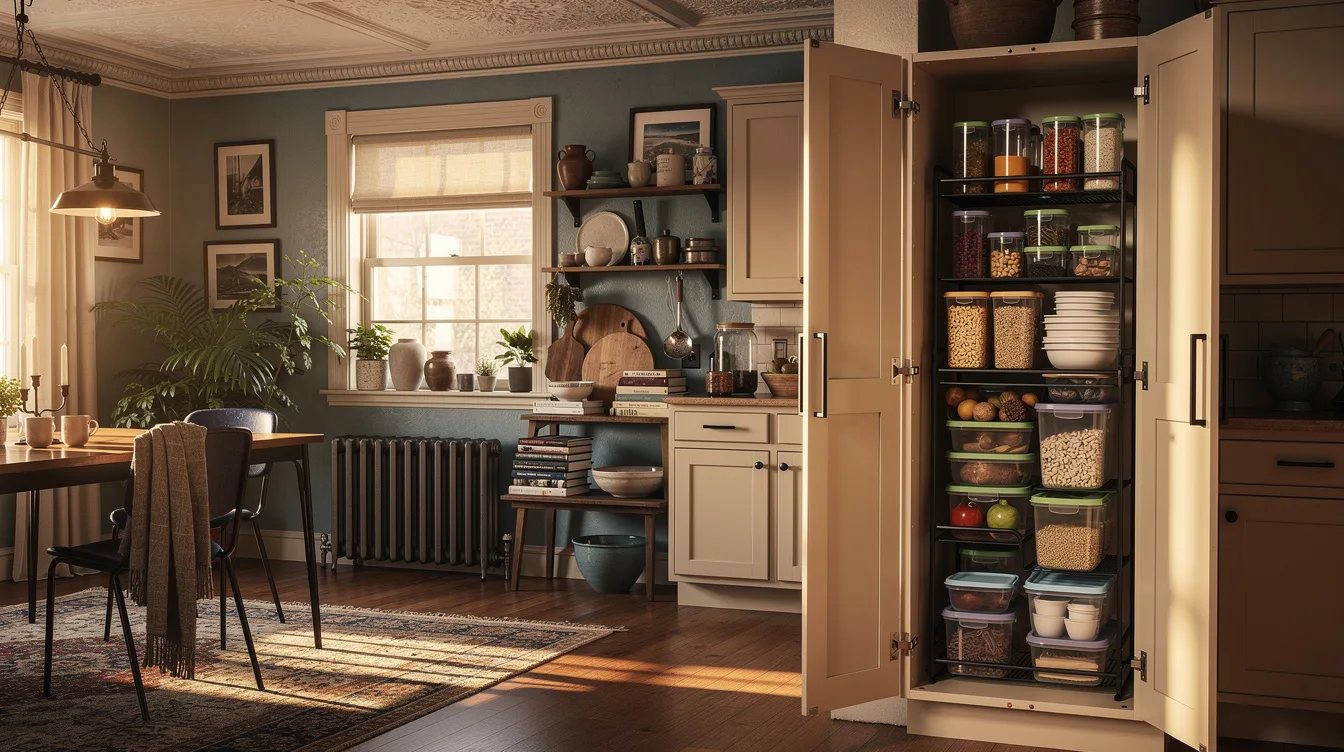
Ignoring the Shelf Depth
A container can fit inside a cabinet and still be the wrong choice for that shelf. Deep pieces disappear behind the front row, leaving forgotten food-storage items to expire in the back.
Measure the usable depth from the door frame to the rear wall before buying bins or organizers. A slim acrylic bin keeps small lids within reach, while oversized baskets create another layer of hidden storage that works against the cabinet.
Letting Warped Lids Stay in Rotation
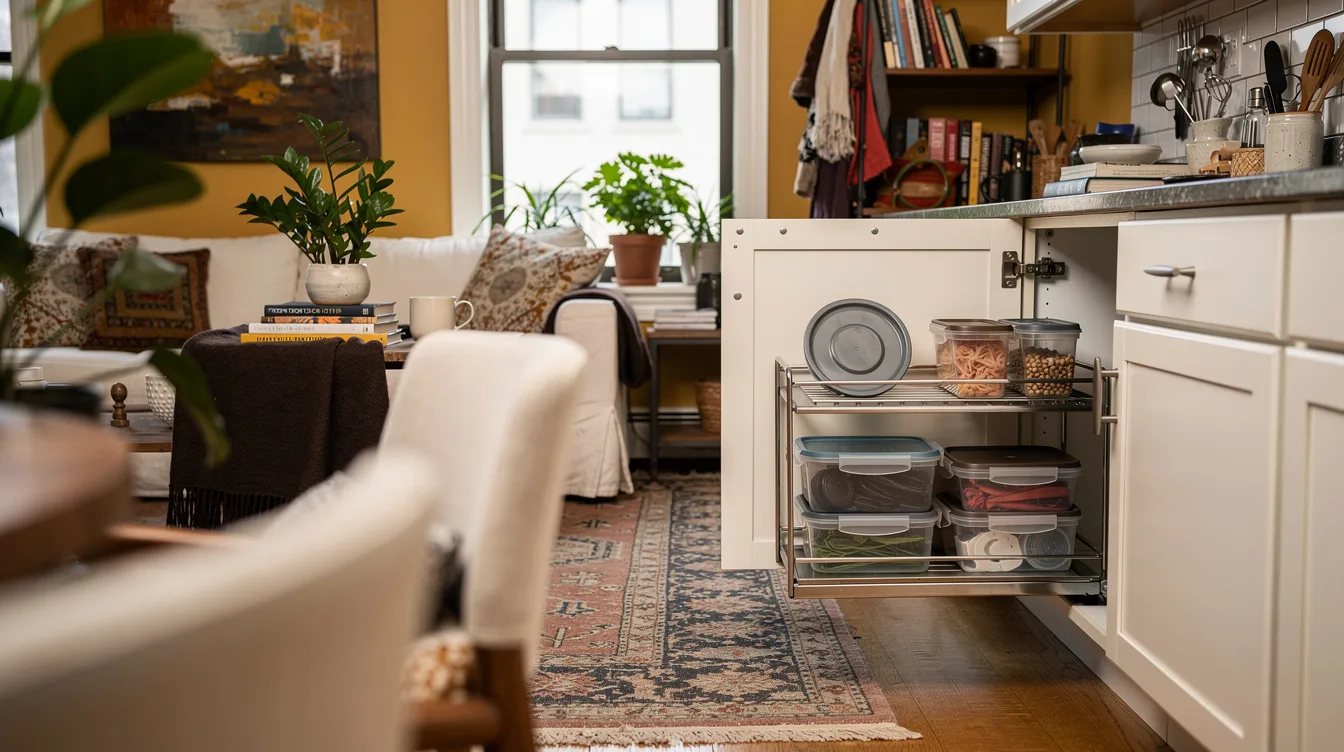
A lid that no longer sits flat is a daily source of friction. It steals space, fails to seal, and can push a neat row out of alignment when it is wedged beside better-fitting pieces.
Test each lid over its matching container with a gentle press around the rim. Retire any piece that lifts at one corner, and do not let a replacement from Target join the cabinet until the damaged lid has left it.
Storing Wet Pieces Before They Dry
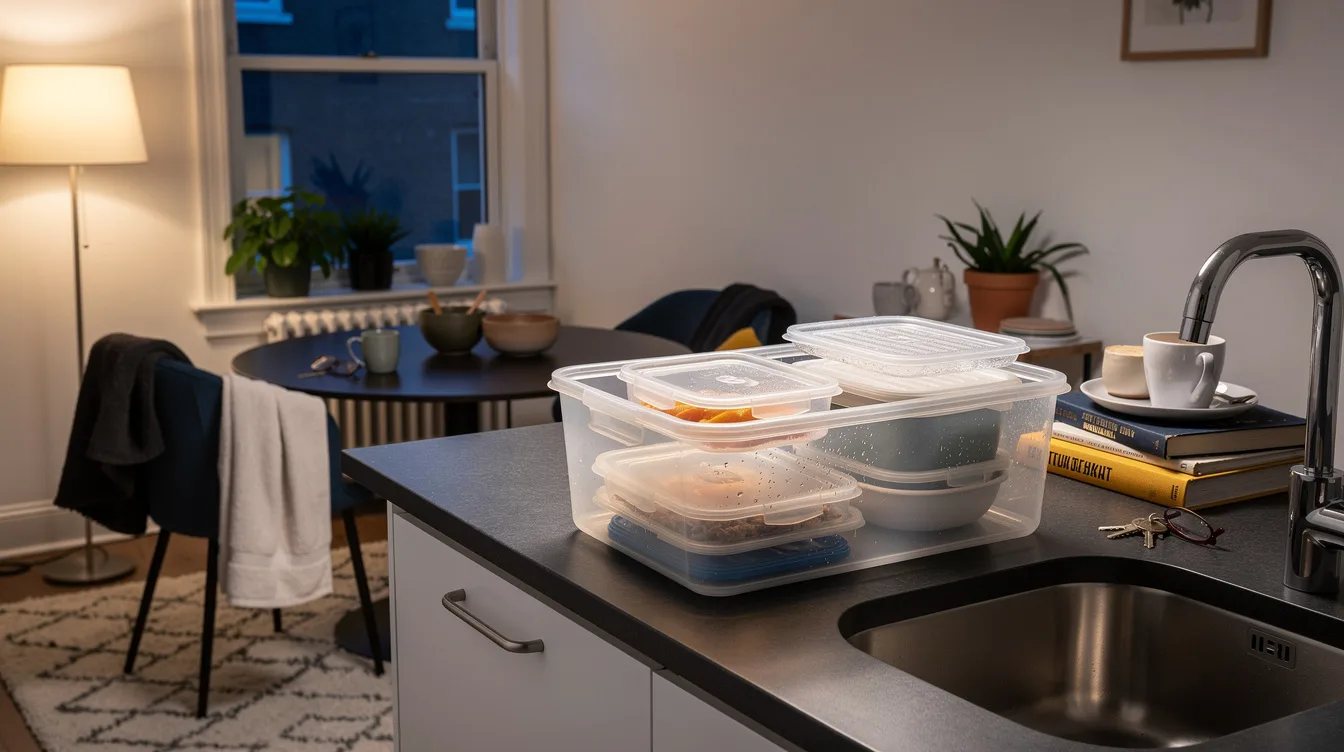
Moisture trapped between stacked containers creates odor and cloudy film. It also makes pieces stick together, so the next retrieval pulls an entire column forward instead of one container.
Give washed items a full drying cycle before stacking them. A ribbed silicone drying mat helps air move beneath small pieces, but the cabinet should receive only containers that feel completely dry around their rims and corners.
Using One Bin for Every Small Piece
One catchall bin appears tidy from across the kitchen while hiding the exact problem inside. Measuring cups, condiment containers, lids, and reusable bags quickly become one hard-to-sort mass.
Assign each small category a boundary. A compact plastic basket can hold snack-container bases, while the lid organizer handles flat pieces and a separate drawer section stores reusable bags without mixing shapes.
Replacing Order With More Containers
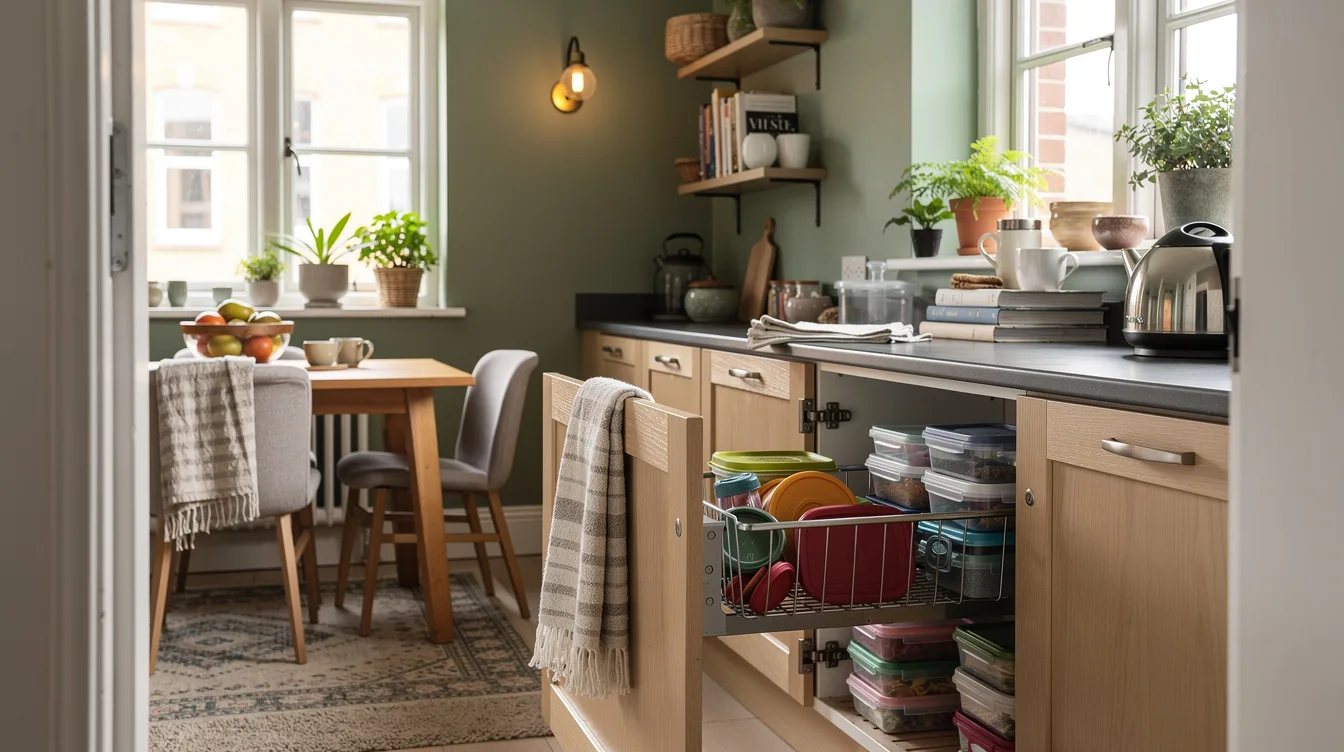
Buying additional storage pieces can postpone the real decision. More containers will not solve a cabinet filled with duplicates, mismatched lids, and shapes that do not suit the available shelf.
Start by editing the collection, then choose one organizer for the remaining problem. The under-$18 Amazon option earns its place when it removes a specific lid pile, while a second purchase should wait until the first zone stays orderly for a few weeks.
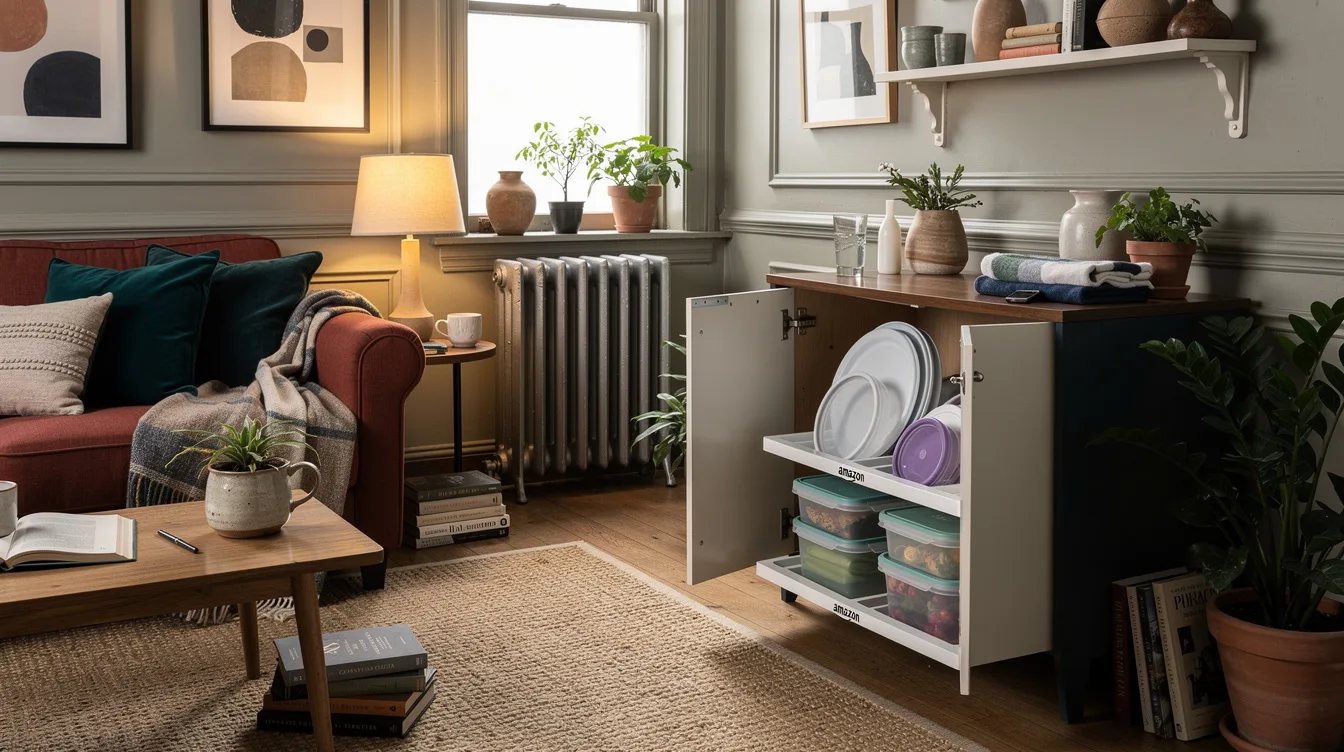
Begin with the lids, remove the pieces that no longer seal, and leave enough clearance to lift each stack with one hand. Once that zone works for a typical weeknight, the rest of the cabinet becomes much easier to organize.


