14 Coffee Table Sizing Rules for Sofas, Sectionals, and Small Rooms
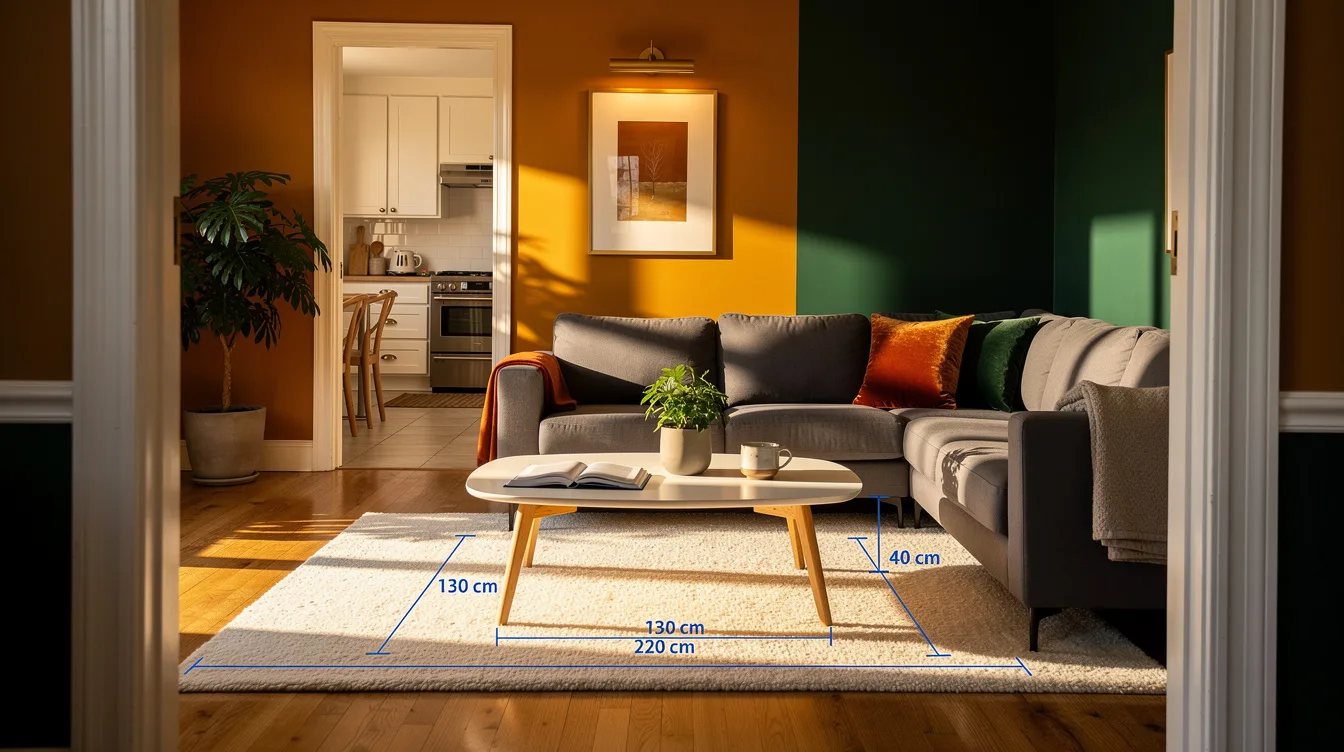
19 august 2026A coffee table can look perfect online and still ruin the daily path from sofa to kitchen. In a room with a 220-centimeter sofa and a 44-centimeter seat height, I start with a table around 120 to 145 centimeters long and roughly 40 to 43 centimeters high.
That simple proportion check prevents the two most common mistakes: a table that looks lost on the rug and one that makes the seating area feel blocked. Shape and material matter, but circulation gets the first vote.
What you will find inside
- Measure the Sofa Before You Shop
- Keep the Top at Cushion Height
- Protect a 35 to 45 Centimeter Sofa Gap
- Reserve the Main Walking Route
- Choose a Rectangle for a Long Sofa
- Use an Oval to Soften Tight Routes
- Give a Sectional a Reachable Center
- Balance Two Facing Sofas Evenly
- Use Two Small Tables in a Small Room
- Match the Material to the Room’s Need
- Treat Travertine Like Real Stone
- Think Twice Before Choosing Marble
- Let Glass Solve a Visual-Weight Problem
- Check the Rug and Table Together
Measure the Sofa Before You Shop
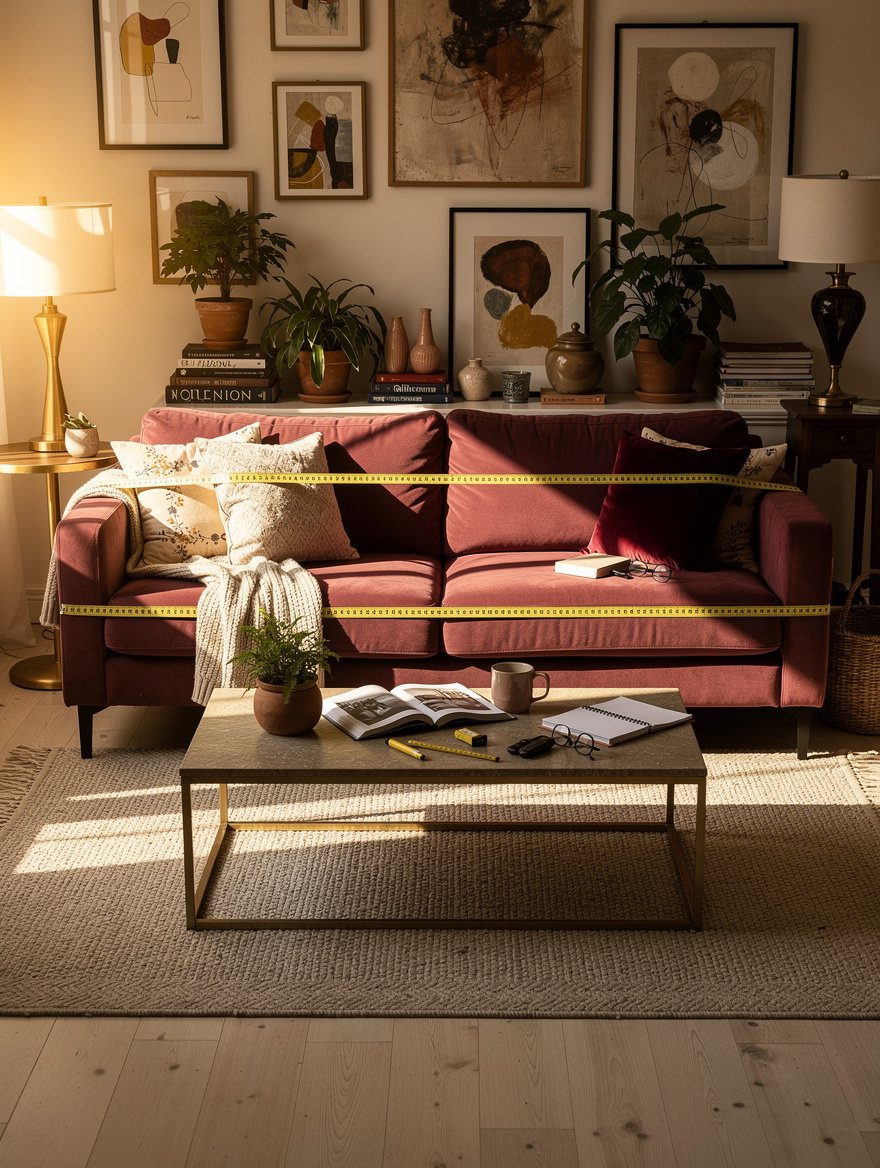
Use the sofa’s usable seating length, not its outside arms, as your starting point. A coffee table around 50 to 70 percent of that span usually looks intentional and gives every seat a reachable landing spot.
For a 220-centimeter sofa, a oak coffee table roughly 120 to 145 centimeters long is a dependable first target. I’d rather see a table slightly short than one that makes the sofa look stranded behind it.
Keep the Top at Cushion Height
The table should sit level with the sofa cushion or roughly 2 to 5 centimeters lower. Typical coffee tables run about 40 to 46 centimeters high, which is why a low-slung sofa needs a deliberate check before checkout.
A tall solid wood table turns movie-night snacks into an awkward reach. At Home Depot or Lowe’s, bring the cushion-height measurement on your phone instead of trusting product photos.
Protect a 35 to 45 Centimeter Sofa Gap
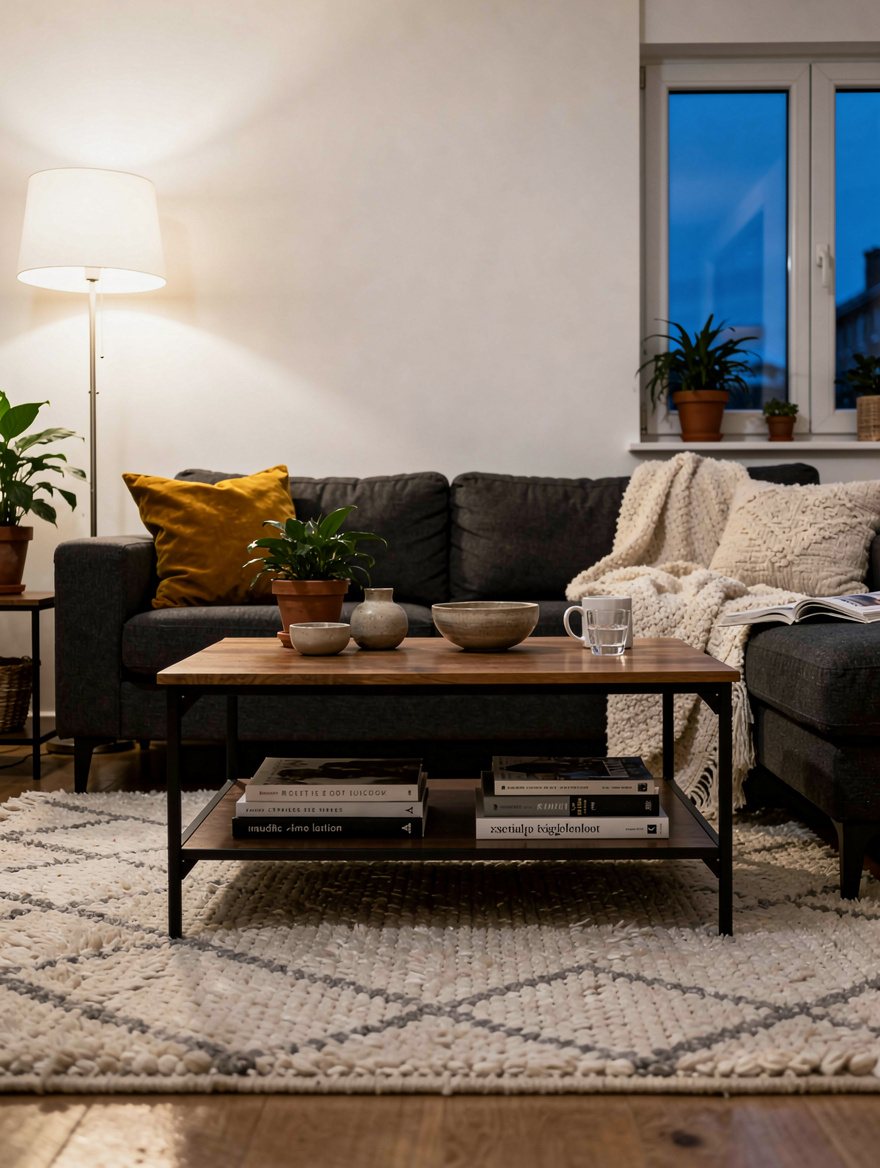
Leave roughly 35 to 45 centimeters between the sofa and table. That zone is where knees, feet, throws, and a person lowering into the seat all need room.
A round glass table does not earn permission to sit closer simply because it looks airy. Crowding the sofa is the fastest way to make a living room feel like its furniture arrived without a floor plan.
Reserve the Main Walking Route
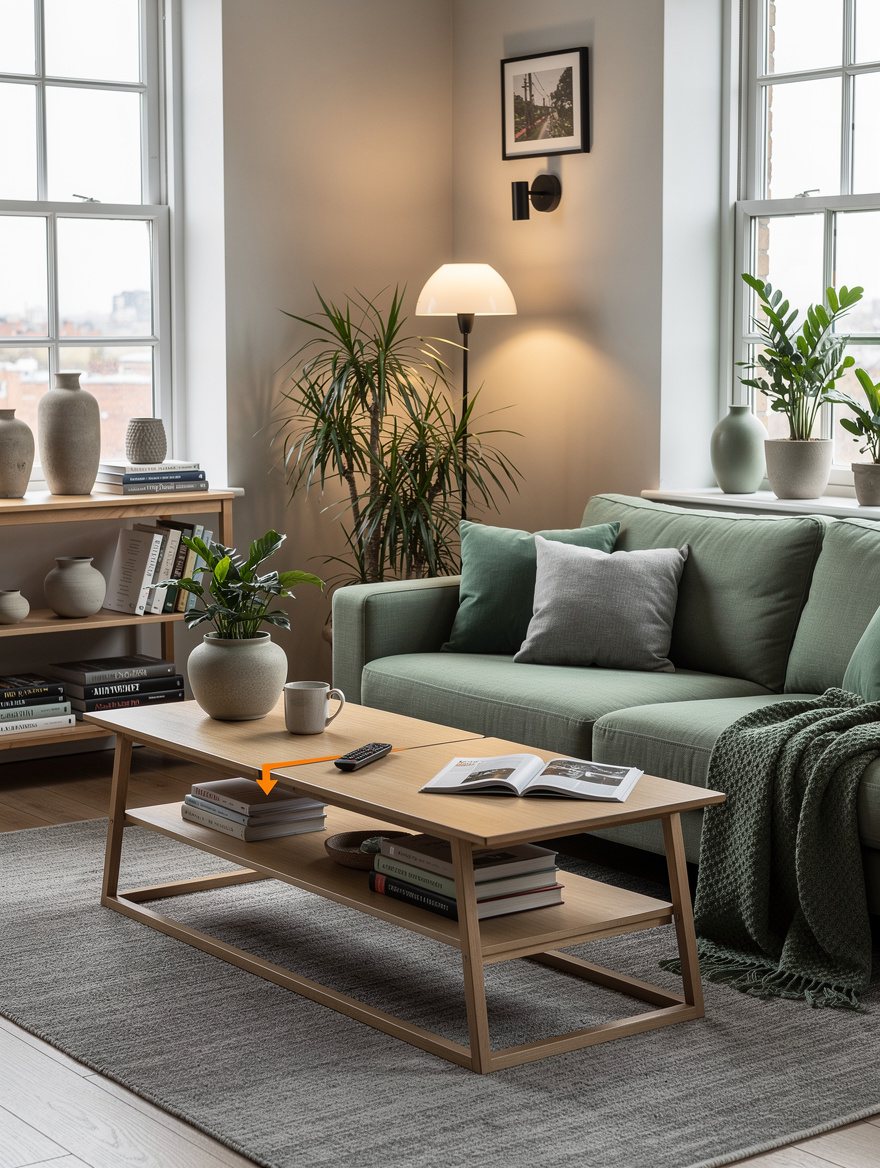
Keep at least about 60 to 75 centimeters clear on the active path around the table, with roughly 75 to 90 centimeters feeling better in a busy room. This is the measurement people miss when they size from a front-facing photo.
Put painter’s tape on the floor in the footprint of a rectangular table before ordering from Wayfair. Walk from the entry to the sofa with a laundry basket in hand, because that is the real route.
Choose a Rectangle for a Long Sofa
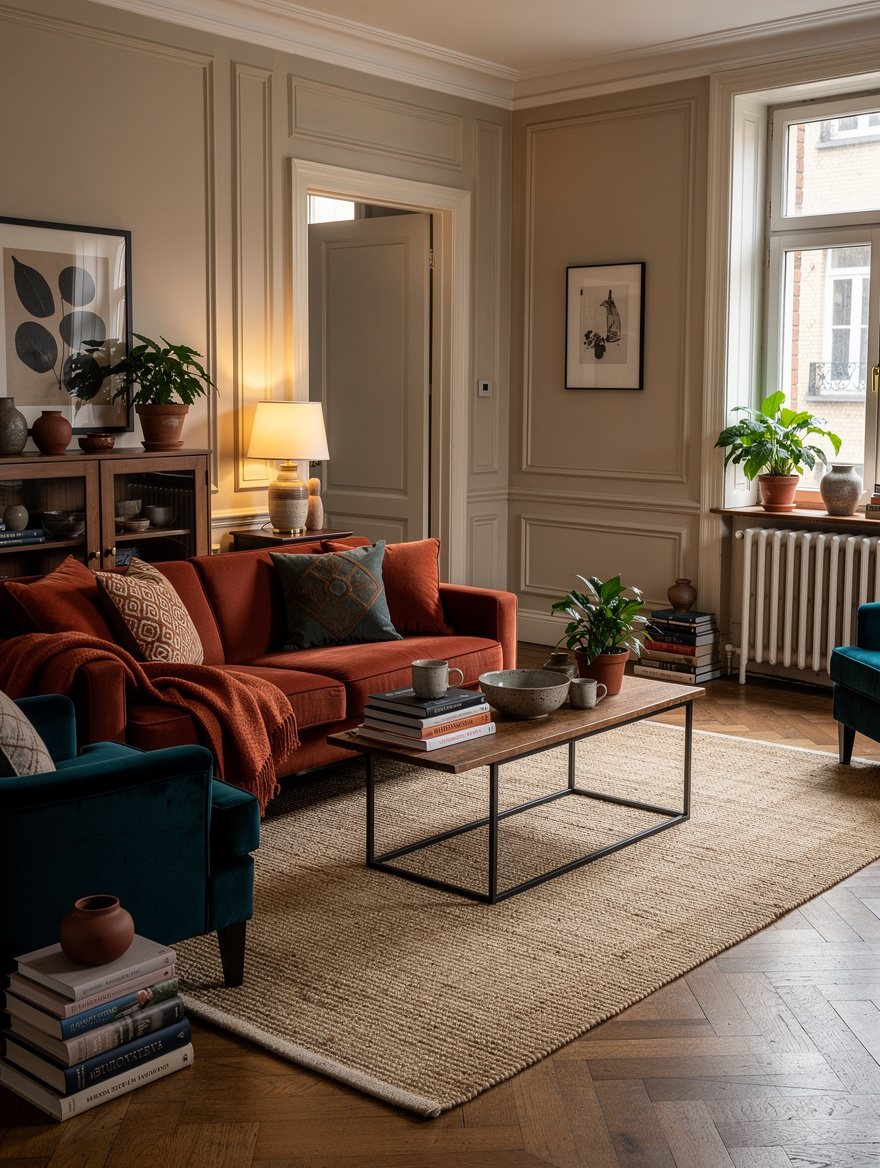
A straight three-seat sofa wants a rectangle or a softened rectangle that repeats its long axis. It provides the most usable surface for drinks, remotes, books, and the occasional takeout dinner.
Choose a rounded-edge wood table if children pass through the room often. A sharp-cornered slab can work in a formal lounge, but it has no business blocking a daily traffic lane.
Use an Oval to Soften Tight Routes
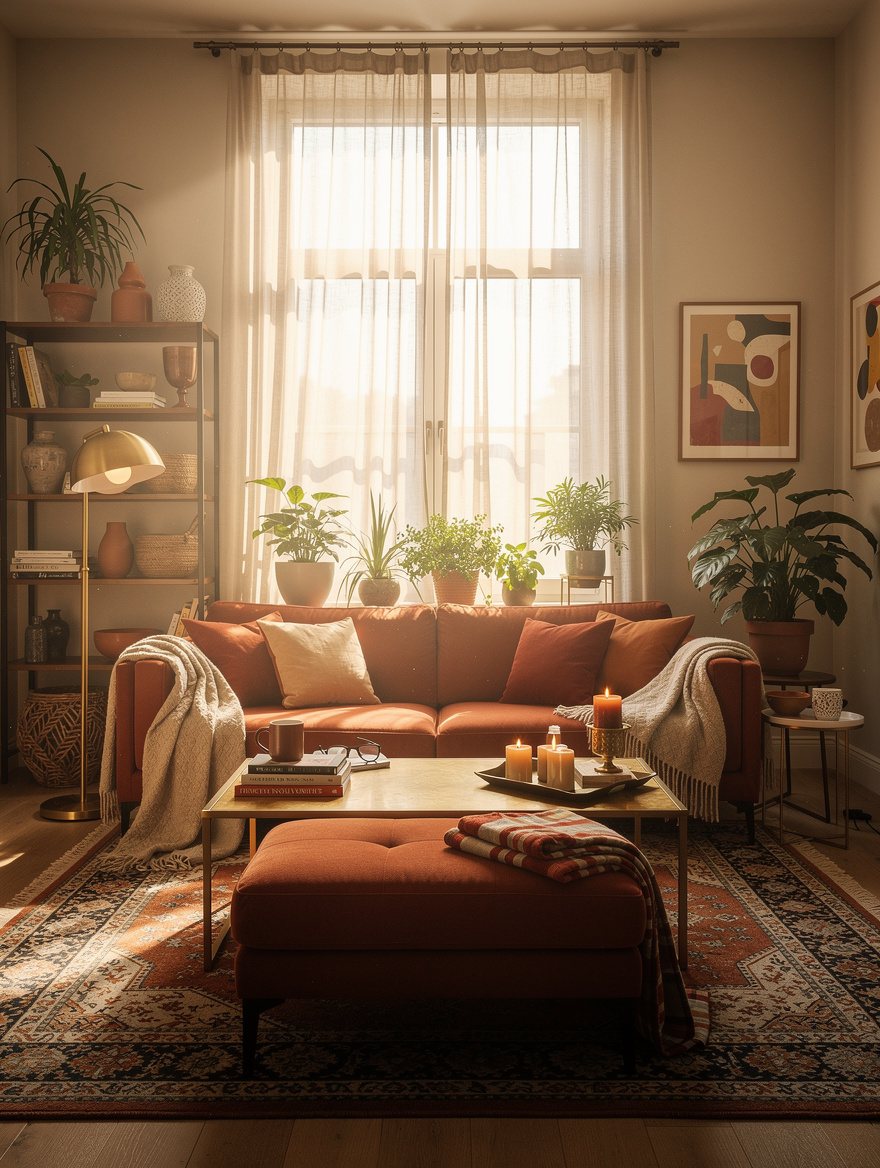
Oval tables make sense when the room is narrow or the main route cuts close to the seating area. Their curved ends remove the corner that catches a shin every time someone heads toward the kitchen.
A glass oval coffee table from Target or Amazon can visually open a darker compact room. Expect fingerprints, though, and choose tempered glass with a stable base rather than a delicate-looking bargain frame.
Give a Sectional a Reachable Center
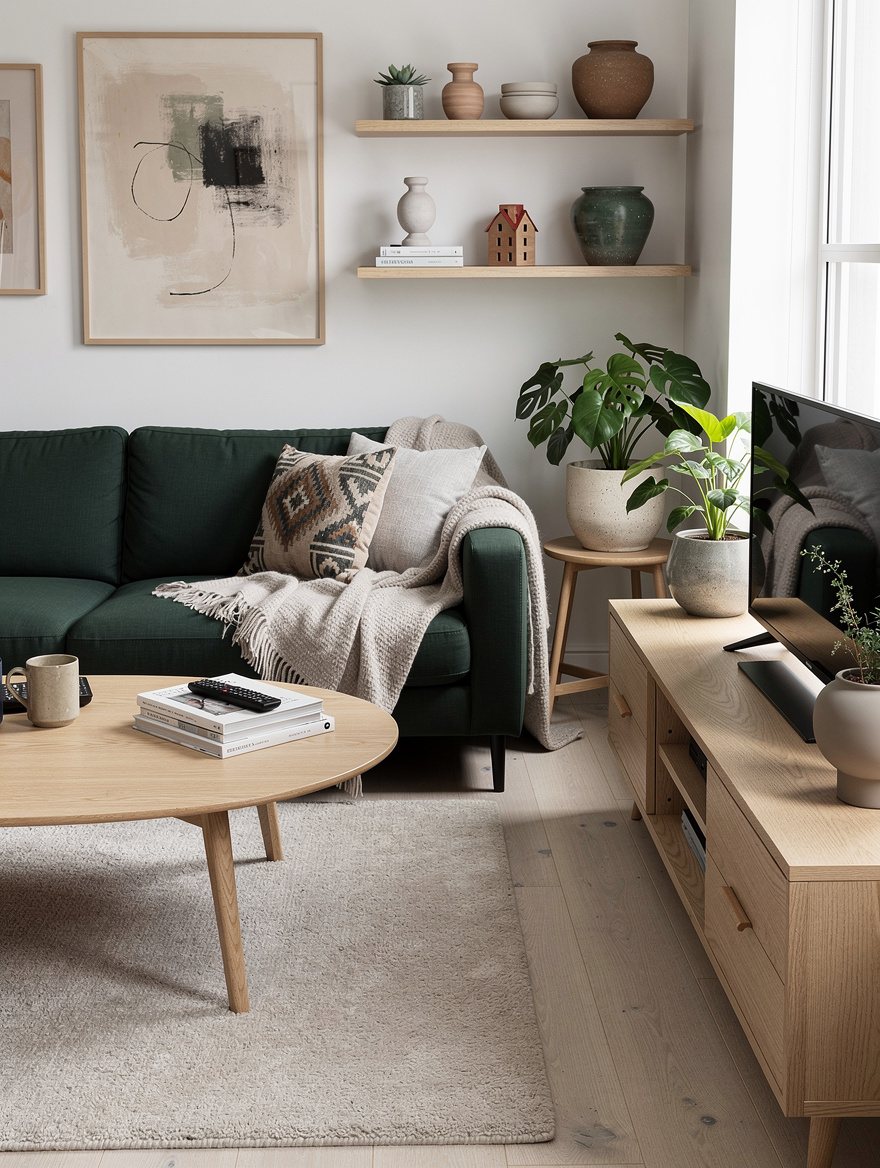
An L-shaped sectional rarely works with one skinny rectangle parked in front of its longest side. A large round table, an organic oval, or two movable pieces lets more than one corner seat reach the surface.
Two nesting tables are especially useful when the chaise takes up the room’s flexible floor area. Pull one toward the corner seat for coffee, then tuck it back when guests need circulation.
Balance Two Facing Sofas Evenly
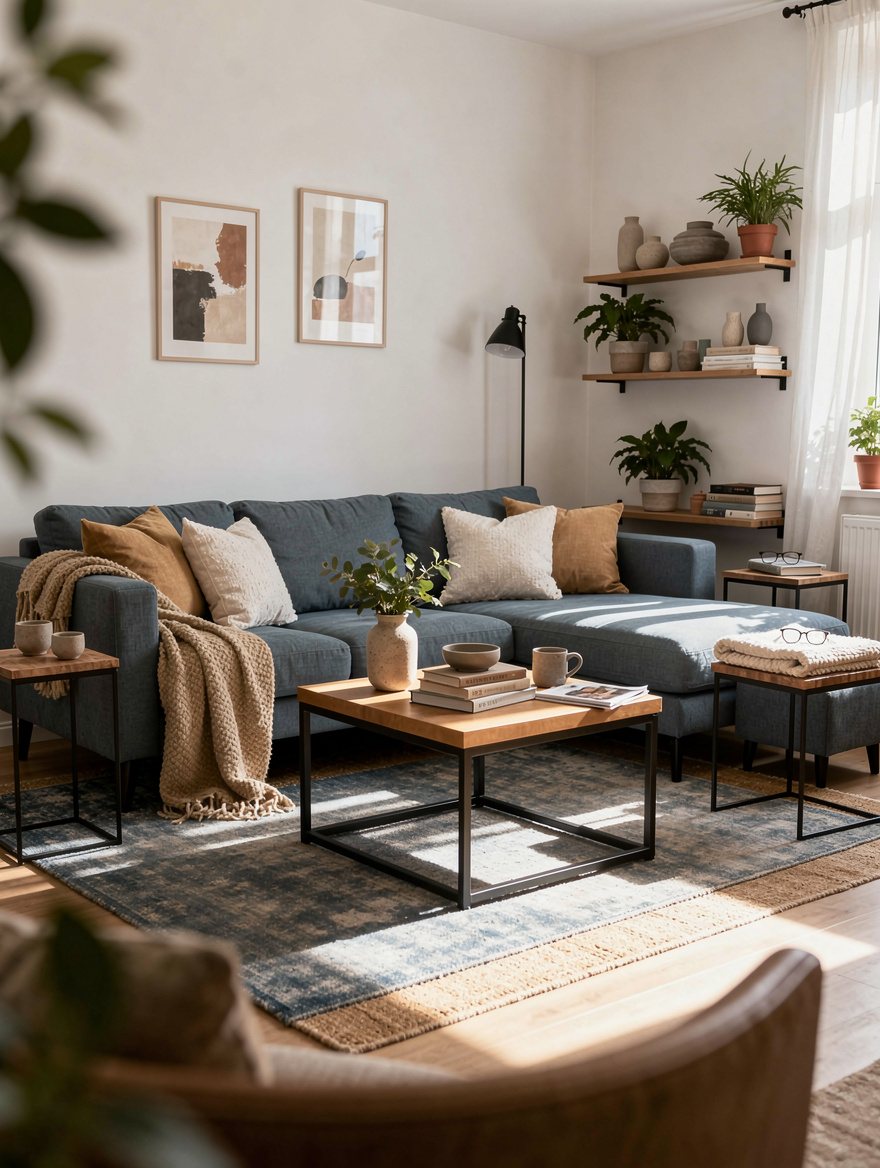
With sofas facing each other, choose a square, a substantial round table, or a paired-table arrangement. The center needs enough visual weight to hold the conversation area together without making either sofa feel secondary.
A square oak table works beautifully when both sofas are similarly scaled. Skip a tiny round table here, since it leaves the outer seats reaching across empty rug.
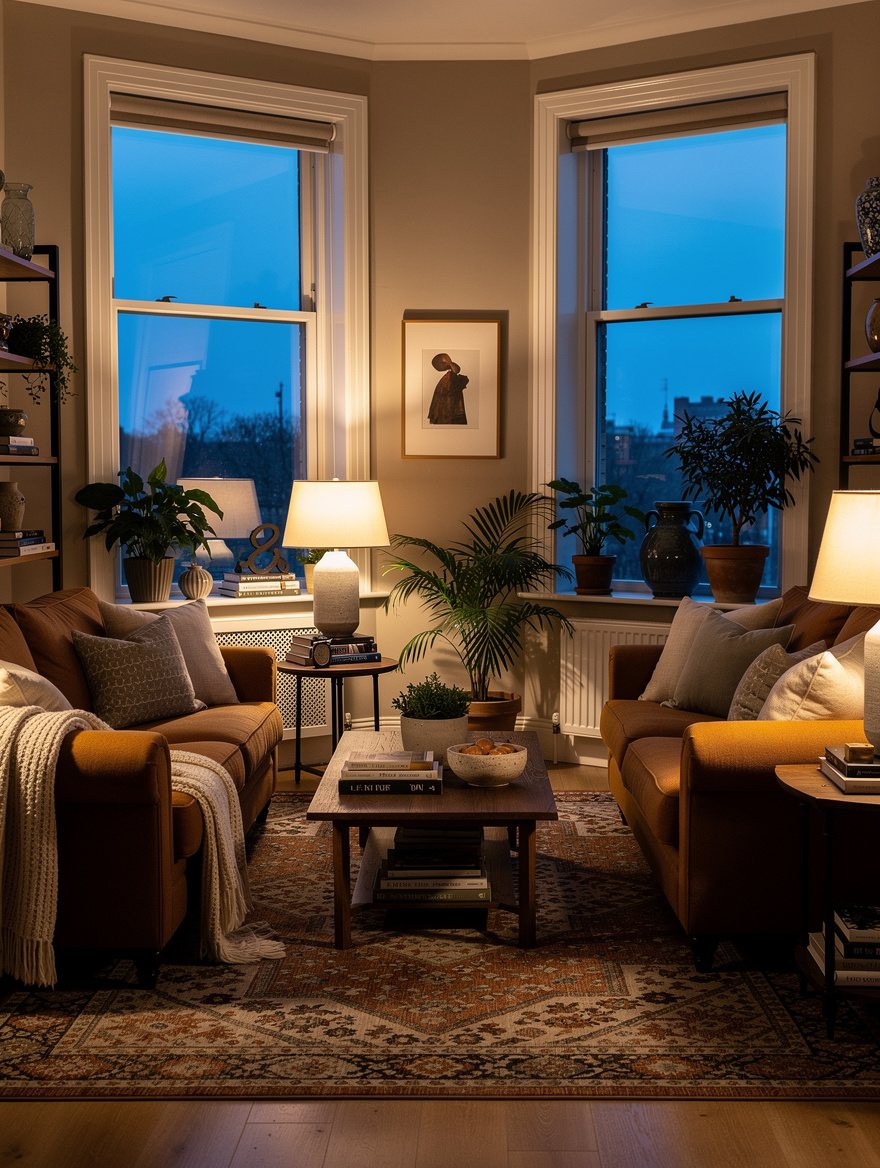
Use Two Small Tables in a Small Room
A single oversized block is not the only answer to a small living room. Two round tables about 50 to 65 centimeters across can offer usable surface while letting you shift the layout when company arrives.
Try a pair of small round tables from IKEA, Walmart, or Costco, then stagger them by a few inches. They should read as a deliberate pair, not as two leftovers pushed together.
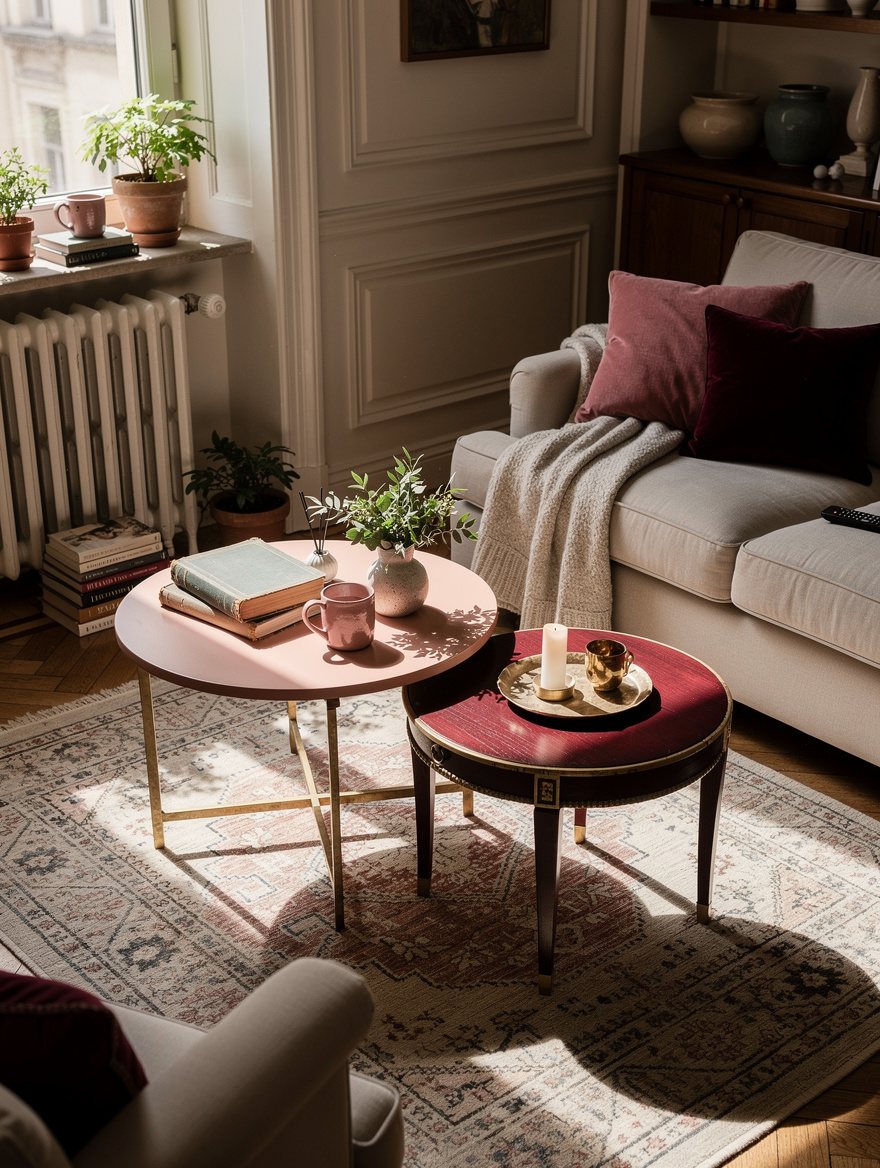
Match the Material to the Room’s Need
Wood adds warmth where a pale sofa, cool rug, or hard flooring feels a little severe. Pale stone has more impact when the upholstery already brings texture and the room can handle a quieter, heavier center.
A white oak tabletop is the safer long-term choice for most family rooms. It takes on small signs of life more gracefully than a glossy surface that shows every cup ring.
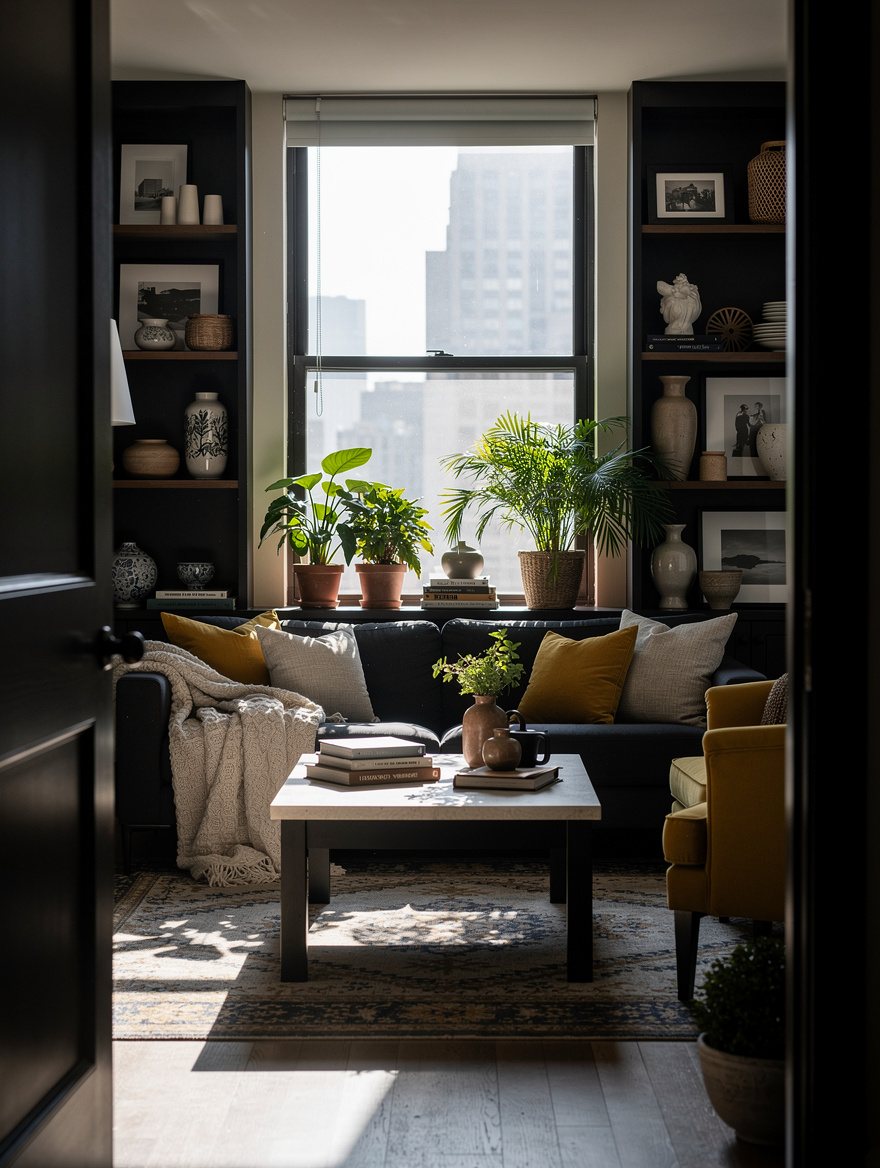
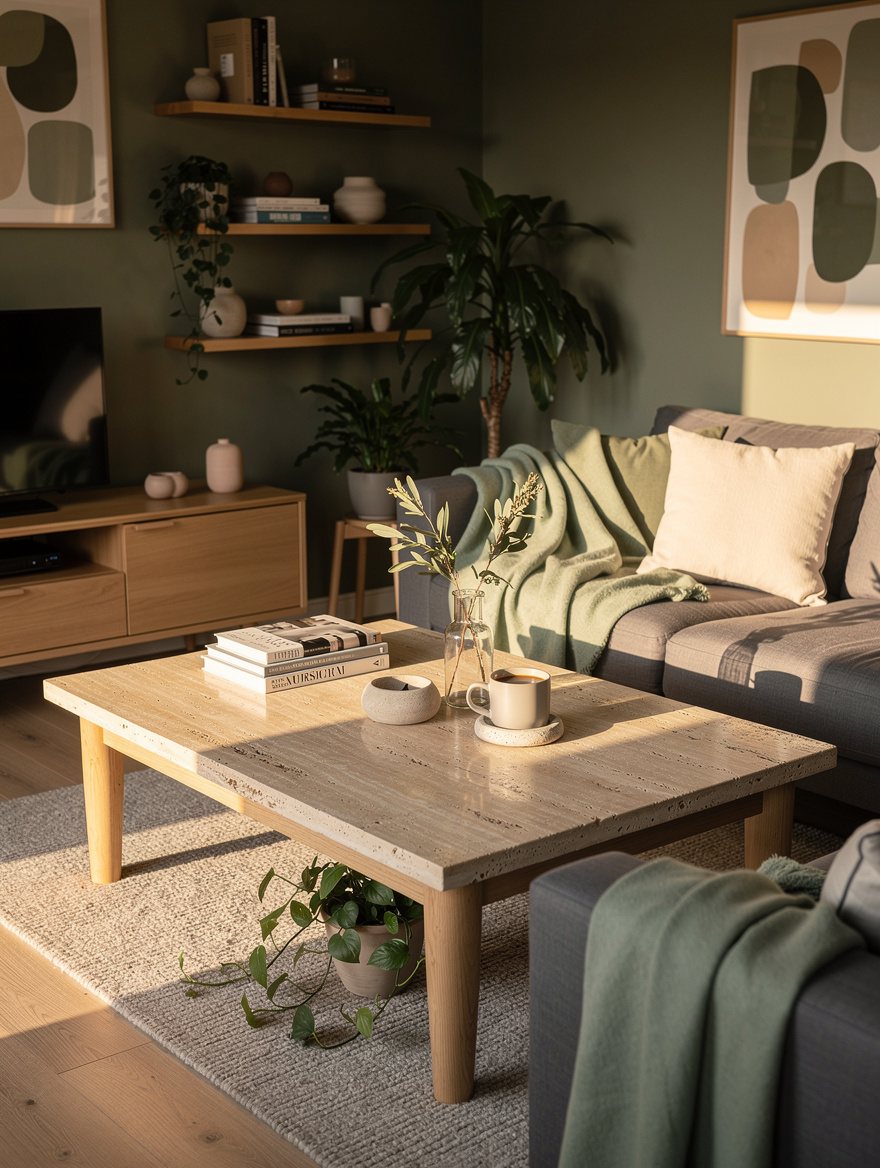
Treat Travertine Like Real Stone
Travertine has a soft, grounded look that suits organic-modern rooms, but it is porous and extremely heavy. Seal it as directed, use coasters, and confirm the delivery route before committing.
A travertine coffee table can cost roughly several hundred to a few thousand dollars depending on stone, size, and shipping. I love the look, but it is a commitment, not a casual online impulse buy.
Think Twice Before Choosing Marble
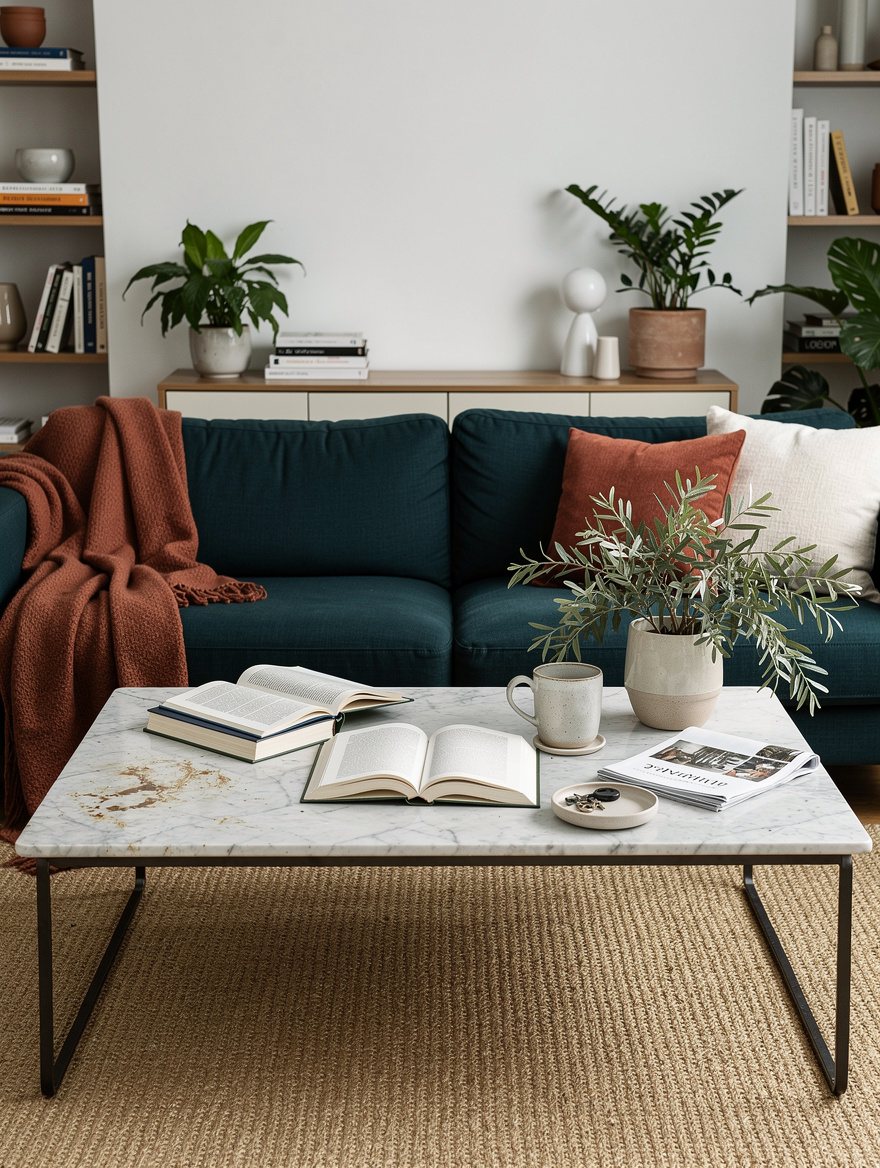
Marble gives a living room instant contrast and pattern, especially against a plain linen sofa. It also etches from acidic spills, and the veining can look dramatically different from a product image.
Choose a marble slab table only when you are comfortable using coasters and seeing natural variation. For a house where orange juice and craft projects happen daily, wood is the saner choice.
Let Glass Solve a Visual-Weight Problem
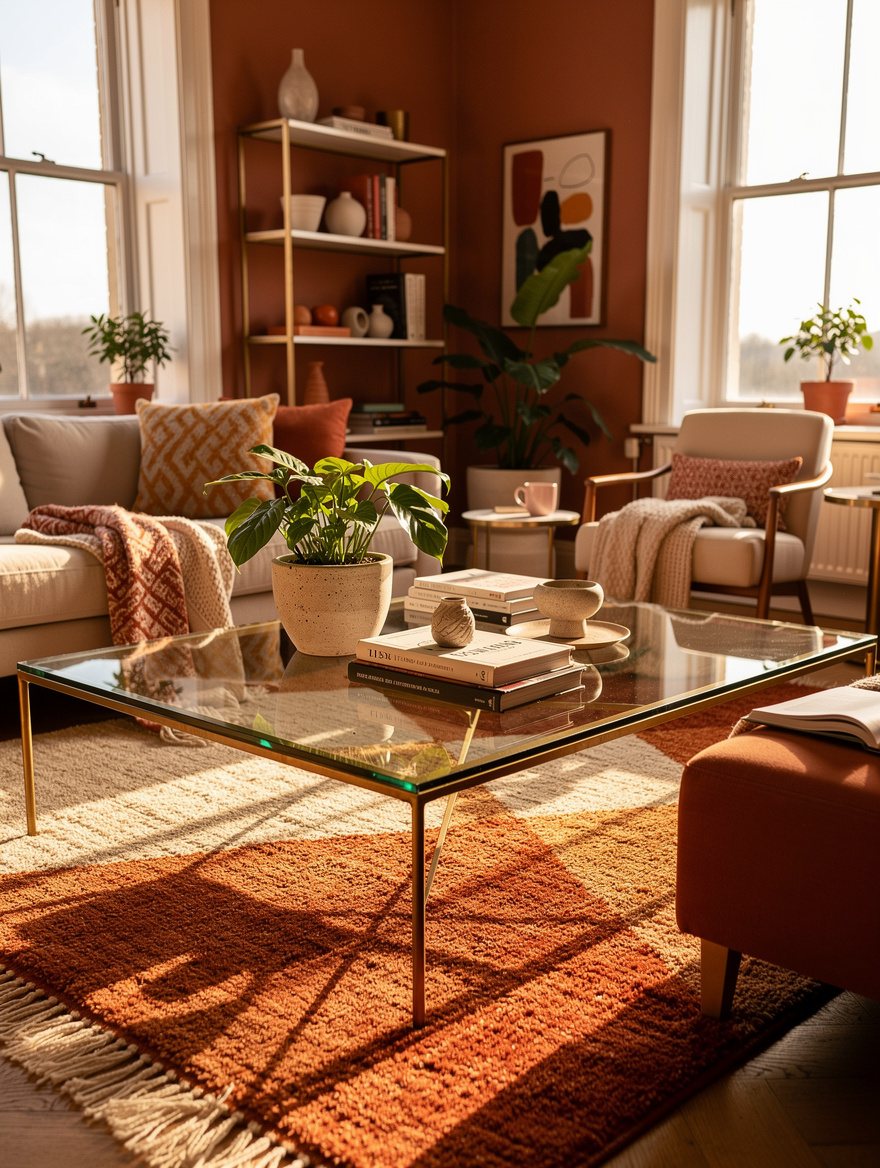
Glass and metal tables are useful when a room already has a bulky sectional, a dark rug, or a large media console. The clear top lets more of the rug show, so the center feels less occupied.
A tempered glass top needs regular wiping and careful edge inspection. It is a practical visual-lightness choice, not the warmest material in the room.
Check the Rug and Table Together
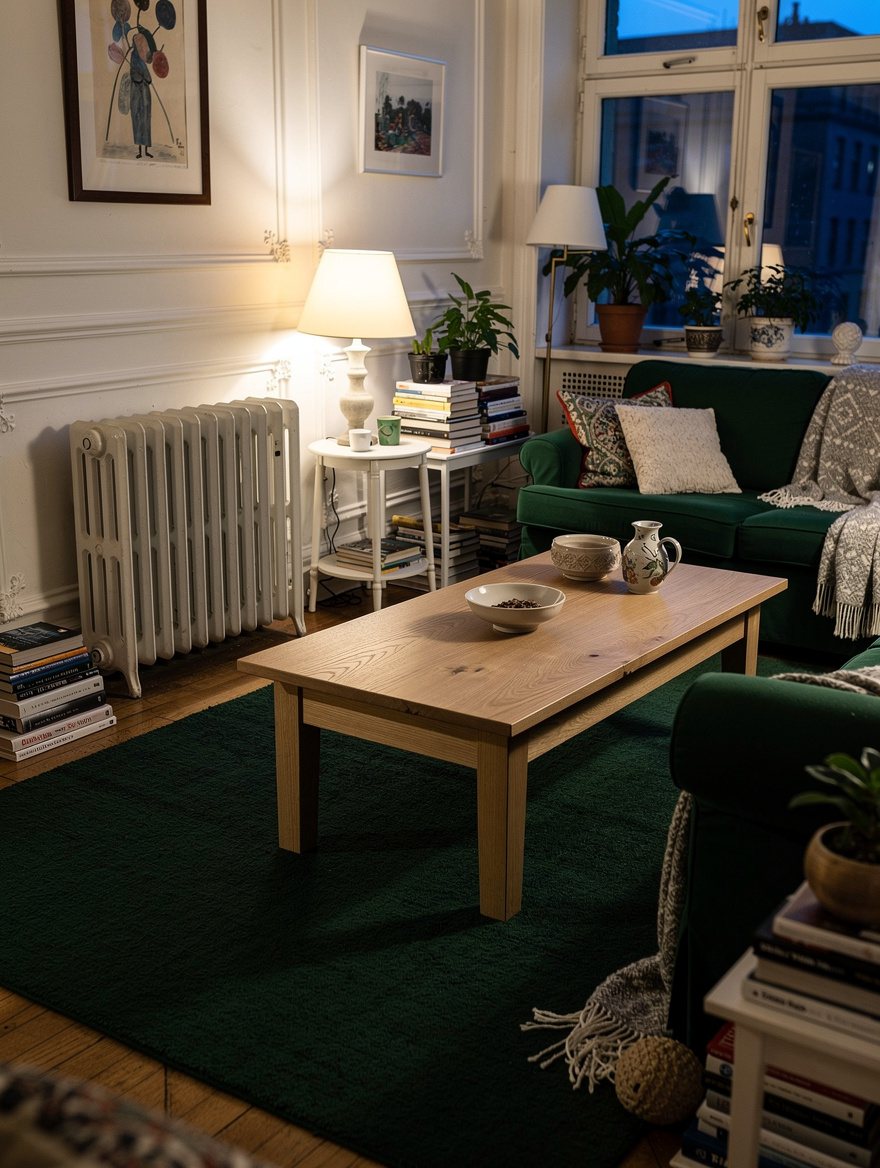
The coffee table belongs inside the rug composition, where it should leave a visible border rather than cover the rug’s entire center. A busy patterned rug often needs a quieter table, while a plain wool rug can handle burl or sculptural stone.
Place a burl veneer table on a simple rug and let its grain do the talking. Against competing wood cabinetry and a loud rug, it starts to look expensive in the wrong way.
Keep reading
- 12 Designer-Approved Curtain Tricks That Make Small Rooms Feel Taller
- 14 Parisian Small-Flat Tricks That Make Every Room Feel More Elegant
- Your Living Room Rug Is Making the Space Look Smaller
Start by taping a roughly 120-by-60-centimeter rectangle on the floor, then walk around it for a day. The table that preserves your natural route is the one worth bringing home.