The IKEA Shelf Layout Designers Use to Make Narrow Rooms Look Wider
17 august 2026A narrow room can feel frustratingly long even when it measures a perfectly usable 8 feet across. I’ve watched a 94-inch sofa wall disappear behind towering shelves, while the short wall sat empty and wasted the one chance to make the space read wider.
The answer is a low, horizontal shelf band across that short end wall. It gives the eye a left-to-right destination, keeps the walking path open, and provides storage without building a visual barricade.
Run a Low Storage Band Across the Short Wall
Start with a low run of IKEA BESTÅ units across the room’s short wall, roughly 63 to 94 inches wide and about 16 inches deep. That long top edge acts as a visual horizon, so the room reads across its width instead of shooting straight into a tunnel.
Three 24-inch modules work well in many small rooms; four create a stronger full-wall line when the end wall allows it. A typical configured BESTÅ setup with doors can land around $180 to $450, depending on fronts, legs, and delivery, and the closed storage earns its keep by hiding cords, paperbacks, and the random items that make a narrow room feel restless.
Choose Shallow Depth Before Extra Capacity
Depth matters more than people expect. A 16-inch-deep cabinet feels dramatically less intrusive than conventional 20- to 24-inch cabinetry, especially when a sofa, bed, or desk already occupies the room.
Keep roughly 30 to 36 inches of clear circulation where possible. That open strip of floor is part of the design, not leftover space, and I’d trade a few shelves of capacity for a route through the room that doesn’t require turning sideways.
Let Closed Fronts Carry the Visual Weight
Pick flat white or pale oak doors rather than a wall of exposed cubbies. Closed fronts turn lots of small belongings into one calm surface, which makes the horizontal composition feel intentional instead of temporary.
Match the cabinet finish closely to the wall color if you want the furniture to recede. A dark wall-to-wall unit can work in a broad room, but in a narrow one it becomes a heavy end-stop, particularly once a television, charging cables, and open baskets collect on top.
Hang One Wide Piece Above the Shelf Line
Mount a broad wall mirror or one horizontal artwork about 6 to 10 inches above the cabinet. A mirror roughly 39 to 63 inches wide reinforces the shelf band and bounces light farther into the room without breaking the wall into fussy little zones.
Skip the gallery wall here. Several small frames create a dotted visual rhythm that pulls the eye upward and inward, while one wide piece continues the room’s strongest line and makes the end wall feel more generous.
Frame the Ends With IVAR Only When Needed
When closed cabinets alone cannot hold books or work supplies, add matching shallow IKEA IVAR units only at the outer edges of the short wall. The solid pine shelves have a warmer, more architectural look than glossy storage, and IVAR has remained in IKEA’s range for more than 50 years for a reason: its plain structure is easy to adapt.
Keep the center low and open rather than filling every inch with tall shelving. Two modest vertical frames can bracket the width; a full row of tall bookcases across the wall overwhelms the same room you’re trying to open up.
Keep the Top Styled Like a Horizon
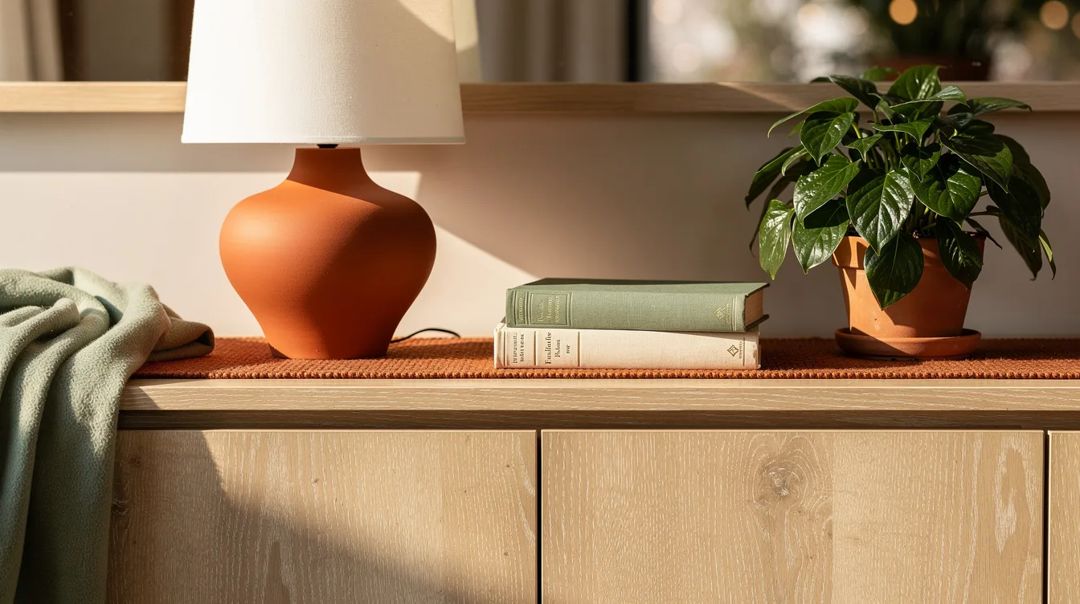
Give the shelf band breathing room: a $39 IKEA SINNERLIG lantern, a small stack of books, one leafy plant, and a single wide object are enough. The top should look almost quiet from across the room, because every extra cluster interrupts the line doing the widening work.
A table lamp with a soft shade is useful near a reading chair or bed, but avoid lining up matching décor from end to end. One brass candle. A ceramic bowl.
Space between them. That pause is what lets the cabinet read as furniture rather than a countertop.
Measure the short wall first, then tape out a shallow 16-inch-deep band on the floor before ordering anything. Once you see how much walking room remains, it becomes very hard to go back to tall storage along the long walls.