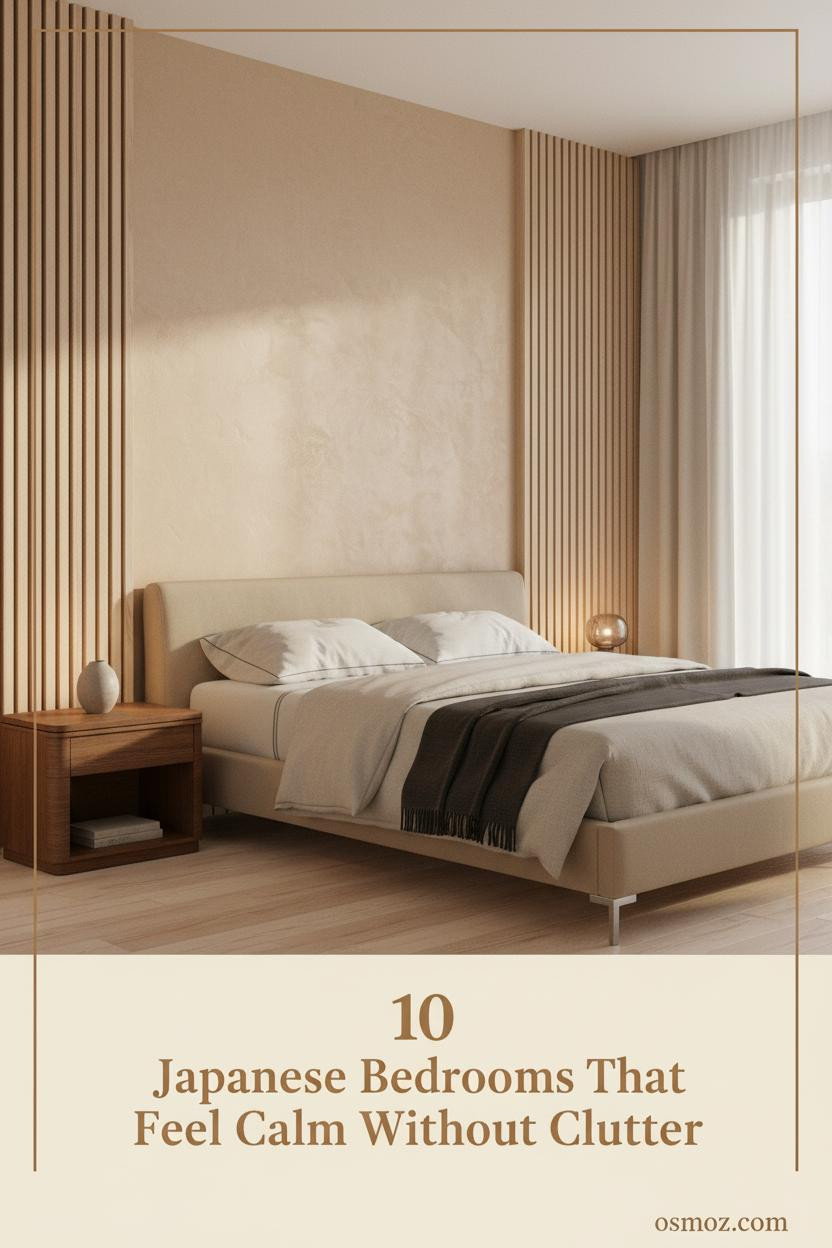
10+ Cozy Japanese Bedrooms That Feel Calm Without Being Cold
07 april 2026The first thing you notice in the best cozy Japanese bedroom isn't the furniture. It's the quiet. That specific kind of stillness where nothing demands attention and everything just sits.
These ten rooms get that right. Wabi-sabi materials, low platforms, raw plaster, and light that moves slowly. Here's what makes each one worth saving.
The Floating Shelf That Changes the Whole Wall
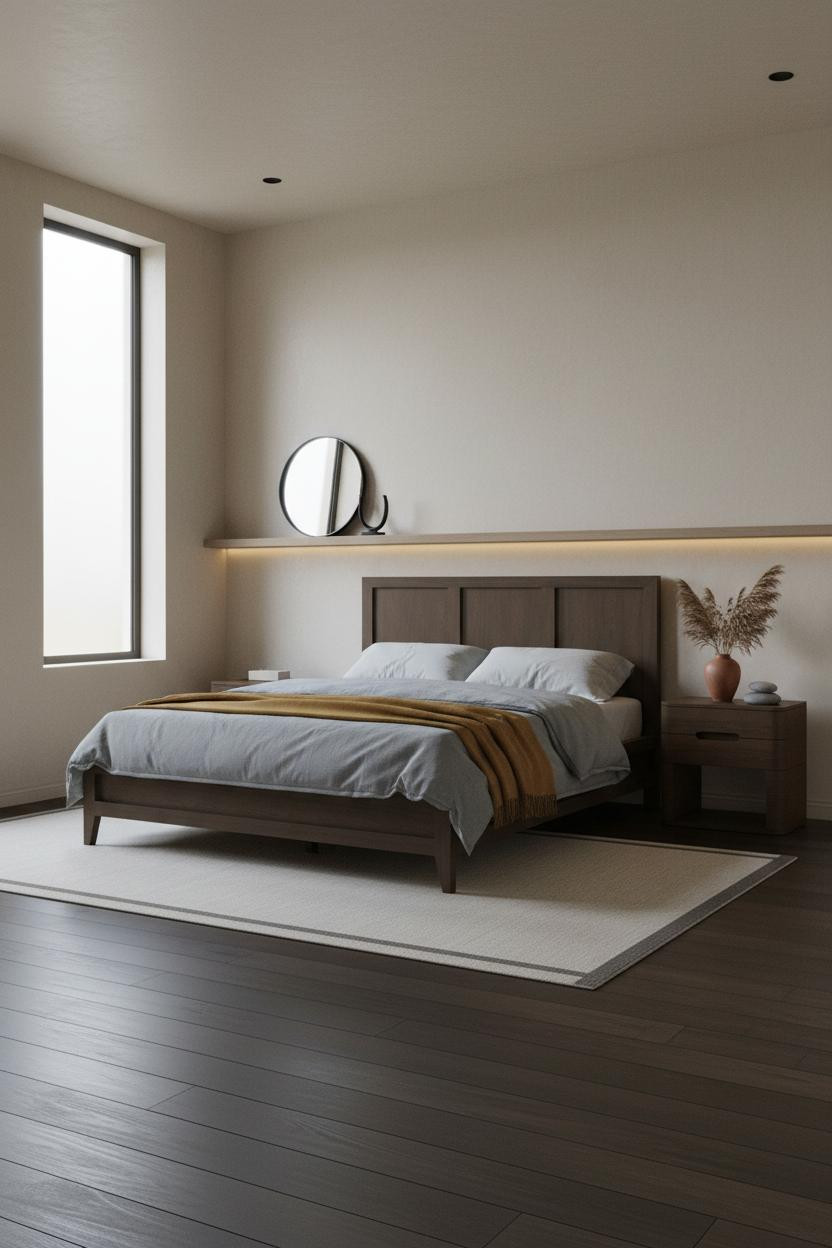
I keep coming back to this one. There's an ease to how the headboard wall is handled that most rooms never figure out.
Why it holds together: A single pale ash timber shelf spanning the full wall creates a shadow line that reads as architecture, not decoration. It's a small move with disproportionate impact.
Steal this move: Pair it with matte lime plaster walls and a mustard wool throw at the foot. The warmth comes from the contrast, not the color count.
Dark Clay Plaster Done Right
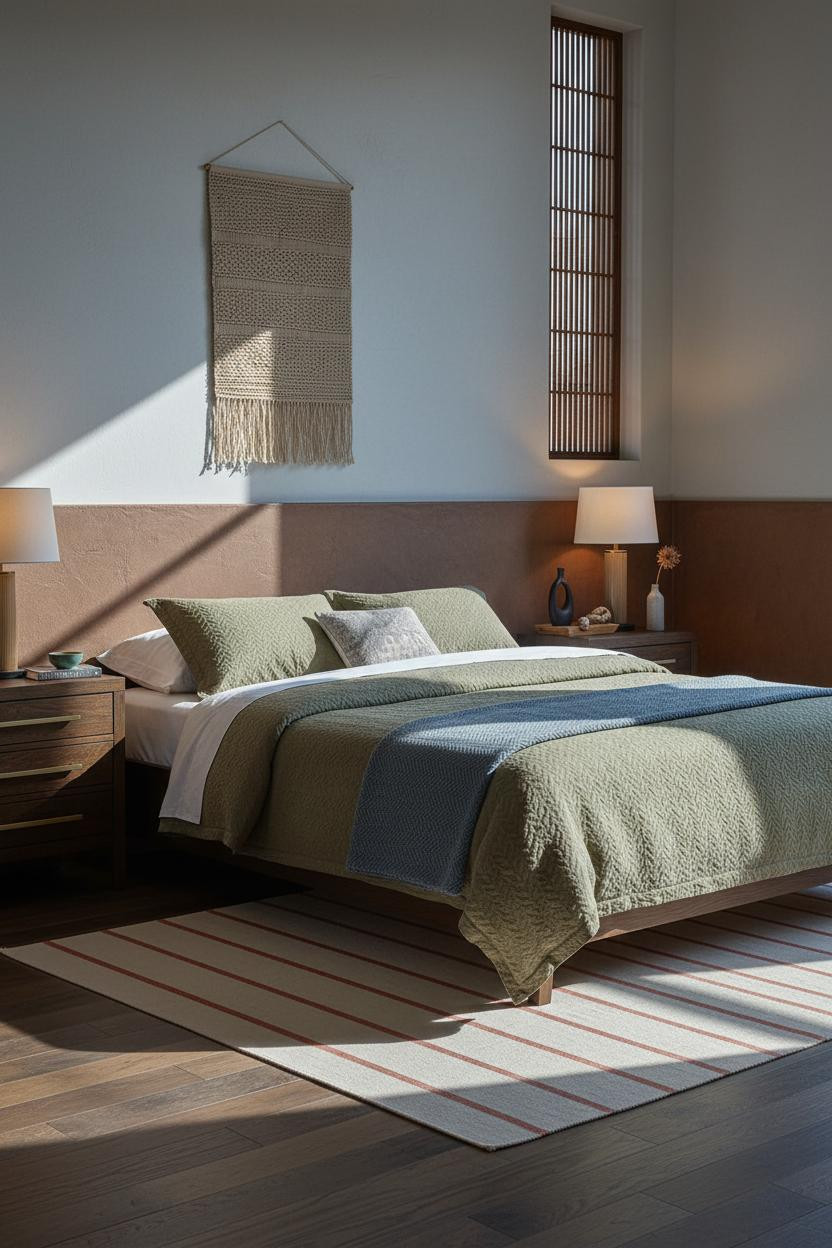
This one is divisive. A full band of dark clay running shoulder-height across the headboard wall sounds heavy on paper.
But the hand-troweled warm umber plaster catches raking light along its ridged edges, and that texture is what keeps the room from feeling flat. The rough finish does more work than any paint color could.
Pro move: Keep everything above and below pale. The band only works as a grounding element when the rest of the room breathes around it.
Why Wainscoting Works in a Japanese Room
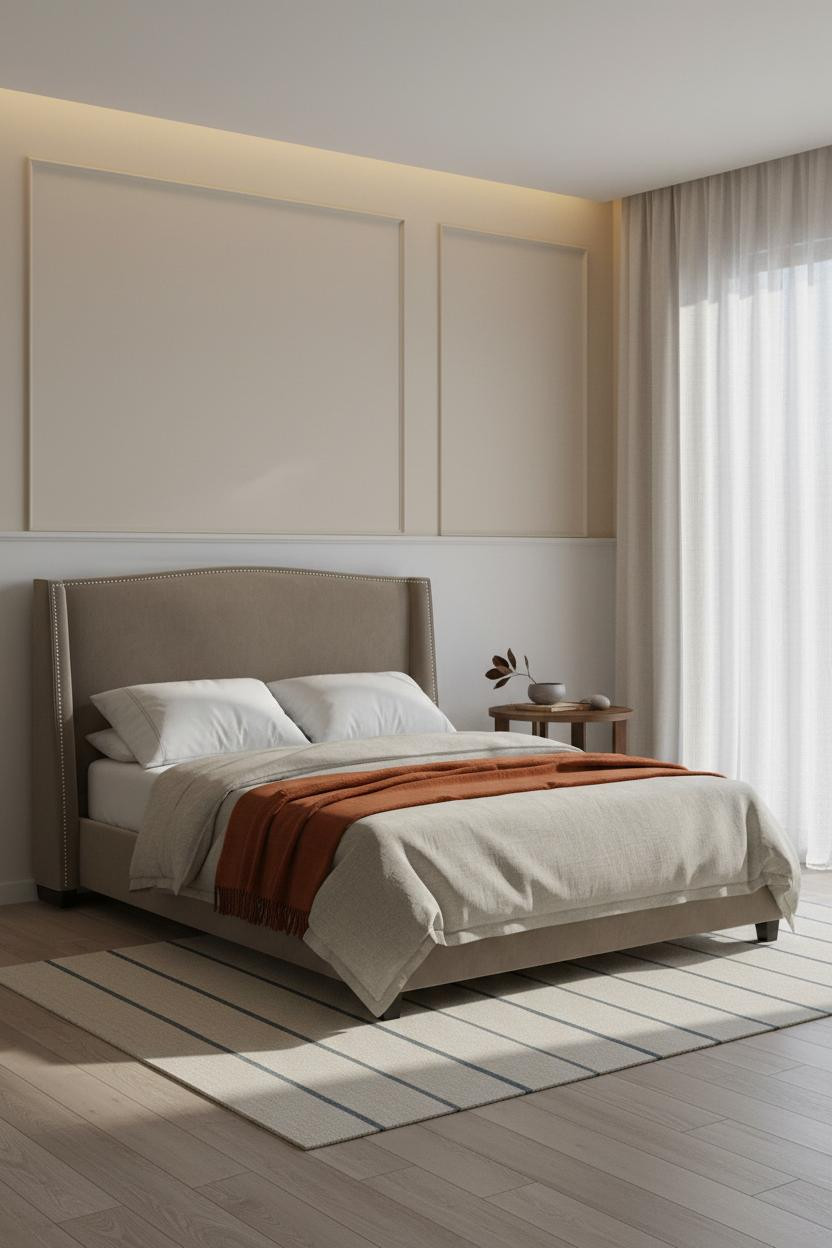
Half-height wainscoting sounds very English country house. Honestly, it works here because the geometry is stripped of all ornament.
What makes it work: Smooth matte white plaster paneling at half-height creates a sharp shadow line that becomes the room's defining detail at a glance. No molding, no chair rail cap. Just the line.
Worth copying: Layer bleached oak flooring and undyed linen curtains floor to ceiling. The horizontal panel and the vertical drape create quiet tension that keeps the room from looking too spare.
This Backlit Plaster Wall Has No Business Looking This Good
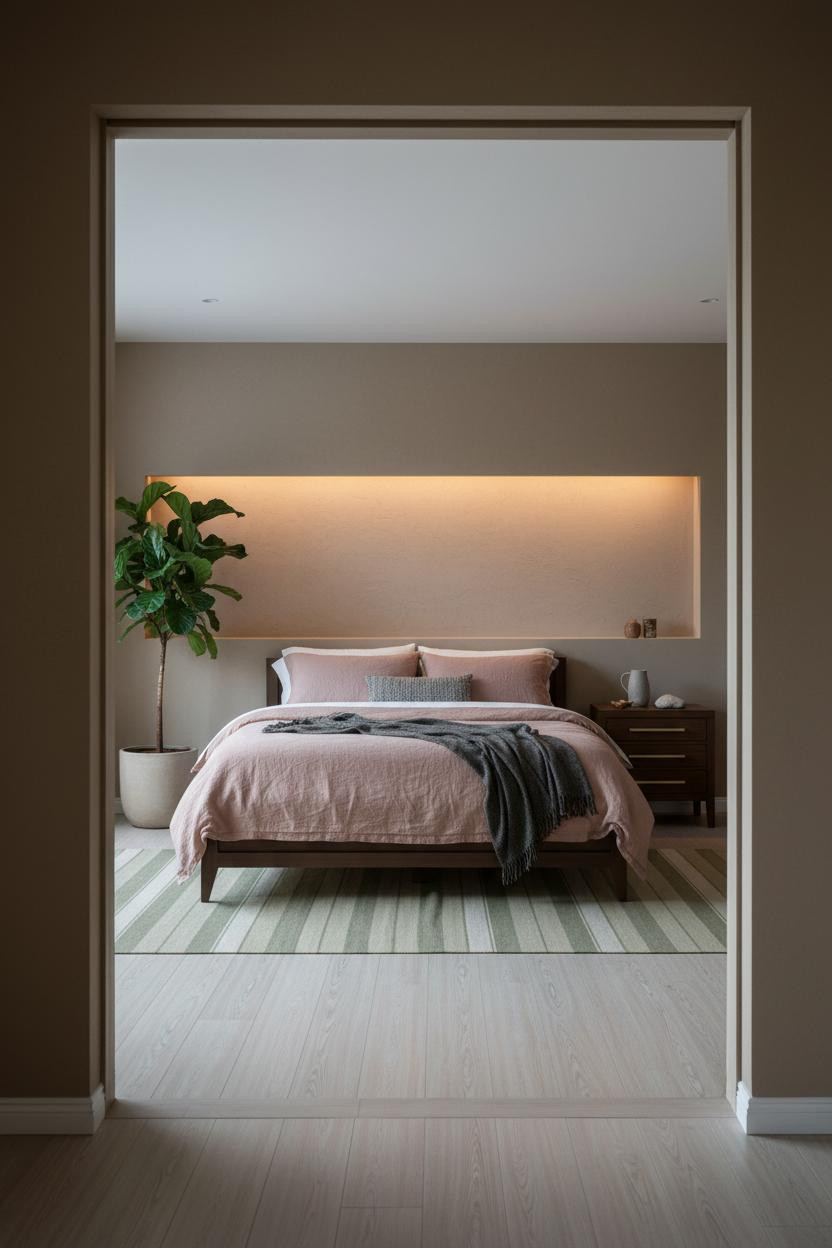
Fair warning. Once you see a backlit plaster panel done well, everything else looks flat.
The warm dust finish plaster glows amber at the perimeter and falls into cool shadow at center, which gives the headboard wall an organic rhythm you can't fake with paint. It's the ryokan reference made residential.
The smarter choice: Pair a panel like this with pale birch flooring and a charcoal cashmere throw. Let the wall do the talking and keep everything else quiet.
Board and Batten Without the Farmhouse Feeling
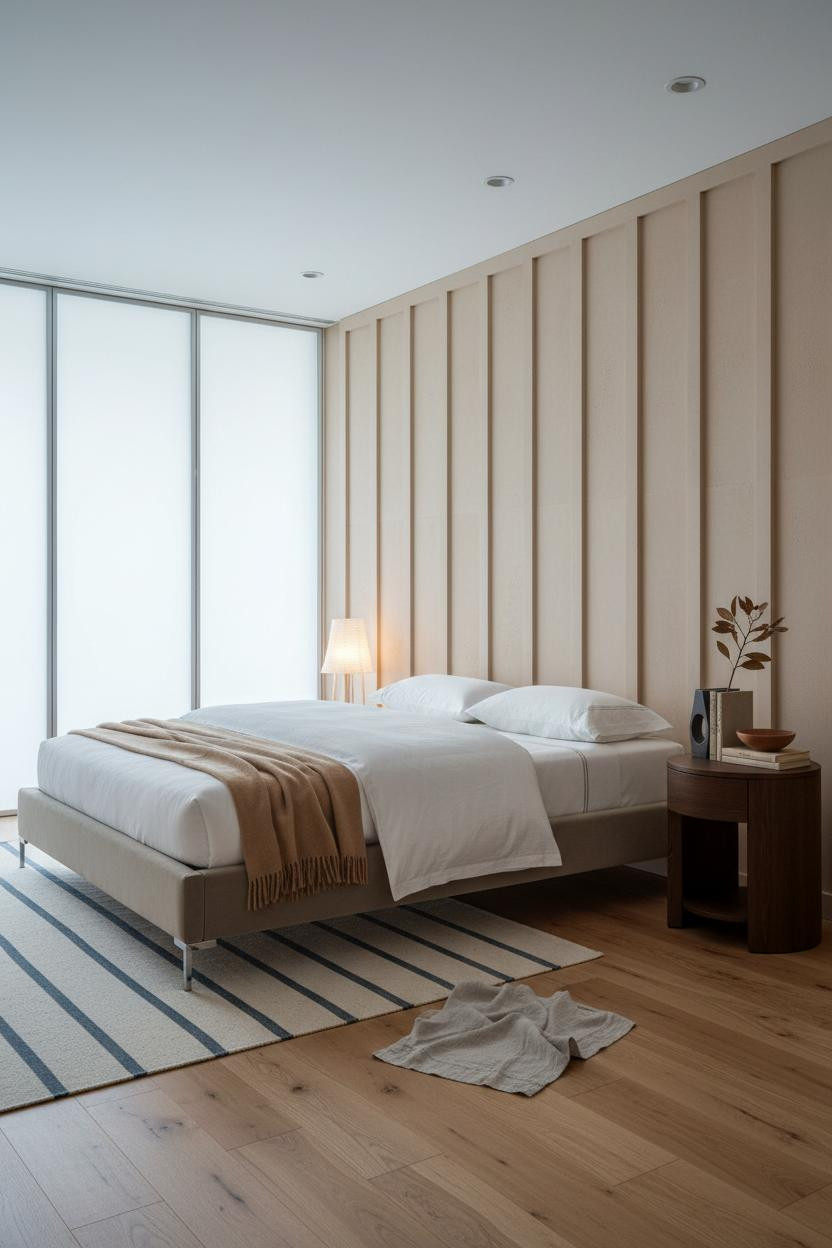

The key to board and batten in a Japanese minimalist bedroom is restraint. Narrow strips, no cap detail, warm sand plaster.
Each vertical strip casts a shallow shadow ridge that creates tactile geometry across the surface. The room feels collected rather than decorated, in a way that feels genuinely intentional rather than styled.
Avoid this mistake: Don't paint it white. The warm sand plaster tone is what separates Japanese aesthetic from standard shiplap.
The Charcoal Room That Doesn't Feel Heavy
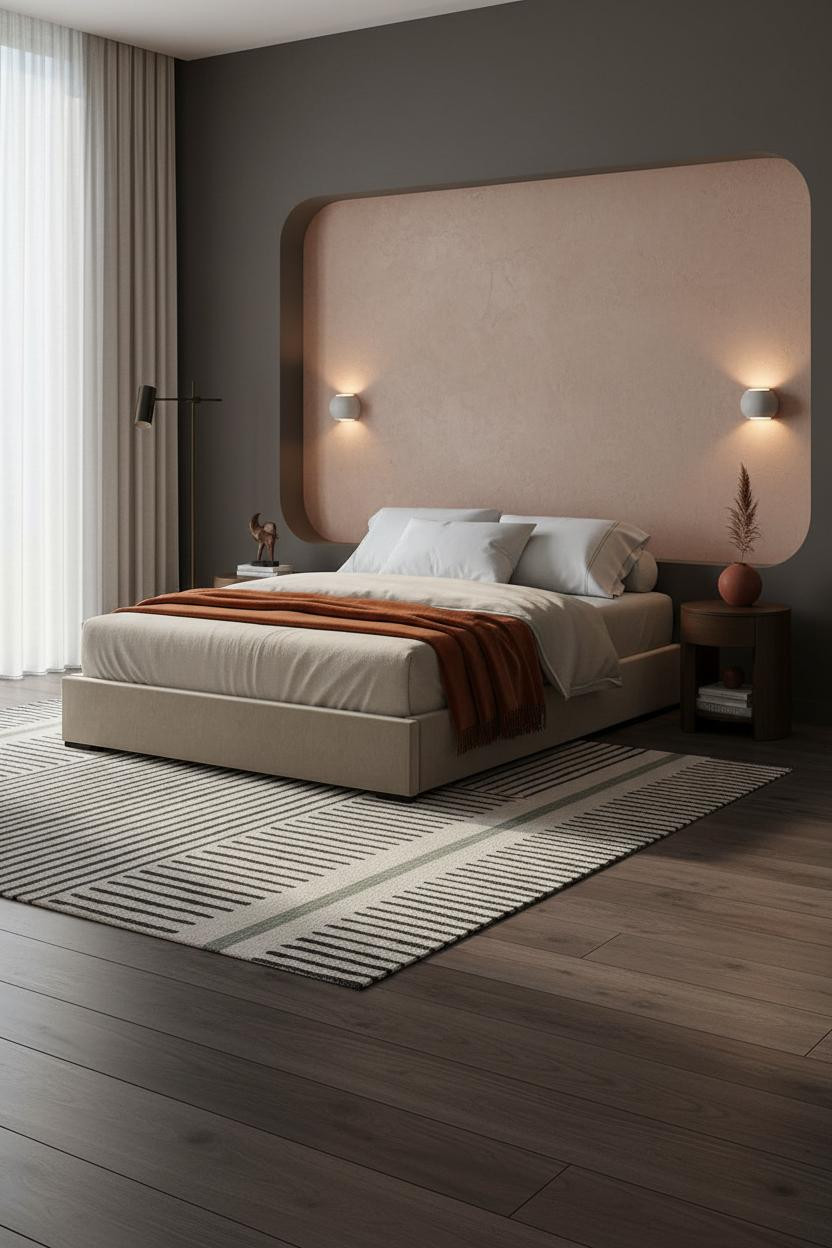

I was skeptical about charcoal walls in a room this small. Somehow it works, and I think I finally understand why.
Design logic: The recessed clay plaster alcove in pale warm tone pulls light inward, which means the dark walls recede instead of close in. The room feels warm and intimate without being heavy.
Swap any overhead fixture for ceramic wall sconces flanking the bed. The amber pools they throw against a dark wall are the whole mood. That's the easy win here.
Going Low: The Platform Bed as a Philosophy
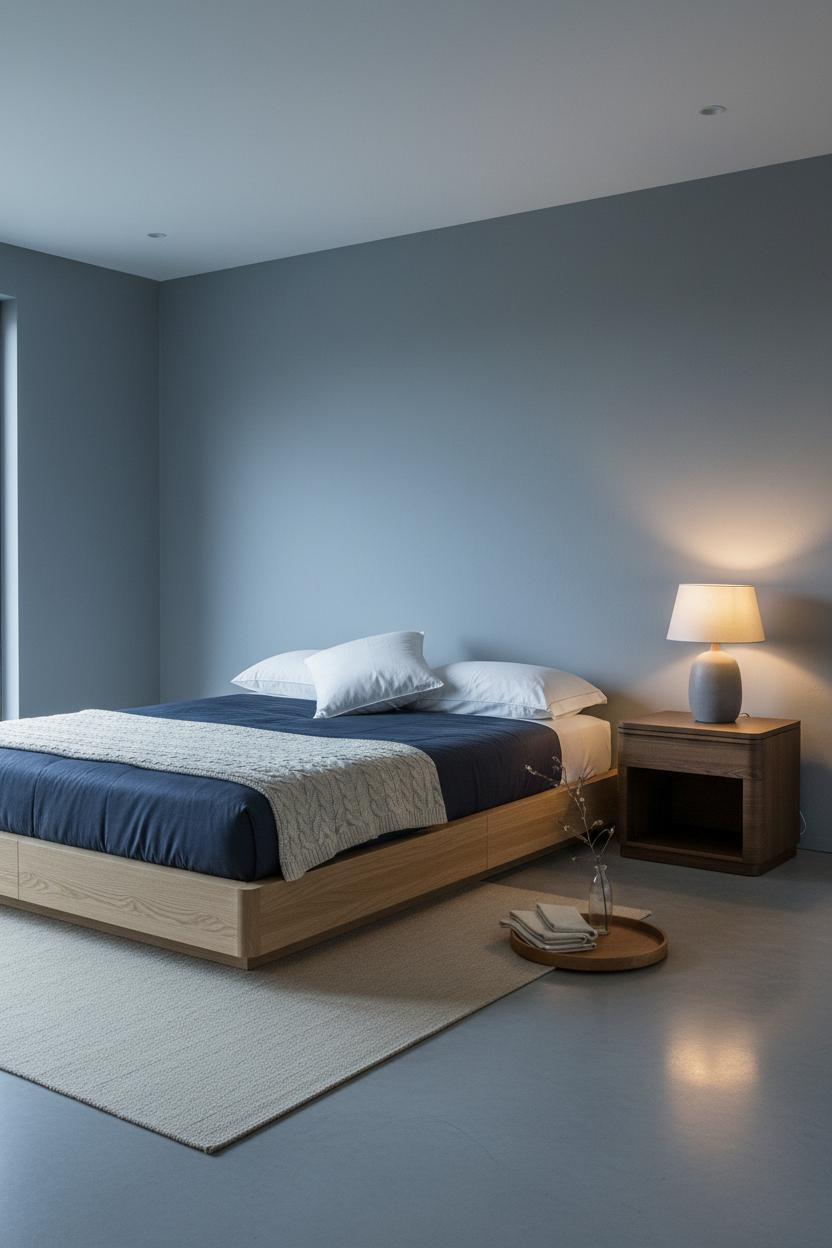
Nothing fancy. That's the point.
In a Japan style bedroom, going low with the bed isn't just visual. It changes how the whole room feels to be in. The ceiling opens up. The floor matters more. What gives it presence is the light natural oak grain on the platform base, running horizontal and steady, like a piece of furniture that knows exactly what it is.
The foundation: Pair the platform with muted blue-grey plaster walls and a sand-toned linen runner. Keep the nightstand low and the lamp oversized. That contrast in scale is what grounds the Japanese room aesthetic.
I Did Not Expect a Curved Niche to Feel This Calm
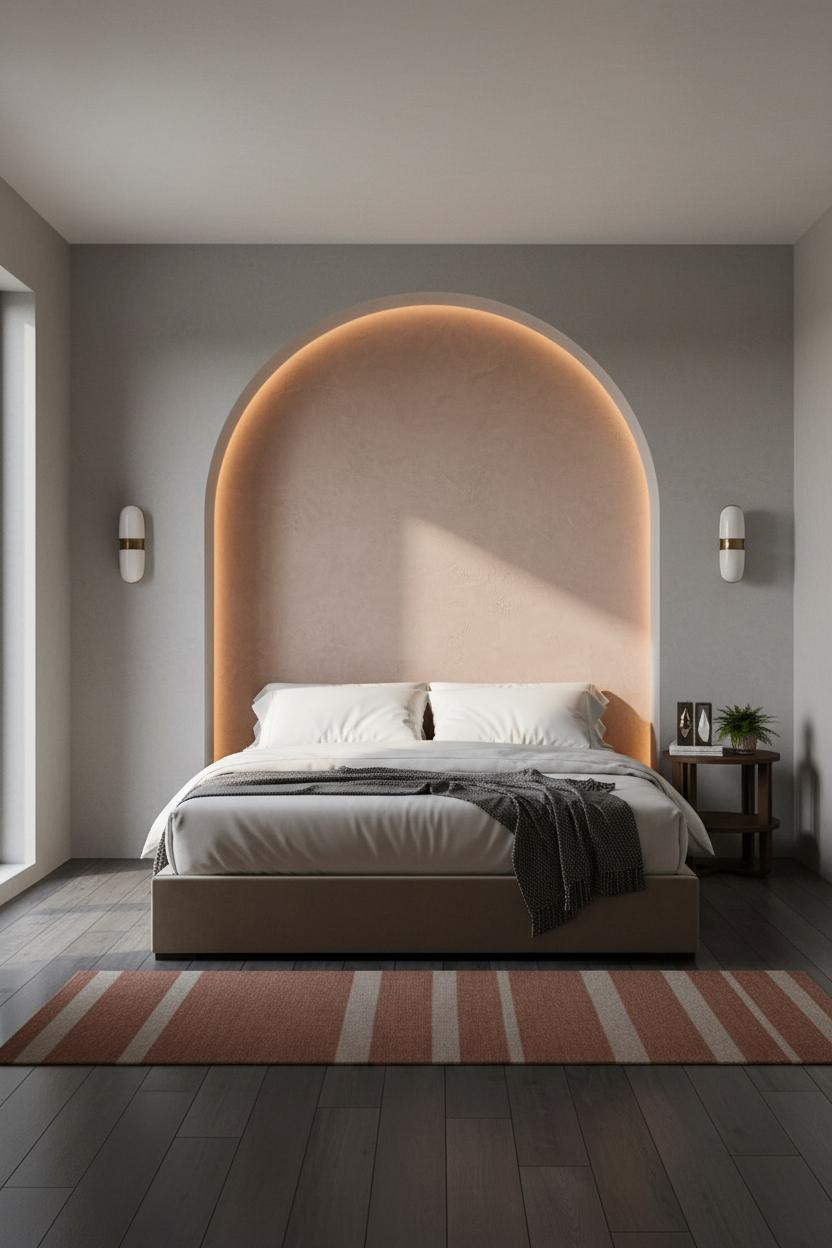
Arched niches are having a moment. But most of them feel like a Pinterest cliché. This one doesn't.
What creates the mood: The full-width warm clay plaster curve frames the bed with horizontal weight rather than fussy detail. Sconce light grazes the hand-troweled edges and the organic texture does the rest.
Don't ruin it with: Floating shelves inside the niche or art above the curve. The architecture is the decoration. Let it breathe.
Shoji Screens Are the Easiest Way Into Japanese Room Aesthetic
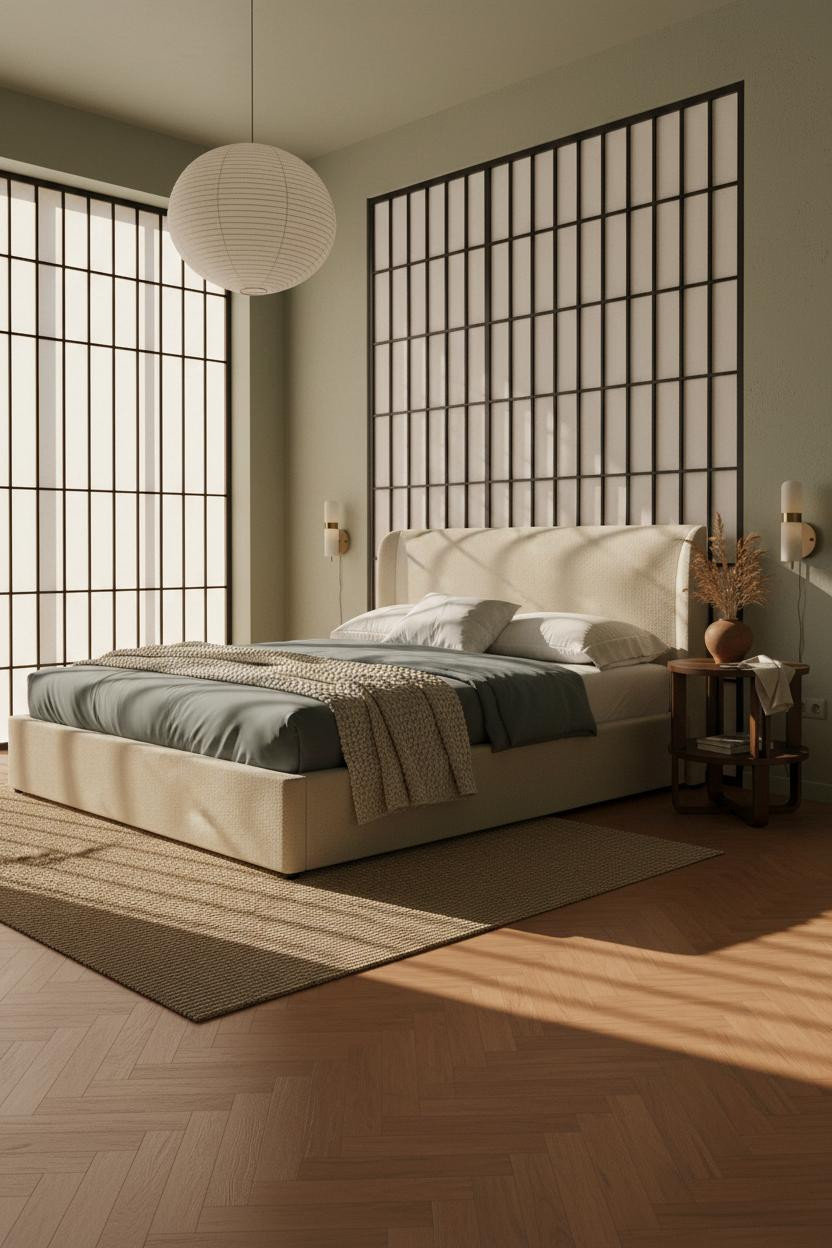

This is the kind of room that makes you want to slow down the moment you step in.
Why it lands: Floor-to-ceiling rice paper screen panels with thin black lacquered muntins filter late afternoon light into soft geometric shadow. The room feels lived-in and intimate, while still feeling completely deliberate.
The finishing layer: Add a round paper lantern pendant and a terracotta vessel with dried grass on the nightstand tray. The warmth compounds. Just enough texture to keep things interesting.
Vertical Wood Slats Make a Japandi Room Feel Complete
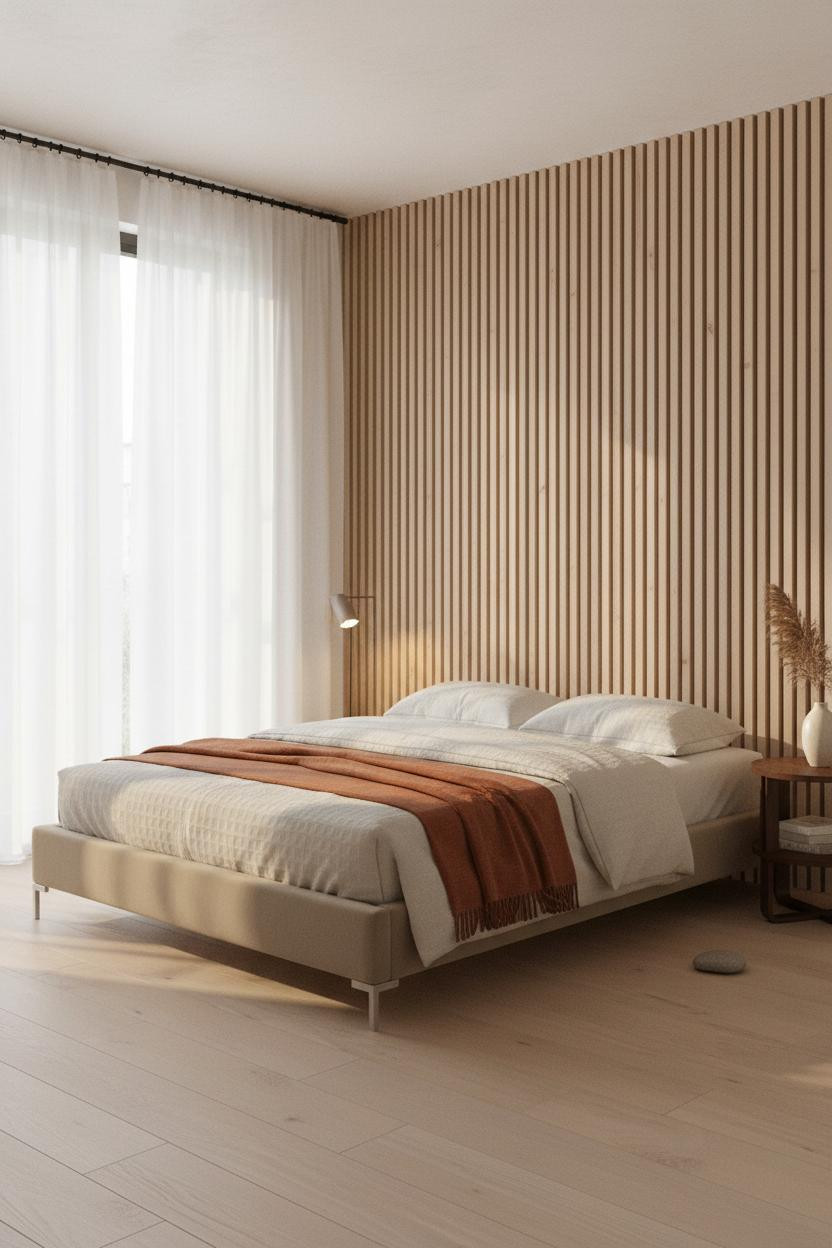
This is the one I'd actually build. And I say that as someone who defaults to plaster walls for everything.
But honey-toned vertical timber slats running floor to ceiling pull warm shadows between each strip in early morning light. The grain does the decorating. The reason this feels Japanese rather than Scandinavian is the low bed pulling the eye down, which balances the vertical rhythm of the wall.
What to copy first: The slatted wall behind the bed paired with cream waffle-weave bedding and a rust linen throw. Keep accessories minimal. A single ceramic vase with dried pampas is enough.
 Our #1 Pick
Saatva Classic Mattress
America's best-selling online luxury innerspring. 365-night trial, lifetime warranty, free white glove delivery.
Shop Saatva Classic
Our #1 Pick
Saatva Classic Mattress
America's best-selling online luxury innerspring. 365-night trial, lifetime warranty, free white glove delivery.
Shop Saatva Classic
The Foundation Of Every Beautiful Bedroom
All ten of these rooms get one thing right that most bedrooms miss. The calm starts at the bed. Not the wall treatment, not the lighting. The bed itself.
The Saatva Classic is the piece I'd put under all of it. Dual-coil support that holds without going rigid, a cotton cover that breathes through the night, and a Euro pillow top that's soft in a way that still feels structured. It doesn't fight the aesthetic. It finishes it.
Walls get repainted. Linen gets swapped. The mattress stays. Start with something worth keeping.

Good design ages well because it's made well. And the rooms people actually live in, rather than just photograph, are the ones built around that idea from the floor up.