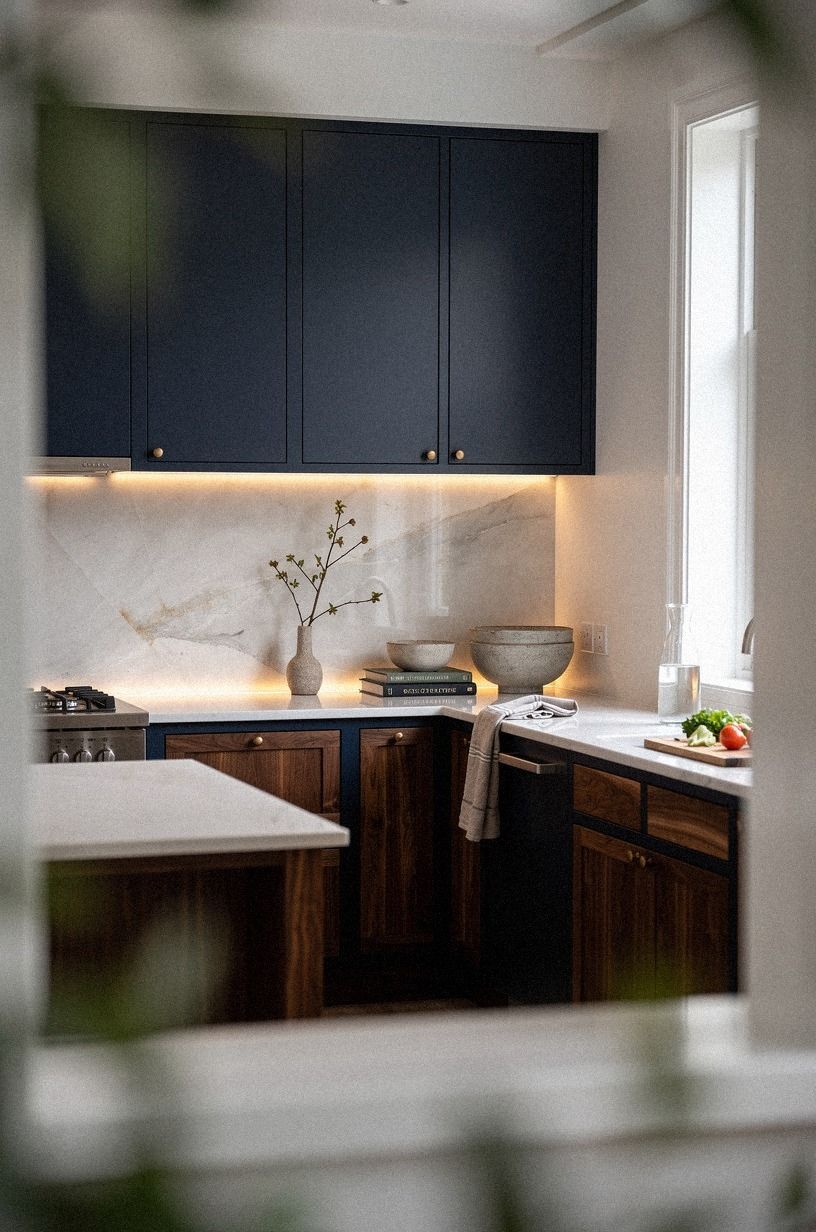
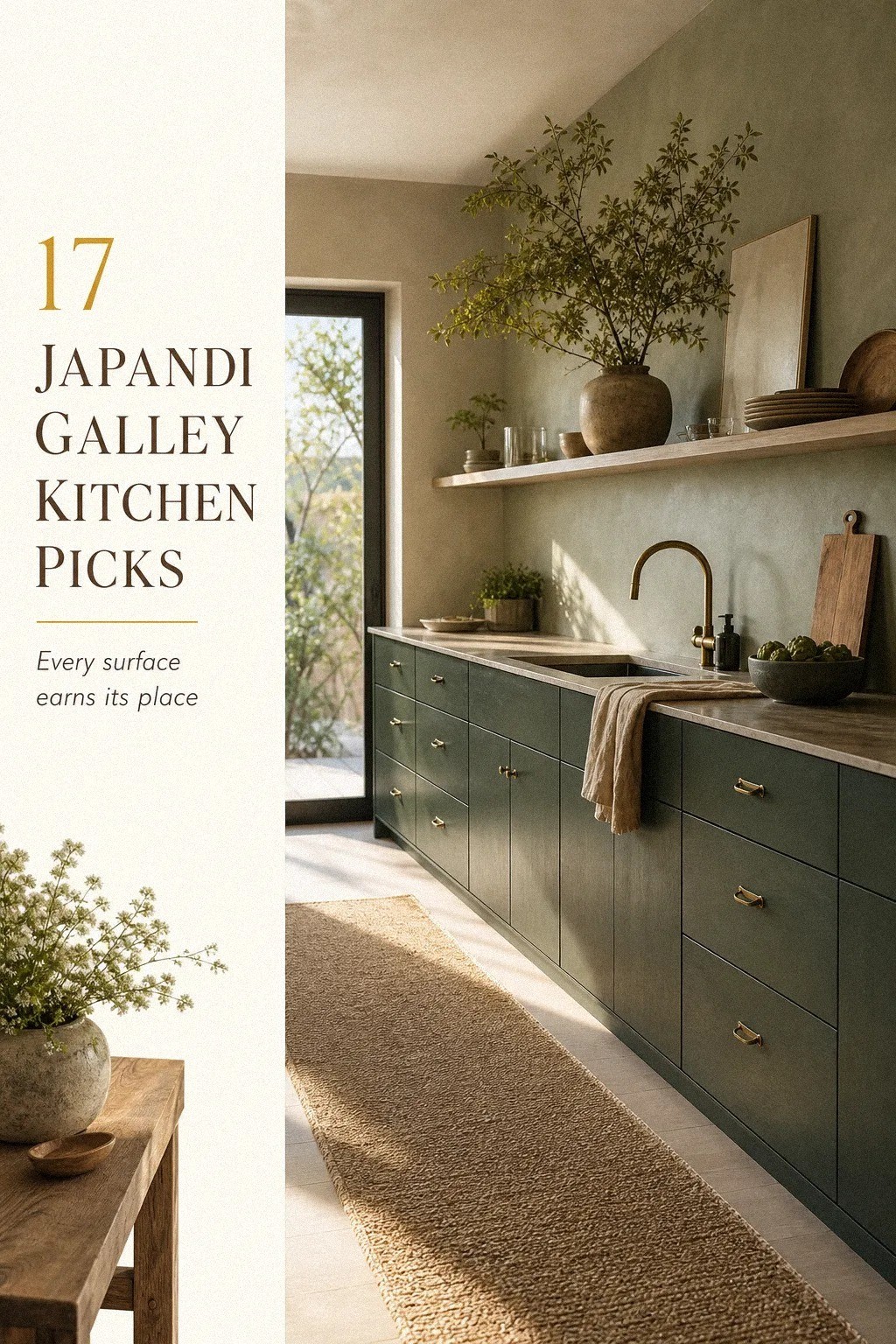
Space-Saving Japandi Galley Kitchen Ideas for a Sleek, Narrow Layout
12 july 2026I've designed more galley kitchens than I can count, and the ones that look like a Pinterest board almost never start with a remodel. They start with a quiet decision: stop treating the two walls like a problem and start treating them like a duet. Most galleys look squeezed because the eye has nothing to land on except upper cabinet fronts. Take that down, soften the contrast, bring in one warm wood and one pale wood, and the hallway turns into a corridor you'd actually walk through slowly. That's the move underneath every idea below.
What a Galley Refresher Actually Runs in 2026
Short answer first: you can do most of this for the cost of paint and one Saturday. The cost of a real galley refresh isn't something anyone tells you upfront. It's unevenly distributed across three tiers, and the spread is what surprises people.
The tiers matter because they set your ceiling before you pick anything. If you're staying under $1,500, the work lives in the paint, the hardware, and the lighting, not the cabinets.
Most of these seventeen ideas sit squarely in the cosmetic tier. A handful nudge into mid-range.
One or two will tempt you toward the high tier, and I'll flag those when we get there.
The Two-Wood Rule: Pick One Warm, One Pale
A galley is two parallel runs, and each run wants its own wood job. Pick a warm wood for one side (usually the uppers, because your eye reads uppers as the dominant mass) and a pale wood for the other. White oak for warm, ash or birch ply for pale. That pairing is the rule.
Skip the matching sets. Two parallel runs of identical wood close the corridor visually and turn it into a tunnel. The two-wood rule does the opposite: it gives the eye a place to rest and a place to travel. I've used it in five galleys and not one has come out flat.
For the paint that ties them together, Benjamin Moore White Dove OC-17 on the ceiling and trim is the most forgiving choice I've found. It disappears into the room and lets the woods speak. (And if you want to see the contrast in action, our japandi oak guide walks through real combinations.)
- Skip the Upper Cabinets on One Wall Entirely
- Float a Pale Wood Open Shelf Instead of Uppers
- Run a Single Floating Oak Shelf Above the Sink
- Pair White Oak Lowers With Painted Uppers
- Anchor the End of the Galley With One Heavy Linen Panel
- Layer a Runner Rug Down the Center
- Hide the Small Appliances You Don't Reach For Daily
- Hang One Schoolhouse Pendant Instead of Recessed Lights
- Cut a Single Sheet of Stone-Look Porcelain for the Counter
- The Patina Rule: Swap Satin Nickel Pulls for Unlacquered Brass
- Paint the Inside of One Cabinet in Your Accent Color
- Use a Long, Low Stoneware Vase on the Counter
- Why Does a Slim Pull-Out Pantry Beat a Bank of Drawers?
- The Off-Worktop Rule: Lose the Kettle, Gain a Counter
- Stack the Cookware by Frequency, Not by Size
- The Pause Corner: a Stool, a Plant, a Quiet Spot at the Far End
- The Three-Times Wood Rule: Repeat One Oak, End the Negotiation
1Skip the Upper Cabinets on One Wall Entirely
The single most freeing move in a narrow galley is to remove one run of uppers. One wall, fully open, instantly gives you back the 42 inches of vertical air that was being eaten by doors.
Float a single oak shelf or hang a brushed brass rail instead, and the kitchen reads as a workspace instead of a corridor. This is a real reno decision, not a styling tip, so price it honestly.
But it's the move that decides whether your galley looks like a kitchen or a hallway. Worth it. For a fuller picture of how to handle the open wall, our scandinavian oak guide shows three calm takes.
2Float a Pale Wood Open Shelf Instead of Uppers
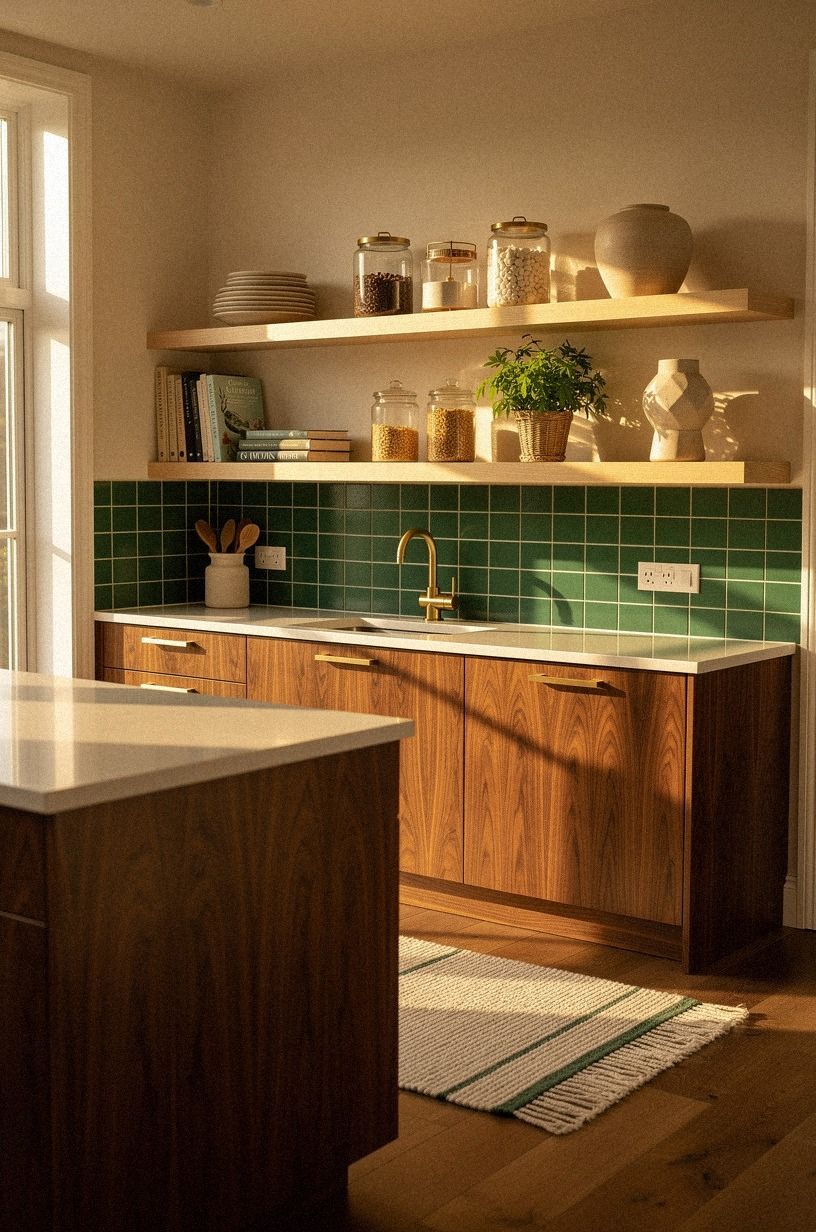
If ripping the uppers out isn't on the table, replace them with one long pale-wood open shelf running the length of the wall. Ash, birch ply, or cerused oak all read quiet and won't fight the warm wood you kept on the opposite run.
Use it for four objects maximum. A row of stoneware mugs, a ceramic pitcher, two glass jars for dry goods. The shelf itself does more design work than anything you put on it.
Resist the urge to fill it. That's the rule, and the moment you break it the whole wall goes back to cluttered.
3Run a Single Floating Oak Shelf Above the Sink
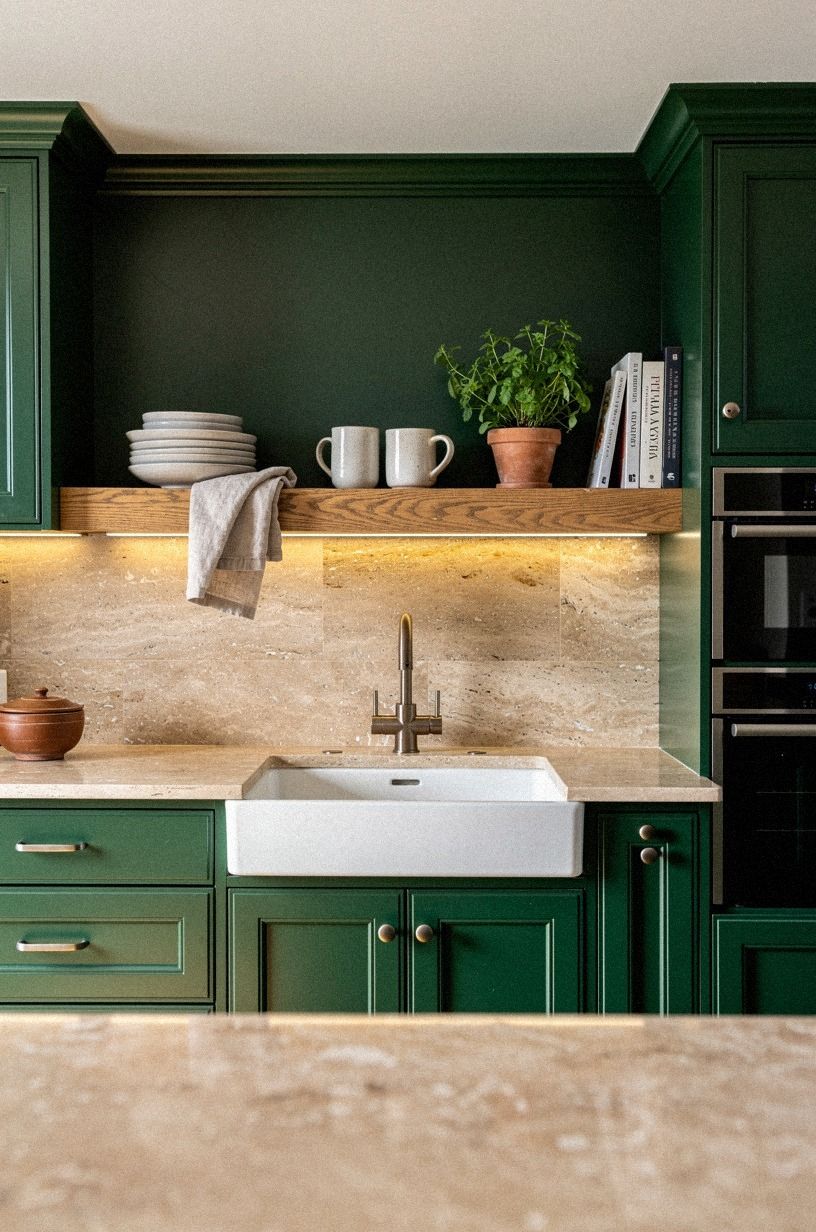
Above the sink window, if you have one, run a 3/4-inch-thick white oak floating shelf, 36 to 42 inches long, mounted into studs.
4Pair White Oak Lowers With Painted Uppers
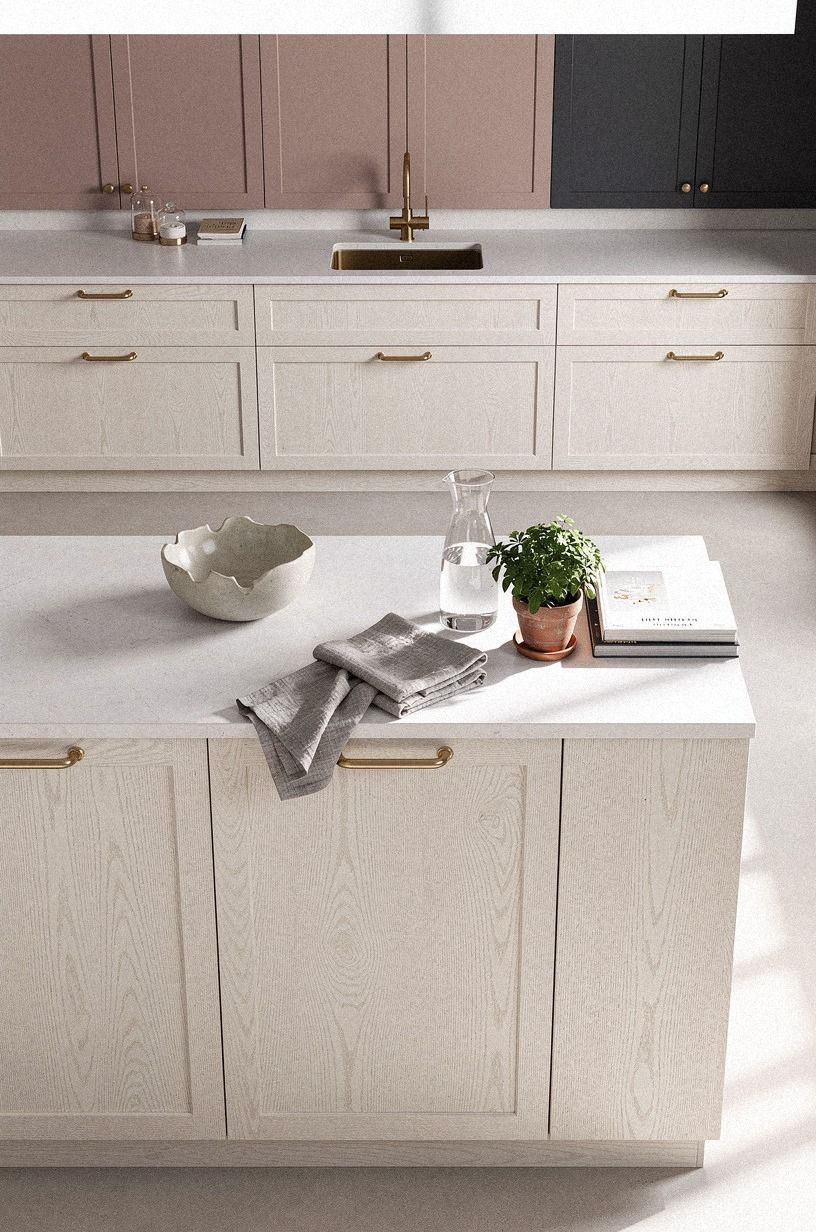
The classic japandi pairing that actually works in a galley: white oak lowers (or a thermoform oak-look front from IKEA SEKTION, at a fraction of the cost) sitting under painted uppers. Paint the uppers in Benjamin Moore White Dove OC-17 or, if you want more warmth, Farrow & Ball Joa's White.
The contrast between a painted flat panel and a visible wood grain below is what gives a galley that "warm but minimal" register. Skip the all-oak version.
It reads too monotone for a narrow space and goes heavy fast. If you're matching paint to cabinets and need a primer test, our paint colors that go with oak guide lists the safest swatches.
5Anchor the End of the Galley With One Heavy Linen Panel
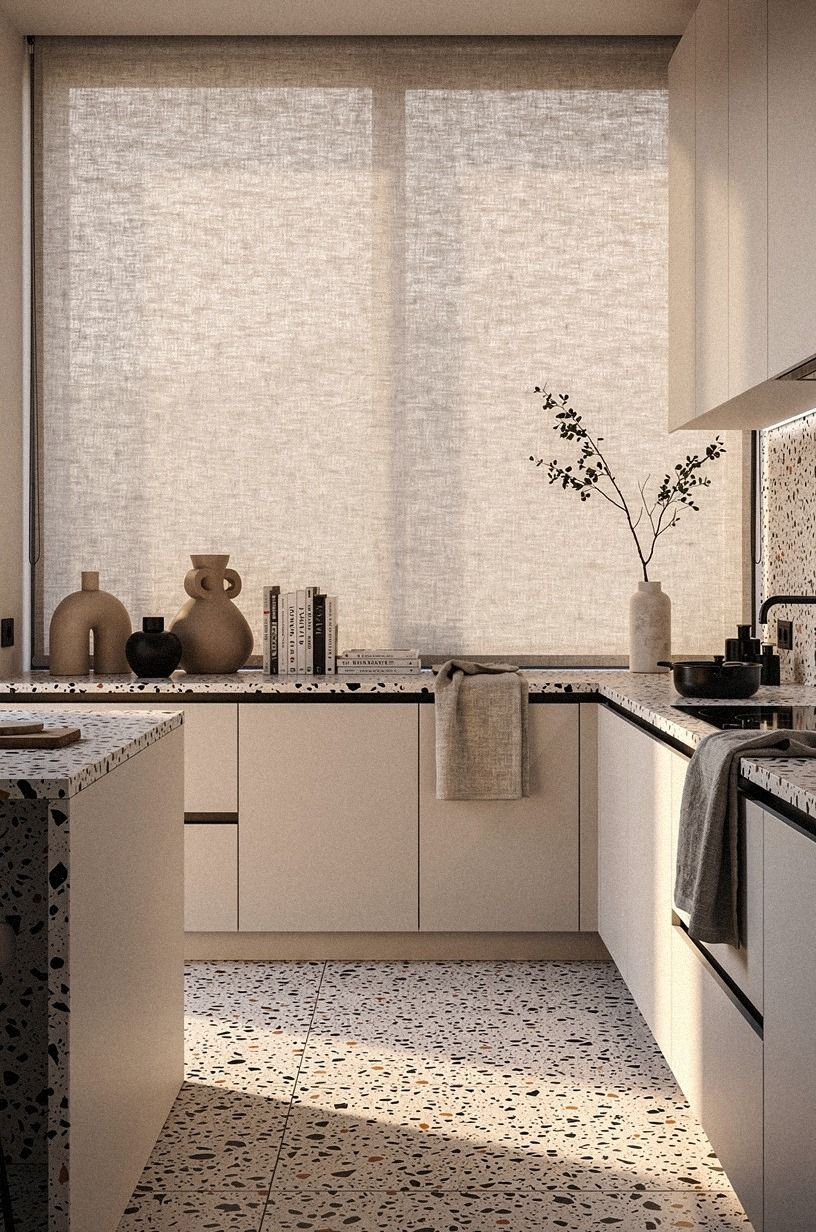
Most galleys end at a window or a blank wall.
6Layer a Runner Rug Down the Center
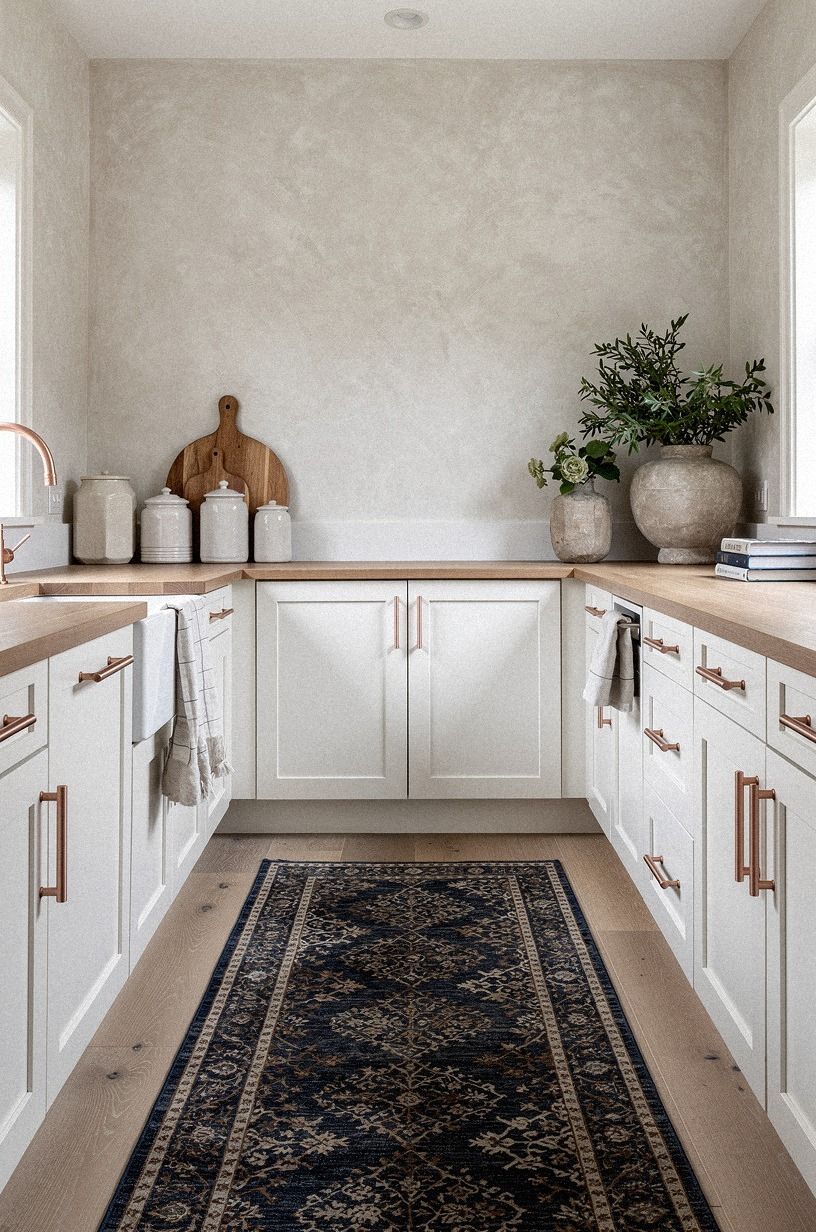
A galley is the one kitchen layout where a runner reads right. 2.5 to 3 feet wide, 8 to 12 feet long, low pile, in natural wool or flatweave cotton. The rug breaks up the corridor and warms the floor underfoot where you stand.
Pick a runner with subtle pattern (a stripe, a faded Oushak repeat) over solid, because solids show every coffee drip. Treat yourself to a rug pad underneath.
It stops the bunching that drives everyone crazy within a week. Choose a low-pile weave (less than half an inch) so chairs and stools slide cleanly without catching, and vacuuming stays a two-minute job instead of a twenty-minute one. Trust me on that!
7Hide the Small Appliances You Don't Reach For Daily
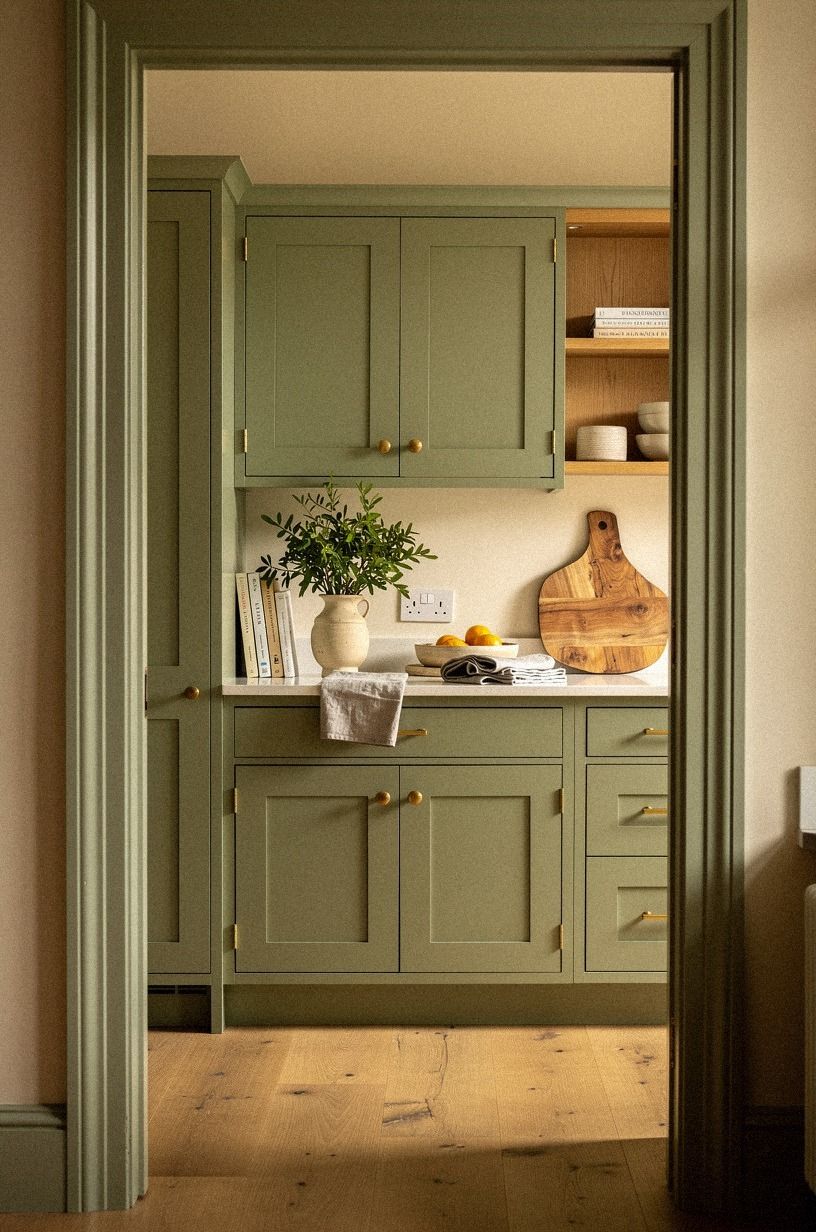
The cluttered-galley look isn't a cabinet layout problem.
8Hang One Schoolhouse Pendant Instead of Recessed Lights
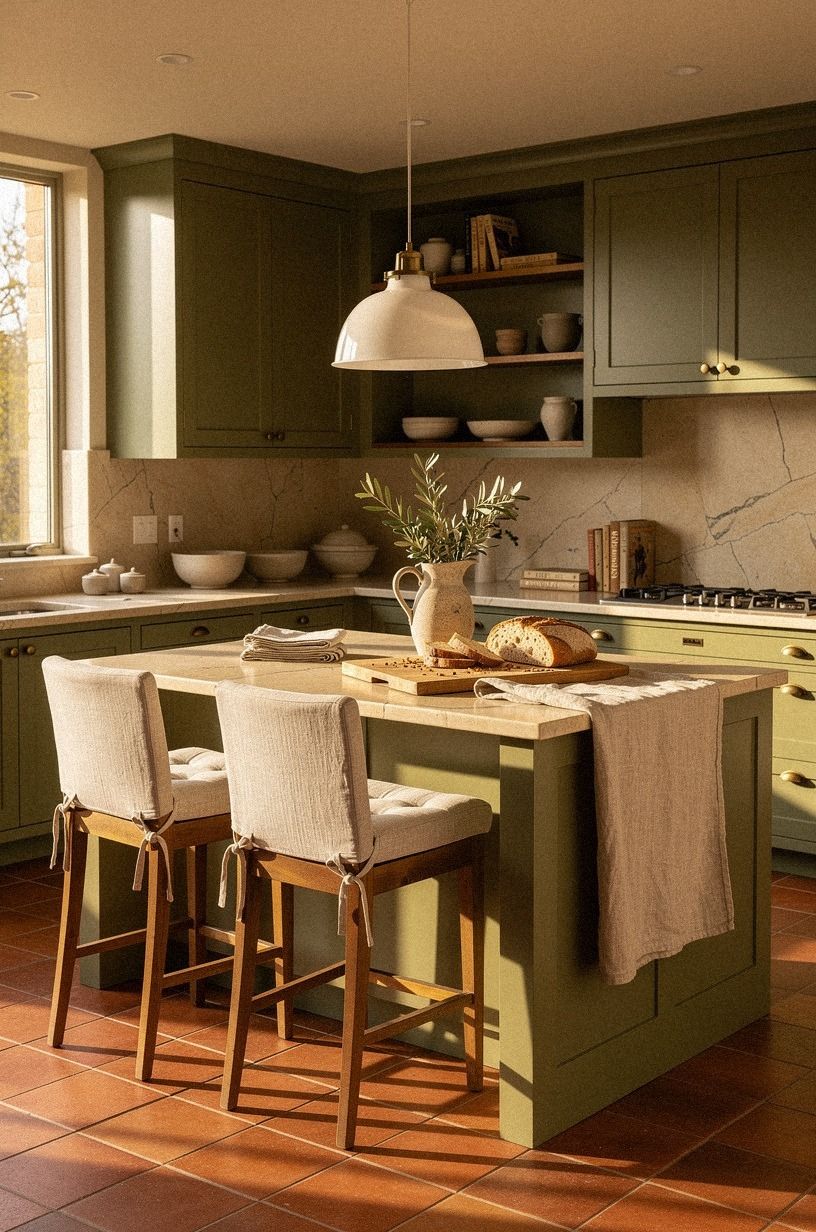
Recessed lights in a galley give you the same boring grid you'd find in an office. Replace them with one or two schoolhouse pendants in opal glass, hung 30 to 34 inches above the counter.
They cast a warm 2700K pool that lands on your work surface instead of bouncing off the ceiling, and they make the corridor look architectural. Skip the mini-pendant trend.
In a galley, one large pendant reads more expensive than three small ones. If you're choosing one fixture, get this one right. Center the pendant 12 to 18 inches in from the edge of the counter so it lights the work zone without hanging over your head as you prep.
Total MVP for evening cooking, since recessed cans turn the kitchen into a conference room after dark.
9Cut a Single Sheet of Stone-Look Porcelain for the Counter
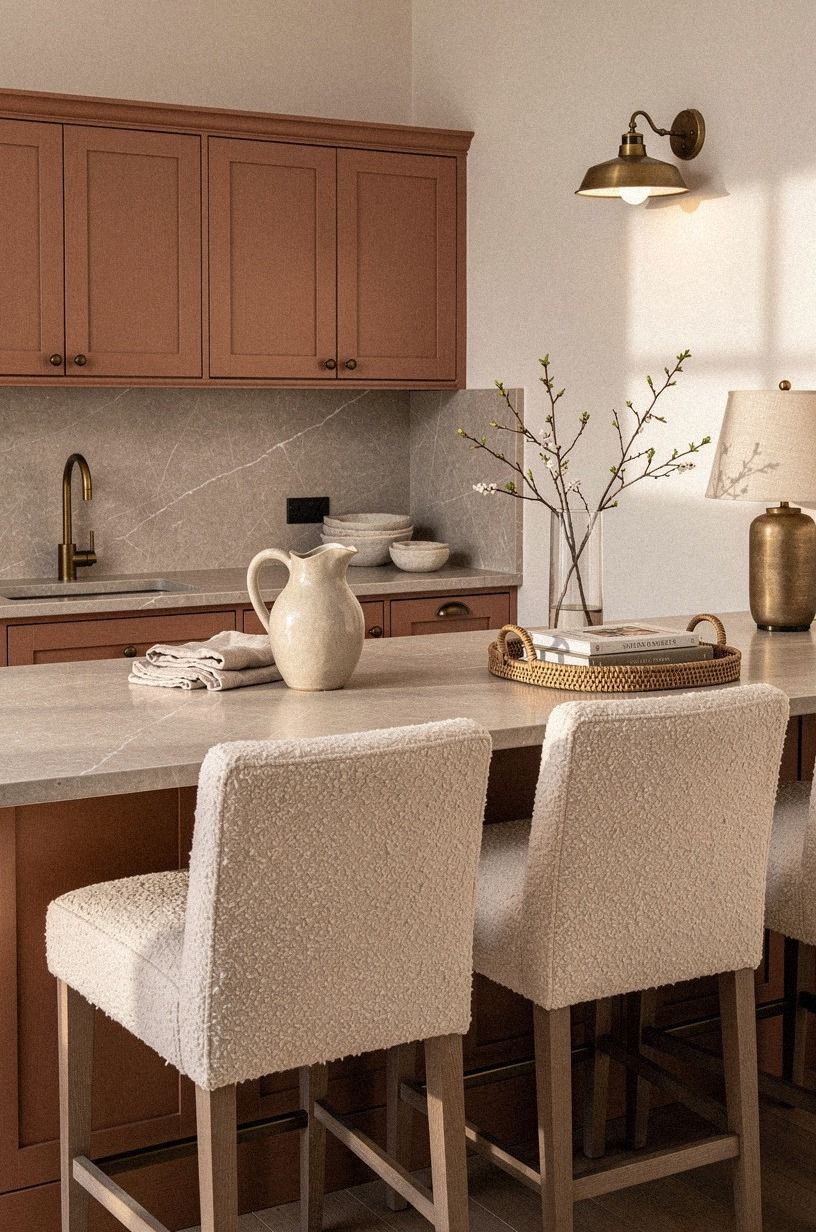
A real Calacatta Gold marble counter slab will run you around $120 per square foot installed. A stone-look porcelain slab at Home Depot runs about $40 per square foot, and most guests can't tell the difference in a galley setting. Pick one with soft amber veining, not high-contrast black-and-white; the soft vein reads calm, which is the whole point of japandi in a narrow space.
Length matters more than seam: get the slab long enough to span at least one full run unbroken. A seam in the middle of a galley is an instant eye-stop you don't want.
For more on the stone-pick side, our countertops that go with oak post lines up the swatches by tone.
10The Patina Rule: Swap Satin Nickel Pulls for Unlacquered Brass
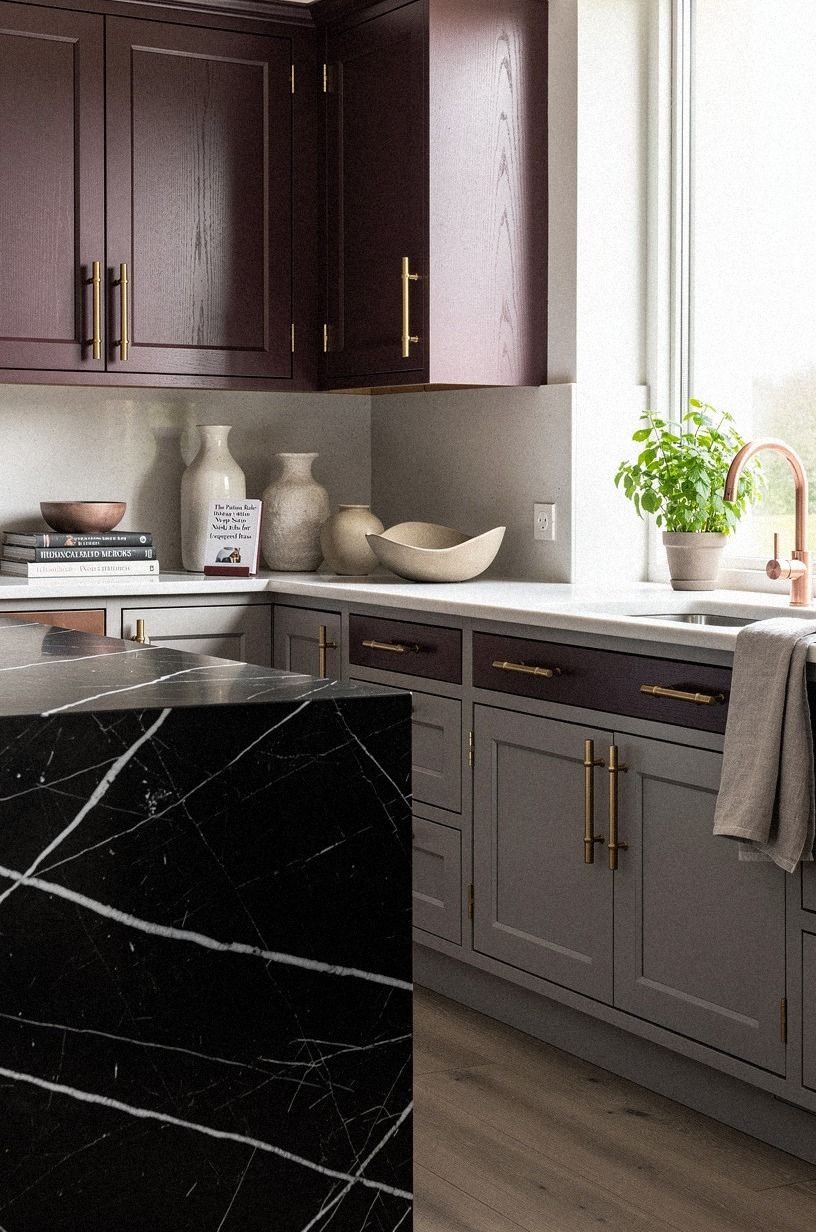
If your cabinets are still builder-grade, satin nickel cup pulls are aging your whole kitchen by about fifteen years.
11Paint the Inside of One Cabinet in Your Accent Color
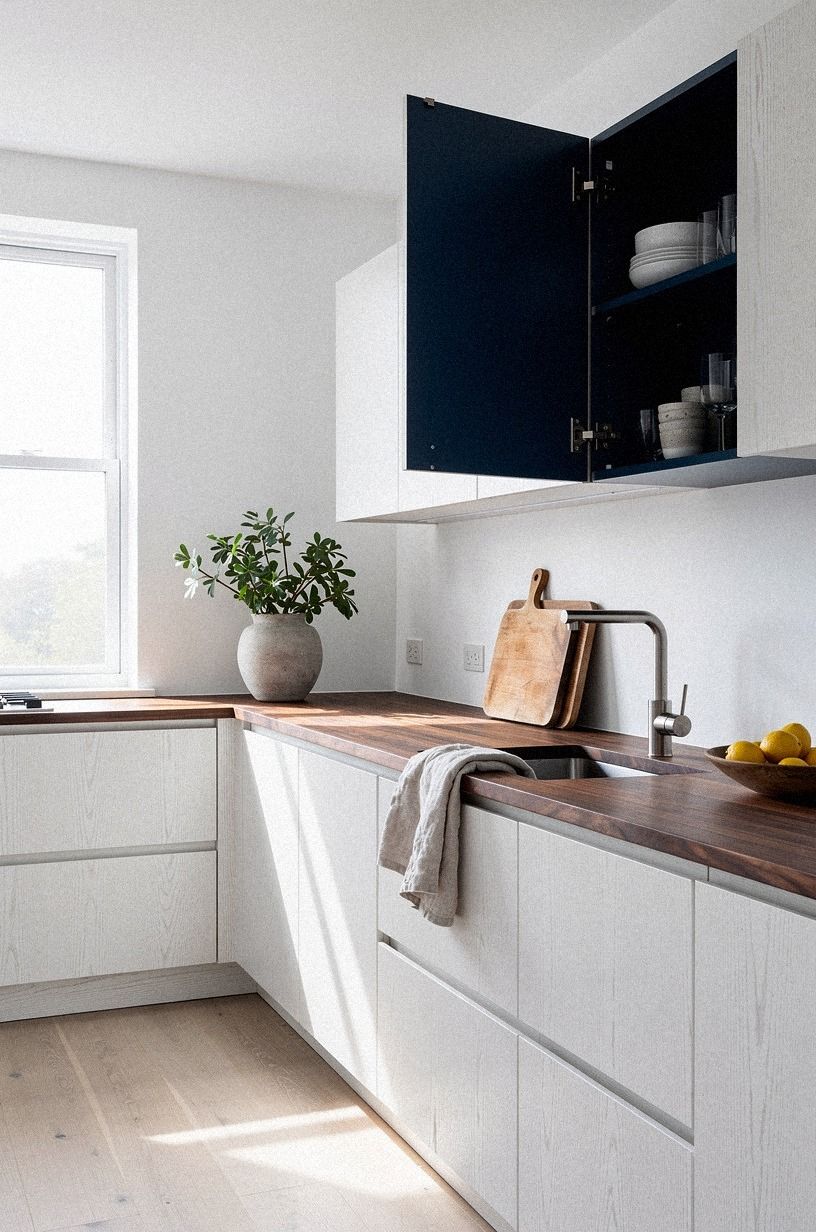
Here's a tiny move that does more than it has any right to. Paint the interior back panel of one cabinet in your accent tone.
Farrow & Ball Studio Green No.93 works against oak. Sherwin-Williams Evergreen Fog SW 9130 works against white. Benjamin Moore Black Forest Green HC-188 works against pale walls.
Open the cabinet and the inside reads as a deliberate moment of color, like a small painting on the wall. Closed, no one sees it.
It's the most personal storage detail you can add, and you'll catch yourself opening that cabinet just to look at it.
12Use a Long, Low Stoneware Vase on the Counter
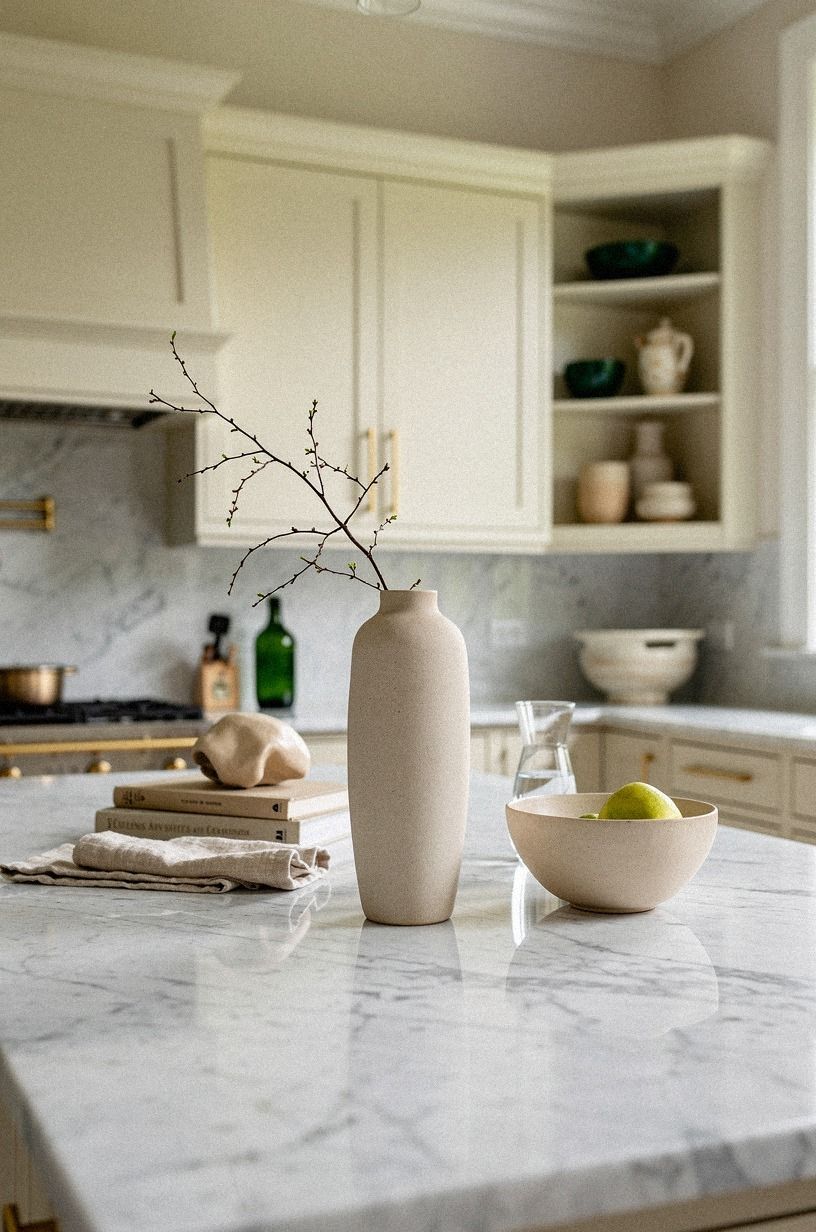
Most counter decor is too tall. In a galley, a long low stoneware vase running 10 to 14 inches along the back edge holds a single branch of olive, eucalyptus, or dried oak. The horizontal read mirrors the corridor and stops the counter from looking like a column of small objects.
East Fork makes a version in oat that fits the palette. Refill it every couple of weeks with a branch you cut from the yard.
Once you start doing this, you'll never go back to a fake stem. Trust me on that one.
For pairing greenery with the right container, our kitchen table plant centerpiece guide shows how the pros stage a single branch.
13Why Does a Slim Pull-Out Pantry Beat a Bank of Drawers?
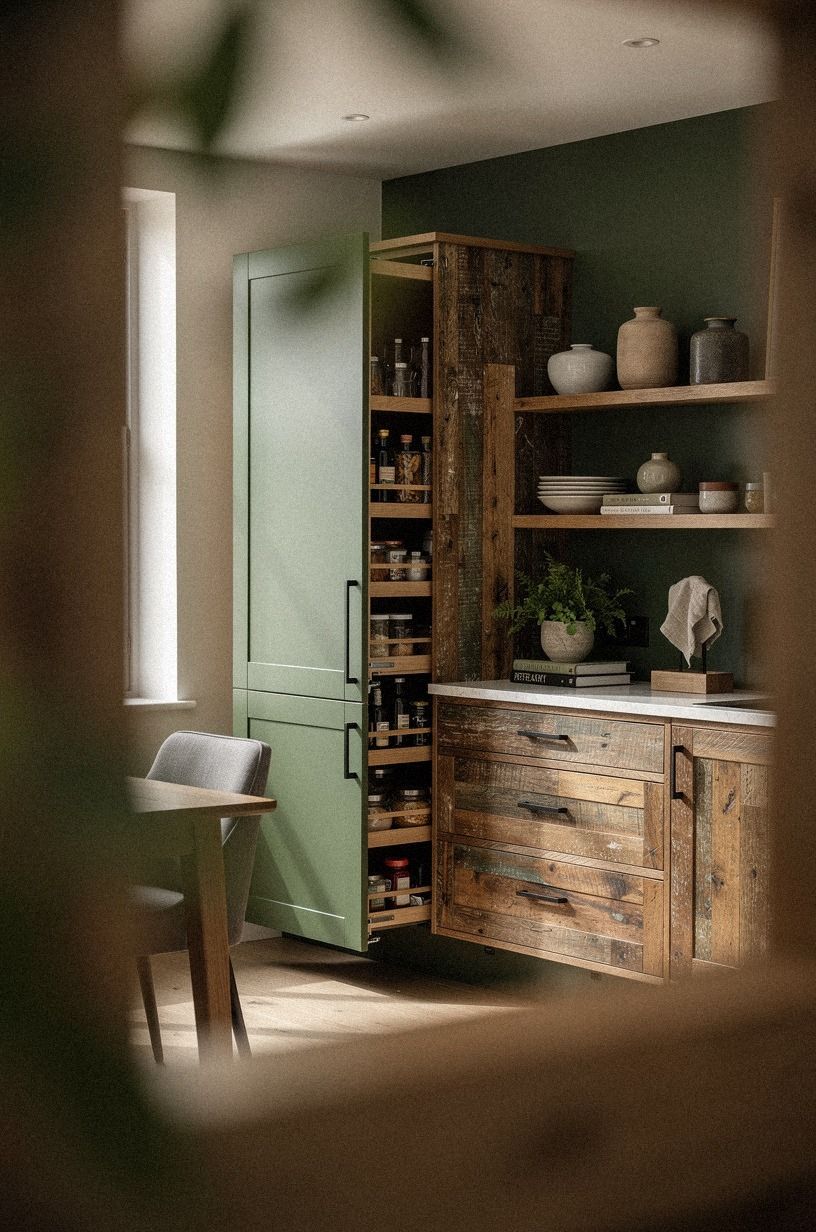
In a galley, you don't have room for both a pantry and a bank of drawers. Pick the pantry.
A 6-inch-wide pull-out pantry between two cabinets holds cans, dry goods, oils, vinegars, everything you reach for weekly, and it gets them off the counter. Rev-A-Shelf full-extension slides mean you actually see what's in the back, and the unit drops into a standard cabinet opening.
It's the single highest-ROI upgrade for any narrow kitchen I work on. For more on tucking storage into a tight galley, our tiny kitchen layouts guide has a dozen more move.
14The Off-Worktop Rule: Lose the Kettle, Gain a Counter
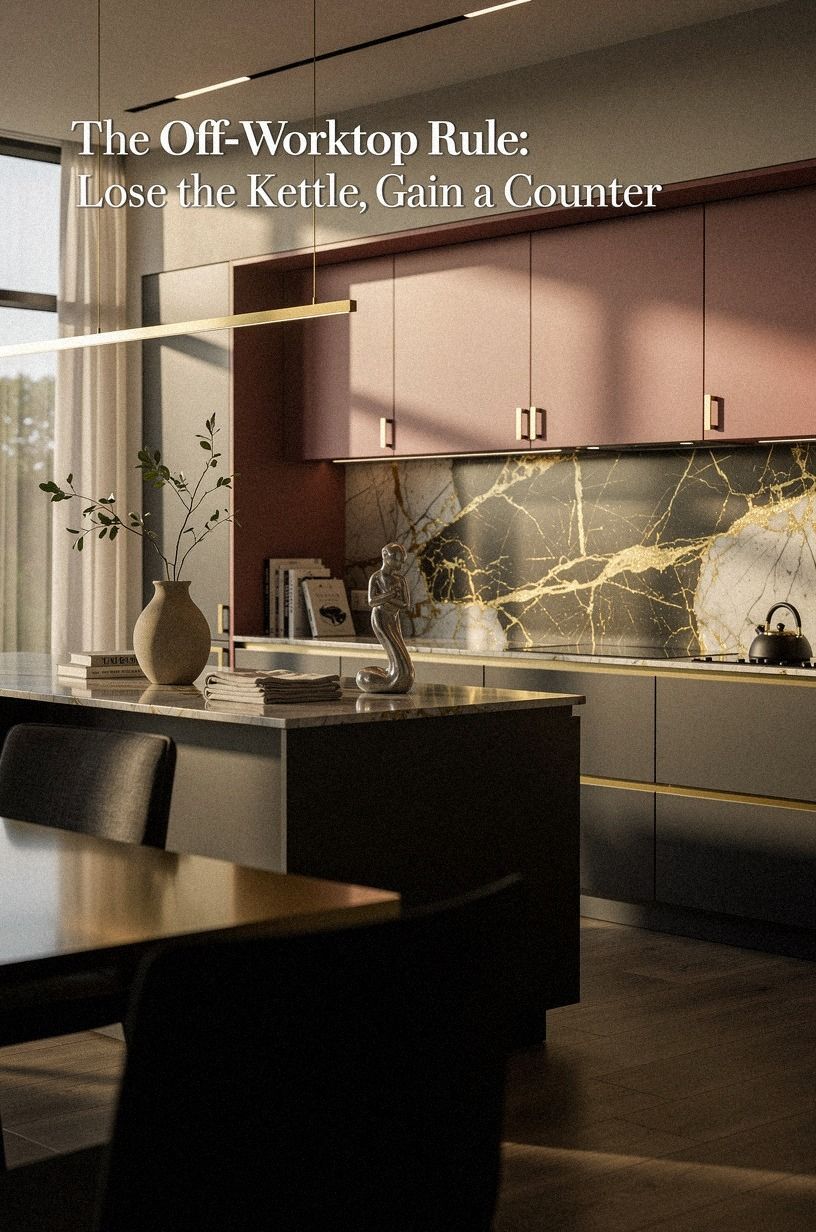
The electric kettle is the most-used, most-ugly object in most kitchens.
15Stack the Cookware by Frequency, Not by Size
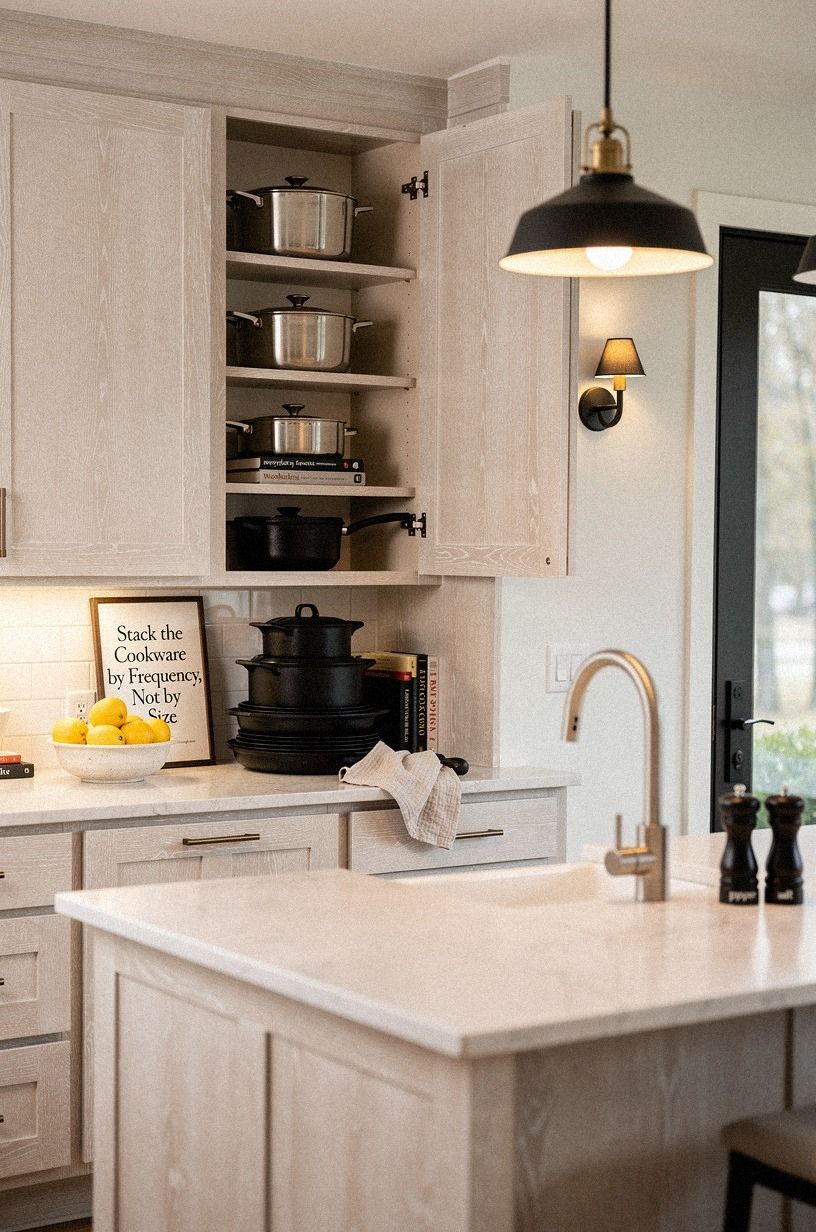
A galley can't hold a slow-cooker you use twice a year. Stack by frequency: the pan you touch most sits on the lowest hook, the next sits above, seasonal pieces go up high or into a closed cabinet.
A single stainless rail with S-hooks at counter height lets you hang the everyday three, a 10-inch fry, a 3-quart sauté, a small cast-iron skillet, where you can see them. Stack-by-size looks organized and reads cold.
Stack-by-frequency looks lived-in and reads intentional. Mount the rail 18 inches above the counter so the pans clear the workspace and stay easy to grab mid-recipe. Total MVP.
16The Pause Corner: a Stool, a Plant, a Quiet Spot at the Far End
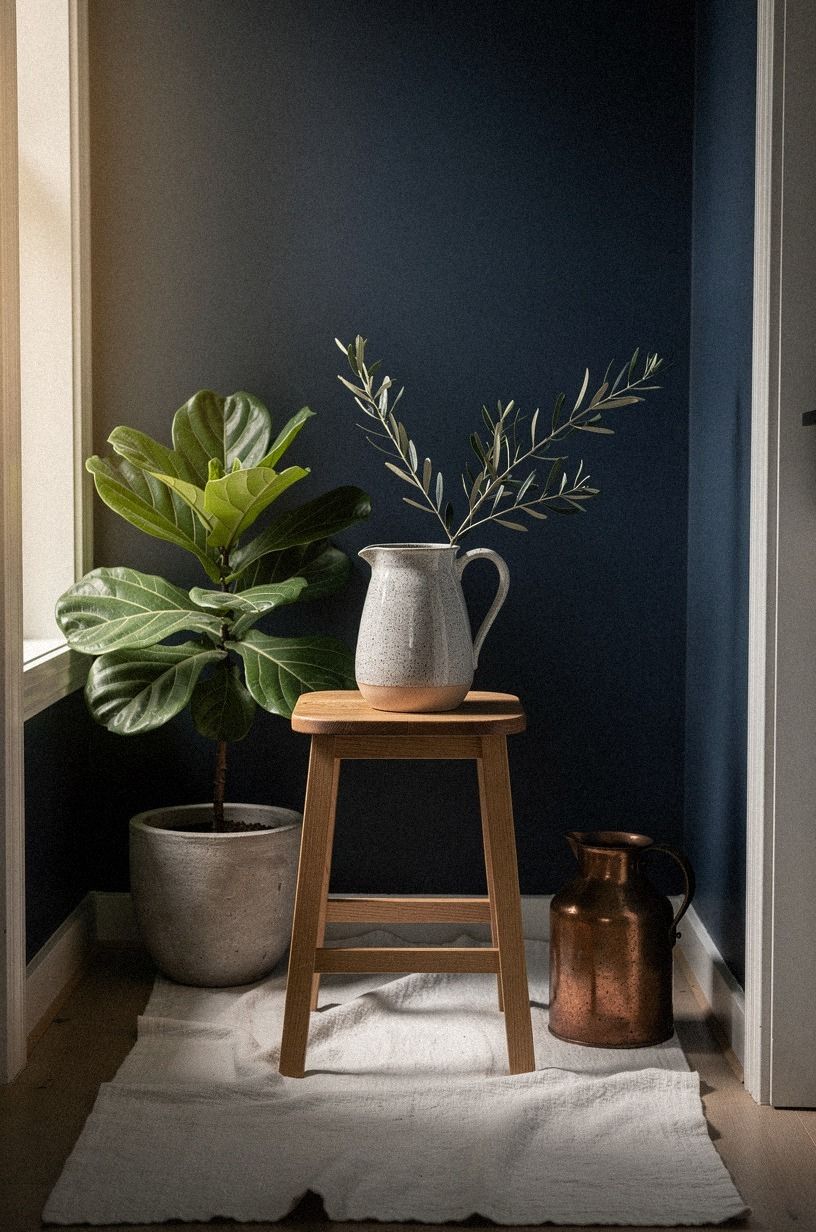
Most galleys die into nothing at the end. Build the dead corner instead: one low oak stool, one fiddle-leaf fig in a stoneware planter, nothing else.
The stool is for setting down a bag of groceries while you put the kettle on, for sitting while you talk on the phone, for stacking mail you'll sort later. The plant softens the geometry. Don't put storage there.
The job of the dead end is to be a pause, not a cupboard. A potted fig reaches a friendly 3 to 4 feet, which sits below the sightline of a standing cook and frames the corridor instead of crowding it.
17The Three-Times Wood Rule: Repeat One Oak, End the Negotiation
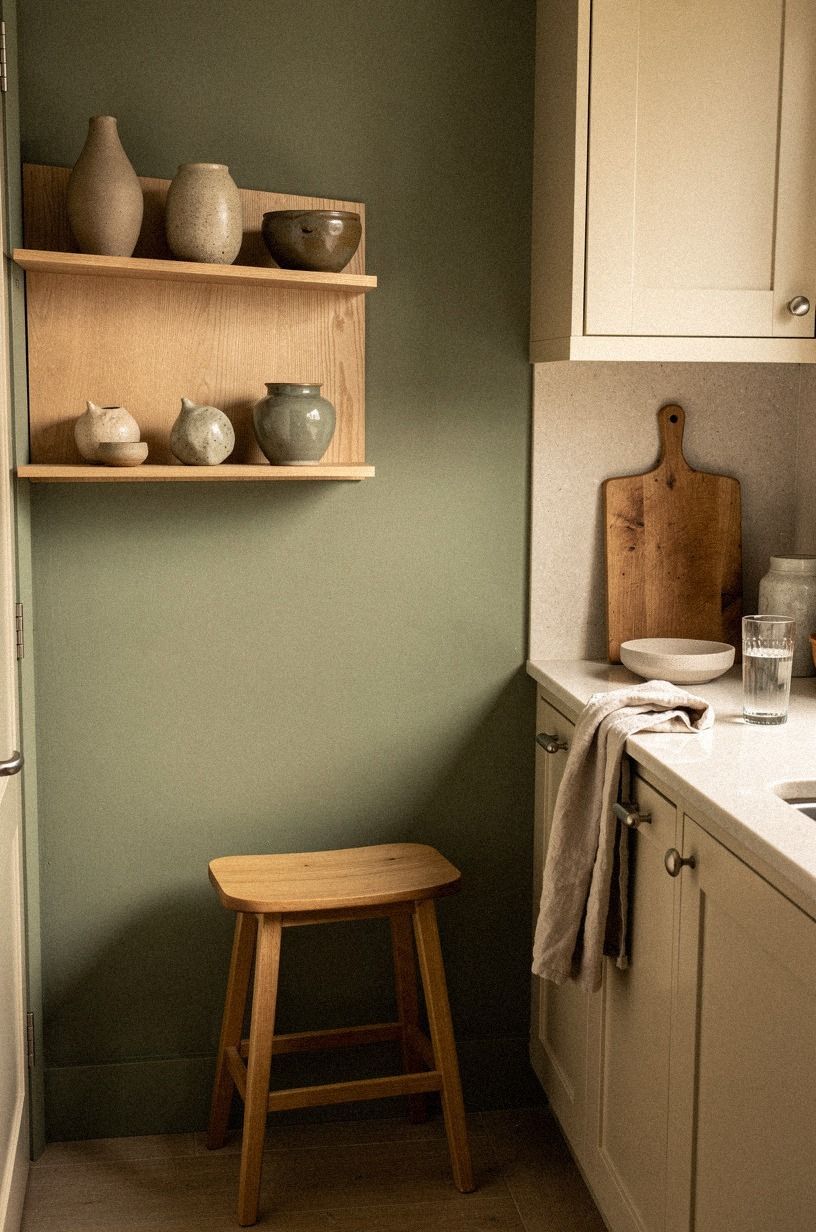
The single rule that decides whether a galley reads japandi or just reads narrow: use the same warm wood in three places.
Where Japandi Actually Works in a Galley (and Where It Falls Apart)
People think japandi is a color palette. It isn't.
It's a set of rules about how much your eye is allowed to take in at once. In a galley, japandi works because the space is narrow and the eye has a constrained field of view.
That's an advantage most kitchens don't have. You can use one warm wood, one pale wood, one metal, one accent color, and one stone, and the room will feel composed rather than busy. The same five materials in an open-plan kitchen would read noisy.
The corridor calms them down.
Where japandi falls apart: when it tips into sterility. A galley without texture reads like a waiting room.
You need at least one linen textile (a runner, a panel, a towel), at least one plant, and at least one piece of handmade pottery. I've seen narrow kitchens stripped down to oak-and-white that looked beautiful on day one and depressing by month three. The softness isn't the wood.
The softness is the human layer on top of the wood. A single hand-thrown mug does more than a thousand dollars of cabinet refacing.
And then there's the part nobody warns you about. A galley shows mess faster than any other layout.
Drop a cutting board on the counter in an L-shape kitchen and no one sees it. Drop the same board in a galley and you are staring at it from three feet away every time you walk past. That is why japandi works here: the discipline is not aesthetic, it is practical.
A calm surface is the only way a narrow room stays calm.
Plan for it. Build a place for everything you own, and keep the closed storage generous so the open storage can stay edited.
The principles are the same ones you'd apply to a tea ceremony: restraint as a form of respect, not a style. That's what makes the corridor feel quiet.
You don't need all seventeen. Pick three or four from different categories. One storage, one wood, one light, one soft. Apply them in that order.
The room reorganizes around you as you go.
What People Always Want to Know
What does japandi look like in a narrow kitchen without going sterile?
Japandi is one warm wood repeated three times, one pale wood for contrast, one soft textile (linen runner or panel), one living thing (a plant or a branch), and a tight accent palette. Avoid the all-oak-and-white version; it reads calm on day one and clinical by month three. The pottery matters as much as the wood.
Our 10 japandi kitchens post shows how warm this style can go.
Where can I buy japandi-style kitchen pieces without overspending?
IKEA is the reliable budget backbone; the SEKTION line in oak effect plus KALLAX for open storage reads japandi once you remove the obvious hardware. Target Threshold and Studio McGee for Target have decent oak stools and stoneware in the $25 to $80 range.
For splurges, Article has solid oak counter stools around $200. Hit Facebook Marketplace and OfferUp for used stoneware and solid-wood pieces that already have patina. The pieces you'll save the most on are secondhand: a vintage oak cutting board beats a new one every time.
How much does a japandi galley refresh realistically cost?
Budget cosmetic ($300 to $1,500) covers paint, hardware, peel-and-stick backsplash, and a runner. Mid-range ($3,000 to $12,000) adds a porcelain counter, a pull-out pantry, and two pendant lights.
Full remodel ($25,000 to $60,000+) replaces cabinets, runs new counters in quartz or stone, and adds appliances. The two numbers that move the dial most are the counter slab and the cabinet fronts.
Everything else is decoration on top. Our white oak cabinets guide breaks down what to budget for each tier.
Can I japandi a galley rental without losing my deposit?
Yes, almost entirely. Peel-and-stick backsplash panels come off clean with a hair dryer.
Tension-rod runners for floor textiles leave no marks. Removable shelf liners in oak tones fake a wood run without permanent installation. Skip the wall paint if your lease forbids it, because most of the stylistic change lives in textiles and lighting anyway.
Is a galley kitchen worth working with instead of bumping out a wall?
For most homes, yes. A bump-out runs $30,000 to $80,000 depending on foundation work.
The japandi refresh gives you about 80 percent of the perceived width for under 5 percent of the cost. The only case where I'd reno the galley is when two people genuinely cannot stand in it at once, which is rare.
Most galleys work. They just need styling done honestly.
For more on what to keep when the space is tight, our tiny kitchen layouts guide has more angles.
What flooring actually goes with white oak cabinets?
Either match the tone (white oak floors with white oak uppers reads seamless) or go three shades darker (a medium honey oak floor with pale oak uppers grounds the room). Skip the contrast-floor move (dark walnut with light oak): it works in living rooms, not in narrow galleys where you need the eye to travel. Our flooring ideas for oak cabinets post has the full tone-by-tone breakdown, and our white oak floors guide covers the wall and cabinet pairing side.
Where I'd Start Tonight
If I had to pick one, I'd start with the single warm wood repeated three times. One oak stool, one oak shelf, one oak cutting board.
Costs under two hundred dollars and rebuilds the eyeline. Pin our small oak guide before you commit!