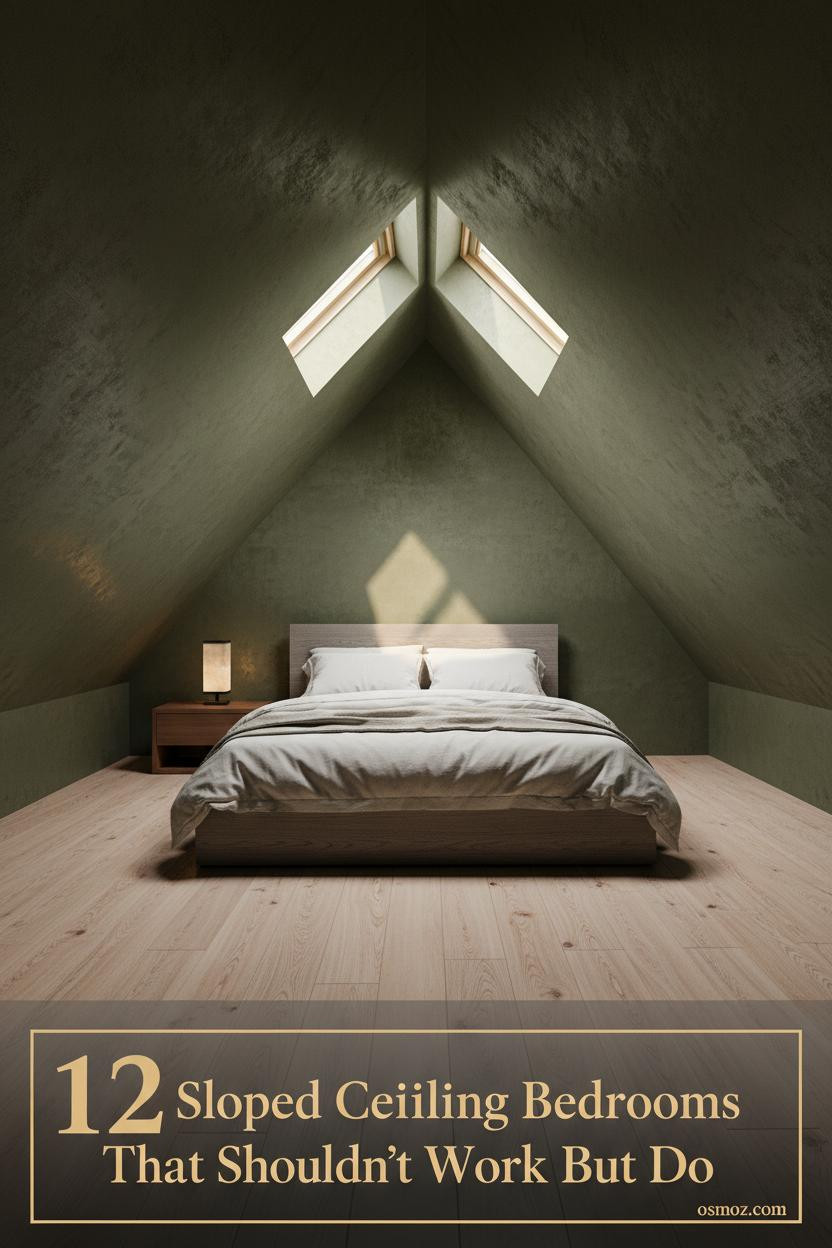
12+ Sloped Ceiling Bedrooms That Actually Make the Angles Work
06 april 2026Most people treat a sloped ceiling bedroom with slanted walls like a problem to solve. The better approach is to treat the angles as the whole point.
These 12 rooms do exactly that. Low ridges, compressed geometry, slanted walls that eat into your floor plan. And somehow every one of them feels like exactly the right amount of space.
The Attic Bedroom That Makes Dark Feel Cozy
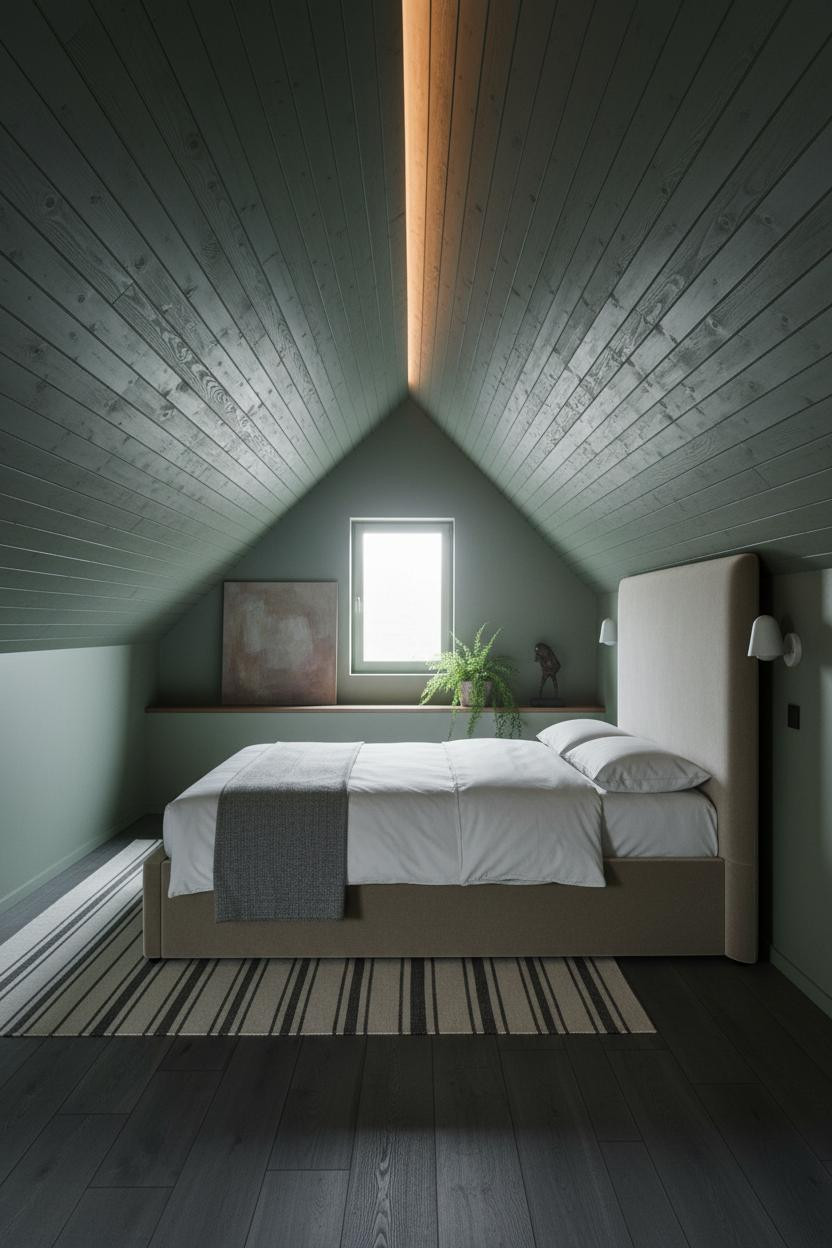


I keep coming back to this one. The charcoal-green makes the slope feel intentional, not just inherited.
Why it works: Painting the tongue-and-groove pine ceiling in a deep matte finish stops the eye from searching for more height. The room feels contained, not cramped.
Steal this move: Match your wall color to the ceiling plane. One continuous tone across every angled surface makes the geometry feel deliberate.
Why Built-In Shelving Belongs Under Slanted Walls
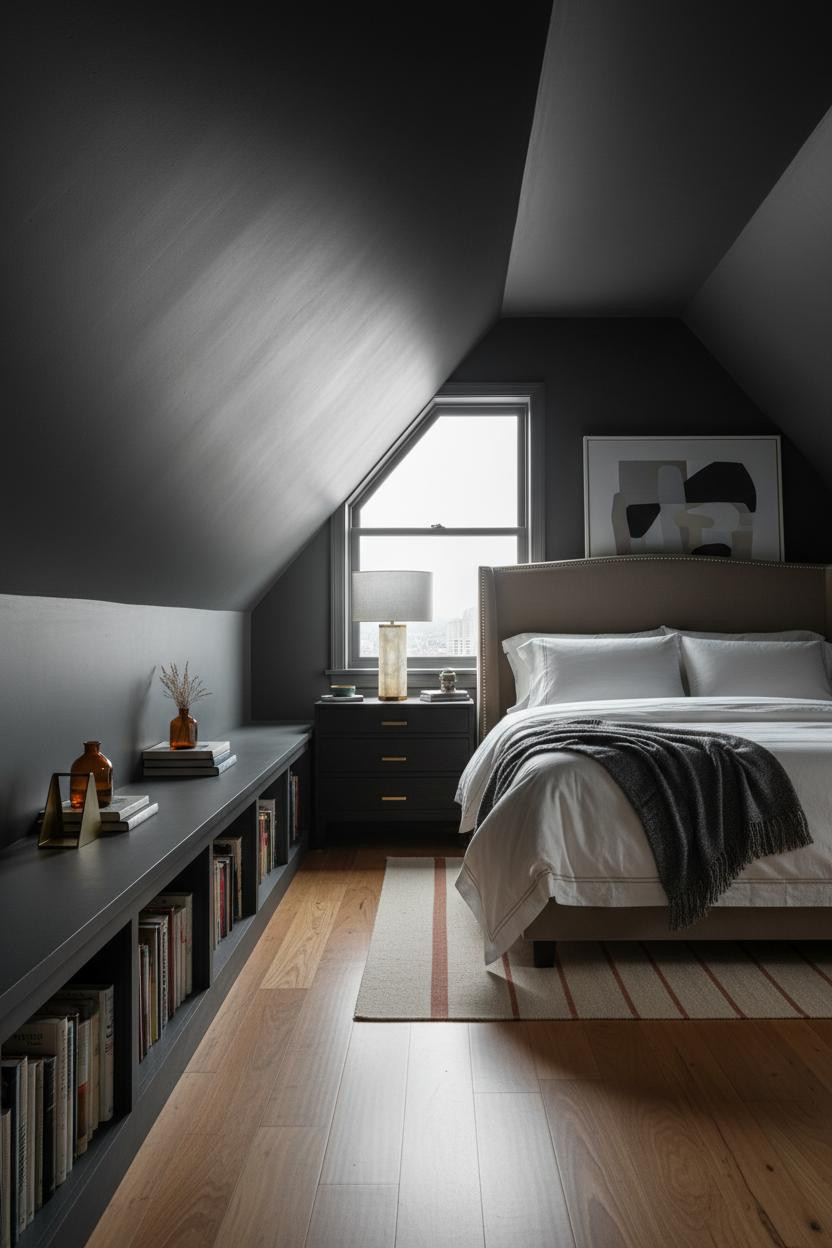

Smart use of dead space. That low knee-wall zone where you can't stand anyway? It's actually perfect for shelving.
A built-in bookshelf running flush beneath the slope line creates a horizontal graphic band that reads as intentional architecture. The charcoal-painted finish helps it disappear into the wall rather than fight the angles.
The practical move: Keep the shelf low and deep. Stack books horizontally so nothing juts into the slope overhead.
Slate Teal Walls That Make the Angles Pop
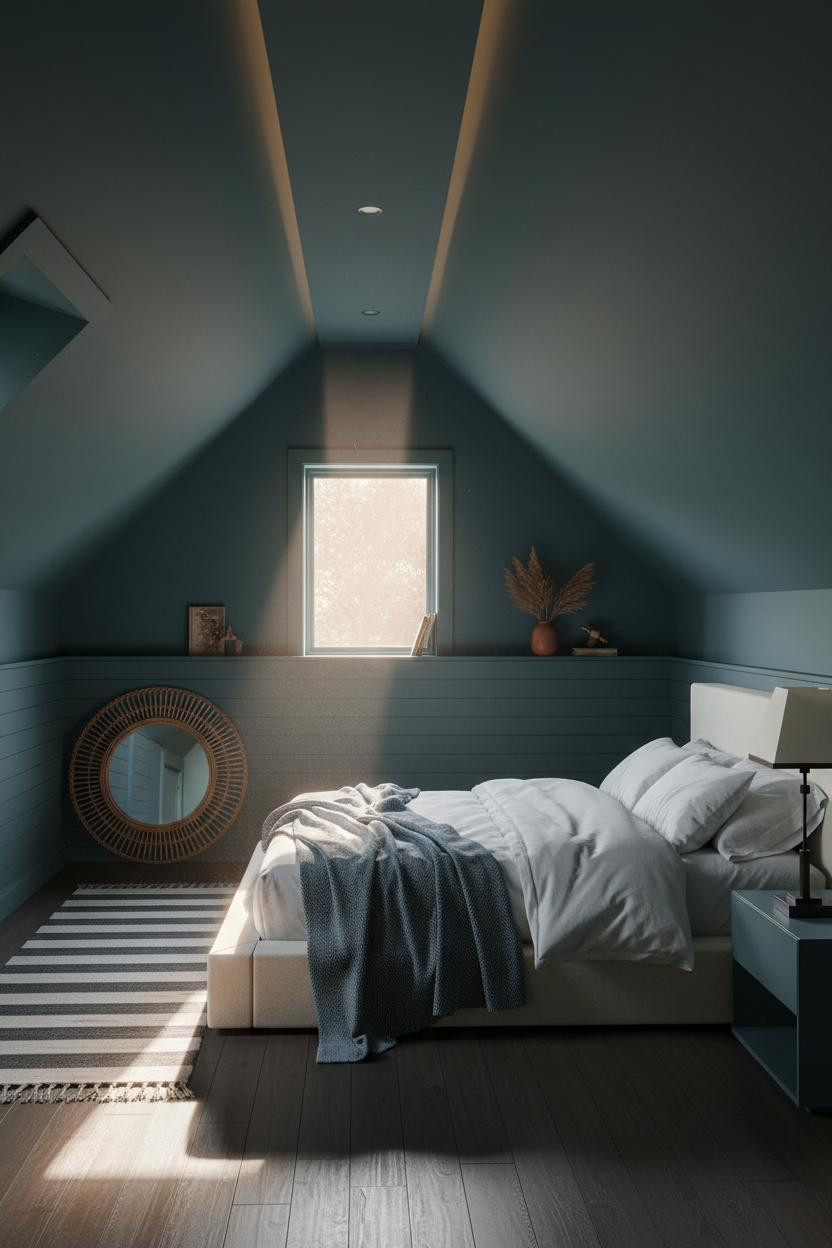
This is a room that knows exactly what it is.
What gives it presence: The board-and-batten knee-walls painted in deep slate teal create a strong lower register. The paneled surface casts long horizontal shadows up the angled ceiling planes, which makes the geometry feel architectural rather than accidental.
Worth copying: A large round rattan mirror leaning against the knee-wall adds warmth while keeping everything low, in a way that feels grounded rather than staged.
The Cream Shiplap Ceiling That Actually Works
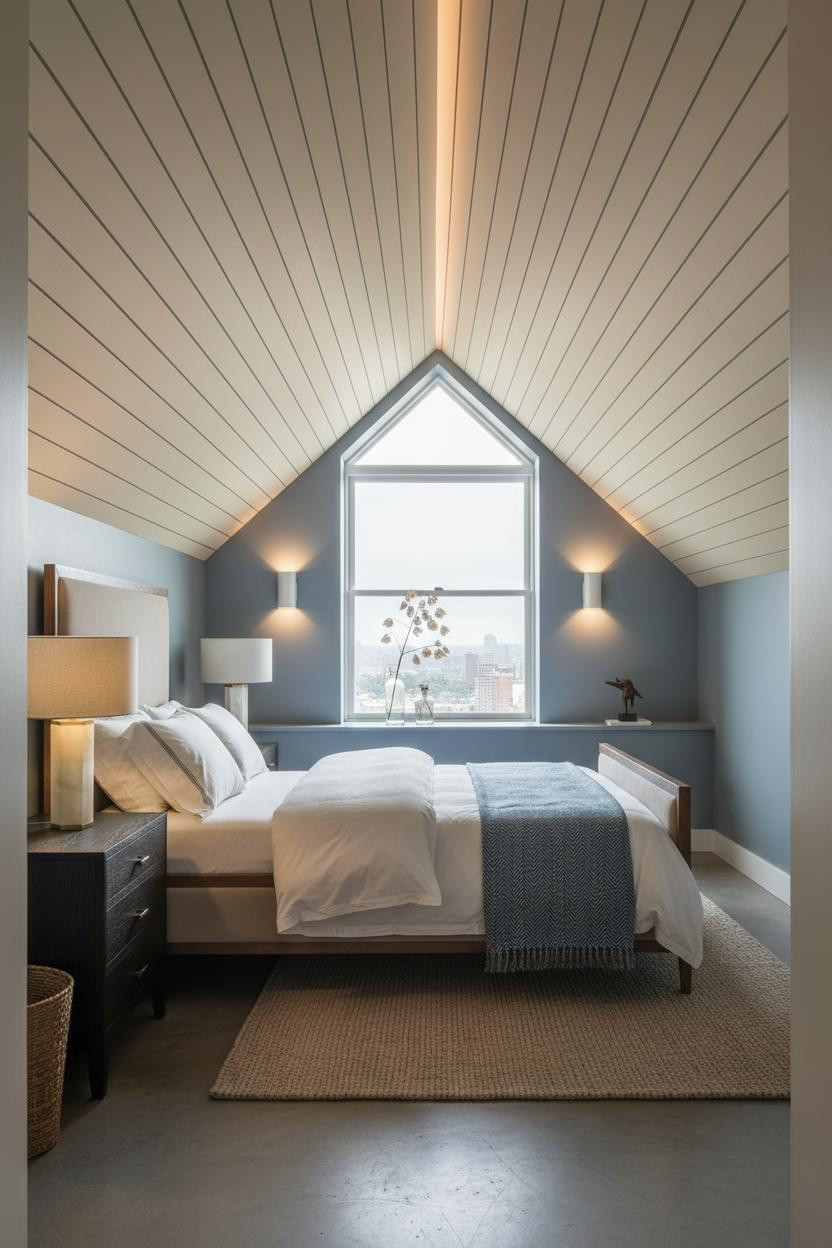

Horizontal boards on a sloped ceiling feel counterintuitive. But they draw the eye up to the ridge line naturally, which makes a compressed attic feel taller than it is.
Why it lands: The warm cream shiplap catches pale shadows in every board gap, giving the ceiling texture without color. It's calm, not flat.
The easy win: Pair cream ceiling boards with blue-grey knee-walls below the slope break. The contrast defines the two zones without splitting the room.
Lime Plaster Walls in a Low Attic Bedroom
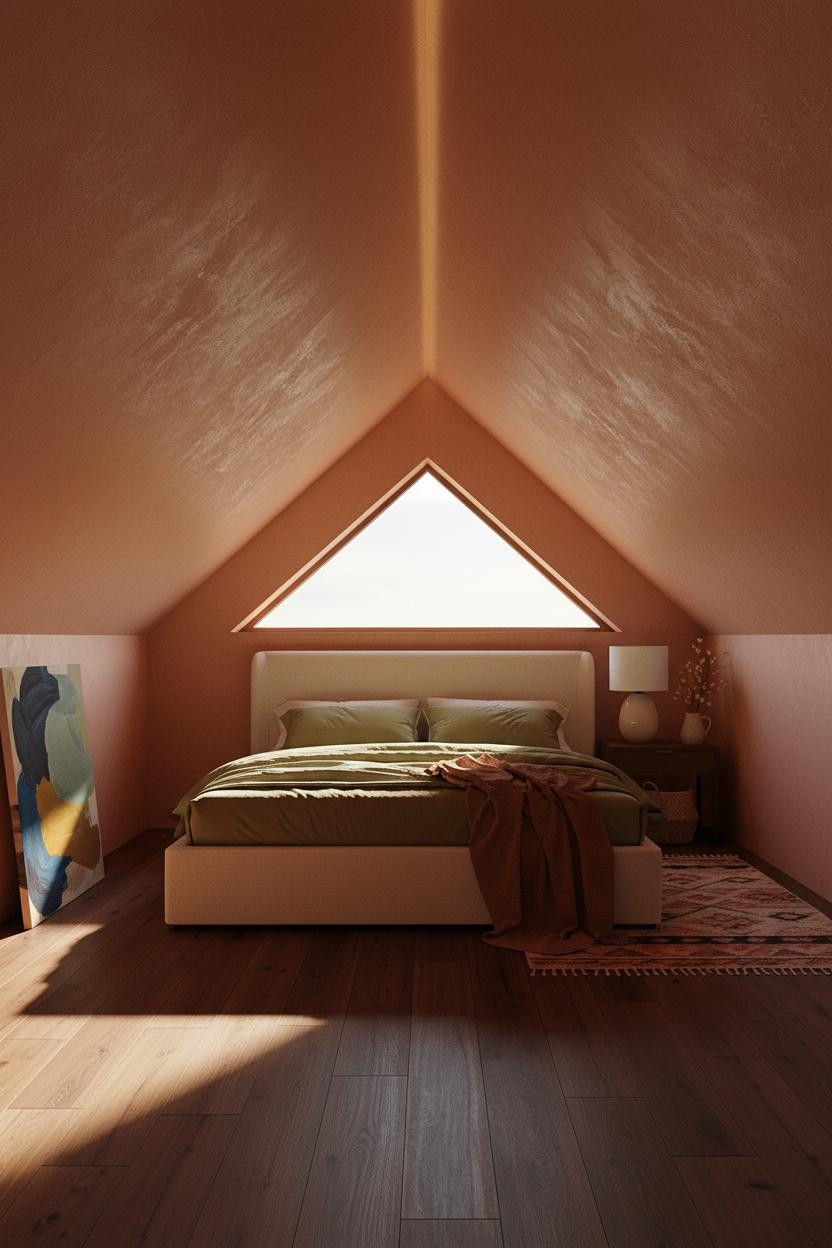


I'll be honest: terracotta-rose plaster sounds risky. In practice it's the warmest a slanted roof bedroom can feel without a fireplace.
The hand-troweled lime plaster catches raking afternoon light unevenly across every slope. That texture does more for the room than any paint color could. It's ancient geometry, honestly.
Where to start: Lean an oversized abstract canvas against the lower knee-wall. It fills the dead zone below the slope while keeping furniture low and the room breathable.
How White Shiplap Saves a Small Slanted Ceiling Room
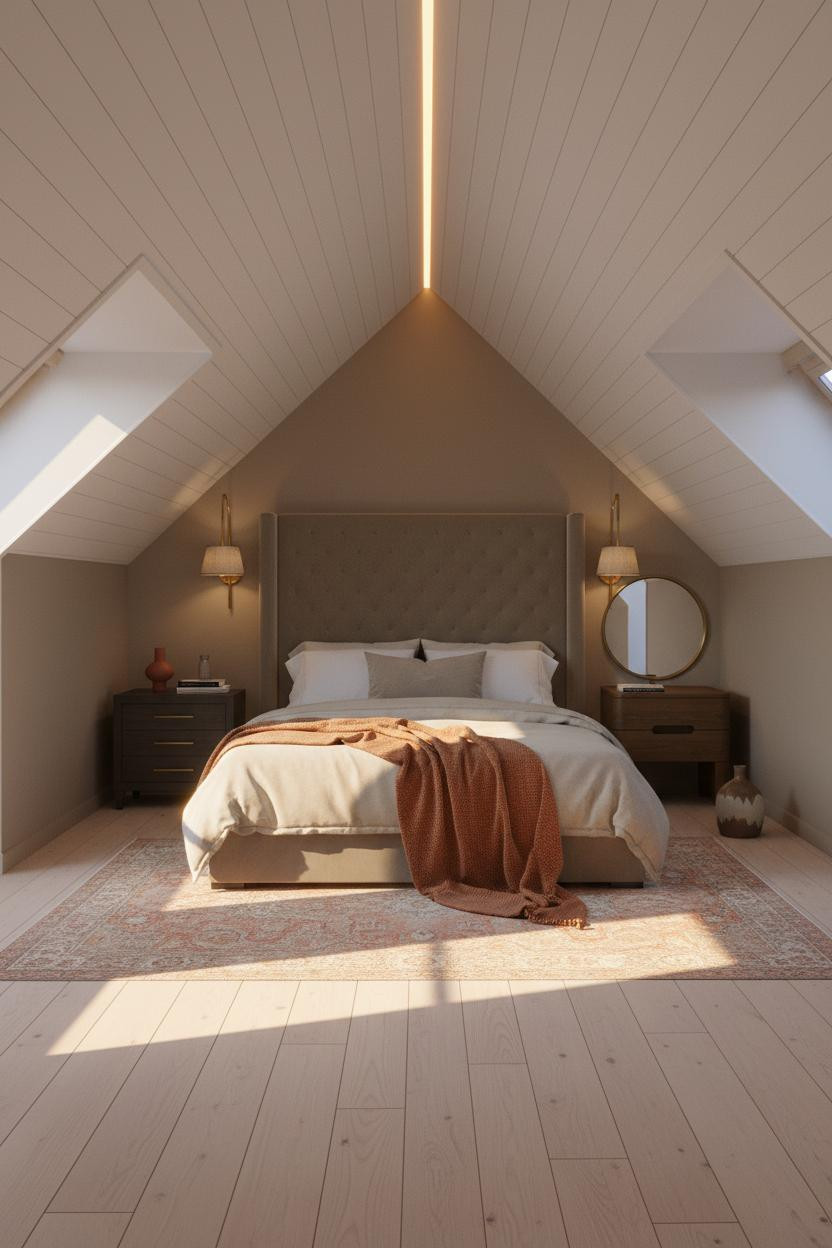

White-painted shiplap on a sloped ceiling is almost a cliché at this point. But the reason people keep doing it is that it actually works.
Design logic: The horizontal board lines on the narrow tongue-and-groove panels accelerate downward and frame the bed beneath the ridge like a canopy. The room feels sheltered rather than squeezed.
A vintage overdyed rug in faded rose and amber grounds the birch floor without fighting the white above. Warm below, pale above. That contrast keeps the eye moving.
The Terracotta Attic That Earns Its Warmth
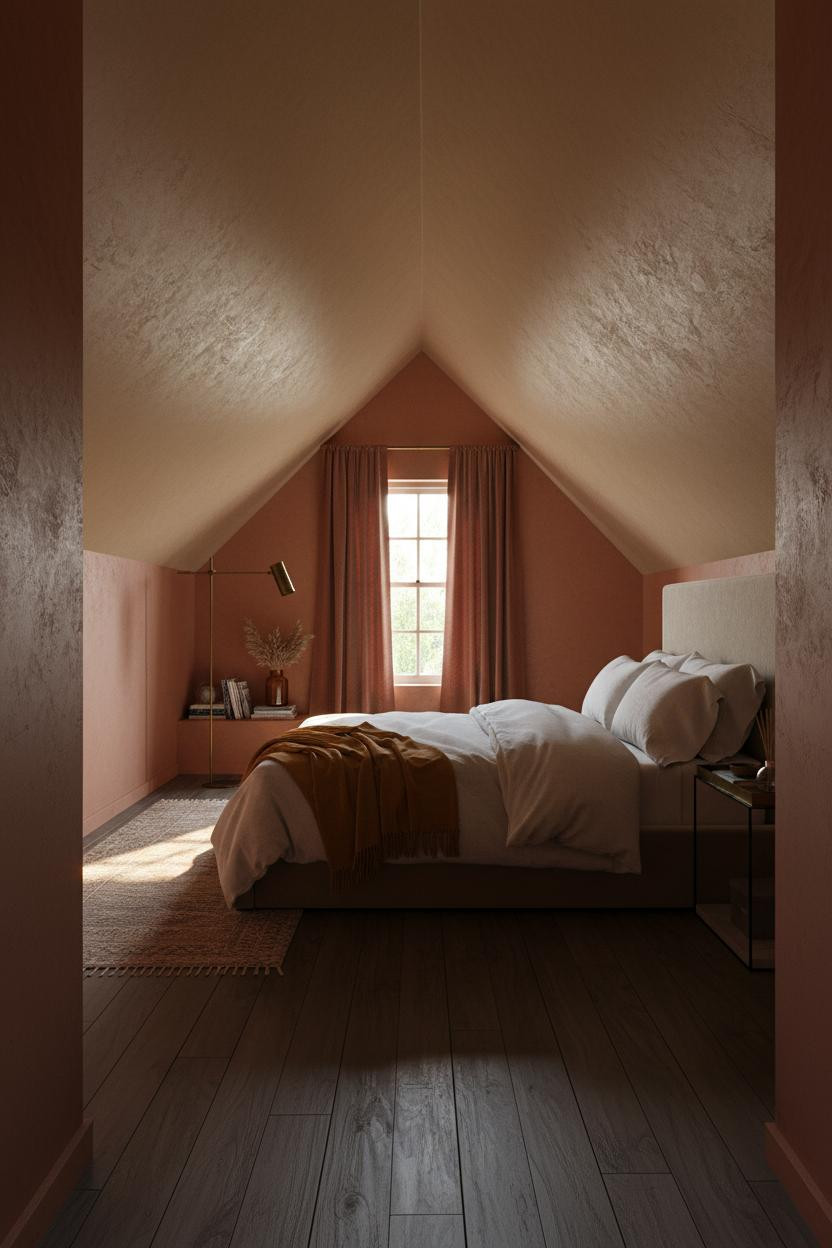

Fair warning: this palette asks for commitment. But the rooms that go all-in on rust-terracotta plaster never feel halfway done.
What creates the mood: Hand-applied trowel marks on the plaster surface catch raking dormer light at every hour differently. The room feels alive without anything moving.
Pro move: Floor-to-ceiling linen curtains in a matching terracotta flank the dormer window. Same family, different weight. The result is calm and cohesive.
Sage Board-and-Batten That Pulls the Room Together
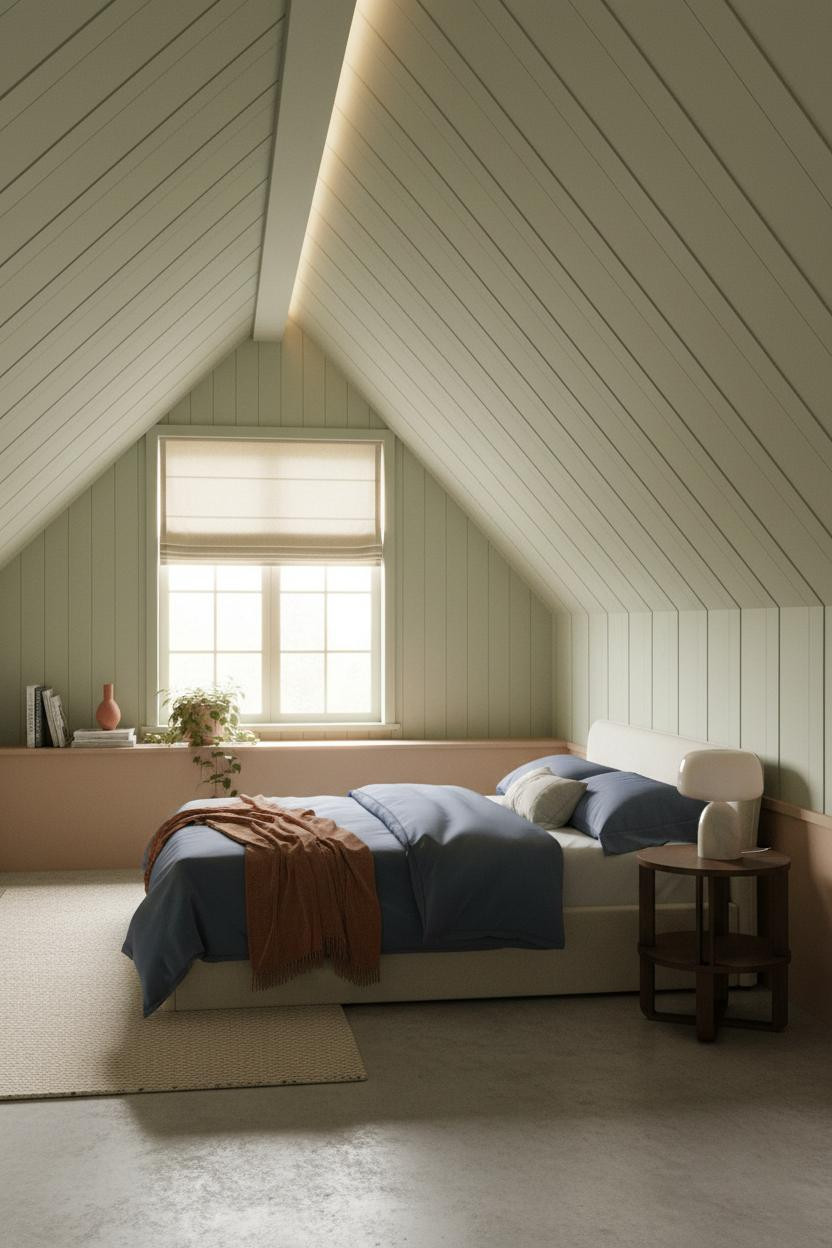


Nothing fancy. That's the whole point.
Why it feels intentional: The vertical battens on the sage-cream paneling cast crisp parallel shadow lines as light rakes across the slope. It's a small detail, but it turns the slant into something that looks designed rather than structural.
Avoid this mistake: Don't let the nightstand compete with the paneling. Keep it simple and low, tucked into the knee-wall alcove where the slope meets the floor.
Stone Grey Plaster for a Coastal Attic Bedroom
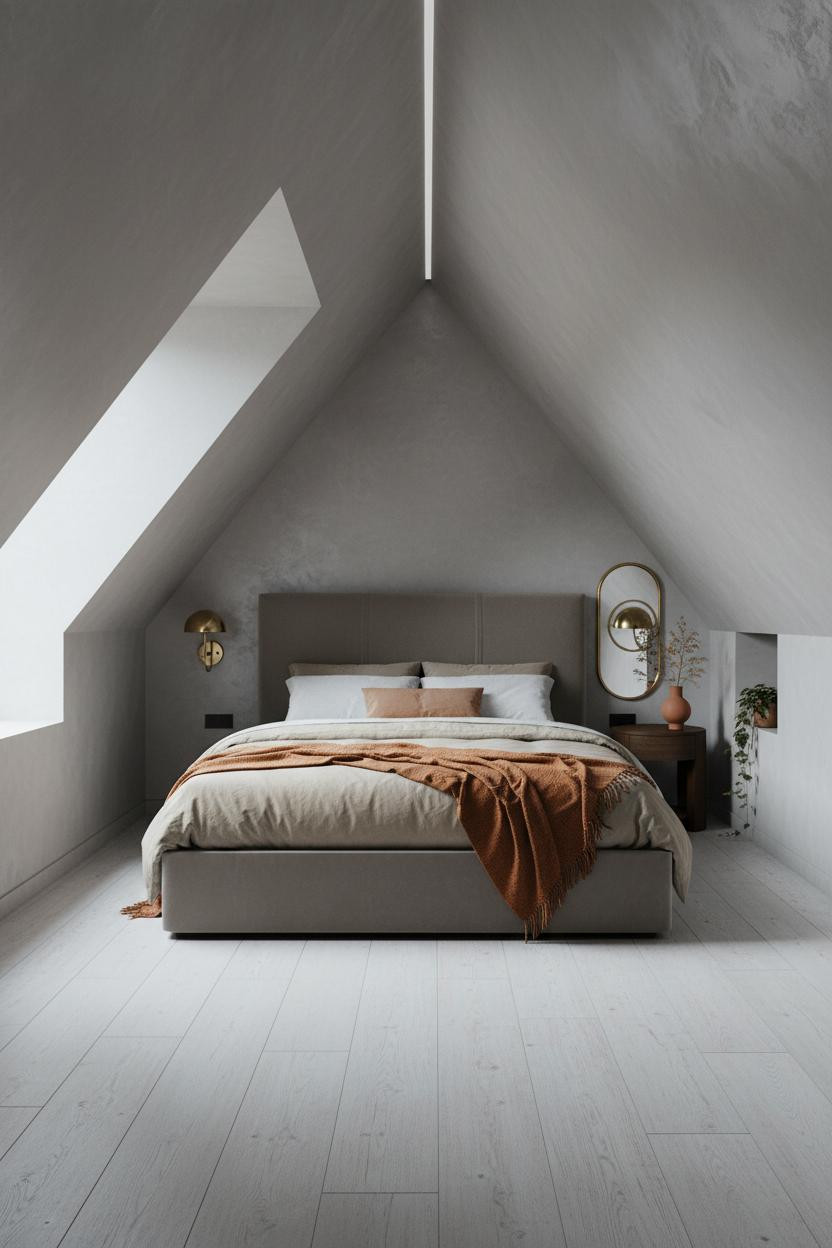

This one surprised me. The proportions in a fully grey attic room shouldn't feel restful, but this one does.
What makes this work: Two sloped planes of hand-applied stone grey plaster catch flat overcast light differently on each face. One reads pale. The opposite falls into quiet shadow. The contrast comes from the architecture, not from added color.
Skip the rug here. Reclaimed wood plank flooring in weathered pale tone gives the room enough texture to stay warm while still feeling spare.
Deep Olive Plaster Under a Skylight
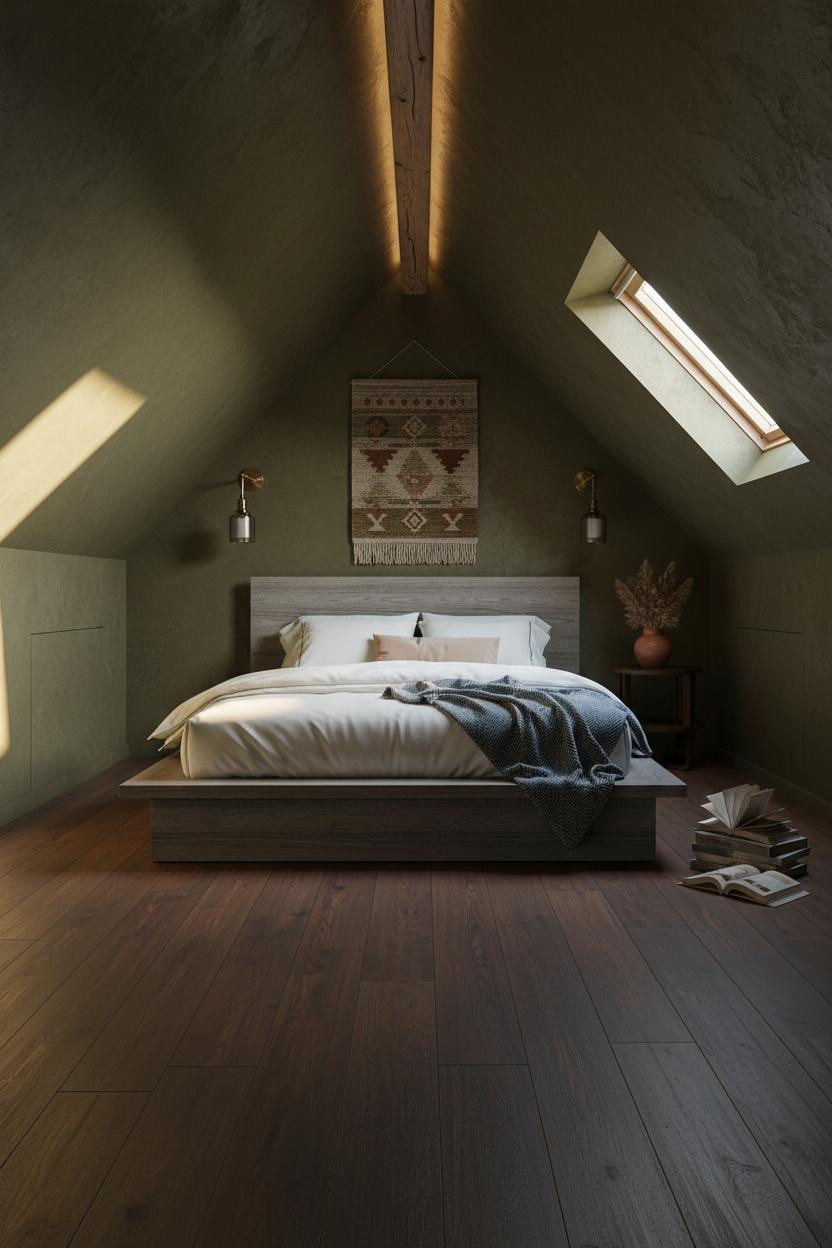
A skylight in a slanted ceiling bedroom changes everything about how the day moves through the room. The light tracks across the slope, which means the walls look different at noon than at four.
What makes it different: Deep olive matte plaster reveals every brushstroke under raking afternoon sun. The texture does the decorating. You don't need much else on the walls.
The smarter choice: Mount a woven wall hanging directly on the sloped surface rather than trying to hang art on the angled plane with standard hardware.
Low White Plaster Slopes Done the Quiet Way
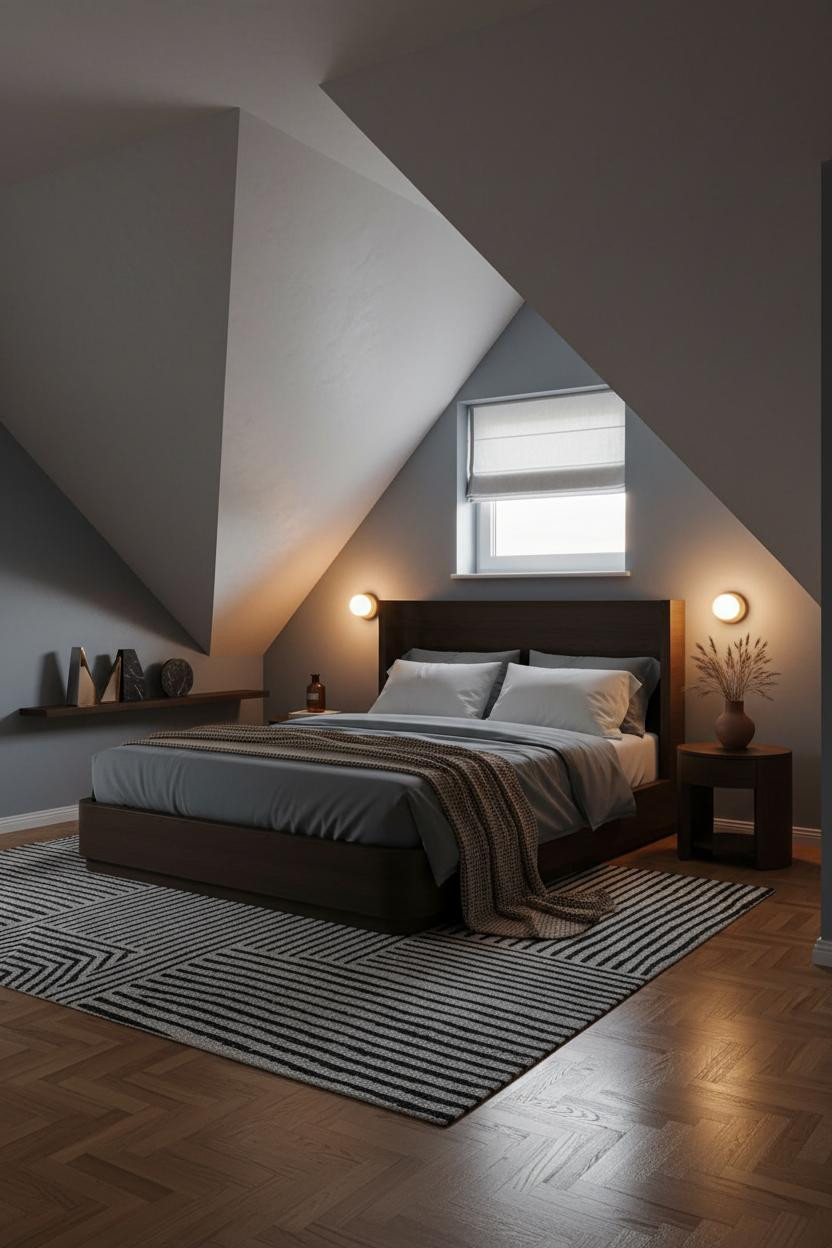

White plaster slopes get dismissed as too simple. But this room is a good argument for restraint.
Why it holds together: Herringbone parquet in warm honey adds the only real texture at floor level. The amber sconce light pools against white plaster and makes the slanted walls glow rather than flatten. The room feels warm without being heavy.
One smart swap: A graphic black-and-white flat-weave rug underfoot gives the eye somewhere to land, which keeps the all-white slopes from feeling too stark.
Exposed Ceiling Beams in a Japandi Attic Bedroom
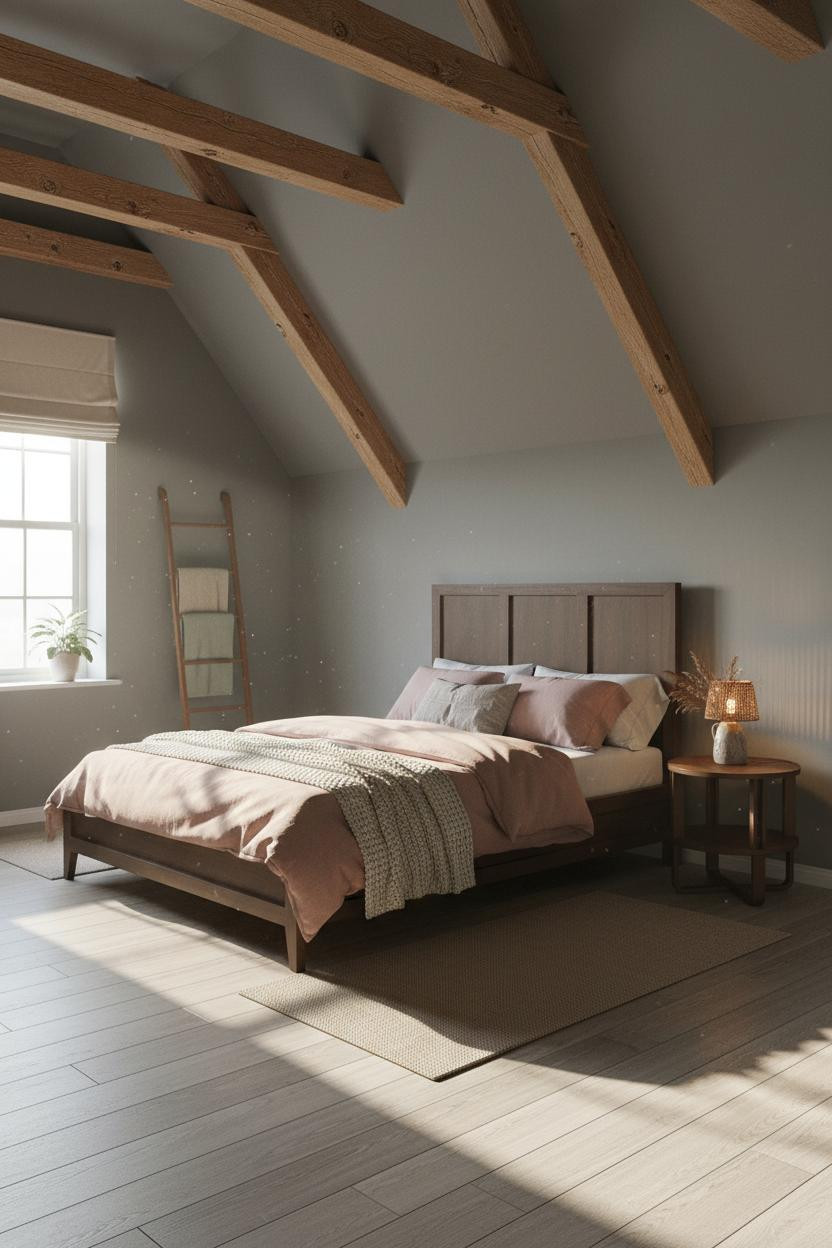
I almost skipped this one. Exposed beams in a Japandi room sounds like a contradiction.
But the weathered honey-brown ceiling beams angle at 45 degrees and meet at a single ridge point, which makes the whole attic feel purposeful rather than raw. The greige plaster walls keep the wood from skewing rustic.
What to borrow: A wooden ladder shelf against the sloped wall holds rolled linens in a way that feels collected rather than decorated. Nothing too precious. Just enough texture.
 Our #1 Pick
Saatva Classic Mattress
America's best-selling online luxury innerspring. 365-night trial, lifetime warranty, free white glove delivery.
Shop Saatva Classic
Our #1 Pick
Saatva Classic Mattress
America's best-selling online luxury innerspring. 365-night trial, lifetime warranty, free white glove delivery.
Shop Saatva Classic
The Foundation Of Every Beautiful Bedroom
Every room in this article gets the angles right. But the walls get repainted, the linen gets swapped out. The mattress is what stays.
The Saatva Classic is worth understanding before you spend anything else on the room. Dual-coil support that holds its structure over years, a breathable organic cotton cover, and a Euro pillow top that's soft without losing integrity. It's not the flashy part of the bedroom. It's the part you feel every single morning.
Start with the bed. The rest figures itself out.

The rooms people save are the ones where nothing looks accidental. And in a sloped ceiling bedroom, that starts the moment you stop fighting the angles and start working with them.