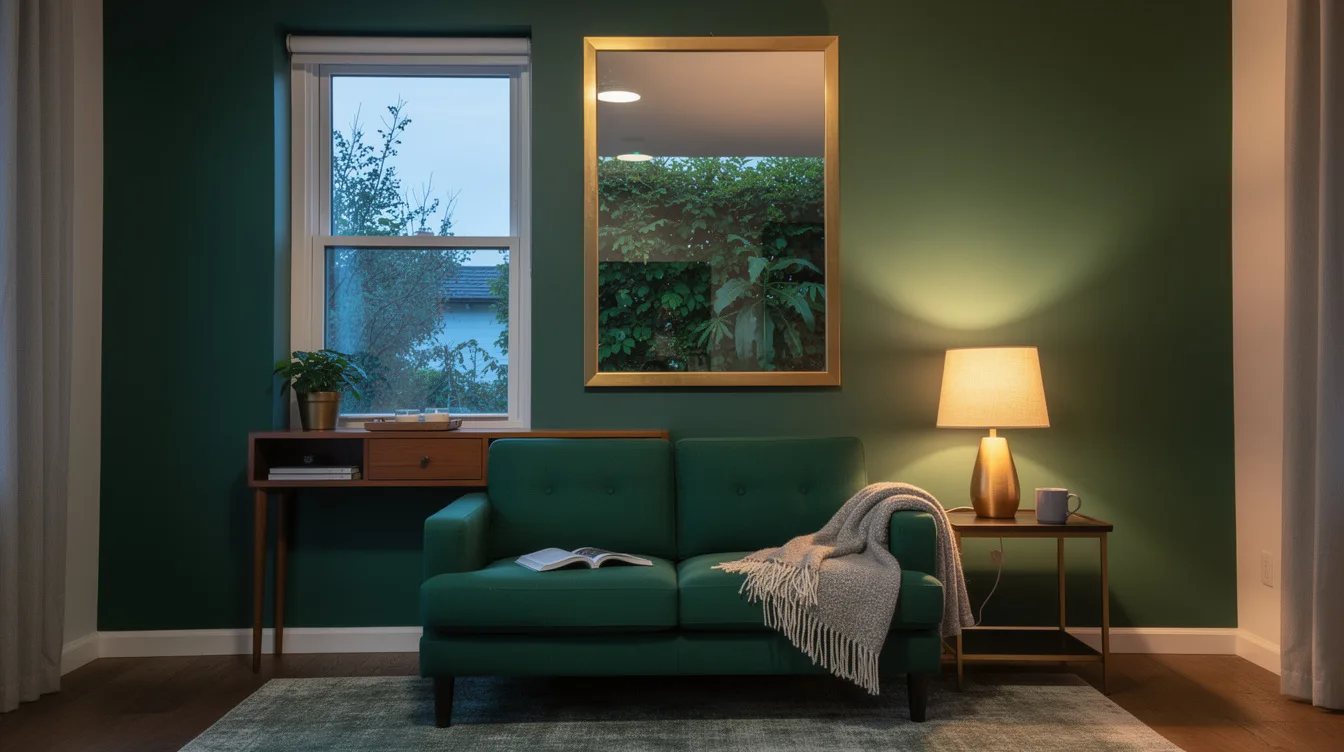
Small Living Room Feeling Cramped? These 14 Mirror Ideas Open It Up
26 november 2026A small living room can feel crowded long before the furniture is wrong. Start with one mirror around 30 by 40 inches, place it where it catches daylight or a good view, and let that reflection do the visual work.
The best placement depends on what the glass repeats. A window, lamp, or artwork adds depth; a TV, doorway, or pile of clutter simply sends the room’s problems back across the wall.
What you will find inside
- Bounce Daylight Beside the Main Window
- Reflect the Best View Across the Room
- Center One Large Mirror Above the Sofa
- Leave a Narrow Gap Above the Sofa
- Lean a Full-Length Mirror Without Drilling
- Draw the Eye Up in a Narrow Alcove
- Widen a Long Wall With a Horizontal Shape
- Multiply a Lamp’s Warm Glow
- Aim Away From the Television
- Use a Small Gallery as a Controlled Accent
- Keep Mirrored Panels on One Wall
- Choose a Slim Frame Over a Chunky One
- Stay Above the Accidental-Size Threshold
- Secure the Reflection Before You Style It
Bounce Daylight Beside the Main Window
Place one large aluminum-frame mirror beside your main window so it catches daylight and sends it across the seating area. Perpendicular placement works when a directly opposite position would show a blank wall, a doorway, or the back of a television.
We would choose this location before shopping for a decorative shape. The reflection should add a view, a patch of sky, or useful light, because a mirror only repeats whatever sits in front of it.
Reflect the Best View Across the Room
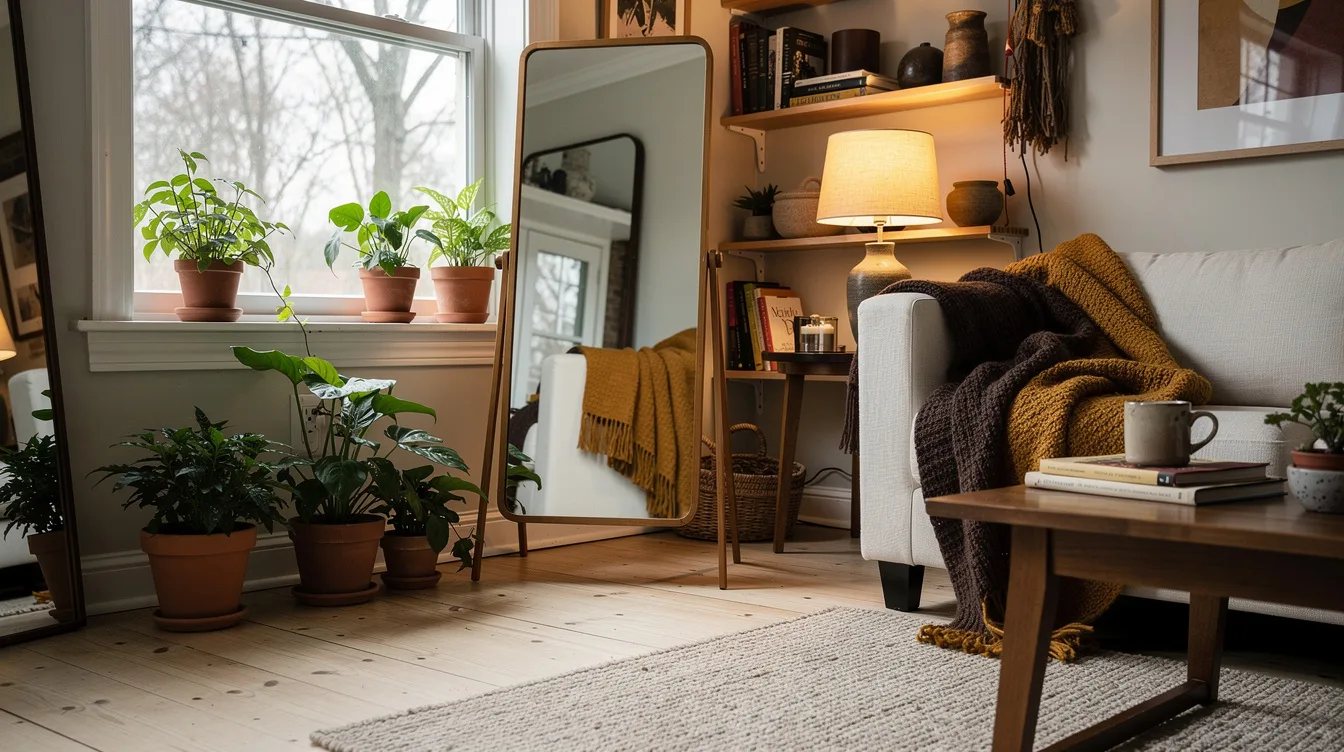
Angle a BEAUTYPEAK 30-by-40-inch mirror toward the room’s strongest visual point, such as leafy windows, a fireplace, or a favorite piece of art. Its typical price of about $57 to $63 keeps this placement affordable when you are testing the layout.
Walk through the room from the sofa before drilling anything. A mirror that reflects the best view feels intentional, while one aimed at clutter makes the room look busier.
Center One Large Mirror Above the Sofa
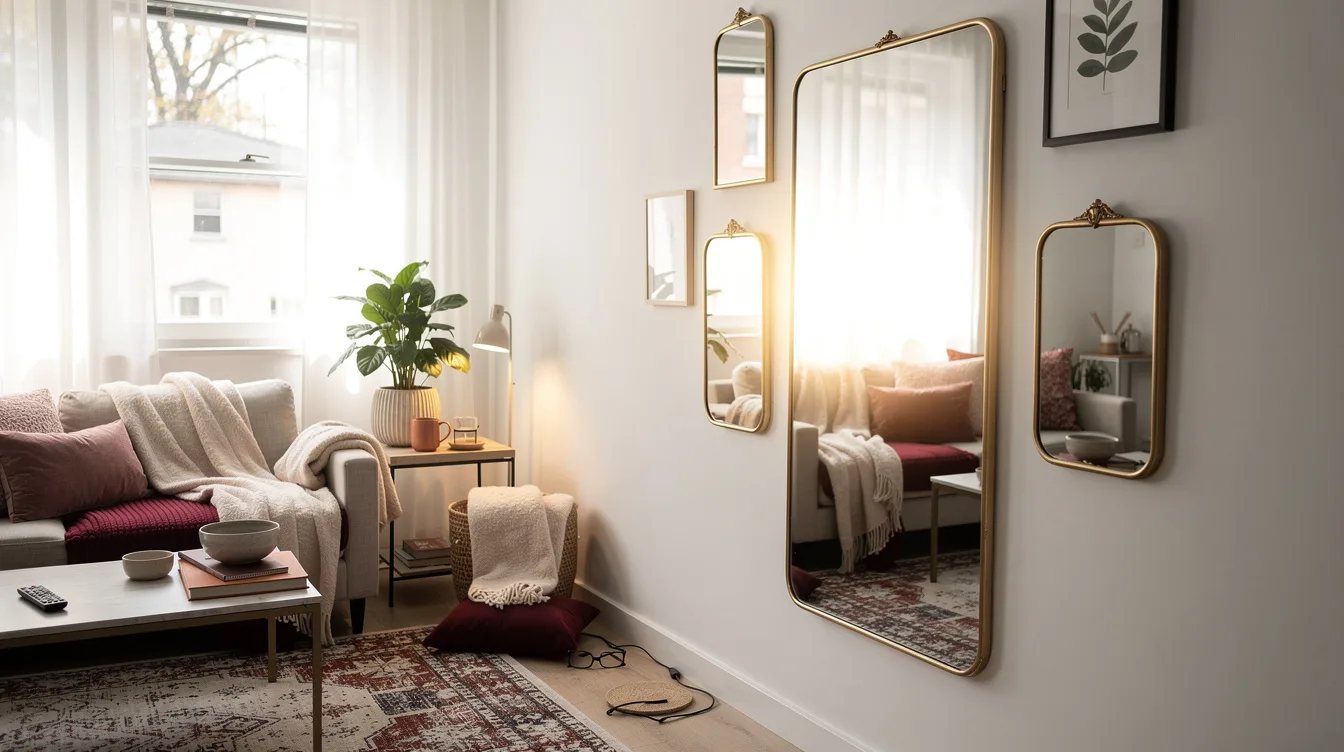
For a small living room, a single big brass-edged mirror usually works better than a scatter of undersized pieces. Above a sofa, aim for roughly two-thirds of the sofa’s width so the arrangement has visual weight without swallowing the wall.
A typical 36-to-48-inch mirror suits a standard living room, while a room under about 12 by 14 feet often benefits from a round or oval mirror around 24 to 36 inches. Keep the frame slim so the reflection, rather than the border, does the work.
Leave a Narrow Gap Above the Sofa
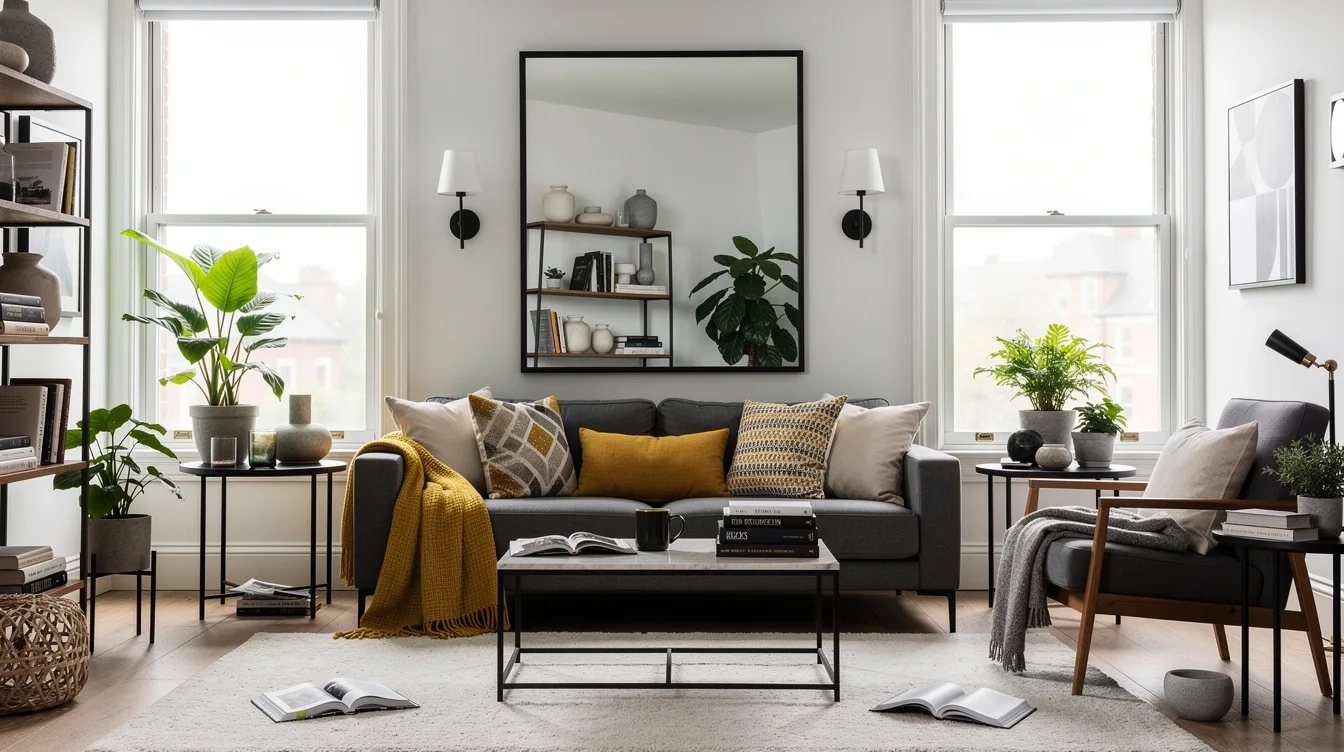
Hang a black metal mirror about 6 to 10 inches above the sofa back, or use the tighter 4-to-8-inch range when the furniture is low. The center of the mirror can land around 57 to 62 inches from the floor, but the sofa relationship matters more than a rigid measurement.
Use painter’s tape to mark the top and bottom edges before making holes. If the mirror feels detached from the sofa, lower it slightly; floating too high is the more common mistake.
Lean a Full-Length Mirror Without Drilling
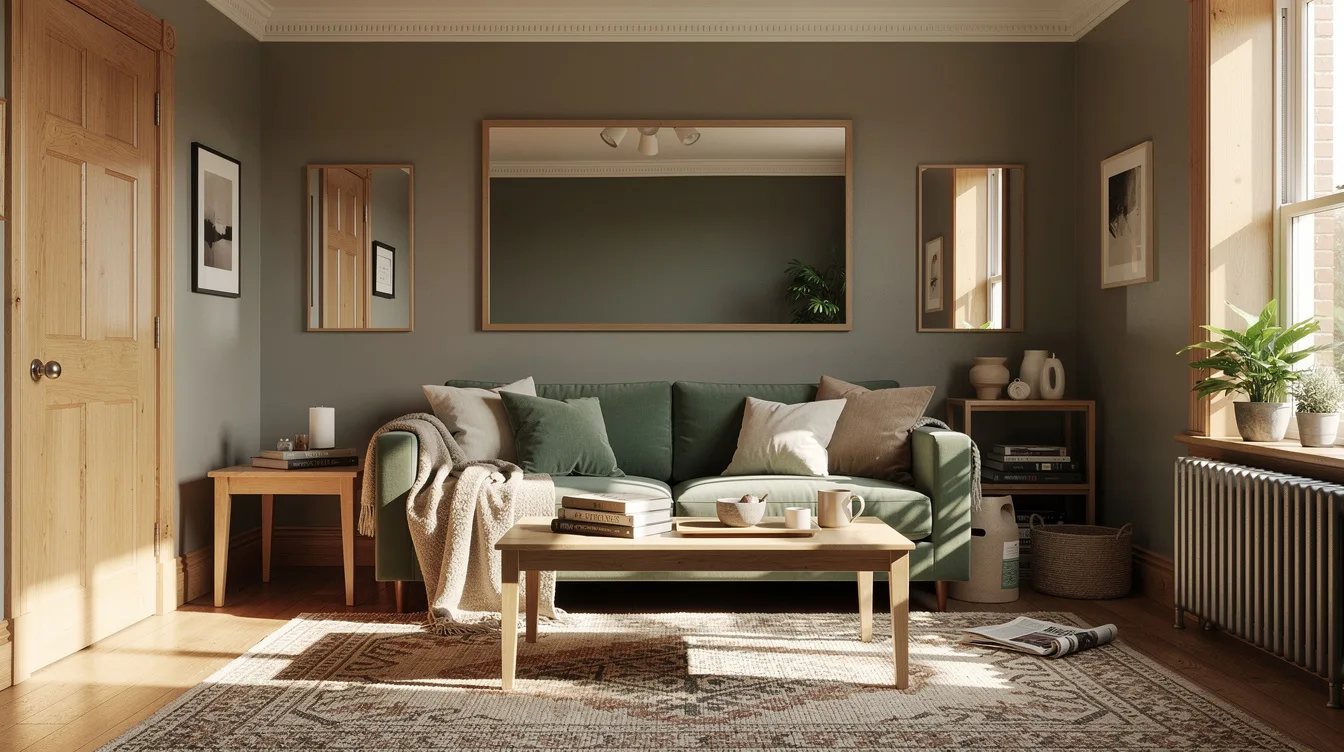
Lean an IKEA full-length mirror against a wall near the window for a flexible arrangement that can move with the furniture. Oversized mirrors from IKEA or secondhand sources typically cost about $40 to $80, making this one of the easier experiments for renters.
Leave roughly 3 to 4 feet of viewing distance so the reflection is useful rather than distorted by an awkward angle. Secure the top with an anti-tip strap whenever children or pets use the room.
Draw the Eye Up in a Narrow Alcove
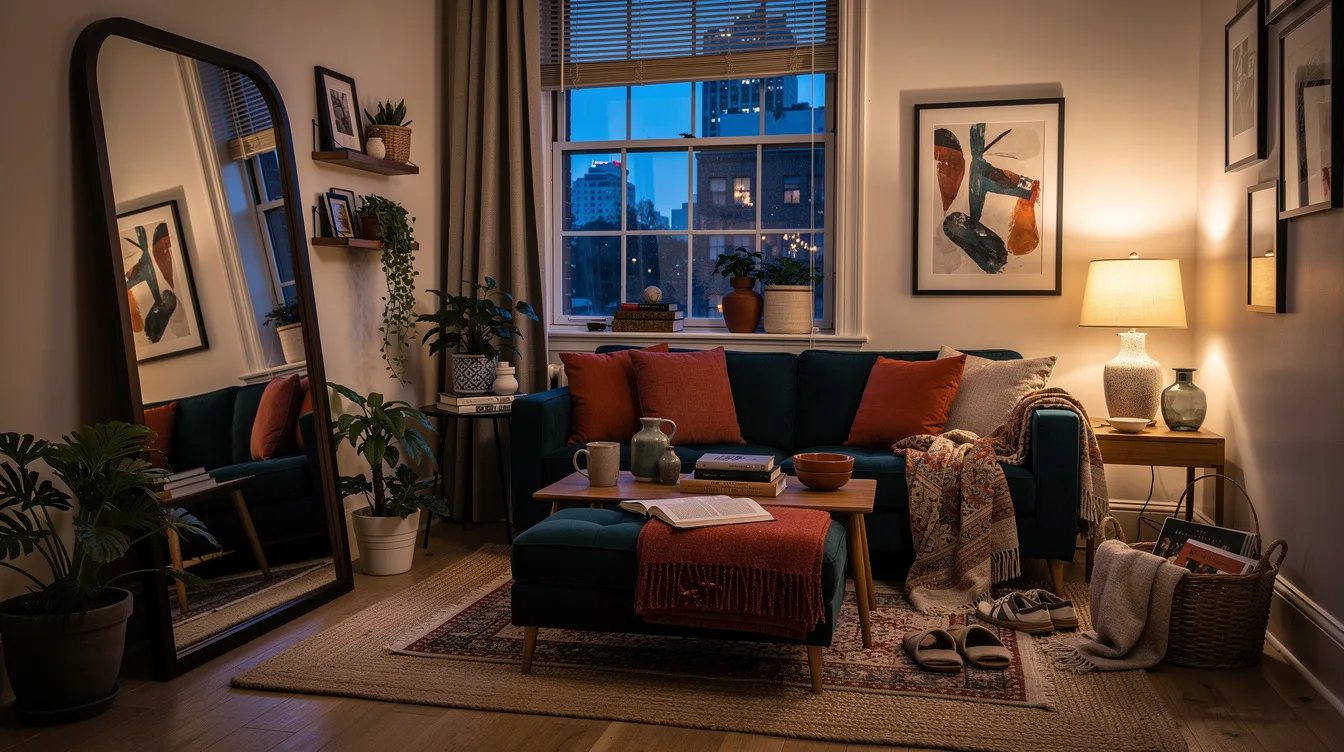
Fill a tight alcove with a tall Swafrrt antique-gold arch mirror to use the wall’s height instead of pushing furniture outward. This model costs about $69.99 and uses a tempered-glass surface with an aluminum-alloy frame.
Keep the surrounding styling quiet: one small plant or a slim stool is enough. A vertical silhouette makes a narrow spot feel considered, while extra objects compete with the reflection.
Widen a Long Wall With a Horizontal Shape
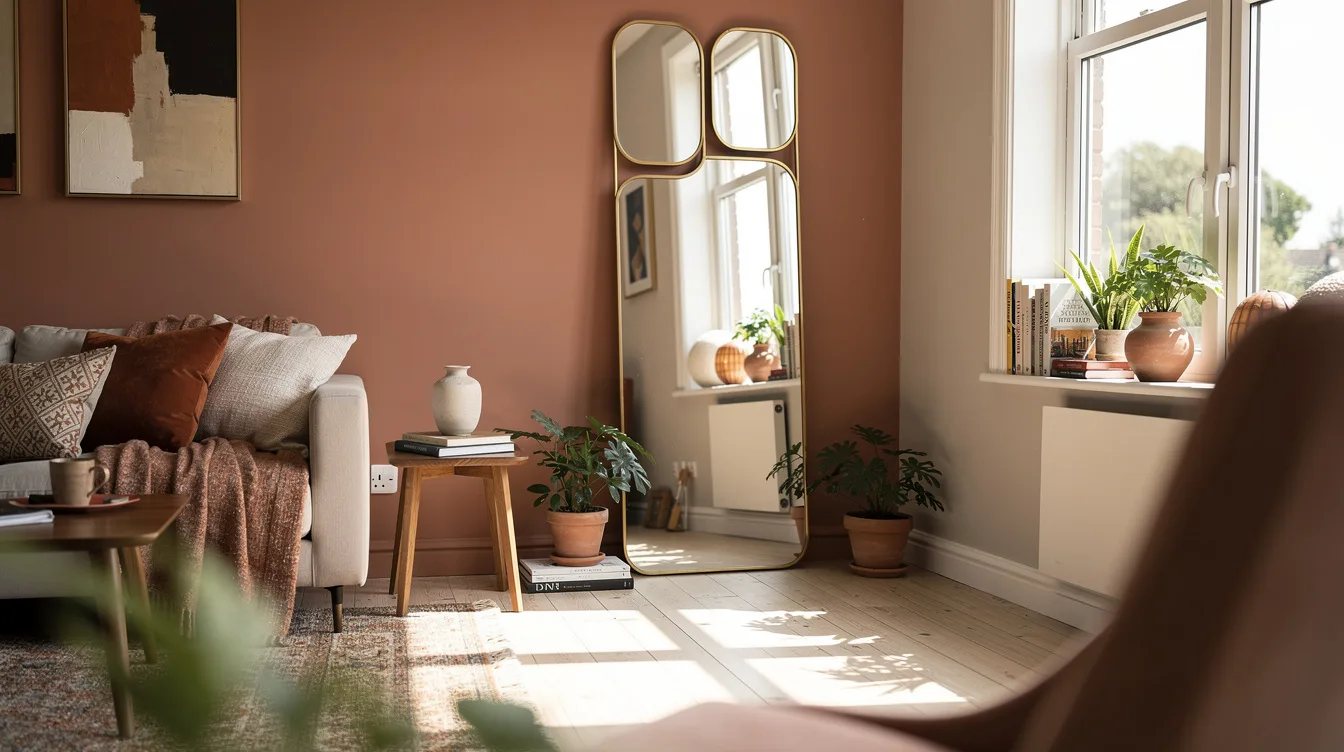
Mount a horizontal frameless glass mirror on the longest uninterrupted wall to make a narrow living room read wider. The broad reflection creates a visual pause across the wall, especially above a low console or sideboard.
Choose a width that relates to the furniture beneath it rather than stretching from corner to corner. A long mirror facing a blank wall can still feel flat, so turn it slightly toward a window or lamp when possible.
Multiply a Lamp’s Warm Glow
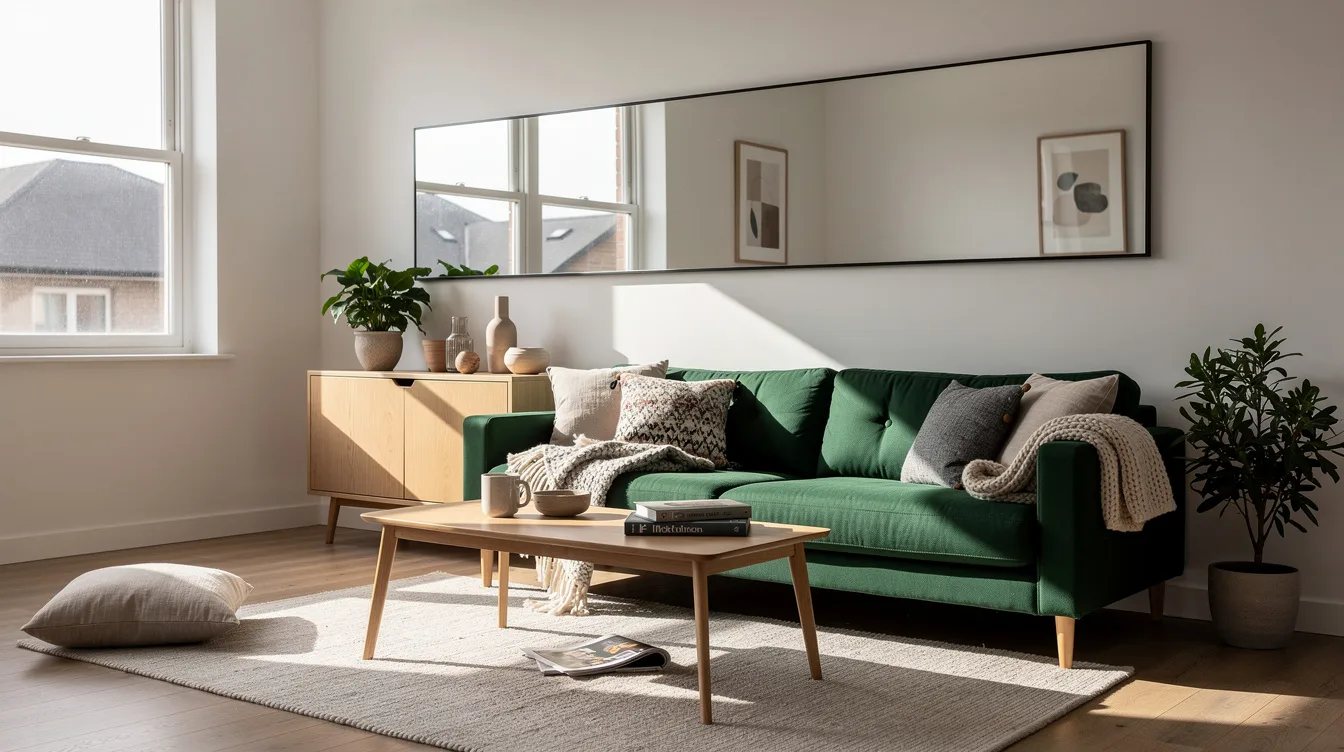
Place a spun-steel mirror behind a table lamp or across from a pendant light so the reflection spreads the glow. The Loughlinstown gold round costs about $159, while the Misewell Kendrick spun-steel round, around 30 inches, typically runs about $375 to $407.
This setup is especially useful after sunset, when daylight placement no longer helps. Keep the bulb warm and the reflected surface uncluttered; a bright lamp aimed at a crowded shelf will only advertise the mess.
Aim Away From the Television
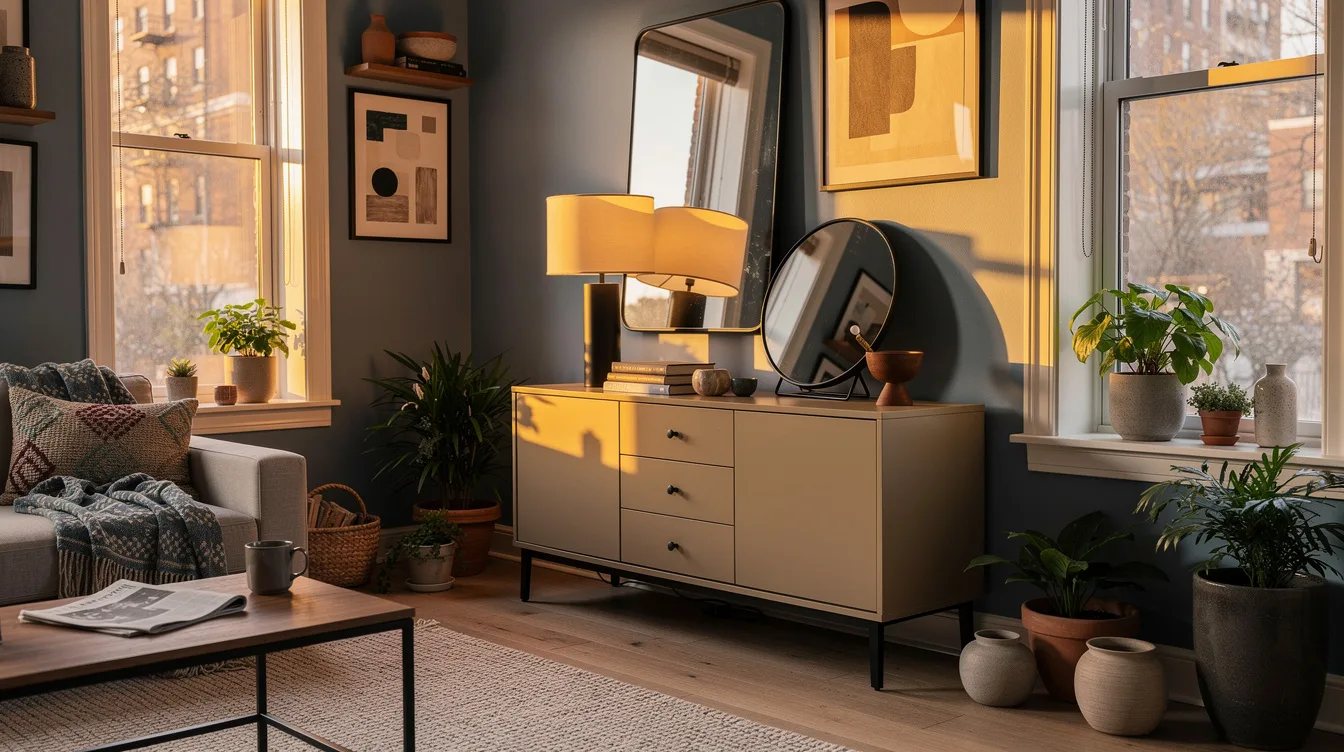
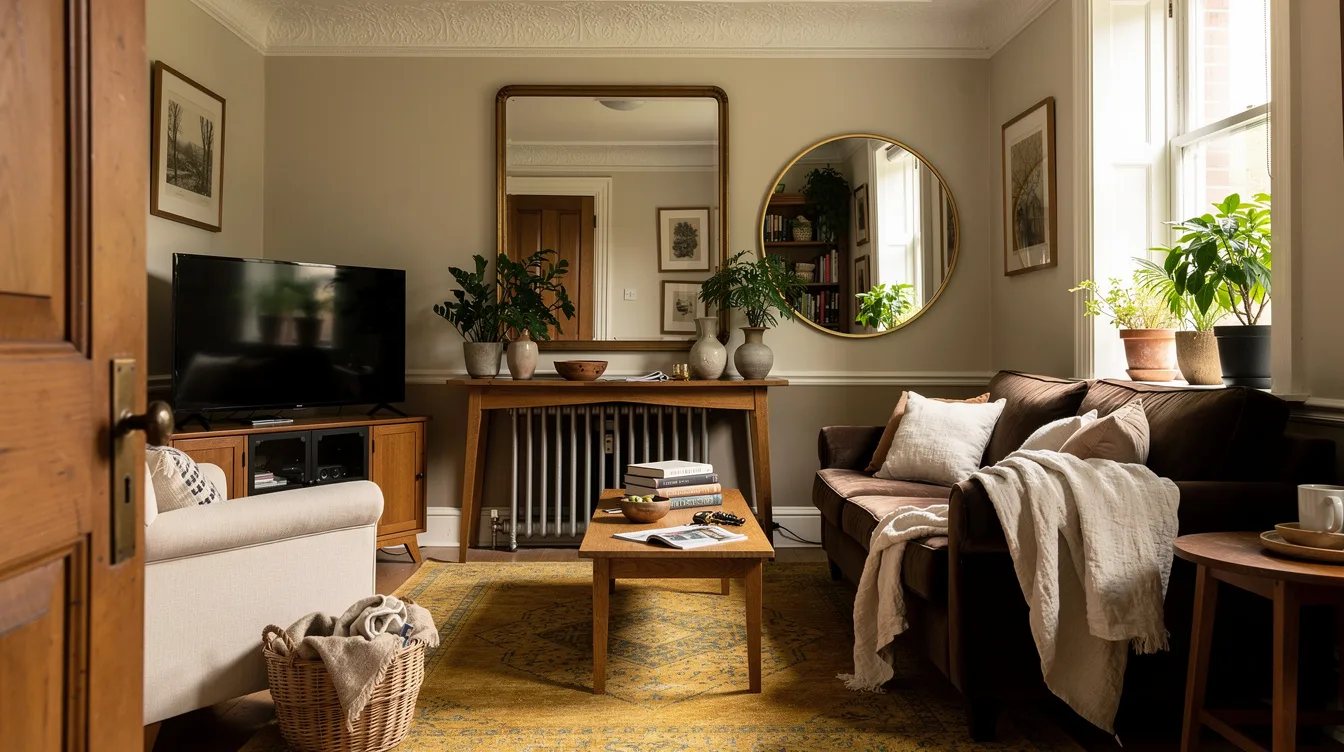
Point a 30-by-48-inch mirror toward artwork, a window, or a light fixture instead of the television. A reflection of moving images is distracting, and the screen becomes the visual focus even when the room is meant to feel calmer.
Before hanging it, turn off the TV and inspect the mirror from every seat. If the screen appears in the reflection from the sofa, shift the angle or move the mirror to the side wall.
Use a Small Gallery as a Controlled Accent
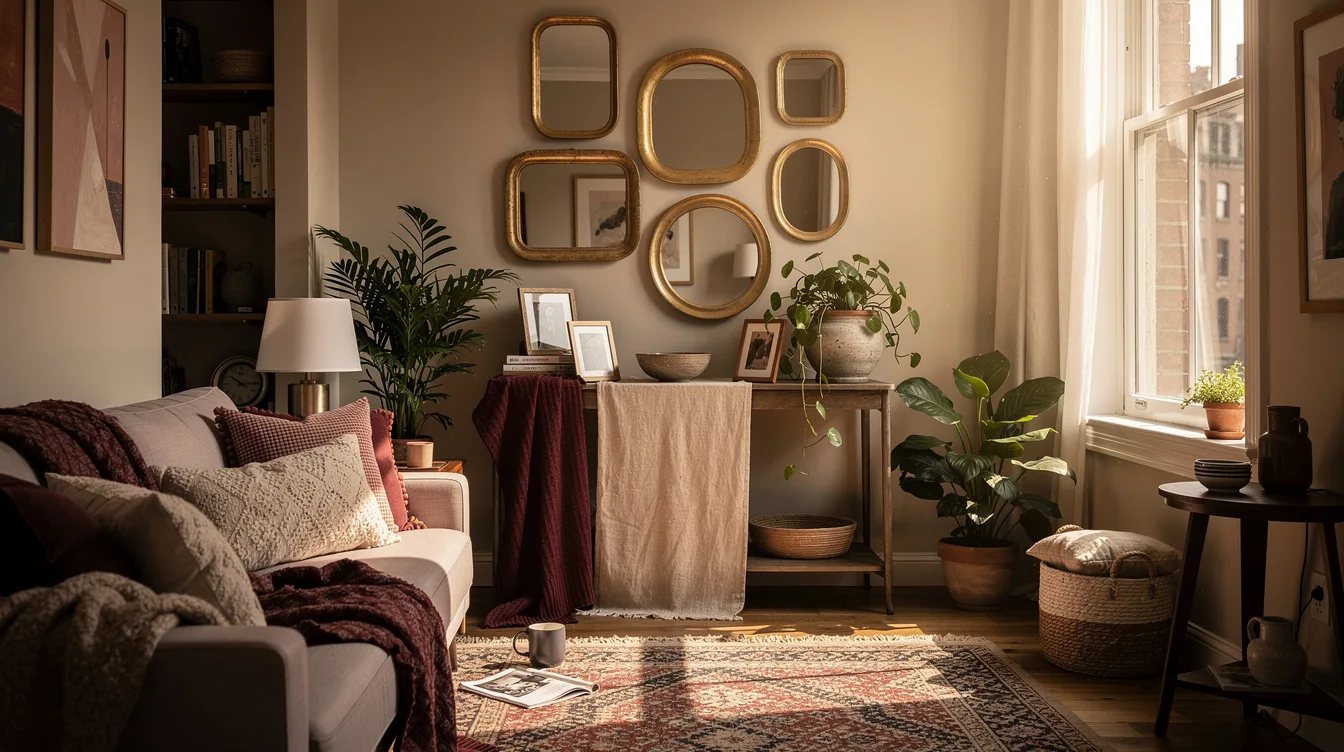
Create a loose cluster of three or four thrifted mirrors only when one large piece would look too formal for the room. Varying shapes can add character, but keep the group within one compact area so the walls still have breathing room.
We would use this arrangement on a quiet wall with little furniture below it. A gallery wall should be the exception in a small living room, not a reason to fill every available surface.
Keep Mirrored Panels on One Wall
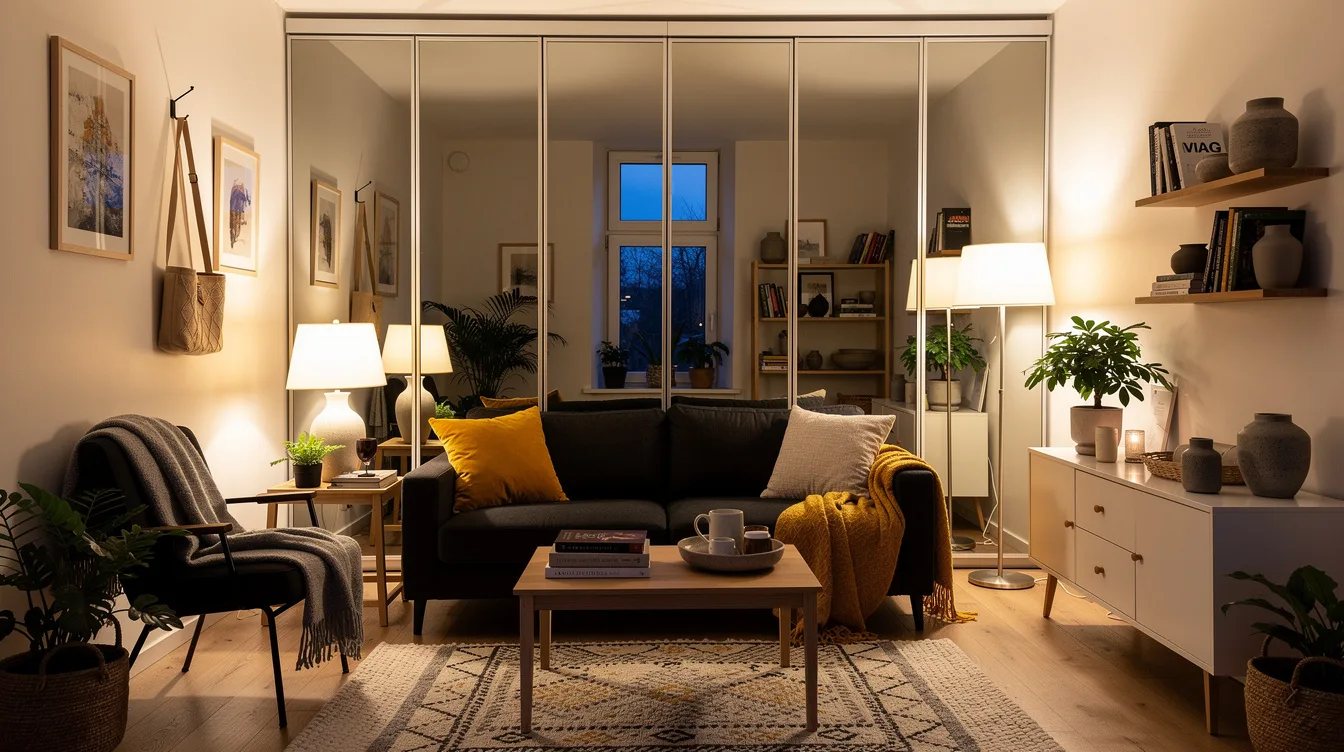
For a bolder renovation, use mirrored closet doors or mirrored panels on one wall only. They can visually double the room’s depth, but repeating that treatment on opposite walls creates too many competing reflections.
Choose a simple frame or panel break that relates to the room’s trim. In a compact space, one reflective wall has more impact than several disconnected mirror surfaces.
Choose a Slim Frame Over a Chunky One
Shop for a slim aluminum frame, brass edge, spun-steel border, or frameless design when every inch of visual space matters. The rounded-rectangle XRAMFY mirror costs about $40, and its oval version typically costs about $55.62.
Warm wood is a better choice around a fireplace or rustic furniture, but thick, ornate borders can overpower a very small room. The frame should support the room’s mood without becoming the largest object on the wall.
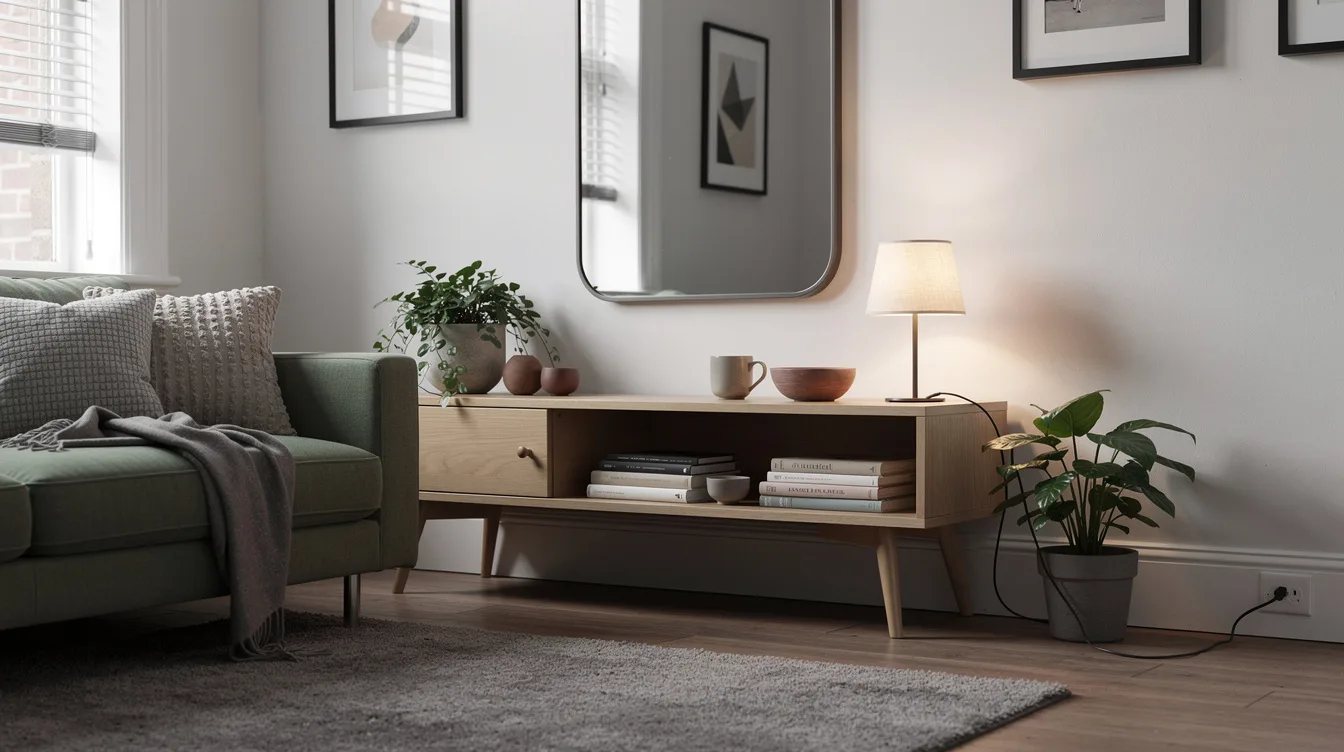
Stay Above the Accidental-Size Threshold
Skip mirrors under about 24 inches unless you are deliberately building a gallery, because a lone small IKEA LINDBYN round mirror can look disconnected above substantial furniture. The 31.5-inch version typically costs about $69.99 in gold or about $79.99 in black.
Going far beyond 36 inches can overpower a very small room when the frame is heavy or the wall is narrow. Measure the furniture first, then use a paper template to test the visual mass.
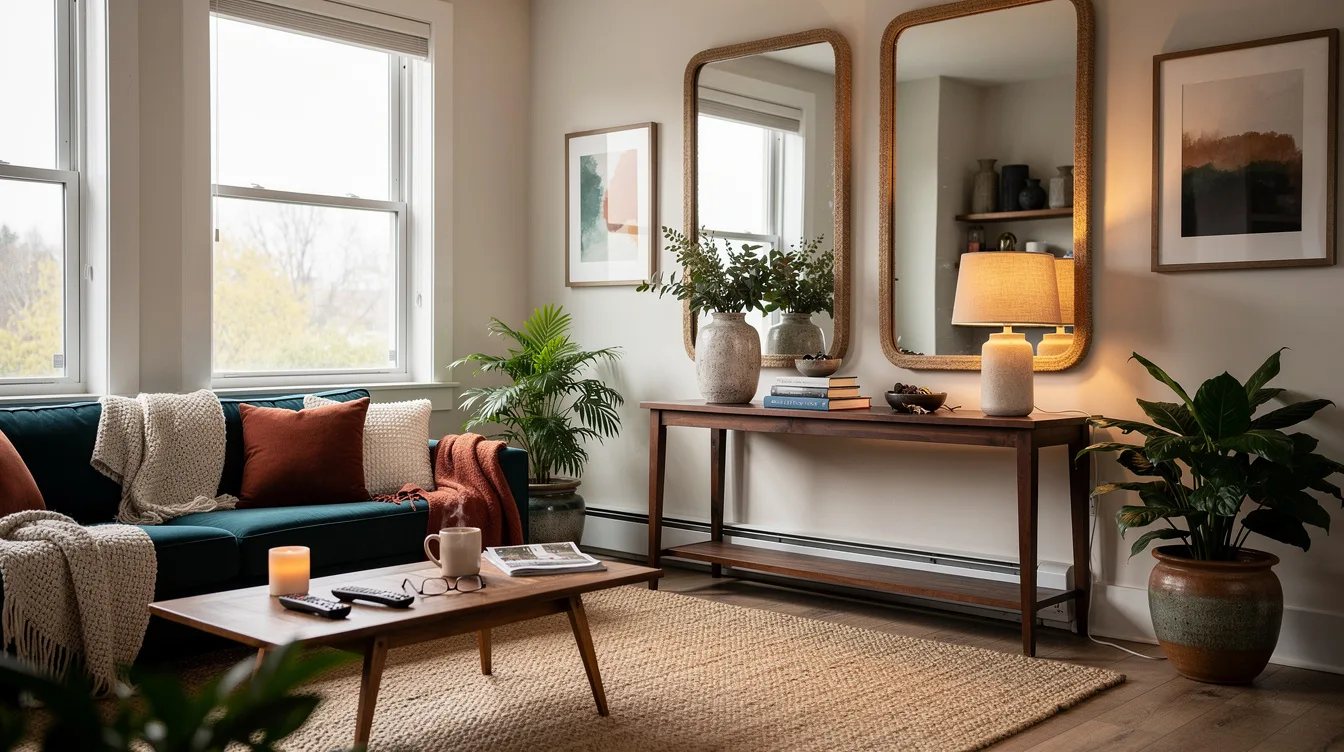
Secure the Reflection Before You Style It
Anchor a leaning tempered-glass mirror before adding baskets, plants, or other decor nearby. Check the hardware, wall type, and anti-tip strap, especially when the mirror is full length or positioned along a busy walkway.
Finish by standing in the main seating spot and checking what the glass actually shows. Remove the doorway, clutter, or blank wall from the reflection before adding another mirror, because one well-placed piece is usually enough.
Keep reading
- Small Living Room Feeling Cramped? 12 At Home Mirrors Under $80
- Small Living Room Feeling Juvenile? 13 Birch Lane Pieces Look Grown Up
- Is Your Open-Plan Living Room Feeling Off? Fix These 12 Mistakes
Begin with a slim-frame mirror beside or opposite the main window, then test the reflection from the sofa before buying more. That single decision usually gives a small living room more light and breathing room without adding another object to manage.