15 Home Gym Equipment Essentials That Actually Earn Their Floor Space
26 november 2026Home gym equipment essentials don’t need a whole basement or a $10,000 budget. I learned that after buying a bulky machine I barely used, then discovering a simple rubber mat did more for my routine. You need clear space, useful resistance, and lighting that doesn’t feel like a garage. That’s it!
A thoughtful small-space Japandi layout can teach a home gym something useful: restraint makes a room feel more generous. Start with what supports movement, then add the warm, inviting details that make you want to return.
- Anchor the Room With a Rubber Mat Zone
- Choose Adjustable Dumbbells Over a Whole Rack
- How Should You Build a Three-Height Light Stack?
- Wall-Mounted Rack or Freestanding One?
- Layer Resistance Bands for the Best Home Gym Equipment Guide
- The Eye-Level Mirror Check
- Swap a Bulky Bench for a Folding Training Bench
- Compact Cardio, Zero Bulk
- Down Pipe and the Contrast Wall
- Mix the Two-Wood Rule Into Storage
- A Recovery Corner for the Soft Landing
- Open Shelves Versus One Calm Cabinet
- Set Up a Slim Towel and Water Station
- One Olive Tree, No Indoor Jungle
- Budget the Setup Before You Buy Anything
1Anchor the Room With a Rubber Mat Zone
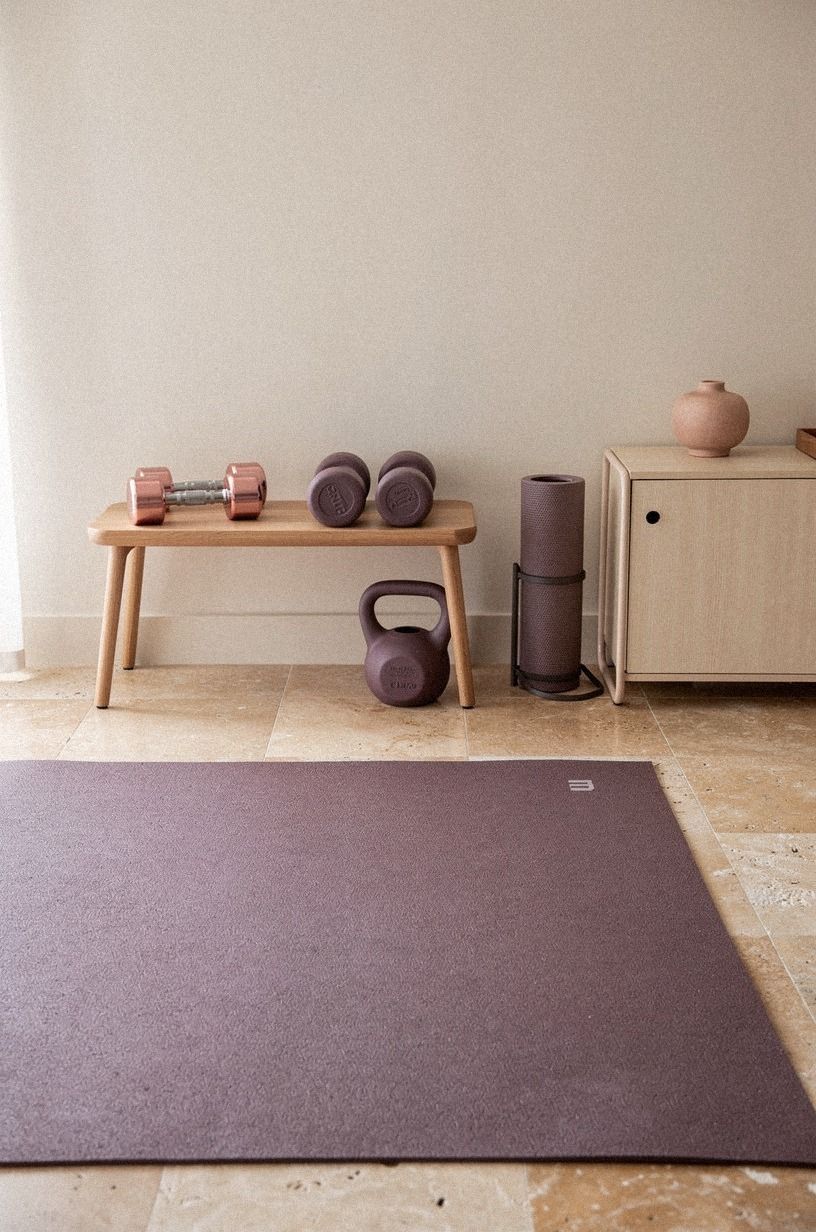
Start with an 8x10-foot rubber mat zone if your room allows it. That gives you enough room for floor work, a bench, and comfortable movement without scattering equipment across every corner. You’ll want a surface that feels steady under your feet, and rubber flooring is far kinder to joints than bare concrete.
I prefer dense tiles with a warm travertine accent nearby because they hide chalk, dust, and the occasional dropped dumbbell. You don’t need the thickest option for every inch of the room. A focused mat area keeps your setup airy and makes the rest of your floor easier to clean.
The right base should feel grounded rather than industrial. Think of the moody, composed effect used in dark Japandi interiors, where every surface has a clear job. Speckled tiles bring that same calm discipline to a workout zone.
Zero cost: measure the room and mark your exercise boundary with painter’s tape. Budget fix: use interlocking tiles only where you train.
Worth the splurge: cover the full room if you’re dropping weights. If you’re comparing gym equipment for home, this is the base that makes every other purchase feel intentional.
2Choose Adjustable Dumbbells Over a Whole Rack
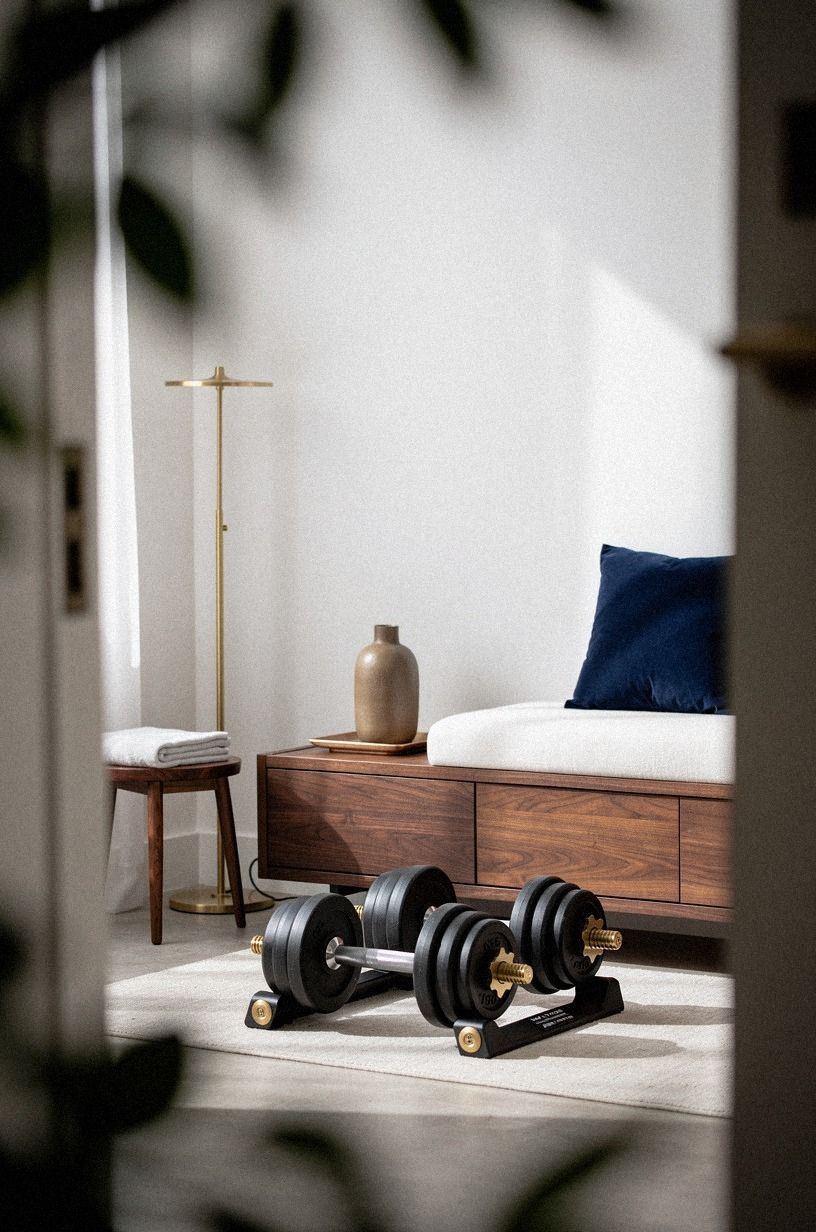
Adjustable dumbbells earn their floor space because you can change resistance without lining one wall with iron. A typical pair may cost $200-$700, so you’ll want to measure your storage area before buying. My favorite arrangement keeps them beside the bench, not in front of it, because you don’t want to trip over your own equipment.
Look for a compact design with a secure locking system and a handle that doesn’t feel sharp. Adjustable dumbbells with unlacquered brass details can develop a gentle patina, while navy, white, and walnut nearby make them feel less industrial in a bedroom corner.
You might be tempted by a full rack of fixed weights. I’d skip it in a small room. You’ll lose valuable walking space, and your room will start looking like a commercial gym before you’ve built a consistent habit.
If you’re styling a multipurpose room, keep the weights low and let the atmosphere do some of the work. A quiet sensory detail, like the memory effect discussed in why your brain remembers scents, can remind you that a room’s feeling matters as much as its equipment.
3How Should You Build a Three-Height Light Stack?
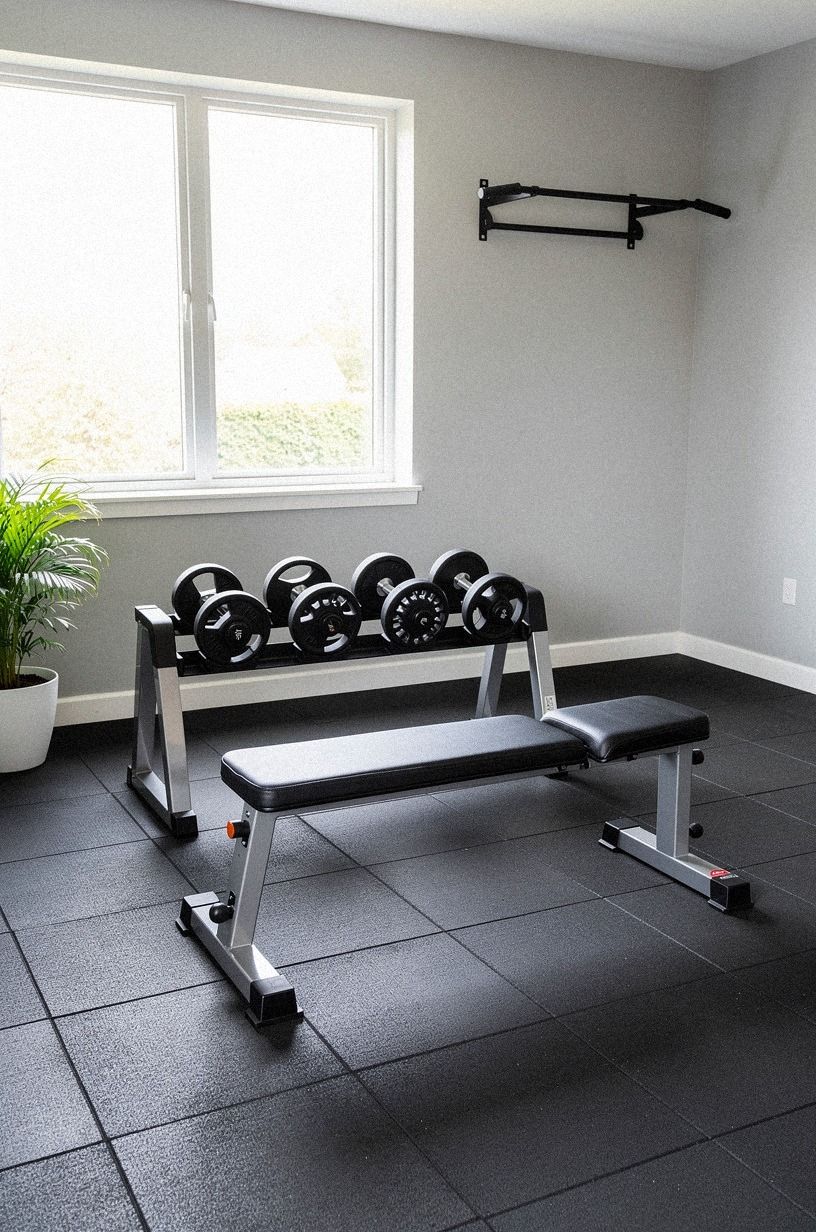
A home gym feels more inviting when the light comes from three heights: ceiling, eye level, and low glow. You’ll want bright overhead light for safety, a mirror-level source for visual balance, and something lower that softens the room when you’re stretching. That layered approach keeps your setup from feeling like a storage closet.
Use a flush ceiling fixture if your ceiling is only 8 feet high. At 9 feet, you’ve got more freedom for a slim pendant or directional track lighting. Warm LED lighting works best for morning sessions, while a brighter neutral bulb helps you see your form without creating harsh shadows.
A useful palette can guide the mood. Emerald, gold, and cream paired with oversized-chip terrazzo can feel rich without becoming busy.
I made the mistake of using one blue-white ceiling bulb. It made every workout feel like paperwork.
You don’t need expensive wiring, either. A plug-in sconce, a floor lamp, and one dimmable overhead fixture can create a calm, modern mood.
And if you’re sensitive to glare, keep the lamp behind your shoulder rather than directly in your sightline.
4Wall-Mounted Rack or Freestanding One?
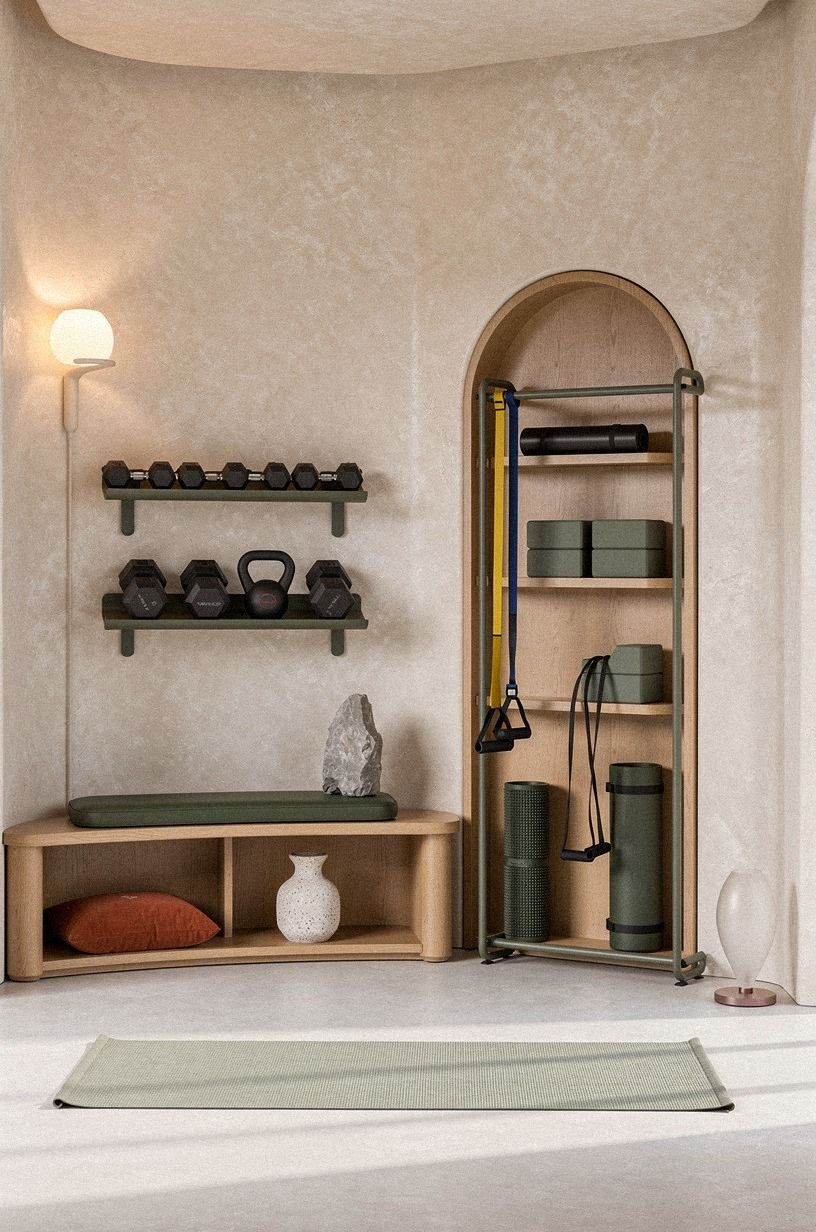
A wall-mount rack gives you strength-training capacity without claiming the center of the room.
5Layer Resistance Bands for the Best Home Gym Equipment Guide
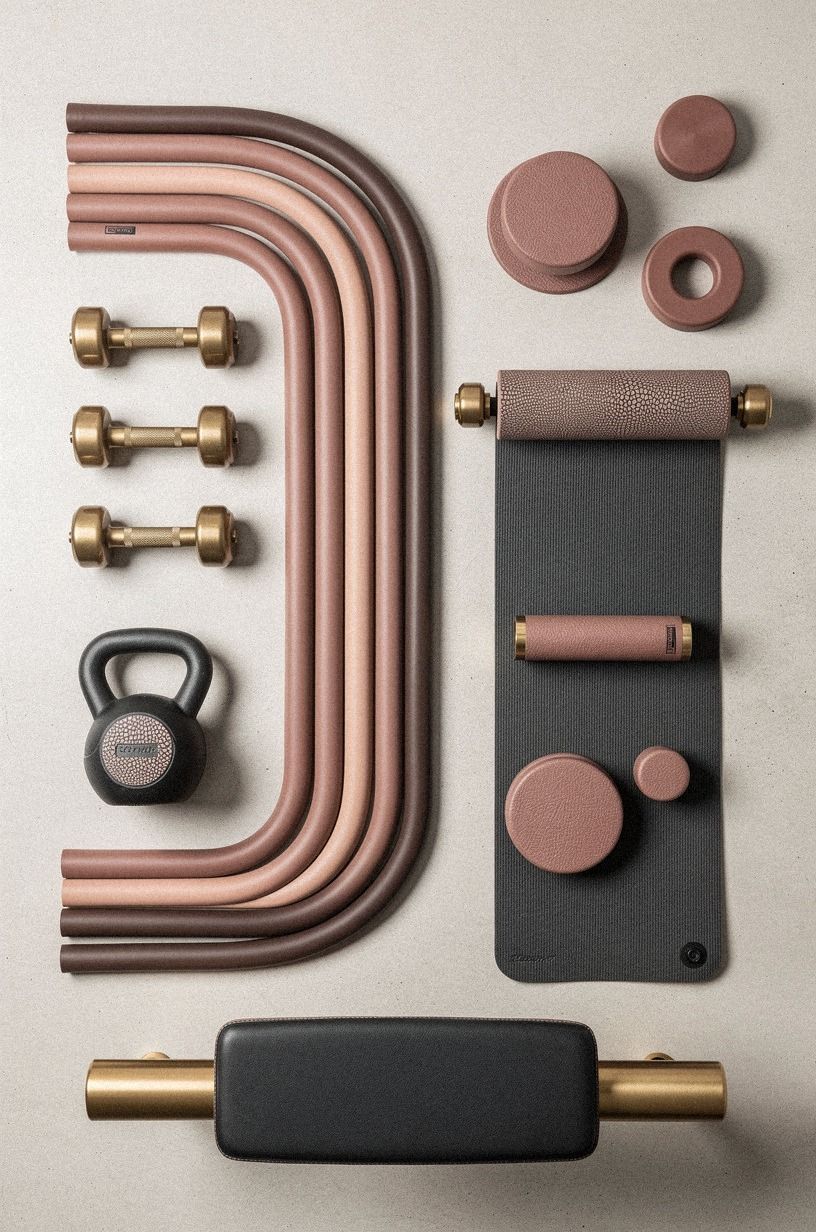
Resistance bands are small, quiet, and far more versatile than they look. You can anchor them to a door, loop them around your legs, or carry them into another room when your gym needs to become a guest room. You’ll want several tensions, but you don’t need a giant bundle with pieces you’ll never touch.
Store textured resistance bands in a shallow basket with subtle shagreen accents. The softer container keeps the equipment from looking like a pile of cables, and you can grab what you need without opening a drawer.
A wall hook also works if you want the bands visible and easy to remember. Choose a brass hook or dark metal finish that supports the room’s palette rather than shouting for attention.
I’d choose bands before a second machine. They’re less dramatic, but they’ll help you train more movement patterns with less noise.
If you’re building a warm room, take cues from traditional Southern home decor and keep the basket near a wood bench and one framed print. You’re more likely to use equipment that feels accessible, not buried behind a stack of boxes.
6The Eye-Level Mirror Check
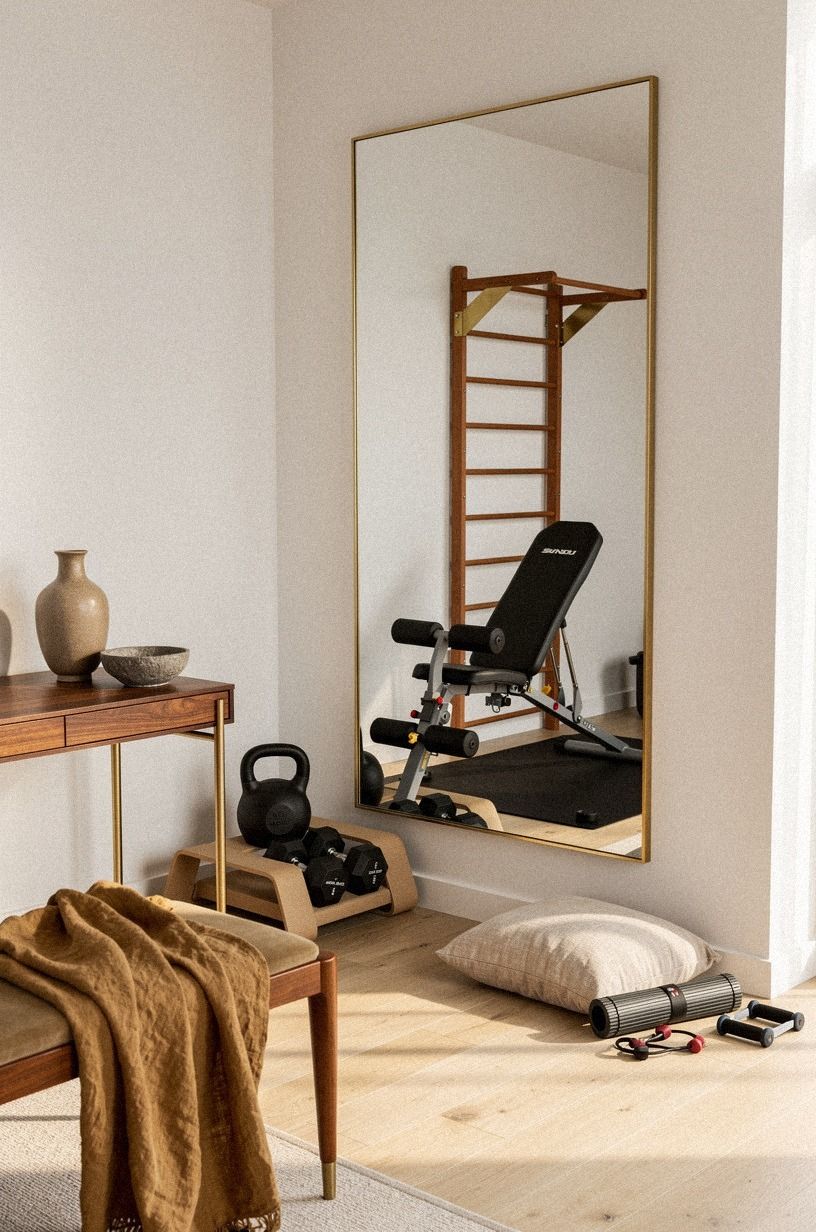
A mirror helps you check alignment, opens up a narrow room, and reflects daylight into corners that would otherwise feel flat.
7Swap a Bulky Bench for a Folding Training Bench
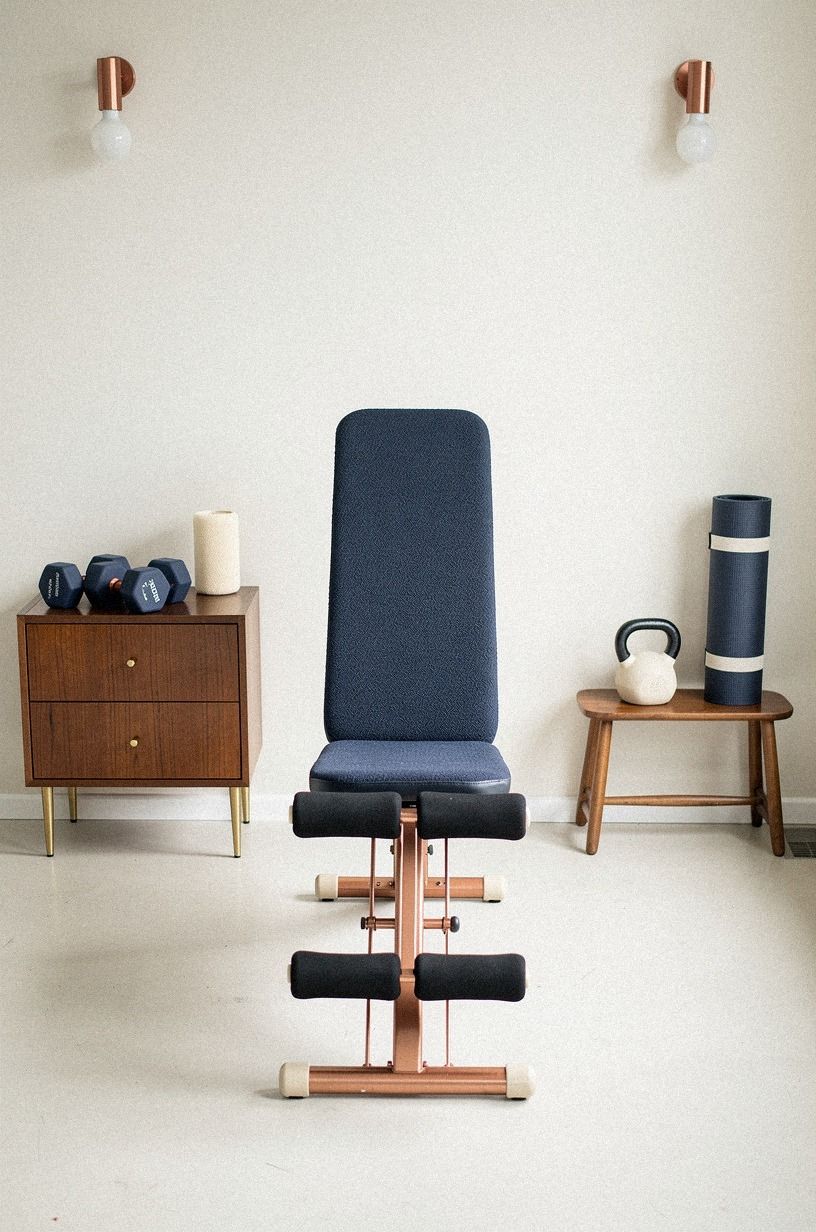
A folding bench lets you lift, step, stretch, and then reclaim the floor. You’ll want a stable frame, a firm pad, and a locking system you can operate without wrestling with the mechanism.
Look for midnight-blue organic bouclé upholstery with a firm, supportive pad. An ivory finish can look more residential, while copper hardware adds warmth without making the bench feel decorative. I’d rather own one sturdy adjustable bench than two cheap pieces that wobble whenever you change the incline.
If the bench folds flat enough to slide under a bed, your small-space setup has already won. The same Japanese-meets-Scandi balance behind this calm Japandi style works here: useful, warm, and visually quiet.
Keep the bench near the wall, not in the middle of your mat zone. You can pull it forward when you train and return it afterward.
That little habit keeps your room calmer. If you’re short on storage, place a low woven basket beneath the folded bench for towels and bands.
8Compact Cardio, Zero Bulk
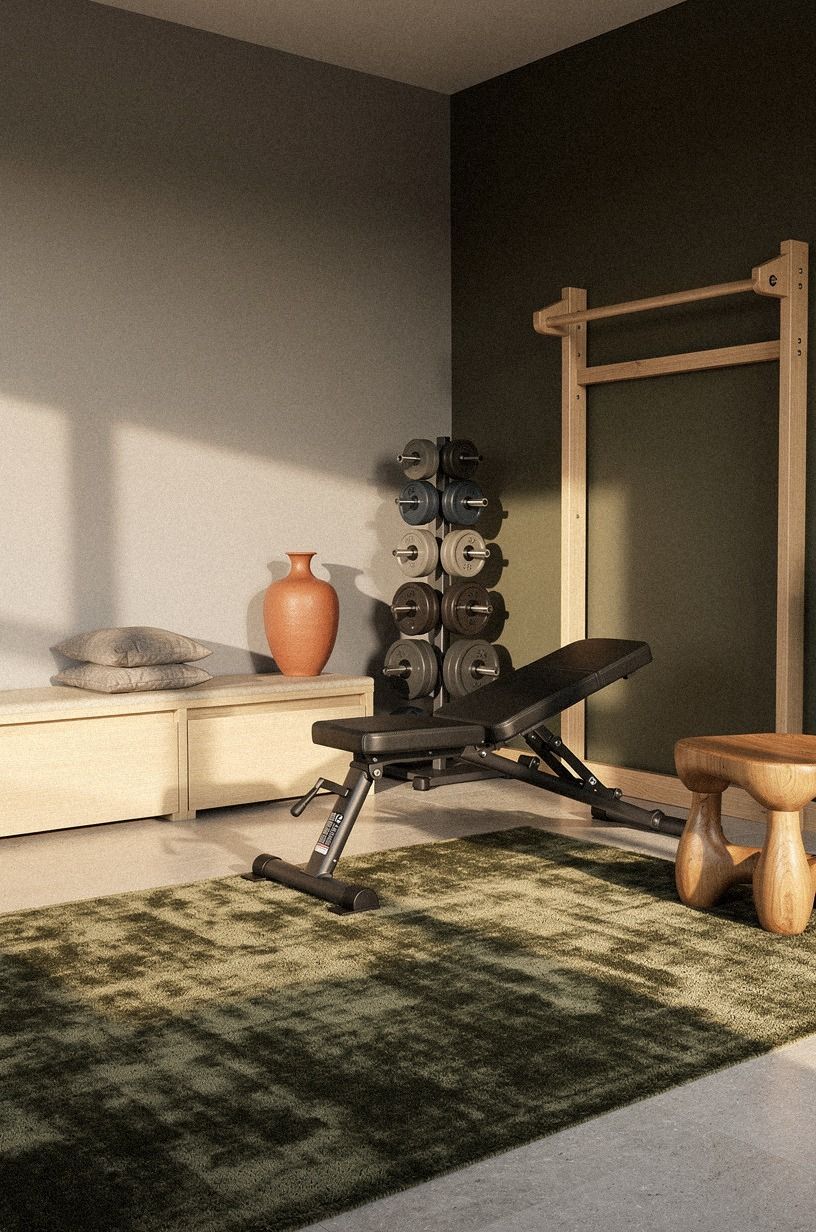
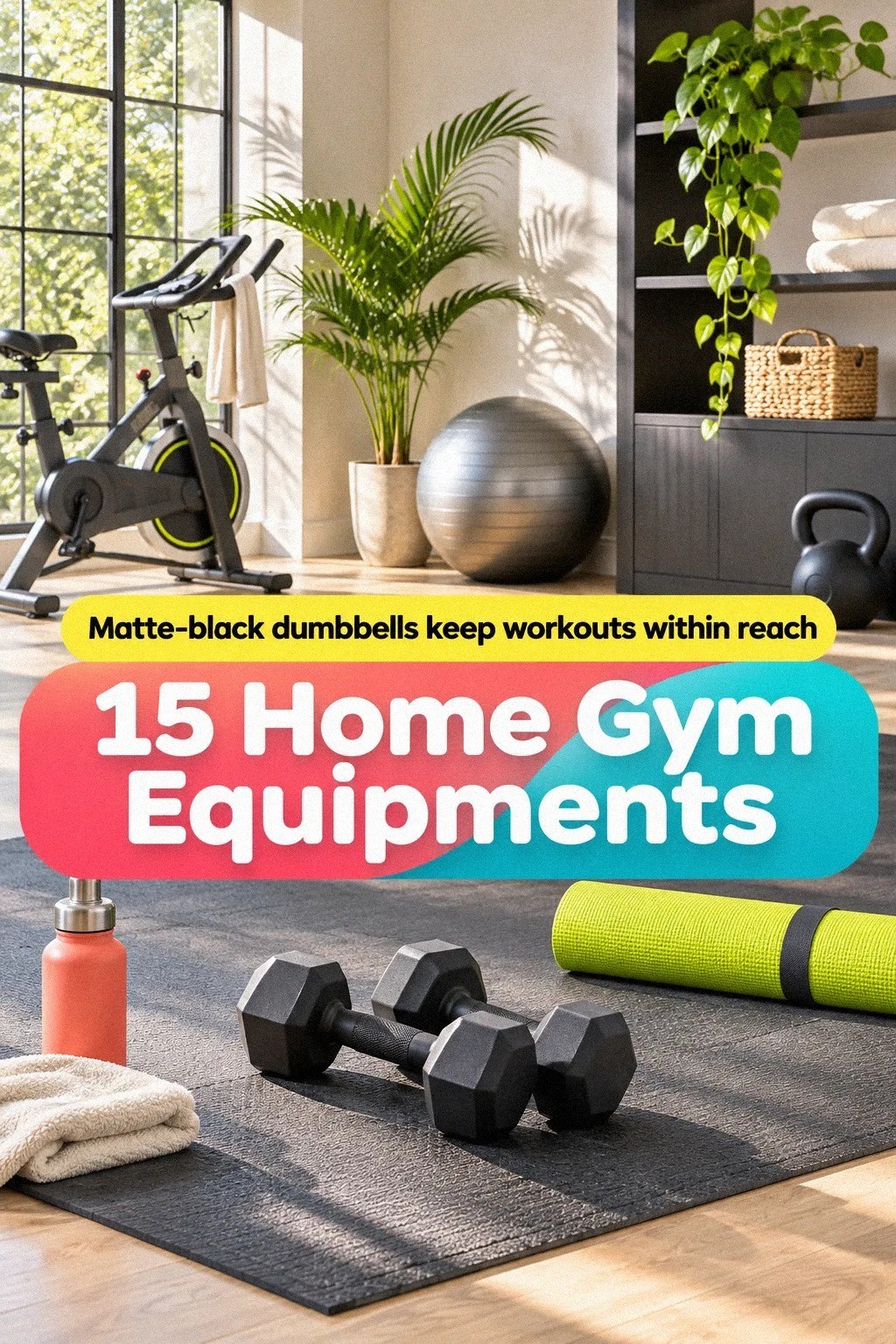
A jump rope, compact stepper, or foldable bike can give you cardio without swallowing the room.
9Down Pipe and the Contrast Wall
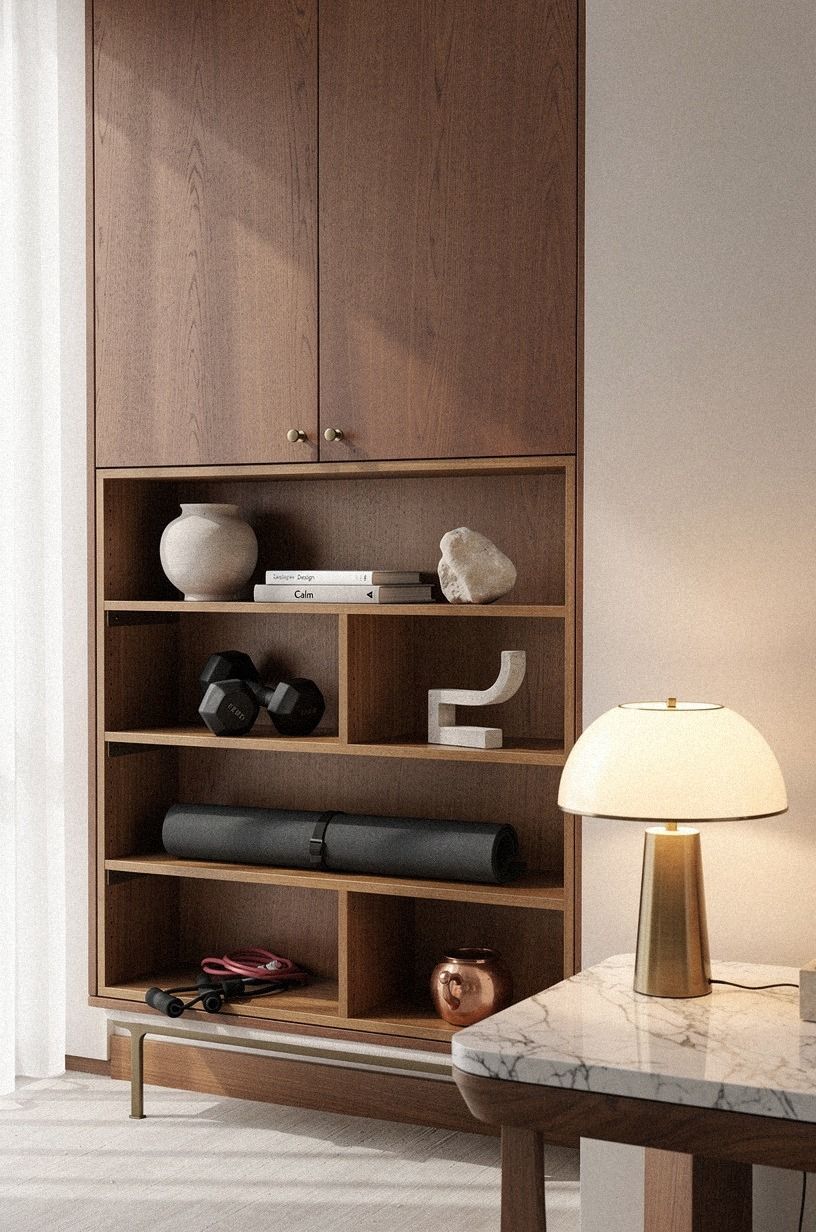
A terracotta, stone, and olive palette can make equipment look deliberate instead of dumped. Farrow & Ball Down Pipe No.26 gives a gym a moody, grounded backdrop, while a deep-pile mohair velvet accent keeps the room from feeling flat.
You’ll want to test it in morning and evening light because dark gray can shift dramatically across the day. A rich, dramatic wall should feel enveloping rather than gloomy.
Use the deeper paint behind the rack or mirror, then keep the other walls lighter. That contrast gives your eye one clear destination and makes a small room feel edited. The restrained depth resembles the composed atmosphere of a dark Japandi kitchen.
You can also use Benjamin Moore Kendall Charcoal HC-166 if you want a softer gray-brown effect. And if you’re renting, a large removable mural or fabric wall hanging can create the same visual weight without a permanent change. Keep your trim simple, and let the equipment provide the sharper lines.
10Mix the Two-Wood Rule Into Storage
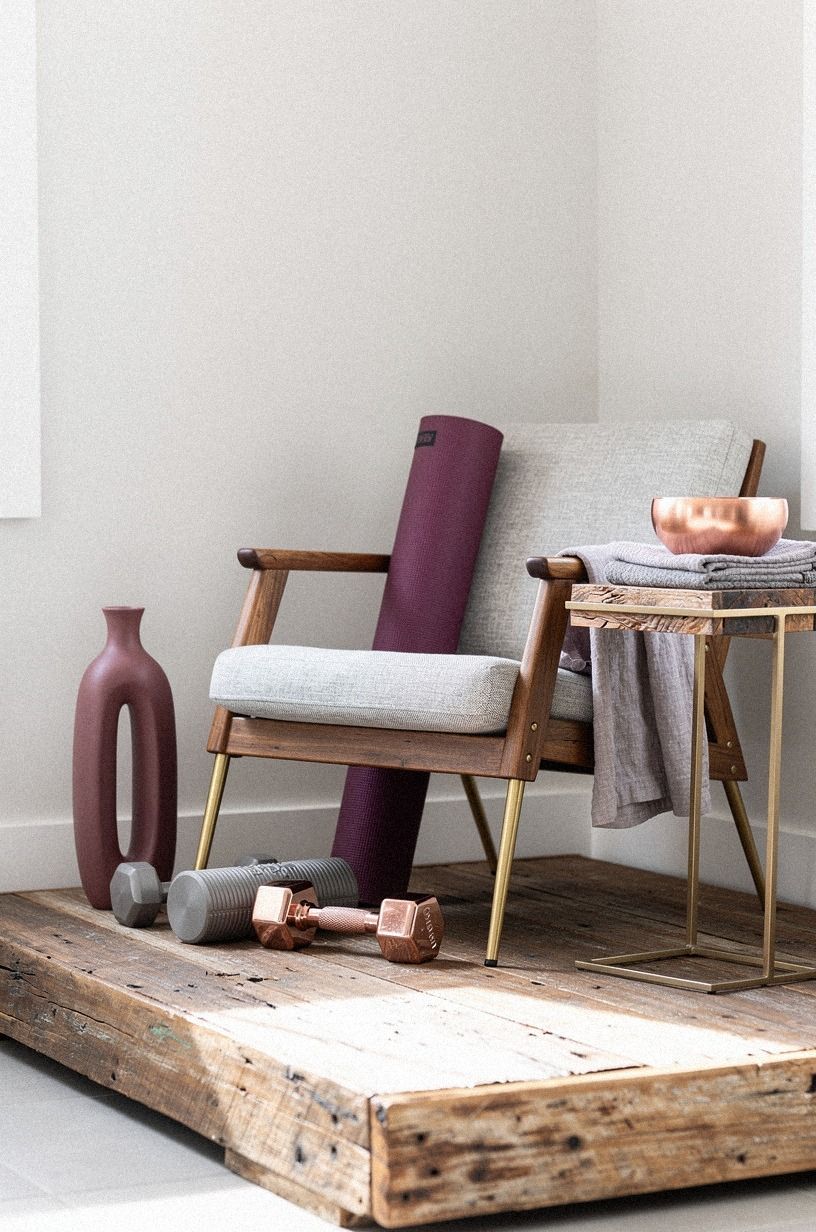
Two wood tones are enough to make a home gym feel warm without turning it into a furniture showroom. You’ll want one pale wood for brightness and one deeper tone for contrast.
Keep the two wood tones quiet, then add Carrara marble and aged brass as the room’s accents. Clay and linen details soften the result and keep it feeling collected, tactile, and quietly luxurious.
This rule works especially well when your equipment is mostly black. The wood interrupts the hard metal and gives your eye somewhere softer to land. A shallow shelf can hold a towel stack, a water bottle, and a small speaker without becoming a display of random accessories.
A Carrara marble tray can bridge the two tones. Aged-brass pegs keep the storage warm without making it precious.
I’d avoid matching every piece of storage. Your room should feel collected, not ordered from one catalog.
Use one oak stool, one walnut frame, and a woven basket. If you’re styling a garage, bring in a small plant or linen curtain so the room doesn’t feel entirely mechanical.
11A Recovery Corner for the Soft Landing
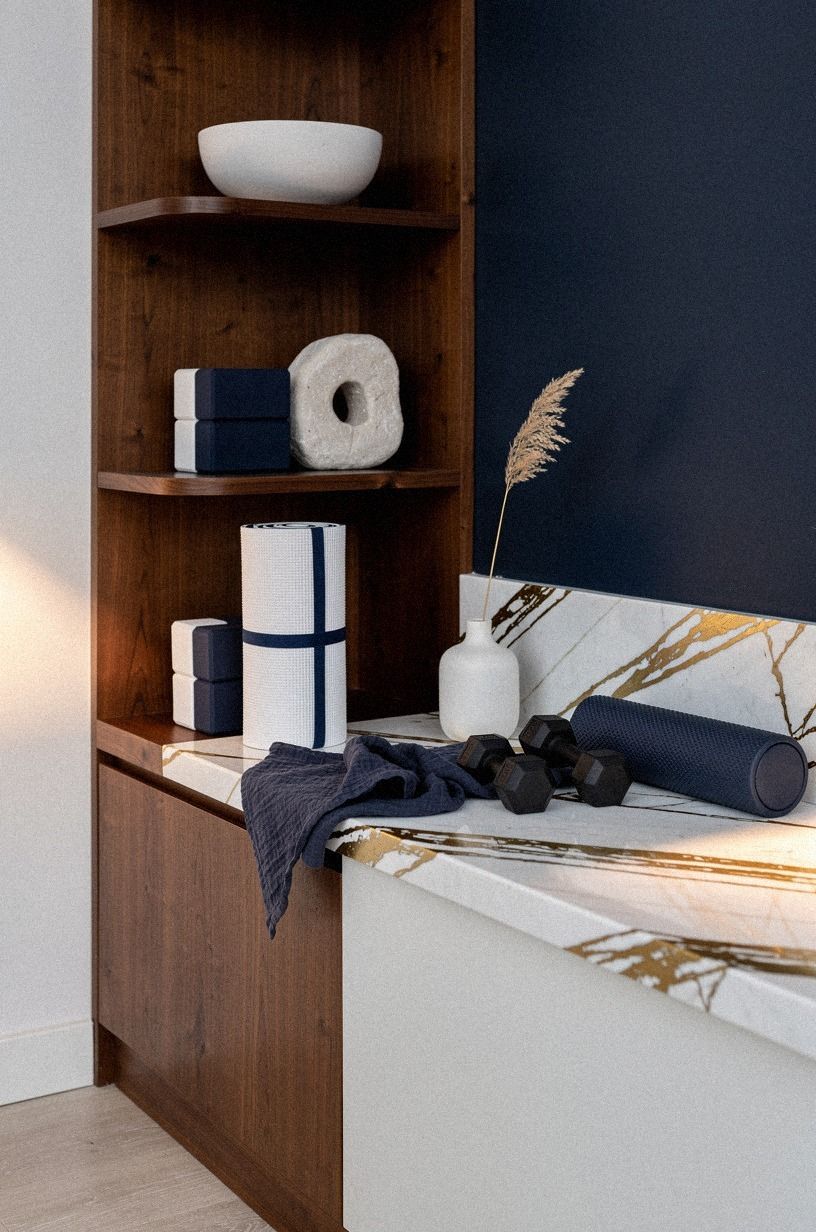
A recovery corner gives your room another purpose, and you’ll use it for stretching, breathing, or simply cooling down. You don’t need a full lounge arrangement. A low reclaimed weathered teak stool can soften the hard surfaces around your mat.
Choose one supportive cushion, a small bolster, and a basket for towels. Keep the palette restrained: plum, grey, and rose gold. I’d avoid filling the corner with decorative pillows that you’ll move every time you train.
The equipment still needs to work first. A wool-blend cushion can add comfort without turning the corner into a lounge that competes with the workout zone.
A small plant can help, but choose one that tolerates your light and your attention span. You’re creating a pause between effort and the rest of your day. For another sensory idea, read about what at-home LED can do for skin over 50 and think about how calm lighting can support a slower evening routine.
12Open Shelves Versus One Calm Cabinet
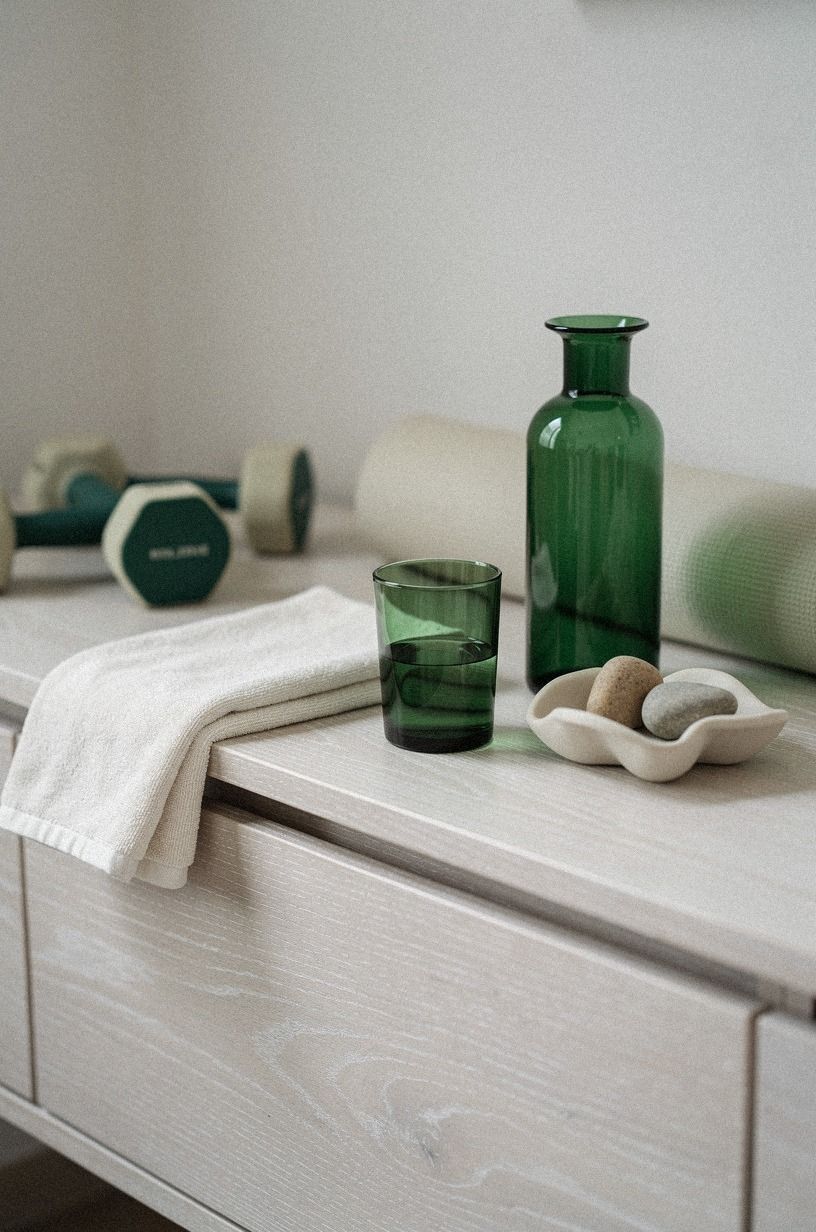
A cabinet hides the visual clutter that makes a home gym feel unfinished. You’ll want adjustable shelves, a door that closes smoothly, and enough depth for bands, blocks, towels, and small weights.
Navy-and-white storage with walnut details can work when paired with fabric bins and a closed section. A small Calacatta marble accent with gold veining adds warmth without becoming visually dominant.
Keep the cabinet near the entrance so you can put things away before leaving the room. That placement matters more than its style. If storage is too far from where you use the equipment, you’ll stop returning pieces after the first week.
A few lessons from small-apartment Japandi design apply here: conceal the restless pieces and leave the useful ones easy to reach.
I’d skip open cubbies for every item. They look tidy for a day, then each square fills with loose objects.
Use open space for your best-looking pieces and closed storage for everything else. You’ll get a cleaner room without pretending you’re naturally organized.
13Set Up a Slim Towel and Water Station
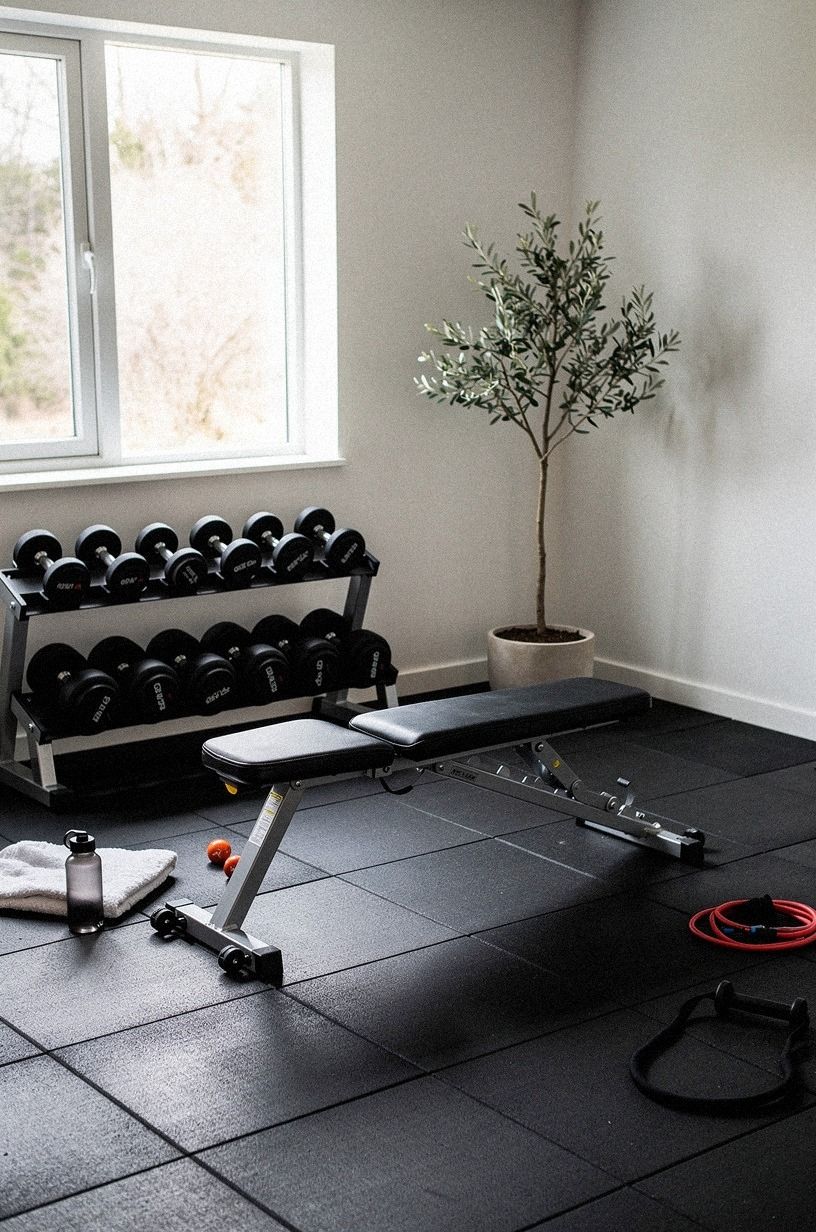
A towel station makes your routine smoother, especially if your gym sits far from the bathroom. You’ll want one hook rail, a washable basket, and a surface for water. 600gsm Turkish cotton towels feel substantial without taking over a narrow shelf.
Use a small tray in cerused white oak for your bottle and timer. The tray creates a visual boundary, so you won’t leave accessories scattered across the bench.
The quiet, natural finish of modern travertine bathrooms translates beautifully here. Cerused white oak feels tactile and polished without looking overly formal.
If you’re using a glass bottle, keep it low and away from the rack path. I’d skip a rolling bar cart unless you have plenty of clearance. It looks clever, but wheels make it easy to park in the wrong place.
A fixed shelf is safer and quieter. And if you’re worried about odors, wash towels often and let them dry fully before returning them to the basket. A washable basket will make that routine easier.
14One Olive Tree, No Indoor Jungle
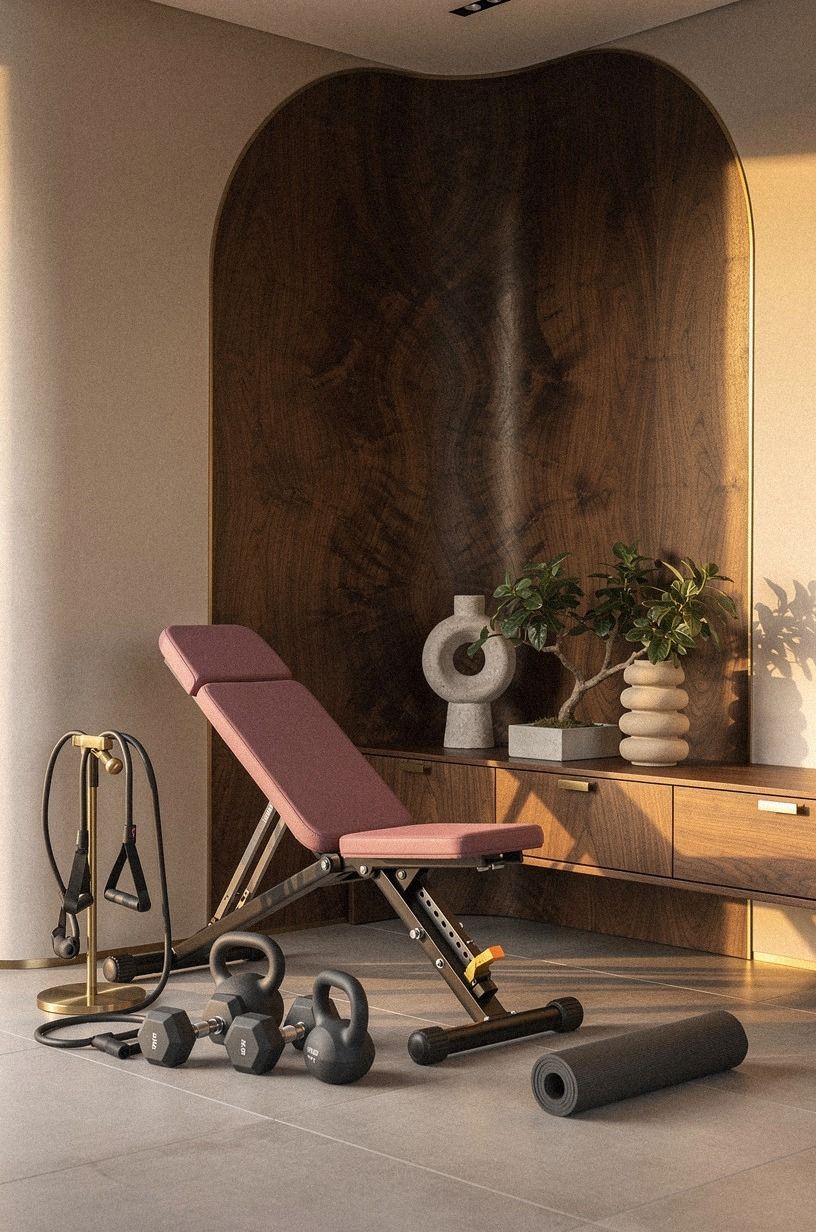
One plant can make a home gym feel alive, but five plants can create obstacles and extra chores. You’ll want a sturdy variety with leaves that tolerate your light, temperature, and occasional neglect.
A tall olive tree in a natural oak planter brings height without adding another piece of equipment. Its sculptural shape feels relaxed, elegant, and surprisingly architectural.
Place it in an empty corner where it won’t interfere with lunges or machine clearance. You can use a low stand if the pot needs more height, but keep the base stable. I’d avoid anything with fragile stems near dumbbells or a jump rope.
A plant also helps divide zones. Put it between the recovery corner and the storage cabinet, and the room will read as several useful areas instead of one open box. If you’re choosing a scent for the room, this piece about scent and memory makes a strong case for keeping fragrance subtle and consistent.
15Budget the Setup Before You Buy Anything
The smartest home gym equipment setup starts with a budget and a floor plan. You’ll want to list the equipment you’ll use weekly, the storage you need, and the changes that make the room safer. Don’t buy decorative pieces before you know where the mat, bench, and rack will go.
For a budget setup, start with the mat, bands, and one adjustable tool. You can add lighting and storage later. For a mid-range room, plan the flooring and electrical needs before choosing finishes.
A high-end setup may include a mirror wall and AV, but you’ll still want clear walking paths. The smartest room will feel useful, flexible, and welcoming rather than merely expensive.
If you’re working through a tight budget, read why purple marks on your arms may signal vitamin K deficiency as a reminder that health decisions deserve attention beyond the room’s appearance.
Why I’d Build the Room Around Use, Not Equipment
I’ve watched people spend more time choosing machines than deciding how they want to feel when they enter the room. I’ve done it myself.
The impressive purchase is rarely the one that builds a habit. A rack can look serious, a bike can look ambitious, and a wall of weights can suggest discipline, but none of those objects can make you show up on a tired Tuesday.
I’d start with the movement you already enjoy. If you walk, stretch, lift, or follow short videos, let that pattern decide the room. You’ll need enough clearance for the action, a surface that feels safe, and open floor space that keeps the path clear.
Everything else is decoration until those three pieces work. The room should also support the moment before and after exercise. A bright mirror and hard overhead light may help during a set, but they can make recovery feel abrupt.
That’s why I like a soft lamp, one plant, and a towel station nearby. Your body notices the difference, even if you can’t explain it immediately. The warm, practical balance found in traditional Southern interiors works surprisingly well in a home gym.
And I don’t think a home gym needs to look aggressively athletic. A little warmth makes the room easier to enter, especially when it shares space with laundry or guests. You can use dark paint, woven storage, oak, and linen without losing function.
The best setup is the one you’ll still want six months from now. Give your equipment a home, protect your floor, and leave enough open space to move without negotiating with furniture. That’s the whole philosophy.
Build around your real life, not the version of yourself shown in a showroom.
What People Always Want to Know
What is the best equipment for a small home gym?
Adjustable dumbbells, resistance bands, and a folding bench are the strongest starting group. You’ll get several training options without filling the room. Compact storage matters just as much, so consider IKEA KALLAX bins or a shallow cabinet that keeps your floor clear.
Where can I buy home gym equipment on a budget?
Look at IKEA, Wayfair, Target, Facebook Marketplace, and local thrift stores. You’ll often find benches, mirrors, baskets, and stools second-hand. For safety, inspect racks and adjustable equipment carefully, and don’t buy anything with damaged locks or unstable joints.
How much does a home gym makeover cost?
A budget setup typically runs $300-$1,200, while a mid-range room runs $2,000-$8,000. A full setup with a mirror wall and AV can reach $10,000-$30,000. You can keep costs down with free floor planning, second-hand storage, and one useful machine.
Can I create a home gym on a budget?
Yes, and you can begin with floor space, bands, a used mirror, and a focused mat zone. You’ll save money by delaying large machines and using furniture you already own. Paint samples, a basket, and better lighting can make the room feel more welcoming without major construction.
Is a home gym worth it in a small space?
Yes, because a small room forces you to choose equipment you’ll use. Keep about 6x6 feet of clearance for a machine, store weights vertically, and fold the bench away after training. You’ll gain a more flexible room when every item earns its place.
Is a home gym a good idea for a rental?
Yes. Use removable hooks, tension rods, peel-and-stick finishes, and freestanding storage.
You’ll want rubber tiles that can lift without damaging the floor, plus a folding bench instead of permanent cabinetry. Avoid drilling into walls unless your lease clearly allows it.
Where I’d Start First
If I had to pick one, I’d start with the rubber mat zone. It protects your floor, defines the room, and gives every other piece a place to land. Pin this setup for later and build outward only after you know what you’ll use.
For the finishing layer, borrow the quiet warmth of Japandi color palettes and the tactile restraint of organic travertine spaces. Start there!