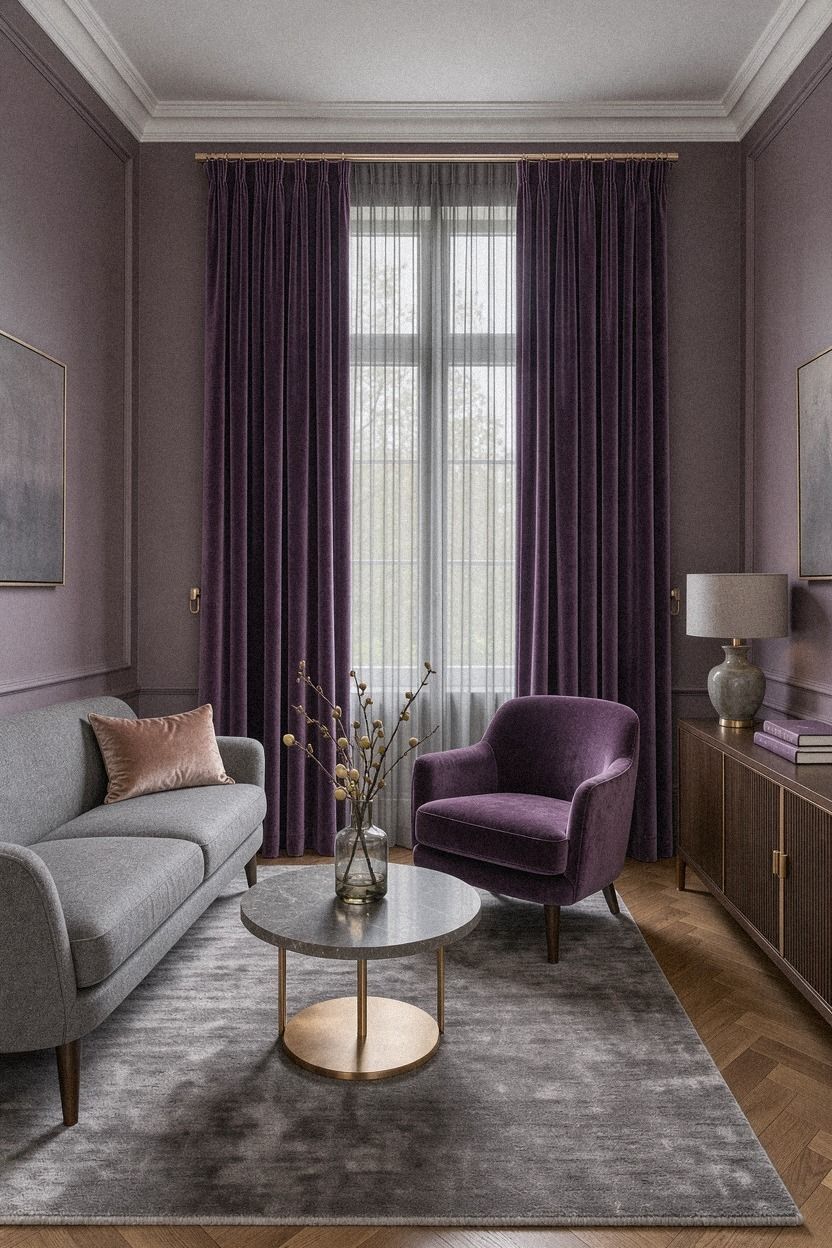
Renter-Friendly Curtain Move Makes a Narrow Room Look Taller and Wider
19 november 2026The curtain move that makes a room look taller and wider is simple: hang the rod 4 to 6 inches above the window trim and let the panels reach the floor. I learned that after buying short curtains for a narrow rental. They looked tidy, but the room felt boxed in. A higher line changed everything. That’s the whole trick!
- Raise the Rod Above the Frame
- Extend the Rod Past the Glass
- The Two-Height Rule
- Why Do Pinch Pleats Beat Flat Panels?
- Float the Panels Just Above the Floor
- Match the Curtain to the Wall
- Keep the Ceiling Line Quiet
- Layer Sheers Behind the Main Panels
- Floor-Length or Short Curtains?
- Frame the View With Wide Side Panels
- A $200-$800 Window Lift
- Repeat One Warm Wood Tone
- Place the Rug Across the Width
- Build the Three-Height Light Stack
- Choose a Narrow Pattern With a Long Repeat
- Rental Hardware: Tension Rod or Track?
- Measure Before You Buy the Hardware
- Leave the Window’s Edges Quiet
1Raise the Rod Above the Frame
Mount your curtain rod 4 to 6 inches above the window trim, or as close to the ceiling as your rental rules allow. That extra height pulls your eye upward before you notice the narrow walls. Rose-gold hardware works beautifully with a plum, gray, and soft metallic palette, especially beside deep-pile mohair velvet panels.
You’ll want the panels to skim the floor, not hover above it. I’ve measured rooms where the difference between 84-inch and 96-inch curtains made the ceiling feel noticeably taller.
If you’re unsure, tape the proposed rod line to the wall for a full day. Your eye will tell you quickly.
And don’t place the rod directly against the ceiling unless the room has very tall windows. A small breathing space keeps the installation airy instead of cramped. For another visual proportion idea, see the dark jeans guide that explains how vertical lines make legs look longer.
2Extend the Rod Past the Glass
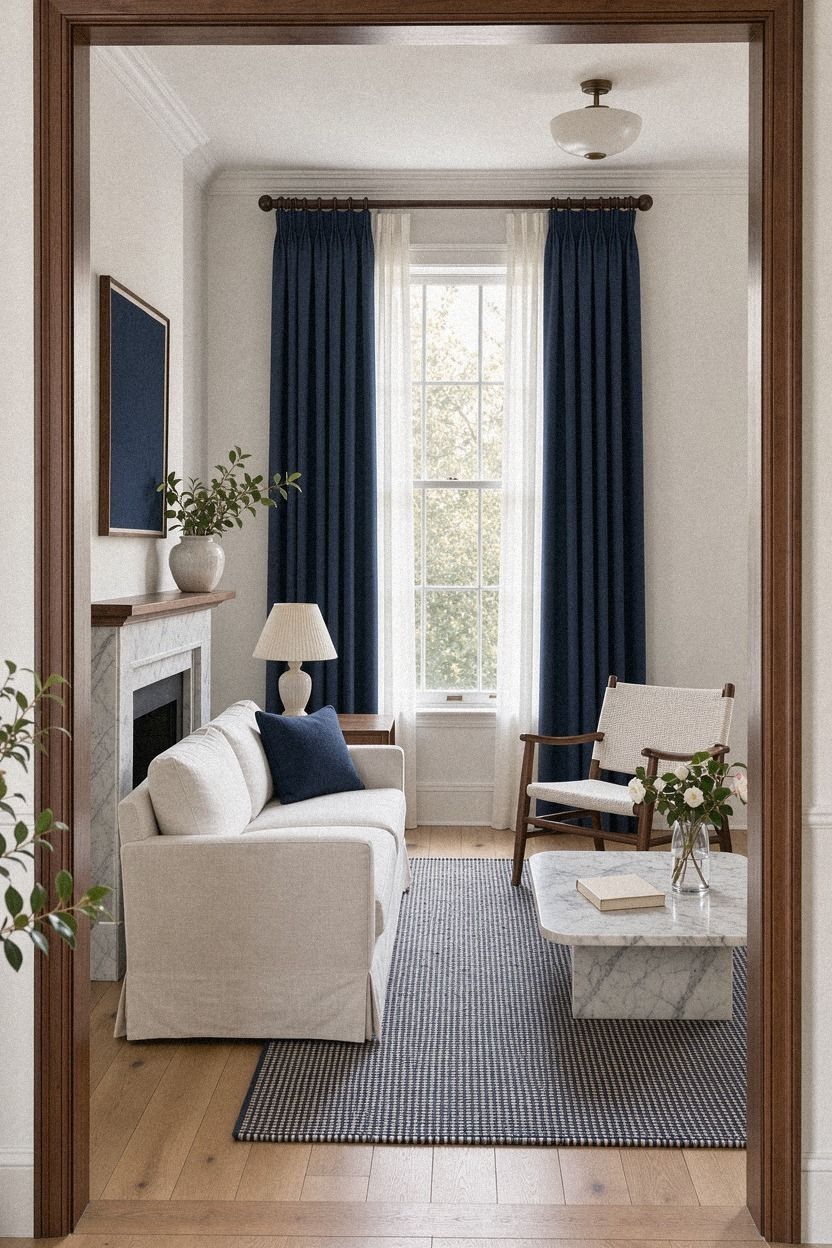
Push the rod 4 to 6 inches beyond each side of the window when your wall allows it. Those extra inches let the panels stack beside the glass instead of covering it, which makes the window feel broader.
Choose open side stacks when daylight matters. You’ll see more of the window when the curtains are fully drawn, and that uninterrupted glass helps a narrow room feel less pinched. If the wall is short, even a modest extension can make a difference.
3The Two-Height Rule
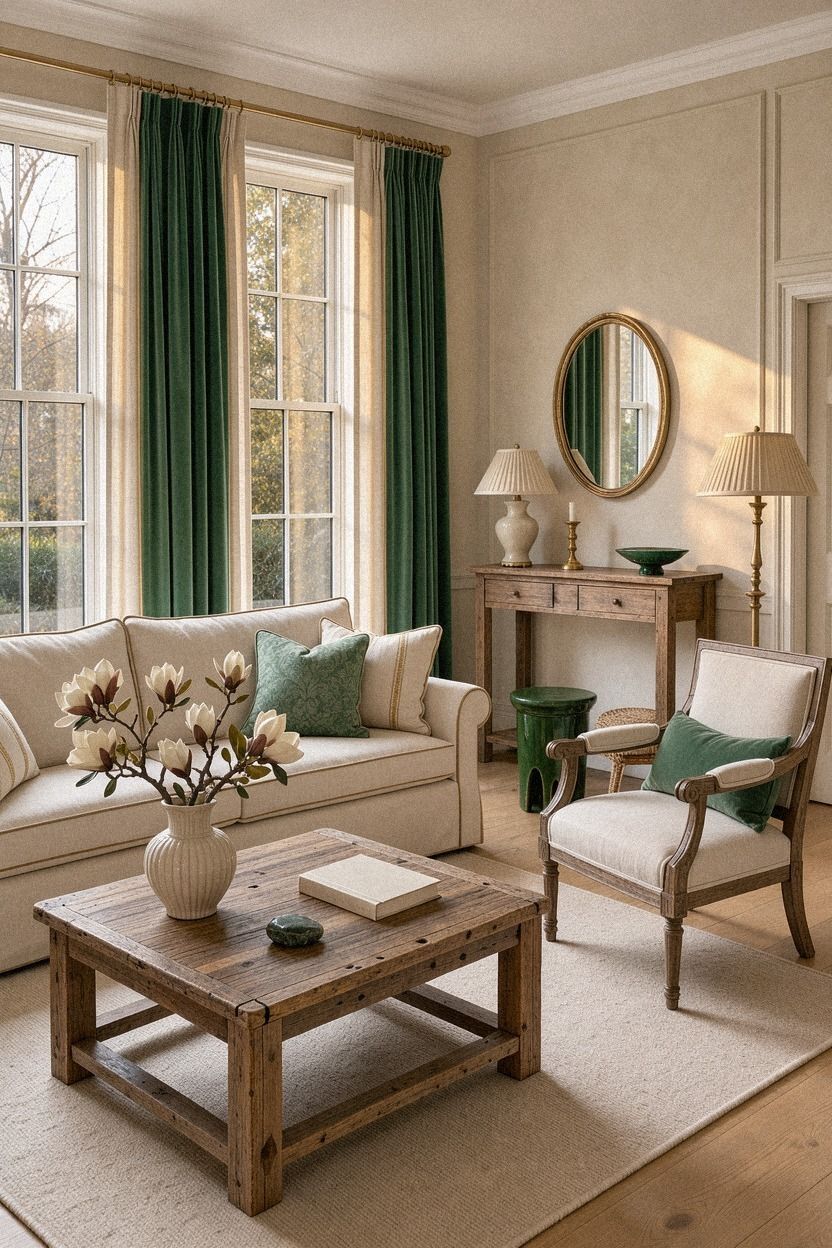
The Two-Height Rule is my favorite renter-friendly proportion fix: the rod sits high, and the curtain hem reaches the floor. Your eye reads those two points as one long vertical column, even when the window itself is short. Reclaimed weathered teak nearby adds grounded texture to an emerald, gold, and cream palette without interrupting that vertical line.
You’ll want to measure from the rod to the floor, not from the top of the window. Curtains that are too short can make your walls look chopped up, while extra-long panels may puddle and collect dust. I’ve found that a tiny break at the floor looks more polished than a dramatic pile.
But don’t confuse length with volume. Your room won’t look taller if the fabric is stiff and oversized. A soft cream panel gives you the height without swallowing the narrow wall.
4Why Do Pinch Pleats Beat Flat Panels?
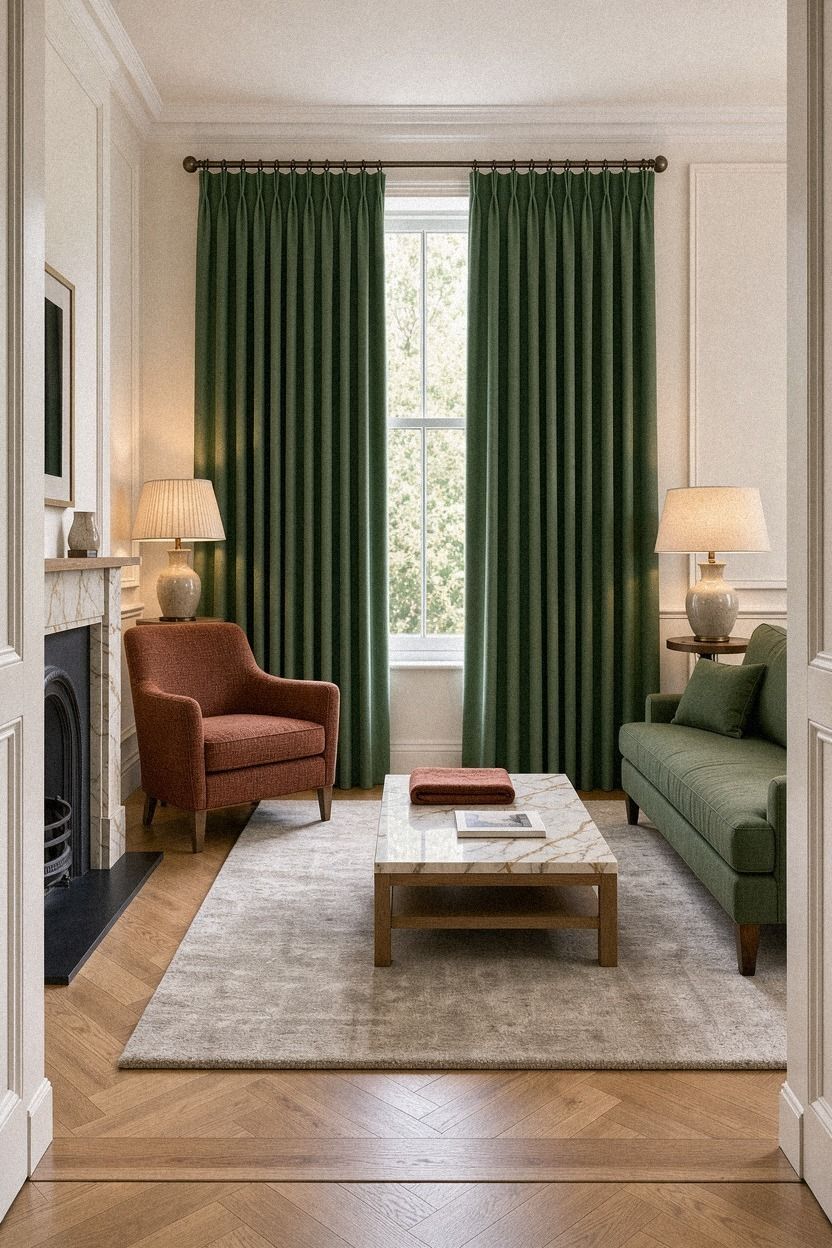
Pinch pleats create an orderly vertical rhythm, and that rhythm helps your window feel taller. The folds hold their shape when the curtains are open, so the side stacks look deliberate rather than bunched.
Flat panels can work in a relaxed room, but they often read as one broad rectangle. If your ceiling is low, choose a three-finger pleat or a restrained ripple fold. You’ll get movement without adding a heavy border around the glass.
5Float the Panels Just Above the Floor
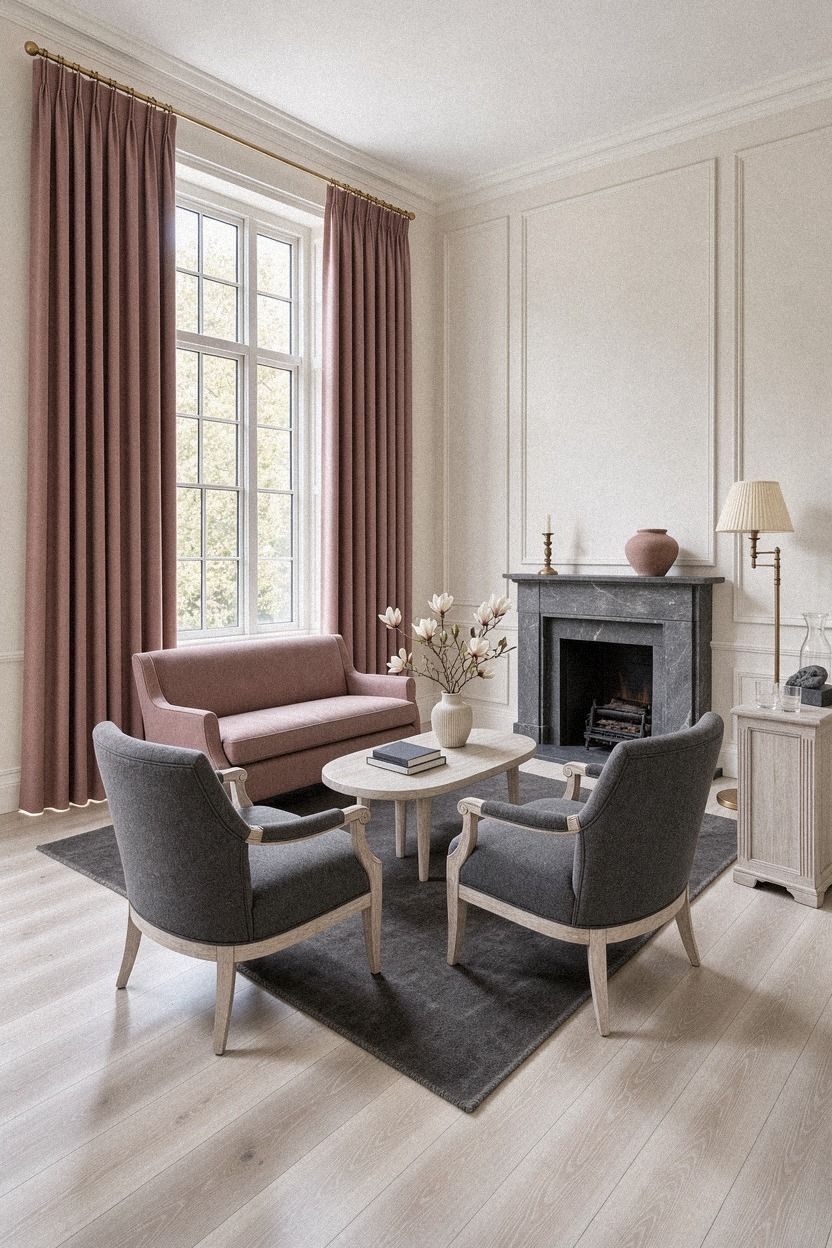
Let your curtains float one-quarter inch above the floor if you want a clean rental-friendly finish. That gap keeps the hem from dragging and gives your room a crisp vertical edge. Cerused white oak nearby adds a pale, textured finish that works especially well with dusty rose, charcoal, and brass.
You’ll want to check the hem from several angles before trimming anything. Floors are rarely level, especially in older apartments, so one side may need a slightly different adjustment.
I once assumed a room was square and ended up with a crooked-looking curtain line. The wall was the problem, not my measuring tape.
A small break can also work if your panels are lined, but don’t let them pool heavily in a narrow walkway. Your room needs clear circulation more than theatrical fabric. For a similar lesson in proportion, browse the wide-hip jean guide focused on balanced visual lines.
6Match the Curtain to the Wall
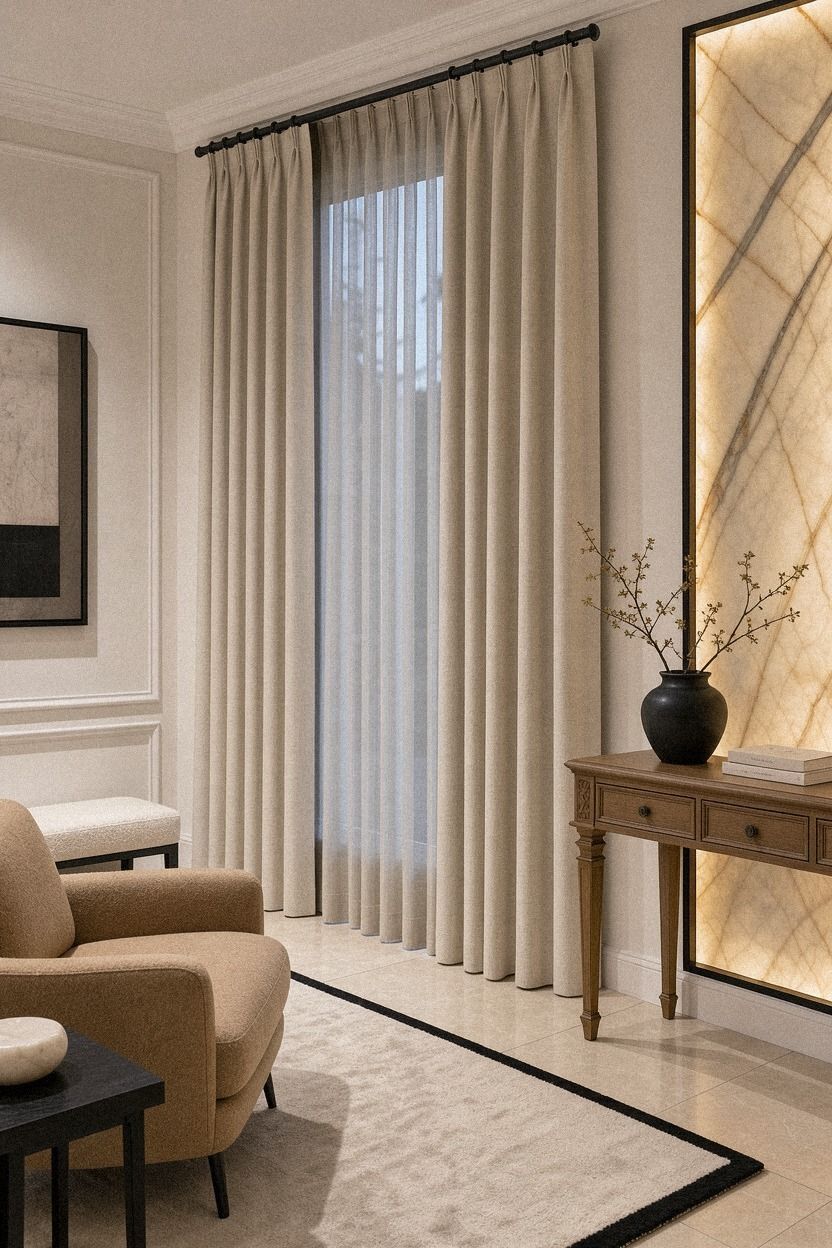
Matching your curtain and wall color creates a quiet envelope, which makes the wall feel less segmented. Warm white walls with camel curtains and restrained black accents look soft without becoming flat. A backlit translucent onyx surface can add depth while keeping the palette light.
You don’t have to use an exact match. Choose a curtain that’s one shade lighter or darker, and you’ll still get the uninterrupted effect. If you’re working with warm white rental walls, camel usually feels more dimensional than bright optic white because it softens the daylight.
I’d avoid strong contrast on both the rod and the fabric in a narrow room. Black curtains against warm white walls can be dramatic, but they’ll emphasize the window’s edges. Your goal is to let the fabric extend the wall, not draw a thick outline around the glass.
7Keep the Ceiling Line Quiet
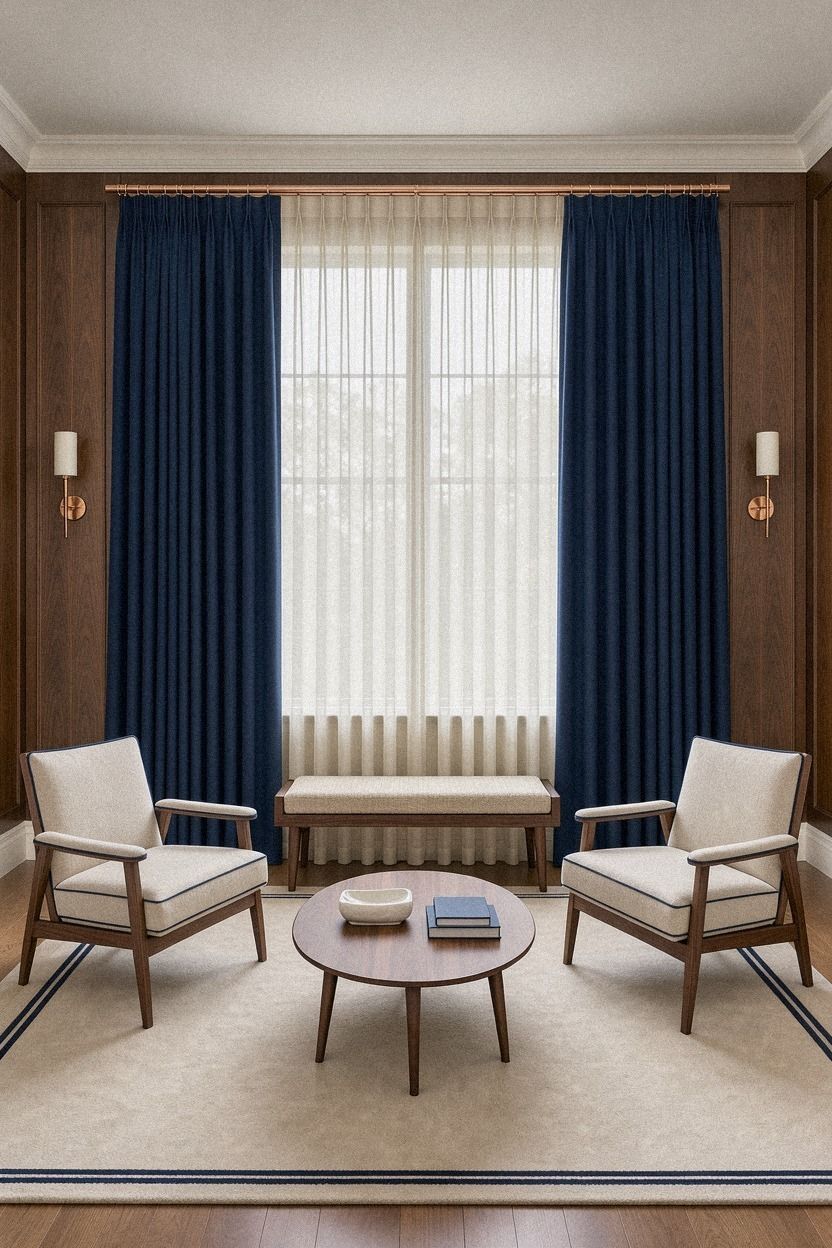
A narrow room can look taller when the ceiling and upper wall stay visually quiet. Midnight blue, copper, and ivory can still feel calm when the upper line is uncluttered and a book-matched walnut detail anchors the room below.

8Layer Sheers Behind the Main Panels
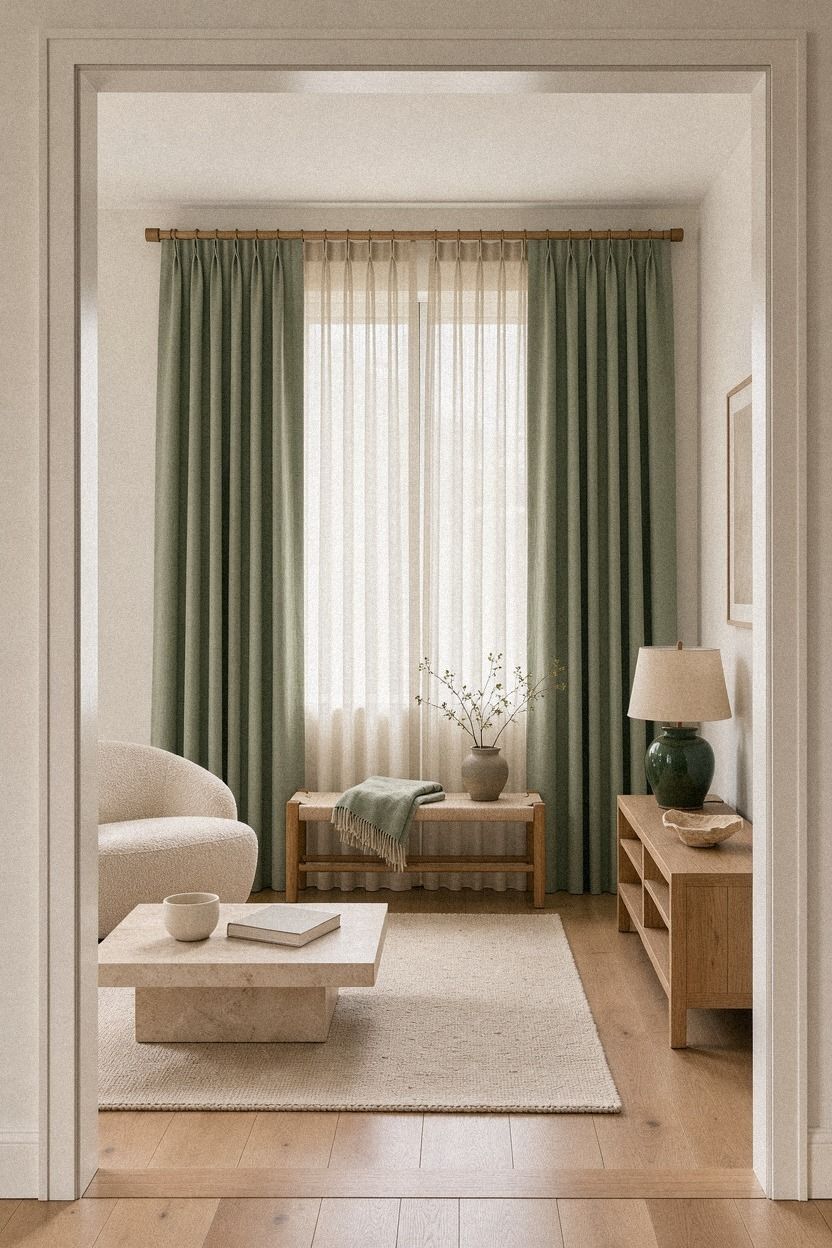
Layering a sheer curtain behind a heavier panel gives your window depth without making it feel crowded. Warm cream sheers soften daylight, while a heavier panel can close at night for privacy. A nearby warm travertine surface adds quiet texture without competing with the layers.
Use a double rod, a ceiling track, or a tension-mounted sheer behind a standard rod. Your room will feel more finished when both layers share a similar undertone. I’d pair sage green with warm cream and natural wood, because the combination feels connected rather than accidental.
And keep the inner layer simple. A patterned sheer may be charming in a wide room, but it adds visual noise to a narrow one.
Your best result will come from light, texture, and a calm color. For a related lesson in soft layering, read why dry skin makes perfume disappear and how a simple base keeps it lasting.
9Floor-Length or Short Curtains?
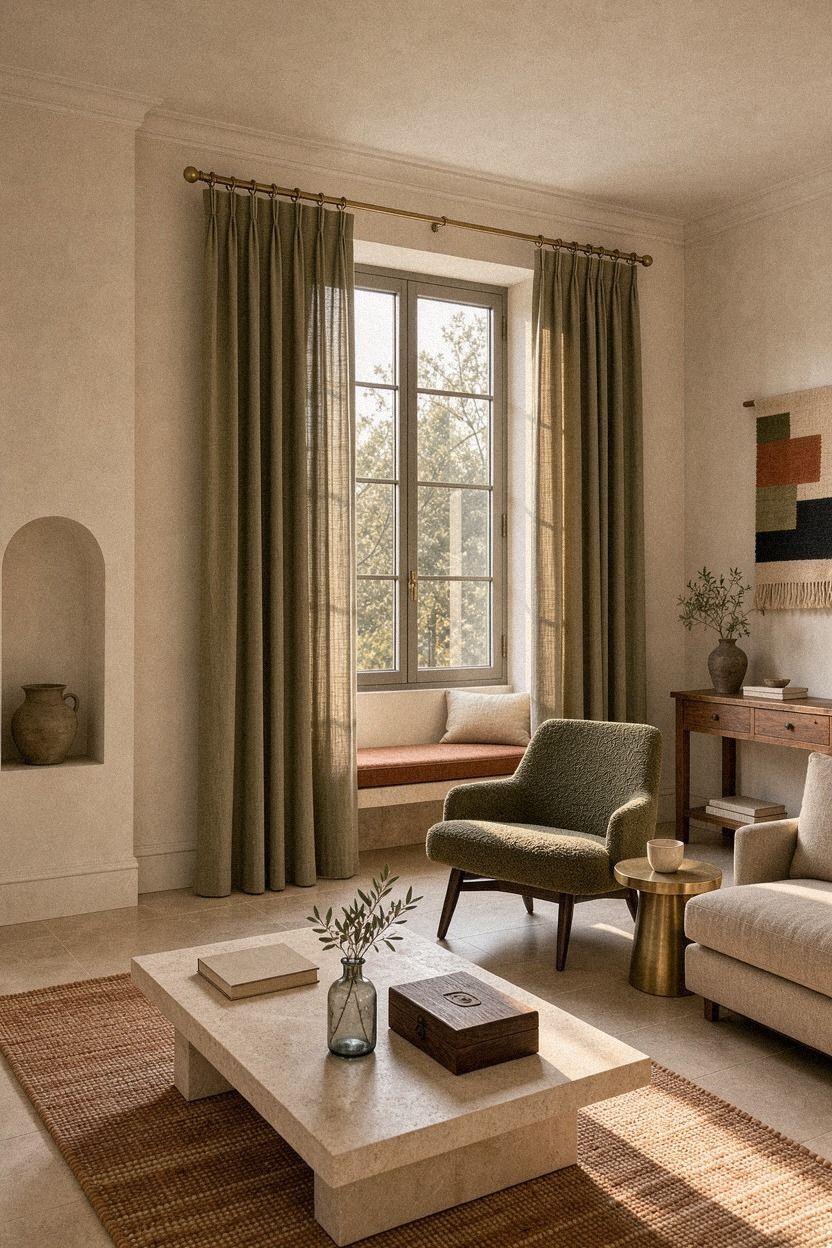
You’ll want to reserve short curtains for rooms where privacy matters more than visual height, such as a bathroom or kitchen. In a terracotta, stone, and olive room, unlacquered brass can develop a gentle patina that keeps the hardware from feeling too bright.
10Frame the View With Wide Side Panels
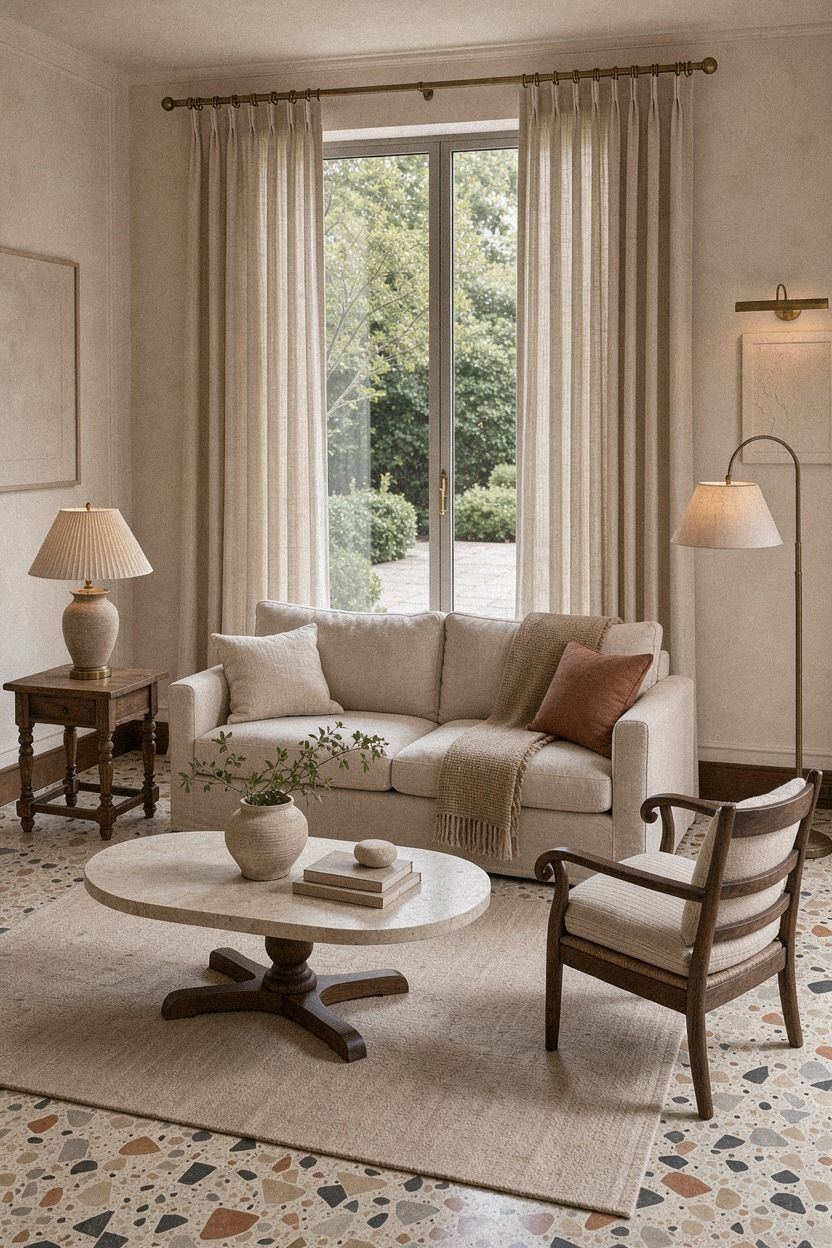
Wide side panels make a small window look broader because they establish edges outside the glass. The fabric should sit mostly beside the window when open, not bunch across the brightest part.
Choose full-width panels when the wall allows them. They’ll create a generous surround and make the window feel more architectural.
If the opening is extremely narrow, one panel on each side can still work as long as the stacks are balanced. Oversized-chip terrazzo nearby can echo that broader, more substantial feeling.
11A $200-$800 Window Lift
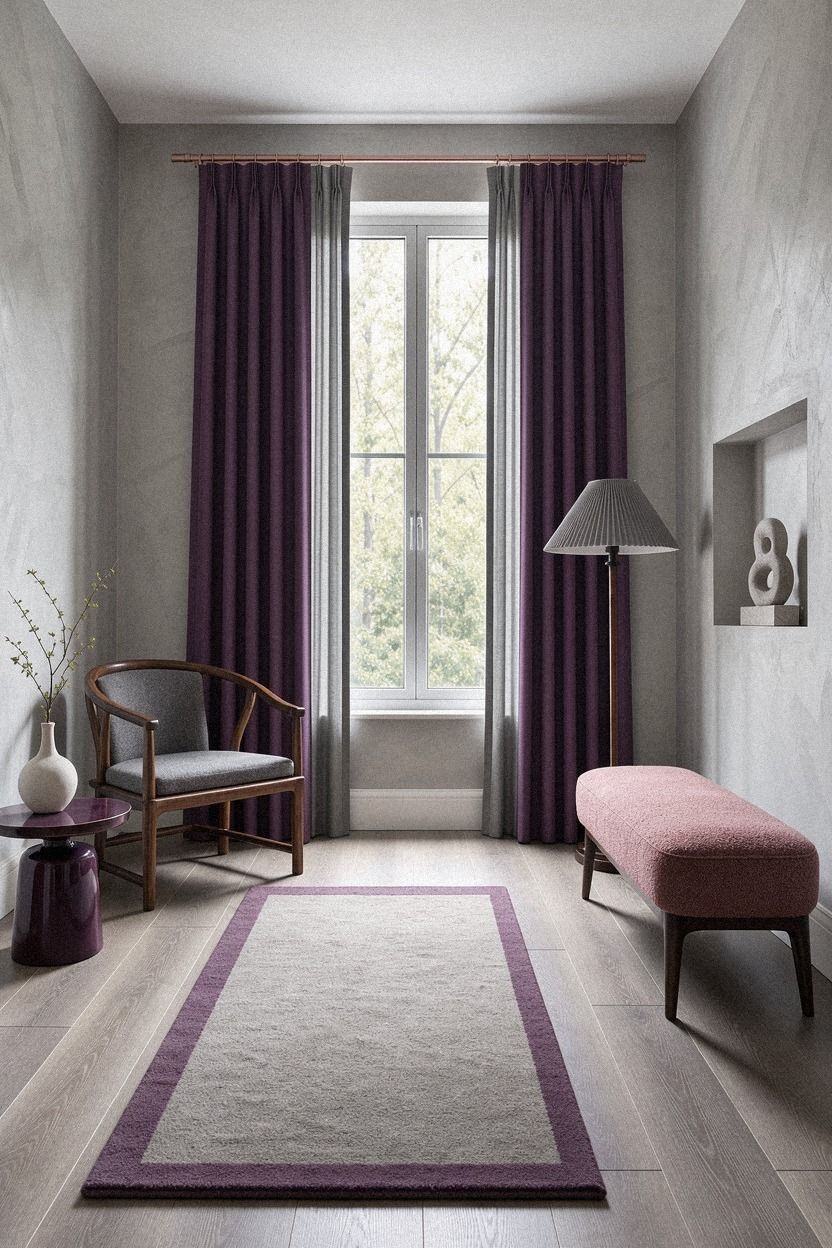
A budget curtain update doesn’t need to become a full room renovation. Hand-applied Venetian plaster can bring a plum, gray, and rose-gold room its own texture, while the curtain changes handle the proportion.
12Repeat One Warm Wood Tone
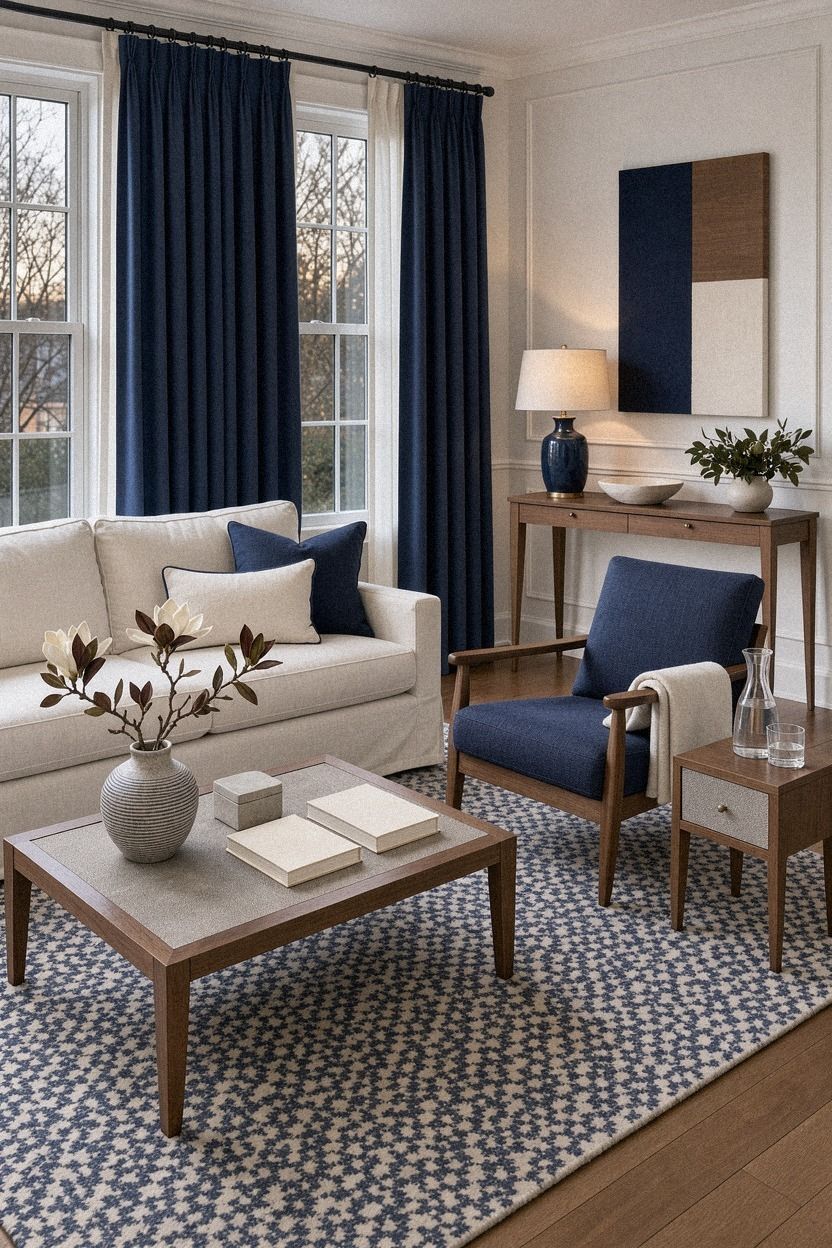
Curtains look more intentional when they connect to another material in the room. Repeat one warm walnut tone near the window, with a small shagreen accent to add texture. In a navy, white, and walnut palette, that relationship gives the soft fabric a clear anchor.
Keep the repetition limited. Your room doesn’t need five matching wood objects, and too much coordination can feel staged. I’d pair a calm curtain with one walnut accent and a single shagreen detail rather than adding several competing finishes.
If you’re styling a rental, a freestanding cabinet can provide that warm anchor without drilling. Your eye will notice the relationship between the cabinet top and the curtain hem, especially in a narrow room. The effect is subtle, but it’s what makes the space feel settled.
13Place the Rug Across the Width
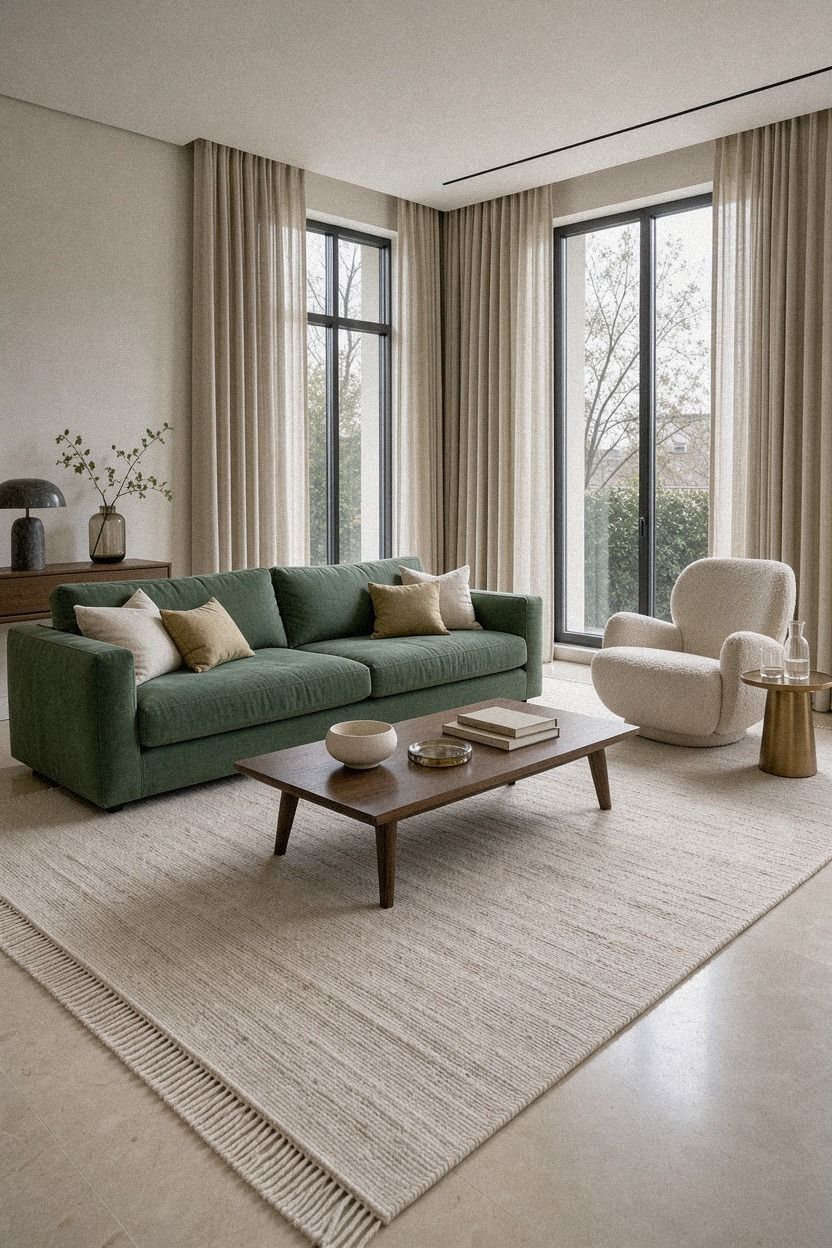
A rug can make a narrow room feel wider when its short edge runs across the room rather than pointing toward the window. Washed Belgian linen gives an emerald, gold, and cream room a relaxed texture without adding too much visual weight.
You’ll want the furniture to overlap the rug instead of leaving it floating in the center. Even a small front-leg overlap helps the room feel connected. I’d skip a tiny mat directly under the coffee table because it creates a little island and emphasizes the room’s narrow shape.
Your curtains and rug don’t need to match, but they should share one color family. Pair cream panels with emerald, muted gold, or a soft neutral underfoot. If you’re chasing a longer visual line, the guide to dark denim and height perception offers the same useful principle.
14Build the Three-Height Light Stack
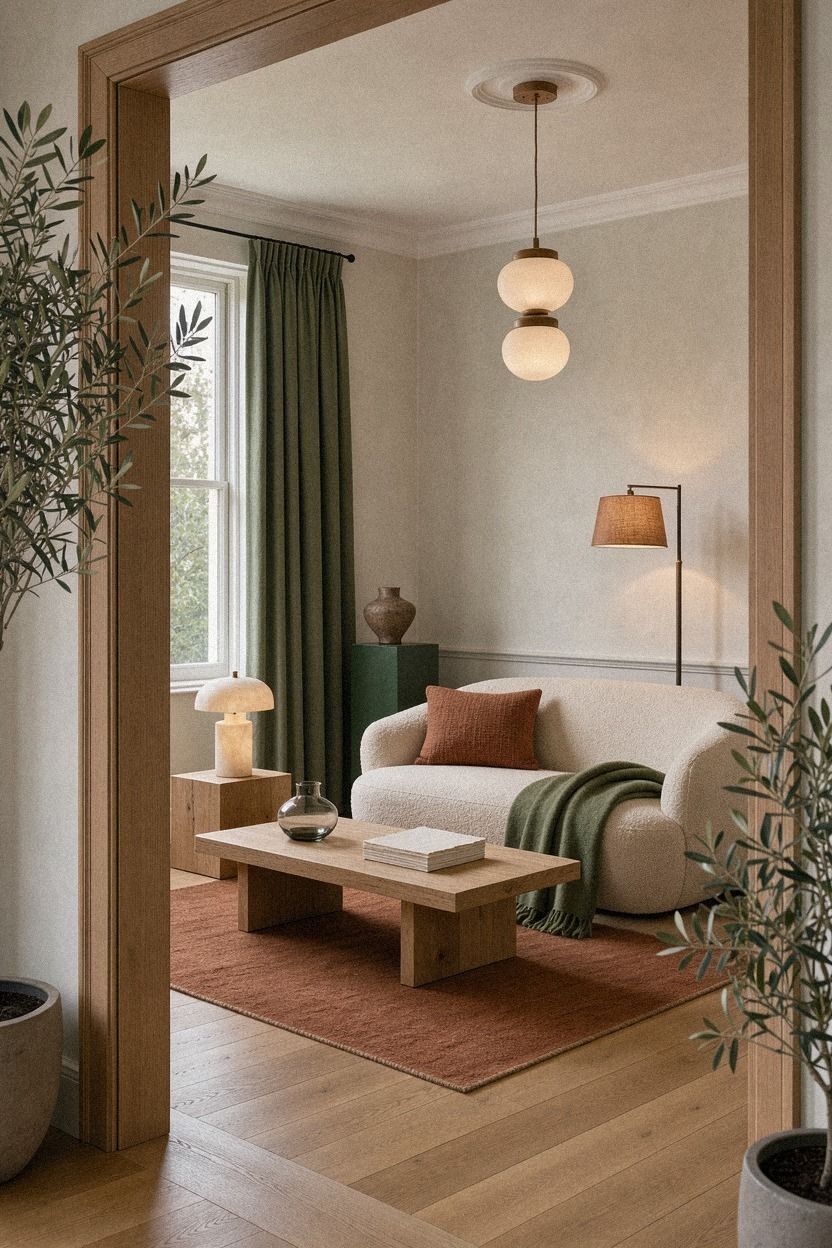
The Three-Height Light Stack keeps your eye moving upward and downward instead of stopping at the window. Use a low lamp, a medium table object, and a taller element such as a floor lamp beside the curtain. Natural oak and an organic bouclé accent help the three pieces feel related in a forest green, rust, and oak room.
Your lighting plan should include three sources per room: overhead, task, and ambient. A floor lamp beside long curtains is especially effective because its vertical shape repeats the fabric line. Choose a warm bulb so the panels glow instead of turning gray at night.
But don’t put a tall plant directly in front of the curtain. It blocks the window and creates a messy silhouette.
Your best placement is slightly to the side, where the leaves soften the edge without interrupting the light. The same placement logic appears in this fuller-looking bob guide.
15Choose a Narrow Pattern With a Long Repeat
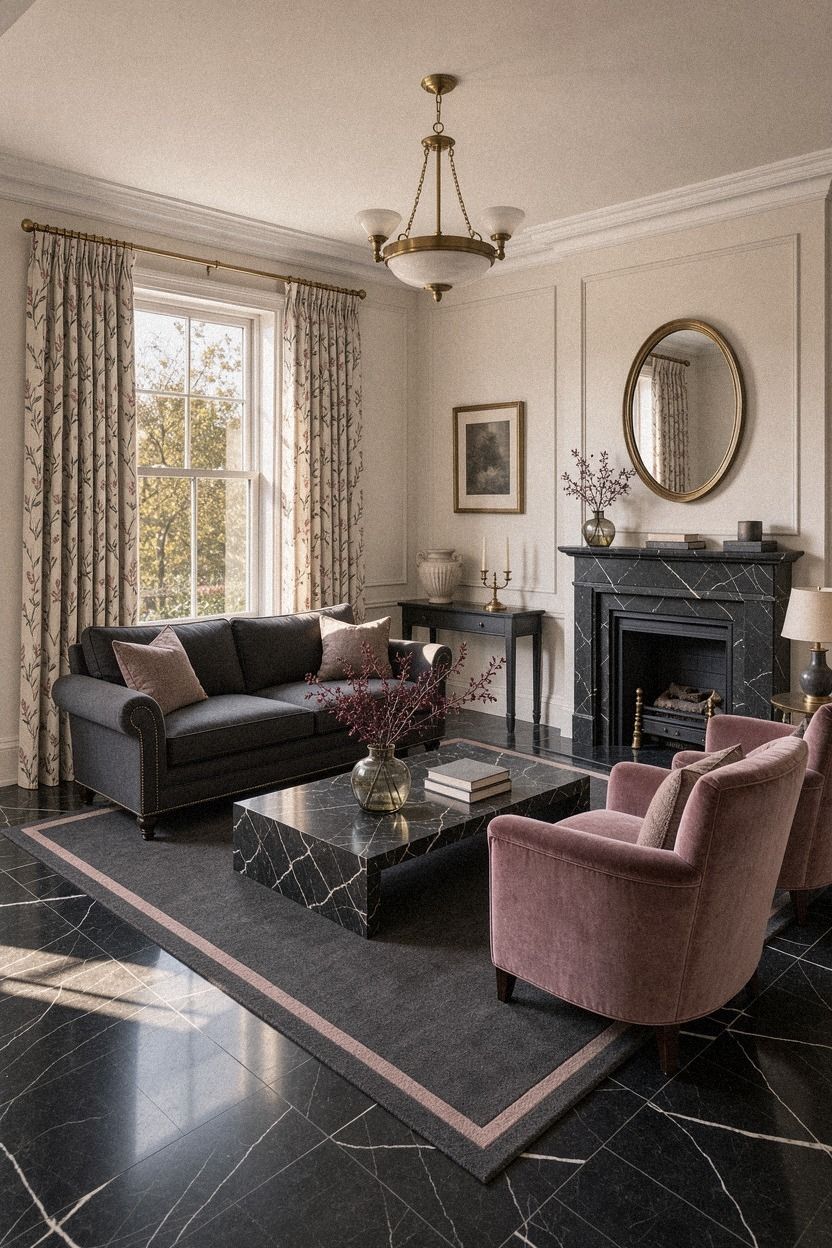
A subtle vertical pattern can make curtains look taller, but the repeat needs to be narrow and calm. In a dusty rose, charcoal, and brass room, Nero Marquina black marble with white veins can provide a strong accent while the curtain pattern stays restrained. You’ll want the stripe to run from the rod to the hem.
Avoid wide horizontal bands if your ceiling is low. They can be cheerful, but they’ll emphasize the room’s width at the wrong point and make the ceiling feel closer. I’d also skip large florals unless the rest of your room is very quiet.
If you’re choosing between two samples, stand them against the wall from across the room. Your eye sees the pattern differently at 10 feet than it does at the store.
That distance matters because your curtain is part of the architecture, not just a textile. The angled bob guide makes a similar point about direction and visual movement.
16Rental Hardware: Tension Rod or Track?
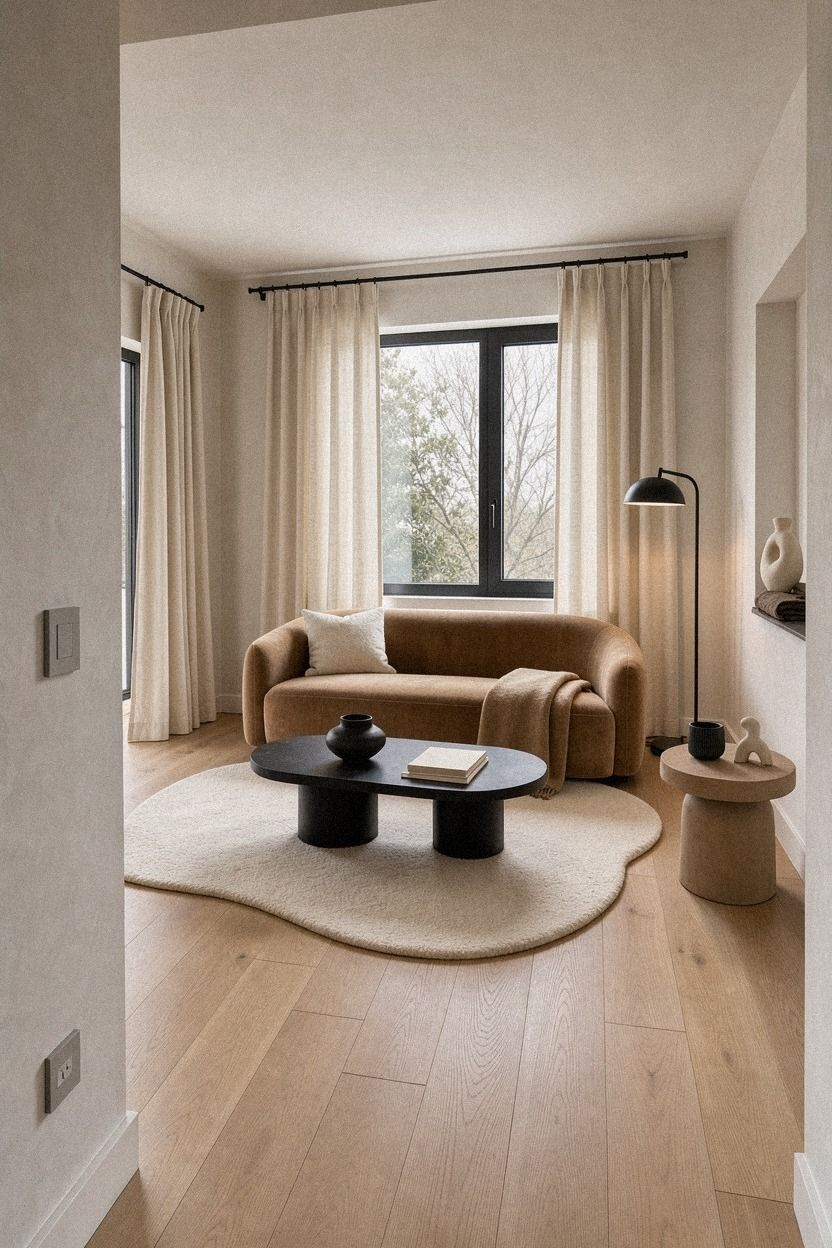
A tension rod works when you need a no-drill solution, especially in a bedroom or a shallow alcove. It suits lighter treatments, while deep-pile mohair velvet needs sturdier support and careful weight checks.
17Measure Before You Buy the Hardware
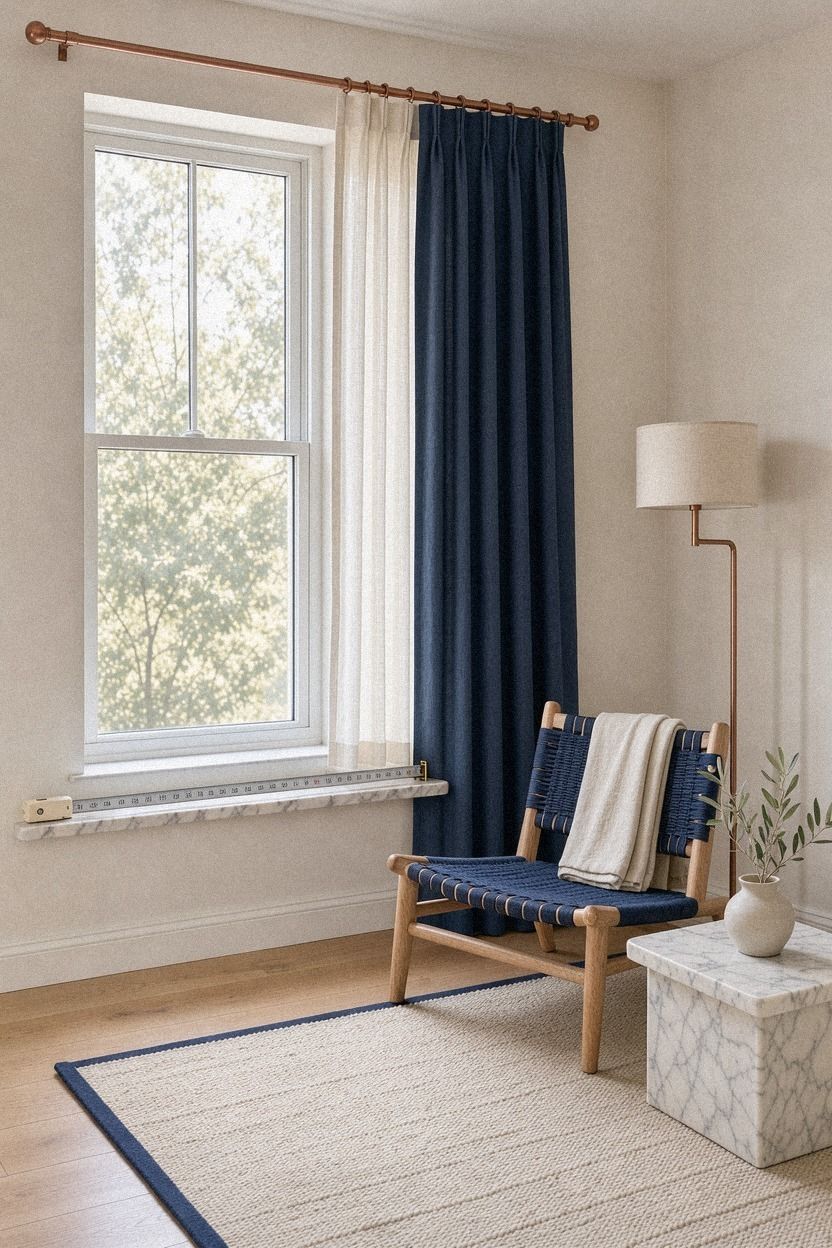
Measure the window, the wall, the floor-to-ceiling height, and the distance from the trim to nearby furniture. Record the finished curtain length you need, not just the window height.
A steel tape measure is more reliable than a soft sewing tape for the wall and floor. Measure twice, especially if you’re ordering custom panels. If you need help thinking about balanced proportions, the wide-hip guide uses the same basic idea: compare the whole outline, not one isolated measurement.
18Leave the Window’s Edges Quiet
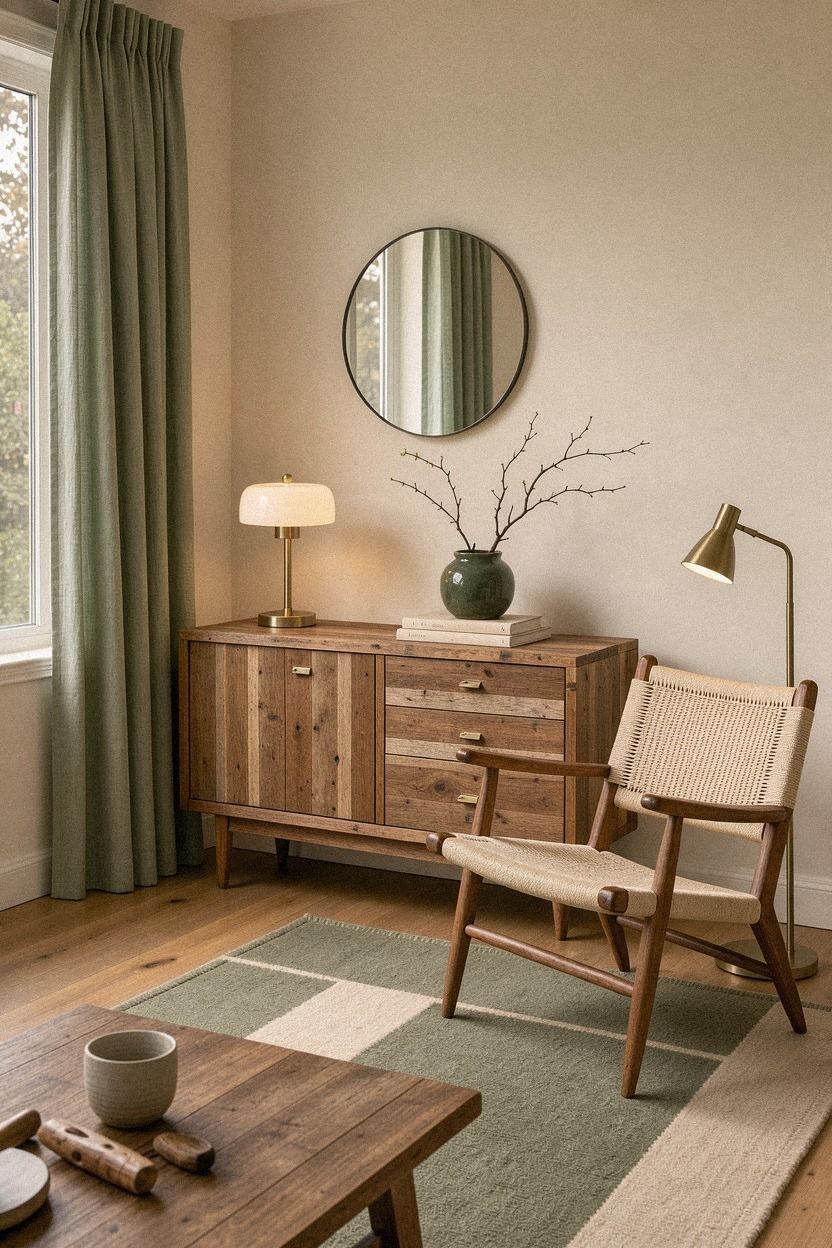
The last move is restraint. Keep the space around your curtain mostly clear so the long fabric line can do its work. Sage green beside warm cream and natural wood will often look more spacious than a crowded arrangement of art, shelves, and plants.
A small reclaimed teak detail can add warmth without filling the wall.
You’ll want to place art beside the window only when it balances the room without competing with the curtains. Hang its center about 57 to 60 inches from the floor, and keep the frame color related to the rod. Your eye should travel from art to fabric, not bounce between unrelated details.
But don’t force symmetry if the architecture doesn’t support it. A narrow room can feel more relaxed when one side has a lamp and the other has open wall. I’d rather have a little breathing space than fill every inch just because it’s available.
That quiet edge is what lets the space feel warm and inviting. For another lesson in creating a soft visual base, this perfume guide explains why the foundation matters.
Why Vertical Curtains Still Work in a Small Room
I’ve made the same mistake more than once: treating curtains as window coverings instead of wall treatment. When the fabric starts at the top of the wall and reaches the floor, it changes the room’s visual map. The window becomes part of a taller composition, and the ceiling seems to lift because your eye has somewhere to travel.
That doesn’t mean every room needs dramatic hotel curtains. In fact, I’d skip thick blackout panels in a narrow living room unless privacy or sleep requires them.
They can swallow daylight and make the wall feel heavy. A cotton-linen blend often gives you the better balance, especially when it’s hung high and pushed fully outside the glass.
The part I care about most is the relationship between height and width. Raising the rod creates the vertical stretch.
Extending it past the trim creates the horizontal stretch. You need both, or the room may look taller but still feel pinched.
That’s why a short rod mounted high is only half a solution. The dark denim guide applies the same visual principle to a different silhouette.
I also think renters have an advantage here. You can make a meaningful change with a tension rod, removable hooks, or a lightweight track, and you don’t need to rebuild the room. I’ve used temporary hardware in apartments where drilling wasn’t allowed, and the result still felt considered, which is the polite design word for “I measured twice.”
Your curtain color matters, but placement matters first. Warm cream won’t rescue a panel that floats above the floor, and a budget curtain can look remarkably refined when the line is right.
Start with the tape measure, then choose the fabric. That order saves money and usually gives you the taller, wider room you wanted. Start with the tape measure!
What People Always Want to Know
What is the best curtain treatment for a small room?
The best treatment is a floor-length panel hung 4 to 6 inches above the trim and extended past both sides. Lightweight curtains from IKEA or a similar retailer keep daylight moving through the room. You’ll get a taller effect without adding heavy visual weight.
Where can I buy curtain pieces on a budget?
Look at IKEA, Wayfair, Target, and local thrift stores. Secondhand panels can cost much less than new ones, and Facebook Marketplace often has oversized pairs from renovation leftovers. You’ll want to inspect the hems, measure the finished length, and wash fabric before hanging it.
How much does a curtain makeover cost?
A curtain-focused update can cost about $100 to $300, depending on the rod, panel length, and fabric. Free improvements include raising the existing rod, steaming the panels, and moving furniture away from the window. Your biggest expense is usually custom length, not installation.
Can I create this look on a budget?
Yes, and you can start without buying anything. Raise your rod, push furniture away from the glass, and steam the panels you already own. Budget cotton curtains from Target or IKEA can complete the look, especially when you choose the right finished length.
Is this worth it in a small space?
Yes, because a small room makes proportion changes easy to see. A higher curtain line adds height while open side stacks reveal more glass and daylight. You’ll get the strongest result when the rod is high, the hem reaches the floor, and the rug overlaps the furniture.
Is this a good idea for a rental?
Yes. Use a tension rod, removable hooks, or a lightweight track approved by your lease. No-drill hardware works best with sheers and light cotton panels, while peel-and-stick privacy film can cover the glass without blocking your vertical curtain line.
Where I'd Start First
If I had to pick one, I’d start with the rod height. A curtain that reaches the floor but hangs low still chops up the wall, while a high rod creates the long line your room needs. Raise it, steam the panels, and let the daylight back in.
For another proportion-focused idea, see the angled bob guide.


