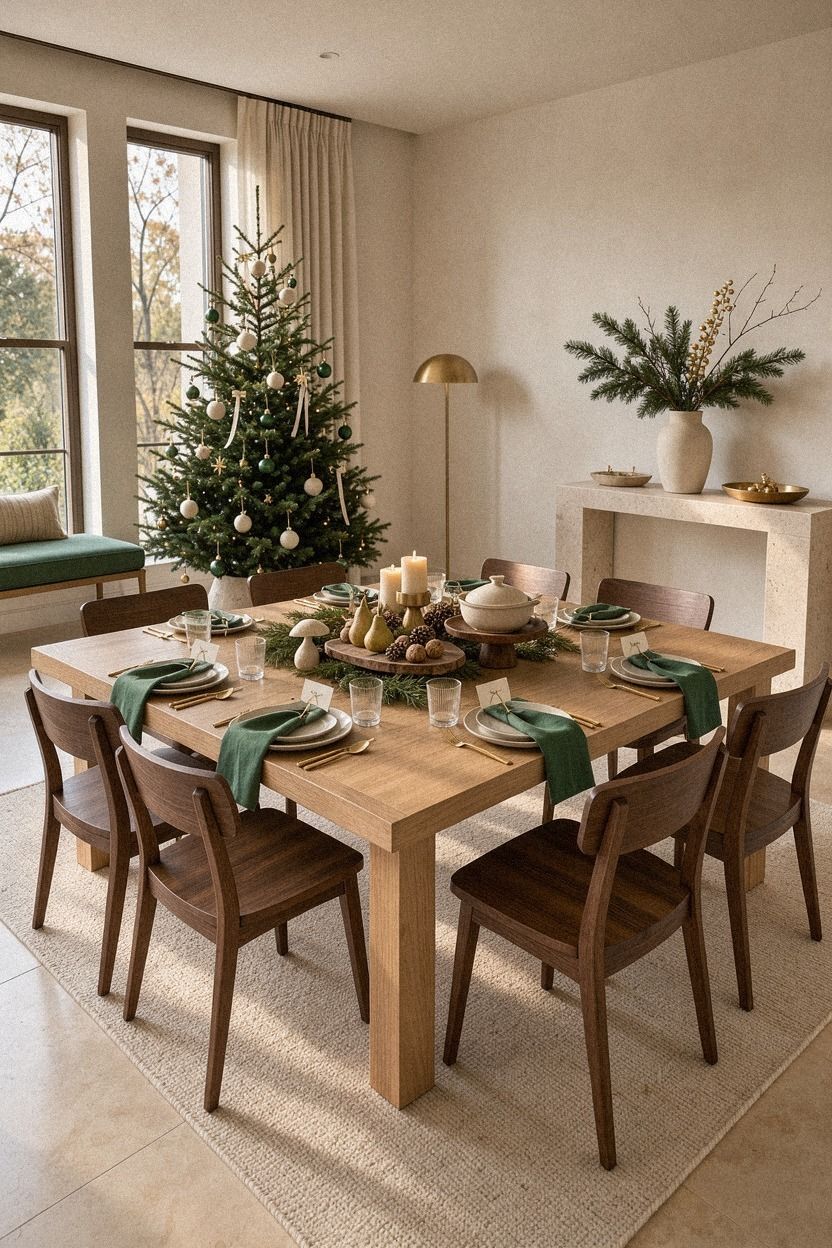
Cozy Cabin-Feel Christmas Tables With Rustic Woodland Charm
25 october 2026Rustic woodland Christmas tables can feel warm with $200-$800 in paint, textiles, art, and organization. I used to pile on plaid and call it done, but the table still looked flat. The fix was quieter: layered wood, candlelight, and one imperfect natural detail. These 14 ideas make your Christmas table feel gathered, inviting, and relaxed.
- Layer the Two-Wood Rule for Rustic Christmas Tablescapes
- Why Let the Woodland Runner Float?
- Build the Three-Height Light Stack
- Mix Plaid With Quiet Texture
- Anchor the Center With a Stoneware Hearth Bowl
- The Branch Moment Above the Table
- Paint a Deep Background Behind the Place Settings
- Frame Each Place With Woodland Layers
- Amber Glass, Deeper Candlelight
- A Cabin Still Life Beats Perfect Symmetry
- Create a Small-Space Candle Meadow
- What Should a Handwritten Woodland Menu Say?
- Layer Soft Textiles for Woodsy Christmas Tablescapes
- Finish With One Unexpected Woodland Object
1Layer the Two-Wood Rule for Rustic Christmas Tablescapes
Use two wood tones with distinct personalities. A pale white oak runner board beneath a darker walnut bowl gives your table depth without turning it into a furniture showroom.
Set those woods against warm travertine, emerald greenery, gold candlelight, and cream linens for a richer woodland palette. I learned this after combining pine, cedar, bamboo, and reclaimed oak once.
The grain competed, and your eye had nowhere to rest. Two finishes create a calm, handsome foundation.
Keep the lighter wood near the center and the deeper tone at the place settings. A cerused oak charger, a folded cream napkin, and a small emerald-green clipping will feel warm and organic.
If you’re using an IKEA table, keep its finish visible instead of covering everything with a cloth. Your table should still feel useful, familiar, and welcoming.
A narrow surface needs extra restraint. Leave one clear strip for serving dishes, and keep the center low enough that your guests can see across it.
I’d rather see a beautiful grain line than another ornament. A warm travertine board or coaster adds weight without filling the table.
For more height without visual weight, borrow the three-level approach from the three-height light stack.
The two-wood rule also helps when your room already has several finishes. If the floor is honey-toned, choose a deep bowl or dark tray.
If the table is walnut, add pale wood through a birch board or woven placemat. Bring in small touches of gold and cream rather than another wood tone.
This contrast keeps the setting layered without making it restless. You can connect the look to the woodland place-setting layers.
2Why Let the Woodland Runner Float?
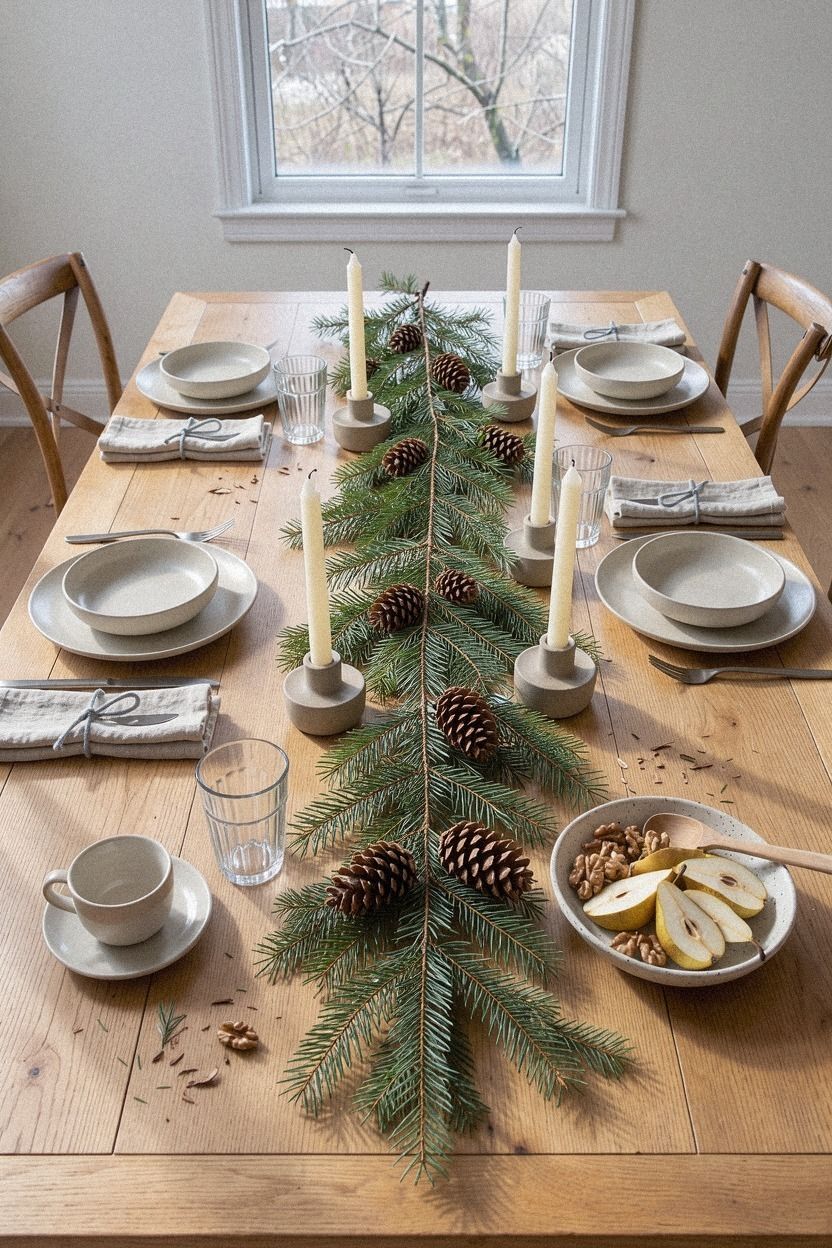
A full tablecloth can make a cabin table feel heavy, especially if your room already has dark floors or a stone fireplace. A narrow runner gives the eye a path through the arrangement while leaving some of the tabletop visible. That exposed natural oak becomes part of the decoration.
Choose washed linen or loosely woven cotton in forest green, rust, or a softened natural shade. Let the ends fall naturally, but trim the length if they interfere with chairs. You’ll get a more relaxed result when the fabric feels softly rumpled and tactile.
Place the runner beneath the centerpiece and slightly off-center if the table is rectangular. That small shift can keep the composition from feeling formal.
If your table is round, skip the runner and use a shallow natural-oak board or a pair of overlapping mats instead. You can soften the edges with the layered textiles in section 13.
The runner should support the table’s rhythm instead of swallowing it. A rust stripe can add energy, while solid forest green creates a quieter mood. Add one piece of unlacquered brass, such as a candle holder or serving spoon, and let it develop a gentle patina over time.
For a narrow table, fold the runner lengthwise once before placing it. The exposed wood will look intentional, and the serving area will remain generous. The low arrangement from the small-space candle meadow works especially well on top.
3Build the Three-Height Light Stack
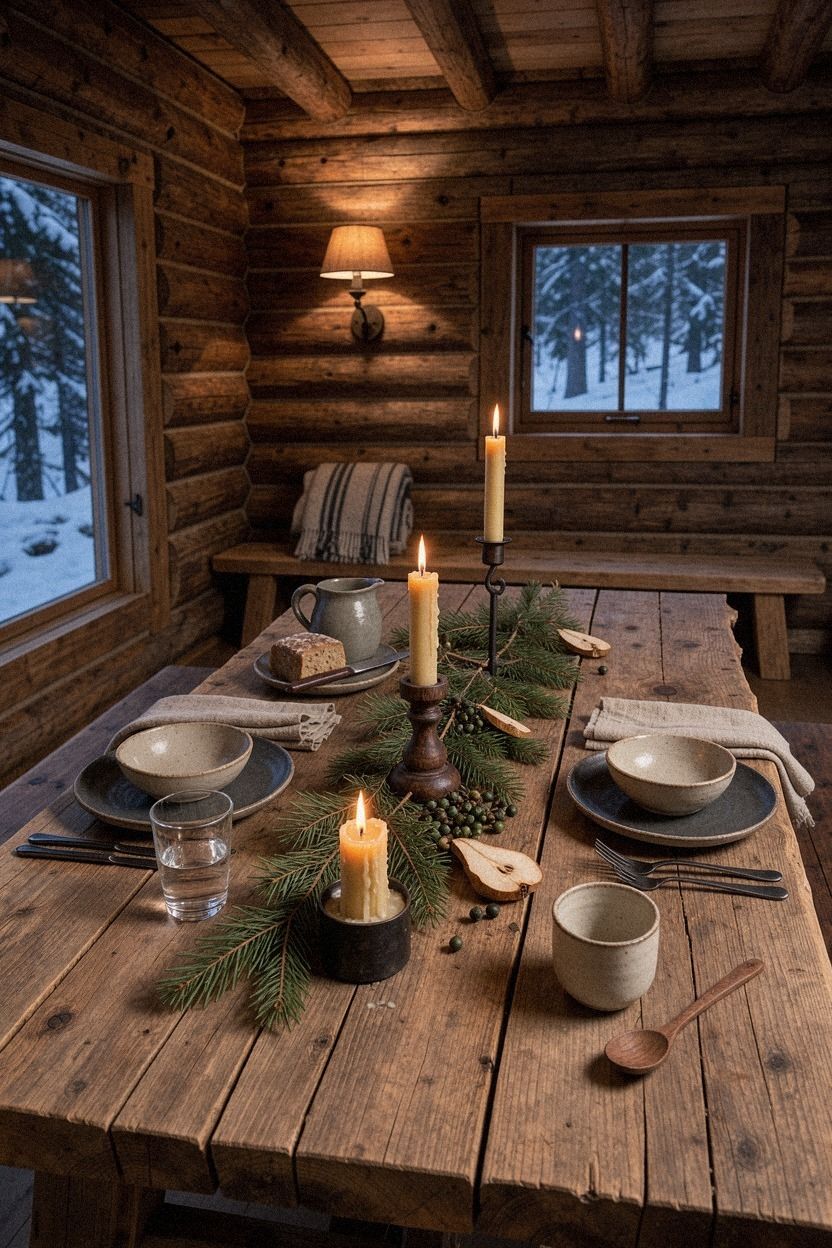
Your table needs three visible heights: low greenery, medium candles, and one taller branch or vessel. I call this the Three-Height Light Stack because it keeps your centerpiece readable from every seat.
A low dusty-rose linen layer anchors the arrangement, while charcoal candle holders and brass details bring warmth to the plates. Finish with one narrow vessel resting on an oversized-chip terrazzo board.
Don’t place the tallest piece directly in front of your guest’s face. Keep it to one side or use branches that stay airy above eye level.
Three light sources in a room, ceiling, task, and ambient, create a more comfortable evening than one bright ceiling fixture. You’ll notice the difference when the lamp throws a pool of gold across the table instead of bleaching the centerpiece.
For safety, keep dry greenery several inches from every flame. I like a small cluster of brass candle cups because their warm finish supports the charcoal and dusty-rose palette without adding another pattern.
Battery lights can work too, especially when children or pets are part of the evening. The atmosphere should feel intimate, never precarious.
A low candle meadow is especially useful on a narrow table. See how the same idea changes scale in section 11. You can also repeat the brass warmth through the amber glass approach in section 9.
Keep the tallest element simple. A slim branch, a taper holder, or a narrow terrazzo vessel will feel more elegant than a crowded tower of decorations. The light should travel across the table, creating a luminous and memorable evening scene.
4Mix Plaid With Quiet Texture
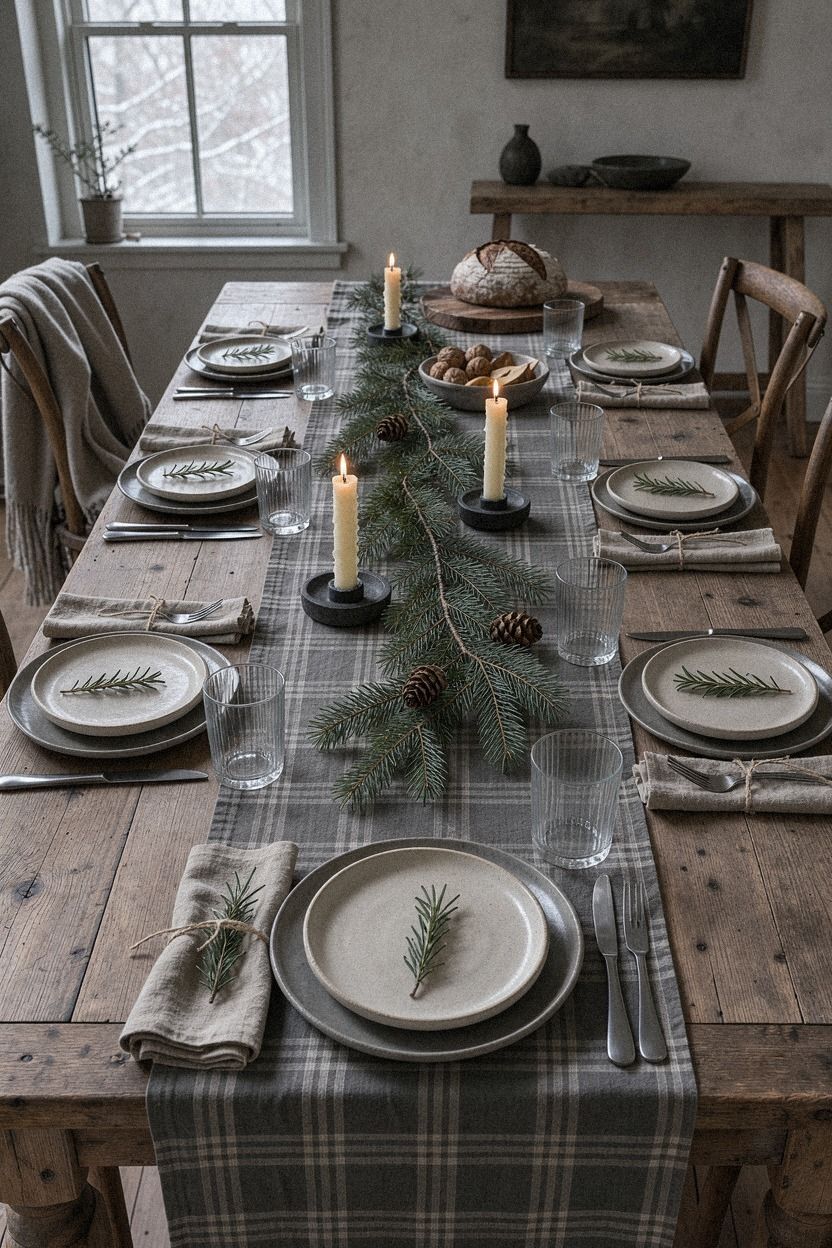
Plaid works best when it’s the loudest pattern on the table. Keep the rest warm and restrained with warm white linen, camel wool, and small black accents.
A hand-applied Venetian plaster wall or serving board can give the setting a soft, irregular texture. Let one camel textile carry the comfort, then use a black candle holder or plate edge to keep the palette from becoming too sweet. The table will feel layered without looking busy.
5Anchor the Center With a Stoneware Hearth Bowl
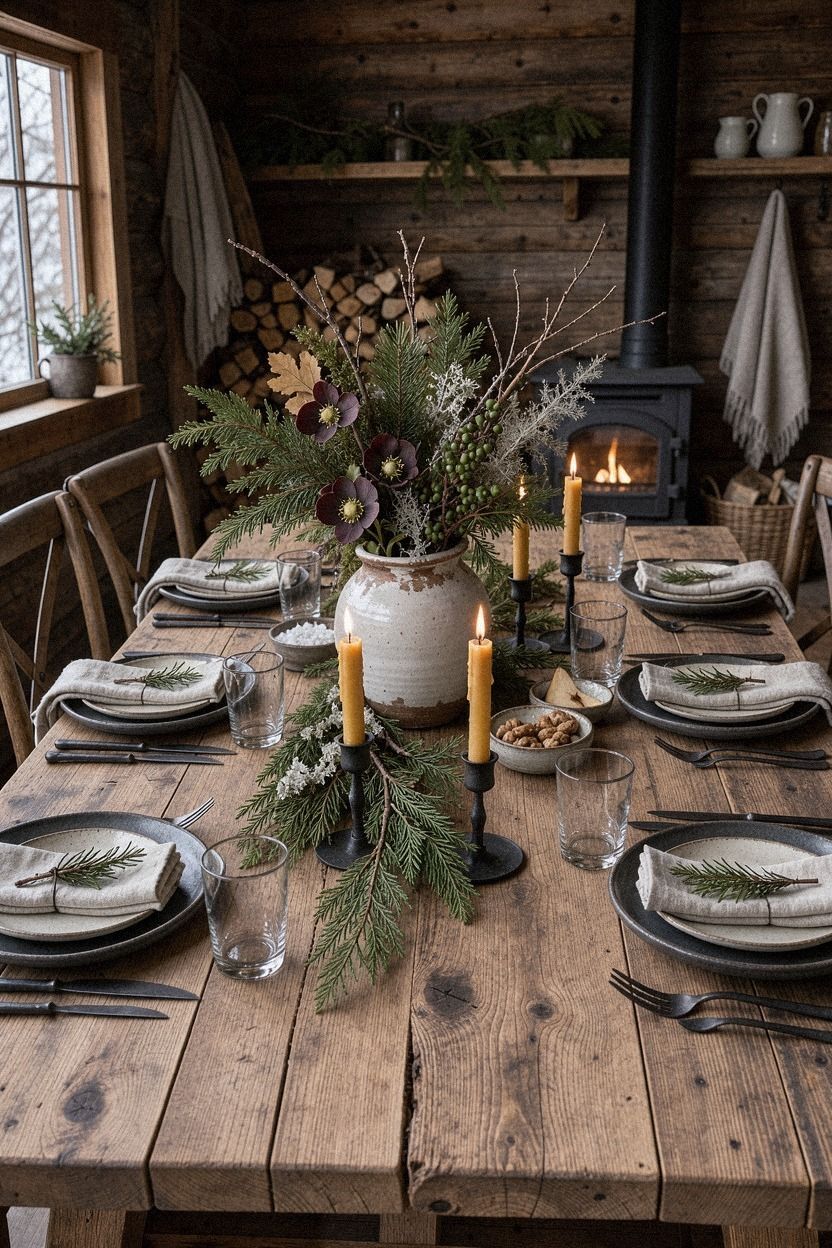
A wide bowl gives your centerpiece a visual hearth. Choose midnight-blue stoneware with an ivory interior, then fill it loosely with walnuts, pinecones, dried oranges, and clipped fir.
Add a small copper detail or a shagreen accent nearby. The bowl should feel useful enough to move when dinner arrives. I prefer this over a tall floral arrangement because your guests can still see one another across the table.
Keep the contents lower than the bowl’s rim, and tuck in one contrasting material, such as copper bells or an ivory linen ribbon. You don’t need a florist’s budget here. A thrifted vessel and yard clippings can carry the whole arrangement.
If your table is small, choose a bowl under the width of one place setting so your plates won’t feel crowded.
The most successful bowl arrangements have one empty patch. That pause makes the natural materials look intentional rather than packed in. Add three walnuts, then five pinecones, then stop before the bowl becomes a basket.
If you want one unexpected object, use the approach in section 14.
A shallow shagreen tray works beautifully when the table already has heavy wood. Its textured surface creates a gentle break beneath the midnight blue and ivory pieces. For a lighter room, choose a copper-toned vessel that gives the greenery more dramatic contrast.
Keep a small pair of kitchen tongs nearby if the bowl contains edible details. Guests can move walnuts or citrus aside without touching the whole arrangement. That practical choice makes the centerpiece feel generous and lived-in.
6The Branch Moment Above the Table
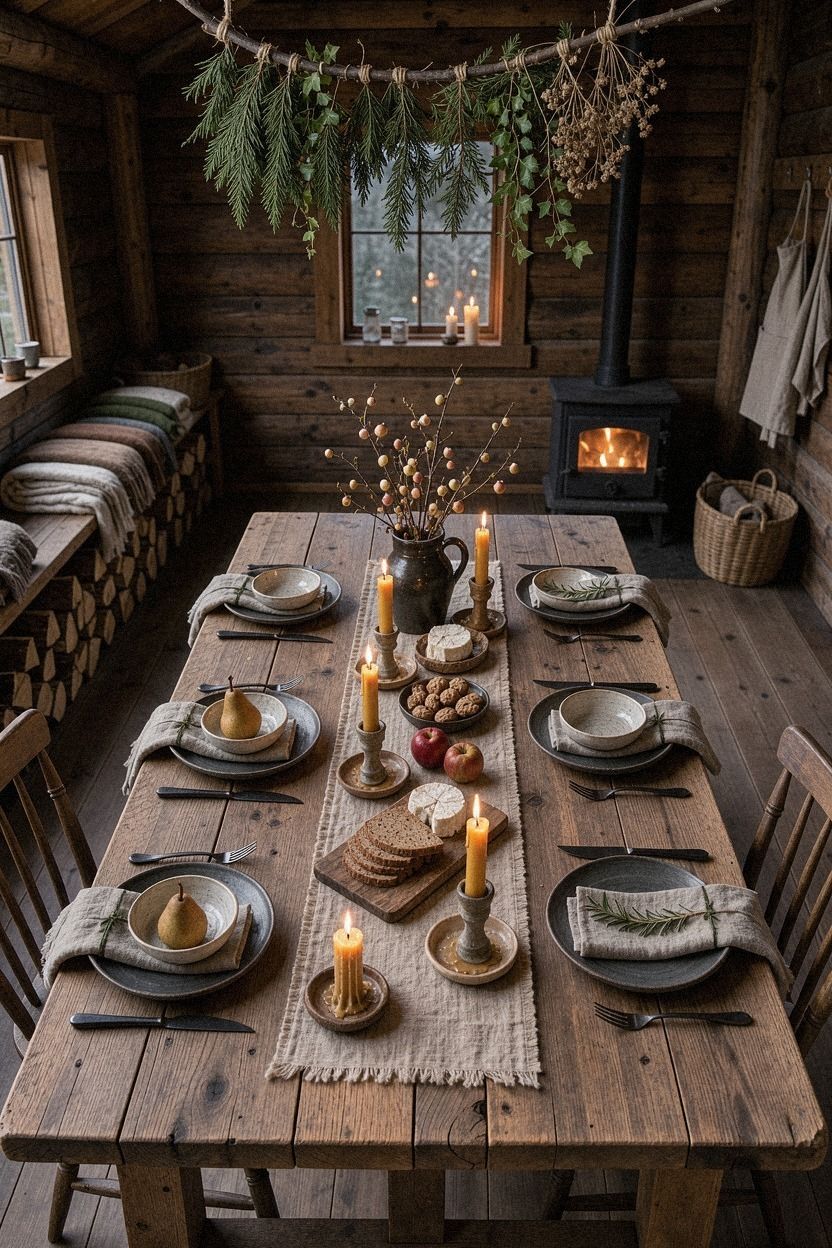
The tabletop gets all the attention, but the space above it can make the room feel taller and more festive. A simple branch arrangement suspended from a ceiling hook or wall-mounted rail can frame dinner without taking up a single inch of serving space.
Use one natural wood branch with a few sage-green sprigs rather than a dense installation. Tie it with washed Belgian linen, thin leather, or soft ribbon that matches the napkins. The branch should feel like something you found on a winter walk, with an atmospheric, imperfect character.
If you’re renting, try a freestanding arch, a tall floor lamp, or a removable picture rail. A small cluster above one end of the table is enough. You don’t need to decorate every inch of the room for the dining area to feel special.
Keep hanging pieces well above head height and away from open flames. The wall treatment in section 7 can provide the same sense of enclosure when hanging decoration isn’t practical.
A branch can also carry a few lightweight paper stars or dried seed pods. Keep the number low so the arrangement remains airy. The most charming result feels like a quiet winter canopy, not a crowded holiday display.
7Paint a Deep Background Behind the Place Settings
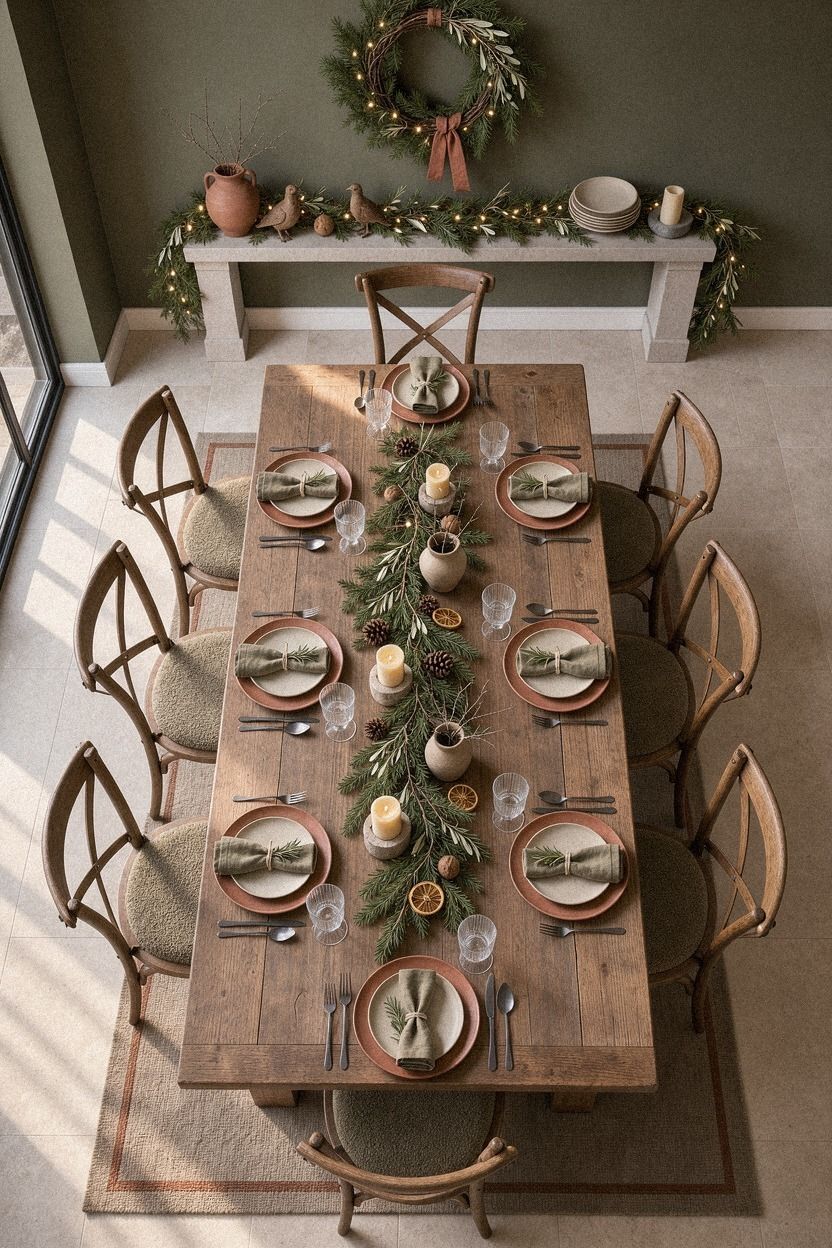
A painted wall can do more for your Christmas table than another box of decorations. Try a muted terracotta background with stone-colored ceramics and olive-green foliage. The deeper wall gives pale dishes somewhere to settle, while the earthy colors keep the setting connected to the woodland mood.
Bring in an organic bouclé seat cushion or dining chair for softness. It will make the stone and terracotta feel warmer without adding another pattern. Keep the wall finish matte so the natural materials remain the focus.
8Frame Each Place With Woodland Layers
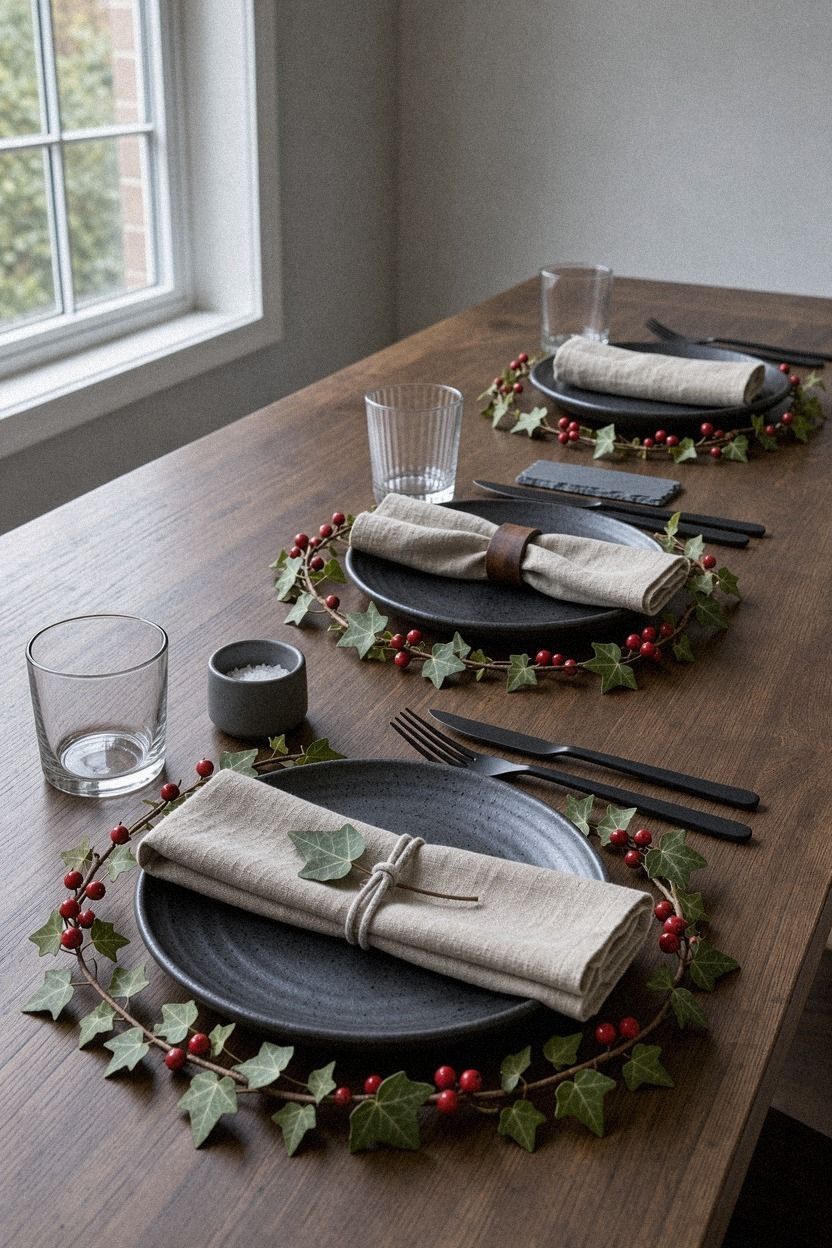
Treat each place setting like a small landscape. Start with a linen placemat, add a clay-toned plate, then place a smaller bowl on top. Aged brass cutlery and a narrow strip of Nero Marquina marble with white veins bring contrast without making the table formal.
Use one repeatable shape so the setting doesn’t become fussy. IKEA VINTERFINT style pieces can work beautifully when you mix them with plain dishes instead of buying an entire matching collection.
Your guests won’t care whether every plate is identical, but they will notice if their elbows have nowhere to go. Leave enough space for glasses and serving utensils.
If you’re hosting children, swap breakable ornaments for wooden stars or felt trees. You can also use a small card at each place, but keep the lettering simple and personal. The setting should invite someone to sit down, making the evening feel easy and reassuring.
A restrained pattern on one layer is enough. If your napkins are plaid, keep the plate plain. If your bowls are painted, choose an unpatterned placemat.
You can revisit that balance in section 4.
Try a small aged-brass bowl at each place when you want more warmth. It will connect naturally with the clay and linen palette. For a quieter table, use cream bowls and let the marble provide the contrast.
Leave a little breathing room around every setting. Crowded plates and overlapping glasses make even a beautiful table feel stressful. A thoughtful arrangement gives each guest a comfortable landing place.
9Amber Glass, Deeper Candlelight
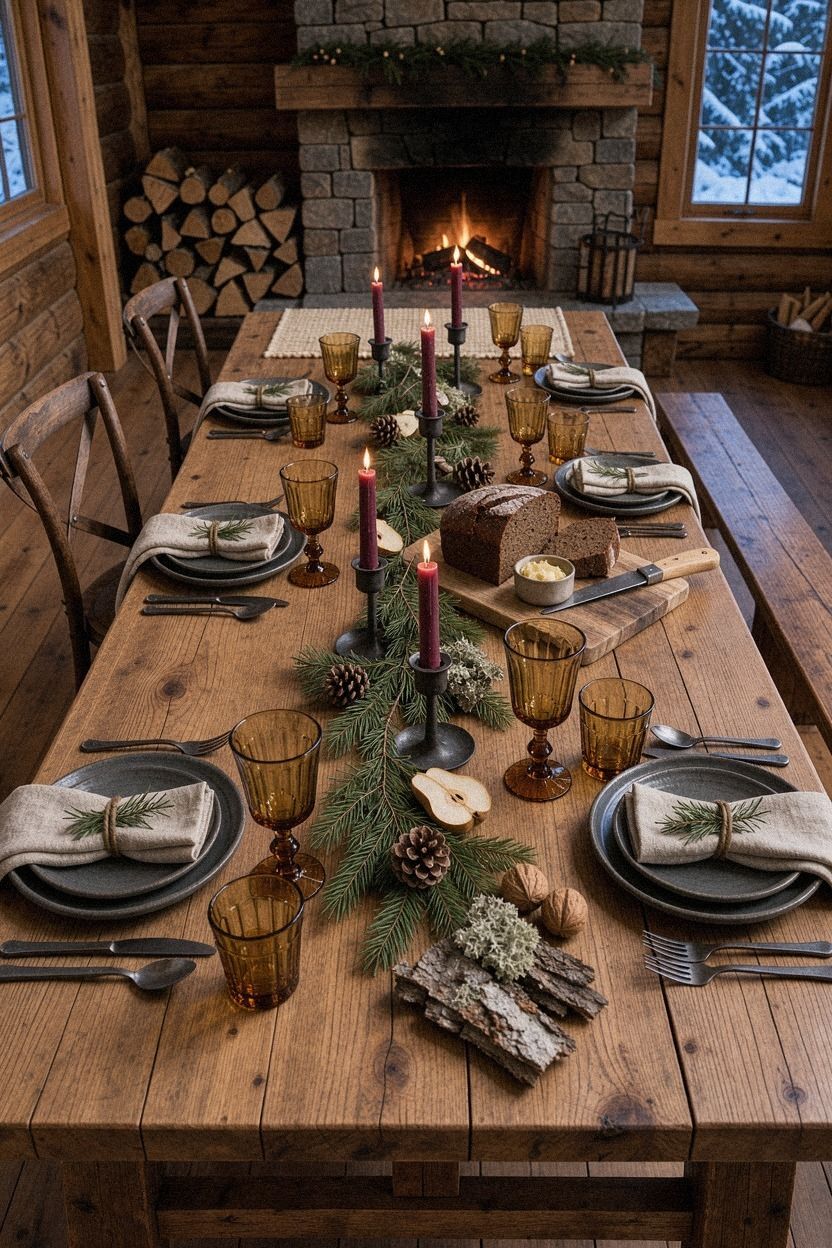
Amber glass makes candlelight look deeper and less artificial. Pair it with plum napkins, soft grey ceramics, and small rose-gold details for a moodier version of woodland style.
A deep-pile mohair velvet runner can soften the hard surfaces, especially when the table is made from dark wood. Keep the velvet narrow and let the amber pieces do most of the glowing. One rose-gold candle cup is enough to catch the light without turning the setting shiny.
10A Cabin Still Life Beats Perfect Symmetry
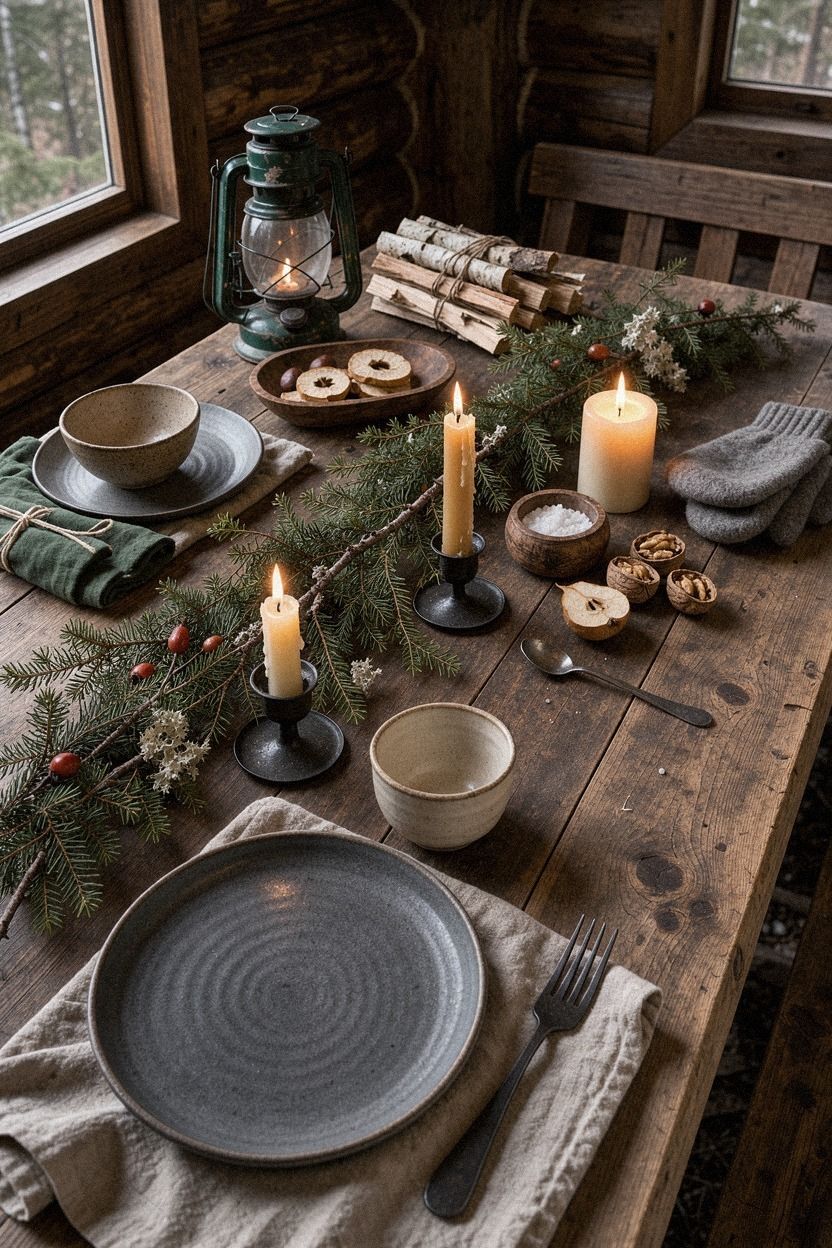
Symmetry can make a table feel formal, but a cabin table benefits from a little movement. Place a tall navy bottle on one side, a low ivory bowl near the middle, and a pair of candles offset on the other side. A walnut board beneath the arrangement will ground the darker colors.
Balance the visual weight even if the objects don’t match. A navy bottle can balance a larger pale bowl, while a rough textile keeps smooth glass from feeling too polished.
I’d skip identical centerpieces because they make rustic woodland tablescapes look mass-produced. Your guests should notice texture first: the dull ceramic, the wax edge, the uneven branch, and the little shadow under the plate.
Asymmetry works best when one element repeats. Use three candles, two branches, or a pair of similar glasses so the arrangement still has rhythm.
Then let the heights and spacing vary. The result will feel composed but relaxed, which is exactly what most cabin-style rooms need.
If your table looks busy, remove one object before adding another. That edit is often more powerful than a new purchase. The calmer background in section 7 will help you see which pieces deserve to stay.
A Carrara marble slab with subtle grey veining can provide enough lightness without taking over. Place it near a matte bowl or a rough walnut board. The contrast creates a polished, welcoming moment while keeping the rustic character intact.
11Create a Small-Space Candle Meadow
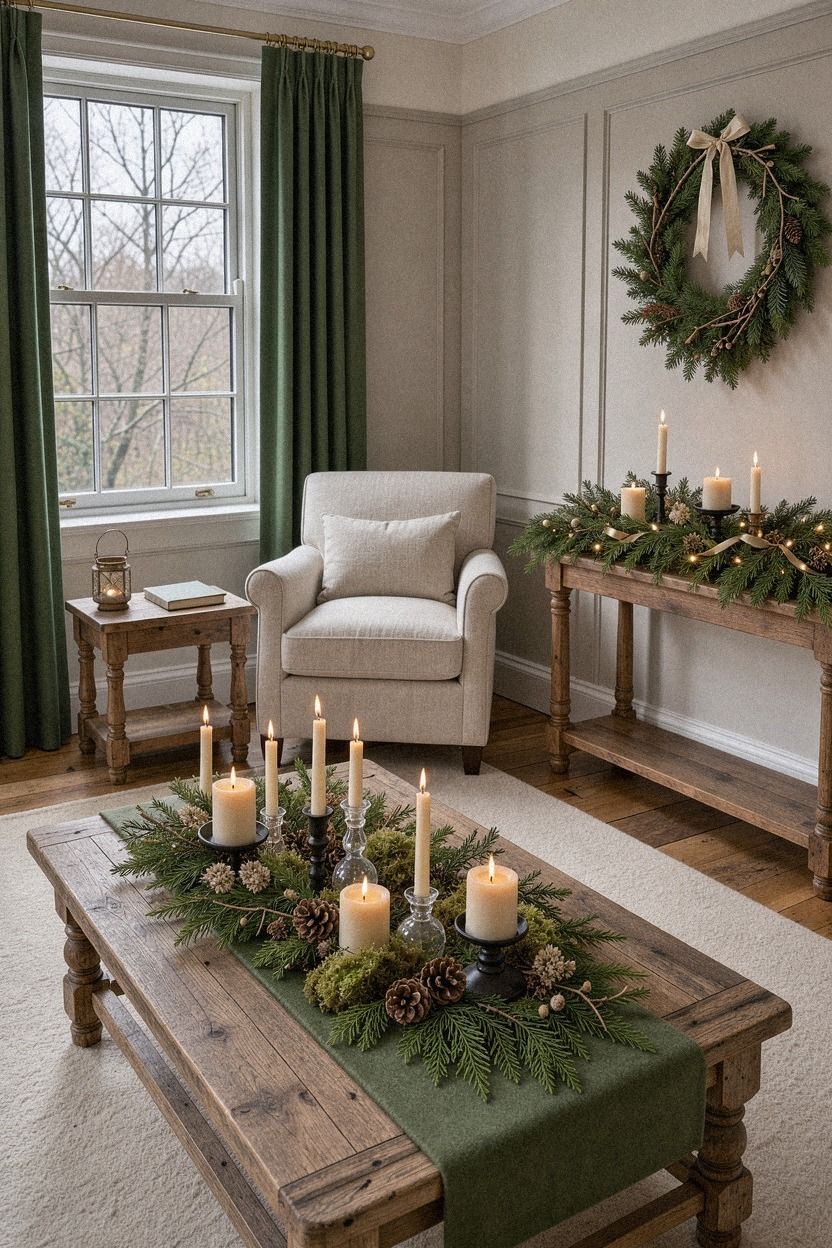
A narrow table doesn’t need a large centerpiece. Make a candle meadow with short vessels scattered through low greenery, leaving clear space for plates and serving bowls.
Use emerald-green glass, gold candle holders, and cream candles in varied heights. Your table will glow without losing its working surface.
Put every candle inside a stable holder, especially if your garland includes dry needles. A reclaimed weathered teak board beneath the vessels adds weight and a naturally worn texture. If you have only a console table or a small apartment dining nook, this arrangement can still feel special.
Keep the branches below eye level and let the light carry the drama. The room doesn’t need more objects.
It needs a calmer rhythm. Leave at least one open section between the candles so the arrangement doesn’t become a continuous strip of decoration.
For a very small table, use three holders instead of six. Place one near the center and two slightly farther apart, then add a single sprig of greenery. The floating runner in section 2 can make that small composition feel complete.
A cream ceramic candle cup adds a quiet note beside gold wax holders. Teak holders are also reassuring around children because they feel heavier and more stable than thin metal. Keep matches, cords, and extra greenery away from the edge.
12What Should a Handwritten Woodland Menu Say?
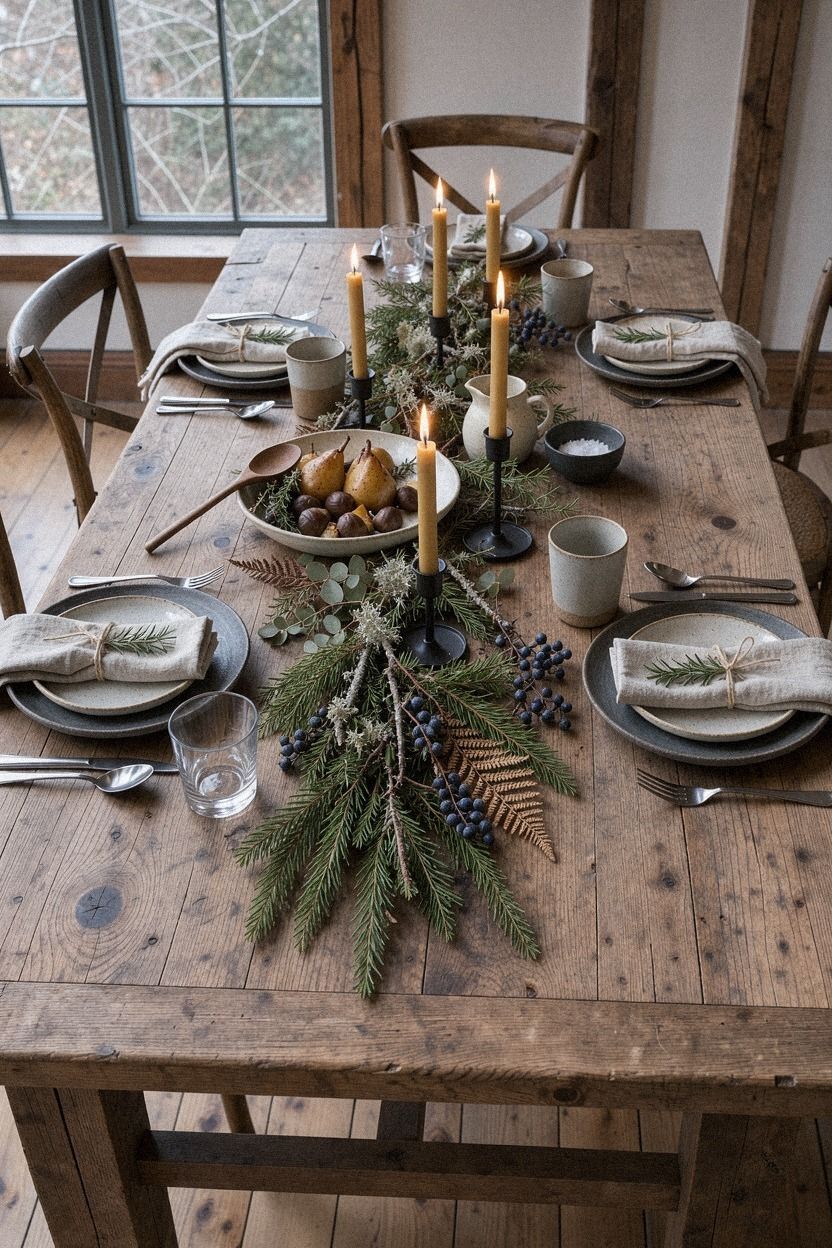
A handwritten menu gives your table a personal center without requiring more decoration. Write it on cream card stock and place it against a small piece of natural oak, with forest green ink and a restrained rust-colored mark.
If the menu rests on a Calacatta marble tile with fine gold veining, keep the lettering plain. The marble already provides enough detail. Mention the meal in a few warm words, then let the natural oak and forest green accents carry the woodland feeling.
13Layer Soft Textiles for Woodsy Christmas Tablescapes
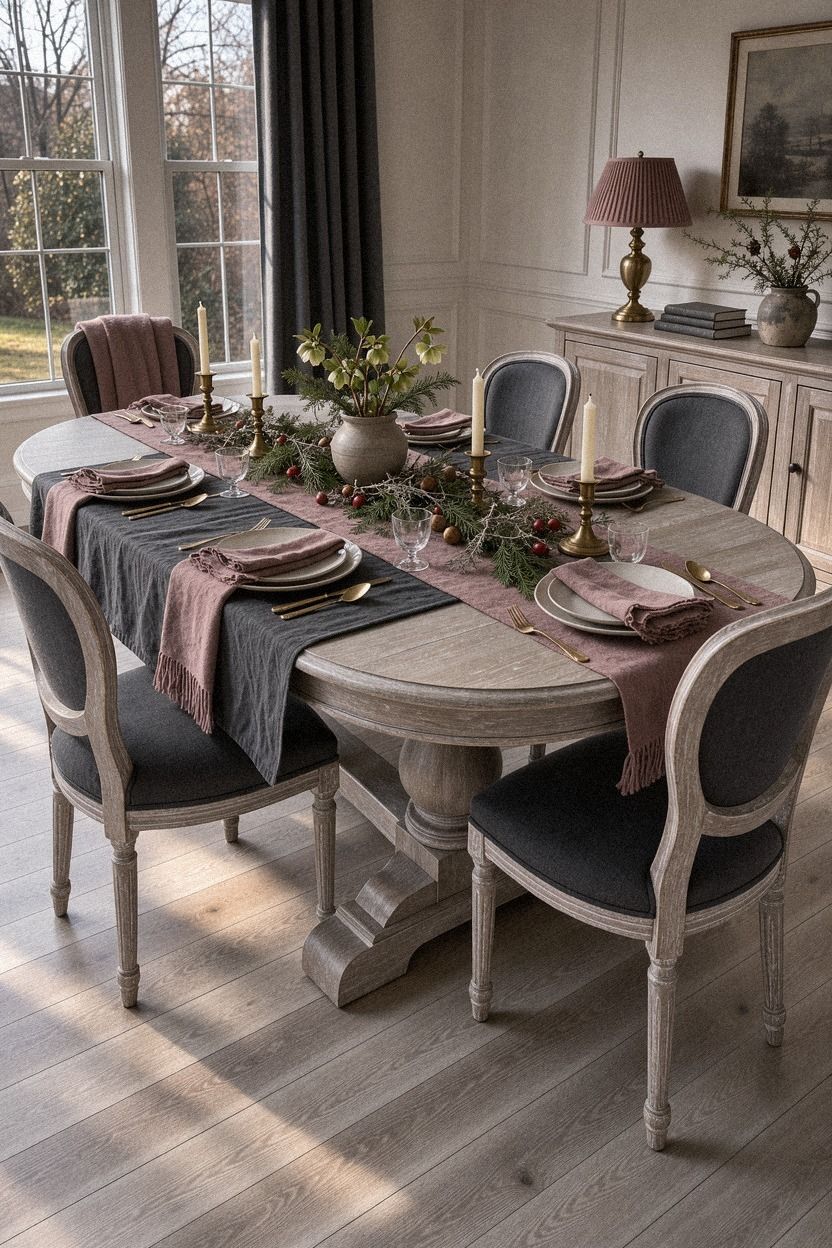
Textiles keep hard surfaces from becoming visually cold. Fold a dusty-rose linen napkin beneath each plate, then add a charcoal wool ribbon or a small brass ornament.
Use charcoal, rose, and cream rather than bright white. The result will feel soft, earthy, and connected to the woods outside your window.
If you already own plain napkins, you don’t need new ones. Fold them loosely, tie them with twine, and tuck in a rosemary stem or cinnamon stick.
The scent will be gentle rather than overpowering. For a larger dining room, a cerused white oak bench or sideboard helps connect the tabletop to the rest of the room.
Let the furniture overlap the rug so the arrangement doesn’t float in the middle of the floor. You’ll also soften the room with a fabric shade, a linen curtain, or one upholstered dining chair. Rustic style is more comfortable when the softness continues beyond the tabletop.
Avoid adding every cozy material at once. Wool, velvet, linen, and felt can become visually thick if they all carry strong colors.
Choose two, then let the wood and brass provide contrast. That balance will keep the cabin mood grounded rather than theatrical.
A charcoal wool runner can make pale dishes feel warmer, while dusty-rose linen works beautifully with cerused oak. Use texture as the main event and keep the pattern quiet. The candle meadow in section 11 will add enough movement.
14Finish With One Unexpected Woodland Object
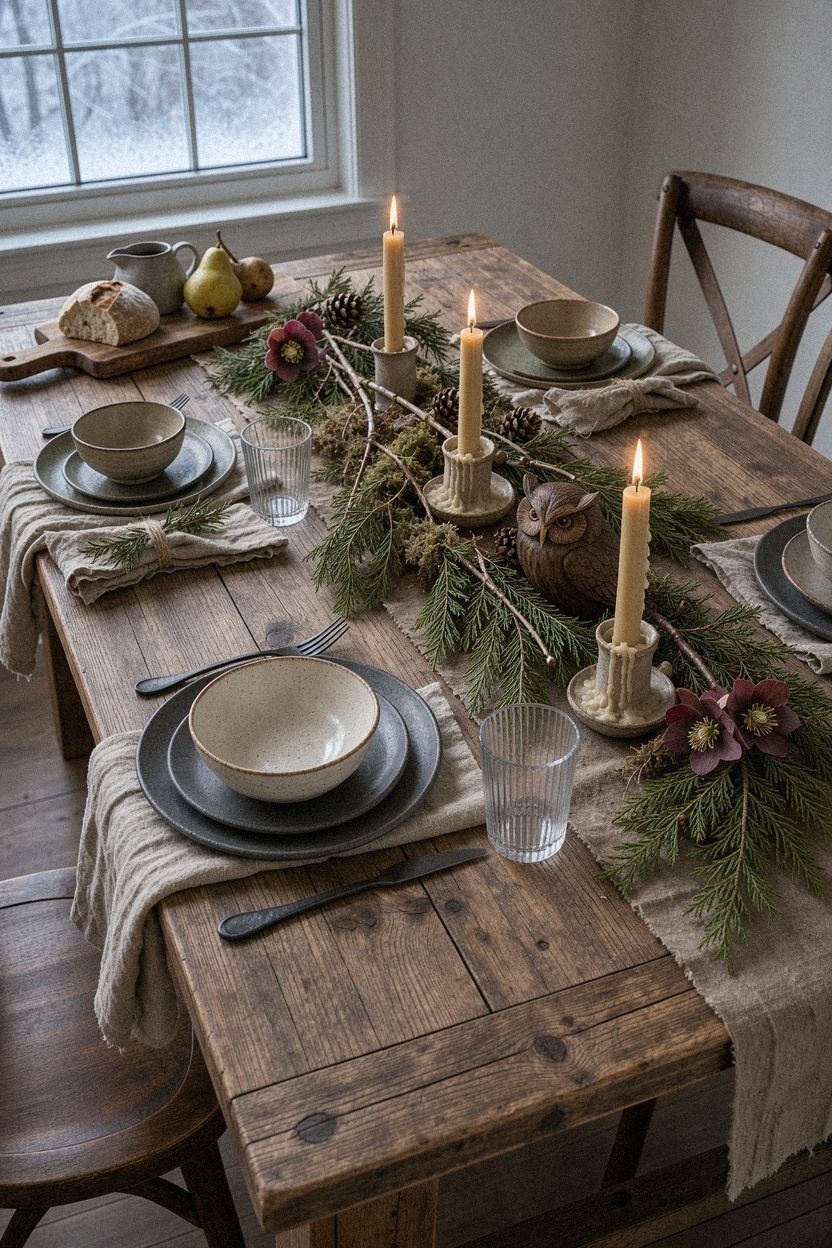
Every good cabin table needs one object that isn’t part of the usual Christmas vocabulary. A small piece of backlit translucent onyx can bring a warm glow to a table built around cream, camel, and black accents.
Keep the rest of the arrangement simple. The onyx can sit beside a camel napkin, a black ceramic bowl, or a small branch in a cream vessel. Its natural variation will feel more special than another ornament, while the soft light keeps the setting welcoming.
What These Tables Taught Me About Cabin Style
The strongest rustic Christmas tables aren’t built from a shopping list. They come from a decision about how you want people to feel when they sit down.
I’ve tried the maximal version, with plaid, red ornaments, shiny greenery, and three different metallic finishes. It looked lovely for five minutes. Then the table felt noisy, and everyone reached for the nearest clear space.
My better approach is to choose one rough material, one soft material, and one reflective material. Rough might be cedar bark or speckled stoneware.
Soft could be linen, velvet, or wool. Reflective might be amber glass or aged brass. That combination gives your eye contrast without asking every object to perform.
You’ll notice the table feels more expensive even when much of it came from a thrift store or your own yard. The high-impact changes are usually simple: better light, less clutter, a warmer background, and enough space for people to move their elbows.
I also think woodland style needs restraint. Pinecones are useful, but a bowl filled entirely with pinecones can look like a craft project.
Greenery is lovely, but a thick garland can block conversation and crowd the serving dishes. Ask yourself what your guests need to reach, see, and move.
A table is still a table. It isn’t a stage set.
Color matters more than people expect. Benjamin Moore White Dove OC-17 keeps warm neutrals gentle, while Sherwin-Williams Agreeable Gray SW 7029 gives darker wood a quieter background. Farrow & Ball Pigeon No.25 works when you want more mood.
I’d choose one wall color and let the natural materials do the rest. Your table doesn’t need a new palette every December.
Finally, don’t erase every sign of use. A bent branch, a wrinkled napkin, and mismatched glassware can make the evening feel easier.
The goal isn’t to prove that you can style a table. It’s to make people want to stay there after dessert.
That’s the measure I trust.
What People Always Want to Know
What is the best rustic woodland Christmas table for a small rustic dining room?
A low candle meadow with a narrow linen runner works best because it preserves sightlines and serving space. Choose IKEA VINTERFINT pieces with plain cream dishes, amber glass, and one shallow bowl. You’ll get a warm, layered look without a tall centerpiece blocking conversation.
Where can I buy rustic woodland Christmas table pieces on a budget?
Look at IKEA, Wayfair, and Target for basic textiles, glassware, and seasonal ceramics. Facebook Marketplace and thrift shops can provide vintage amber glass, wood bowls, and brass holders for less. You don’t need matching pieces, and small variations often make your table feel more collected.
How much does a rustic woodland Christmas table makeover cost?
A small refresh can cost about $100 to $300 if you reuse dishes and gather greenery yourself. The supplied US room cost ranges place paint, textiles, art, and organization at $200-$800, while larger furniture and lighting projects cost more.
Can I create a rustic woodland Christmas table on a budget?
Yes, and you can start with three free changes: clipped greenery, rearranged dishes, and candlelight from holders you already own. Add a cotton runner or thrifted bowl if needed. Your biggest improvement will come from editing the table, then choosing one beautiful detail.
Is a rustic woodland Christmas table worth it in a small space?
Yes, because a small table needs fewer materials to feel finished. Use one low centerpiece, stack each place setting vertically, and keep the middle clear for serving dishes. A woven placemat can define each guest’s space without adding bulk or making the room feel crowded.
Is a rustic woodland Christmas table a good idea for a rental?
Yes. Use removable hooks for branches, a tension rod for a temporary textile backdrop, and peel-and-stick wallpaper only where your lease allows it. Battery candles, thrifted dishes, and a freestanding lamp give you the cabin mood without drilling, rewiring, or making permanent changes.
Where I’d Start First
If I had to pick one, I’d start with the low candle meadow. It leaves room for dinner, makes ordinary dishes glow, and costs little if you reuse holders and gather greenery. Pin the idea for later and let the rest of your table build around that quiet light.


