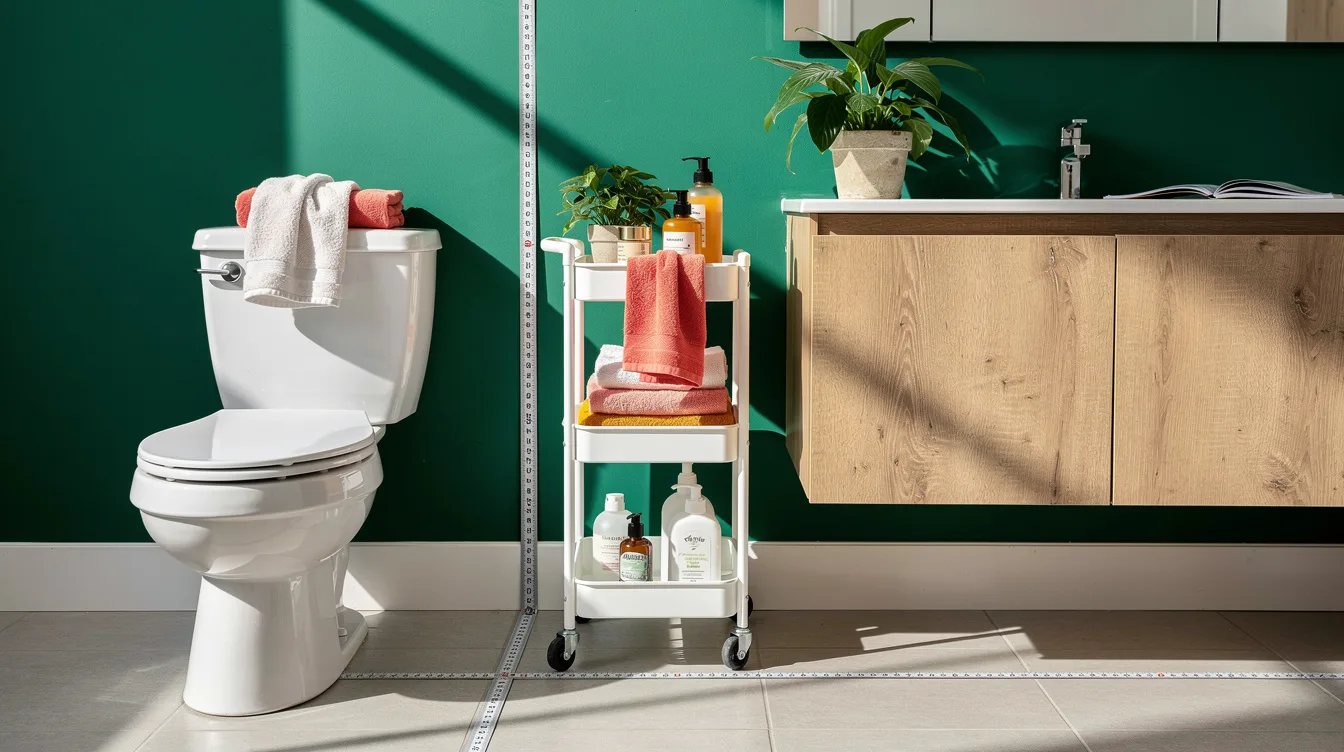
Toilet Gap a Clutter Trap? 14 Wayfair Rolling Carts Under $165
25 october 2026The gap beside a toilet can look generous until the baseboard, bowl curve, and wheel path take their share. For a reliable fit, shop for a cart with a 5- to 7-inch narrow side, not Wayfair's broad narrow filter, which can include pieces nearly 24 inches wide.
The strongest current options range from an Everyday Home cart at about $35 to a Yamazaki Home Tower model at about $165. Width is the first buying constraint, then depth, height, and wheel clearance decide whether the cart works every day.
What you will find inside
- Measure the Finished Gap, Not the Listing
- Check Width Before You Fall for Storage
- Account for the Toilet Base and Bowl Curve
- Include Baseboards in the Width Calculation
- Match Cart Height to the Vanity
- Use the Taller Tower Model With Care
- Leave Room for the Wheels to Turn
- Separate Narrow Side From Front Length
- Hide Clutter on the Visible Side
- Choose Open Shelves for Fast Grab Items
- Resolve Conflicting Product Dimensions
- Treat the Top as Working Space
- Keep Wet Products Off the Floor
- Load the Bottom Shelf Before the Top
Measure the Finished Gap, Not the Listing
The first mistake is searching for Wayfair carts labeled narrow and trusting the result. That filter can include pieces nearly 24 inches wide, while the usable side of a toilet-to-vanity gap usually calls for a cart with a 5- to 7-inch narrow side.
Measure the tightest point after accounting for the toilet base, vanity edge, baseboard, and any trim. A typical 5-inch profile gives you far more confidence than a cart that merely appears slim in a product photograph.
The Everyday Home plastic cart is a practical benchmark because its listed narrow side is about 5 inches. Start with the gap measurement, then shop by dimensions.
Check Width Before You Fall for Storage
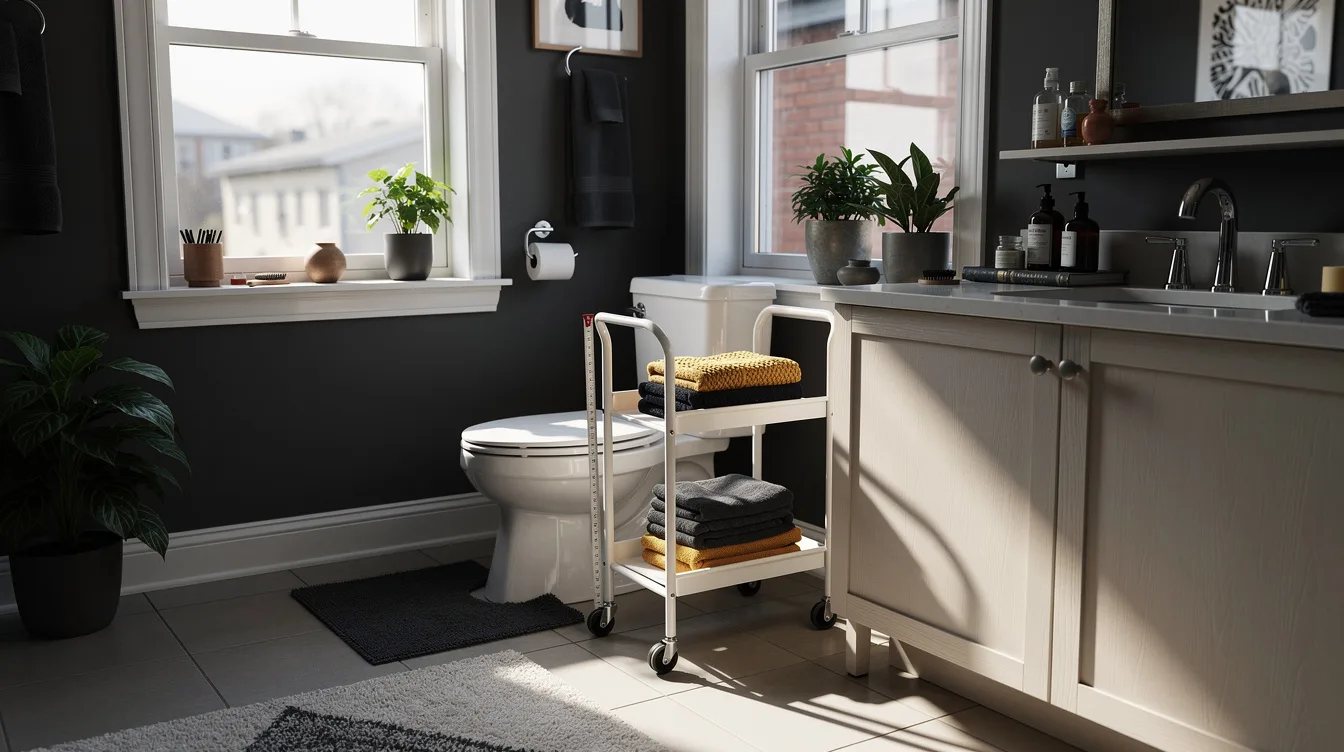
A tall cart with generous shelves can still be useless if its narrow side exceeds the opening. Width comes first, because a 7-inch cart cannot occupy a 5-inch gap no matter how attractive its basket layout looks.
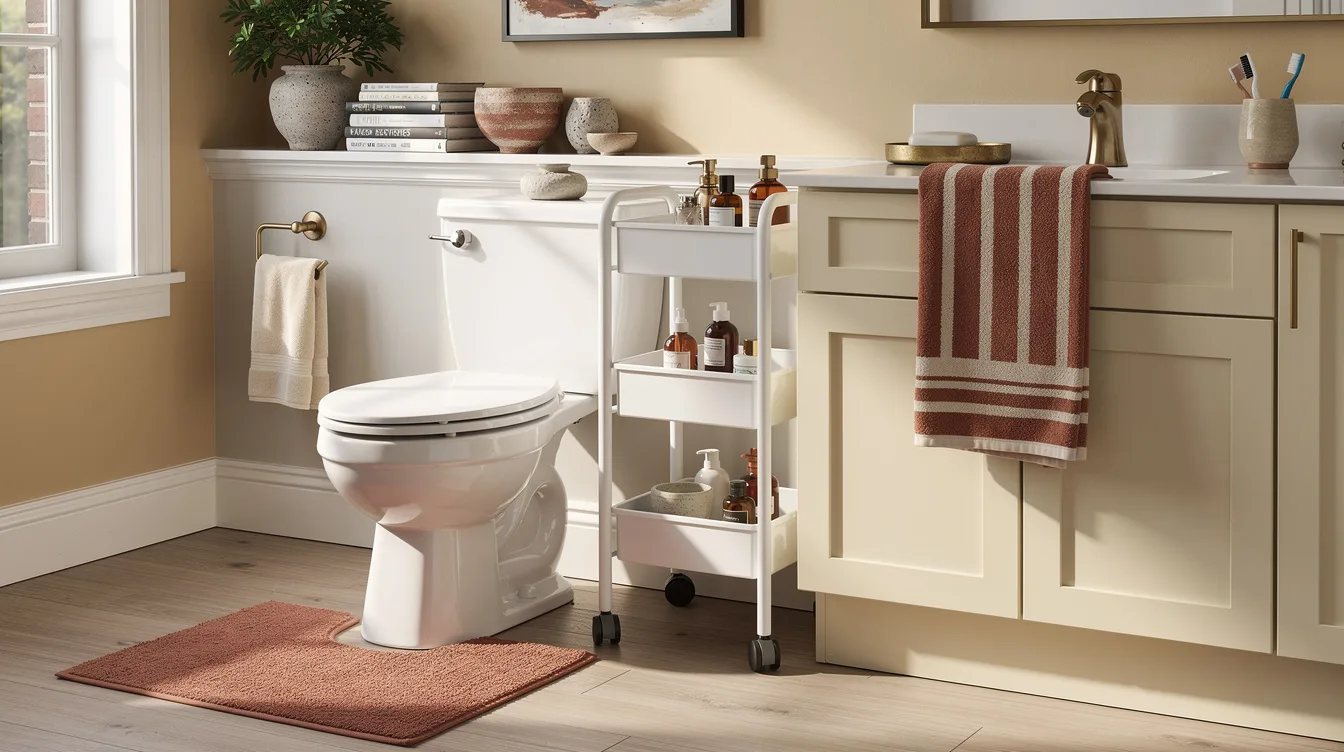
The Everyday Home 3-Tier Rolling Cart costs about $35 and offers a 5-inch side, roughly 19.5 inches of front-to-back length, and a height of about 28 inches. Its white plastic shelves look utilitarian, but the footprint makes sense for a genuinely tight bathroom.
Use the narrow-side measurement as your first sorting rule, then compare length and height. This order eliminates expensive near-misses before they reach your cart.
Account for the Toilet Base and Bowl Curve
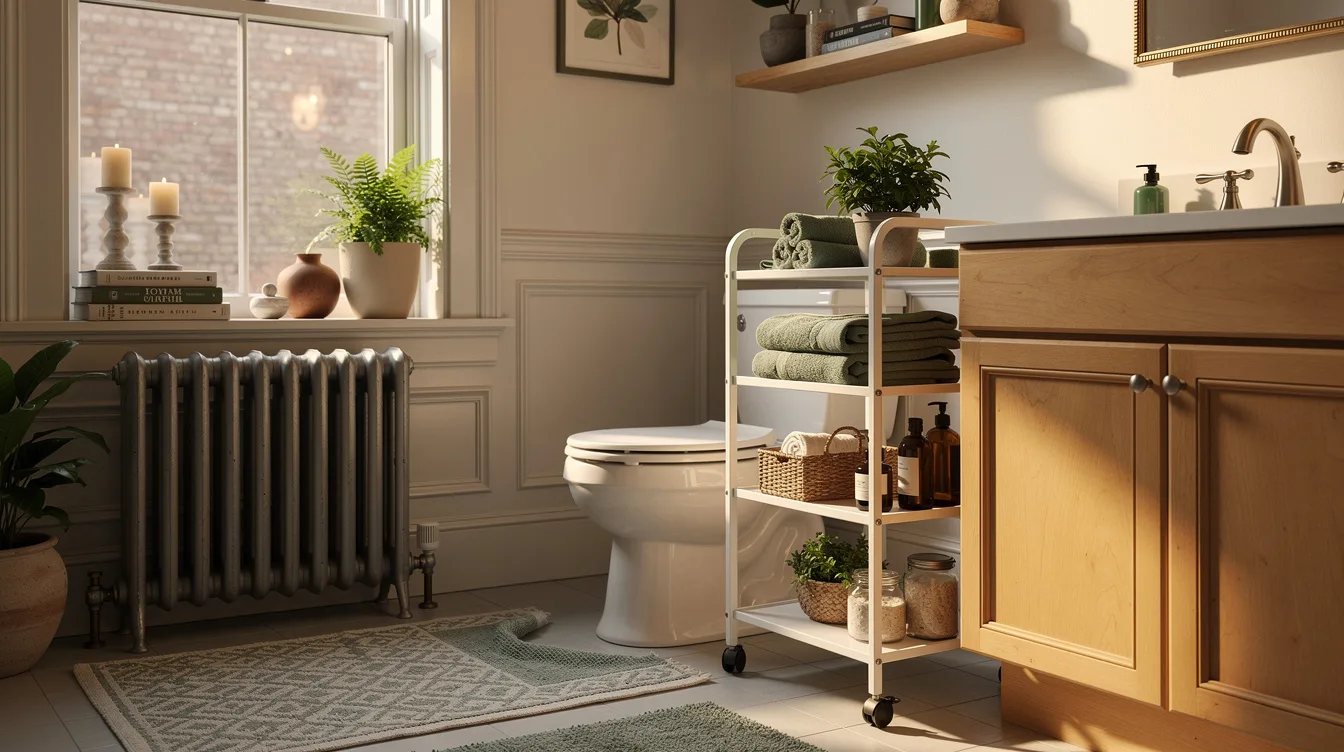
Measuring the open space at countertop height can produce a false reading. The toilet base may flare outward, the bowl may curve toward the vanity, and the gap can become tighter near the floor where the cart wheels need to pass.
Make a cardboard spacer about 5 inches wide and move it through the full opening. If the spacer catches, a cart with a steel frame and rigid corners will catch too.
Leave a little breathing room around the widest obstruction rather than forcing the cart through. A narrow rolling cart should slide out for cleaning without scraping porcelain or chipping painted trim.
Include Baseboards in the Width Calculation
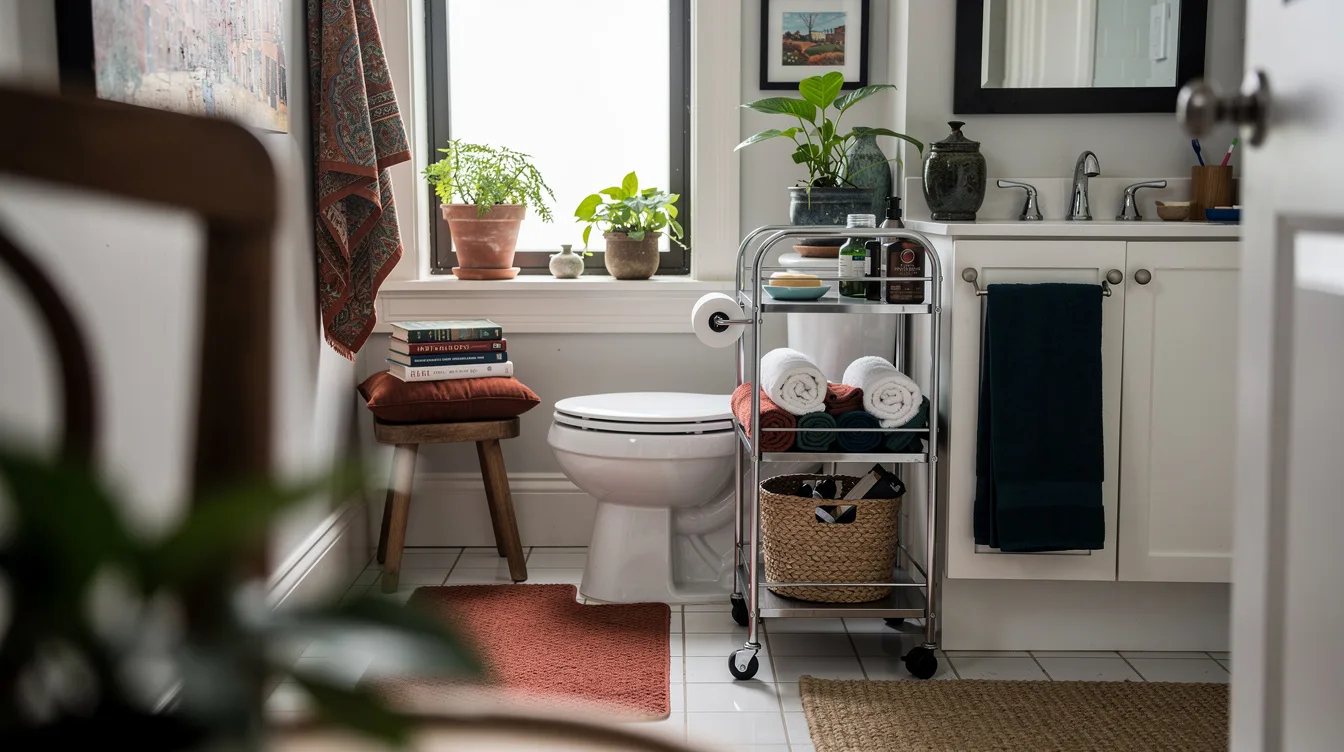
Baseboards steal space that bathroom listings rarely show in their main photographs. A cart can fit between two flat surfaces on paper and still hit the molding at the back of the gap.
Measure from the vanity side to the toilet side at floor level, then subtract the depth of any baseboard or quarter-round that projects into the path. The white open-shelf design of the Everyday Home model makes the obstruction easy to see, but the measurement still matters.
When the baseboard creates a tight corner, choose a cart with a straight, compact chassis instead of a decorative frame. A clean 5-inch profile is usually easier to live with than a wider cart that must stay permanently wedged in place.
Match Cart Height to the Vanity
A cart that is too short turns daily supplies into floor-level clutter, while one that is too tall can crowd a mirror or block access to the vanity. Height should support the way the bathroom is used, not simply maximize shelf space.
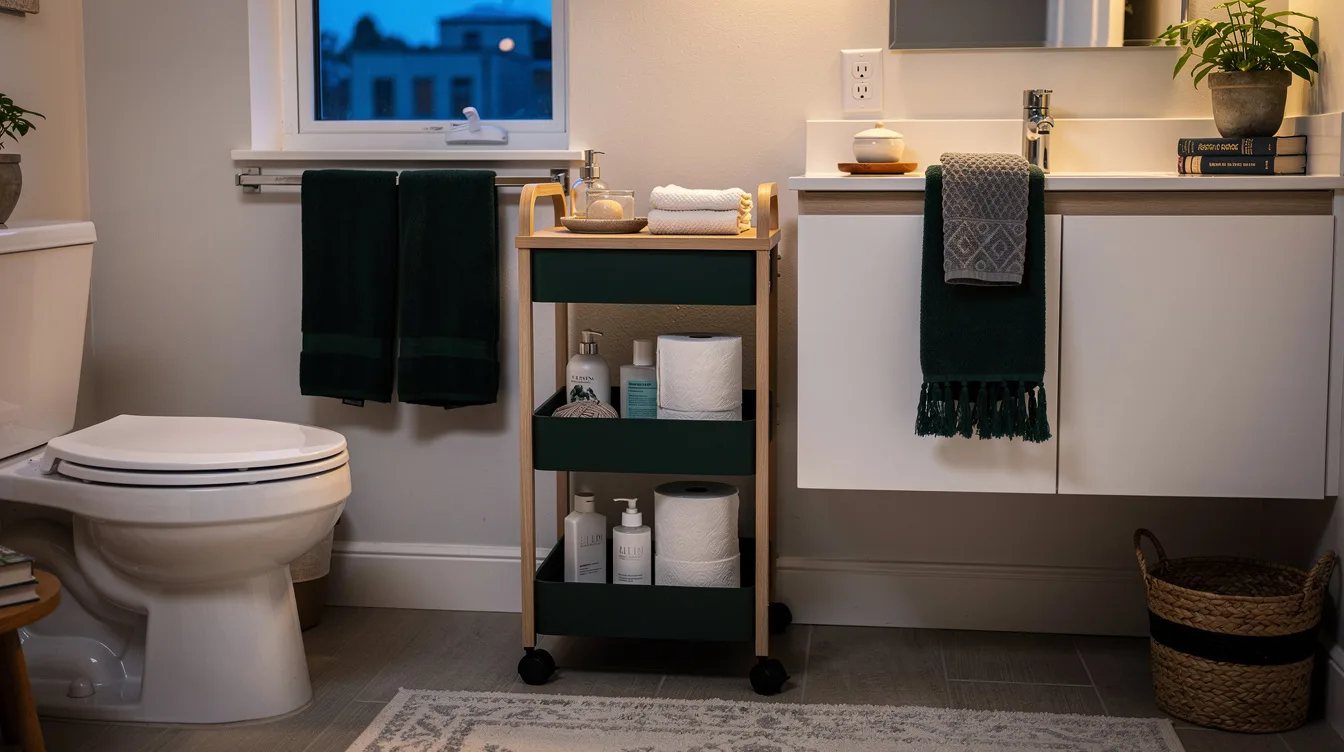
The Yamazaki Home Tower bathroom cart stands about 27 inches high, making it a reasonable companion beside many standard bathroom vanities. Its steel body and wooden top give the gap a more furniture-like finish, with a listed price of about $165.
Measure from the floor to the vanity surface before ordering. Keep the top below the working area if the cart will hold soap, brushes, or products you reach for every day.
Use the Taller Tower Model With Care
The taller Yamazaki Home Tower three-tier cart reaches about 31.7 inches, which can help when an upper shelf needs to sit closer to vanity height. That extra reach also makes the cart more visible and more likely to compete with a mirror, faucet, or wall cabinet.
Its 5.1-inch side keeps it suitable for a narrow gap, while the forest-green steel finish introduces a stronger color statement than a plain white plastic rack. The listed price is about $165, so the height should solve a real storage problem before you choose it.
Use the taller model for backup toiletries or a defined upper shelf, not for a gap that already feels visually crowded. Confirm the top clearance with the vanity and nearby hardware.
Leave Room for the Wheels to Turn
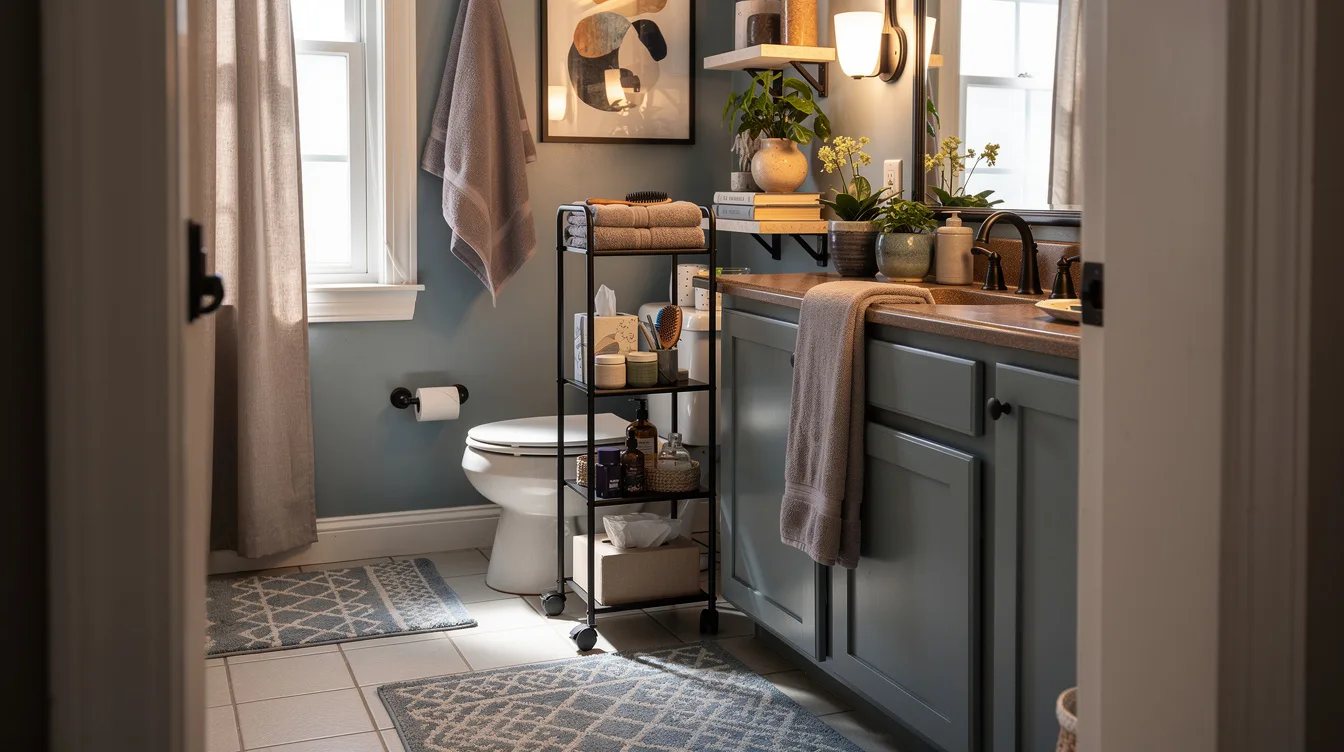
Wheel clearance is the detail that makes a narrow cart either useful or frustrating. A cart may fit when pushed straight in yet jam when you try to pull it out around the toilet base.
Look for casters that sit fully inside the cart footprint, and check whether the handle or lower shelf projects beyond the wheels. The Yamazaki rolling casters support the pull-out function, but the available turning space still depends on your bathroom layout.
Mark the wheel positions on the floor with painter's tape and test the route before ordering. Include the distance needed to stand beside the cart while opening it, especially in a small powder room.
Separate Narrow Side From Front Length
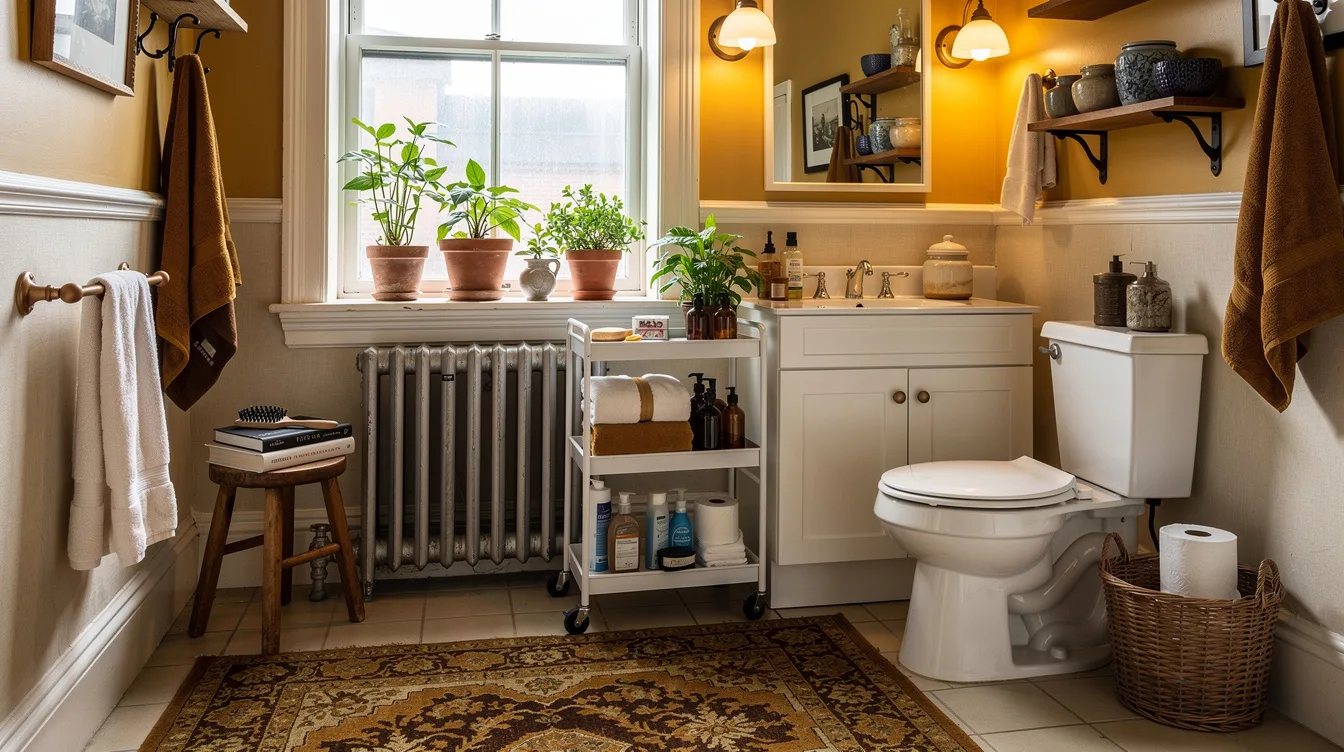
Many shoppers see a 5-inch width and assume the entire cart is compact. The narrow side describes the dimension that enters the gap, while the front-to-back length determines how far the cart extends into the room.
The Everyday Home option is about 5 inches wide and roughly 19.5 inches long. The plastic three-tier shelves can fit the gap while still projecting far enough to interfere with a door swing or the person using the vanity.
Measure both directions on the floor with tape. A slim cart with excessive length can create a new traffic problem even when its side measurement is perfect.
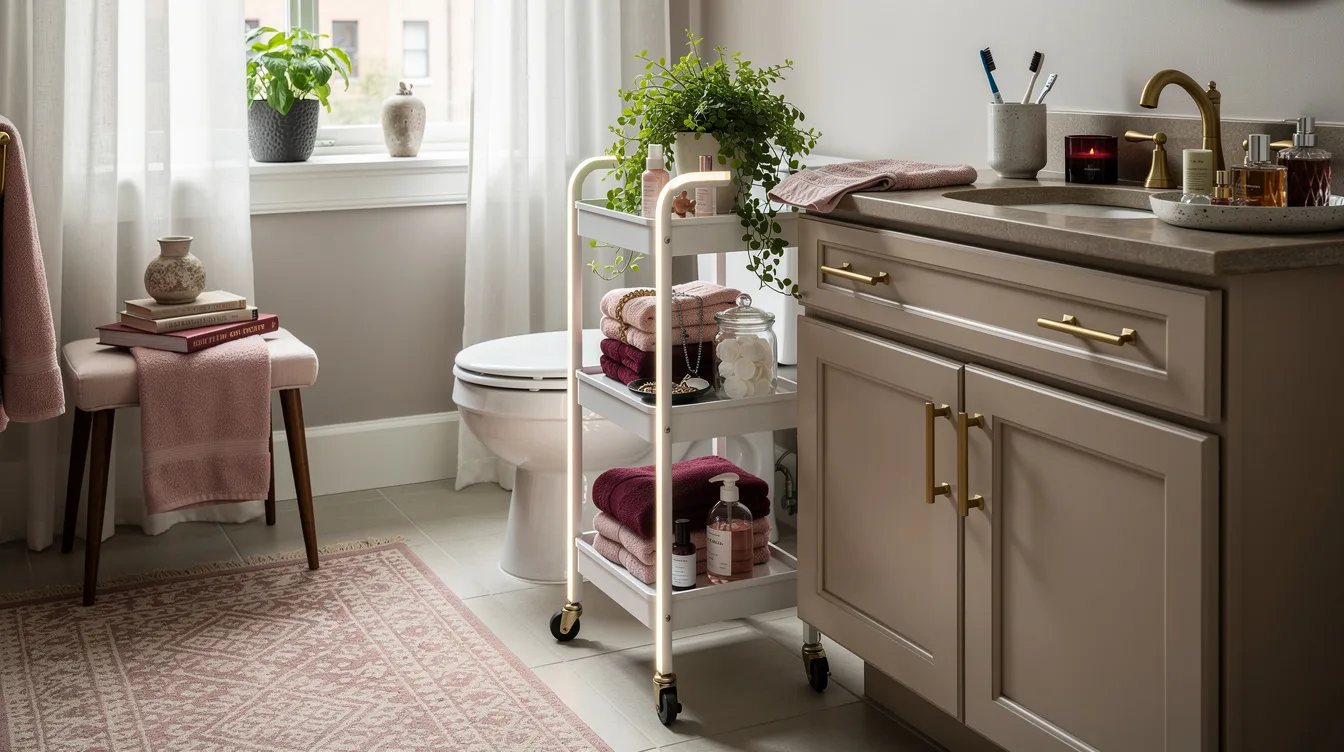
Hide Clutter on the Visible Side
Open shelves expose every bottle, spare roll, and cleaning product in the room's most awkward sightline. That visual noise becomes especially noticeable when the cart sits beside a white toilet and a finished vanity.
The Yamazaki Home Tower 27-inch bathroom cart uses a wooden top and steel side panel to conceal supplies from one direction. At about $165, it earns its higher price when the cart remains visible from the doorway.
Use the hidden side toward the main viewing angle, then keep the top limited to one or two daily-use items. A concealed profile makes a small gap read as intentional storage rather than overflow.
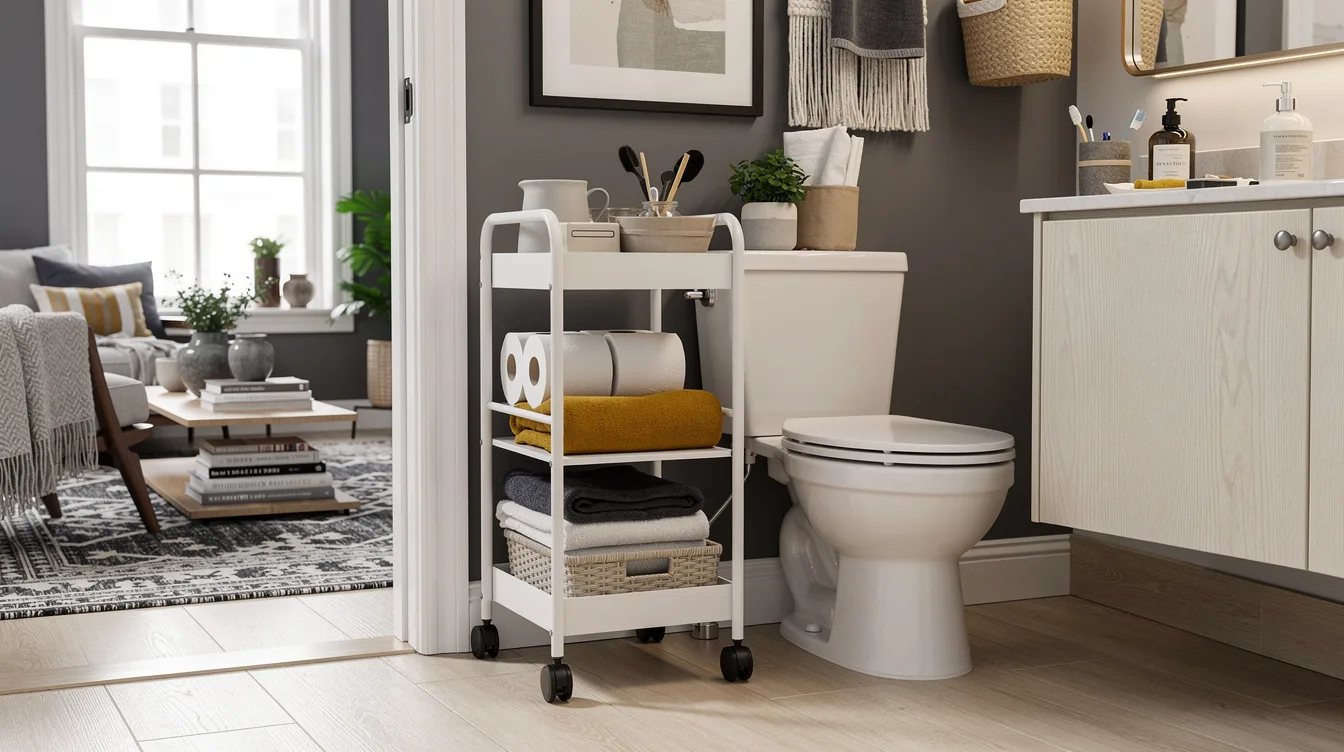
Choose Open Shelves for Fast Grab Items
Open storage works well when the cart holds items that need to be seen and reached quickly. It is a poor match for backup products, loose cords, or colorful packaging that you do not want on display.
The Everyday Home cart's white plastic shelves suit spare soap, toothpaste, and small personal-care refills when each shelf receives a removable bin. At about $35, it offers useful capacity without asking the bathroom to look expensive.
Keep heavier cleaning products on the lowest shelf and store them safely away from children and pets. Treat the open design as a visibility choice, not a flaw to disguise with random baskets.
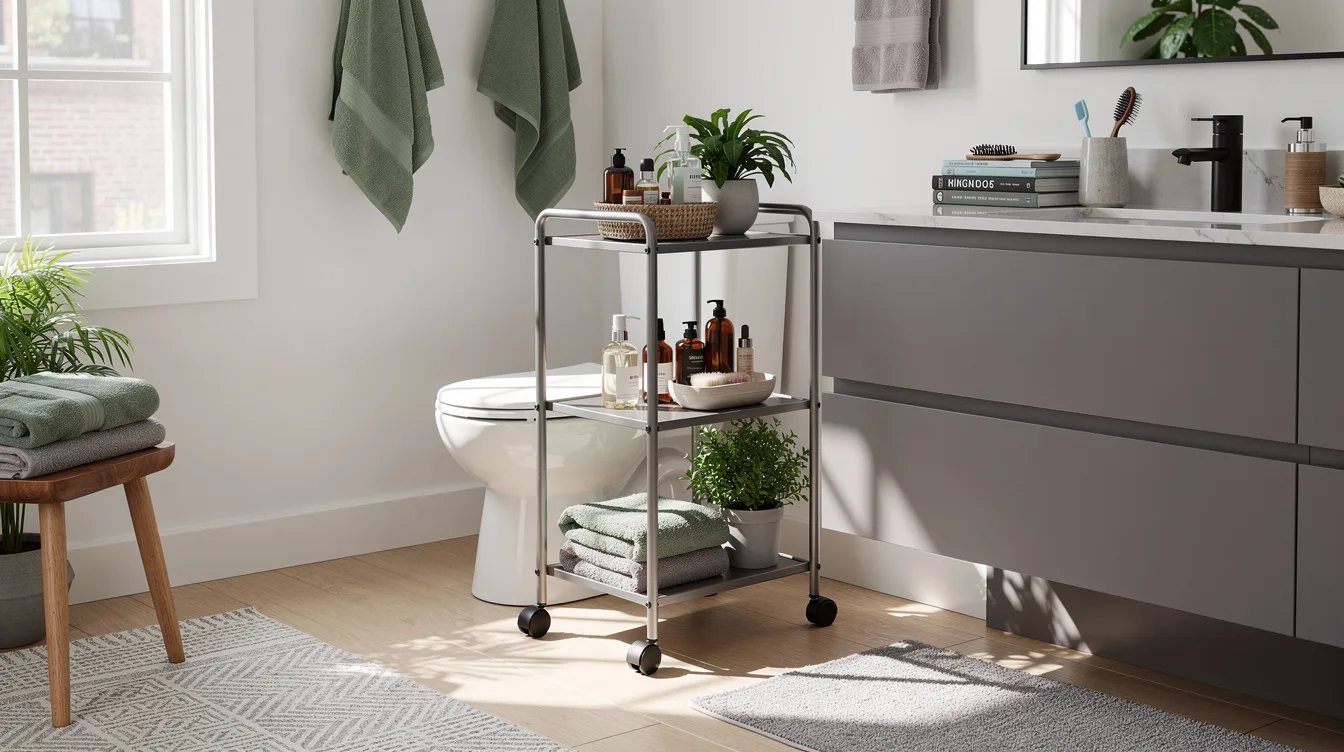
Resolve Conflicting Product Dimensions
The 17 Stories four-tier cart has a 7.1-inch narrow side and costs around $114, but its listing gives conflicting information about the other dimensions. One description identifies a length of about 16.7 inches, while the specifications show roughly 18.3 inches in another orientation.
Its metal frame and wooden top offer more basket storage than the smaller plastic cart, yet the discrepancy matters in a tight bathroom. Verify the dimension drawing and confirm which measurement represents the side entering the gap before paying.
Keep a screenshot of the confirmed dimensions with the order details. If the drawing stays unclear, choose a model with a consistent specification sheet instead of gambling on a one-inch difference.
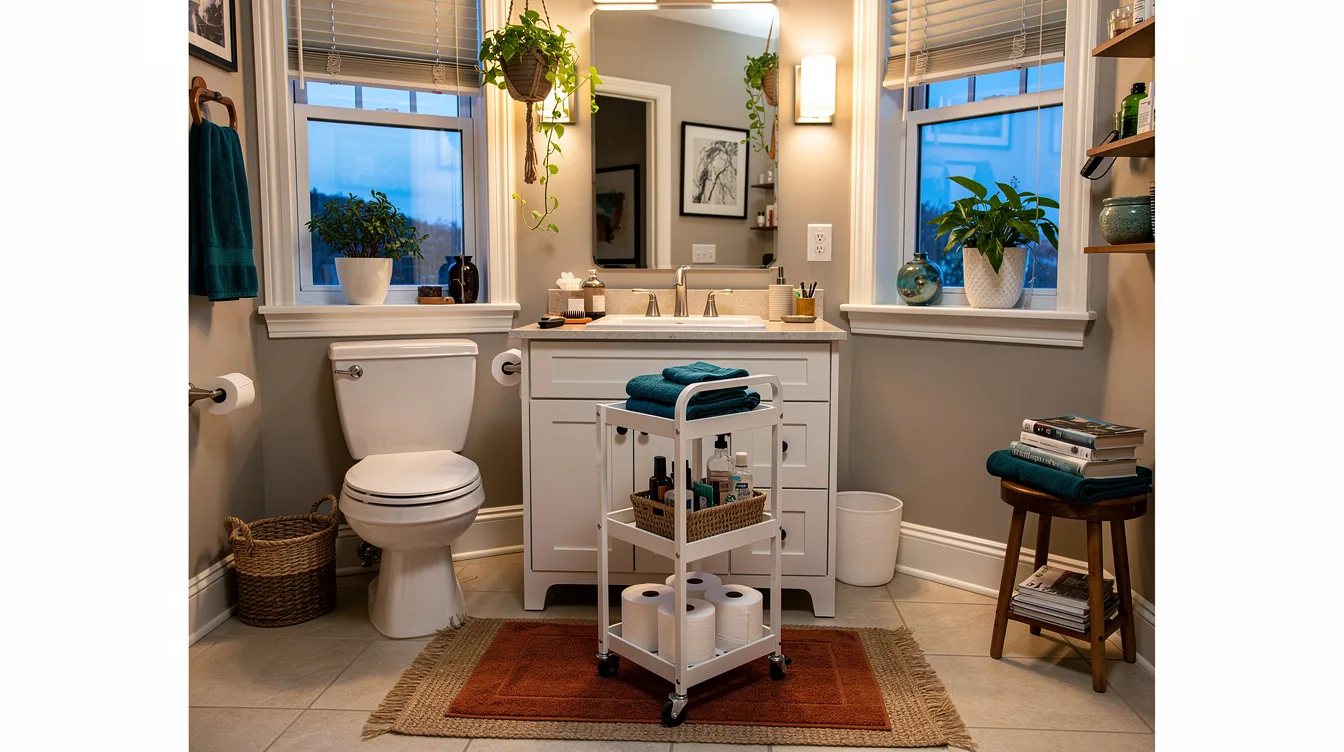
Treat the Top as Working Space
A rolling cart can become more useful when its top holds a defined bathroom task, but the surface needs protection from water and product residue. A bare wood top beside a sink or toilet can show splashes quickly.
The 17 Stories cart includes a wooden top and sits about 34 inches high, creating a convenient perch for a small tray or folded hand towels. Around $114, it makes sense when the 7.1-inch side fits and the top will serve a specific purpose.
Use a washable tray rather than placing bottles directly on the surface. Keep the top clear enough to roll the cart out without knocking products into the toilet or vanity.
Keep Wet Products Off the Floor
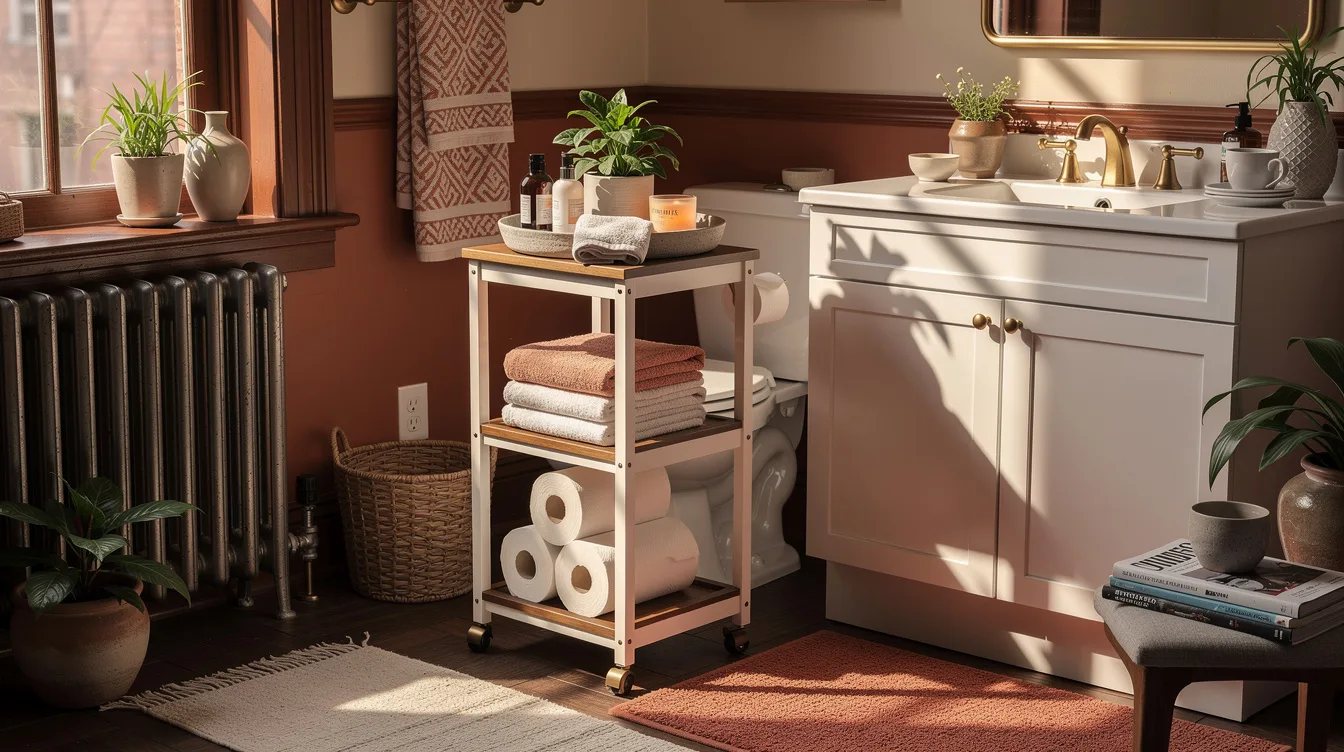
Narrow storage often ends up beside a toilet, where damp floors and splashback are realistic concerns. Paper goods, cardboard packaging, and unsealed wood should not sit on the lowest shelf if the bathroom is frequently wet.
Use a lidded container on the lower level of the steel Yamazaki cart, or reserve that shelf for washable bottles. Plastic construction handles this environment easily, but plastic still needs regular cleaning around the wheels and shelf corners.
Pull the cart out during floor cleaning and let the floor dry before returning it. This small routine protects the storage contents and keeps the wheels from collecting hair and residue.
Load the Bottom Shelf Before the Top
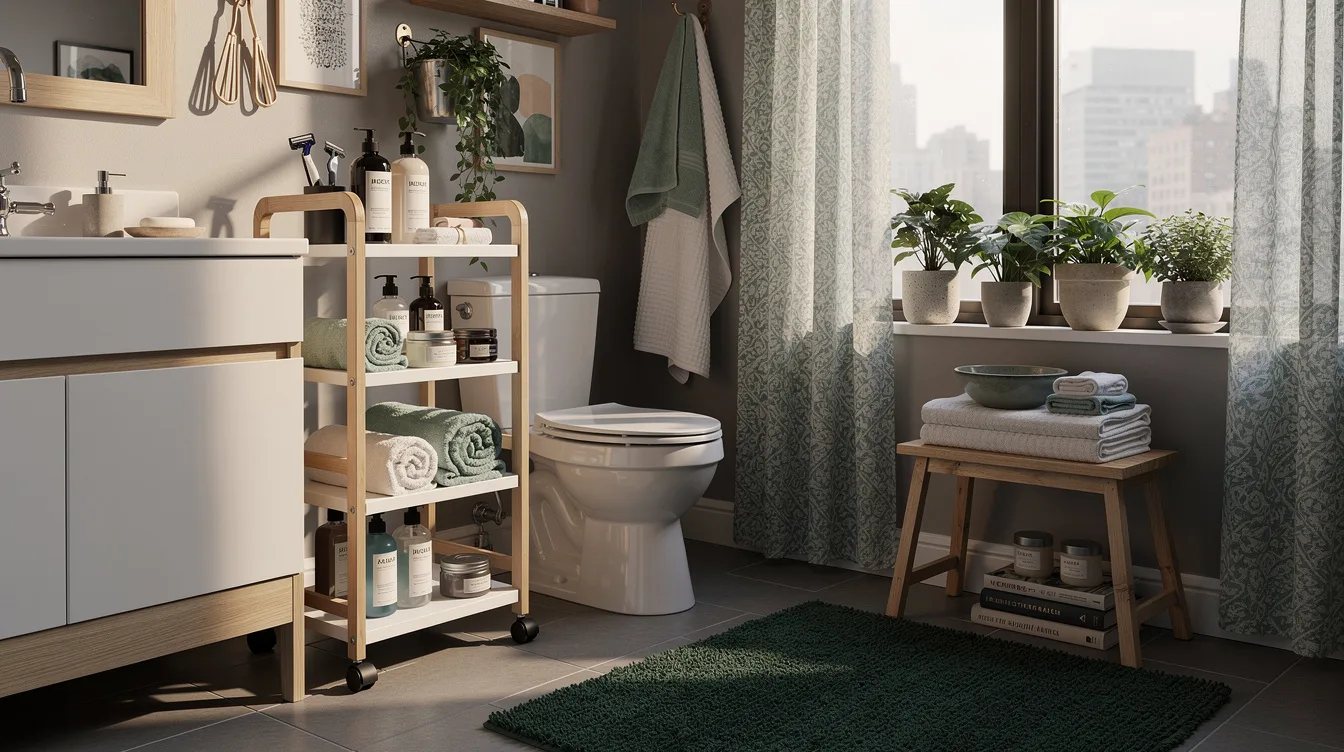
A tall, narrow cart becomes unstable when heavy bottles sit high above small casters. The narrow footprint saves space, but it also leaves less room for careless weight distribution.
Place bulk refills and cleaning products low, then reserve the upper shelf for lighter toiletries. The 17 Stories mesh baskets can hold more visible categories, but the roughly 34-inch height makes balanced loading especially important.
Do not assume every shelf will accept large bottles or toilet-paper rolls. Check the openings against the products you own, and keep the total load modest enough for smooth rolling.
Keep reading
Start with painter's tape on the floor, mark a 5- to 7-inch path, and test the full roll-out beside the toilet. Once the route works, choose the finish and shelf style that match what you actually need to store.


