Four-Inch Dead Zone Eating Your Storage? 12 Yamazaki Carts on Amazon
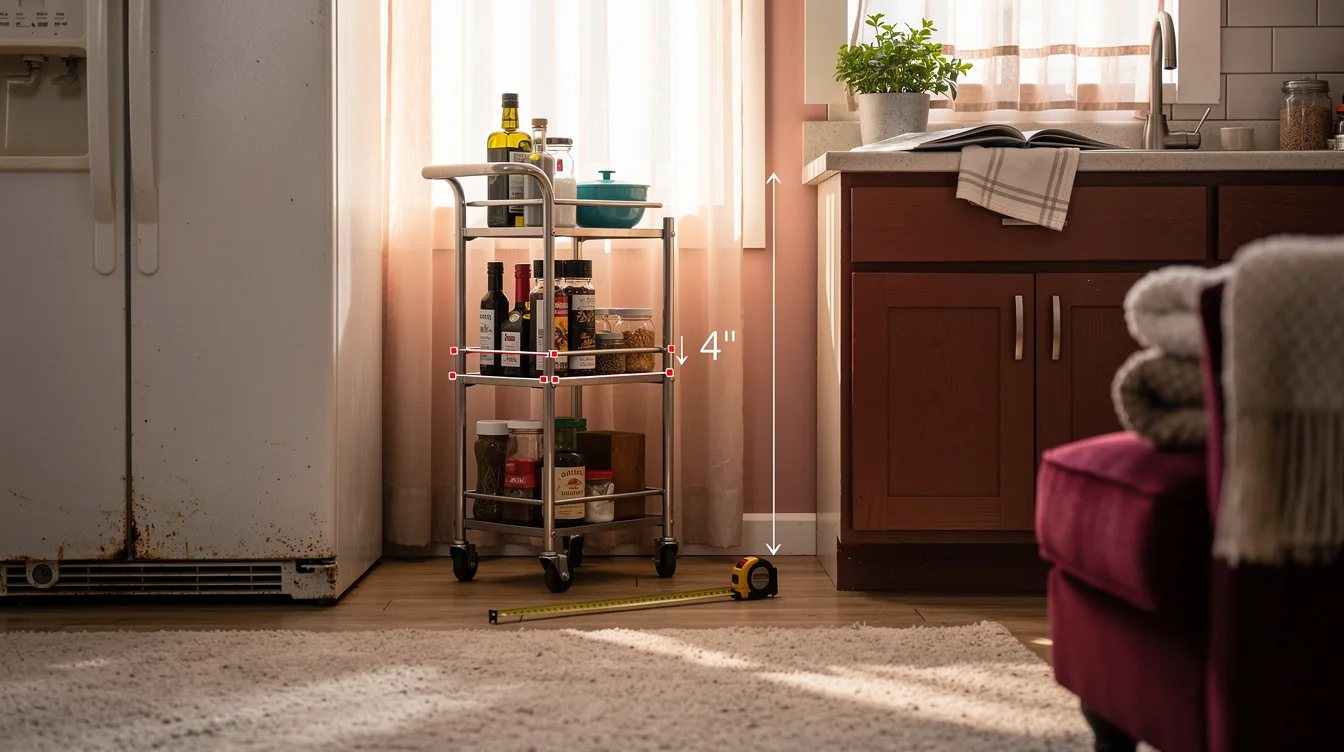
20 october 2026A four-inch dead zone sounds made for a slim cart, until the product page reveals a 5.12-inch width. That measurement rules out both popular Yamazaki versions for a literal 4-inch opening, even though they can work in a roughly 5½-inch gap beside a cabinet or appliance.
Amazon makes the decision trickier because some dimension fields scramble width and height. The useful question is simple: does the cart fit the measured space, including its wheels, handle, and pull-out path?
What you will find inside
- Start With the Smallest Measurement
- Treat 5.12 Inches as a Hard Stop
- Read the Manufacturer’s Measurement
- Match the Open Cart to Kitchen Supplies
- Use the Enclosed Cart in the Bathroom
- Check the Cart’s Full Outside Width
- Calculate the Pull-Out Runway
- Verify the 3.9-Inch Amazon Variant
- Leave More Than Barely Enough Room
- Protect Appliance Clearances
- Compare Materials With the Price
- Decide Whether the Gap Deserves Storage
Start With the Smallest Measurement
A dead zone can change width from floor to countertop, especially beside an appliance or cabinet trim. Measure at the floor, halfway up, and near the top, then use the smallest result when comparing a slim cart.
Record the opening after accounting for baseboards, hoses, handles, and any projecting hardware. A gap that measures about 4 inches at eye level may be tighter where the casters actually roll.
Treat 5.12 Inches as a Hard Stop
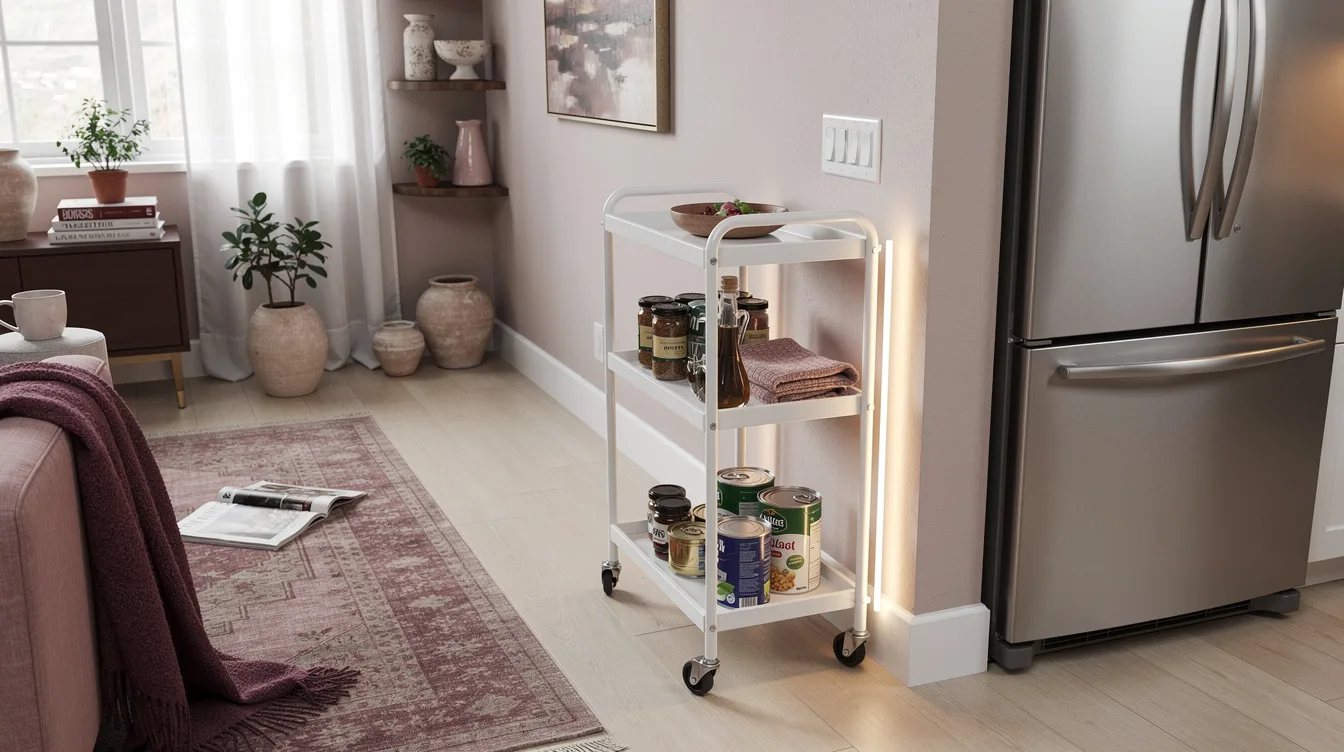
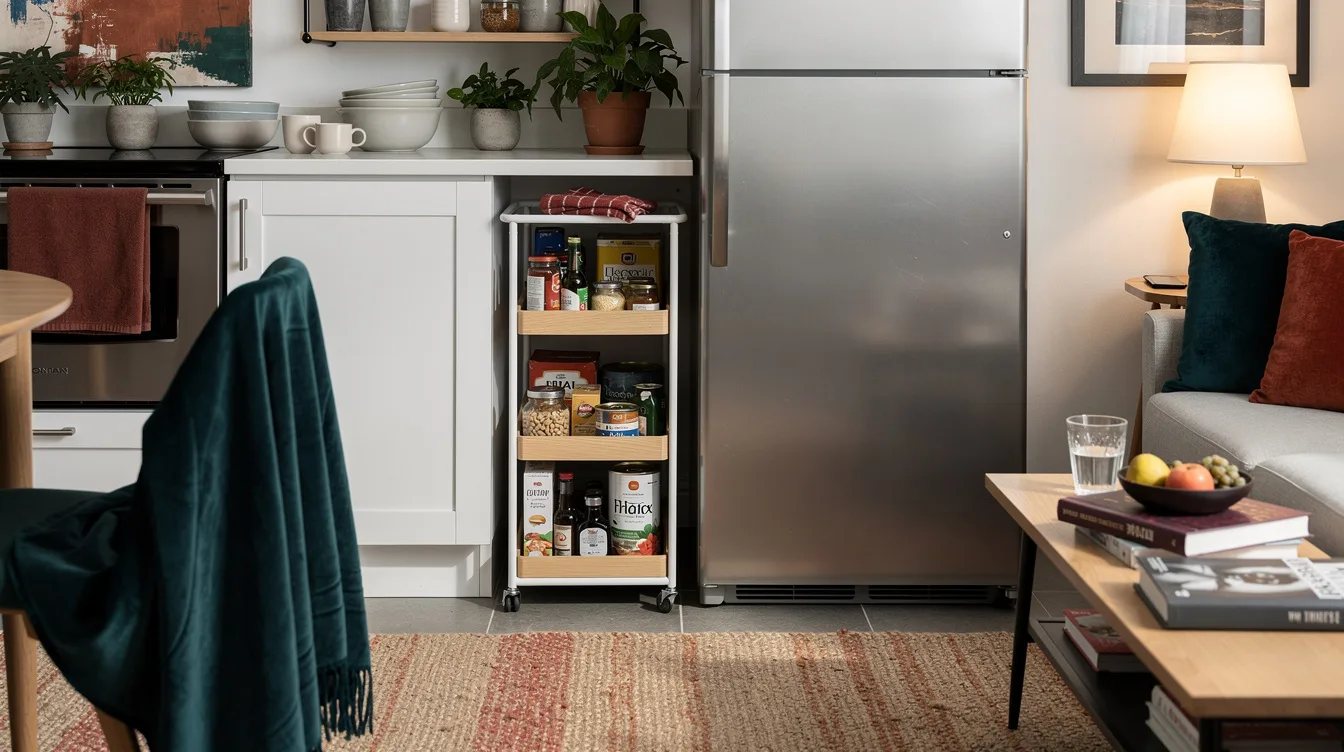
The popular Yamazaki Tower cart is 5.12 inches wide, so it needs a roughly 5½-inch opening to move comfortably. That makes it useful beside a cabinet or refrigerator when the space is generous enough.
It will not fit a literal 4-inch dead zone. The steel construction and furniture-like finish help explain the price, but the cart is not exceptionally narrow.
Read the Manufacturer’s Measurement
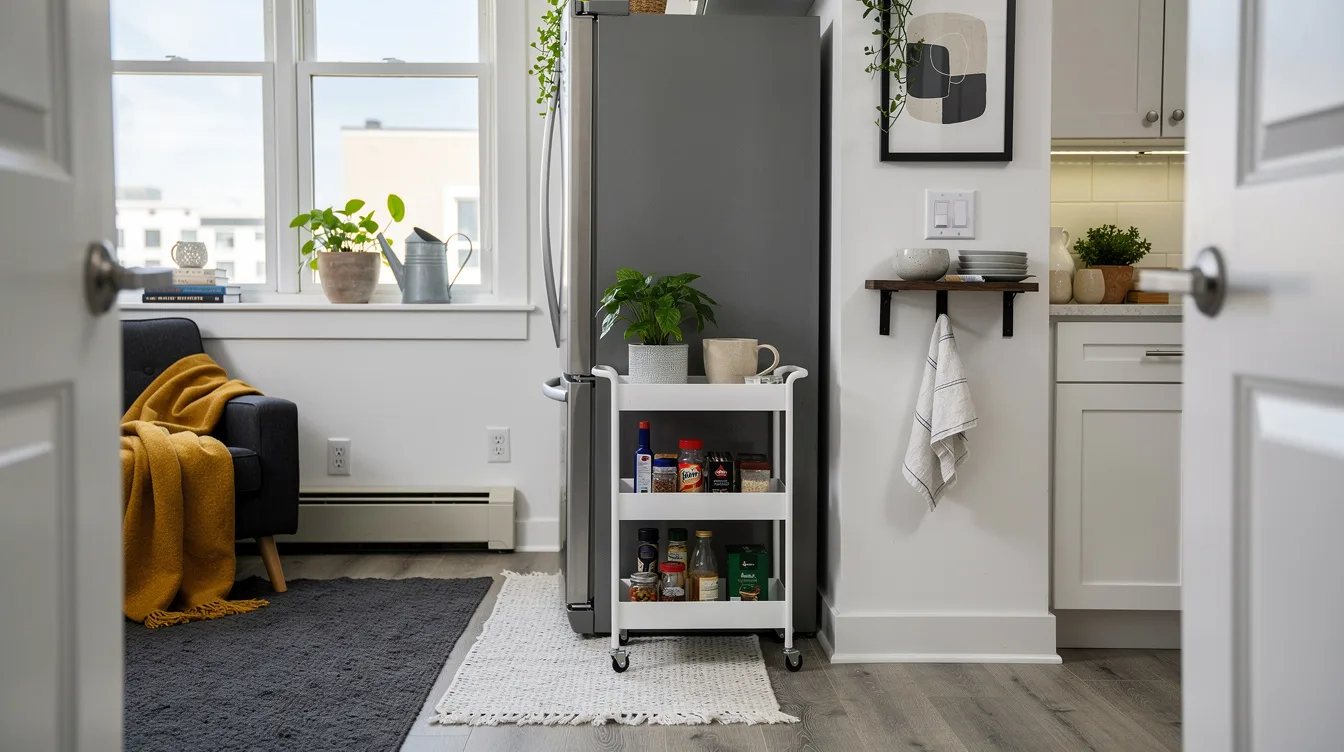
Amazon dimension fields can scramble width and height, which is especially risky when the entire purchase depends on a few inches. Compare the listing with Yamazaki’s own measurements before placing the order.
For the open version, look for 5.12 inches wide, about 18.7 inches deep, and about 31.69 inches high. Those numbers describe the cart’s listed footprint, not a vague headline such as “slim storage.”
Match the Open Cart to Kitchen Supplies
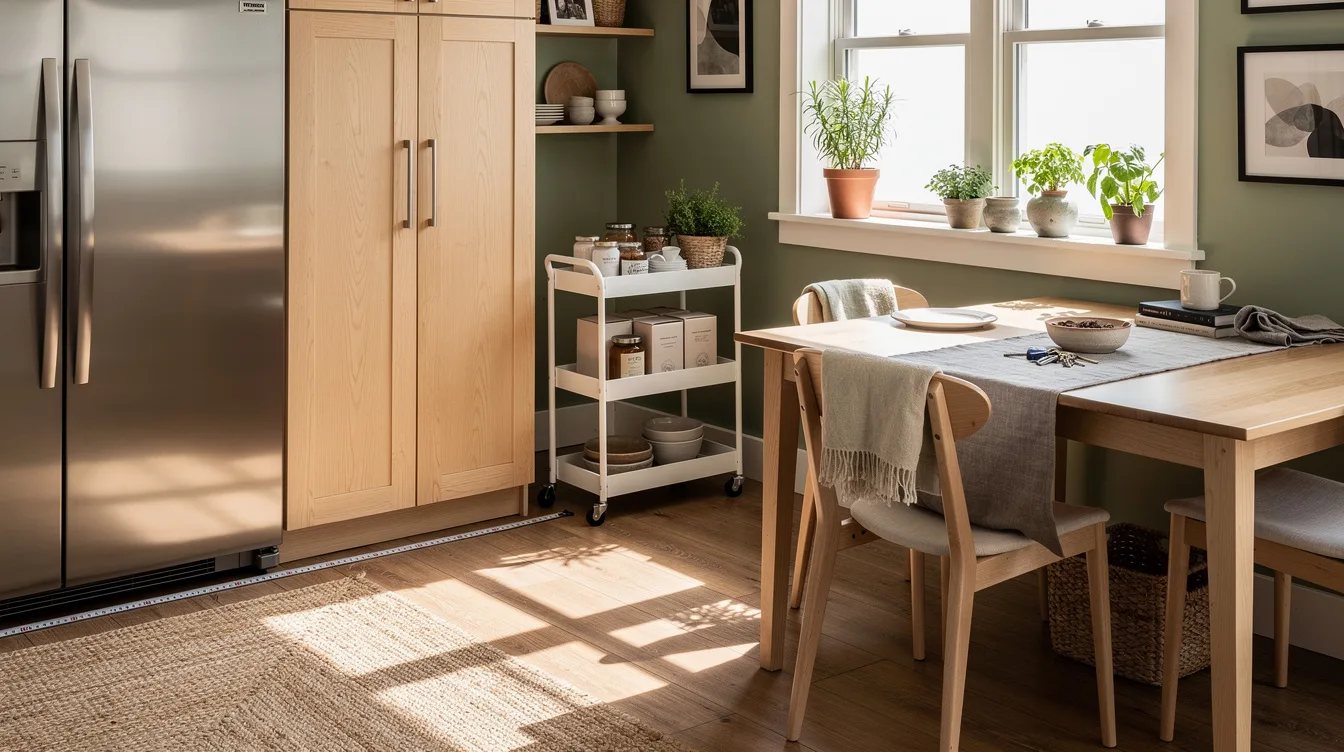
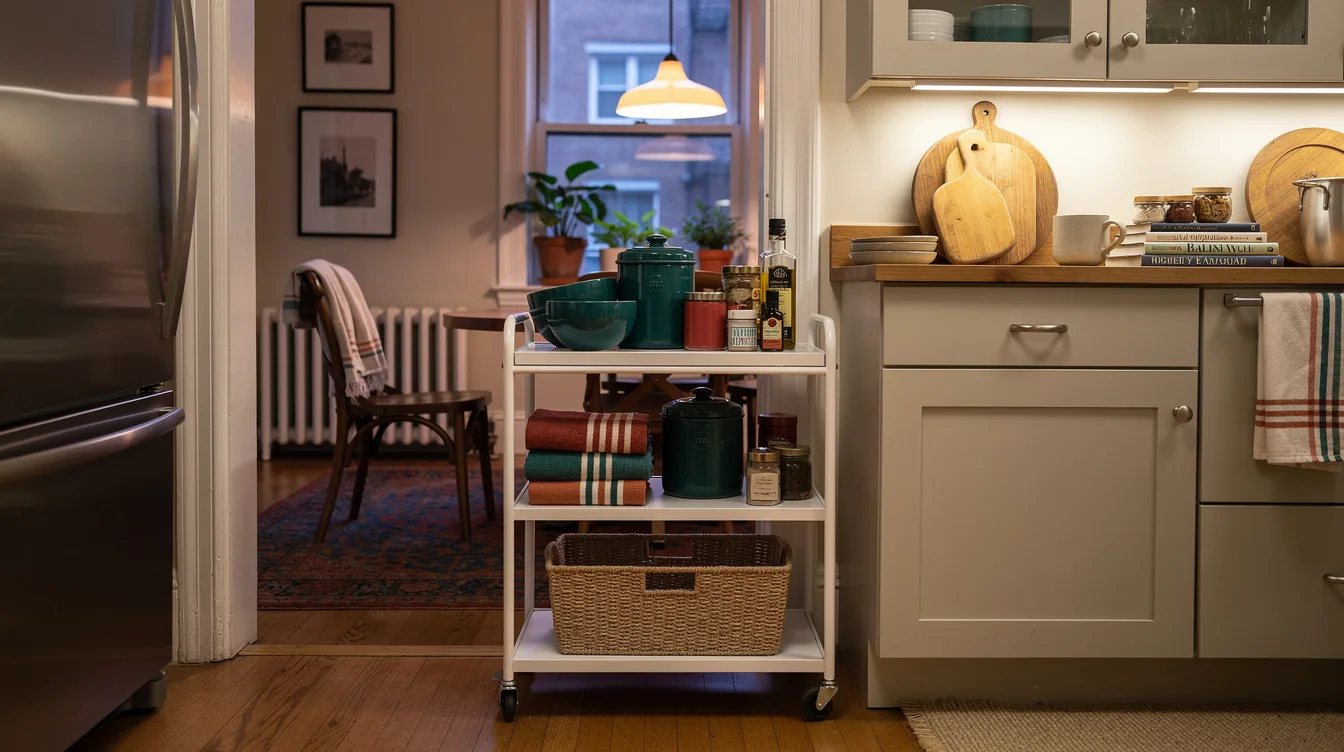
The 32-inch Yamazaki Tower Slim Storage Cart has an open layout for oils, spices, and other kitchen supplies. Its listed dimensions are 5.12 by 18.7 by 31.69 inches, with a steel frame that can sit beside a cabinet.
Amazon shows a price of about $145 in its comparison table, while Yamazaki lists the cart at roughly $165. Treat those figures as reference prices rather than guaranteed checkout totals.
Use the Enclosed Cart in the Bathroom
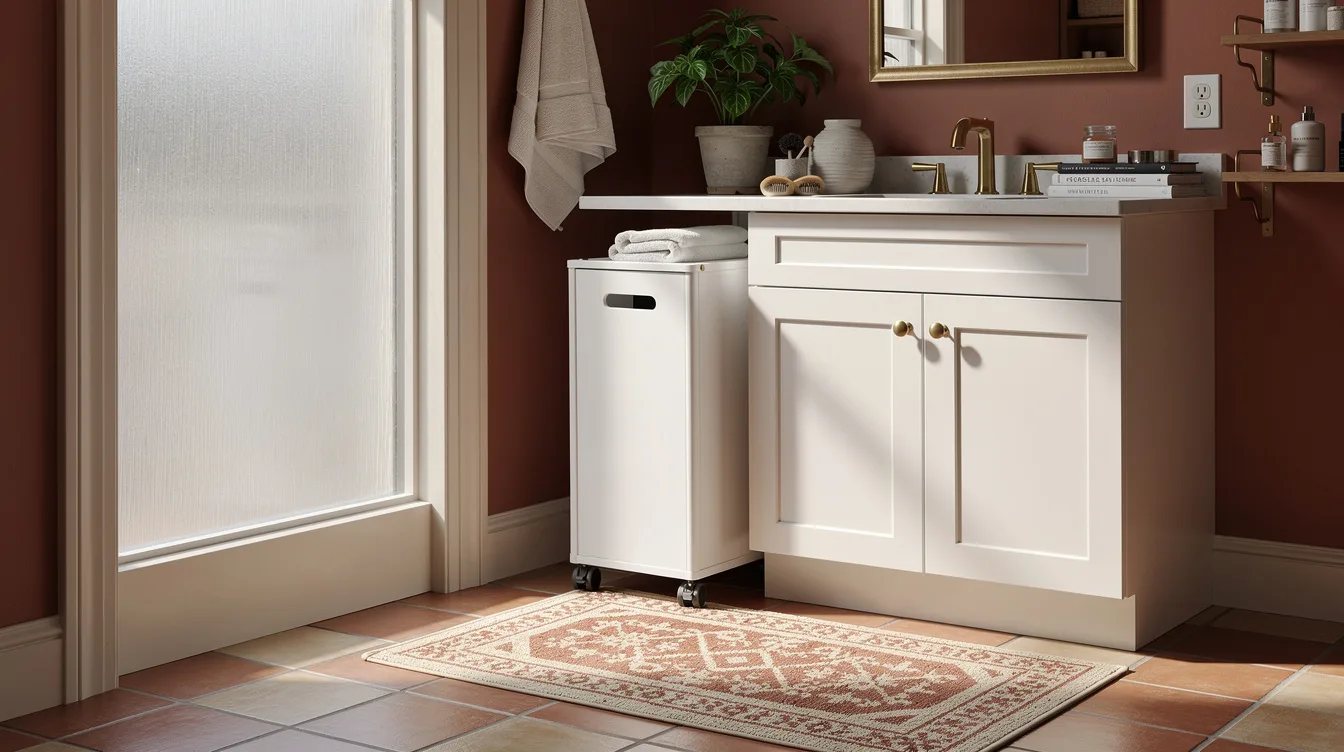
The 27-inch Yamazaki rolling storage cart measures 5.12 by 18.7 by 26.97 inches and combines a steel body with a wooden top. Its solid side can face outward, keeping bathroom cleaners, toiletries, or toilet paper visually contained.
The Amazon listing shows about $145, and the manufacturer reference is roughly $165. This version earns its footprint through concealment and presentation, provided the opening is wider than 5.12 inches.
Check the Cart’s Full Outside Width
Shelf width is only one part of the fit. Casters, bolts, side rails, and a handle can determine whether the steel cart clears the opening.
Look for the maximum outside width in the detailed specifications, then compare it with the smallest measurement in your space. A cart that technically fits on paper can still bind when a handle or wheel reaches a cabinet edge.
Calculate the Pull-Out Runway
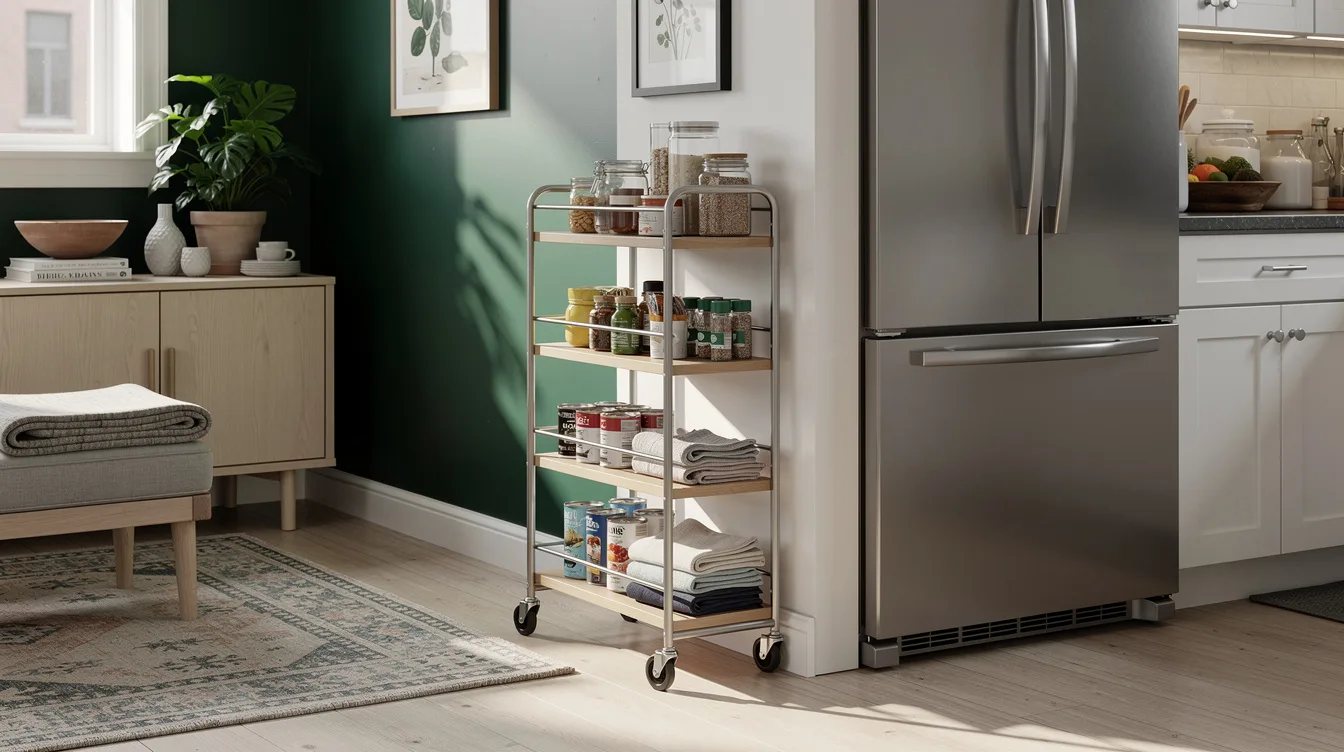
Depth matters after width. Both Yamazaki versions extend about 18.7 inches into the room, so leave enough clear floor in front to pull the cart out and reach the back shelf.
Test the full travel path with a box or ruler before ordering. A narrow gap beside a refrigerator may hold the cart while the door, nearby island, or laundry appliance blocks the movement you need.
Verify the 3.9-Inch Amazon Variant
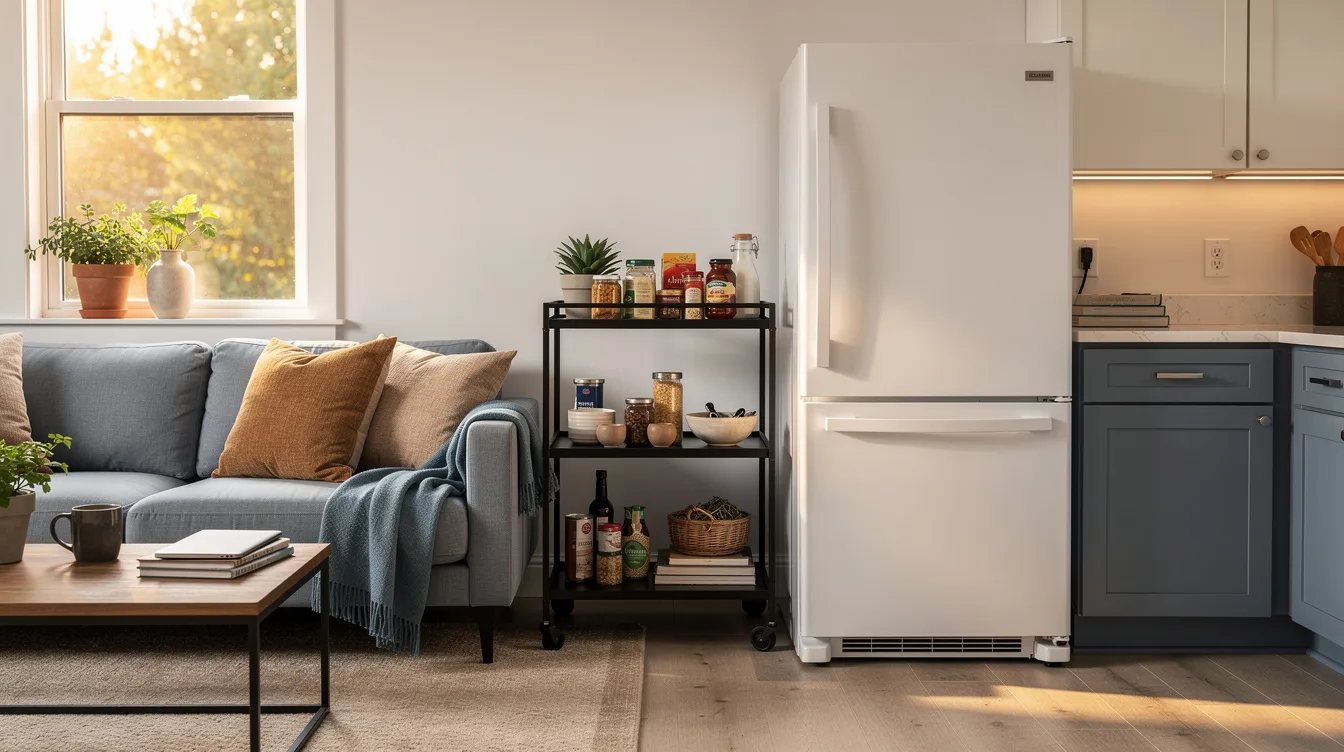
An Amazon listing advertises a 3.9-inch slim cart, which is the closest candidate for a literal 4-inch opening. The listing offers multiple sizes, so the selected variant must be checked independently.
The available information does not establish a reliable brand, material specification, full dimension set, or current price. Consider it a candidate for verification, not a confirmed recommendation.
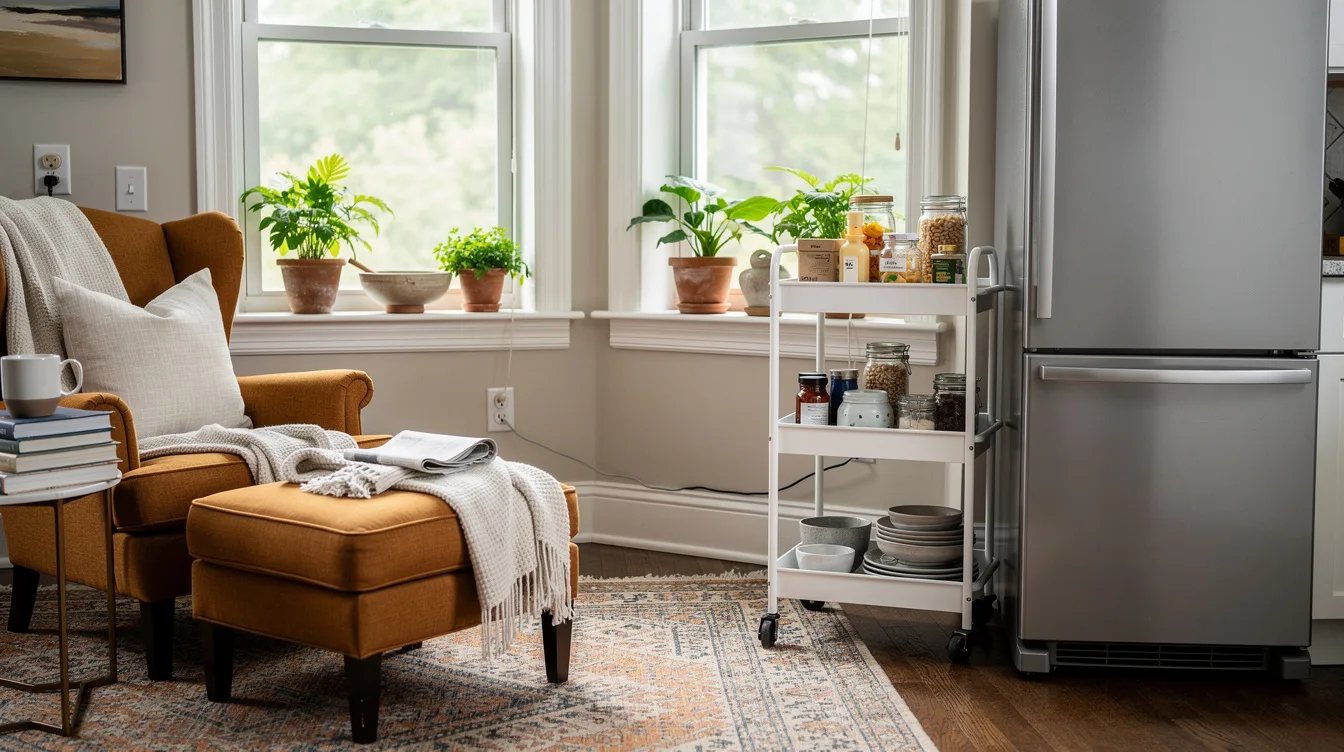
Leave More Than Barely Enough Room
A 3.9-inch cart inside an exactly 4-inch opening leaves only about 0.1 inch of total clearance. That is a marginal fit for rolling storage, particularly on an uneven floor.
Confirm that the opening is truly square and that the cart will not scrape during daily use. A little extra width can matter more than another shelf when the cart needs to move smoothly.
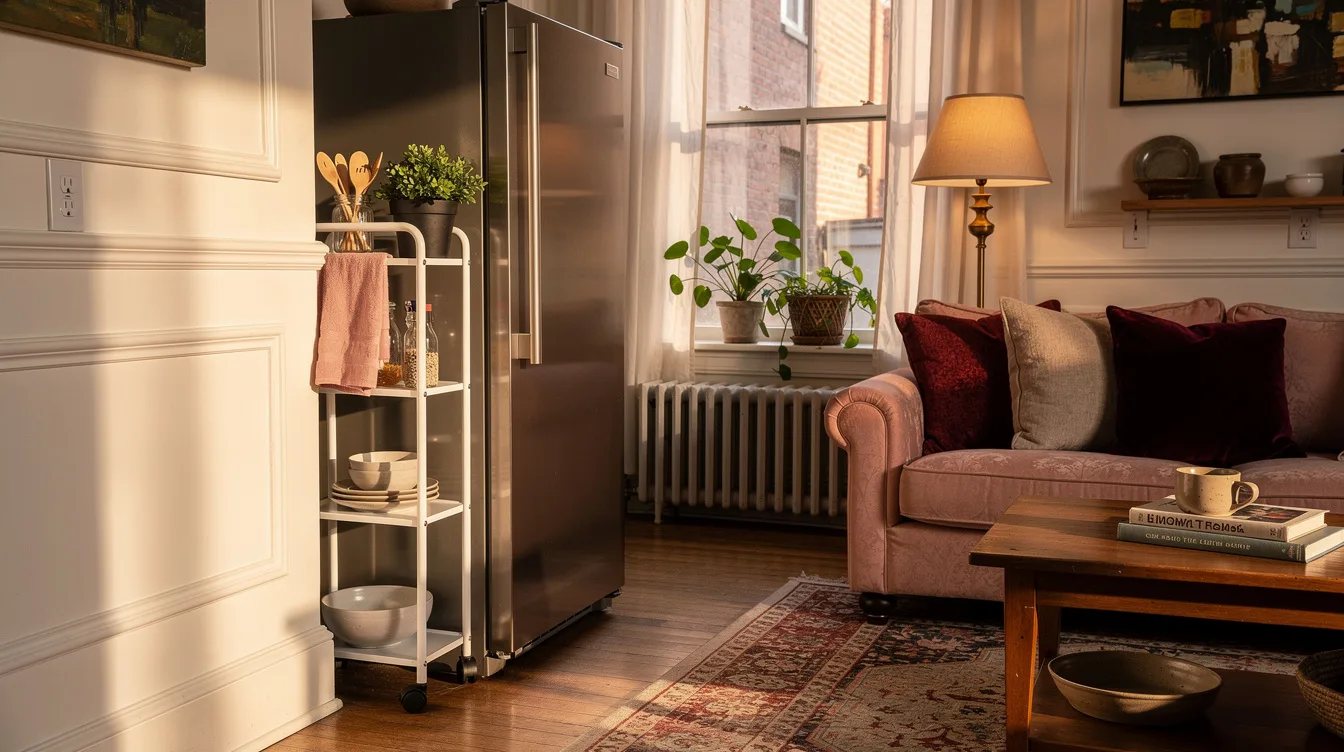
Protect Appliance Clearances
Beside a refrigerator, washer, or other major appliance, check the installation instructions before treating the gap as available storage. The appliance may need airflow, door swing, hose access, or service clearance.
Measure around the appliance projections rather than stopping at the front edge. A cart that blocks a vent or forces a door to open at an awkward angle creates a daily problem the extra storage cannot solve.
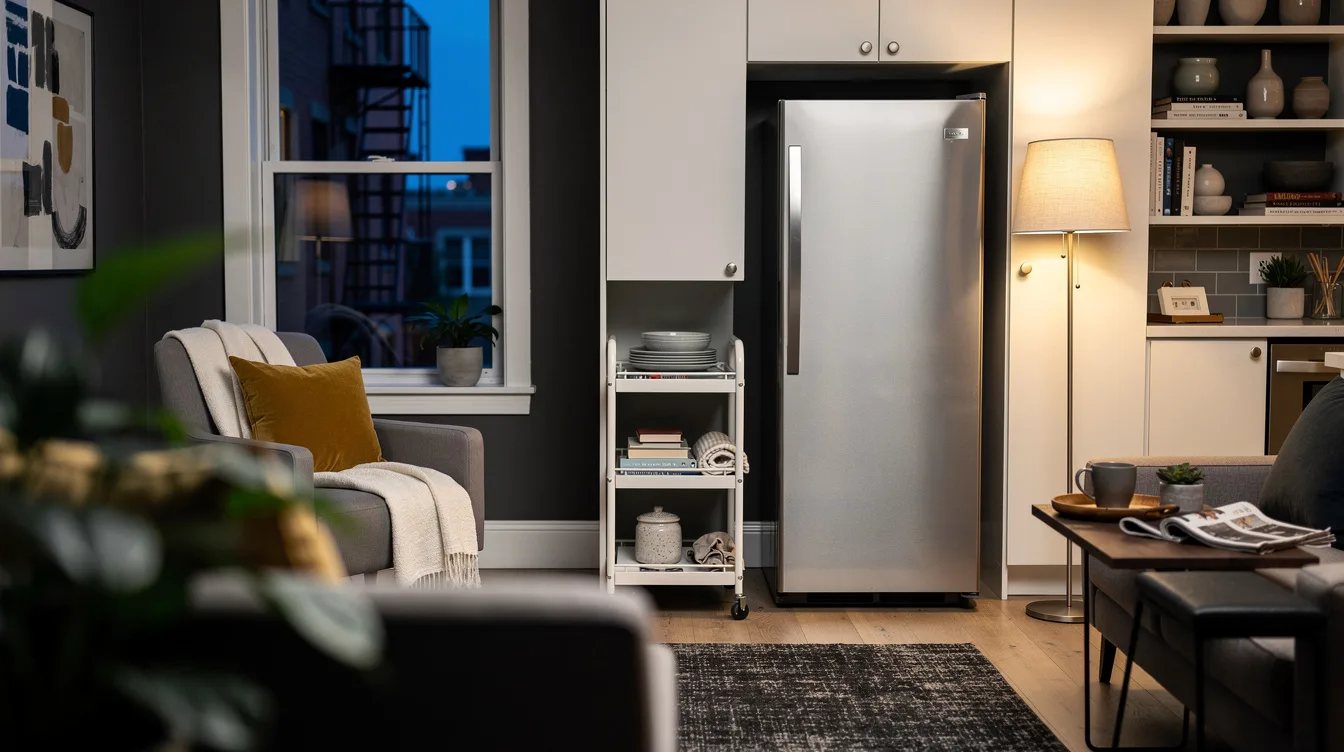
Compare Materials With the Price
Yamazaki’s steel construction is the central reason to consider the cart at roughly $145 to $165. The enclosed version adds a wooden top and a cleaner furniture profile, which can matter in a visible bathroom or kitchen.
For a hidden gap used only for backup supplies, the premium may be harder to justify. For a cart that remains in view, the solid finish and controlled presentation make the higher reference price easier to understand.
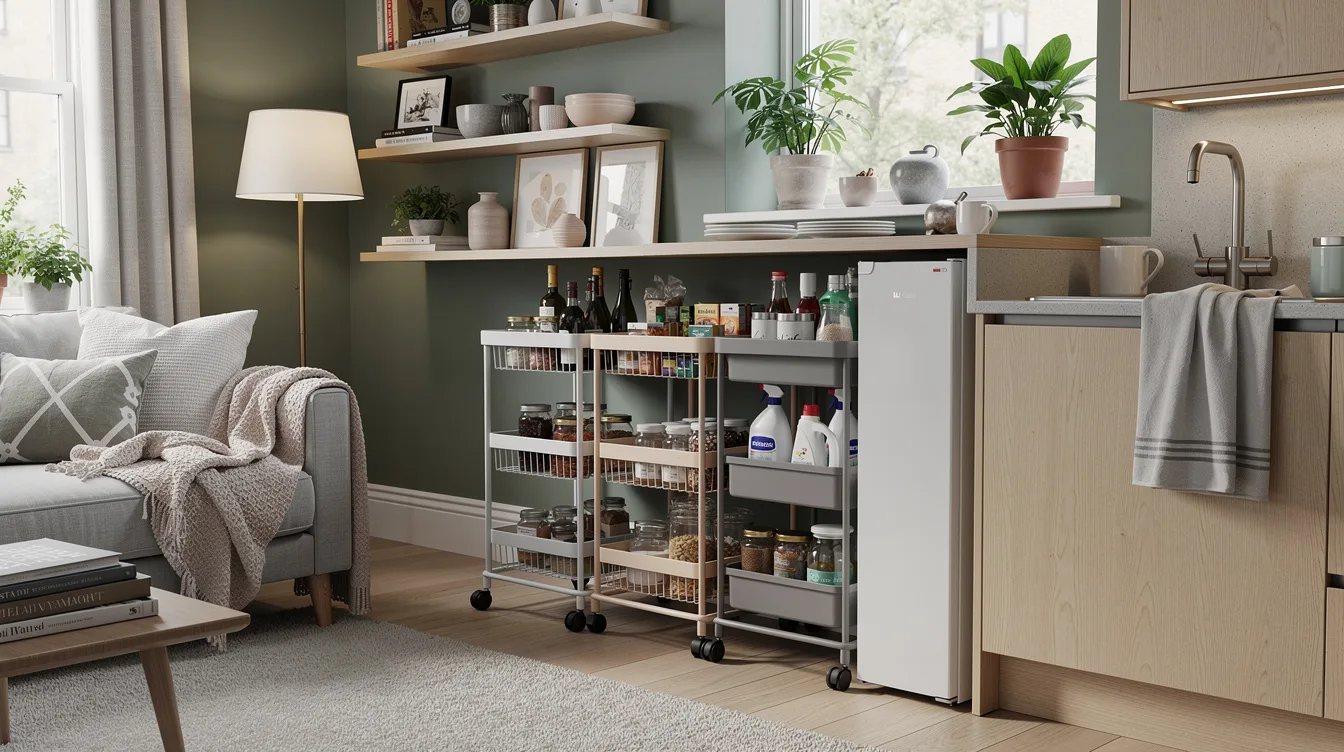
Decide Whether the Gap Deserves Storage
A narrow opening works best when the stored items match the cart’s reach and height. Oils and spices suit the taller open version, while bathroom supplies benefit from the lower enclosed design and its concealed side.
Measure first, choose the use second, and shop the exact variant third. If the opening is truly 4 inches, keep searching for a verified cart rather than forcing a 5.12-inch model into the space.
Keep reading
- Narrow Vanity Eating Your Storage? 12 Container Store Drawer Systems
- No Room for an Island? 14 IKEA Carts Create a Prep Zone
- That 6-Inch Gap Beside Your Fridge Is Prime Kitchen Storage
Begin with a tape measure at floor level, then compare the smallest opening with the manufacturer’s outside width. That one check will tell you whether to shop Yamazaki for a wider gap or verify the 3.9-inch Amazon candidate for the true four-inch zone.


