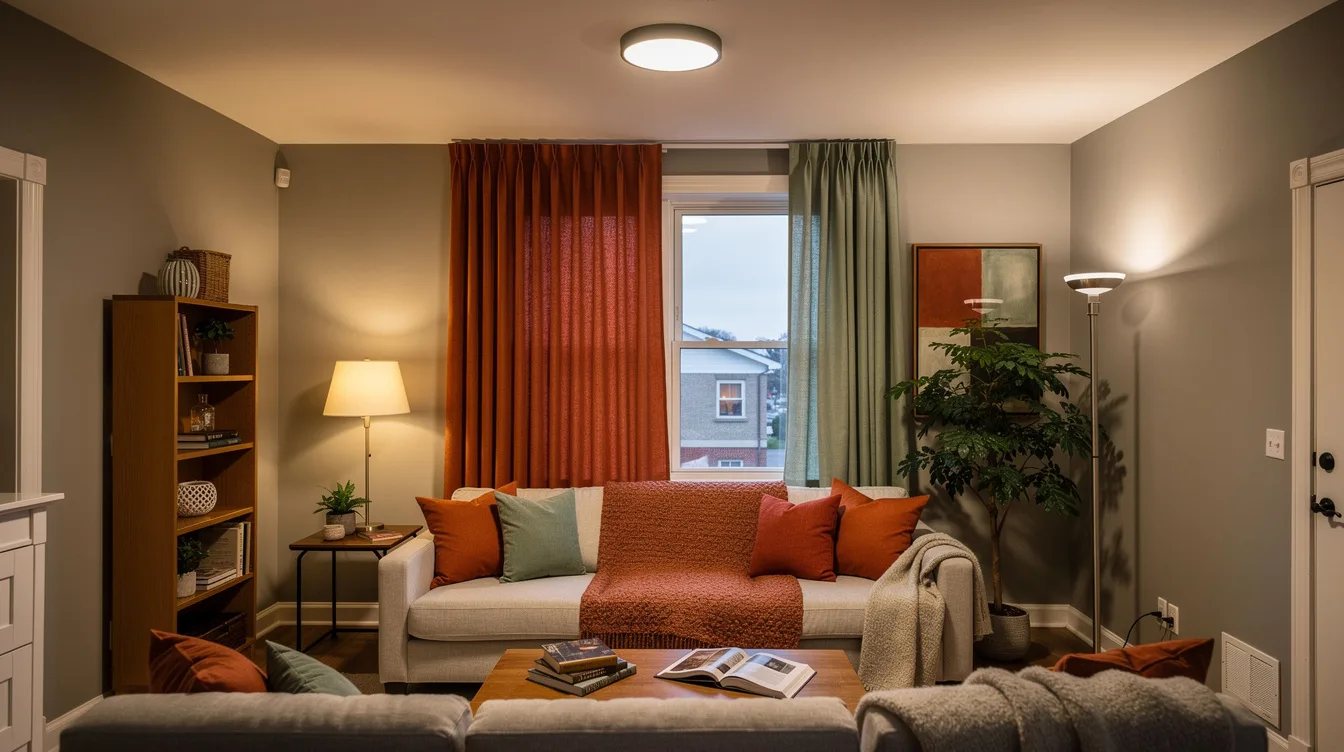
Low Ceilings Feeling Cramped? 15 Walmart Decor Fixes Start at $8
25 september 2026A low ceiling can make even a generous room feel visually crowded. In a space around 7 feet high, the strongest fix is a single uninterrupted vertical read: raise the curtains, soften the wall-to-ceiling edge, and send light upward.
These changes do not alter the architecture. They stop the eye from measuring exactly where the wall ends, which is the illusion that makes the room feel taller.
What you will find inside
- Mount Curtains Near the Ceiling
- Let Panels Finish at the Floor
- Extend the Rod Past the Glass
- Repeat a Fine Vertical Texture
- Blur the Wall and Ceiling Edge
- Match Trim to the Ceiling
- Choose a Thin Flush Fixture
- Wash the Ceiling With Upward Light
- Use Wall Sconces to Lift the Glow
- Keep Furniture Below the Sightline
- Carry One Color Upward
- Choose Tall, Narrow Storage
- Hang Art in Vertical Groups
- Clear the Floor Around the Walls
- Control Horizontal Clutter
Mount Curtains Near the Ceiling
In rooms around 7 to 8 feet high, hang curtains about 2 to 4 inches below the ceiling or crown molding instead of aligning the rod with the window frame. The fabric creates one long vertical line, so the eye reads the wall as taller.
A slim metal curtain rod in matte black, brass, or a wall-matching color keeps the hardware quiet. Choose a track when the ceiling line is unusually close to the window, because it creates an even cleaner rise from floor to ceiling.
Let Panels Finish at the Floor
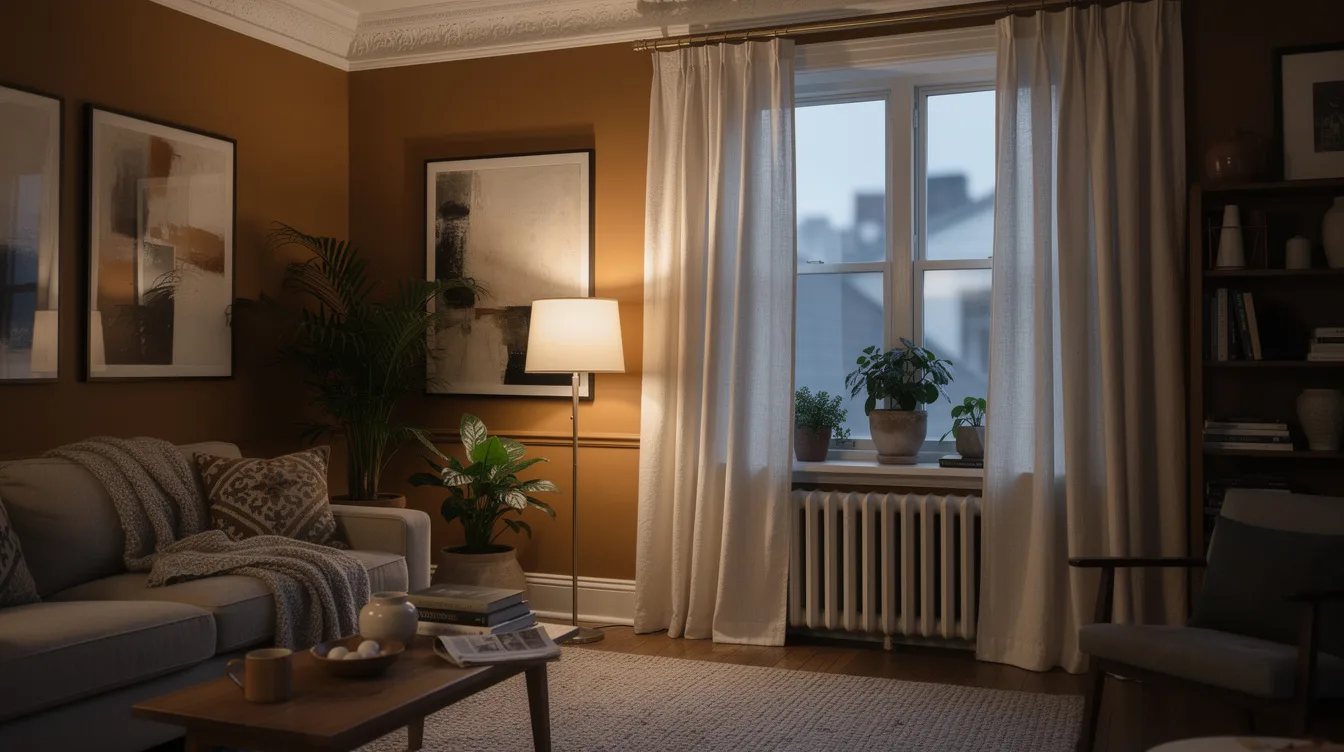
Short curtains create a visual stop halfway up the wall. Use full-drop panels that just touch the floor or hover about 1/2 inch above it, which keeps the vertical read intact while making cleaning easier.
A plain linen-look curtain has enough texture to feel substantial without adding a busy horizontal break. Ready-made panels from IKEA, Target, or Wayfair can work well when the length is close enough to avoid a large puddle.
Extend the Rod Past the Glass
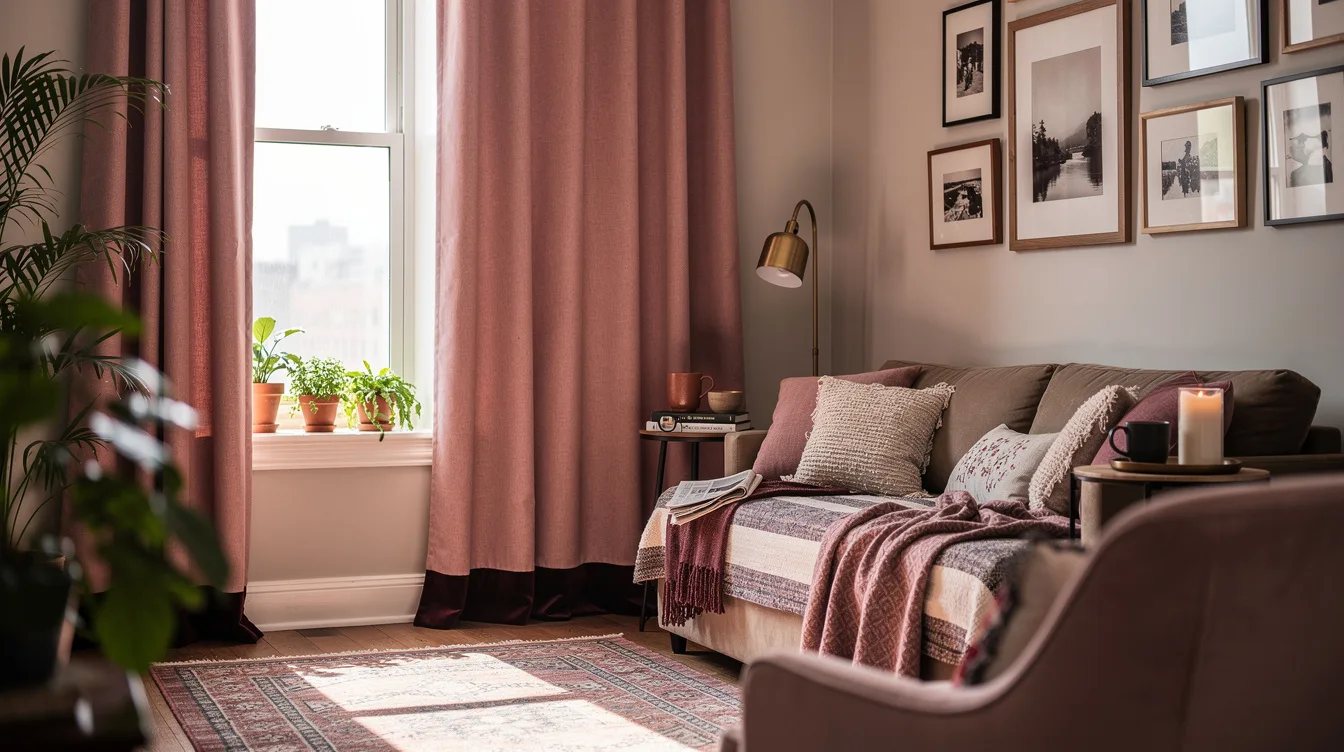
Run the rod about 6 to 10 inches beyond each side of the window so the curtain stacks mostly on the wall rather than covering the glass. This makes the window appear wider while giving the surrounding wall a taller, calmer field.
Use a white aluminum curtain track for a nearly invisible installation, or choose black hardware when the room already has dark accents. A rod that ends at the window casing leaves the ceiling height exposed, and that is the wrong visual cue for a compact room.

Repeat a Fine Vertical Texture
When curtains alone cannot carry the effect, add a narrow vertical pattern behind a reading chair or along one short wall. Fine stripes, slim battens, and ribbed surfaces pull the gaze upward without making the entire room feel decorated around a gimmick.
A fine vertical stripe wallpaper in a low-contrast color is more convincing than broad, high-contrast bands. Home Depot and Lowe's carry wallpaper options that can be limited to one wall, which keeps the pattern from becoming the room's loudest feature.
Blur the Wall and Ceiling Edge
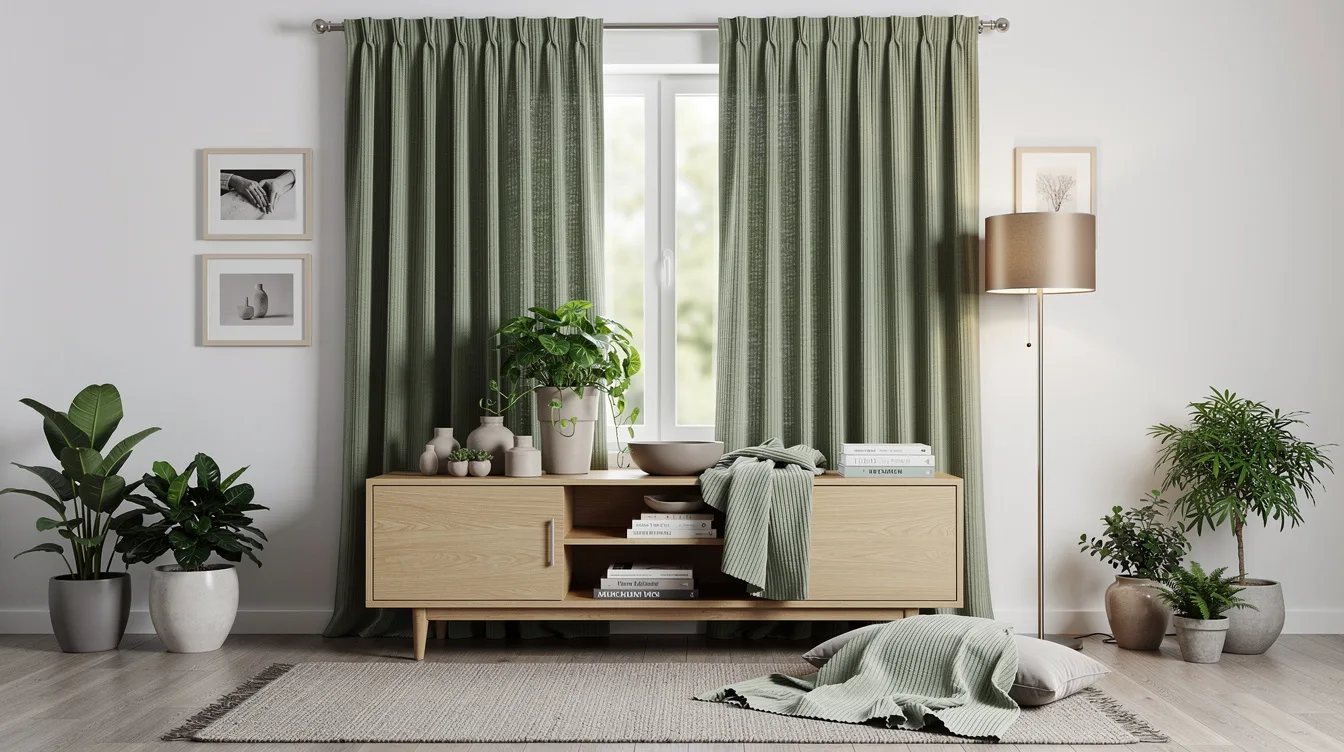
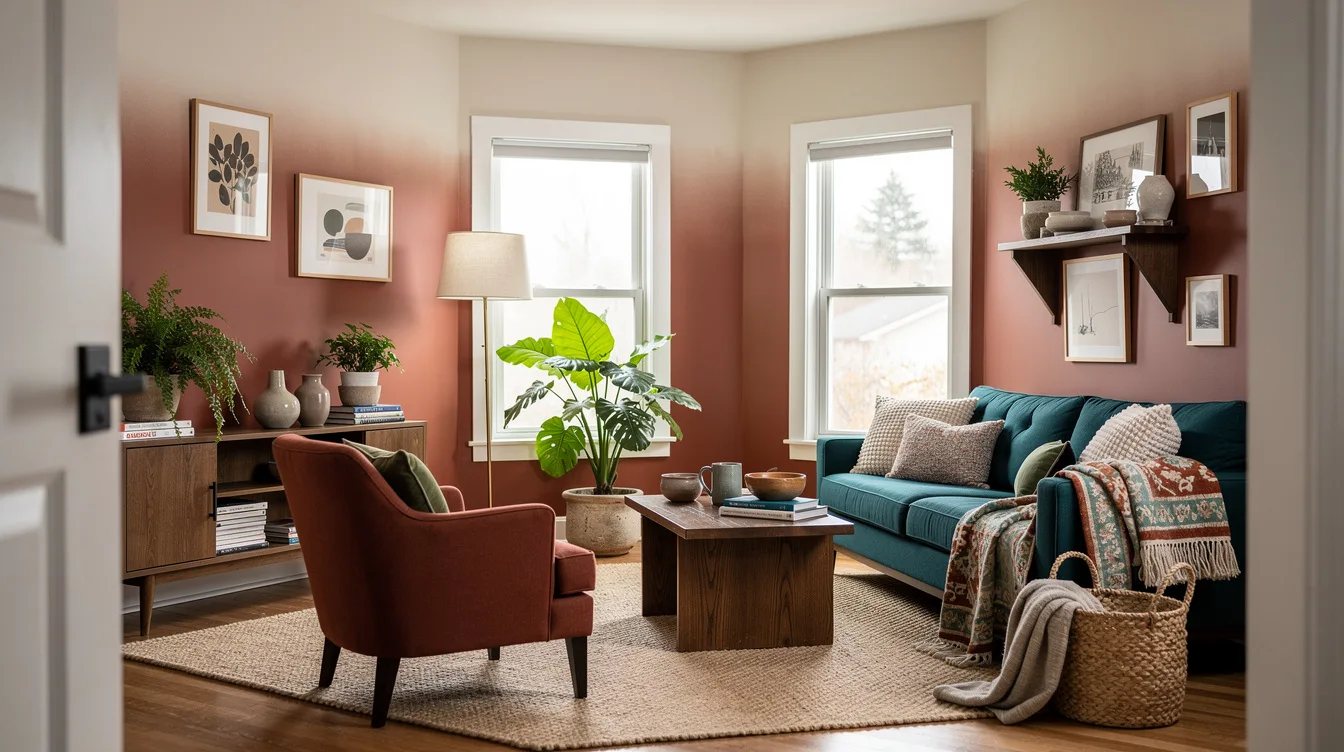
A hard line between a dark wall and a bright white ceiling acts like a lid. Paint the walls, crown molding, and ceiling within the same light color family, such as warm off-white, pale greige, soft mushroom, or muted blue-green.
Warm off-white paint works especially well when the ceiling is one step lighter than the walls but keeps the same undertone. The small shift gives the room definition while allowing the edge to dissolve from normal viewing distance.
Match Trim to the Ceiling
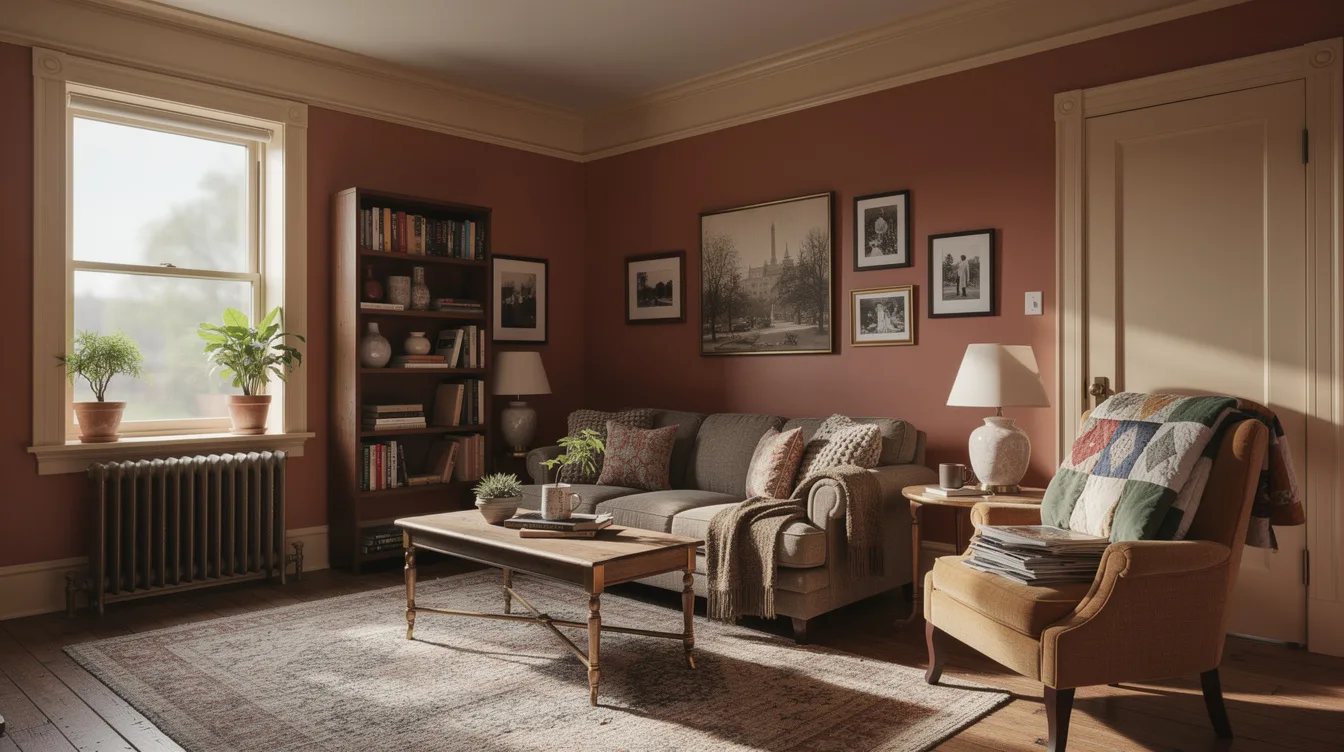
Bright trim against a colored wall can create several horizontal bands around the room, especially when the crown molding is thick. Painting the trim close to the ceiling color reduces those interruptions and gives the upper perimeter a quieter outline.
Use a soft greige paint on the wall with a slightly lighter version on the crown molding and ceiling. Skip a glossy finish overhead, because reflected light can sharpen every seam and make the ceiling plane feel closer.
Choose a Thin Flush Fixture
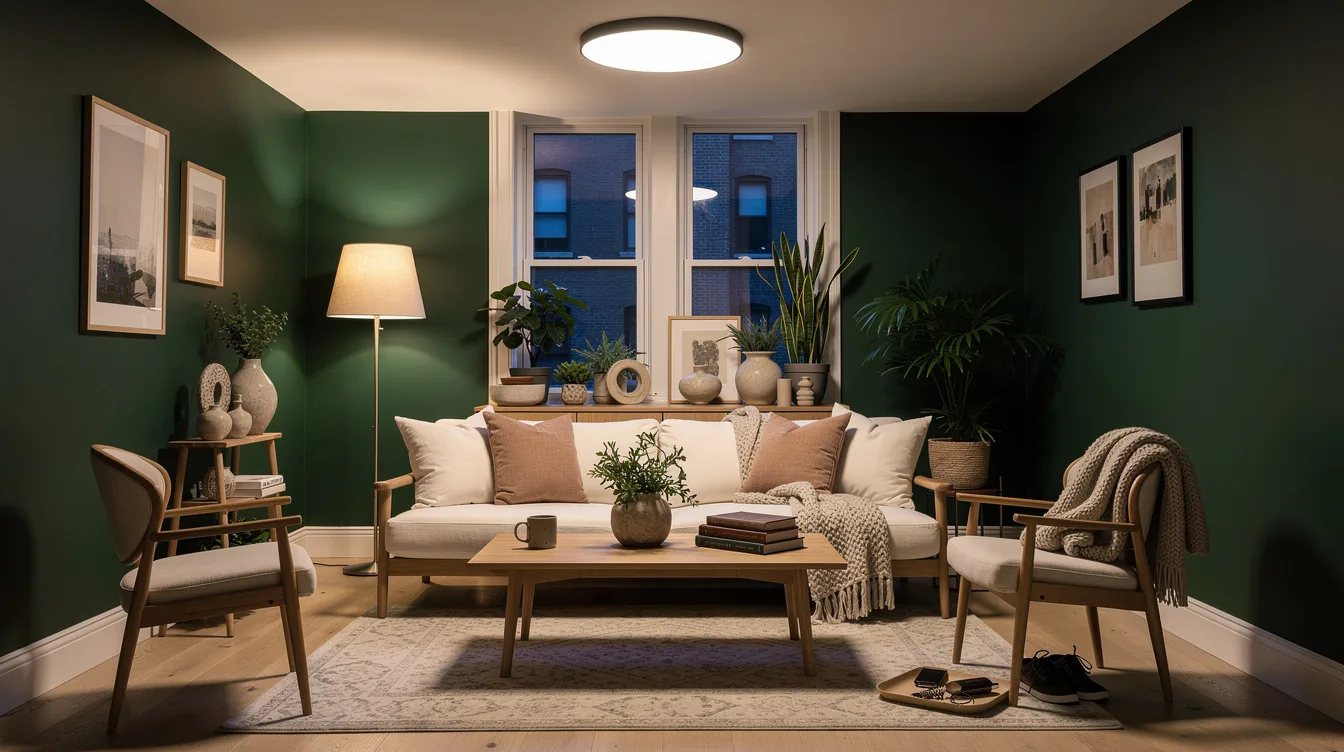
A pendant or chandelier that hangs into a low room creates a visual obstacle at eye level. Replace it with a flush mount or recessed fixture that keeps circulation clear and leaves the center of the ceiling visually open.
A canless LED wafer light typically costs about $15 to $30 for an entry-level unit, while a designer-grade thin fixture may cost around $85 to $120, before installation. For a 7-foot ceiling, aim for a fixture with roughly 1.5 inches or less of projection.
Wash the Ceiling With Upward Light
Downward-only lighting puts a bright pool on the floor and leaves the ceiling edge in shadow. Add light that grazes upward across the ceiling, where the soft spread encourages the eye to follow the room's height.
A torchiere floor lamp placed about 12 to 18 inches from the wall can send light over a broad ceiling area. Choose a dimmable model with warm-white or warm-dim output around 2700 to 3000 K for softer shadows in a close room.
Use Wall Sconces to Lift the Glow
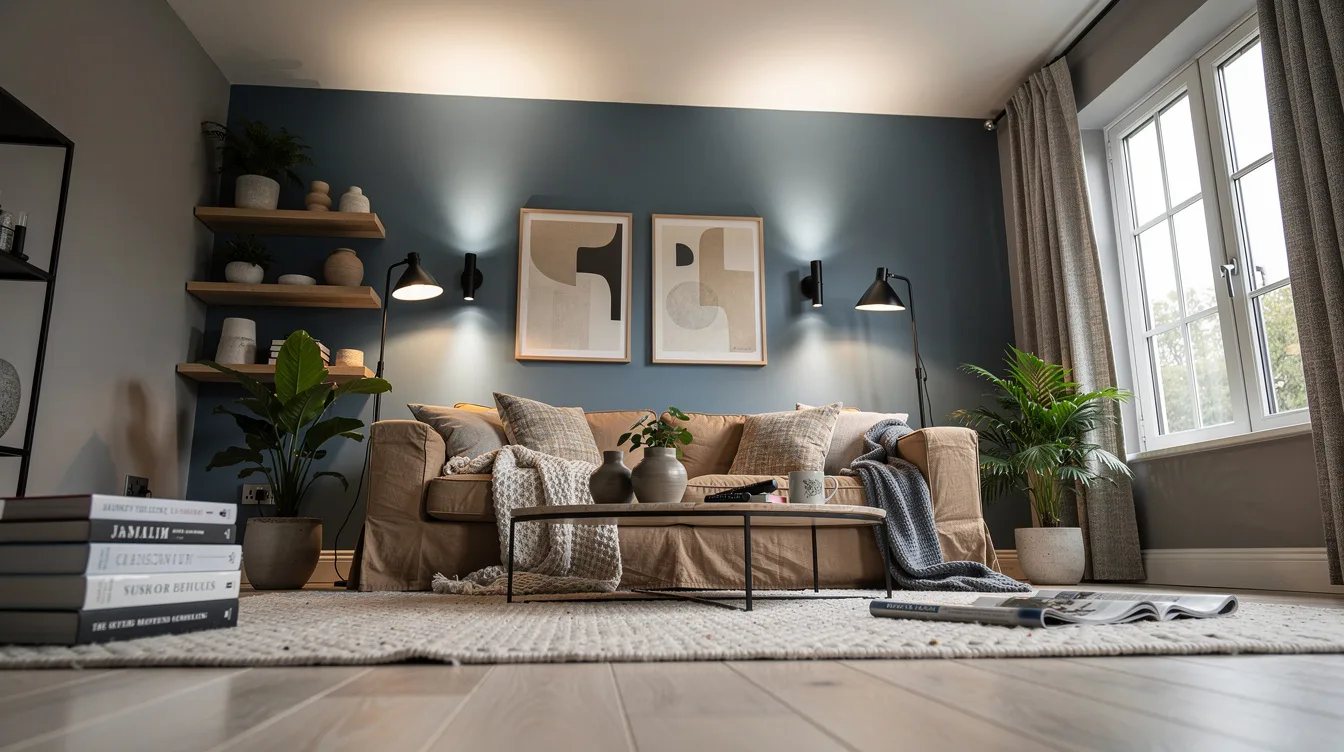
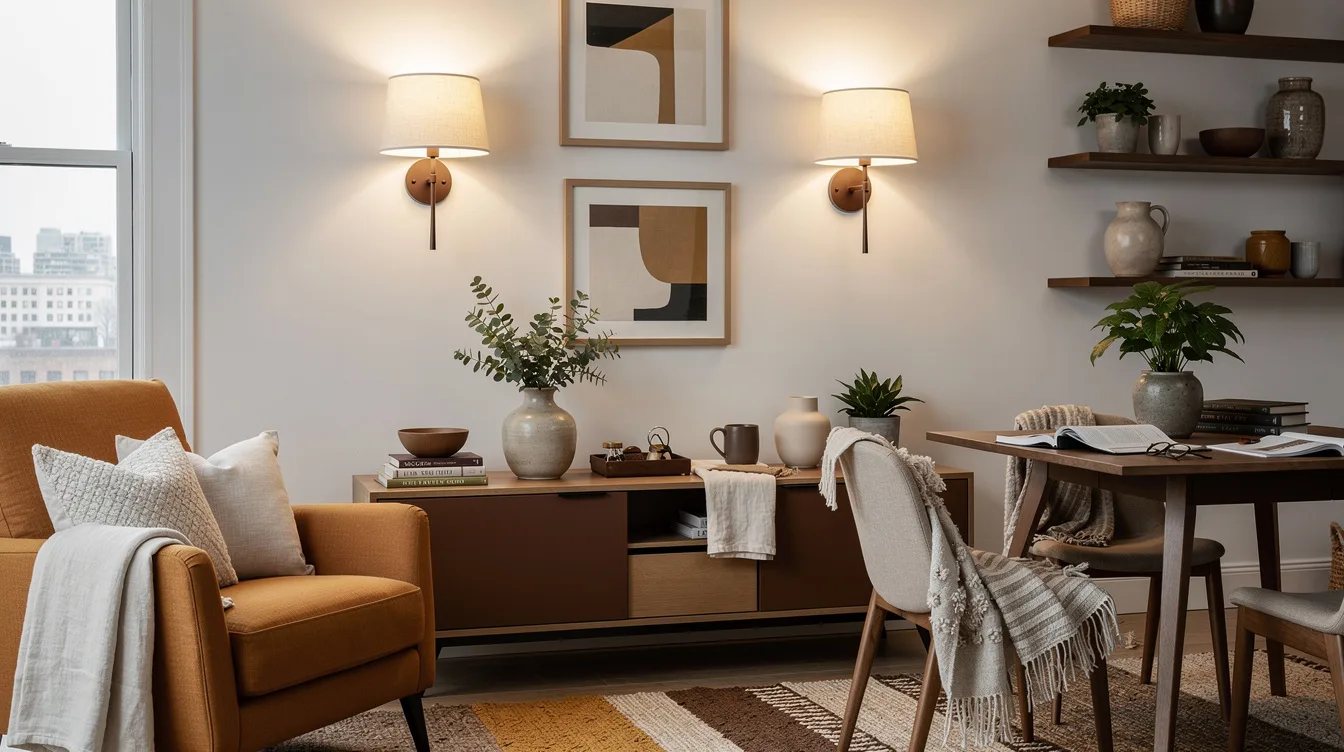
Wall sconces divide light vertically and keep the floor clear of bulky lamps. Install them above eye level, with the beam aimed up or both up and down, so the wall receives a taller wash instead of a bright strip across the middle.
A plug-in brass sconce from Amazon or Wayfair can deliver the effect without opening the wall for new wiring. Hide the cord inside a paintable cord cover and run it straight down, because a wandering cable creates the very visual clutter this strategy is meant to remove.
Keep Furniture Below the Sightline
Furniture that rises close to the ceiling makes a low room feel compressed, even when the walls are painted correctly. Favor sofas with low backs, open-leg chairs, and storage that leaves a visible band of wall above it.
A low-profile sofa with a seat height around 17 to 19 inches keeps more wall visible behind the seating area. One tall piece can still be useful, but place it at the end of the room and keep its silhouette narrow rather than spreading a heavy cabinet across the entire wall.

Carry One Color Upward
Color that stops at the top of the wall makes the ceiling boundary easy to measure. Repeat the wall tone in a narrow band of trim, the upper portion of a bookcase, or the fabric of a tall window treatment to create continuity.
A muted blue-green wall color can move into a nearby Roman shade or vertical cushion without becoming matchy. Keep the ceiling lighter within the same family, since a dramatic contrast above the wall brings back the horizontal lid.

Choose Tall, Narrow Storage
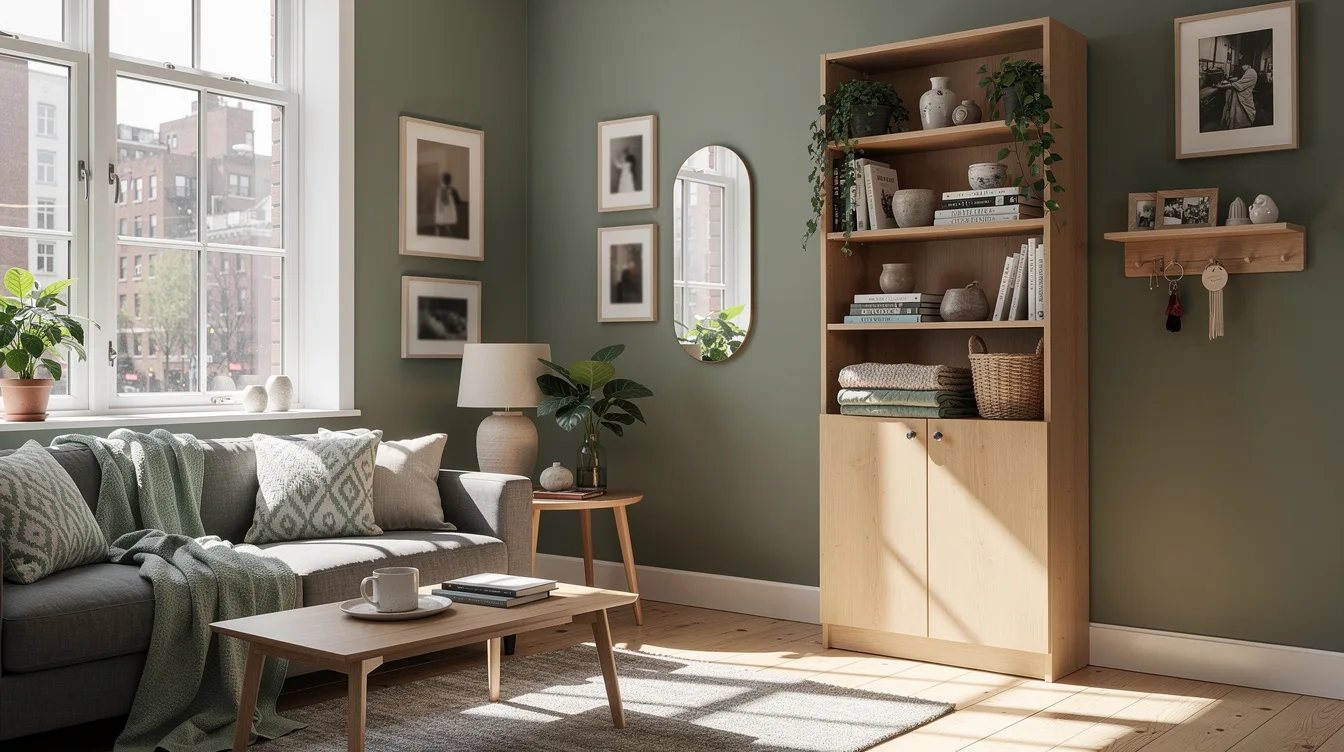
Open shelving can make a short room look busier because every shelf creates a horizontal line. Choose a narrow storage piece with long vertical sides, then leave a small amount of breathing room around it so the wall remains part of the composition.
A tall oak bookcase with simple uprights is more helpful than a wide, low entertainment unit. IKEA and Wayfair offer narrow options, but avoid filling every shelf; a few vertically arranged books and one taller object create a stronger upward path.
Hang Art in Vertical Groups
One wide piece of art emphasizes the width of a wall and draws attention to the ceiling line above it. Stack two smaller pieces or choose a portrait-oriented frame so the arrangement has a clear upward direction.
A vertical framed print with a slim wood frame should sit close enough to nearby furniture to feel anchored, not float near the ceiling. Keep the artwork's colors related to the wall, because a sharp dark rectangle can become another heavy horizontal signal.
Clear the Floor Around the Walls
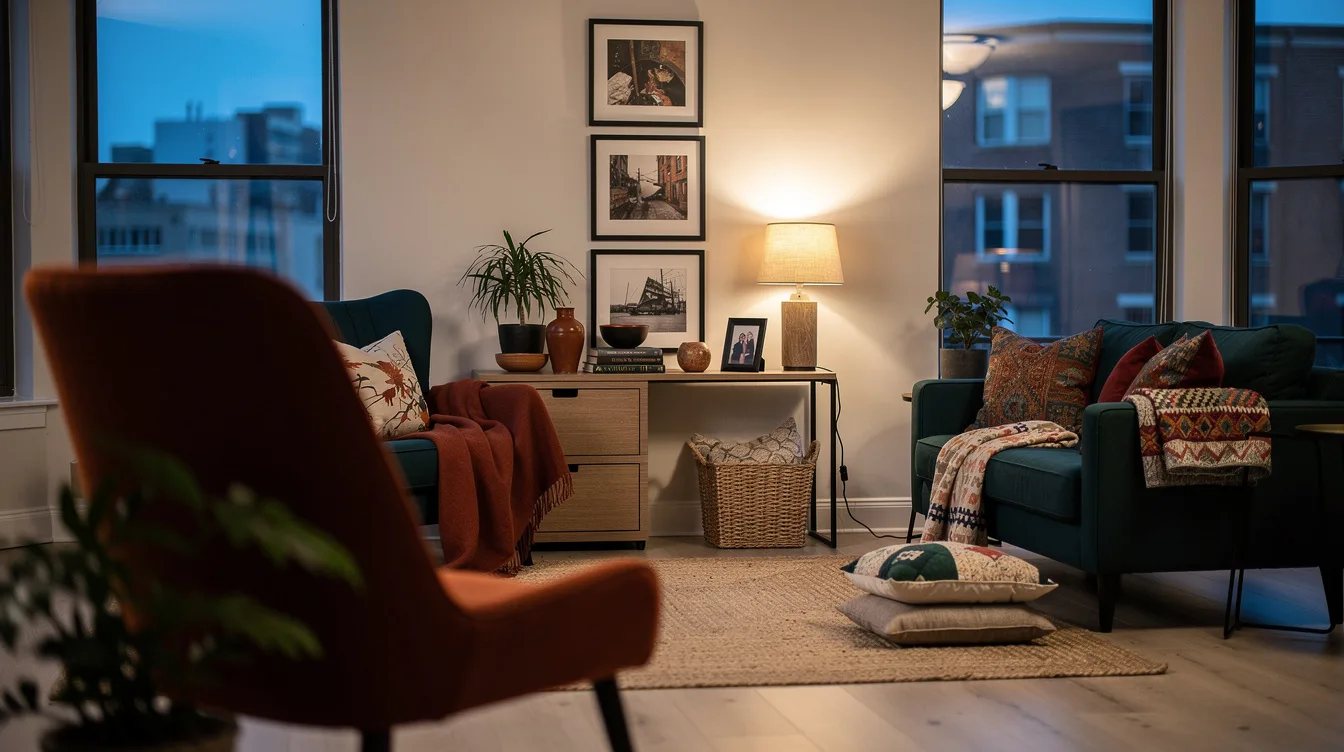
The eye reads height more easily when the floor perimeter is visible. Keep baskets, plant stands, and extra seating away from the curtain wall, particularly where the panels meet the floor.
A lightweight woven basket can still hold throws, but place it beside a sofa rather than under the window. A clear floor line lets the curtains descend uninterrupted, which is more valuable than adding another decorative object.
Control Horizontal Clutter
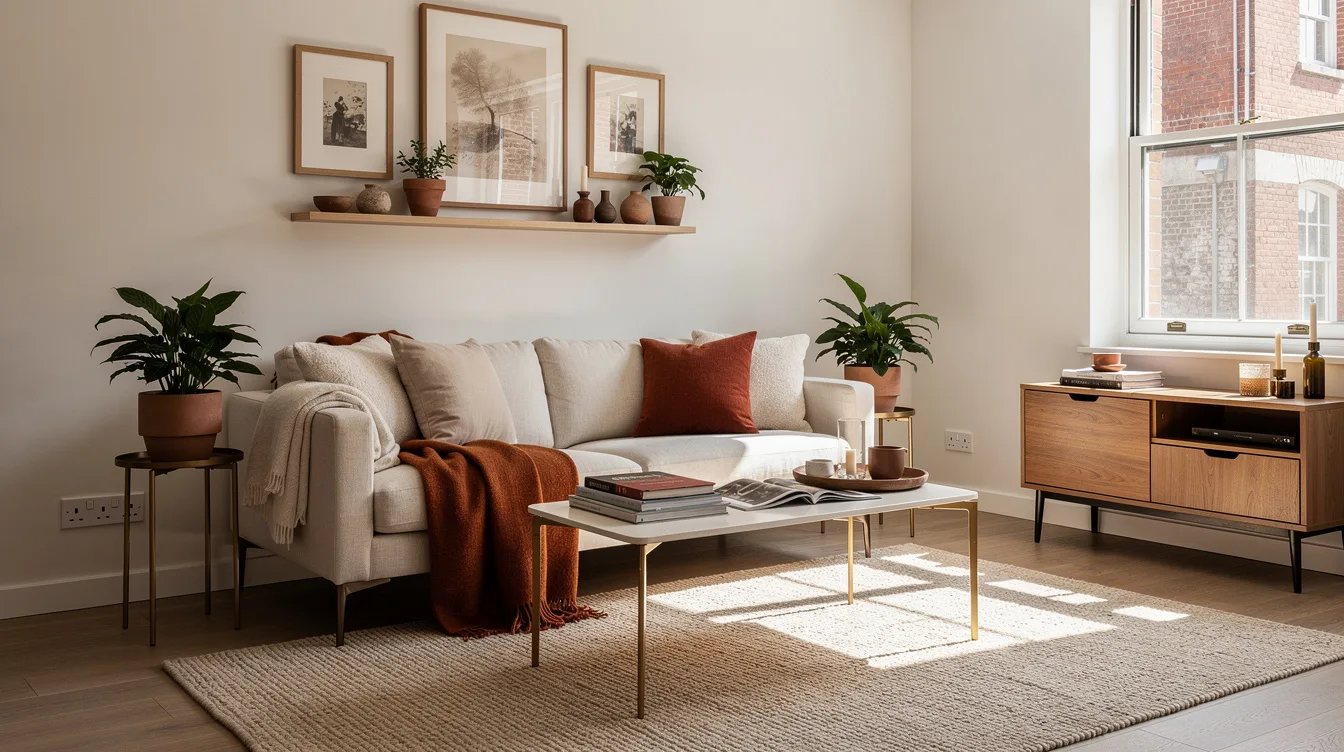
Chair rails, thick picture ledges, chunky valances, and wide contrasting bands all divide the wall into shorter sections. Remove the pieces that create the strongest horizontal break before buying anything new.
A slim picture ledge in a wall-matching finish can replace several scattered frames while keeping the composition restrained. Finish by dimming the overhead light and turning on the upward sources first, because the room should be judged by its evening glow as well as its daytime paint.
Keep reading
- Walmart Kitchen Drawers Looking Chaotic? These 12 Organizers Start at $8
- Small Living Room Feeling Cramped? 12 At Home Mirrors Under $80
- 12 Berlin Altbau Ideas That Make High Ceilings Feel Intentional
Start with the window wall: mount the rod close to the ceiling, let the panels reach the floor, then test the room after sunset with the overhead fixture dimmed. Once that vertical line works, paint and lighting can reinforce it instead of competing for attention.