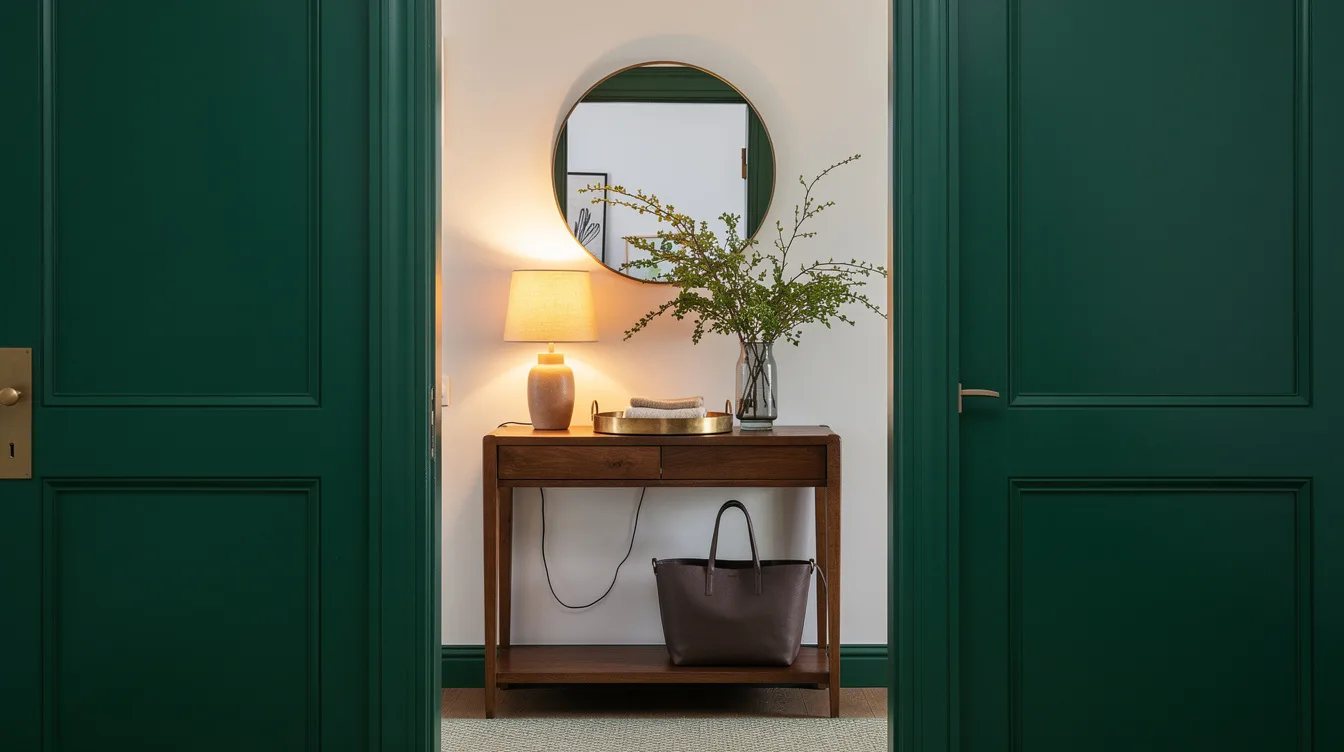
Narrow Walkway Blocking Your Flow? 15 Target Consoles Under $150
16 september 2026A console should catch keys and mail without forcing everyone to sidestep it. In a typical narrow hall, a console about 8 inches deep can leave roughly 31 to 36 inches of clear walking space, while a deeper piece quickly turns the entry into a pinch point. The styling answer is a deliberate wall arrangement: keep the footprint shallow and move visual interest upward, with every object given a daily job.
What you will find inside
- Measure the Walkway Before Styling
- Choose the Right Console Depth
- Float the Drop Zone in an Extra-Tight Hall
- Keep the Frame Open Underneath
- Build a One-Tray Landing Strip
- Anchor a Slim Lamp at One End
- Use a Low Vase and Flexible Branches
- Hang a Mirror at the Right Width
- Stack Narrow Art Instead of a Mirror
- Move Lighting to the Wall
- Store Soft Goods in One Low Basket
- Repeat One Material Across the Arrangement
- Round the Edges Near a Door Swing
- Keep a Clear Front Strip
- Scale Up Only in a Wider Foyer
Measure the Walkway Before Styling
Begin with a painter's tape outline on the floor, measuring from the proposed front edge to the opposite wall, railing, nearby furniture, or door swing. The usable passage is that edge-to-edge distance, not the full width printed on a room plan, and it is the number your body experiences when the hall gets busy.
In a hall about 39 inches wide, a console around 10 inches deep leaves roughly 29 inches, which can feel awkward with a grocery bag or stroller. Open every nearby door fully, carry a full-size laundry basket through the route, and reject the footprint if the path fails that everyday test.
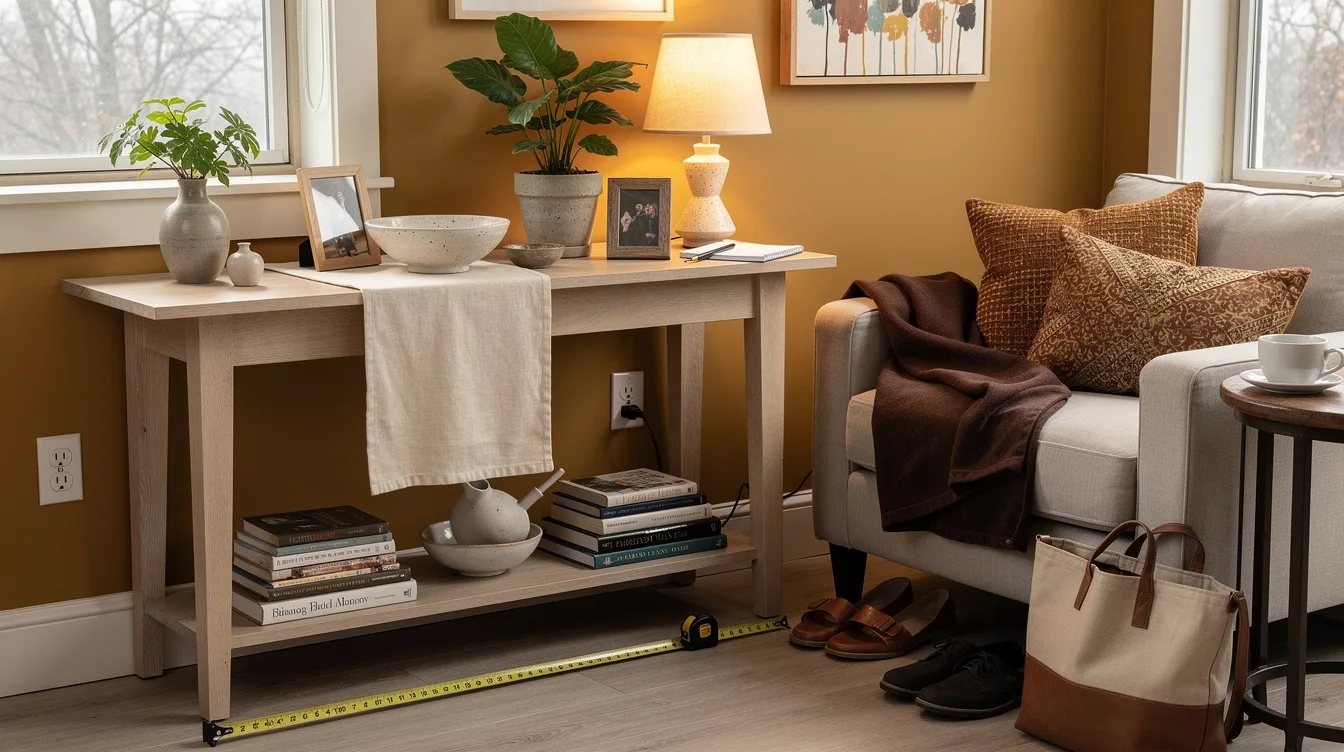
Choose the Right Console Depth
Select a shallow oak console about 8 to 12 inches deep for most narrow hallways, with 6 to 8 inches reserved for an exceptionally restricted passage. That footprint is large enough for a drop zone, yet it keeps the furniture visually tied to the wall instead of making the walkway do work around it.
A console about 28 to 32 inches high usually lands comfortably for keys and mail, while conventional pieces may run roughly 30 to 34 inches high. Look for a finished back, stable legs, and a width around 24 to 48 inches for a compact wall, then favor length over depth when you need more surface.
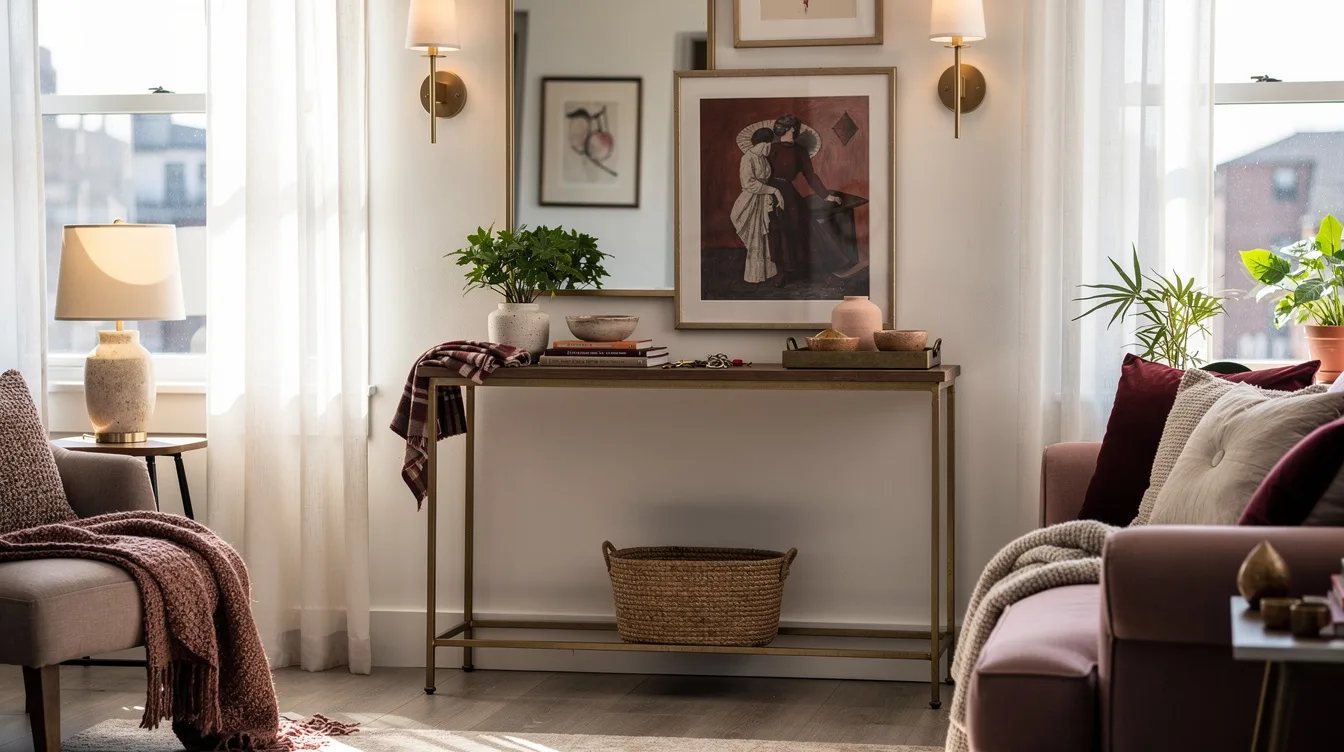
Float the Drop Zone in an Extra-Tight Hall
Install a wall-mounted walnut shelf when the hall is under about 35 inches wide or when a floor-standing console leaves too little room. A floating form keeps shoes, bags, cleaning tools, and passing feet out of the travel lane, while giving the baseboard a clear path.
Look at IKEA or Home Depot for a simple shelf format that can support a narrow tray and a compact rechargeable lamp. Fasten the shelf to solid wall support, keep the front edge free of sharp projections, and test it with an empty tote before adding daily clutter.
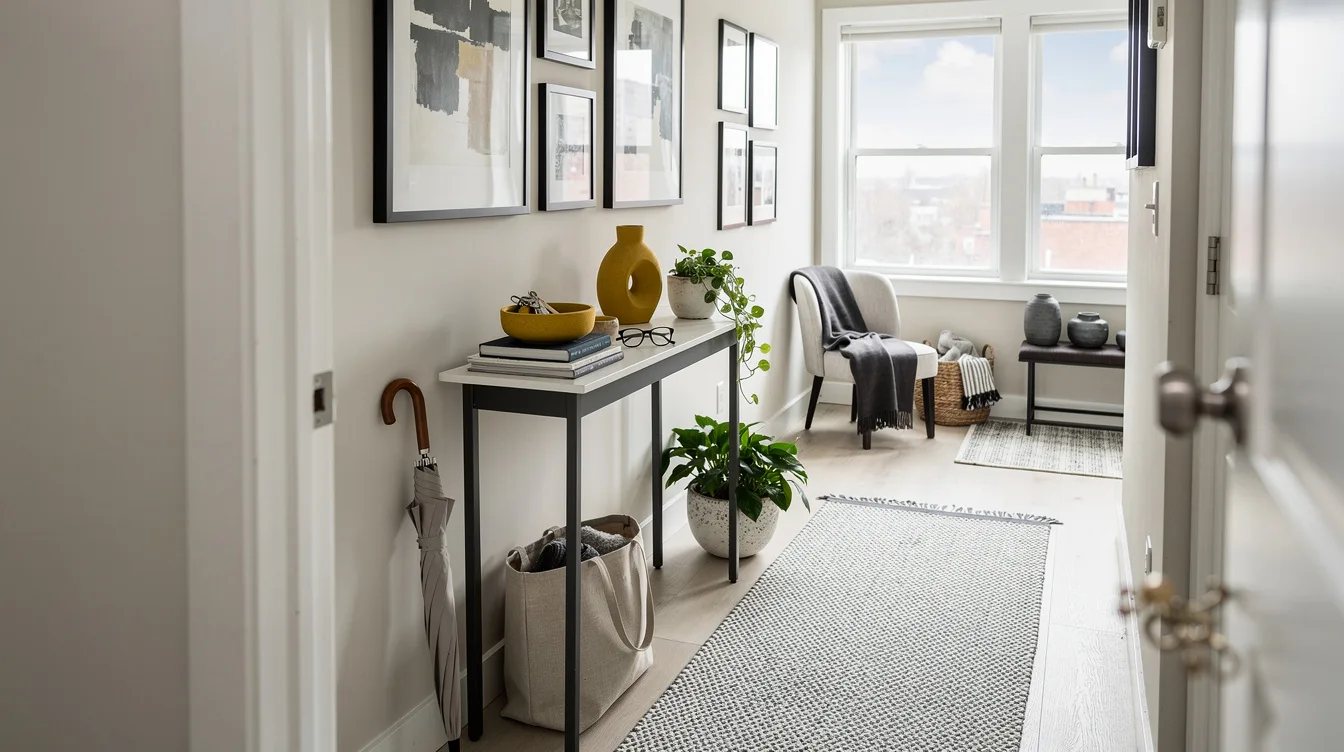
Keep the Frame Open Underneath
Choose an open-frame black metal console when you want the floor line to remain visible beneath the top. Two slim legs or a wall-secured frame give a narrow hall more visual breathing room than a solid cabinet with a deep front, and the open view makes sweeping easier.
This shape suits a typical hall about 35 to 43 inches wide, where a console around 8 to 10 inches deep can preserve roughly 31 to 36 inches of passage. Use an open lower shelf for one deliberate item, such as a flat box, and keep shoes and bags somewhere else.
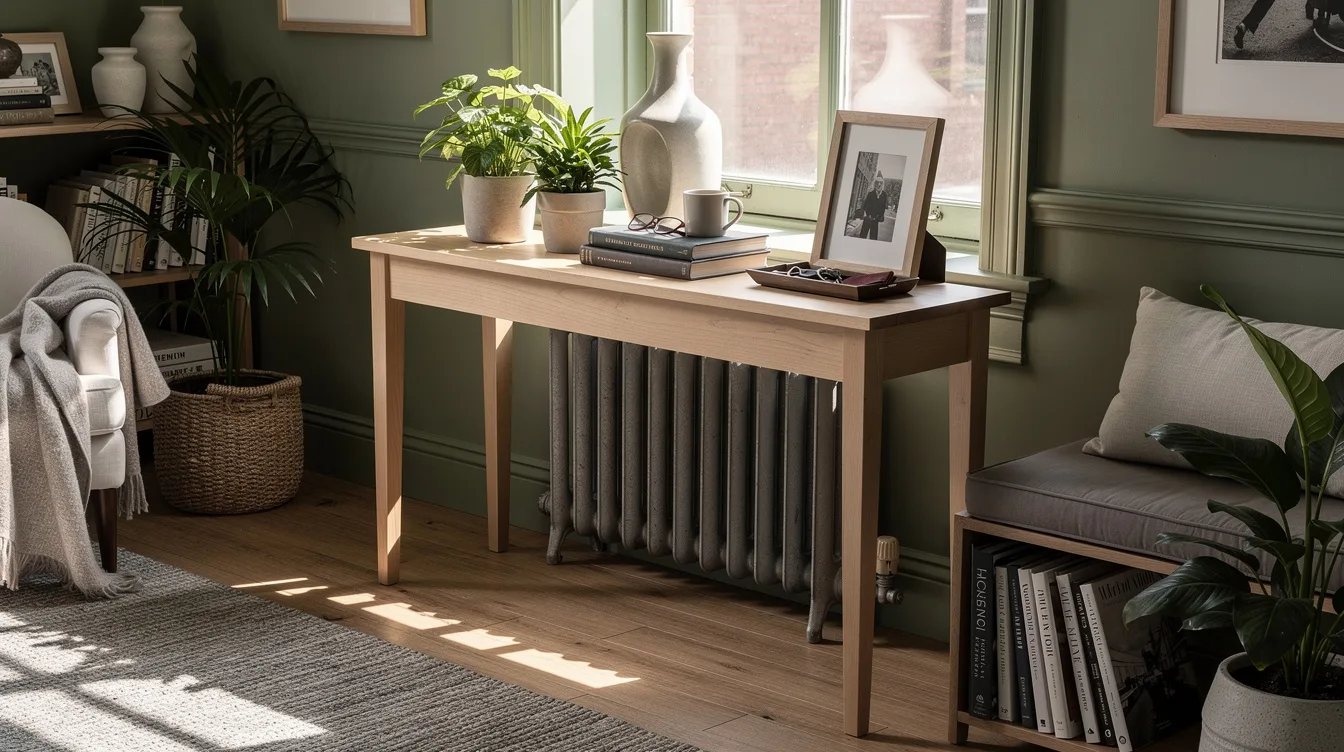
Build a One-Tray Landing Strip
Create a landing strip with a shallow brass tray placed nearest the door, leaving the center of the top available for a lamp or a small vase. Keys, a wallet, sunglasses, and mail should land inside its boundary instead of spreading across the surface, so the drop zone stays readable at a glance.
Choose a tray with a low rim and a footprint that fits inside a top around 8 to 10 inches deep without forcing objects toward the walkway. One defined catchall works harder than a cluster of tiny bowls, and it takes seconds to clear before guests arrive or groceries need a landing place.
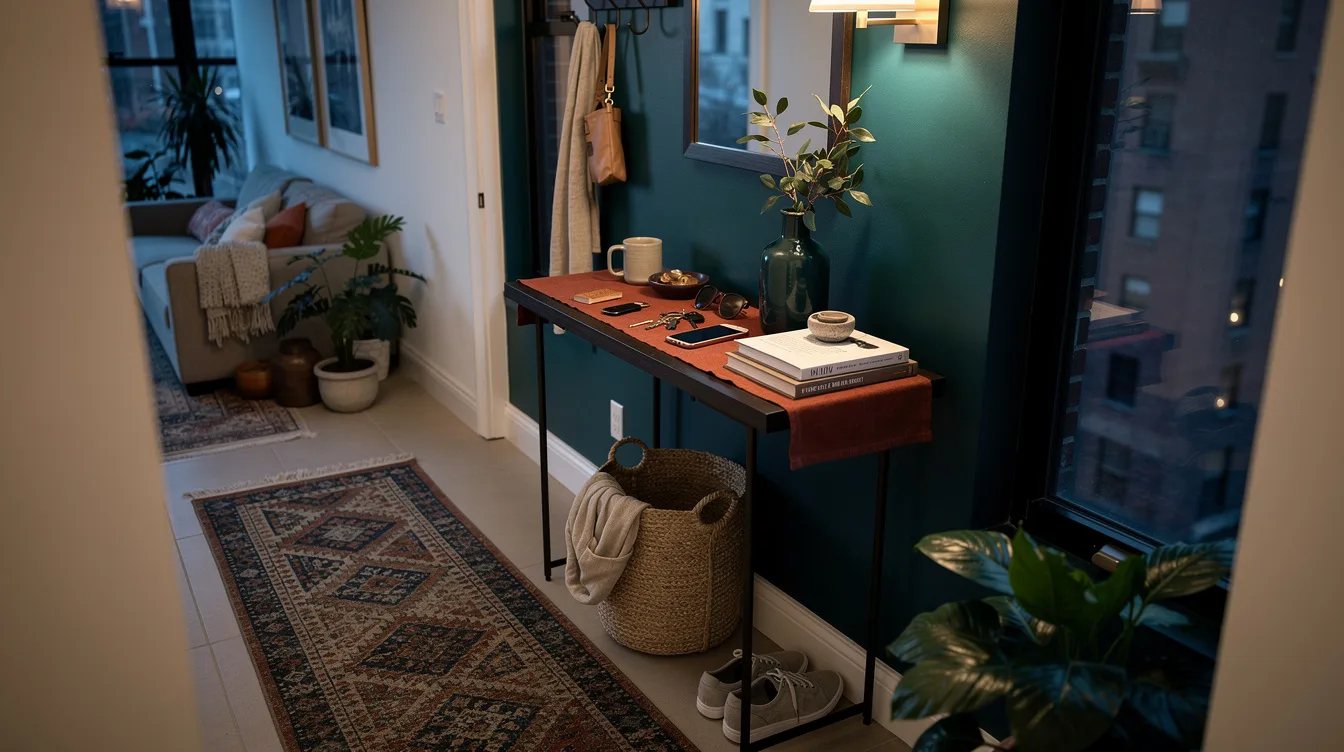
Anchor a Slim Lamp at One End
Place a slim ceramic table lamp at one end of the console, away from the handoff zone. A narrow base or rechargeable design keeps the surface useful and prevents a cord from becoming part of the walkway, while a warm bulb makes the entry easier to read at night.
Choose a lamp from Target or Amazon that stays within the tabletop footprint, with a shade that does not overhang the front edge. If the outlet sits far away, a rechargeable model is easier to live with than a long cable tucked beside passing feet, especially near a door.
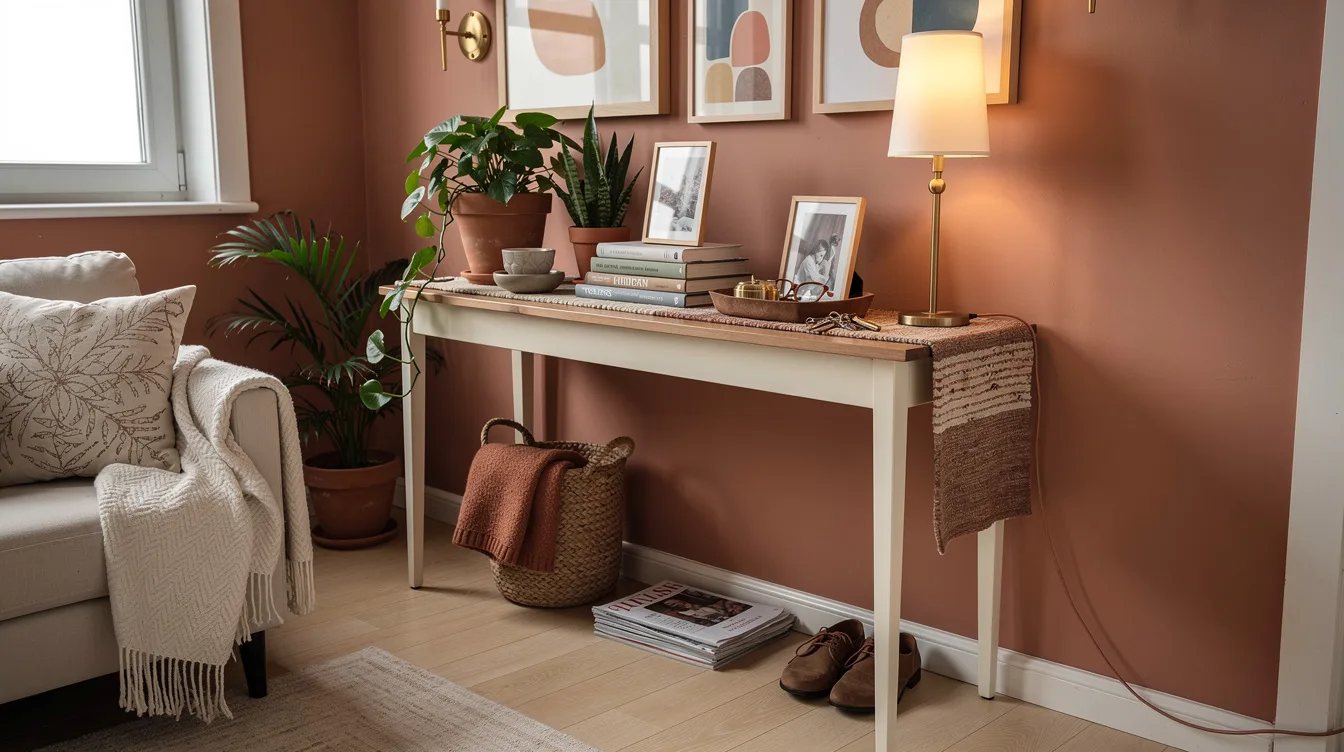
Use a Low Vase and Flexible Branches
Add a low ceramic vase with flexible branches beside the tray, keeping the arrangement below the mirror's visual center. The low profile protects sightlines and adds organic texture without pushing tall stems into the path, and a narrow neck keeps the tabletop from feeling crowded.
Let the vessel occupy about one-quarter of the tabletop, then leave working space around it for mail and keys. A taller branch bundle belongs in a wider foyer, around 43 to 49 inches across, where roughly 31 to 36 inches of passage can remain clear.
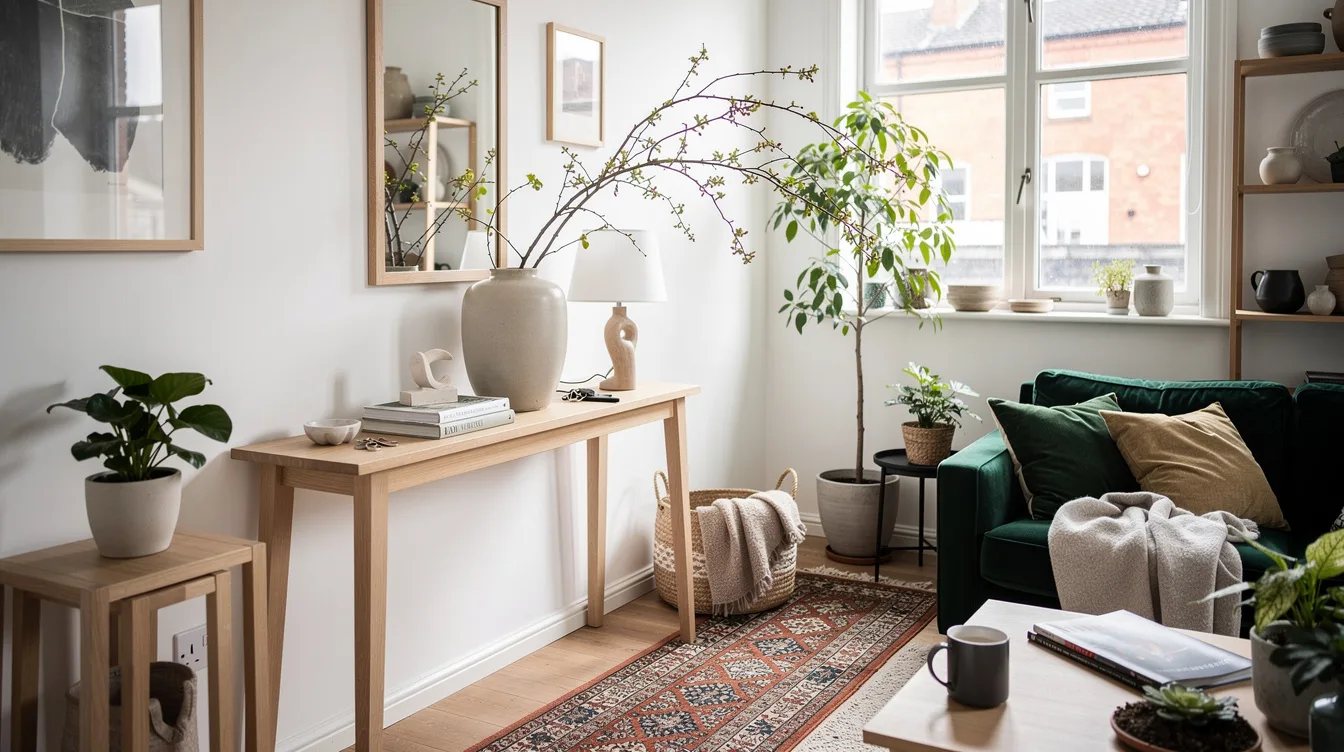
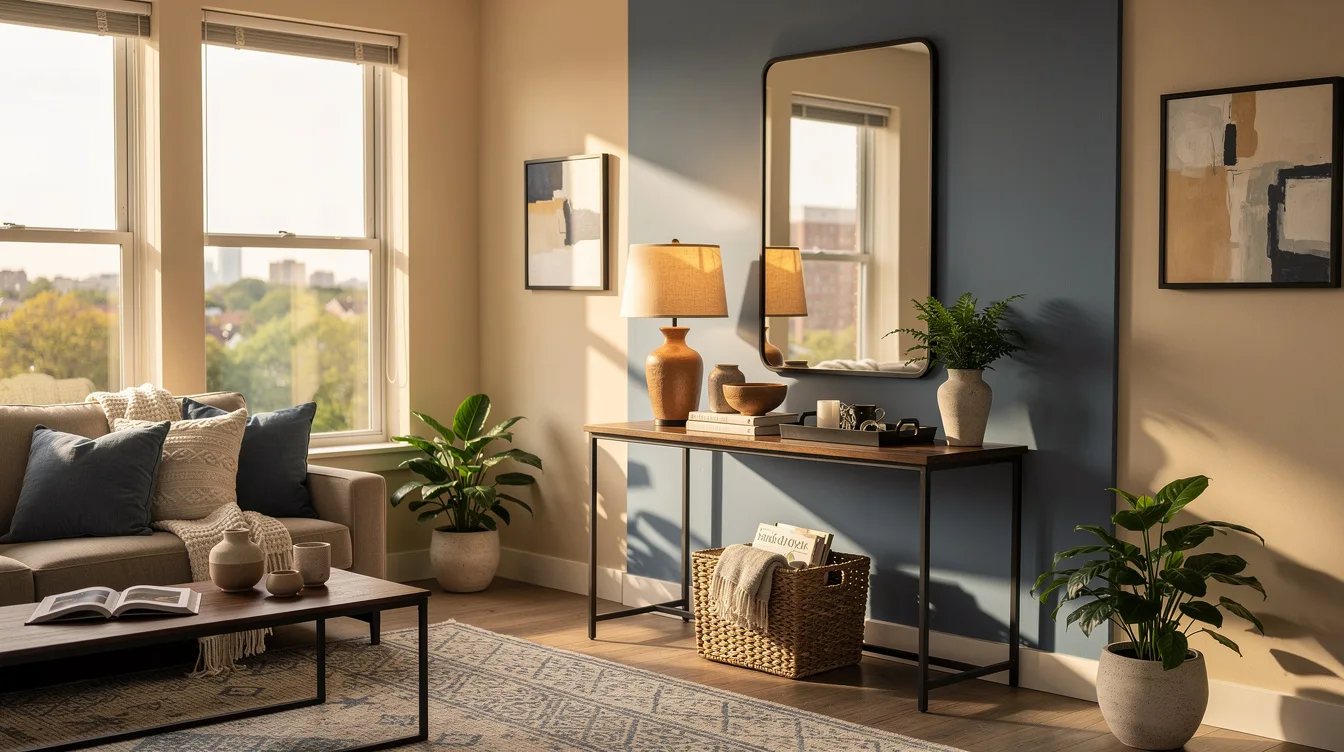
Hang a Mirror at the Right Width
Hang a wood-frame mirror above the console at about one-half to three-quarters of the furniture's width. That proportion creates a clear wall center and reflects light without making the frame dominate a narrow passage, especially when the console sits opposite a bright doorway.
For a console around 36 to 42 inches wide, a mirror roughly 18 to 31 inches wide usually feels balanced, depending on frame thickness and the surrounding wall. Check the reflection from the approach to the door, then leave enough vertical room for the lamp and vase to sit below it without bumping the frame.
Stack Narrow Art Instead of a Mirror
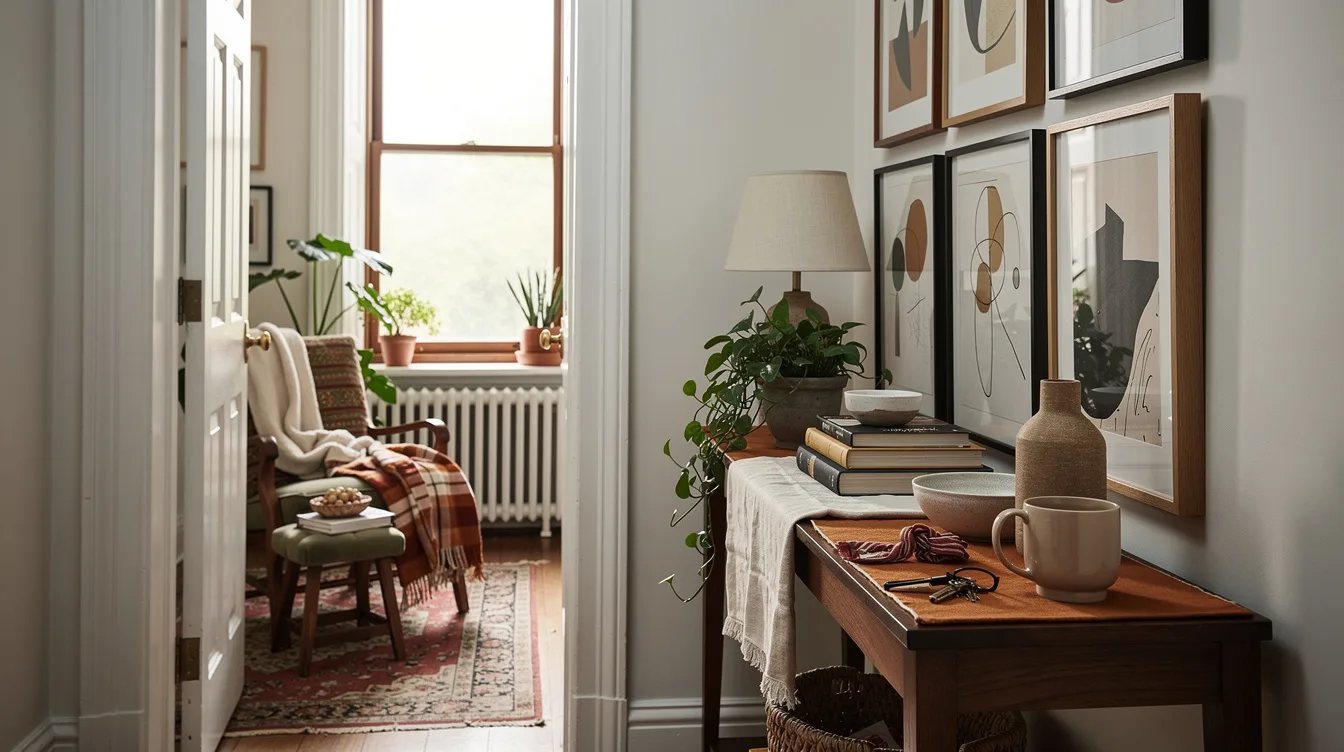
Stack a two-panel art print vertically when a mirror feels too active or when the opposite wall already carries enough reflection. Narrow frames keep the display close to the wall, while the stacked format adds height without widening the furniture, giving the eye somewhere to travel above a short top.
Choose a pair from Wayfair or Target that fits within the console's wall zone, then center the arrangement over the top. Skip deep frames, projecting ledges, oversized mats, and heavy brackets that can make the entry feel crowded from the side or interfere with a coat sleeve.
Move Lighting to the Wall
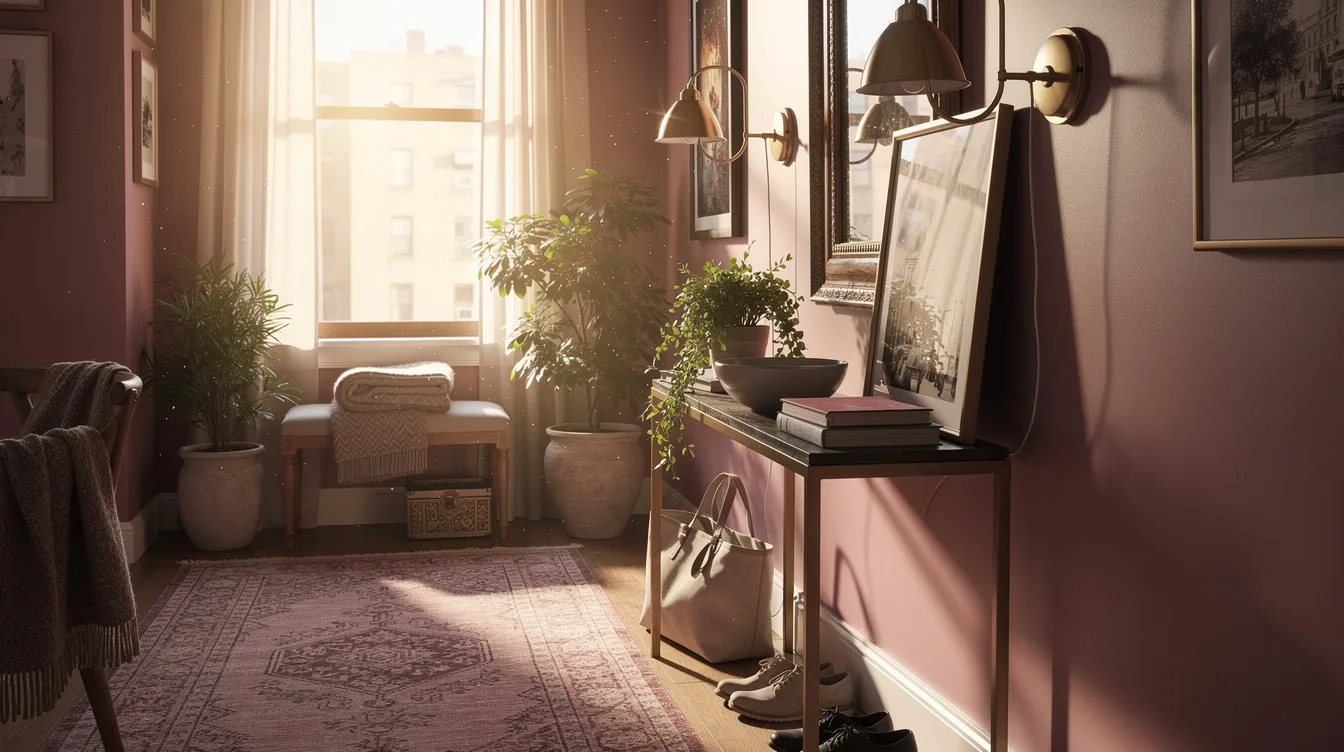
Move the light upward with a brass picture light mounted above the art or mirror. The wall-mounted fixture frees the tabletop for a useful tray and gives the arrangement a strong vertical finish, which matters when the console is shallow and the wall is tall.
Look for a compact fixture at Lowe's or Home Depot, and position it high enough to avoid head contact while keeping its depth tight to the wall. Route the cord neatly or use a wall outlet cover that matches the finish, because a loose cable can undo the calm of the whole display.
Store Soft Goods in One Low Basket
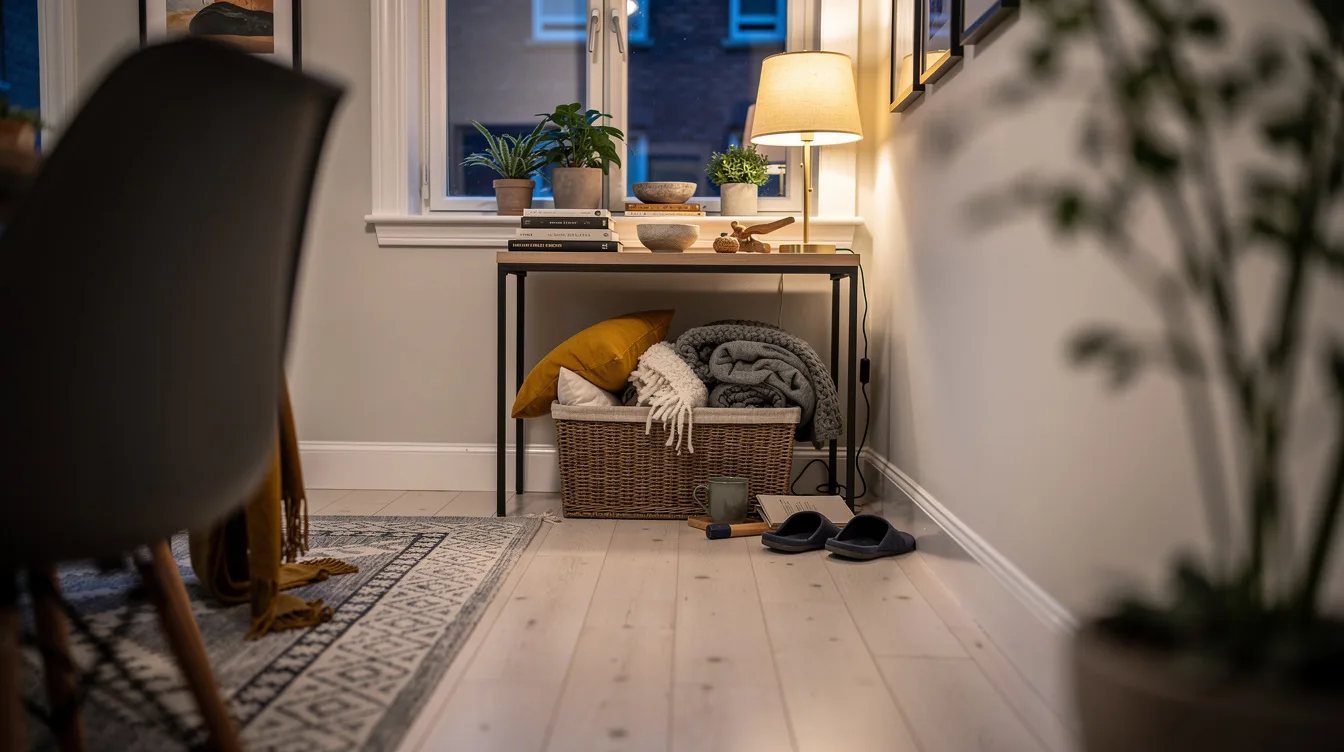
Use one low woven basket on an open lower shelf for scarves, dog leashes, reusable bags, or hats. A single container gives the shelf a job and keeps loose objects from migrating into the walking lane, while its texture softens a metal or wood frame.
Set the basket toward the wall, with its front edge inside the shelf, so a shoe or passing leg cannot catch it. Look at Walmart or Costco for a plain natural-fiber option, then choose a low profile that leaves the floor easy to sweep and the walkway easy to inspect.
Repeat One Material Across the Arrangement
Repeat light oak in the console, mirror frame, picture frame, or a small sculptural object, then keep the other finishes quiet. One material link makes the wall arrangement feel intentional without asking the narrow surface to carry more decoration, and the warm grain keeps the setup from looking overly hard.
Pair the wood with matte white wall paint and one dark metal accent for a simple visual route from floor to wall. Skip high-gloss lacquer, which catches every passing reflection and makes a tight hall look busier than its footprint suggests, particularly under bright overhead lighting.
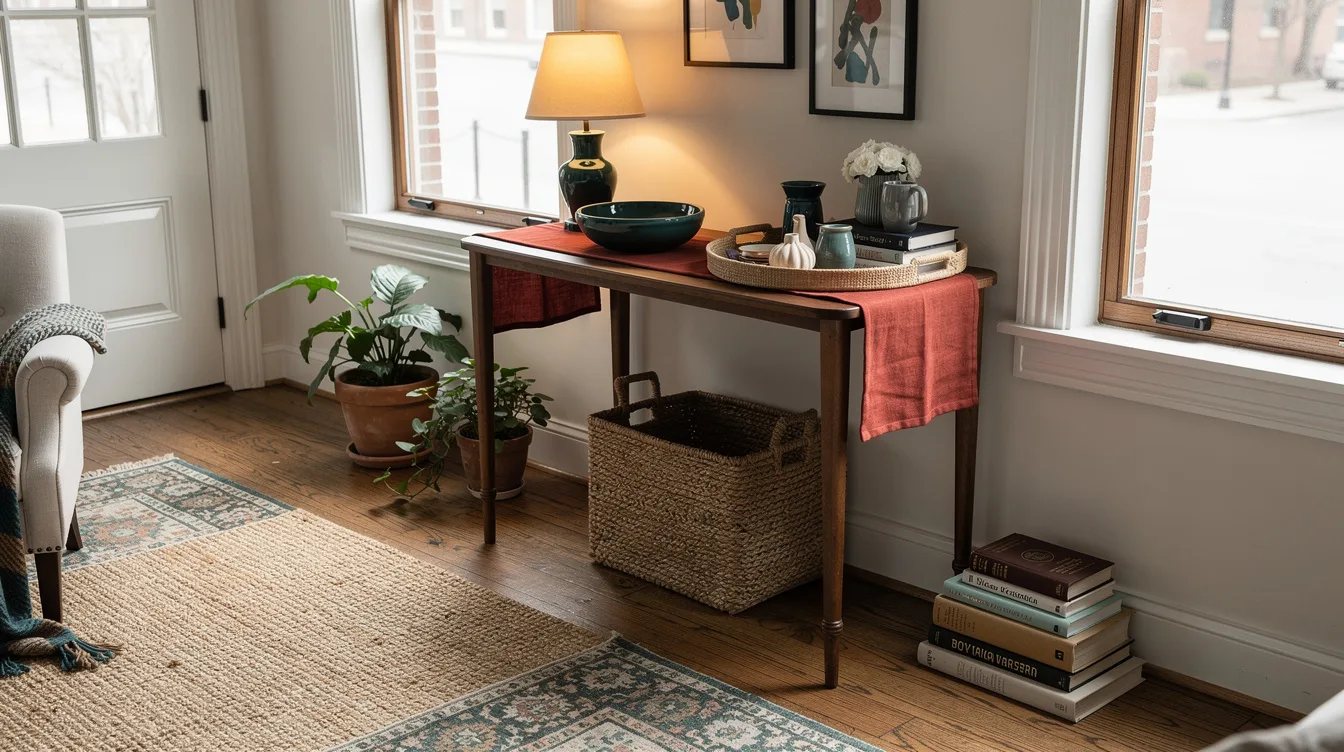
Round the Edges Near a Door Swing
Pick a rounded ash console when the furniture sits near a door swing or a busy turn. Softer corners reduce the chance of catching a bag or hip, and the pale grain keeps a shallow piece from reading as a heavy block, even when the wall finish is dark.
The full door swing still needs to clear the furniture, even when the console is only around 6 to 8 inches deep. Test the route with a laundry basket or coat bundle, since daily movement exposes protruding handles and corners that static measuring misses.
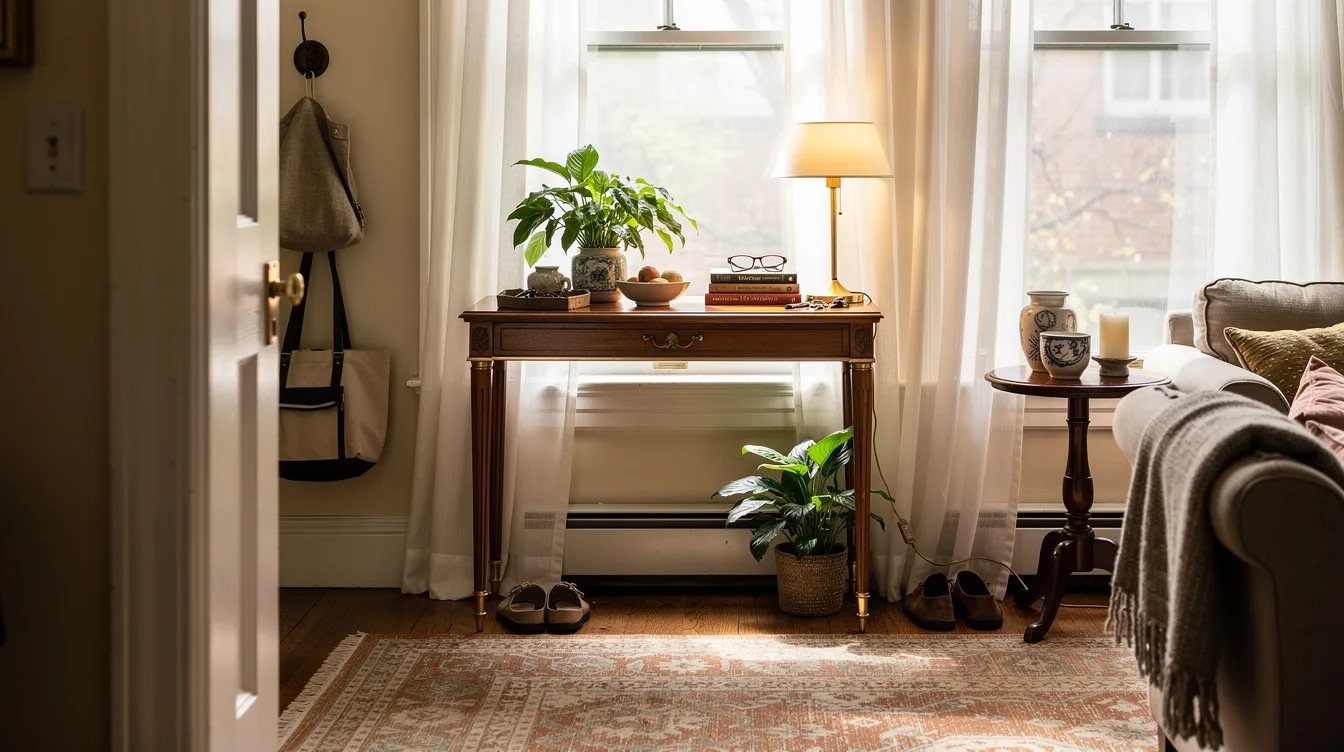
Keep a Clear Front Strip
Leave the front strip of the top open with a matte white wall console and keep decorative pieces close to the wall. That margin gives hands, packages, bags, and coats a safe landing zone without making the furniture look unfinished, and it makes dusting much faster.
Use the wall for color through paint or flat artwork, while the surface holds only objects that earn their place every day. On a console around 8 inches deep, a clear edge is more useful than another ornament, especially at the busiest part of the entry.
Scale Up Only in a Wider Foyer
Scale up only in a wider foyer with a slim walnut console that reaches along the wall instead of moving farther into the path. On a wall about 48 to 66 inches long, a longer top can look settled while a depth of roughly 10 to 14 inches remains manageable when doors and traffic stay clear.
An open lower shelf keeps the heavier version from reading like a sideboard, and the passage should still preserve roughly 31 to 36 inches of unobstructed space. For a living room or foyer, use the extra length for a lamp and mail tray, then stop before the arrangement becomes a second piece of furniture.
Start with tape, confirm roughly 31 to 36 inches of clear passage, and choose the shallowest console that still handles your daily drop zone. Once the walkway works with a full bag and every door open, add a vertical anchor and a useful surface piece, then stop before the wall display reaches toward traffic.