Open Floor Plan Feels Like Three Rooms? 14 Target Rug Fixes
15 september 2026Most open plans fall apart on the floor, not on the walls. We've restyled enough living-dining combinations to know the tell: a 9-by-12 wool rug under the sofa, a random 5-by-8 by the table, and suddenly one room reads as two apartments sharing a window.
Coordinated small rugs fix that for roughly $300 to $600 a set, and they do it without a single stud, permit, or sheet of drywall.
What you will find inside
- Lock In Two Colors and Repeat Them Across Every Zone
- Buy the Same Design in Two Different Sizes
- Give the Living Zone the Biggest Rug on the Floor
- Repeat the Fiber and Change the Shape Instead
- Let One Zone Carry the Pattern and Quiet the Rest
- Echo the Border When the Motifs Refuse to Agree
- Run a Narrow Runner Down the Walking Lane
- Line Every Rug Up on the Same Axis
- Catch the Front Legs of the Sofa and Side Chairs
- Add About 24 Inches of Rug Around the Dining Table
- Leave a Ribbon of Bare Floor Between Zones
- Break the Grid With One Round Rug at the Nook
- Keep the Pile Heights Within Reach of Each Other
- Layer a Small Wool Rug Over Jute to Link Two Zones
Lock In Two Colors and Repeat Them Across Every Zone
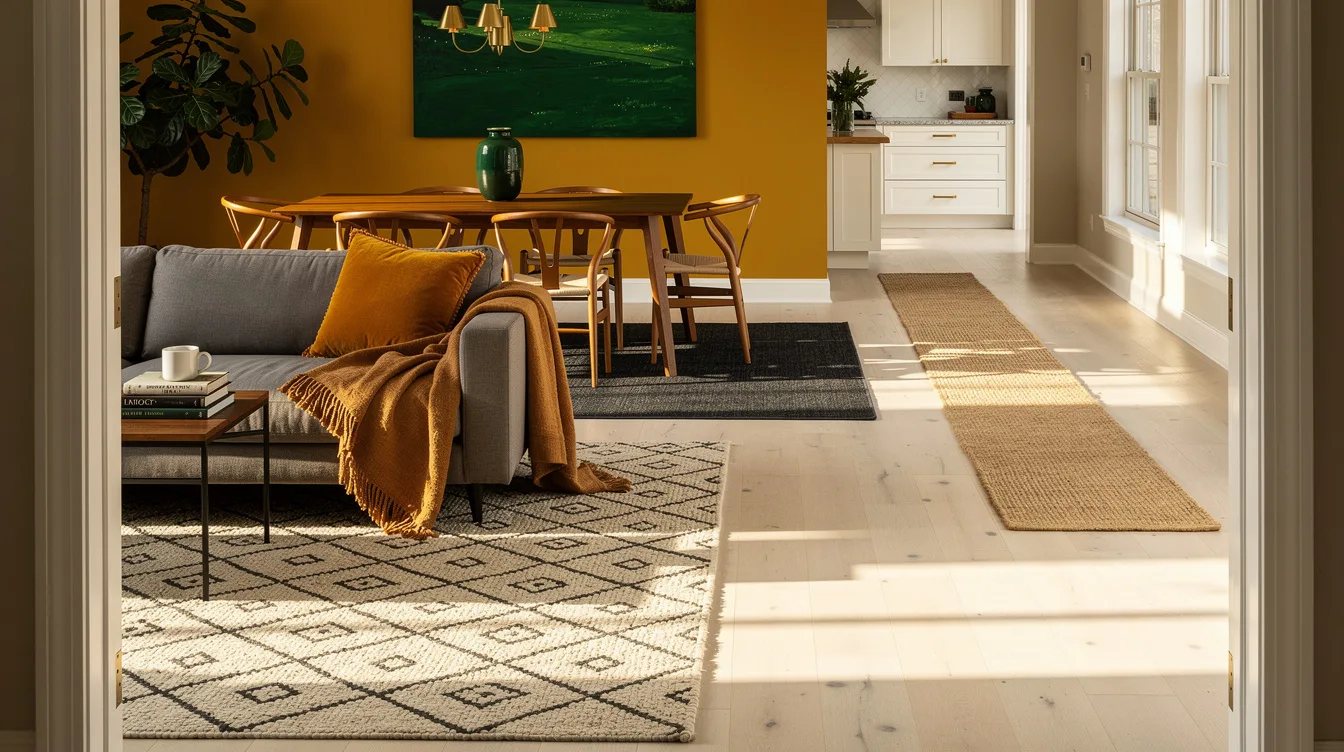
Choose two colors before you shop anything, then refuse every rug that doesn't carry at least one of them. Cream and charcoal is the pair we reach for most, because it survives a gray sofa and whatever flooring the builder already picked.
The living rug can run geometric while the dining rug stays solid, and your eye still connects the two across the room in about a second. A rug that arrives with a third dominant color snaps that connection, so leave it on the shelf even at a clearance price.
Buy the Same Design in Two Different Sizes
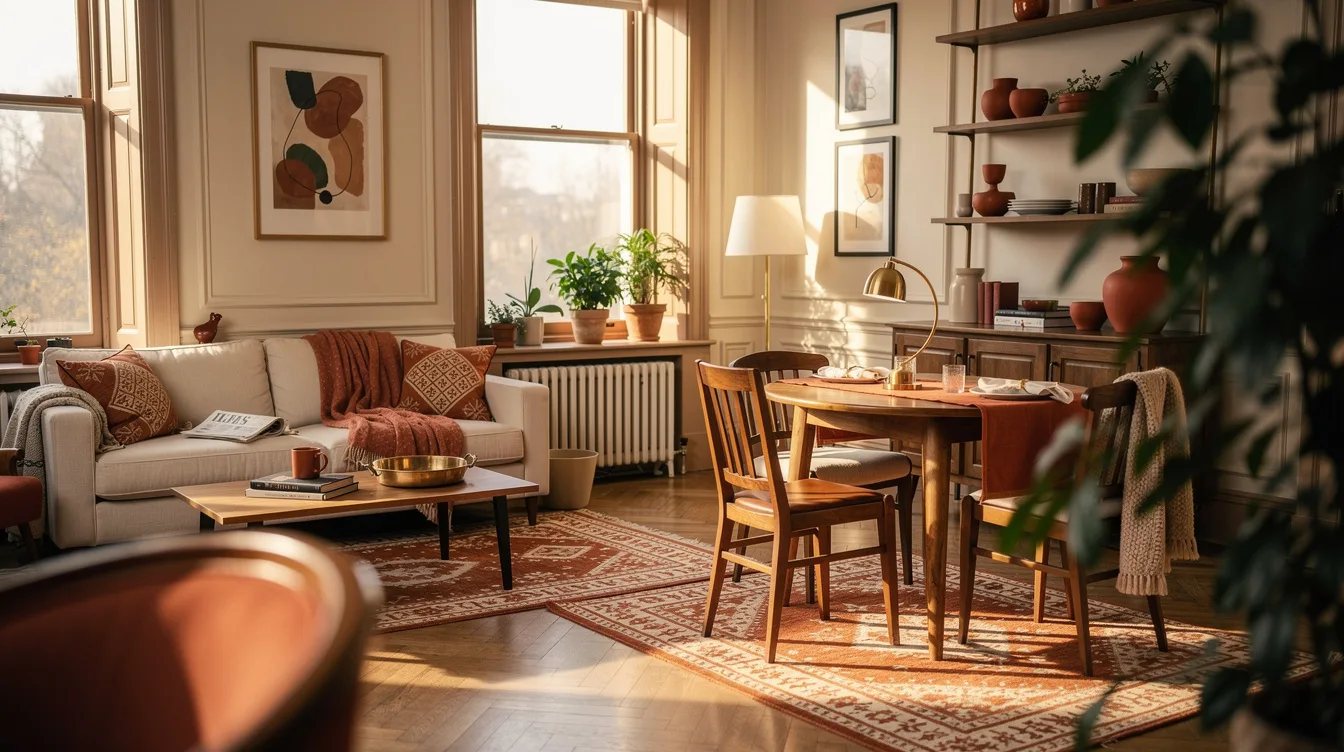
The safest version of this is one collection in two sizes: an 8-by-10 under the seating group and a 5-by-8 under the table. Wayfair and Amazon both let you filter a single design by size, which is the only filter worth using here.
Expect to pay roughly $200 to $350 for the larger wool flatweave and around half that for the small one, and order both at once so the dye lots agree. This approach works in simple, symmetrical rooms; in a long galley-shaped plan, identical rugs start to look like a furniture showroom.
Give the Living Zone the Biggest Rug on the Floor
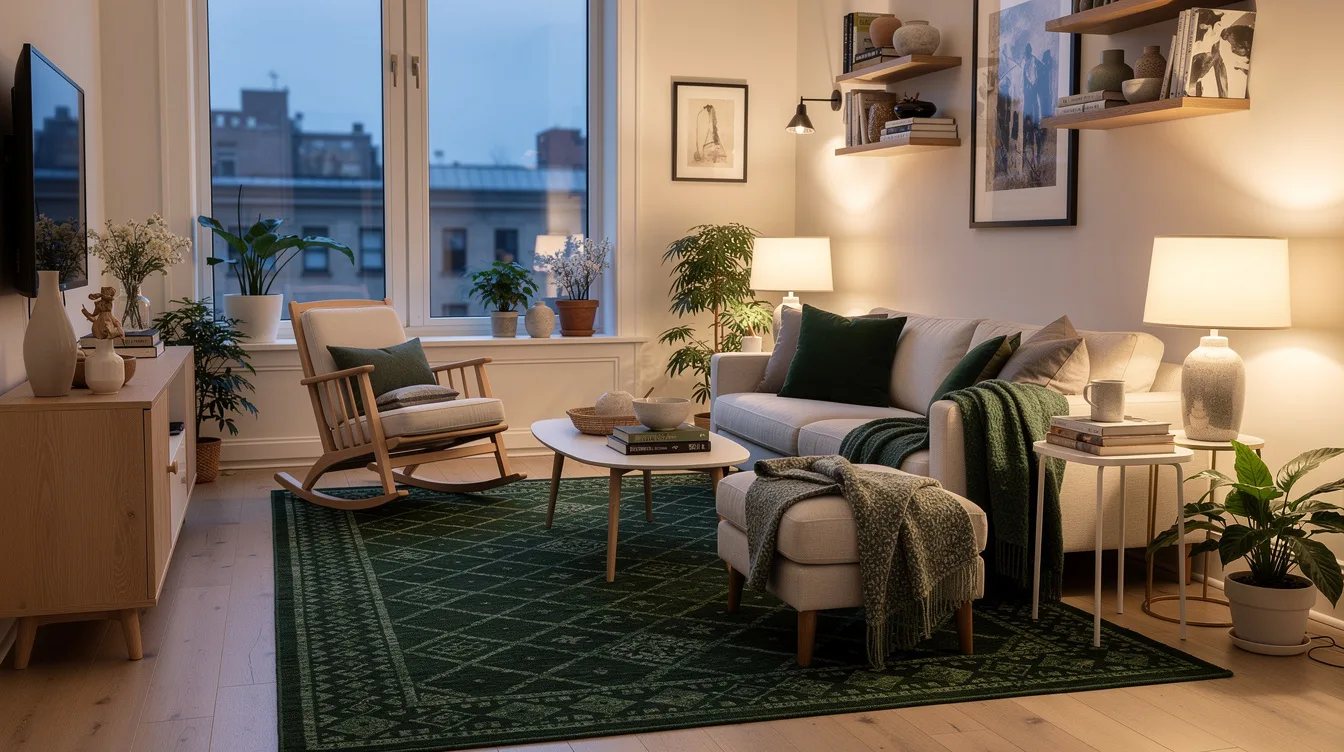
Hierarchy keeps a coordinated set from reading as three equal squares of beige. The living area takes the largest rug, typically 9 by 12 feet in a wide plan and 8 by 10 in a normal one, with dining dropping to a 6-by-9.
Then the small stuff. A runner at the entry. A round at the reading chair.
Skip the instinct to buy three rugs of the same footprint, because equal sizes flatten an open plan into a grid with no center and nothing to look at first.
Repeat the Fiber and Change the Shape Instead
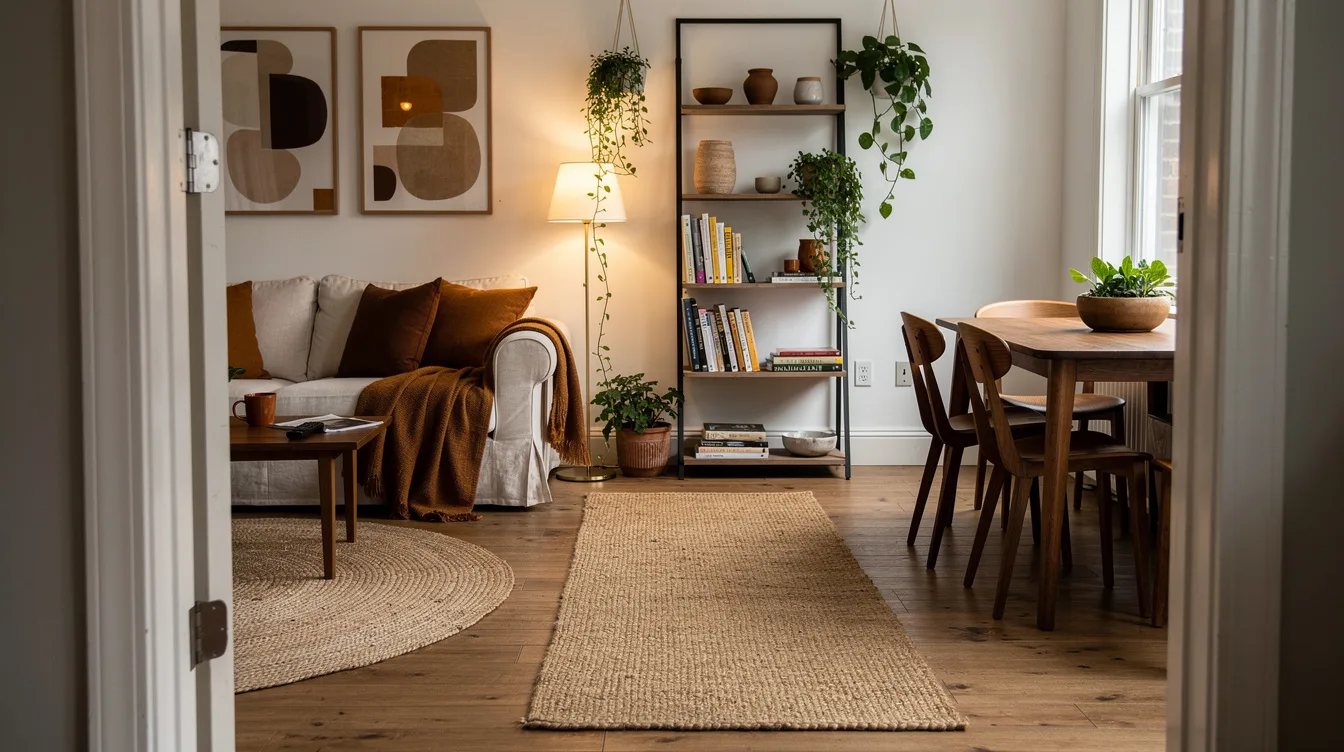
When color gets complicated, repeat the material and stop worrying about the rest. Jute does this better than anything else: a big rectangle under the sofa, a narrow runner in the passage, a small round beside the chair.
IKEA's LOHALS flatweave runs about $99 in the 5-foot-3 by 7-foot-7, which puts a three-piece jute floor within reach of almost any budget. The shapes change, the texture holds steady, and the room reads as one continuous idea, though jute is rough enough underfoot that we keep it out of any zone where people actually sit on the floor.
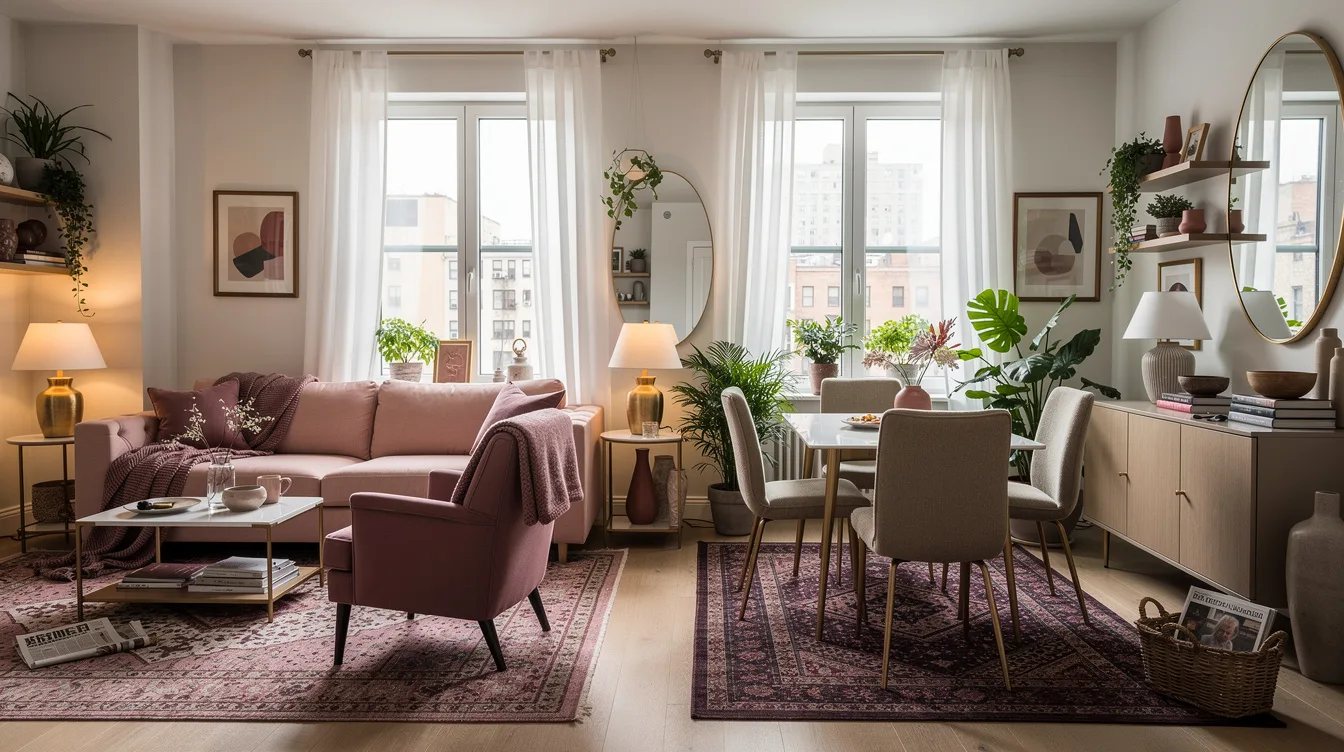
Let One Zone Carry the Pattern and Quiet the Rest
Two loud rugs placed next to each other fight, and the room loses. Give the pattern to one principal zone, almost always the living area, and let the neighboring rug go solid or tonal in one of its background colors.
A Persian-style polypropylene rug from Target's Threshold line typically costs $120 to $180 in a 7-by-10 and holds the lead role without any wool money. This is the single rule that rescues most of the open plans we get called into, and it costs nothing to follow.
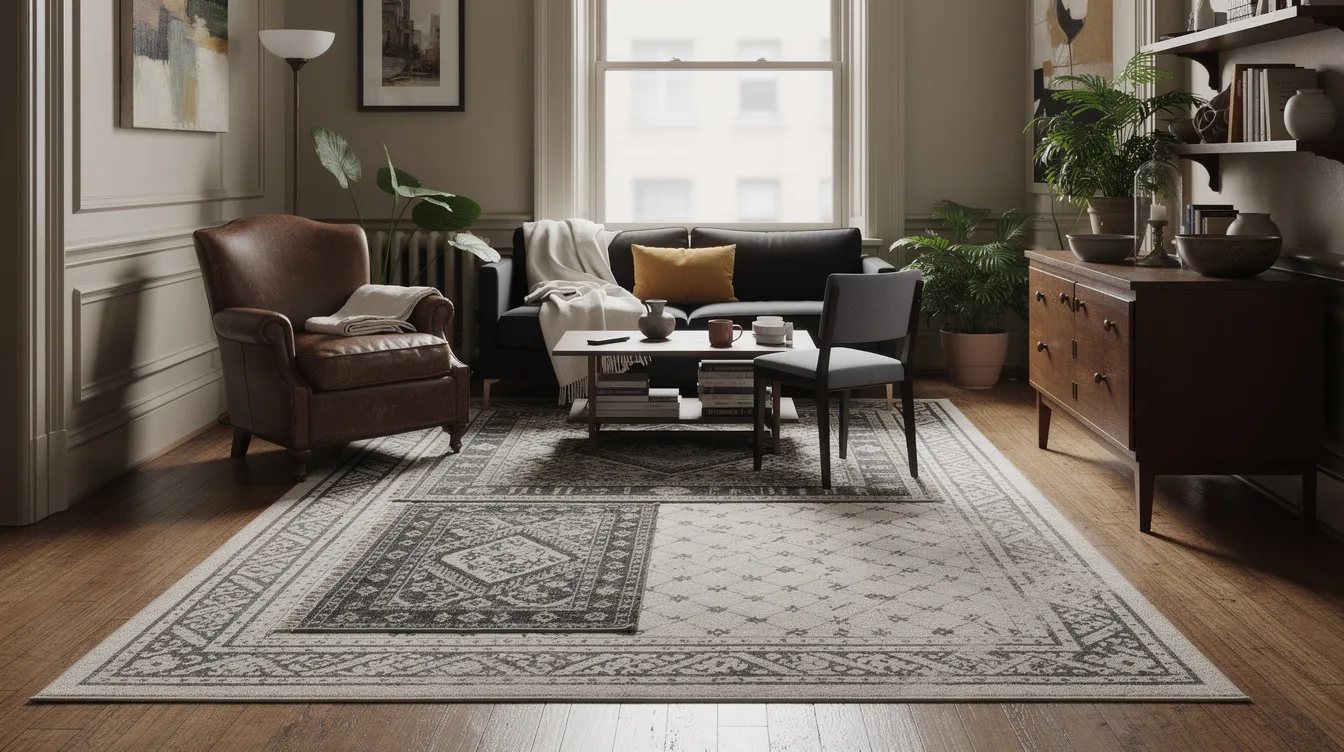
Echo the Border When the Motifs Refuse to Agree
Borders are the underrated connector in a big room. A black tape border on natural sisal, repeated on a wool flatweave two zones away, links rugs that share no pattern at all.
Home Depot and Lowe's both carry bound sisal, and having a cut piece bound typically runs about $3 to $6 per linear foot, which is cheap for something this quiet from across the room and this obvious once you spot it. Pick one border color for the whole floor, because a different trim on each rug undoes the effect you just paid for.
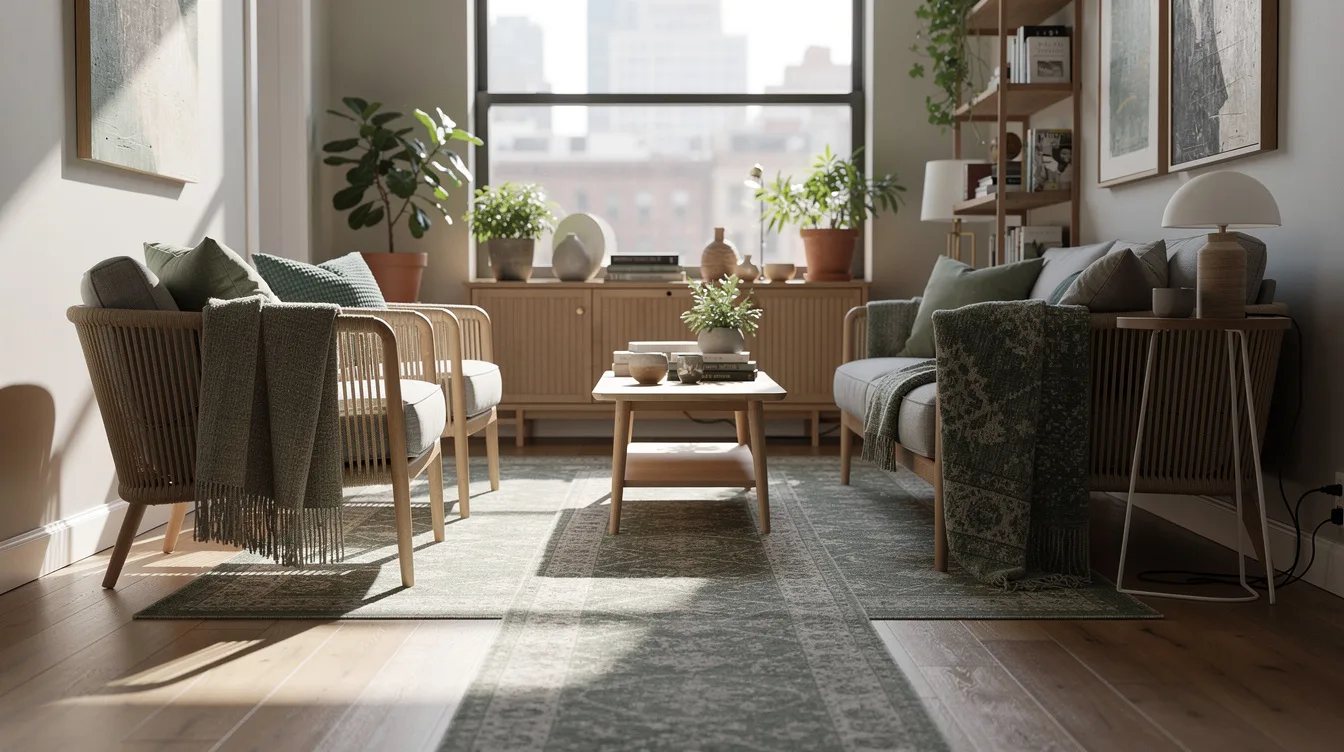
Run a Narrow Runner Down the Walking Lane
Every open plan has an invisible path, usually from the entry past the kitchen island to the sofa. Laying a runner along it makes the route legible and keeps people from cutting a corner through the dining zone.
A 2-foot-6 by 8-foot runner in your main rug's fiber typically runs $60 to $130 in washable cotton, and Amazon carries most of the big sellers in coordinating larger sizes. Leave a few inches of bare floor on each side so the runner reads as a path instead of failed wall-to-wall carpet.
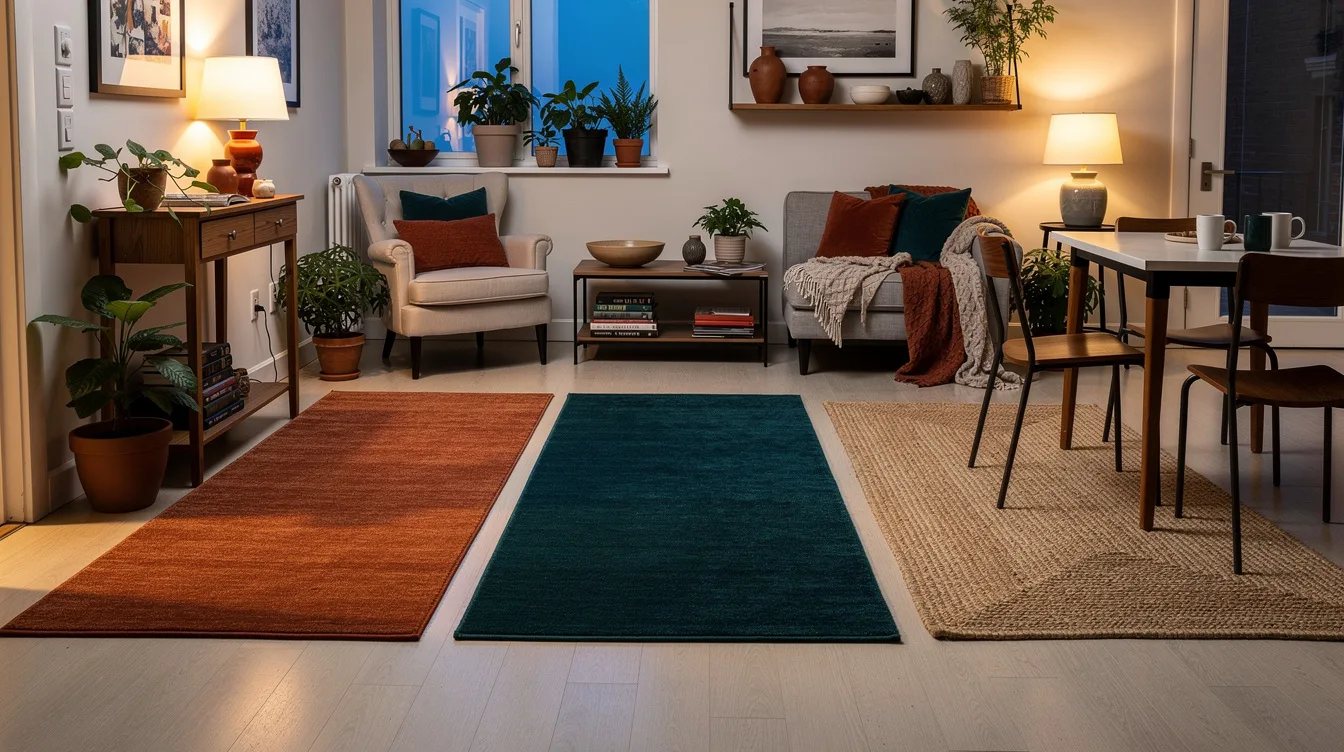
Line Every Rug Up on the Same Axis
Rotate one rug a few degrees off and the entire floor looks accidental. Square every rug to the same reference line, usually the direction of the white oak floorboards or the longest uninterrupted wall, and hold that line for the dining rug too, even when the table wants to sit at an angle.
Runners are the exception worth knowing, since one set perpendicular to the main rug can mark a turn in the path on purpose. Check the alignment standing in the entry rather than from the sofa, because the entry view is the one every guest gets first.
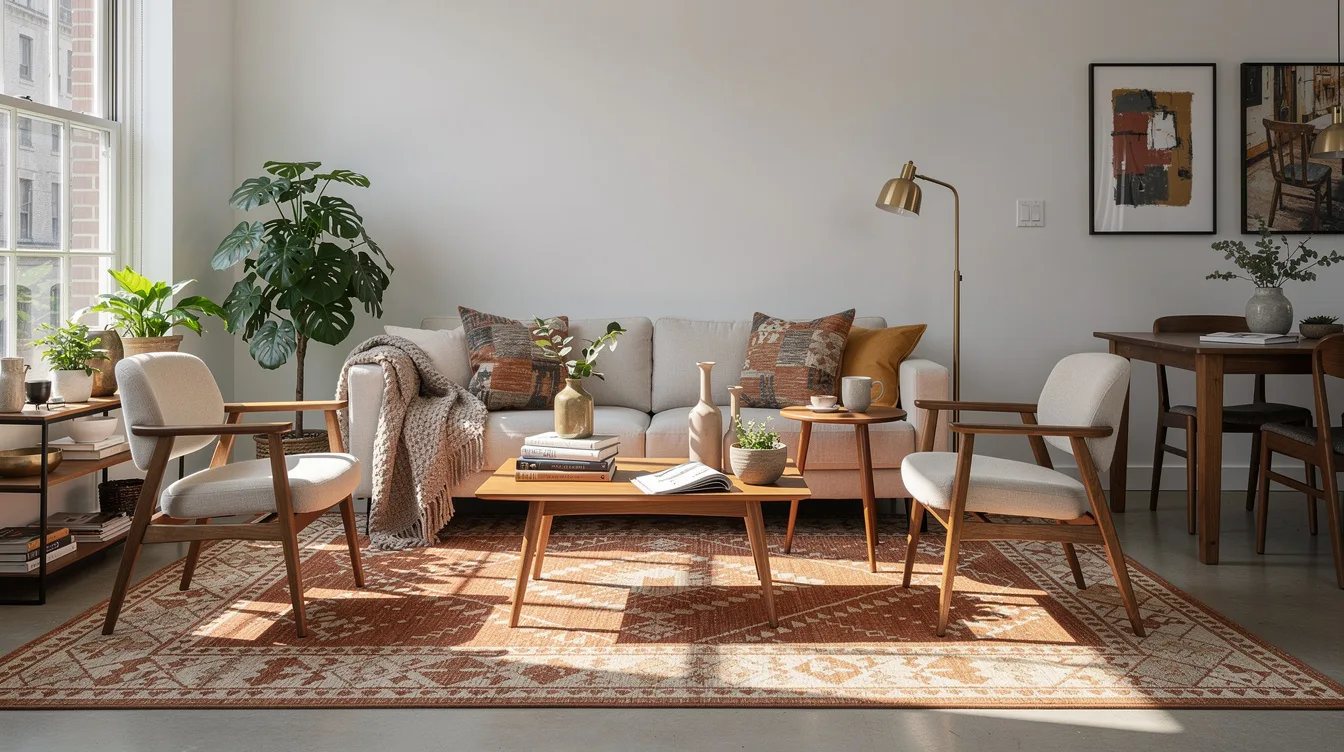
Catch the Front Legs of the Sofa and Side Chairs
A small rug floating under nothing but the coffee table is what fragments an open plan in the first place. The front legs of the sofa and both accent chairs should sit on the rug, which usually means going one size up from whatever looked right on screen.
In practice that's an 8-by-10 for a standard 84-inch sofa plus two chairs, and a 6-by-9 only when the seating is pushed tight against a wall. Measure the whole seating group, then add about 12 inches on each side before you buy anything.
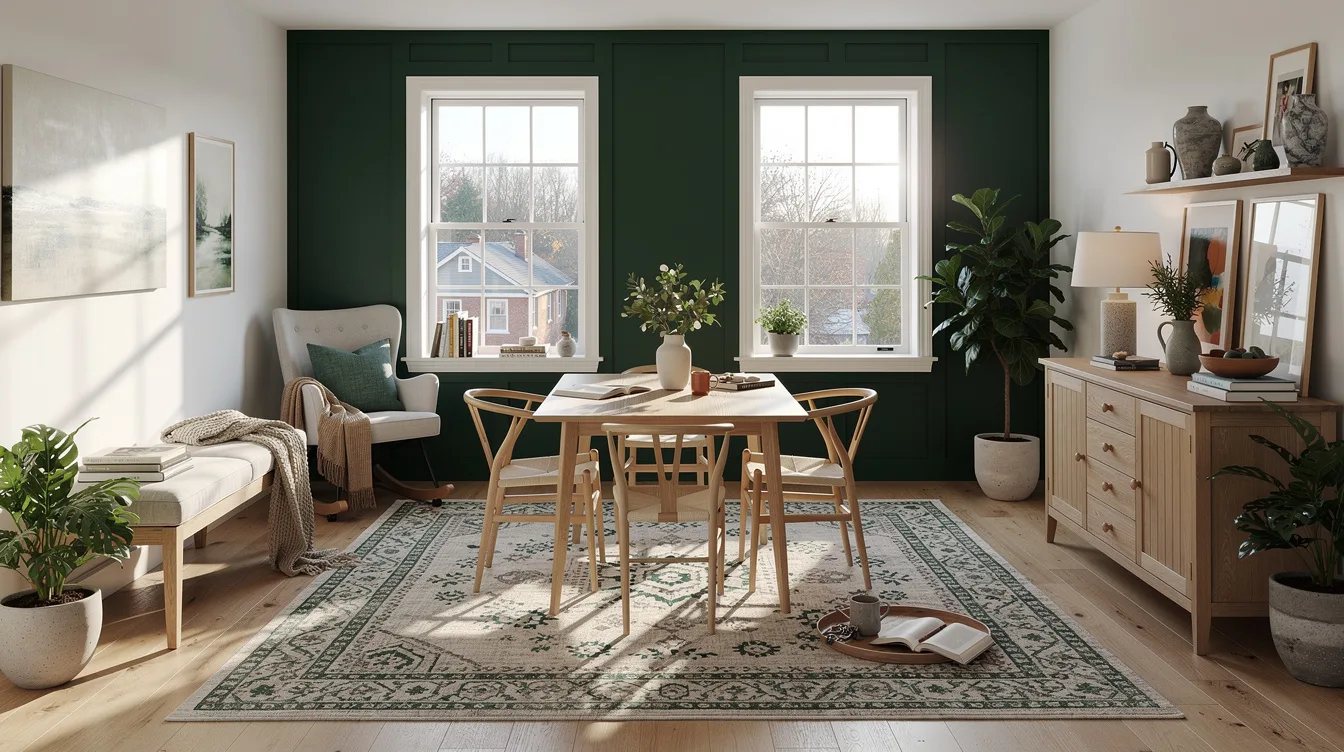
Add About 24 Inches of Rug Around the Dining Table
Dining rugs get sized to the chairs, never to the table. Plan on roughly 24 to 30 inches of rug past every table edge so the back legs stay on the surface when someone pushes away from dinner.
For a typical 6-foot rectangular table, that lands you on an 8-by-10, which explains why so many dining rugs look undersized in real rooms. Low-pile wool or a flatweave is the only sane construction here, and Costco carries washable versions in this size for around $130 to $200 when they're in stock.
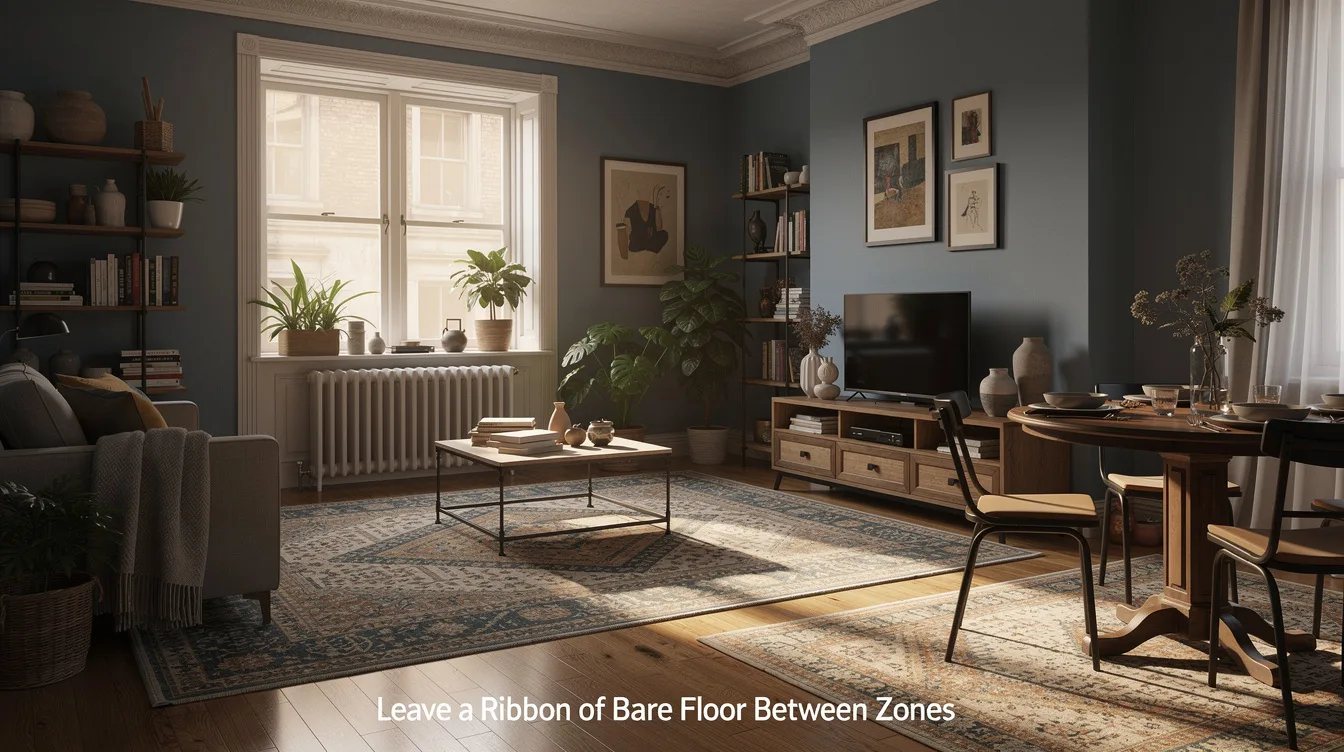
Leave a Ribbon of Bare Floor Between Zones
Rugs that nearly touch look like a failed attempt at wall-to-wall carpet. Leave about 12 to 18 inches of visible floor between zones so each rug keeps a clean edge of its own.
That ribbon of bare polished concrete or wood is what makes the zones read as deliberate instead of underfunded, and in tight plans it can shrink to roughly 8 inches without hurting anything. If the gap still looks awkward, the rugs are the wrong sizes, and sliding them around the room won't fix it.
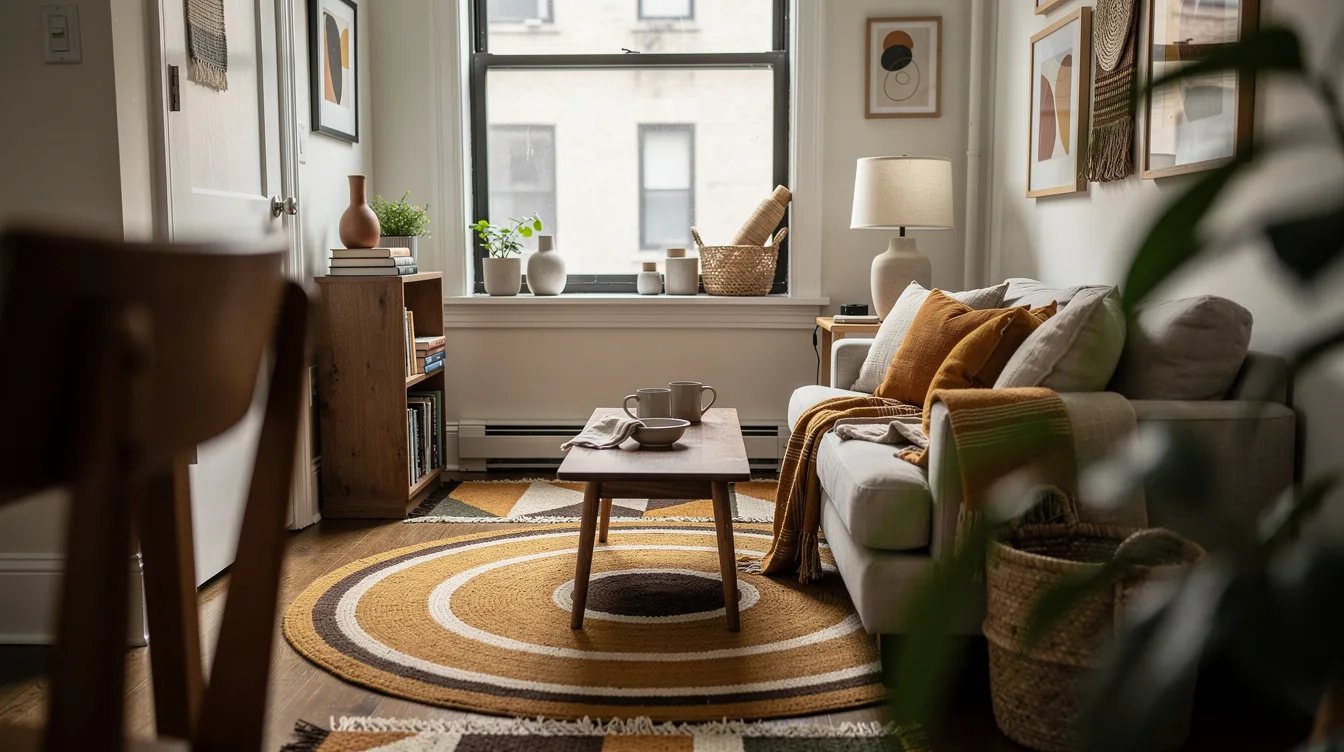
Break the Grid With One Round Rug at the Nook
Rectangles everywhere gets monotonous fast. One round rug, typically 5 or 6 feet across, marks a reading chair or a corner desk and gives your eye somewhere to land between the two big zones.
Keep it in the family: a wool and jute blend round next to a jute rectangle changes the shape while holding the texture steady, and IKEA and Walmart both sell 5-foot rounds in the $50 to $120 range. One round per open plan is the ceiling, since two of them start reading as polka dots.
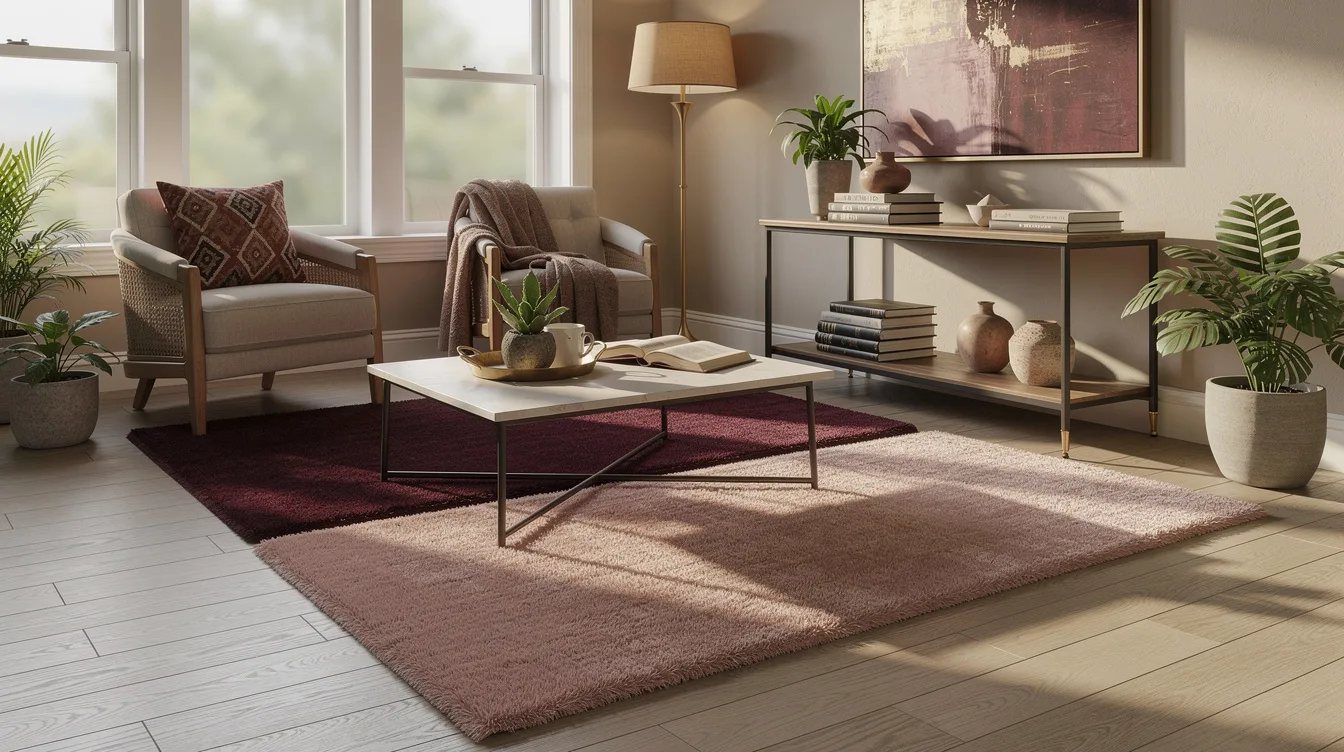
Keep the Pile Heights Within Reach of Each Other
Texture connects a floor faster than color does, and it disconnects one just as fast. A shag in the living zone beside a paper-thin flatweave at the table reads as two different homes sharing a wall.
Stay within roughly a half inch of pile height across the set, or repeat the construction itself: hand-loomed with hand-loomed, machine-woven with machine-woven. A quarter-inch wool flatweave is the safest common ground in an open plan because it survives chair legs and still feels decent barefoot.
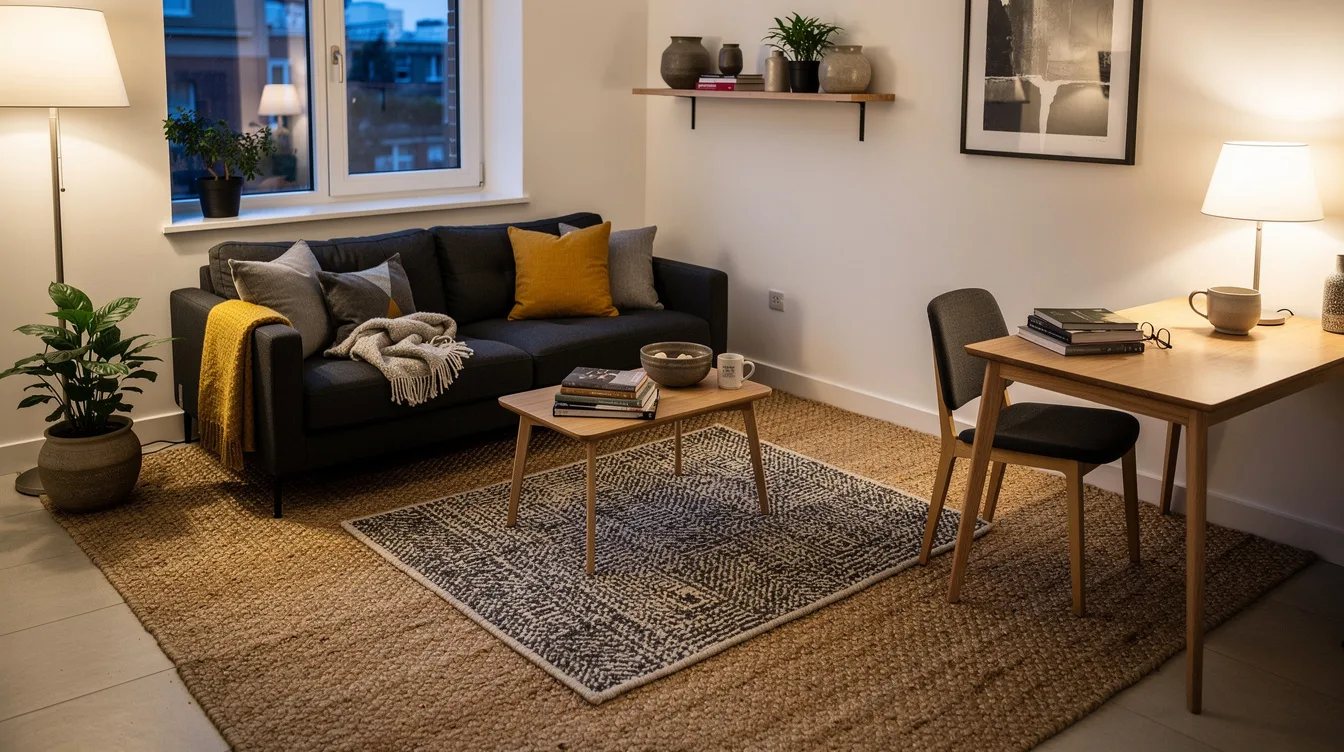
Layer a Small Wool Rug Over Jute to Link Two Zones
Layering solves the case where you already own a rug that's too small to do any real work. Put a large natural jute base down first, then center the small wool or vintage-style piece on top of it.
The jute carries the connection across the room while the smaller rug handles the decorating, and an 8-by-10 jute base typically costs $150 to $250 at Wayfair or Home Depot. Do this in one zone only, because layered rugs everywhere looks like a staging job, and rug tape from Ace Hardware at about $8 a roll keeps the top piece from curling.
Keep reading
- 13 Small-Space Color Palettes That Make Rooms Feel More Open
- 12 Target Color Palette Ideas That Make Small Rooms Feel Larger
- 12 Open Shelving Mistakes Making Your Small Kitchen Feel Cluttered
Write down your two colors before you open a single shopping tab, then let the sizes sort the zones out: biggest rug for the sofa, medium for the table, runner or round for everything left over. Done in that order, a coordinated set typically lands under $600 and does more for an open plan than any wall you could have built.