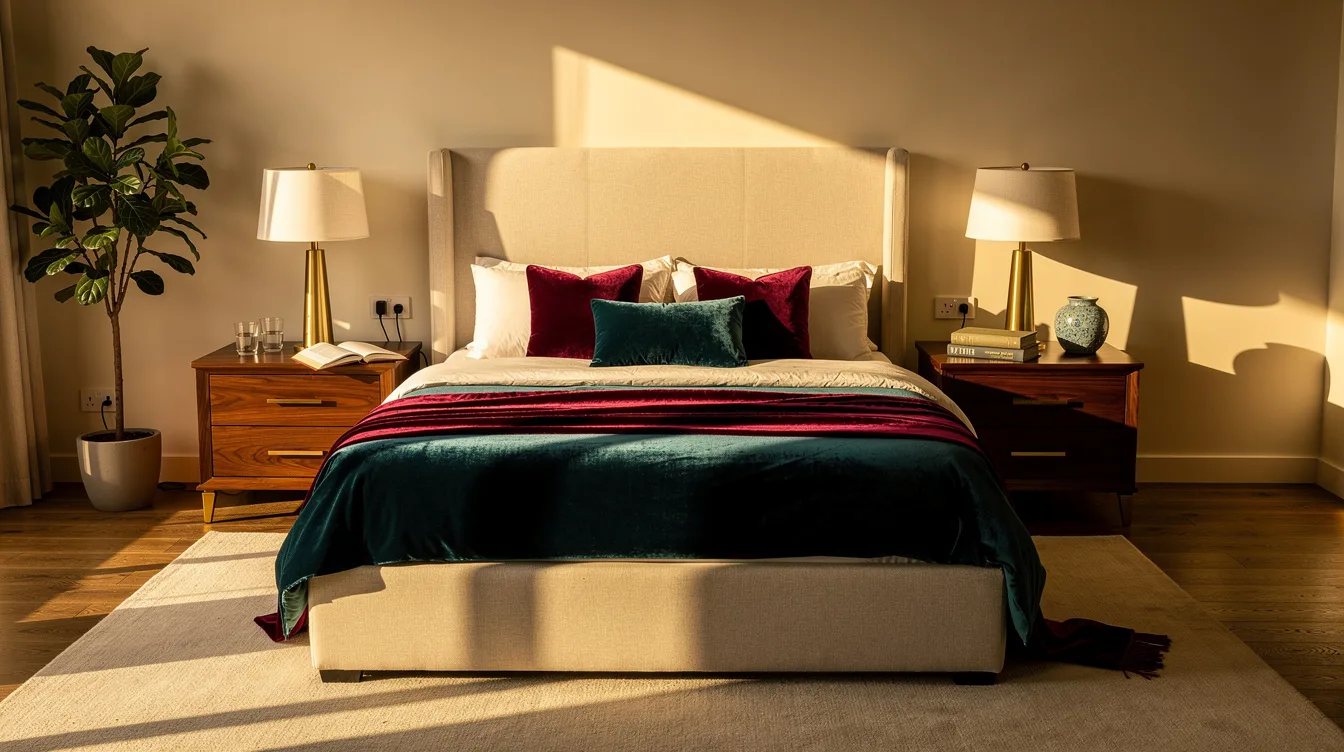
12 Hotel-Style Nightstand Rules That Make a Bedroom Feel Finished
07 september 2026A 60-inch queen bed can look oddly temporary when it is flanked by two tiny tables, even when the bedding is expensive. The hotel answer is architectural: give each sleeper a real landing zone and make both sides of the bed feel deliberately resolved.
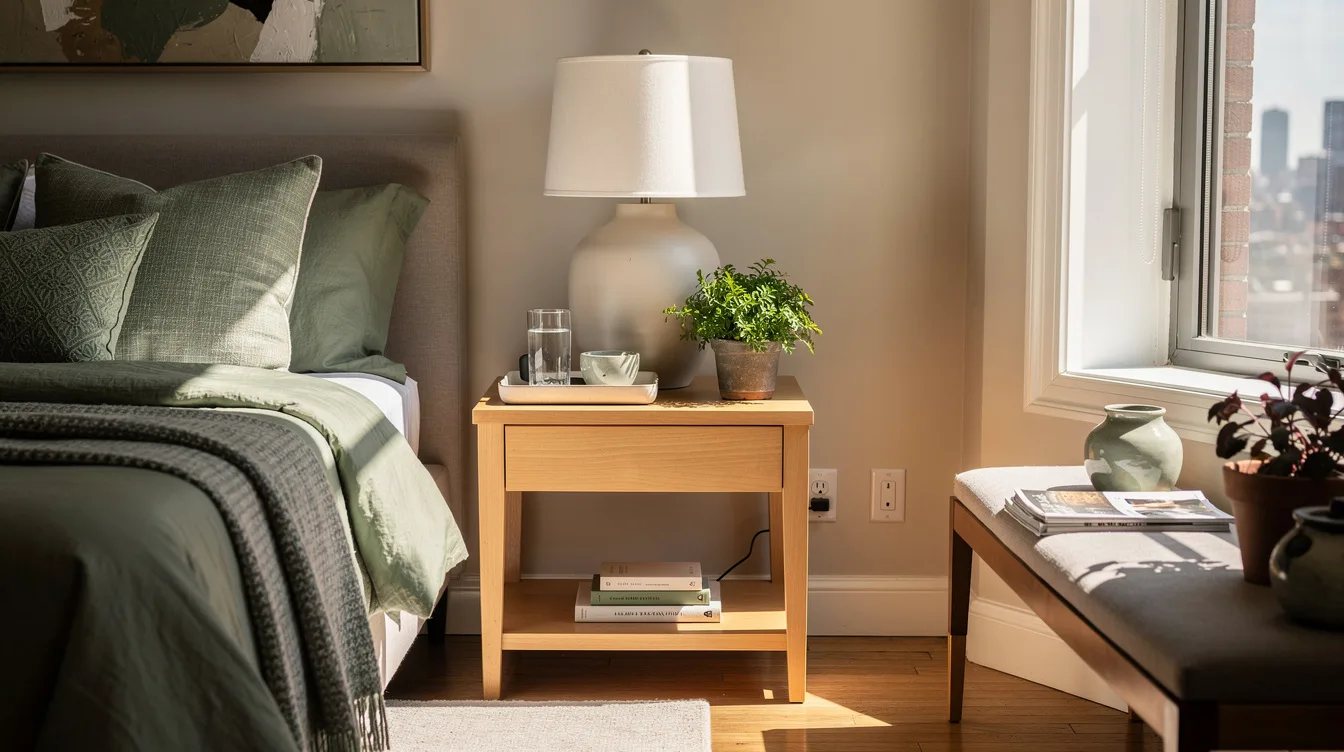
Start by treating nightstands as part of the bed wall, not leftover furniture tucked into a gap. A lamp, water glass, phone, reading material, and concealed charging should all have a place.
What you will find inside
- Scale Each Table to the Bed Wall
- Match the Height to the Mattress
- Give Every Sleeper a Full Landing Zone
- Choose One Concealed Drawer Minimum
- Build Symmetry With Balanced Pairs
- Light Both Sides at the Same Level
- Move Lamps to the Wall When Space Is Tight
- Keep a Clear Passage Beside the Bed
- Put Charging Where Hands Can Reach It
- Anchor the Setup With One Bed-Wall Feature
- Use Durable Materials That Improve With Use
- Edit the Surface Like a Guest Room
Scale Each Table to the Bed Wall
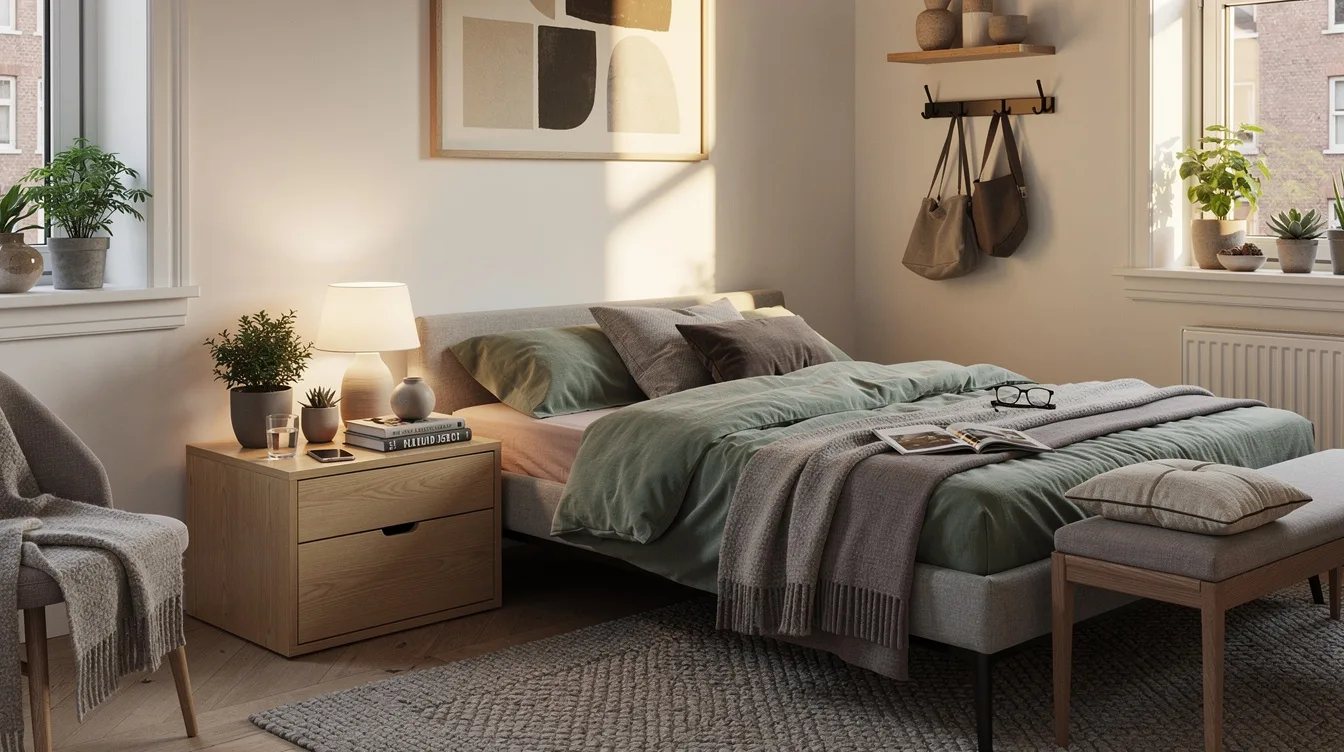
Choose nightstands about 24 to 28 inches wide for a queen bed, then move up to roughly 28 to 32 inches beside a king. That width gives the bed visual weight and stops the headboard from looking stranded against a broad wall.
For a typical 60-inch queen, two 24-inch tables create a bed-wall composition of about 108 inches. Oak veneer cases with simple fronts read more like built-in furniture than undersized accent tables, which is exactly the point.
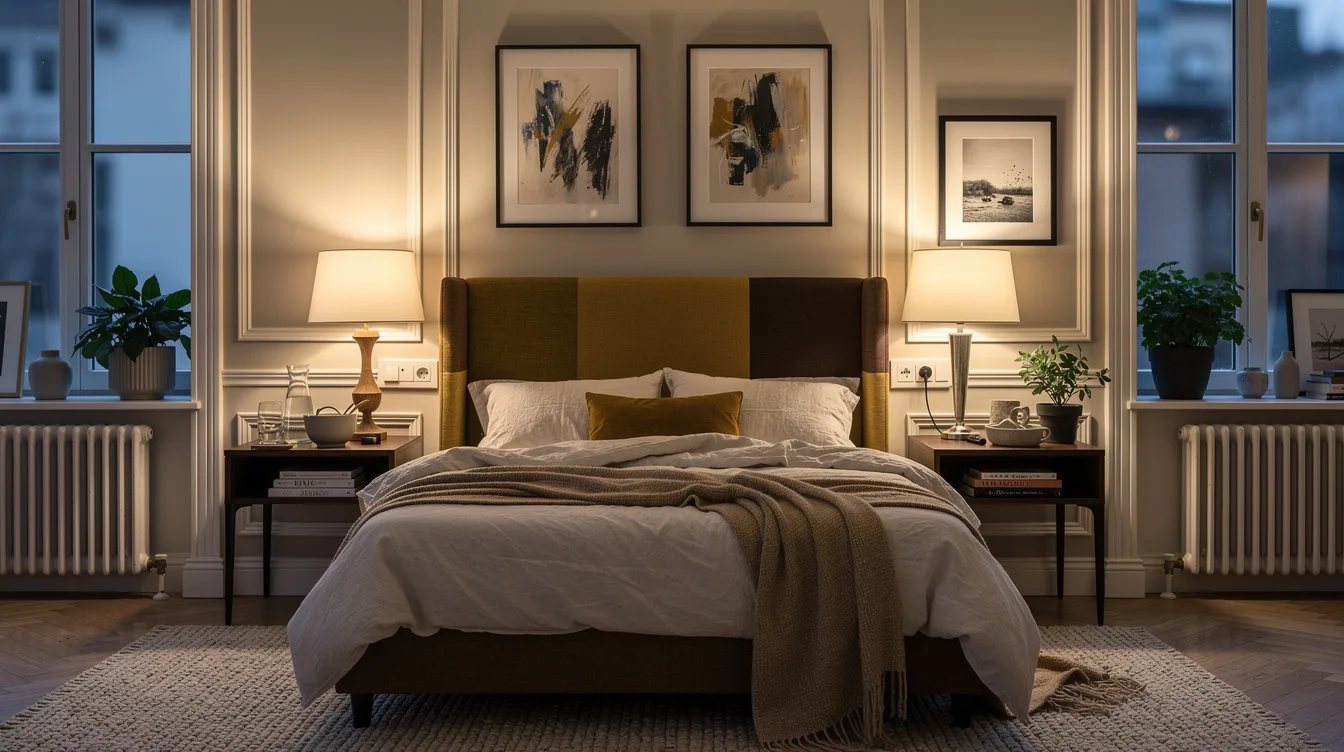
Match the Height to the Mattress
Set the tabletop within about 1 to 2 inches of the mattress top, because reaching for a glass of water should feel automatic at midnight. A table that sits much lower makes even a polished bedroom feel pieced together.
Measure after the mattress and topper are in place, especially on taller upholstered beds. A solid wood nightstand can be raised with discreet furniture glides, but a too-tall table is harder to forgive every single night.
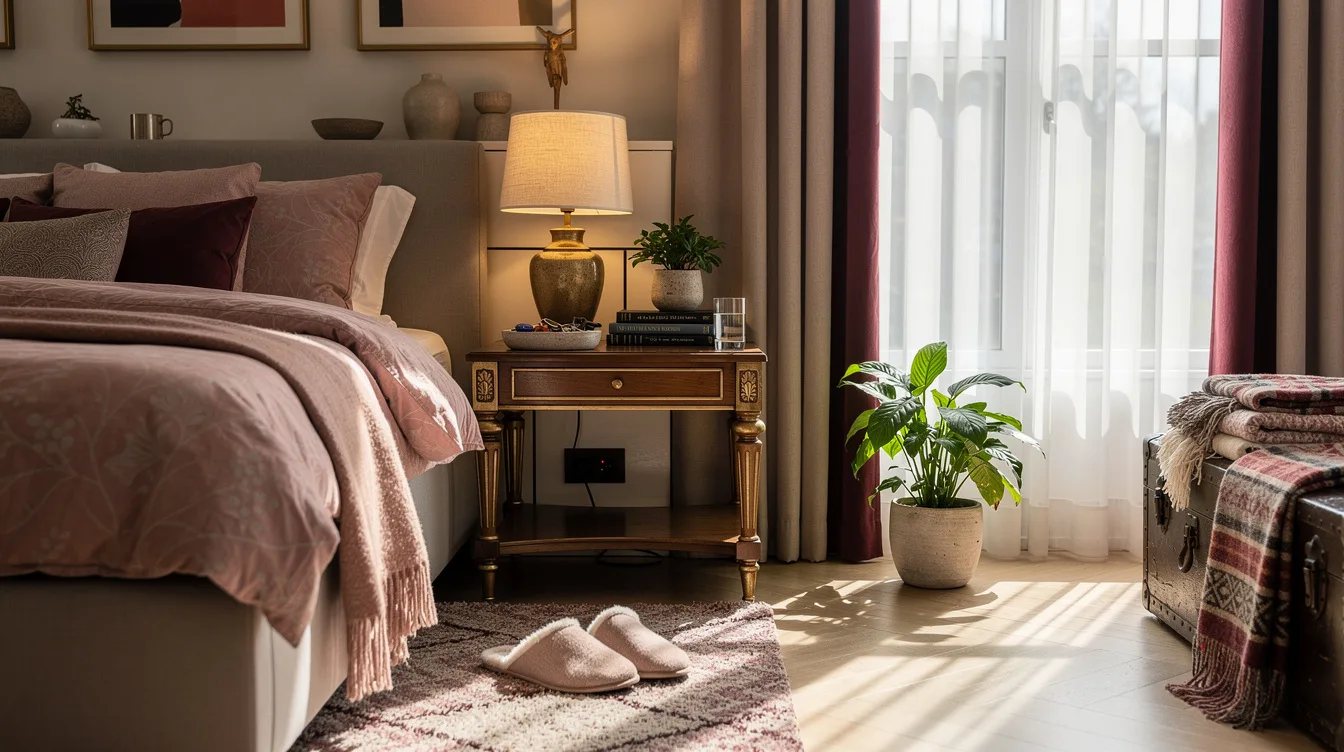
Give Every Sleeper a Full Landing Zone
A hotel-ready top needs roughly 20 by 16 inches of usable surface, enough for a lamp, phone, glasses, and a book without turning into a clutter shelf. Skip narrow pedestal tables in a primary bedroom unless the room genuinely has no alternative.
Put the lamp toward the outside rear corner and reserve the inner edge for the items you reach for in bed. A glass carafe, a paperback, and a phone charger look intentional when each gets its own patch of breathing room.
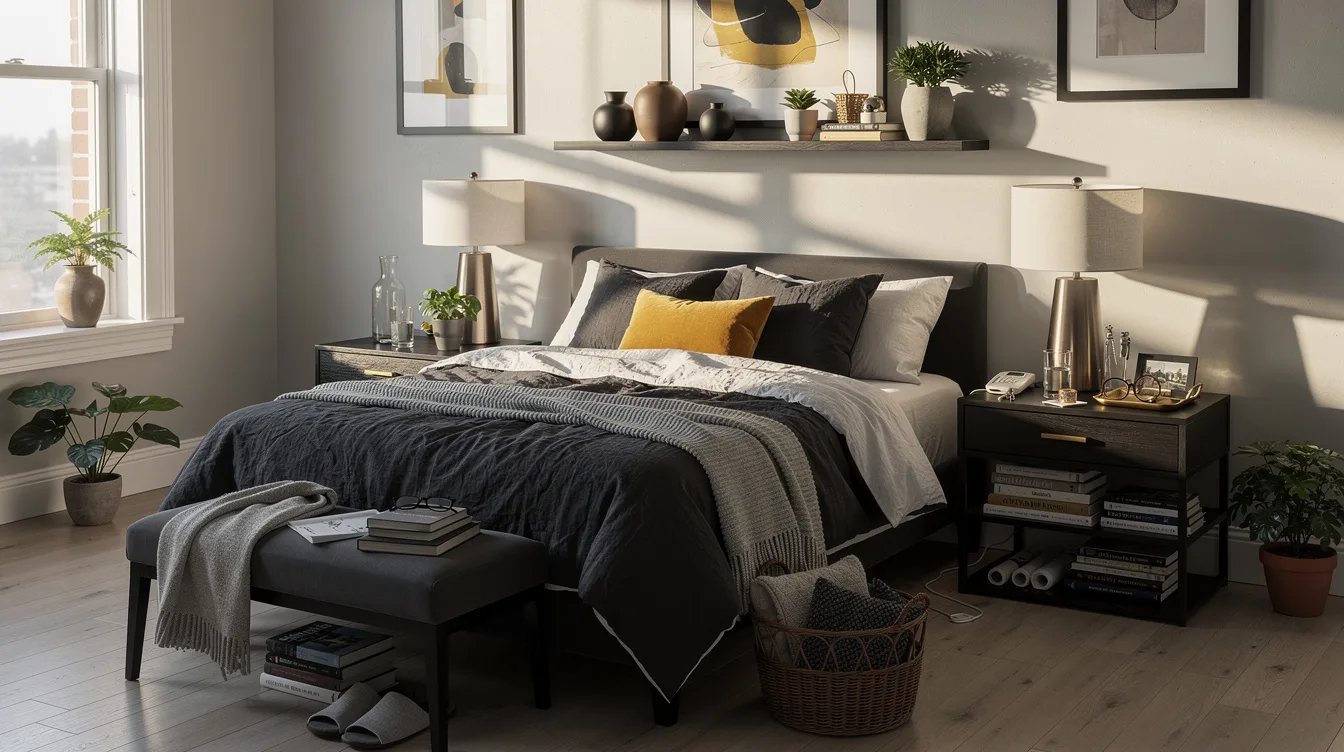
Choose One Concealed Drawer Minimum
One closed drawer changes the entire bedside experience by hiding cords, tissues, medication, remotes, and the small items that make an open shelf look chaotic. Hotels understand that a calm room depends on what the eye does not have to process.
A lower shelf can still earn its keep for books or a lidded box, but it should not become an overflow bin. Look for a brass drawer pull or recessed finger pull that feels substantial enough to use daily.
Build Symmetry With Balanced Pairs
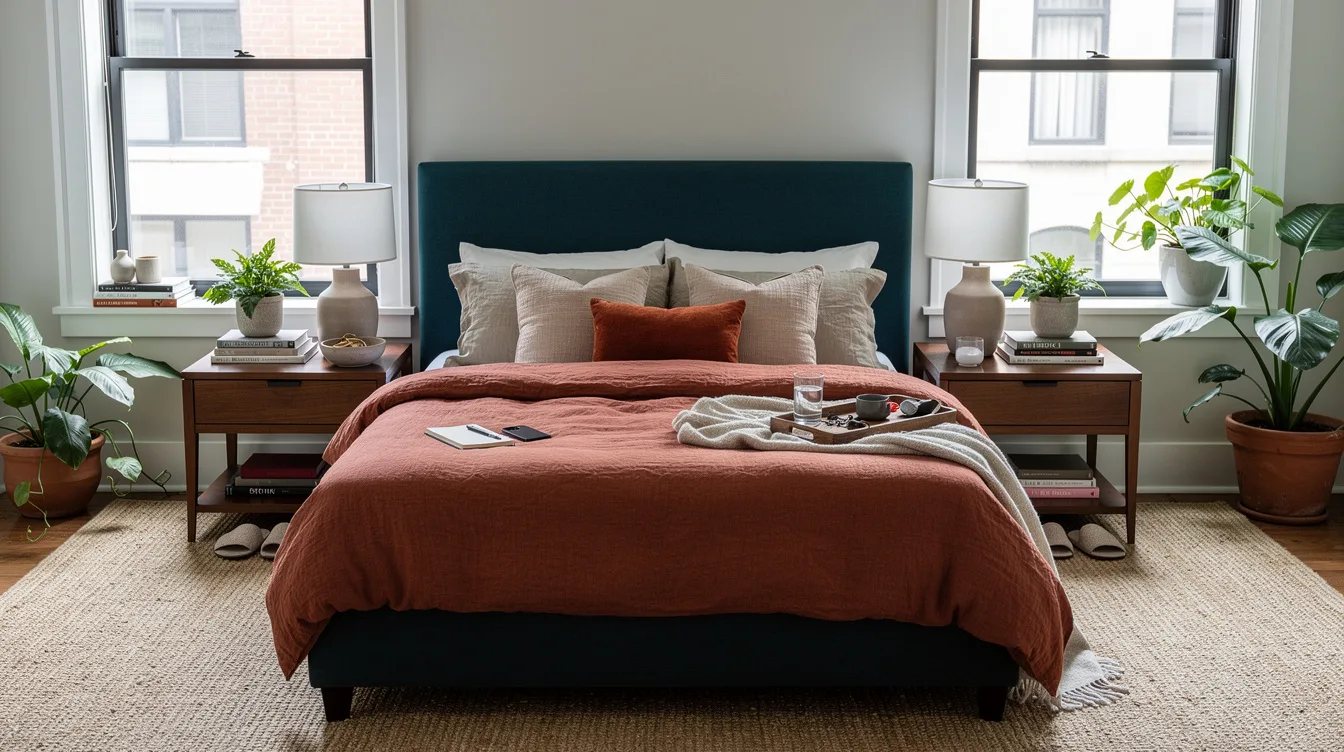
Matching nightstands are the easiest route to a finished look, particularly with a queen or king bed centered on its wall. If matching pieces are unavailable, use tables with the same visual mass, height, and finish direction.
A black cabinet and a pale wood table rarely feel balanced just because they share a measurement. Pair a walnut nightstand with another walnut case, or balance two painted cabinets with identical lamp shapes and shades.
Light Both Sides at the Same Level
Give each sleeper one reading light, whether that means matching table lamps or coordinated wall sconces. One lonely lamp on one side of the bed makes the room feel unfinished before anyone notices the bedding.
Choose shades that cast warm, contained light rather than exposing a glaring bulb. Two linen lampshades with softly diffused bulbs make bedtime reading easier and create the layered glow associated with a well-run guest room.
Move Lamps to the Wall When Space Is Tight
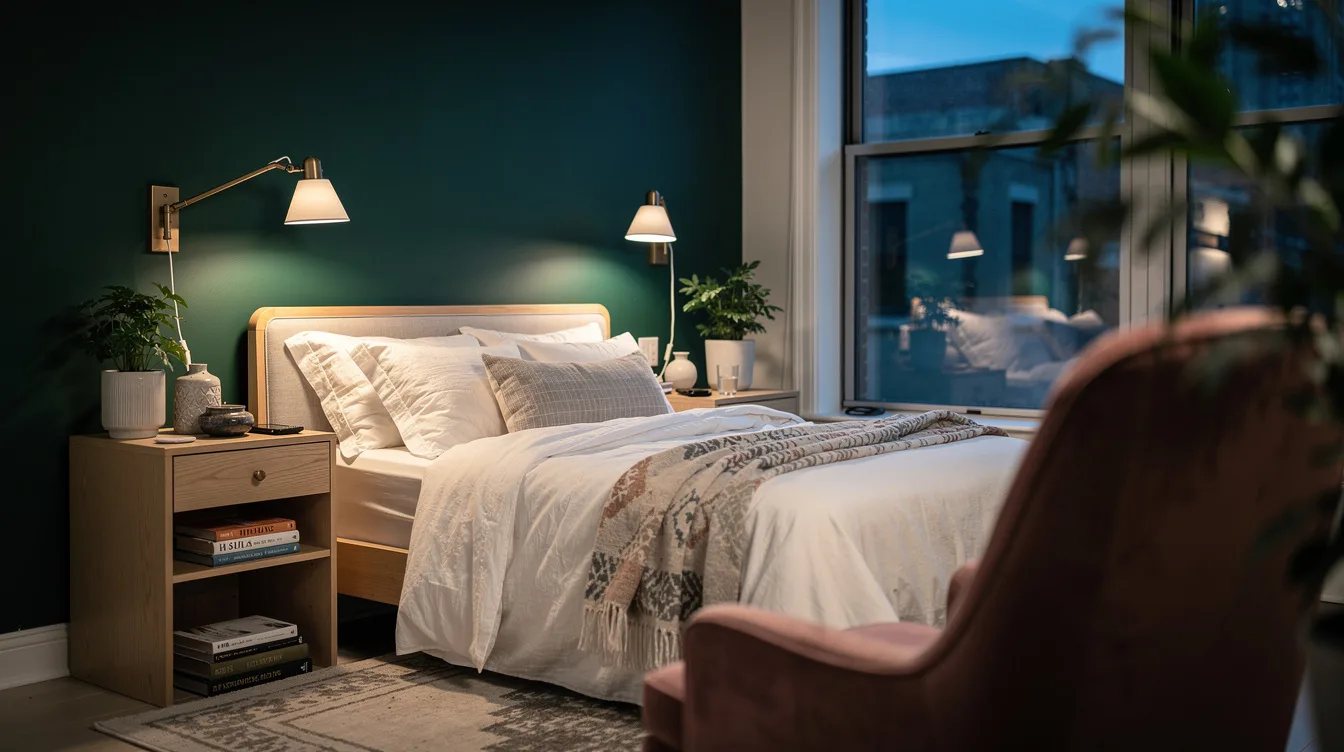
Plug-in sconces free the tabletop for the things that matter: water, a book, glasses, and a charging phone. This boutique-hotel move works especially well where a 16-inch-deep nightstand would crowd the circulation route.
Mount each fixture so its switch is easy to reach while sitting up in bed, and hide the cord neatly in a painted channel when possible. A pair of matte black sconces gives small bedrooms structure without adding more furniture bulk.
Keep a Clear Passage Beside the Bed
Maintain about 24 to 30 inches of passage beside the bed whenever the layout allows. A deep case that blocks the route may offer more storage, but it removes the relaxed ease that makes a room feel hotel-like.
Nightstands around 16 to 20 inches deep are usually enough for daily use without pushing too far into the room. A slim-profile cabinet is a smarter purchase than a large dresser masquerading as a bedside table.
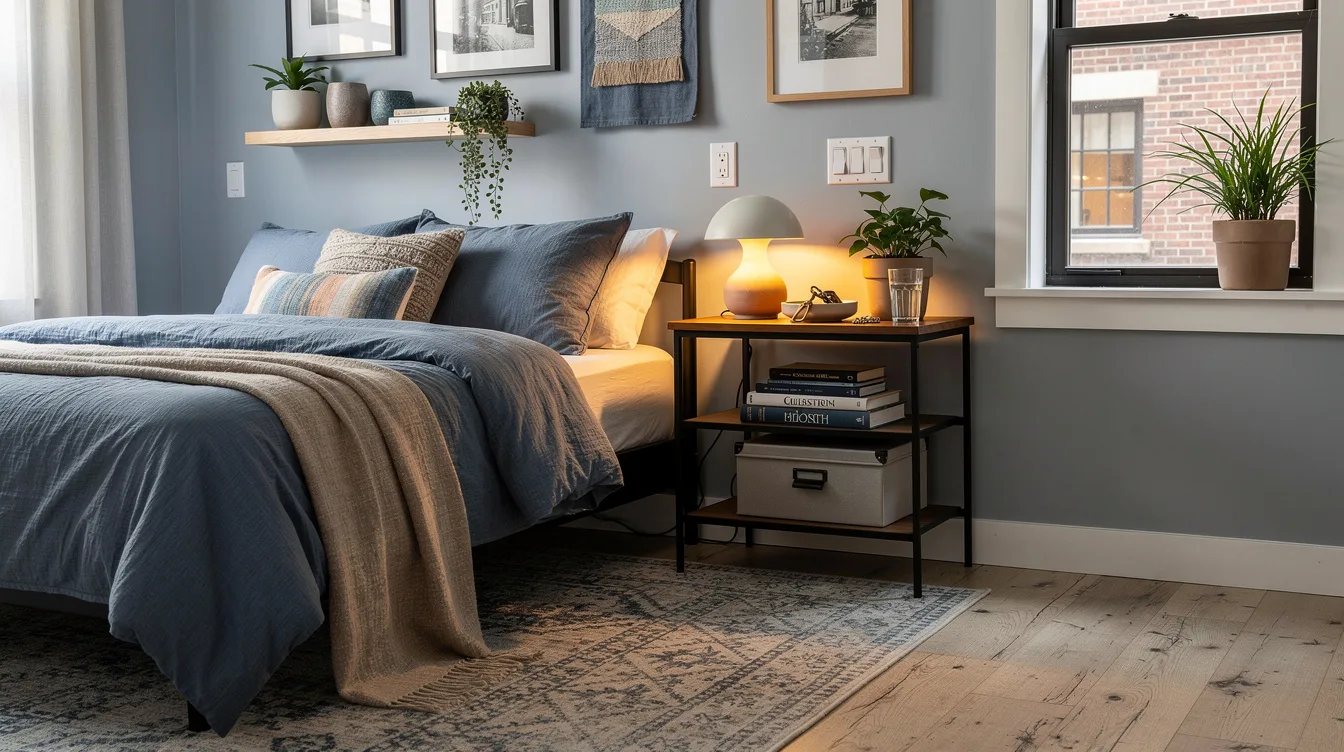
Put Charging Where Hands Can Reach It
Accessible power is a practical luxury, and it should sit at the rear or inner side of each nightstand rather than behind the bed. Include standard power and USB-C access if the furniture or nearby wall setup allows it.
Do not leave a tangle of adapters on the floor as part of the bedroom decor. A cord management box inside the drawer keeps devices functional while preserving the clean surface that makes the setup look considered.
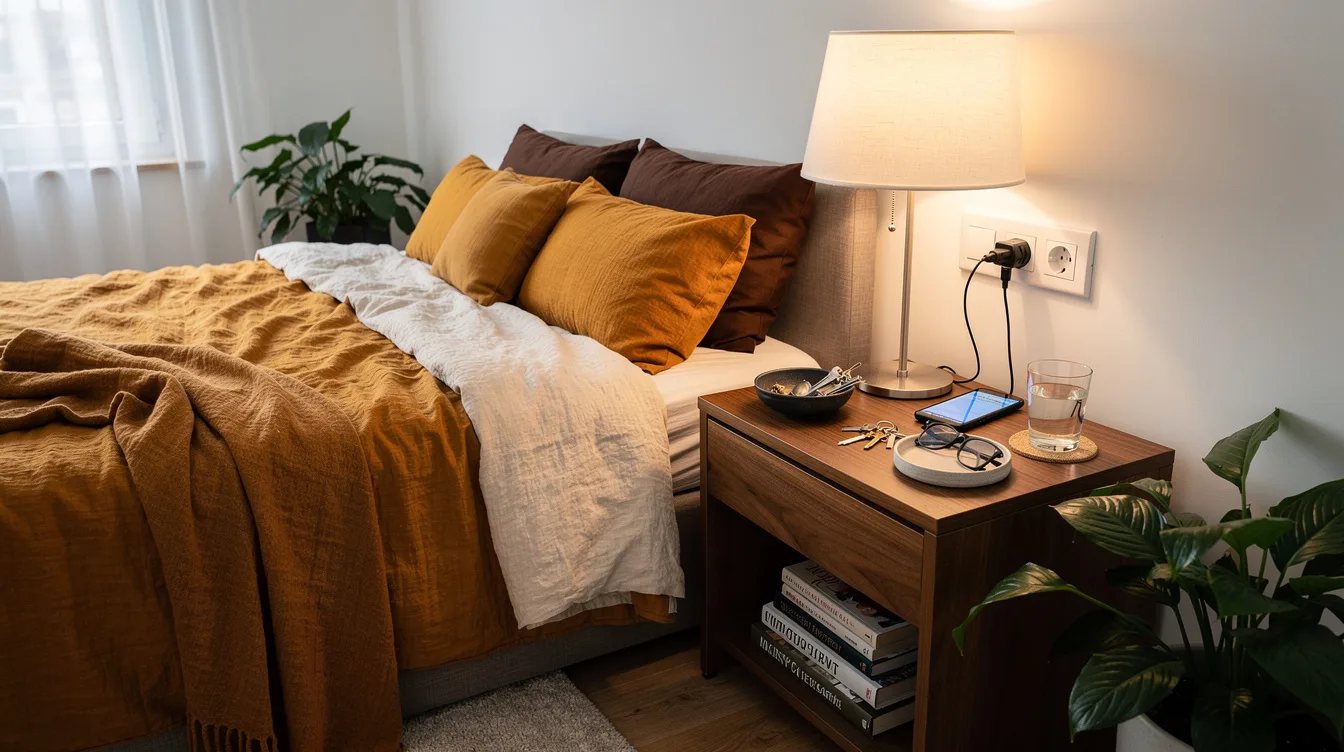
Anchor the Setup With One Bed-Wall Feature
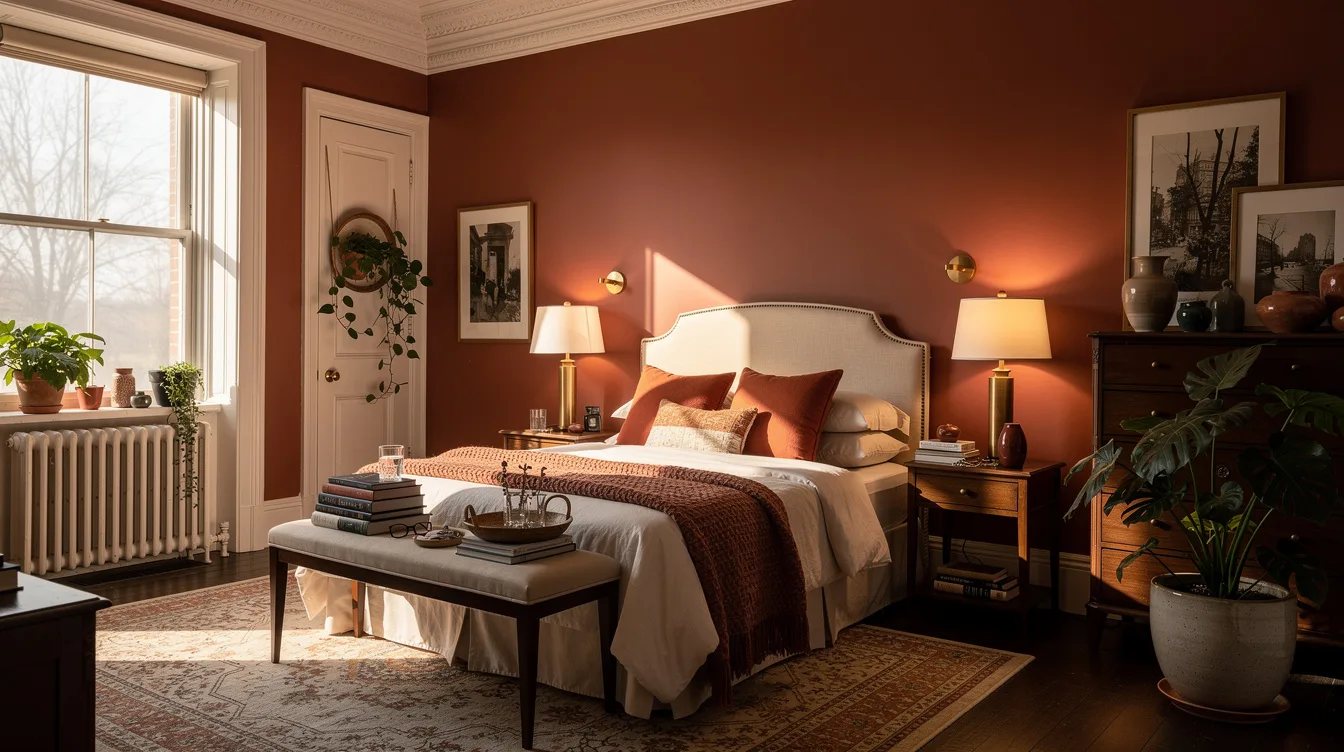
Nightstands work best when the bed wall has a clear center, such as an upholstered headboard, one large artwork, or a centered textile panel. The bedside pieces then read as intentional wings of a complete composition.
Keep the focal point broad enough to hold its own above a queen or king bed. A channel-tufted headboard paired with substantial tables has more authority than a tiny framed print trying to organize the whole wall.
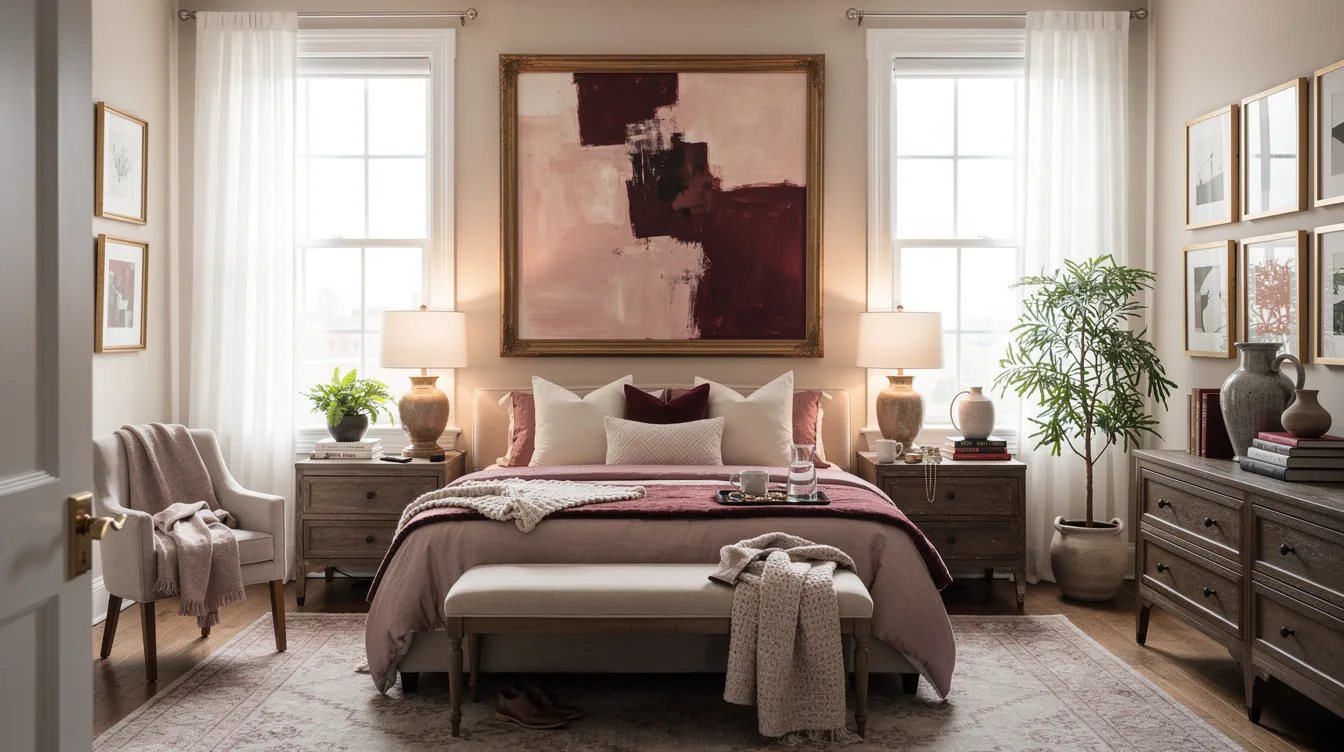
Use Durable Materials That Improve With Use
Bedrooms ask more of nightstands than they appear to: water rings, charging cables, lotion bottles, and late-night glasses all land there. Choose sealed wood, durable lacquer, or a protected stone top that can tolerate real routines.
We prefer warm finishes over high-gloss surfaces, which show every fingerprint under bedside lighting. A honed stone top can look tailored and expensive, although it still needs prompt attention after spills.
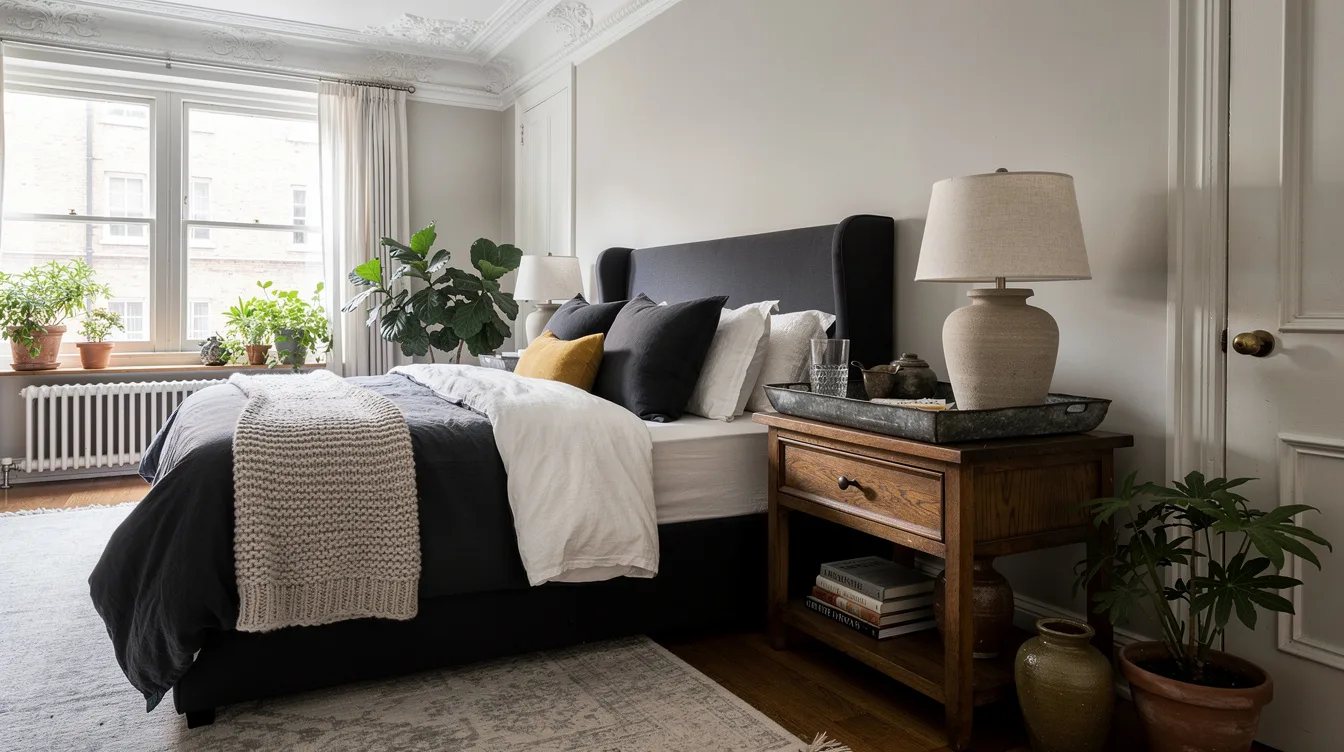
Edit the Surface Like a Guest Room
Leave out the decorative pileup. One reading book, one water vessel, a lamp, and a small catchall are enough to make the table useful without making it feel staged for a catalog.
Use the drawer for everything else, then reset the surface each morning in under a minute. A ceramic catchall for rings and earbuds adds purpose, while five scattered objects make even a costly nightstand look cheap.
Keep reading
- 12 Bedroom Color Palettes That Make Low Light Feel Brighter
- 14 Ways to Make Your Bedroom Feel Like an Aman Resort for Less
- 13 Small-Space Color Palettes That Make Rooms Feel More Open
Measure the mattress height and available passage first, then buy the nightstands before adding more bedroom decor. A properly scaled pair with concealed storage will make the bed wall feel complete faster than another throw pillow ever could.