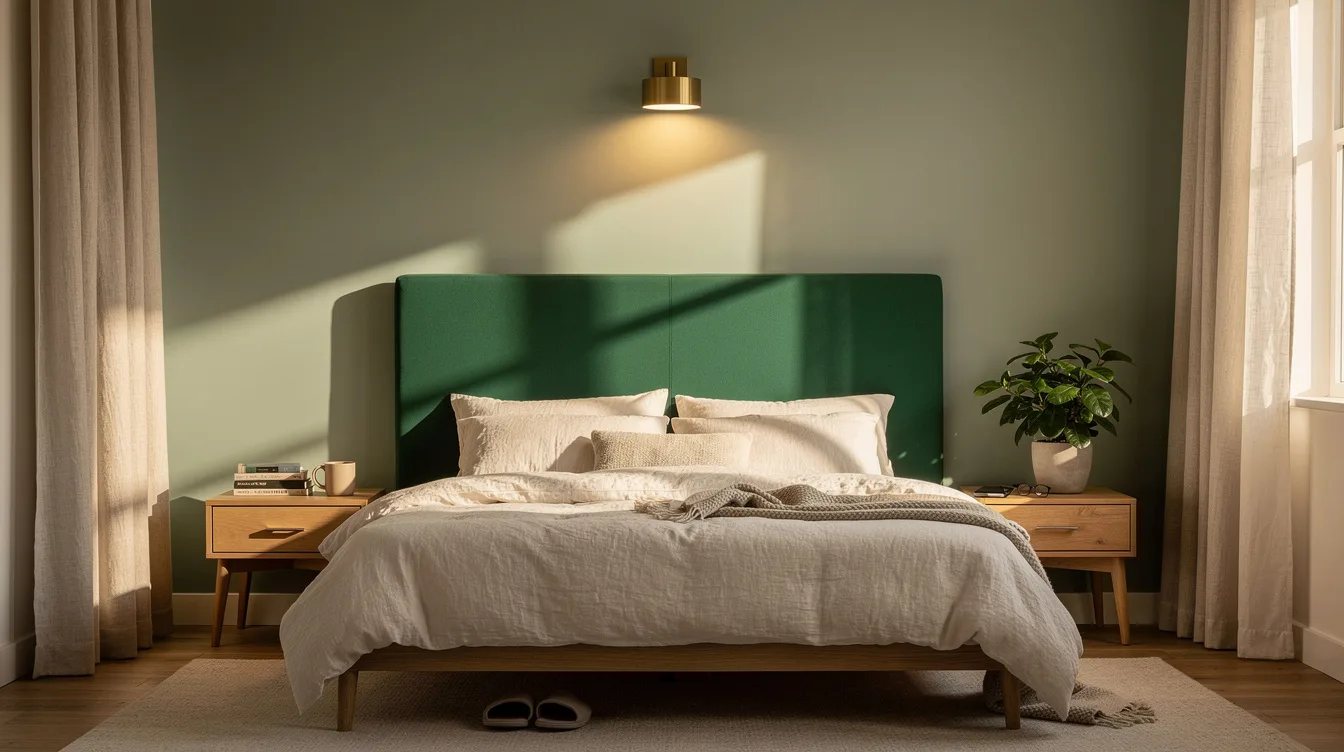
12 Bedroom Color Palettes That Make Low Light Feel Brighter
31 august 2026A shaded bedroom can swallow a white duvet, especially when a 54-inch bed sits against a cool gray wall. The answer is rarely brighter white paint: a warm, continuous palette lets the daylight and lamp light already in the room travel farther.
Use paint with an LRV roughly above 70 for the main walls when the room is genuinely dim, then test it under both daytime light and 2700 to 3000 K bulbs. Those evening bulbs can make an innocent cream look too yellow fast.
What you will find inside
- Wrap Walls and Ceiling in Chalky Warm White
- Build a Quiet Cream and Light-Oak Scheme
- Keep Pale Sand Nearly Monochrome
- Soften Shade With Blush Plaster and Ivory
- Limit Misty Sage to the Bed Wall
- Choose Buttercream Over Stark White
- Pair Pale Mushroom With Soft Ivory
- Repeat Warm White Through the Window Treatment
- Use Pale Clay With Cream Bedding
- Blend Soft Beige Into the Trim
- Add a Barely Warm Gray Only as a Supporting Note
- Anchor an All-Cream Room With Natural Texture
Wrap Walls and Ceiling in Chalky Warm White
Choose a soft warm off-white for the walls, then carry that color onto the ceiling or use a version roughly 10 percent lighter. This removes the hard line that makes a low ceiling feel like a lid.
Add a pale oak bed and ivory bedding, with one brushed-brass reading lamp. Skip blue-white paint here: it often turns flat and chilly in a bedroom with limited daylight.
Build a Quiet Cream and Light-Oak Scheme
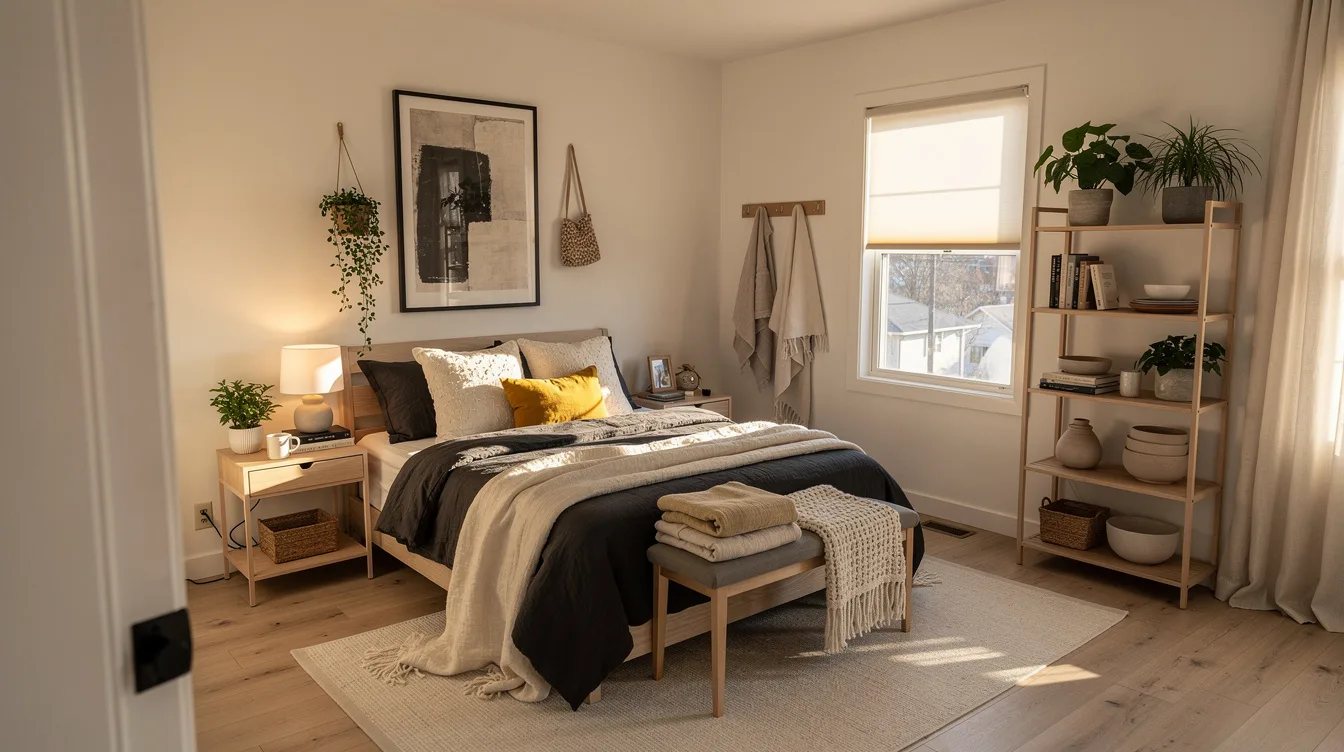
A quiet cream wall color makes low light feel golden instead of gray, especially beside white oak nightstands. Keep the ceiling warm white and let the furniture stay close in value to the walls.
An oatmeal linen duvet from Target or IKEA keeps the effect relaxed without adding a dark visual break. This is the safest palette for a bedroom that needs warmth as much as brightness.
Keep Pale Sand Nearly Monochrome
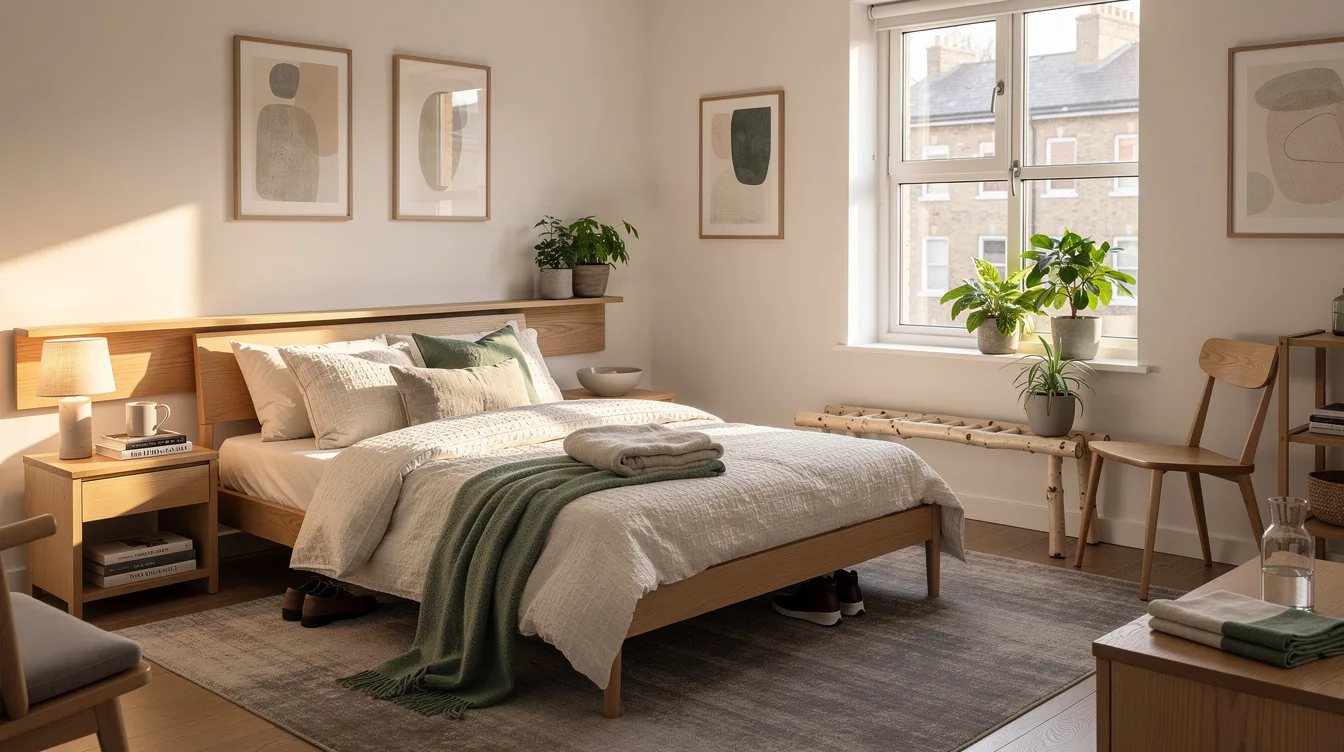
Light sand walls, pale cream overhead, and ecru textiles create a room with very little contrast, so the boundaries seem to recede. It feels larger because your eye is not stopping at a series of dark edges.
Bring in a wool rug rather than a charcoal patterned one. A small darker accent is enough, but a dark bed frame and dark rug together will undo the whole point.
Soften Shade With Blush Plaster and Ivory
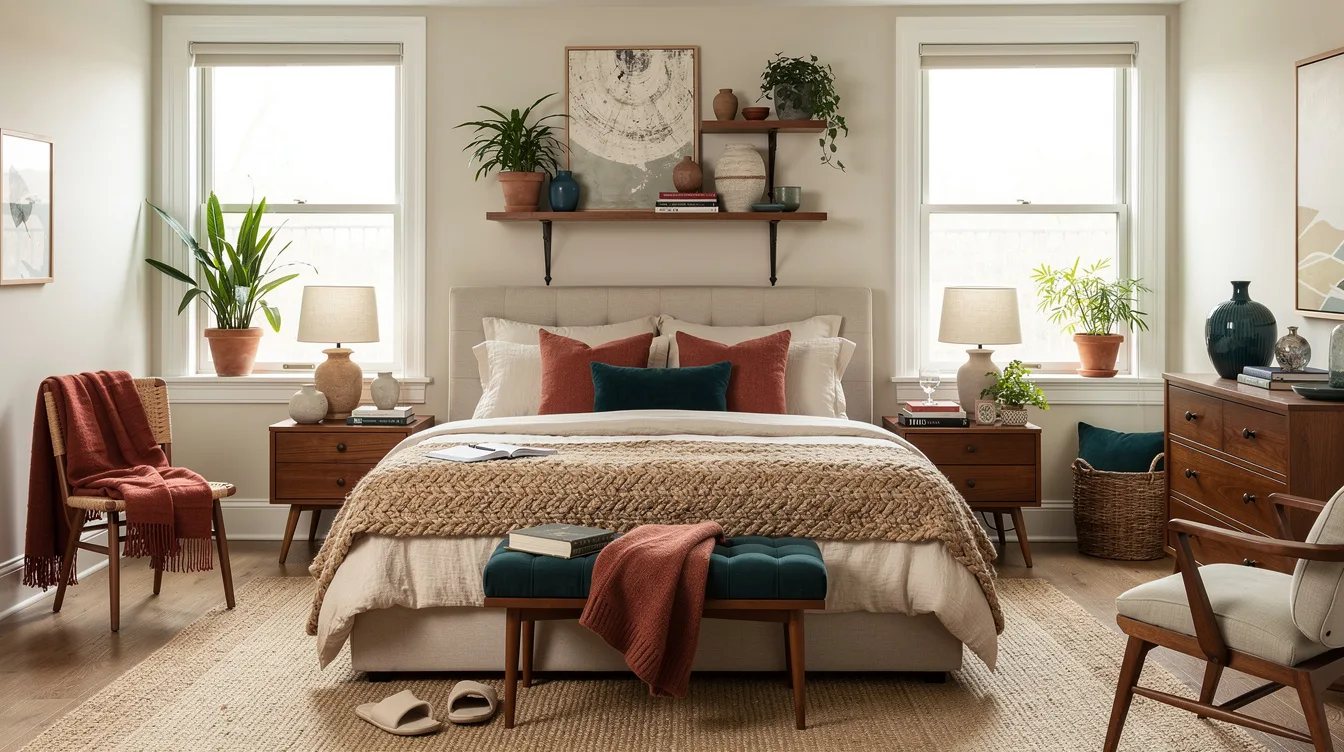
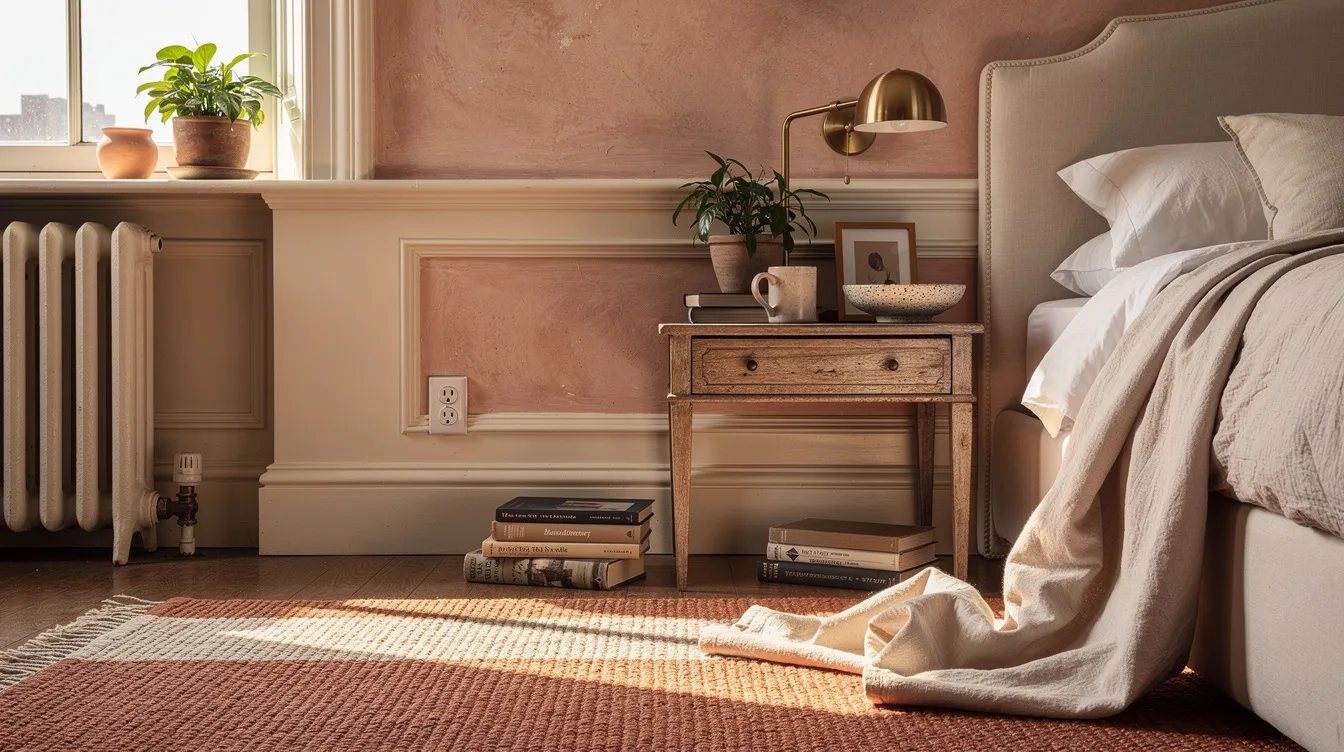
A dusty blush or barely-there peach neutral can be remarkably forgiving in a shaded bedroom. Its pink-beige undertone counters the cold cast that north-facing windows often create.
Pair it with an ivory boucle chair and warm-white curtains from Wayfair or Amazon. Keep the blush muted, because a saturated pink wall starts to feel louder than brighter after sunset.
Limit Misty Sage to the Bed Wall
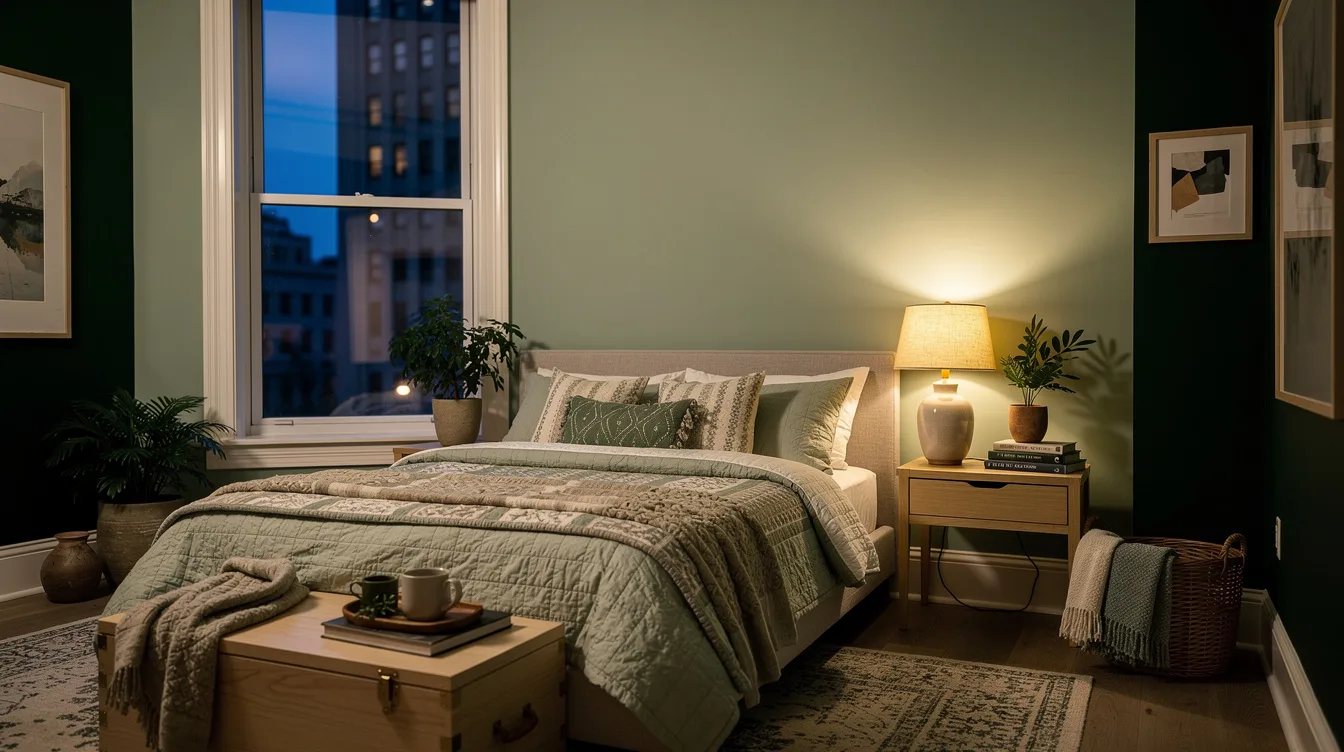
Use an extremely pale sage behind the headboard, then paint the remaining walls warm cream. The color gives the room definition without asking four walls of green to absorb precious light.
Set it off with a cream wool coverlet and antique-brass hardware. Deep olive is a firm no for this job, even when it looks sophisticated on a small sample card.
Choose Buttercream Over Stark White
Buttercream has enough warmth to hold up in dim corners while still reading light across the room. It is especially useful when daylight arrives through trees, an overhang, or a neighboring building.
Use white cotton sheets and a natural maple dresser to prevent the palette from going overly yellow. Test a sample first, since very warm bulbs can push a creamy paint further than expected.
Pair Pale Mushroom With Soft Ivory
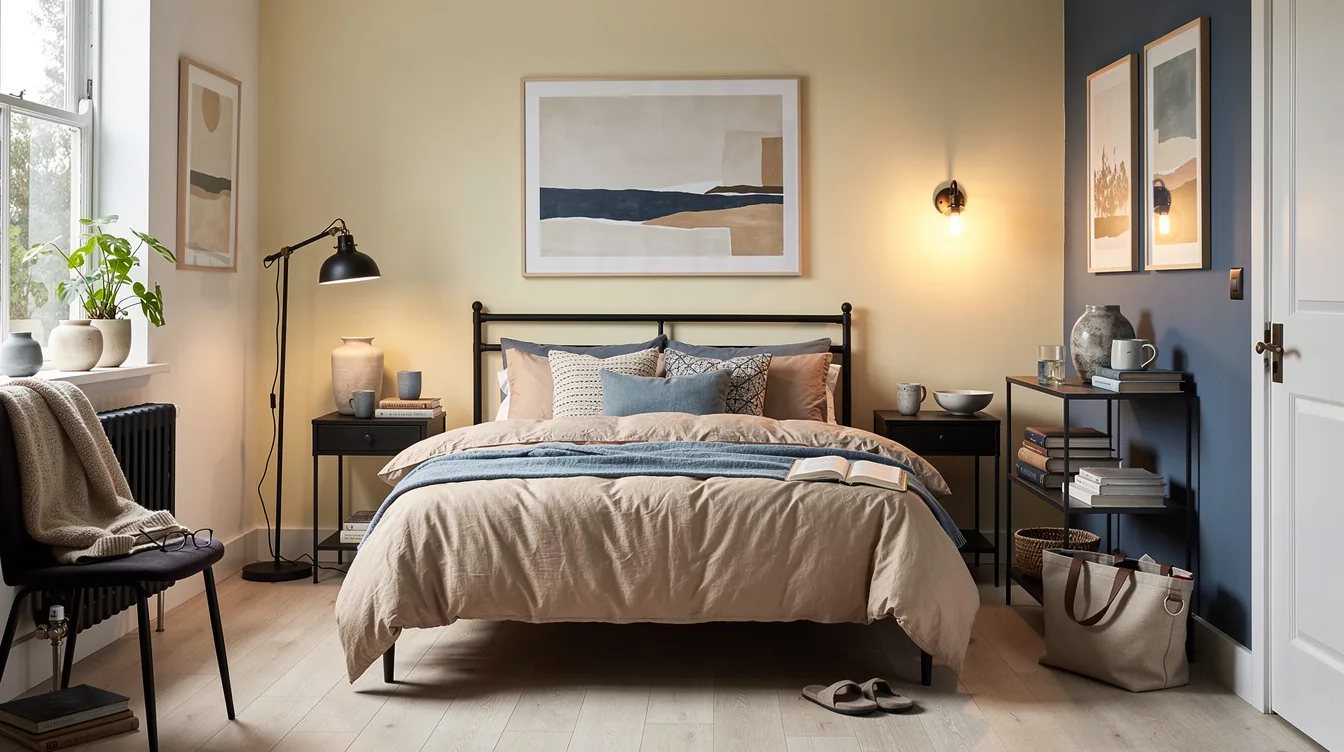
Pale mushroom works when you want a neutral bedroom with more depth than plain cream. Choose a version that stays roughly in the LRV 60 to 70 range only if the room has decent lamp coverage.
A travertine-look lamp gives this palette a warm, reflective note without introducing glare. Avoid a dark taupe headboard, which can make the bed wall look heavy in low light.
Repeat Warm White Through the Window Treatment
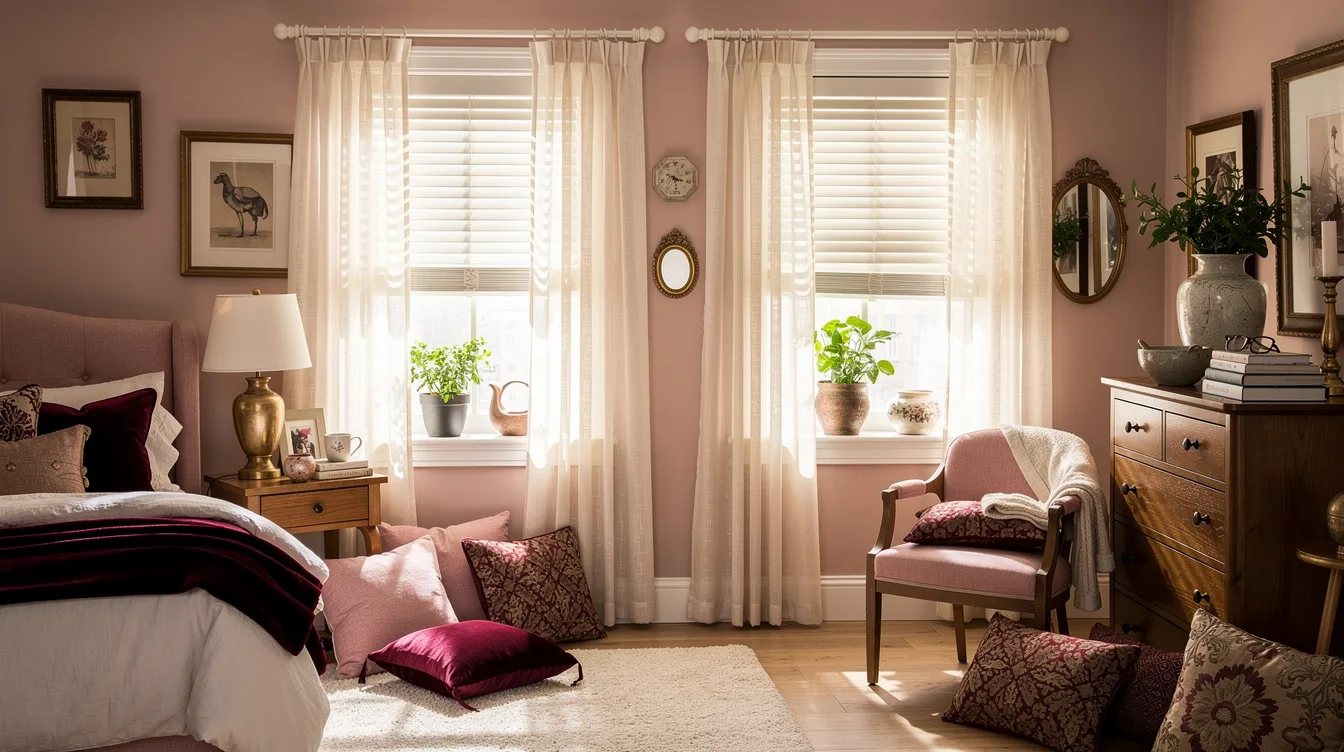
Warm-white walls lose their advantage when they stop abruptly at dark blackout curtains. Choose lined curtains close to the wall color, and mount them high enough that the fabric frames rather than crowds the window.
Try linen-blend curtains from Home Depot, Lowe's, or Walmart in ivory, flax, or light sand. The matching fabric makes a modest window feel wider and lets the room read as one calm field.
Use Pale Clay With Cream Bedding
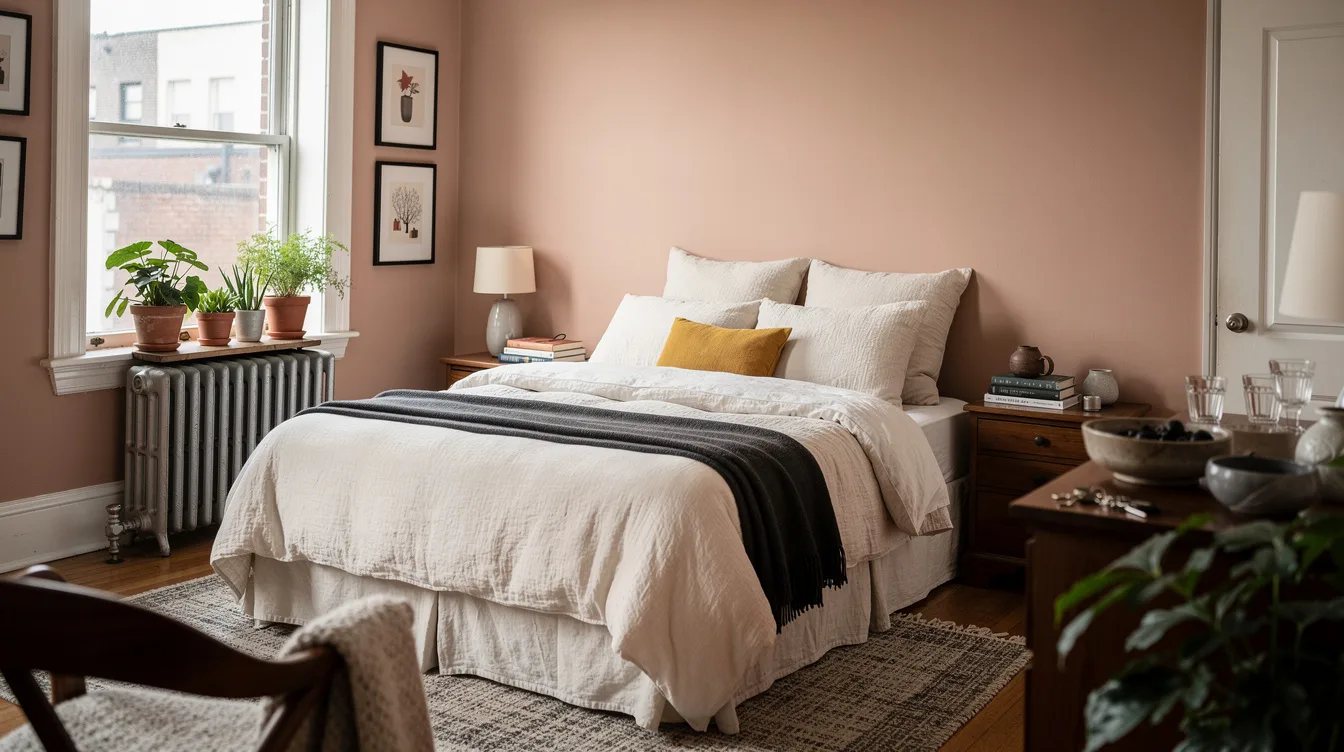
Pale clay has a grounded peach-beige cast that makes a dim bedroom feel more welcoming at night. Keep it light enough to reflect lamp light, then let cream take over on the ceiling, bedding, and larger textiles.
A walnut nightstand can work in a small dose beside this palette. One dark wood piece feels intentional; a full matching dark bedroom set will pull the room back into shadow.
Blend Soft Beige Into the Trim
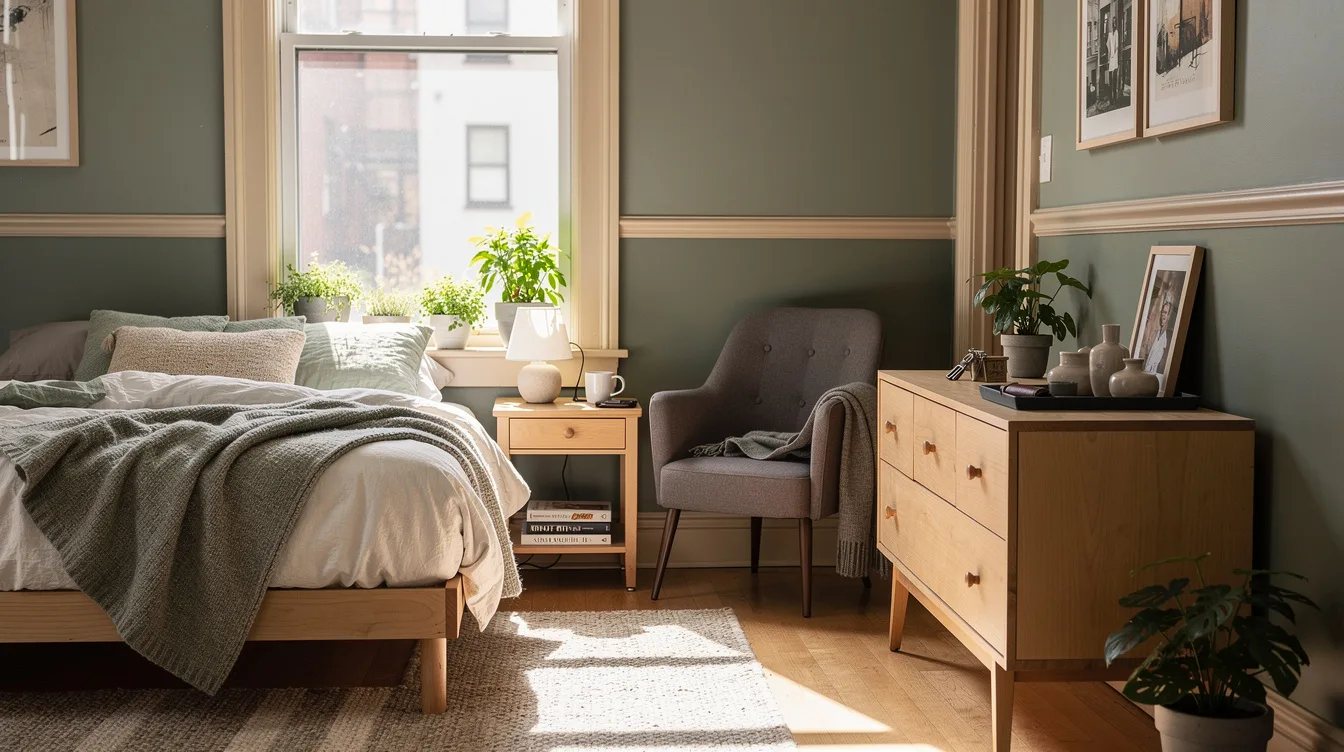
Paint the walls and trim in related pale beige tones instead of outlining every doorway in sharp bright white. The lower contrast makes the architecture feel quieter and less chopped up.
A washable satin finish on doors or trim catches a little useful light, while matte walls hide surface flaws. Keep sheen restrained, because glossy paint can show every uneven patch after the lamps come on.
Add a Barely Warm Gray Only as a Supporting Note
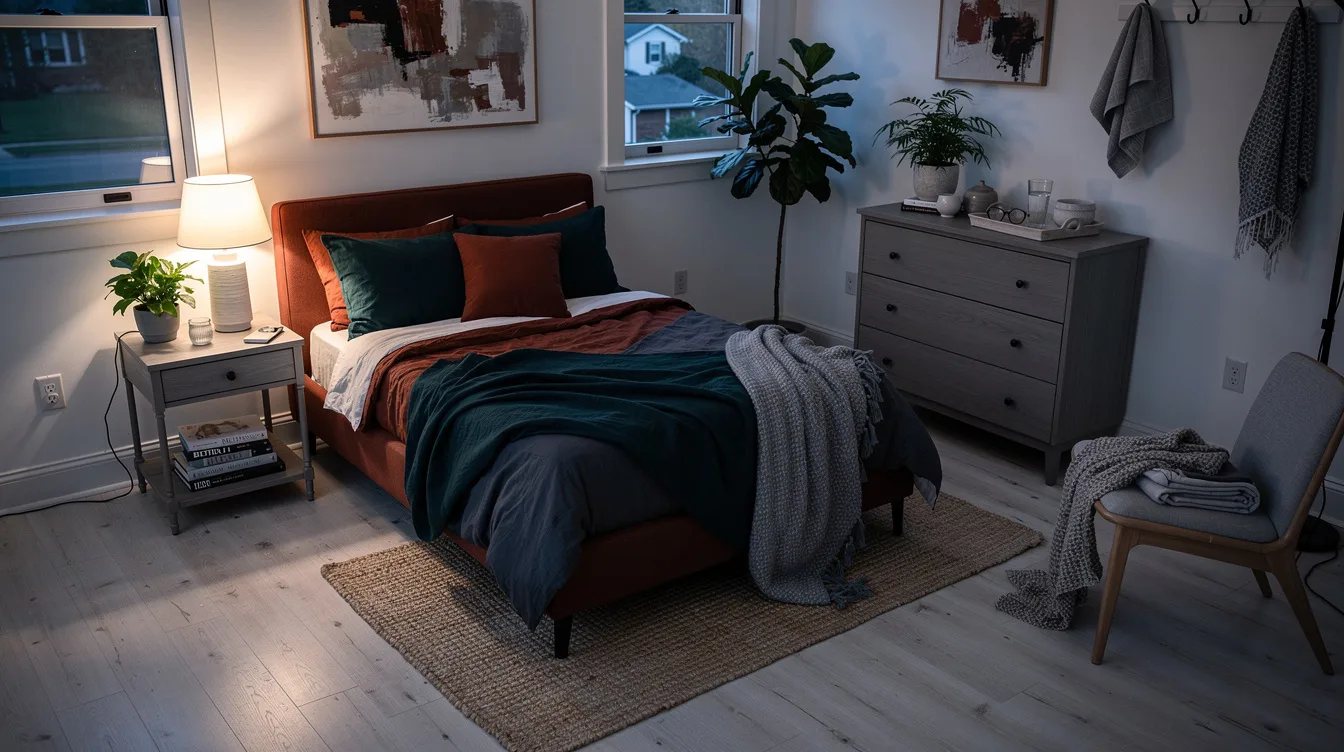
A pale gray-beige can work in low light when it has a clear warm undertone and is supported by cream upholstery. Cool gray is much less dependable: it often reads dull before the day is half over.
Balance it with a brushed brass picture light above the bed and warm bulbs in the bedside lamps. The metal adds a controlled glint without the cold flash of chrome.
Anchor an All-Cream Room With Natural Texture
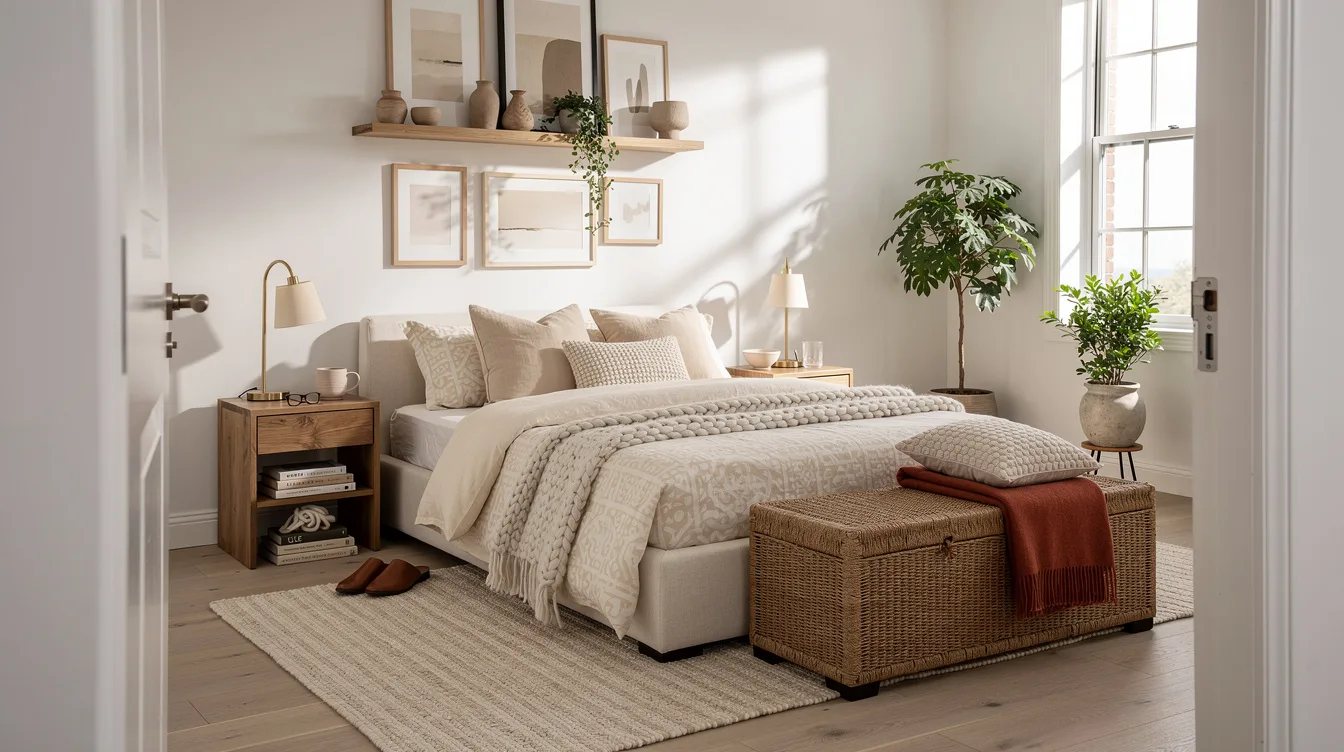
An all-cream bedroom needs texture so it does not look unfinished. Stay within a narrow value range, then vary the surface through woven shades, a nubby throw, and wood grain.
A rattan pendant from IKEA, Amazon, or Costco can add shape while keeping the overhead area visually light. Start with the walls and ceiling in one warm off-white, then choose the curtains before adding any darker accents.
Keep reading
- 14 Ways to Make Your Bedroom Feel Like an Aman Resort for Less
- No Windows? These 11 Lighting Layers Make Rooms Feel Less Flat
- 12 Ways To Make a Narrow Victorian Room Feel Less Cramped
Begin with a large sample on the wall behind the bed, then check it at noon and again with the lamps on. Match the ceiling, curtains, and biggest furniture pieces before spending money on smaller decor.