Easy DIY Media Wall: How to Build Your Own Step by Step on a Budget
07 september 2026A DIY media wall can cost far less than a full renovation if you build around a simple frame, smart storage, and paint. I once tried to hide a television with tiny decor. It looked fussy, not intentional. Your wall needs a job, then your room starts feeling warm and settled.
- Build the Two-Depth Frame for a drywall media wall
- Float the TV Before You Add a plasterboard tv wall
- Paint the Recessed Zone in Farrow & Ball Hague Blue
- Use the Three-Height Light Stack (and kill the overhead glare)
- Frame Storage With the Hidden-Cable Rule
- Anchor a plasterboard tv unit with one real wood shelf
- Why does the TV need to be the quietest thing?
- Choose an IKEA base over a custom cabinet if your budget is $100
- Layer a 9x12 rug to pull the wall into the room
- Mix Sherwin-Williams Evergreen Fog with warm oak
- Make the Before-and-After Shelf Rhythm Feel Intentional
- Let plasterboard over stone do the visual heavy lifting
1Build the Two-Depth Frame for a drywall media wall
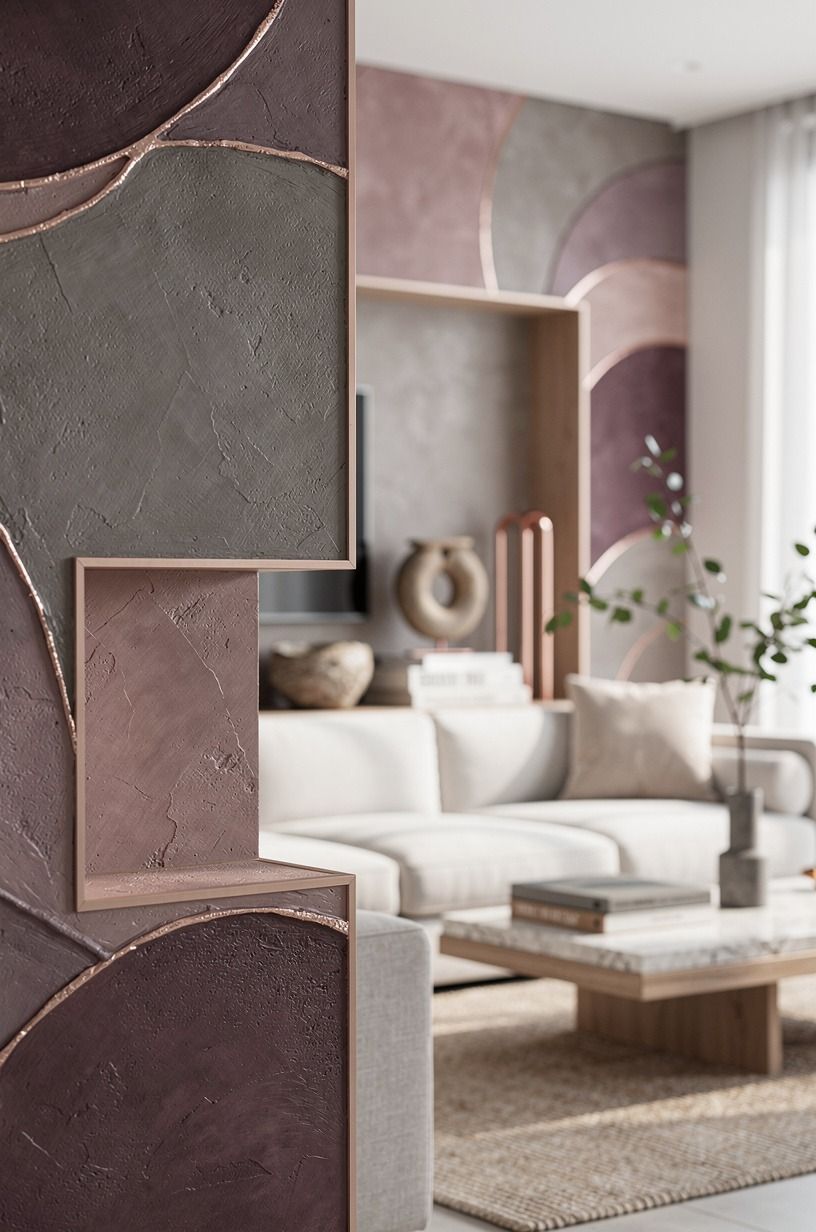
Start by deciding what should sit proud of the wall and what should tuck back. Your TV, cables, and shelves need breathing room, while your trim can stay shallow and refined. I’d skip a bulky full-depth box if your living room is tight, because it steals floor space without improving the view.
Use hand-applied Venetian plaster for a slim mantel shelf, then frame the screen with painted MDF battens. You’ll get a bold border without making your sofa feel closer than it is. A Samsung The Frame TV works especially well here because your wall doesn’t have to fight a giant black rectangle.
Keep your viewing distance around 1.5 to 2.5 times your screen diagonal. Your eyes will tell you fast if the wall is too close. And yes, cable planning comes first!
2Float the TV Before You Add a plasterboard tv wall
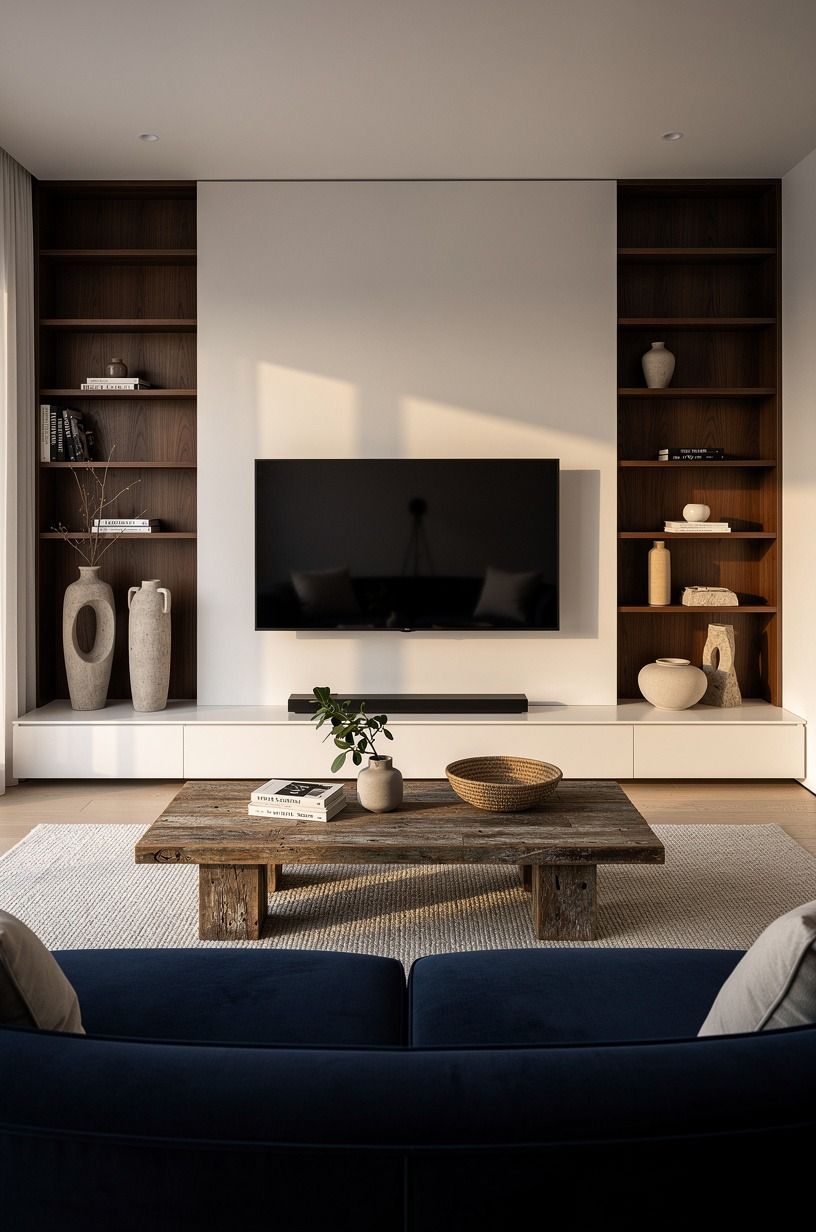
Mount the television before you build shelves around it. You need to know where your bracket, outlet, and cable chase land, otherwise your lovely panel layout becomes a very expensive guessing game.
Choose a Vogel’s TV wall mount that lets you level the screen after installation. Your TV should sit where you can watch it without tipping your chin upward, not perched near the ceiling like a sports bar. But don’t center it by instinct alone; center it within the furniture grouping your eyes will read from the sofa.
I made the mistake of centering a TV on an empty wall once. Then the sectional arrived, and the whole thing leaned visually left. Measure your seating first, then let the wall follow.
3Paint the Recessed Zone in Farrow & Ball Hague Blue
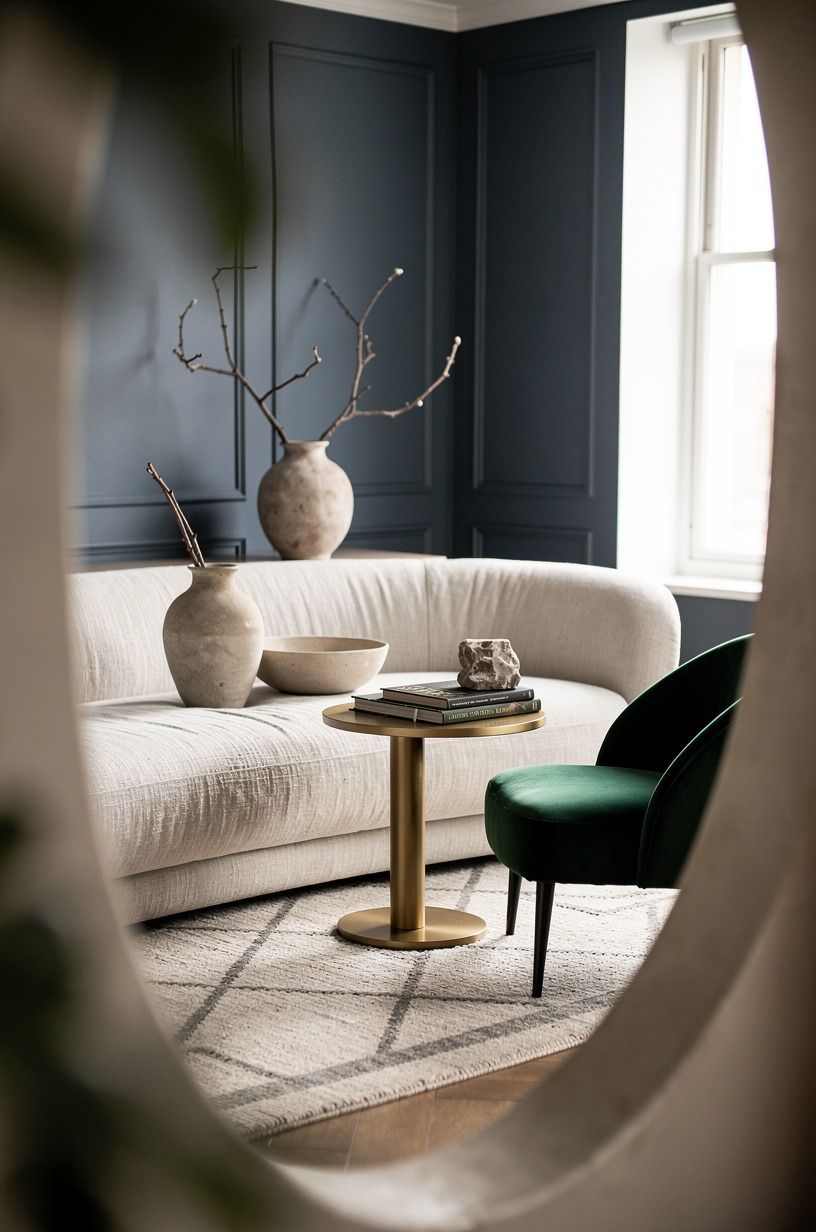
A recessed media wall needs shadow, and dark paint gives you that shadow for almost no money. Farrow & Ball Hague Blue No. 30 makes a screen disappear at night while leaving a moody, calming field behind your art and books.
For your trim, use the same color in a different sheen. Matte on the back wall, eggshell on the MDF strips. That small shift catches afternoon light without turning your wall into a striped craft project.
If your room faces north, I’d choose Hague Blue over plain charcoal. Charcoal can go flat by 3 p.m.; this blue keeps a little greenish depth and feels more intimate. A pair of aged bronze picture lights above the shelves will make your display look deliberate.
4Use the Three-Height Light Stack (and kill the overhead glare)
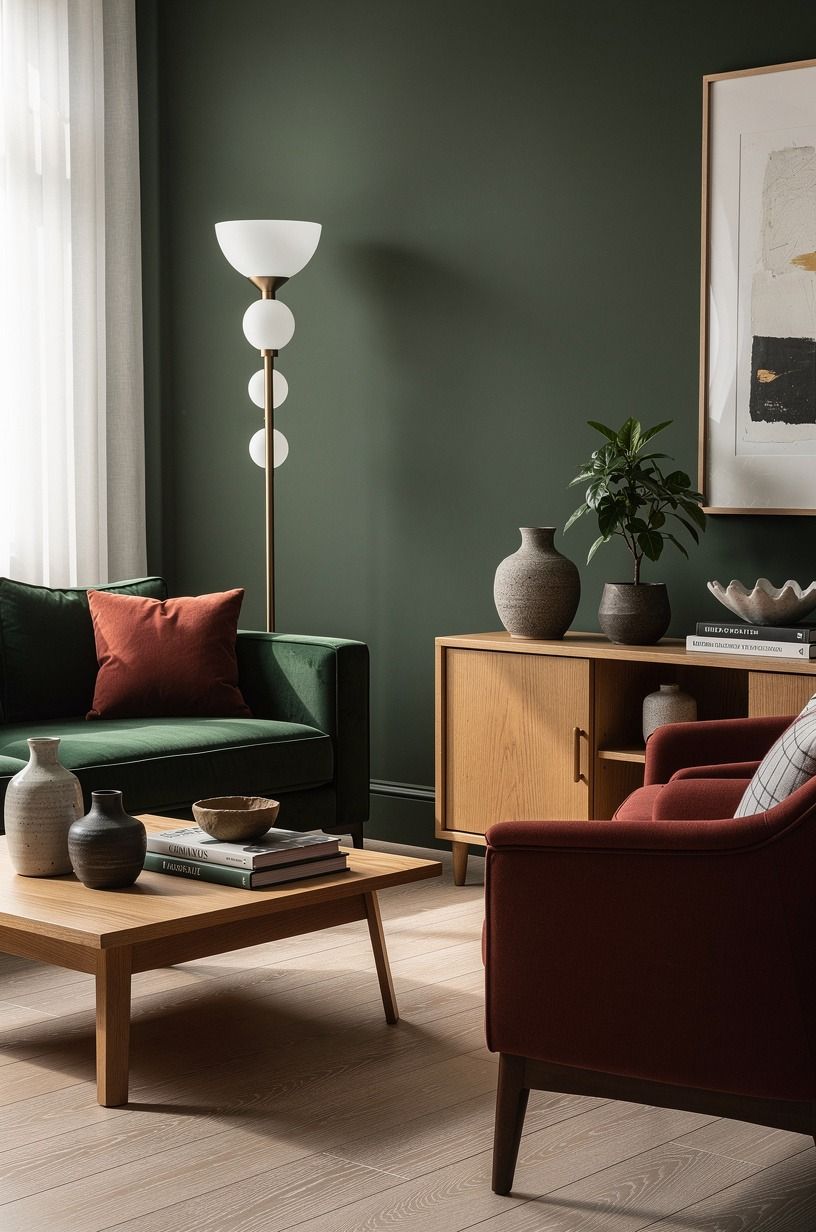
Your media wall shouldn’t rely on one ceiling fixture. Put one light source low, one at eye level, and one high, so your room has a soft pool of light instead of a bright lid.
A Target Threshold ceramic lamp on a lower shelf handles the low glow. Slim unlacquered brass developing soft patina sconces handle the middle.
A dimmable picture light gives you the high note. Your television looks less stark, and your evening feels less like a waiting room.
Skip cool bulbs. They make Benjamin Moore Revere Pewter HC-172 look gray and tired. Warm bulbs, dimmers, and a little darkness around the screen.
Much better.
5Frame Storage With the Hidden-Cable Rule
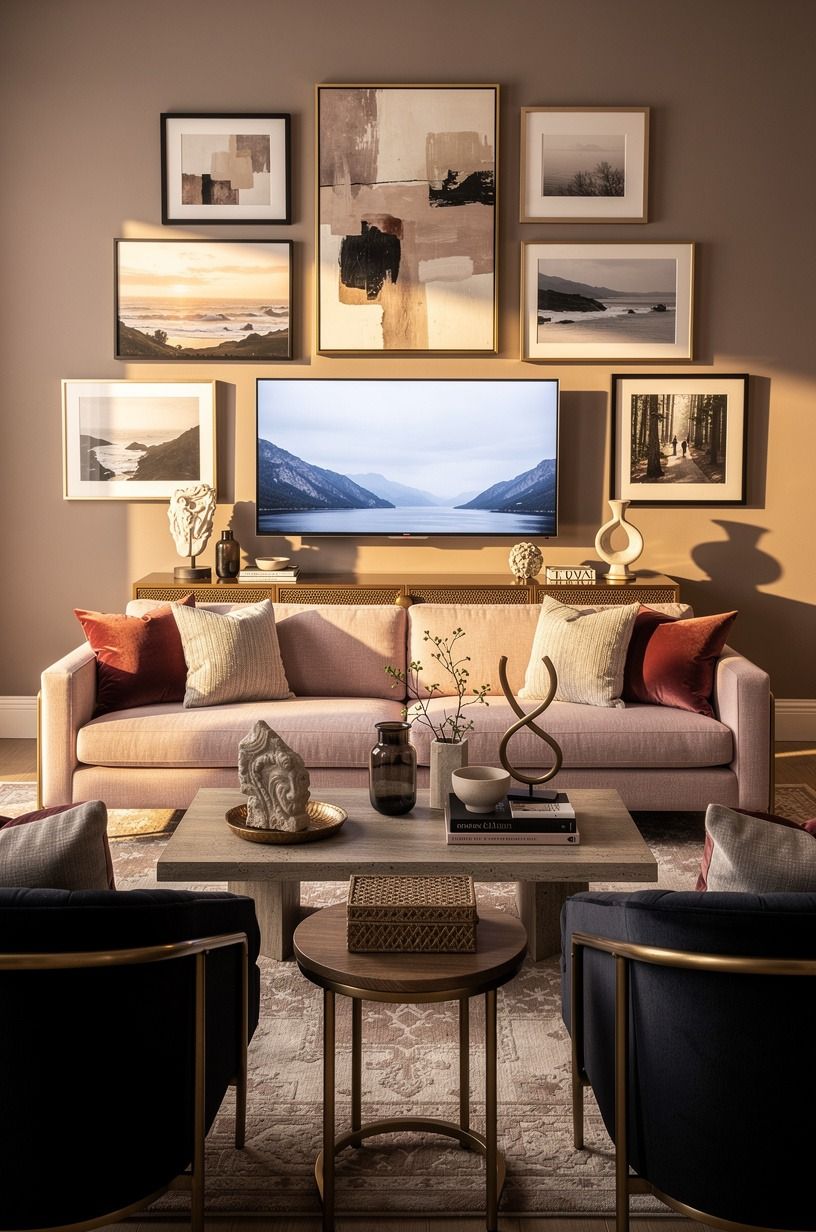
Build your closed storage at the bottom of the wall, where your eye wants visual weight anyway.
6Anchor a plasterboard tv unit with one real wood shelf
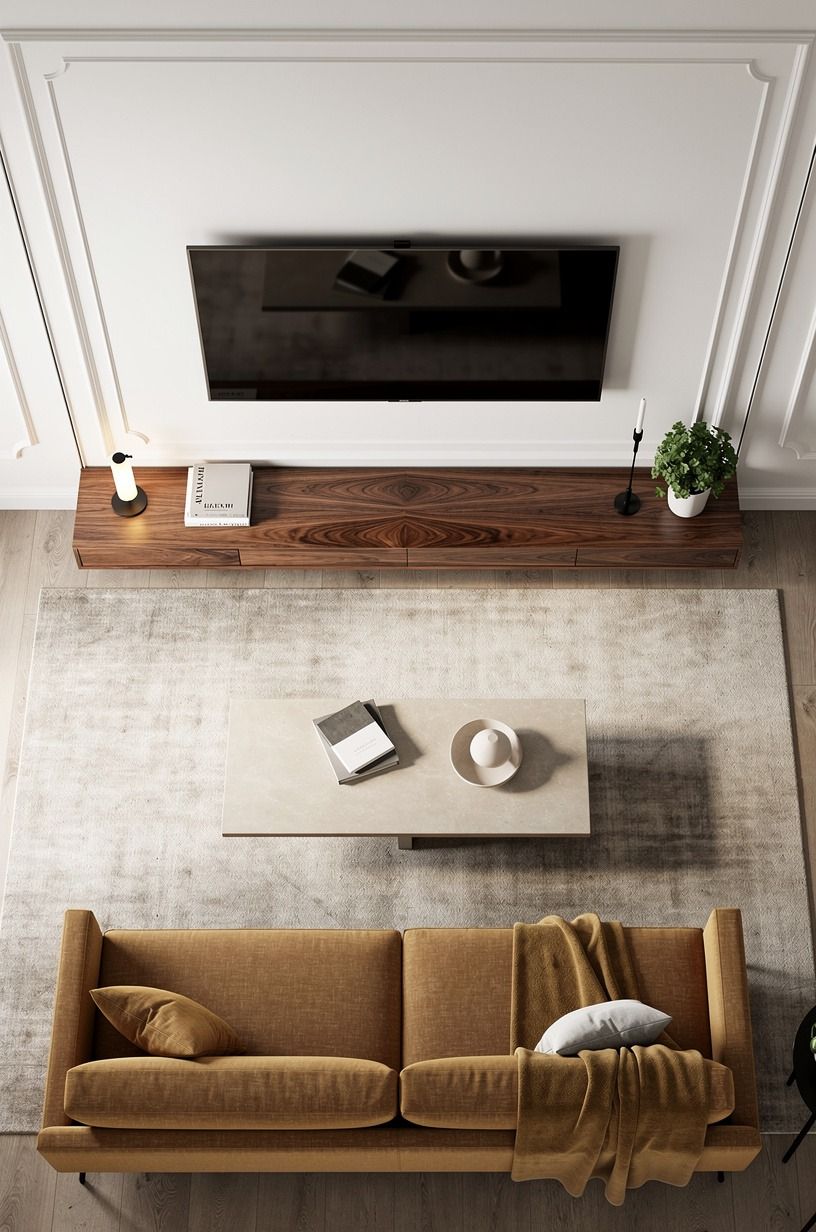
A painted media wall needs one honest material in it. I prefer wood over faux stone here because a TV wall already has enough hard, flat surfaces. A book-matched walnut shelf gives your hand somewhere warm to land when you walk by.
Make it at least deep enough for a small stack of books and one object with shape. Your shelf can hold framed family photos, but don’t fill every inch. A CB2 Aksel travertine object and two worn paperbacks will do more than fifteen tiny candles.
And leave some wall visible. The empty space is part of the design (even if it feels scary at first). Your media wall isn’t a retail display.
7Why does the TV need to be the quietest thing?
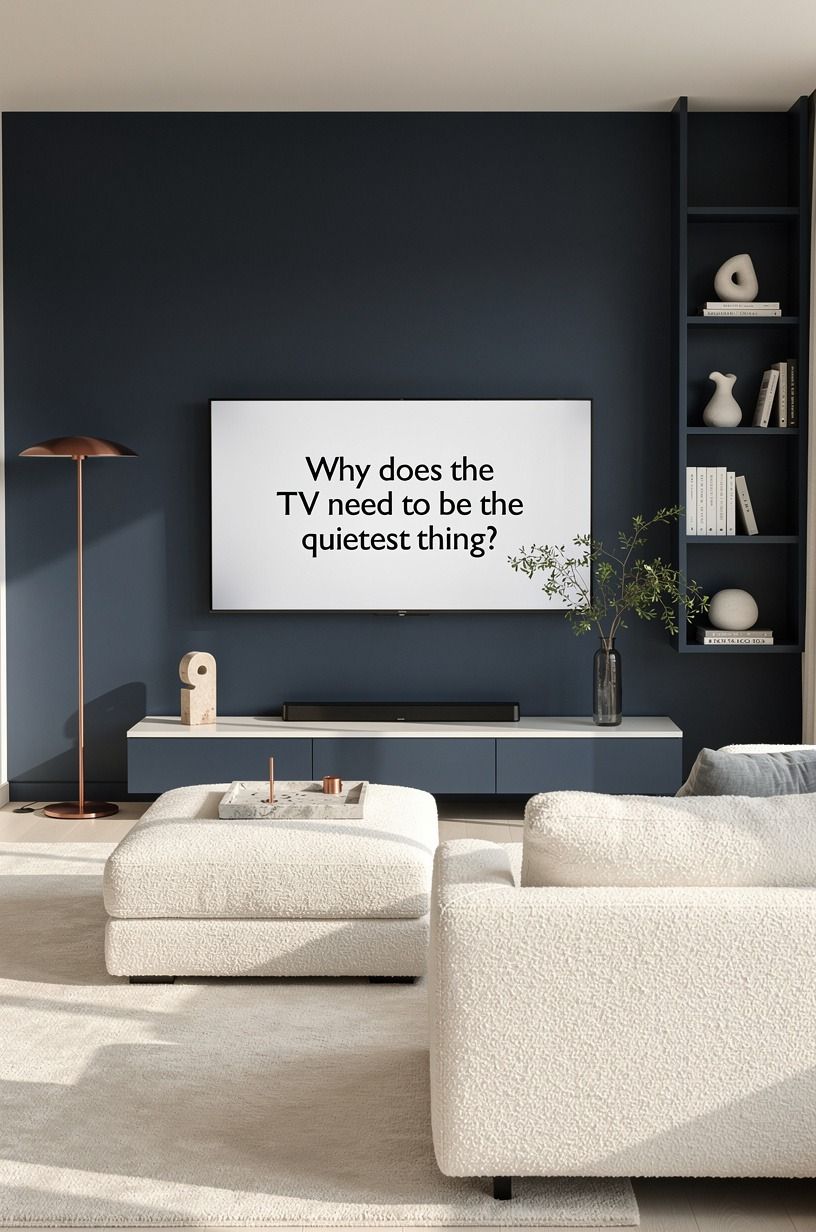
Because your screen is already the most active thing in the room. Your job is to lower its visual volume when it’s off, not decorate around it until the whole wall starts shouting.
Choose a matte black cable cover only if it disappears into your paint color. Otherwise, route it inside the stud bay before you finish the drywall. Your art, books, and organic bouclé can then take over when the screen goes dark.
I’d skip a bright white surround with a black TV unless your room is already crisp and graphic. In a lived-in room, the contrast feels abrupt.
Dark backing paint, a calm frame, and shelves with some breathing room. That’s the move.
8Choose an IKEA base over a custom cabinet if your budget is $100
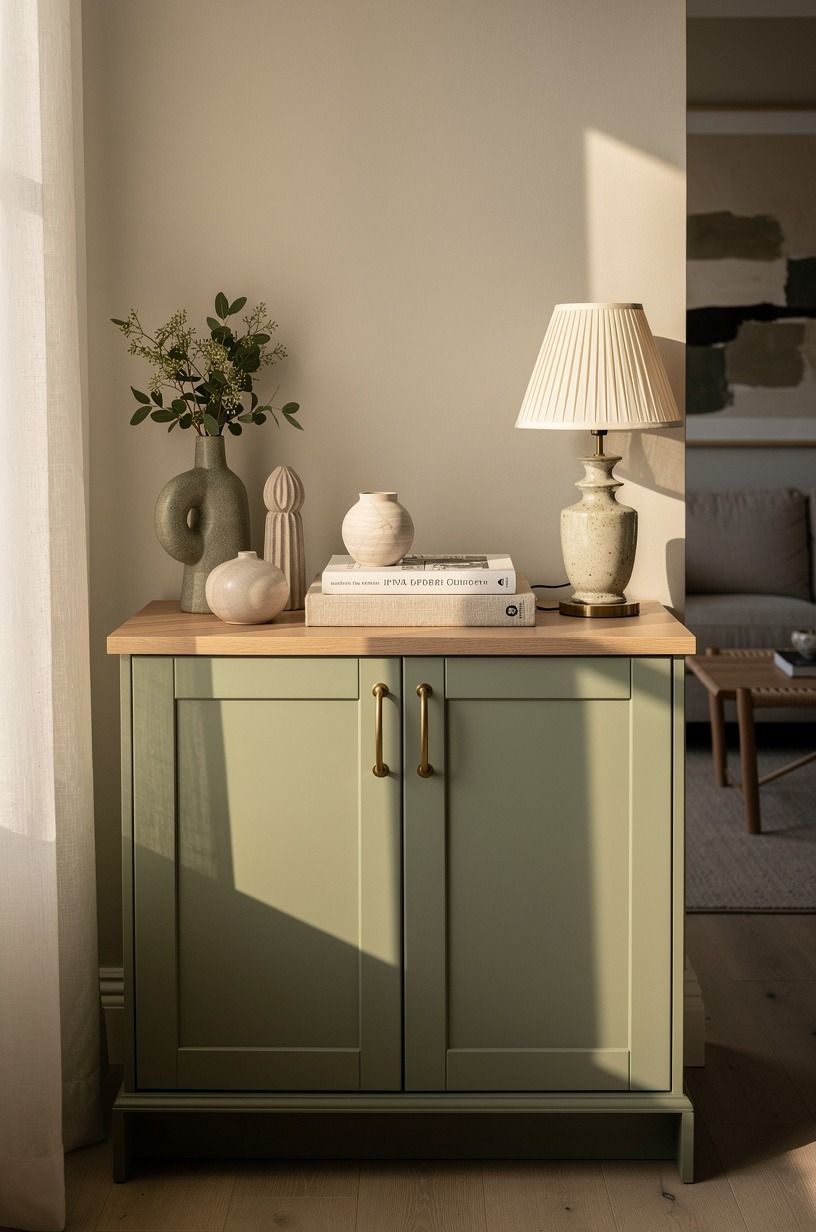
If you’ve got $100, put it into the part your body uses every day: storage that clears your floor.
9Layer a 9x12 rug to pull the wall into the room
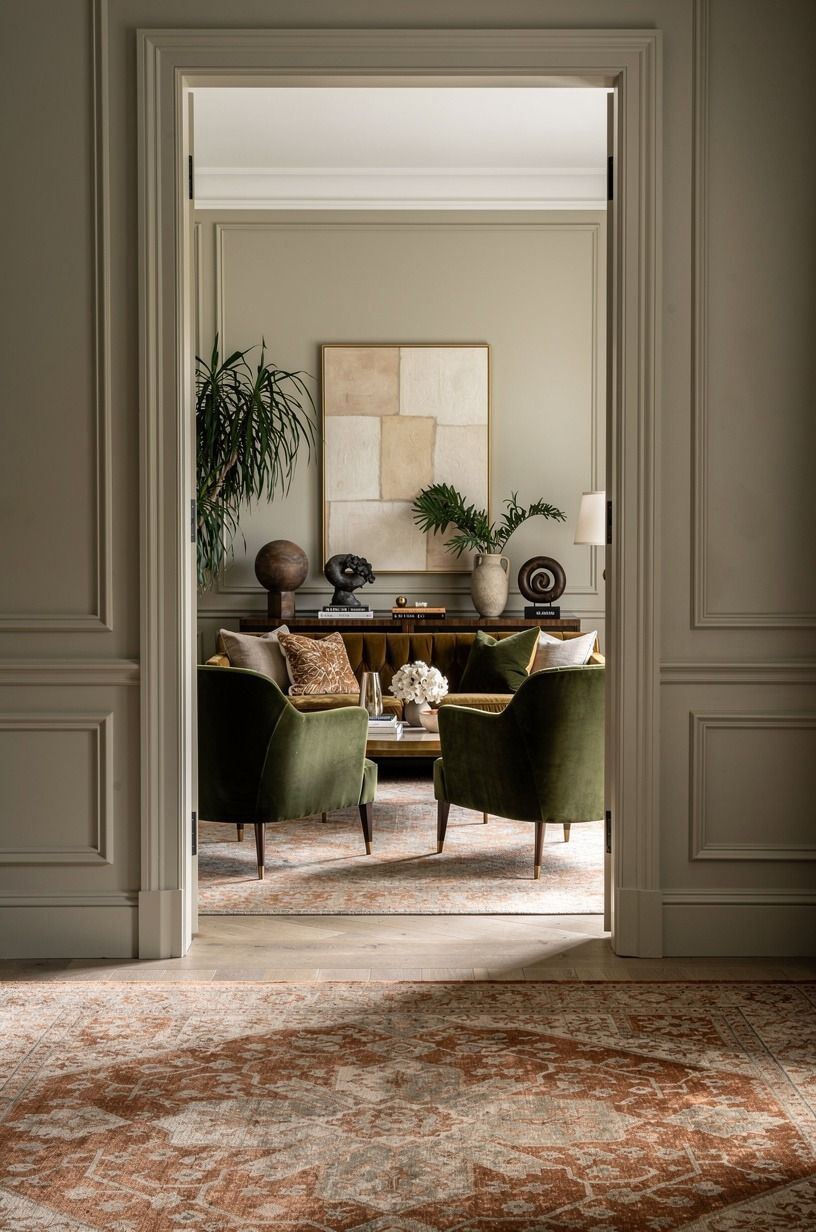
The media wall can’t carry the whole living room alone. Your rug tells the sofa, chairs, and wall that they belong to one conversation. For most rooms, an 8x10 or 9x12 works when the front legs of your seating sit on it.
A Loloi wool-blend rug in oatmeal and faded tobacco gives you an earthy ground under a blue or green wall. Your coffee table should be 16 to 18 inches tall and about two-thirds the sofa length, so you aren’t reaching awkwardly for a drink.
But don’t buy a small rug just because it’s cheaper. A too-small rug makes your new wall look like it belongs to a different room. Save for scale, then keep the accessories simple.
10Mix Sherwin-Williams Evergreen Fog with warm oak
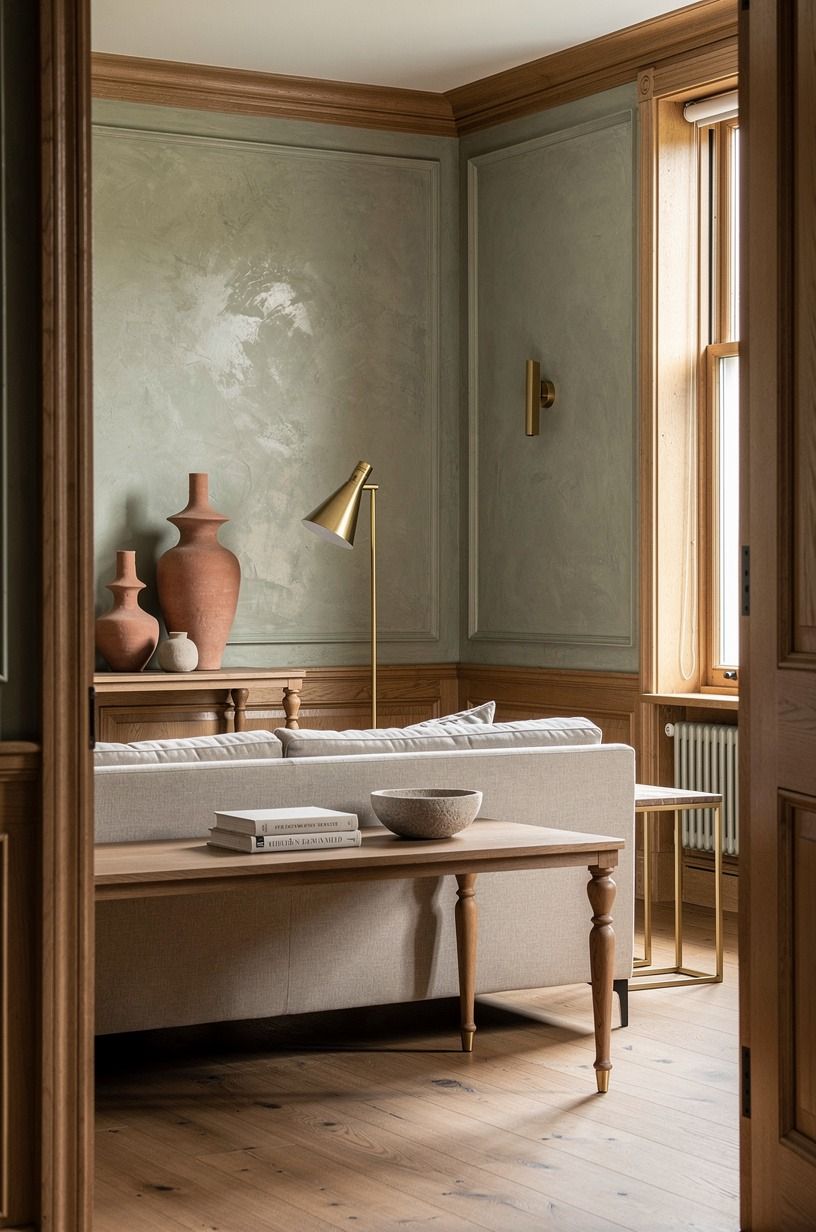
Paint the full wall, including the trim, rather than outlining every rectangle in white.
11Make the Before-and-After Shelf Rhythm Feel Intentional
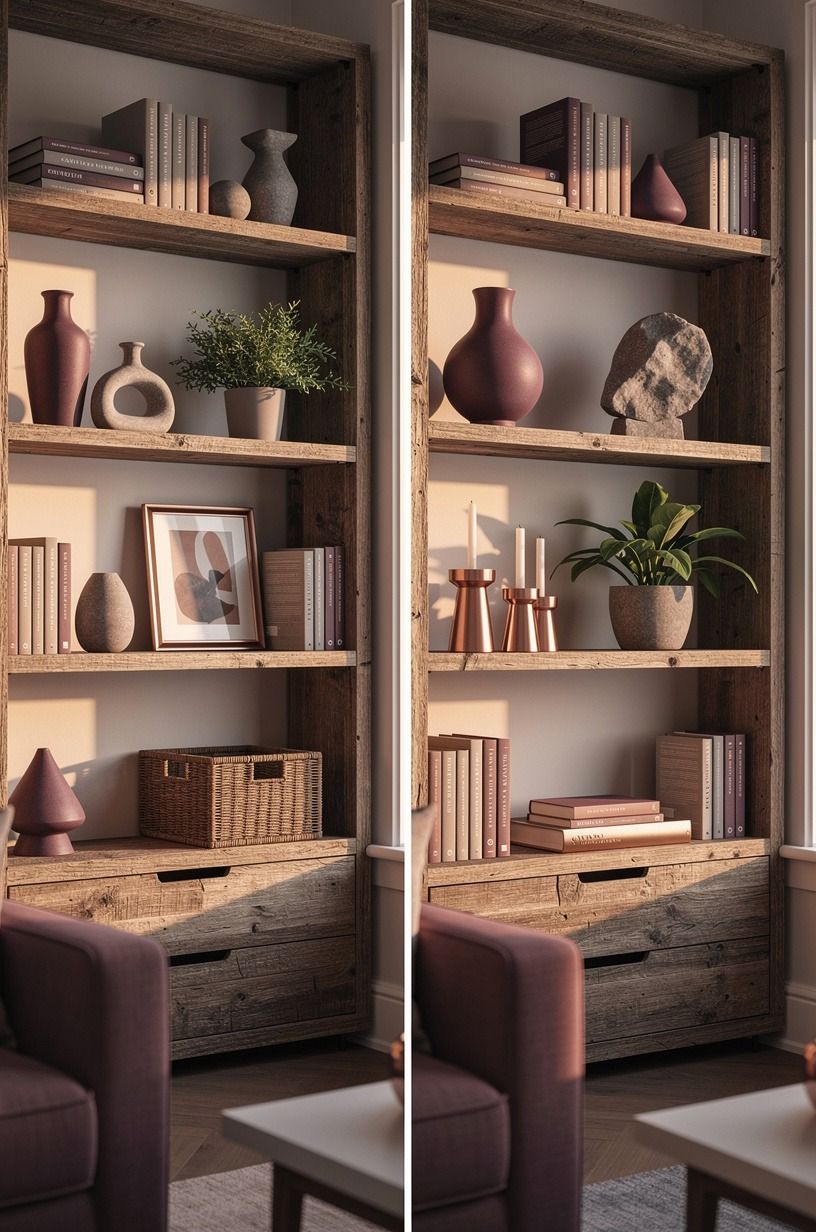
Shelves look best when they have a rhythm, not matching rows of identical objects. Give your eye one tall shape, one low shape, a little empty space, then repeat that loose pattern across the wall.
For your first shelf, try this: reclaimed weathered teak books in a stack, a small bowl, and one branch in a narrow vessel. On the next, use a Pottery Barn Livingston frame with a landscape photo and nothing else. Your display becomes charming because it isn’t trying so hard.
I’d avoid rows of fake greenery. They collect dust and make the wall feel staged.
Real branches, family photos, and books you’ve opened. Better texture, better story.
12Let plasterboard over stone do the visual heavy lifting
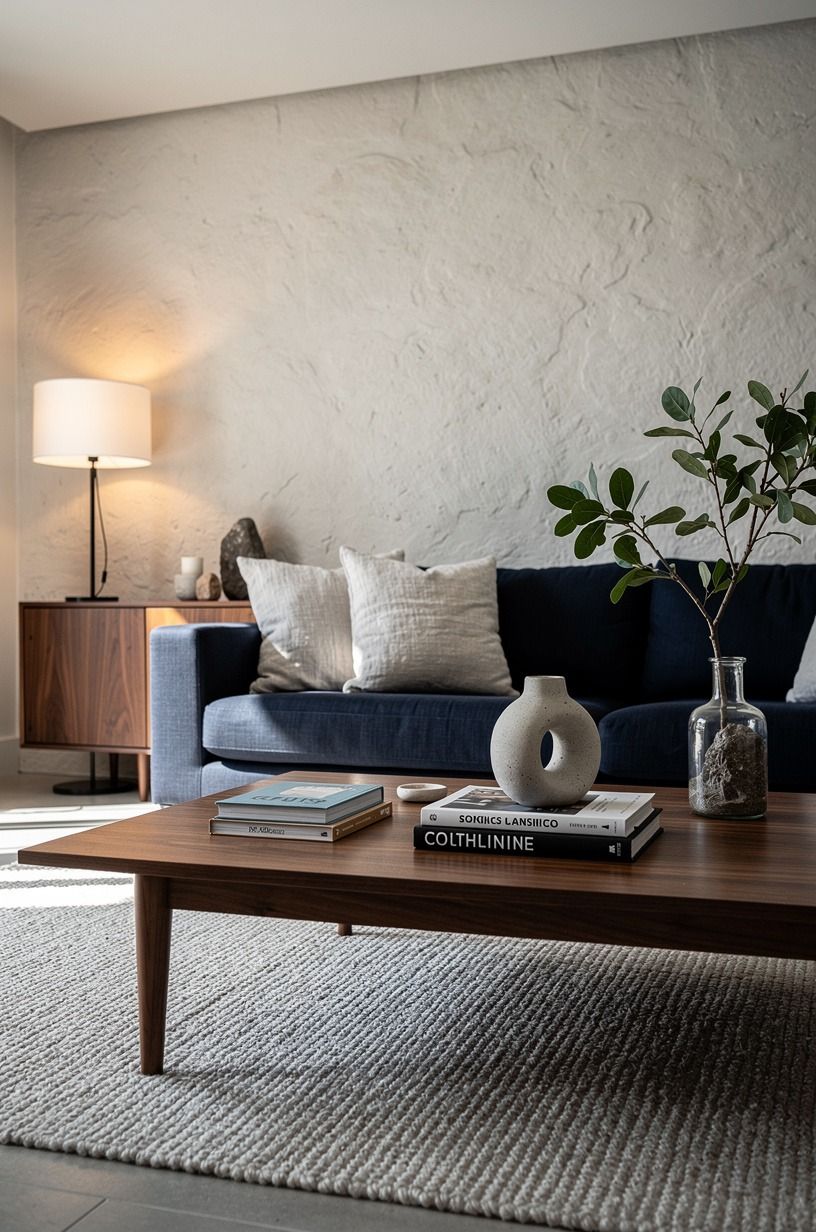
Plasterboard is often the smarter choice over a complicated stone veneer. Your wall gets clean lines, easier access for cables, and a more affordable build. Stone can be lovely, sure, but it can also make a television look trapped in a fireplace surround.
Use a smooth painted finish around the TV, then bring in texture through washed Belgian linen only if your room already has enough quiet surfaces. Your media wall should support your life, not become the one thing every guest has to comment on.
For a fall-ready room, add a merino wool throw over the sofa arm and a low amber lamp near the wall. The screen fades back. Your room feels warm, inviting, and ready for people.
The honest cost of a DIY media wall
Your budget depends on whether you’re styling an existing wall or building new framing. The lowest-cost version is paint, a secondhand cabinet, basic cable management, and shelves. Custom millwork changes the number fast, so don’t pretend every version belongs in the same budget.
For your own wall, spend first on safe mounting, a clean cable route, and storage. Paint is the low-risk experiment.
Custom panels are the investment. If you want a more relaxed result, I’d put a modest budget toward linen drapes before fancy shelf decor; they soften the entire room, not just one wall.
What I’d do differently on every media wall
I’ve built and styled enough TV walls to know that the tempting choice is usually more. More boxes.
More lights. More little things lined up on every shelf.
It’s understandable because a blank wall feels like an accusation, especially after you’ve bought lumber, filled holes, and spent a Saturday with a level in your hand. You want proof that all that effort mattered.
But a media wall works because it gives the room a place to settle. The TV is a practical object, not a sculpture.
I don’t think it needs a theatrical stage, and I’d skip anything that makes the screen harder to replace, service, or live with. A beautifully built surround that forces you to tear out trim for one cable problem isn’t refined. It’s annoying.
The best walls I’ve seen share one quality: they make the room calmer after the TV turns off. Your eye lands on wood grain, the amber edge of a lamp, a photo that means something, maybe a book you keep picking up.
There’s texture, but not noise. A dark painted recess can do that.
So can a simple IKEA base with doors and a shelf made from real oak. Expensive isn’t the same as considered.
I also think people underestimate scale. Your sofa may be 35 to 40 inches deep, your rug may need to be 9x12, and that means a narrow little wall detail can look lost.
Build for the room you have, not the saved photo you’re copying. And give yourself permission to stop before the final shelf is full.
That restraint is what makes it feel like home.
The Questions Worth Answering First
What is the best DIY media wall for a small living room?
A shallow painted wall with a floating TV and closed base storage is your best small-room option. IKEA BESTÅ storage keeps your floor clear, while a dark recess helps the screen disappear. Keep shelves narrow, your decor low, and the TV centered on seating rather than the entire wall.
Where can I buy DIY media wall pieces on a budget?
You can find solid budget pieces at IKEA, Target, Wayfair, and Facebook Marketplace. IKEA KALLAX units are especially useful because you can paint, add doors, or stack them under a custom top. Your best secondhand finds are cabinets, lamps, and real wood shelves.
How much does a DIY media wall makeover cost?
A simple DIY media wall usually costs about $100 to $300 if you use existing furniture, paint, and basic cable covers. Paint and secondhand storage are the cheapest places to start. Framing, electrical work, and custom cabinet fronts raise the cost quickly.
Can I create a DIY media wall on a budget?
Yes, and your lowest-cost version can look thoughtful. Removable cable covers, a painted backdrop, and a rearranged cabinet do most of the visual work.
Clear your shelves, pull your rug forward, and use one lamp near the wall. Small changes, real payoff!
Is a DIY media wall worth it in a small space?
Yes, it’s worth it because a small room benefits from one organized focal point. Closed storage keeps visual noise out of sight, and your television stops floating on a random blank wall. Keep the build shallow so your seating still has breathing room.
Is a DIY media wall a good idea for a rental?
Yes, if you use reversible layers. Peel-and-stick wallpaper behind the TV, removable cable channels, and a freestanding cabinet give your rental a finished look without permanent framing. Your landlord gets an intact wall, and you get a more comfortable room.
Where I’d Start First
If I had to pick one, I’d start with the dark painted TV recess. You can’t layer warmth over a glaring black screen on a blank white wall; every lamp and shelf will keep fighting it. Pin this media-wall plan for later and let your paint do the quiet work.