No Counter Space to Prep On? These 9 IKEA Carts Fix It
05 september 2026Our test kitchen has about 30 inches of open counter between the sink and the range, which is roughly the width of one cutting board and a coffee grinder. Every time we cooked, something got moved to the floor.
So we tried the cheapest fix available: a rolling cart, typically about $229, with a better top on it. Six setups later, here's what held up and what we'd skip.
What you will find inside
- Start With FORHOJA if You Want to Cook Tonight
- Lay a Wide Hardwood Board Across the Factory Top
- Oil the Birch Before You Chop Anything
- Turn BEKVAM Into the Small-Kitchen Workhorse
- Cap a RASKOG Trolley With a NORRAVA Lid
- Convert a BROR Frame Into an Industrial Prep Station
- Build a KALLAX Island When Storage Is the Real Problem
- Stack Two LACK Tables for the Cheapest Version
- Lock the Casters Before You Roll Dough
- Mount the Power Strip Under the Top, Never On It
- Hang What You Reach For on the Short Side
- Put Baskets on the Lower Shelf, Not Loose Bags
- Measure Your Walkway Before You Buy Anything
- Match the Cart Height to Your Counter
- Park the Cart Where the Mess Actually Happens
Start With FORHOJA if You Want to Cook Tonight
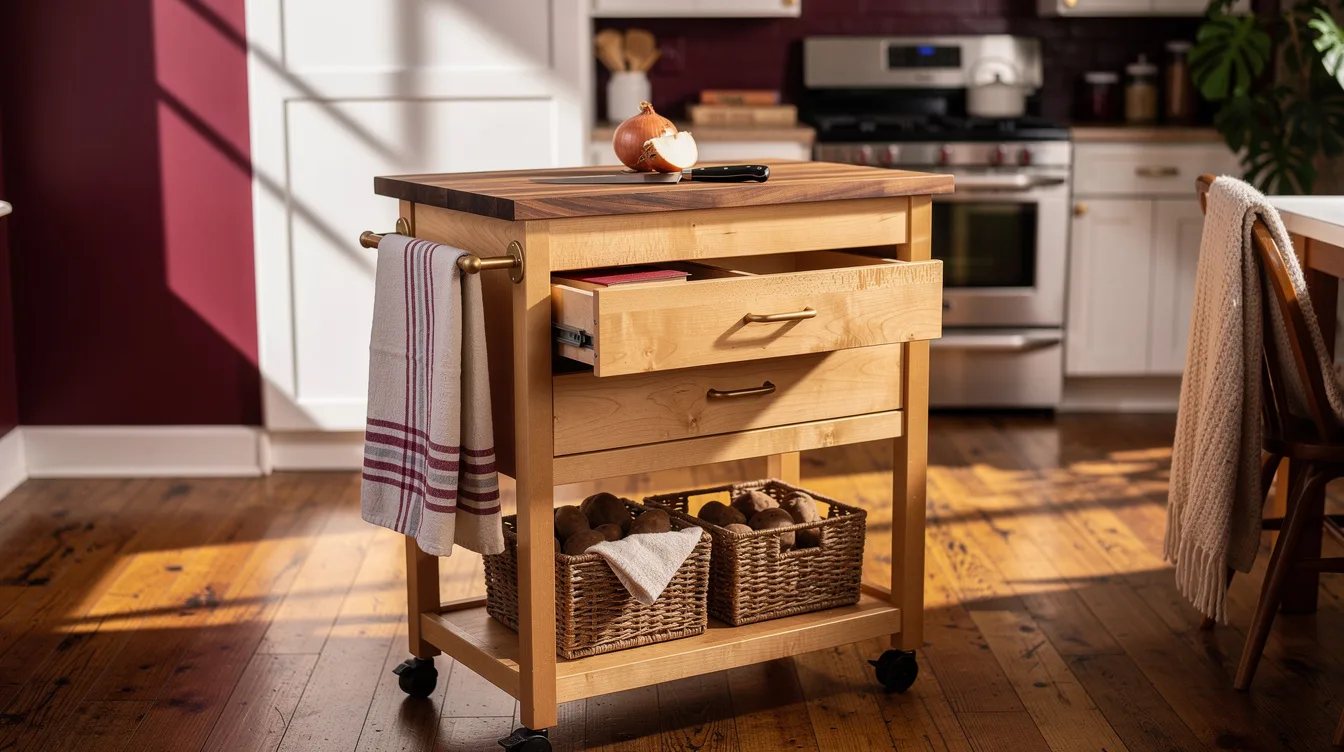
The FORHOJA cart is the one we'd hand to anyone who doesn't want a weekend project. Solid birch, two drawers, open shelving below, and casters that actually roll on tile.
The top measures roughly 39 3/8 by 16 7/8 inches and sits about 35 3/8 inches high, so it lands close to counter height without any shimming. That's around 4.6 square feet of new work surface for a typical list price near $229.
Prices shift by market and by year, so check yours. Still, nothing else in the store gets you a movable prep line this fast.
Lay a Wide Hardwood Board Across the Factory Top
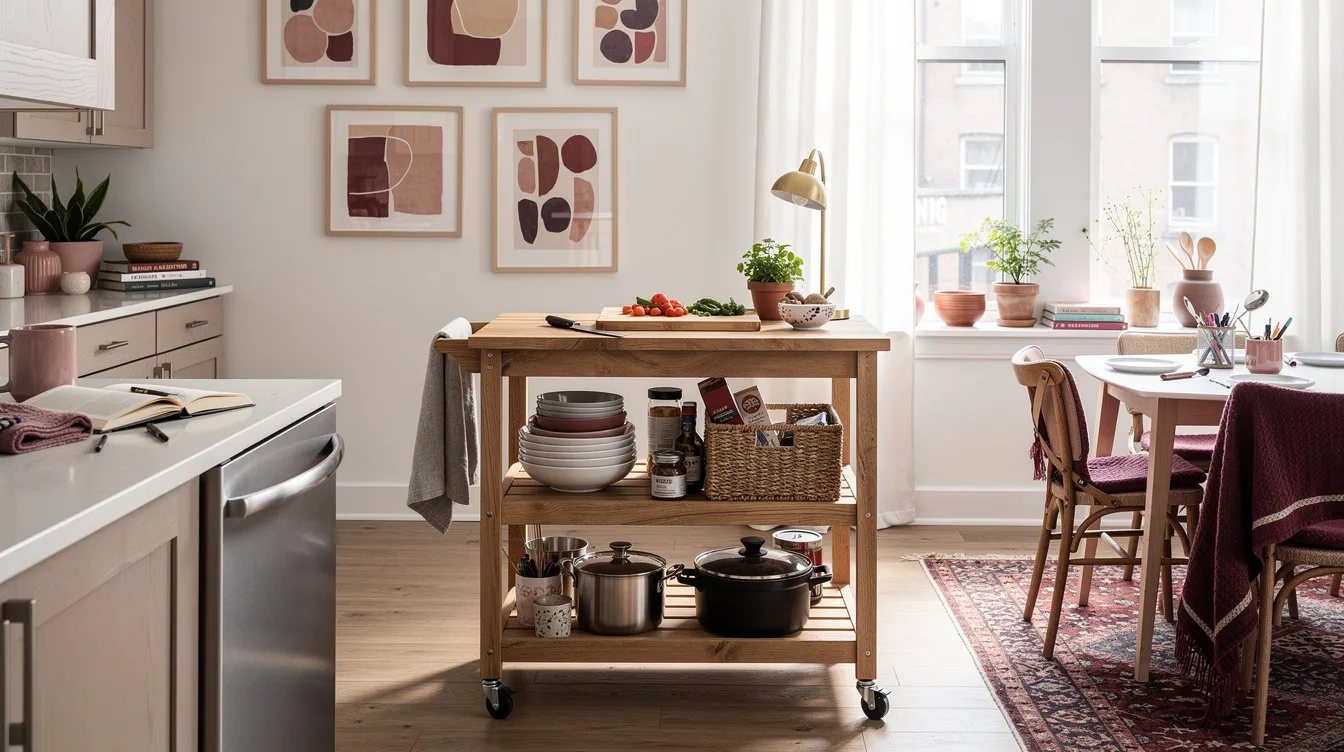
The birch top is fine for staging. For real chopping, we put a removable board over it and let that take the damage.
Look for something around 36 to 40 inches long and 16 to 20 inches deep in acacia, maple, walnut, beech, or teak. Expect roughly $40 to $100 depending on species and thickness.
The board also lifts off and goes straight to the table as a serving surface, which is the part we didn't expect to use so much.
Oil the Birch Before You Chop Anything
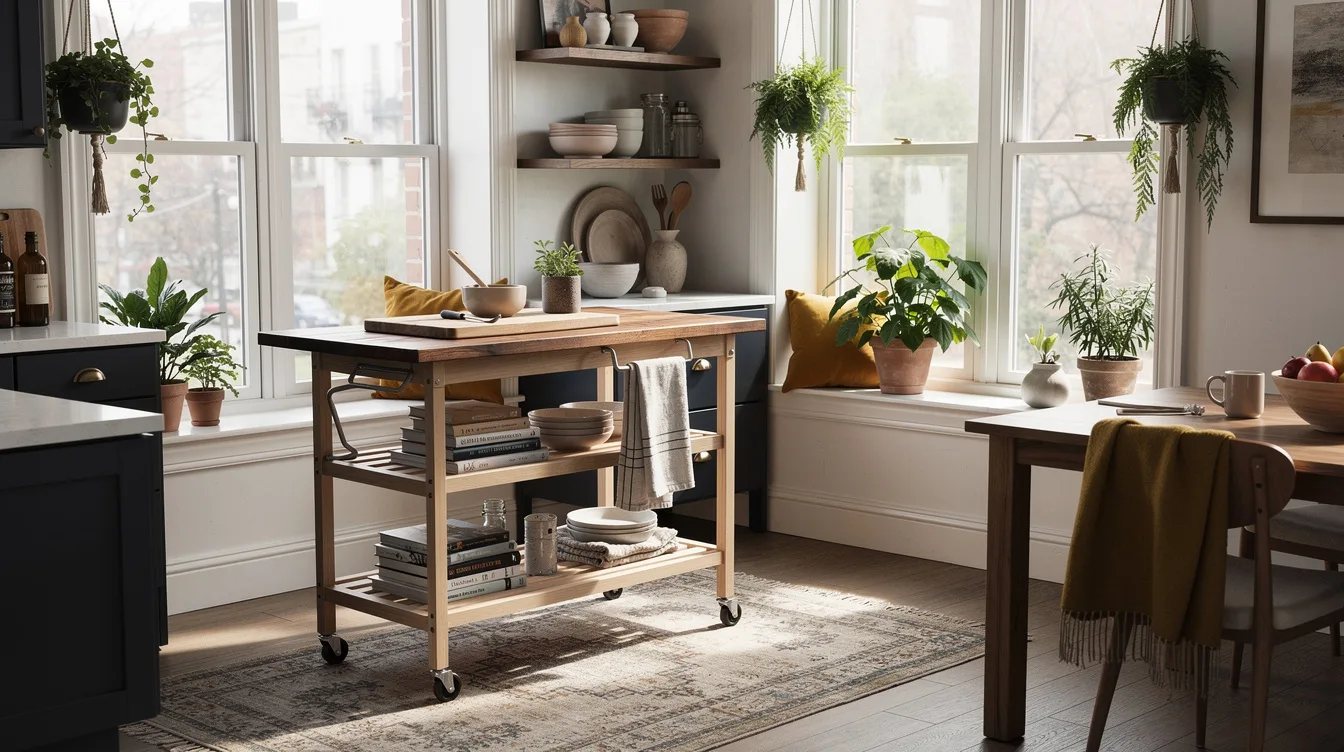
Raw birch drinks up tomato juice and beet stains within a week. Ours got a coat of food-safe mineral oil the same evening we built it, and it wiped clean after that.
Budget about $15 to $30 for oil or a hardwax finish rated for food-contact countertops. Re-oil roughly once a month for the first few months, then every quarter.
Skip glossy polyurethane here. It chips under a knife and you can't spot-repair it.
Turn BEKVAM Into the Small-Kitchen Workhorse
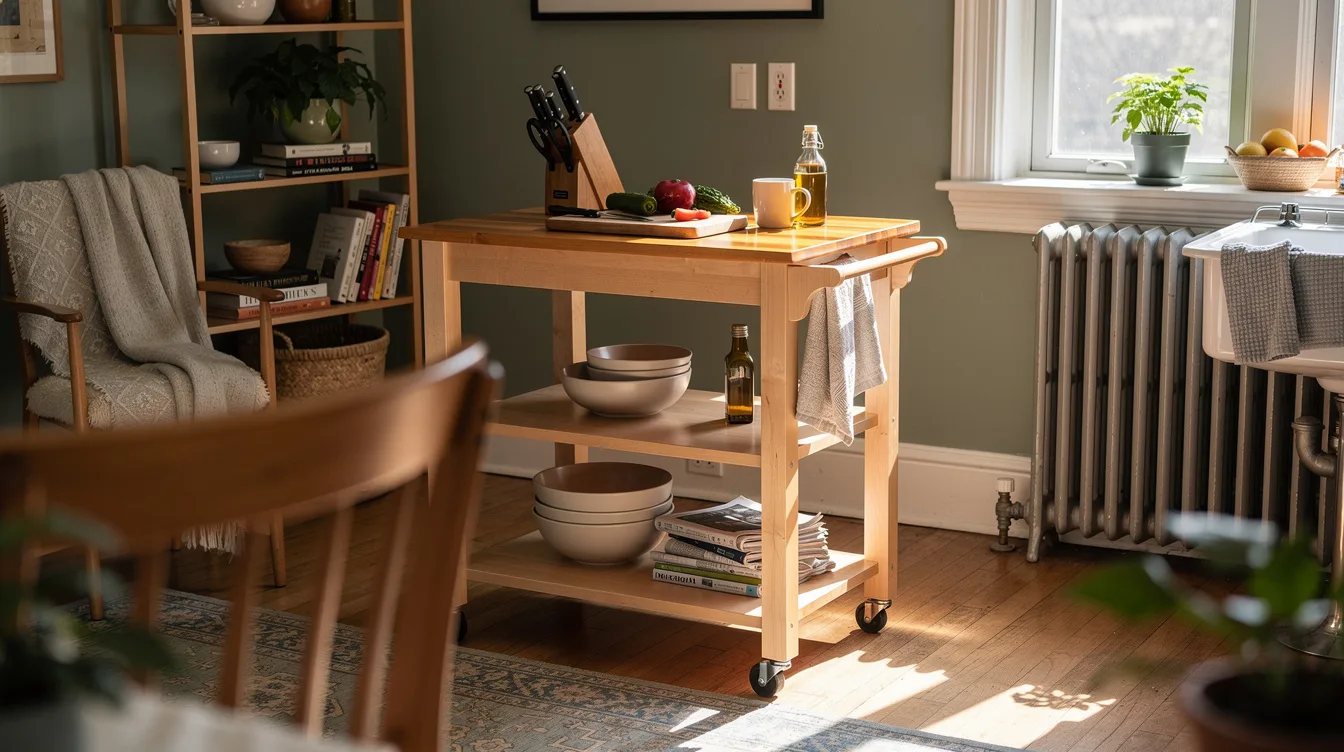
The BEKVAM cart is beech, open-shelved, and typically about $129, which makes it the honest starting point for a galley kitchen.
Its base footprint is roughly 22 7/8 by 19 5/8 inches, so it tucks into gaps a bigger cart can't reach. Finished with oil, a stain, a larger board, and a towel rail, most people land somewhere around $160 to $250.
It's the best value in this list if you're willing to spend an afternoon on it.
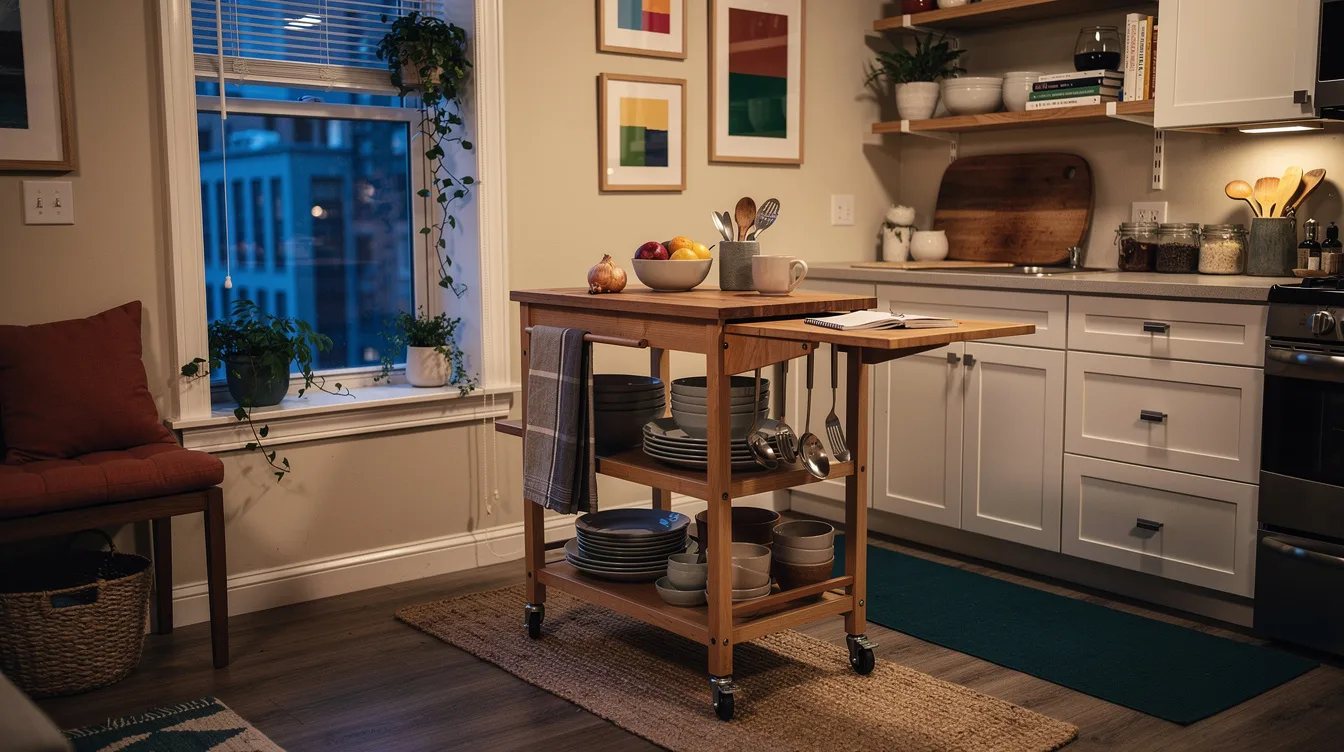
Cap a RASKOG Trolley With a NORRAVA Lid
A RASKOG trolley alone is a bin on wheels. Add the bamboo lid and it becomes a landing station.
The capped surface runs about 13 3/4 by 17 3/4 inches at roughly 30 3/8 inches high, and there's a smaller version closer to 11 by 15 inches. The full-size cart and lid together typically run about $53.
Be realistic about what that is: a spot to set the hot pan, park the mixing bowls, or stage groceries. It's too narrow and too bouncy to be your chopping zone.
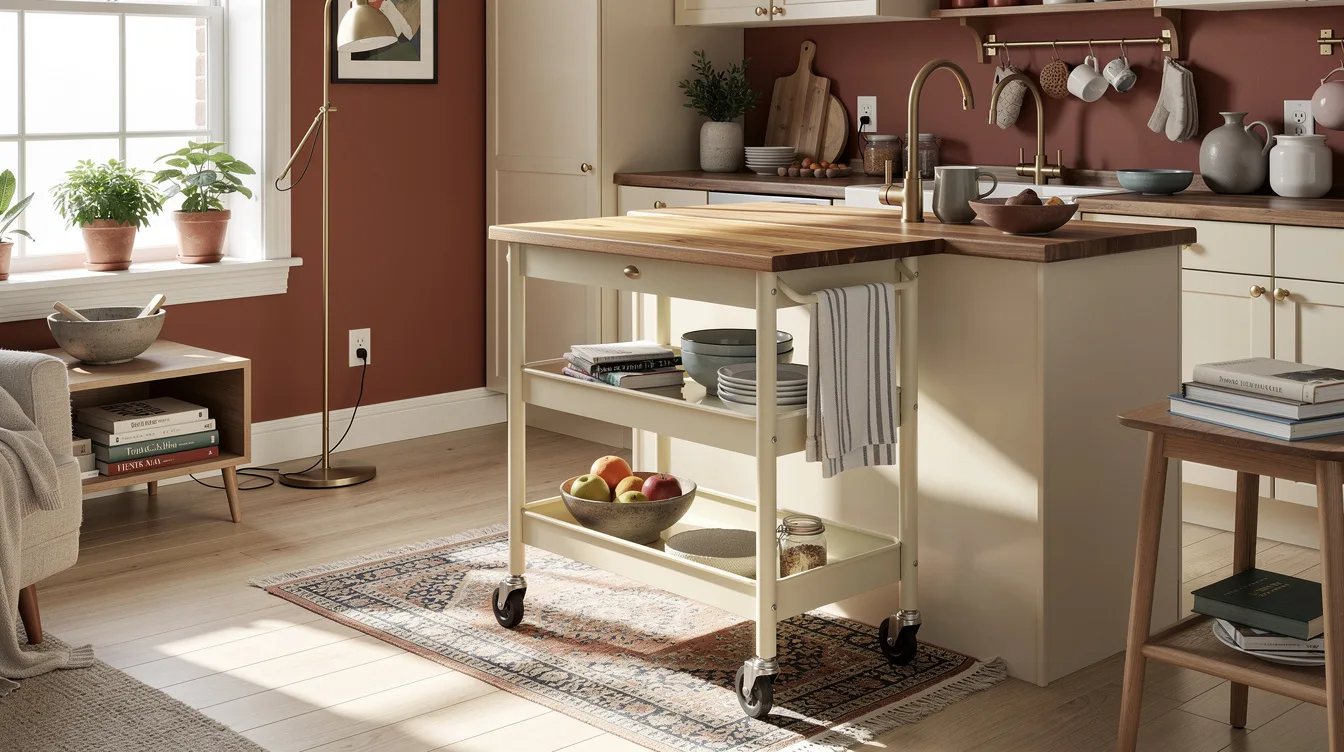
Convert a BROR Frame Into an Industrial Prep Station
When we wanted something that wouldn't flex under a stand mixer, we went to BROR. Black steel frame, pine plywood countertop, about 33 1/2 by 21 5/8 inches of surface.
The base typically runs around $199, and sealing the plywood or swapping in a better top pushes it to roughly $230 to $320. The extra depth matters more than the width once you're rolling dough.
Two notes. It's heavy, and it reads workshop rather than kitchen, which some rooms handle better than others.
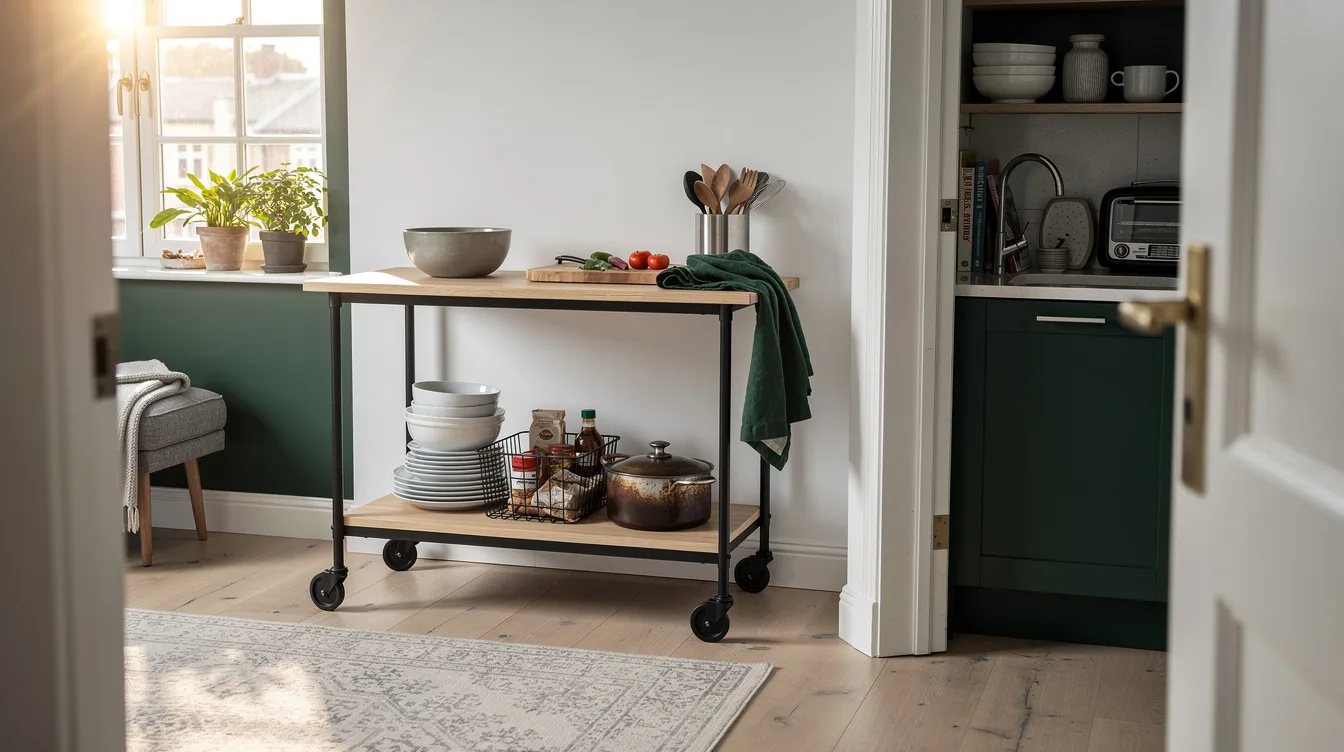
Build a KALLAX Island When Storage Is the Real Problem
If your counters are clear but your cabinets are packed, prep space isn't the actual issue. Two KALLAX cube units, some wood reinforcement between them, and a deep top gives you a compact island with real volume underneath.
This is the priciest route. Typical builds land anywhere from $250 to well past $600 once you factor in butcher block or a thicker countertop plus hardware.
Reinforce it properly. KALLAX was never designed to carry a heavy slab across two units, and an unsupported span will sag over a season.
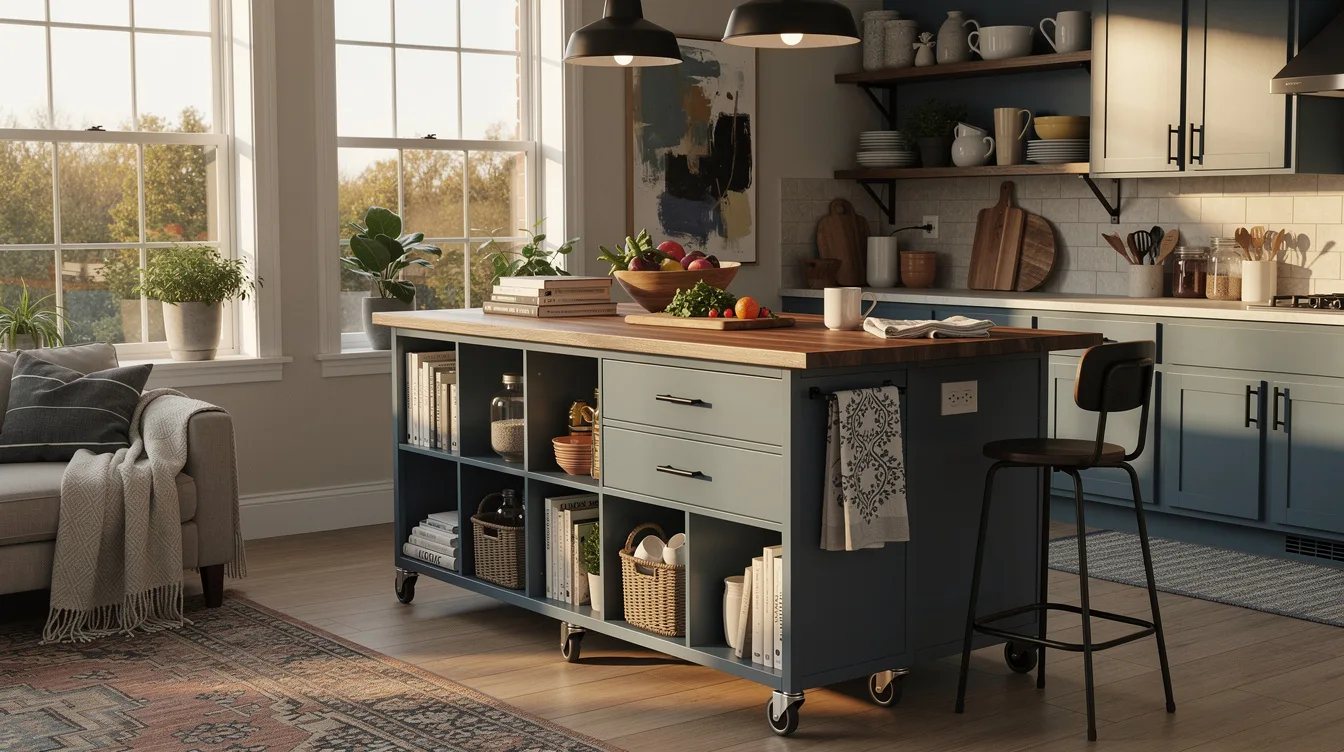
Stack Two LACK Tables for the Cheapest Version
Two LACK tables, a set of brackets, and a capped top in butcher block, laminate, or stone-look film gets you a prep table for roughly $100 to $250.
It works. It's also the least robust option here, since LACK is hollow inside and won't take repeated pounding or a heavy mixer.
We'd use it as a coffee and appliance station, not a butchering surface. For a first apartment, that's usually enough.
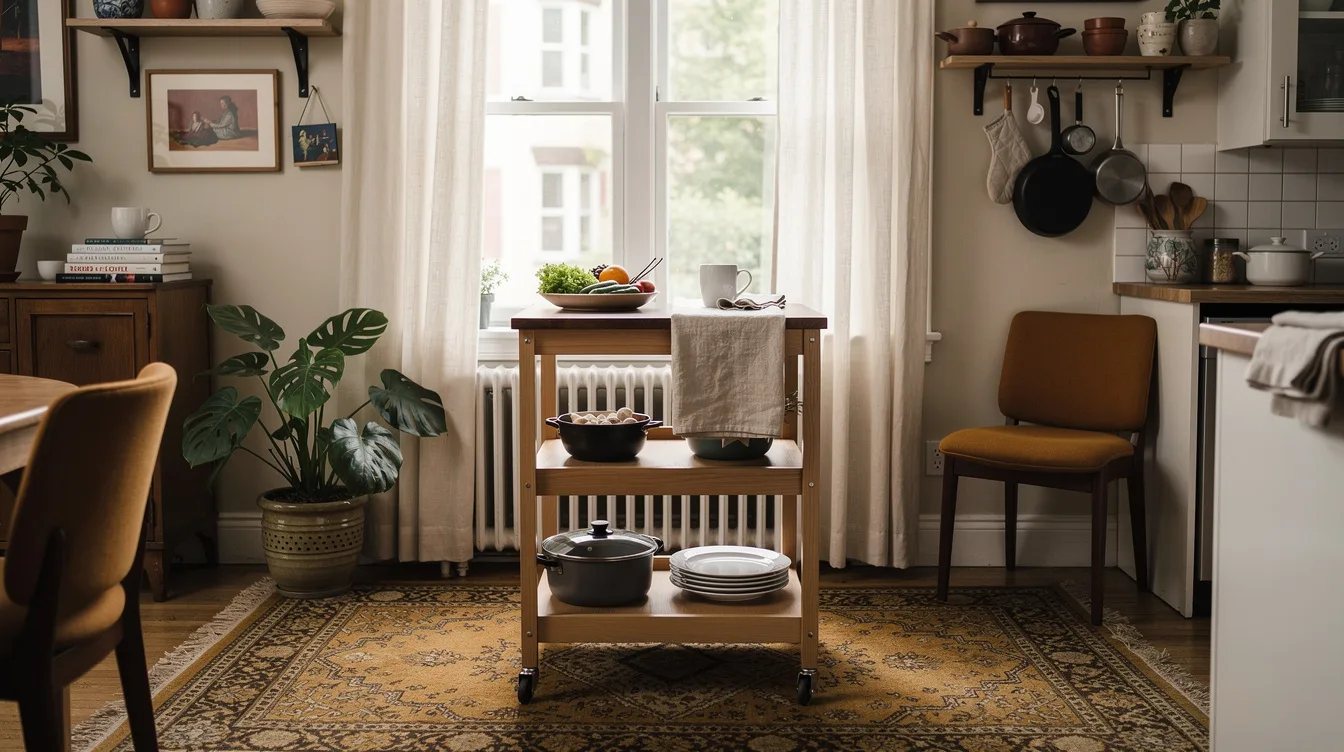
Lock the Casters Before You Roll Dough
The first time we leaned into a batch of pastry, the cart traveled about four inches across the floor and took our patience with it.
Every cart in this list either ships with locking wheels or takes a set. Engage them before any task that involves pressure, and keep the load balanced low.
On old floorboards, a folded dish towel under one wheel kills the last of the wobble.
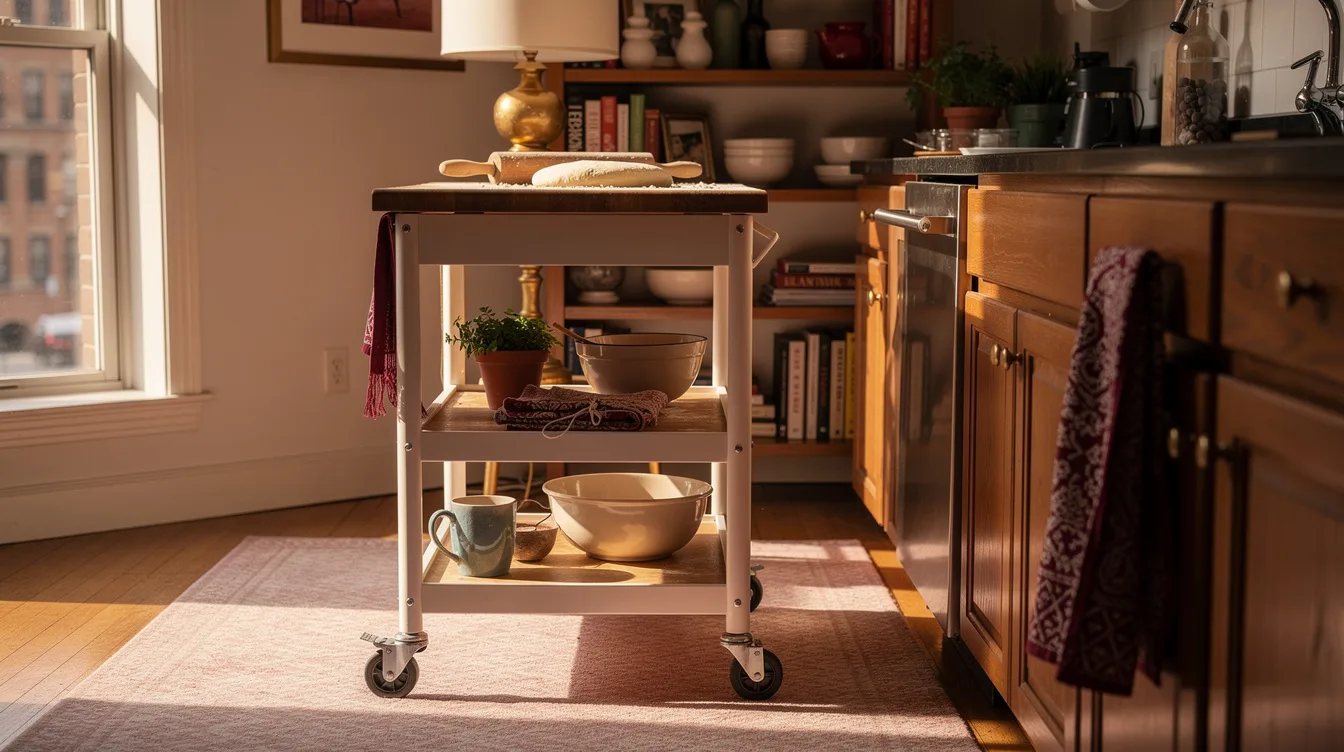
Mount the Power Strip Under the Top, Never On It
Coffee grinders, immersion blenders, and hand mixers all want an outlet, and a cart in the middle of the room doesn't have one.
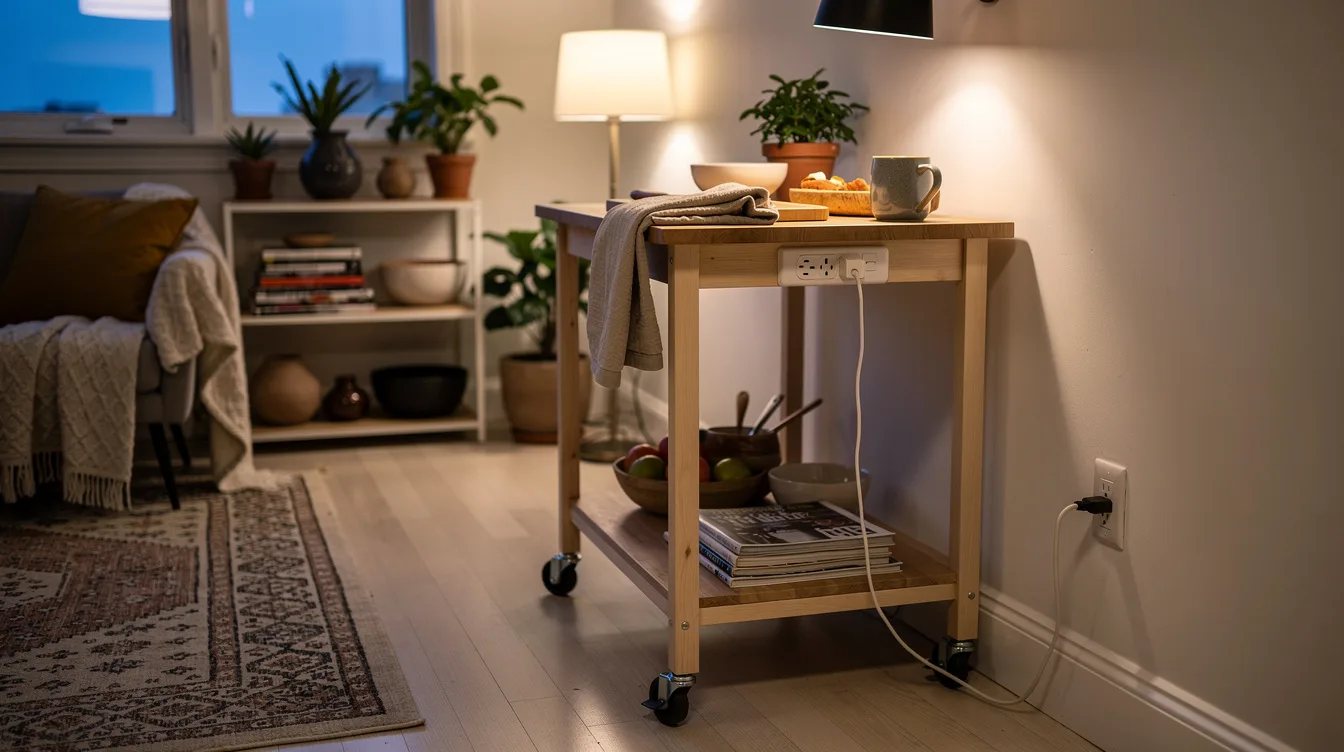
Screw a slim power strip to the underside of the frame, then run one cord to the wall. Nothing electrical belongs on the food-prep surface.
Tape or clip the cord along a leg so it doesn't loop under a caster. That's the part people skip and regret.
Hang What You Reach For on the Short Side
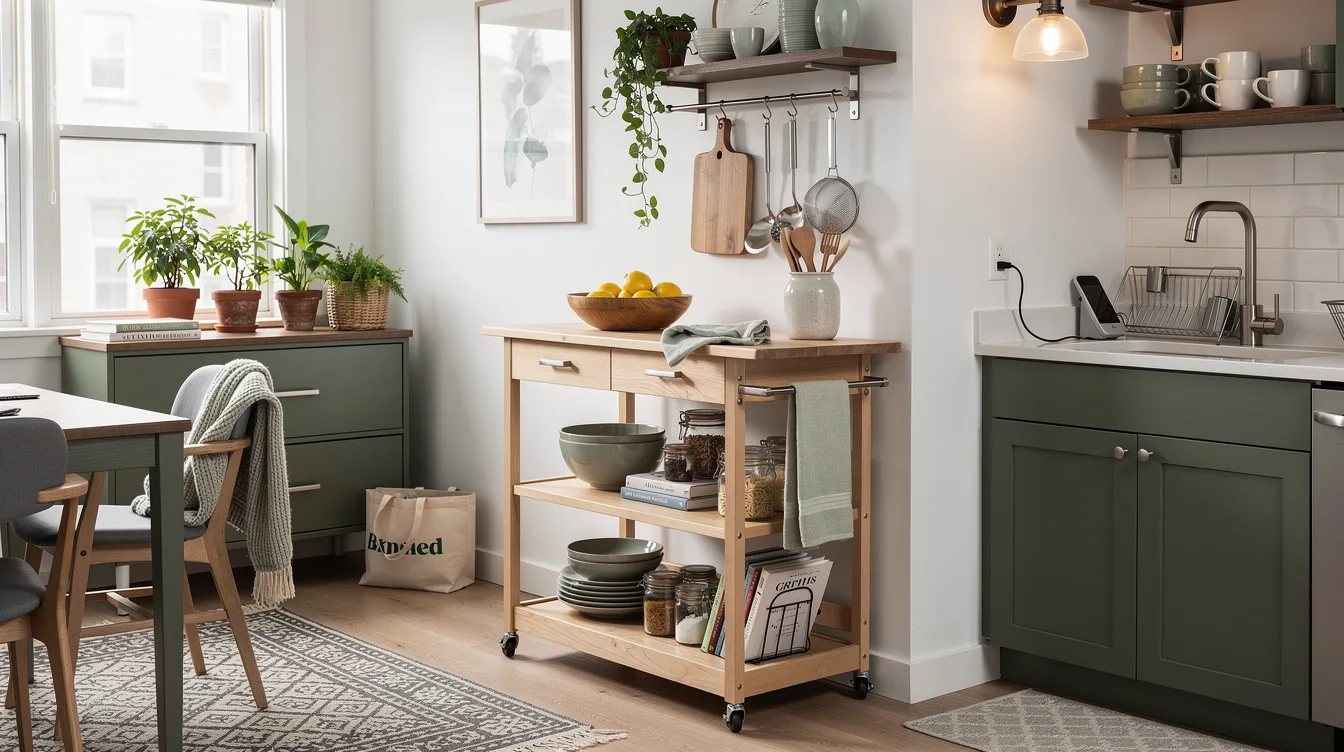
The narrow end of the cart is dead space until you use it. A side-mounted towel bar and a few S-hooks hold your kitchen towel, a colander, and the peeler you always lose.
Adhesive hooks work on painted or laminate ends, but screw-mounted hardware is the version that survives a year.
Keeping tools on the sides is the whole point: the top stays clear for actual work.
Put Baskets on the Lower Shelf, Not Loose Bags
Open shelving turns into a heap in about two weeks. Washable baskets fix that for roughly $20 to $50 a set.
We run one for onions and potatoes, one for dish linens, and one for the appliance we use weekly. Anything used less than that goes back in a cabinet.
Label nothing. If a basket needs a label, it has too many kinds of things in it.
Measure Your Walkway Before You Buy Anything
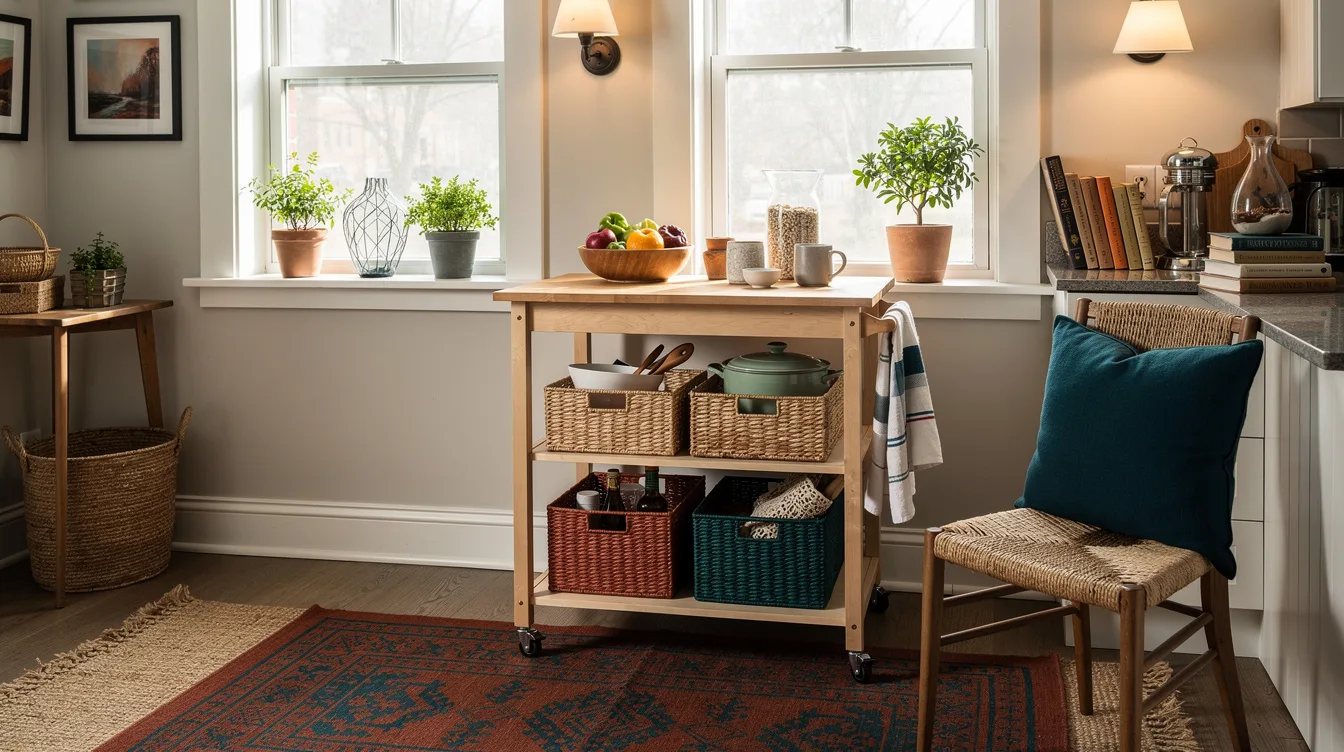
A cart that blocks the dishwasher door is a piece of furniture you'll resent. Standard guidance is about 36 inches of clear walkway, and closer to 42 or 48 inches if two people cook at once.
Most of these carts are roughly 17 to 22 inches deep. Chalk the footprint on the floor and live with the tape for two days before ordering.
If the numbers don't work, the RASKOG setup is the one that still fits.
Match the Cart Height to Your Counter
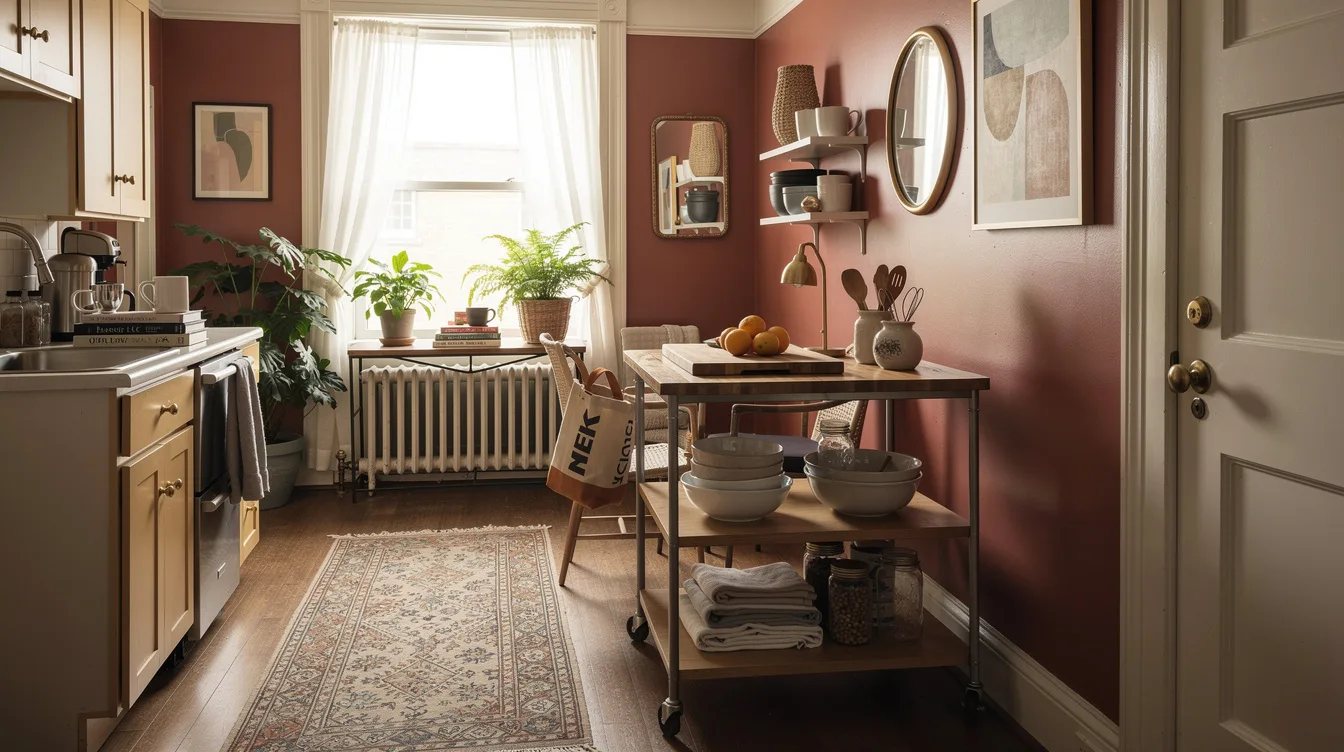
American counters typically sit at about 36 inches. FORHOJA at roughly 35 3/8 inches is close enough that adding a 3/4 inch board brings it nearly flush, which is what you want if the cart parks at the end of a run.
BEKVAM sits lower, so it reads as a side table rather than an extension of your counter.
Decide which you're building. A flush extension and a standalone island are two different pieces of furniture.
Park the Cart Where the Mess Actually Happens
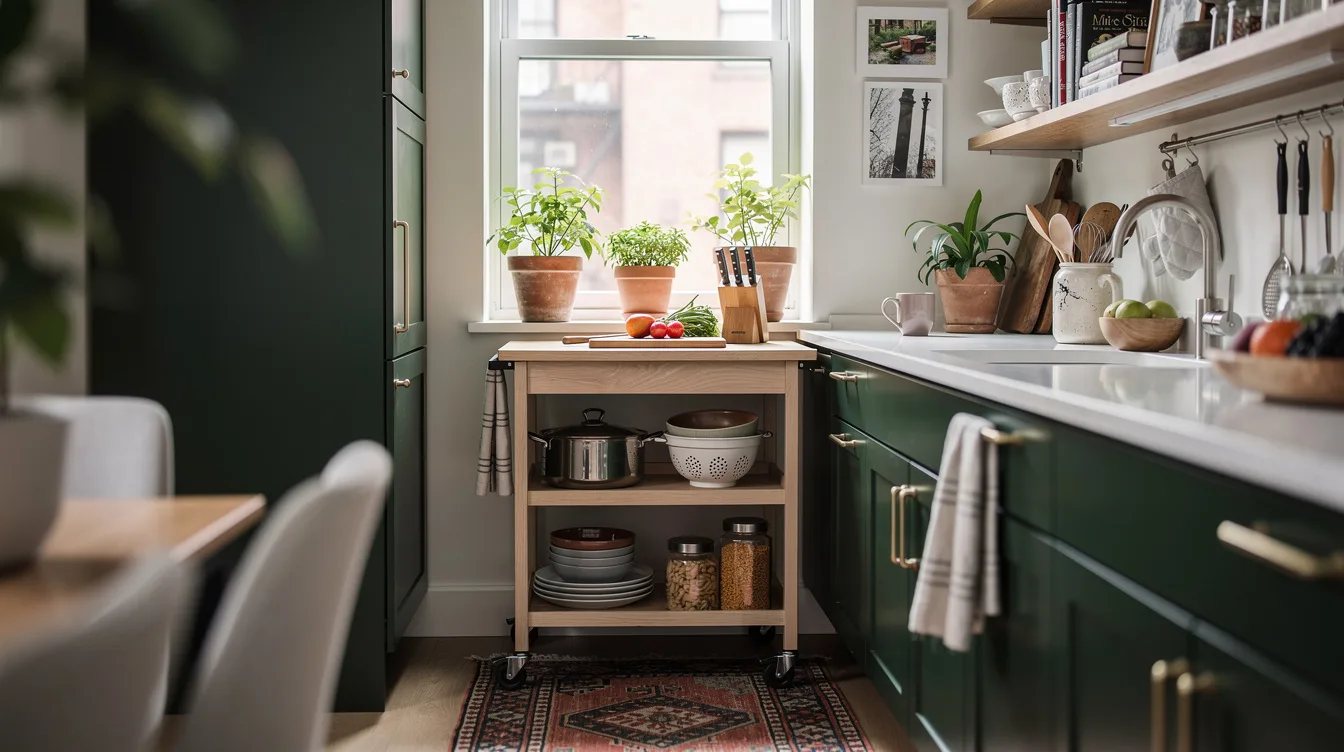
We moved ours four times before it settled between the fridge and the sink, which is where unpacking, rinsing, and trimming all collide.
Watch your own routine for a week. The right spot is wherever you currently set things down on top of other things.
Then use the wheels. Rolling it out to the dining table for plating is the one thing a built-in island will never do for you.
Keep reading
- 12 Small Kitchen Dining Nooks That Double as Prep Space
- 12 IKEA Kitchen Storage Finds Designers Use in Tiny Spaces
If you're starting from zero, spend in this order: the cart first, then about $20 of food-safe oil, then a wide hardwood board once you know where the cart lives.
All in, most kitchens land somewhere around $245 to $380 and gain close to five square feet of prep space, without a contractor or a single new pipe.