12 Designer-Approved Color-Blocking Ideas That Zone a Studio
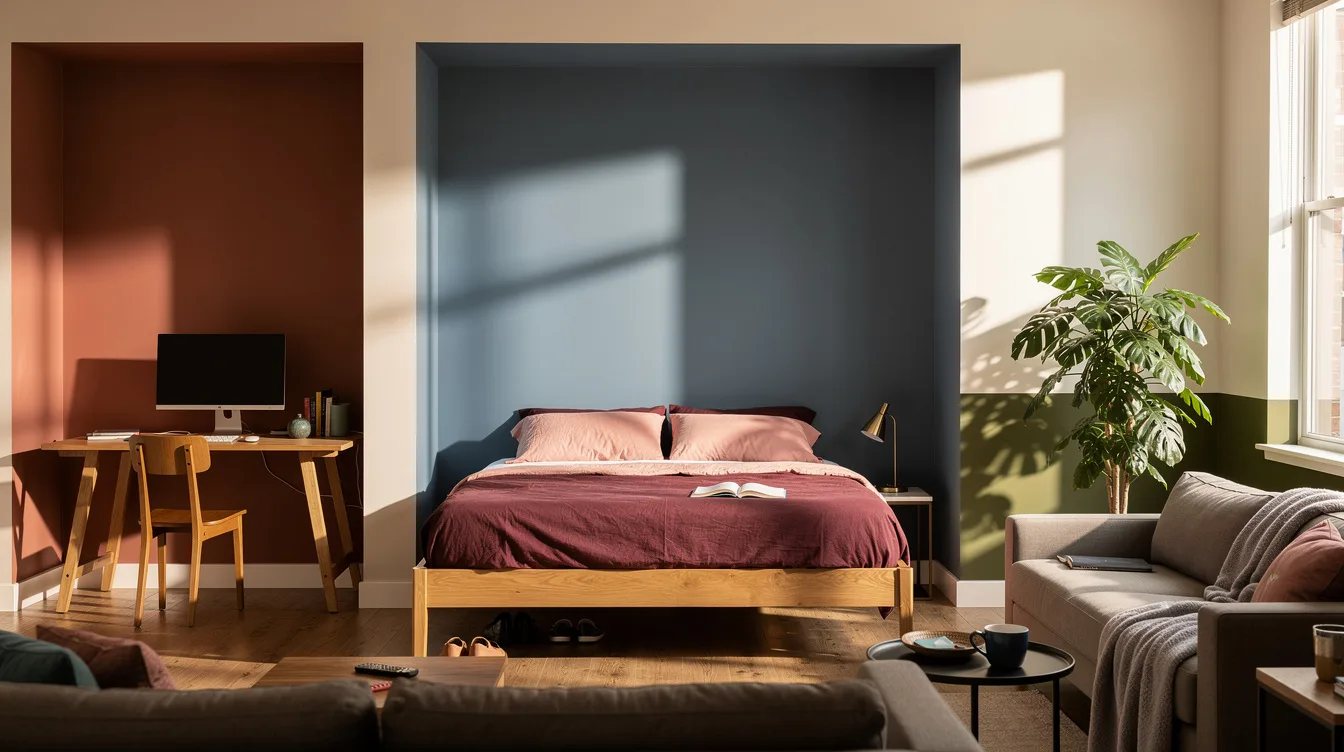
01 september 2026We kept seeing the same problem in compact rentals: a 54-inch bed, a desk, and a sofa sharing one uninterrupted wall made every activity feel switched on at once. A painted boundary gave each use a clear address without stealing a single inch of floor space.
Our most reliable formula kept roughly 70 to 80% of the visible walls in a quiet light base, then assigned one contained color field to the zone that needed focus. The paint line has to follow the furniture, because random geometry reads like decoration rather than architecture.
What you will find inside
- Center a Sleeping Block on the Bed
- Extend the Bed Field Past the Nightstands
- Build a Full-Height Portal Around the Desk
- Set a Low Band Behind the Sofa
- Carry the Dining Block Up to a Picture Rail
- Frame Open Shelves With a Tall Rectangle
- Align a Horizontal Line With the Monitor
- Make a Painted Headboard in a Rental
- Use a Narrow Block to Separate the Entry
- Repeat the Zone Color Only Twice
- Contain Dark Paint Inside One Useful Field
- Finish Every Edge With the Same Base Color
Center a Sleeping Block on the Bed
Paint a vertical field behind the bed and center it on the mattress, never on the wall. For a typical 54- to 63-inch bed, make the block about 71 to 87 inches wide so it reaches beyond the bedside surfaces.
Benjamin Moore Crystalline AF-485 against White Heron OC-57 gives a wood bed enough definition without making the sleeping corner heavy. Run the color from floor to ceiling when the ceiling is low, or stop it around 83 to 91 inches high for a quieter headboard effect.
Extend the Bed Field Past the Nightstands
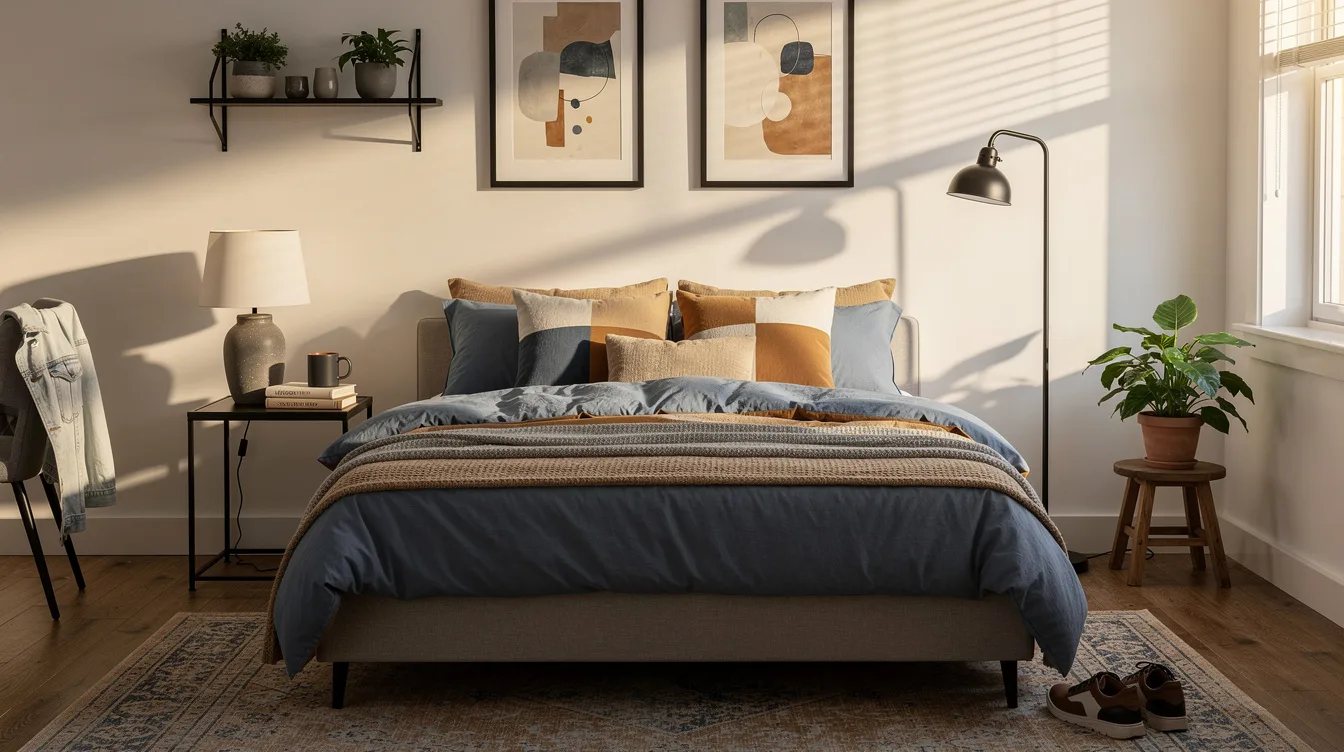
A block that ends at the mattress looks pinched. Let it reach roughly 8 to 14 inches past each side of the furniture grouping, including narrow nightstands, so the whole sleep setup feels deliberate.
We’d pair this edge with an oak platform bed and one warm linen pillow, then leave the rest of the wall plain. The extra breathing room does more zoning work than a busier mural ever could.
Build a Full-Height Portal Around the Desk
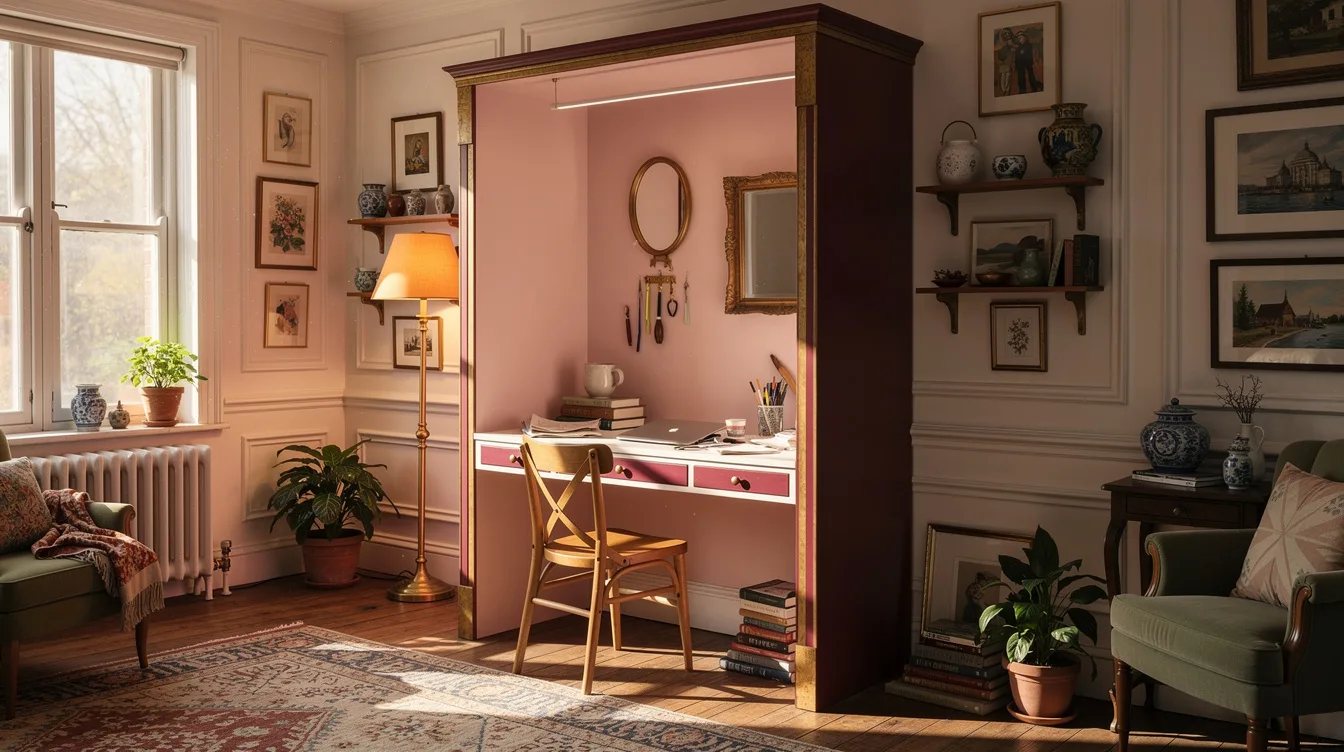
Give a work area a full-height painted portal, especially when the desk sits beside the bed. A typical single desk needs a field about 47 to 71 inches wide, with enough room for a task chair to feel included.
Benjamin Moore River Blue 2057-10 is a confident office signal when it stays inside that boundary. Bring the field 12 to 24 inches onto the return wall in a corner, which makes the bay look planned instead of squeezed in.
Set a Low Band Behind the Sofa
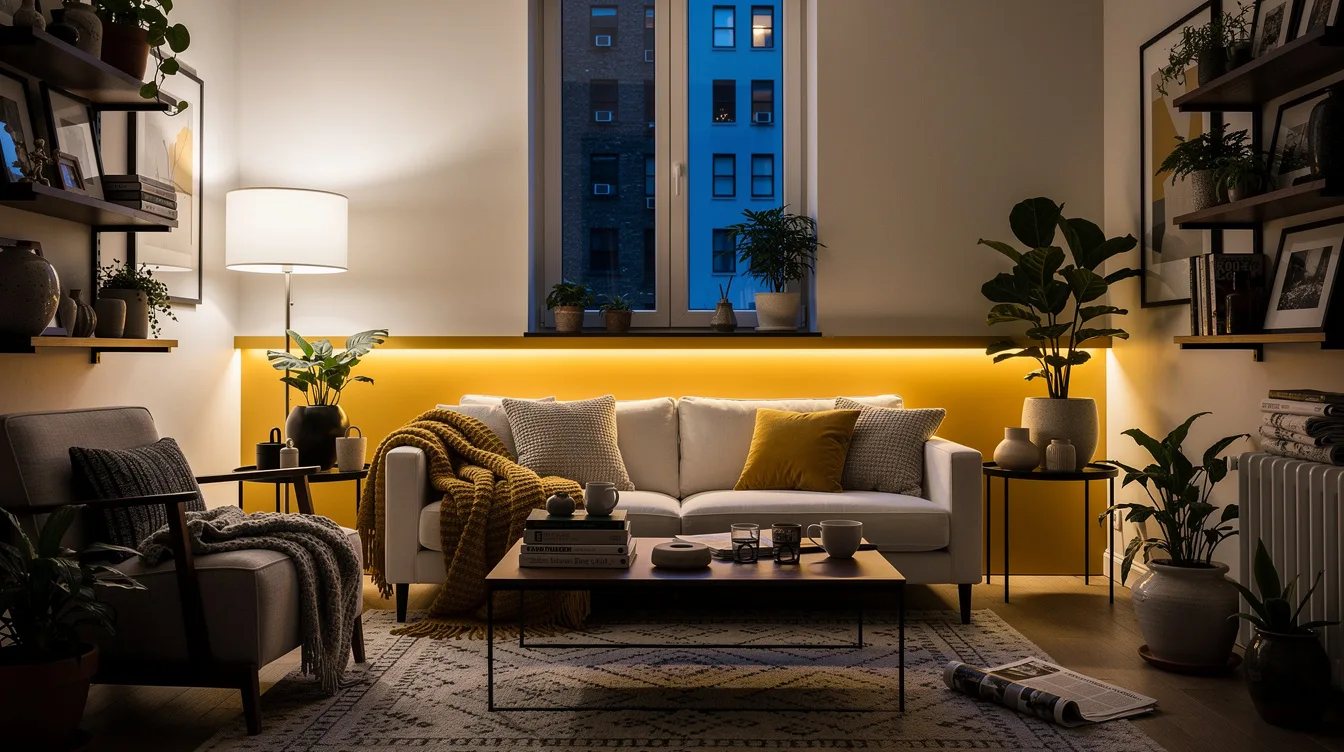
Paint a low horizontal field behind the sofa, with its top line aligned to the sofa back or the bottom edge of art. Around 35 to 47 inches from the finished floor usually gives the wall a grounded, furniture-scaled horizon.
Make it about 12 to 24 inches wider than the sofa overall, then add a wool-look rug in the same tonal family. A muted olive, tobacco, or ink blue field looks more grown-up than a bright accent wall.
Carry the Dining Block Up to a Picture Rail
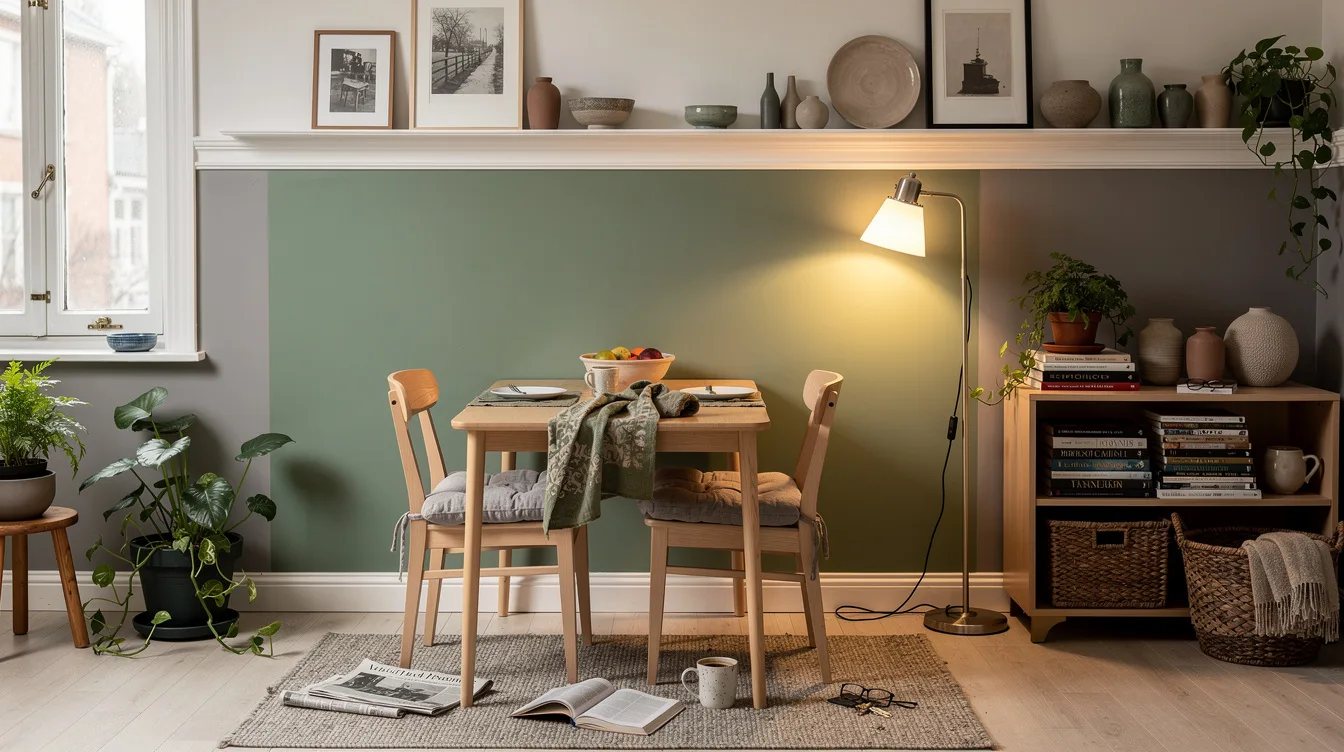
A tiny dining setup needs a clear signal, particularly when two chairs sit close to the sofa. Paint the lower wall behind the table up to roughly 42 inches, then stop at a crisp horizontal line.
A walnut veneer table against a soft clay band creates a small dining room without a divider. Keep the tabletop simple, because the paint already supplies the visual boundary.
Frame Open Shelves With a Tall Rectangle
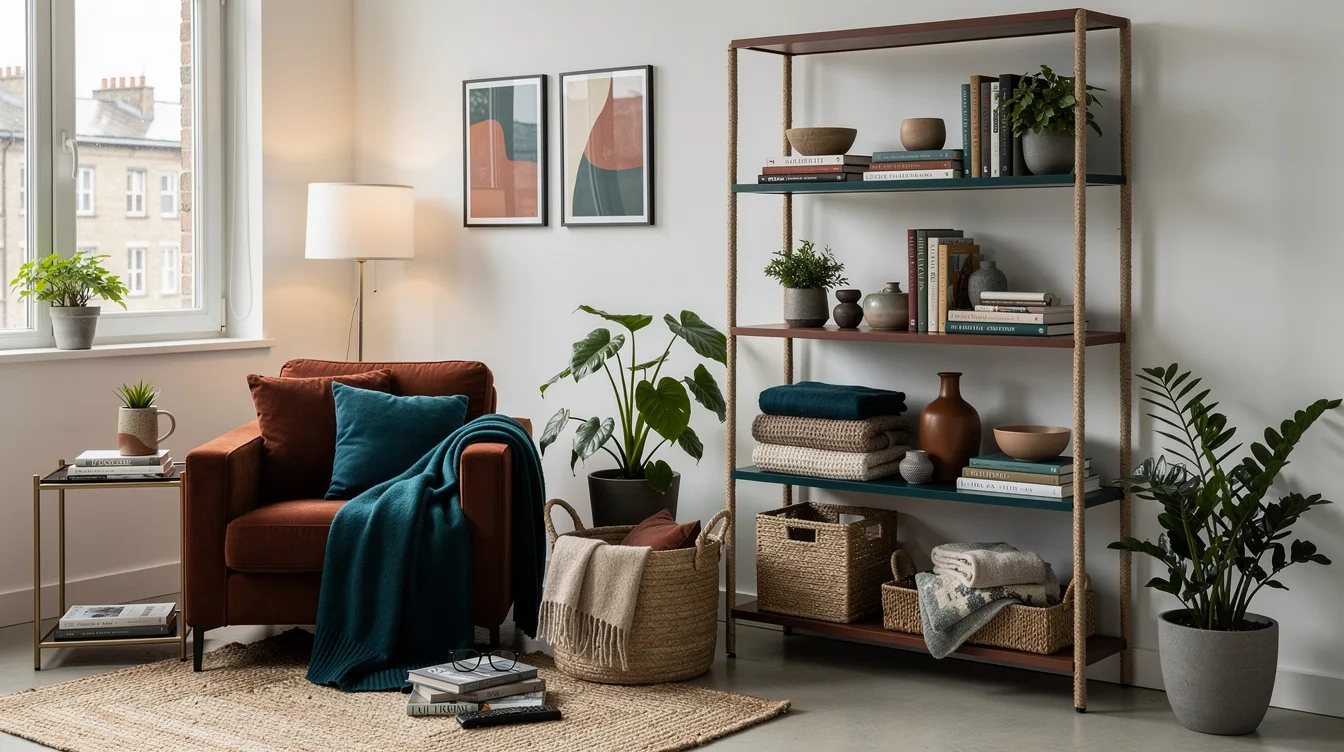
Use a tall block behind open shelving when storage is visible from every part of the studio. The color turns ordinary shelves into a destination and prevents books, baskets, and objects from scattering attention across the room.
Leave about 8 inches of color beyond the shelf edges and use rattan baskets for the lower cubbies. This is one place where a deeper shade earns its keep, since the objects soften the field.
Align a Horizontal Line With the Monitor
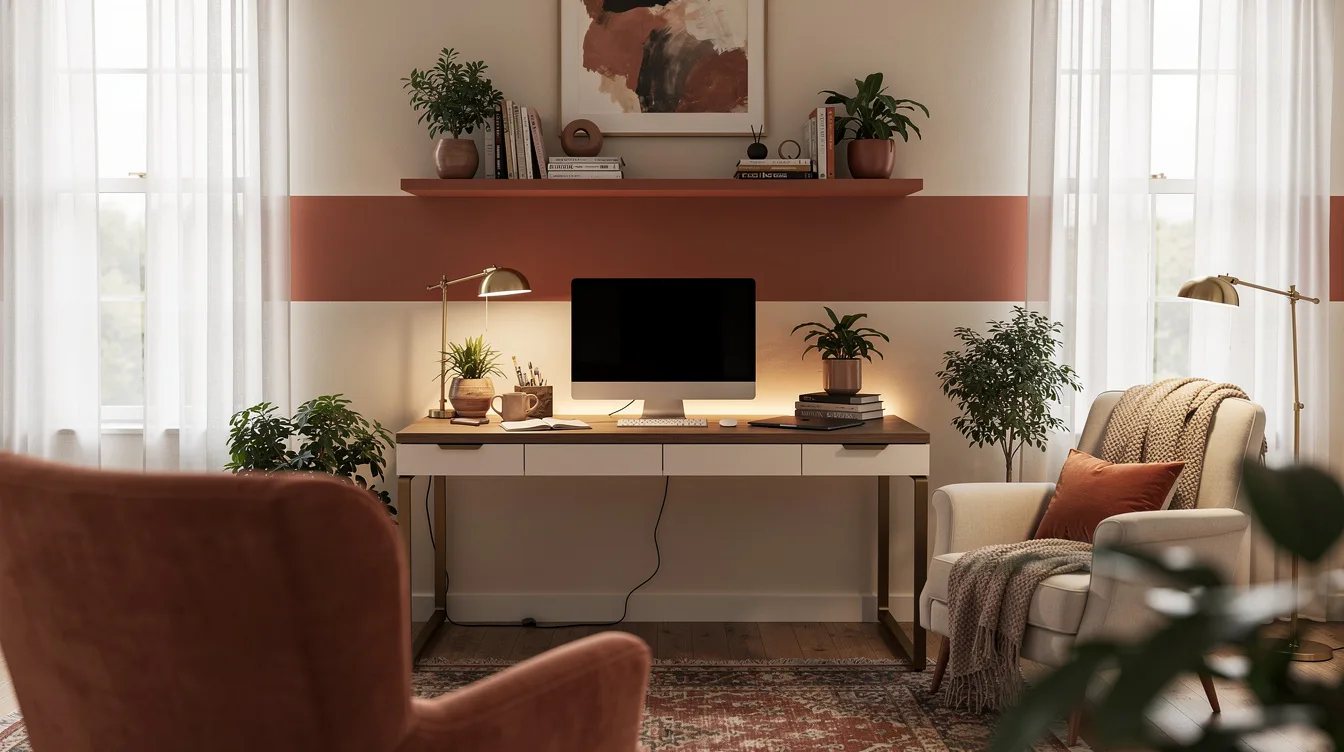
For a desk that cannot take a full portal, paint a lower-wall band and align its top to the monitor or floating shelf line. Around 41 to 47 inches high works well for many seated workstations and makes cables less visually annoying.
Benjamin Moore’s apartment palette moves from Vapor Trails 1556 into stronger blue, a useful reminder that adjacent fields can change gradually. Use painter’s tape and measure from the floor at several points, because a drifting line ruins the effect.
Make a Painted Headboard in a Rental
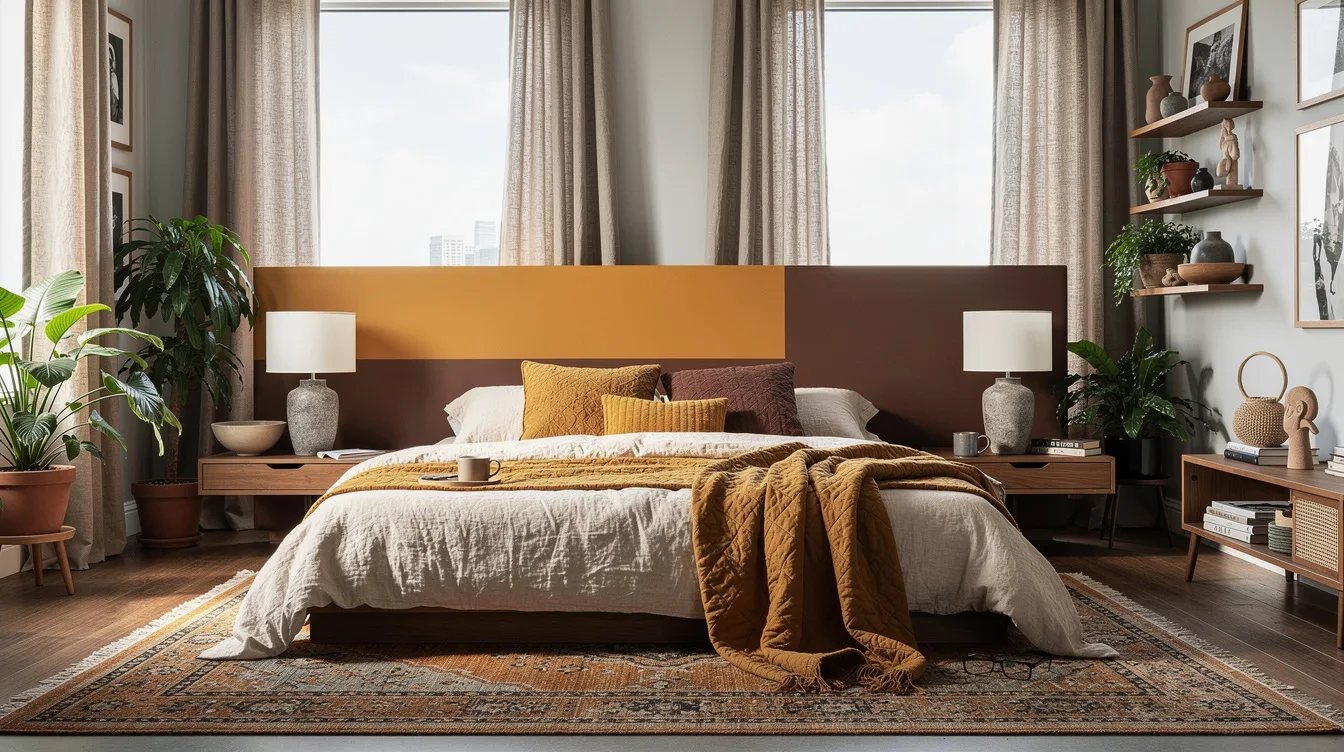
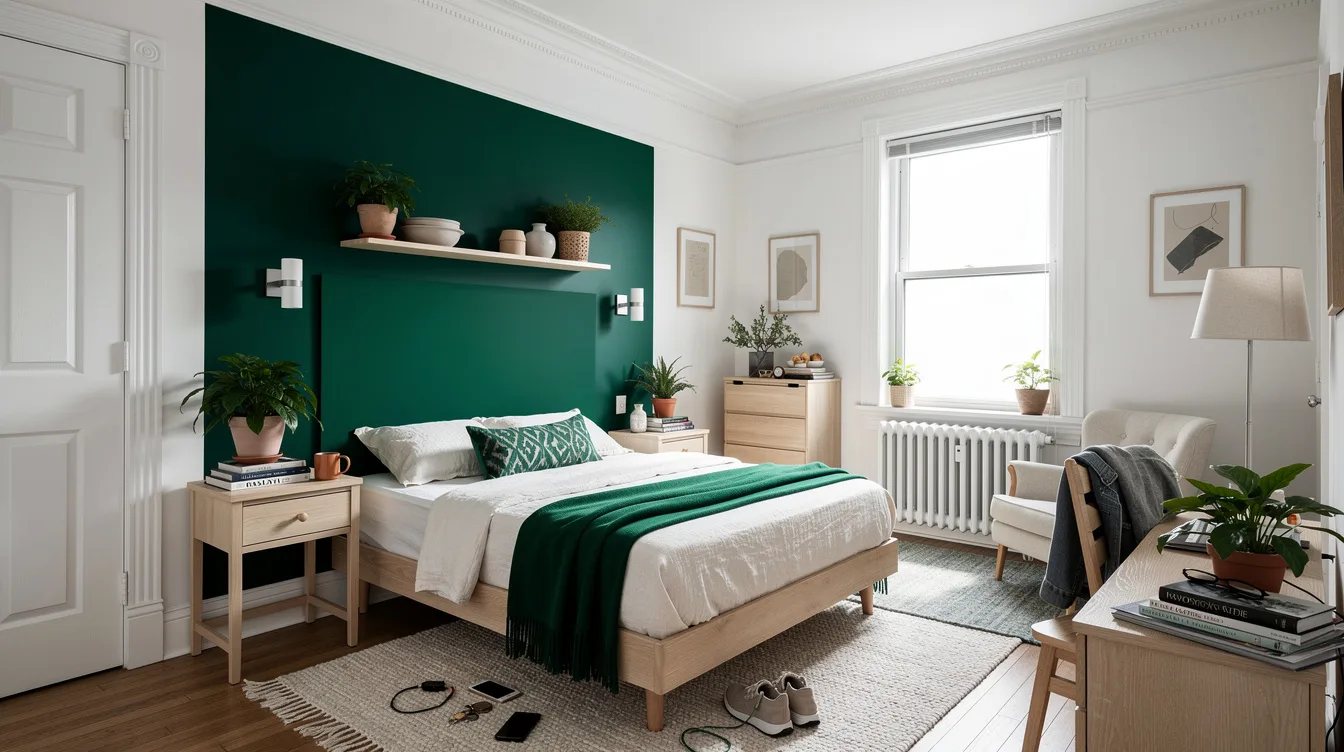
A painted headboard is the fastest rental-friendly sleep zone when a real headboard would crowd the room. Shape it as a clean rectangle, arch, or squared-off panel, but keep it larger than the mattress so it does not look like a decal.
Typical DIY paint and supply costs for one feature area run about $50 to $150, depending on prep and finish. A matte linen-white base with a muted blue panel feels restful and is easier to repaint than installed millwork.
Use a Narrow Block to Separate the Entry
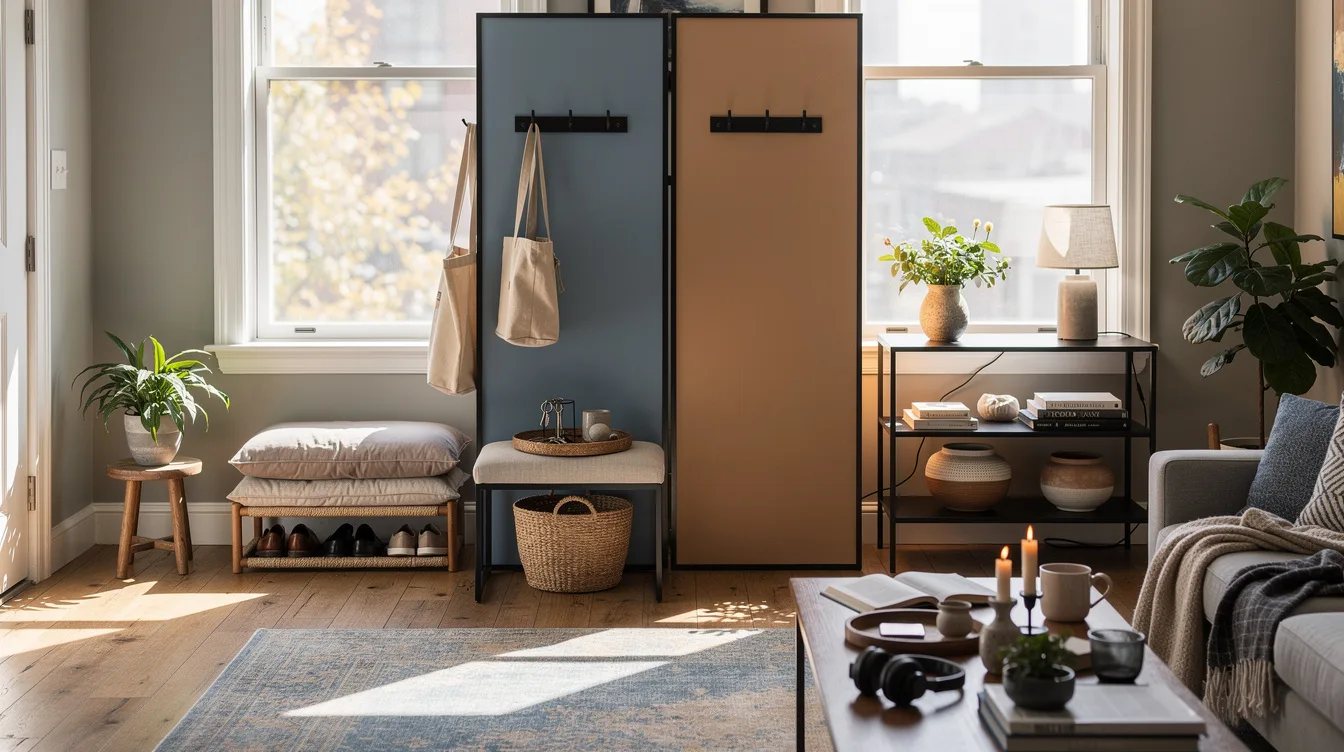
Paint the slice of wall nearest the front door in a distinct mid-value color, then place a hook rail or slim console inside it. This stops the entry from bleeding directly into the lounge area the moment the door opens.
A 30- to 40-inch-wide field is often enough for a compact drop zone. Add an Amazon black wall hook rail and a tray, then resist filling the zone with extra decor.
Repeat the Zone Color Only Twice
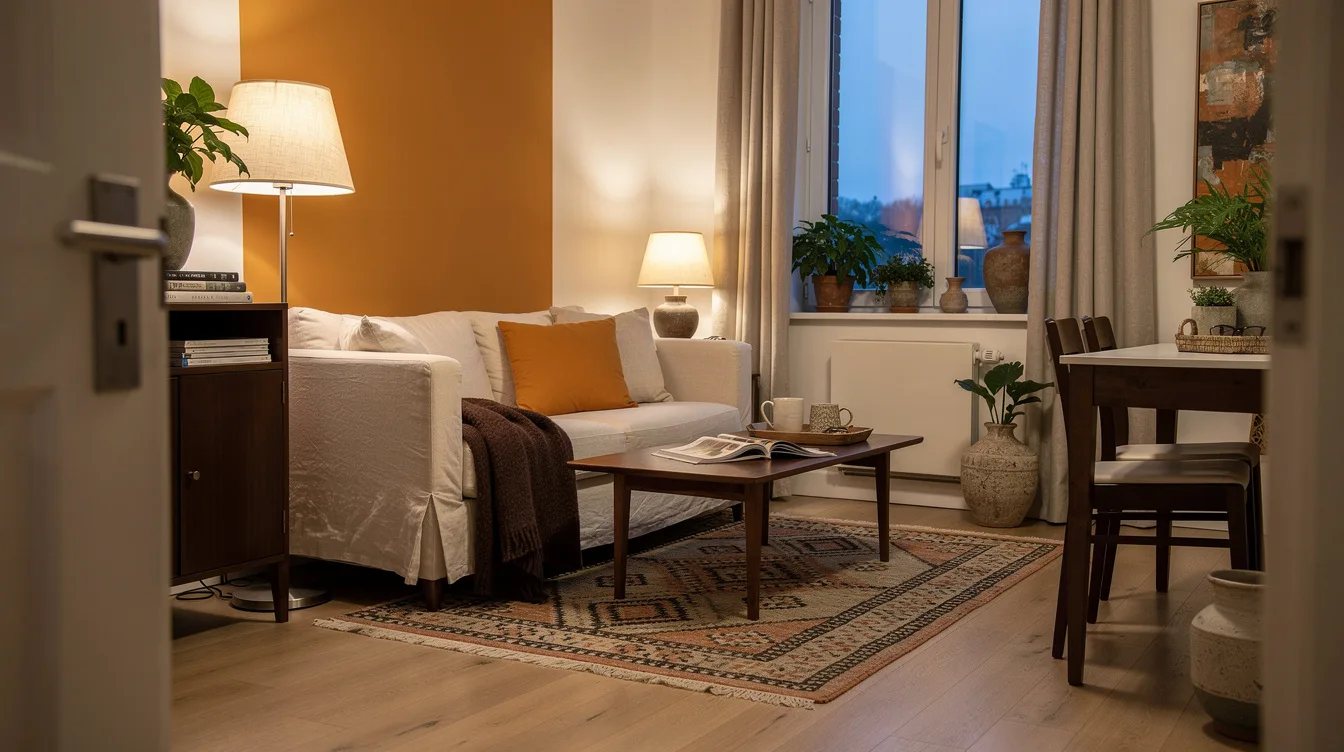
Each painted field needs a few echoes, not an entire matching set. Repeat the color in the wall, a lamp shade, and one cushion or storage box, then let the base color handle everything else.
A Target rust pillow and a small rust lamp shade can support a clay sofa field without turning the room thematic. We stop at two or three repeats because more begins to flatten the studio into color-coded compartments.
Contain Dark Paint Inside One Useful Field
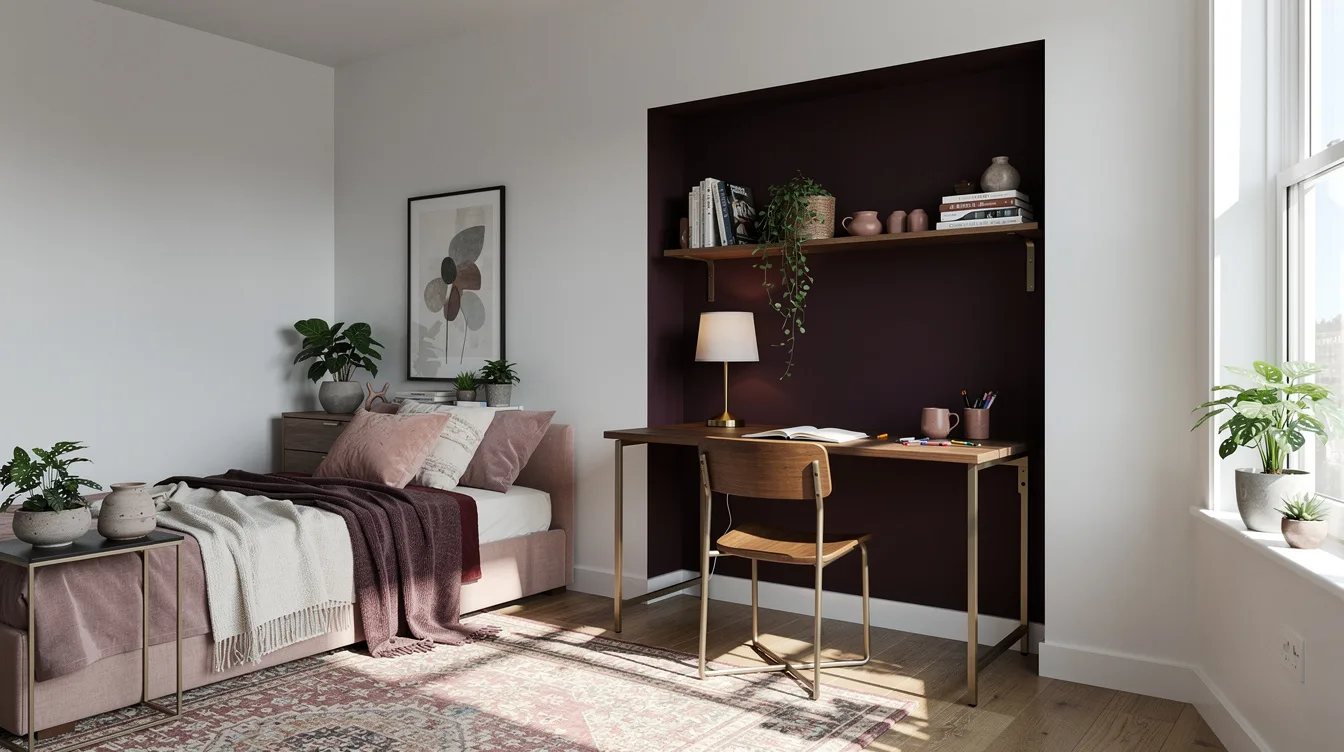
Near-black paint across every wall can swallow a studio with limited daylight. Put the deepest color behind the desk, bed, or shelf wall instead, where its edges prove that the darkness has a job.
Pair a contained charcoal field with IKEA pale wood furniture and warm bulbs. The contrast keeps the room legible at night and avoids the cave effect that arrives when dark paint wraps the whole perimeter.
Finish Every Edge With the Same Base Color
Return every unassigned wall to the same calm base, including the small strips around windows and doors. That large pale area lets the color blocks read as separate rooms instead of competing wall treatments.
For a small zone, roughly one gallon is generally enough, while listed retail anchors have included about $27.98 for a Behr Pro gallon and about $42.98 for a Valspar Signature gallon. Spend the difference on careful prep, a quality angled brush, and sharp tape lines.
Keep reading
- 12 Target Color Palette Ideas That Make Small Rooms Feel Larger
- 12 Designer-Approved Curtain Tricks That Make Small Rooms Feel Taller
- 12 Bedroom Color Palettes That Make Low Light Feel Brighter
Start with the zone that interrupts your day most, usually the bed behind the desk or the sofa beside the dining table. Mark the proposed edge with painter’s tape for one evening before opening a paint can, because the right line should make the furniture feel instantly settled.