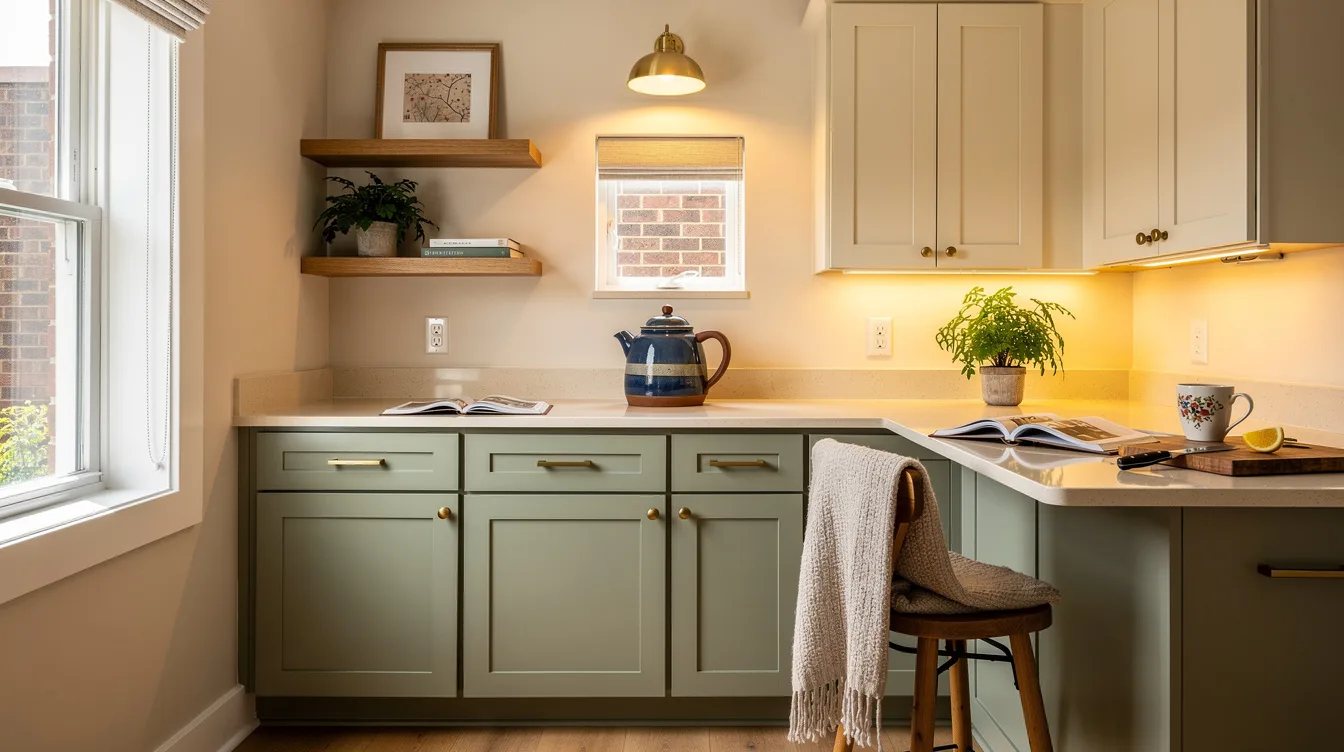
12 Best Paint Colors for Kitchens With Little Daylight
23 august 2026A kitchen can have crisp cabinets, a good faucet, and still feel permanently dim by 2 p.m. In a room with one small window, about 36 inches wide, the wrong white often turns the walls blue-grey and makes every countertop look colder.
Designers usually start with warmth, then test how a color behaves beside the cabinet finish, backsplash, and overhead bulbs. A light-reflectance value, or LRV, around 70 or higher is a useful starting point for walls in especially dark kitchens.
What you will find inside
- Start With Benjamin Moore White Dove OC-17
- Choose Simply White for Honey-Toned Wood
- Use Philadelphia Cream to Warm a North-Facing Room
- Ground Pale Cabinets With Skimming Stone
- Try Hush for a Softer Beige Wall
- Keep Sage Light and Slightly Greyed
- Reach for Palladian Blue Instead of Blue-Grey
- Use Billowy Down for Maximum Reflection
- Aim for an LRV Around 70 or Higher
- Put Satin on the Main Kitchen Walls
- Reserve Semi-Gloss for Splash Zones
- Spend More Where Scrubbing Is Constant
Start With Benjamin Moore White Dove OC-17
Benjamin Moore White Dove OC-17 is the safest first sample for a kitchen that gets weak daylight. Its gentle warmth keeps white walls from reading sterile beside oak shelves, cream quartz, or aged-brass hardware.
Paint a poster board, move it from the sink wall to the range wall, and check it after sunset. This shade has enough softness for warm-white cabinets, while still giving a compact galley kitchen a clean, open read.
Choose Simply White for Honey-Toned Wood
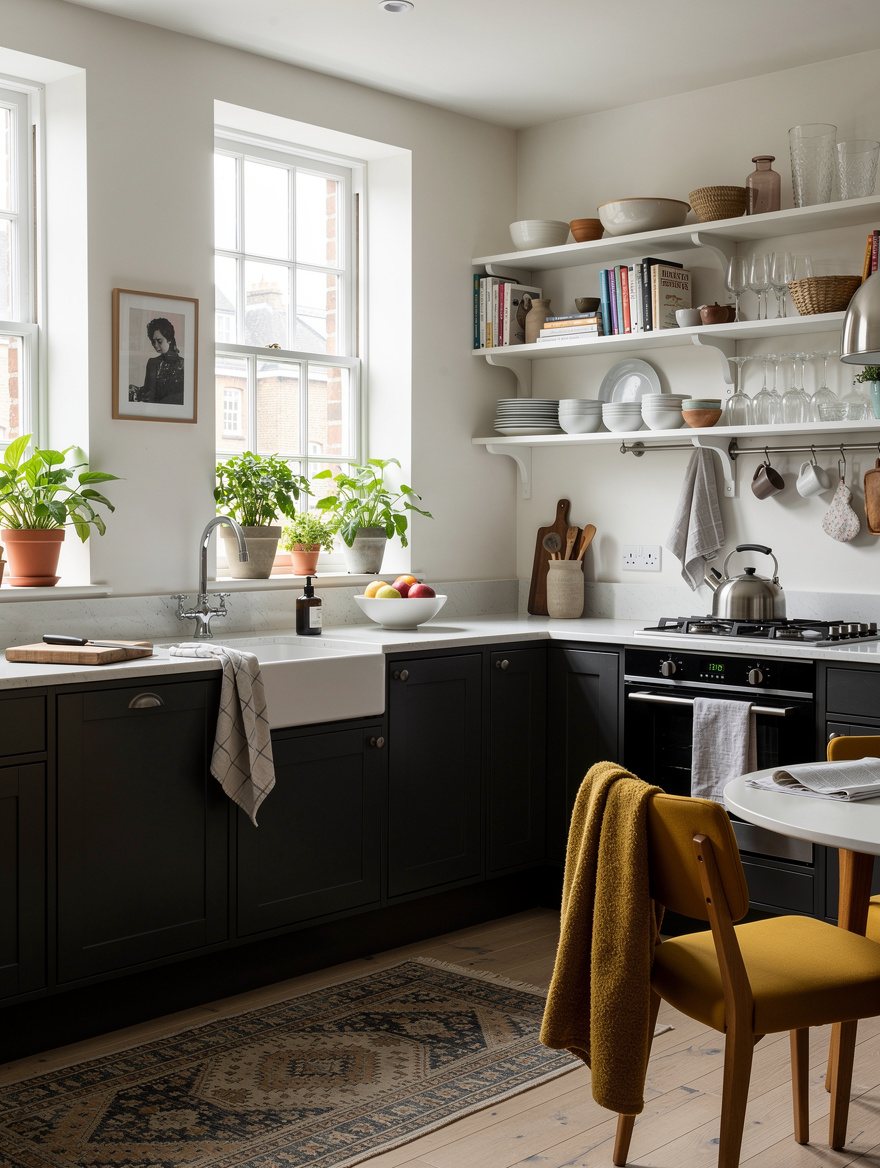
Benjamin Moore Simply White OC-117 works especially well when honey oak, walnut, or maple is staying put. A faint yellow undertone counteracts the grey cast that shaded kitchens tend to pick up.
Use it on walls and trim when the cabinetry is cream, wood, or a warm painted white. It can look surprisingly bright under cool bulbs, so pair it with 2700K to 3000K LED lighting rather than icy daylight bulbs.
Use Philadelphia Cream to Warm a North-Facing Room
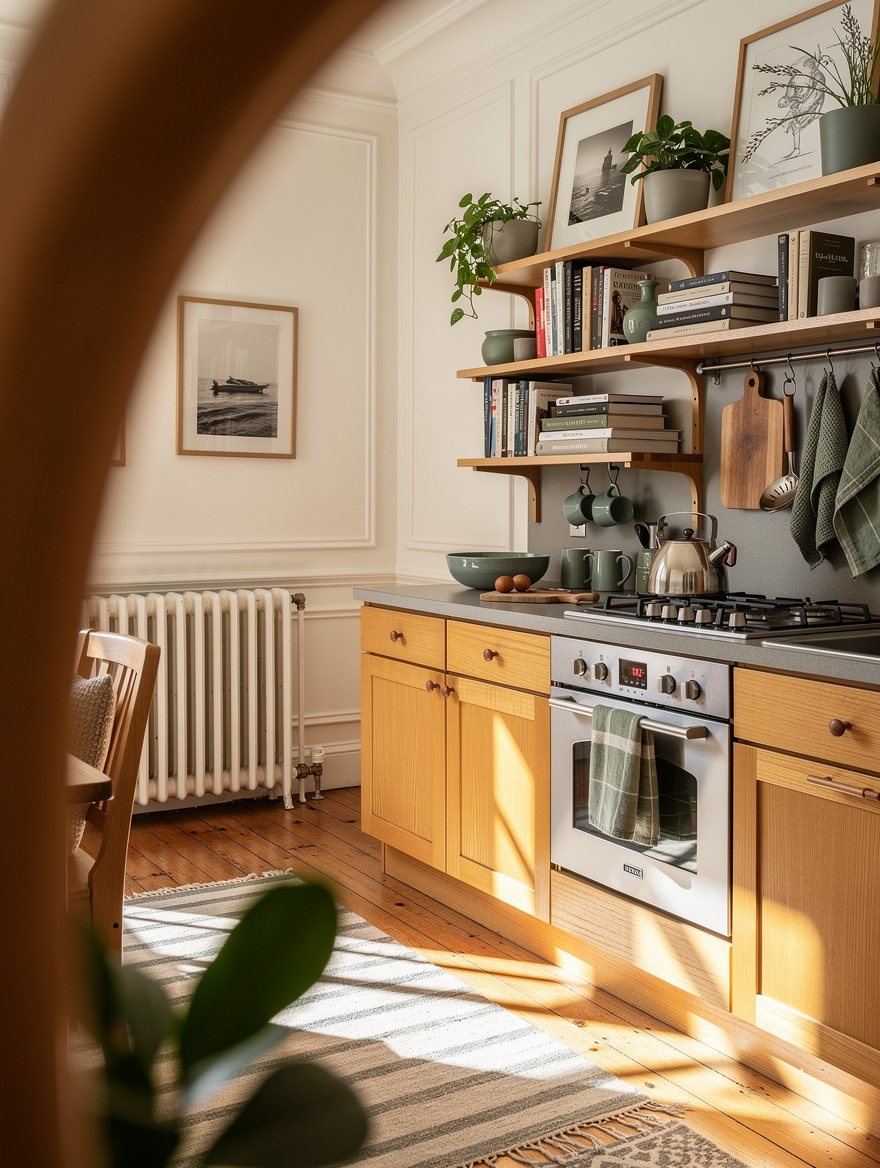
Benjamin Moore Philadelphia Cream HC-30 gives a north-facing kitchen a restrained buttery glow without sliding into yellow. It is a strong choice for white cabinets that currently feel flat against a chilly wall.
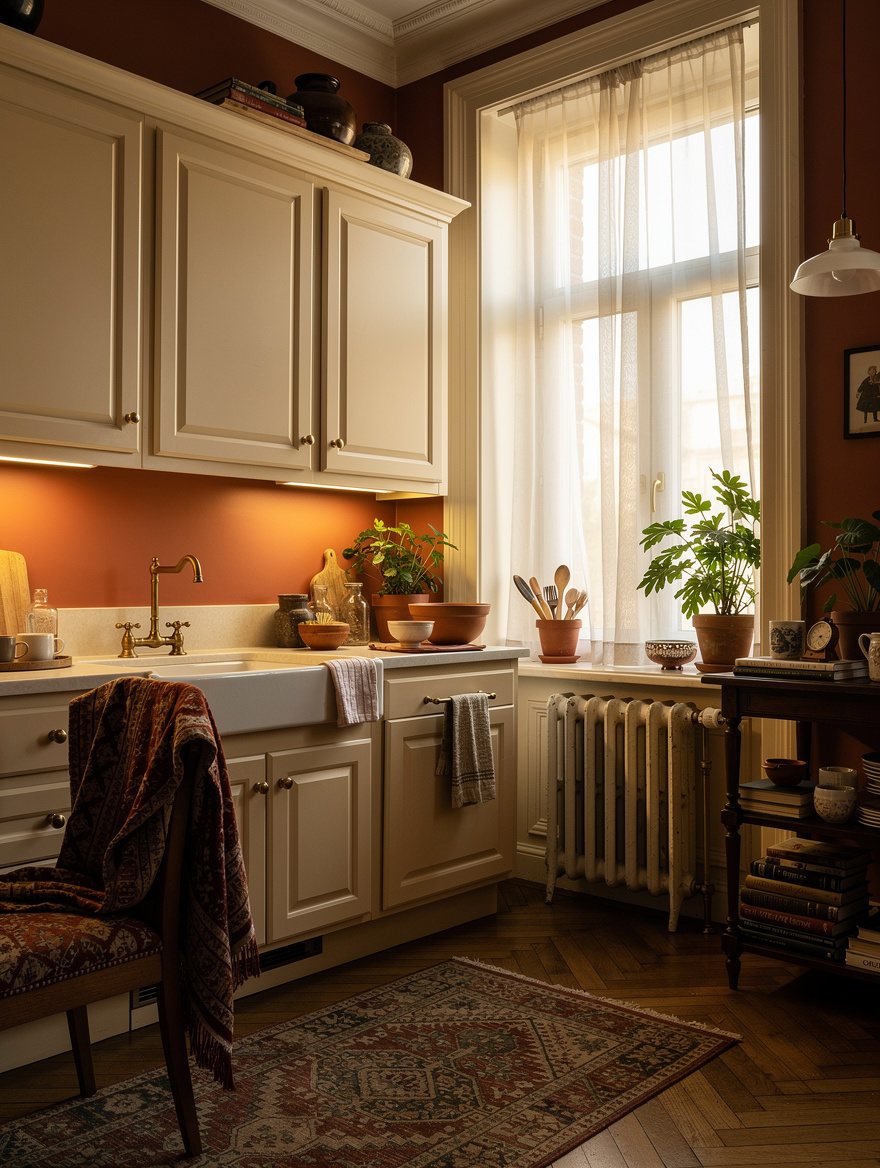
Keep the surrounding materials quiet: pale wood flooring, off-white tile, terracotta pottery, and aged brass are enough. This is not the color for a blue-grey marble backsplash, which can make the cream undertone look stronger than intended.
Ground Pale Cabinets With Skimming Stone
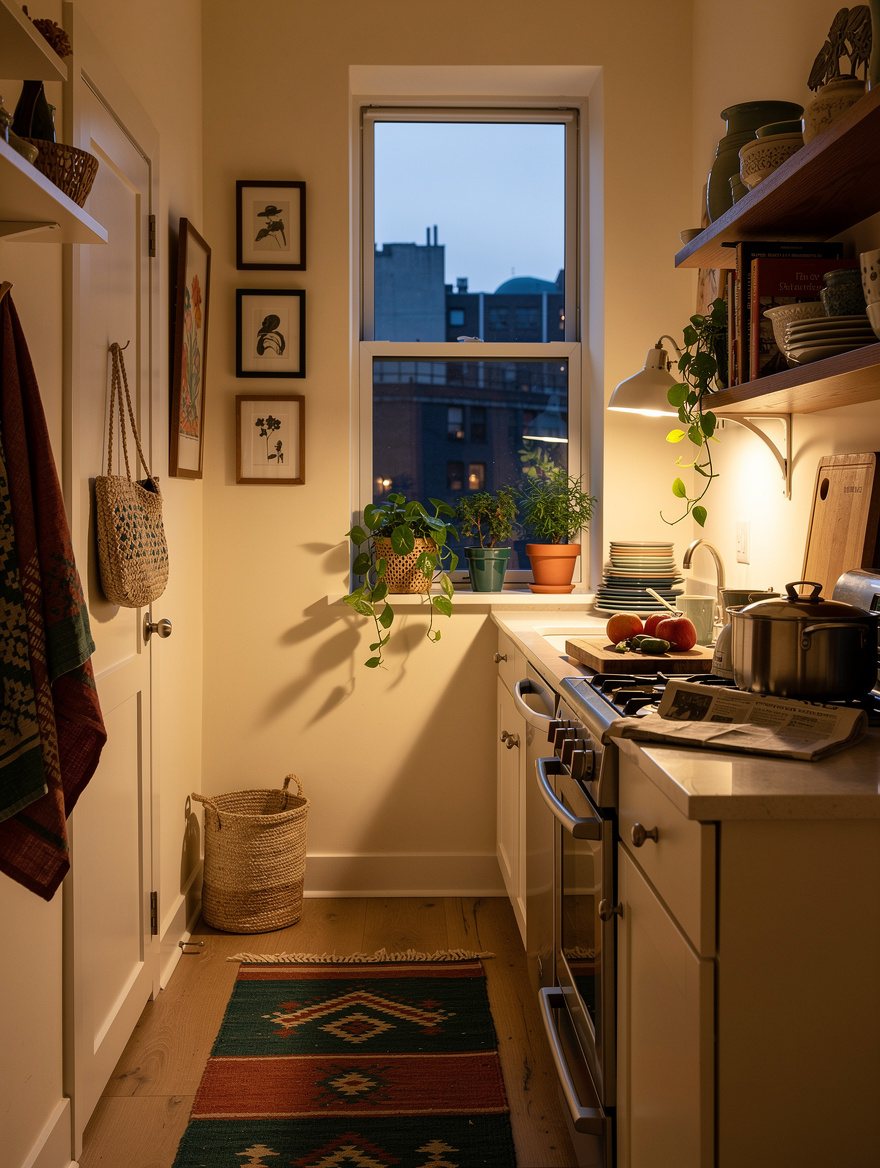
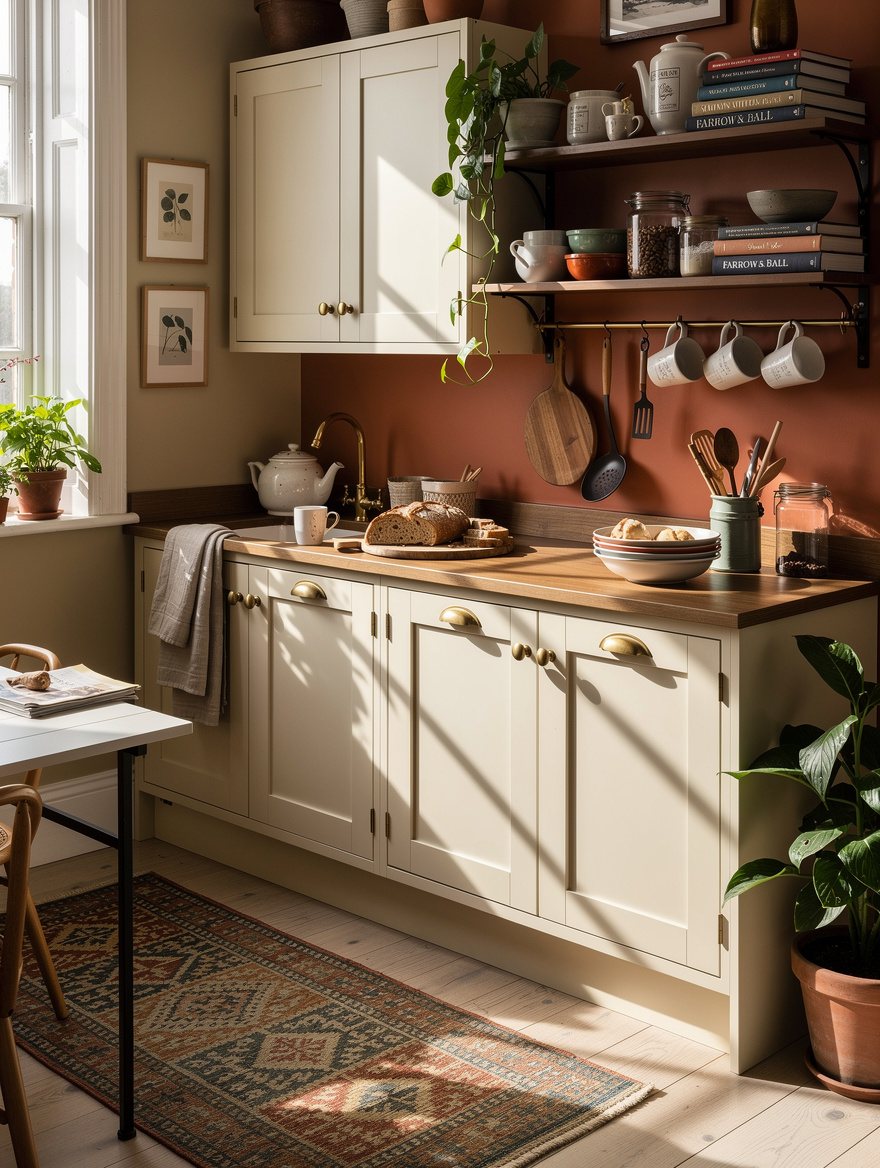
Farrow & Ball Skimming Stone No. 241 is a useful stone neutral for homeowners tired of default white. It brings beige-taupe depth to a low-light kitchen without absorbing the limited brightness like a mushroom mid-tone can.
It looks convincing with travertine-look porcelain, honed beige quartz, black pulls, and linen Roman shades. Sample it beside the backsplash first, because cool white grout may push this shade toward grey in the evening.
Try Hush for a Softer Beige Wall
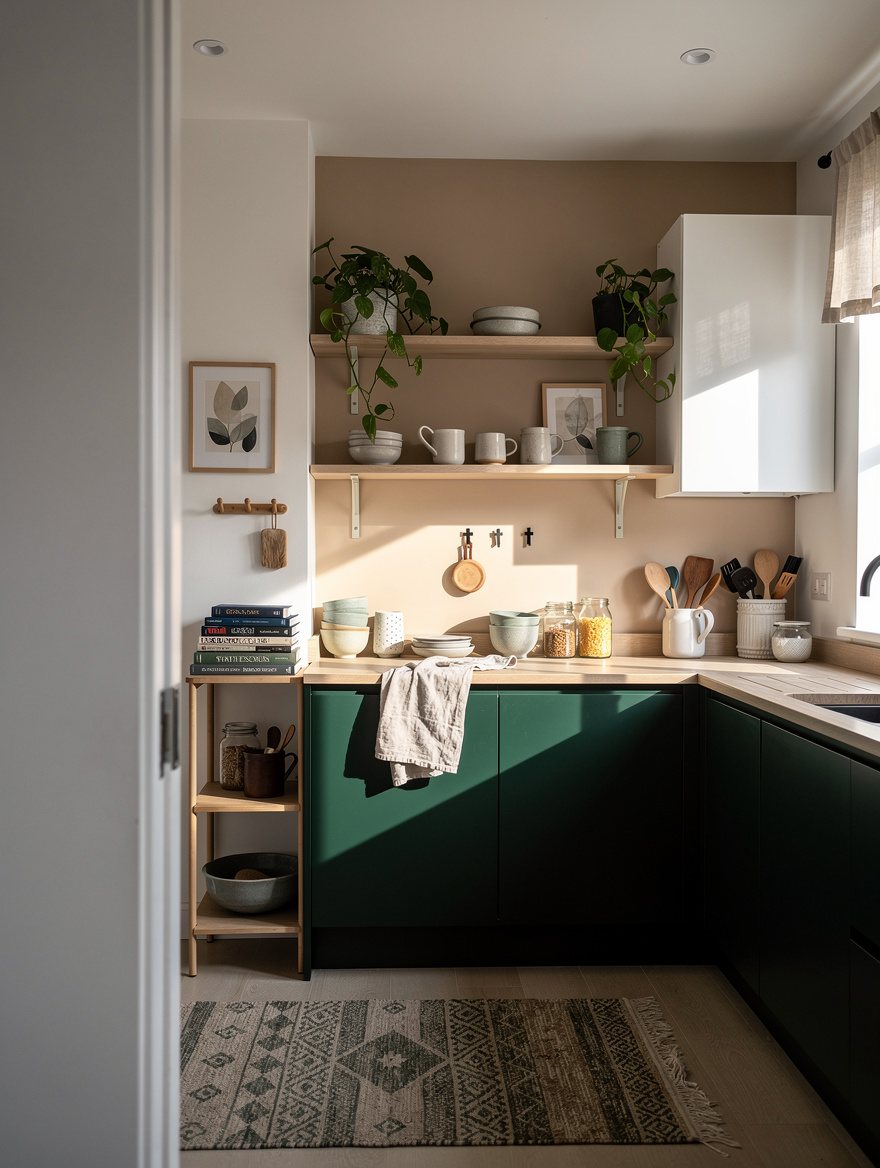
Benjamin Moore Hush AF-95 offers a quieter alternative to obvious beige. It has enough warmth for enclosed kitchens while leaving room for dark hardware, charcoal stools, or a black-framed pantry door.
Designers favor this sort of muted neutral when the cabinetry has a pink, almond, or antique-white cast. A full wall of strong tan can close in a dim kitchen; this lighter version gives the materials more visual breathing room.
Keep Sage Light and Slightly Greyed
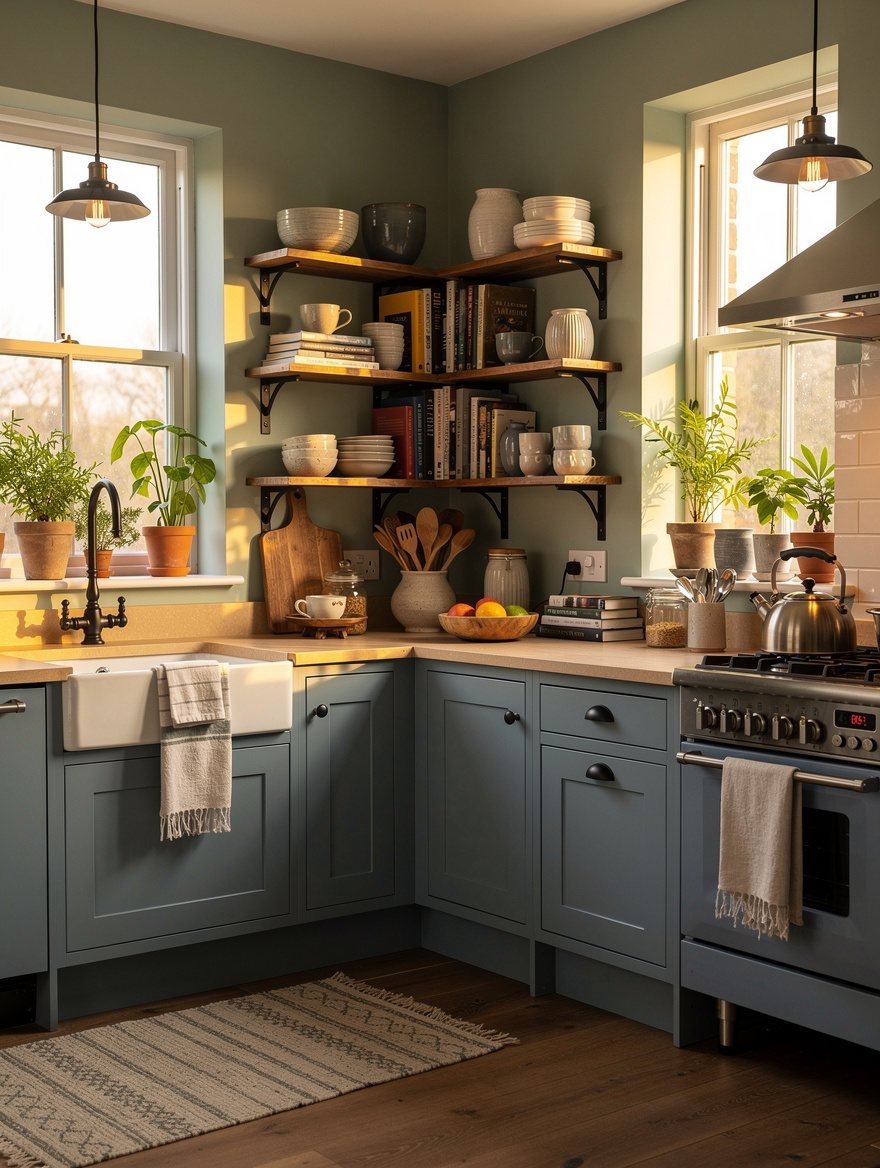
Benjamin Moore Gloucester Sage HC-100 brings color into a dark kitchen without the heaviness of forest green. Its muted quality sits comfortably with warm-white upper cabinets, butcher-block counters, and oak open shelving.
Use it on walls for a gentle wash of color, or reserve it for lower cabinets when the walls need to stay warm white. Skip glossy black granite with this choice, since the high contrast can make the room feel visually chopped up.
Reach for Palladian Blue Instead of Blue-Grey
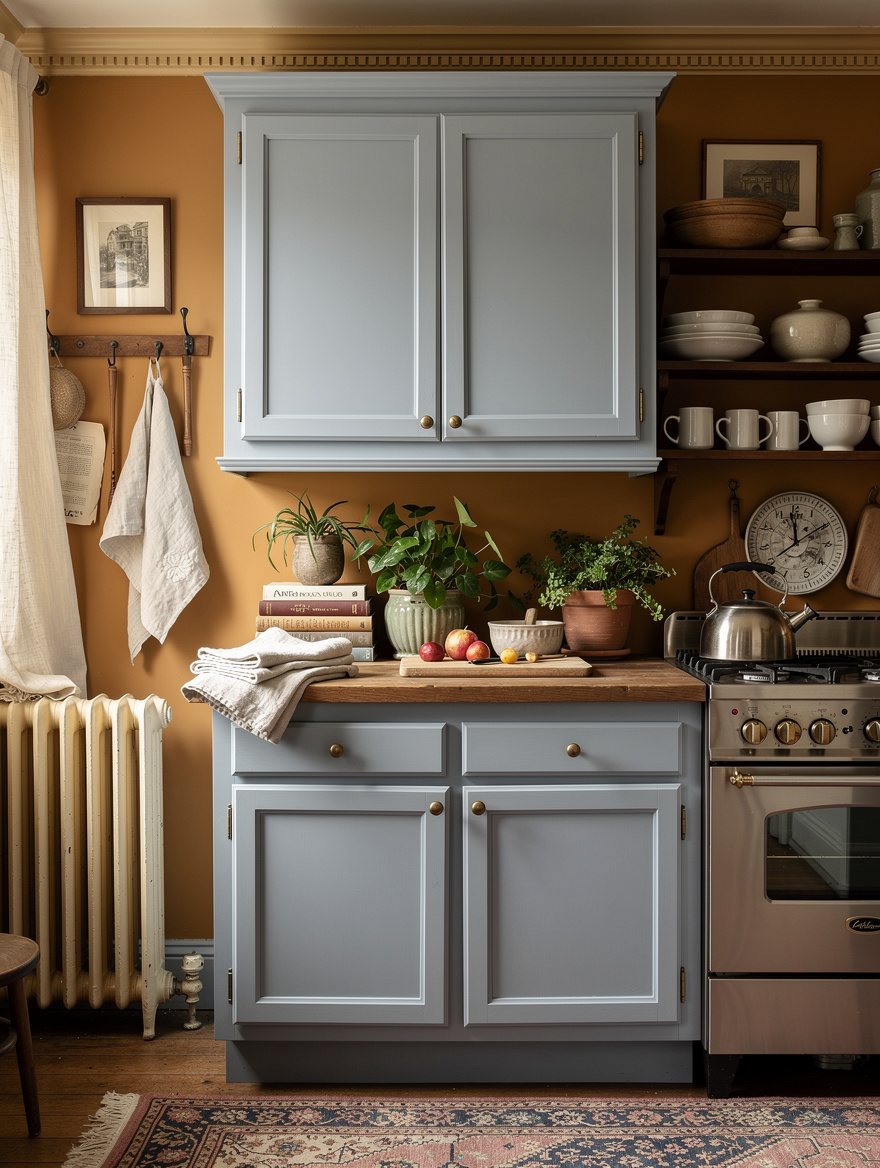
Benjamin Moore Palladian Blue HC-144 gives a small kitchen an airy note while avoiding the severe look of many cool blue-greys. It is most successful with cream cabinetry, brushed nickel, light oak, and a backsplash that has warm white rather than stark white tile.
Low daylight makes saturated blue look deeper than expected, so test a large sample before committing. This color needs warm bulbs at night or it can lose the soft, welcoming quality that makes it work.
Use Billowy Down for Maximum Reflection
Benjamin Moore Billowy Down 2064-70 is a pale blue worth considering when you want visible color but need a light-hungry room to stay open. Its LRV of 75.64 means it reflects substantially more light than a mid-tone shade.
Pair it with white or cream cabinets and light wood stools, then let brushed nickel or polished chrome handle the metal details. Avoid pairing it with a cold blue-white wall color elsewhere nearby, because the kitchen may suddenly look icy by comparison.
Aim for an LRV Around 70 or Higher
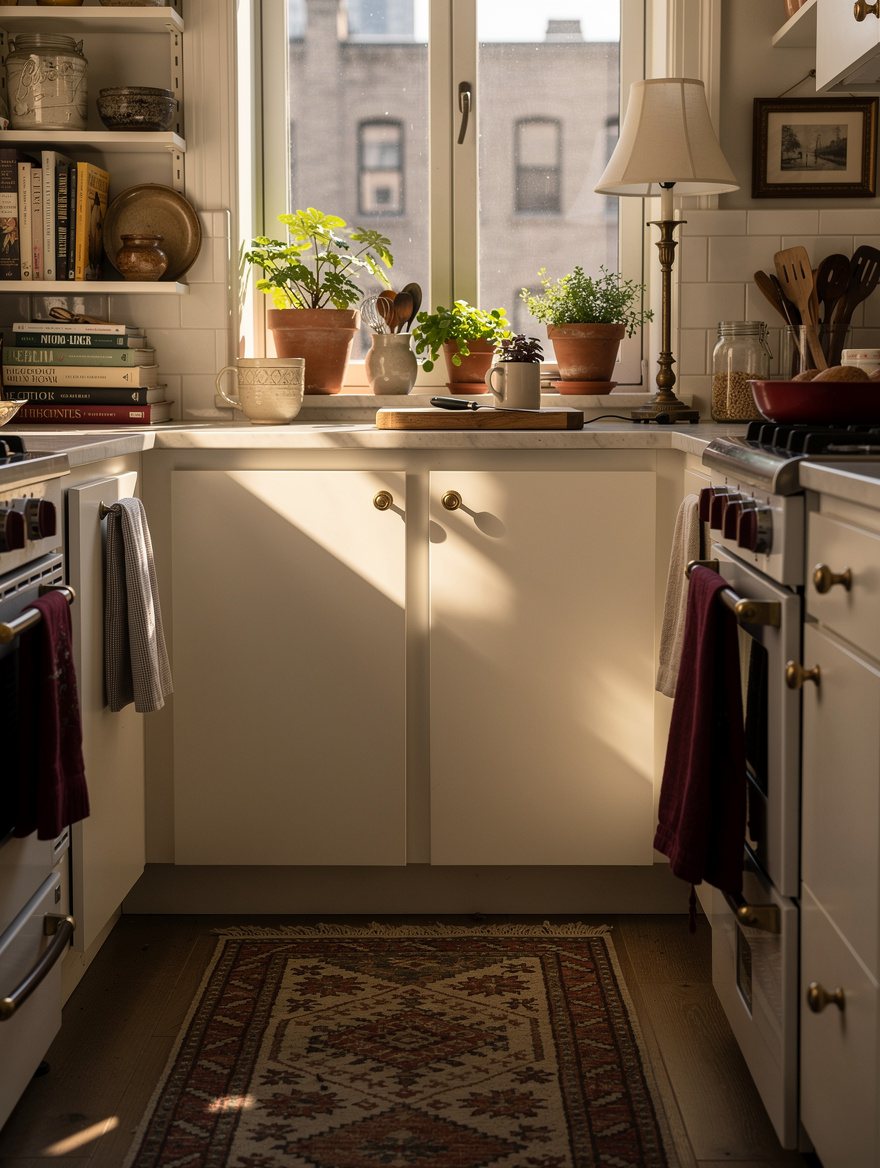
Benjamin Moore White OC-151 has an LRV of 85.27, a useful reference point when choosing paint for a truly dark kitchen. LRV runs from 0 for black to 100 for pure white, and higher values generally return more available light into the room.
That number does not replace sampling. A high-LRV paint with a harsh blue undertone can still look clinical under weak daylight, while a slightly lower warm off-white often feels brighter because the room looks less grey overall.
Put Satin on the Main Kitchen Walls
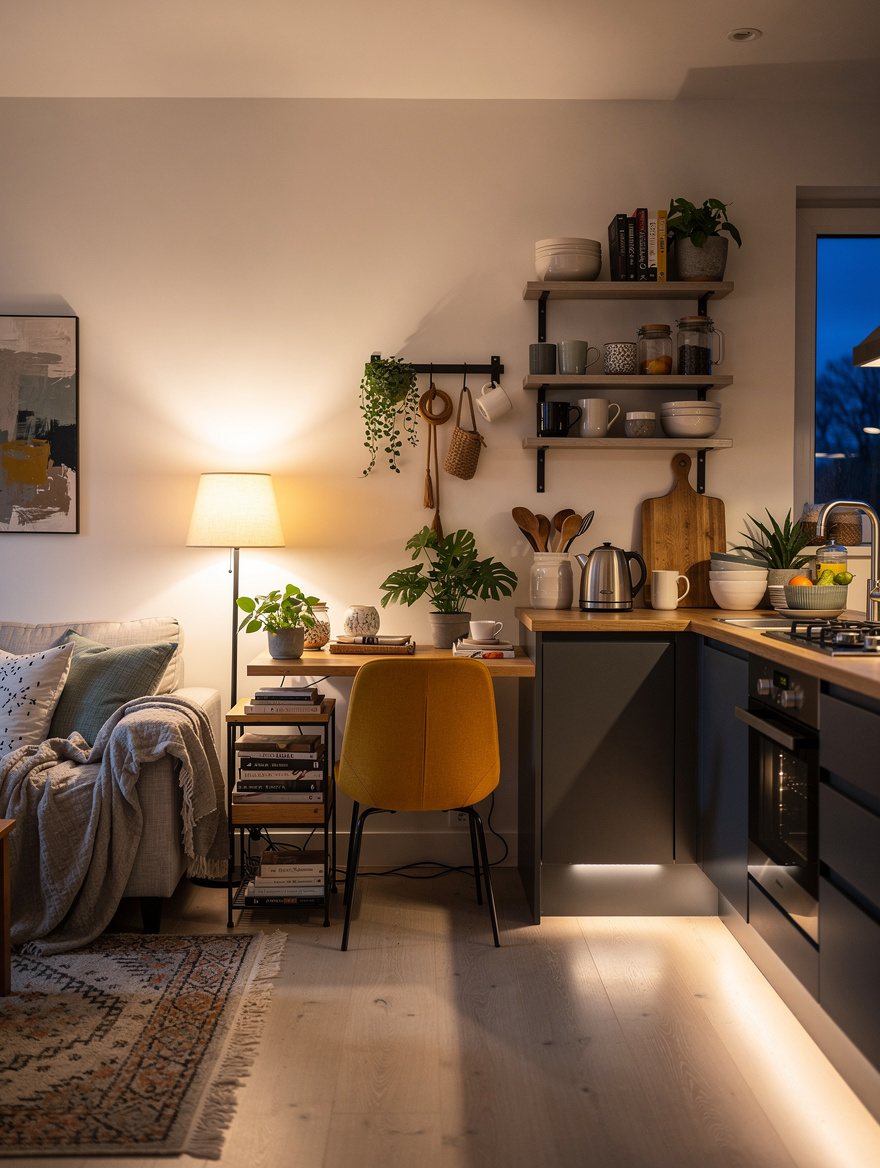
Behr Premium Plus in satin is a practical value option for a quick kitchen update, typically about $33 to $40 per gallon. Satin handles everyday wipe-downs better than flat paint and adds a modest light bounce without exposing every drywall ripple.
Use it on the walls around dining nooks, refrigerator banks, and cabinet runs. For a rental refresh or a first paint test, this finish makes more sense than buying the shiniest coating simply because the room lacks sun.
Reserve Semi-Gloss for Splash Zones
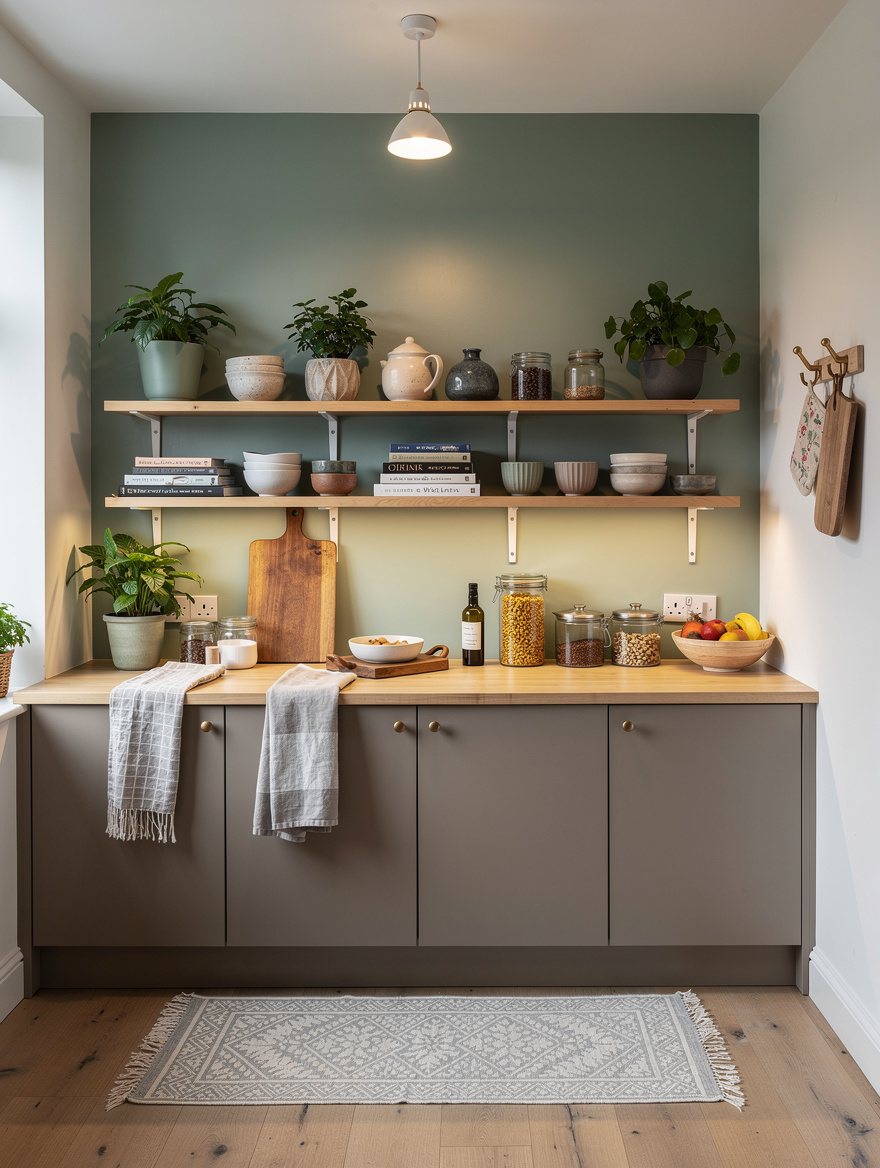
Behr Ultra in semi-gloss is often around $40 to $50 per gallon and earns its place near a hard-working range or sink wall. Higher sheens are easier to clean and more light-reflective, but semi-gloss can spotlight uneven plaster and poor patch jobs.
Use it selectively behind a coffee station, near a back door, or in a compact cooking zone with frequent splatter. Keep the remaining walls satin or low-lustre, so the kitchen gets durability without a continuous reflective glare.
Spend More Where Scrubbing Is Constant
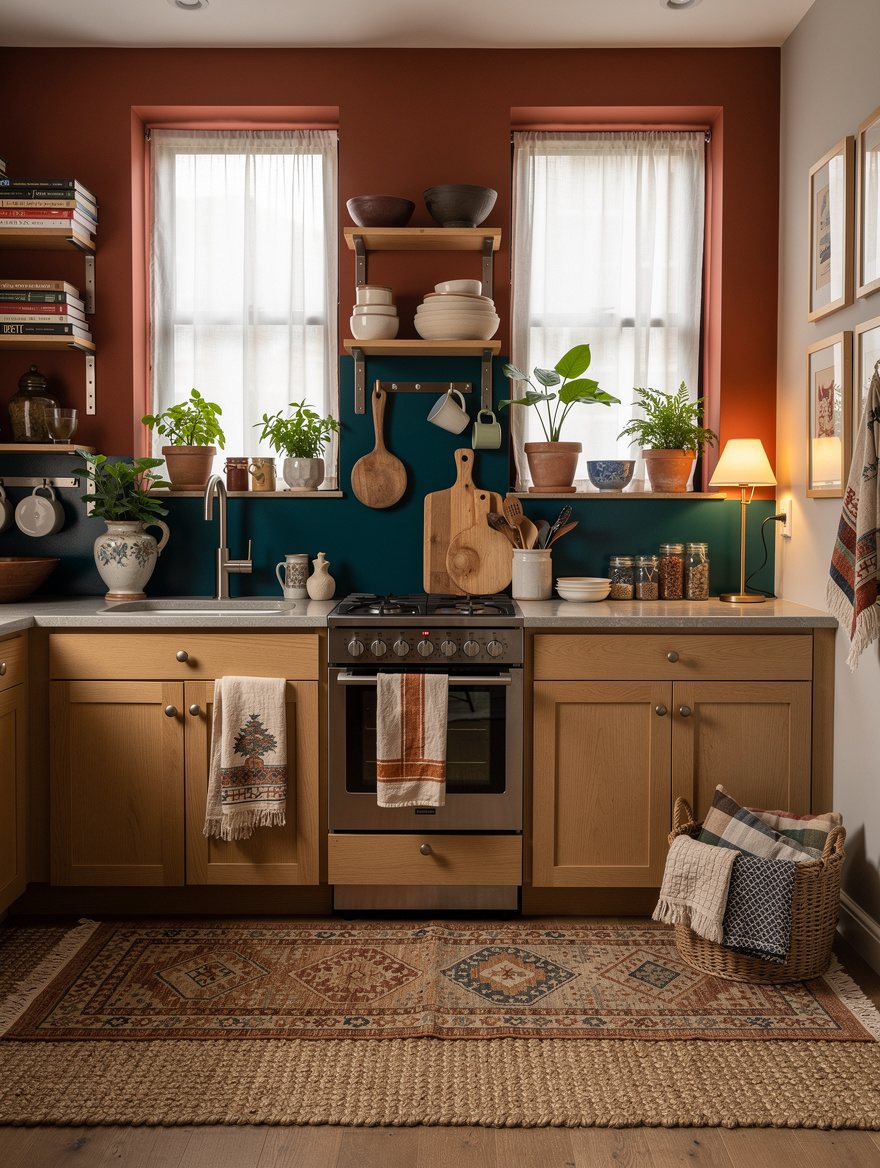
Benjamin Moore Regal Select typically costs about $80 to $90 per gallon and is a sensible mid-premium option for busy kitchen walls. Its washable finish is valuable where kids, pets, or frequent cooking leave fingerprints around cabinet pulls and light switches.
For a high-turnover rental or family kitchen, Behr Dynasty is typically about $60 to $70 per gallon and is another durable choice. Buy the best finish your wall traffic justifies, then spend the saved money on larger samples and warmer LED bulbs.
Keep reading
Begin with three large samples: White Dove, Philadelphia Cream, and Gloucester Sage. Tape them beside the backsplash for two full days, then choose the one that still looks warm after the kitchen lights are on.