12 Best Renter-Friendly Bedroom Accent Wall Ideas Without Paint
20 august 2026The wall behind my 54-inch bed once felt impossible to fix because every paint idea came with a deposit-risk warning. Then I stopped treating the whole room as the project: one focused bed wall can carry the bedroom without a drop of paint.
Renters have better options than a few timid prints. Fabric, removable paper, screens, felt, and light can create real depth while keeping move-out day manageable.
What you will find inside
- Hang Full-Length Curtains Behind the Bed
- Center a Large Tapestry Like a Soft Headboard
- Cover One Smooth Wall With Removable Wallpaper
- Choose a Mural With One Strong Point of View
- Build a Slim Slatted Screen Behind the Bed
- Create a Textile Gallery in Oversized Frames
- Mount Felt Tiles With Removable Strips
- Use Lightweight Peel-and-Stick Tiles Sparingly
- Turn a Pegboard Into a Nightstand Zone
- Layer Sheers Over Warm Plug-In Lights
- Lean an Oversized Canvas Against the Wall
- Anchor the Bed With a Narrow Rug Panel
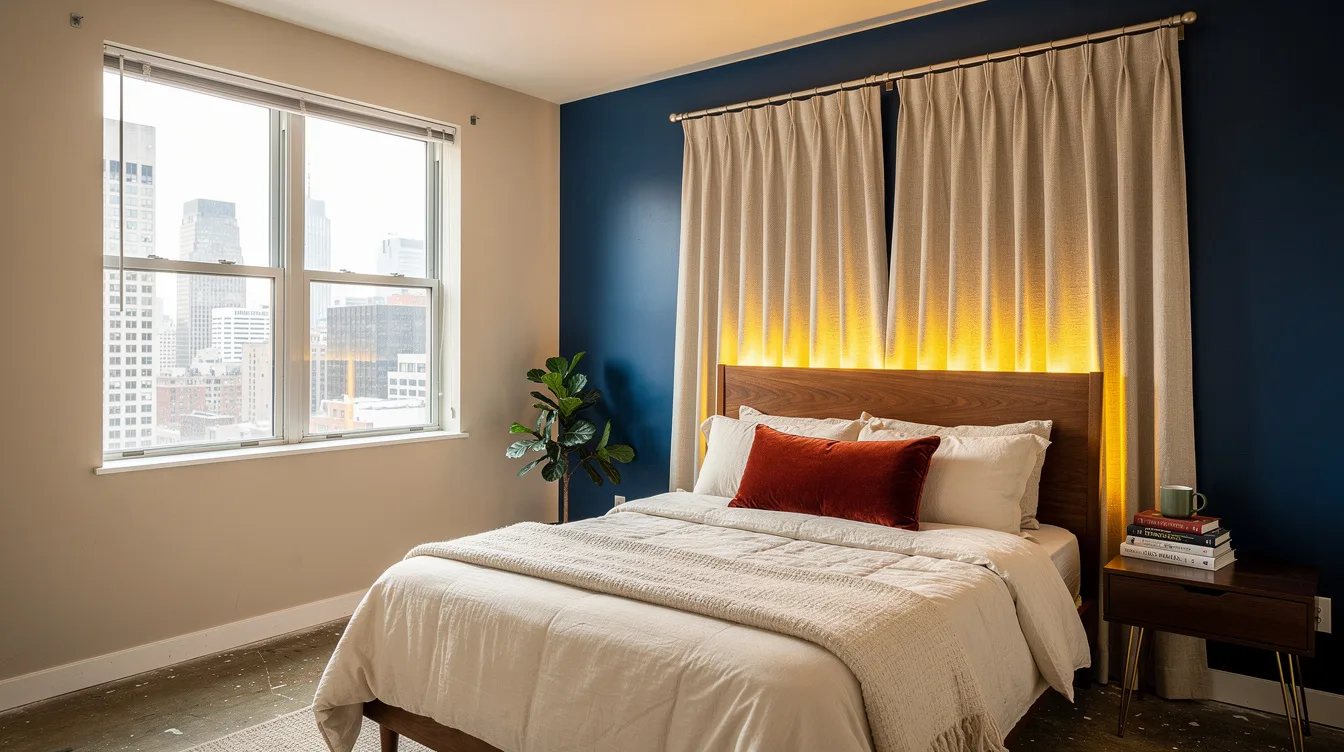
Hang Full-Length Curtains Behind the Bed
A tension-mounted curtain wall gives a rental bedroom the softness paint rarely delivers. Use two IKEA blackout curtain panels, typically 52 inches wide and about 96 inches long, behind a queen bed for a near-floor-to-ceiling focal point.
Choose oatmeal, tobacco brown, faded blue, or a tiny stripe, then let the panels puddle no more than an inch. This is my first choice for nervous renters because the fabric hangs from pressure instead of adhesive, and a typical setup costs about $40 to $150.
Keep the rod high, almost at the ceiling, so the bed wall looks intentional rather than like a window treatment wandered into the room. A slim plug-in light behind the headboard adds shadow and warmth without asking the landlord for a single hole.
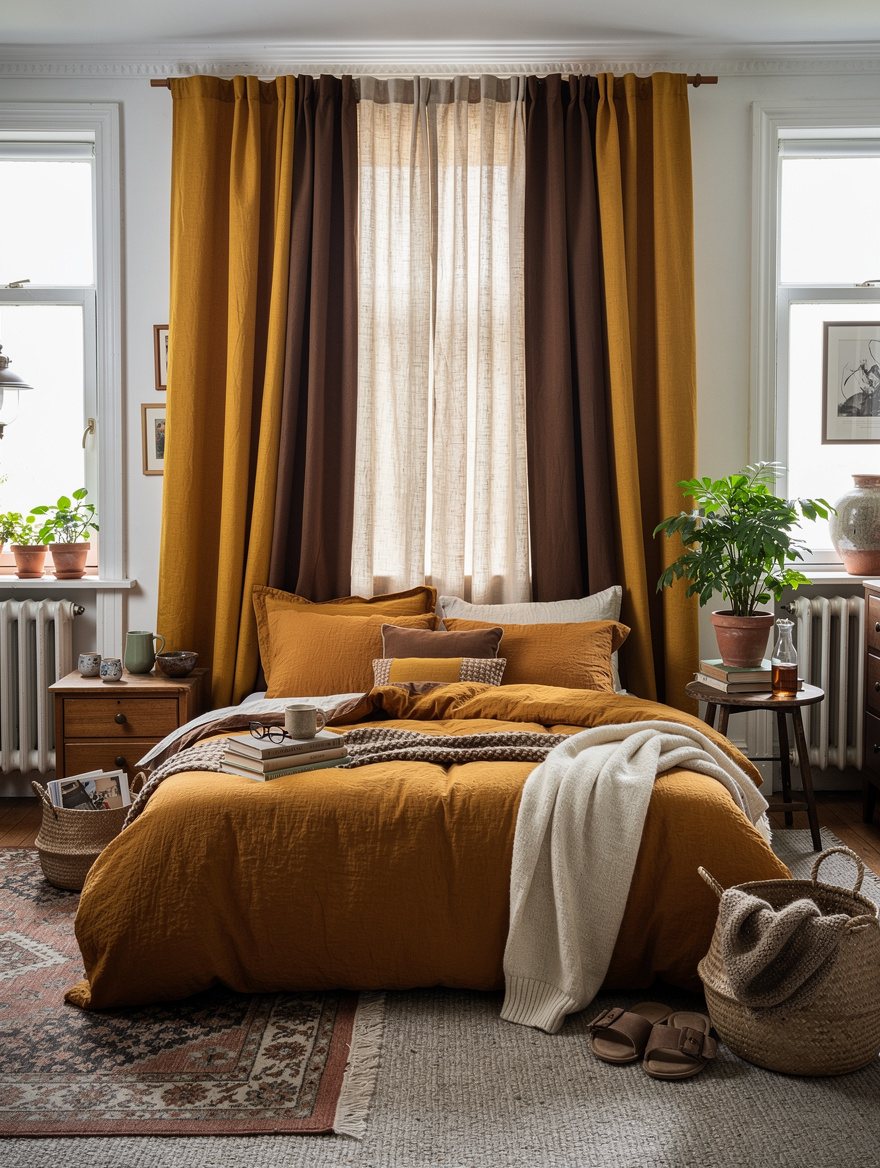
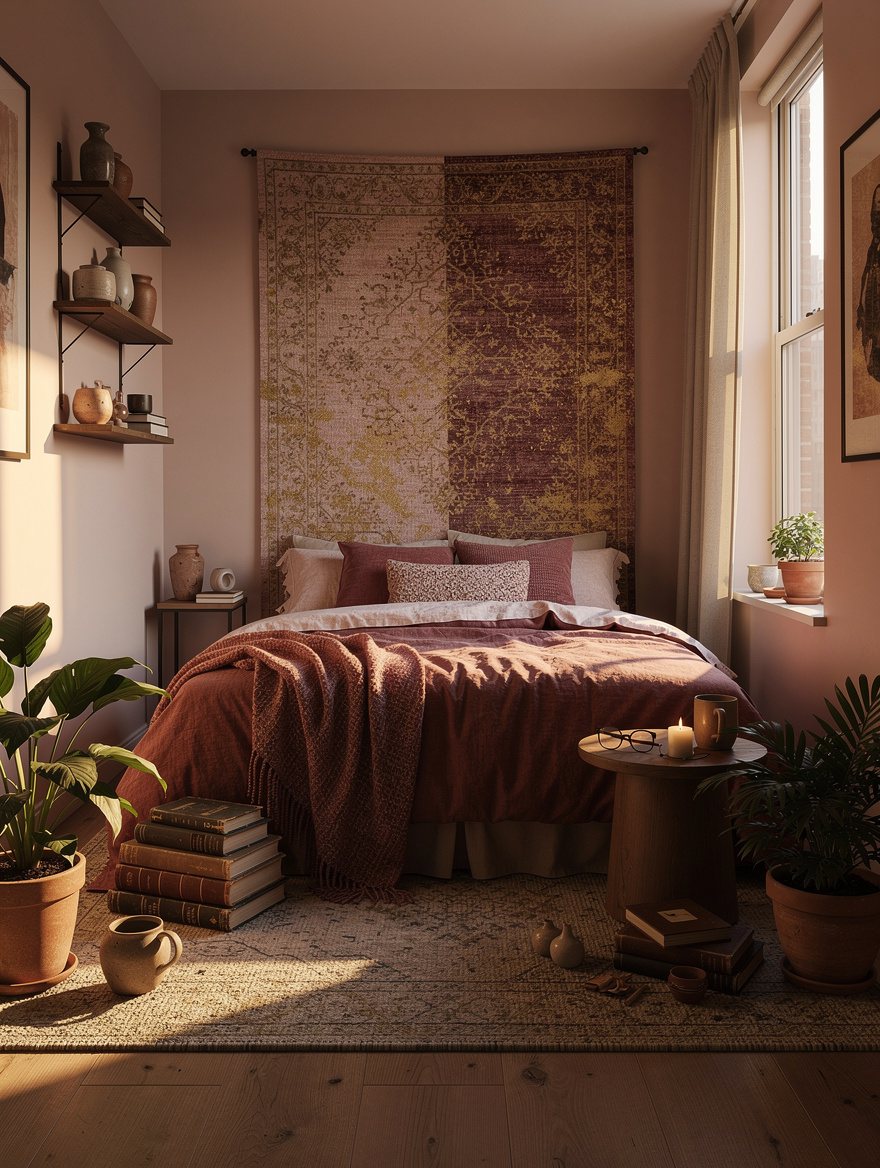
Center a Large Tapestry Like a Soft Headboard
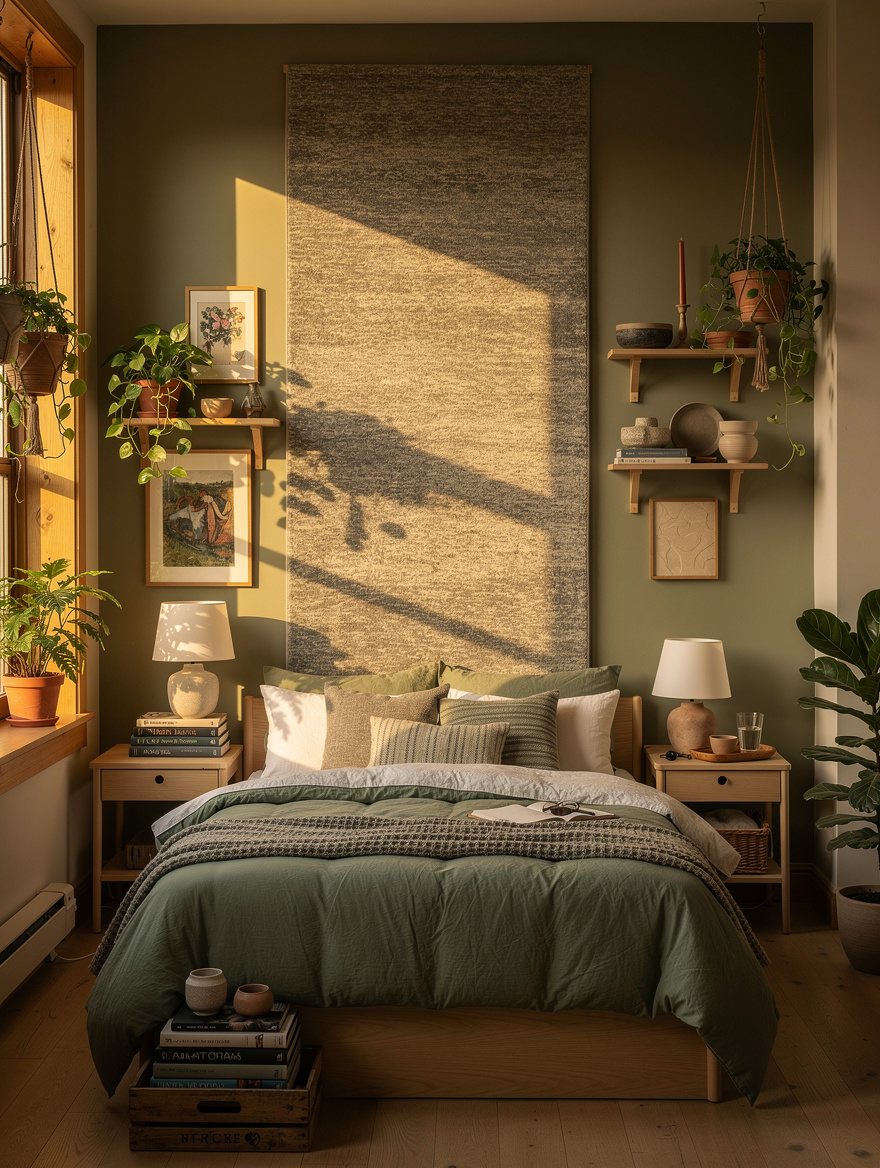
A textile wall works best when it is oversized and pulled taut, not draped like a dorm-room flag. A cotton tapestry around 60 by 80 inches can frame a queen bed with enough scale to read as an accent wall.
Look for washed florals, block prints, faded landscapes, or a simple woven grid at Target, Walmart, or Amazon. Typical tapestry-and-rod spending lands around $50 to $150, and the fabric is easy to remove before a move-out inspection.
Skip neon mandalas and busy quote art. The bed already brings pillows, bedding, and visual movement, so the wall should bring one clear pattern with a calmer background color.
Cover One Smooth Wall With Removable Wallpaper
For the closest thing to a conventional accent wall, cover only the wall behind the bed with removable wallpaper. Budget rolls commonly cover about 28 to 31 square feet and typically cost about $25 to $35 each, while more design-led options can run roughly $45 to $96 a roll.
Home Depot, Lowe's, Target, Wayfair, and Amazon all make it easy to find micro-checks, oversized botanicals, moody stripes, and quiet faux grasscloth. Buy an extra roll from the same batch, because a discontinued pattern is a far bigger headache than a few unused feet.
Test a hidden patch first, especially on fresh paint, textured drywall, or a wall that has seen many touch-ups. Smooth, fully cured paint is the low-risk surface; bumpy walls make even expensive paper look cheap.
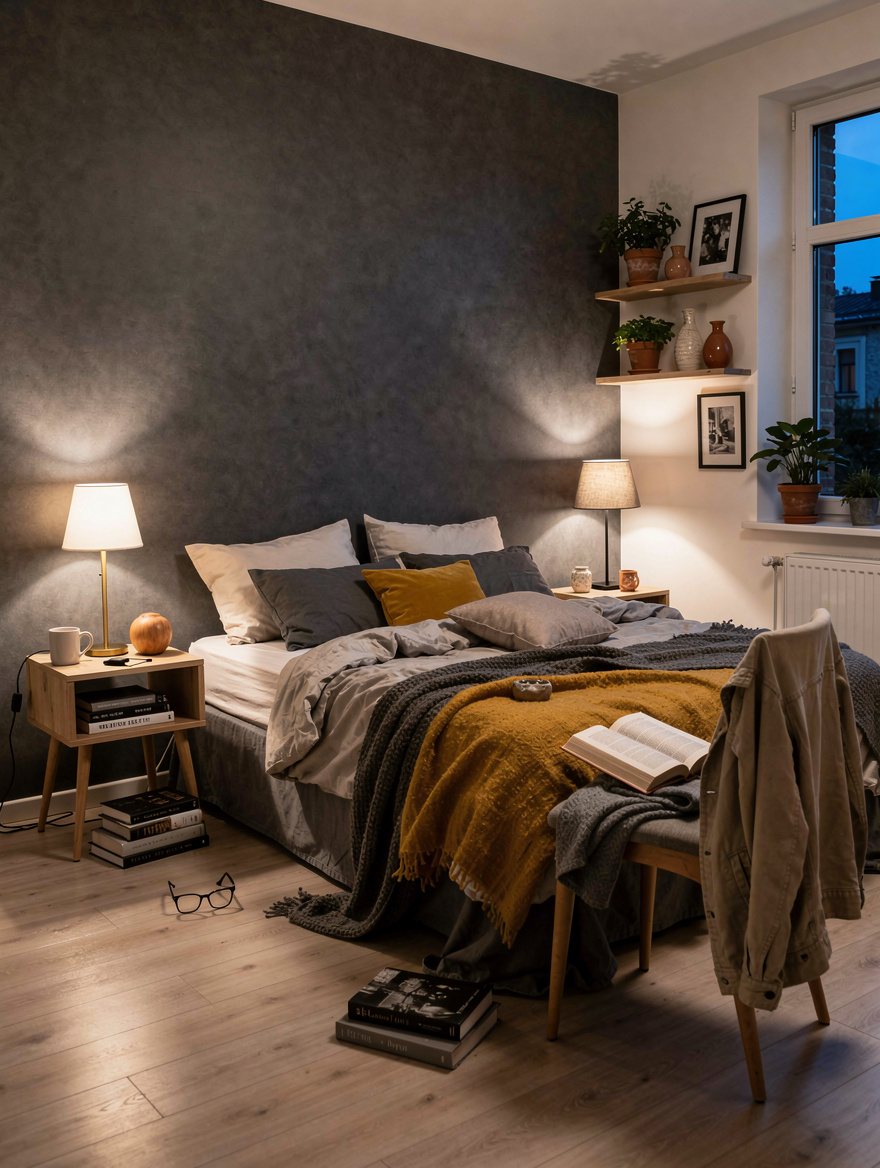
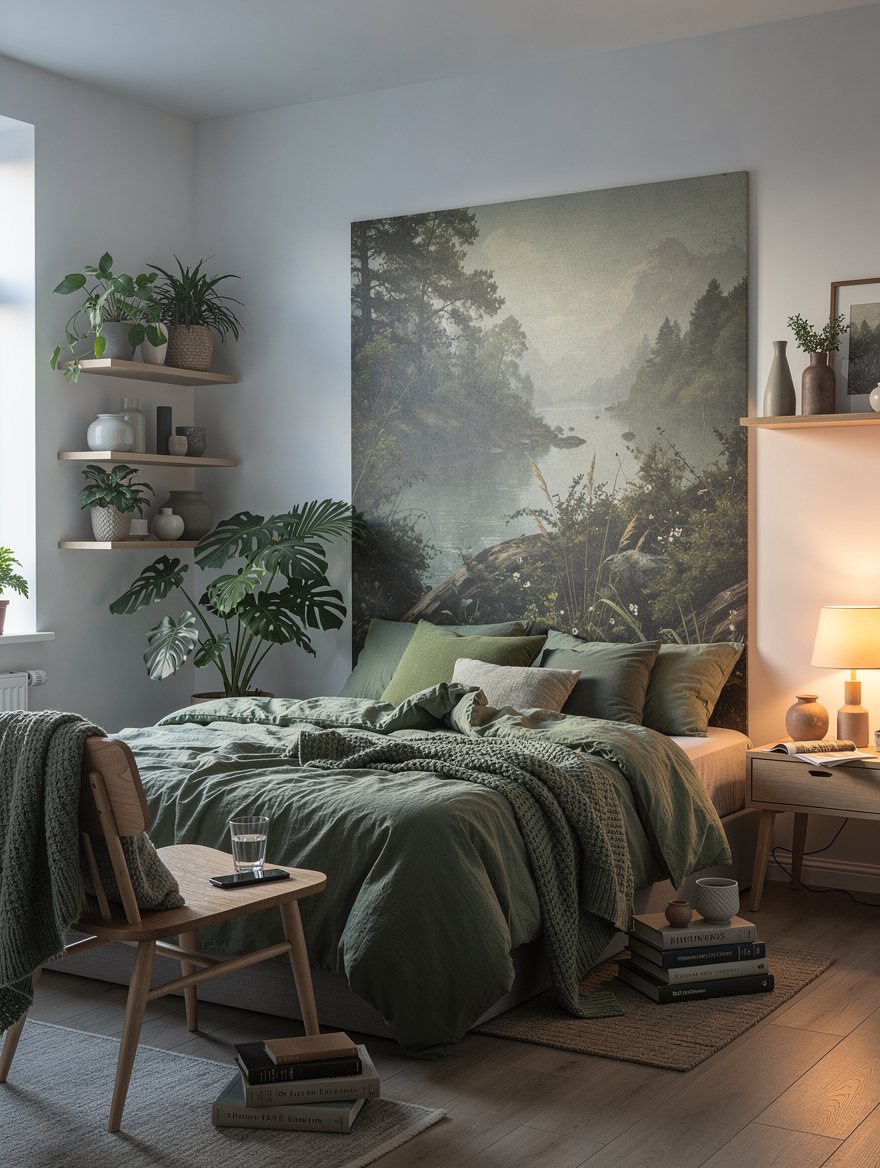
Choose a Mural With One Strong Point of View
A removable mural has more authority than a scatter of small decals. Try a foggy mountain mural, an enlarged pencil sketch, a shadowy garden, or a warm abstract wash that starts behind the headboard and rises toward the ceiling.
Panels are commonly around 20 inches wide, and typical mural pricing runs roughly $4 to $8 per square foot depending on height and customization. Measure from baseboard to ceiling twice, then order for the actual wall, not the optimistic number in your lease listing.
Let the mural be the loudest thing in the room. White linen bedding, one dark wood nightstand, and a pair of simple reading lights will make it feel grown-up rather than themed.
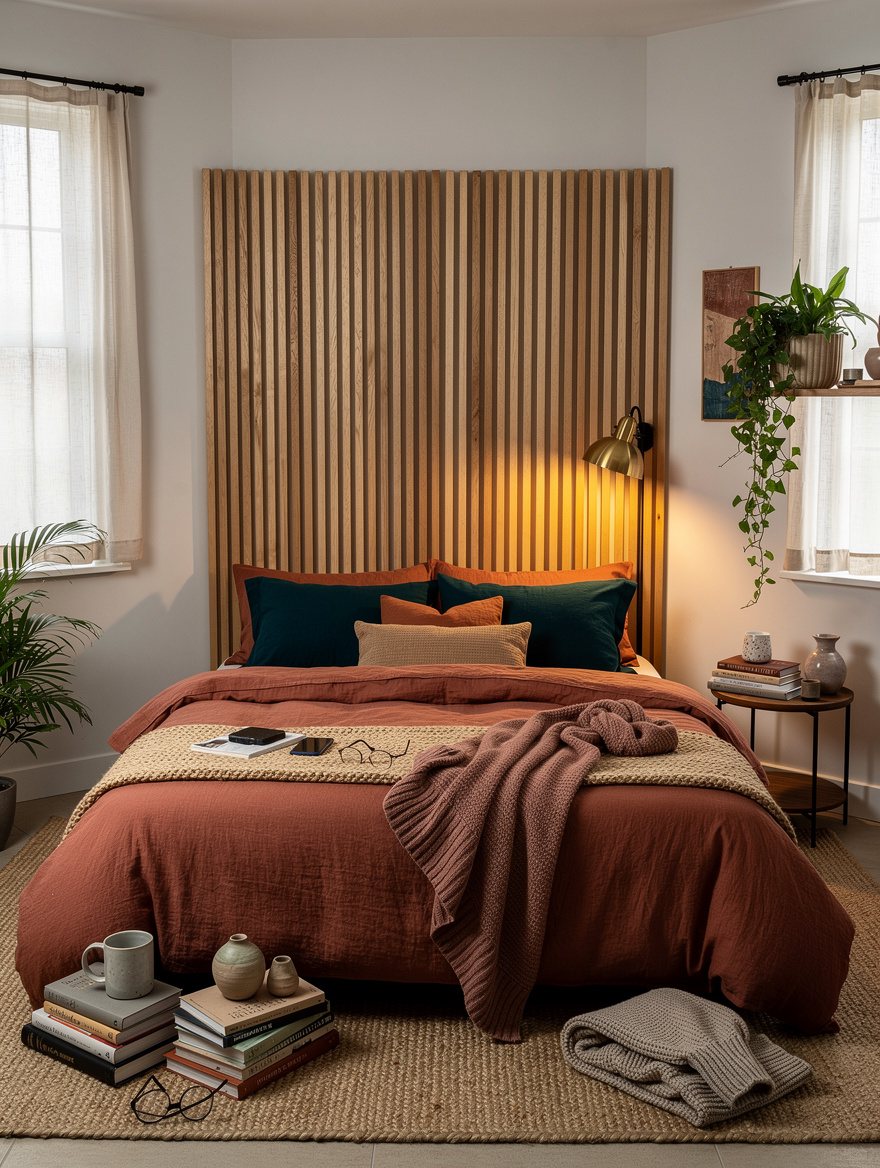
Build a Slim Slatted Screen Behind the Bed
A freestanding screen can fake architecture without touching drywall. A wood-slat folding screen around 4 to 6 feet tall and 4 to 6 feet wide adds vertical rhythm while hiding a plain rental wall.
Wayfair, Walmart, Amazon, and Costco often carry rattan, fabric, acoustic, and slatted versions, with typical prices around $80 to $350. Place it directly behind the headboard and secure the bed position so nobody can knock it forward during a midnight pillow hunt.
Dark walnut slats look especially good with cream bedding; pale oak wants clay, rust, or moss-green textiles beside it. Avoid a tiny screen on a king bed, because undersized furniture makes the whole room feel temporary.
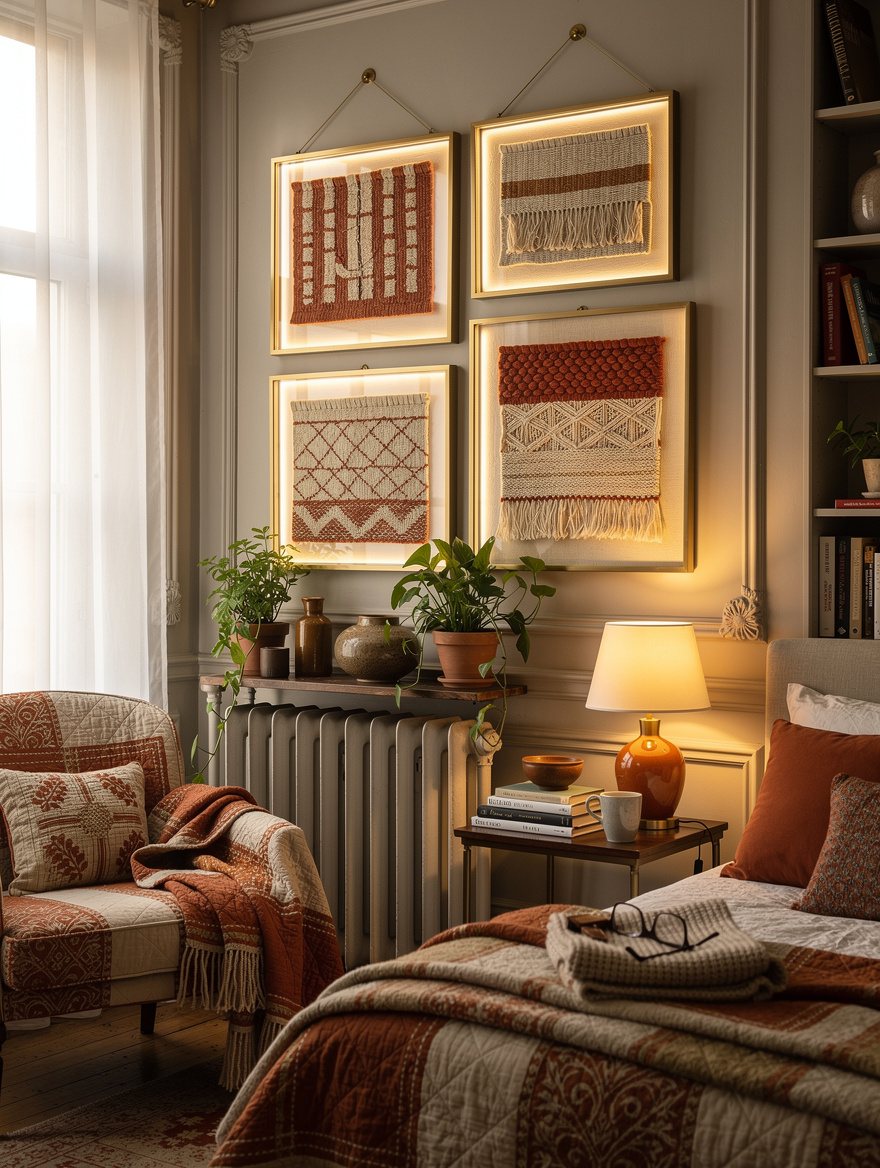
Create a Textile Gallery in Oversized Frames
Frame fabric instead of filling the wall with generic art prints. A pair of linen textile panels in lightweight 24-by-36-inch frames can make a bedroom wall feel collected without committing to wallpaper.
Use removable hanging strips within their listed weight limits, and shop frames at Target, Walmart, IKEA, or Amazon. A typical grouping costs about $60 to $250 or more, depending on the frame material and whether you use vintage fabric, a cut-up quilt, or new yardage.
Pick one large pair or one disciplined grid. Four mismatched tiny frames above a bed tend to read like leftovers, even when every individual piece is nice.
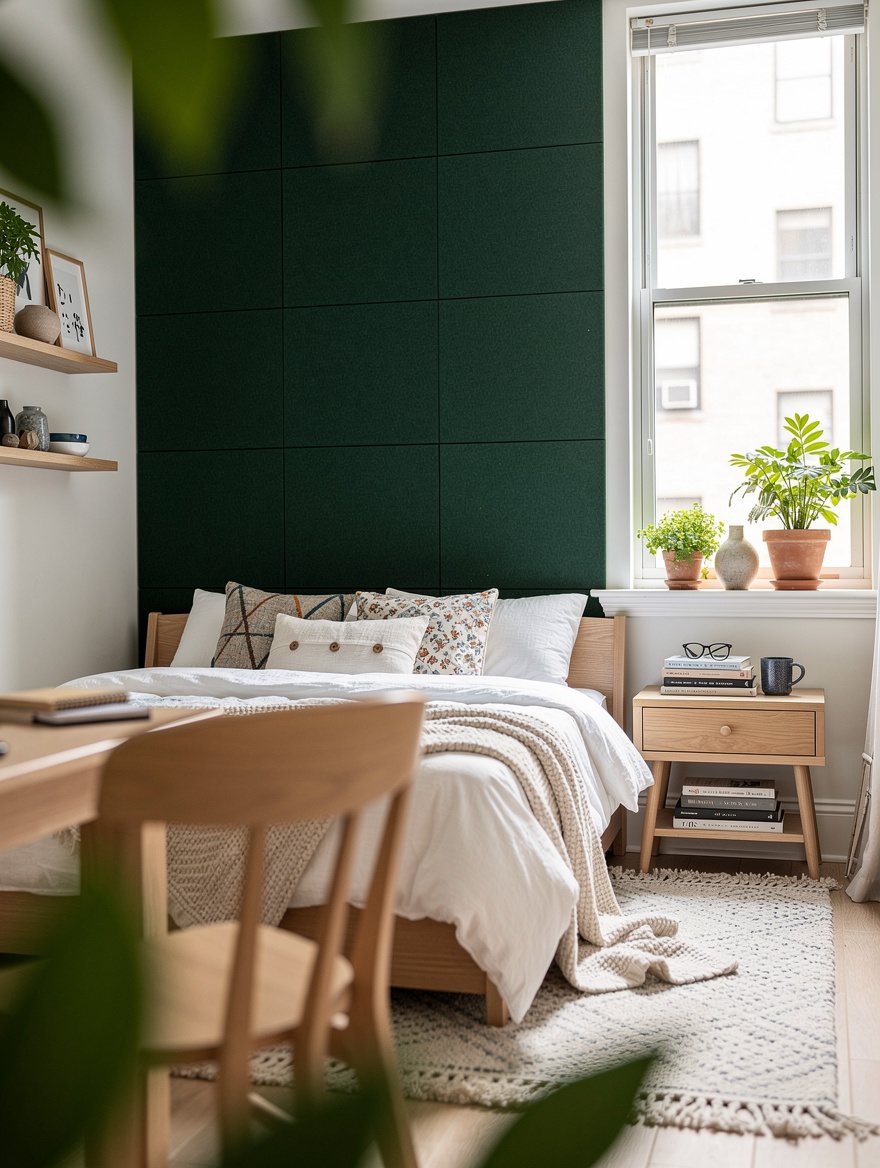
Mount Felt Tiles With Removable Strips
Felt brings texture and also softens the hard, echoing sound common in empty rentals. Arrange charcoal felt tiles behind the bed in a broad rectangle, a stepped arch, or a clean band that extends beyond each nightstand.
Tiles commonly come in 12-by-12-inch squares, while larger panels can be around 48 by 32 inches; a feature area typically costs about $40 to $150 or more. Use removable strips rather than the supplied adhesive, since strong backing can pull paint when the lease ends.
Keep the pattern graphic and restrained. One deep color looks more expensive than a rainbow of hexagons, and felt needs crisp edges to avoid a playroom effect.
Use Lightweight Peel-and-Stick Tiles Sparingly
Small peel-and-stick tiles can give a bedroom a tactile edge, but treat them as a narrow architectural panel, not a backsplash. PVC wall tiles commonly measure about 11.8 by 11.8 inches, and packs covering roughly 9 to 10 square feet often cost around $30 to $40.
Install a centered rectangle above the headboard, then stop before the design reaches the ceiling. The adhesive can be stronger than renters expect, so test one tile in a concealed area and reserve this option for walls with sound, well-cured paint.
Matte ivory, muted bronze, and low-relief geometric designs are the useful choices. Glossy fake marble in a bedroom usually looks more like a rushed kitchen project than an accent wall.
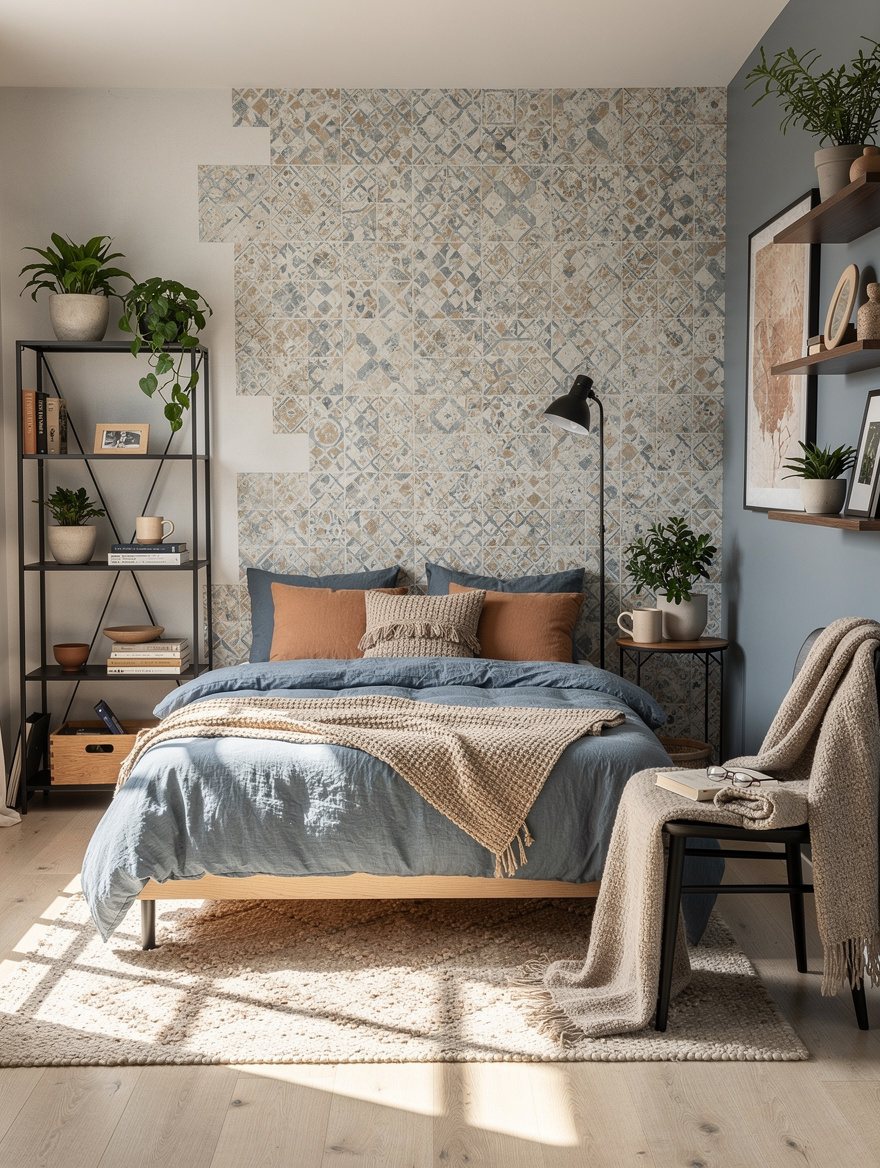
Turn a Pegboard Into a Nightstand Zone
A pegboard is practical when the bed wall has no room for bulky nightstands. An IKEA SKÅDIS pegboard is commonly available around 14¼ by 22 inches or 30 by 22 inches, with the board typically priced about $24.99 to $34.99 before accessories.
IKEA intends its boards for screw mounting, so use this only with an approved non-drill mounting approach that clearly supports the combined weight. Keep the load light: a small ledge, charging cable, paperback, eye mask, and one tiny vase.
Paint is not needed when the objects make the composition. Two matching boards flanking the bed can look sharp, but a single centered board above pillows is too much like a workshop.
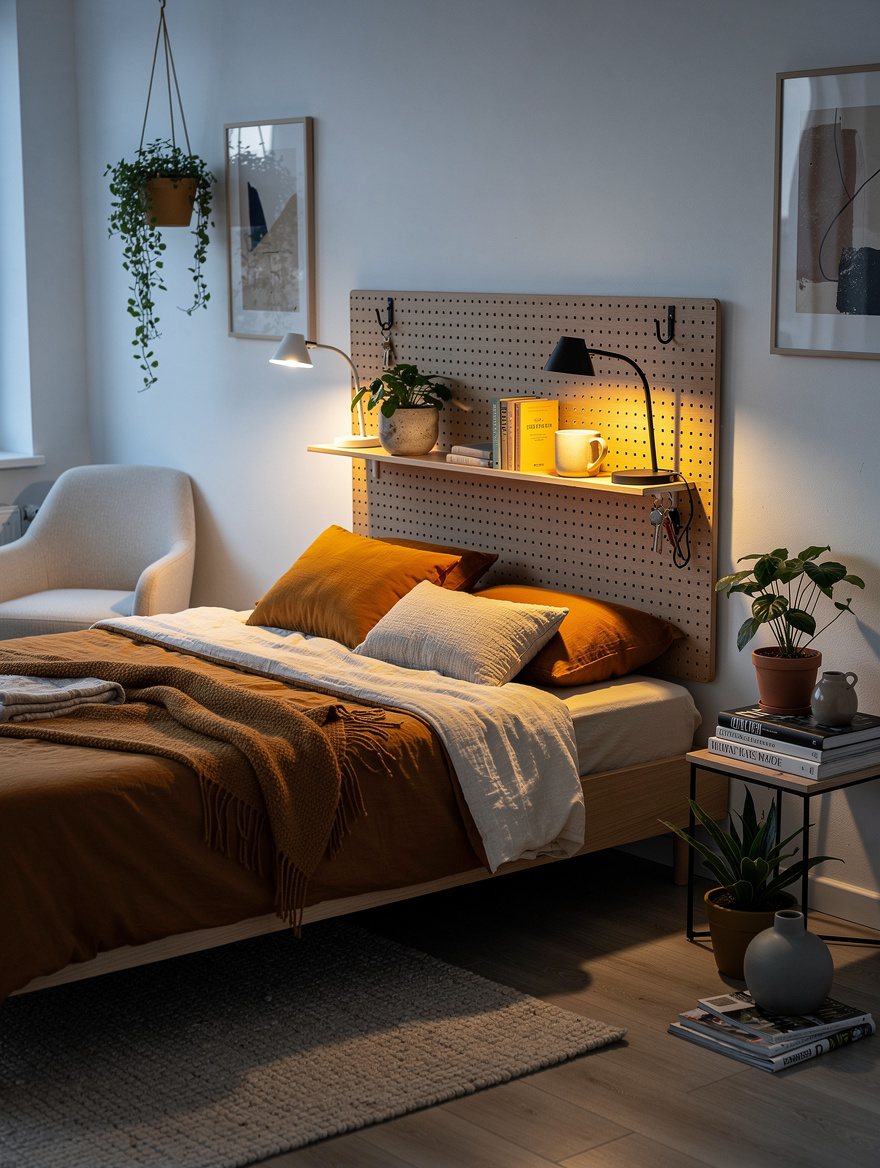
Layer Sheers Over Warm Plug-In Lights
A sheer backdrop gives the bed a gentle glow that flat paint cannot imitate. Hang white sheer panels, typically 52 inches wide with an 84- to 96-inch drop, from a tension rod and place plug-in lights behind the fabric.
A typical setup costs about $50 to $180, depending on the lights and whether you add a second curtain layer. Route cords down one side of the bed, use proper cable covers, and keep lights clear of fabric so the result remains cozy and sensible.
Choose warm white illumination, never blue-white. The goal is a dim evening halo, not a bedroom that resembles a retail display window.
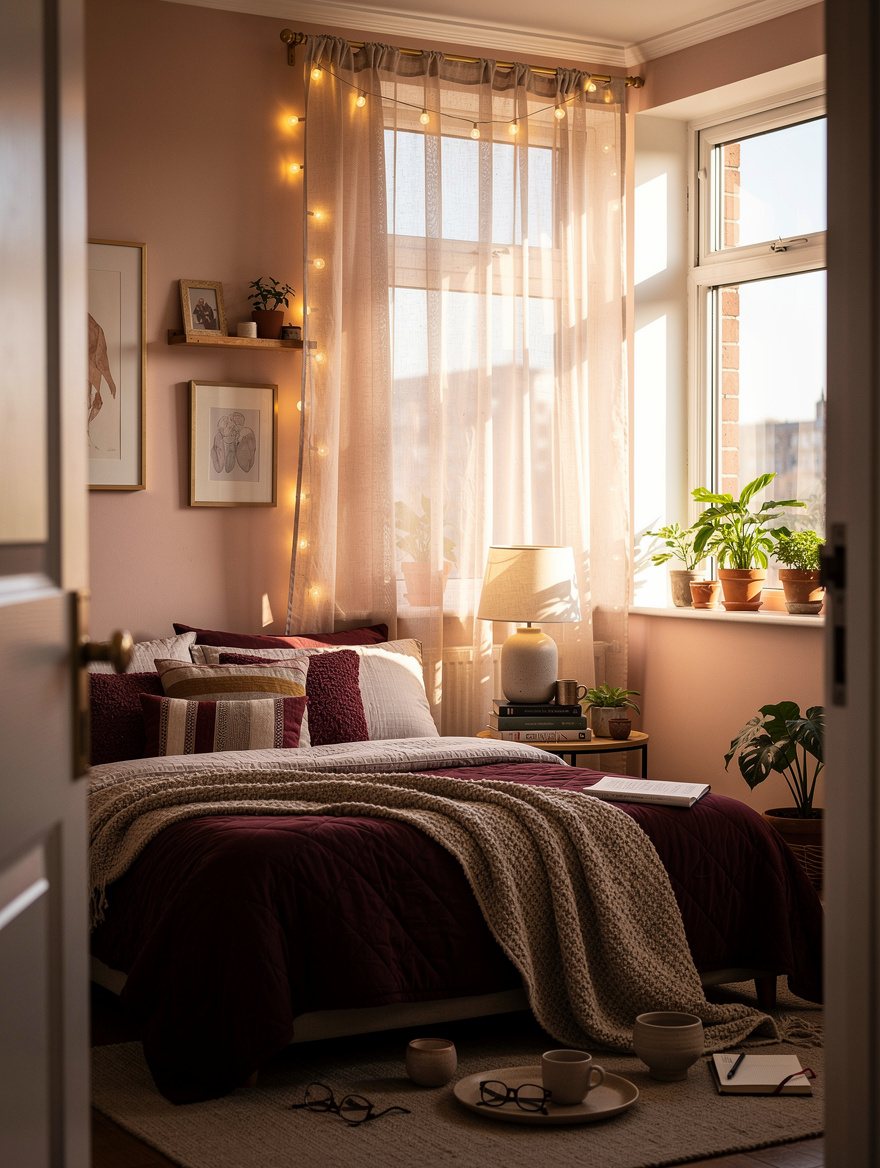
Lean an Oversized Canvas Against the Wall
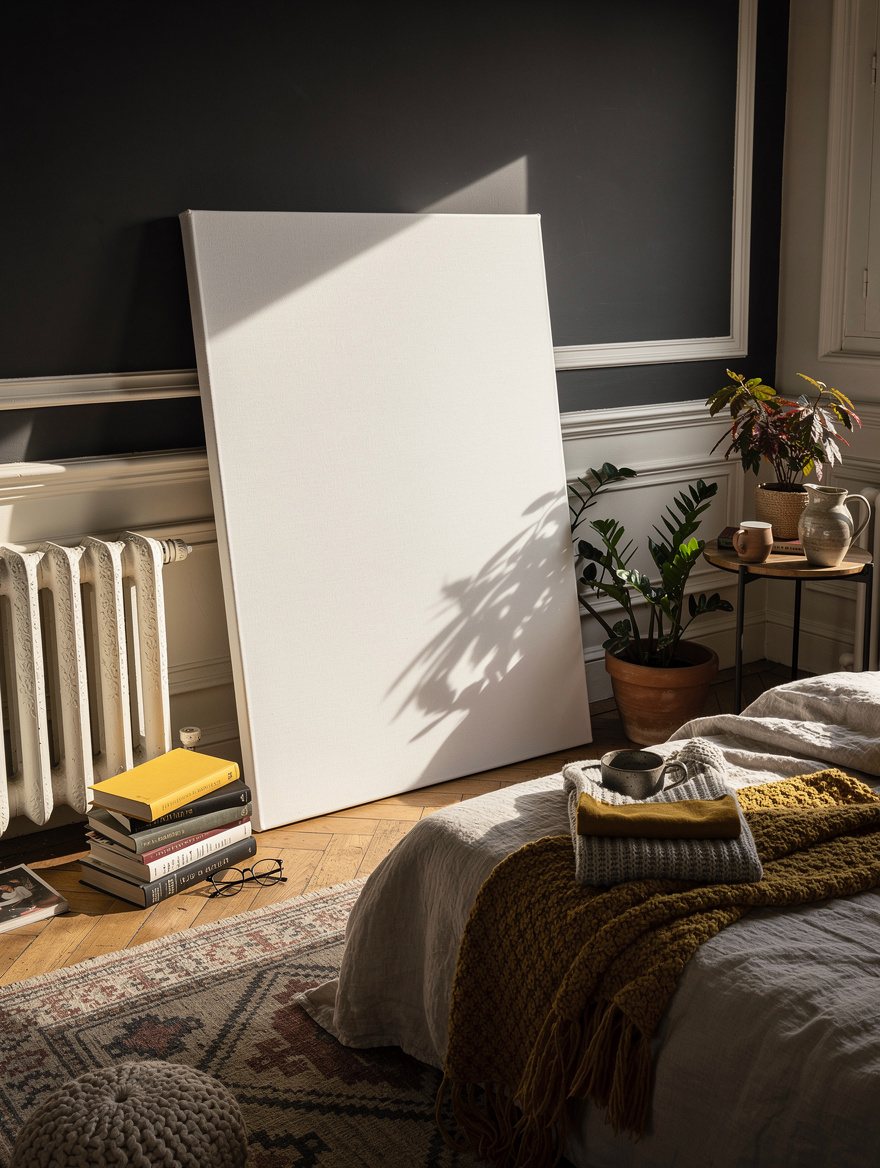
Leaning art is the renter move that looks best when the piece is genuinely large. A 24-by-36-inch canvas can sit on a narrow ledge behind a low headboard or rest safely on the floor beside the bed in a spacious room.
Target, Wayfair, Walmart, and Amazon carry lightweight canvases, but choose a subject with depth: a dark still life, a quiet field, a weathered architectural photograph. Typical spending ranges about $60 to $250 or more when you include a ledge or companion artwork.
Use one substantial piece instead of several small ones. It gives the room a confident focal point and makes a standard beige wall recede immediately.
Anchor the Bed With a Narrow Rug Panel
A flatwoven rug mounted or tension-hung behind the headboard brings color, texture, and a little acoustic softness in one move. A flatwoven wool rug works especially well when its width is wider than the headboard but narrower than the bed wall.
Shop IKEA, Costco, Wayfair, or Home Depot for a low-pile option, then use a rod pocket, textile clips, or a tension system rather than permanent hardware. A typical fabric-wall approach costs about $50 to $150, and it can move to the living room when your next lease has a better bedroom.
Choose a rug with a flat surface and a limited palette so it hangs cleanly. Thick shag belongs underfoot, where it can do its actual job.
Keep reading
- 12 Renter-Friendly Lighting Swaps Designers Use Instead of Ceiling Fixtures
- 10 Ritz Paris Bedroom Ideas That Look Luxurious Without the Hotel Price
- 18 Romantic Boho Bedroom Ideas That Feel Cozy, Layered, and Dreamy
Start with the wall behind the bed and choose the method your lease can tolerate. For the lowest-risk result, put a tension rod near the ceiling and hang two full-length panels before buying anything adhesive.