Forget Costly Flooring: Home Depot’s $25 Rug Upgrade Hides Rental Floors
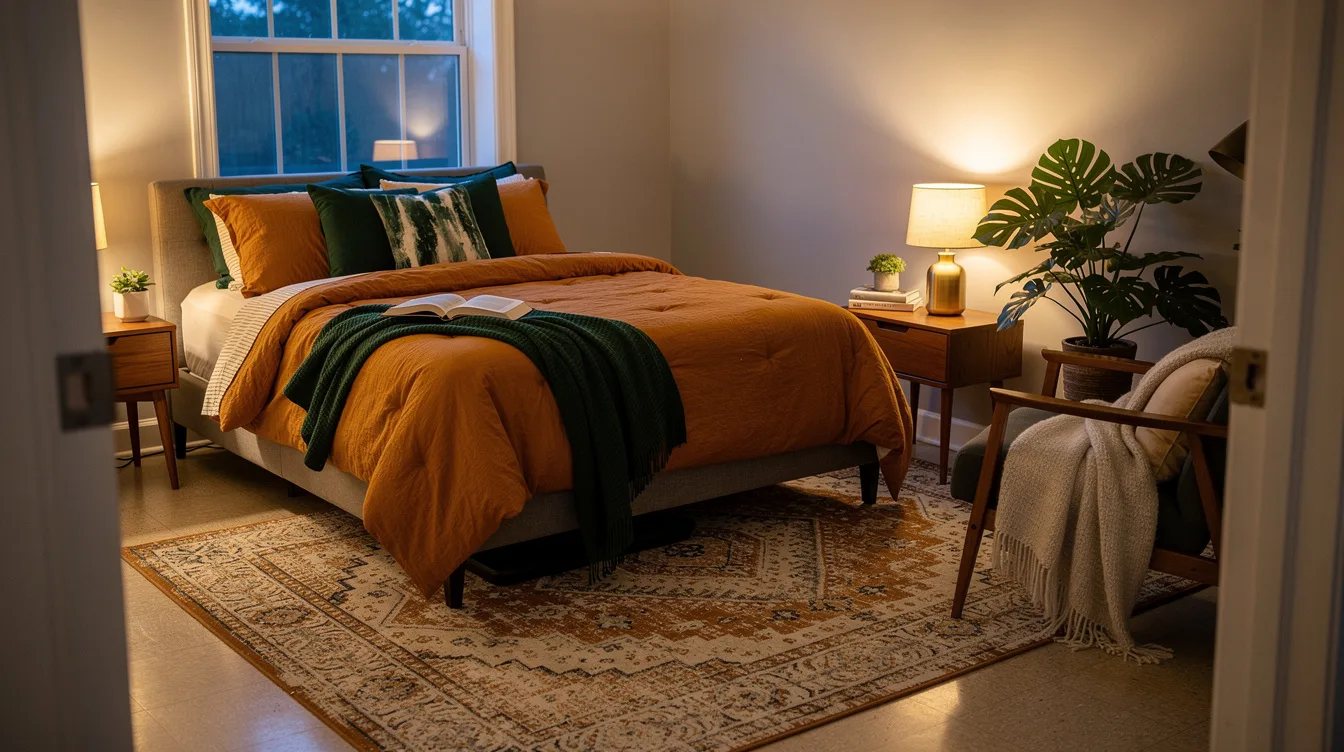
23 august 2026I understand the temptation to cover a scuffed rental floor with the cheapest adhesive tile in sight. But in a 10-by-12-foot bedroom, a 9-by-12-foot washable rug can hide nearly all the problem surface without putting a security deposit at risk.
Designers favor coverage that looks intentional and leaves cleanly at move-out. Start with removable layers, then consider a true floating floor only after written landlord approval.
What you will find inside
- Cover the Largest Possible Footprint First
- Put a Real Pad Under Every Large Rug
- Let Furniture Overlap the Rug Edges
- Use Two Rugs to Create Useful Zones
- Choose Washable Rugs Over Delicate Cream Wool
- Use Loose Interlocking Tiles Without Glue
- Reserve Click-Lock LVP for a Full-Room Plan
- Budget for Extra Planks Before You Start
- Check Doors and Expansion Gaps Before Buying LVP
- Favor Longer Planks for a Less Tile-Like Look
- Treat Peel-And-Stick Tile as Permission First
- Keep Vinyl Rolls to Small Smooth Areas
Cover the Largest Possible Footprint First
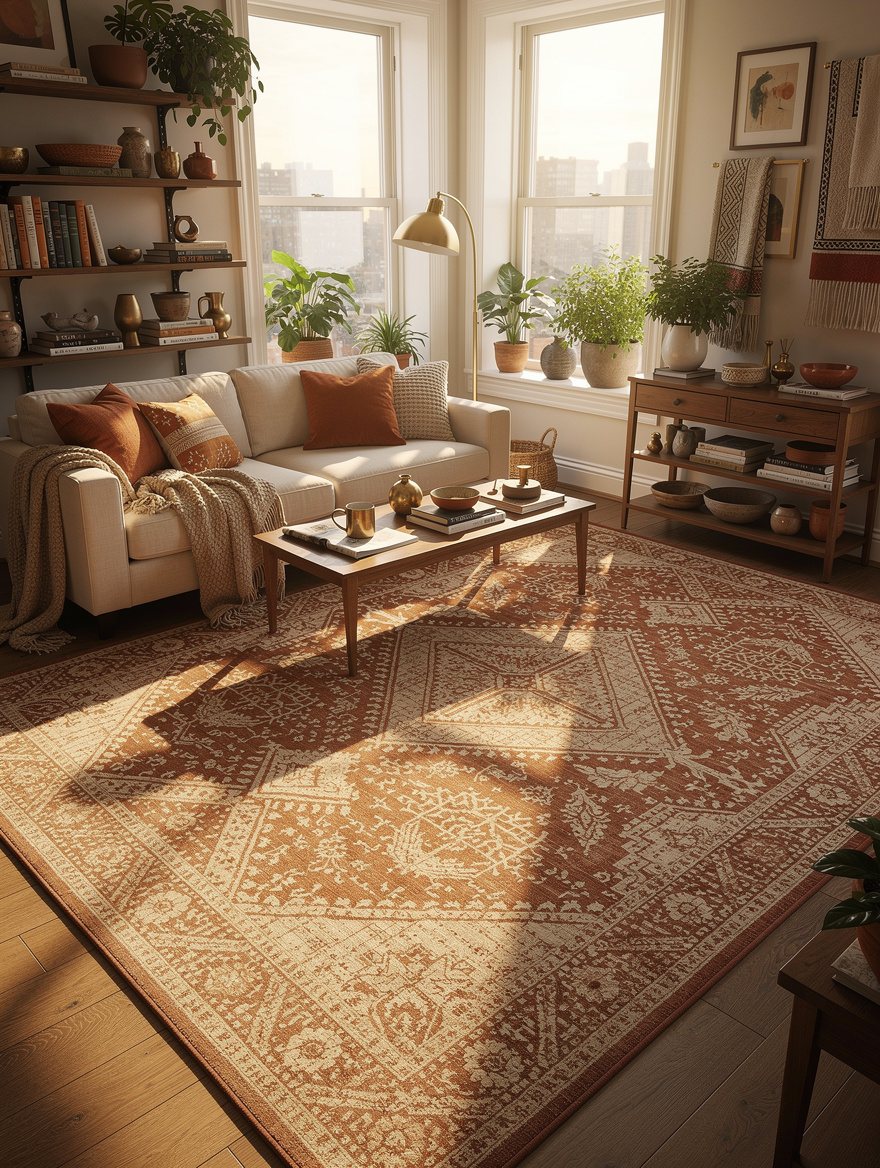
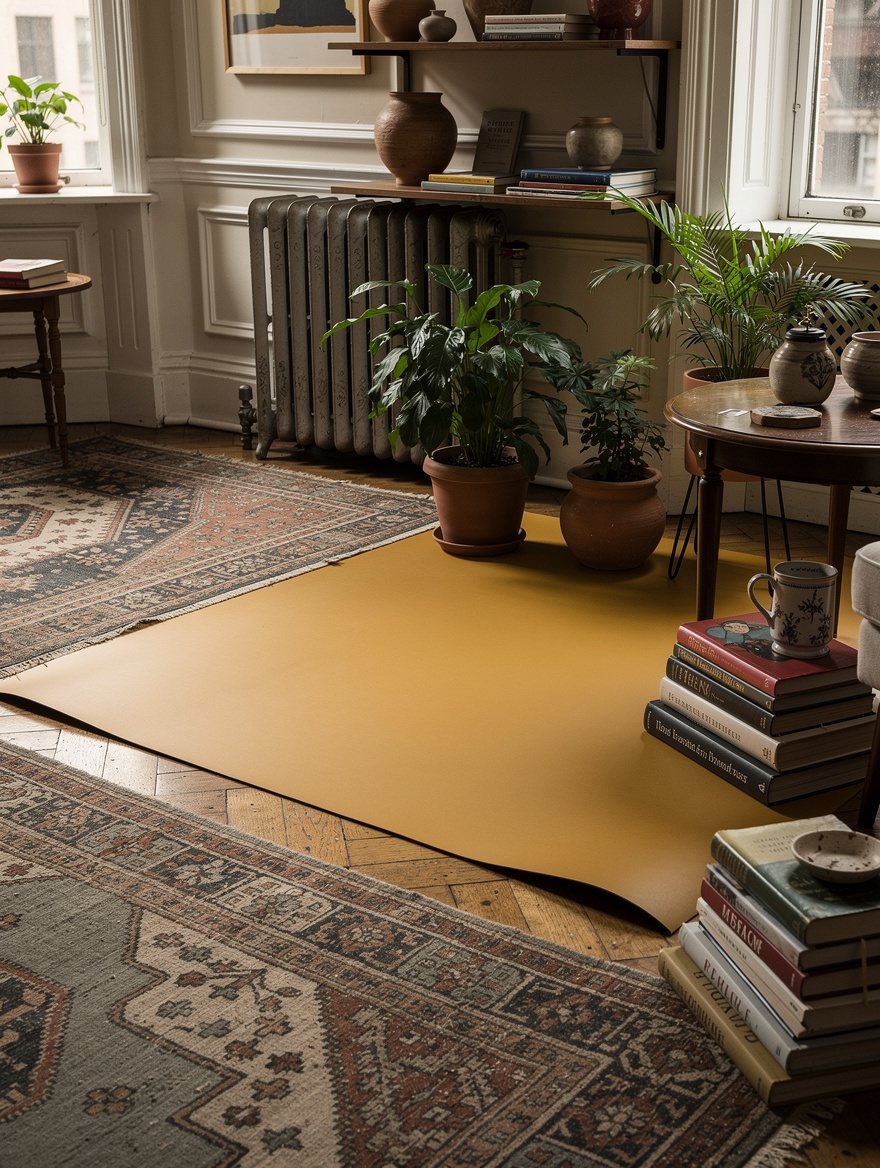
A too-small rug spotlights the ugly border around it. Choose an 8-by-10-foot area rug for a compact room or move up to 9 by 12 feet when the room allows it.
A typical large rug plus pad costs roughly $100 to $350, which is far less stressful than replacing damaged rental flooring. Low-pile washable styles are my clear favorite for dated vinyl and tired carpet.
Put a Real Pad Under Every Large Rug
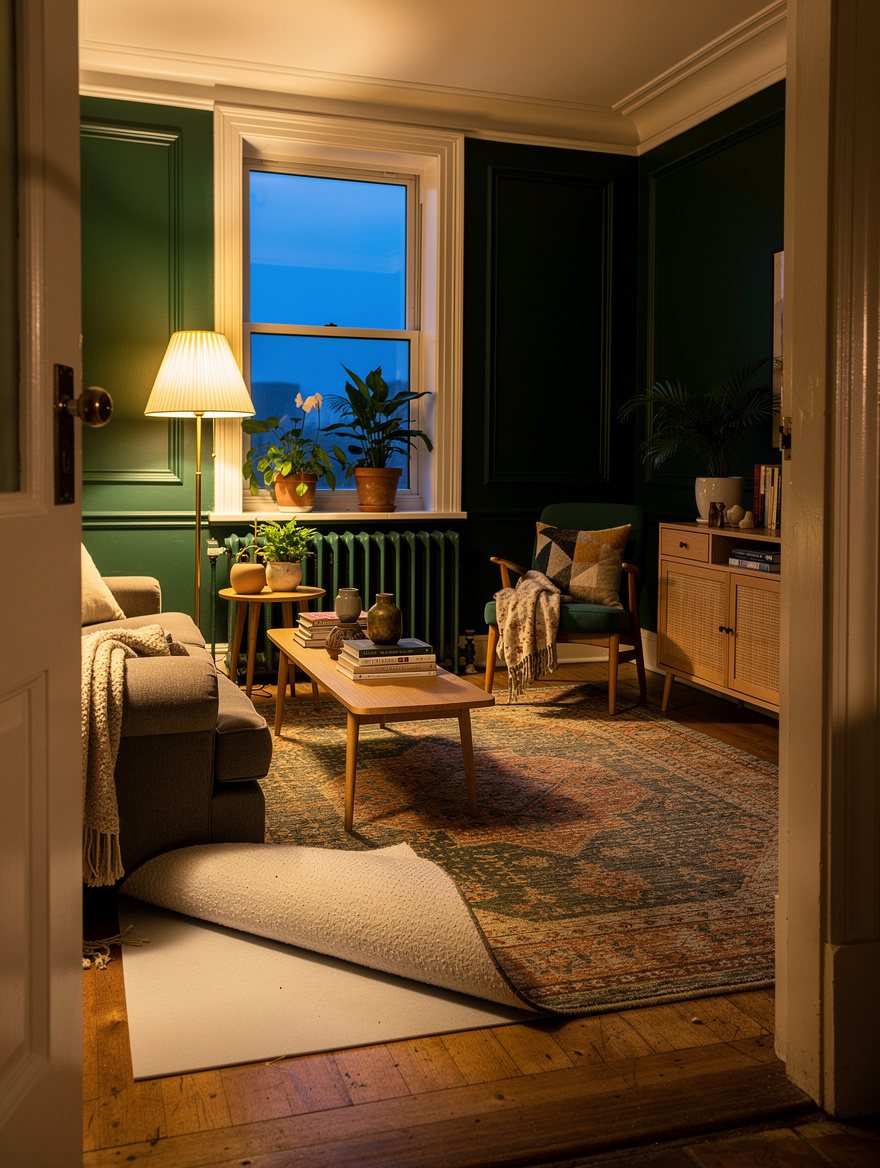
A rug directly on slick vinyl can creep, buckle, and make the cover-up look temporary. Add a non-slip rug pad, especially beneath a dining table, desk chair, or bed runner.
The pad also softens old hard flooring and helps a thin washable rug feel more substantial. Skip sticky rug tape unless the landlord has approved it in writing.
Let Furniture Overlap the Rug Edges
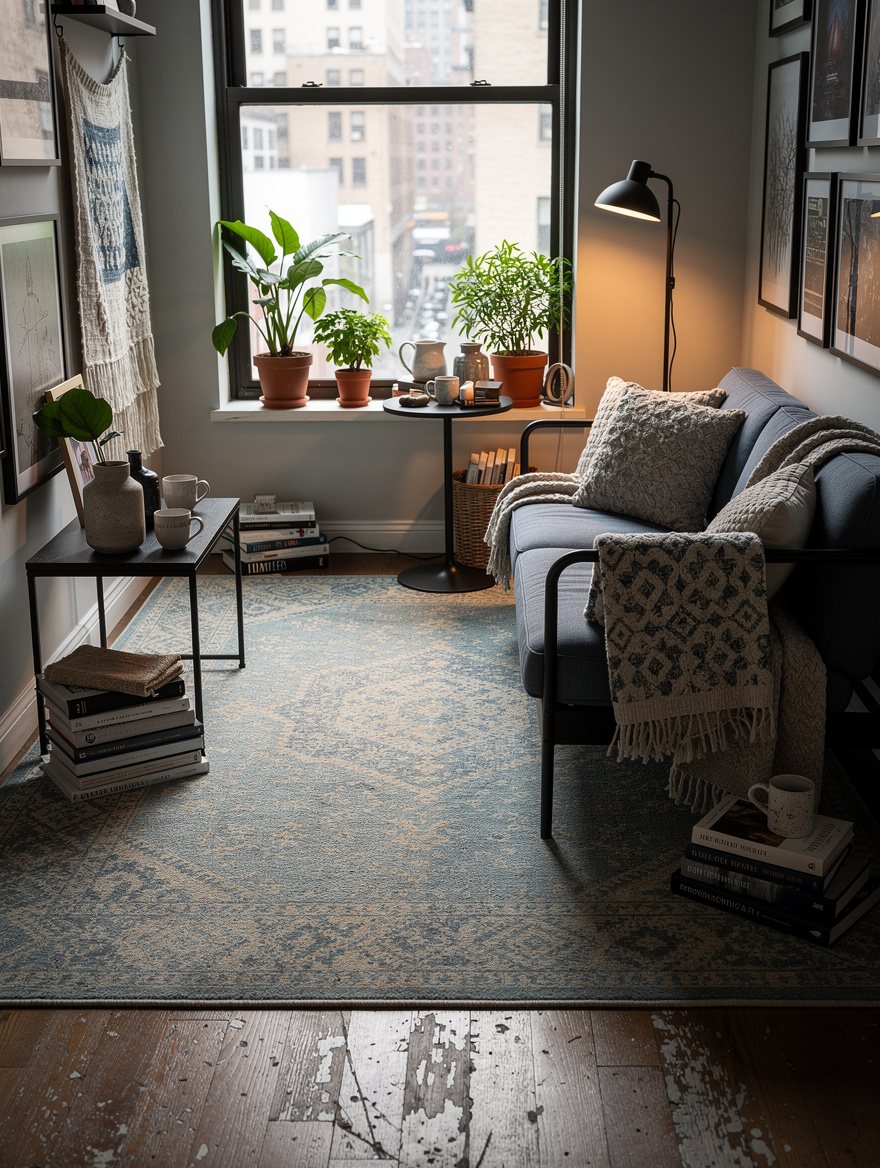
Float every furniture leg off the rug and the floor becomes the star again. Put sofa front legs, a coffee table, or a bed frame on the low-pile rug so the setup reads as a complete room.
This is the simplest styling move in the whole project. A rug should anchor activity, not sit like a postage stamp in the center.
Use Two Rugs to Create Useful Zones
A single oversized rug is not the only answer for a rental with bad floors. Two 5-by-8-foot rugs can separate a sleeping area from a work corner in a studio while covering more visual ground.
Keep the pile height and general color family close, then vary the pattern slightly. Mismatched bargain rugs tend to make a room feel more improvised, not more personal.
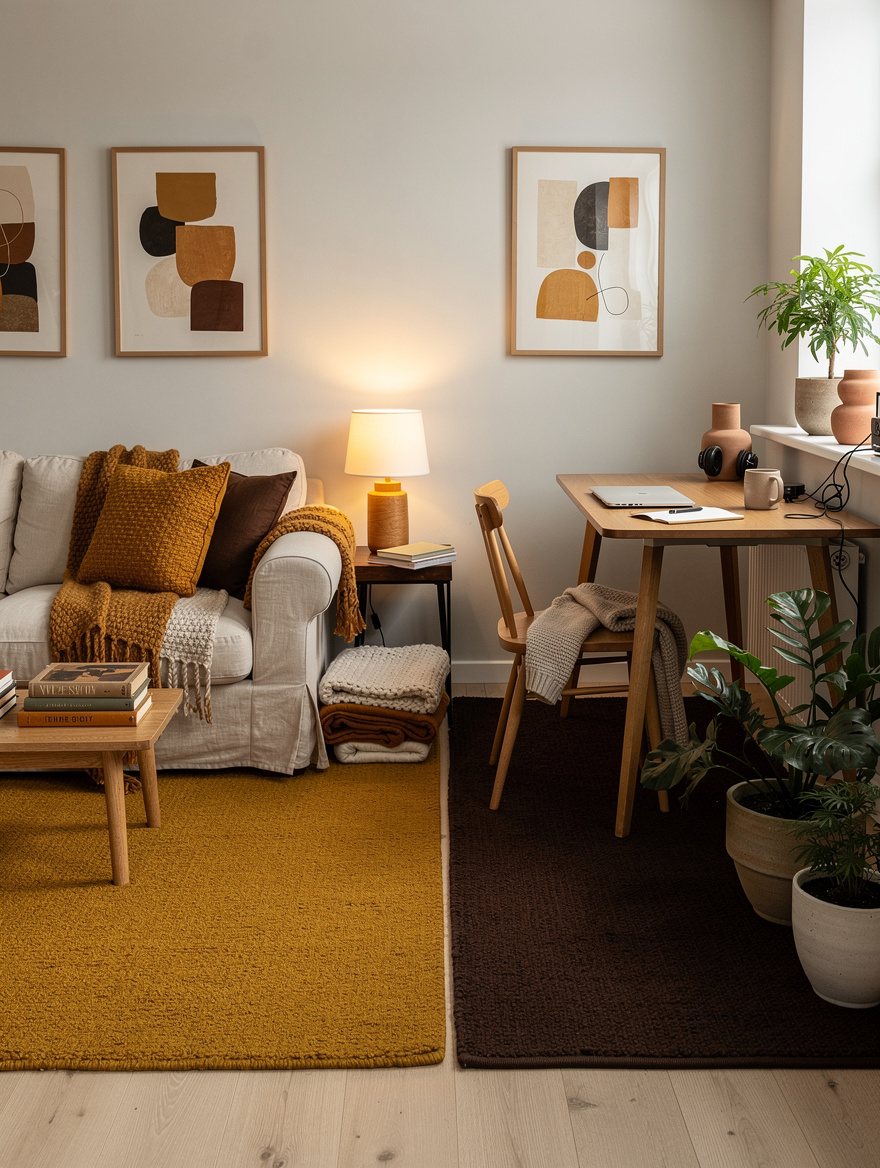
Choose Washable Rugs Over Delicate Cream Wool
Rental floors often come with mystery stains, worn seams, and uneven texture, so a precious rug is a poor match. A washable polyester rug gives you a cover layer you can actually live on.
Look for muted rust, olive, tobacco, or faded blue rather than a bright ivory field. A little pattern disguises spills and keeps the original floor from showing through visually.
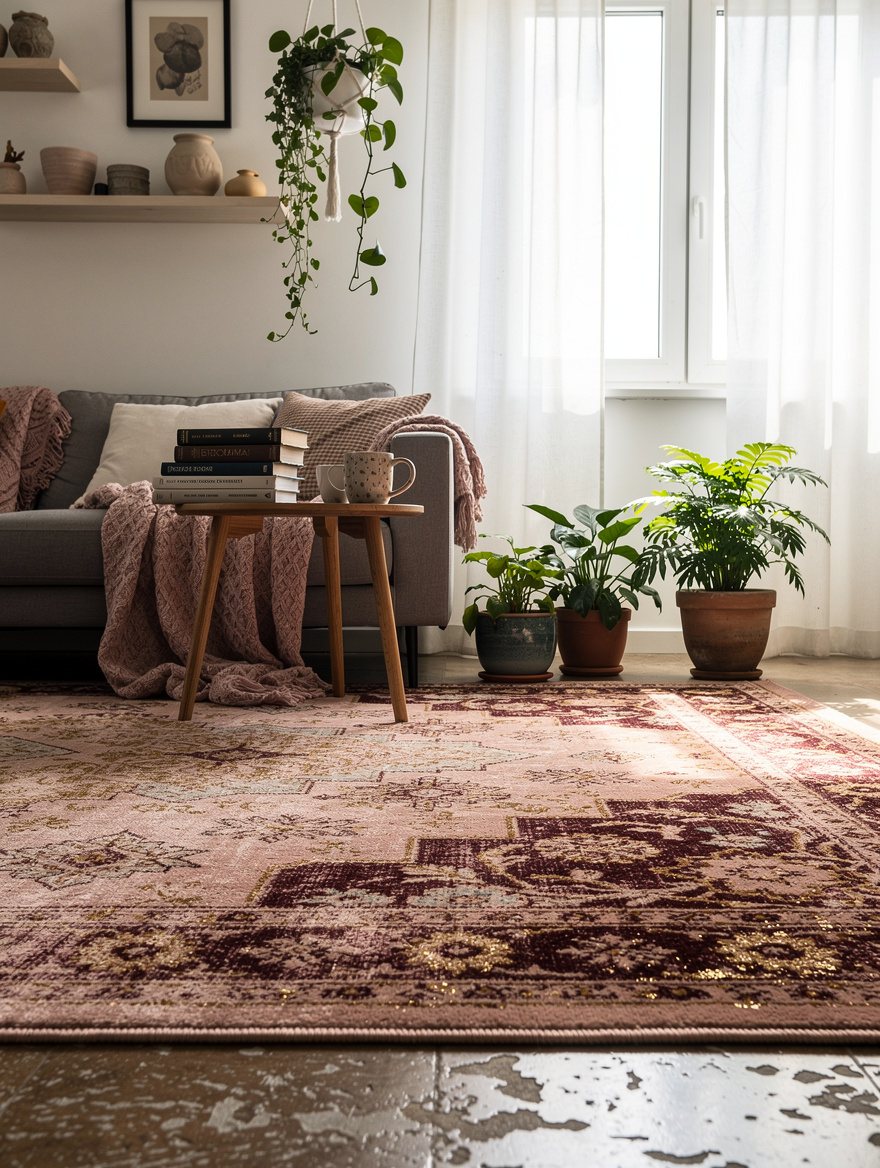
Use Loose Interlocking Tiles Without Glue
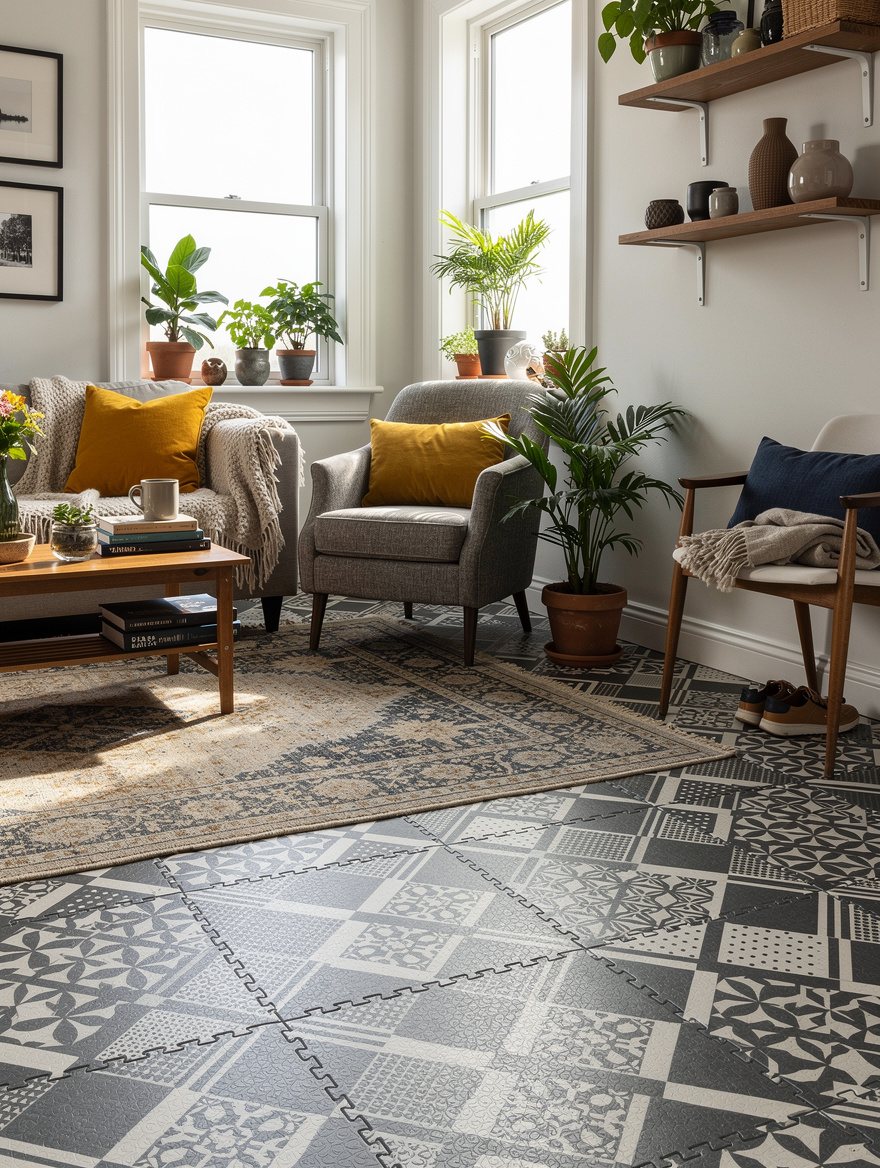
For a worn carpeted room or a concrete-like floor, loose-laid interlocking carpet tiles can create a tidy, cushioned surface. Common 18-by-18-inch and 24-by-24-inch tiles typically run about $2 to $5 per square foot.
Buy enough to make one continuous field instead of scattering tiles like mats. Permanent adhesive defeats the rental-safe purpose and can create a costly move-out conversation.
Reserve Click-Lock LVP for a Full-Room Plan
A true floating floor can look renovated, but it needs commitment, measurements, and landlord approval. Lifeproof Fairview Oak click-lock planks are nominally 9 by 48 inches and 6.5 mm thick, giving a far more believable result than thin stick-on tile.
A typical 20.06-square-foot case costs around $59.98, or roughly $2.99 per square foot. Use it only when the planks can genuinely float over a protective underlayment.
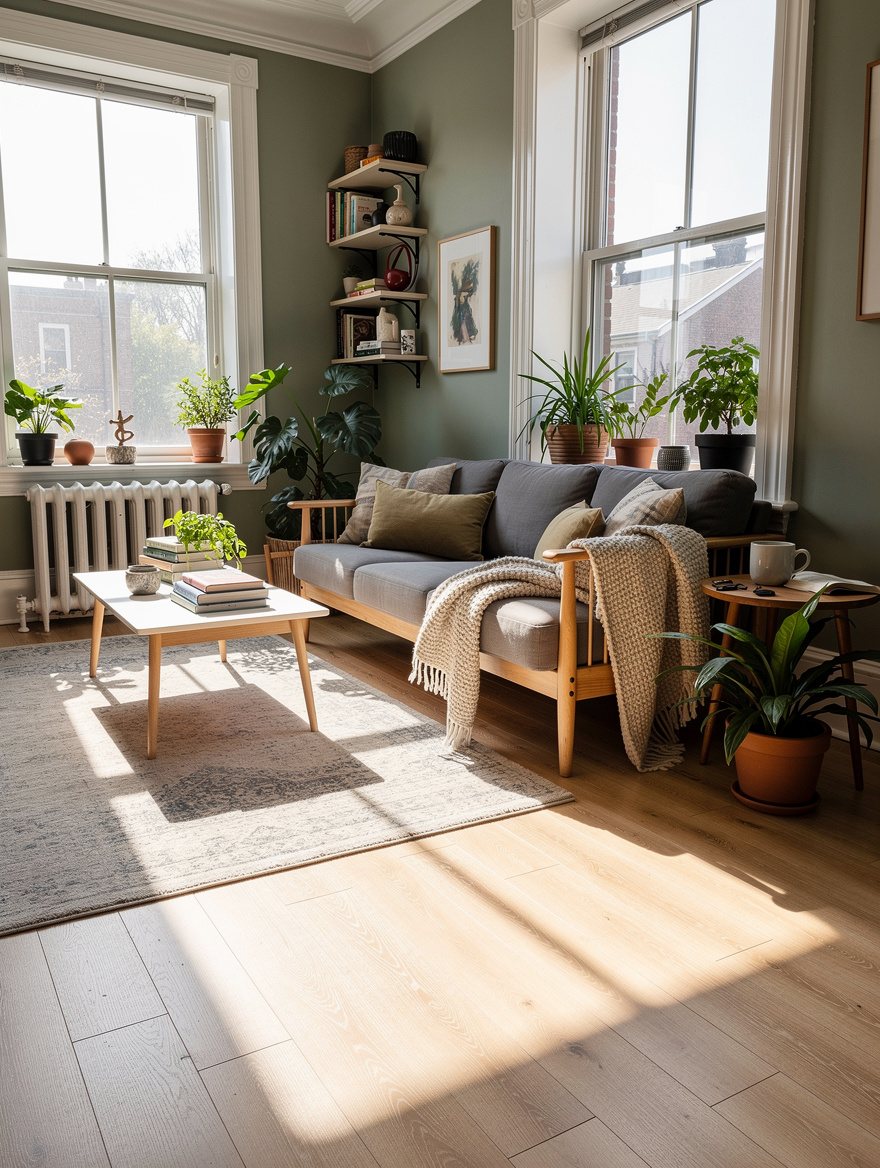
Budget for Extra Planks Before You Start
Flooring projects punish exact calculations because cuts, odd corners, and damaged boards happen. For a 120-square-foot room, plan for roughly 132 square feet of Lifeproof LVP to allow about 10 percent extra.
At typical material pricing around $2.99 to $3.29 per square foot, the planks alone can land around $395 to $435. That is a reasonable renovation look, but it is no longer a casual low-cost cover-up.
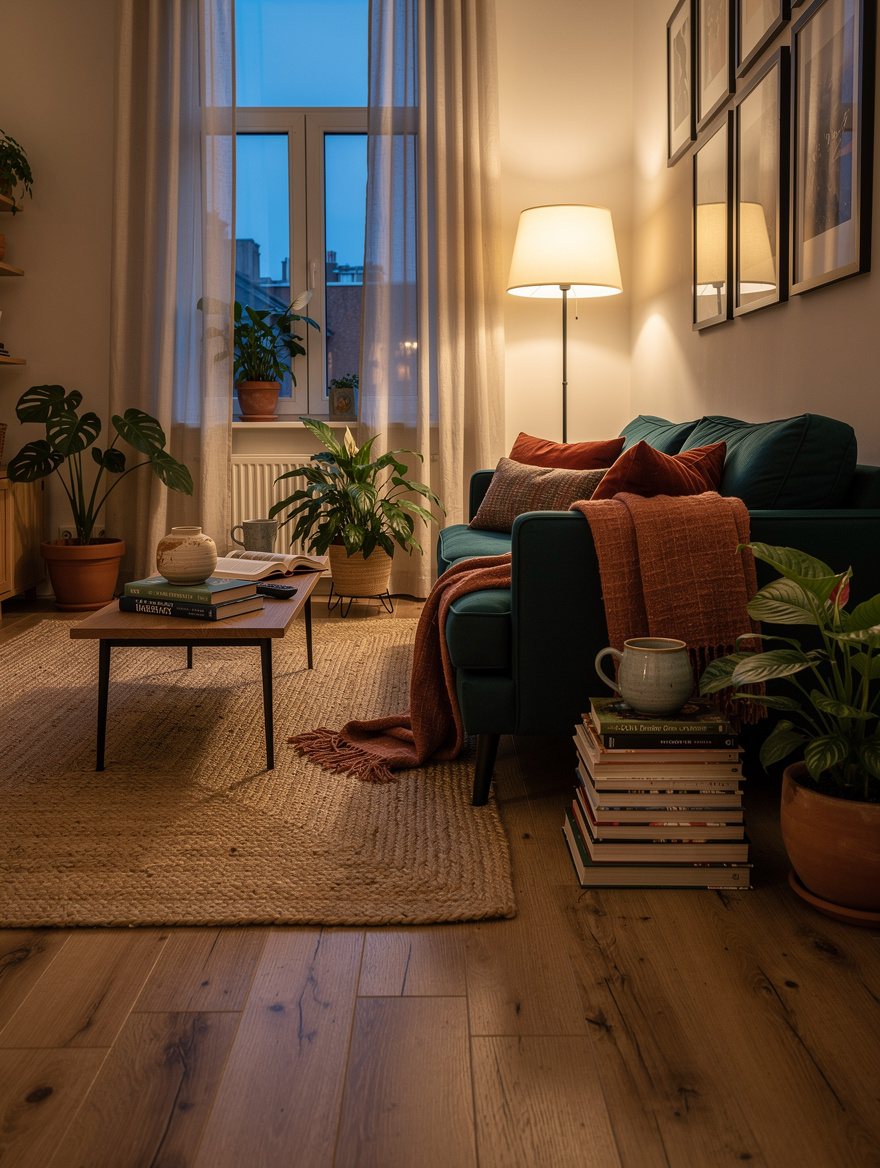
Check Doors and Expansion Gaps Before Buying LVP
Click-lock planks raise the finished floor, which can interfere with closet doors and entry doors. The Lifeproof Honey Ledge Oak option is nominally 8.7 by 48 inches and 6.5 mm thick, so measure clearances before a single case comes home.
Leave the needed perimeter expansion space and avoid fastening the floor to the rental. A floating installation that cannot move is likely to fail.
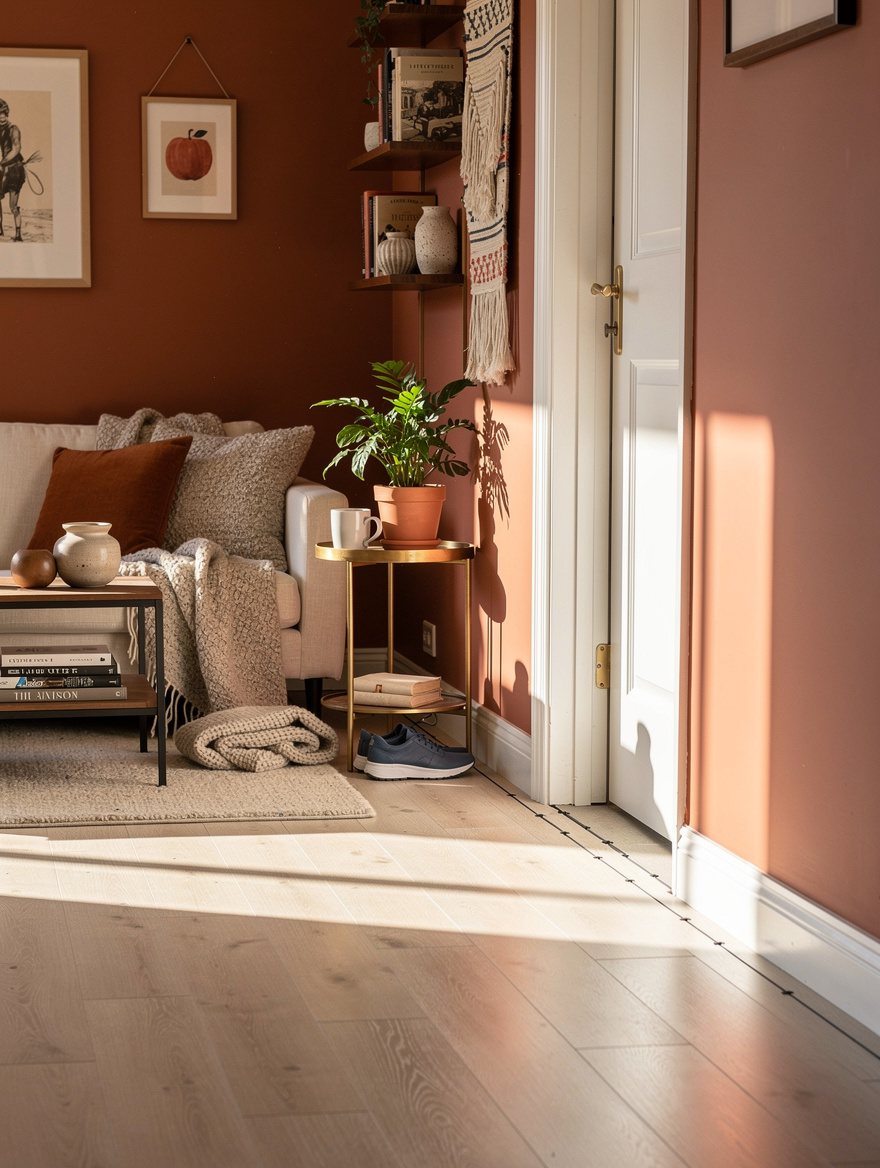
Favor Longer Planks for a Less Tile-Like Look
Short, narrow planks can make a room feel busy, especially beside dated baseboards. Lifeproof Wild Plum Oak uses nominal 9-by-60-inch boards, and the longer format usually makes a small room read more like a continuous floor.
A typical 26.78-square-foot case costs about $77.39, or roughly $2.89 per square foot. Install direction matters too: run planks along the longest sightline for a calmer result.
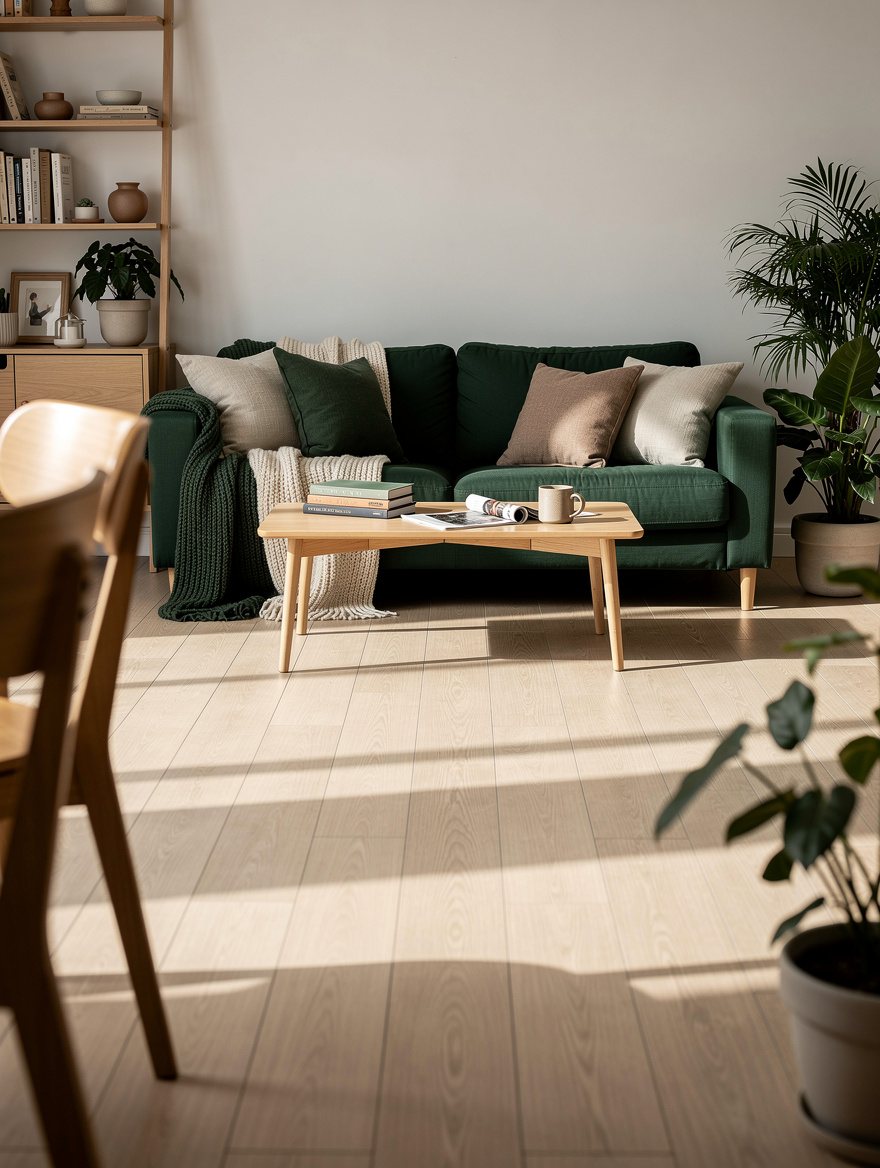
Treat Peel-And-Stick Tile as Permission First
TrafficMaster Smoke Slate peel-and-stick vinyl tile looks inexpensive because it is, about $44.70 for a 30-square-foot carton or roughly $1.49 per square foot. Its 12-by-12-inch tiles can refresh a closet or laundry nook quickly.
Its self-adhesive backing is the problem in a rental. Adhesive residue or finish damage can become a deposit issue, so written landlord approval comes before the purchase.
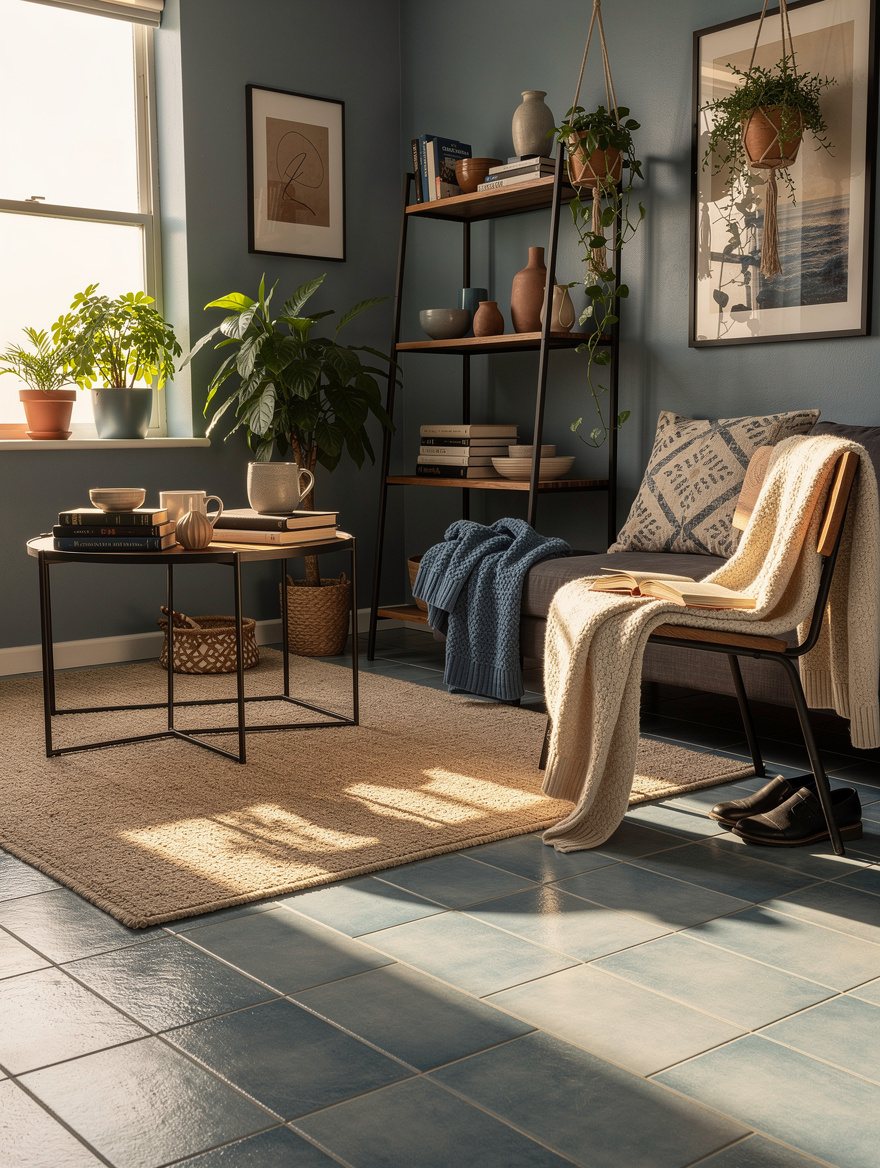
Keep Vinyl Rolls to Small Smooth Areas
A narrow entry, pantry, or closet can benefit from a temporary-looking visual reset. A Vsmile peel-and-stick vinyl roll measures 24 by 120 inches, covers about 20 square feet, and typically costs $39.99.
That works out to roughly $2 per square foot, but the adhesive carries the same risk as stick-on tile. Never use it to solve a full-room rental floor without explicit approval.
Keep reading
Buy the largest washable rug your room can hold, then add a proper pad before changing anything permanent. That first purchase covers the eyesore today and still belongs to you when the lease ends.