The One-Anchor Rule That Keeps Shelves From Looking Cluttered
19 july 2026A shelf can feel crowded long before it is full. On a typical 36-inch bookcase shelf, even eight small objects can turn into visual static when every piece faces forward and asks for attention.
The fix is editing with purpose, then giving the pieces that remain enough empty space to register. I like shelves that feel lived with, never packed for display.
Start With One Quiet Color Story
Choose two main tones and one accent before placing anything, such as oak, cream, and a muted green. A loose palette keeps mismatched books, pottery, and found objects from arguing across the whole wall.
Pull five to seven book jackets in similar shades, then let one darker item ground the shelf. A Target Threshold stoneware vase in a soft neutral works better here than several tiny colorful accessories.
Build Depth From the Back Forward
Place the tallest object against the wall first, then overlap a smaller piece in front of it. A leaning wood frame, a tall vessel, or an upright tray gives the shelf a clear back layer.
Bring forward only one or two smaller pieces, leaving a visible edge around each one. This setup creates depth without needing more decor, and it works especially well on shallow floating shelves.
Give Books a Job Beyond Storage
Books earn their place when they create shape. Stack a small horizontal pile, stand another group upright, and leave breathing room between the two arrangements.
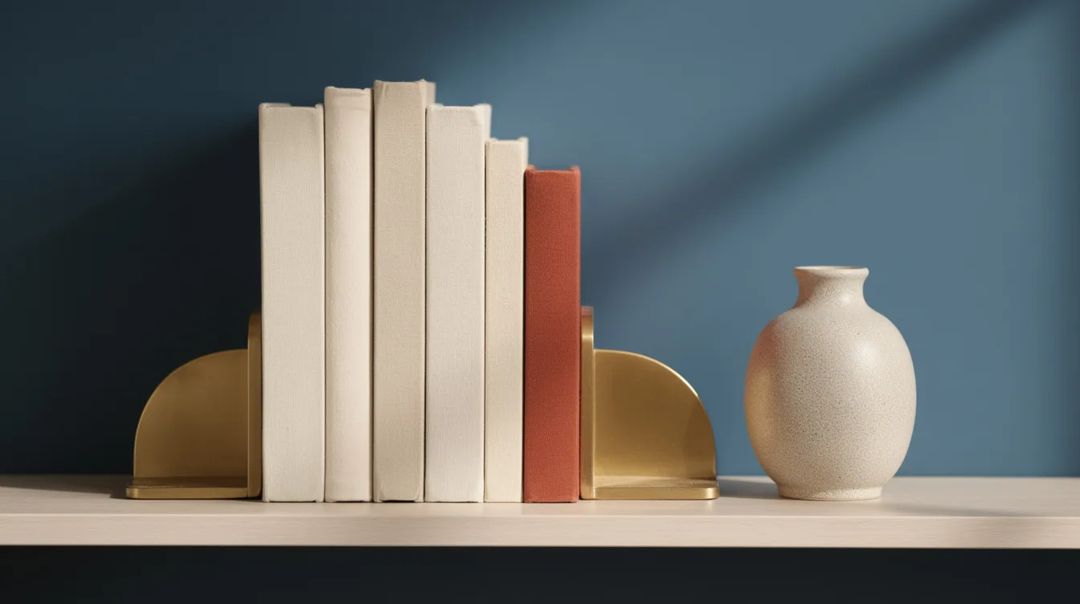
Use a single brass bookend or a weighty ceramic object to finish an upright row, rather than filling the gap with loose trinkets. Designers often treat book covers as color blocks, which is far more effective than hiding every spine.
Choose One Large Anchor Per Shelf
Every shelf needs a visual leader, especially in a busy living room. A roughly 12-inch ceramic bowl, a substantial planter, or a framed print has more presence than a cluster of mini objects.
Keep the anchor toward one side instead of centering it on every level. That slight imbalance feels relaxed, while repeated center placement makes shelving look like a retail display.
Repeat Materials Without Matching Everything
Repeat one material two or three times across the unit: rattan, dark wood, clear glass, or aged brass. The repetition makes separate shelves read as one composition.
A small Wayfair woven basket can hide remotes or charging cords on a lower shelf, while a wooden box above it echoes the same warmth. Skip duplicate decor sets, because perfect matching drains the shelf of personality.
Protect Empty Space Like a Design Element
Leave at least one area intentionally bare on every shelf run. Empty space gives your eye a pause and makes a favorite object, like a glass candleholder, feel worth noticing.
Before buying anything new, remove about a quarter of what is already there and assess the gaps from across the room. Shelves should support the room, not become the loudest thing in it.
Begin with the shelf at eye level: keep one anchor, one book grouping, and one personal object, then stop. That restrained first layer will tell you exactly what the rest of the bookcase still needs.