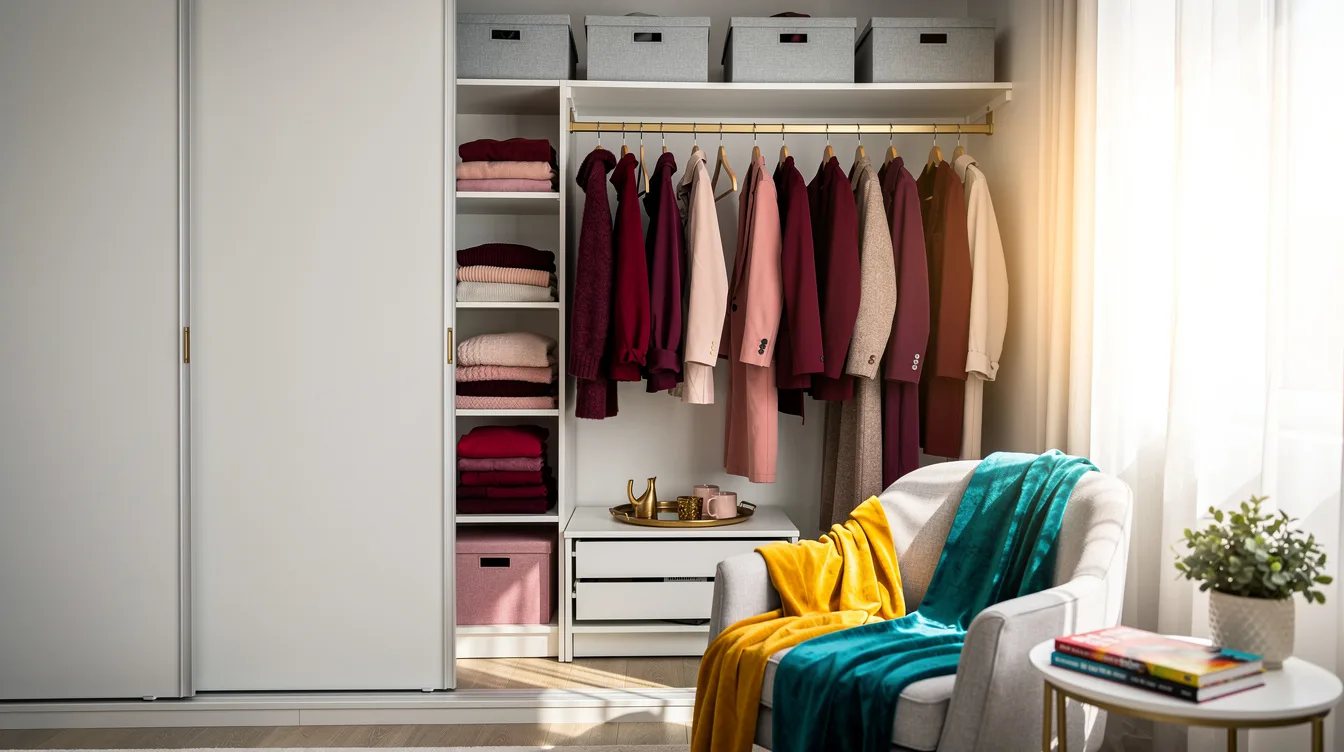
Reach-In Closet Eating Your Space? 14 IKEA Storage Fixes Fit Under Six Feet
28 november 2026When we mapped out IKEA storage for a reach-in closet under six feet wide, the hardest limit was the doorway, not the clothing. A 15 3/4-inch-deep AURDAL module can preserve walking space, while a bulky frame can make the same closet feel blocked.
The useful choices range from an about $315 AURDAL combination to a much more expensive sliding-door setup. We focused on the pieces that fit a compact opening, use the vertical space well, and keep the budget visible.
What you will find inside
- Measure the Opening Before Buying Storage
- Start With AURDAL’s Shallow Footprint
- Use the White AURDAL Combination as the Base
- Add an Extendable AURDAL Clothes Rail
- Reserve AURDAL Drawers for Folded Basics
- Build Up With BOAXEL Wall Storage
- Choose JONAXEL When Height Is Tight
- Use ELVARLI Only for a Wider Budget
- Skip PAX in a Low Closet
- Fit SKUBB Boxes on the Upper Shelf
- Hang STUK for Vertical Folding
- Sort Small Items With RASSLA
- Contain Drawer Clutter With KOMPLEMENT Boxes
- Choose Sliding Doors Only for a Complete Finish
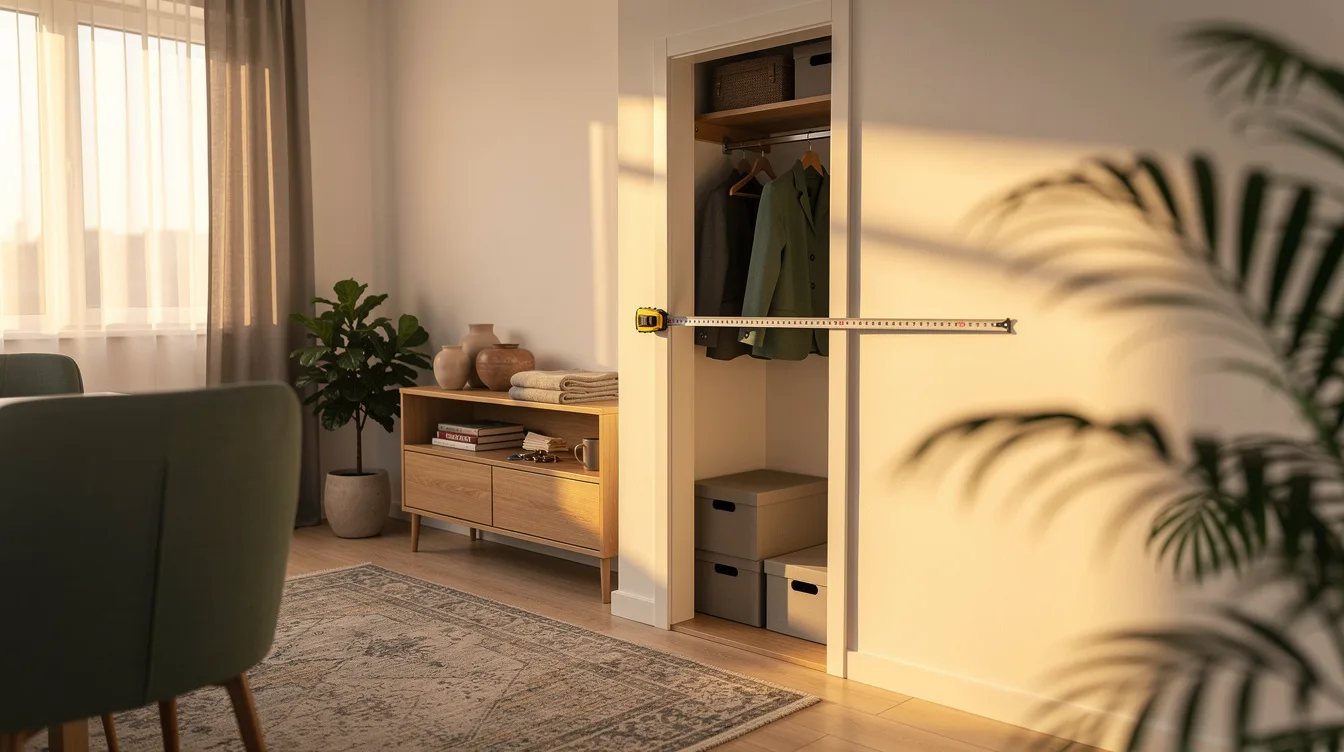
Measure the Opening Before Buying Storage
A reach-in closet under six feet wide gives you less than 72 inches to work with, so measure the usable width between the side walls before choosing a system. Record the depth, ceiling height, door swing, and distance below the existing rod.
We would also mark baseboards and trim on the wall, because those small intrusions can make a shelf or frame feel much wider than its catalog measurement. Keep every measurement in inches, then compare it with the assembled dimensions listed by IKEA.
Start With AURDAL’s Shallow Footprint
For a narrow reach-in closet, AURDAL is the strongest starting point because its module is about 15 3/4 inches deep and about 87 inches high. That shallow footprint leaves more floor space for shoes and keeps hanging clothes from crowding the doorway.
The long feet also make cleaning easier beneath the frame, which matters in a closet where dust collects along the back wall. This is the IKEA option we would check first when depth feels tighter than width.
Use the White AURDAL Combination as the Base
The white AURDAL combination spanning about 68 1/2 to 94 1/2 inches costs about $315, according to the supplied IKEA pricing. For a closet under six feet wide, use the configuration that fits inside the opening rather than assuming the full range will work.
White is the practical finish here because it keeps a compact interior visually bright and makes dark clothing easier to see. Leave enough clearance for the doors and trim before committing to the widest layout.
Add an Extendable AURDAL Clothes Rail
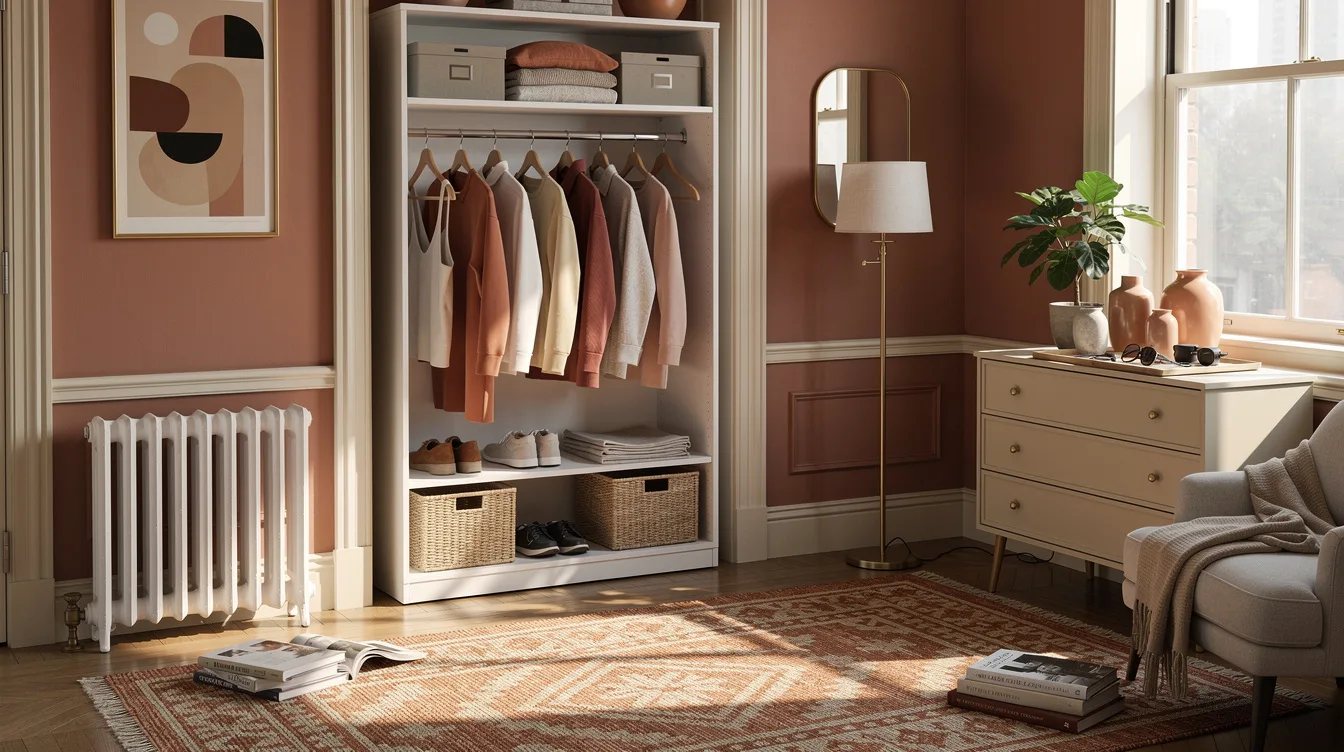
An extendable AURDAL clothes rail costs about $15 and lets the hanging zone match the actual width of the closet. That flexibility is more useful than buying a fixed rod that leaves an awkward gap at one side.
Set the rail where the longest garments can hang without brushing the floor, then use the upper shelf for folded items. A compact closet needs the rail and shelf to share the same vertical zone without competing for access.
Reserve AURDAL Drawers for Folded Basics
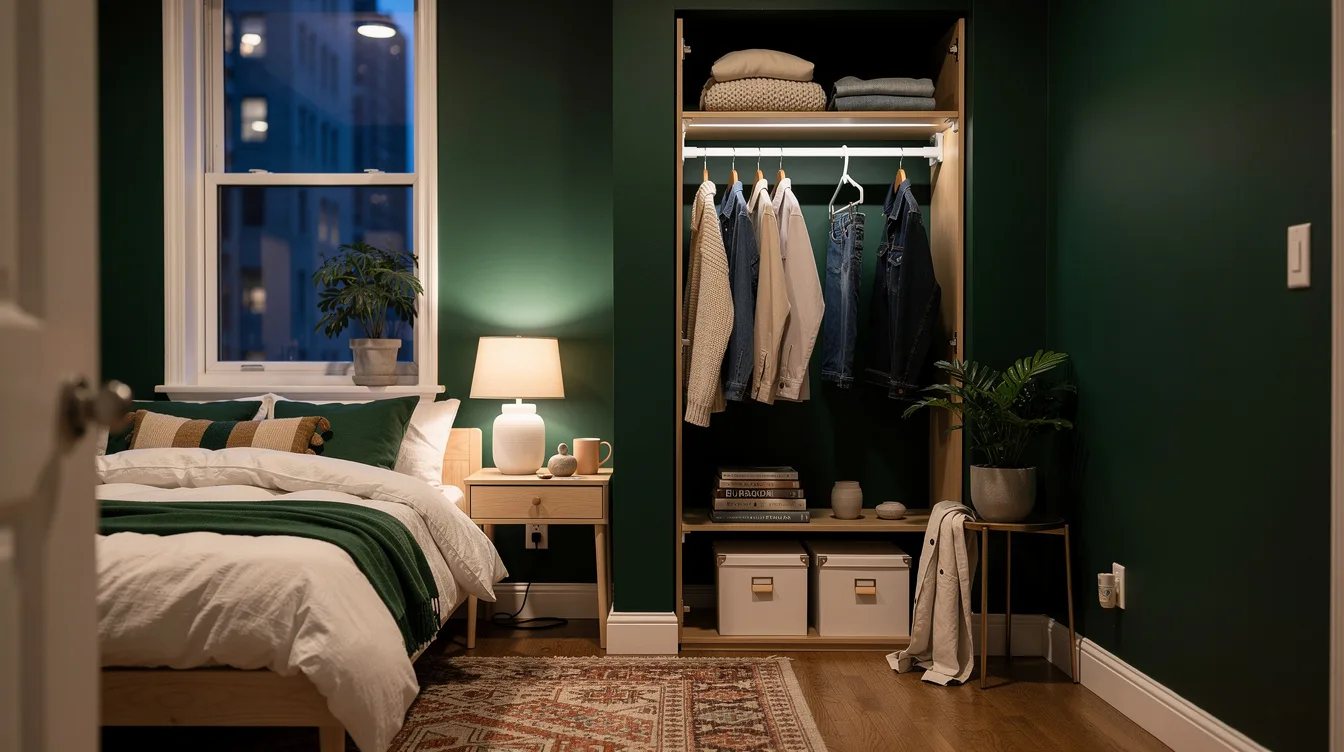
An AURDAL drawer costs about $30 and gives small closets a cleaner home for socks, workout clothes, and other pieces that tend to collapse into piles. We would use one drawer for daily basics before adding several shallow bins.
Keep drawer fronts in the lower portion of the system so the hanging rail remains easy to reach. This arrangement also creates a clear visual break between folded clothes below and hanging clothes above.
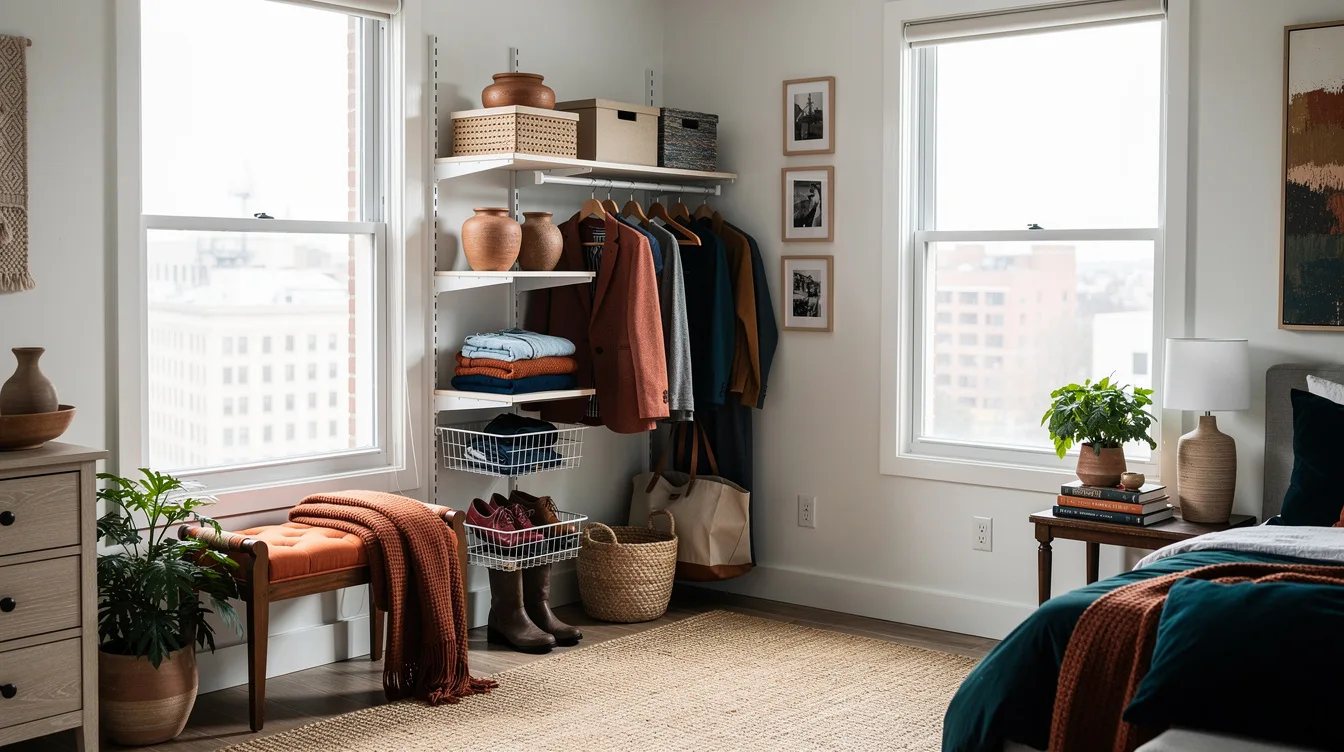
Build Up With BOAXEL Wall Storage
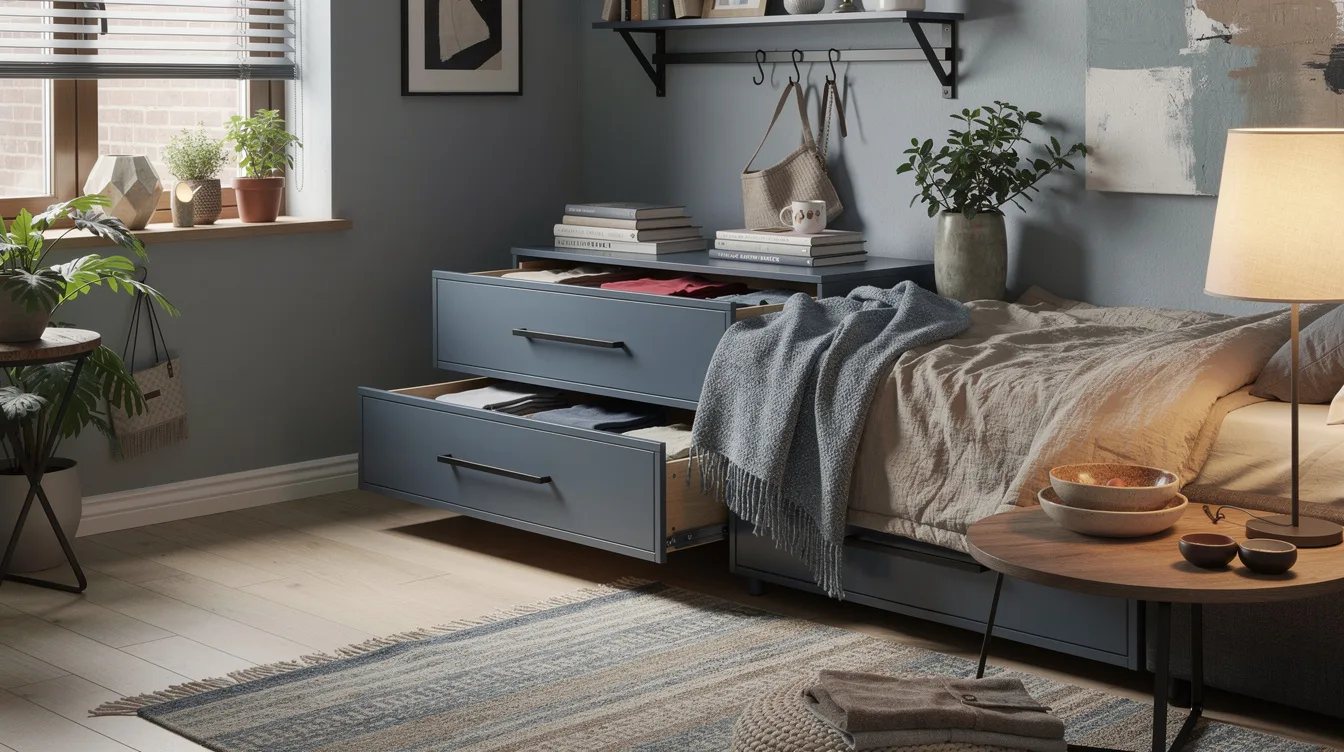
BOAXEL works when the closet needs adjustable wall-mounted storage and the wall can accept its installation requirements. IKEA lists a white BOAXEL reach-in combination at about $830 for a full setup with sliding doors, so the open components make more sense for a restrained budget.
Use shelves for sweaters and bags, then leave one section open for hanging garments. The open structure keeps the floor visible, which helps a narrow closet feel less blocked at the entrance.
Choose JONAXEL When Height Is Tight
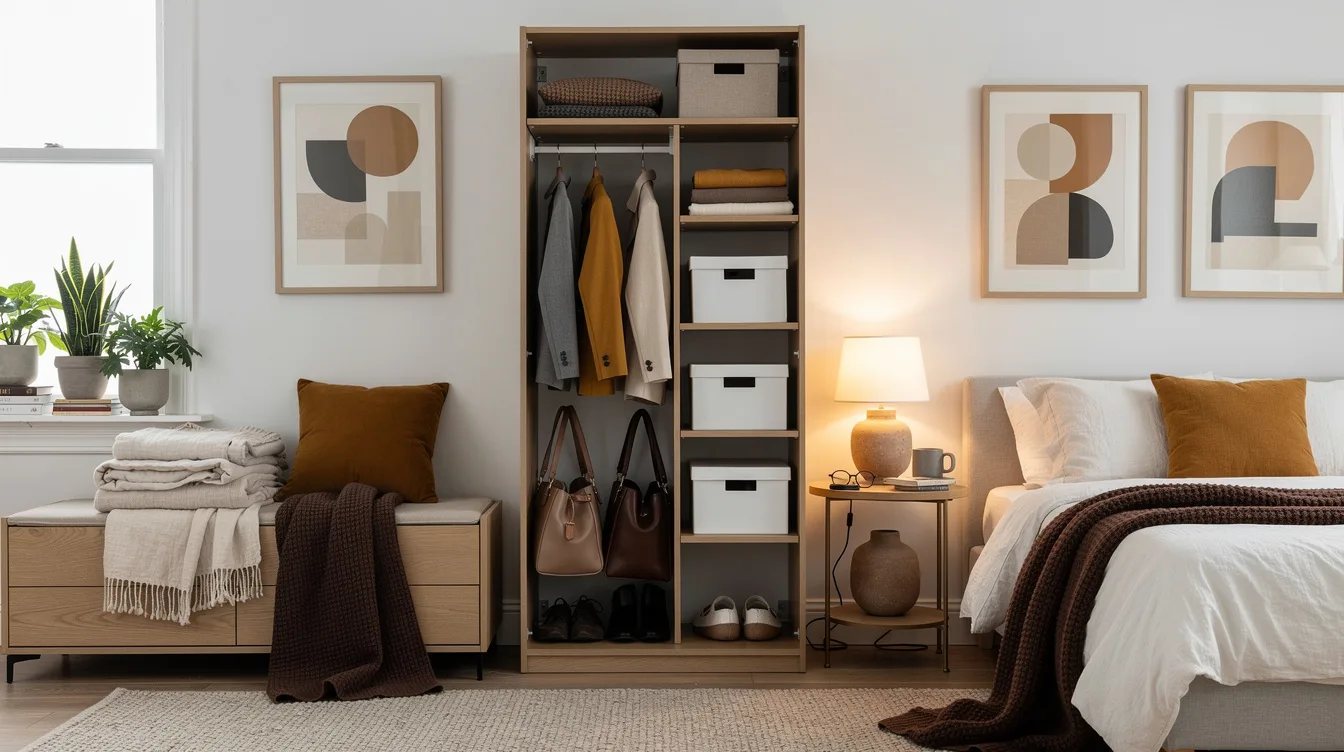
JONAXEL reaches about 68 inches high, so it can fit beneath a six-foot ceiling where taller systems create a problem. The supplied pricing places the unit at about $140, making it a useful lower-cost option when the opening is short.
Its lower height leaves less room for a second hanging tier, but that tradeoff can be worthwhile in an older closet with a low ceiling. Add labeled boxes above only when the remaining clearance is genuinely usable.
Use ELVARLI Only for a Wider Budget
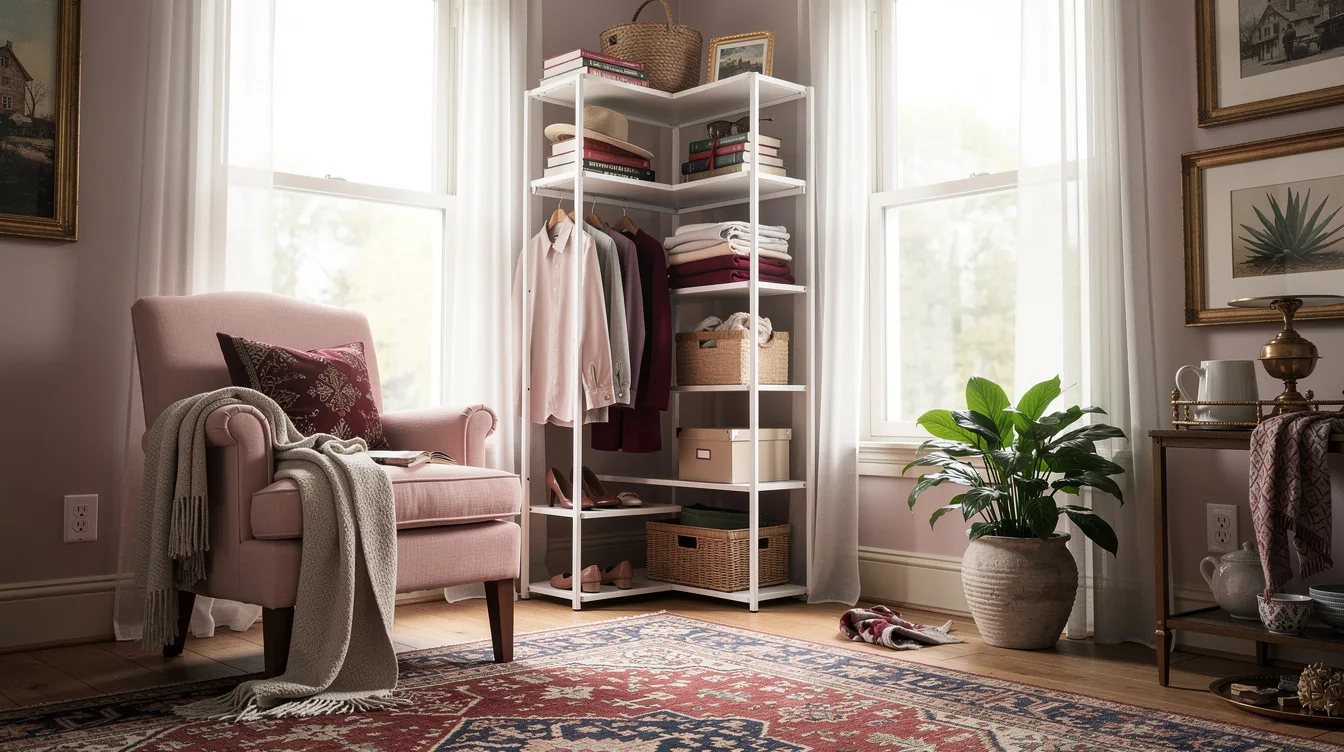
ELVARLI offers a more substantial closet structure, but the supplied IKEA pricing places a small configuration at about $320 and another at about $350. For a reach-in closet under six feet, that cost is difficult to justify unless the adjustable layout solves a specific storage problem.
Choose it when vertical flexibility matters more than the lowest starting price. Otherwise, AURDAL gives a shallow closet a similar organizing purpose with a simpler budget path.
Skip PAX in a Low Closet
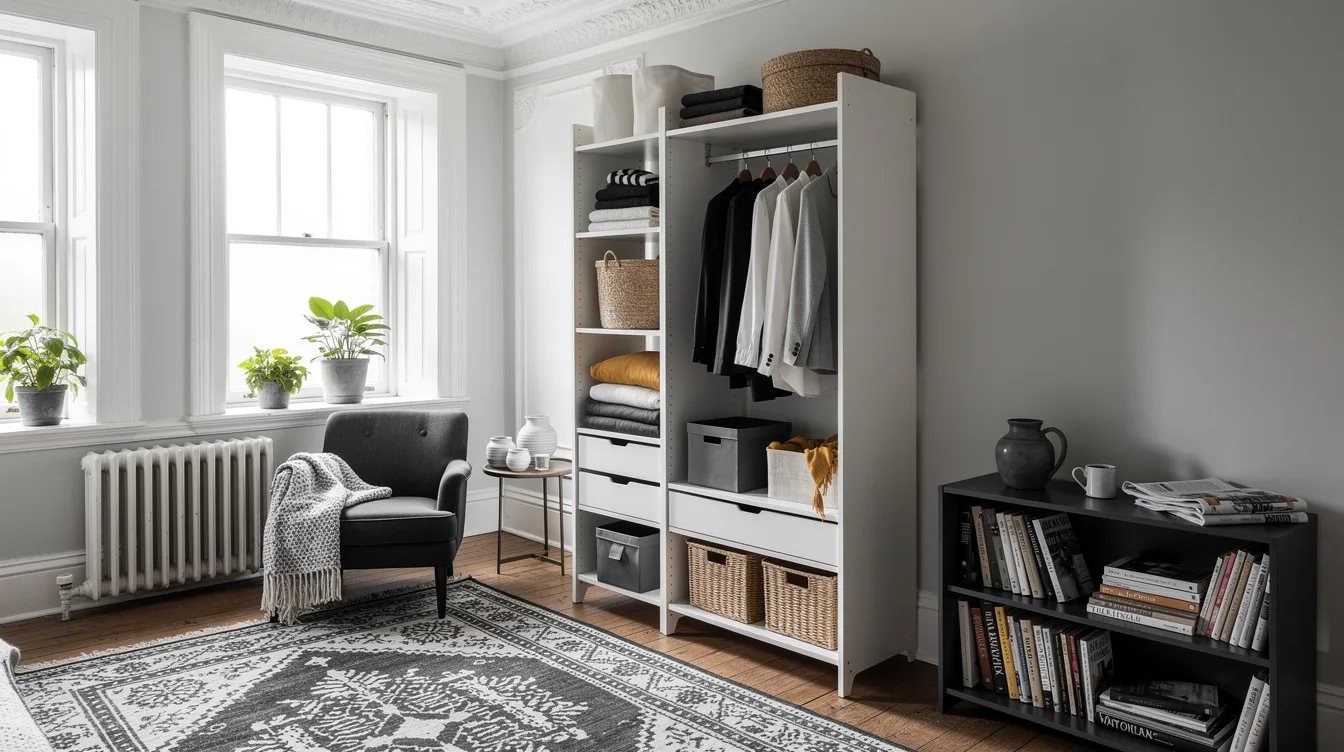
PAX frames are roughly 23 inches deep and commonly reach about 79 inches high or more, so they can overwhelm a short reach-in closet. A supplied example of a white PAX wardrobe with shelves costs about $250, but that price does not solve a height mismatch.
When the closet is below about 72 inches high, a tall PAX frame may require cutting the uprights or choosing a different system. We would skip that alteration and select a lower module designed to fit the opening.
Fit SKUBB Boxes on the Upper Shelf
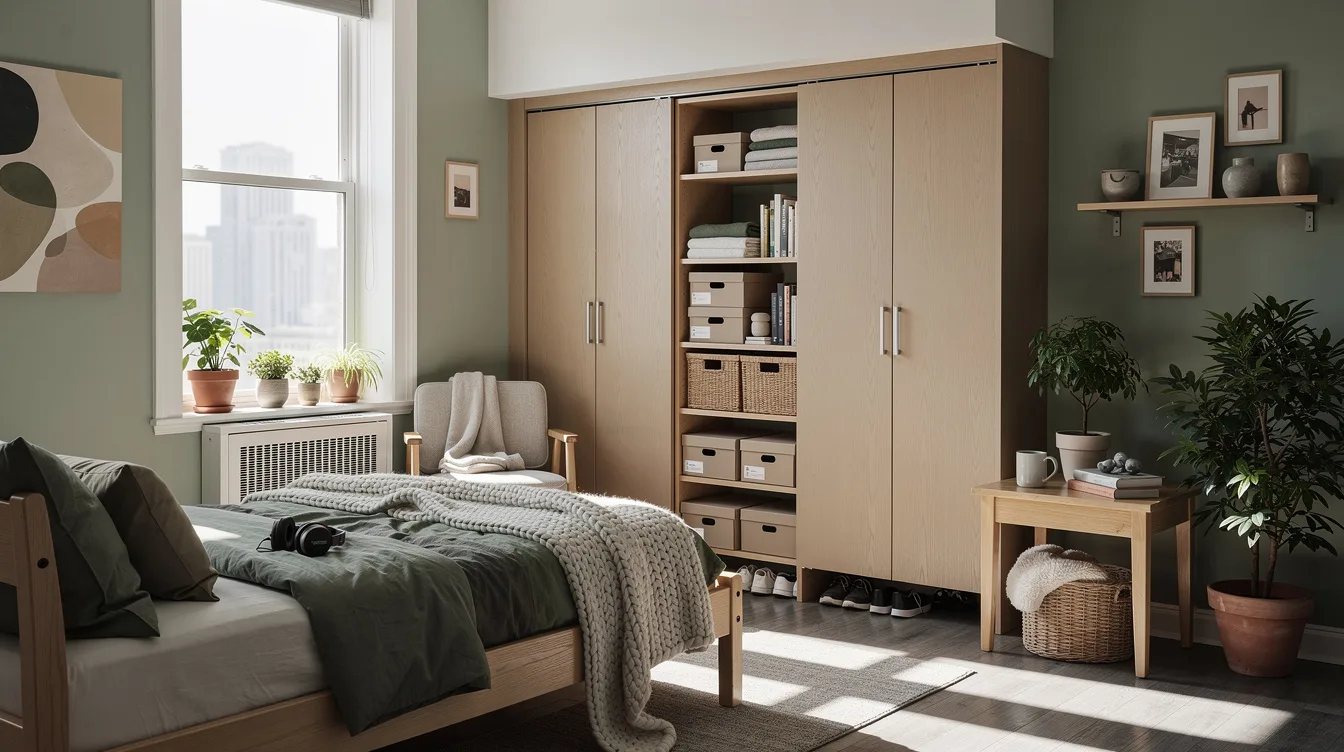
SKUBB boxes are a simple way to use the shelf above the hanging rail for seasonal clothing, spare linens, and soft accessories. IKEA lists some three- or six-piece sets at about $4.99, while under-bed versions range from about $7.99 to $12.99.
Choose boxes that can be pulled forward without removing the entire stack. A front-facing label keeps the upper shelf useful instead of turning it into a forgotten storage ledge.
Hang STUK for Vertical Folding
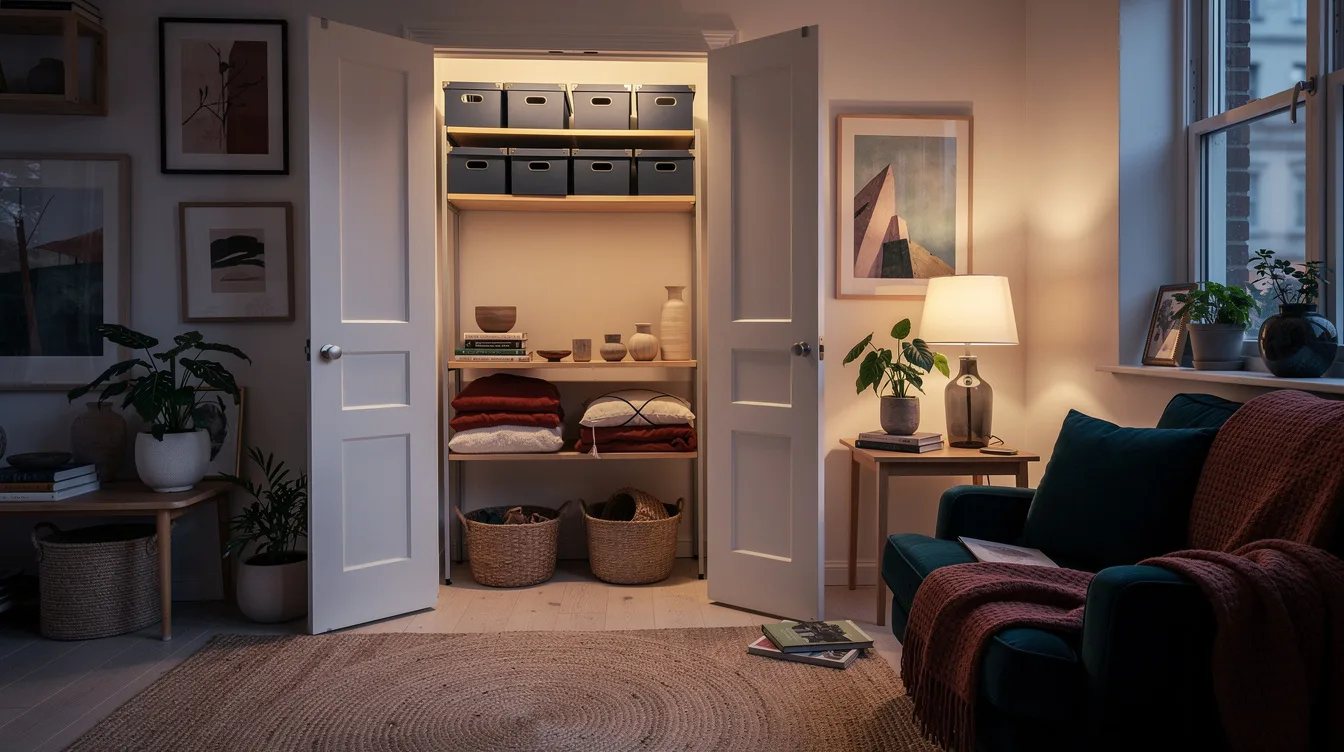
STUK is a hanging organizer with about seven compartments and a supplied price of roughly $9.99. Place it beside the clothes rail for sweaters, handbags, or folded jeans that need more structure than a loose shelf provides.
Use one compartment for each category that currently spills onto the floor. The vertical format claims unused hanging space without taking another section away from the main rail.
Sort Small Items With RASSLA
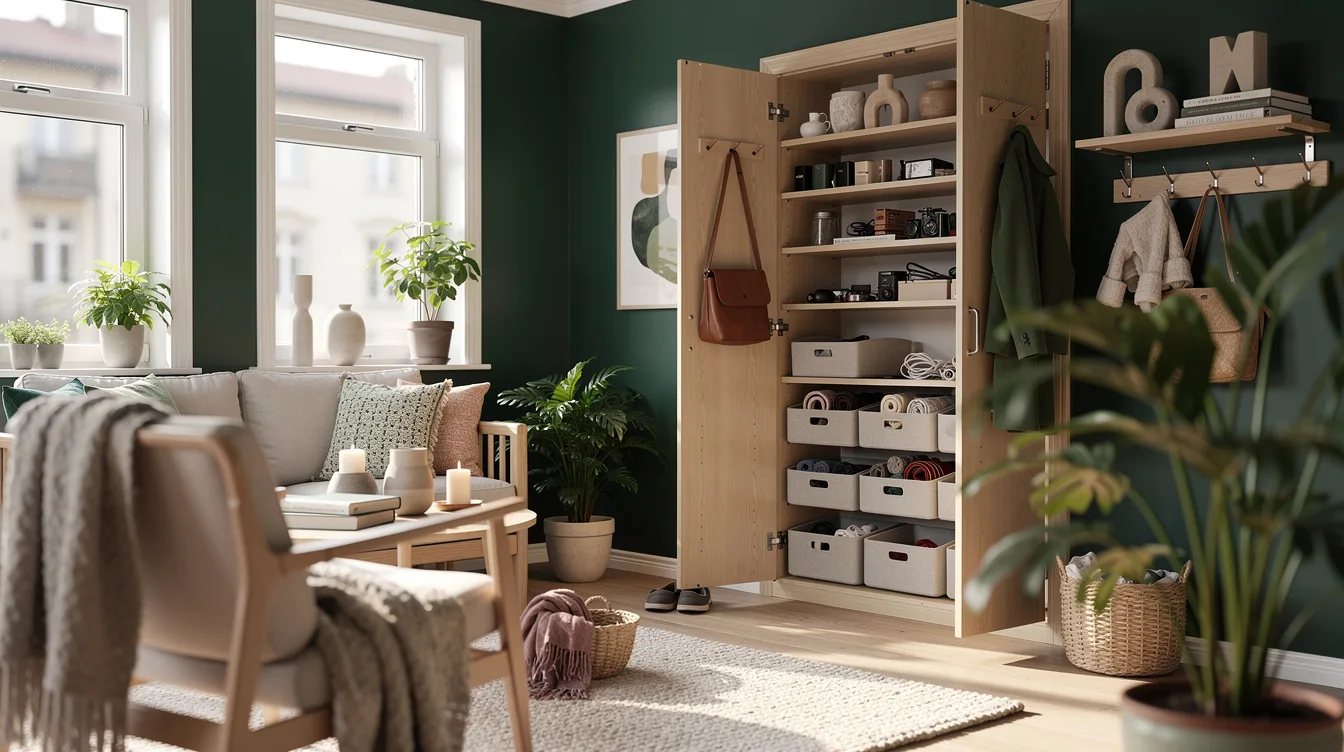
RASSLA has about five compartments and a supplied price of roughly $8.99, making it useful for belts, scarves, small bags, and folded accessories. Hang it where the compartments stay visible, rather than pushing it behind a dense row of coats.
Reserve each section for one type of item and keep the smallest categories near eye level. This gives a narrow closet a faster daily routine without adding another freestanding shelf.
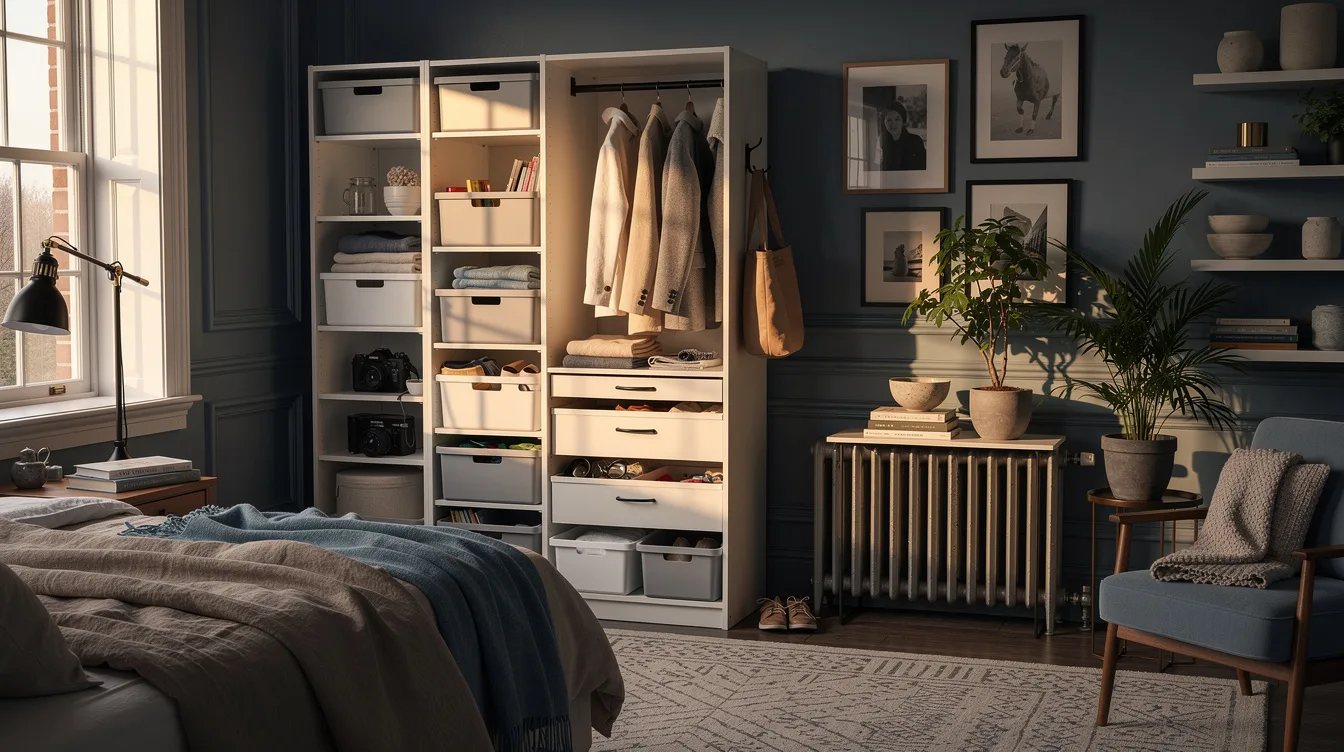
Contain Drawer Clutter With KOMPLEMENT Boxes
A set of eight KOMPLEMENT boxes costs about $48.96 in the supplied IKEA pricing and can divide drawers into smaller zones. Use them for underwear, socks, jewelry, or other items that disappear beneath larger folded clothes.
They make the most sense after the main storage layout is working, because small boxes cannot repair a closet with too little hanging room. Add them to the drawer that causes the most daily frustration.
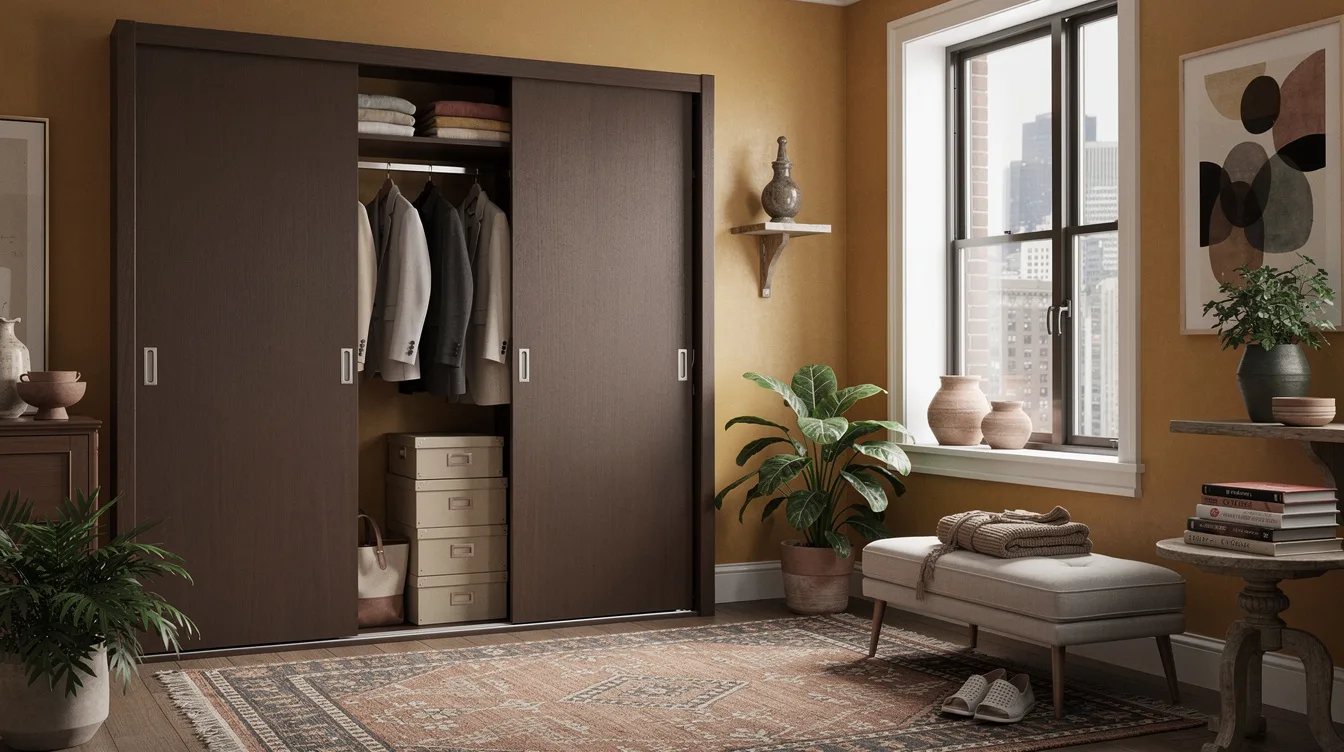
Choose Sliding Doors Only for a Complete Finish
The SKYTTA and AURDAL reach-in combination is about 60 inches wide, about 25 5/8 inches deep, and about 94 1/2 inches high, with supplied IKEA pricing around $845 to $855. A SKYTTA and BOAXEL version costs about $830, while another configuration is listed around $815.
These complete units are the clearest IKEA answer when the closet opening is under six feet wide and a finished sliding-door front matters. Check the ceiling height carefully, because a system near 95 inches high will not suit a low closet.
Keep reading
- Reach-In Closet Eating Your Floor Space? Lowe's Closet Systems Under $193
- Laundry Closet Eating Your Floor Space? 14 Container Store Fixes Under $100
- Short Rental Closet Eating Your Storage? 12 Lowe's Tension-Rod Fixes
Measure the opening first, then price an AURDAL base with one rail, one drawer, and SKUBB boxes before considering a complete door system. That sequence gives the closet a workable core and leaves room to add organization only where the daily mess actually appears.