19 Small Speakeasy Room Setups That Make a Tiny Space Feel Huge
25 november 2026Small speakeasy room ideas work best when you spend on atmosphere before furniture. I learned that after crowding a narrow basement with oversized chairs and one harsh ceiling light. The fix was darker color, layered light, and breathing room around each seat. Your tiny room doesn't need more stuff. It needs better choices.
Editor's note: Start with light, color, and circulation before buying anything decorative. A restrained room can still feel intimate, theatrical, and generous when every decision supports the evening mood.
- Paint the walls in Farrow & Ball Pigeon
- The Three-Height Light Stack
- Can a console float behind the sofa?
- Choose the Two-Wood Rule
- Let the art find the 57-inch mark
- Swap a bulky chair for a barrel seat
- Build a banquette along the shortest wall
- The Velvet Shadow Frame
- Paint over shelves instead of adding cabinets
- Smoked Glass or Brass?
- A Round Table Above a Square Rug
- Use the Windowless Glow Method
- Place a mirror behind the bottles
- Budget the atmosphere before the furniture
- Hang curtains high and keep them simple
- Mix old glassware with one modern line
- Agreeable Gray Above, Pigeon Below
- Choose a small speakeasy over a crowded lounge
- Finish with the Three-Object Bar Edit
1Paint the walls in Farrow & Ball Pigeon
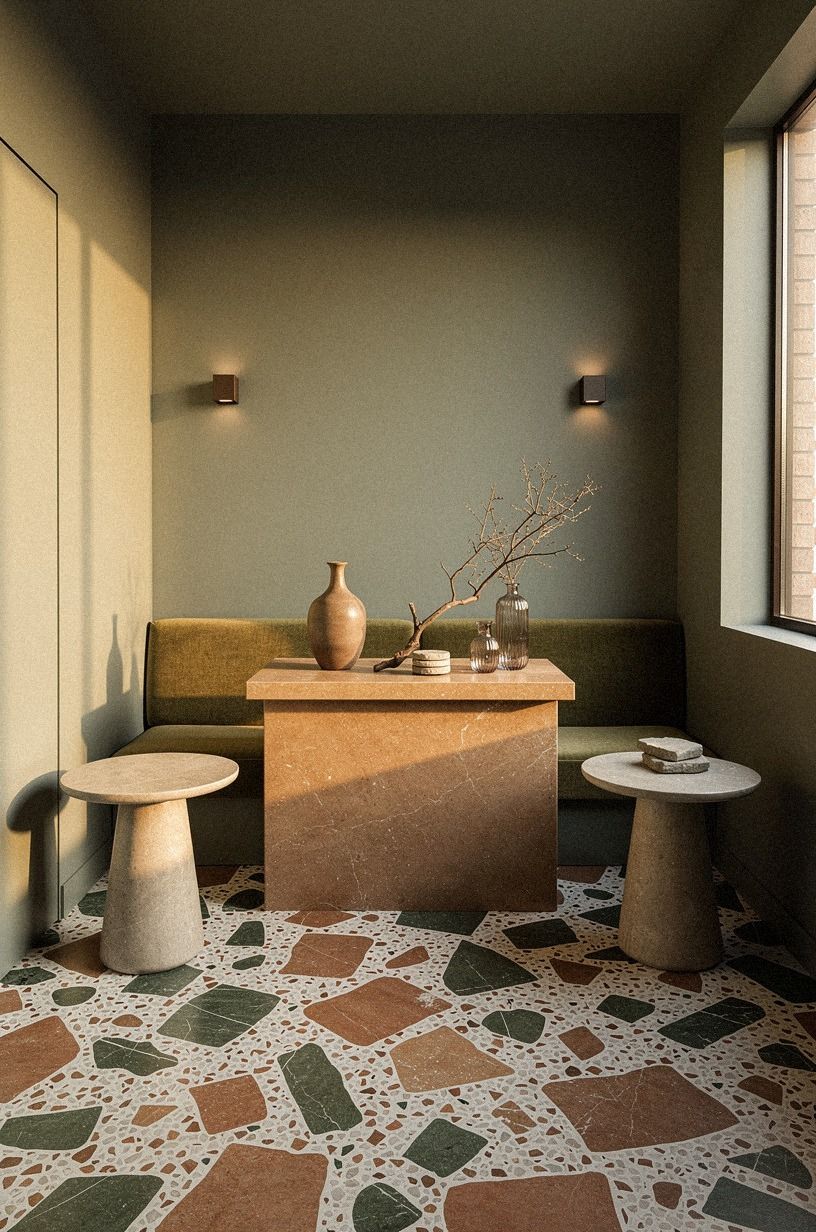
Farrow & Ball Pigeon No.25 gives a small speakeasy room a muted olive-gray backdrop without making every corner feel black. I tested a similar tone beside a terracotta accent, and the color shifted from soft gray to earthy olive by evening. Your room will do the same, so sample it beside the trim before committing.
Pair the paint with oversized-chip terrazzo in stone and terracotta tones, then repeat olive in one textile or ceramic piece. Those rich details keep the walls from looking flat, while the layered palette stays calm rather than theatrical. You don't need to paint the ceiling too, unless it's low and uneven.
For a rental, use removable wallpaper in a similar pigeon-gray tone on one wall. Our fall mantel decor ideas show how a dark backdrop can hold warm stone, earthy color, and candlelight without swallowing the room. That same balanced contrast makes a narrow room feel more polished.
If the room feels too cool, introduce one terracotta textile or a small olive cushion. You'll get warmth without losing the mysterious, enveloping quality that makes Pigeon so compelling. This evening atmosphere reference also makes a useful reminder: low light can feel welcoming when the surrounding colors have depth.
2The Three-Height Light Stack
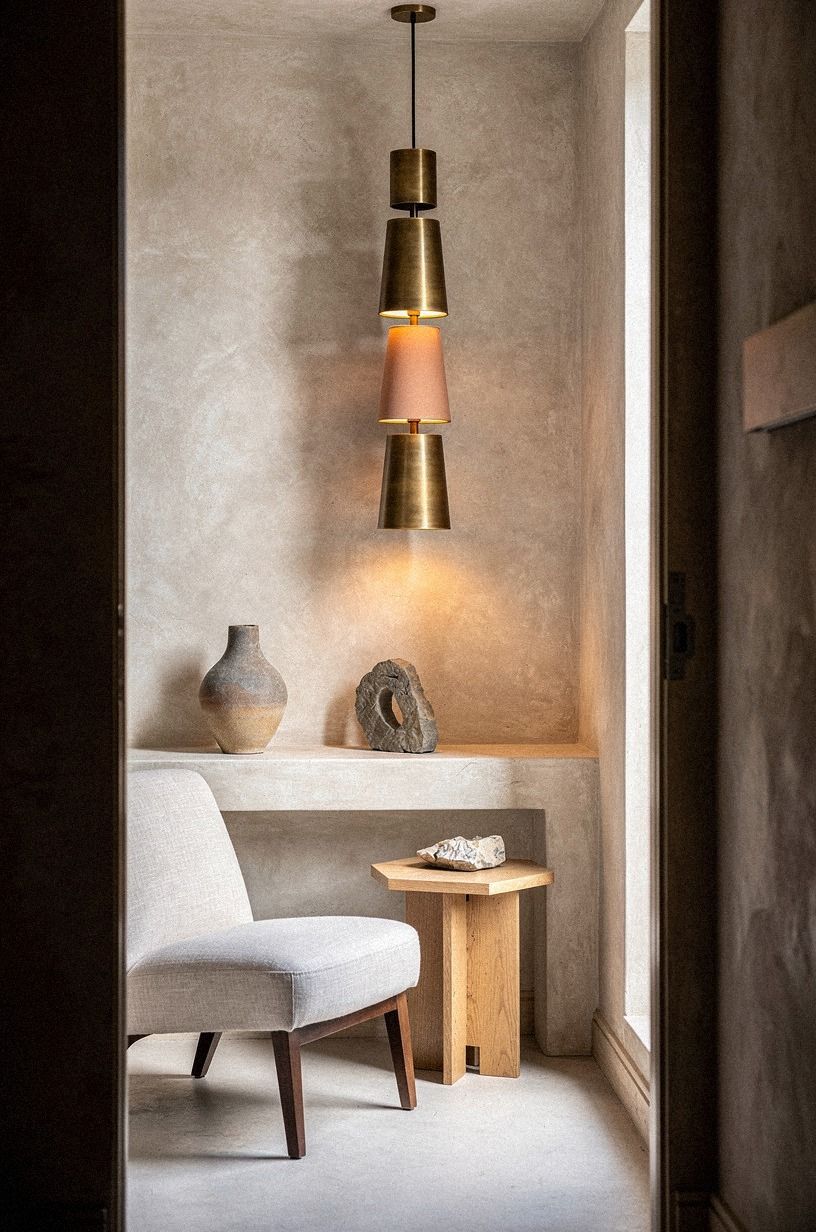
A tiny bar room needs three sources of light, not one brighter bulb. Build the Three-Height Light Stack with an overhead fixture, a task light near the drinks, and ambient light at seat level. Your eye will move around the room, which makes the walls feel farther apart.
Start with a small flush mount, then add a plug-in sconce or shaded table lamp. I prefer an amber 2700K bulb against clay-colored, hand-applied Venetian plaster because the glow lands on the wall instead of bleaching it. A linen shade with aged-brass hardware can handle practical work without looking like office lighting.
And don't put every light on the same switch if you can avoid it. Separate controls let you keep the room dim while you read or serve drinks. For another atmospheric reference, this warm room story shows how much mood comes from restraint.
What a difference a few low light sources make!
You'll want one light to feel almost invisible. Hide a small LED strip beneath a shelf or console, then dim it until you barely notice the source. It adds a soft layer to the clay, linen, and aged-brass palette without making the room gloomy.
3Can a console float behind the sofa?
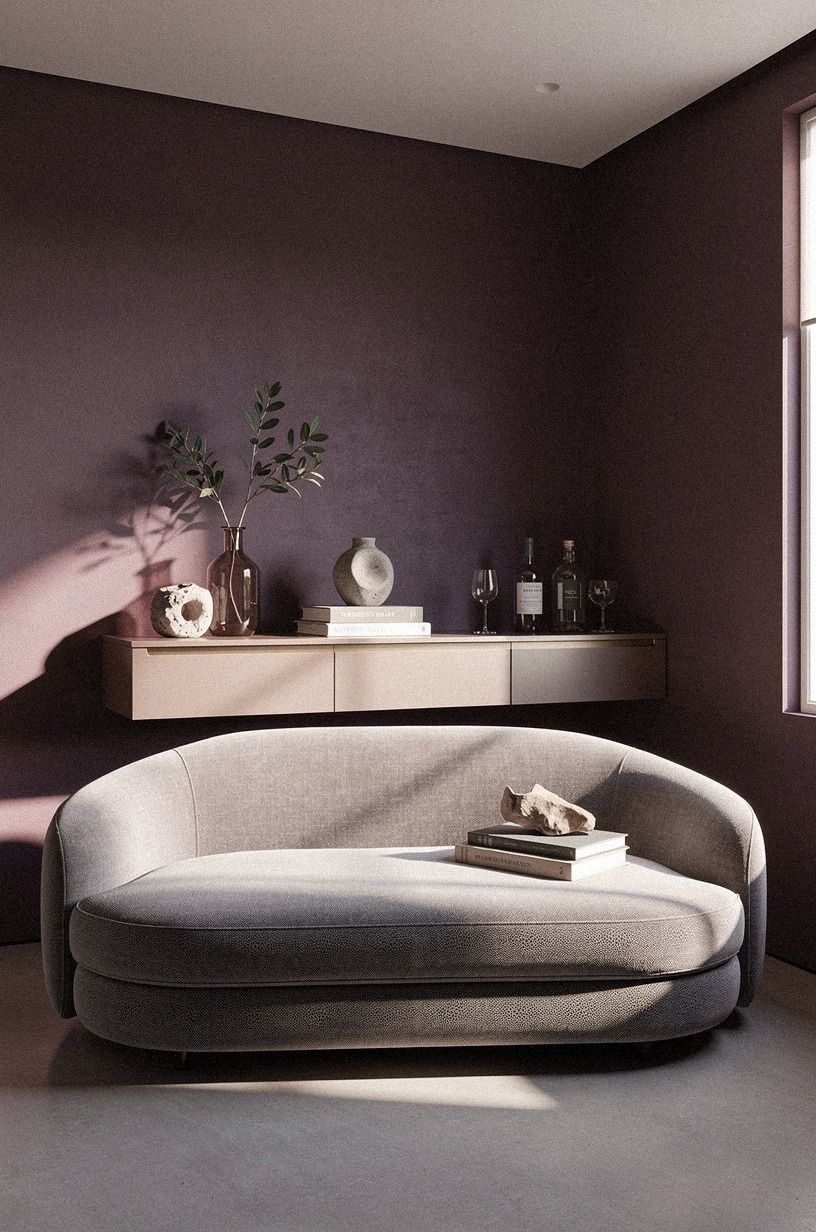
A floating console creates a bar surface without stealing the walking path.
4Choose the Two-Wood Rule
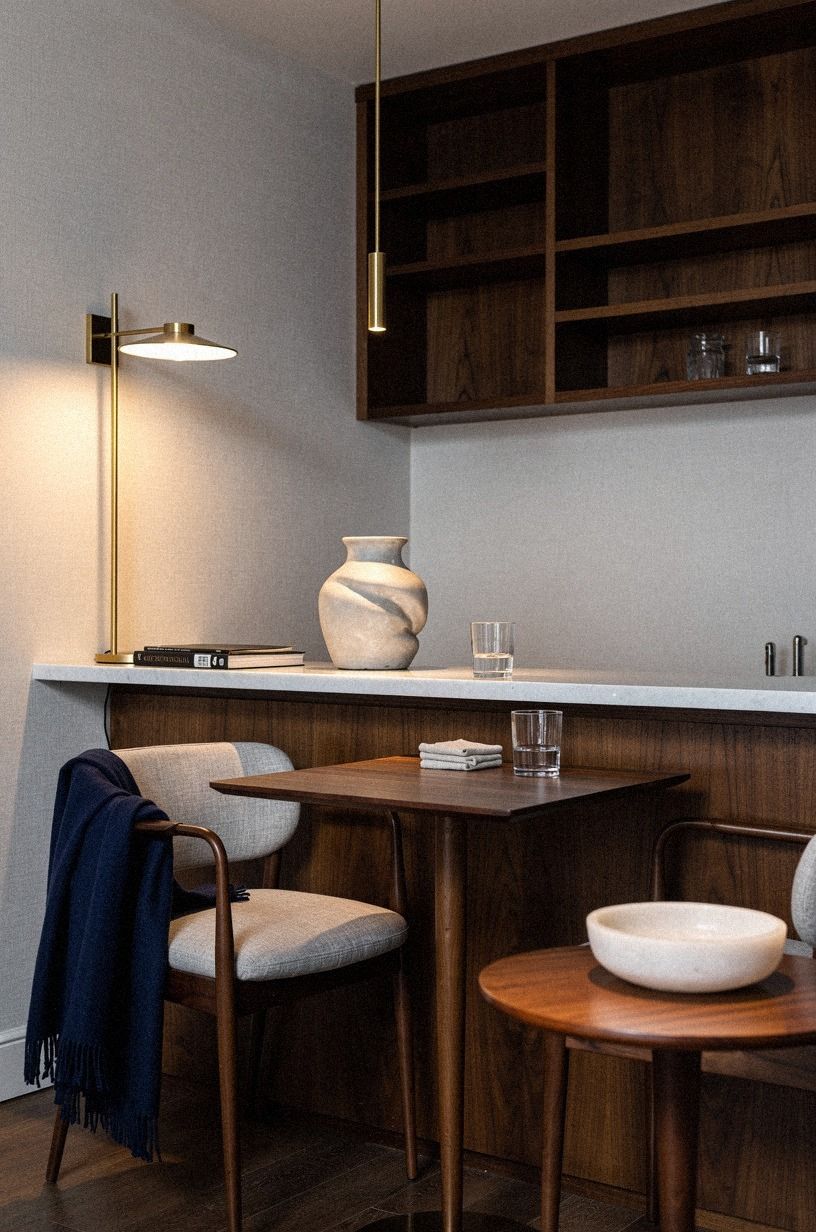
The Two-Wood Rule keeps a small home speakeasy from becoming visually noisy. Pick walnut as the main wood, then let navy, white, and washed Belgian linen provide contrast. Your room will feel collected, not assembled from five unrelated finishes.
Use walnut for the bar top or side table, then bring in washed Belgian linen through a stool cushion or narrow curtain. The pale fabric catches lamplight and stops the darker furniture from closing in.
I'd skip orange oak here. It fights navy and makes the room look dated fast.
You don't need matching furniture. In fact, matching pieces can make a tiny room feel like a showroom.
Add one white ceramic or painted detail between the wood and navy, then stop. Our small French mammal story offers an unexpected visual pause if you want something curious for the shelf.
If the room already contains several finishes, use a washed Belgian linen cushion or matte white frame to bridge them. It’s a quieter transition than adding another wood tone, and you’ll avoid the cluttered, overdesigned feeling that small rooms reveal immediately.
5Let the art find the 57-inch mark
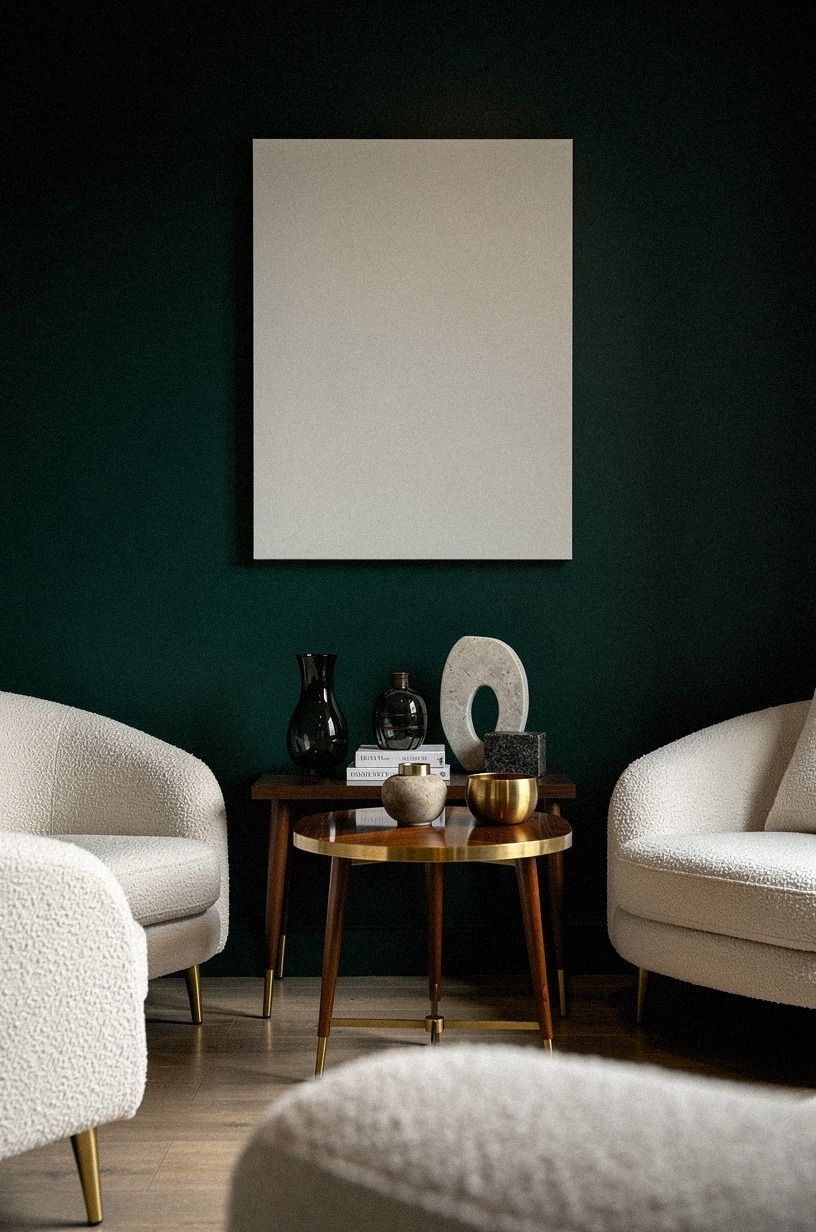
Art makes a narrow room feel personal, but placement matters more than size.
6Swap a bulky chair for a barrel seat
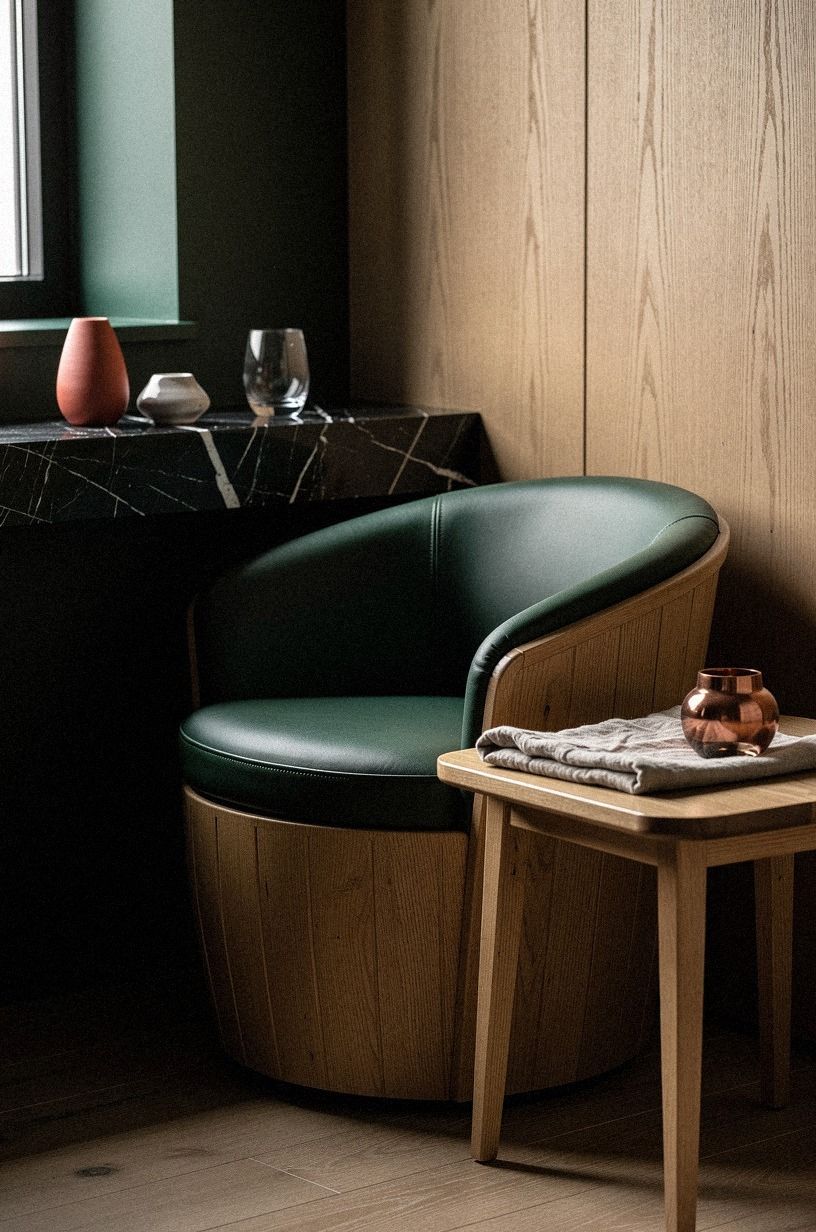
A barrel chair gives you a proper place to sit without the wide arms of a club chair. Look for a compact rounded chair in forest green or rust, with a seat width that leaves circulation around it. Pair it with a small Nero Marquina side table, whose black marble and white veins add structure without taking much floor space.
Natural oak brings a warm, grounded surface that looks better under low light than shiny faux finishes. If you prefer fabric, choose rust-colored cotton velvet or a mossy weave. The texture catches the lamp differently as you move, so the chair feels alive rather than flat.
But don't add two barrel chairs unless your room has generous clearance. One chair beside a small table often works better than a matched pair. I'd rather give you one comfortable seat and a clear path than force every wall to carry furniture.
A low-profile swivel chair can be especially useful when the room serves more than one purpose. You’ll be able to turn toward the bar, the sofa, or the door without dragging furniture across the floor. That flexibility feels surprisingly luxurious.
7Build a banquette along the shortest wall
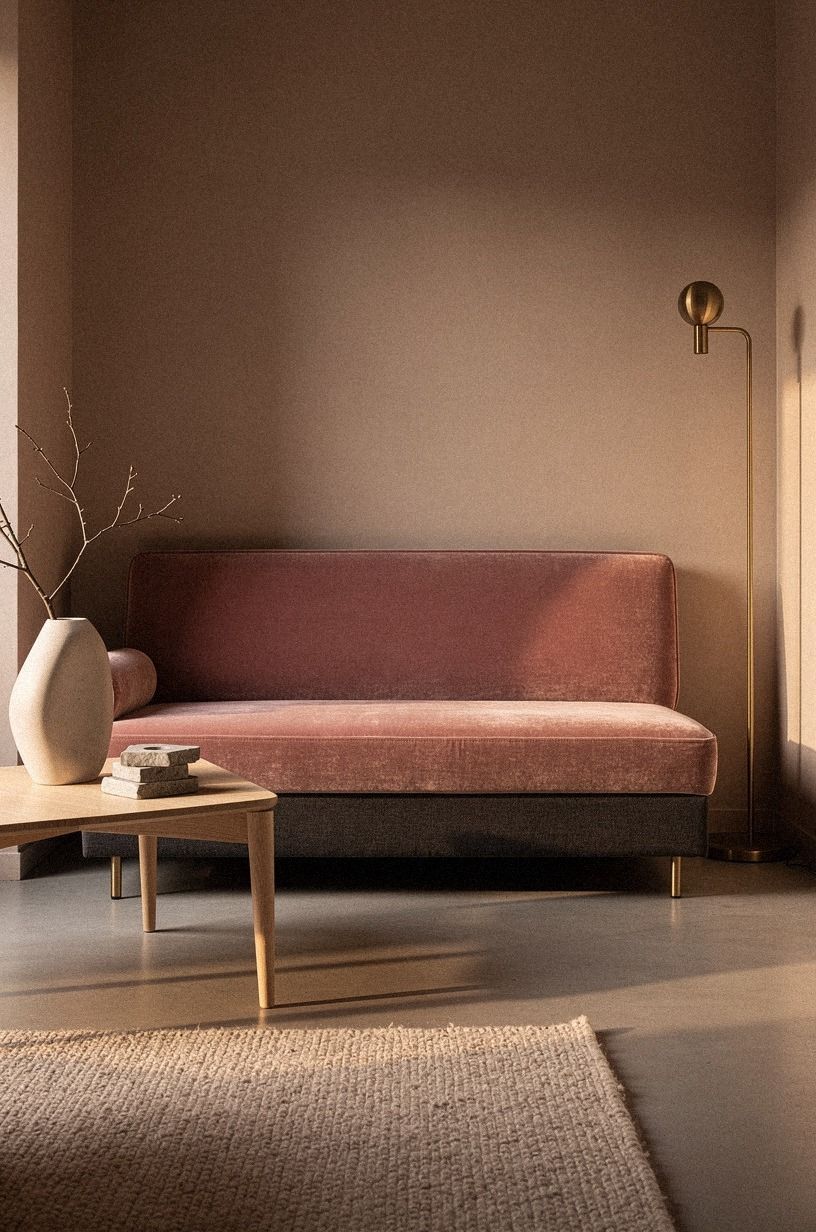
A banquette makes a small speakeasy feel like a destination because it turns dead wall space into seating.
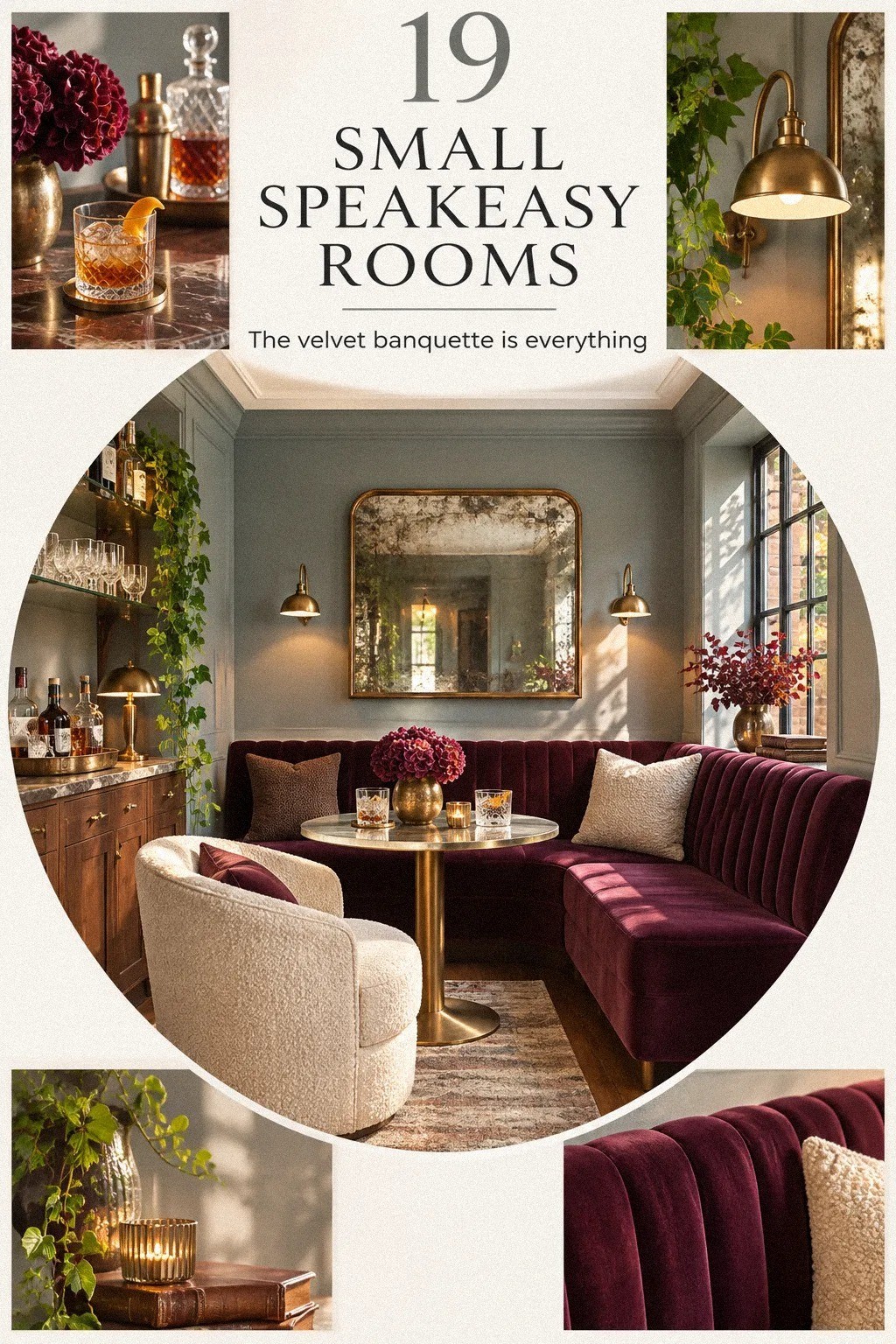
8The Velvet Shadow Frame
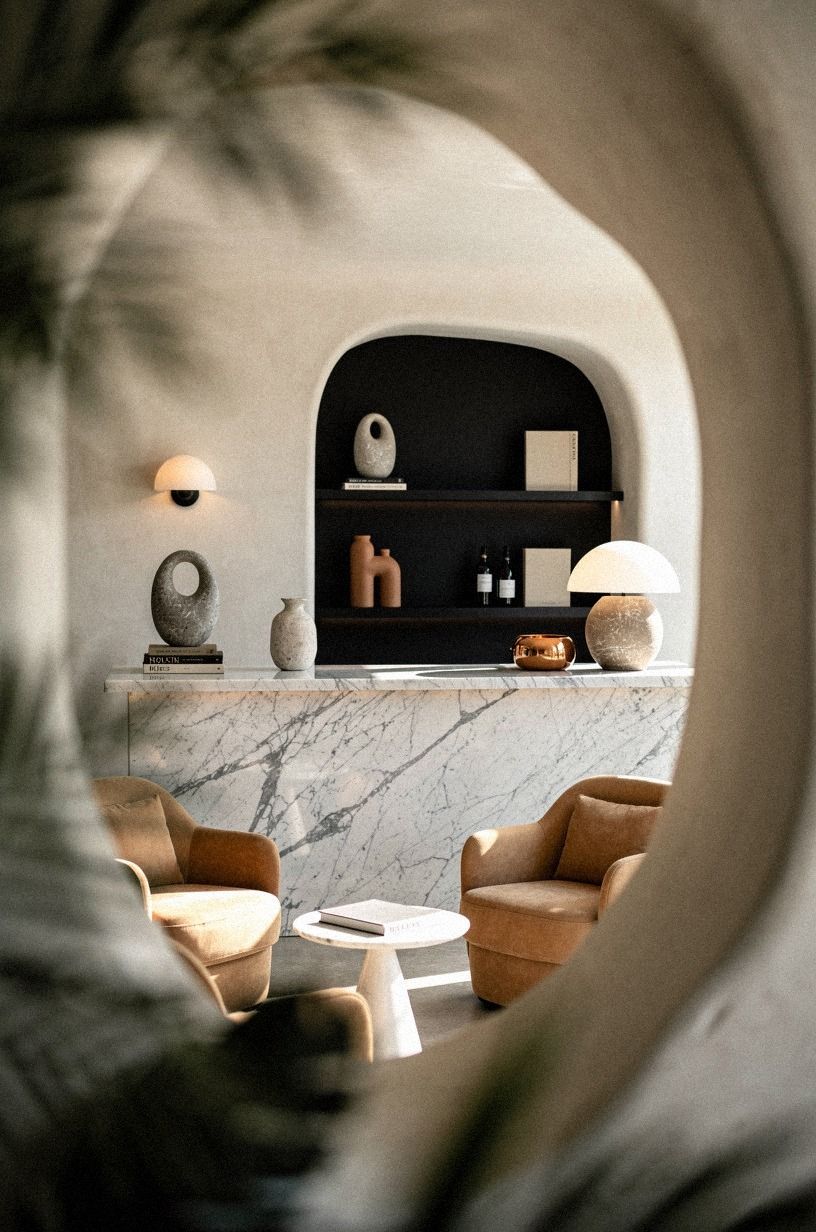
The Velvet Shadow Frame is a simple contrast: warm white paint outside, camel upholstery inside the bar zone, and black accents around the edges. Paint the back of open shelving in Benjamin Moore White Dove OC-17, then add a Carrara marble shelf with subtle gray veining. Your glassware will glow against the pale inset.
Use camel fabric on one upholstered element, such as a stool seat or small curtain. I prefer a softly textured finish because it adds warmth without overwhelming the restrained palette. Too much velvet can make a small room feel theatrical in the wrong way.
And leave some shelves empty. Three bottles, two glasses, and a ceramic object are enough for one bay.
Overfilled shelves flatten the background and make the room seem shorter. A warm white shelf interior gives your eye a place to rest, especially after sunset.
The same principle appears in this coastal village reference: a few warm points of focus can make a restrained setting feel rich. You don't need a dramatic collection to create that effect.
9Paint over shelves instead of adding cabinets
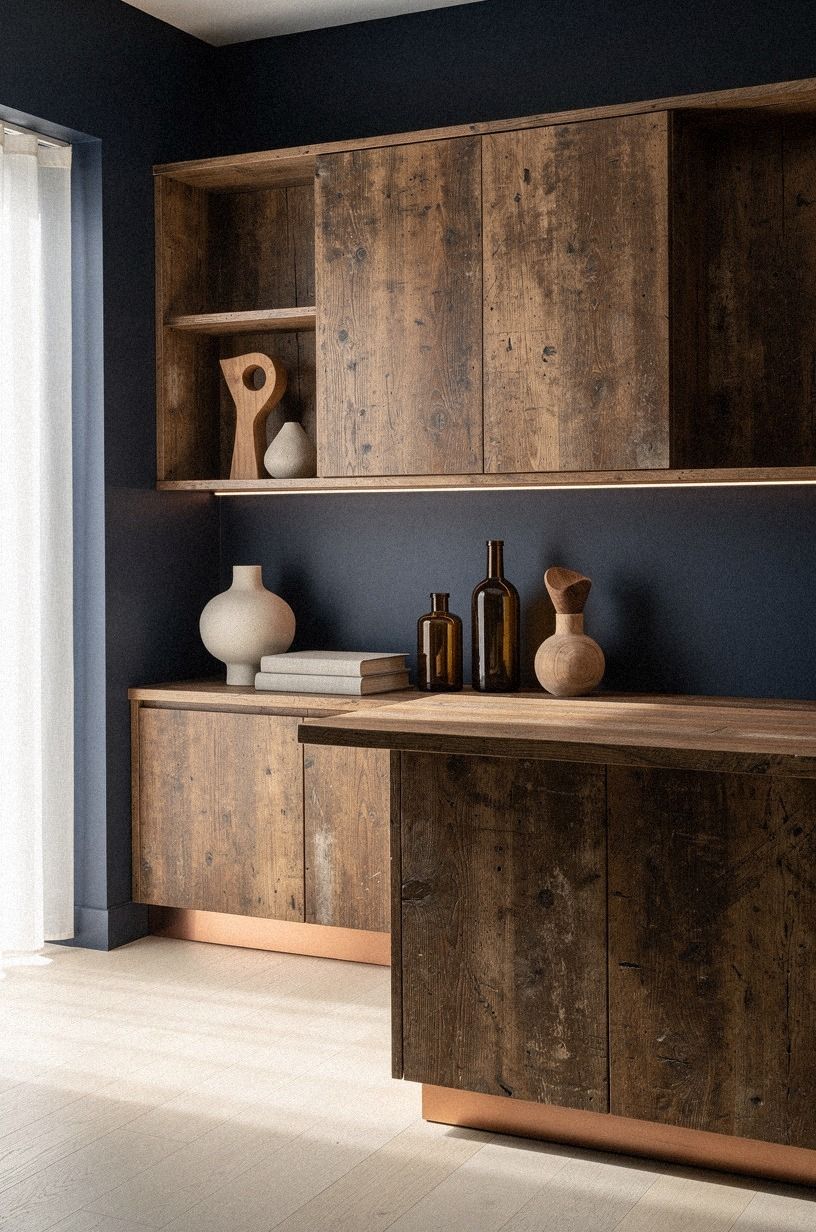
Open shelves are often better than cabinets in a tiny room because they preserve wall visibility. Paint the shelves or their backing midnight blue, then use ivory ceramics and a small piece of reclaimed weathered teak to keep the arrangement warm.
10Smoked Glass or Brass?
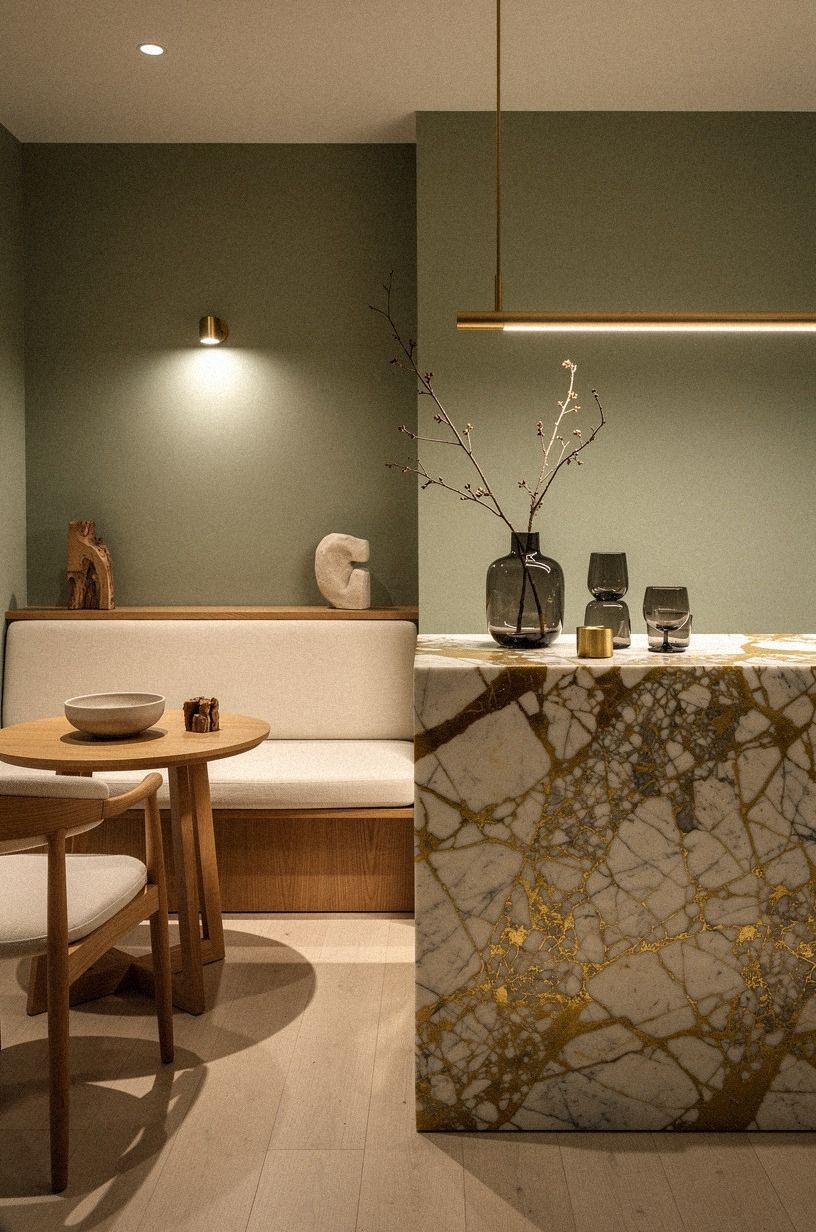
Smoked glass adds depth without the visual weight of another solid cabinet. For a warmer version, pair sage green and warm cream with natural wood, then use a small slab of Calacatta marble with gold veining near the drinks. Your room will gain a warm glint that moves whenever someone walks past.
I prefer aged or unlacquered brass over polished gold. Polished finishes can look flashy under a single ceiling bulb, while unlacquered brass with soft patina becomes quieter with time. It also works beside natural wood, sage green, and cream without demanding attention.
Don't mix five metals because a tiny room has nowhere to hide the confusion. Keep the main metal consistent, then allow black hardware to act as structure. This honest fragrance spending story captures the appeal of one memorable splurge among simpler pieces.
If you’re choosing between the two, let the room answer. Smoked glass feels mysterious and reflective; brass feels warm and tactile. I’d use both only when one is clearly the hero and the other stays quiet.
11A Round Table Above a Square Rug
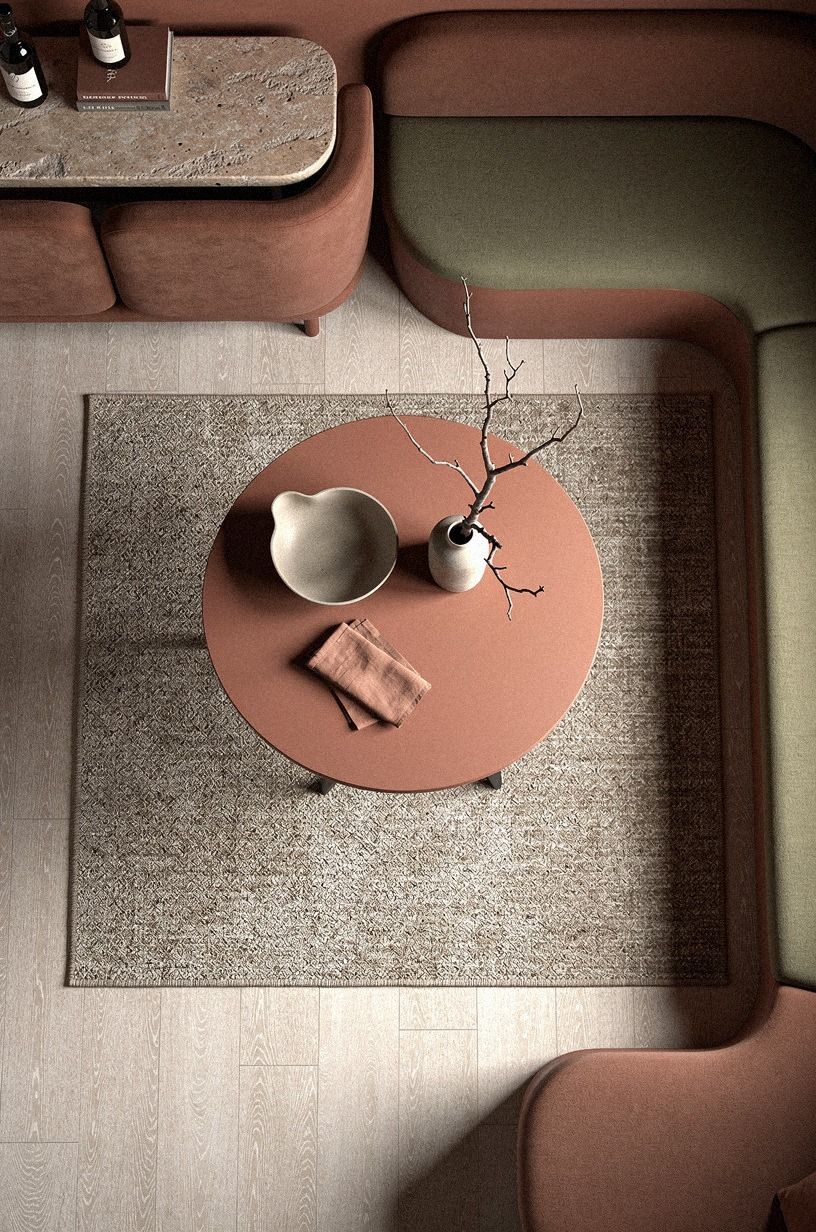
A round table softens the hard geometry of a small room.
12Use the Windowless Glow Method
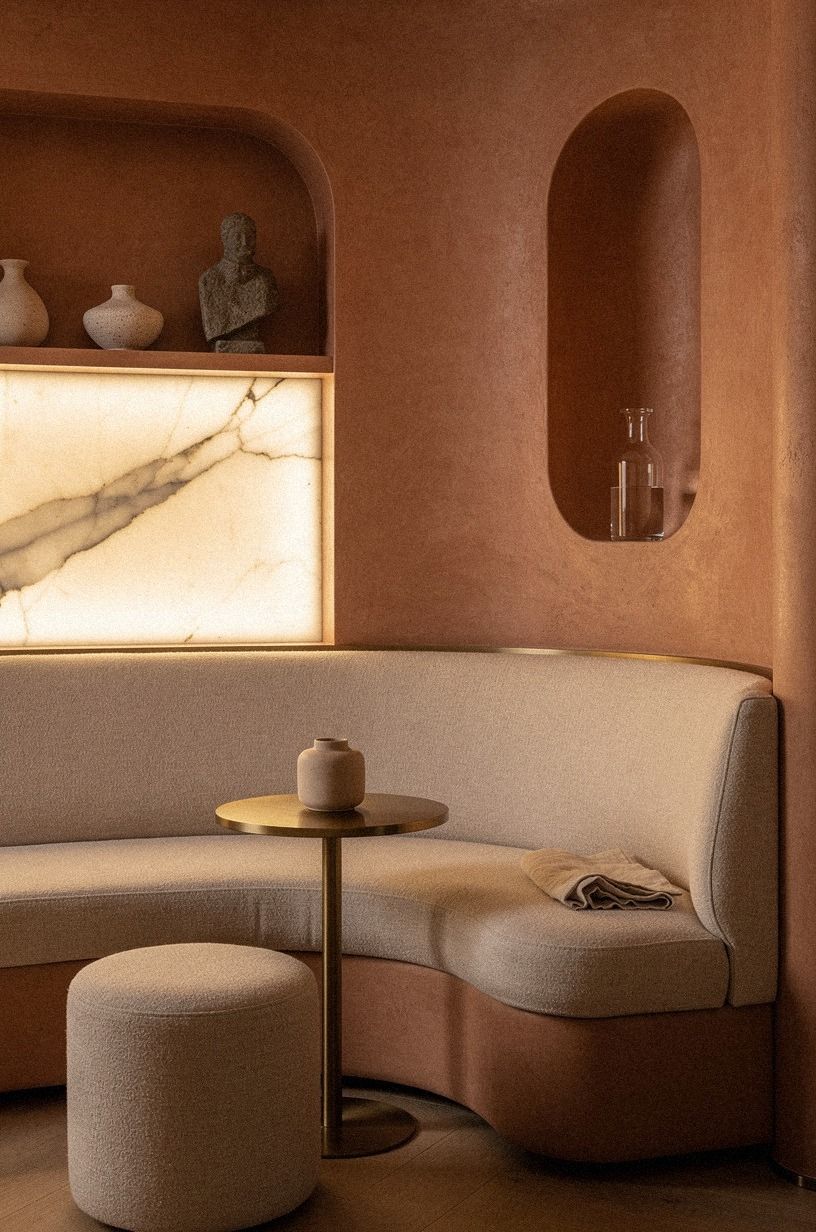
A windowless basement needs a convincing glow, not a fake attempt at daylight. Add a shaded lamp, a small picture light, and one low source near the floor. Your room will look warmer because the light comes from different heights instead of one cold ceiling point.
Try a linen drum shade on the lamp and a dimmable amber bulb near a panel of backlit translucent onyx. The fabric softens the edge of the light, while the onyx gives the clay, linen, and aged-brass palette a gentle glow. And if your room has a window, don't cover it with dark drapes all day.
For a small home speakeasy, I prefer warm light over bright light. You can always add task lighting for pouring or reading.
You can't easily make a room feel intimate after installing a grid of white downlights. Save this coastal village reference for ideas about low, evening-focused atmosphere.
This warm room story also reinforces the value of a controlled glow. It’s the kind of detail you’ll notice emotionally before you notice it technically.
13Place a mirror behind the bottles
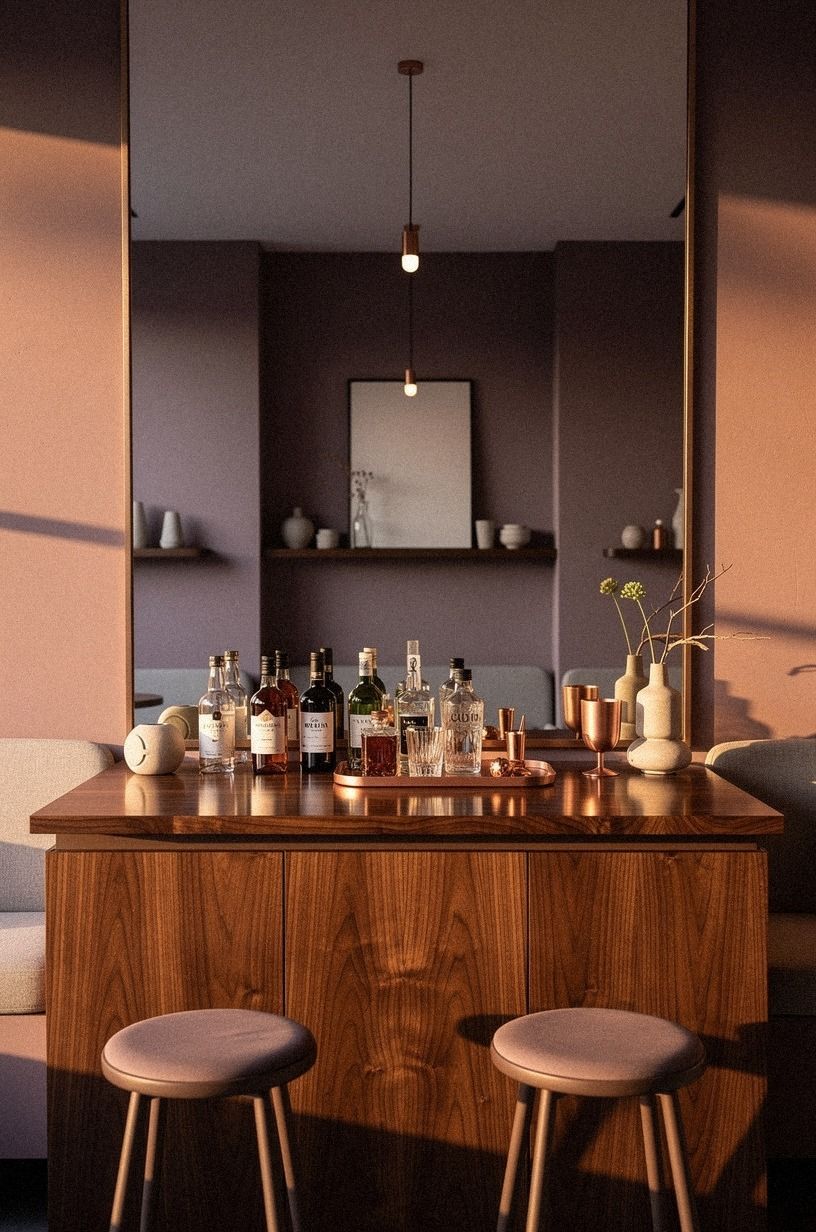
A mirror behind the bar reflects light and doubles the visual depth of the shelf.
14Budget the atmosphere before the furniture
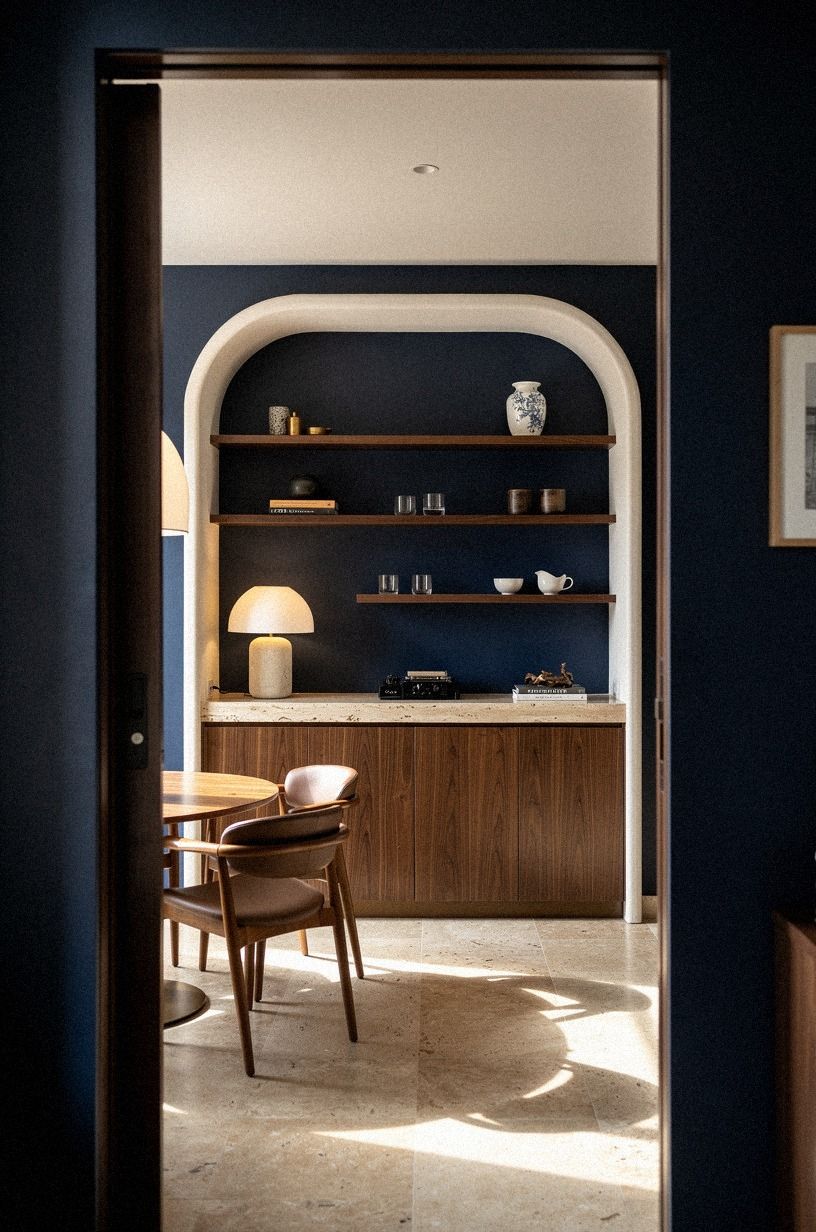
Your money will go farther if you budget the surfaces and light before buying a large sofa. Typical US costs vary widely, but the ranges below give your project a sensible starting point.
A budget-friendly room can start with paint, a secondhand table, and two lamps. I wouldn't spend $1,000 on a bar cart before solving the lighting. The cart will still look ordinary if the room around it is flat.
For a fuller cost reference, compare the fall mantel decor guide with your own priorities. You don't need every finish at once. One strong surface, one comfortable seat, and warm light can carry the first version.
If you’re working slowly, divide the project into three purchases: paint, lighting, then seating. That order gives you visible progress quickly and prevents a beautiful chair from becoming the only finished element in an otherwise unfinished room.
15Hang curtains high and keep them simple
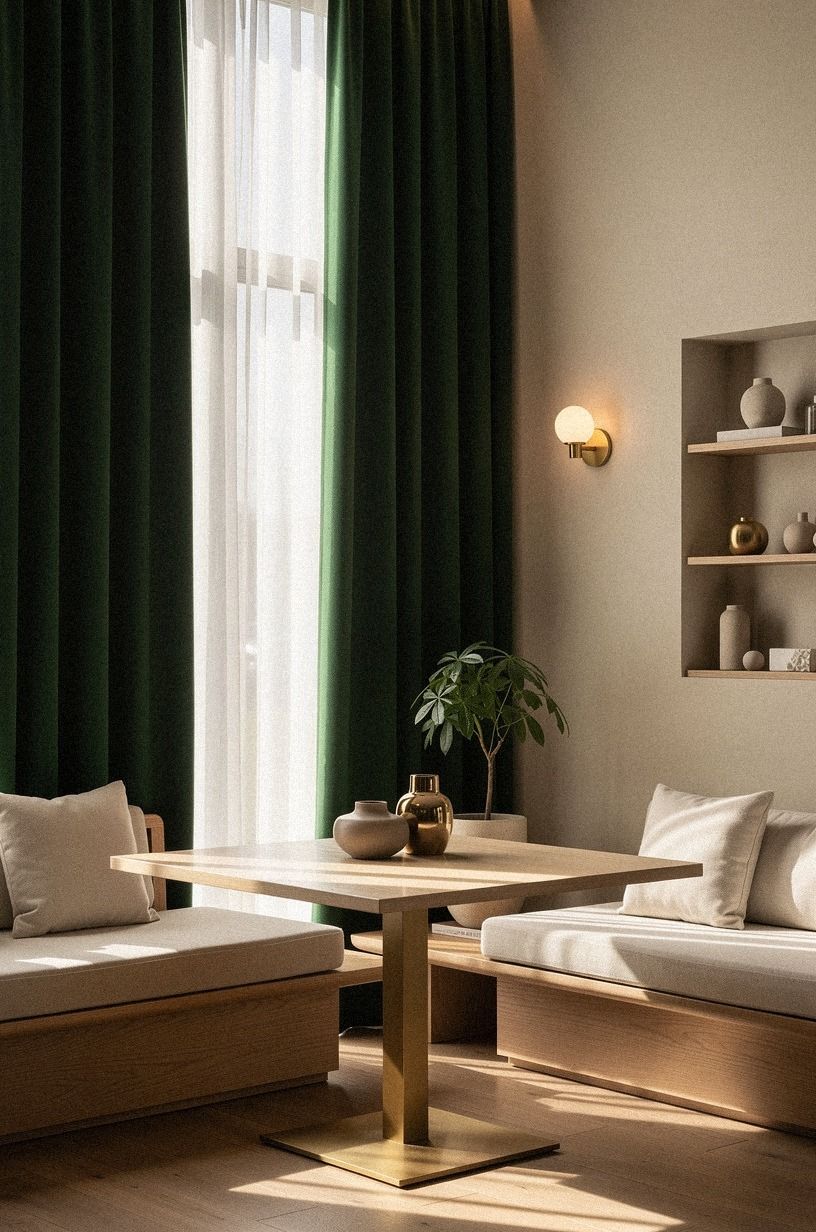
Curtains can make a small room feel taller when the rod sits 4 to 6 inches above the window frame and the fabric reaches the floor. Your eye follows the long vertical line, especially if you choose Belgian flax linen in a soft cream tone and pair it with an emerald or brass accent.
Use one full panel on each side instead of short café curtains. The extra fabric frames the window without cutting the wall into a small rectangle. I prefer a quiet weave over a busy pattern here, because the room already has glass, bottles, wood, and metal competing for attention.
Don't let the hem puddle beside a bar or walkway. A clean break above the floor feels sharper and keeps dust from collecting. If you're styling a rental, a tension rod and lightweight linen blend can give you the same vertical lift without permanent holes.
You’ll get the best effect when the curtain color relates to the rug or upholstery. It doesn’t have to match exactly. A gentle connection between cream, emerald, and unlacquered brass developing patina is enough to make the room feel composed.
16Mix old glassware with one modern line
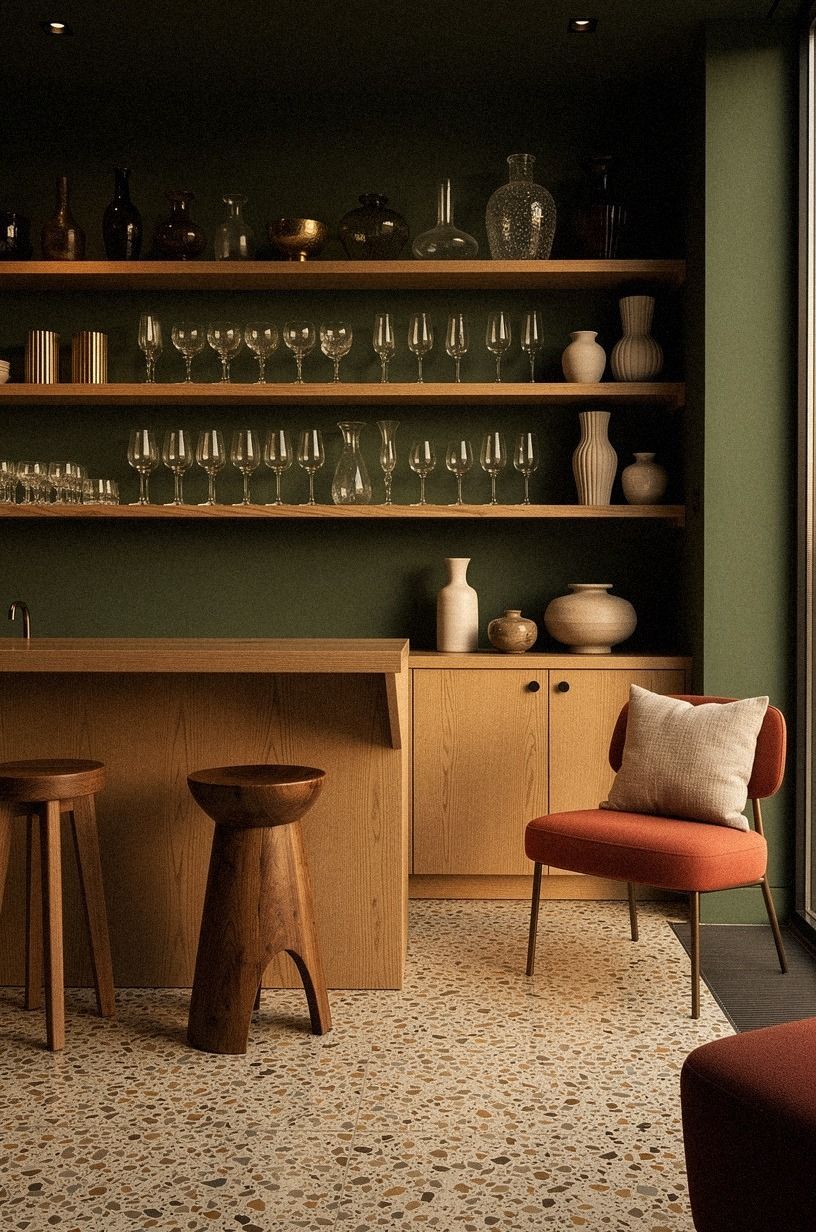
A speakeasy room feels convincing when the objects don't all come from the same set.
17Agreeable Gray Above, Pigeon Below
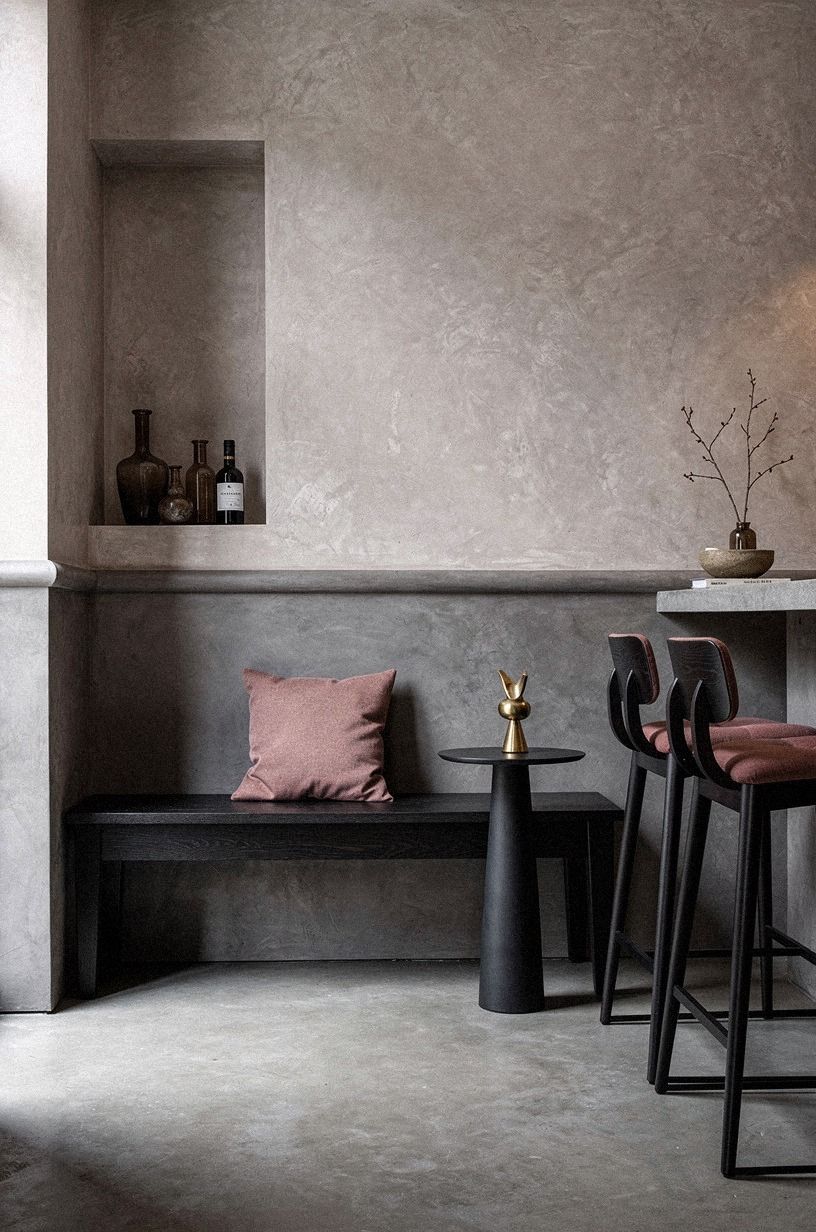
The two-tone idea in this title works best when you adapt it to the room's actual atmosphere. Use dusty rose above and charcoal below, or keep the darker tone on the ceiling if the room has low, warm lamps. Brass hardware and hand-applied Venetian plaster add depth without making the small space feel busy.
I like a dark ceiling when the room has low, warm lamps because the upper plane recedes. Skip it if the ceiling is already very low and the room has no windows. In that case, a dusty-rose ceiling with a narrow charcoal trim gives you more lift.
Keep the finish matte. Gloss reflects every bulb and exposes uneven drywall.
A flat Venetian-plaster finish absorbs the glare and makes the room feel calmer. Our warm mantel ideas use the same principle, with the brightest details kept near eye level.
For another point of reference, this evening-focused setting shows why darkness can feel atmospheric rather than oppressive. It’s all about giving the eye a few warm places to land.
18Choose a small speakeasy over a crowded lounge
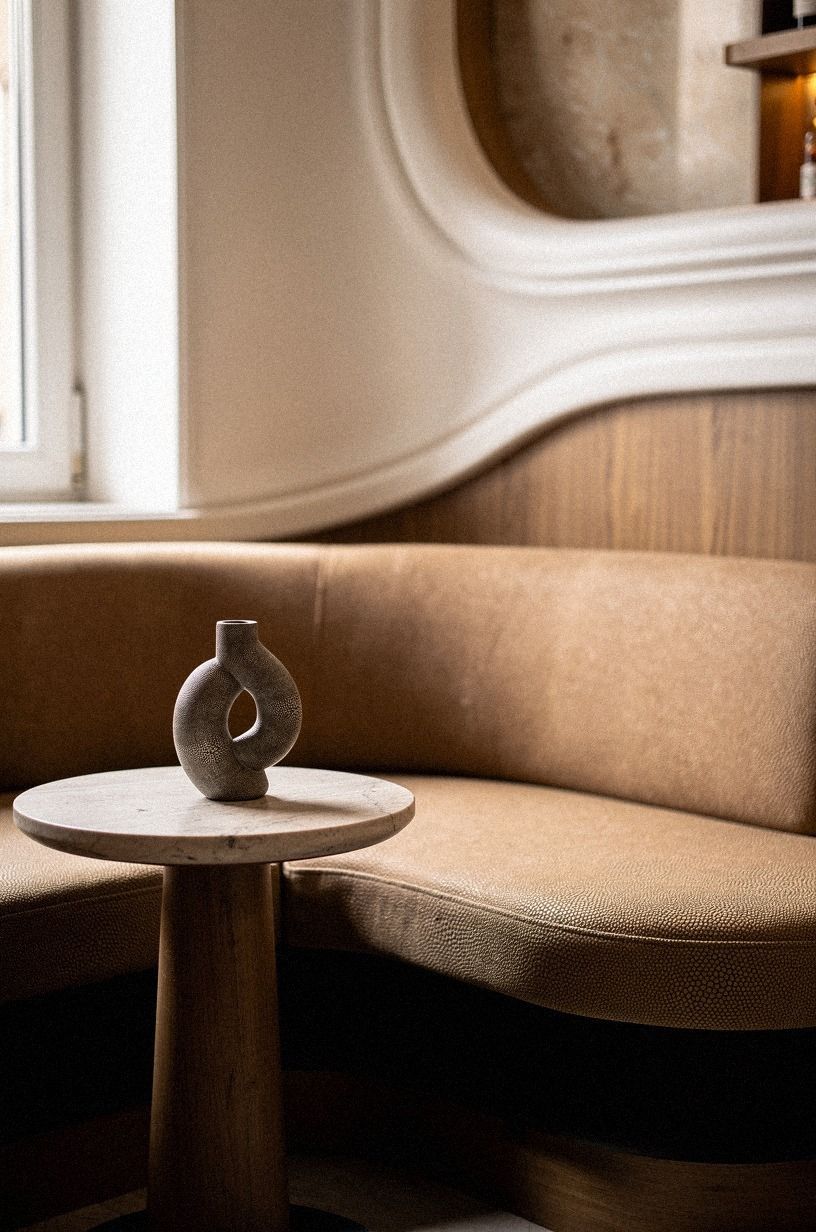
The best small speakeasy room ideas aren't trying to imitate a restaurant. They create one clear experience: a comfortable seat, a surface for a drink, and light that tells you the evening has started. Your room can feel generous when every object has a job.
Use a camel shagreen ottoman as extra seating and a tray as a movable table. When you need floor space, the ottoman can slide beneath the console. I prefer this flexible arrangement over a second sofa, which usually blocks the path and makes your room feel smaller.
But leave enough open floor for two people to move around each other. That sounds obvious, yet it disappears quickly once you add stools, baskets, and a bar cart.
A tiny room should feel intimate, not trapped. The distinction matters!
If you’re unsure whether an item belongs, remove it for one evening. You’ll notice immediately whether the room feels calmer or merely empty. That small experiment often reveals which pieces are useful and which are only taking up visual space.
19Finish with the Three-Object Bar Edit
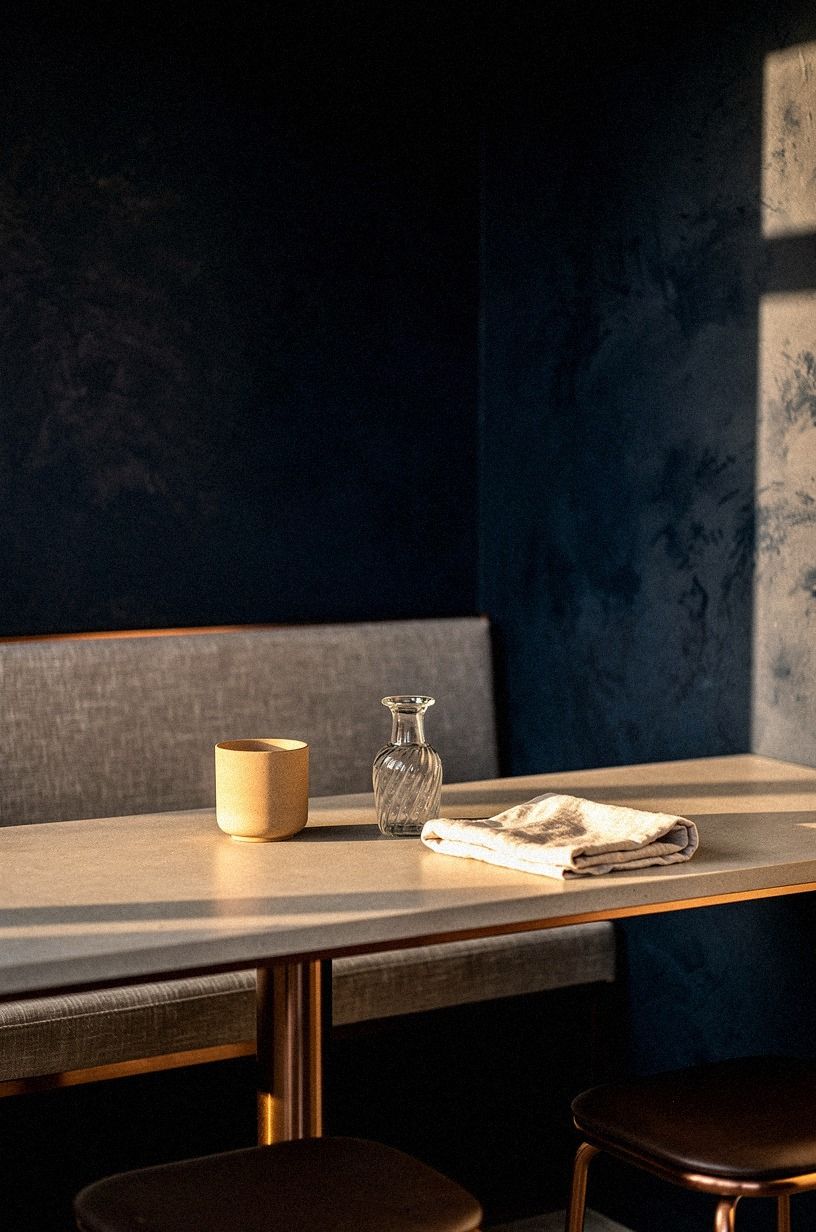
The Three-Object Bar Edit is the last pass: one useful object, one reflective object, and one organic object. Try a copper tray, a midnight-blue decanter, and a small branch in an ivory vessel with a strip of washed Belgian linen beneath it. Your shelf gets shine, shape, and softness without visual clutter.
I use this edit whenever a room feels close but not settled. Remove two objects first, then add only what solves a gap.
A stack of coasters can be useful. A second decorative bowl probably isn't.
Your eye needs a quiet patch beside the focal point.
The final arrangement should leave room to pour a drink without moving everything. That practical test matters more than a styled room.
If your hand can reach the glass and the light doesn't glare, the setup is working. And yes, it can look inviting without looking staged!
For more restrained styling inspiration, revisit the fall mantel decor ideas and this fragrance spending story. Both point toward the same useful lesson: one memorable detail is stronger than a shelf full of competing ones.
Why This Small Room Works Better Than a Bigger One
I've changed my mind about tiny entertaining spaces. I used to think a large room gave you more freedom, but large rooms often encourage weak decisions.
Furniture floats too far apart, lighting gets spread thin, and the atmosphere disappears between the pieces. A small speakeasy forces you to decide what deserves attention.
The first decision is circulation. You need a clear route, a comfortable seat, and a surface within reach.
Everything else is negotiable. If a bar cart blocks the door, it doesn't matter how charming the cart looks.
I learned that after moving one three times in a single evening, and the wheels were not as helpful as promised.
The second decision is light. A tiny room can hold three sources easily, and those sources create more depth than another layer of decor.
Your eye notices the shaded lamp, the reflection in the mirror, and the glow near the floor. That movement gives the room width without adding square footage.
The third decision is restraint. I wouldn't buy a matching bar set, matching stools, and matching shelves. The result is tidy, but it has no history.
One old object, one practical modern piece, and one material with texture will give you more character.
This is also why dark color can work. It isn't hiding the room. It is giving the edges less visual noise.
Farrow & Ball Pigeon, Benjamin Moore White Dove, or a dusty rose and charcoal pairing can each work when your lighting and furniture support the choice. Pick the color that makes your evening routine feel better, not the color that looks safest on a screen.
You don't need a finished room before it can feel special. Start with one clear surface, one flattering light source, and one seat you genuinely want to use. The rest can develop slowly, and it’ll usually look more authentic that way.
The Questions Worth Answering First
What is the best small speakeasy room idea for a tiny room?
I would start with a narrow console paired with one comfortable chair and three light sources. An IKEA KALLAX unit can provide storage without much depth, while an Article Sven chair adds a proper seat. I keep one clear walking route, and the room feels more usable immediately.
Where can I buy small speakeasy pieces on a budget?
I look at IKEA, Target, Wayfair, Facebook Marketplace, and local thrift shops. I search for solid wood tables, old mirrors, and lamps with replaceable shades. A secondhand walnut side table often gives me more character than a new matching set, and I don't need to buy everything at once.
How much does a small speakeasy room makeover cost?
I would budget around $200 to $800 for paint, textiles, art, and organization. A mid-range update with lighting, an accent chair, and a rug may reach $1,500 to $5,000. I always rearrange, clean, and edit first because those free changes can transform the room before I spend.
Can I create a small speakeasy room on a budget?
Yes, and I would begin without buying furniture. I rearrange what I own, use a table lamp with a warmer bulb, and group existing glassware on a tray.
Then I add thrifted art or linen-look curtains. I paint one wall only if the full-room budget isn't ready yet.
Is a small speakeasy worth it in a small space?
Yes, because I find that a smaller room can feel more intimate with fewer pieces. I choose one seating zone, keep the rug connected to the furniture, and use warm light at three heights. A narrow table serves me better than a large bar cabinet that blocks movement.
Is a small speakeasy a good idea for a rental?
Yes. I use removable wallpaper, a tension curtain rod, plug-in sconces, and freestanding storage.
A peel-and-stick mural can create the dark backdrop without permanent work, while a console hides bottles and supplies. I check the lease before attaching shelves and anchor heavy pieces safely.
Where I'd Start First
If I had to pick one, I'd start with the Three-Height Light Stack. A warm lamp, a shaded overhead fixture, and low ambient glow change the room before furniture can. Pin this setup for later, then move your lamps tonight and see what the shadows reveal.