
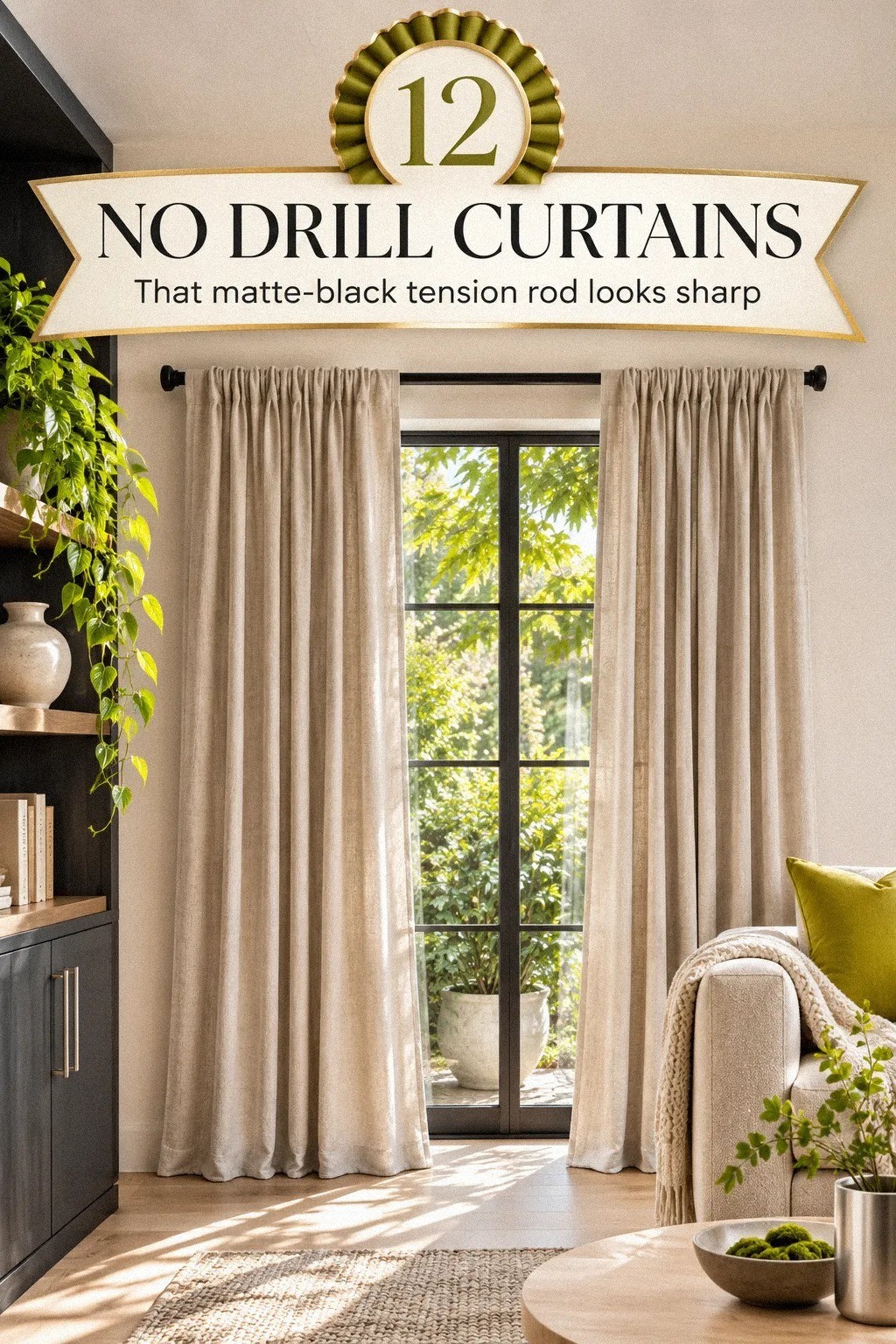
12 Renter-Friendly Ways to Hang Curtains With No Drilling and No Holes
25 november 2026How to hang curtains with no drilling and no holes? Start with tension rods, adhesive hooks, magnetic rods, or removable tracks, then place the curtain 4 to 6 inches above the frame. I once hung panels too low, and the room looked squat. The fix was simple. Your windows can feel taller without touching a drill!
- Measure Above the Frame for a Tension-Rod Lift
- Build the Tension-Rod Shadow Rule for Small Windows
- Use Command Hooks for a Soft, No-Drill Track
- Hang Curtains Without Holes Using a Magnetic Rod
- Float a Café Panel Inside the Frame
- Layer the Three-Height Light Stack
- Swap Rods for a Ceiling-Mounted Adhesive Track
- Frame French Doors with the No-Hole Fabric Frame
- Paint the Backing Wall, Then Hang Command Hooks
- Choose Curtain Width Over Extra-Long Drop
- Can You Hang Curtains Without a Rod? Build a Wire Frame
- Frame a Rental Window with Command Hooks
1Measure Above the Frame for a Tension-Rod Lift
A tension rod works best when you measure the inside width first and choose a panel that can gather without pulling the rod loose. Keep the fabric light, such as soft gray linen, so your window treatment stays secure and relaxed. You’ll want the rod high enough that your eye reads the wall as taller.
Leave the curtain hem close to the floor when the window allows it. A floor-length panel feels more polished than a short one, even in a small rental.
I’d skip stiff blackout fabric on a basic tension rod because the weight can make the ends sag. Your room will look softer with a gentle drape.
Farrow & Ball Brinjal No.222 works nicely behind warm ivory curtains because its muted plum cast keeps the wall atmospheric instead of chilly. You can echo that color in one cushion or pair it with a rose-gold lamp.
A cerused white oak stool adds warmth without making the window feel busy. Keep the rest of your palette quiet, or the window will start competing with everything around it.
A basic IKEA tension rod usually costs about $10 to $25, while a sturdier Umbra version may cost $25 to $45. I’d spend more on the rod if the window is wide, but I wouldn’t buy heavy custom hardware for a temporary rental.
For a bedroom refresh, pair the curtains with a clean textile routine and these pillowcase care notes. The link isn’t about buying anything. It’s simply a useful reminder that soft layers need regular attention, especially when your panels sit close to the bed.
Typical cost by tier (US averages):
2Build the Tension-Rod Shadow Rule for Small Windows

The Tension-Rod Shadow Rule is simple: let the curtain cover the glass while keeping the rod inside the recess. You’ll create a darker border around the window without making the whole wall feel busy. This is especially useful when your rental has narrow windows, shallow trim, or an awkward corner.
Choose a panel with a close weave, such as navy cotton velvet, only if the rod can support it. Otherwise, look for a cotton-linen blend with enough body to hang cleanly.
I made the mistake of using a heavy panel in a shallow frame once. It looked rich for one day, then the rod started sliding.
Paint the surrounding wall Benjamin Moore Hale Navy HC-154 if your landlord allows it, or match the existing paint with removable fabric instead. Hale Navy makes warm white curtains feel composed, while a walnut-toned trim can keep the arrangement grounded.
If the window has a backlit translucent onyx surface nearby, let it provide the gentle glow. Your goal is a soft shadow, not a hard rectangle of contrast.
A Room Essentials tension rod may cost $8 to $15, while a reinforced Kenney rod often sits around $15 to $30. I’d choose the cheaper option for a narrow bathroom window, but the stronger one for a bedroom where the panel will open and close every day.
Don’t push the rod so tightly that it marks the side trim. Test the pressure, release it, and check the surface after a few minutes.
If you’re styling a bedroom, you can also read these morning routine notes while you wait. For humid rooms, these shower moisture notes are also worth keeping nearby.
The room should feel peaceful, not overworked.
3Use Command Hooks for a Soft, No-Drill Track
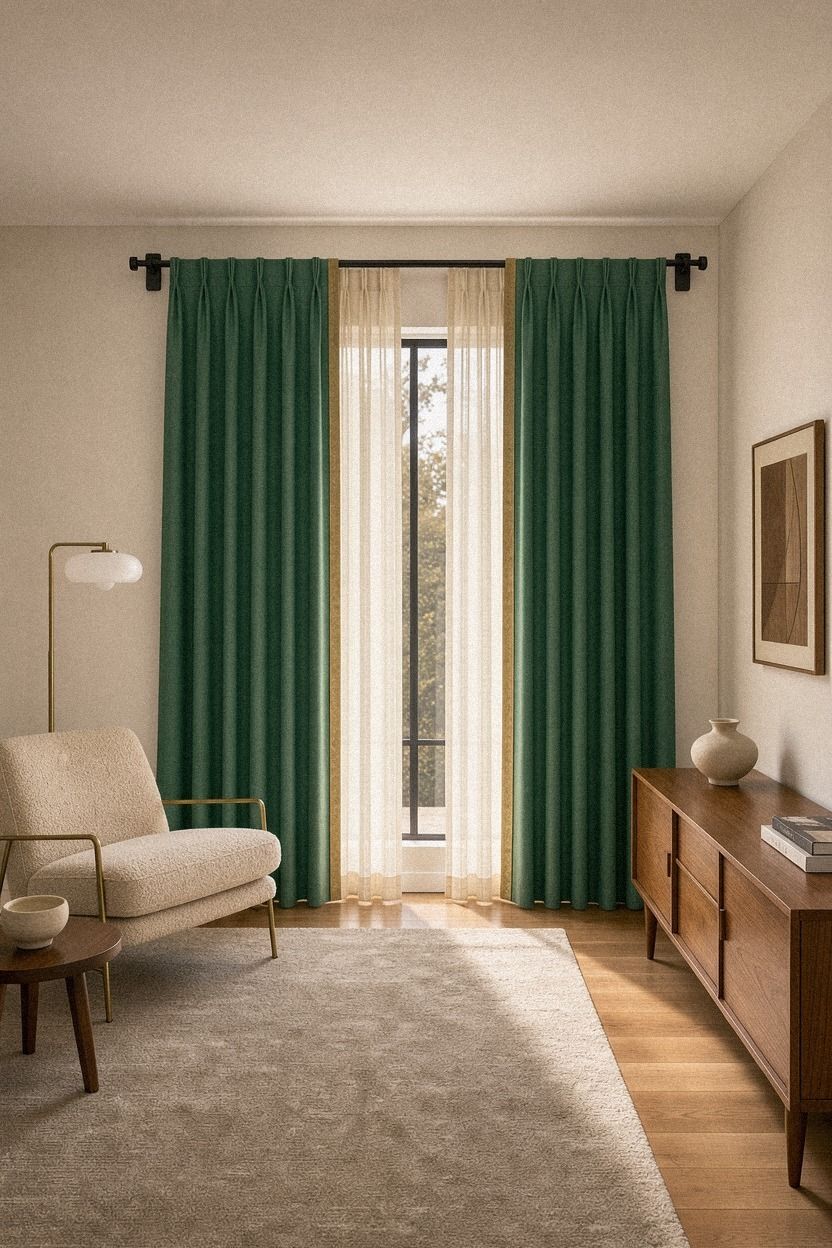
Adhesive hooks can hold a lightweight curtain rod when you prepare the wall properly.
4Hang Curtains Without Holes Using a Magnetic Rod
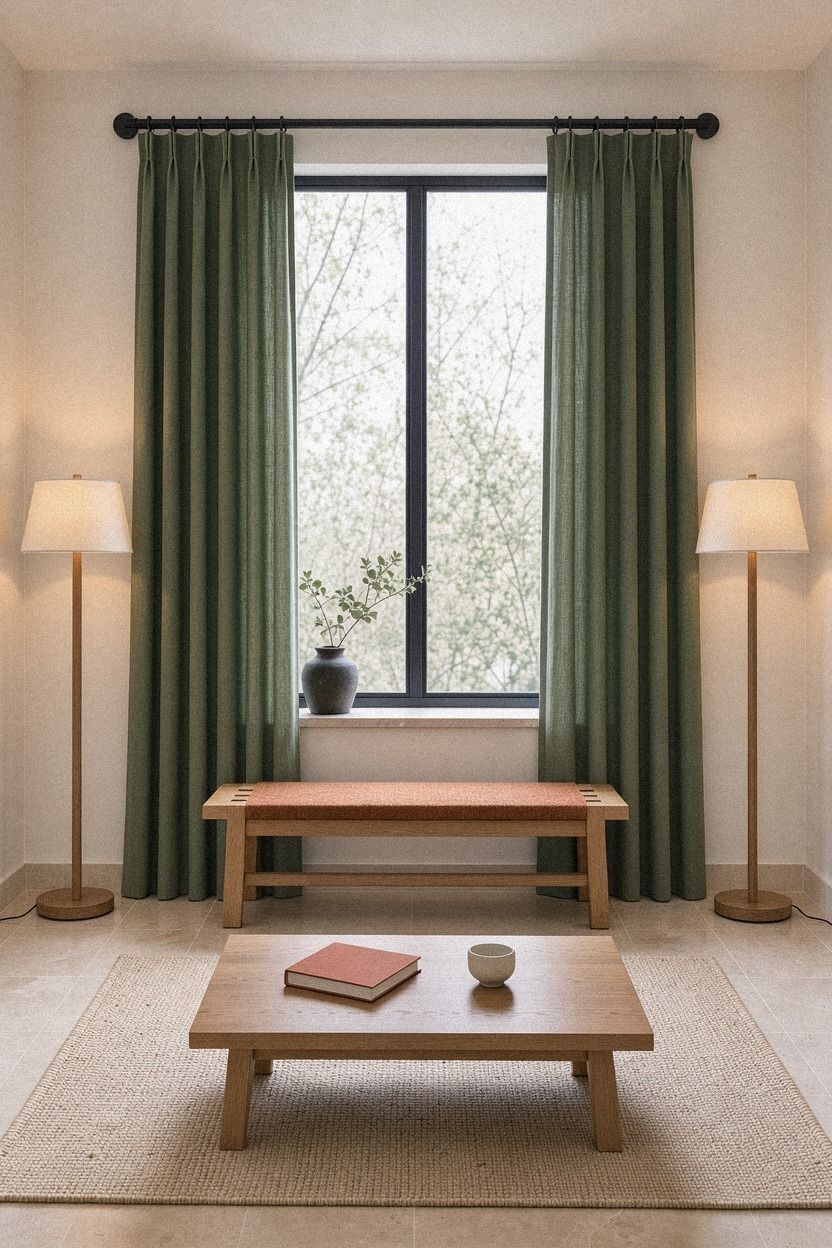
A magnetic rod is the cleanest choice for metal window frames, steel doors, or an apartment with magnetic surfaces. It snaps into place without tools, and you can remove it when you move. Your best fabric match is a lightweight cotton panel or 600gsm Turkish cotton, not a dense lined drape.
This method looks especially good on a metal entry door with a narrow glass panel. Choose a forest-green or rust curtain, then let the fabric add privacy without blocking every bit of daylight.
A natural-oak detail can warm the metal, while a nearby warm travertine surface keeps the entry from feeling stark. I’d skip a bold print if the door already has black hardware. A small space needs one clear focal point.
The magnetic surface has to be strong enough for the curtain’s weight. Test the rod with the fabric gathered before you spread the panels across the glass.
If the rod shifts, reduce the fullness rather than forcing it. A relaxed panel will look intentional, while an overloaded one will look like a temporary fix.
A Magnetic Curtain Rod usually costs $15 to $35, and a stronger Deco Window model can reach $40 or more. I’d use brass magnets in a warm entryway and black magnets in a modern kitchen. Warm travertine adds a grounded note, while matte black keeps the frame crisp.
For another bedroom textile idea, these pillowcase cleaning notes can sit beside your regular laundry checklist. You don’t need a complicated system. One quiet weekly reminder is enough.
5Float a Café Panel Inside the Frame
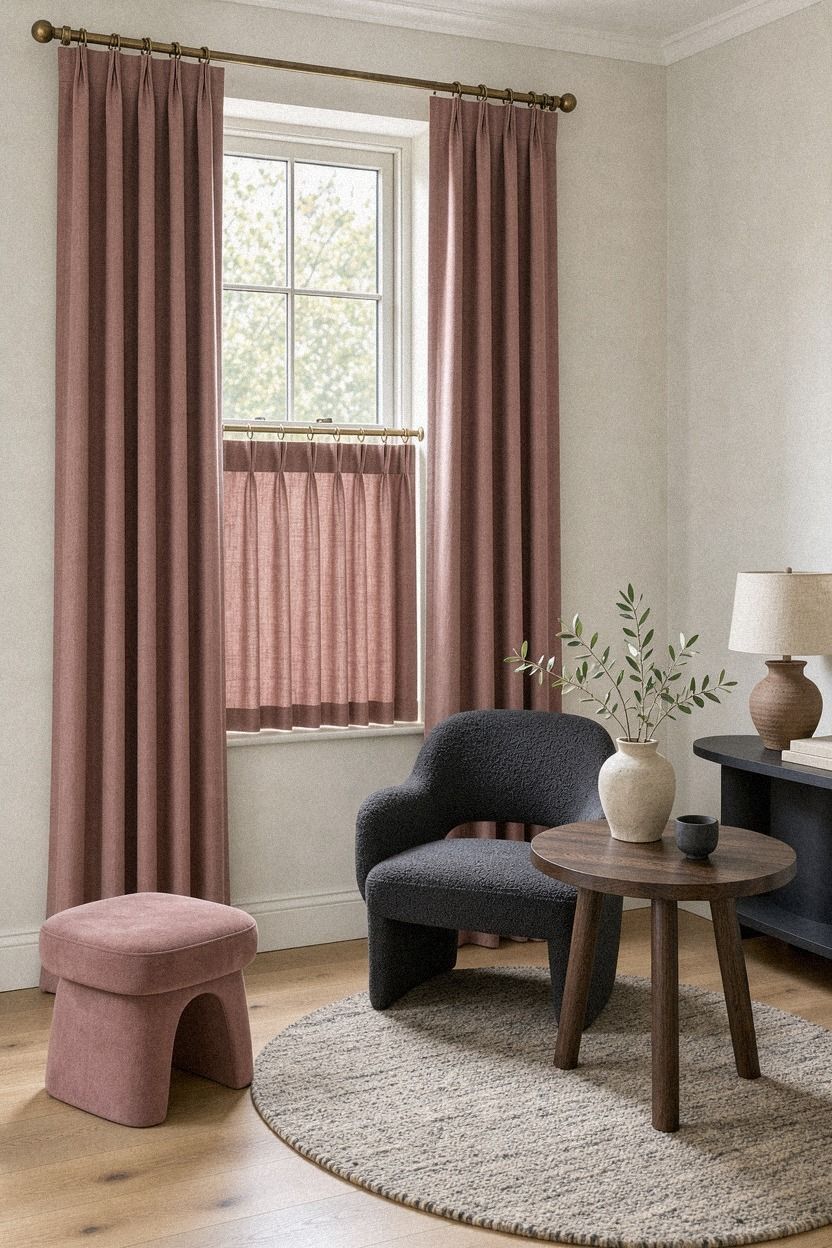
A café panel covers the lower half of a window while leaving the upper glass open.
6Layer the Three-Height Light Stack
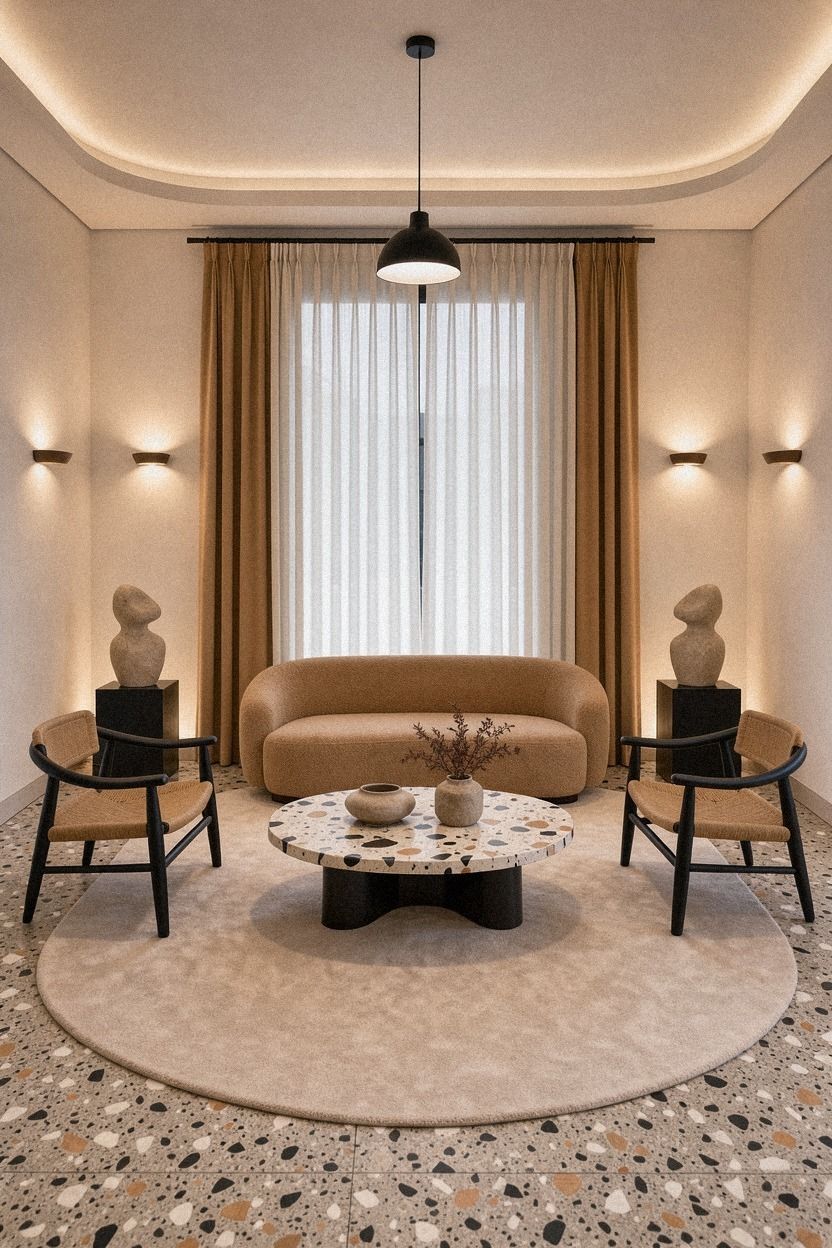
The Three-Height Light Stack gives your room three visual levels: a curtain near the ceiling, furniture below the window, and a low object such as a basket or stool. The result feels more balanced because your eye travels upward, across, and down. Your room won’t depend on one window to carry the whole design.
Start with the curtain rod 4 to 6 inches above the frame. Then add a low oversized-chip terrazzo bench beneath the sill if there’s enough clearance.
The bench should support a folded throw or one cushion, not become a storage pile. I’ve tried crowding a window with baskets, and the glass disappeared behind clutter.
For color, Sherwin-Williams Alabaster SW 7008 gives you a warm-white background for camel or ivory curtains. It’s forgiving in changing light, which matters when your window faces east or west.
Black accents can bring definition without taking over. Your fabric can bring the stronger note, while the wall keeps the whole arrangement serene.
A Walmart wood bench may cost $35 to $70, while a West Elm bench can run $300 or more. I’d save on the bench and spend on a better curtain panel. The fabric is what softens the room, and the lower object only needs to hold the composition together.
Lighting matters, too. Aim for three sources per room: overhead, task, and ambient. You can place a small ceramic lamp on the bench if the outlet is nearby.
If you’re resetting bedroom layers, these pillowcase care details help keep the soft parts of the room feeling fresh.
7Swap Rods for a Ceiling-Mounted Adhesive Track

An adhesive curtain track can help when you want full-height panels but can’t install a conventional rod. Choose a lightweight track designed for removable mounting, then keep the fabric modest in weight. Your ceiling line will look taller, and the curtain can move across a wide opening with less visual hardware.
This approach works well behind a sofa, around a sleeping alcove, or across an open closet. Against hand-applied Venetian plaster, use ivory cotton or linen for the main panels.
A narrow midnight-blue accent can add depth, while copper hardware brings warmth without competing with the wall. I’d choose lighter fabric because it will slide more easily and keep the room bright.
A RoomDividersNow track may cost $45 to $90, while a basic IKEA VIDGA rail often costs $20 to $45 before mounting changes. Removable adhesive strips can add another $10 to $20.
Measure the track before you buy fabric. The curtain should cover the opening fully without bunching into a thick stack.
You’ll want extra width for overlap and enough length to reach the floor. A clean drop feels refined, even when the setup is temporary. Check the adhesive after a few days, especially in a warm or humid room.
If the track starts to lift, remove the fabric and reassess the wall.
For a calmer evening routine, keep this hot-shower care reference with your apartment maintenance notes. It’s a small reminder that humidity can affect both walls and removable hardware.
8Frame French Doors with the No-Hole Fabric Frame
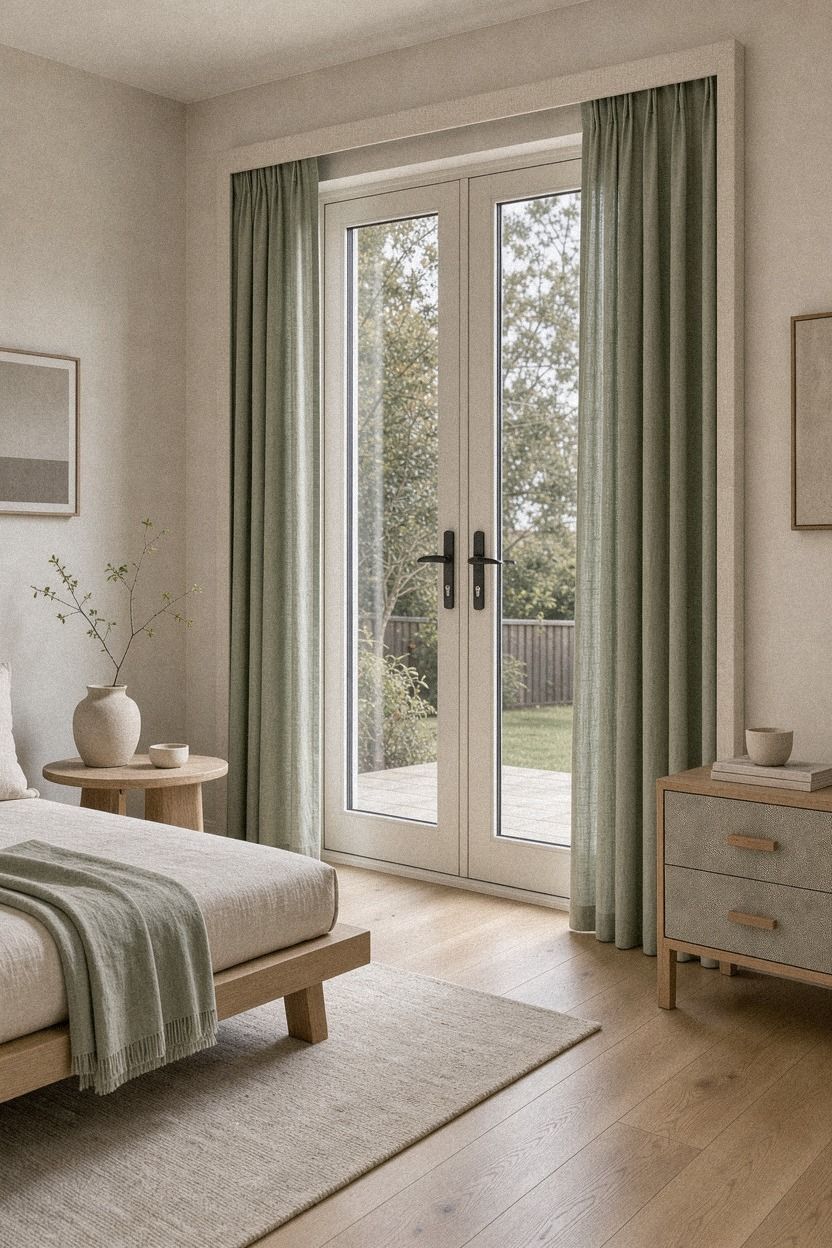
The No-Hole Fabric Frame uses narrow panels on each door instead of one wide curtain across the entire opening.
9Paint the Backing Wall, Then Hang Command Hooks
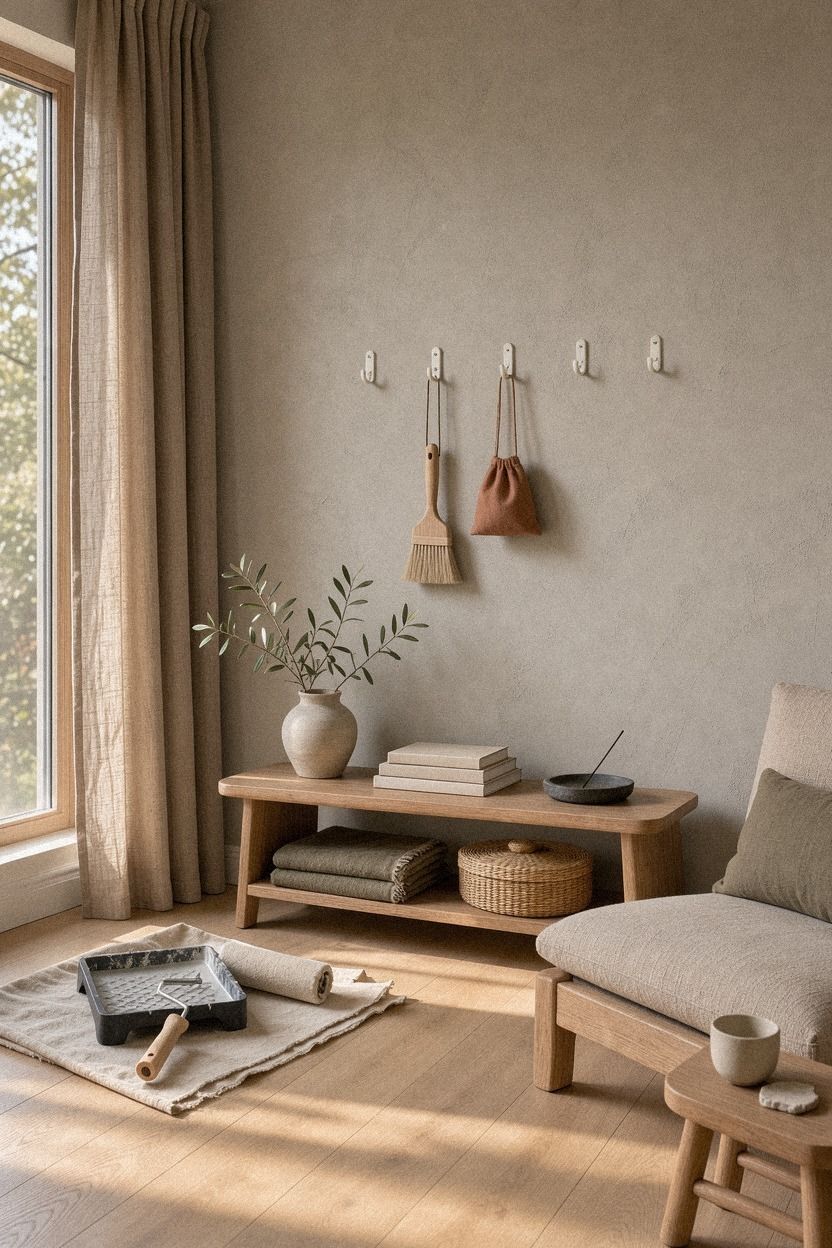
A darker backing wall can make pale curtains look richer, even when the hanging system is removable. Paint the wall behind the window if your lease permits it, then place adhesive hooks high and wide. Your curtain becomes part of the color plan instead of an isolated rectangle.
Try Farrow & Ball Red Earth No.64 with a washed Belgian linen curtain for a gentle, organic look. For a moodier room, use Farrow & Ball Olive No.13 behind warm stone-colored fabric. I’d skip a stark white panel against a cool blue wall because the contrast can feel sharp under evening bulbs.
A quart of Benjamin Moore paint may cost $25 to $40, and a set of Command hooks usually adds $8 to $15. That puts the wall treatment and hanging system around $50 before fabric. The price is reasonable if the color can also support artwork, a bed frame, or a nearby reading chair.
Hook placement matters more than color. Keep the supports level, place them beyond the frame, and let the fabric extend past the window edges when possible. You’ll block less daylight when the curtains are open, and the whole window will feel broader.
You can repeat the wall color in one small object, such as a West Elm ceramic lamp or a painted picture frame. Don’t repeat it everywhere.
One supporting detail is enough to make your room feel harmonious. If the space gets humid, review this shower moisture note before committing to adhesive hardware.
10Choose Curtain Width Over Extra-Long Drop
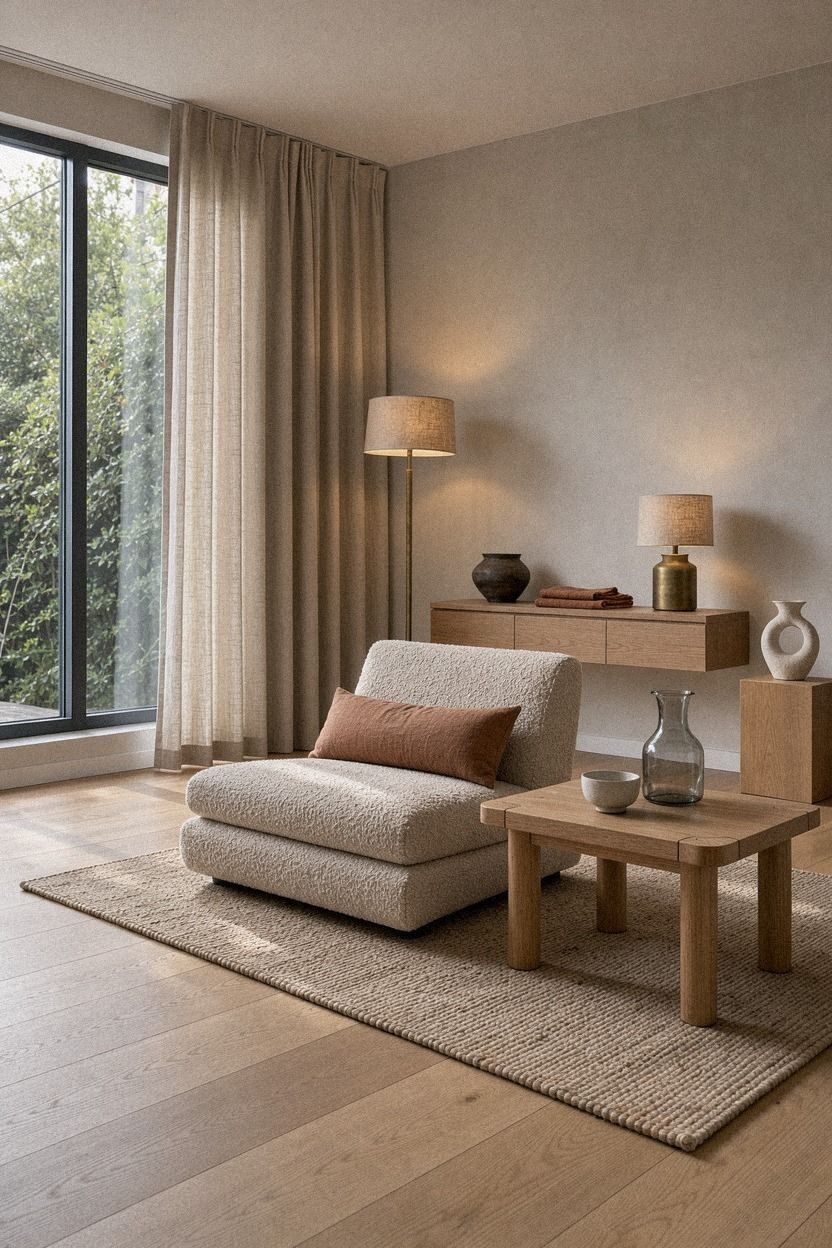
Curtain width matters more than dramatic length in a small room.
11Can You Hang Curtains Without a Rod? Build a Wire Frame
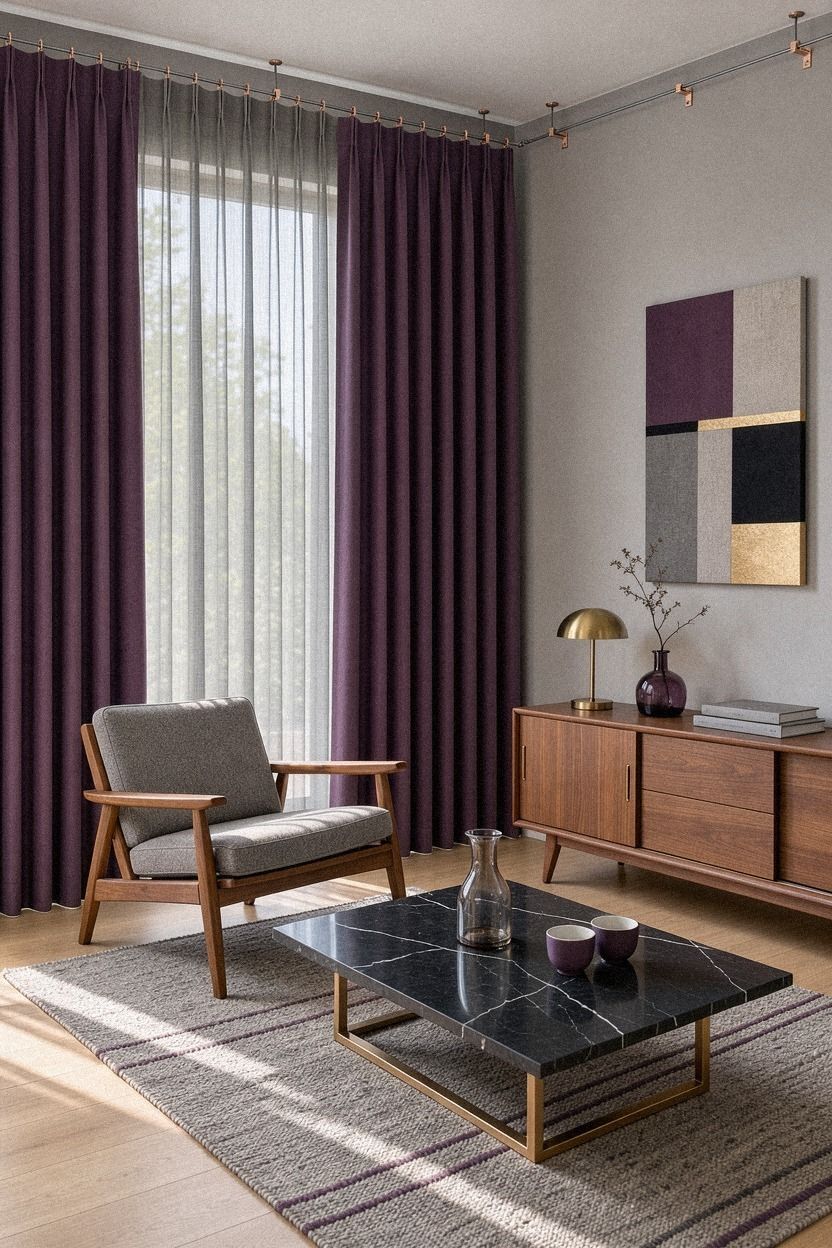
Yes, you can hang curtains without a conventional rod by using a properly tensioned curtain wire or cable system. It works best for very light panels, small openings, and relaxed rooms where a little movement feels charming. Your fabric should be light, flexible, and easy to remove.
Choose lightweight plum linen or a similar soft fabric with a simple pocket or clips. Avoid anything lined, stiff, or heavily embellished. A narrow Nero Marquina black marble ledge with white veins can anchor the arrangement, but keep the rest sparse.
I’d use this method in a studio sleeping nook, not across a busy doorway. The wire is delicate, and your room should respect that limit.
A Dignitet curtain wire often costs $15 to $25, while a small set of rose-gold curtain clips may add $8 to $18. The entire setup can stay below $50. I like the wire in a soft, informal room, but I wouldn’t use it where children or pets could pull on the fabric.
Keep the wire straight and install it at a height that lets the curtain fall cleanly. If it bows in the middle, reduce the fabric width or add a center support.
Don’t pull it so tight that the anchors stress the wall surface. A gentle line looks intentional; a strained line looks unfinished.
For a bedroom with several fabric surfaces, these pillowcase care notes fit naturally into your maintenance list. Clean clips and washable panels will keep the arrangement from feeling neglected.
12Frame a Rental Window with Command Hooks
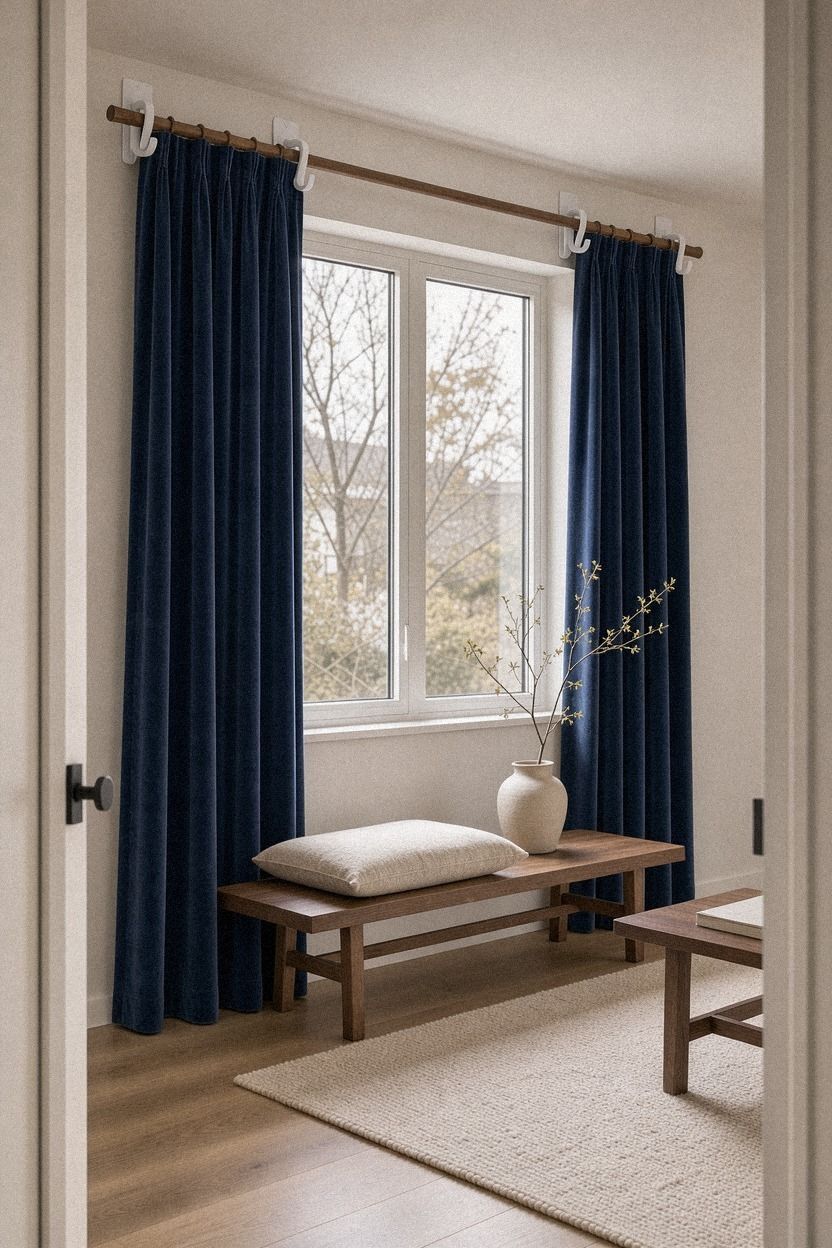
If you want the simplest renter-friendly setup, use removable hooks with a lightweight rod and full-length panels.
Why No-Drill Curtains Are Having a Moment
I used to think renter-friendly curtains had to look temporary. That opinion changed after I lived with a beautiful rod that sat too low, made the ceiling feel shorter, and left ugly marks when I moved it.
The better answer wasn’t more hardware. It was better placement, lighter fabric, and a little patience with measurement.
Curtains have become less about covering a window and more about shaping how a room feels. A panel can soften a hard rental wall, divide a sleeping nook, or make a narrow window seem wider.
You don’t need a full renovation for that. You need the right height, enough width, and a fabric that behaves well in your space.
The cost question is worth handling honestly. A simple no-hole setup can be built from what you already own, while a full room refresh may sit inside the typical $200-$800 budget tier for paint, textiles, art, and organization.
If you’re furnishing a whole home, the larger ranges rise quickly. Your curtains shouldn’t force you into a furniture budget you don’t have.
My strongest opinion is that tension rods and removable hooks are better than trying to imitate a permanent installation. Permanent-looking hardware often creates more stress than style.
A soft linen panel, placed 4 to 6 inches above the frame, can feel more refined than a heavy custom treatment that fights the room. And yes, I still measure twice.
The floor is not forgiving!
Before you buy, check three things: the fabric weight, the window width, and the surface condition. A lightweight panel on a clean wall gives adhesive hardware its best chance. A heavy panel on dusty paint is asking too much.
If the first method fails, don’t panic. Your room probably needs a lighter textile or a better measurement.
These humidity notes are useful if the window sits near a bathroom or kitchen.
A Few Things Worth Answering
What is the best way to hang curtains without drilling for small windows?
A tension rod is usually the easiest choice for a small window because it fits inside the frame and needs no holes. Choose a light IKEA cotton panel or similar fabric, then keep the curtain close to the sill or floor. Your window will look tidy and soft.
Where can I buy no-drill curtain pieces on a budget?
Look at IKEA, Wayfair, and Target for tension rods, light panels, and removable hooks. Facebook Marketplace and thrift stores can help you find linen or cotton curtains second-hand. I don’t use affiliate links, so you can compare prices freely and choose what fits your space.
How much does a no-hole curtain makeover cost?
A simple setup can be free if you already own fabric and a tension rod. A small refresh is often about $100 to $300, depending on the panels and hardware. Your larger room budget may fall within the typical $200-$800 tier for paint, textiles, art, and organization.
Can I create a no-drill curtain look on a budget?
Yes, and you can start with three low-cost moves: reuse a curtain you own, place it 4 to 6 inches above the frame, and use a removable hook system. A cotton-linen panel will usually look warmer than a shiny synthetic one. These morning reset notes can help you build the habit of checking the room gradually.
Is hanging curtains without holes worth it in a small space?
Yes, because a small room benefits from extra height and softness. Hang the panel close to the ceiling line, keep furniture from blocking the fabric, and choose one calm color.
Your room will feel more inviting without losing valuable floor space. If moisture is an issue, read these humidity notes before selecting a heavy textile.
Where I’d Start First
If I had to pick one, I’d start with a tension rod and lightweight linen curtains. The height makes a small window feel larger, and the hardware disappears behind soft folds. Pin this idea for later, then revisit these home textile notes when you refresh the room.