Rental Blinds Looking Basic? These 14 Curtain Fixes Look Custom
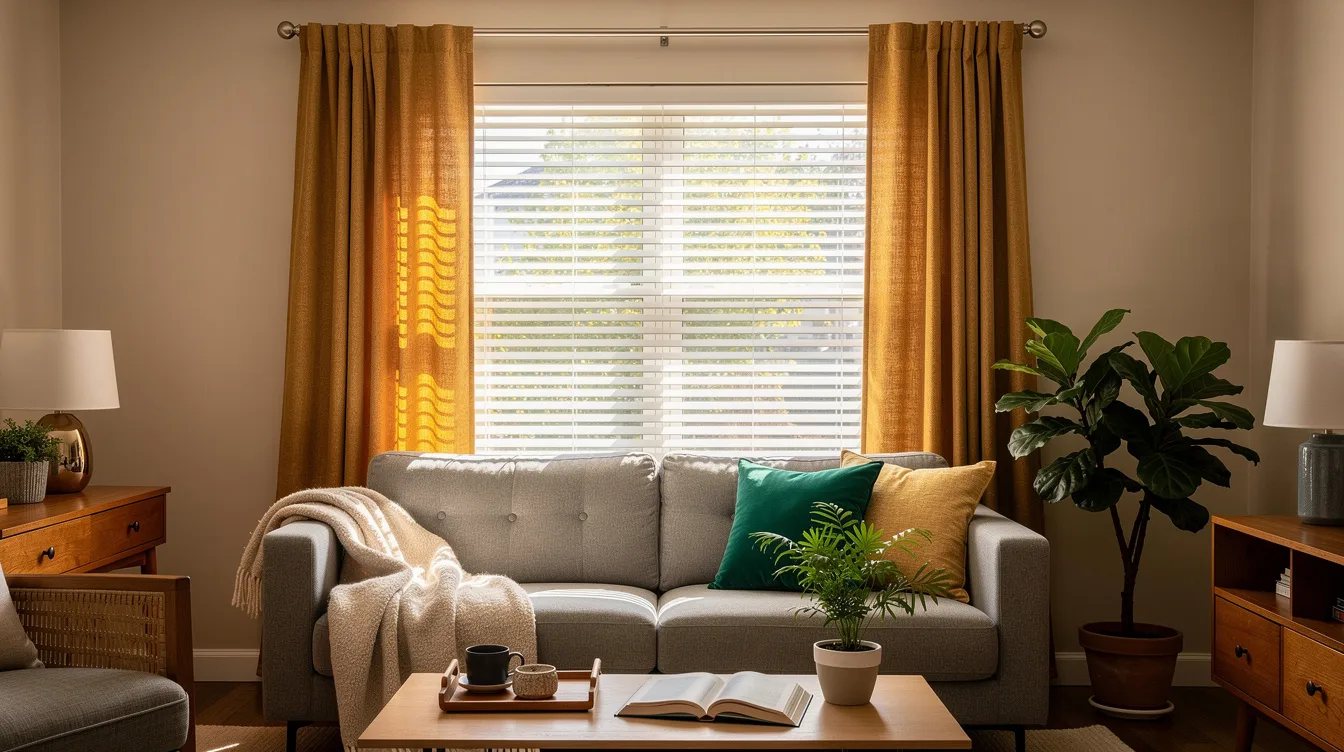
14 november 2026A basic rental window can look temporary even when the rest of the room feels considered. On a typical 48-inch opening, two 57-inch-wide curtain panels can turn plain blinds into a quieter backdrop while preserving privacy.
The strongest upgrade is simple: keep the blinds, add properly sized curtains, and make the rod, fabric width, and floor clearance work together. These are the rental-window mistakes designers would remove first.
What you will find inside
- Mount the Rod Beyond the Window Frame
- Choose Warm Neutrals Over Stark White
- Buy Enough Width for Real Fullness
- Let the Curtains Frame the Blinds
- Set the Hem Just Above the Floor
- Use Texture Instead of Another Busy Pattern
- Hide the Headrail With Full Panels
- Keep the Rod Finish Deliberately Simple
- Check the Blind Hardware Before Drilling
- Use Rings When the Hanging Point Needs Control
- Match the Fabric Weight to the Room
- Open the Panels Past the Glass
- Split Wide Openings Into Four Panels
- Treat the Window as One Composition
Mount the Rod Beyond the Window Frame
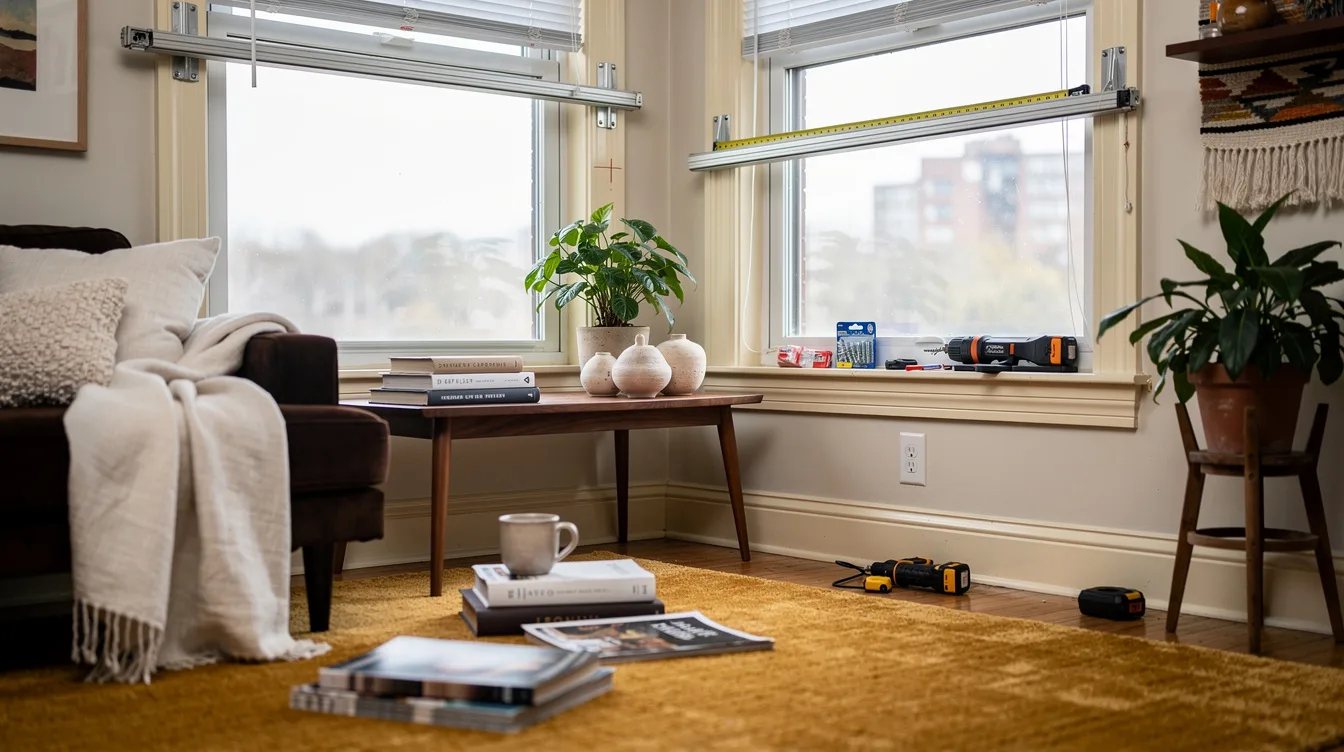
Installing the curtain rod inside the blind’s narrow footprint keeps the window looking cramped. Mount a simple rod about 4 to 10 inches above the frame, then extend it roughly 6 to 12 inches past each side where the wall allows.
This placement gives the curtains somewhere to stack without stealing much glass. A restrained IKEA rod in black, white, or brushed metal keeps the outline calm.
Choose Warm Neutrals Over Stark White
Bright white curtains can make white rental blinds look colder and more noticeable. Warm white, oatmeal, beige, or soft gray creates a quieter relationship between the fabric, wall, and plastic headrail.
For a low-cost starting point, IKEA HILJA light-filtering curtains were listed at about $20 per pair. They work especially well beside white mini blinds when the goal is an airy frame with little visual weight.
Buy Enough Width for Real Fullness
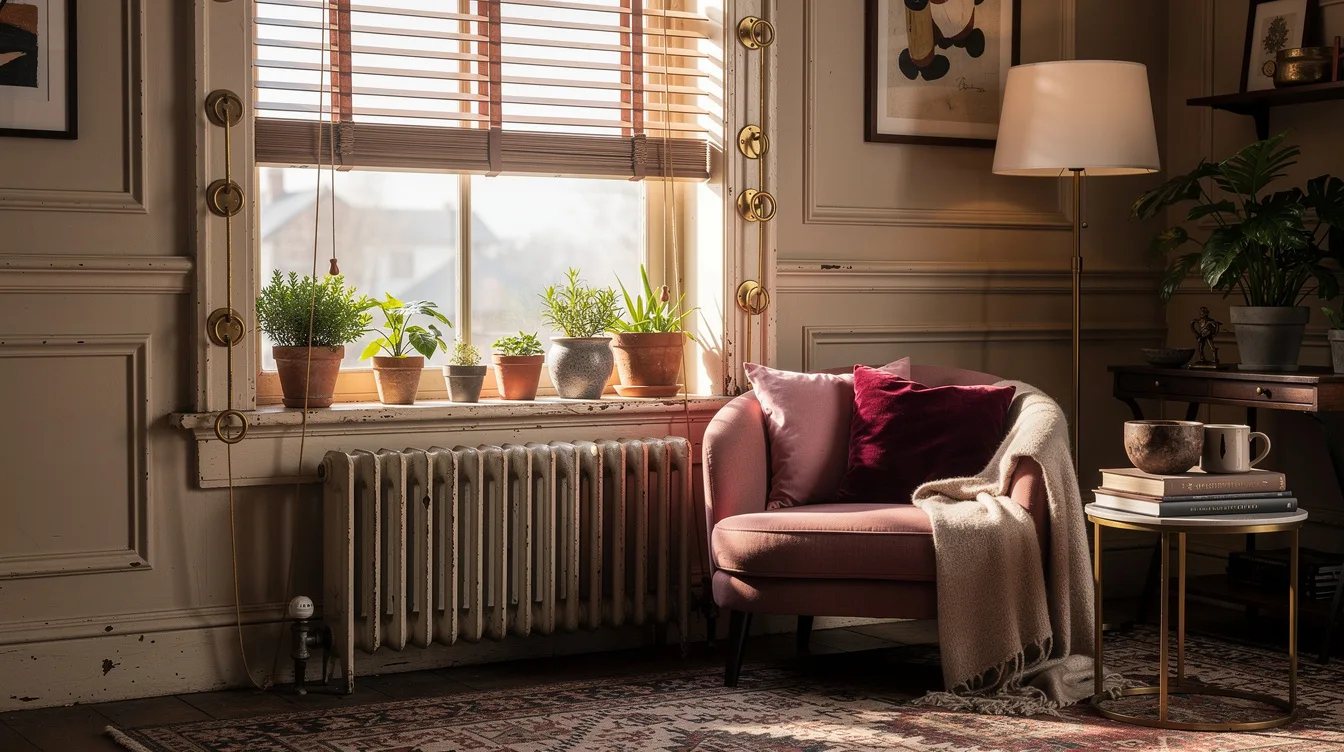
Two narrow panels pulled tight across the window make the treatment look unfinished. Each IKEA RITVA panel measures 57 inches wide, so a pair provides 114 inches of flat fabric width before the folds are gathered.
For a typical 48-inch window with a rod spanning roughly 64 to 72 inches, that amount of fabric gives the curtains useful fullness. A wide opening may need four panels instead of forcing two to sit nearly flat.
Let the Curtains Frame the Blinds
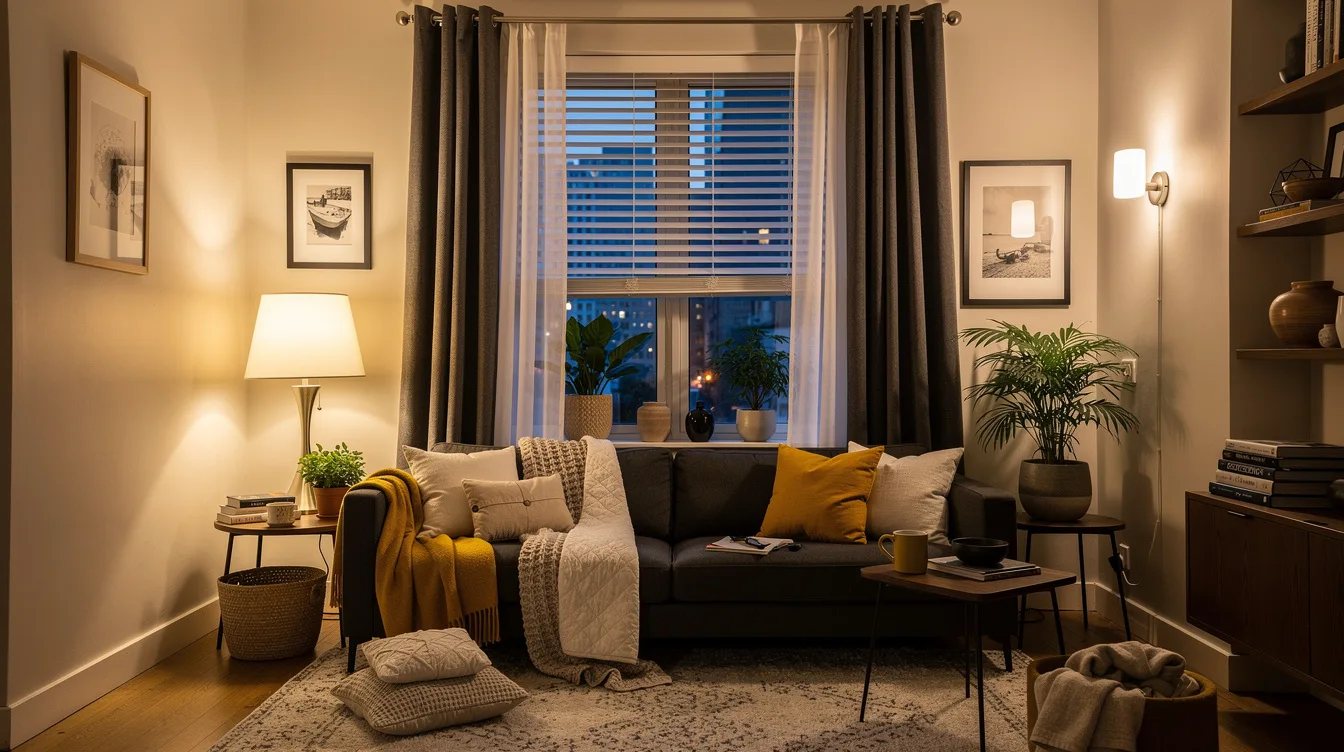
The rental blinds should handle privacy and daily light control while the curtains create the finished outline. Keep the panels open beside the glass when the blinds already do the practical work.
This approach makes the blinds a functional background rather than the room’s main feature. With IKEA RITVA panels, the window gains a fuller edge without requiring removal, drilling into the frame, or replacing the rental fixture.
Set the Hem Just Above the Floor
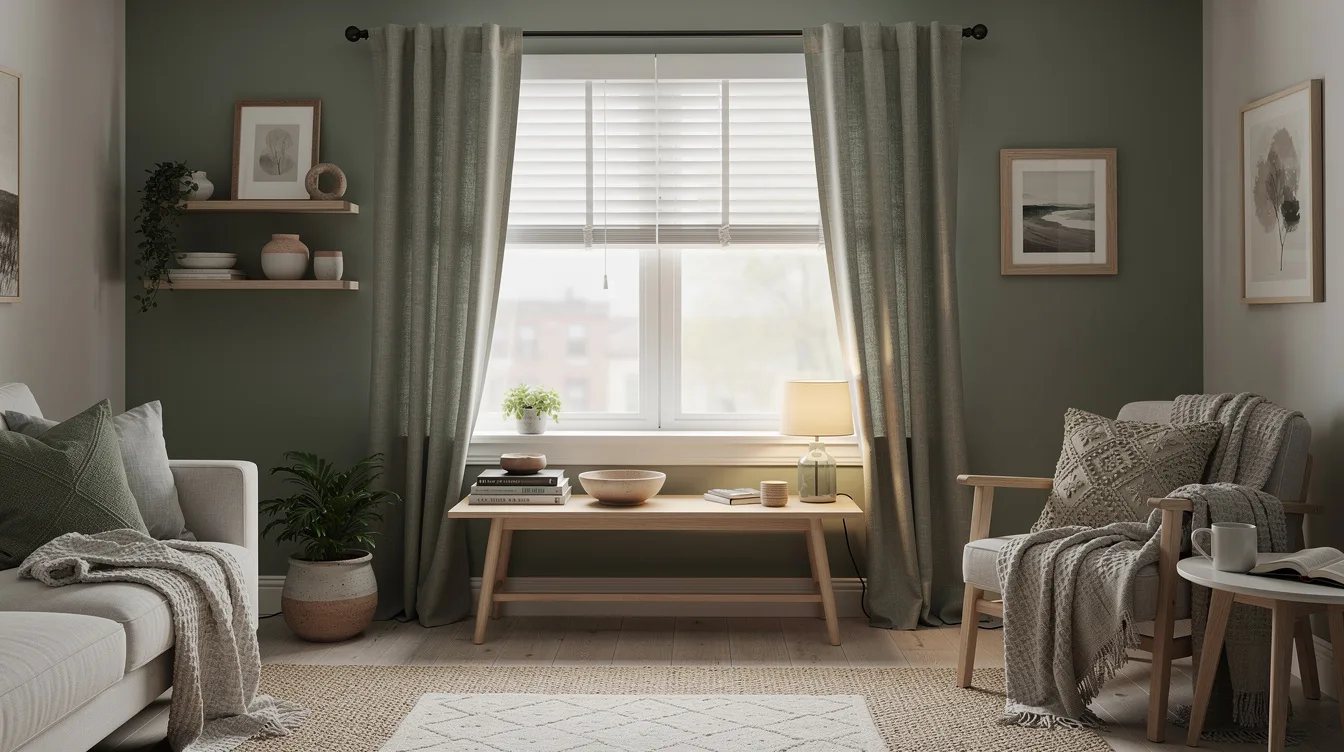
Short curtains expose the visual awkwardness of basic blinds, while puddled fabric gathers dust and creates a tripping problem. A clean hem stopping about one-quarter to one-half inch above the floor gives the window a deliberate finish.
Measure from the actual hanging point, especially when rings or clips add extra drop. The correct length depends on the rod position, the hardware, and the floor rather than the standard curtain size printed on the package.
Use Texture Instead of Another Busy Pattern
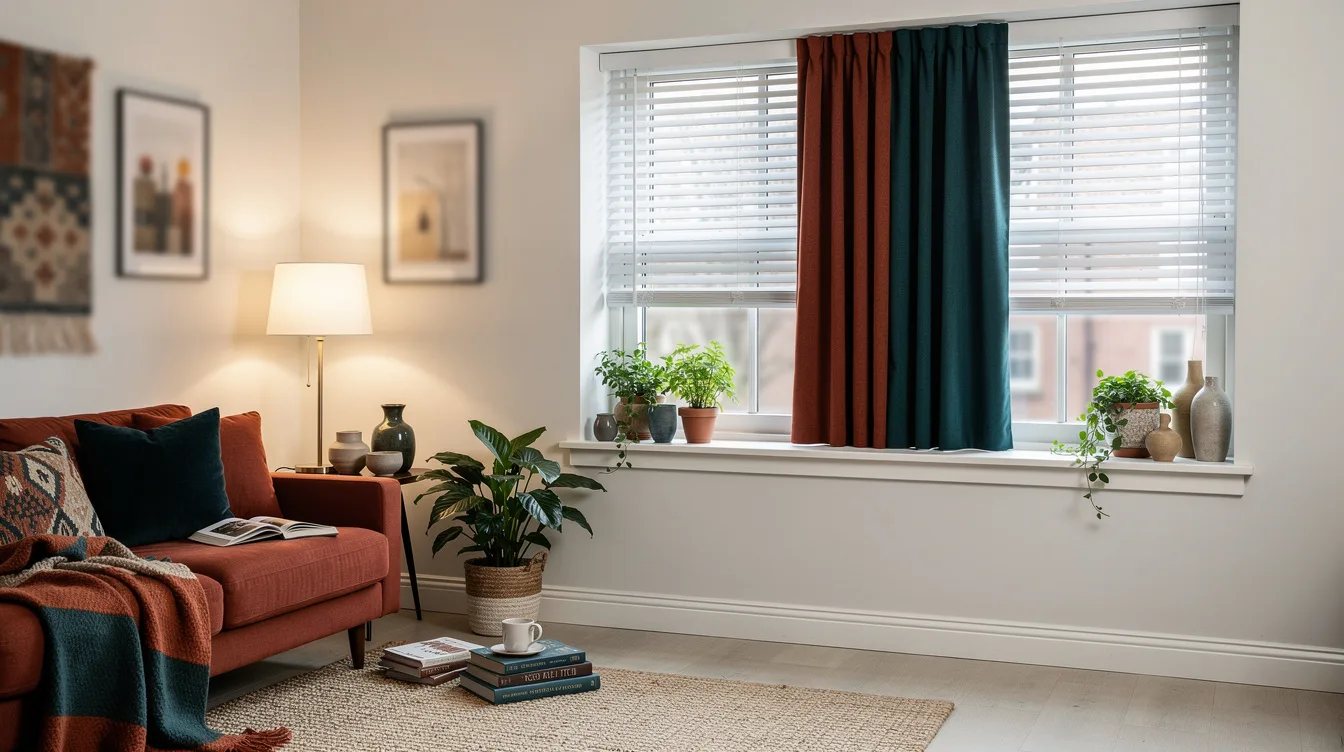
Rental blinds already bring horizontal lines, cords, and a noticeable headrail to the window. A textured solid fabric calms those details more effectively than adding another competing print.
IKEA DYTÅG natural crushed linen was listed at $99.99 regularly, with a lower IKEA Family price shown through November 24, 2026. Its relaxed surface gives a beige or white treatment more depth without making the window feel visually crowded.
Hide the Headrail With Full Panels
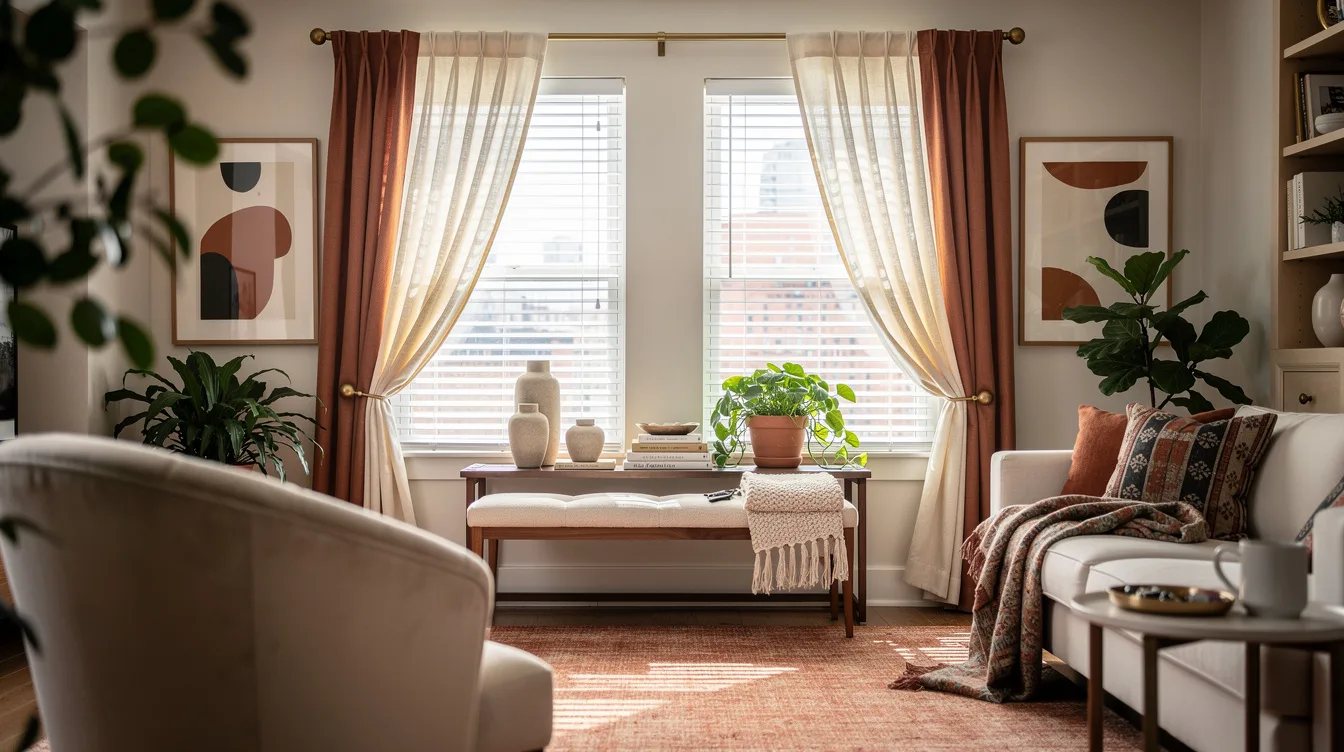
Panels that barely overlap the sides leave the blind headrail exposed from every angle. Choose enough width for the curtains to cover the full window when closed, even if they usually remain open.
For a bedroom, IKEA MAJGULL panels offer blackout or room-darkening versions depending on the color. Check the exact listing before buying because those terms describe different levels of light control.
Keep the Rod Finish Deliberately Simple
Rental windows often collect several unrelated finishes: white plastic blinds, metal brackets, dark handles, and a decorative curtain rod. A simple black, white, or brushed-metal rod gives those elements one visual direction.
Skip ornate finials and oversized brackets when the room is small. A quiet rod lets the fabric carry the softness while the existing blinds recede into the wall.
Check the Blind Hardware Before Drilling
A curtain panel can look properly sized on paper and still hang badly if the blind’s headrail, tilt wand, sill, or handles project into its path. Hold the proposed rod and brackets against the wall before making holes.
Leave enough clearance for the panels to move freely. This small check matters most with IKEA HILJA curtains or other lightweight panels, which can catch on projecting hardware and stay pushed out of place.
Use Rings When the Hanging Point Needs Control
Measure from the actual point where the fabric will hang, not from the top of the rod. Rings or clips can lower the curtain several inches and change whether the hem lands neatly above the floor.
For a tailored rental setup, simple rings can also make the panels easier to open and close without pulling on the fabric. Keep the hardware finish close to the rod so the top edge reads as one clean line.
Match the Fabric Weight to the Room
A thin sheer works when the goal is to soften the view of the blinds while preserving daylight. A heavier curtain works better when the blinds need to disappear at night or when the window faces a busy street.
IKEA MAJGULL is a practical bedroom option because selected versions provide stronger coverage. Use the lighter room-darkening choice when some daylight is welcome, and reserve blackout fabric for rooms that need a darker sleep environment.
Open the Panels Past the Glass
Pulling the curtains only to the edge of the window leaves the fabric covering part of the glass and makes the opening appear smaller. Let each panel stack beyond the frame as far as the wall permits.
That extra clearance also exposes more daylight when the blinds are raised. On a narrow wall, even a modest extension helps the treatment feel planned rather than squeezed around a rental fixture.
Split Wide Openings Into Four Panels
Large patio doors and wide windows need more fabric than a standard pair can provide. Four panels create a fuller stack and make the center opening easier to control without stretching the cloth across the entire rod.
Use the same warm-white or oatmeal color across all panels so the larger treatment stays unified. The goal is generous coverage, not a row of separate patterns competing with the blinds.
Treat the Window as One Composition
Blinds, curtains, rod, brackets, and floor clearance should read as one window treatment. Keep the curtain color close to the wall, repeat one metal finish, and choose a hem that lands consistently across the room.
A pair of IKEA DYTÅG panels can soften a utilitarian window, while a lower-cost IKEA RITVA pair gives a cleaner tailored effect. The best choice depends on texture and light control, not on decorating the blinds with extra accessories.
Keep reading
- Rental Kitchen Looking Cheap? 13 Target Finds Make It Look Custom
- 12 Target Curtain Tricks That Make a Rental Bedroom Look Expensive
- Rev-A-Shelf Inserts Make Lowes Drawers Look Custom Without a Remodel
Start by measuring the window, the available wall, and the distance from the rod to the floor. Then choose warm neutral panels with enough width to cover the blinds fully, because correct proportions will do more for the room than decorative hardware ever could.


