Small Apartment Feeling Dim? 12 Anthropologie-Style Mirrors That Brighten It
09 november 2026A 24-inch-wide ornate mirror can do more for a compact apartment than a towering floor model, especially when it reflects a window instead of a dark hallway. The challenge is choosing a frame that feels decorative without stealing the walkway, overpowering a small console, or turning useful light into glare.
Designers favor wall-mounted shapes with real presence, careful proportions, and a finish that works with the furniture already in the room. These rules make the vintage-inspired look practical for entries, living rooms, and narrow rental walls.
What you will find inside
- Mount the Mirror Instead of Leaning It
- Measure the Wall Before Buying the Frame
- Aim the Glass at a Window
- Match the Frame to the Room’s Visual Weight
- Use an Arch to Soften Hard Corners
- Place a Small Mirror Above a Shallow Console
- Choose Carved Wood for a Softer Statement
- Reserve Convex Glass for a Small Accent
- Check Frame Depth Near Every Walkway
- Anchor Heavy Frames Into the Wall
- Control Glare With the Opposite View
- Keep the Surrounding Styling Edited
Mount the Mirror Instead of Leaning It
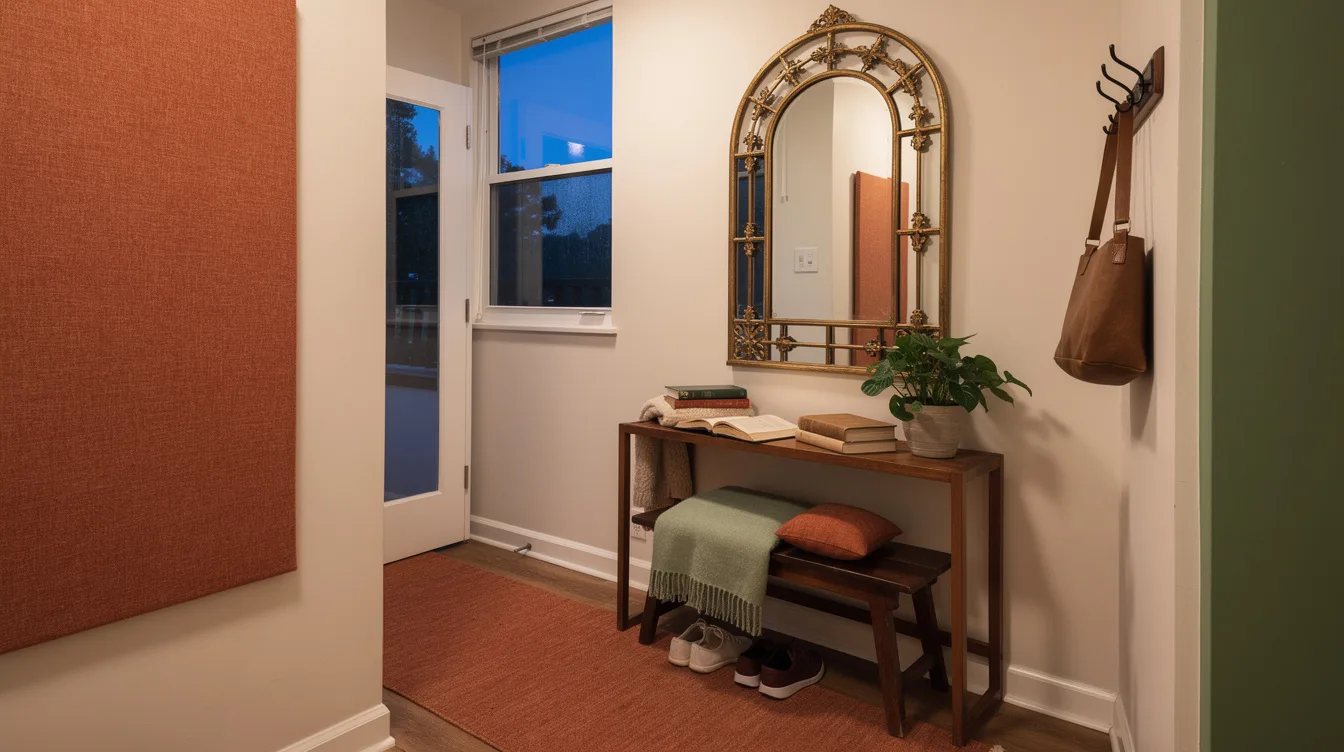
Compact apartments need every inch of floor space, so a wall-mounted mirror earns its place faster than an oversized floor model. A 36-inch-high by 24-inch-wide antique-gold arch mirror can brighten an entry without narrowing the walking path.
Choose an iron frame with a resin ornament when you want decorative impact at about $225. The silhouette gives the room personality while keeping the footprint practical.
Measure the Wall Before Buying the Frame
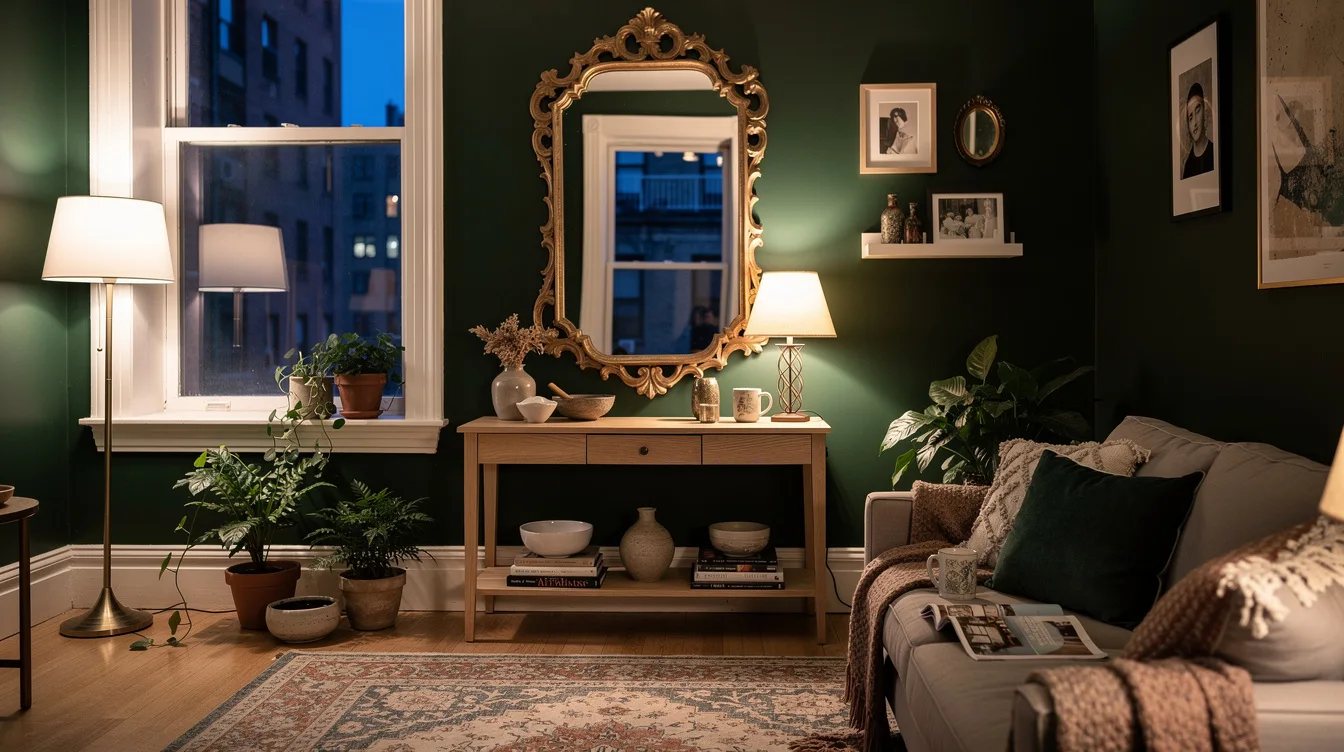
Measure the clear wall area, nearby door swing, and furniture width before shopping for a statement frame. A mirror roughly 39 inches wide needs a genuinely open wall, especially when its frame reaches about 2 inches deep.
For a narrow apartment, the smaller 24-inch-wide mirror is usually the smarter buy. Save the wider format for a console or cabinet with at least about 40 inches of uninterrupted wall space.
Aim the Glass at a Window
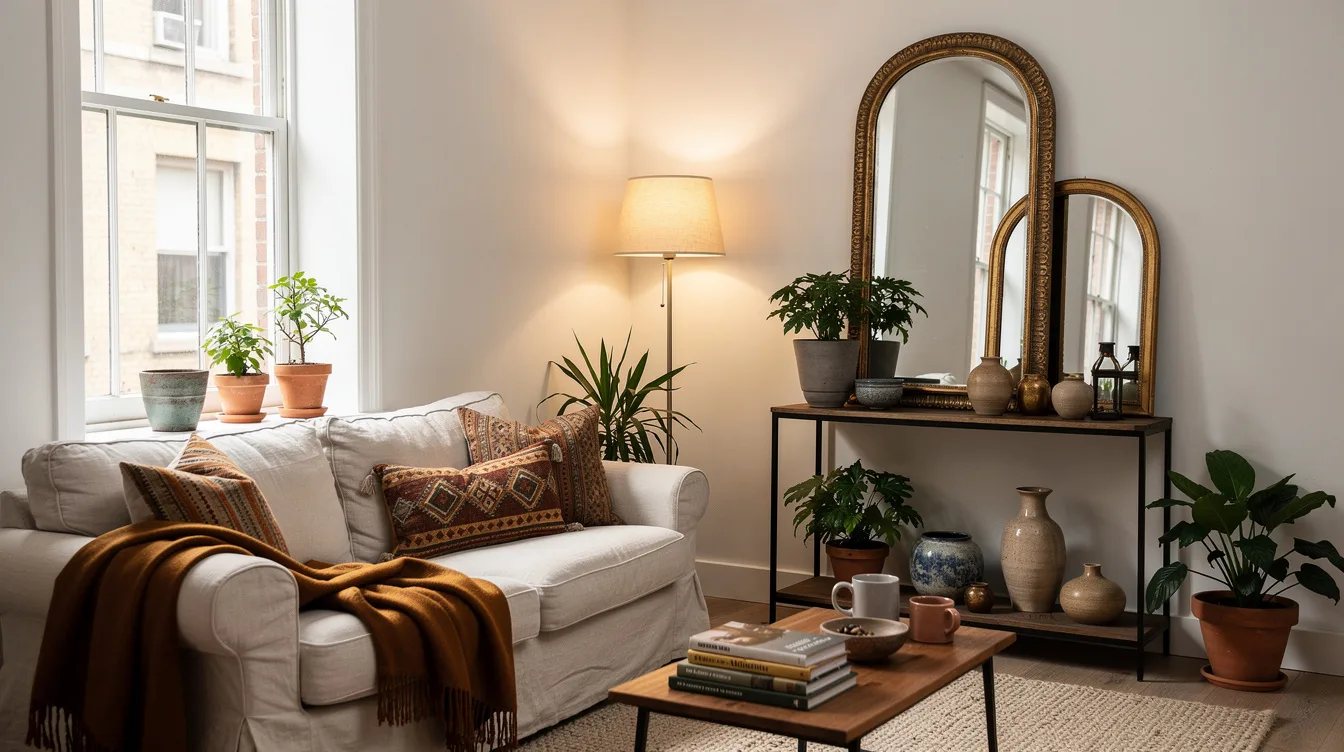
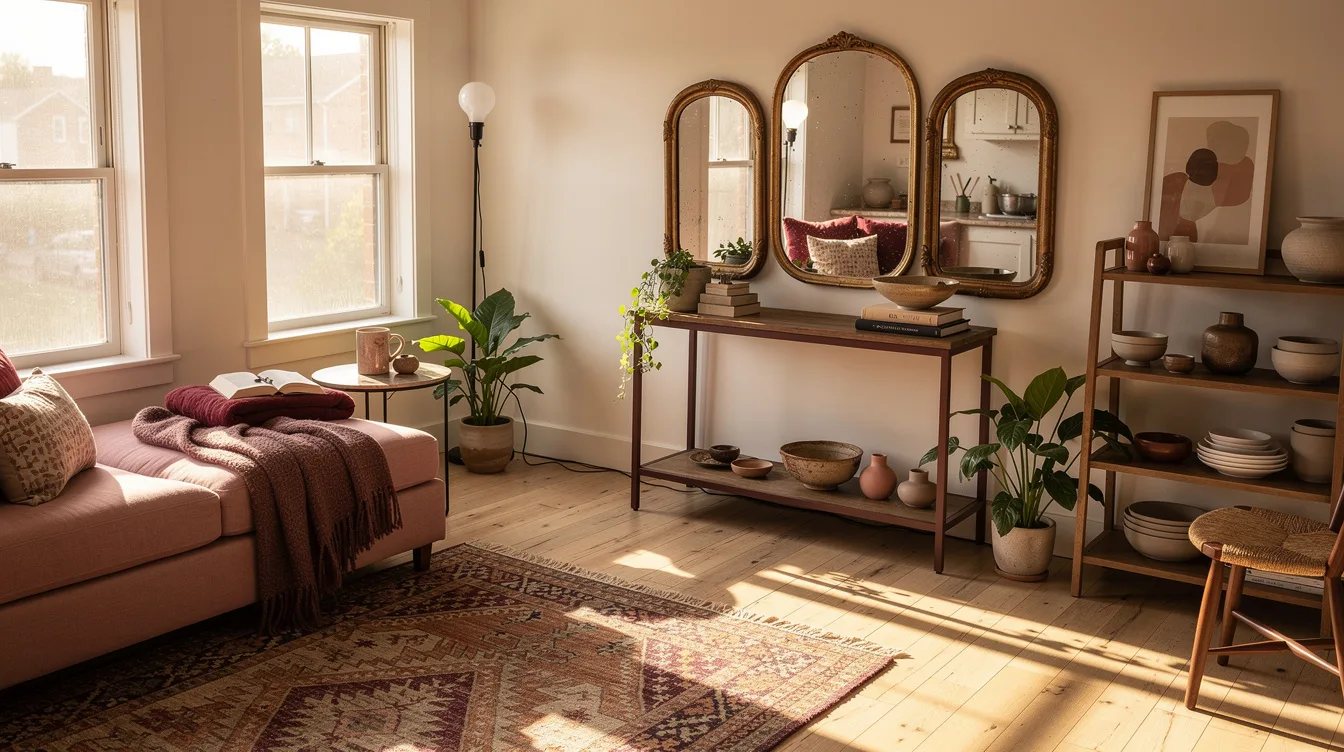
Placement determines whether an ornate mirror adds light or simply reflects clutter. Point the glass toward a window, a bright living area, or a pale wall so the reflection carries brightness deeper into the apartment.
A reflected sunny window can make a compact room feel more open during the day. A dark hallway, open closet, or crowded shelving unit creates the opposite effect, so test the angle from the main entrance first.
Match the Frame to the Room’s Visual Weight
A decorative mirror should relate to the furniture beneath it. Pair a resin-covered iron frame with a slim console, painted dresser, or light wood cabinet instead of placing it above a heavy piece that makes the wall feel top-heavy.
Warm finishes work especially well beside brushed brass hardware and medium-tone wood. Keep the surrounding furniture simple, because ornate detailing already supplies the visual emphasis.
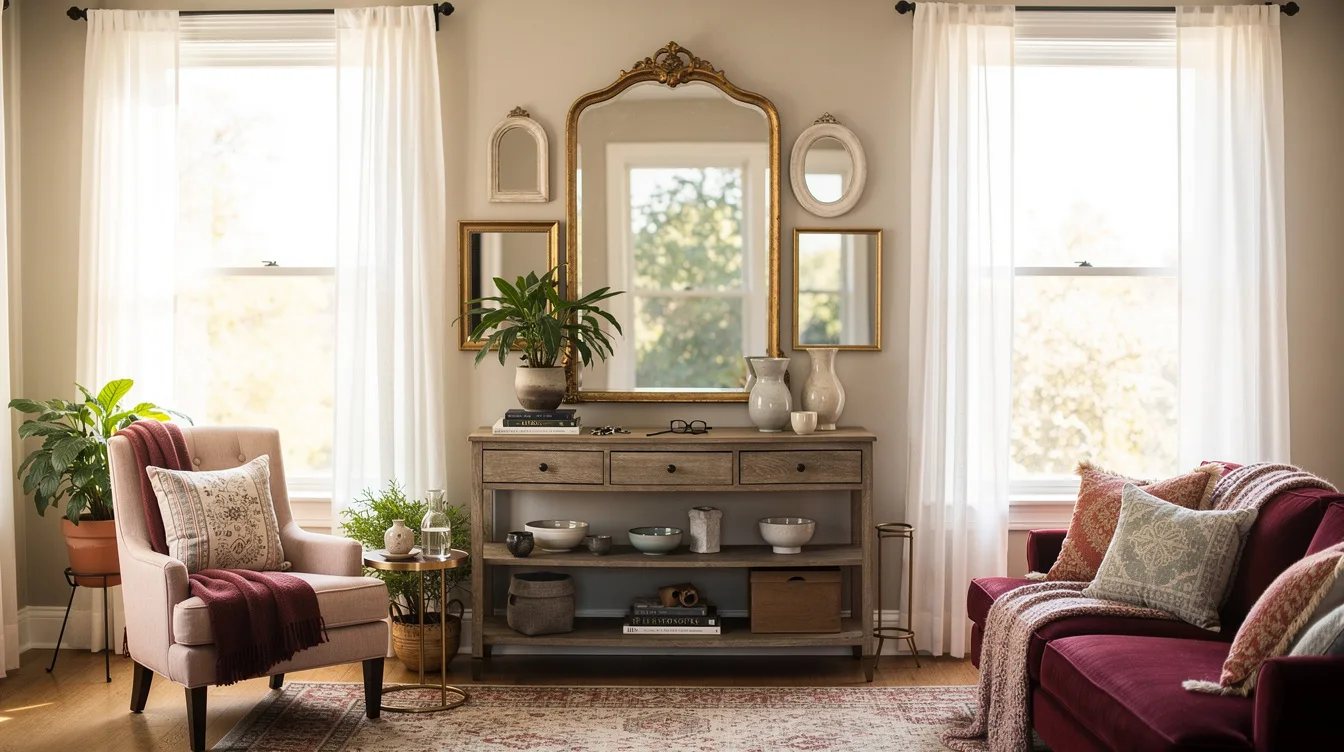
Use an Arch to Soften Hard Corners
Compact apartments often collect sharp lines: square windows, boxy cabinets, rectangular rugs, and narrow doorways. An arched frame interrupts that repetition and gives a small entry a more considered shape.
The antique-gold version works when the room needs warmth, while Target’s antique-white option, priced around $200, keeps the effect quieter against pale walls. Its garland-style crown adds decoration without demanding a dark contrast.
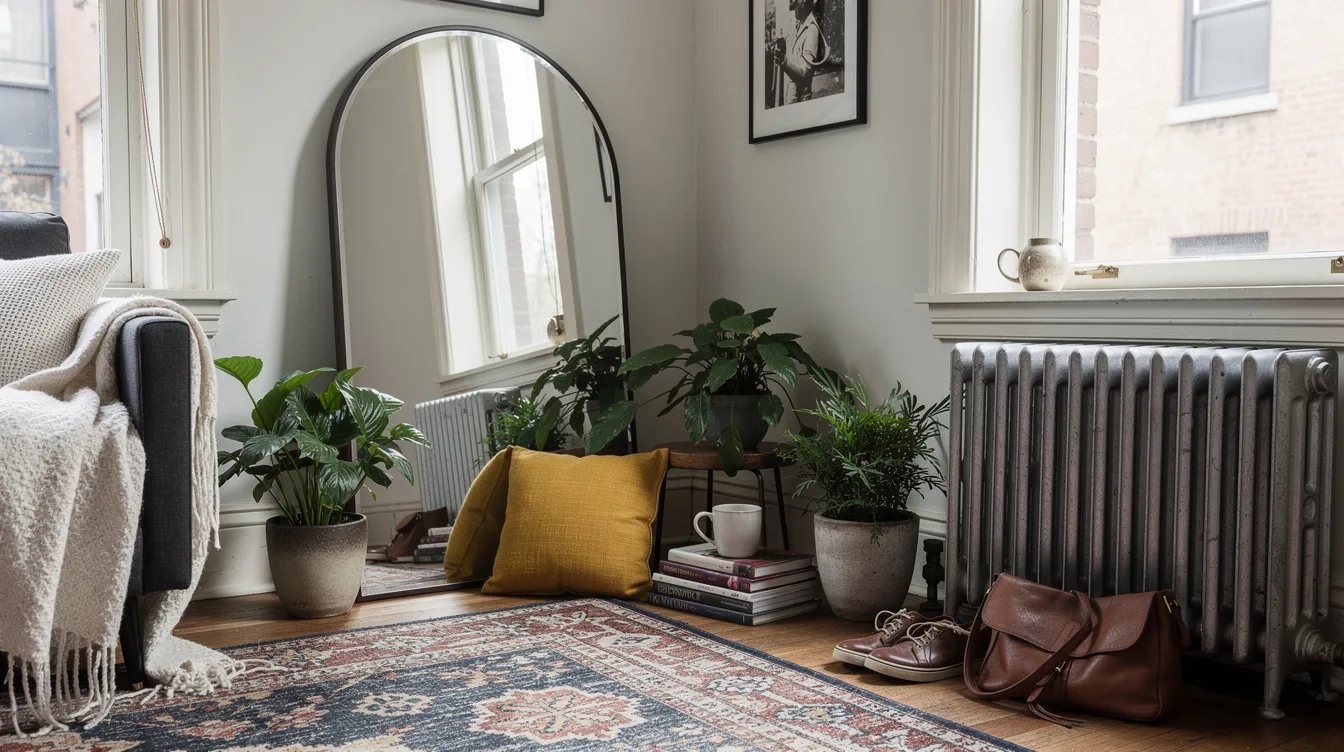
Place a Small Mirror Above a Shallow Console
A narrow entryway benefits from a mirror that follows the proportions of the furniture below it. Hang a 24-inch-wide arch above a shallow console, slim shoe cabinet, or floating shelf, leaving enough clearance for keys and daily traffic.
Use a painted wood console with a restrained surface, then add one tray or lamp rather than filling the entire ledge. The mirror should remain useful when you leave home, not disappear behind accessories.
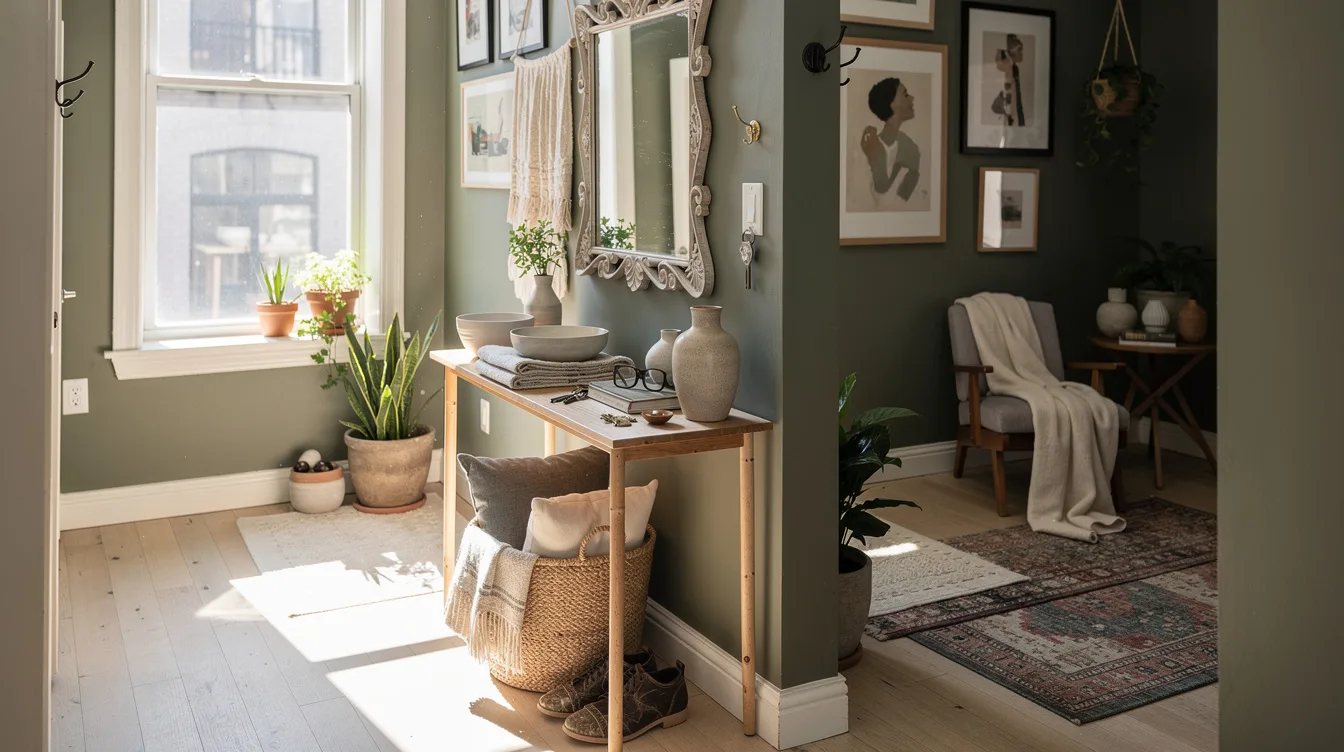
Choose Carved Wood for a Softer Statement
Gold finishes can feel too formal in an apartment filled with linen, rattan, or pale oak. A wide mirror with carved tropical hardwood detailing brings texture and warmth while still delivering the vintage-inspired shape.
One roughly 43-inch-wide carved frame costs about $798 and needs a broader wall than the small arch. Hang it above a living-room cabinet where the floral wood carving can balance plain upholstery and simple art.
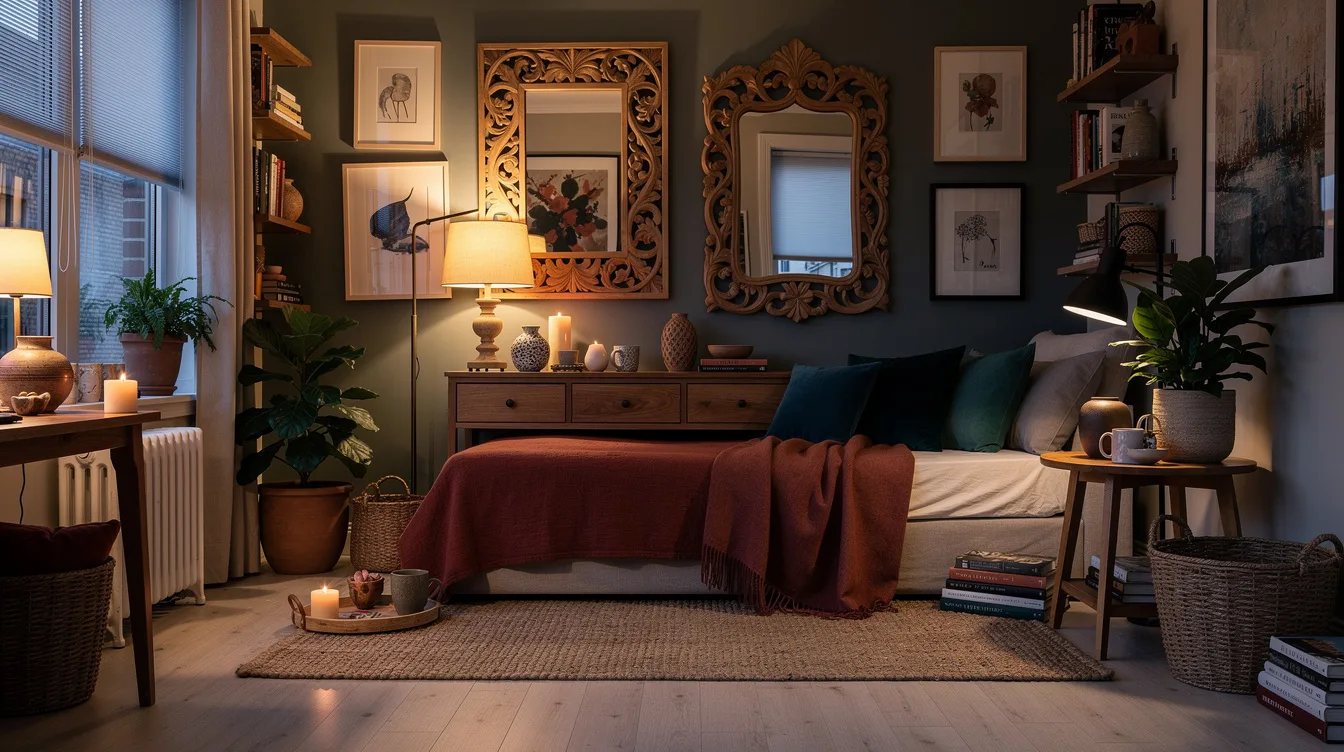
Reserve Convex Glass for a Small Accent
A convex mirror changes the reflection, making the room appear more playful but less useful for checking an outfit. Small round versions in gold finishes cost roughly $30 to $68, depending on size and construction.
Use a 12-inch convex mirror beside a larger wall mirror, above a bar cart, or inside a gallery arrangement. Its curved glass works as a decorative punctuation mark, not as the apartment’s primary mirror.
Check Frame Depth Near Every Walkway
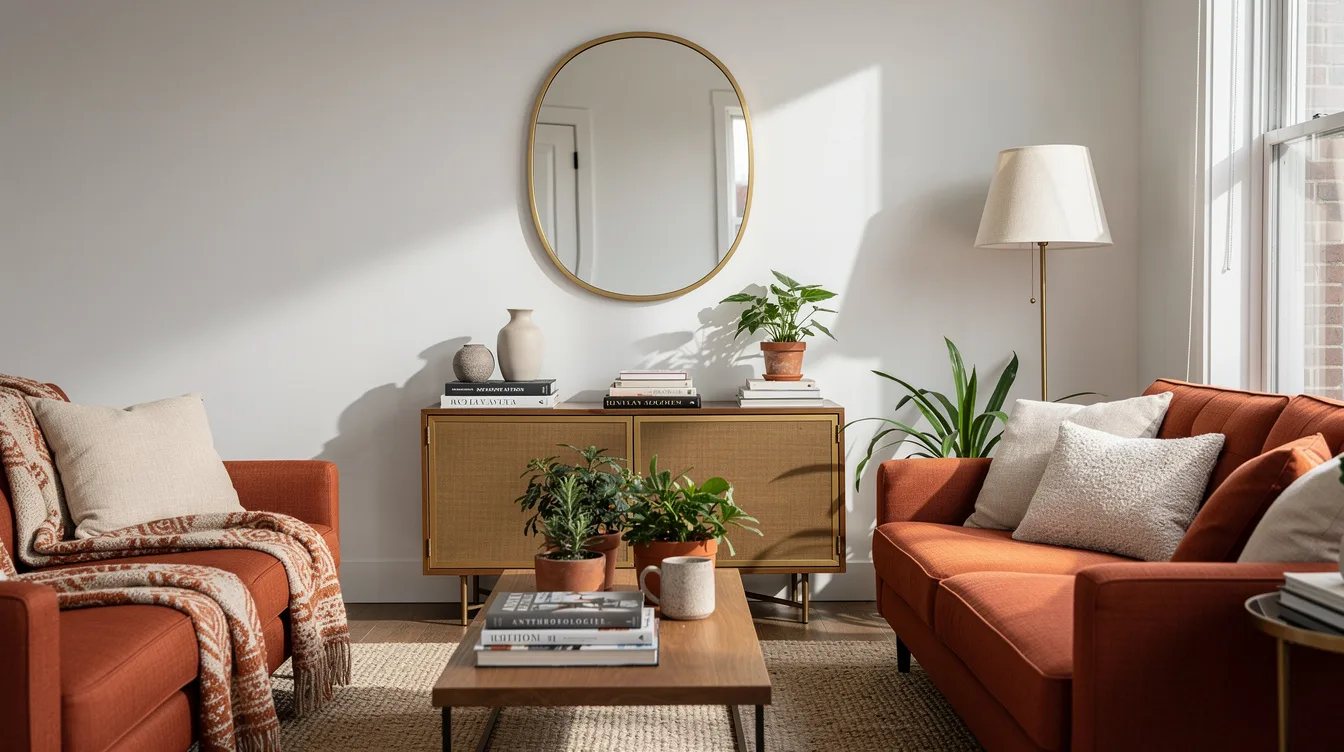
Depth matters more in a compact apartment than a product photo suggests. A framed mirror that extends about 2 inches from the wall can catch a shoulder in a tight passage or compete with a door casing.
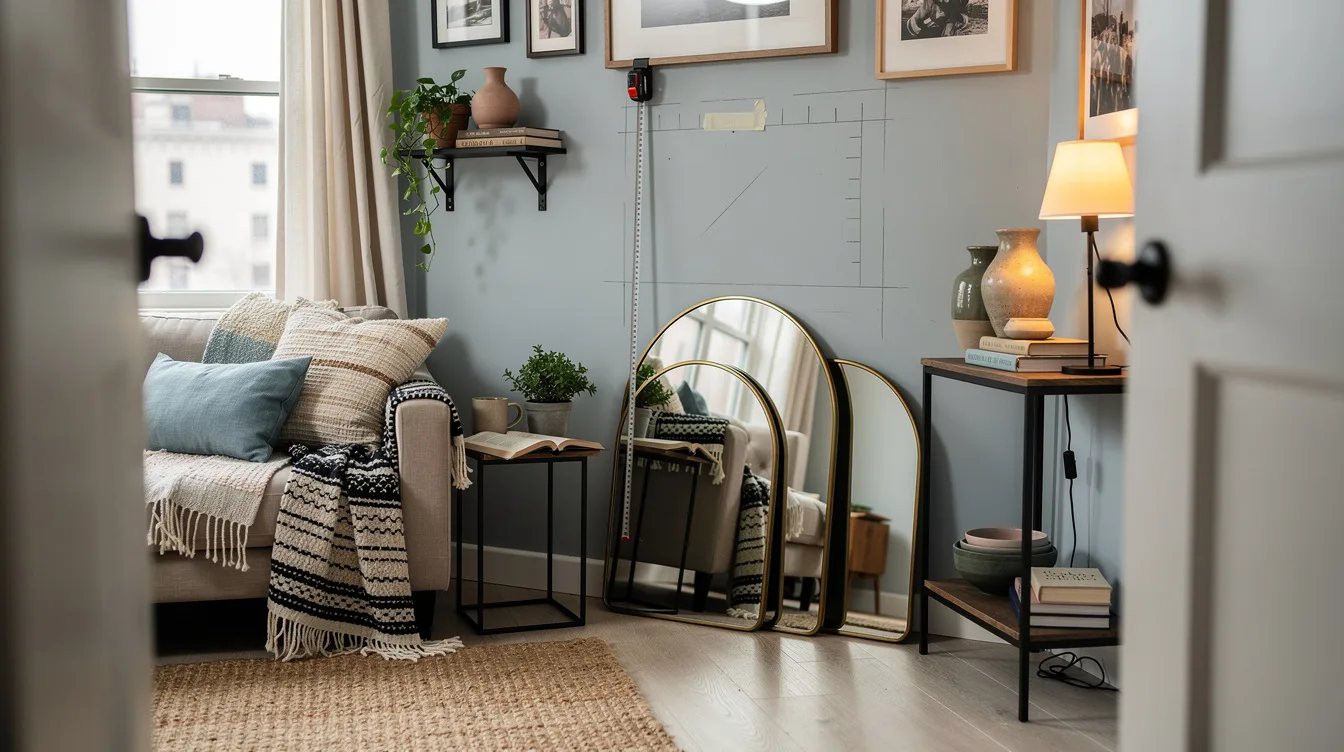
Keep a one-inch-deep glass mirror for narrow corridors and reserve deeper ornament for a stable wall above furniture. Mark the frame’s outer dimensions with painter’s tape before drilling so the clearance is easy to judge.
Anchor Heavy Frames Into the Wall
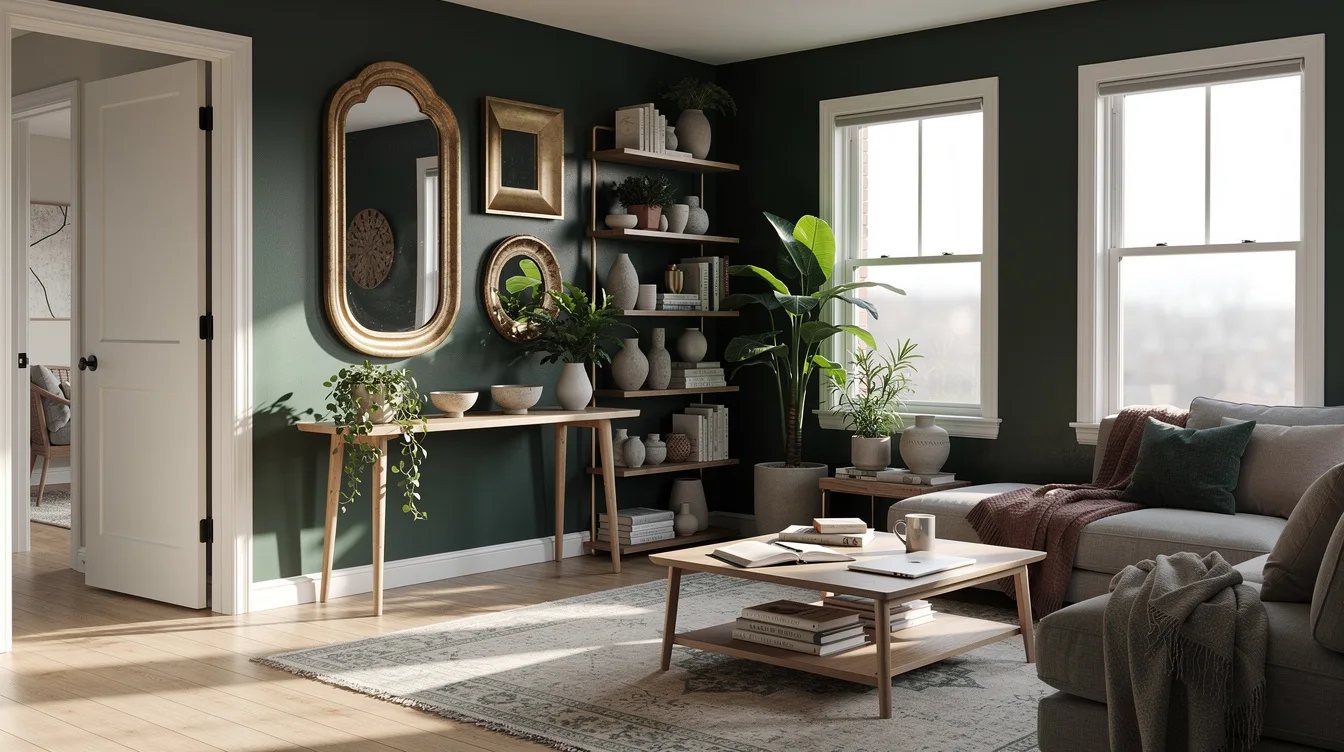
Decorative mirrors often weigh more than their reflective surface implies. One wide resin-and-iron frame weighs about 31 pounds, so use hardware rated for the full load and locate a stud whenever the layout allows.
For drywall, select an appropriate anchor rather than relying on a small nail. A secure steel hanging cleat protects the mirror, the wall, and anyone walking beneath it.
Control Glare With the Opposite View
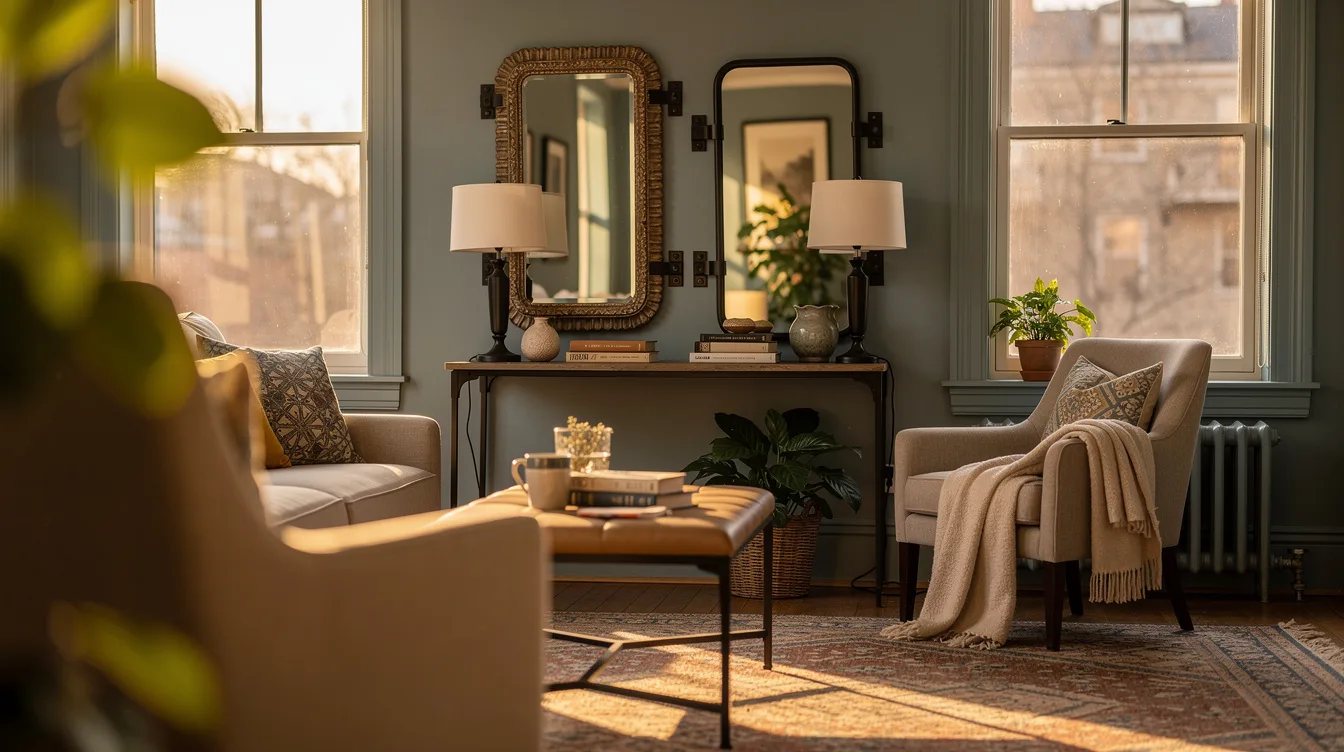
More reflected light is not always better. A mirror aimed directly at a bright window can create glare during certain hours, especially in a room with glossy flooring or white walls.
Turn the frame slightly toward the window’s side rather than straight into it, then check the reflection at breakfast time and after dark. The goal is a readable soft daylight reflection, not a bright patch that dominates the room.
Keep the Surrounding Styling Edited
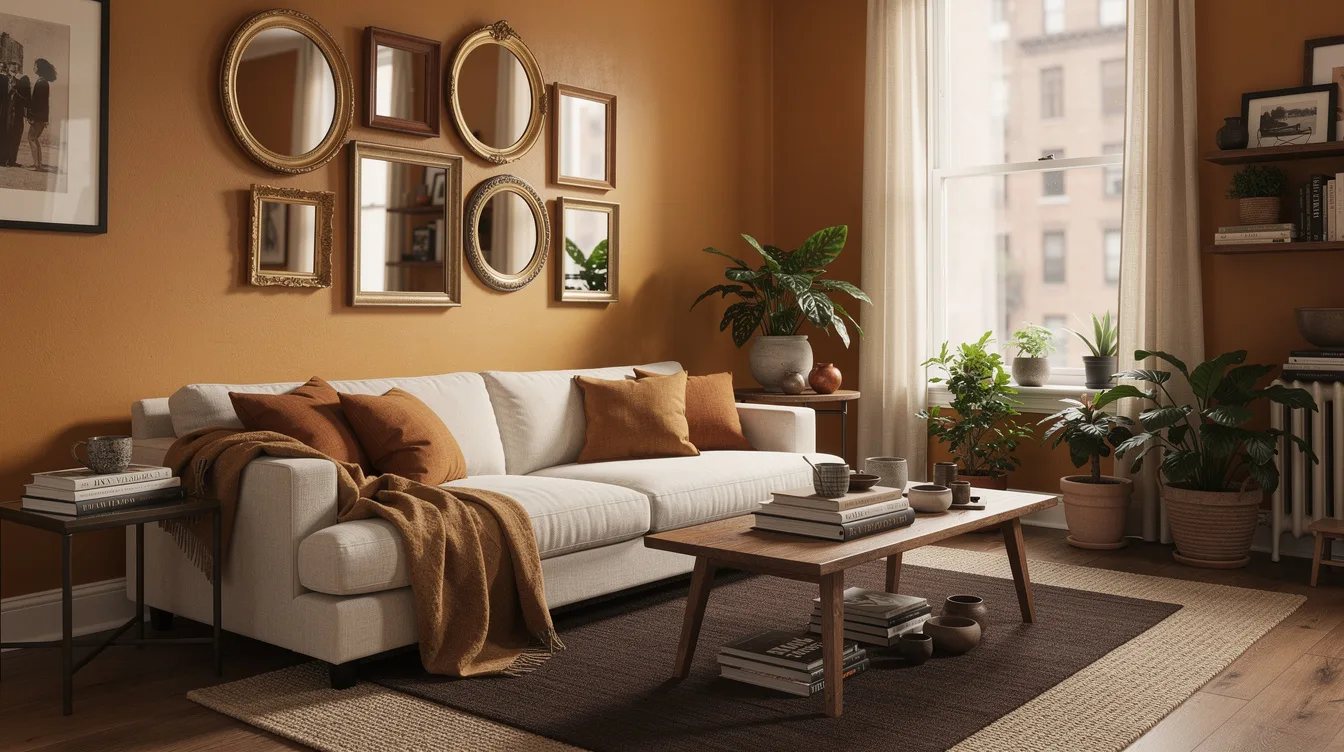
An ornate mirror already carries pattern, texture, and shine, so the wall around it needs breathing room. Pair it with one sculptural lamp, a small plant, or a single framed print instead of building a crowded display.
Our preferred combination is a decorative frame, a slim surface, and one useful object below it. Let the mirrored glass catch the apartment’s best light, then leave enough blank wall for the reflection to read clearly.
Keep reading
- Small Apartment Feeling Cramped? 13 Pottery Barn Finds Under $500
- Small Living Room Feeling Cramped? 12 At Home Mirrors Under $80
- Small Living Room Feeling Busy? 14 Fixes That Fake a Calmer Space
Start by marking a 24-by-36-inch outline on the brightest available wall, then stand at the doorway and inspect the reflection. That small test will reveal the right scale, angle, and frame color before you spend about $225 or more.


