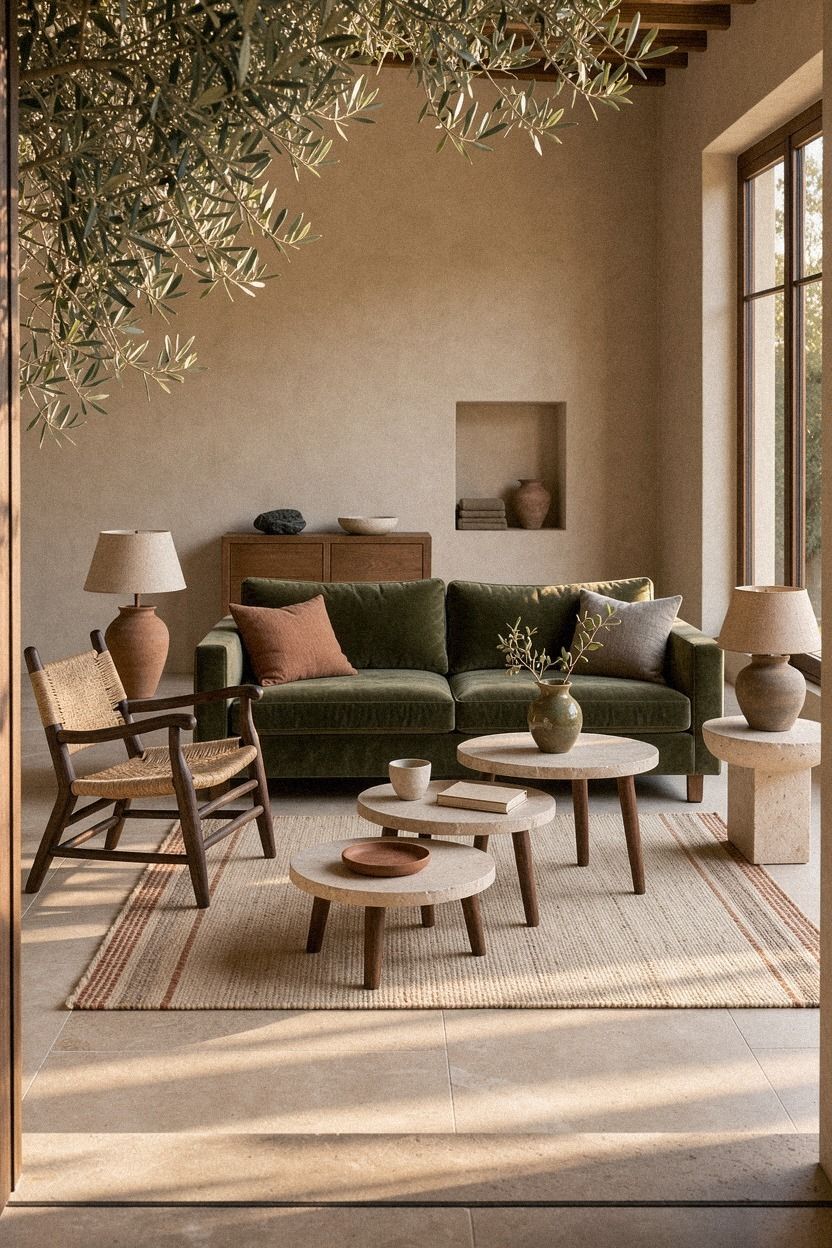
15 Round Coffee Table Styling Tips That Never Look Cluttered
07 november 2026Round coffee table styling ideas that never look cluttered start with one rule: leave breathing room around one useful focal point. I learned that after filling my table with books, candles, and a bowl nobody could move. Your table doesn't need more objects. It needs height, texture, and a clear place for your coffee.
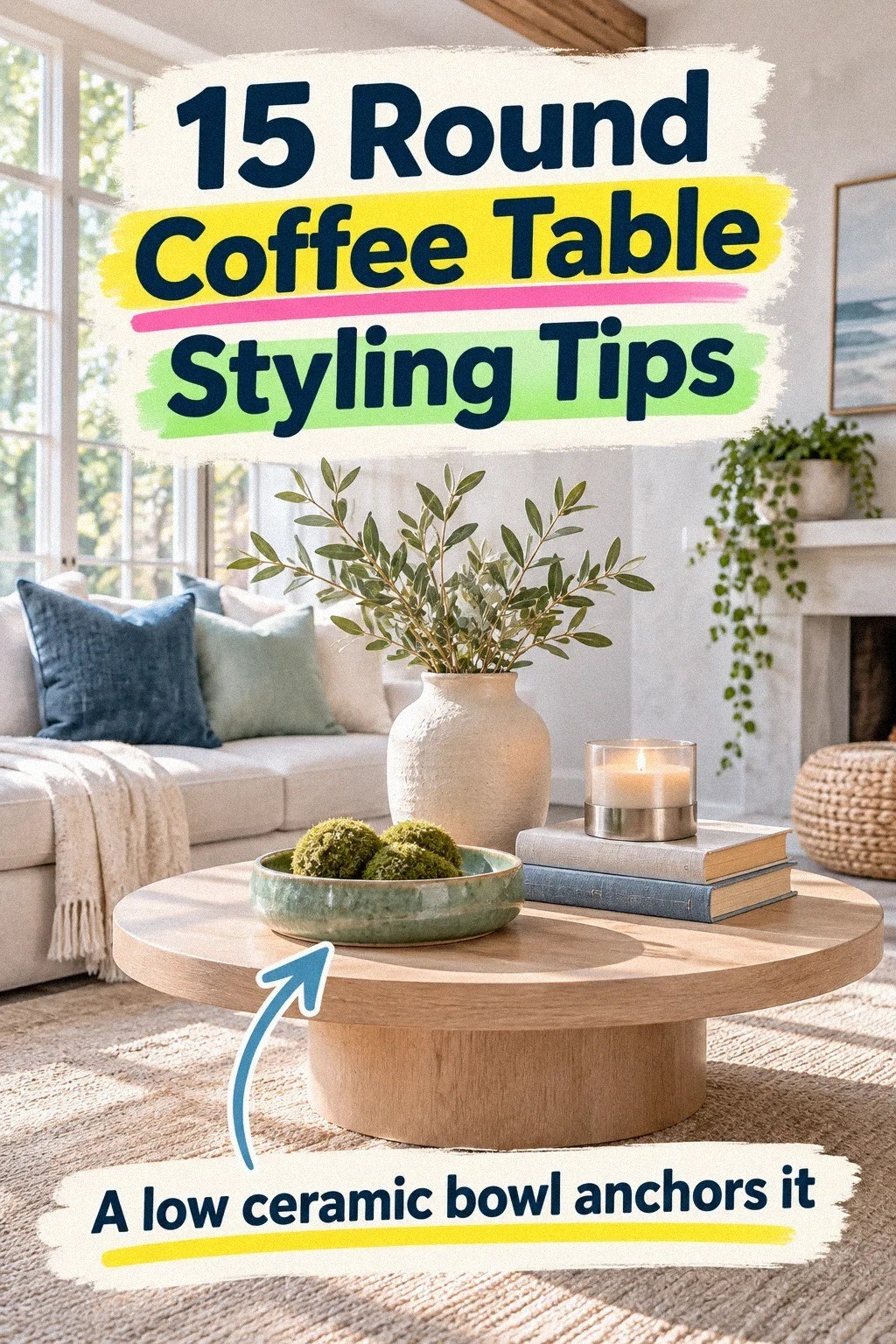
Don’t overthink: Why a shallow tray anchors a round coffee table.
Start with the three-height stack, test a shallow tray, and keep the center open for real life. Those three decisions create the calmest foundation.
- Layer three heights for an airy coffee table
- Why a shallow tray anchors a round coffee table
- Float one sculptural object instead of a pile
- A book stack with a useful bowl
- Wood or stone? The two-material rule
- Leave the center open for real life
- Soften hard surfaces with one textile
- What if two small lamps frame the table?
- Skip symmetry and shape a gentle crescent
- Paint the room before adding more decor
- Warm woods or matching finishes?
- A living branch brings the organic note
- Group practical items inside one color story
- One accent or a full palette?
- Measure first, then buy
1Layer three heights for an airy coffee table
The Three-Height Light Stack keeps your round coffee table styling balanced without making it look busy. Start with a low stone tray, add a medium object such as an olive ceramic vase, and finish with one taller branch or lamp. The difference between 3 inches, 8 inches, and 14 inches gives your eye somewhere to travel.
If everything sits at the same level, your table can look flat and accidental.
You don't need three large pieces. A shallow stone tray, a 12-inch terracotta vase, and two clipped branches will do it.
I've tried stacking too many tall items, and the result blocked conversation across the room. Keep the tallest piece slightly off-center so you can still see your sofa and television.
If you want more movement, connect this arrangement to the living-branch idea. The branch can provide height without making the table feel formal. A small piece of deep-pile mohair velvet nearby adds softness without filling the surface.
Leave the middle open, as described in section six, so the arrangement remains useful.
2Why a shallow tray anchors a round coffee table
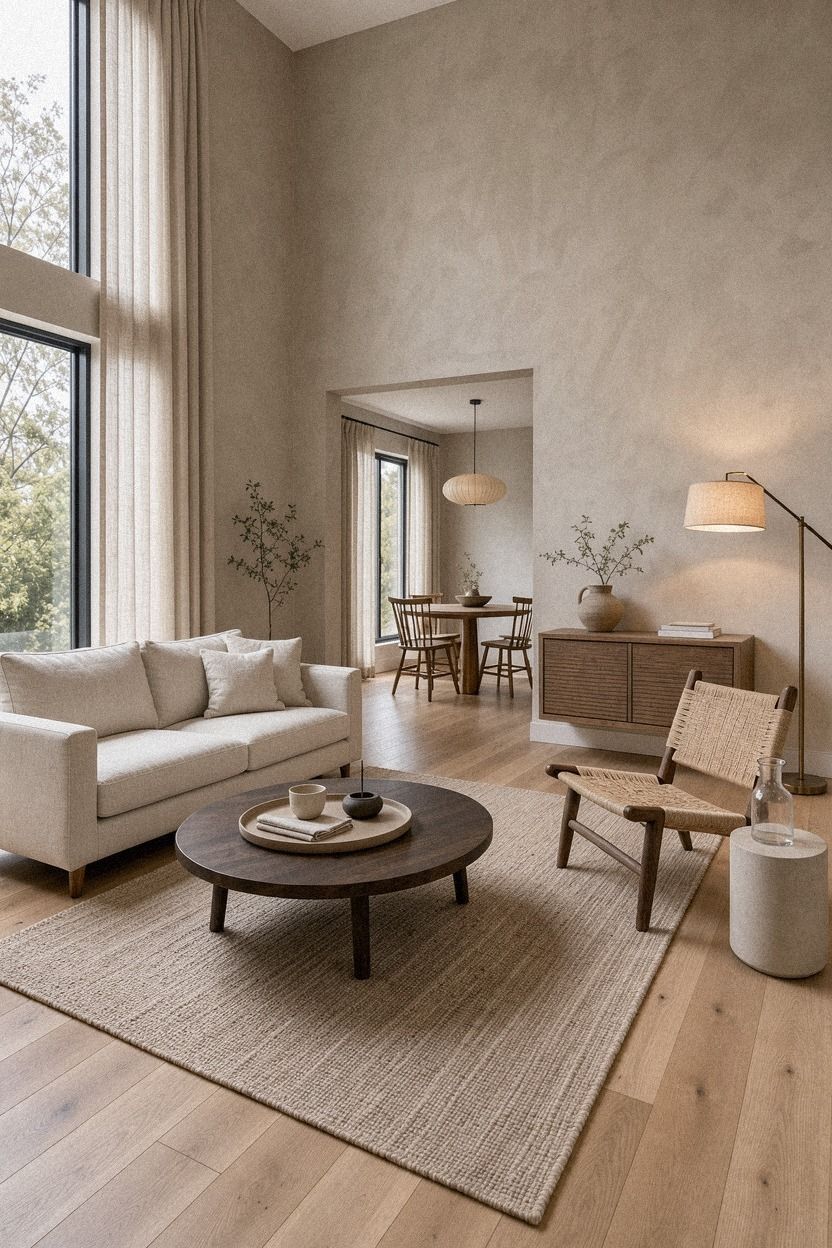
A tray gives small objects a boundary, which is especially useful when your table has a 36-inch diameter or less.
3Float one sculptural object instead of a pile
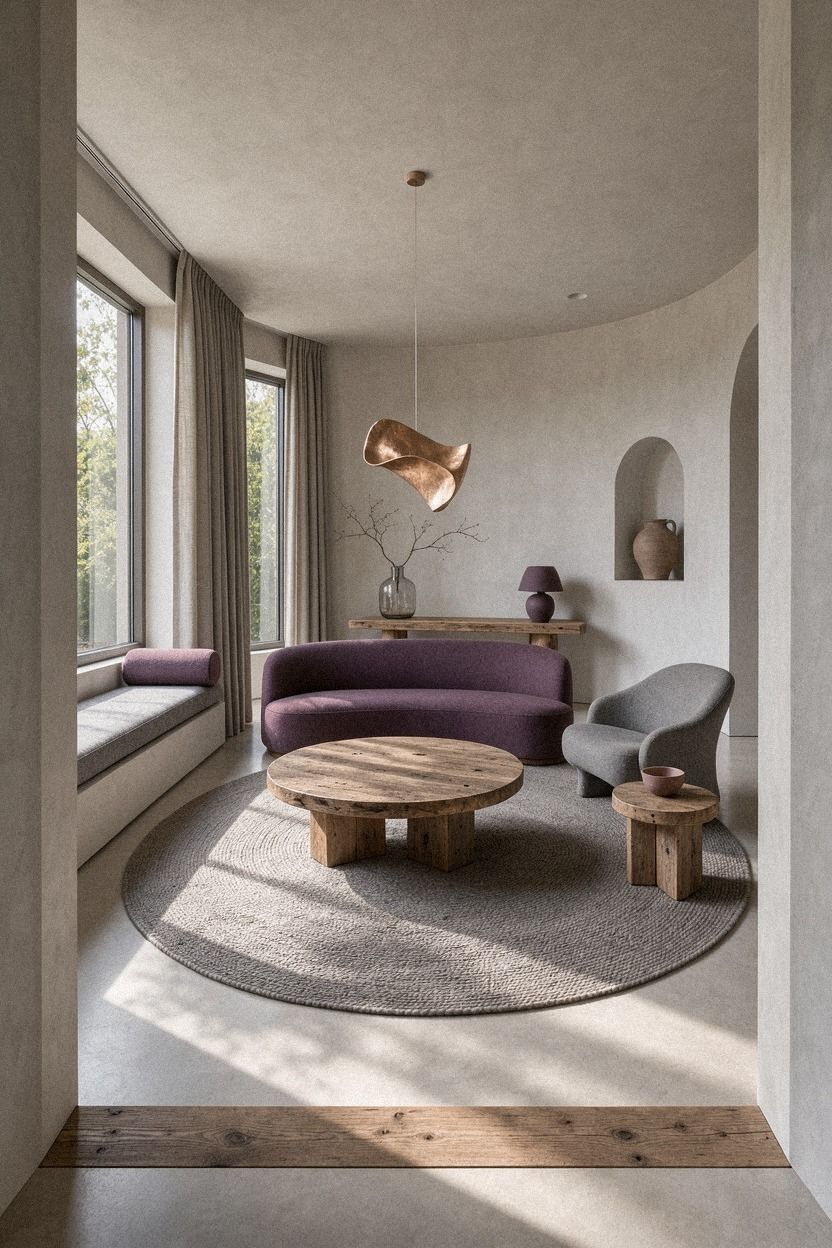
One strong object often looks more sophisticated than six agreeable ones. For a quiet round coffee table, try a sculptural piece of reclaimed weathered teak with natural grain, a twisted branch, or a matte grey ceramic knot. The empty surface around it is part of the arrangement, so give the piece at least 6 inches of clear space on every side.
This is where most people over-style. You might see an empty spot and feel tempted to fill it, but that space lets the table read as calm and intentional. I went back and forth between a bowl and a stack of books, and the bowl won because it doesn't compete with the artwork above the sofa.
If your room has strong color, keep the object quiet. If your room is pale, a rose-gold detail can add a crisp, dramatic note without becoming heavy. Pair the object with the two-material rule, or use a deeper wall color as explained in section ten.
4A book stack with a useful bowl
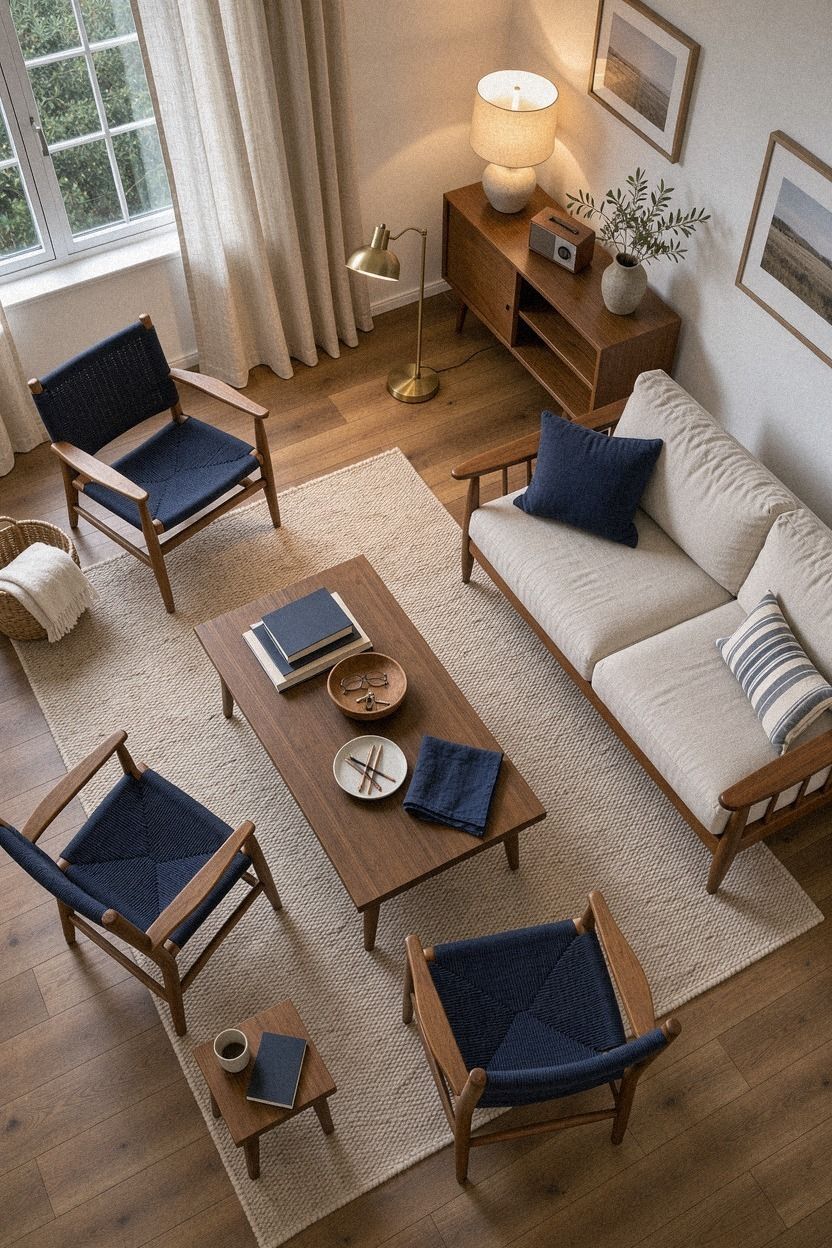
A stack of two or three books can give your coffee table styling a grounded center, but the books should earn their place.
5Wood or stone? The two-material rule
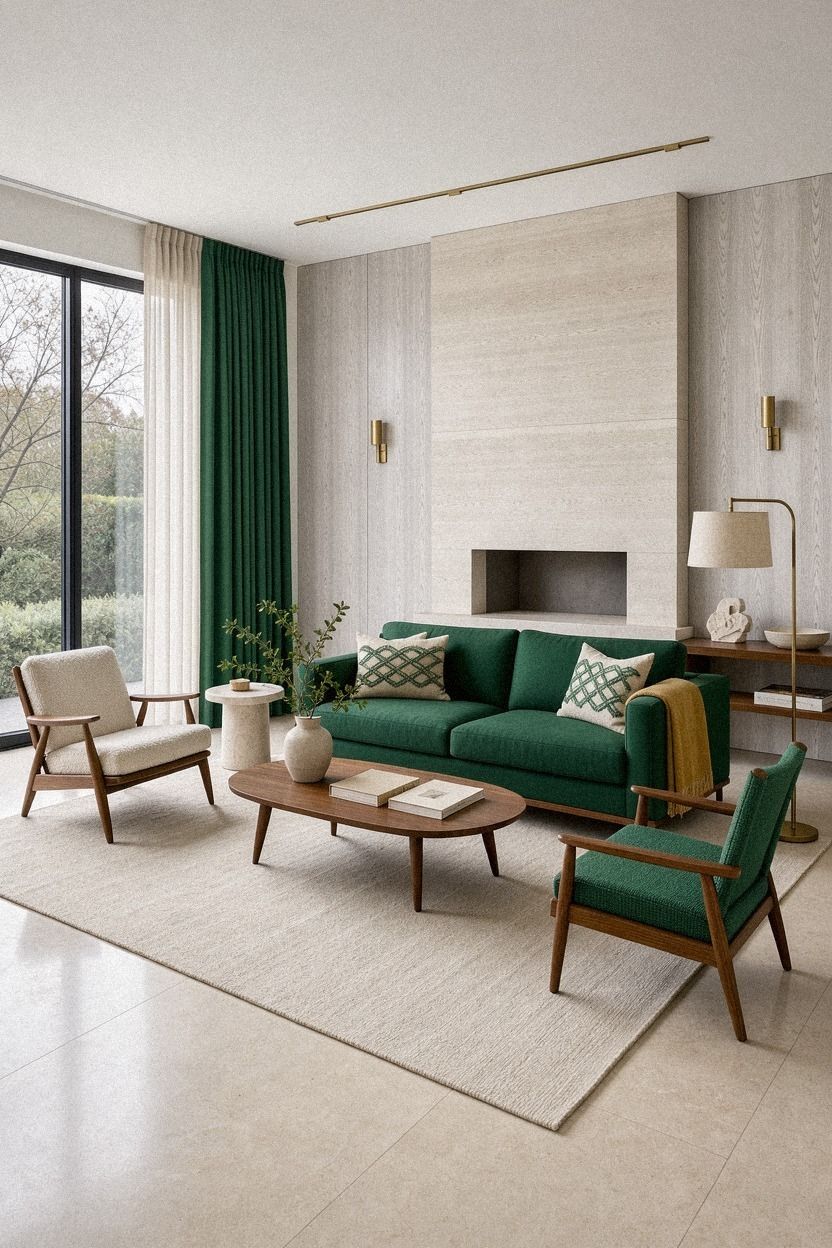
The Two-Material Rule keeps a round table from becoming a texture showroom. Choose one warm material and one cool material, such as cerused white oak with honed limestone, then stop.
A wooden tray and stone bowl will look layered. Wood, stone, brass, glass, rattan, and velvet all together will look like a shopping cart.
Your goal is contrast that feels deliberate. I like a 3/4-inch solid oak table beside a shallow limestone dish because the grain feels warm under afternoon light, while the stone stays quiet and matte.
You can soften the pairing with one folded cream linen napkin and a restrained gold accent, but don't add another decorative object just to fill the center. The room already has curtains, upholstery, and flooring doing texture work.
If you're choosing between a glossy marble bowl and a rough stone one, I'd pick the rough version for a lived-in room because fingerprints won't become the main feature. The same restrained logic works when you soften hard surfaces with one textile or mix related wood tones.
6Leave the center open for real life
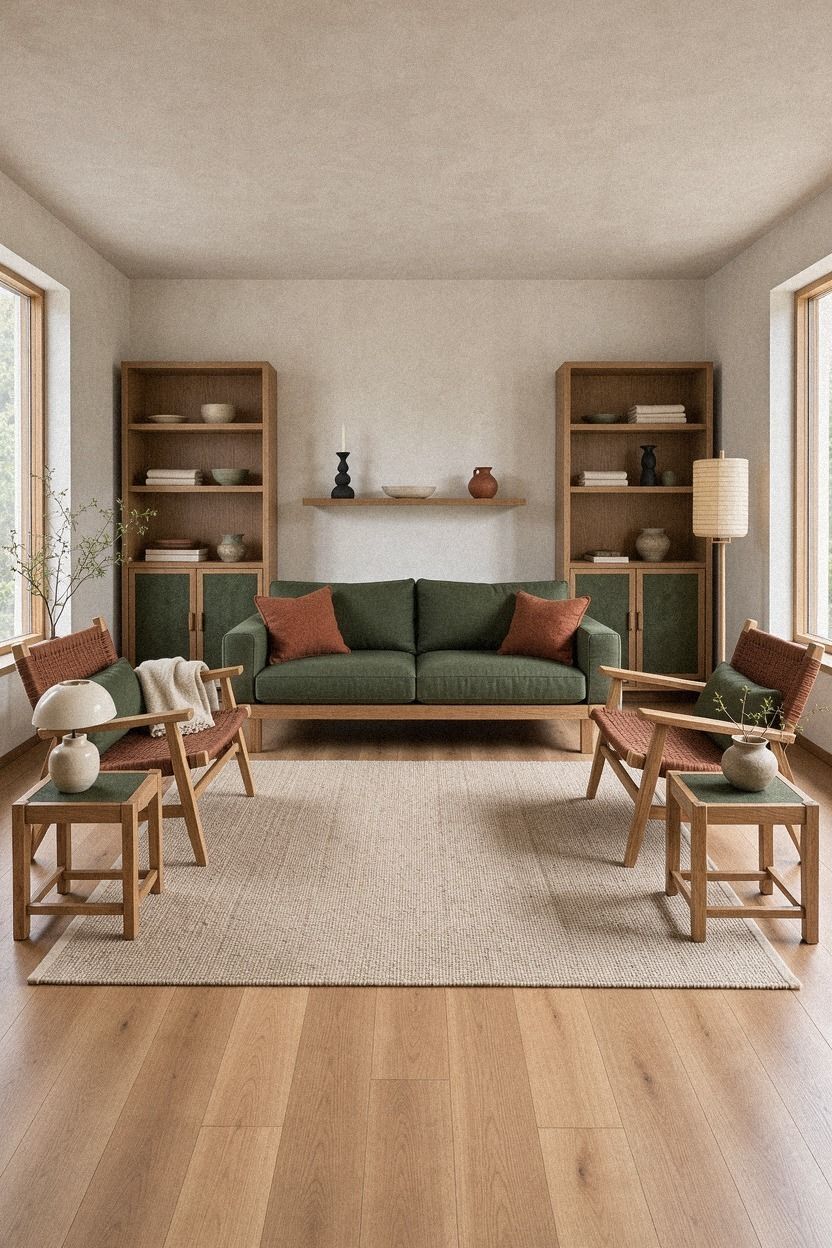
Sometimes the best way to decorate a round coffee table is to style the edge and keep the middle available.
7Soften hard surfaces with one textile
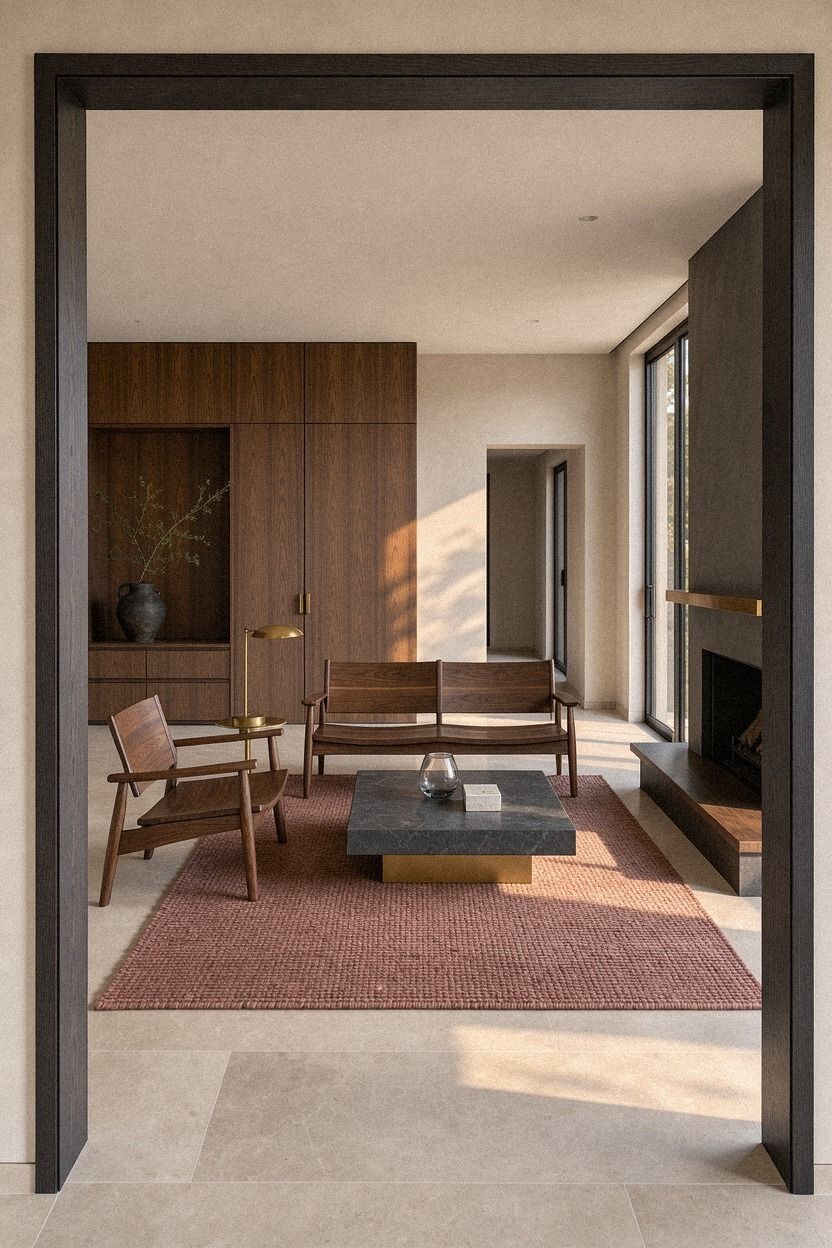
A textile adds softness to hard surfaces, especially beside book-matched walnut. Fold a dusty rose runner into a narrow rectangle, or place a square of charcoal linen under a bowl. The fabric should touch the table in one controlled area, not drape over every edge.
You don't need a formal tablecloth. In fact, I'd skip one on a round coffee table because the extra fabric can catch knees and make the room feel fussy. A folded textile is easier to wash and easier to replace when your dog decides it belongs on the floor.
Choose dusty rose, charcoal, or warm cream if your seating is neutral. A little aged brass can make the walnut feel more inviting, but keep the other objects simple. Let the textile provide the tactile moment, then connect it to the organic branch idea.
8What if two small lamps frame the table?
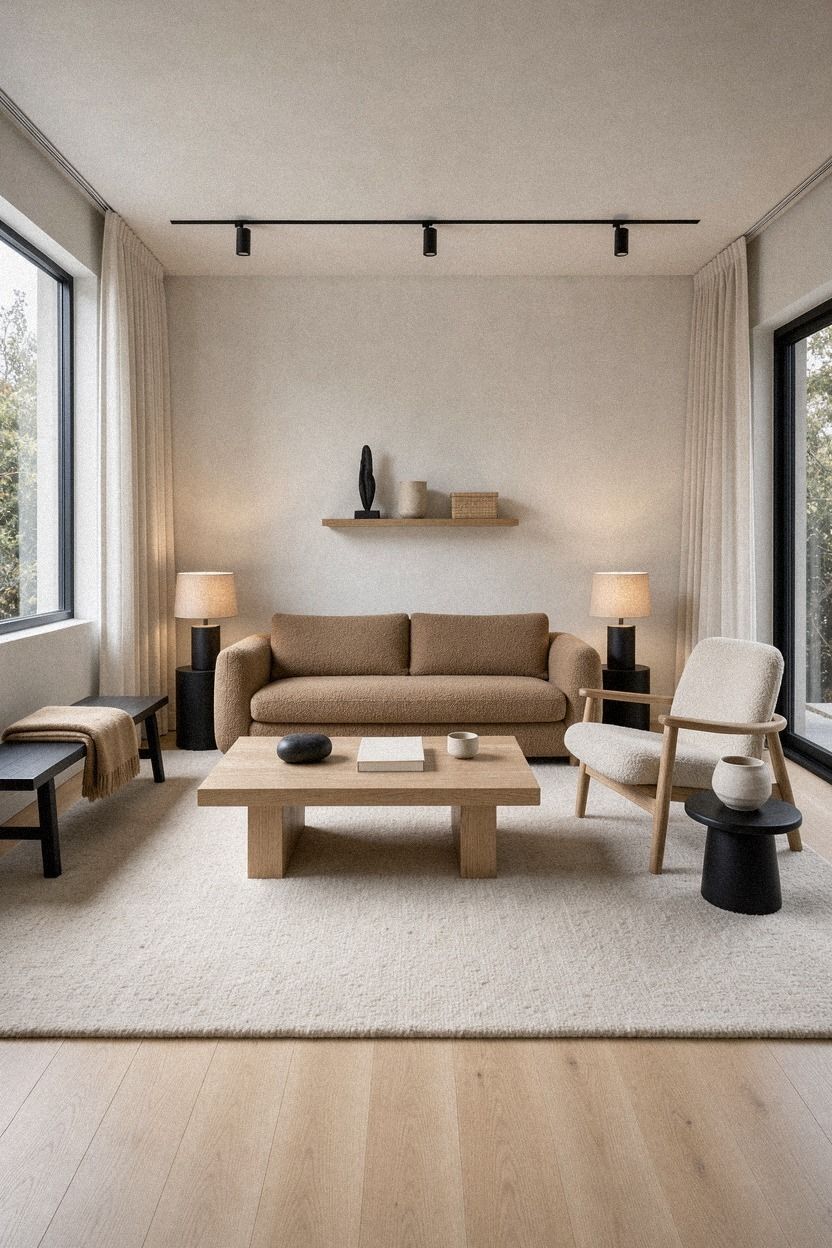
If your round table sits between seating zones, two small lamps can create a calm frame without one oversized centerpiece. Warm-white shades, camel details, black accents, and nearby organic bouclé keep the arrangement soft but grounded.
9Skip symmetry and shape a gentle crescent
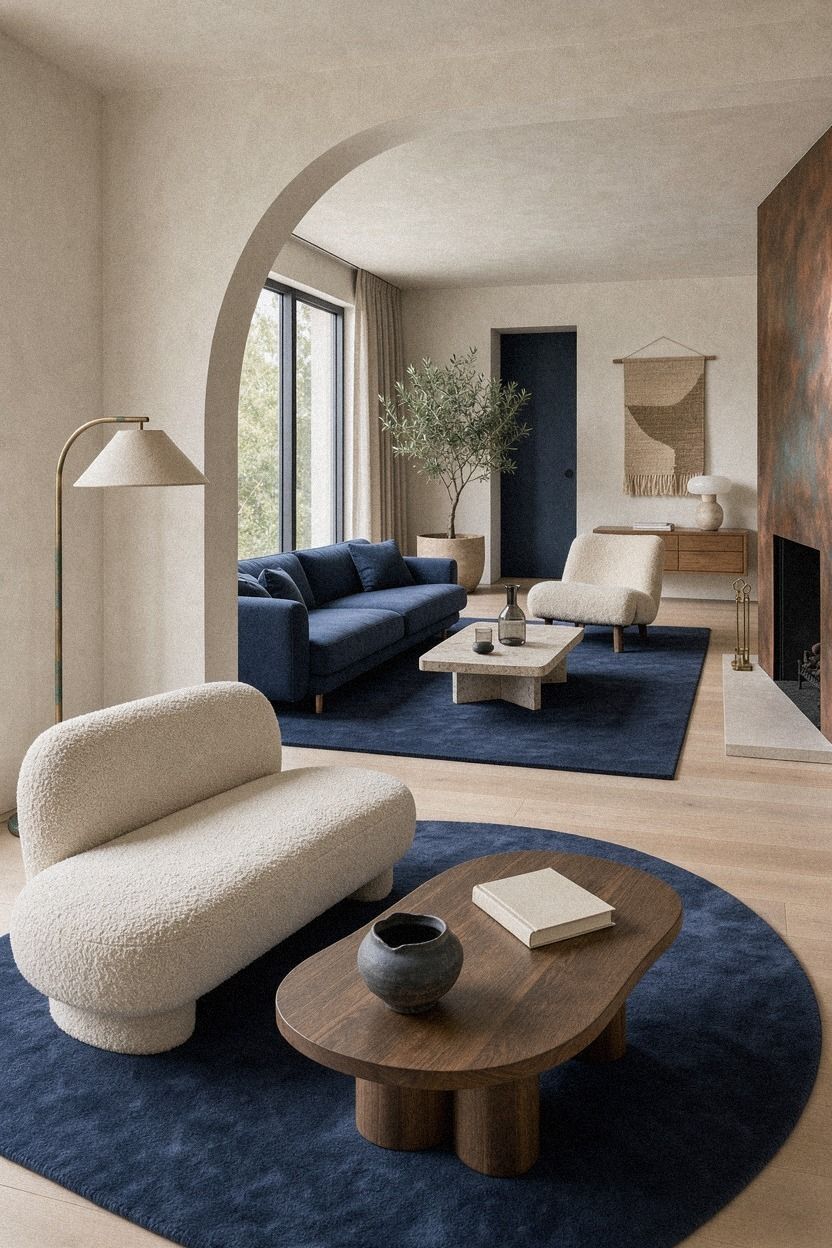
Perfect symmetry can make a round table look like a display pedestal. Instead, place three objects in a loose crescent: an ivory box, a medium bowl, and a small candle in an unlacquered brass holder. The curve echoes the table's shape, while the gaps keep the arrangement relaxed.
You should still balance visual weight, even if the pieces aren't identical. Put the heavier object closer to the table's center and the lighter object toward the edge. If you're using midnight-blue accessories, add one ivory piece so the arrangement doesn't look dense from the sofa.
I tried matching pairs here, and they felt too formal for a room with slipcovered seating. Your eye likes a little tension. A crescent feels more lived-in because it looks like someone placed the objects during a real afternoon, not with a ruler.
Keep the tallest piece low enough for easy conversation. That's the win!
10Paint the room before adding more decor
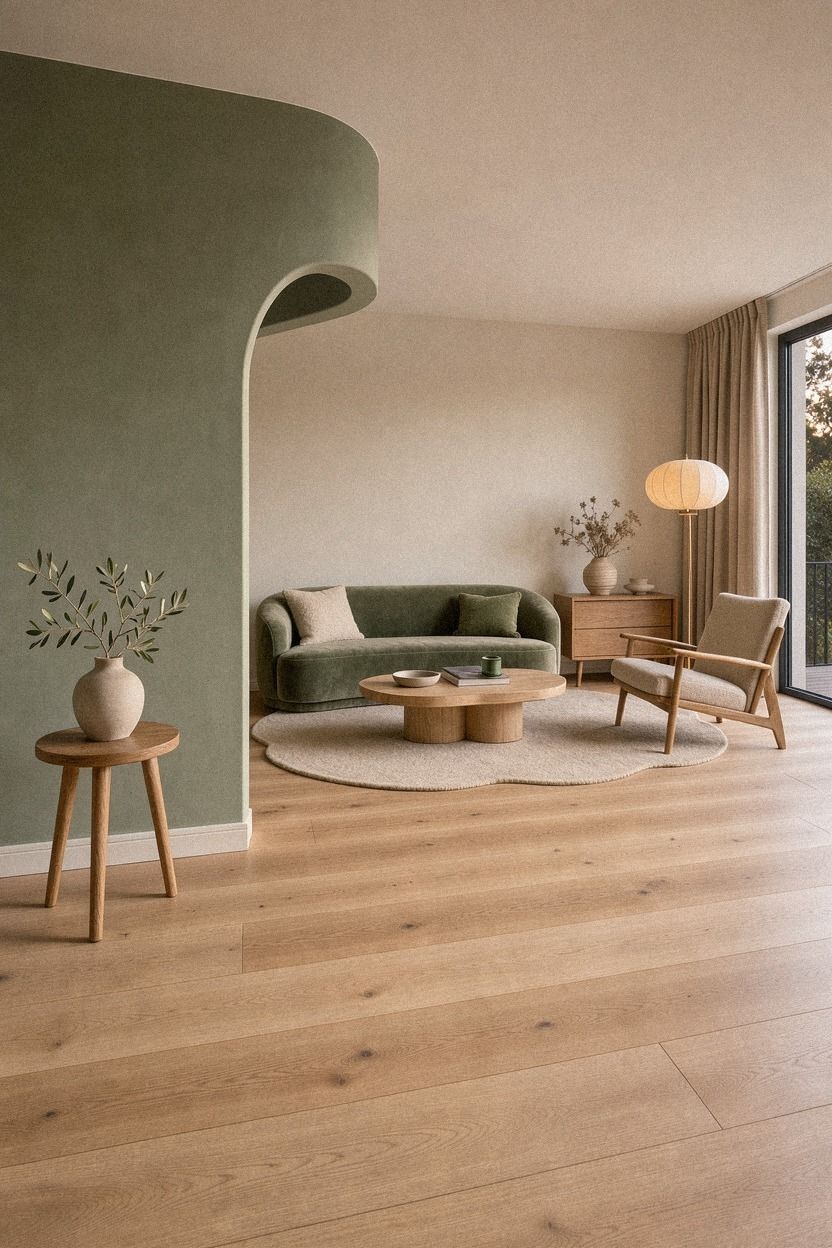
The table may not be the problem. If the walls, sofa, and rug are all pale and flat, you might keep adding objects because the room lacks contrast. A sage wall color can make a simple natural wood bowl and one branch feel complete.
Benjamin Moore October Mist 1495 is a gentle sage, while Sherwin-Williams Evergreen Fog SW 9130 adds a quieter green note. Test both colors in daylight and at night before committing. A paint sample can look completely different beside your flooring.
You don't need to repaint before styling, but you should look at the whole color relationship. A round coffee table works best when at least one accessory repeats a nearby tone. Try a warm-cream vessel with natural wood, or bring in deep-pile mohair velvet for texture.
I'd skip random accent colors because they make the surface feel busier than it is. What would happen if you removed three objects and changed the wall color instead? That question has saved me more shopping trips than any basket ever could.
11Warm woods or matching finishes?
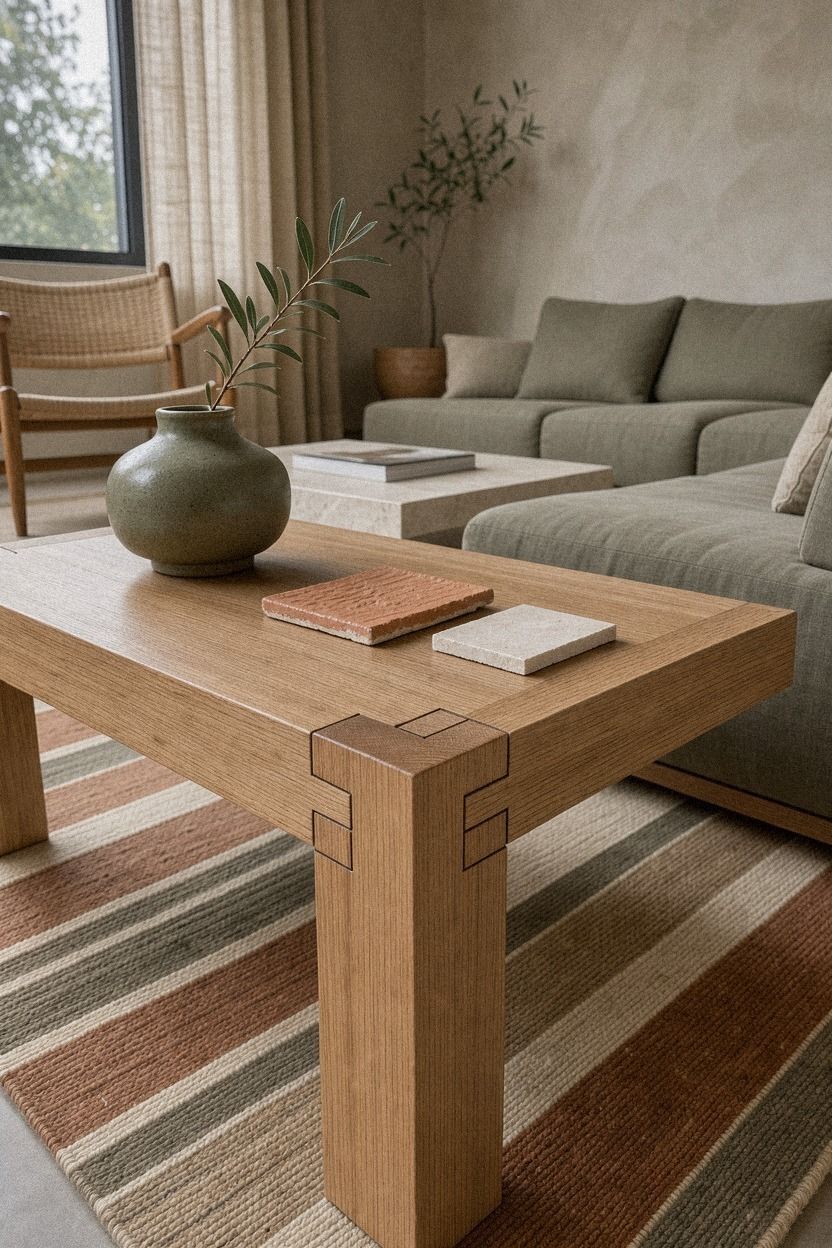
Round coffee table styling feels more collected when the wood tones relate without matching exactly. Pair a natural walnut table with a pale stone bowl or a small olive-toned box. Hand-applied Venetian plaster can add a quiet surface note, while terracotta brings warmth without making the arrangement feel scattered.
Don't add five wood finishes just because they are all natural. Two is enough for most rooms, especially when your floor already has strong grain. I prefer walnut with pale stone over orange pine because the contrast feels cleaner and less dated.
Your sofa fabric can bridge the two, particularly if it is washed linen in a clay or natural tone. If your table is dark, use a light bowl so the objects don't disappear at night.
And if you're unsure, step back to the sofa and check whether your arrangement has enough light and breathing room. You can then add the single color accent without guessing.
12A living branch brings the organic note
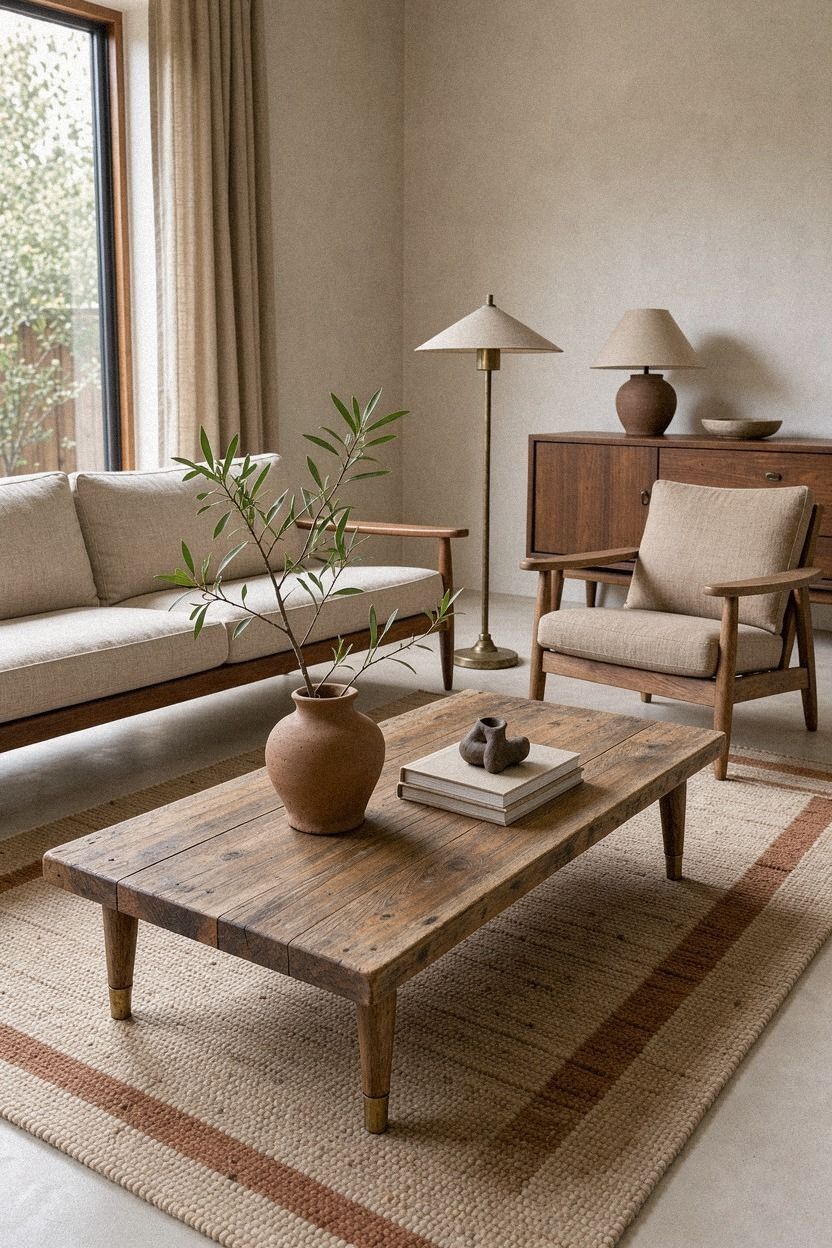
A single branch can bring height, movement, and an earthy quality to your table without adding visual clutter. Set it in a clay vessel beside a small aged-brass detail, and let reclaimed weathered teak carry the organic note.
13Group practical items inside one color story
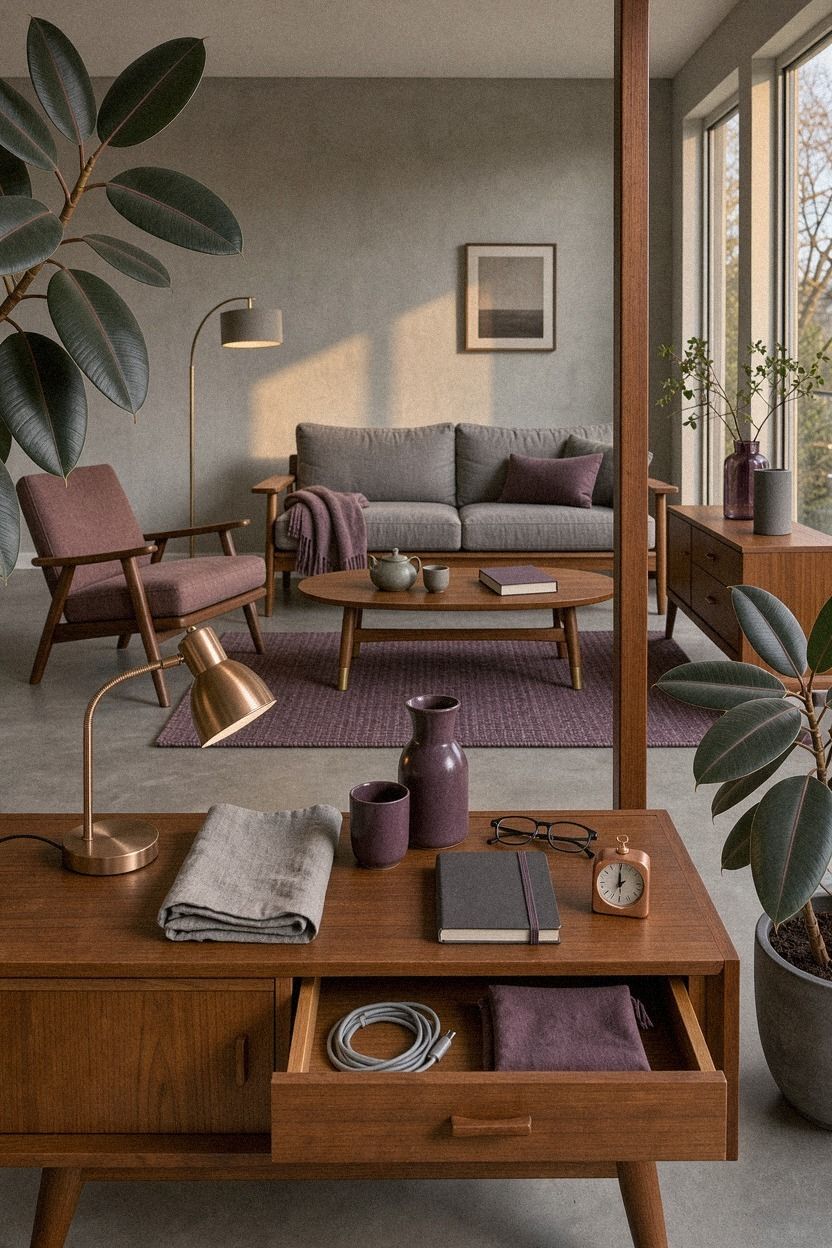
A cluttered table often contains useful objects in too many colors. Gather your remote, matches, coasters, and reading glasses into one palette of plum, grey, rose gold, and washed Belgian linen. A linen-covered box can hide the remote while a rose-gold dish holds smaller pieces.
This is not about hiding real life. Your home should work for you, and practical items can still look considered. Choose a box that is wide enough for the remote without stacking objects on top of it.
A 10-inch box usually gives you useful capacity without taking over the table, but measure your own space first. I've tried tiny boxes that looked charming and held nothing, which meant the clutter returned by bedtime.
You won't need a full decorative reset if each daily item has a clear landing place. Keep the box near the sofa, make the dish easy to reach, and leave one open area for whatever you're using right now. Keep it simple!
14One accent or a full palette?
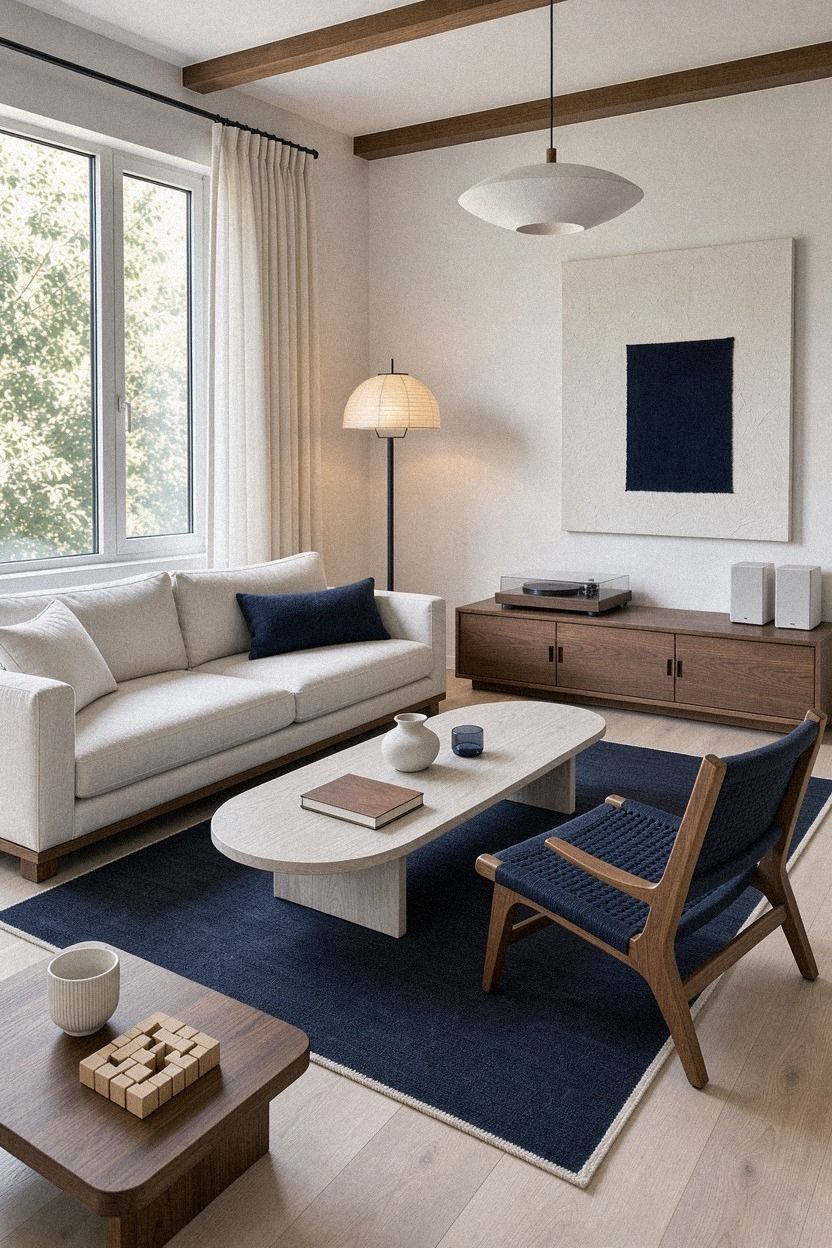
A single color accent makes a neutral arrangement feel finished. Try a navy ceramic bowl, a warm-white candle, or a cerused white oak object beside walnut and cream. One accent has more impact than six small colors competing for attention.
Your accent should appear somewhere else in the room, even if the connection is subtle. Repeat navy in a cushion, artwork, or vase across the room so the table doesn't look isolated.
I prefer one confident color to a collection of trendy shades because it gives your eye a clear landing point. If you're using Farrow & Ball Hague Blue No.30 on the wall, add a warm-white object and natural walnut rather than another dark accessory.
The contrast keeps the tabletop from becoming heavy. And if your room already has colorful art, let the table stay quiet. The strongest styling decision may be refusing to introduce another color.
15Measure first, then buy
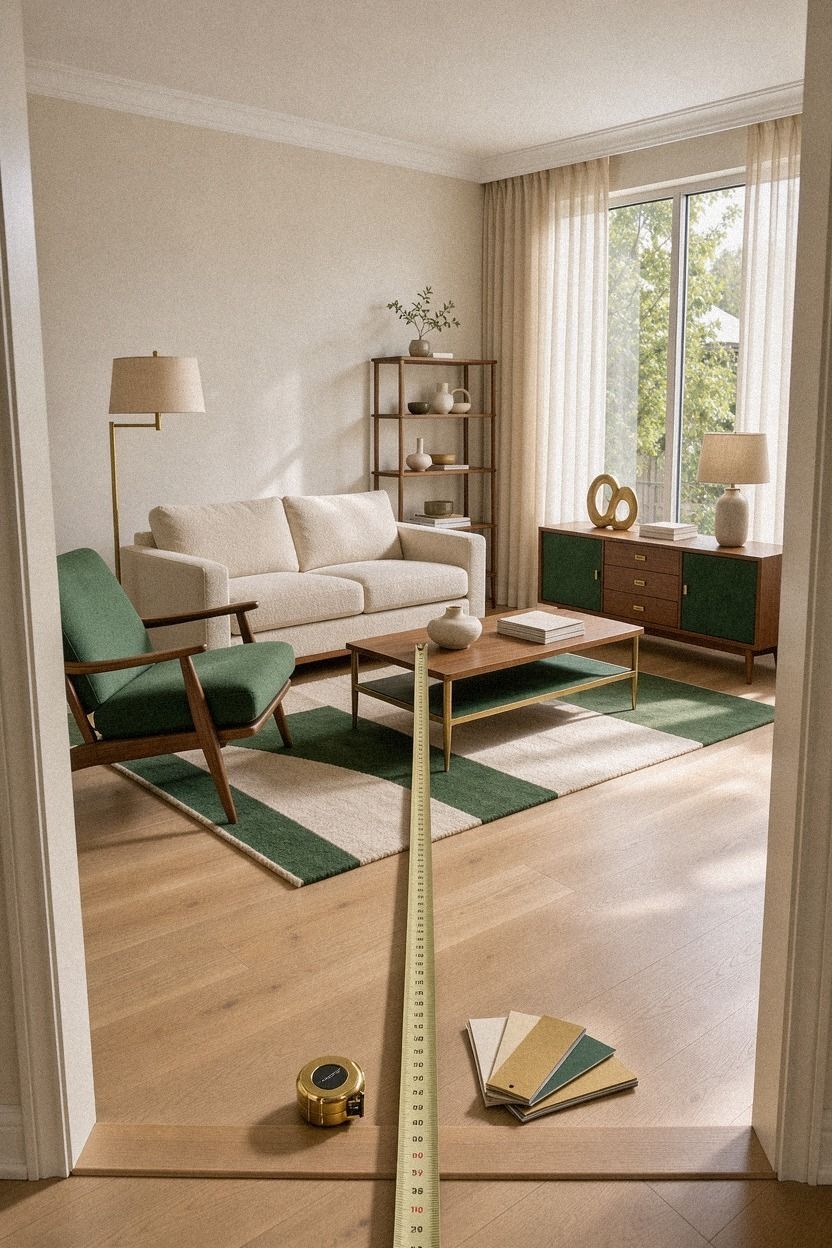
Before you buy a new bowl, tray, or stack of books, measure the tabletop and the space around it.
What a Round Coffee Table Should Cost
A styled coffee table doesn't require a complete living room purchase. The following typical US ranges show how costs can rise from a few surface updates to a larger room project.
I think most people should begin with the budget tier and spend on the piece that solves a real problem. A wool rug or better lighting may do more for your room than another decorative bowl. If your seating feels cramped, no tabletop arrangement will fix the proportions.
You can save your money for the furniture that changes how you use the room, then style the table with what you already have. A bowl, a book, and one branch can create a warm arrangement without a dramatic shopping trip.
The cost ranges also explain why I don't recommend buying every object at once. Add pieces slowly, and you'll notice which textures and colors your room actually needs. The most satisfying rooms usually grow through small, thoughtful decisions.
My Rule for a Table That Still Feels Like Home
I've styled enough living rooms to know that the most polished coffee tables aren't the ones with the most expensive objects. They're the ones that respect how people move, eat, read, and put things down. I used to chase the finished room, so I'd add a candle, then a small sculpture, then one more book because the center looked too open.
The result was a table nobody could use comfortably. Now I start with the daily action.
Where will your mug go? Can you reach the remote without leaning across a vase?
Does the table still feel warm when every decorative item is removed?
Those questions sound plain, but they lead to better rooms. I prefer a walnut bowl with fingerprints and one crooked branch over a perfect arrangement that makes everyone nervous.
The best round coffee table styling ideas create a gentle pause in the room. They don't demand attention from across the room, and they don't need to match a catalog. Your materials can be mixed, your books can be worn, and your color palette can include one odd note that makes you smile.
That is where the personality lives. If you're still unsure, remove one item tonight and see whether the room breathes better by morning. Good styling should feel easy!
The Questions I Get Asked Most
What is the best round coffee table styling idea for a small living room?
A shallow tray with one low bowl works best because it keeps the center usable and gives small objects a home. Choose an IKEA KALLAX birch-effect piece nearby for storage, or pair a simple table with one Article Sven tan leather chair. Your room will feel more open when the tallest object stays below eye level.
Where can I buy round coffee table pieces on a budget?
Look at IKEA, Target, Wayfair, Facebook Marketplace, and local thrift stores for trays, bowls, and books. You don't need a matching set.
A used rattan tray, a secondhand ceramic bowl, and branches from your yard can create a warm arrangement for very little money. Start by checking your own shelves.
How much does a round coffee table styling makeover cost?
A small refresh can cost about $100 to $300 if you reuse your books and buy only a tray, bowl, or textile. A broader living room update may fall into the typical $300-$1,200 budget range. Your existing objects are free, so begin by shopping your own shelves.
Can I create this look on a budget?
Yes, and you can begin without buying anything. Group your books, use a kitchen bowl, cut branches from outdoors, and fold a blanket into a small textile layer.
If you spend, choose one hand-thrown stoneware bowl instead of several cheap accessories. Your table will look more intentional with fewer, stronger pieces.
Is round coffee table styling worth it in a small space?
Yes, because the curved edge can make movement feel easier than a sharp rectangular corner. Keep the table 16 to 18 inches tall, leave a clear path around it, and use a low arrangement. You won't need much decor when the shape itself gives the room a softer rhythm.
Is this a good idea for a rental?
Yes. Use removable styling pieces such as a woven tray, freestanding lamp, fabric runner, and potted branch.
You don't need to drill into the wall or repaint to make the table feel connected to the room. Repeat one rental-friendly color in a pillow or artwork, and your arrangement will feel intentional without permanent changes.
Where I'd Start First
If I had to pick one, I'd start with the shallow tray. It gives every small object a boundary, leaves room for real life, and stops your round table from becoming a storage island. Pin the tray idea for later, then remove one item tonight and see how much lighter the room feels.


