Cozy Nancy Meyers Living Room Styling With Couch and Coffee Table Tips
02 november 2026To style a Nancy Meyers living room, start with a deep sofa, a correctly scaled coffee table, and layered light. The room should feel warm, lived-in, and quietly polished, with off-white upholstery and natural wood. I’ve learned that restraint matters more than matching pieces. Your room needs breathing space.
- Float the Sofa for the Conversation Zone
- Layer Creamy Textures Around Off White Furniture
- Build the Three-Height Coffee Table Stack
- Float the Sofa for the Conversation Zone
- Layer Creamy Textures Around Off White Furniture
- Build the Three-Height Coffee Table Stack
- Anchor Multiple Sofas With One Large Rug
- Why Benjamin Moore Revere Pewter Works With Darker Wood
- Swap the Matchy-Matchy Set for Collected Seating
- Frame the Coffee Table With a Soft Light Pool
- Style the Table With the Three-Source Rule
- Hang Art Low Enough to Join the Seating
- Farrow & Ball Hague Blue Meets Warm White
- Choose a Round Table When Your Walkway Feels Tight
- How Much Pillow Scale Does Your Sofa Need?
- Paint the Built-In Shelves, Not Every Wall
- Use the Two-Wood Rule for a Calmer Room
- Television Above the Mantel or Around the Room?
- Layer Fall Warmth Without Clutter
- Real-Life Coffee Table Test
- Edit the Room Until the Softer Pieces Lead
1Float the Sofa for the Conversation Zone
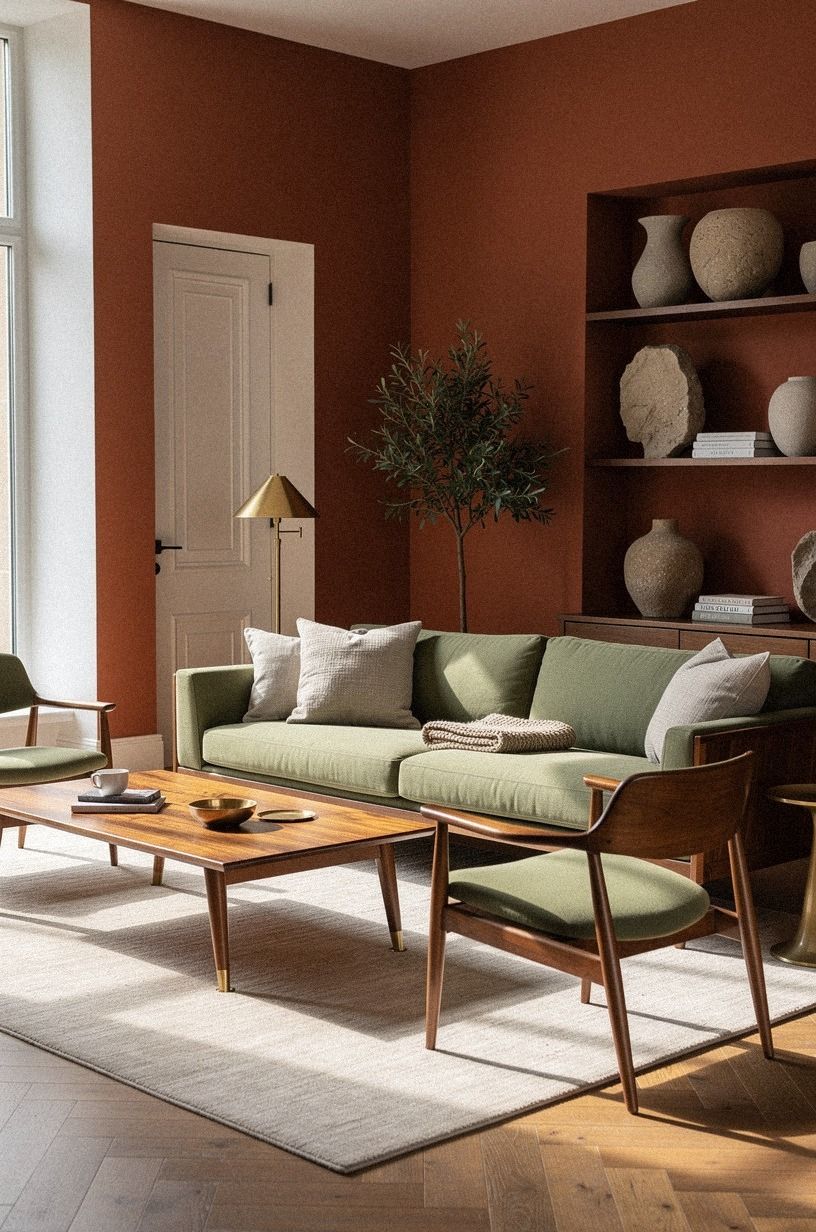
Pull your sofa a few inches away from the wall when your room allows it. That small gap gives the seating area an airy shape and makes your living room feel collected instead of pushed into place. A sofa depth of 35 to 40 inches gives you room to sit comfortably without swallowing the floor.
I’d choose a tailored olive sofa with unlacquered brass accents over a bulky reclining sofa here. The clean profile can take the daily coffee cup, the blanket, and the occasional dog. Add terracotta and stone through the chairs or textiles, but don’t force a symmetrical pair if your room is narrow.
Your coffee table should sit close enough for everyone to reach, usually about 16 to 18 inches from the sofa. If your seating floats on a rug, make sure the front legs land on it. That one decision makes the whole arrangement feel intentional.
For a deeper look at proportions, compare this setup with the three-height coffee table approach.
Typical cost by tier (US averages):
2Layer Creamy Textures Around Off White Furniture
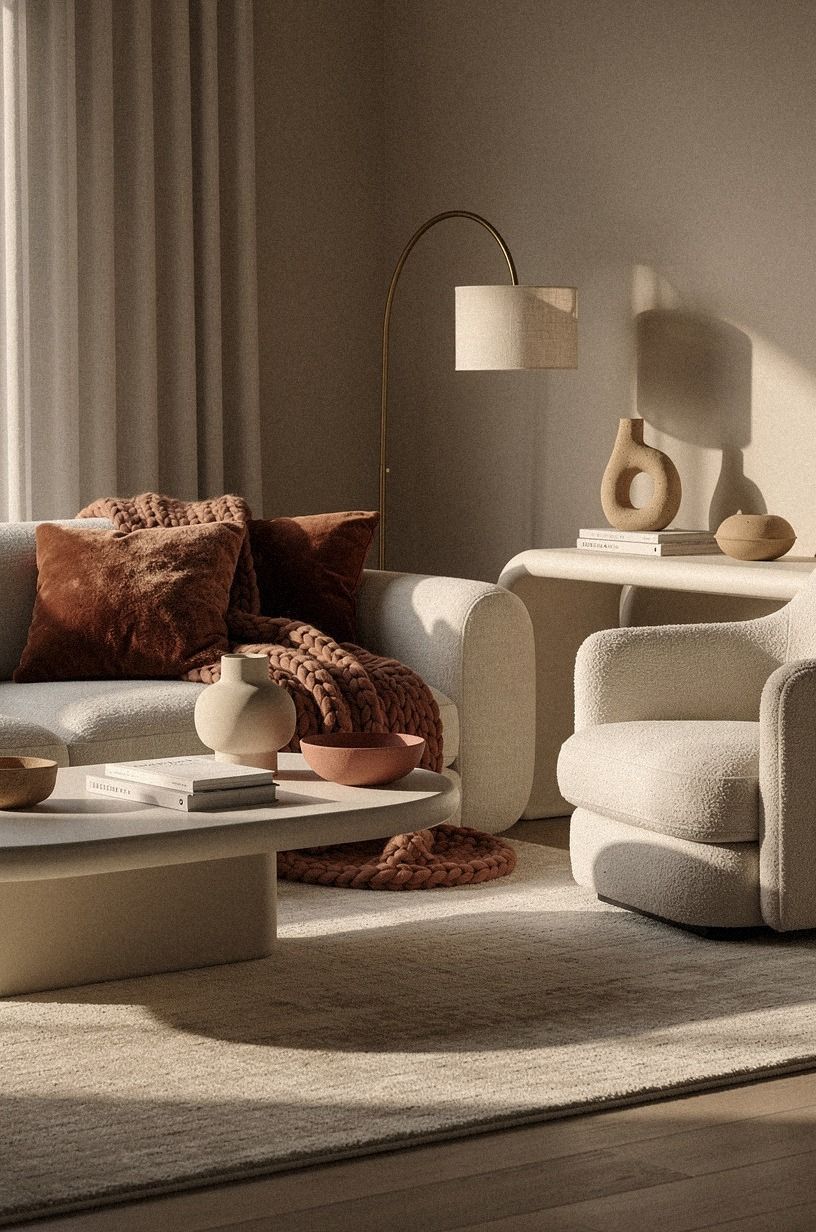
Off white living room furniture works best when you give every pale surface a different texture. A clay-toned Belgian flax linen sofa, a nubby wool throw, and a smooth oak table won’t read as flat or washed out. They’ll catch light differently throughout the day, which is what makes the room feel lived-in.
I’d skip a matching cream sofa and chair set. It’s tidy, but your eye needs a little friction.
Try a deep-pile mohair velvet pillow beside a chunky cotton cushion, then add one woven basket in a darker natural fiber. Aged brass can bring a quiet glint without making the room feel formal.
For a budget move, keep your existing sofa and change only the touch points. Your hands notice fabric before your eyes analyze color, so a deep-pile mohair velvet throw can make a plain couch feel more inviting. The room won’t need a dramatic makeover.
This texture mix also works alongside the collected seating plan, especially when the furniture is mostly pale.
3Build the Three-Height Coffee Table Stack
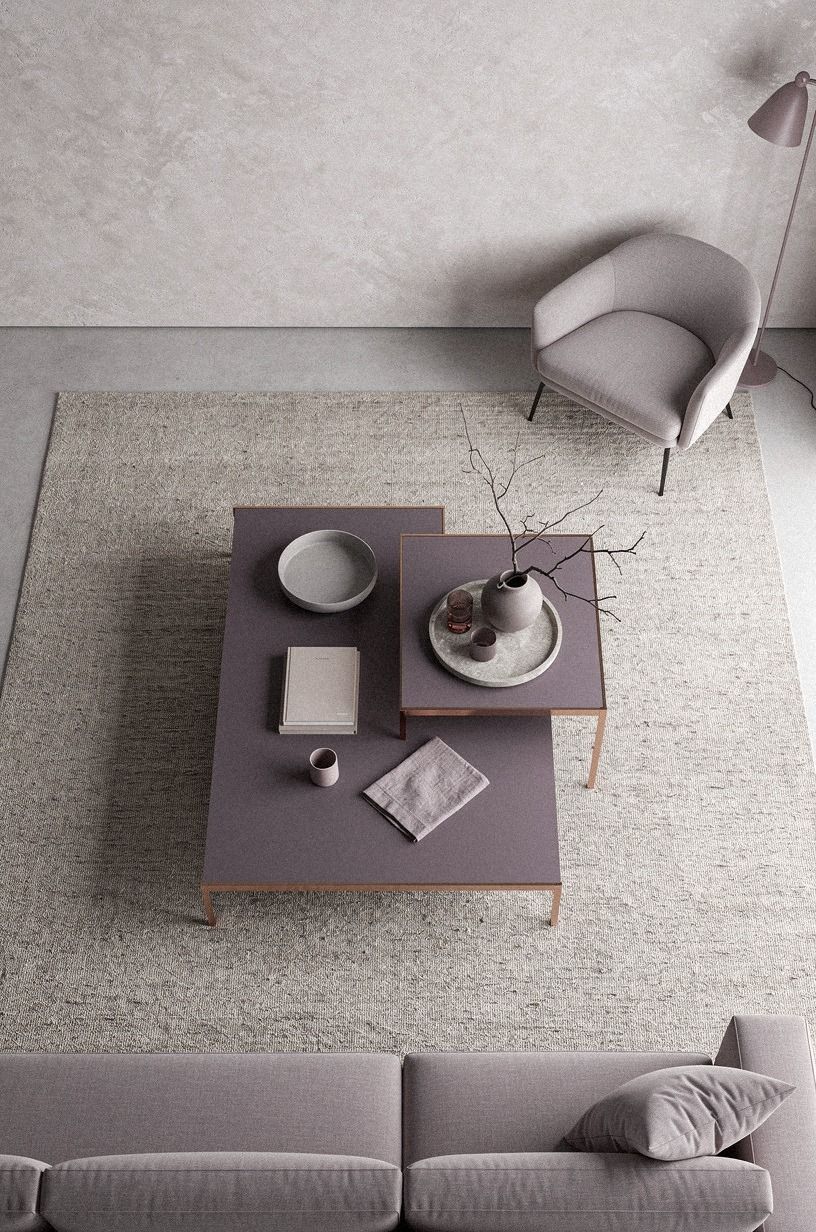
Your coffee table styling should have three visible heights: something low and broad, something medium, and one taller shape. I use a shallow tray, a pair of art books, and a ceramic vase with branches. The arrangement gives your eye a path across the tabletop instead of a pile of small items.
A coffee table with a hand-applied Venetian plaster finish works especially well with plum and grey upholstery, while a small rose-gold detail adds warmth. Put the tray on one side, not dead center, and leave enough surface for your mug. You’ll want the table to function during movie night, not just look polished.
I made the mistake of using five tiny decorations once. They looked fussy, and nobody had room to set down a glass.
Remove two pieces, then add one object with scale, such as a large handmade bowl. That’s the calmer choice for your room.
The same idea helps when you’re deciding between a round table and an oval one in a tight walkway.
4Anchor Multiple Sofas With One Large Rug
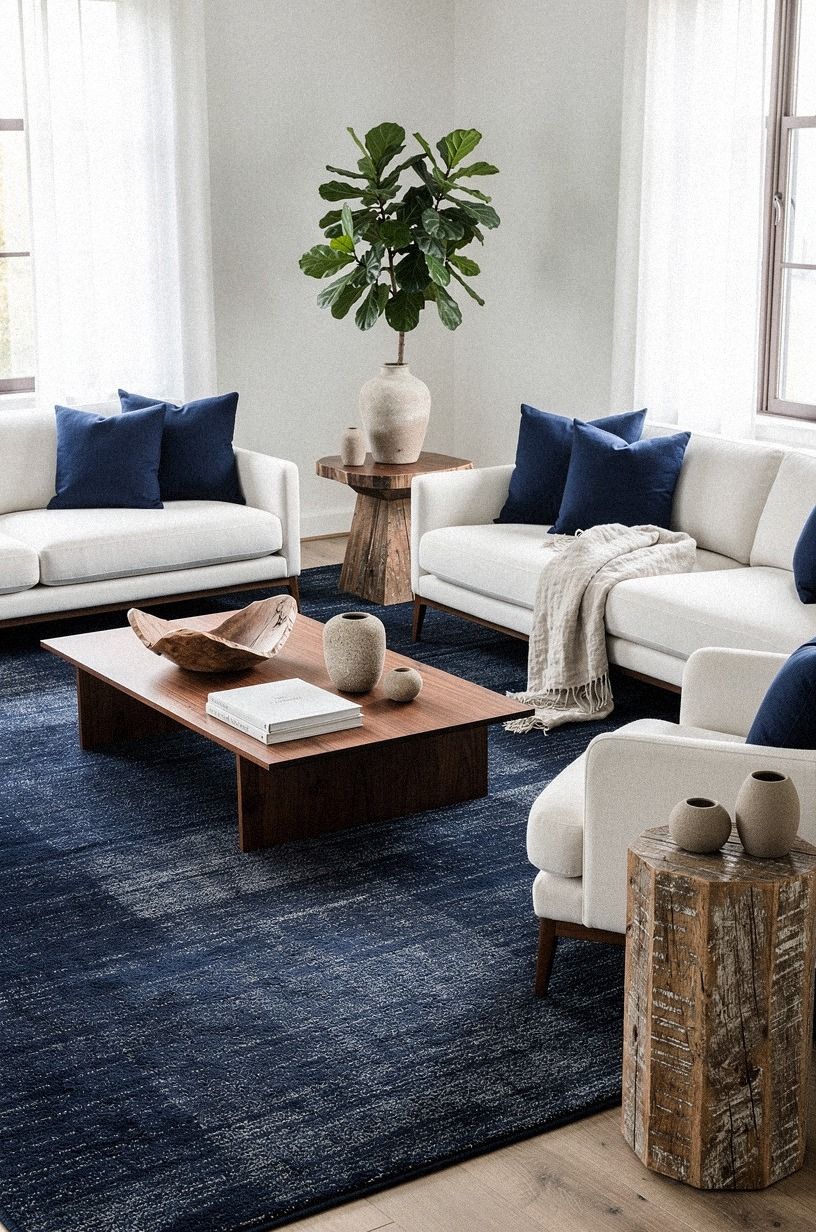
Multiple sofas in living room layouts need one visual anchor, and a rug is usually the strongest one. Choose an 8 by 10 or 9 by 12 wool rug, depending on your seating footprint, so the front legs of every sofa can rest on it. Your arrangement will feel connected instead of scattered.
I’d avoid placing a small rug beneath only the coffee table. It makes your sofas look like separate islands, even when they face each other. A navy-and-white pattern gives you more flexibility than a solid pale rug, especially if your household includes children or pets.
Look for a low-contrast design with navy, white, and walnut nearby. A reclaimed weathered teak coffee table can bring an earthy note beneath the seating without competing with the rug. If your floor is dark, that pale foundation will make the entire room feel brighter.
Before ordering, test the dimensions against the floating sofa conversation zone.
5Why Benjamin Moore Revere Pewter Works With Darker Wood
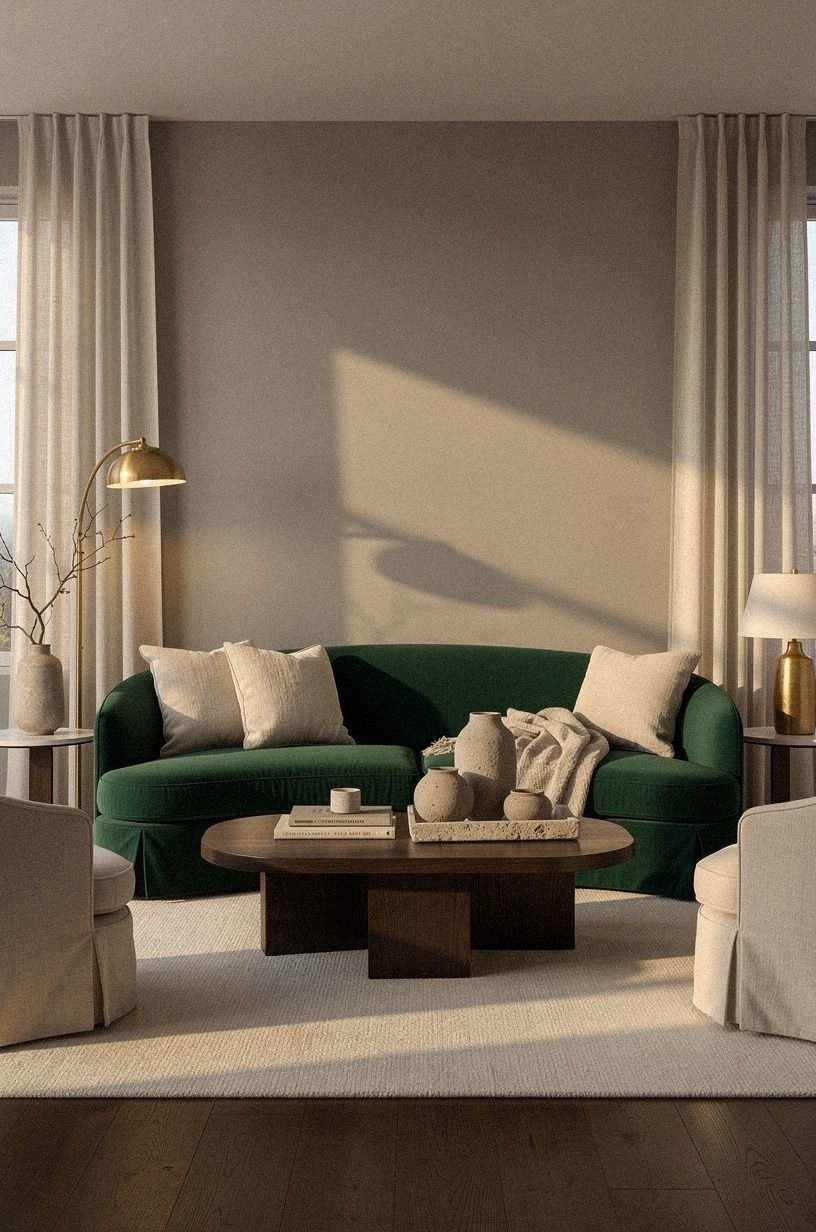
Pair it with a washed Belgian linen sofa and restrained emerald and gold accents instead of surrounding it with more beige.
6Swap the Matchy-Matchy Set for Collected Seating
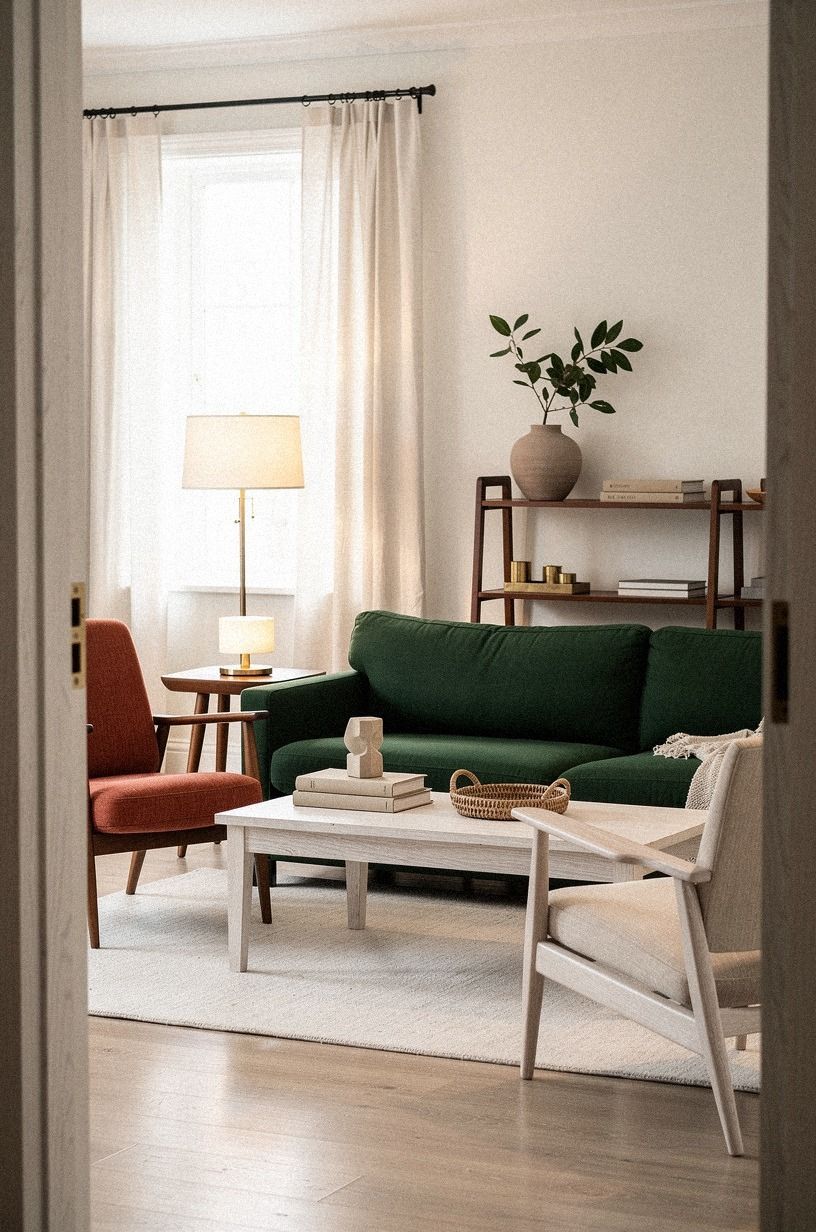
A Nancy Meyers room rarely looks as if every piece arrived in one delivery. Swap the matching loveseat and chair set for a sofa, a vintage-style armchair, and one lighter occasional seat. Your living room will feel more personal when the silhouettes relate without copying one another.
A cerused white oak chair brings a soft, natural shape beside a straighter sofa. I’d use one chair, not two, unless you’ve got enough space for a clear walking path. Your coffee table needs room around it, and guests shouldn’t have to turn sideways to reach the seating.
Try one rust accent beside forest green upholstery and natural oak. That contrast is more elegant than another shade of beige, and it hides ordinary wear.
Don’t add a chair simply to fill a corner. An empty corner can give your room the breathing space it needs.
Keep the upholstery mix tactile, then return to the cream texture formula if the arrangement starts to feel too formal.
7Frame the Coffee Table With a Soft Light Pool
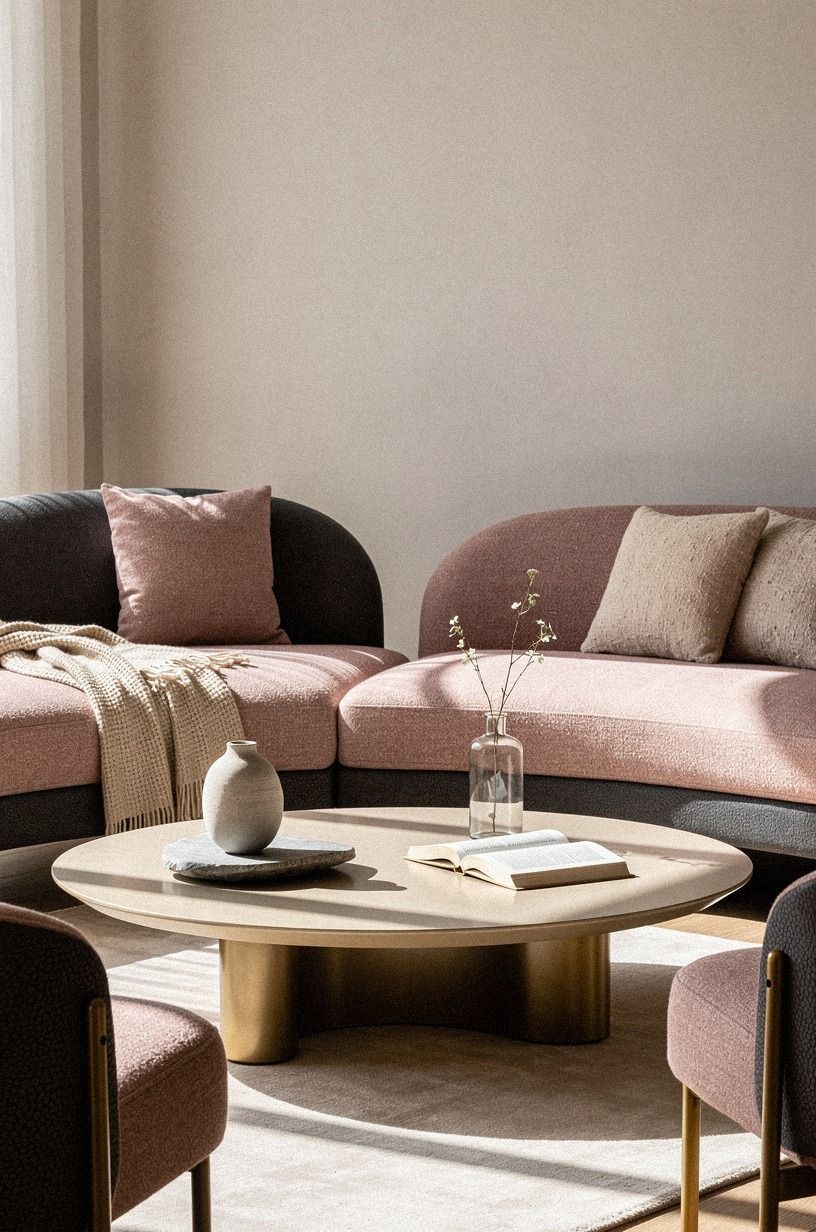
Kill the single overhead light and spread the glow around your seating area. A floor lamp beside the sofa, a table lamp on a console, and one shaded accent light create overlapping pools that feel warm after sunset. Your coffee table will look better when it isn’t sitting beneath a harsh ceiling beam.
I like a lamp with a brass base and shagreen accent because it adds texture without making the room dim. Bring in dusty rose textiles and charcoal upholstery, then position the lamp so your reading chair has enough brightness for a book. You’ll notice the difference on your face, your walls, and the wood grain.
I’d skip exposed blue-white bulbs, even if the fixture looks stylish. They make your living room feel like a waiting room. Your room should invite people to stay for another glass of wine, not remind them that it’s time to leave.
Use the same layered glow when you test the room at night in the final editing pass.
8Style the Table With the Three-Source Rule
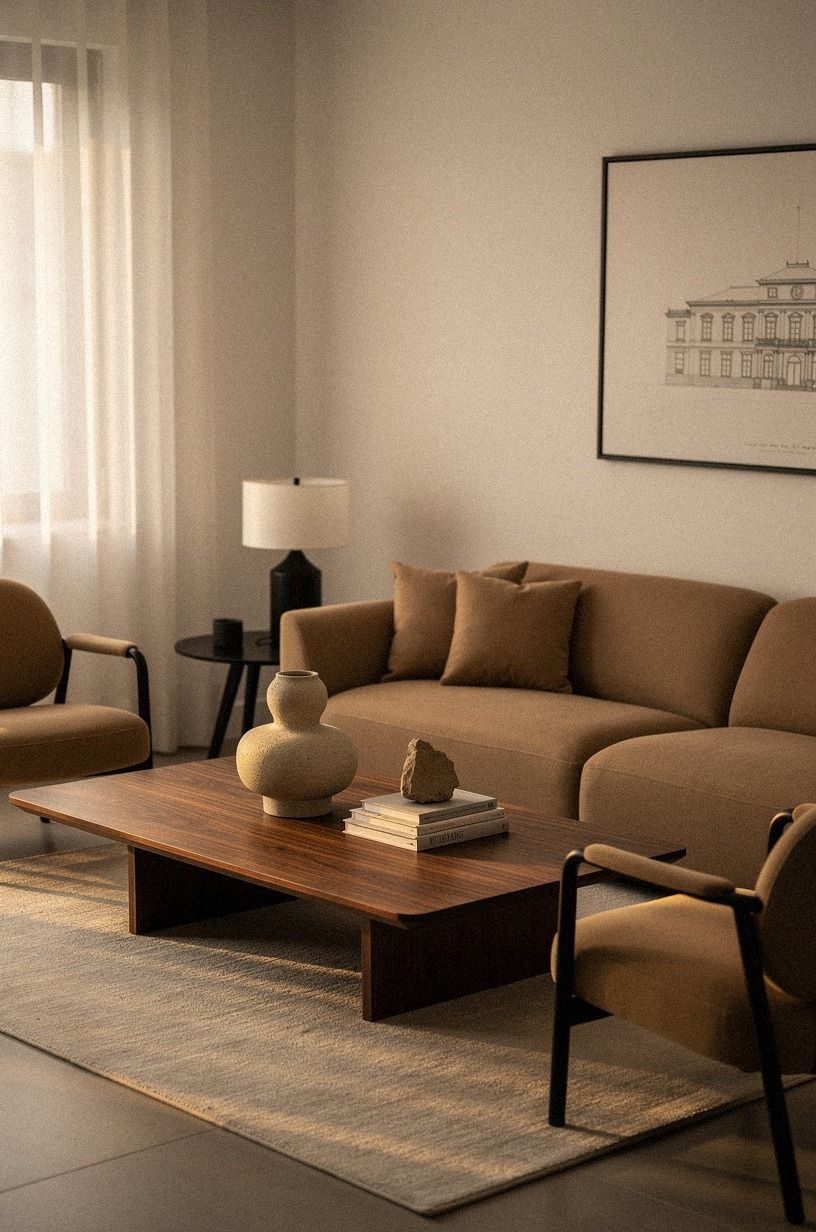
Use three kinds of objects on your coffee table: something useful, something natural, and something with a story. Your useful piece might be a small tray, the natural piece could be pears or clipped branches, and the story piece might be a pottery bowl from a trip.
A book-matched walnut tray gives you a tactile center without looking precious. Add a stack of two books beside it, then leave one-third of the tabletop open. Your hands need that empty area when you’re serving snacks or moving a laptop.
I’d rather see one black ceramic bowl than six identical accessories. Warm white and camel textiles can soften the contrast, while the Nancy Meyers feeling comes from evidence of life, not showroom perfection. If your table gets messy, edit it at night instead of trying to protect every surface all day.
For smaller rooms, combine this rule with the round coffee table solution.
9Hang Art Low Enough to Join the Seating
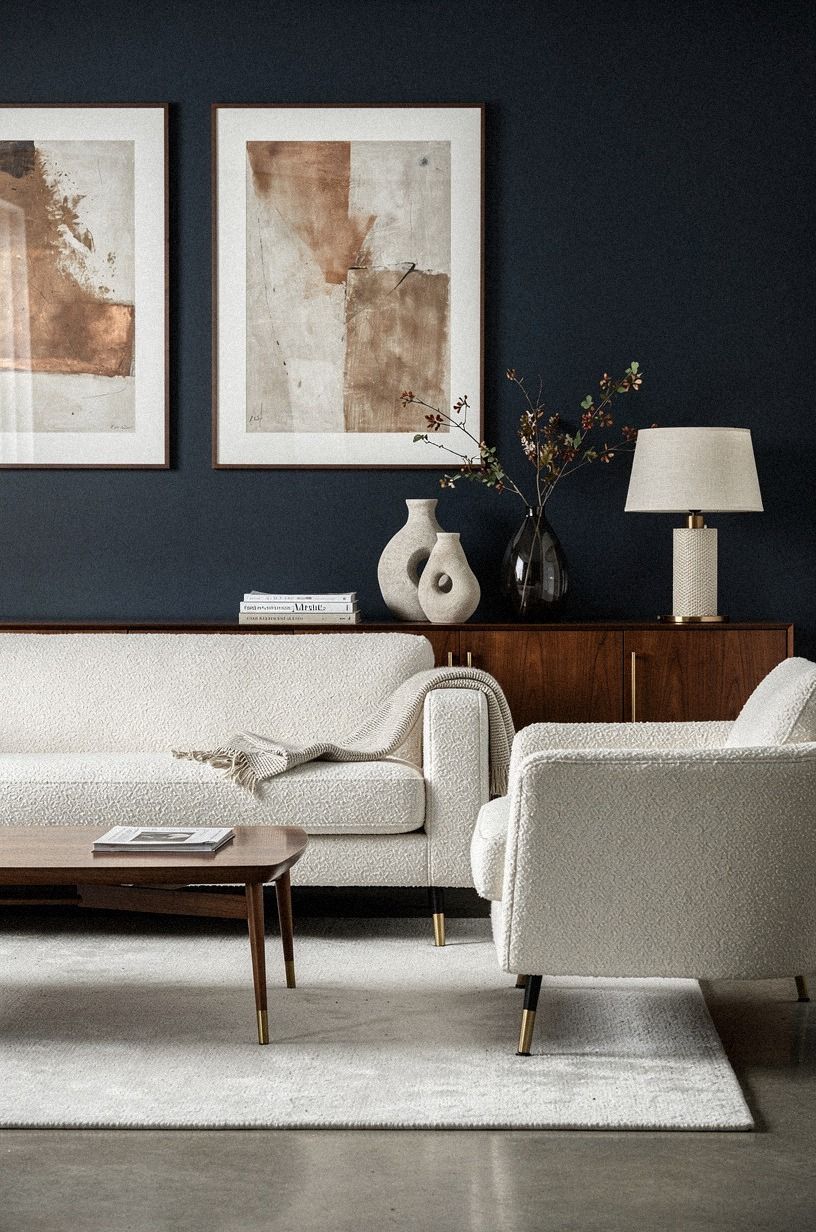
Hang your art so it belongs to the sofa, not the ceiling. The lower edge should relate to the furniture beneath it, and a large horizontal landscape often works better than several tiny frames. Your eye should read the art and sofa as one conversation.
A copper surround beside organic bouclé seating can bridge midnight blue walls and ivory upholstery. I’d choose a landscape, still life, or loose botanical print with visible brush texture. Glossy, mass-produced-looking art tends to make your room feel newer than the rest of the arrangement.
Before you make holes, tape a paper template to your wall. You’ll see whether the width feels right from the doorway and from your favorite chair. Don’t center every object on the room itself if your sofa is the true focal point.
Let the artwork reinforce the paint relationship described in Revere Pewter with darker wood.

10Farrow & Ball Hague Blue Meets Warm White
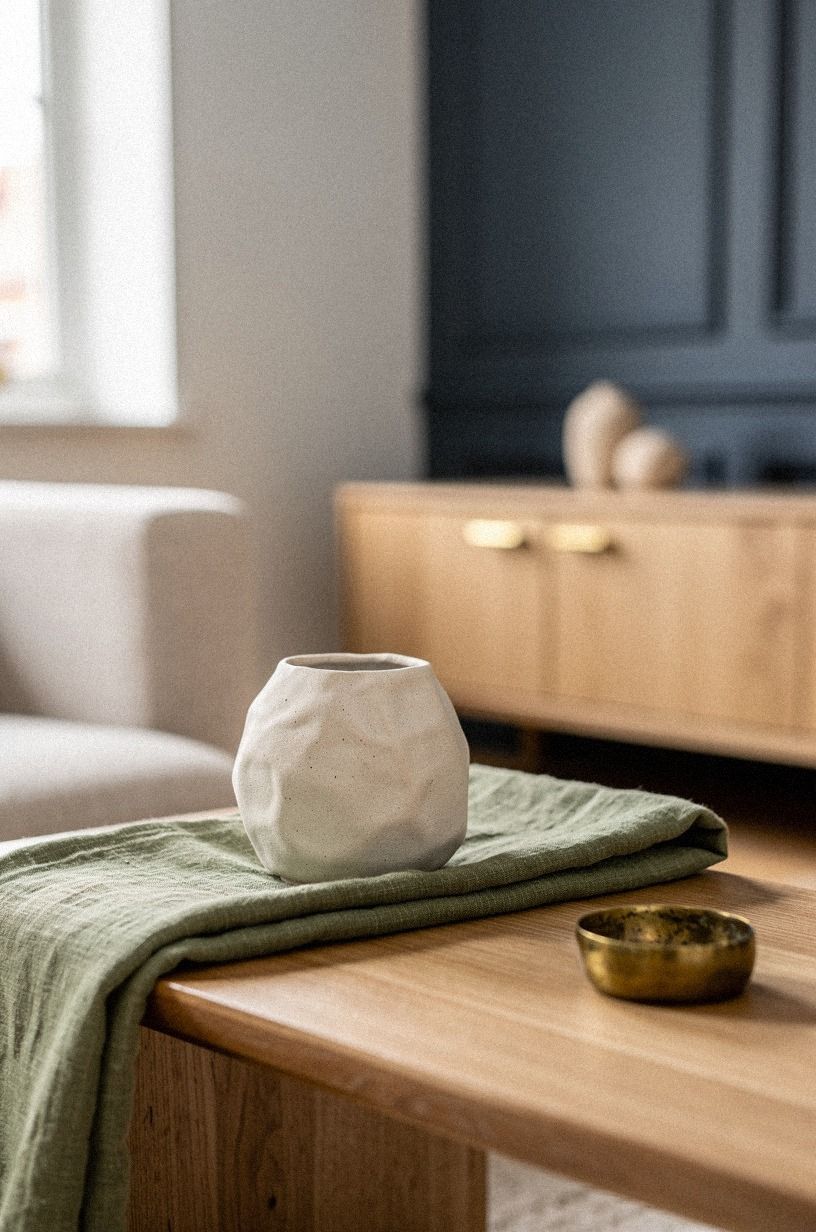
Use it with warm cream, natural wood, and one unlacquered brass detail so the darker color feels deliberate.
11Choose a Round Table When Your Walkway Feels Tight
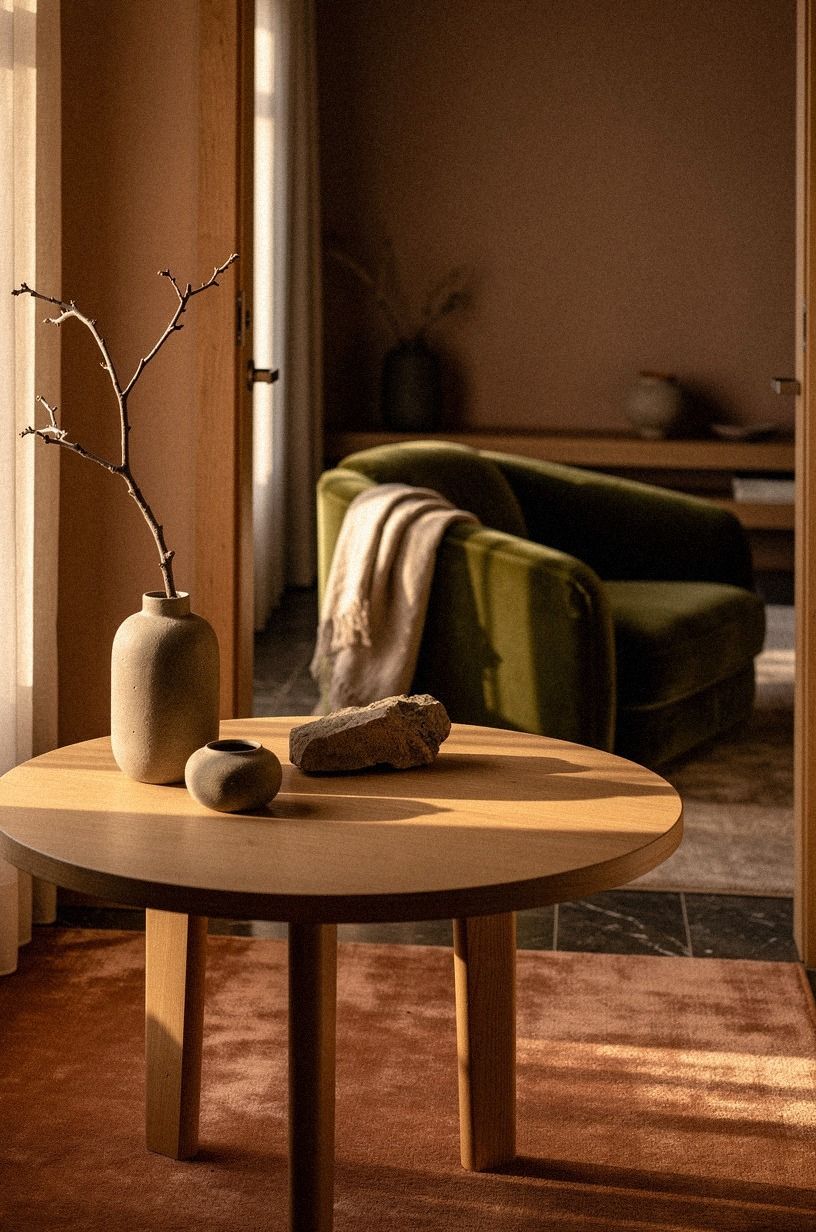
A round coffee table can solve a cramped layout because there are no sharp corners interrupting your path. If your sofa faces two chairs, the circular shape lets your eye move around the arrangement. Your room will feel easier to navigate, especially when guests are standing.
Look for a table close to two-thirds the length of your sofa. That proportion keeps the piece substantial without blocking the seats. I’d choose a simple pedestal table beside deep-pile mohair velvet seating, letting terracotta, stone, and olive carry the color.
Measure the route from the sofa to the door before you order. You don’t want a pretty table that makes everyone squeeze past it. If your space is truly narrow, a soft-edged oval table gives you the same gentle movement with a little more surface.
Keep the surrounding seating loose enough to support the collected seating arrangement.
12How Much Pillow Scale Does Your Sofa Need?
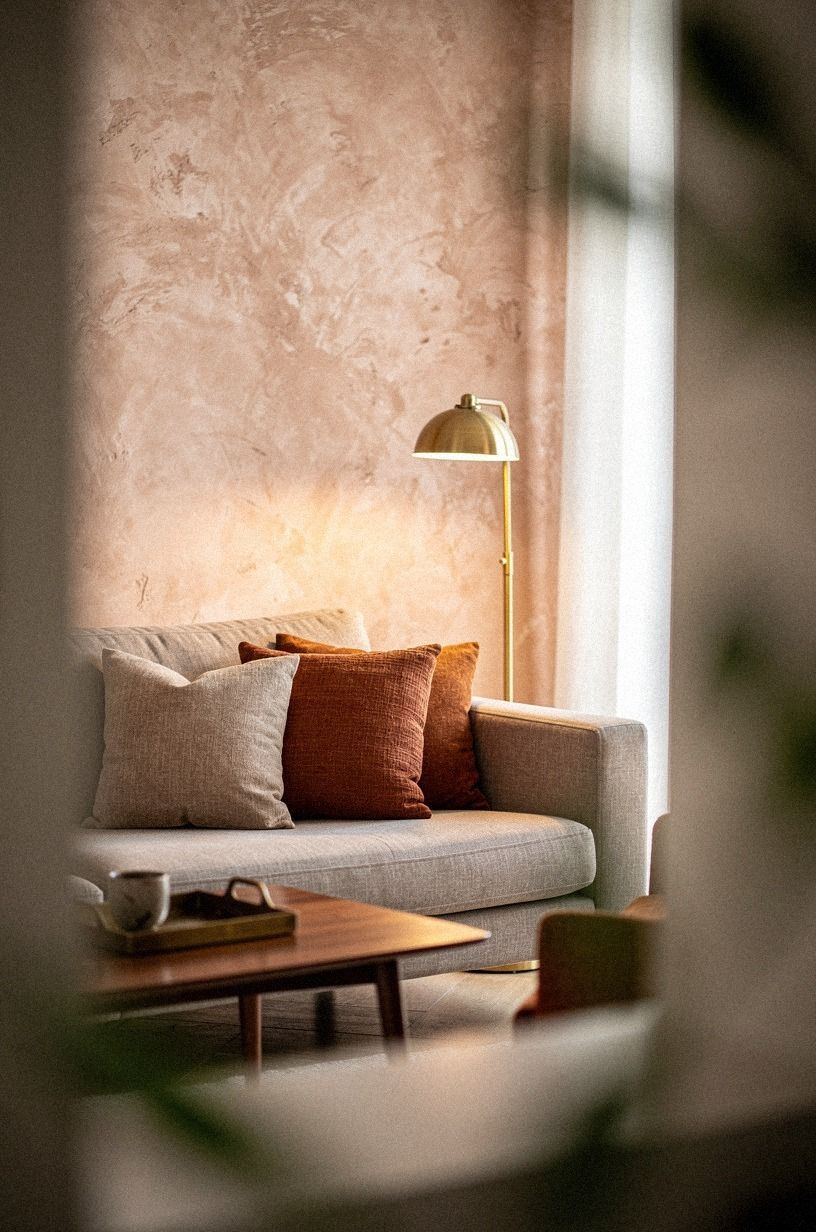
Start with large euro pillows at the back, medium pillows in front, and one smaller lumbar cushion where you’ll sit. Choose clay and linen covers with an aged brass accent against a hand-applied Venetian plaster wall.
13Paint the Built-In Shelves, Not Every Wall
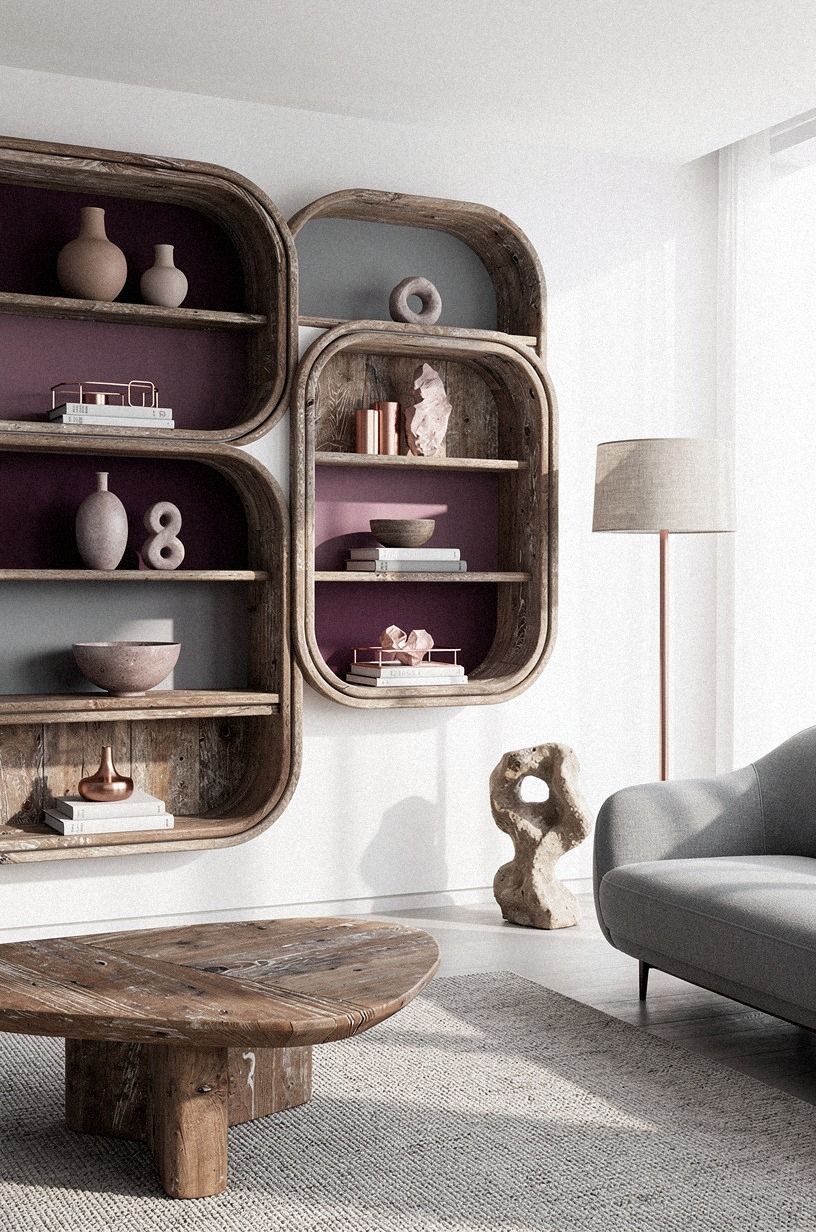
Built-in shelves can carry the room’s strongest color without overwhelming your seating. Paint the backing a deep plum and keep the surrounding walls soft grey. Your books, pottery, and framed photographs will gain a richer shadow behind them.
I’d leave some shelf space empty. A dense display makes your living room feel busy, while three or four objects with different heights let the wall show through. You’ll want one practical basket for remotes, but it shouldn’t become a hiding place for everything.
Try a reclaimed weathered teak basket or shelf accent beside a stack of books and one rose-gold lamp. The materials feel organic together, yet each one catches light differently. If you’re renting, removable wallpaper on the back panel can create a similar effect with less commitment.
This treatment pairs especially well with the two-wood rule.
14Use the Two-Wood Rule for a Calmer Room
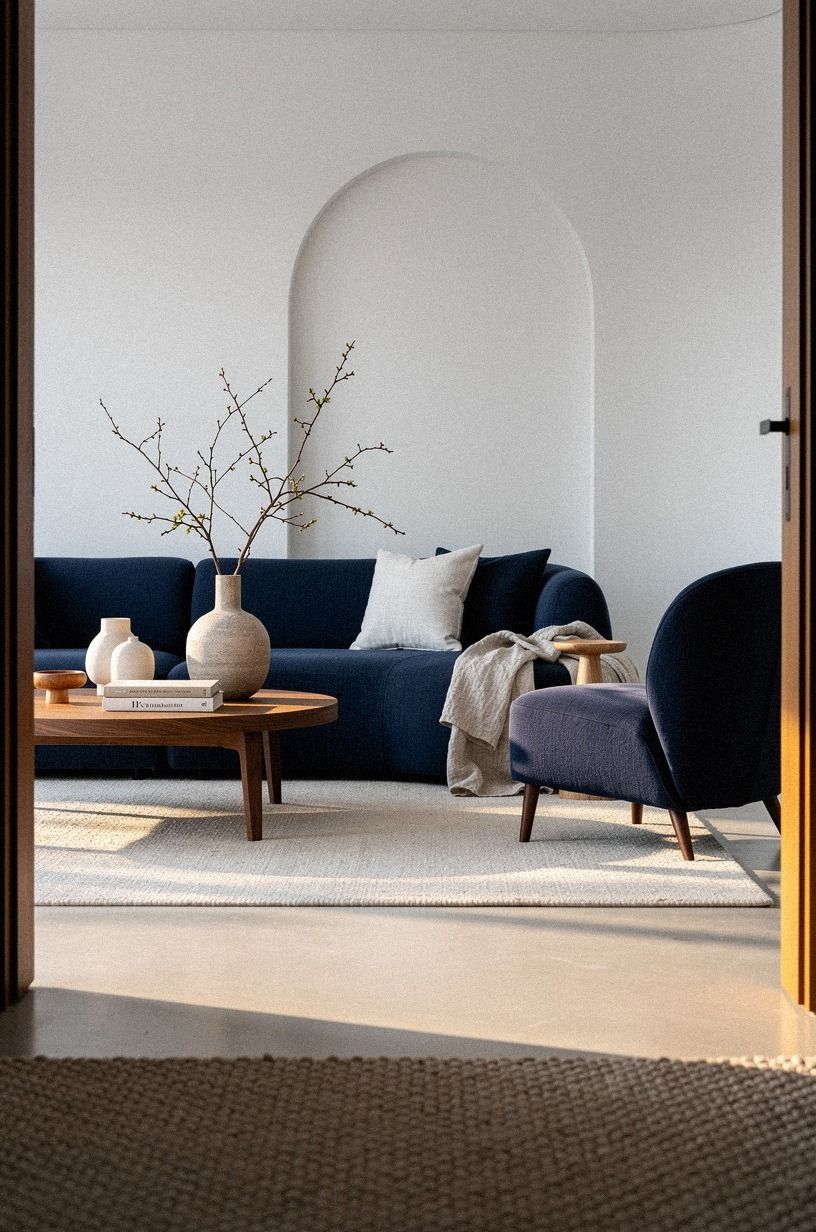
Choose walnut as your main wood, then keep the other wood pale or painted white. Washed Belgian linen, navy, and white can supply contrast without adding another competing grain.
A white-effect storage unit can work when you soften its straight lines with woven baskets and a substantial lamp. I’d avoid pairing it with several pale pine pieces, though. Your eye needs one deeper walnut anchor to keep the room from looking temporary.
I learned this after moving a dark walnut console into a pale room and worrying it would feel heavy. It didn’t. The console gave the lighter pieces something to stand against, and your room may need that same bit of gravity.
Use the darker wood as a bridge between Revere Pewter and your pale upholstery.
15Television Above the Mantel or Around the Room?
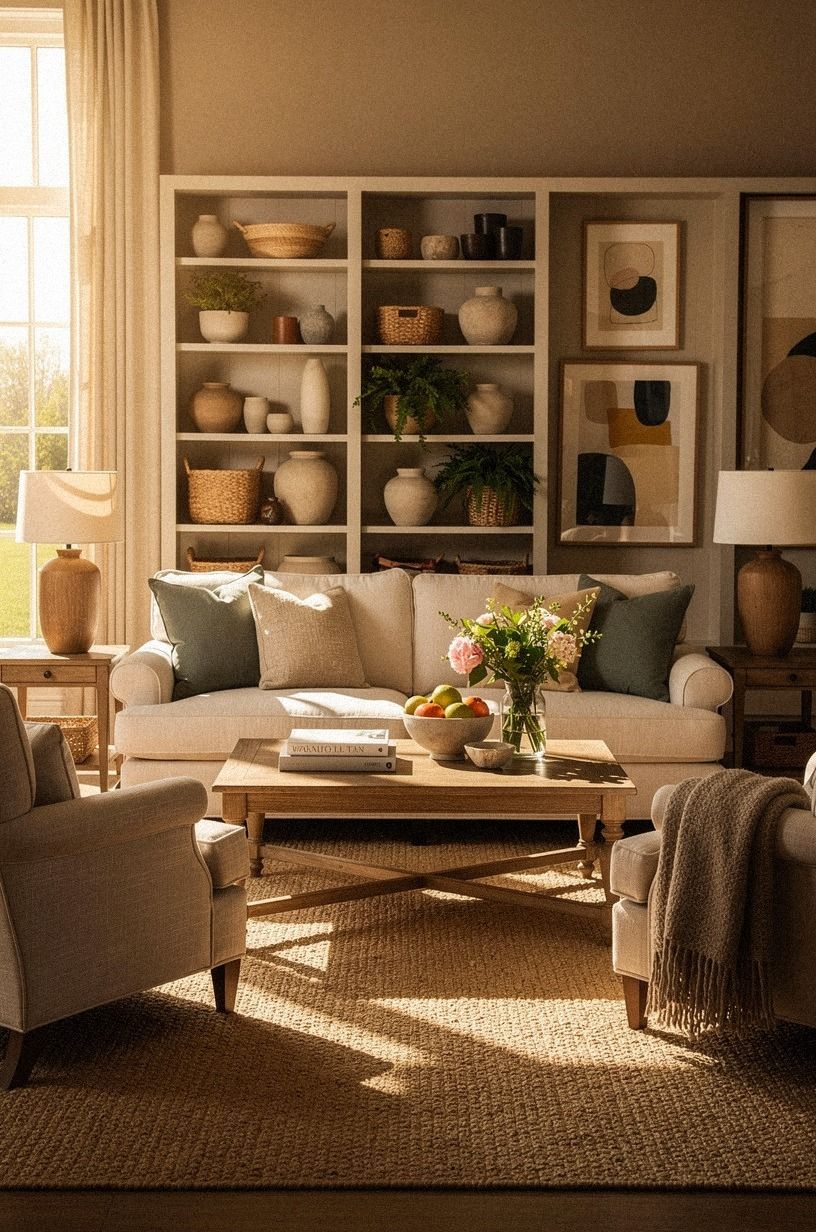
Your television doesn’t have to become the visual center of your living room. Let it sit among emerald, gold, and cream, with a cerused white oak console below.
16Layer Fall Warmth Without Clutter
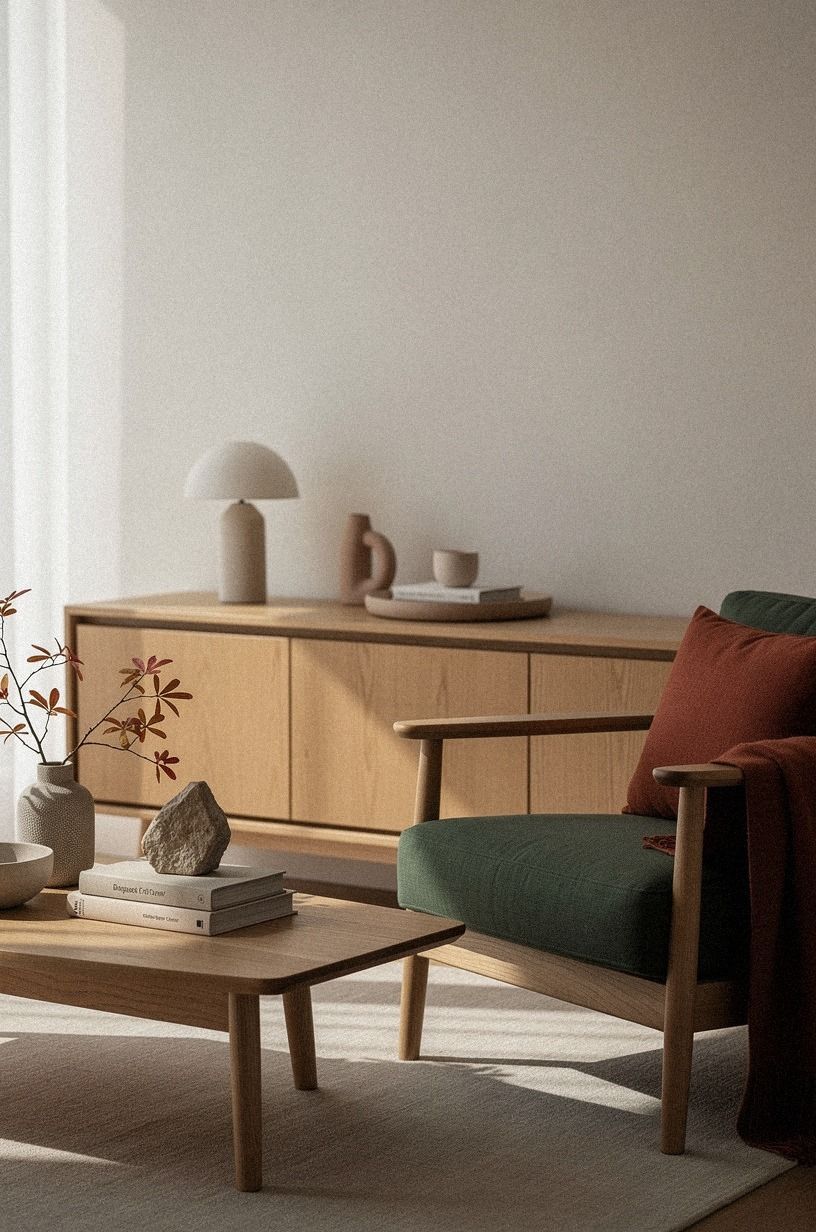
For fall, bring in wool, washed cotton, and a slightly deeper palette rather than covering every surface with seasonal decorations. Your sofa can take a rust merino wool throw, while the coffee table gets a shagreen tray on natural oak with one forest green cushion nearby.
I’d avoid plastic pumpkins and themed signs. They pull your room away from the Nancy Meyers mood and make the styling feel temporary. A thick throw folded over one arm looks more inviting than a dozen small seasonal objects.
Your existing palette can handle the shift. Add tobacco, olive, and muted clay through textiles, then remove them when spring arrives. The room will stay warm and sophisticated without needing storage bins full of decorations.
The best seasonal changes still follow the three-source coffee table rule.
17Real-Life Coffee Table Test
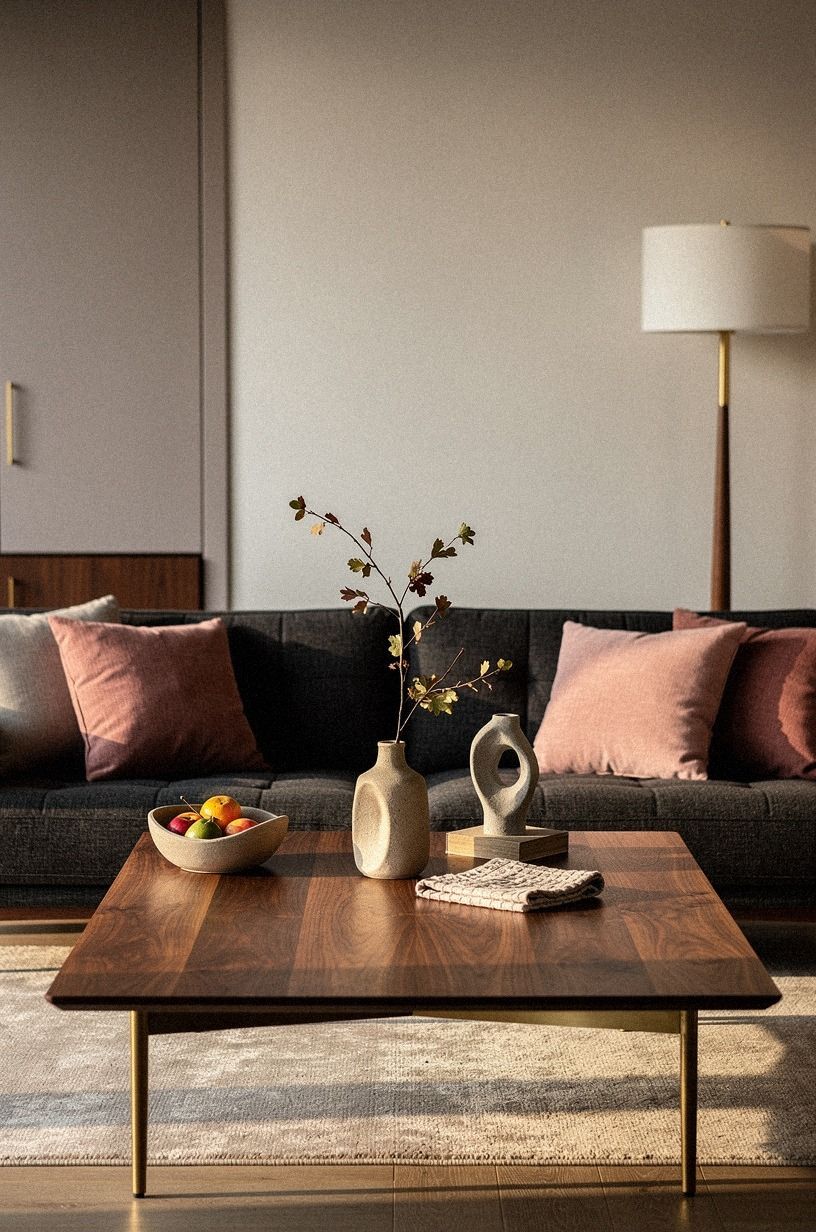
A coffee table needs to support your habits, not just your daily life. A book-matched walnut surface, dusty rose textile, and small brass detail should still leave room for a mug.
18Edit the Room Until the Softer Pieces Lead
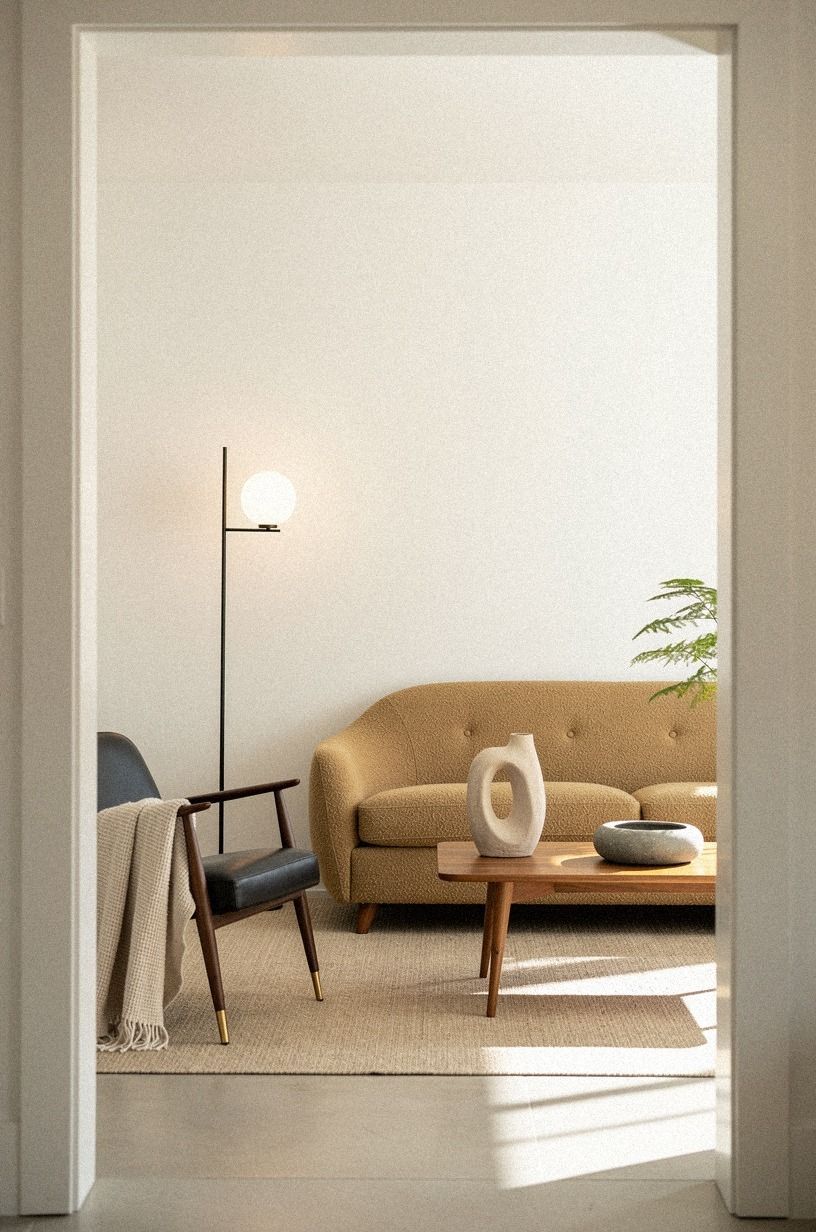
Stand in your doorway and remove the object your eye notices first for the wrong reason. Your living room should lead with the sofa, coffee table, light, and view, not a crowded shelf or oversized accessory. Editing is where the calm feeling usually arrives.
I’d keep an organic bouclé sofa if its proportions work, then replace one weak side table before buying more decor. A better silhouette can do more than another pillow. Your room needs useful shapes, not constant additions.
Walk through the space at night, when the lamps are on and the overhead light is off. That’s when you’ll see whether the warm white, camel, and black accents are working together. If one piece still feels loud, trust yourself and move it out.
The final check should include the television placement decision and the room’s real walking paths.
The Nancy Meyers Choice I’d Make
I’ve learned that this style isn’t really about copying a movie set. It’s about making ordinary pieces feel considered through scale, texture, and restraint. A sofa has to be comfortable enough for a long conversation, and a coffee table has to survive the evidence of one.
If your room can’t handle a mug, it isn’t finished.
The most expensive mistake is usually the wrong proportion. People buy the coffee table they love, then discover that it’s too short, too small, or impossible to walk around. I’d spend time measuring your sofa, rug, and pathways before spending money on another decorative object.
A 9 by 12 rug can connect an entire seating group, while a tiny rug can make generous furniture look stranded.
I also think pale rooms need darker notes. Benjamin Moore Revere Pewter beside walnut, Farrow & Ball Hague Blue beside warm white, or Evergreen Fog behind oak can give your eye somewhere to rest.
I went too light in one room once, and every piece looked polite but forgettable. The darker console fixed more than another layer of cream ever could.
Your best version of this look may be imperfect. Keep the pottery you use, the throw that lands on the floor, and the chair nobody wants to give up.
Remove the objects that only perform for attention. When the room feels good at 9 p.m., with a book open and the lamps glowing, you’ve made the right choices.
The Questions Worth Answering First
What is the best Nancy Meyers living room approach for a small living room?
Start with a sofa no deeper than your room can comfortably hold, then choose a round table and an IKEA TONSTAD or slim oak side piece. The benefit is clear circulation. Keep the front legs on an 8 by 10 rug if your layout allows it.
Where can I buy Nancy Meyers living room pieces on a budget?
Try IKEA, Target, Wayfair, Facebook Marketplace, and local thrift stores. Look for solid wood tables, linen-look curtains, and well-shaped lamps before chasing a particular brand. Your best savings often come from buying a used coffee table and refinishing only the worn top.
How much does a Nancy Meyers living room makeover cost?
A small refresh can use what you own plus about $100 to $300 for textiles, paint, or secondhand accessories. A typical US budget tier runs $300 to $1,200, while a mid-range room with a sofa and quality rug runs $2,500 to $8,000.
Can I create a Nancy Meyers living room on a budget?
Yes, and you can start free. Rearrange your sofa, remove clutter, borrow lamps from another room, and group books by color or height. For a paid update, try linen-look curtains, one large thrifted rug, and a painted side table before replacing your seating.
Is Nancy Meyers living room styling worth it in a small space?
Yes, because a small room benefits from clear scale and fewer competing pieces. Choose one sofa, one round table, and a light rug with the front legs resting on it. Your room will feel more open when every walkway stays easy to use.
Is Nancy Meyers living room styling a good idea for a rental?
Yes. Use removable wallpaper on a shelf backing, tension rods for linen curtains, plug-in sconces, and washable slipcovers. Your landlord won’t have to approve permanent work, and you can still create warm layered lighting with lamps and low-wattage bulbs.
Start With the Coffee Table
If I had to pick one, I’d start with the coffee table. The wrong size makes every sofa arrangement feel awkward, while the right 16 to 18 inch table gives your room breathing space and a place to live. Pin this guide for later, then measure before you shop.


