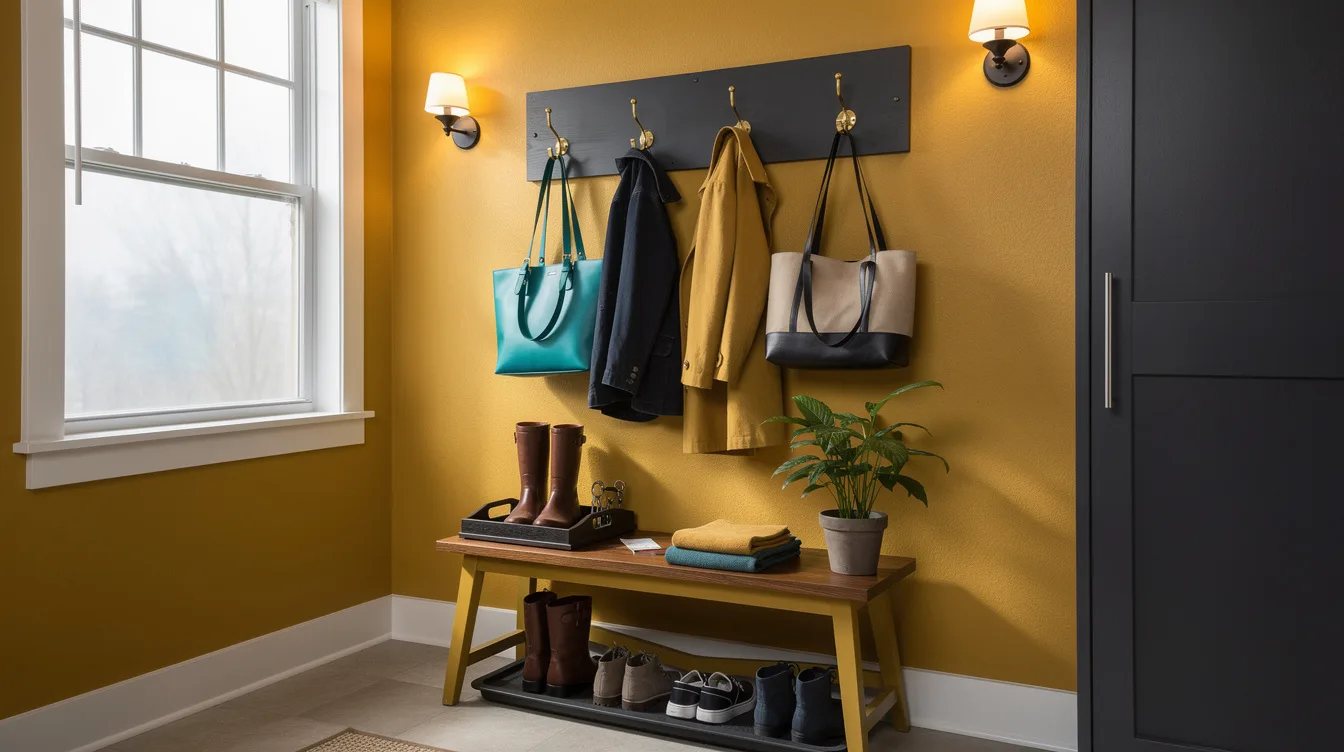
Mudroom Clutter Screaming for Help? 14 Ace Hardware Fixes Under $185
29 october 2026The old mudroom plan on our sketch had lockers, new flooring, and a price tag that killed the project before the first coat went up. We got a workable landing zone from a roughly 36-inch mounting board, four hooks, and a boot tray, with a realistic DIY rail budget of about $30 to $80.
The point is a useful drop zone, not a construction project. The result depends more on attachment, spacing, and cleanup than on built-ins.
What you will find inside
- Cut a Short Board for Four Hooks
- Space the Hooks for Real Coats
- Choose a Compact Hook for Light Gear
- Warm the Board With Antique Brass
- Use Satin Nickel Against Dark Paint
- Anchor the Rail Before Loading It
- Switch to Over-Door Hooks When Holes Are Off Limits
- Set Boots on a Dedicated Tray
- Add a Small Bench for Shoes
- Give Keys a Defined Landing Spot
- Use the Underside of an Existing Shelf
- Keep Brass and Zinc Intentional
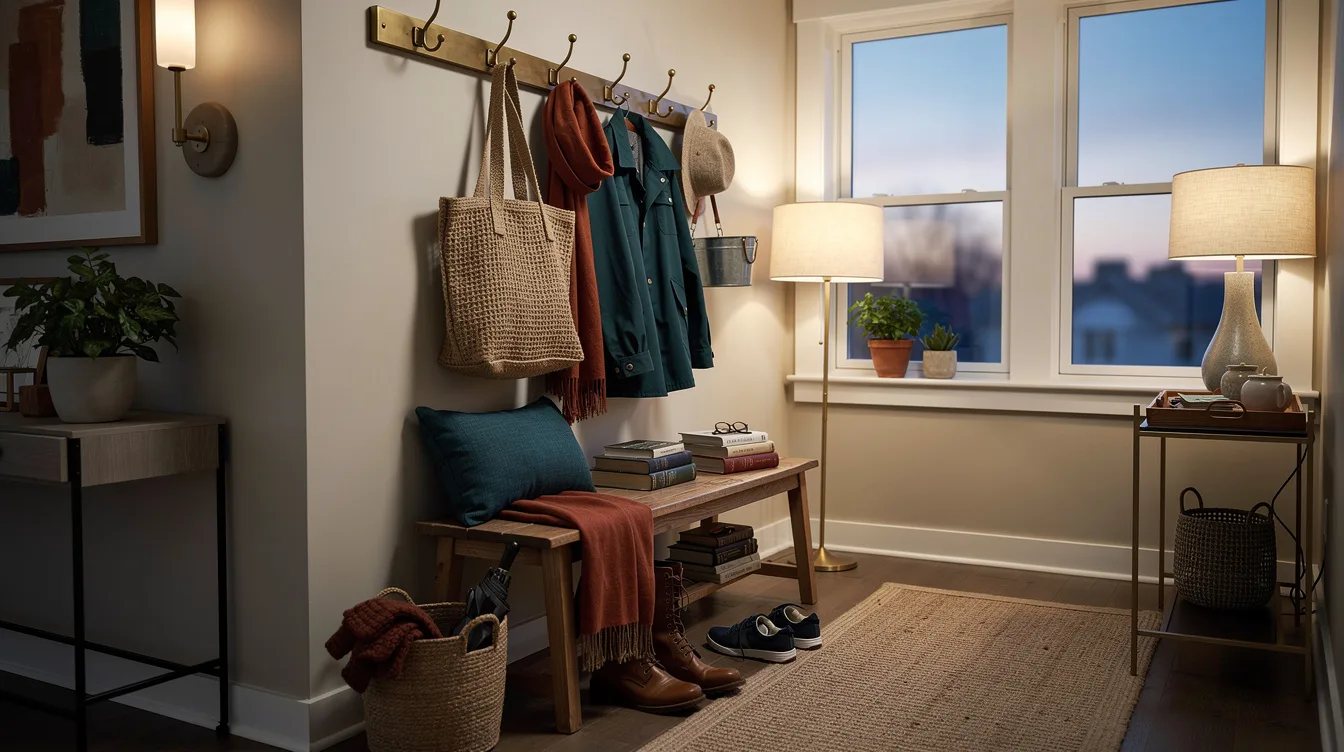
- Finish the Rail Before Mounting It
- Price the Setup Before Buying Pieces
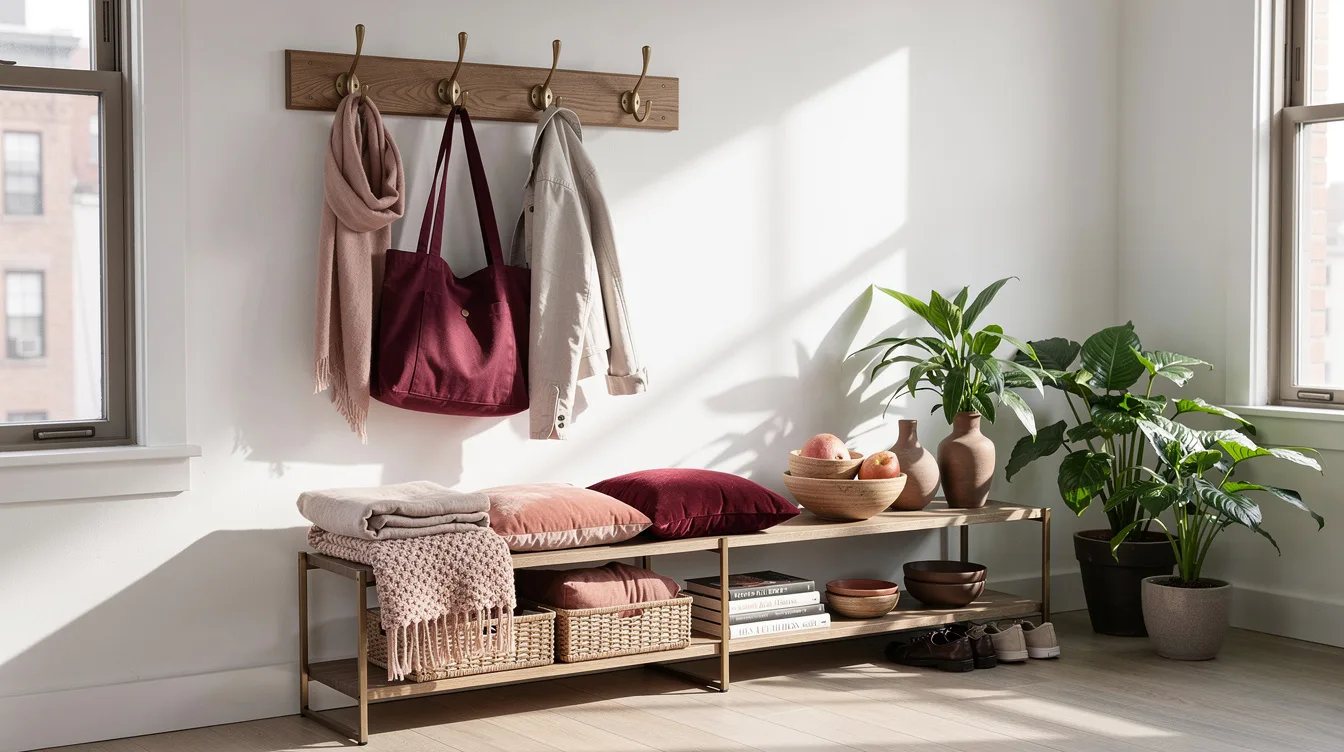
Cut a Short Board for Four Hooks
We started with a roughly 36-inch rail because it fits an unused stretch of entryway wall without making the room feel like a locker room. A nominal 1-by-4 pine or poplar board gives enough width for hardware while staying visually light.
Four Ace bright-brass coat-and-hat hooks cost $3.99 each at the time of research, putting the hook total at $15.96. With the board, screws, and a small amount of finish, a realistic completed rail lands around $30 to $50.
Space the Hooks for Real Coats
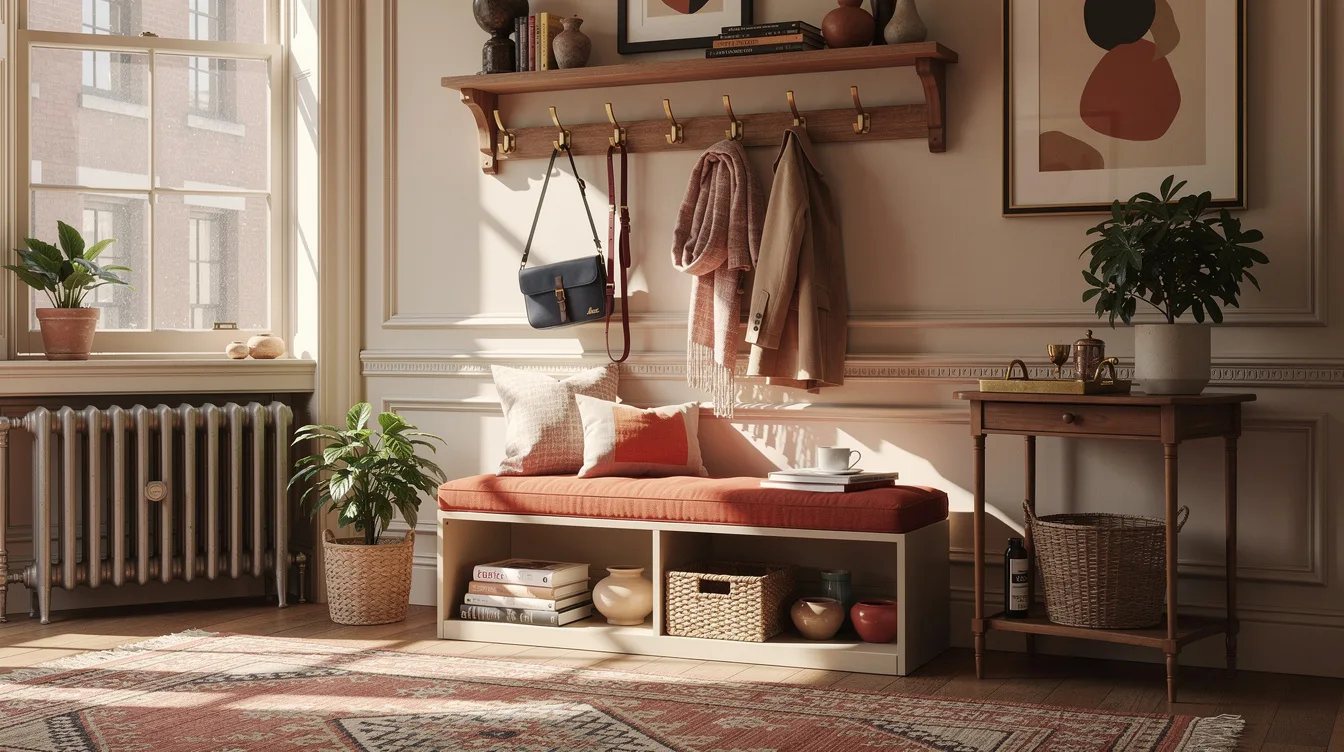
Mark the board at roughly 9-inch intervals so coats, tote bags, and scarves have room to hang without merging into one heavy row. This spacing also leaves usable space at both ends of the rail.
The Ace 3 1/4-inch brass hook has a traditional profile that works well on a painted board. Skip a crowded layout: four useful hooks beat six that force every jacket into the same knot.
Choose a Compact Hook for Light Gear
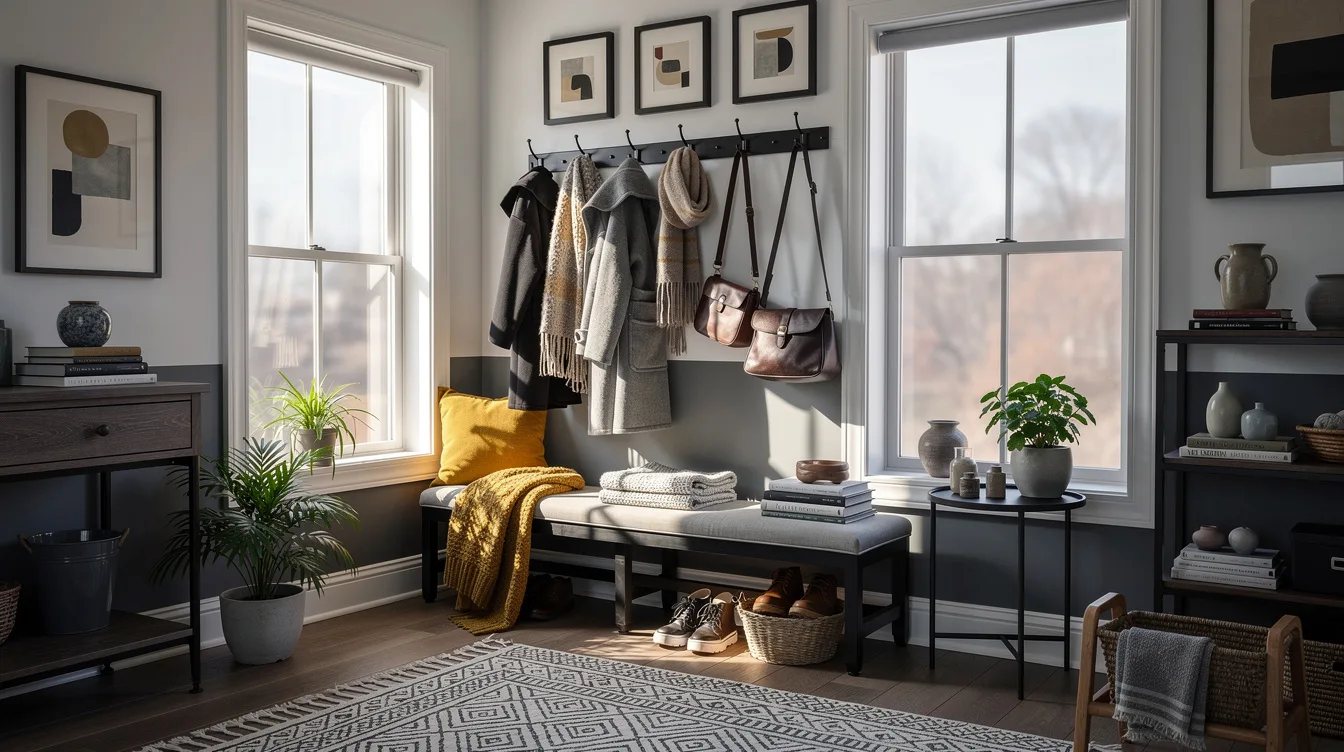
Use Ace small double garment hooks when the rail will hold hats, dog leashes, lightweight bags, or children’s jackets. Each one was listed at $5.99 during the October 2026 research, and the 1 3/4-inch listed length keeps the rail visually tidy.
These compact hooks are the better choice for a narrow passage where large coat hooks would project too far. They should not become the main storage point for overloaded backpacks or wet winter coats.
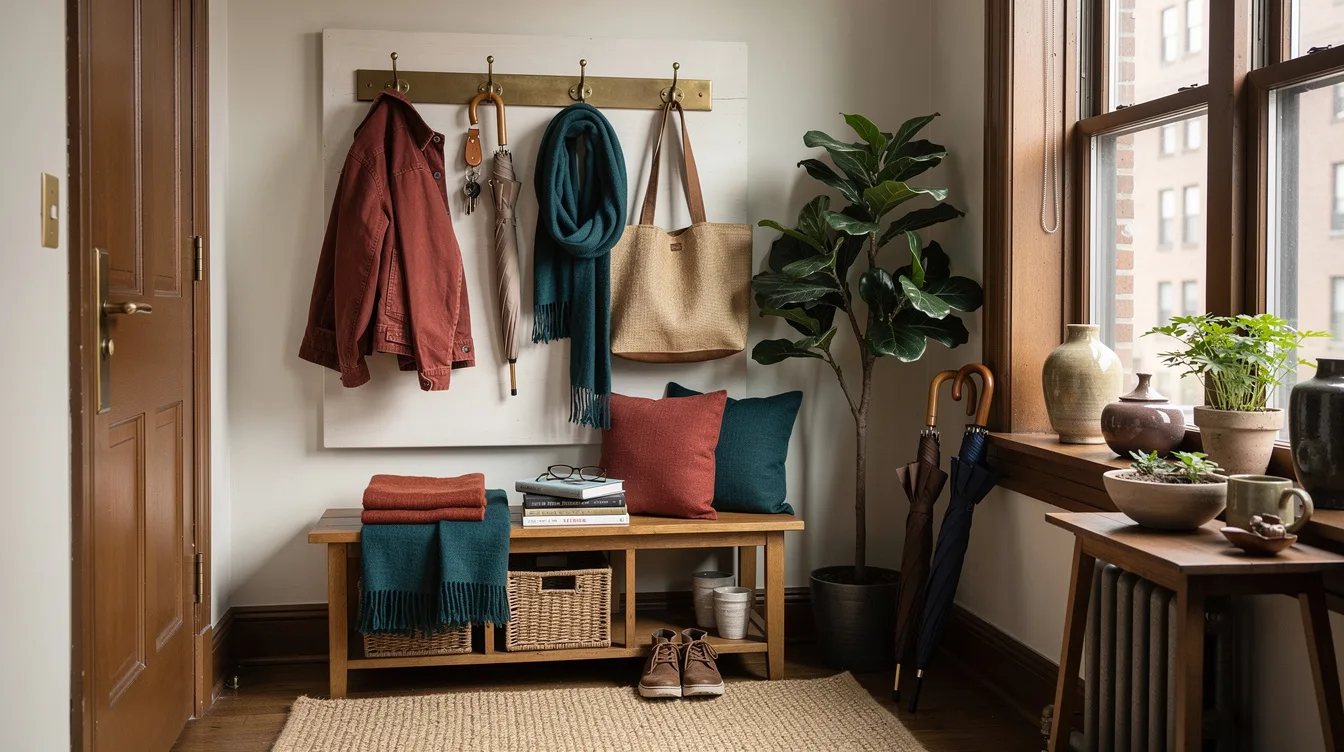
Warm the Board With Antique Brass
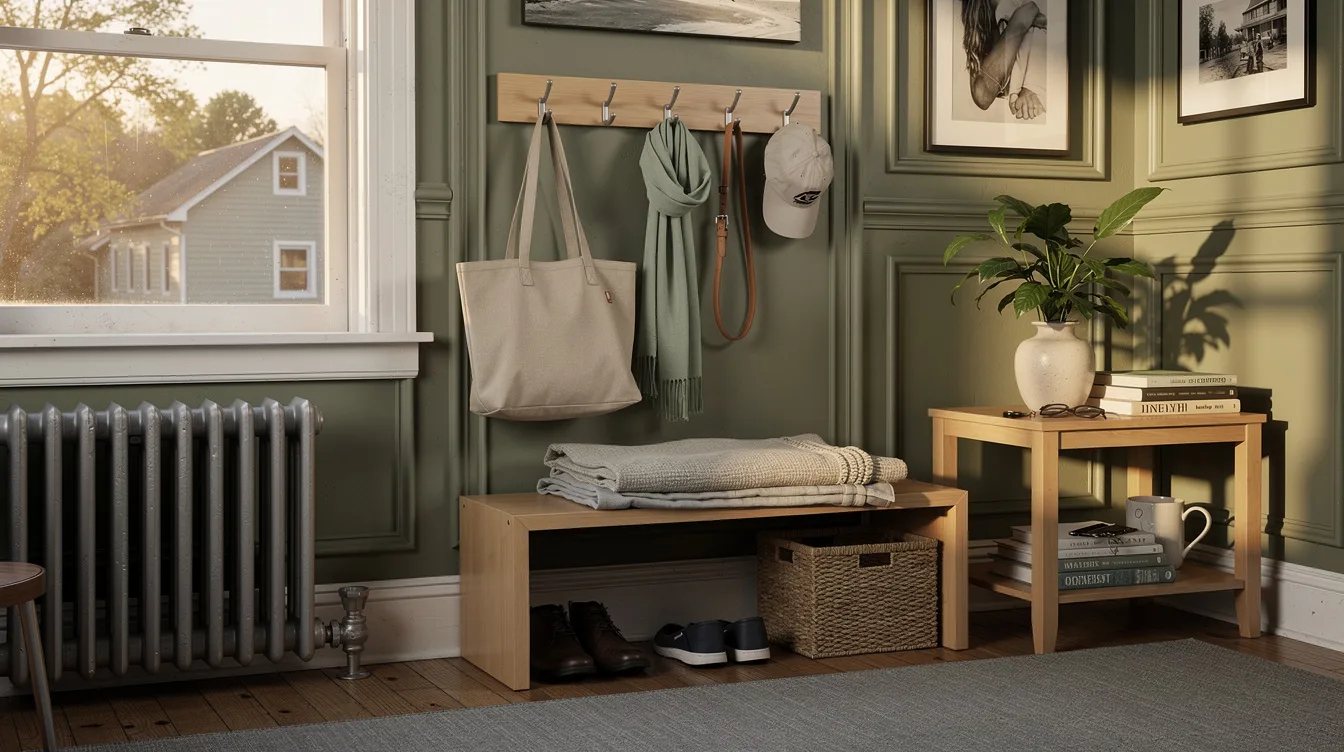
For a softer, older-house look, pair a painted or stained board with a Schlage medium coat-and-hat hook in antique brass. Ace listed the hook at $6.99, with a 1 3/4-inch product length.
A muted cream, olive, or warm gray board keeps the metal from looking overly shiny. This combination is especially effective beside oak flooring or a walnut-toned bench, where a bright silver finish could feel disconnected.
Use Satin Nickel Against Dark Paint
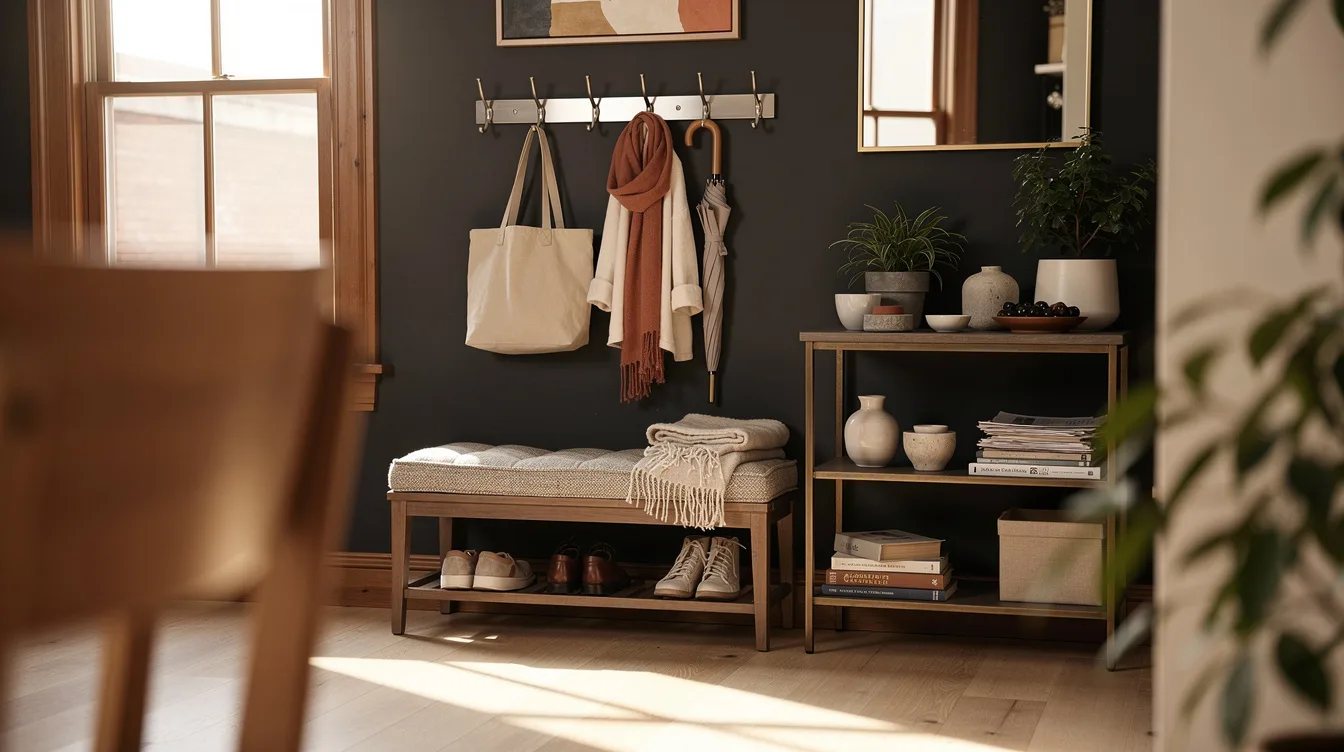
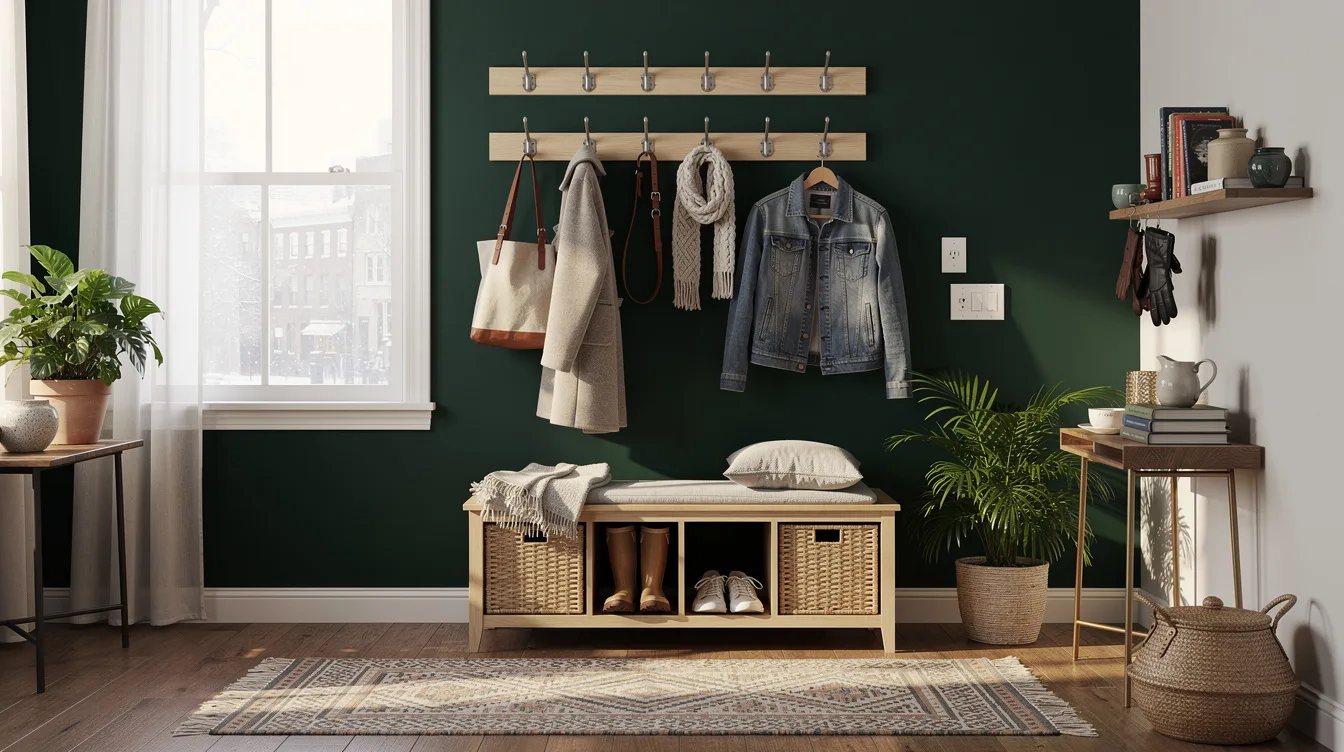
A dark blue, charcoal, or mushroom-colored board gives National Hardware satin-nickel double hooks a clean contrast. Ace listed these zinc hooks at $8.59 each, making them a practical middle-price option for everyday entryway use.
Satin nickel is forgiving around fingerprints and scuffs, which matters in a busy drop zone. The finish also works with stainless appliances nearby, so the rail can sit between the kitchen and front door without introducing another metal language.
Anchor the Rail Before Loading It
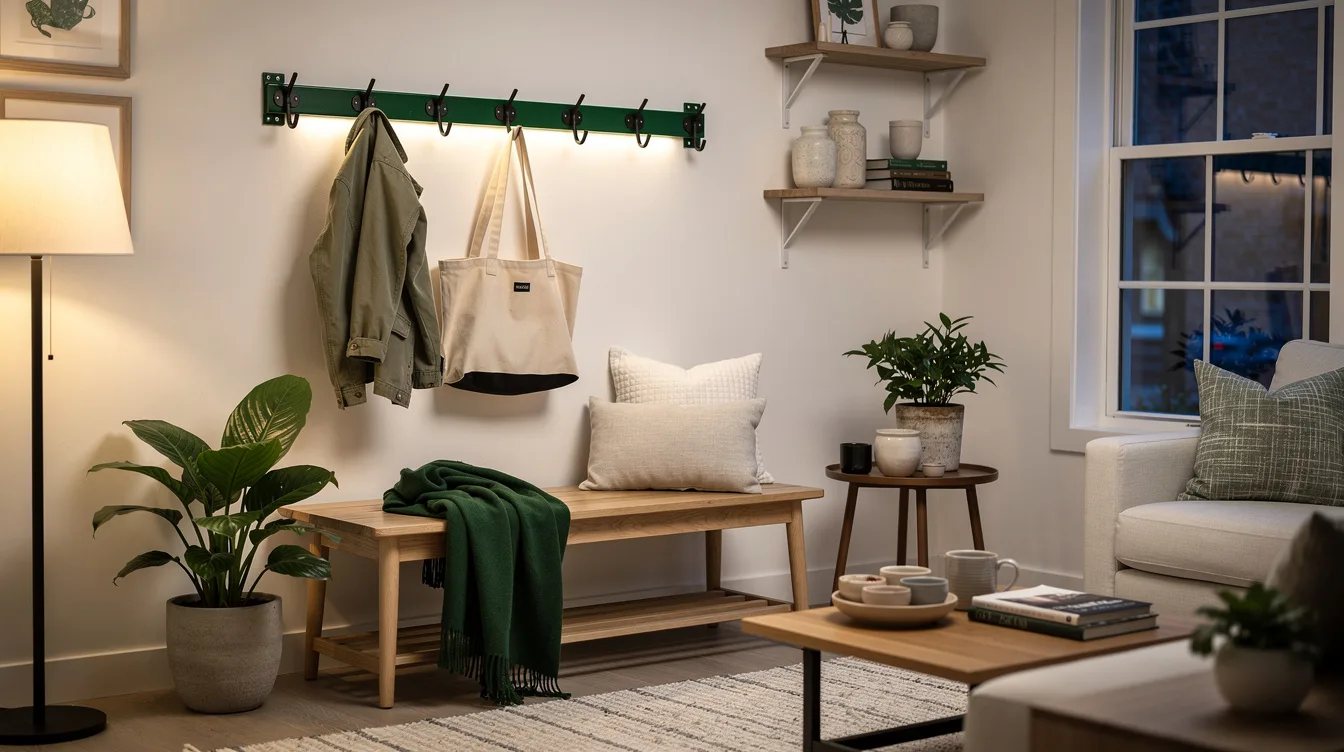
No renovation does not mean no drilling. A screwed-on rail is the responsible choice for coats and bags, so locate wall studs when possible and use appropriate anchors where the board cannot meet framing.
Wood screws should pass through the board securely without splitting its edges. Test the rail with an empty coat first, then add heavier bags gradually; a hook’s advertised load rating depends on proper installation and the condition of the wall.
Switch to Over-Door Hooks When Holes Are Off Limits
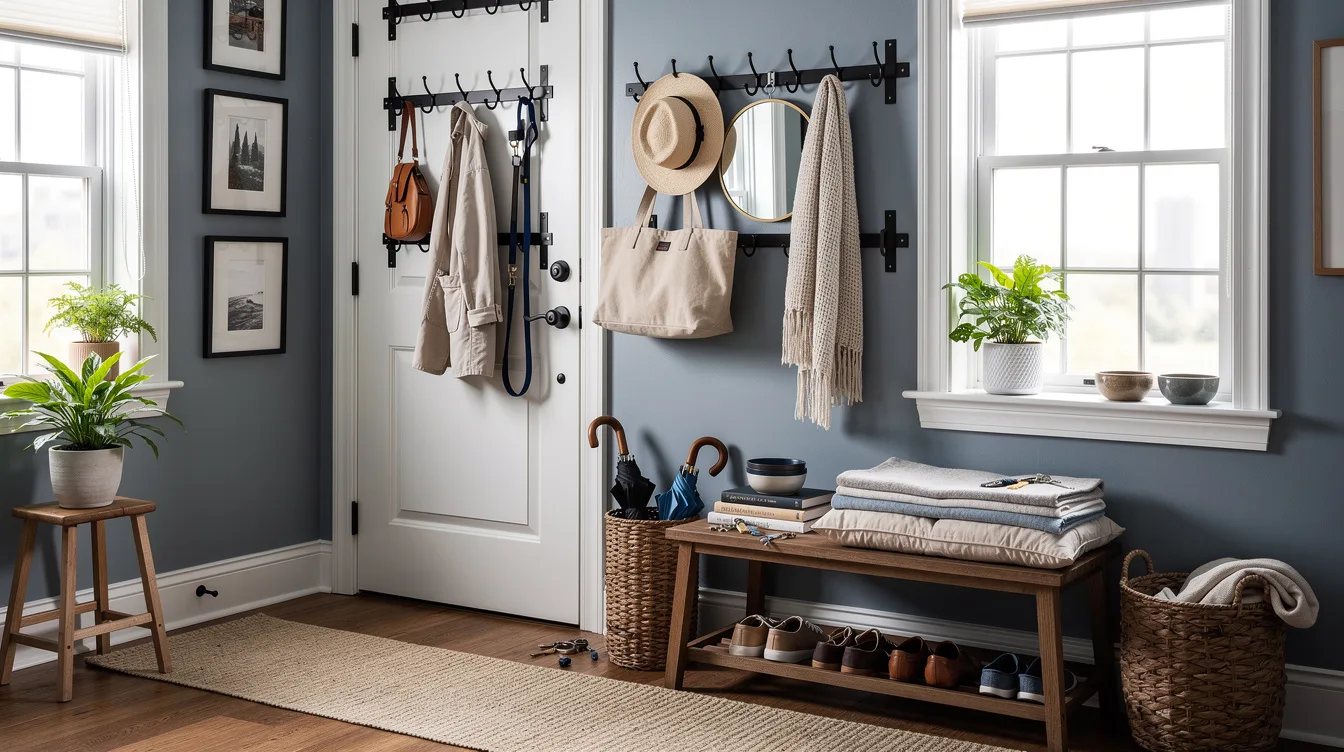
When the lease or wall surface rules out drilling, start with a Spectrum satin-nickel over-door hook. Ace listed item 5898481 at $3.99, with a listed 0.5-inch length, though the full dimensions and door fit should be checked before purchase.
This is the strongest no-drill starting point for a few coats, hats, or bags. Measure the door clearance first, because a tight gap can prevent the hook from sitting flat or keep the door from closing cleanly.
Set Boots on a Dedicated Tray
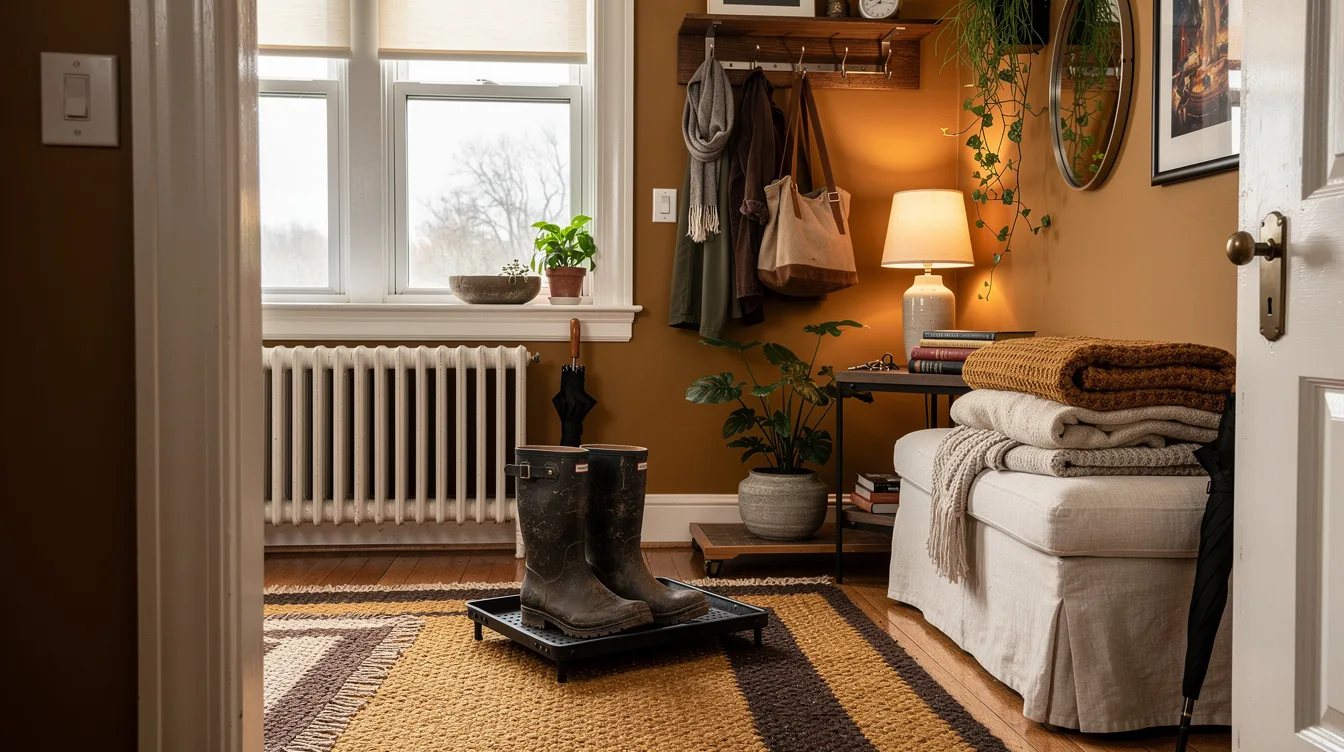
A rail handles upper-body clutter, while a rubber boot tray keeps wet footwear from spreading across the floor. Choose a tray sized for the entry path, with a raised edge and a surface that can be lifted for cleaning.
Place it directly below the hooks rather than across the walking route. A modest tray is more useful than an oversized one that turns the doorway into a permanent obstacle course.
Add a Small Bench for Shoes
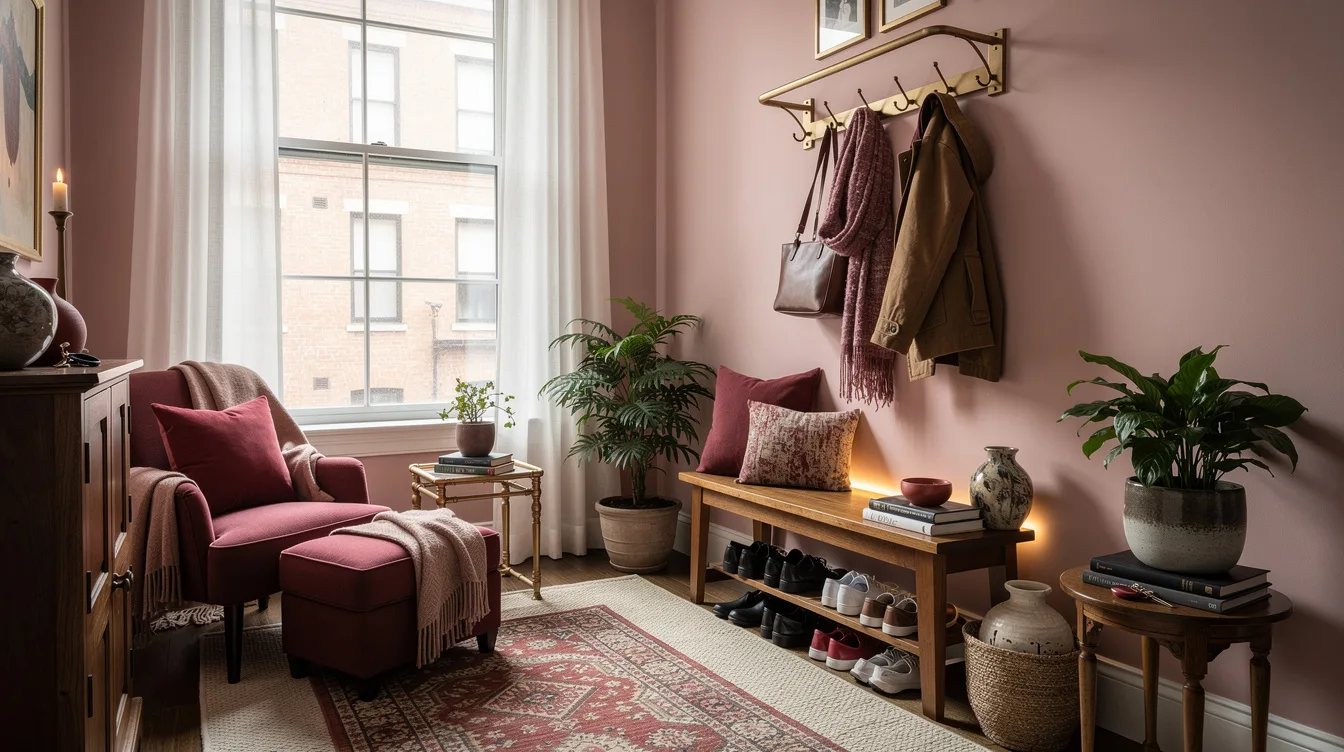
A budget bench makes the rail-and-tray arrangement work like a real landing zone. Look for a narrow wood or metal bench with a seat high enough for comfortable shoe changes, then leave open space beneath it for the boot tray.
Our planning range for a simple entryway setup is roughly $95 to $185, including a budget bench, footwear tray, and key storage. That is a planning range, not an Ace bundle price, so keep the pieces separate when comparing costs.
Give Keys a Defined Landing Spot
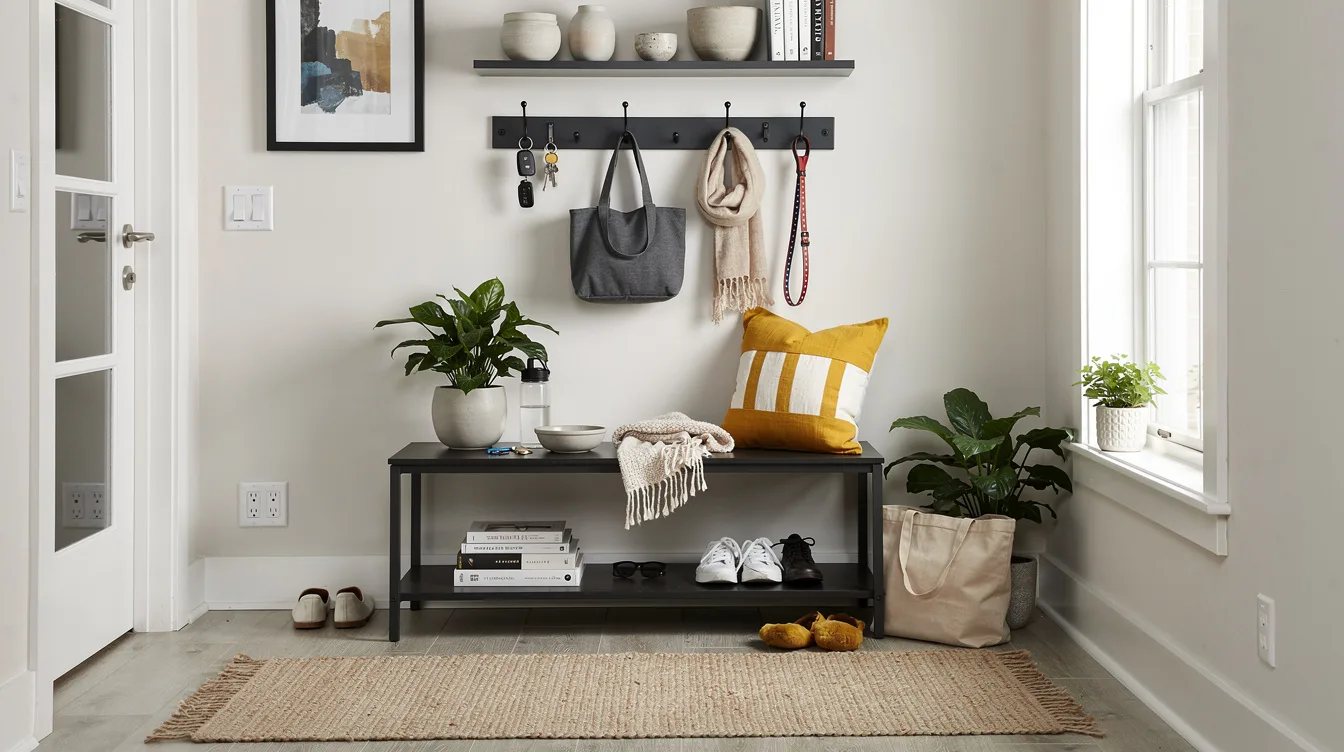
Use a small metal key tray or a shallow wood bowl on the bench to stop keys from migrating to the kitchen counter. The storage only needs to hold daily essentials, so a compact footprint is preferable to another large wall fixture.
If the bench has no surface, place a small screw-mounted cup beside the rail or reserve one hook for a key lanyard. The best location is the one reached immediately after opening the door, not the one that looks most symmetrical.
Use the Underside of an Existing Shelf
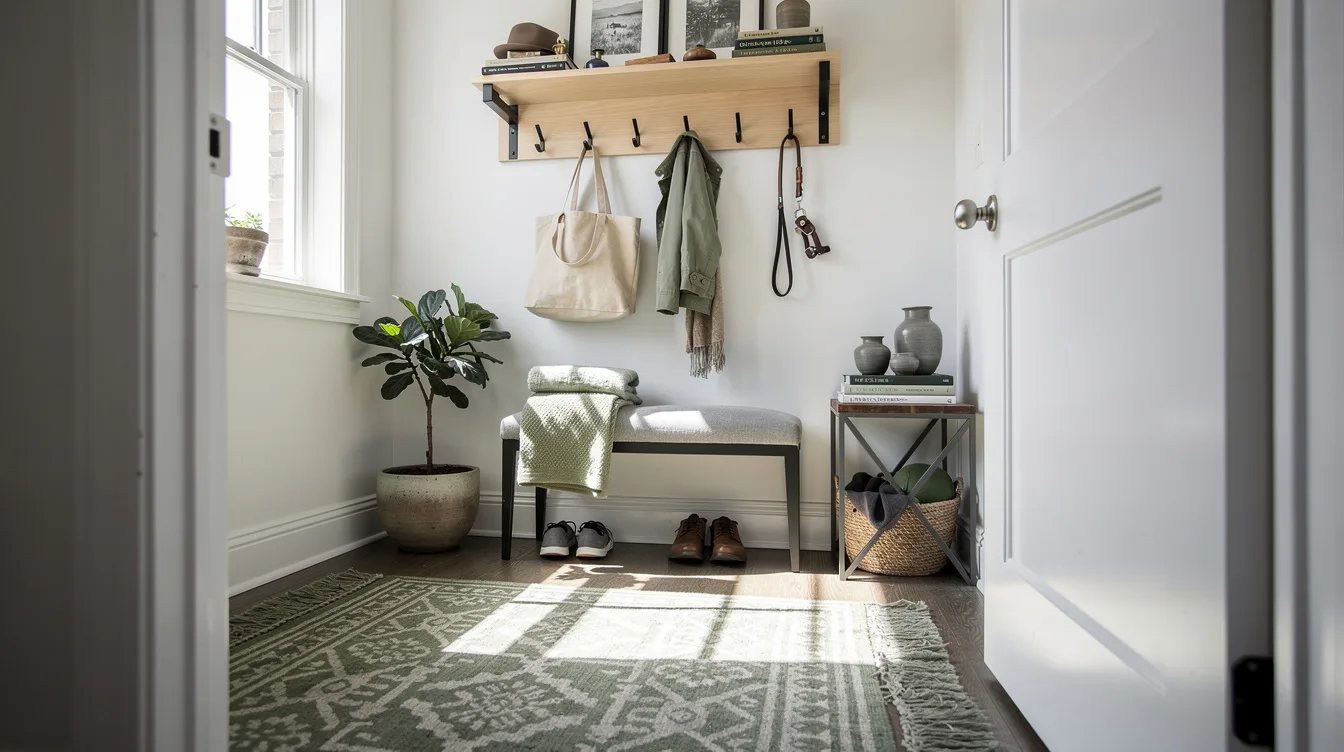
If the entry already has a sturdy shelf, add a National Hardware undershelf coat hook beneath it instead of installing another rail. Ace listed the die-cast zinc hook at $11.99 and described it as suitable for a 35-pound load, subject to proper installation.
This approach creates hanging space without taking more wall width. Check the shelf construction first, because a thin decorative shelf may not support the fastener or the combined weight of coats and bags.
Keep Brass and Zinc Intentional
Mixing finishes can work when each one has a clear job. Use brass hooks on the main visible rail, then reserve satin nickel for an over-door hook or an existing shelf where it reads as a separate utility piece.
Material matters as much as color: Ace’s listed brass hooks and National Hardware’s satin-nickel hooks are described differently, with the latter made from zinc. Compare the actual construction when durability and weight matter, not only the finish name.
Finish the Rail Before Mounting It
Paint or stain the pine mounting board before attaching it to the wall. This makes the edges easier to cover and prevents a rushed finish from ending up behind coats and bags.
Use a satin or eggshell wall paint for a painted rail, or a clear protective finish over stain. The board should look deliberate but still handle scuffs, because mudroom hardware earns its keep through daily use.
Price the Setup Before Buying Pieces
For a hook rail alone, plan on about $30 to $80 for the board, hooks, mounting hardware, and finish. A simple entryway arrangement with a budget bench, footwear tray, and key storage usually belongs in the roughly $95 to $185 planning range.
We could not verify a specific complete decorative Ace mudroom hook-and-rail kit in the current online catalog. Treat the project as a small collection of compatible parts, and confirm the selected Ace store’s price and stock before purchasing.
Keep reading
- Countertops Screaming for Help? 12 Small-Space Styling Fixes for $9.99
- Cabinets Screaming for Help? These 14 Dollar Tree Fixes Start at $1.25
- Narrow Pantry Screaming for Help? 12 OXO POP Setups Under $128
Start with the rail where coats actually land, then add the tray and bench only if the traffic pattern supports them. A few well-mounted hooks can solve the daily mess long before a full remodel becomes necessary.


