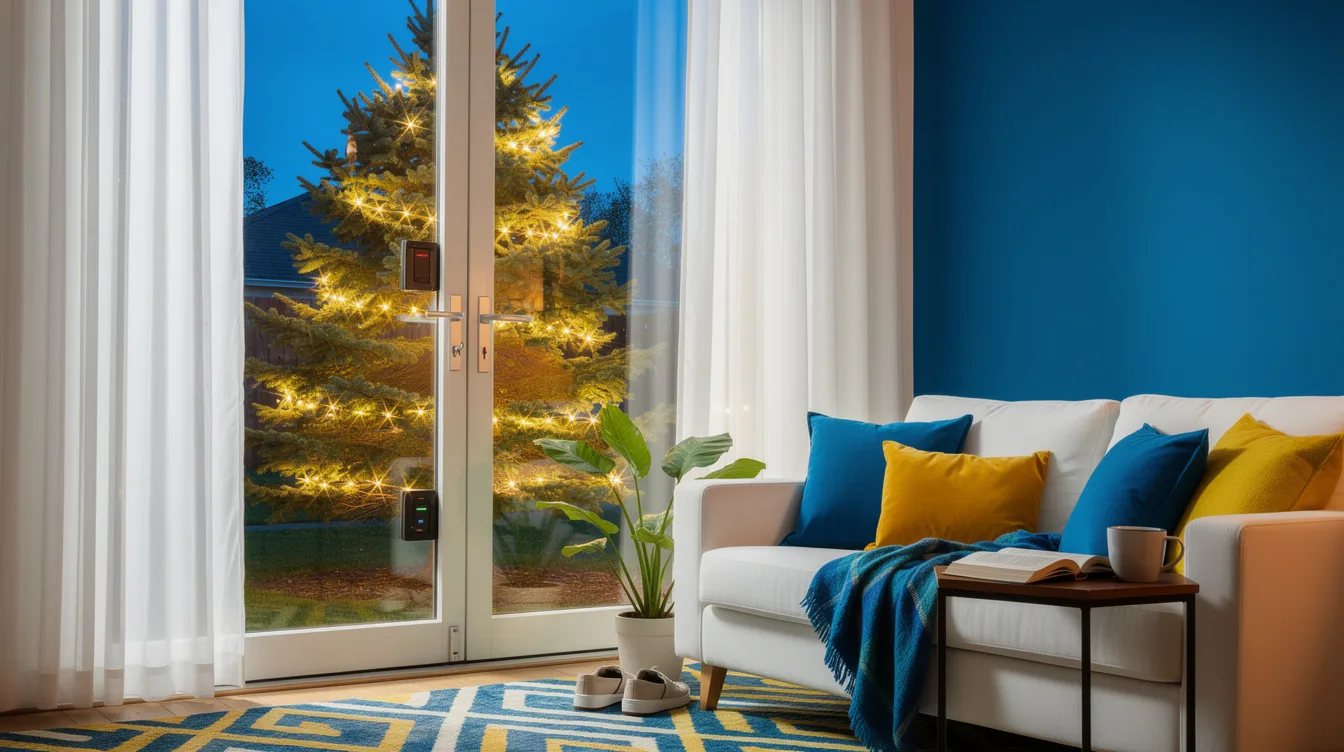
Tree Has No Outlet Nearby? These 12 Amazon Battery Lights Start at $6
29 october 2026The tree is in the far corner of the yard, the nearest outlet is inside the house, and a seven-foot string will barely reach one branch. Amazon listings put useful two-string battery sets around $16 to $22, with roughly 33 to 66 feet per string, so the smart purchase begins with coverage rather than the lowest price.
Designers treat the battery box, wire color, timer, and weather rating as part of the display. The right setup keeps the tree glowing without a cable stretched across the patio or a dozen tiny power units scattered through the branches.
What you will find inside
- Stop Treating Seven-Foot Strings Like Tree Coverage
- Measure the Tree Before Opening Amazon
- Use Longer Strings for Fuller Branch Coverage
- Divide the Tree Into Lighting Zones
- Check the Battery Box Before Going Outdoors
- Match Wire Color to Bark and Branches
- Keep Multicolor Packs in Their Proper Role
- Choose a Timer Before You Choose More LEDs
- Test Every Mode Beside the Tree
- Hide Battery Boxes Without Blocking Access
- Wrap From the Visible Side First
- Stop Overloading Every Branch With Light
Stop Treating Seven-Foot Strings Like Tree Coverage
The tiny 7-foot fairy light strings sold in multipacks are charming on a wreath or a single branch, but they rarely cover a full tree. A typical Brightown-style pack has about twelve separate strings, each with roughly 20 LEDs, so the bargain quickly becomes a collection of small glowing islands.
Use those short strands for branch accents, tabletop trees, or a few ornaments near the trunk. For a full-size tree, start with longer Amazon listings that offer about 33 feet per string and roughly 100 LEDs per strand.
Measure the Tree Before Opening Amazon
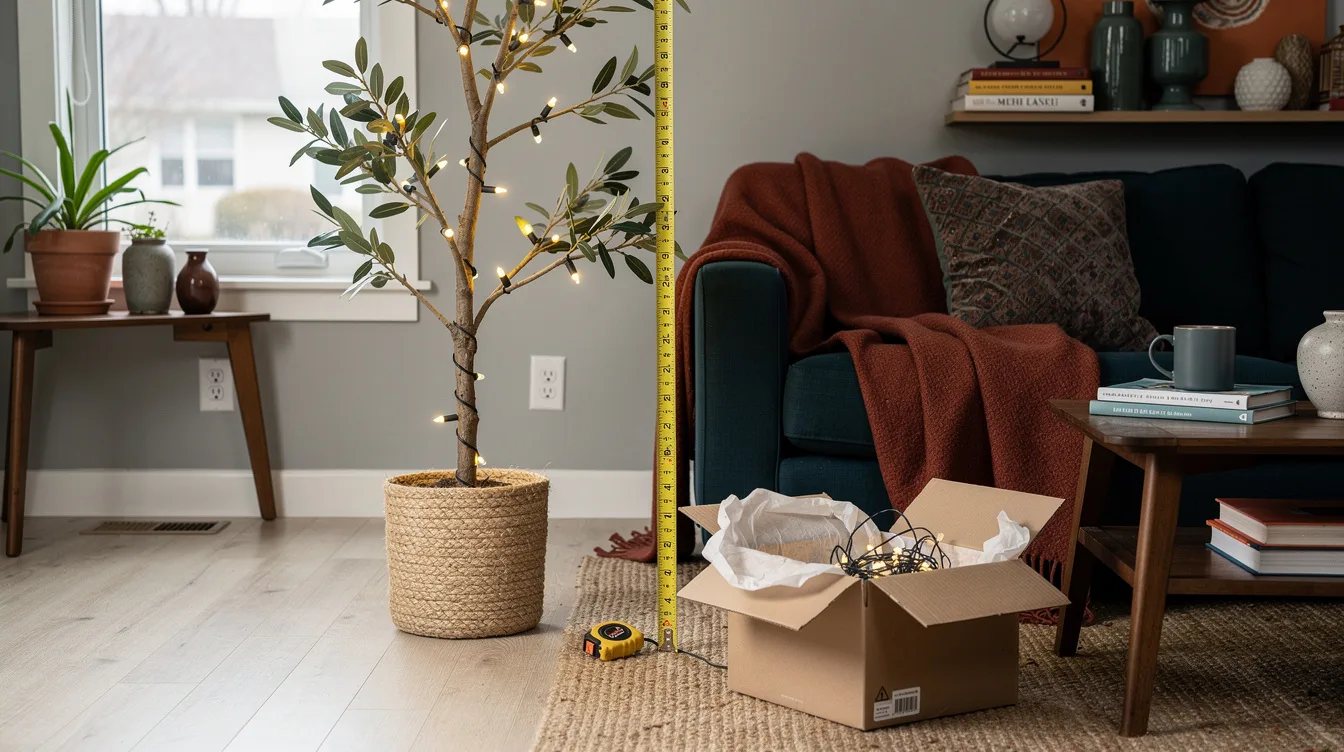
Tree height alone gives you a misleading shopping list because a wide evergreen needs far more wire than a slim one. Measure the approximate height, widest point, and visible side, then decide whether the lights will spiral around every branch or cover only the side facing a window.
A useful starting point is two strings of about 33 feet each, priced around $16 per two-pack on Amazon listings. That length can work for separate sections, but it is an accent plan, not a guaranteed whole-tree coverage formula.
Use Longer Strings for Fuller Branch Coverage
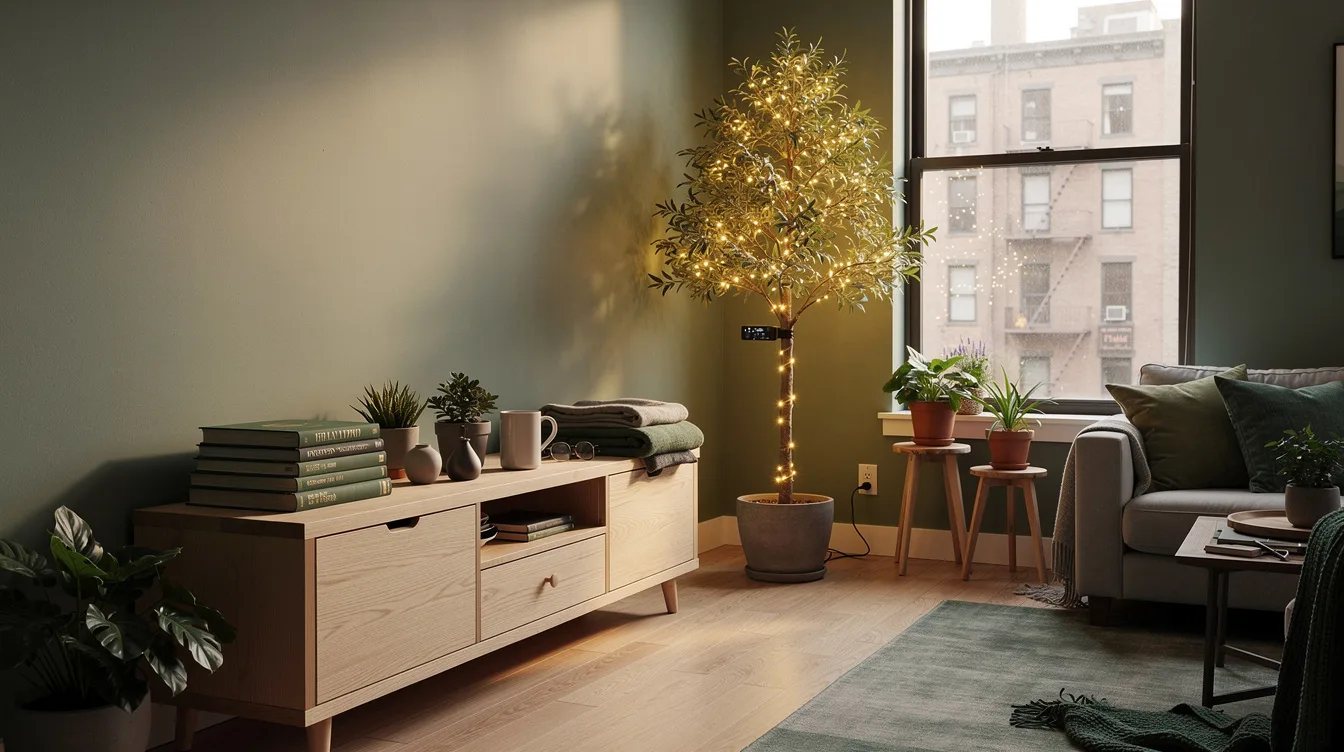
When the tree needs a denser glow, the roughly 66-foot Amazon option deserves attention. Each string carries about 200 LEDs, and the two-pack provides approximately 132 feet of total wire for around $22.
That extra length costs only about $6 more than a shorter two-string set in the supplied listings, while adding roughly 200 LEDs. Designers would use one strand on the lower half and one on the upper half, leaving enough slack to follow the tree's natural width.
Divide the Tree Into Lighting Zones
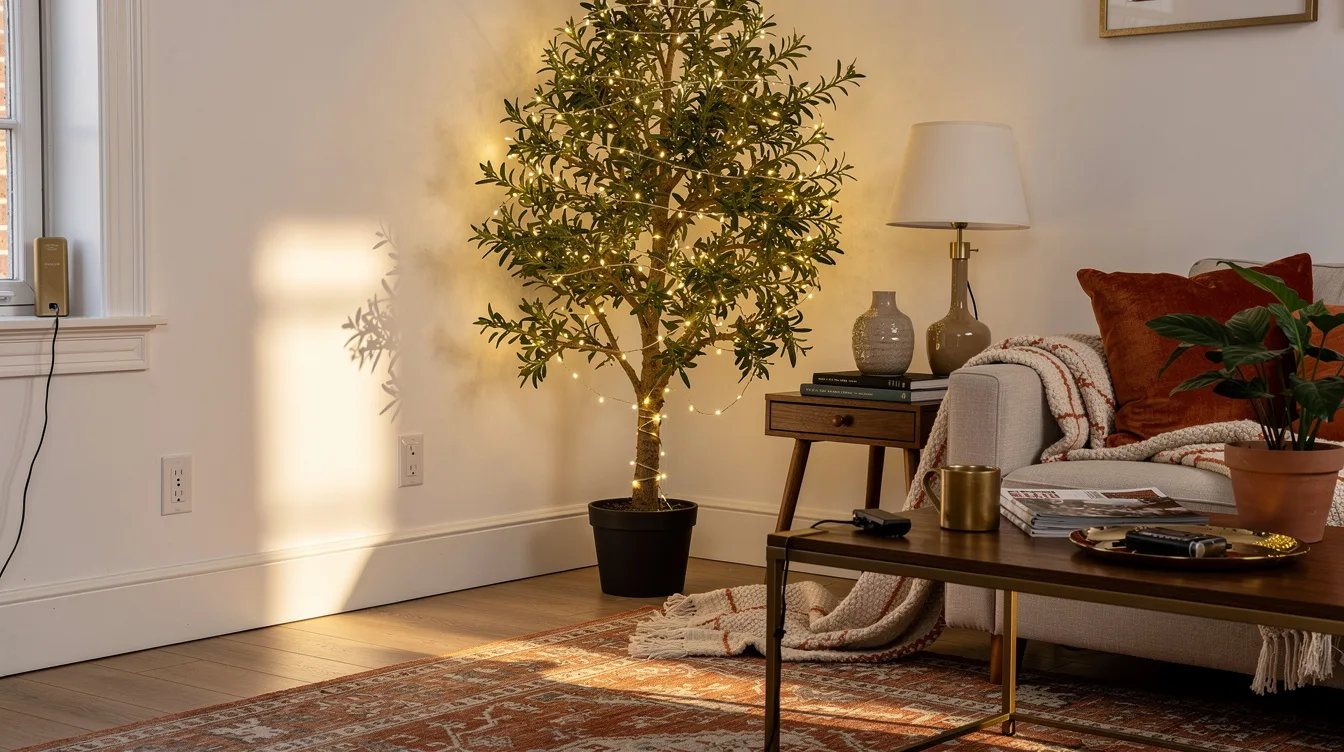
One battery box should not force you to wrap every branch in one continuous loop. Place one longer string on the lower section and another on the upper section, then keep each battery box near the part of the tree it controls.
This layout makes troubleshooting easier and prevents the top of the tree from becoming dim while the bottom absorbs every spare foot of wire. The two-string Amazon battery set is especially useful when the tree is visible from two directions.
Check the Battery Box Before Going Outdoors
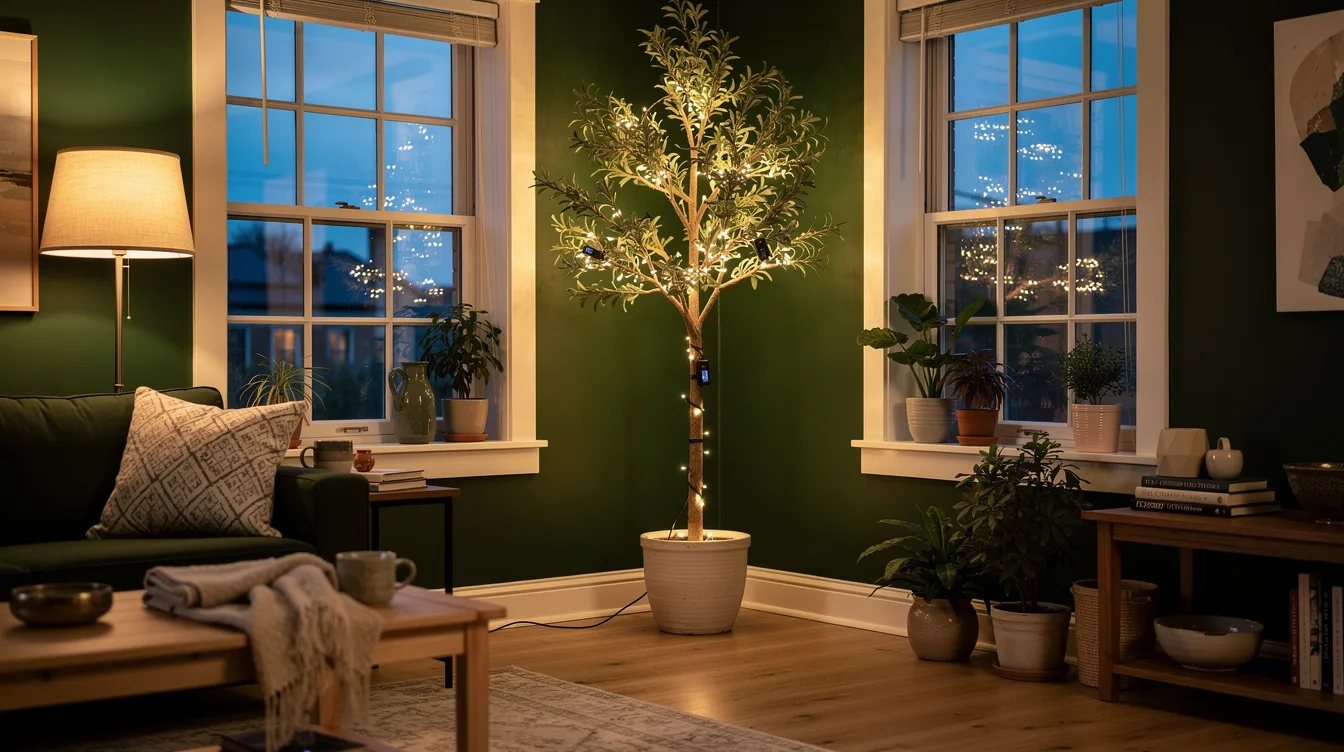
A battery-powered light can solve the outlet problem while creating a weather problem. Before placing the tree on a porch or patio, confirm the selected listing's battery-box rating, cable rating, and outdoor instructions because those details vary by seller and product version.
One clearly specified outdoor model lists an IP44 rating, four AA batteries, and a six-hour timer. That is the kind of information worth prioritizing over a dramatic LED count, especially when the control box will sit near damp ground.
Match Wire Color to Bark and Branches
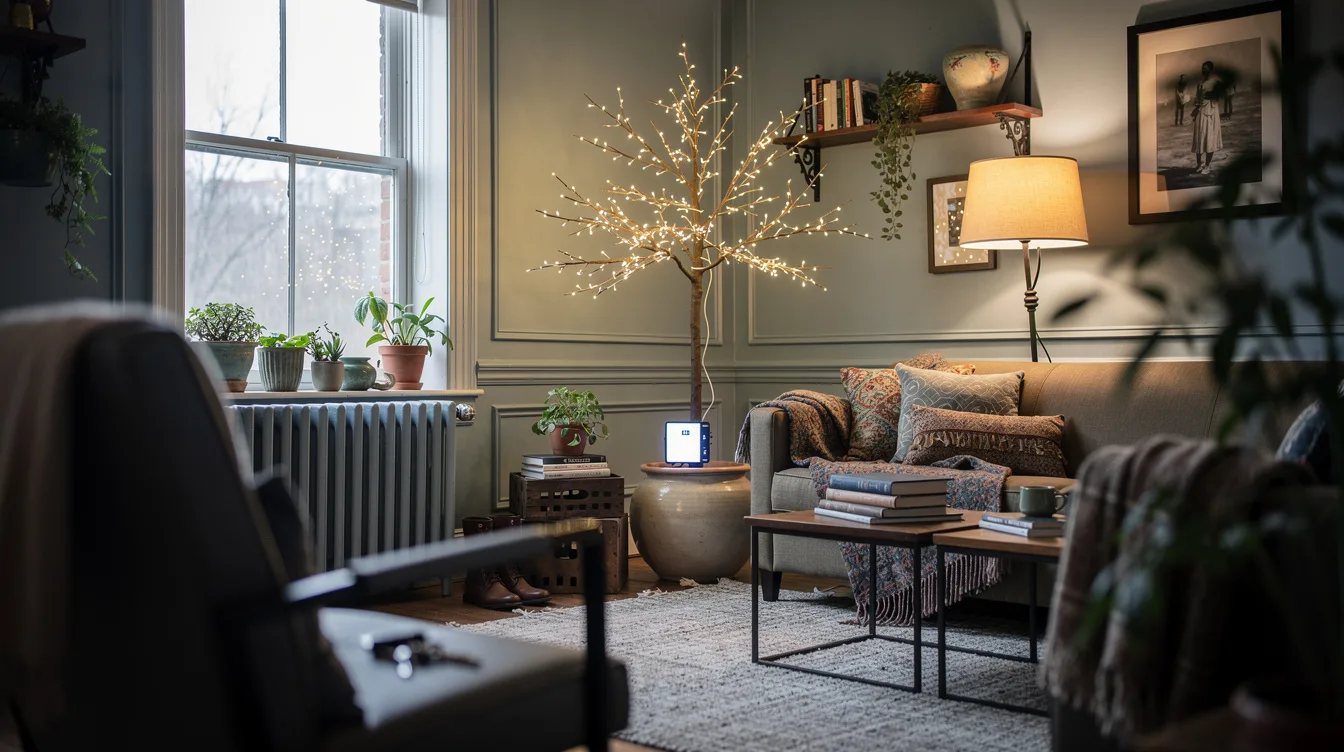
Silver-colored wire reflects more light and can disappear against pale ornaments, but it may look exposed against dark bark or a green artificial tree. Copper-toned wire usually recedes better through green branches, while silver wire can work well when the tree has white flocking or metallic decorations.
Read the material description carefully because “silver wire” describes appearance, not solid silver. A listing may specify silver-plated copper wire, which is a practical flexible material and a very different claim from a precious-metal construction.
Keep Multicolor Packs in Their Proper Role
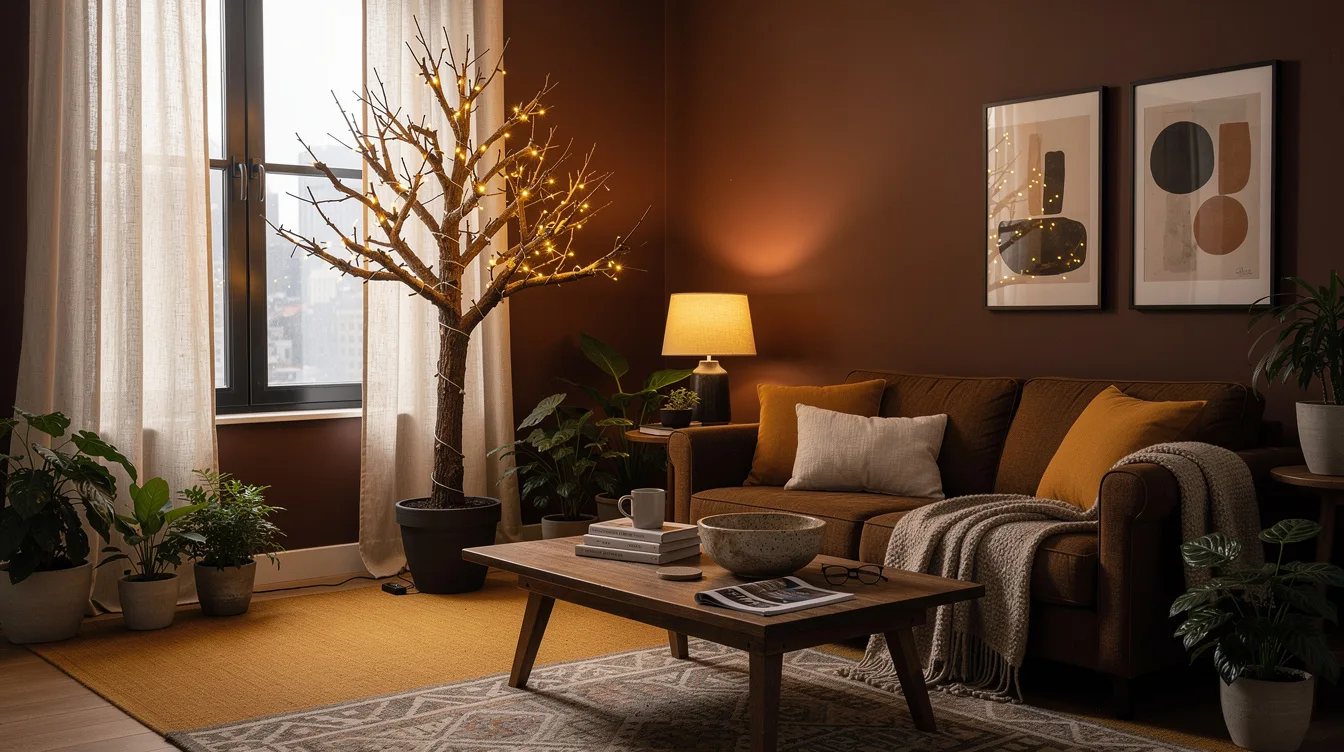
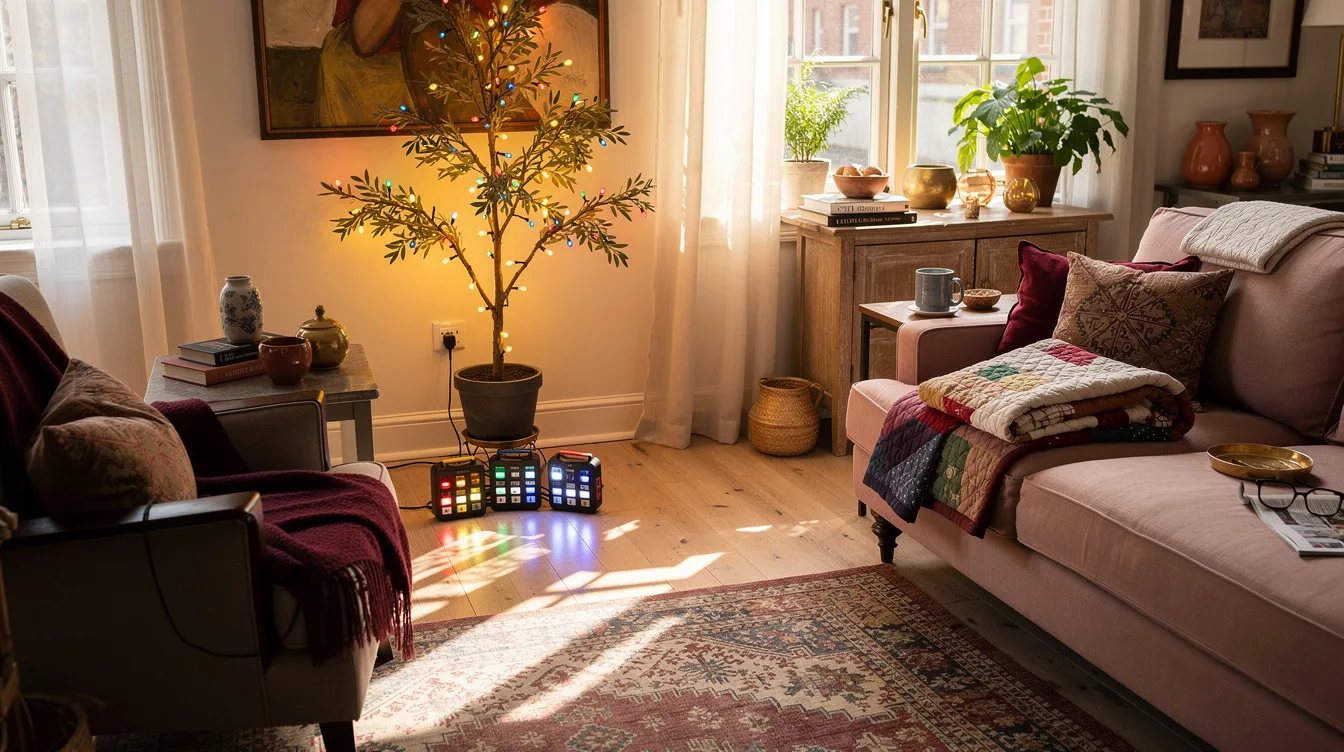
Multicolor lights bring instant holiday energy, yet a dozen short strands can make a large tree look visually fragmented. Each seven-foot strand also has its own power unit, creating about twelve boxes to hide and twelve switches to remember.
Use the multicolor mini-light pack on small trees, branch clusters, or a child's display. For a calmer full-tree effect, choose one longer color family and repeat it consistently from the lower branches to the top.
Choose a Timer Before You Choose More LEDs
A timer matters more than a few hundred extra LEDs when the tree will glow every evening. An outdoor battery model with a six-hours-on, 18-hours-off cycle can repeat the schedule automatically, which keeps the display useful without daily trips outside.
One listed setup claims roughly 180 hours per set of four AA batteries, or about thirty six-hour evenings. Treat that as an estimate because temperature, battery quality, brightness mode, and timer behavior can change the result.
Test Every Mode Beside the Tree
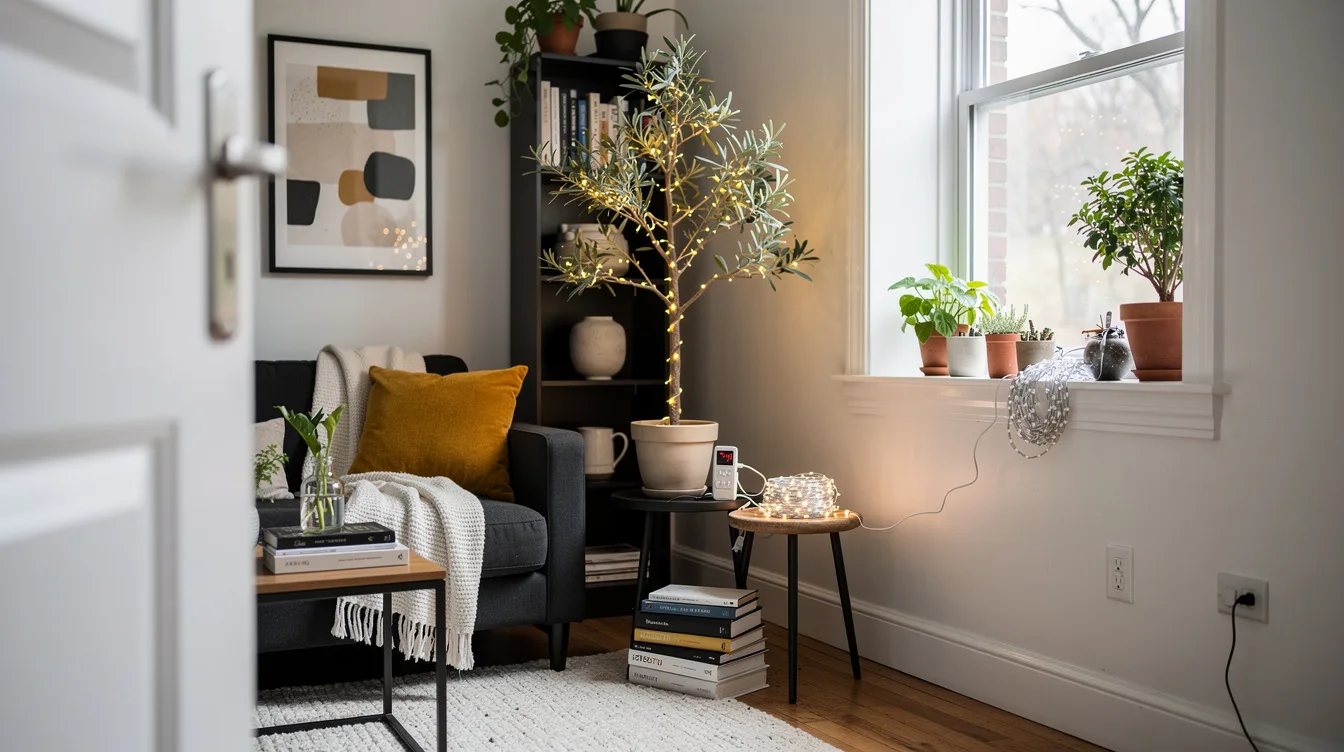
Remote controls often offer multiple modes, but a fast flashing setting can overpower ornaments and make a quiet room feel restless. Test the lights beside the tree after dark, then choose the steady or gently fading mode that keeps the branches readable.
The longer 66-foot light string listing includes about eight modes, giving you flexibility without adding another power box. Keep the remote in a labeled drawer or attach it near the battery compartment so the preferred setting does not disappear.
Hide Battery Boxes Without Blocking Access
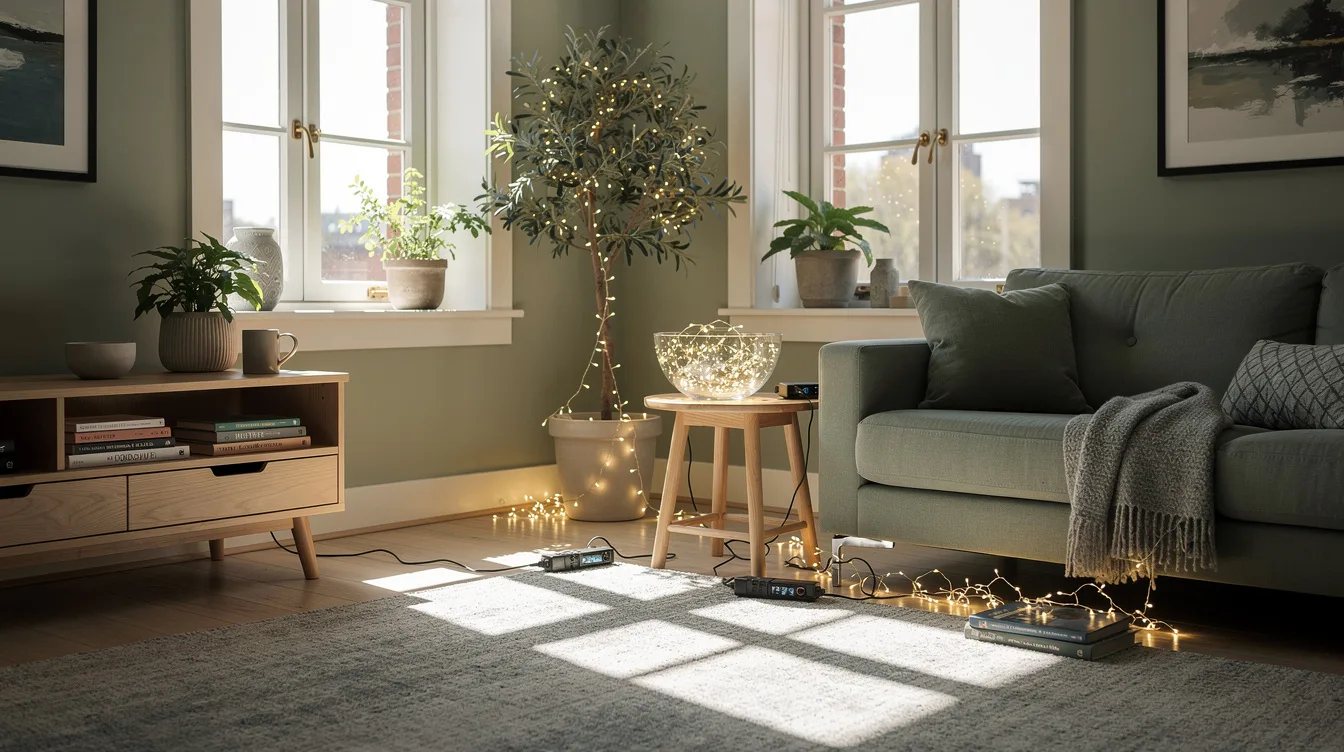
Battery boxes should vanish visually while remaining reachable. Tuck each one behind the lower trunk, inside a weather-protected basket, or beneath a removable branch, but leave enough room to open the cover and replace batteries without dismantling the display.
For a tree seen through a window, keep the control units on the house-facing side. A small piece of dark felt can soften the outline of a box, while a sealed container should never trap condensation around the electronics.
Wrap From the Visible Side First
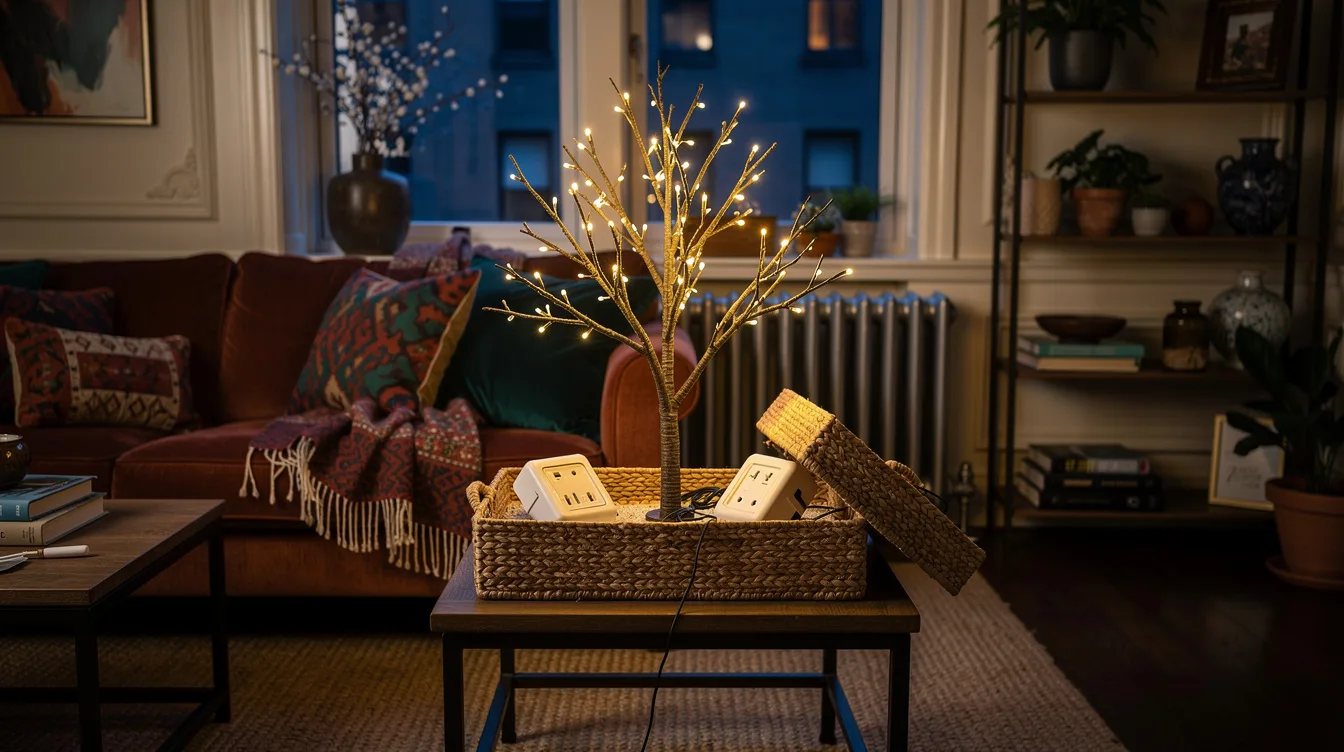
Starting at the back of the tree wastes the most important wire on branches no one sees. Begin at the lower front or the side facing the patio, then move upward while keeping the brightest sections around the visual center of the display.
We use the first few feet as a test run before committing to a full spiral. With two independent 33-foot strings, one can frame the front-left branches and the other can define the front-right section without forcing a cable toward the house.
Stop Overloading Every Branch With Light
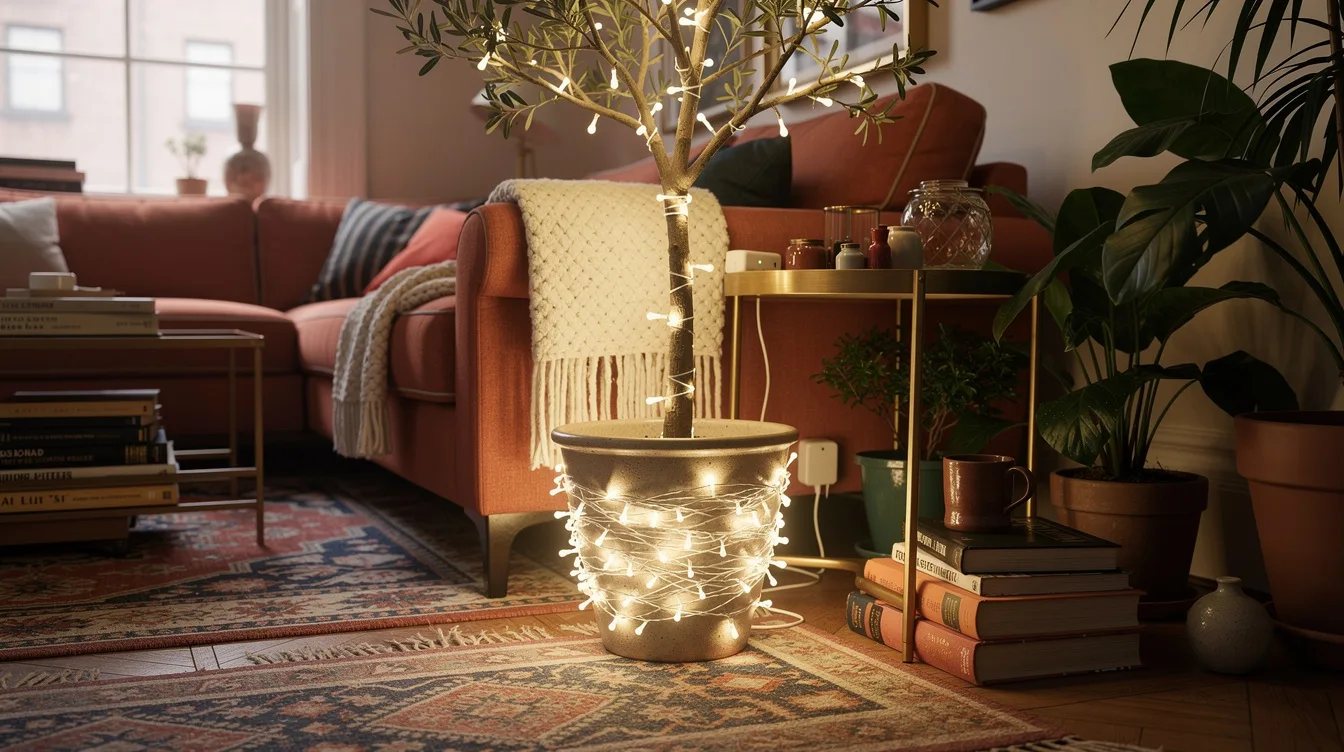
More light does not automatically make a tree look richer. Tight wrapping can flatten the branch structure, hide ornaments, and drain batteries faster, while wider spacing lets the individual points of light create depth.
Leave small pockets of shadow between major branches and concentrate the glow where ornaments or an outdoor seating area already draw attention. A balanced layout using about 200 LEDs can feel more intentional than a crowded tree covered in several mismatched packs.
Keep reading
- Need Christmas Tree Storage? These Walmart and Target Bags Start at $7
- No Holes, No Deposit Drama: Amazon Christmas Lights for Windows
- Dollar Tree Christmas Table Looking Bare? These 12 Finds Start at $1
Start by measuring the visible side of the tree, then choose the longest suitable two-string set and test its battery box before wrapping. Spend the remaining attention on timer settings and access, because a display that is easy to run will stay lit long after the first decorating night.


