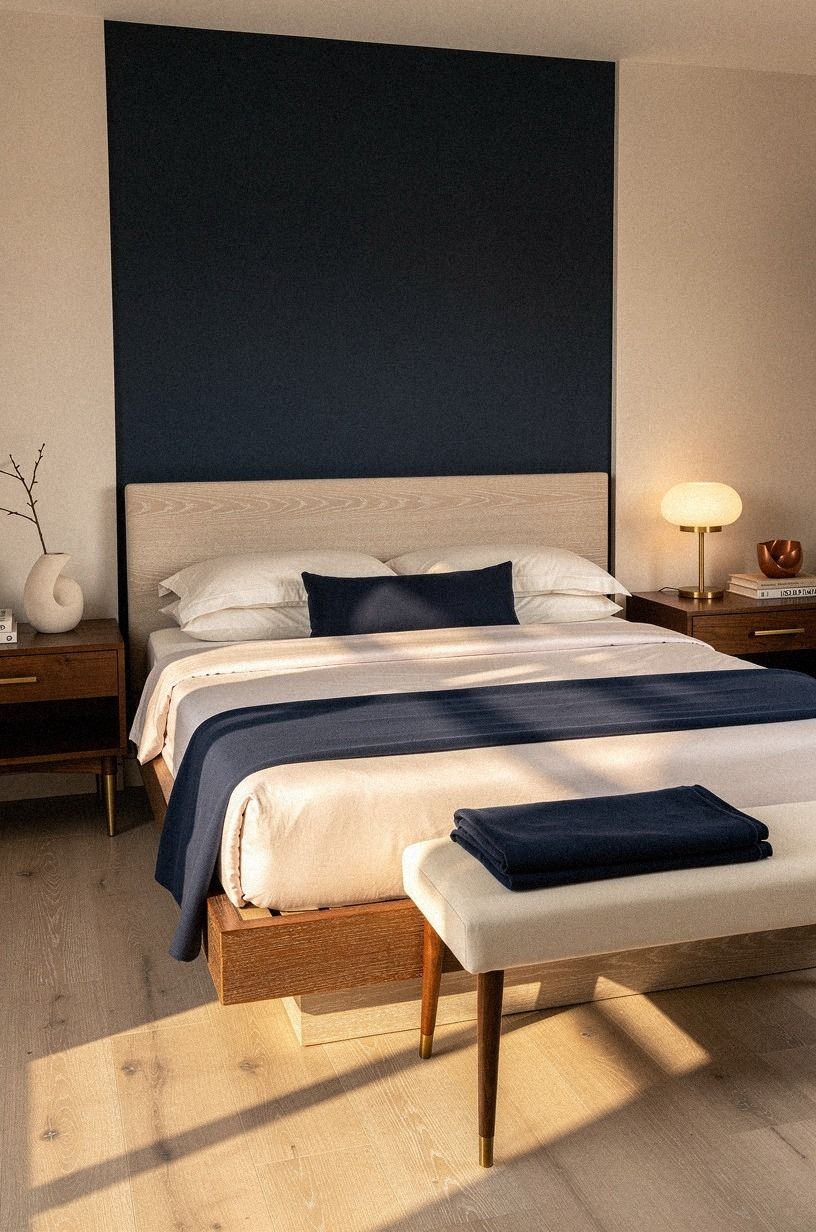
13 Romantic Master Bedroom Looks That Feel Like a Luxury Hotel, No Renovation Needed
29 october 2026Romantic master bedroom ideas that feel like a luxury hotel usually cost less than a renovation. I learned that after buying the wrong oversized headboard and crowding the room. The better formula is softer light, measured layers, and materials you can touch. You don't need new walls. You need better decisions.
Editor's note: Start with the parts your body notices first: the bed, the lighting, the floor, and the path through the room. Those choices create the hotel feeling faster than a shopping spree ever will.
- Layer the Hotel Bed, Not the Pillow Pile
- A Slim Upholstered Headboard, the Quiet Anchor
- Build the Three-Height Light Stack
- Which Warm Neutral Belongs on the Walls?
- Match the Nightstands, Then Break One Rule
- Extend the Rug Past the Bed
- The Curtain Line: Hang Drapes High and Let Them Pool Softly
- Walnut Against Oak: Follow the Two-Wood Rule
- The One-Piece Art Rule
- Swap Bright White for Cream and Blush
- Bedside Tray, Edited
- Where Does the Storage Go?
- Make the Morning Zone Feel Like a Boutique Suite
1Layer the Hotel Bed, Not the Pillow Pile
A hotel bed feels inviting because every layer has a job. Start with washed-linen bedding in a quiet shade, then add one folded cotton coverlet and a textured throw across the lower third. If you’re styling a queen, the mattress measures 60 by 80 inches, so you’ll want enough overhang to make the bed look generous without swallowing the floor.
I prefer washed linen to shiny polyester because it wrinkles softly and doesn’t trap that stiff showroom feeling. Add two sleeping pillows, two Euro shams, and one smaller lumbar.
More pillows aren’t automatically more romantic. Your room needs a place to sit down.
But don’t match every layer. A 600 GSM Turkish cotton blanket beside Belgian flax linen gives your eye something to read, and it’ll feel warmer against your feet. I tried a seven-pillow arrangement once, and removing three made the whole bed look more expensive.
The move is to repeat one color while changing the texture. A warm ivory duvet can sit beside a stone-gray coverlet, a dusty rose lumbar, and a camel wool throw without looking busy.
Keep the pattern quiet. A small stripe or faded check is enough.
If your mattress is tall, choose a coverlet with generous dimensions. A short layer exposes too much of the fitted sheet and makes the bed feel unfinished.
You’ll get a softer, more tailored result when the lowest layer falls close to the floor without dragging. That little surprise matters!
Typical cost by tier (US averages):
2A Slim Upholstered Headboard, the Quiet Anchor
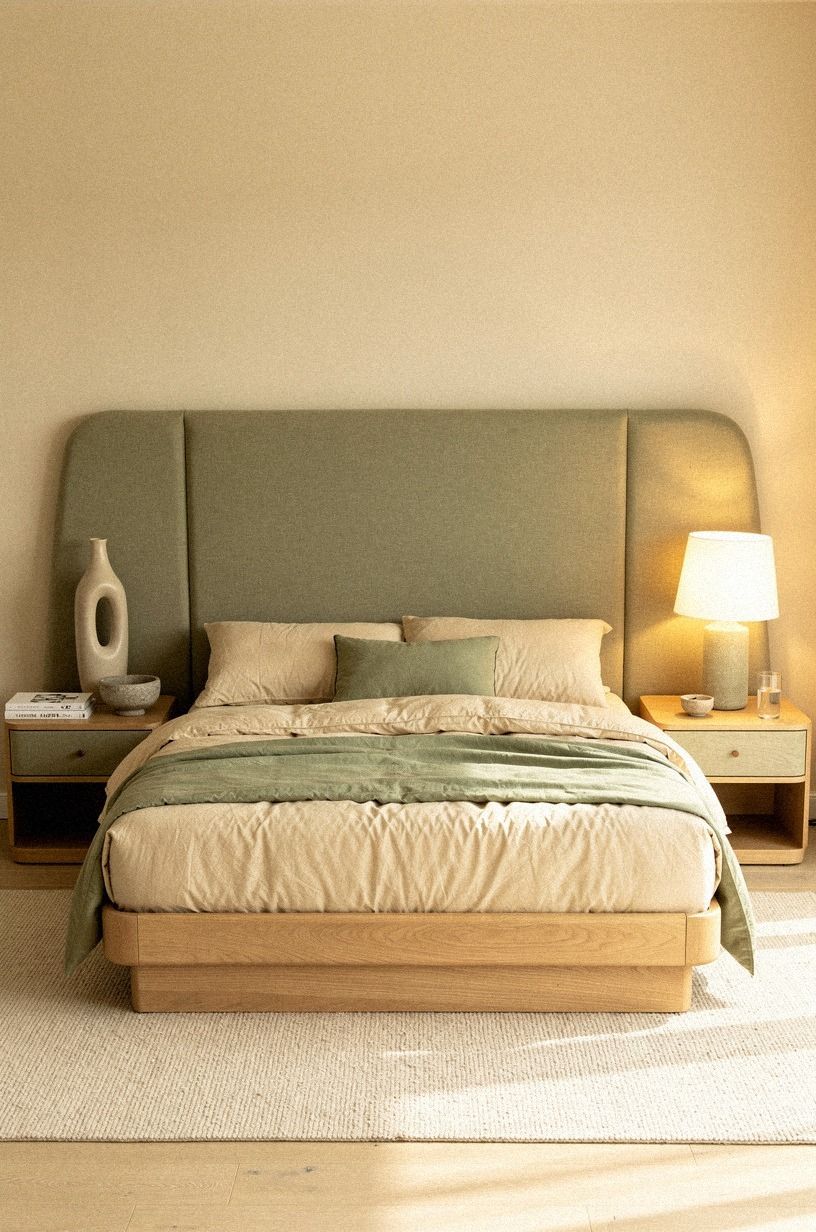
A slim headboard creates the quiet authority you notice in a luxury hotel room.
3Build the Three-Height Light Stack
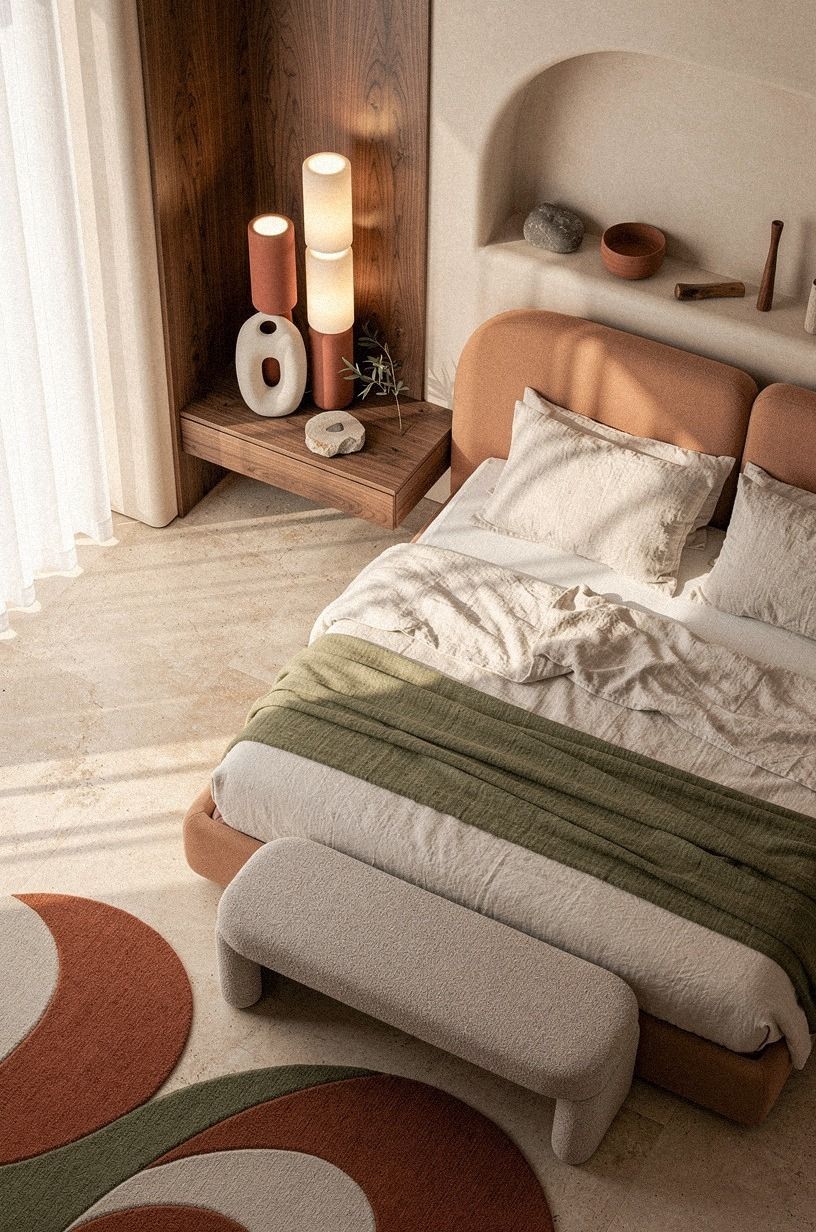
The most romantic bedroom lighting usually comes in three levels: bedside glow, middle-height ambient light, and a soft ceiling source. That’s the Three-Height Light Stack, and it keeps your room from looking flat after sunset. You’ll want at least one light that lands below eye level.
Start with unlacquered brass bedside lamps, preferably with warm bulbs and fabric shades. Then add a floor lamp near a reading chair or dresser.
Finally, let the ceiling fixture provide a low, gentle wash rather than a sharp white beam. Your room should feel usable at night, not like a hotel corridor under inspection.
A bulb around 2700K gives most bedrooms a warm, flattering glow. If your room feels yellow, move slightly cooler rather than jumping to bright daylight bulbs. Anything near 5000K can make cream bedding look gray and turn a relaxed room into a workplace.
And don’t rely on one central fixture. I made that mistake in a guest bedroom, and every corner looked either too bright or completely forgotten. A book-matched walnut pendant can soften the ceiling while a shaded lamp throws a pool of amber onto your nightstand.
You’ll feel the difference before you can explain it.
Plug-in sconces are especially useful beside a narrow bed. They free the nightstand, give you a focused reading light, and make the wall feel more architectural. Use a dimmer whenever possible.
The best bedroom lighting changes with the hour!
4Which Warm Neutral Belongs on the Walls?
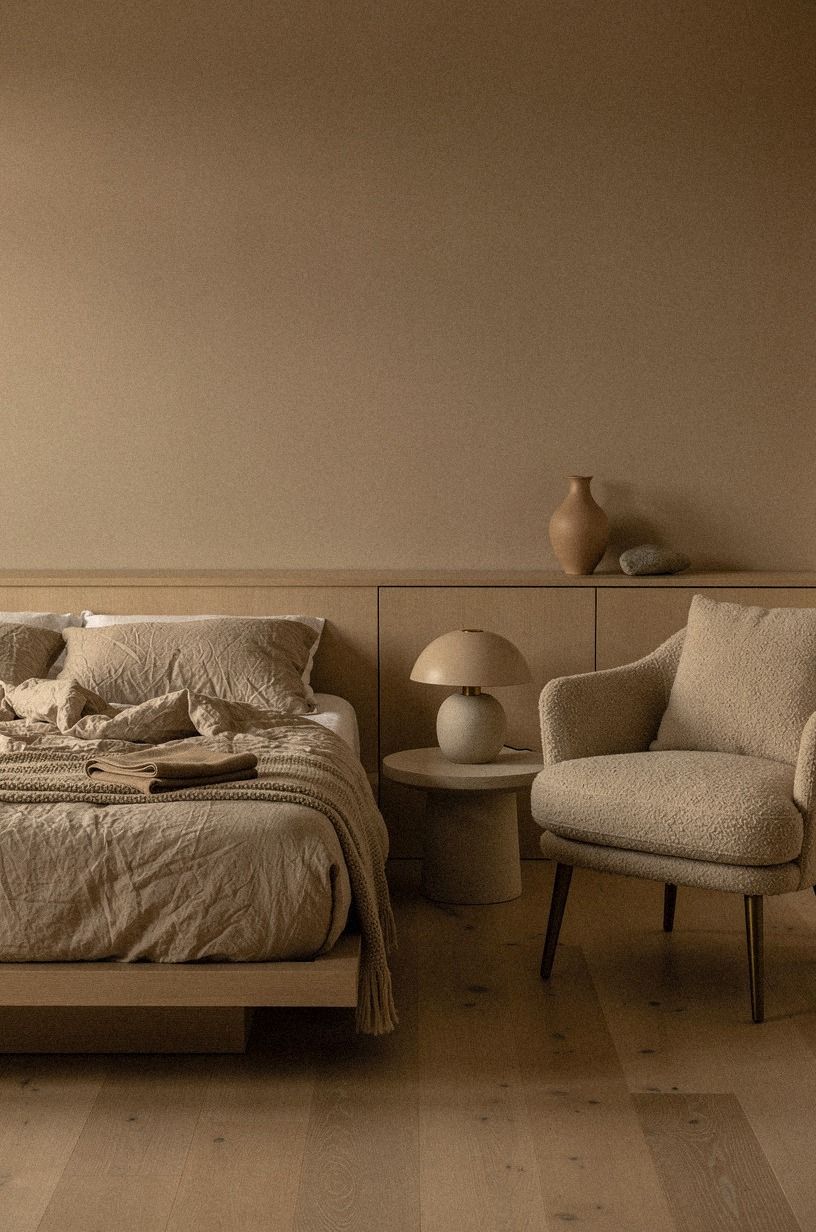
Color does more work in a bedroom than people expect. Farrow & Ball Setting Plaster No. 231 brings a warm, gentle blush without turning the room sugary, while Benjamin Moore Pale Oak OC-20 reads calmer and more muted in changing daylight. I’d choose one, not both, because competing neutrals can make your bedding look accidental.
For a cooler room, Sherwin-Williams Accessible Beige SW 7036 gives you a soft architectural background. It’s less stark than white, but it won’t make your room feel heavy. Test a sample near the bed and beside the window because paint shifts dramatically between morning and lamplight.
A romantic bedroom doesn’t need pink walls. Mushroom, putty, warm taupe, and smoky olive can feel just as intimate when they’re paired with soft textiles. If the room receives little daylight, avoid a neutral with too much gray.
It may look elegant on a sample card and flat on every wall.
But don’t paint every surface by default. If your walls already have a warm tone, your better move may be a creamy ceiling and darker drapery. You’re looking for contrast that feels intentional, not a color trend pasted across the whole room.
A small painted sample can save your budget and your Saturday.

5Match the Nightstands, Then Break One Rule
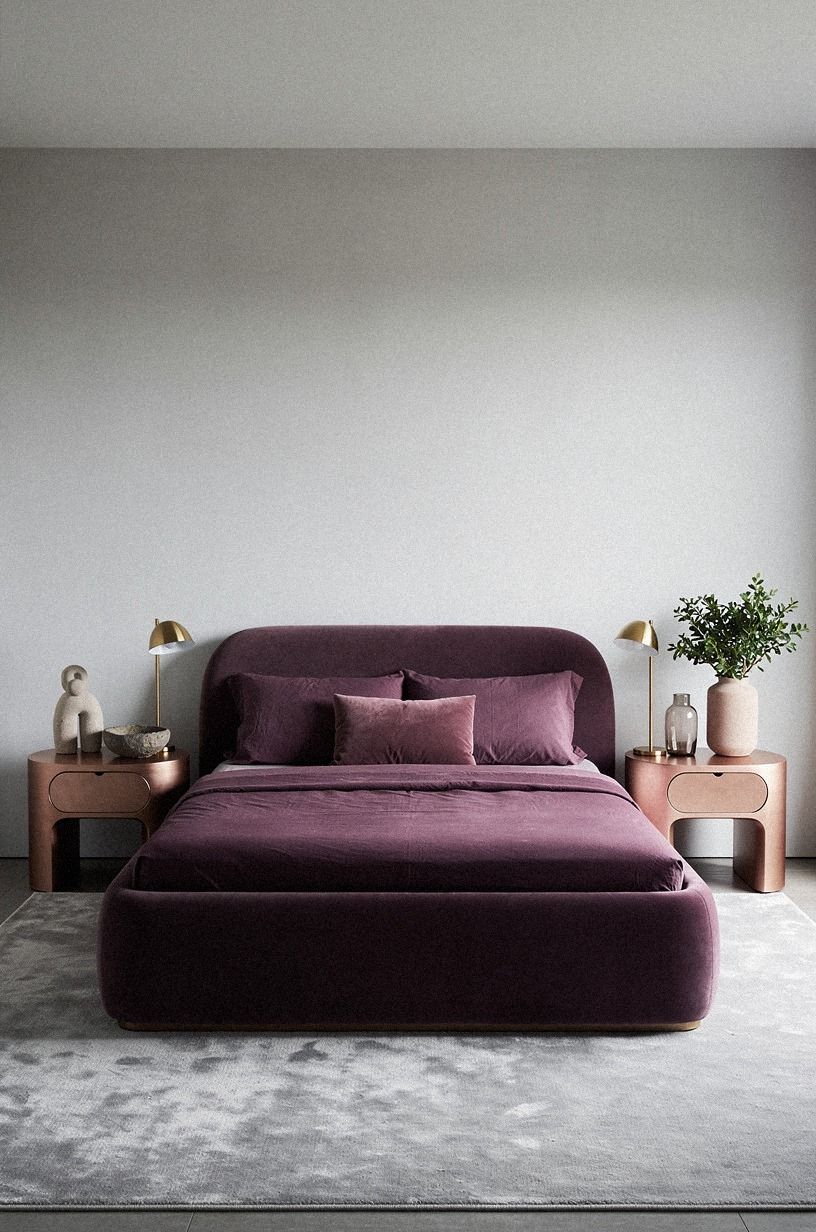
Matching nightstands give a master bedroom the balanced look hotels use so well.
6Extend the Rug Past the Bed
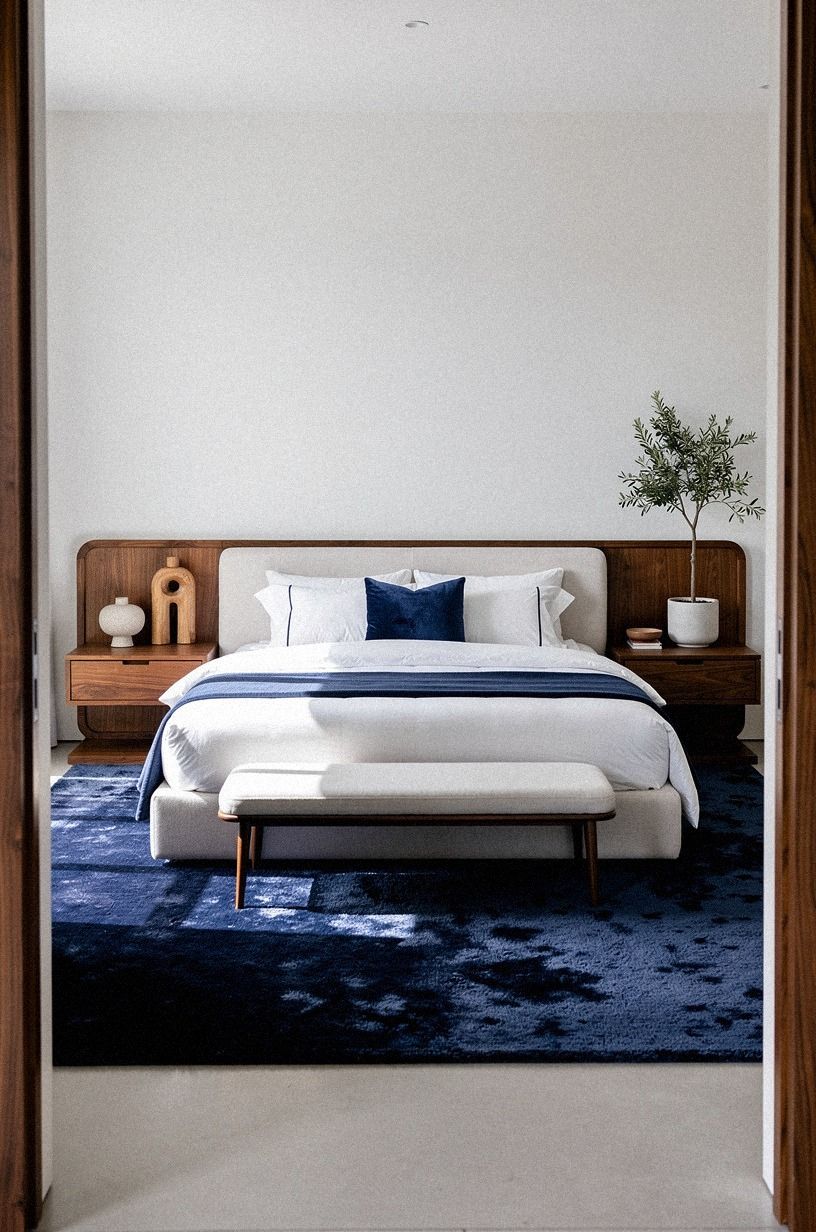
A rug changes the first five seconds of the room. For a queen or king bed, choose a size that extends 18 to 24 inches past the sides and foot whenever the layout allows. That extra material gives your feet a soft landing, and it visually gathers the bed instead of leaving it stranded.
I like a deep-pile mohair velvet rug in navy because it feels warm underfoot while giving the room a rich, quiet foundation. An 8 by 10 rug typically costs $400 to $1,500 in the United States, so measure your room twice before you buy. Your rug should slide under the lower two-thirds of the bed, not float in front like a bath mat.
A deep-pile mohair velvet rug can bring softness and depth, while a natural walnut bed frame keeps the room grounded. If you’re layering rugs, keep the lower one quiet. Too many patterns will make the bed lose its calm center.
If that size won’t fit, use two runners along the bed or a smaller rug at the foot. It’s less grand, but it can still feel intentional.
Don’t force an oversized rug into a tight walkway. You’ll trip over the edge, and no romantic bedroom survives a midnight stumble!
7The Curtain Line: Hang Drapes High and Let Them Pool Softly
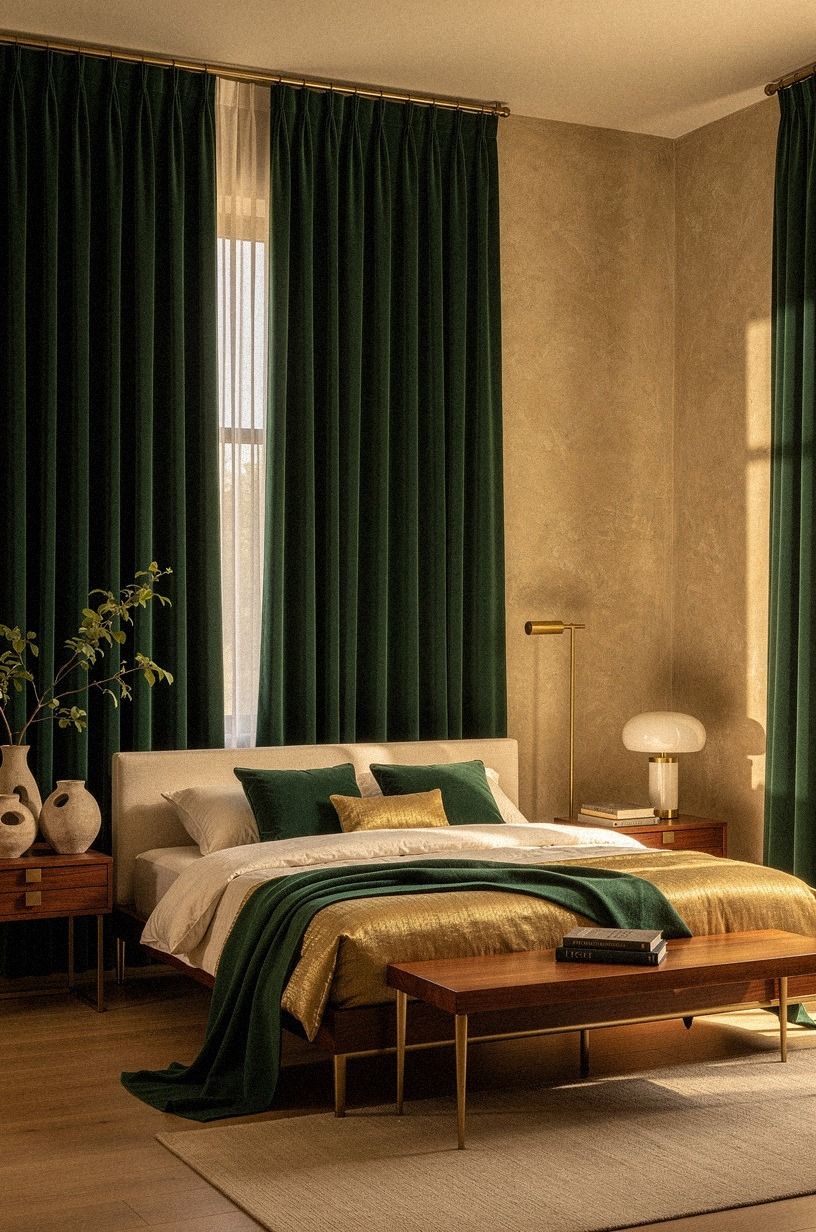
Drapery is one of the fastest ways to make your bedroom feel finished. Mount the rod several inches above the window frame, or closer to the ceiling if the room can handle the height.
Let the panels reach the floor. A slight break at the bottom feels relaxed, while a clean kiss against the floor looks more tailored. Avoid stopping them at the sill unless the window is directly above furniture.
Linen, cotton voile, and cotton velvet each create a different mood. Linen filters daylight beautifully, while velvet adds density in a darker room. If privacy matters, pair a translucent panel with a lined outer curtain.
Keep the curtain hardware quiet. Aged brass or matte black can repeat the metal used on the lamps, connecting this decision to the bedroom lighting without making the room feel coordinated to death.
8Walnut Against Oak: Follow the Two-Wood Rule
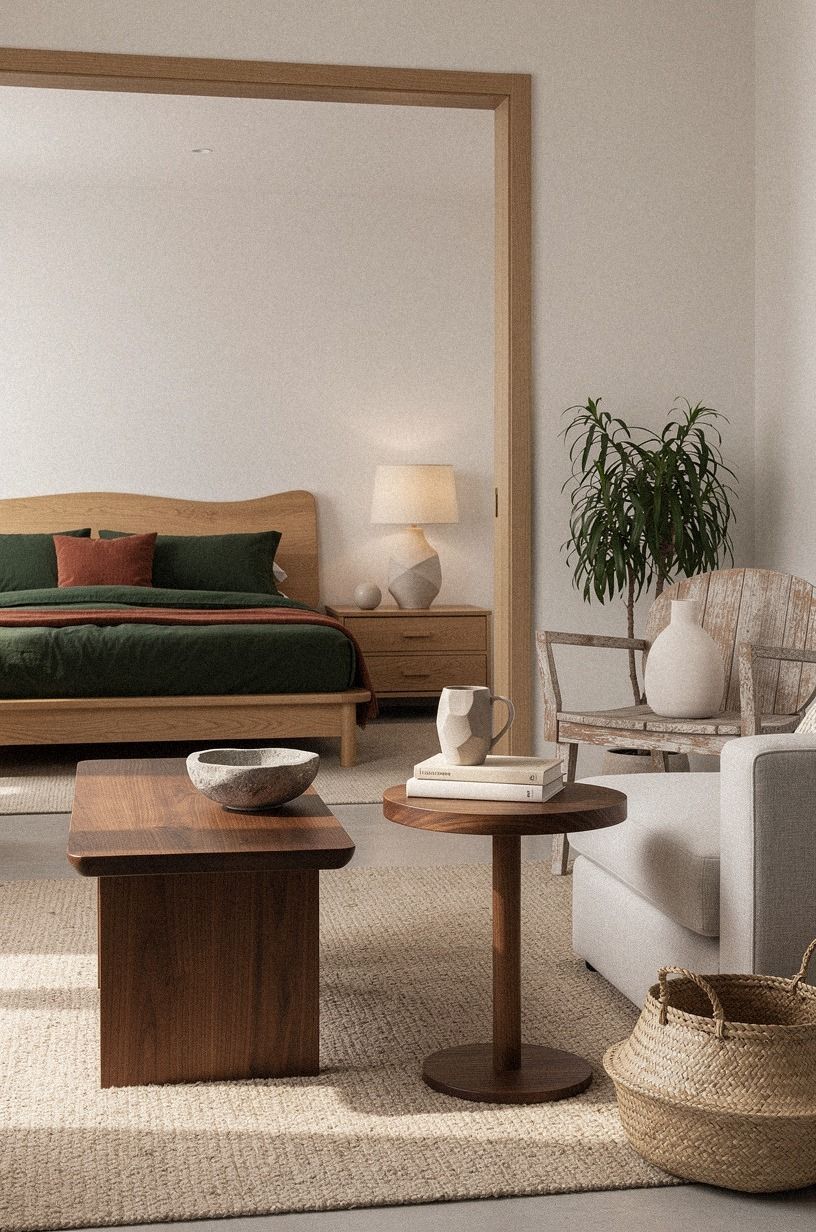
Wood brings warmth to a bedroom, but too many unrelated finishes make the space look like a furniture showroom. The Two-Wood Rule keeps things simple: choose one dominant wood and one supporting wood. For example, reclaimed weathered teak beside natural oak creates depth without visual noise.
A reclaimed weathered teak bench at the foot of the bed can connect pale flooring to a warm headboard. Add one natural oak frame or tray, then stop.
I’d avoid orange oak, espresso brown, and gray-washed wood in the same room. You’ll spend the whole day trying to explain why the finishes don’t sit together.
If you already own mismatched furniture, use fabric to create a bridge. A sage mohair velvet cushion or warm ivory throw can soften the jump between woods.
Your eye needs a repeated texture more than another matching object. This is especially useful in a small bedroom where every finish sits close to the next one.
Metal can act as a third finish if you keep it restrained. Aged brass, oil-rubbed bronze, or matte black can repeat through the lamps, curtain rod, and drawer pulls.
Don’t introduce all three. One metal family will make the room feel collected rather than random.
9The One-Piece Art Rule
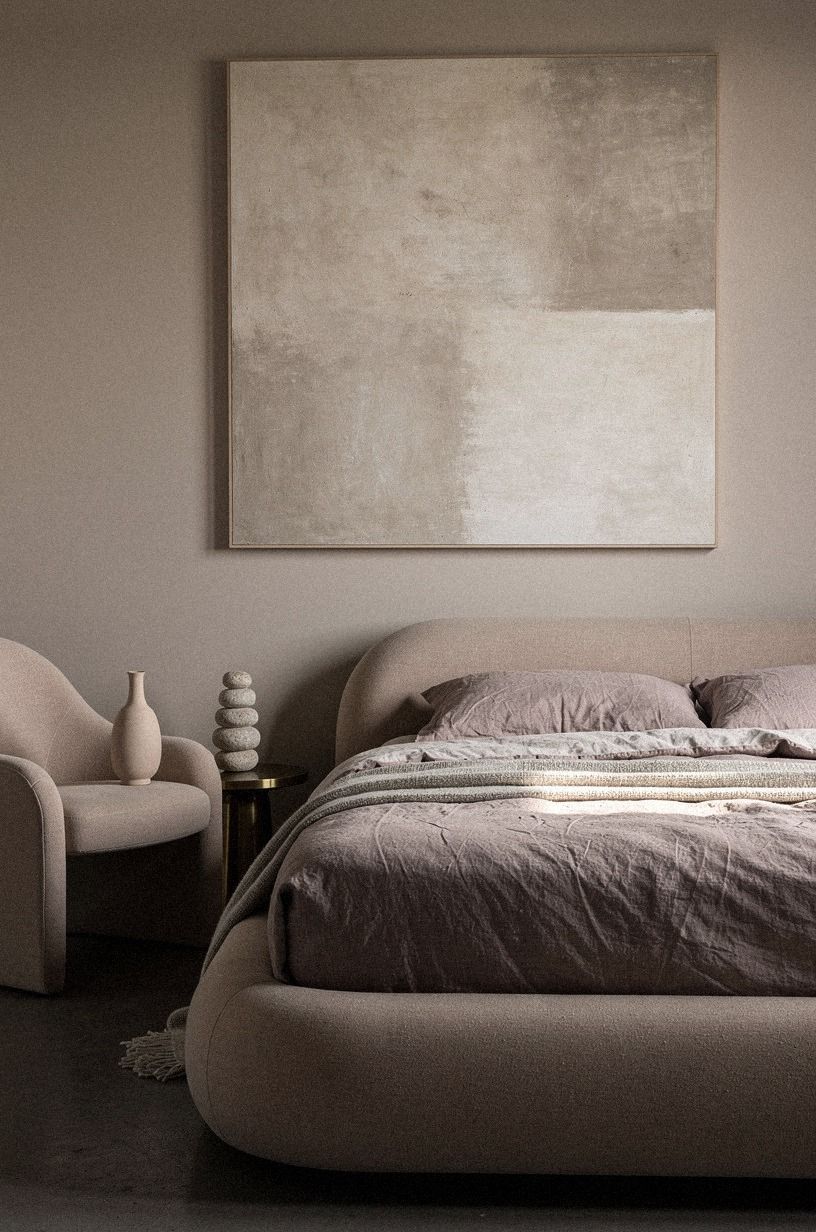
One large artwork usually feels more luxurious than a grid of tiny frames above the bed. Choose a piece with calm movement, such as a charcoal landscape, a washed abstract, or a photograph with plenty of negative space. You’ll create a focal point without filling the wall with visual chatter.
A washed Belgian linen textile panel can echo the softness of the bedding, but keep the colors restrained. I’d skip anything too literal, such as a large word print or a gallery of wedding photographs. Those pieces may matter deeply, but they can make the room feel personal in a busy way rather than intimate.
Hang the art low enough to relate to the headboard, not so high that it floats near the ceiling. If you’re unsure, place it temporarily with removable hooks and live with it for one night. Your morning eye will catch the awkward gap faster than your evening eye.
You don’t need an expensive original. A vintage oil painting, a textile panel, or a large black-and-white photograph can provide the same visual pause.
The important thing is scale. A small frame over a wide bed often looks timid, while one generous piece gives the entire wall confidence.
10Swap Bright White for Cream and Blush
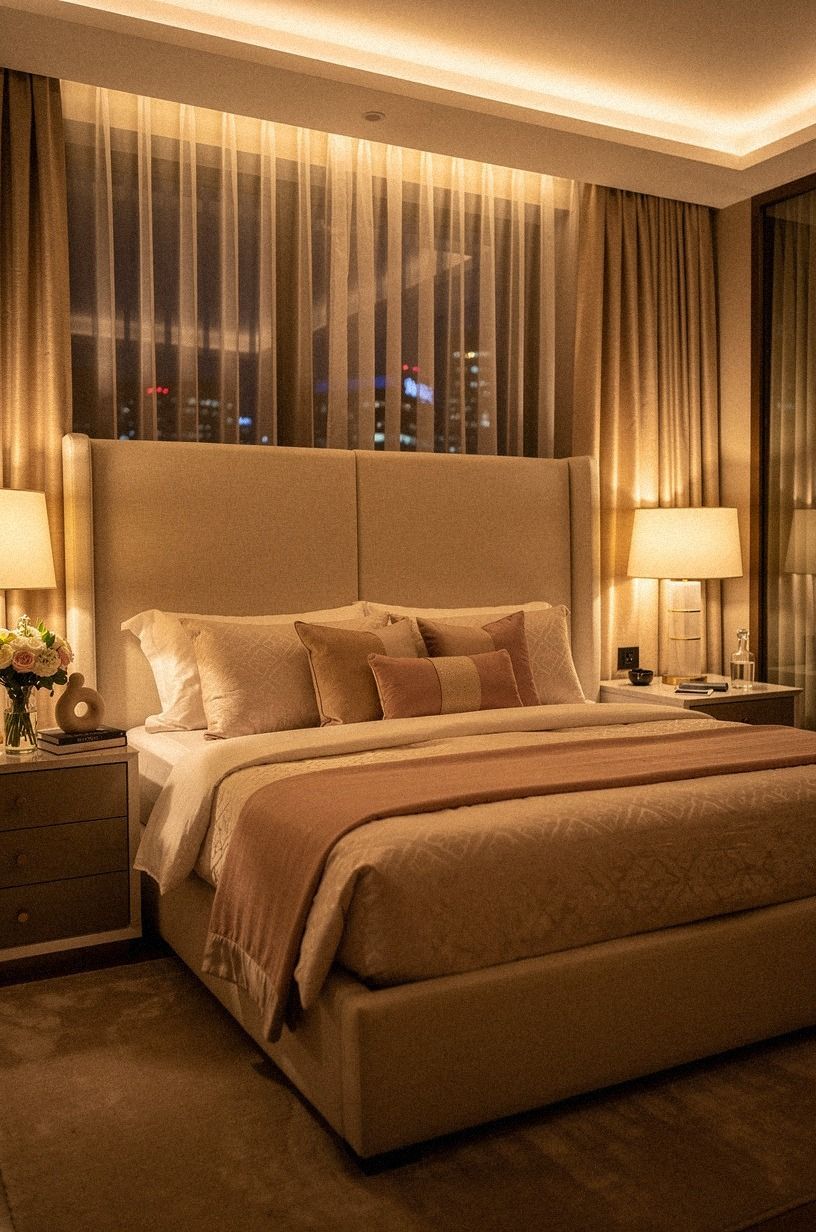
White bedding can look refined, but bright optical white often feels more clinical than romantic. Replace it with warm white, camel, or soft ivory, then use black accents sparingly. These shades catch lamplight gently, and they’ll work with cerused white oak and darker furniture.
Benjamin Moore White Dove OC-17 is a useful trim and ceiling choice because it has enough warmth to support cream textiles without turning yellow. Add one camel cushion or a warm white throw.
You don’t need a pink bedroom. You need a small color note that keeps the neutral palette from becoming anonymous.
But avoid stacking every soft color together. Too much blush, beige, and ivory can flatten the room.
Your darker note might be a black lamp, a cerused white oak frame, or a charcoal bench. I’d choose one anchor shade and repeat it twice, because your room needs rhythm more than a large color menu.
For a more sophisticated romantic palette, combine warm white, camel, and black accents. For something lighter, try ivory, pale sage, and terracotta. The palette should support the room’s light and your existing furniture, not force you to replace everything.
11Bedside Tray, Edited
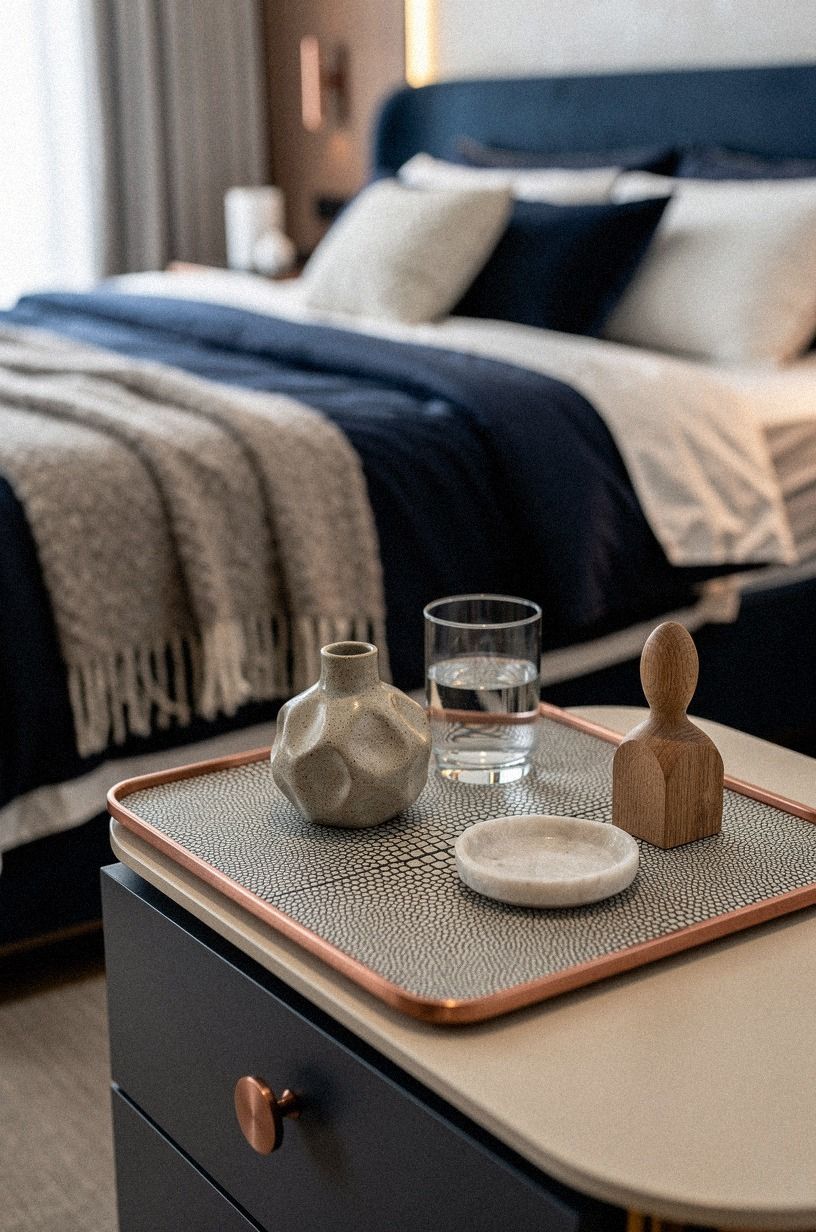
A small tray makes the nightstand feel considered while keeping useful objects together. Choose a shallow shape in shagreen, copper, or ivory, then leave room for your water glass and book. You’re building a practical landing place, not a display that has to be cleared every evening.
A shagreen tray with copper accents adds quiet texture beside a ceramic lamp. Add a small carafe, a candle, and one stem in a narrow vase. Nominal details work well here: a folded eye mask, a linen-bound book, or one piece of amber glass.
Keep the tray edited. I’d skip the pile of decorative boxes that hides your charging cable. Your room should support your routine, not ask you to perform one.
If you’re sharing the bed, give both nightstands the same amount of useful space. That small act feels more luxurious than another ornament.
A shallow tray also makes cleaning easier. You can lift the whole arrangement when you dust, then return it without rebuilding the composition.
Choose a soy candle or essential-oil diffuser only if you enjoy the scent. Romance shouldn’t become another maintenance task.
12Where Does the Storage Go?
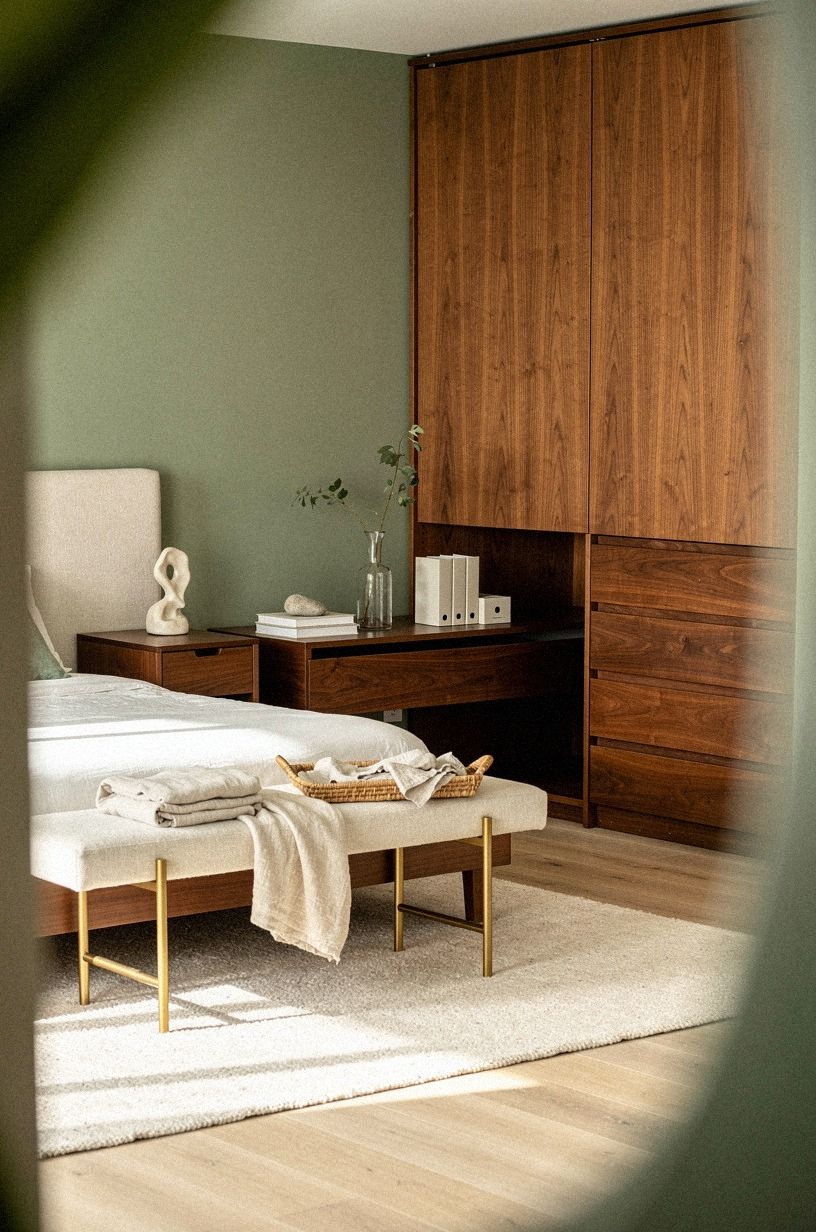
A hotel bedroom feels calm because the necessary objects disappear when they aren’t being used. Start with the floor. If shoes, laundry, and bags are collecting beside the bed, the room will feel unfinished no matter how beautiful the bedding is.
Use a sage green woven basket for blankets, a narrow chest in book-matched walnut for folded clothing, or shallow boxes inside the nightstand. Closed storage works best for visual clutter, while one open shelf can hold objects you use every day.
The top of the dresser deserves editing too. Keep one lamp, one framed piece, and enough empty surface to put something down. You’ll enjoy the room more when the useful space remains visible.
If your closet is crowded, move seasonal clothing elsewhere and use matching slim hangers. A short reset can make the entire bedroom feel quieter without adding a single piece of furniture.
13Make the Morning Zone Feel Like a Boutique Suite
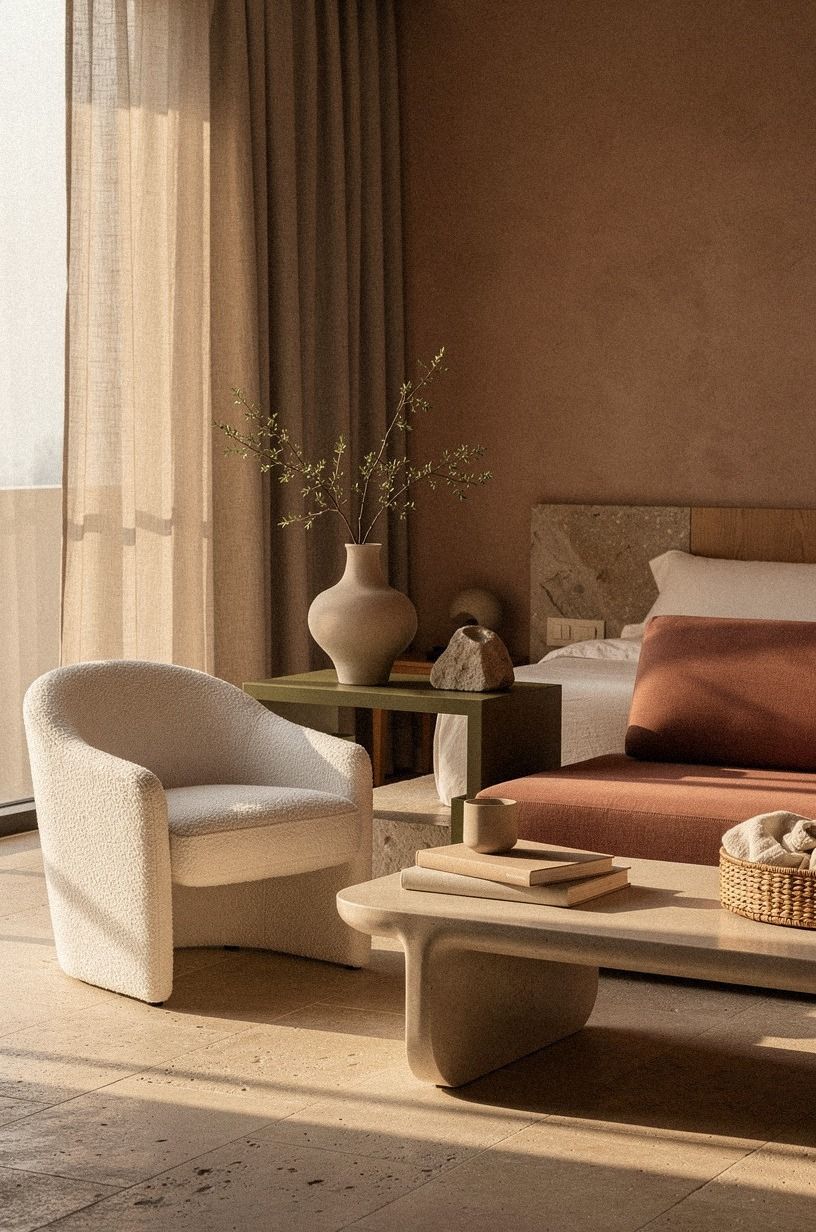
A luxury hotel bedroom doesn’t end at the bed. It gives you a small place to wake up slowly, whether that’s a chair by the window, a bench for shoes, or a clear dresser with one lamp. You’ll make the room feel more complete when the morning routine has a home.
Choose an organic bouclé bench or a compact upholstered chair in a terracotta, stone, or olive tone if your layout allows it. Keep the surface beside it nearly empty, with a woven basket for a robe and one soft throw. I’d skip a bulky vanity in a small room.
It takes valuable circulation space and often becomes a drop zone for everything.
What does your first five minutes in the room need? A place for coffee, sunlight through linen, or somewhere to sit while you put on shoes? Answer that honestly, then design around it.
A romantic bedroom feels intimate because it understands your habits, not because it copies a hotel interior.
If the room is too small for a chair, create a morning zone with a narrow bench and a wall hook. Add a small ceramic cup, a soft robe, or a low basket beneath it. The gesture is enough.
You’re giving the day a graceful starting point.
Why the Hotel Feeling Still Works
I’ve gone back and forth on the hotel-bedroom comparison because some hotel rooms feel cold, polished, and oddly anonymous. The rooms worth borrowing aren’t the ones with the most expensive furniture.
They’re the ones that understand sequence. You enter, the light is low, the bed is easy to read, and your eye lands somewhere calm.
That order matters more than a designer label.
The best hotel details are physical. A curtain brushes the floor instead of stopping above it. The rug feels warm when you step out of bed.
The lamp gives your face a gentle glow instead of exposing every corner. When you bring those details home, your bedroom becomes more comfortable without losing personality.
I’ve also learned that romance doesn’t mean filling the room with pink, candles, or satin. It can mean a washed linen cover that gets softer each season, a bedside lamp you can dim from bed, or a chair where your partner leaves a sweater.
Those choices are quiet, but they’re not bland. They show that you’ve noticed how the room is lived in.
My own mistake was treating the bed as the only important object. I bought the oversized headboard, then wondered why the room still felt unfinished. The answer was the light, the empty walkway, and the hard little rug edge beside the bed.
Once I fixed those, the room became warm and inviting. Your budget will go further when you fix the experience before buying the statement piece.
A Few Things Worth Answering
What works best in a small romantic master bedroom?
A slim upholstered headboard, narrow nightstands, and wall-mounted lighting usually make the biggest difference. IKEA MALM can work when you keep the bedding soft and the surface clear. Your room will feel more spacious when the bed has one strong backdrop instead of several bulky pieces.
Where can I find romantic bedroom pieces on a budget?
Look at IKEA, Wayfair, and Target for bedding, lamps, and removable shades. Facebook Marketplace and local thrift stores can also provide solid wood nightstands and framed art. You don’t need a matching collection, but you’ll want repeated colors and similar proportions.
How much does this kind of bedroom makeover cost?
A small refresh can run about $100 to $300 when you reuse furniture and focus on bedding, lighting, and paint. The typical US budget tier is $200 to $800, while a mid-range room is $1,500 to $5,000. Your free upgrades include decluttering, rearranging, and changing bulb temperature.
Can I create this look without buying anything?
Yes, and you can start without buying anything. Move the bed to improve circulation, remove crowded decor, and layer the blankets you already own. A secondhand lamp, cream bedding, and a removable shade can give your room a soft, comforting shift without renovation dust.
Is this style worth trying in a small space?
Yes, because a small room can feel more intimate and controlled. Choose a slim headboard, a rug that extends 18 to 24 inches past the bed, and wall-mounted lighting. Your best investment is clear floor space, not another storage piece that makes the room harder to move through.
Can renters create a romantic hotel-inspired bedroom?
Yes. Use removable hooks, a tension rod, peel-and-stick wallpaper behind the nightstands, and plug-in sconces.
Removable wallpaper can create a rich backdrop without permanent work. You’ll get the strongest result by choosing textiles and lighting first, then adding temporary color.
Where I’d Start First
If I had to pick one, I’d start with the layered bed. It changes what you touch, see, and feel first, and it doesn’t require moving a wall or hiring anyone. Then check the lighting before you add anything new.
Remove three pillows, lower the brightness, and let the room breathe.


