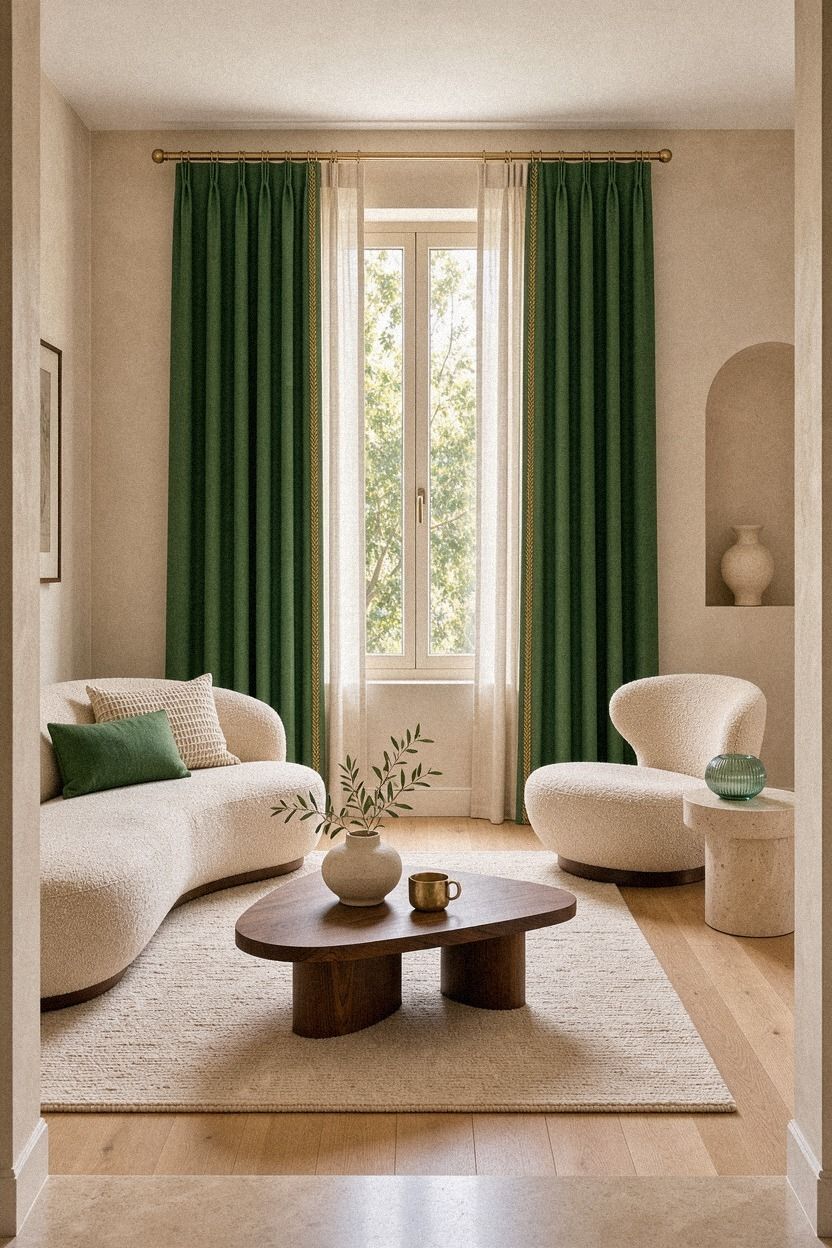
15 Ways to Know How High to Hang Curtains, With the Actual Measurements
29 october 2026How high to hang curtains is simple: set the rod 4 to 6 inches above the window frame, then let the panels reach the floor. I used to hang mine too low, and the room looked shorter overnight. The right height makes even a small room feel airy, warm, and intentional.
- Hang the rod 4 to 6 inches above the frame
- Stretch the panels toward the floor
- Float the rod near the ceiling
- Hang the rod 4 to 6 inches above the frame
- Stretch the panels toward the floor
- Float the rod near the ceiling
- How high should you hang curtains above a window?
- Extend the rod beyond both sides
- Layer sheer panels beneath heavier drapes
- Anchor short windows with full-length curtains
- Float curtains over a radiator
- Frame the room with Benjamin Moore White Dove
- Use the Two-Height Light Stack
- What height should curtains hang in a small room?
- Swap low mounting for the Four-Inch Rule
- Build the budget before choosing custom length
- Layer three light sources around the window
- Choose the Three-Width Curtain Plan
1Hang the rod 4 to 6 inches above the frame
Start with the measurement that works in most rooms: 4 to 6 inches above the top of the window frame. You’ll want a steel tape, a pencil, and a level before you touch the brackets.
If your ceiling is low, use the lower end. If you’ve got generous wall space, move toward 6 inches for a more elegant, open look.
I once measured from the glass instead of the frame. Bad move. The rod landed too close to the sash, and the aged brass curtain rod looked cramped against the trim.
Your eye needs a little breathing room above the window, especially when the wall is painted a warm cream.
But don’t treat 4 to 6 inches as a rigid law. You’re working with your room, your trim, and your furniture. An emerald organic bouclé curtain panel will look rich at 4 inches, while a cream panel with gold accents can handle the taller 6-inch position.
Use a level before you tighten anything. Your curtains might be soft and relaxed, but the rod shouldn’t slope visibly across the wall. The difference is small on paper and surprisingly dramatic in person!
If you’re unsure whether this standard height suits your room, compare it with the near-ceiling option before drilling. You can also check the required panel length in the guide to stretching curtains toward the floor.
Typical cost by tier (US averages):
2Stretch the panels toward the floor
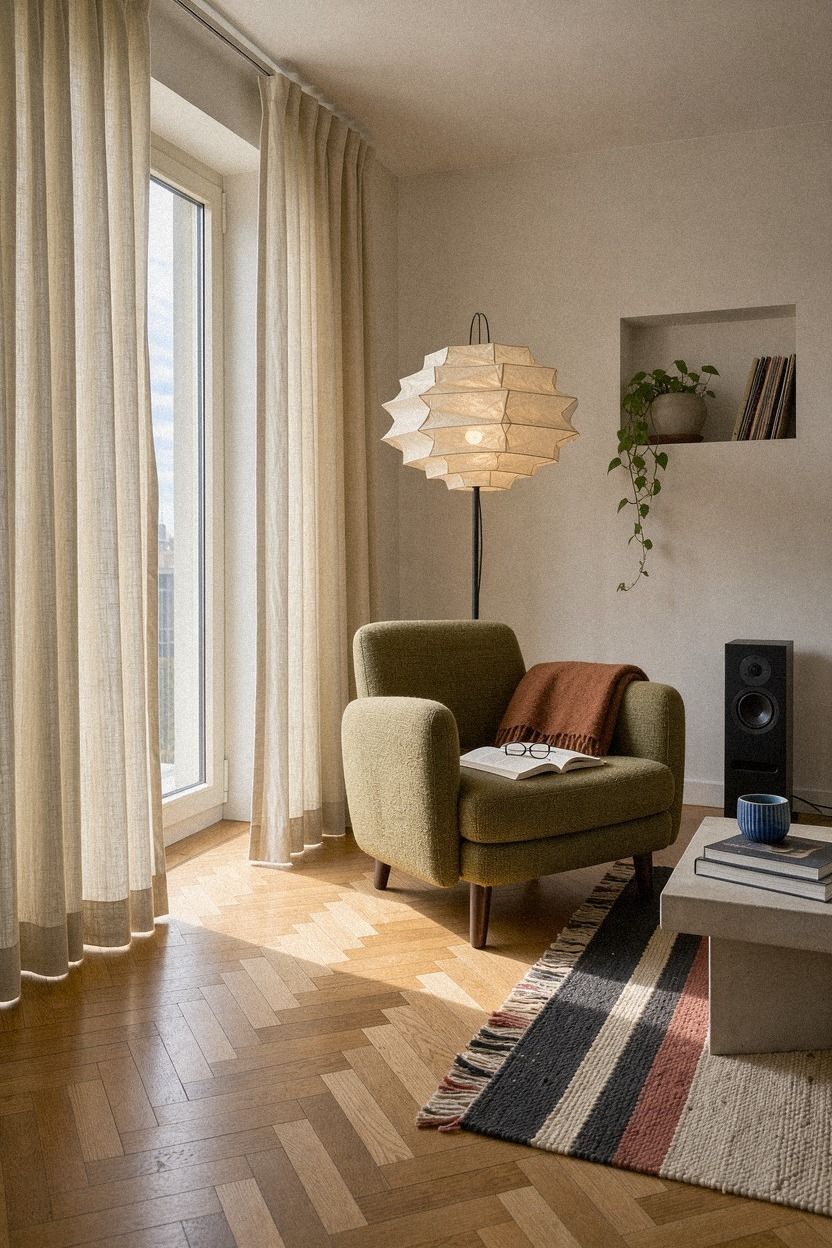
Curtain length changes the whole vertical line of your room. For most living rooms and bedrooms, panels should reach the floor with a slight break or barely kiss the surface. You’ll get a taller, more polished effect without changing your paint, rug, or furniture.
I prefer a gentle kiss over a dramatic puddle. A puddled forest-green curtain gathers dust, catches on a vacuum, and makes your room feel messier than it is. If you’ve got pets or children, your life will be easier with a clean floor-length hem.
Measure from the top of the rod to the floor, then check your panel length before drilling. You don’t want your rust-toned panels arriving 4 inches short after you’ve made six holes in the wall. If you’re buying ready-made curtains, your floor and rod measurements matter more than the window size.
And if your floor isn’t level, measure both sides. Your eye will notice a crooked hem before it notices a slightly uneven baseboard. A Nero Marquina marble sill with white veining can add a strong architectural line, but the fabric should still fall neatly beside it.
If the window is low or visually disconnected from the rest of the wall, compare this approach with anchoring short windows. If heat is involved, review the section on radiators and curtain clearance.
3Float the rod near the ceiling
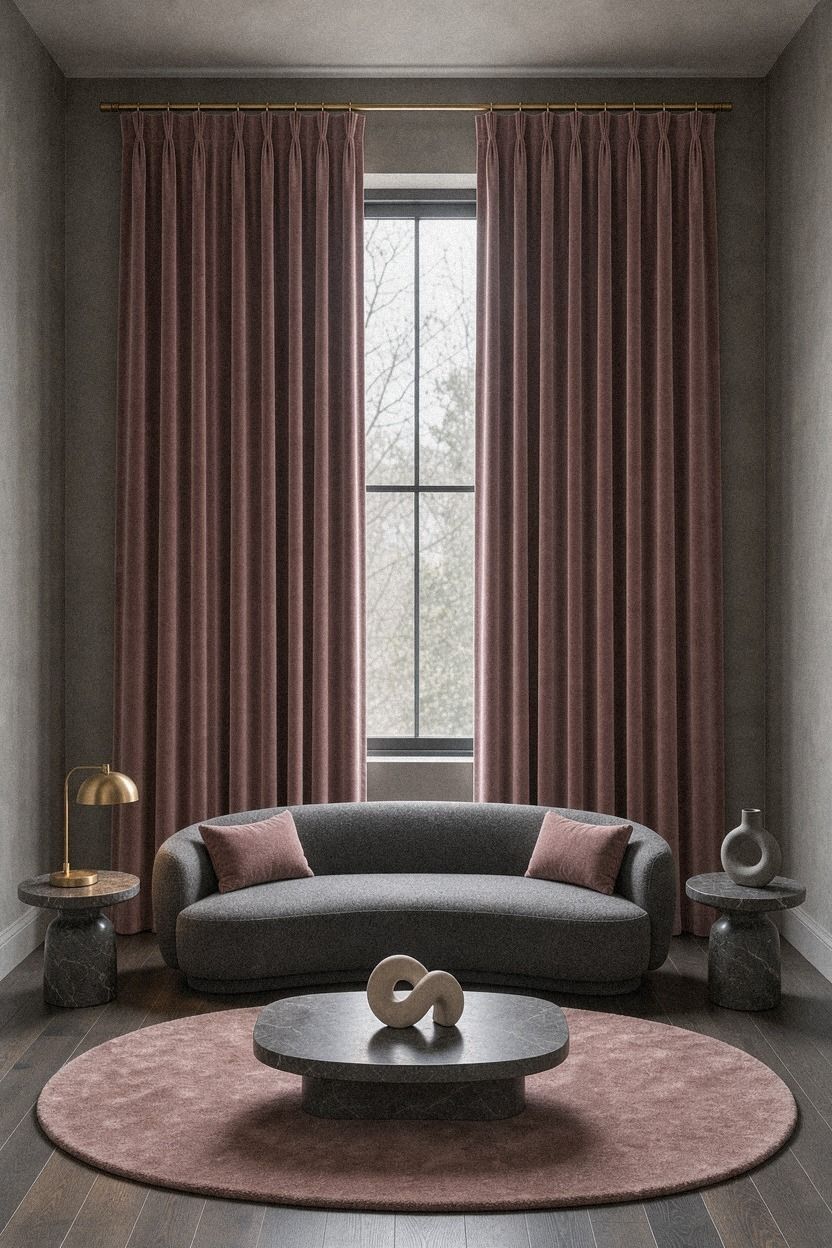
A high rod can make a room look taller, but only if you leave enough space for the curtain hardware.
4How high should you hang curtains above a window?
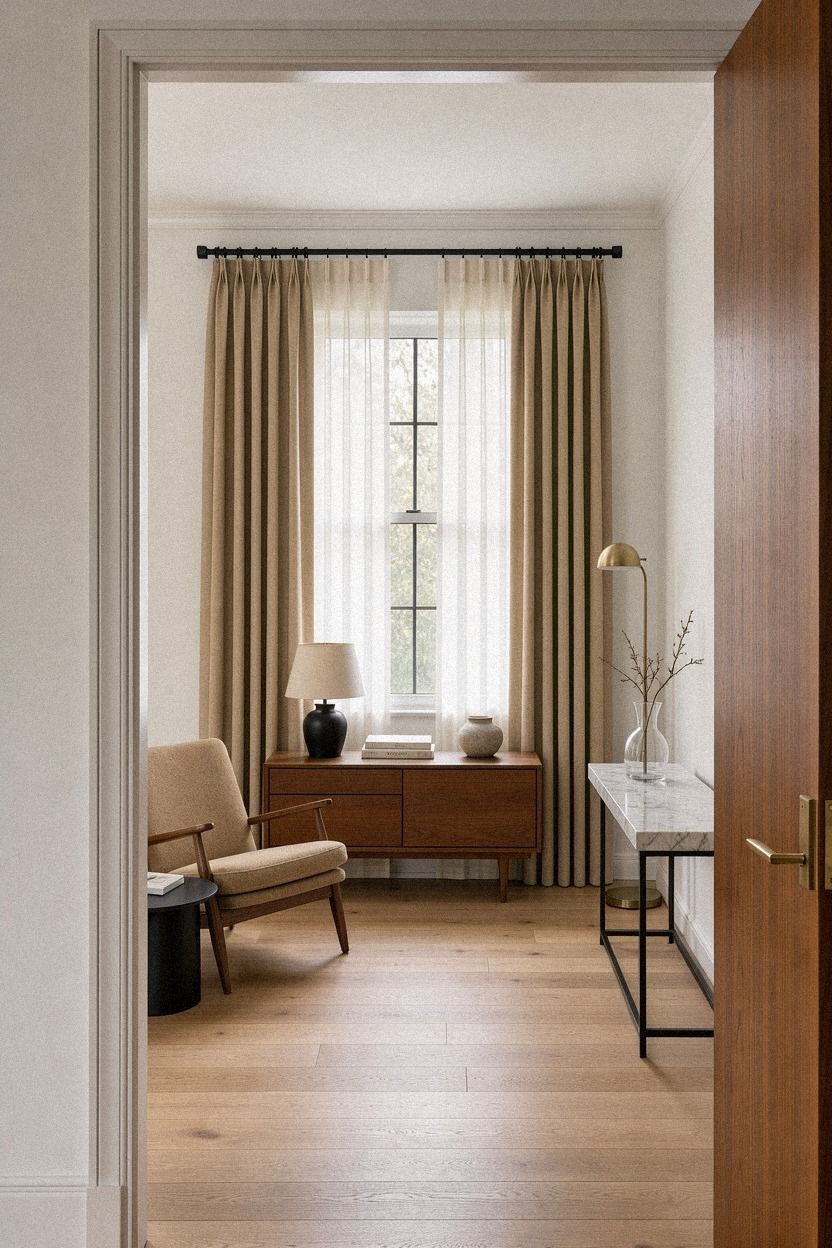
The best height depends on the space between your frame and ceiling. If you have more than 8 inches of wall above the frame, place the rod 4 to 6 inches up. If you have less room, mount it as high as your hardware allows without crowding the ceiling.
Your matte black brackets should sit far enough from the frame that the panels can stack beside the glass. A rod that’s too close to the window forces the fabric inward, so you’ll lose daylight and make the opening feel smaller. Nobody wants a curtain installation that steals the best part of the window.
I’d avoid mounting exactly halfway between the frame and ceiling. That position often looks accidental, especially with a Carrara marble sill with subtle gray veining. Either commit to the 4-to-6-inch rule or go close to the ceiling and use full-length panels.
And ask yourself a useful question: do you want the window to feel wider, taller, or both? You can raise the rod for height and extend it beyond the frame for width. Your answer will guide the brackets better than a generic decorating rule.
5Extend the rod beyond both sides
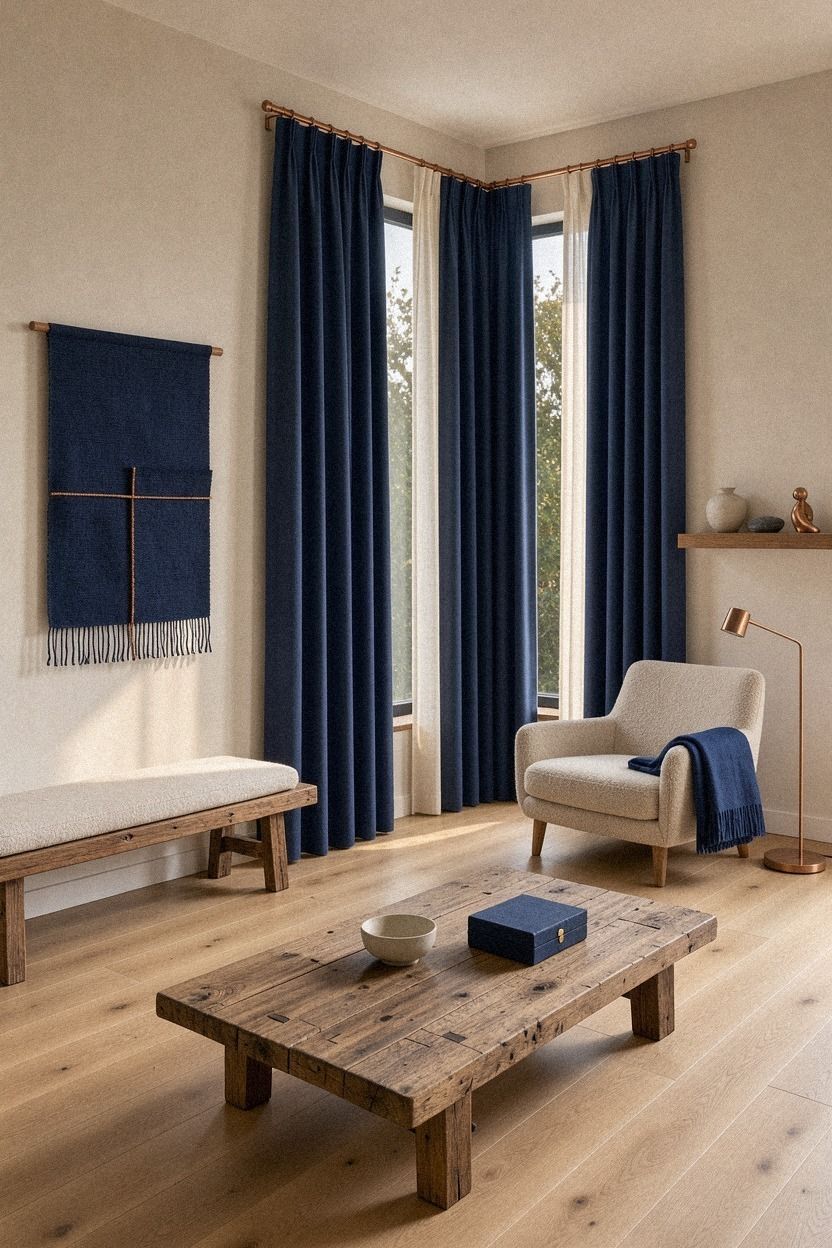
Curtain width matters just as much as curtain height. Extend the rod beyond both sides of the frame so the panels can stack outside the glass when they’re open. You’ll make the window look larger and allow more daylight into the room.
For a narrow window, even a modest extension can help. A reclaimed weathered teak curtain rod brings warmth to a plain wall, while the extra width gives your eye a wider horizontal line. Your window won’t physically change, but the room will feel less boxed in.
I’d skip a rod that ends exactly at the frame. It leaves the fabric covering the glass even when you’ve opened the curtains, and your ivory panels will look bunched instead of relaxed. The whole arrangement feels more generous when the fabric has somewhere to go.
Keep the finials simple if your window is small. Oversized copper finials can overwhelm a petite opening, especially beside a busy gallery wall. You want your curtains to frame the window, not compete with every other object in your room.
For better daylight control, pair this measurement with layered sheer panels. That small change pays off!
6Layer sheer panels beneath heavier drapes
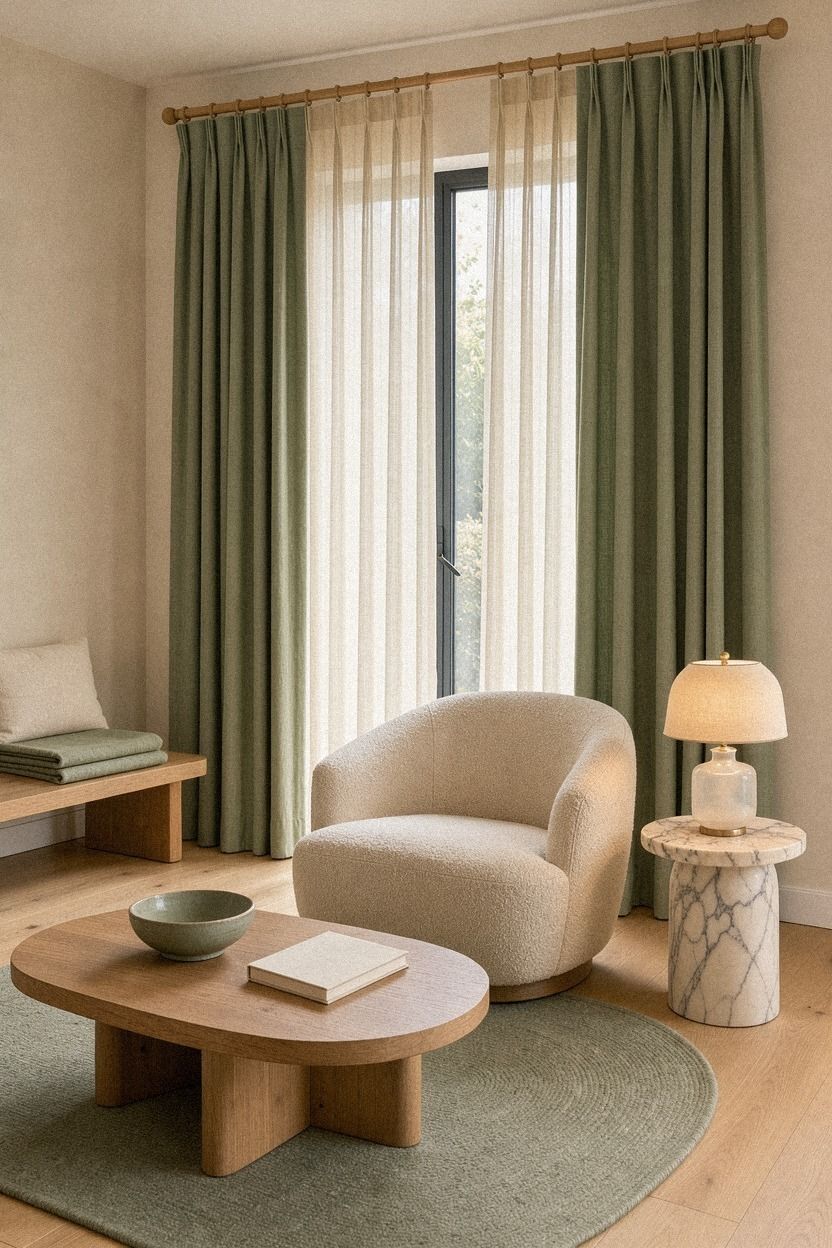
Layering gives you light control without forcing you to choose between privacy and sunshine. Hang a sheer panel on the inner rod and a heavier curtain on the outer rod. You’ll be able to soften the room during the day and close the drapes when the evening gets dark.
A warm cream sheer filters the hard edge of afternoon light. It’s calming in a bedroom and gentle in a dining room where bare glass can feel exposed. Your heavier sage green panels can then add warmth without blocking every ray of daylight.
I’ve tried using one thick panel for everything, and it never felt as flexible. The room looked heavy at noon and still wasn’t private enough after sunset. If you’re styling a north-facing room, this two-layer setup can keep the light soft without making the walls feel gray.
Make sure your outer rod sits high enough for both layers to fall cleanly. You’ll want the inner fabric to clear the sill and the outer fabric to reach the floor. A Calacatta marble sill with gold veining and a natural wood rod can give the window a rich, inviting look!
If the window is short, use the same principle while following the advice for full-length curtains. If the window sits above a heater, use the radiator-safe approach instead.
7Anchor short windows with full-length curtains
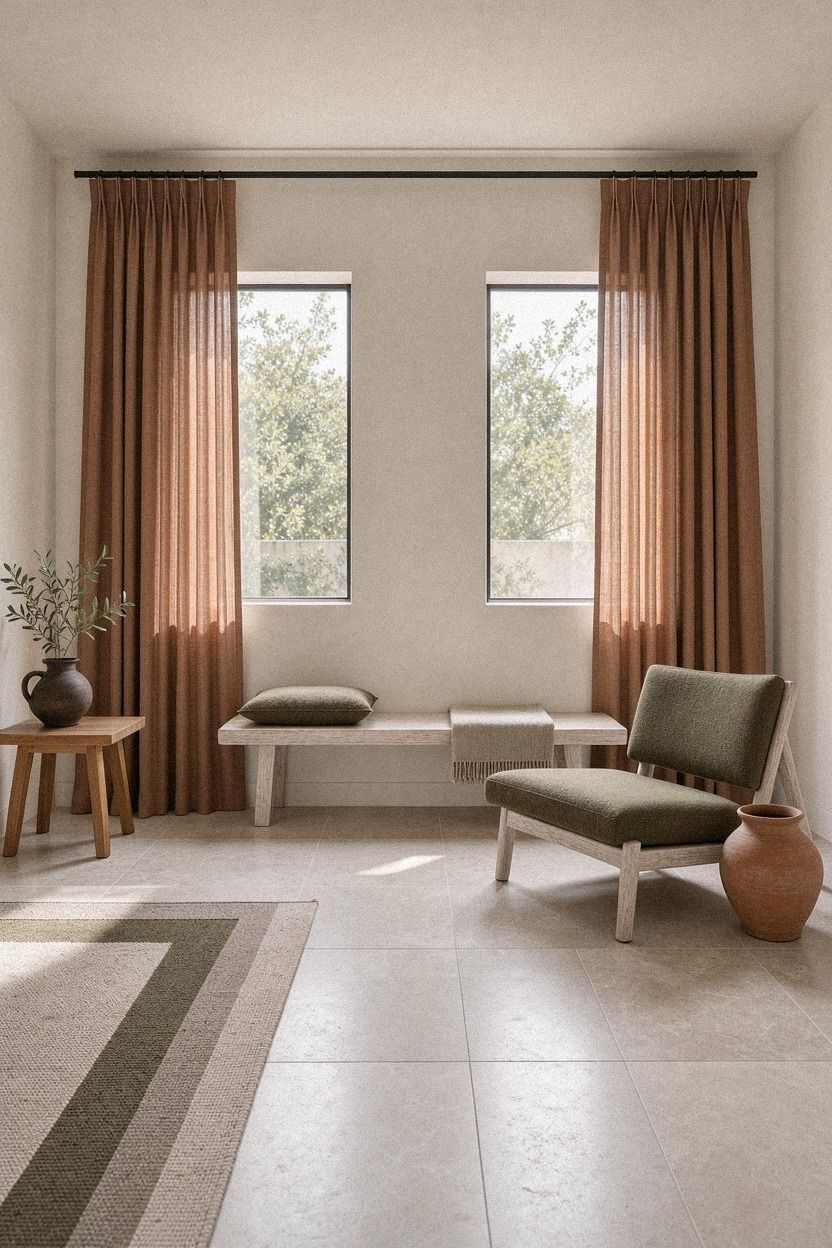
Short windows don’t need short curtains. Floor-length panels can connect a low window to the rest of the wall, especially when the room has low furniture or a long, uninterrupted stretch of paint.
The terracotta linen drape should start above the frame and continue all the way down. Your eye will follow the fabric vertically, which helps the window feel more important without making it look oversized. This is especially useful in a bedroom where the window sits behind a low dresser.
I’d avoid café curtains unless you truly need privacy at eye level. They can be charming in a kitchen, but they cut the wall into a horizontal band and make your cerused white oak dresser feel visually heavier. For most living spaces, the long line wins.
If your window sits close to the floor, measure carefully before ordering. You’ll need enough clearance for the stone-colored area rug and any furniture nearby. Keep the fabric clear of heaters, vents, and doors so your room stays safe and easy to use.
For a window above a radiator, don’t simply shorten the panels without checking airflow. The next section explains how to float curtains over a radiator.

8Float curtains over a radiator
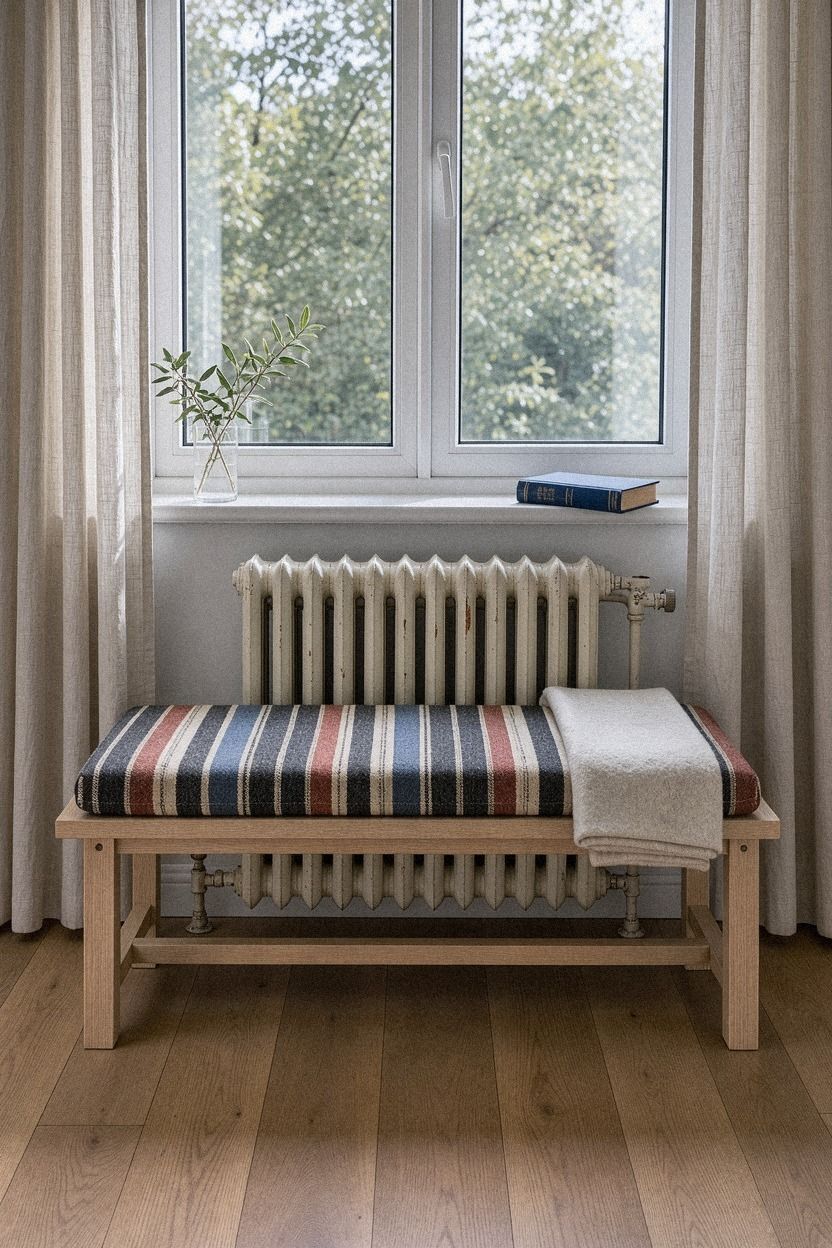
Radiators and heat vents complicate curtain height, but they don’t automatically rule out full-length panels. You can use a shorter panel, a side-stacked treatment, or a track that keeps the fabric away from the heat source.
If your radiator sits under the window, choose a flame-resistant linen blend and leave enough clearance for air to move. Your curtains shouldn’t cover a heat source when it’s running. Check the manufacturer’s guidance before you decide on the final length.
I’d rather use a tailored sill-length panel than risk a full drape hanging against a hot radiator. A pleated linen café curtain can look crisp and intentional when the hem aligns with the sill. The mistake is pretending the radiator isn’t there and hoping the fabric behaves.
You can still raise the rod 4 to 6 inches above the frame, then stop the panels at a safe point below. A clay wall, aged brass hardware, and a backlit translucent onyx surface can make the treatment feel integrated with the architecture.
Once the practical height is settled, color can help the treatment feel integrated. The next section considers how a soft white wall changes the arrangement.
9Frame the room with Benjamin Moore White Dove
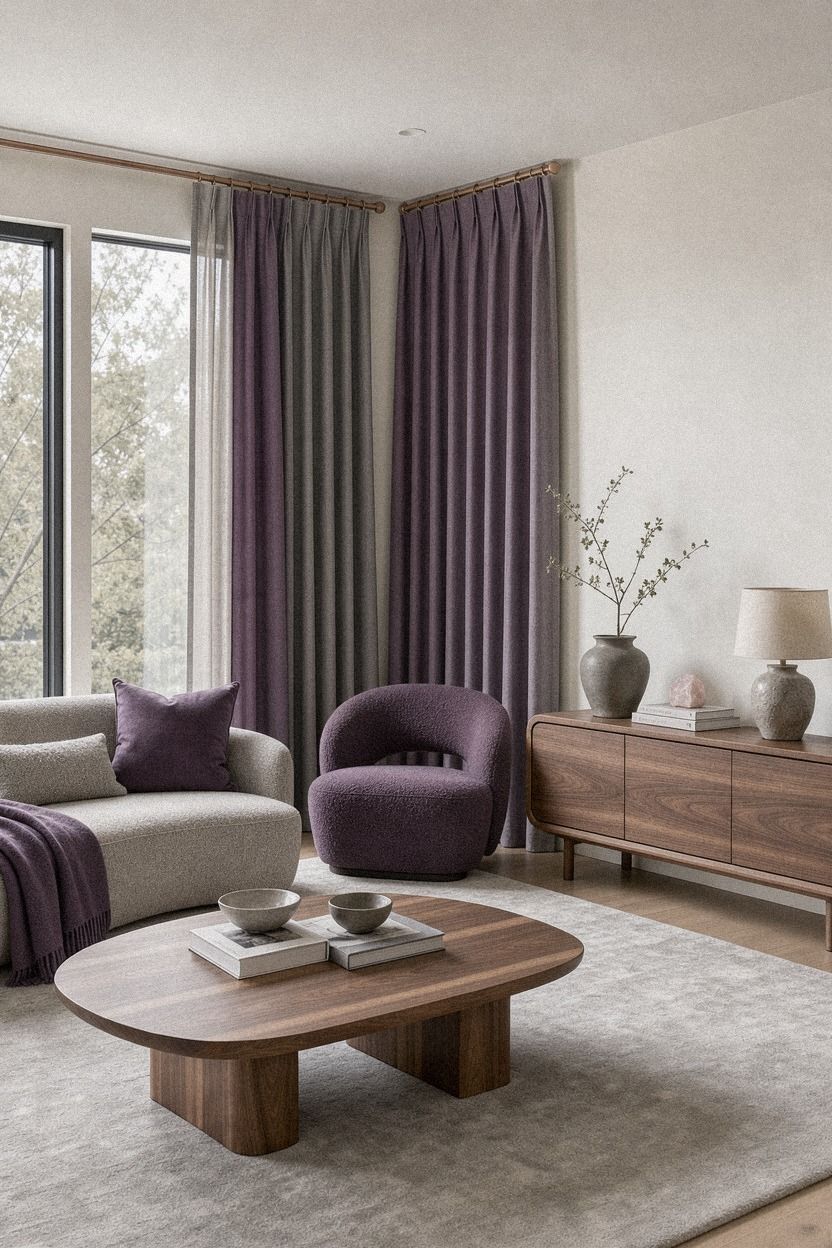
A soft white wall changes how curtain height reads. Benjamin Moore White Dove OC-17 reflects light gently, so high-mounted panels can look airy instead of stark. It’s a strong choice when you want your curtains to feel integrated with the room.
Your curtain fabric should bring enough contrast to show the vertical line. A plum velvet panel works beautifully against White Dove because the color creates depth without making the window feel heavy. You’ll get a richer effect when the room also includes gray upholstery or trim.
I’d skip a bright optic-white curtain in this pairing. It can make the wall look yellow and flatten the contrast. Your rose-gold hardware will also look warmer beside the soft wall color than beside a blue-white panel.
And if your room feels flat, add contrast through the furniture, not another wall color. A book-matched walnut console gives your eye a grounded horizontal line, while the curtain keeps the atmosphere soft and welcoming.
The wall color is only one part of the composition. To keep the room from feeling top-heavy, use the two-height light stack.
10Use the Two-Height Light Stack
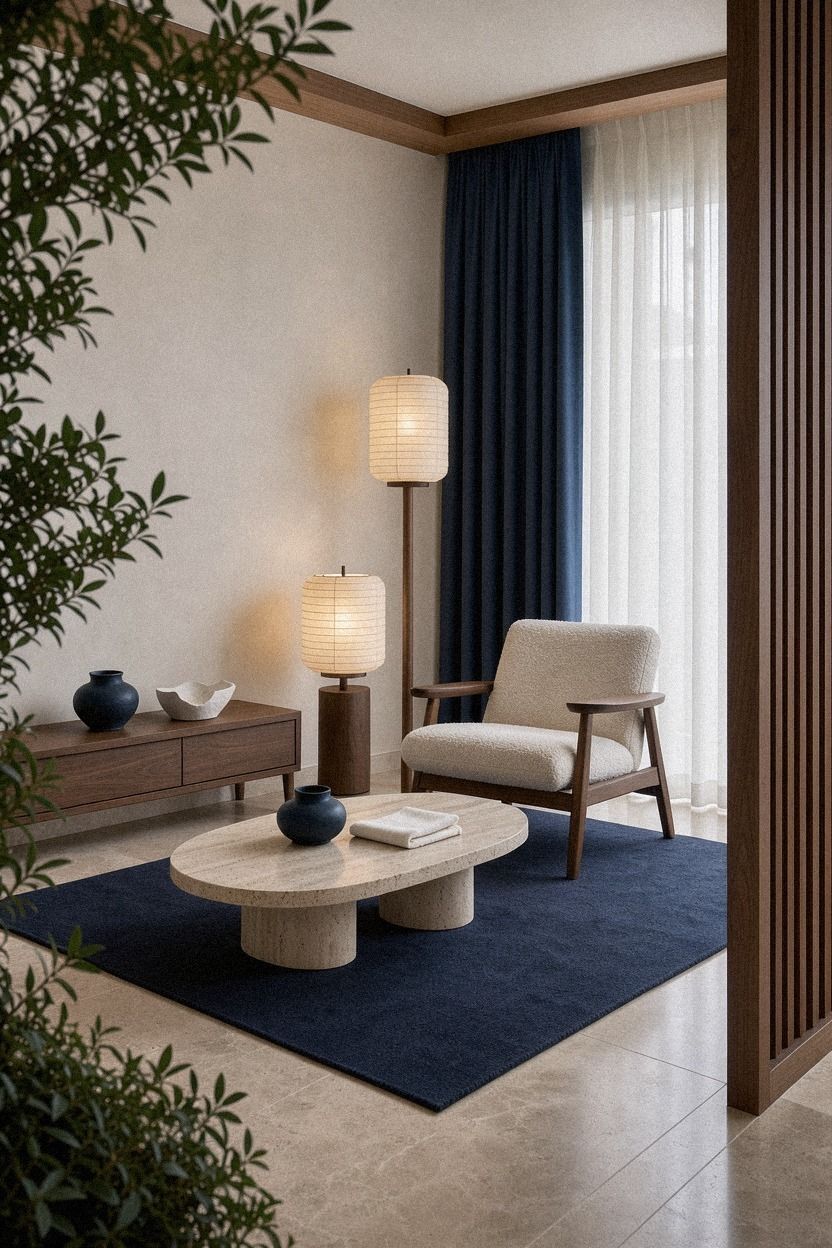
The Two-Height Light Stack is a simple way to balance curtain height with the rest of your room. The upper line is the rod, and the lower line is a lamp, artwork, or furniture top. Your eye moves between those points, so both need to feel intentional.
Hang your art with its center around 57 to 60 inches from the floor, then keep the curtain rod above the window. A navy-and-white botanical print can sit on the adjacent wall without competing with the fabric. You’ll create rhythm instead of a collection of unrelated heights.
I made the mistake of placing art too high because the curtains were tall. The room looked like everything was climbing toward the ceiling. Your warm travertine table lamp and walnut furniture should give the lower half of the room some weight.
But don’t line every object up perfectly. A little variation keeps the room relaxed. Use the 57-to-60-inch art guideline as an anchor, then let your curtains carry the taller vertical gesture.
Small rooms need the same balance, but with less visual weight. The next question covers curtain height in a small room.
11What height should curtains hang in a small room?
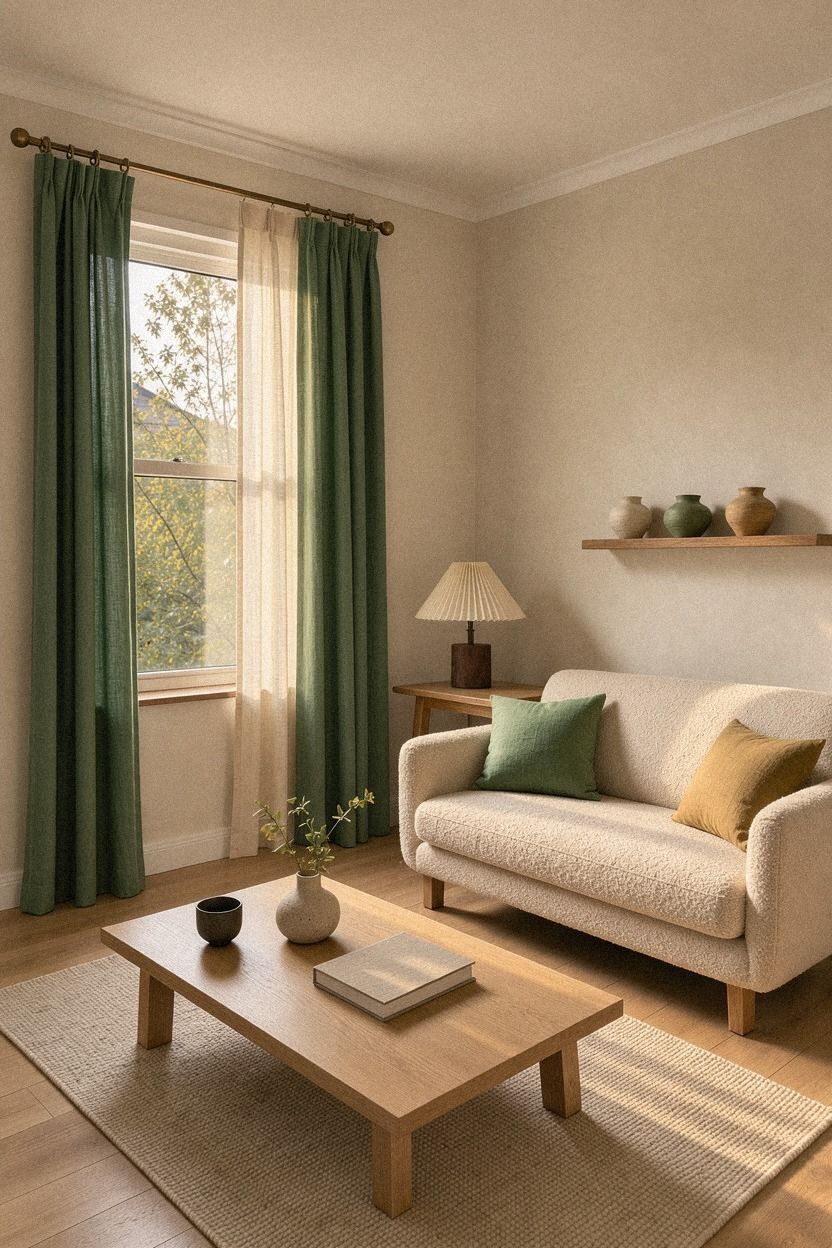
In a small room, hang curtains high and keep the fabric simple.
12Swap low mounting for the Four-Inch Rule
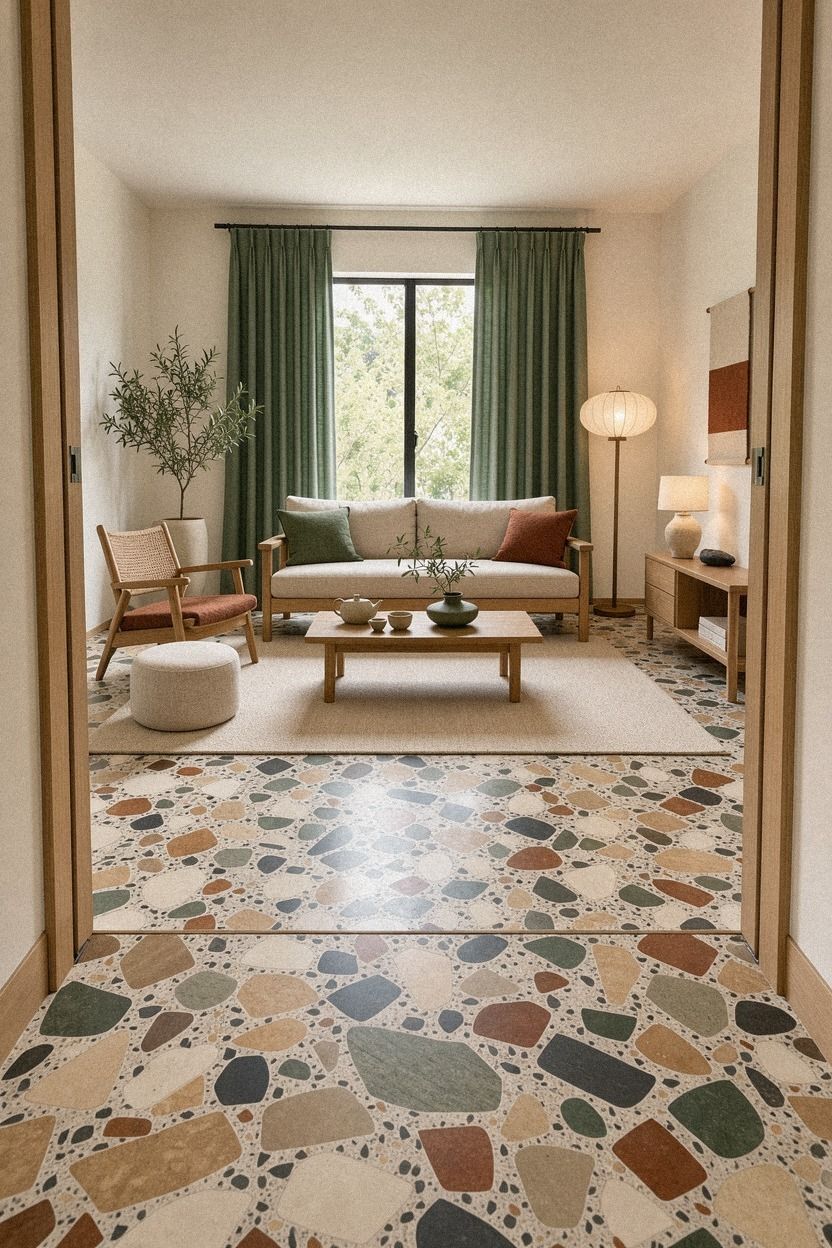
The Four-Inch Rule is for rooms where you want a reliable result without making the curtains the main event. Place the rod 4 inches above the frame, extend it beyond the sides, and use panels that reach the floor.
This approach works especially well with natural oak hardware and relaxed textiles. Forest-green curtains with rust accents will look finished, but the room’s art, furniture, and lighting can still lead. It’s a smart choice if you’re renting or updating a room without changing the trim.
I’d use this rule with a washed oatmeal linen rather than a glossy synthetic fabric. The natural texture keeps the arrangement warm and organic, while an oversized-chip terrazzo surface can add interest without making the window theatrical.
You don’t need to over-style the window. One simple rod, two full panels, and a clean hem can be enough.
If you’re unsure, step back into the doorway before drilling. The distance will reveal awkward spacing faster than standing inches from the frame.
If ready-made panels don’t come in the right length, plan the cost before ordering custom fabric. The custom-length budget section can help.
13Build the budget before choosing custom length
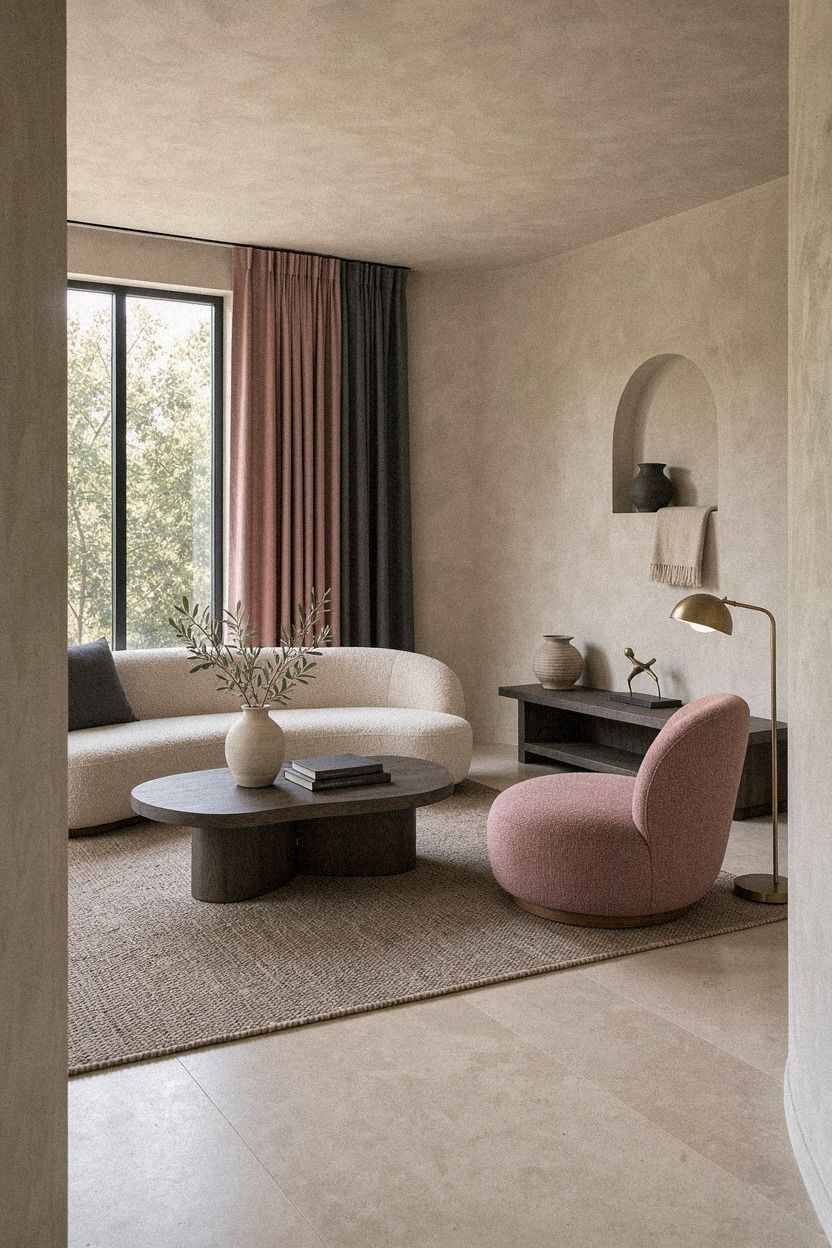
Custom curtains can be worth the cost, but you should understand the wider room budget first.
14Layer three light sources around the window
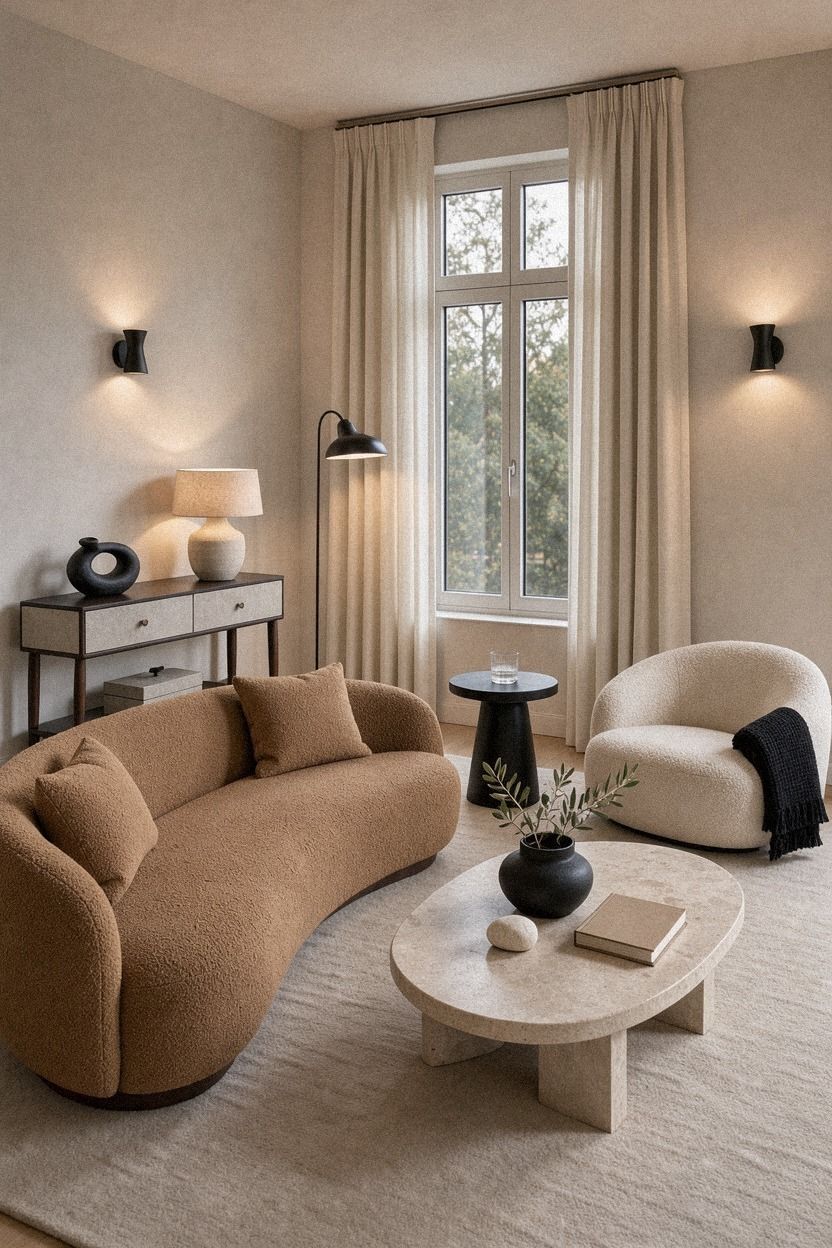
Curtains look their best when the room has more than one light source. Aim for three sources per room: overhead, task, and ambient. Your window treatment will change throughout the day, so it needs evening lighting that supports its texture.
A camel linen panel catches a lamp’s side glow differently from direct overhead light. Put a floor lamp near the curtain edge, then add a table lamp across the room. You’ll create a warm, balanced atmosphere instead of a bright ceiling wash.
I’d skip relying on one central fixture. It flattens the folds and makes your matte black sconce work too hard. Your room should still feel inviting after the sun goes down, and a small shagreen accent can give the fabric extra depth.
But keep bulbs warm rather than icy. The curtain color you chose in daylight may look green, blue, or dull under harsh light. Test your setup at night before you decide whether the panels are wrong.
Good lighting also makes it easier to judge whether the curtain width feels generous enough. Use the Three-Width Curtain Plan before buying more fabric.
15Choose the Three-Width Curtain Plan
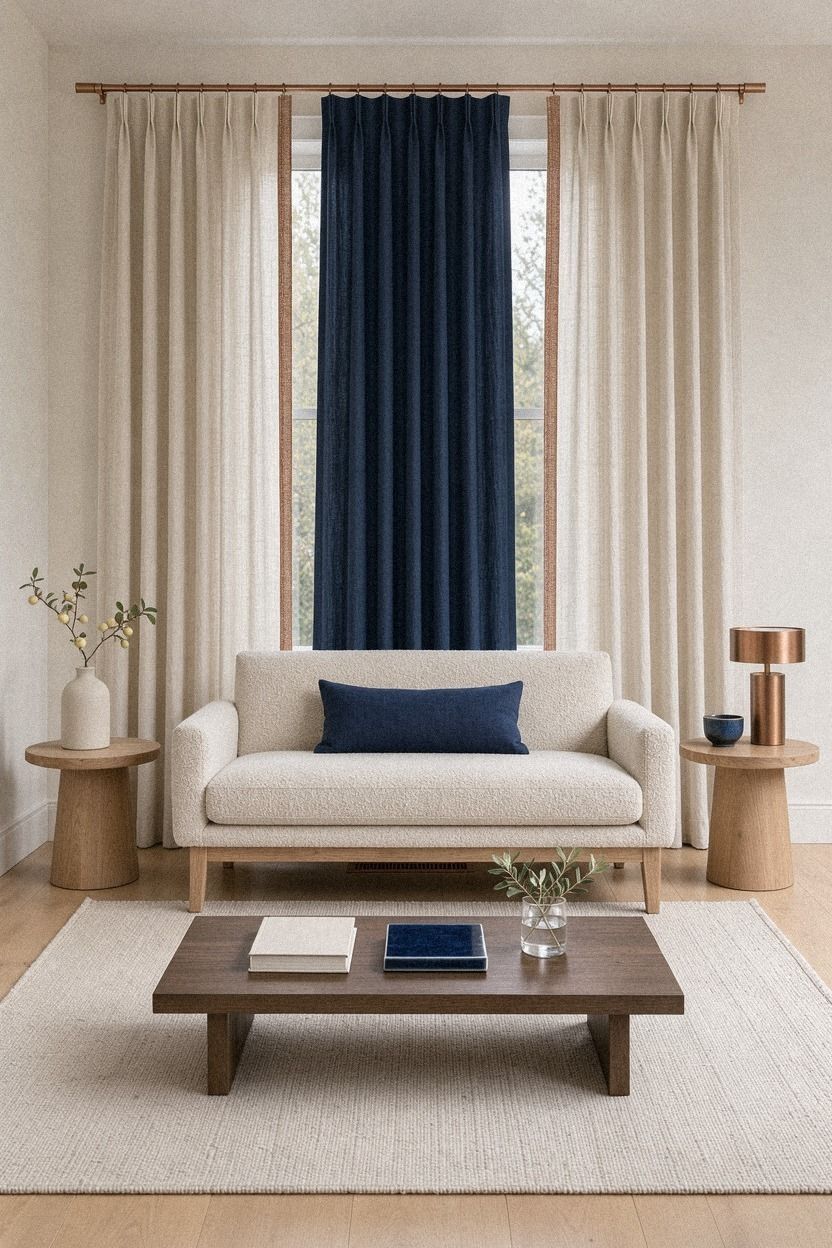
The Three-Width Curtain Plan helps you decide how much fabric your window needs.
Why Curtain Height Changes the Whole Room
I’ve measured enough windows to know that curtain height is rarely just a curtain decision. It changes how your walls read, where your eye rests, and whether the room feels settled or slightly off.
A rod mounted too low can make a generous room feel squat. A rod mounted too high with short panels can make the mistake even louder.
The most useful starting point is still practical: 4 to 6 inches above the frame, with fabric down to the floor. That rule gives you a dependable shape, but your room may ask for a small adjustment.
A low ceiling, radiator, uneven floor, or narrow window can change the answer. Your house isn’t a showroom, and pretending every opening is identical usually creates more work.
I’m also convinced that curtains should support the room’s daily life. If you open them every morning, make sure the panels stack outside the glass.
If you need privacy at night, use a sheer layer. If your radiator sits below the window, safety comes first.
The most elegant treatment is the one you can use without fuss.
My own worst mistake was buying beautiful fabric before measuring the rod. The panels were too short, and no amount of steaming fixed that. Now I measure the wall, the frame, the floor, and the hardware twice.
It takes ten minutes, and it saves you from a very expensive lesson. Your room will feel warmer when the curtains fit both the architecture and your routine.
A Few Things Worth Answering
What is the best height for curtains in a small room?
Hang the rod 4 to 6 inches above the frame and use floor-length panels. Full-length linen curtains draw the eye upward, while a wall-friendly color keeps the room airy. IKEA panels can work well when you need a simple, budget-conscious starting point.
Where can I buy curtains on a budget?
Look at IKEA, Wayfair, and Target for ready-made panels, then check Facebook Marketplace or a local thrift shop for secondhand options. Cotton curtain panels are often easier to alter than heavy velvet. Measure your rod and floor first, so your budget purchase doesn’t become a costly mistake.
How much does a curtain makeover cost?
A small update can cost about 100 to 300 dollars, depending on the fabric, hardware, and number of windows. Existing curtain rods may cost you nothing to reuse. Paint, steaming, and moving furniture can also change the room before you buy anything new.
Can I create this look on a budget?
Yes, and you can start with free changes. Raise an existing rod if the panels are long enough, steam the fabric, and move the furniture away from the window. Budget cotton panels can add softness, while a simple black rod gives your room a more defined vertical line.
Is this worth it in a small space?
Yes, because small rooms benefit from a clear vertical line. Mount the rod 4 to 6 inches above the frame, keep the panels close to the wall, and choose a soft neutral fabric. Your room will feel taller without losing floor space to bulky furniture.
Is this a good idea for a rental?
Yes. Use a tension rod, removable brackets where appropriate, or a no-drill track designed for your wall type.
Lightweight linen-look panels are easier to manage than heavy drapes. Keep the rod close to the frame if you can’t make permanent holes, and focus on a clean floor-length hem.
Where I’d Start First
If I had to pick one, I’d start with the 4-to-6-inch rod height. It solves the most common mistake, keeps the window open, and makes floor-length curtains look intentional. Measure twice, hang once, and choose panels that reach the floor without puddling.