16 Curved Media Wall Designs That Soften a Sharp Modern Living Room
26 october 2026Curved media wall ideas can soften a sharp modern living room without a full renovation. I once made a straight black TV wall feel even harsher by adding more hard-edged shelving. The fix was a rounded profile, warmer oak, and light that grazed the plaster. You don't need a giant room. You need better transitions.
- Frame the screen with a plaster arch
- What should sit beneath the curve?
- Layer vertical slats over a rounded backer
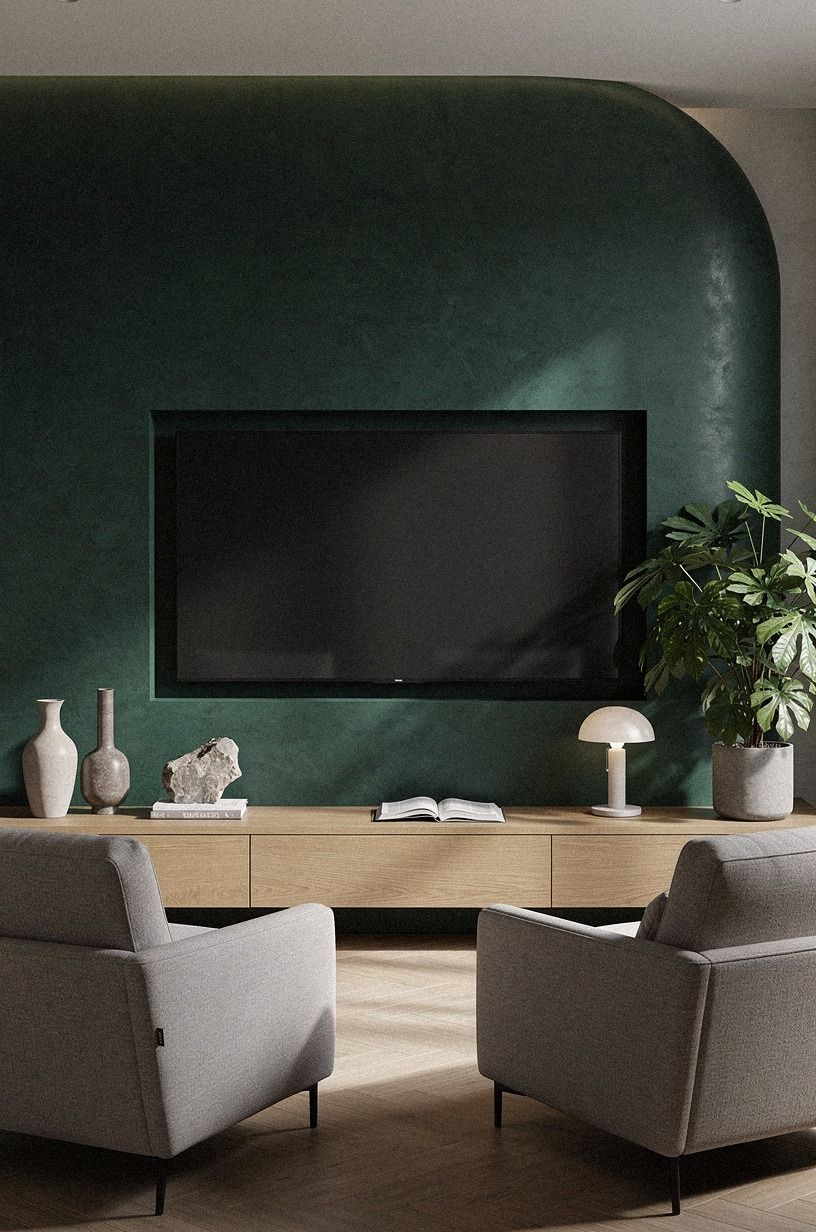
- Paint the curve in a moody blue
- Swap full cabinetry for a recessed niche
- The Three-Height Light Stack
- Anchor the screen with a stone ribbon
- Soften the curve with linen panels
- The Two-Wood Rule
- Hide the wires behind a curved panel
- Pair a black screen with warm plaster
- Create a rental-friendly removable curve
- Mix asymmetry over perfect balance
- Curve or corner: which transition fits?
- Choose the screen scale before the millwork
- Finish the modern classic TV wall with quiet objects
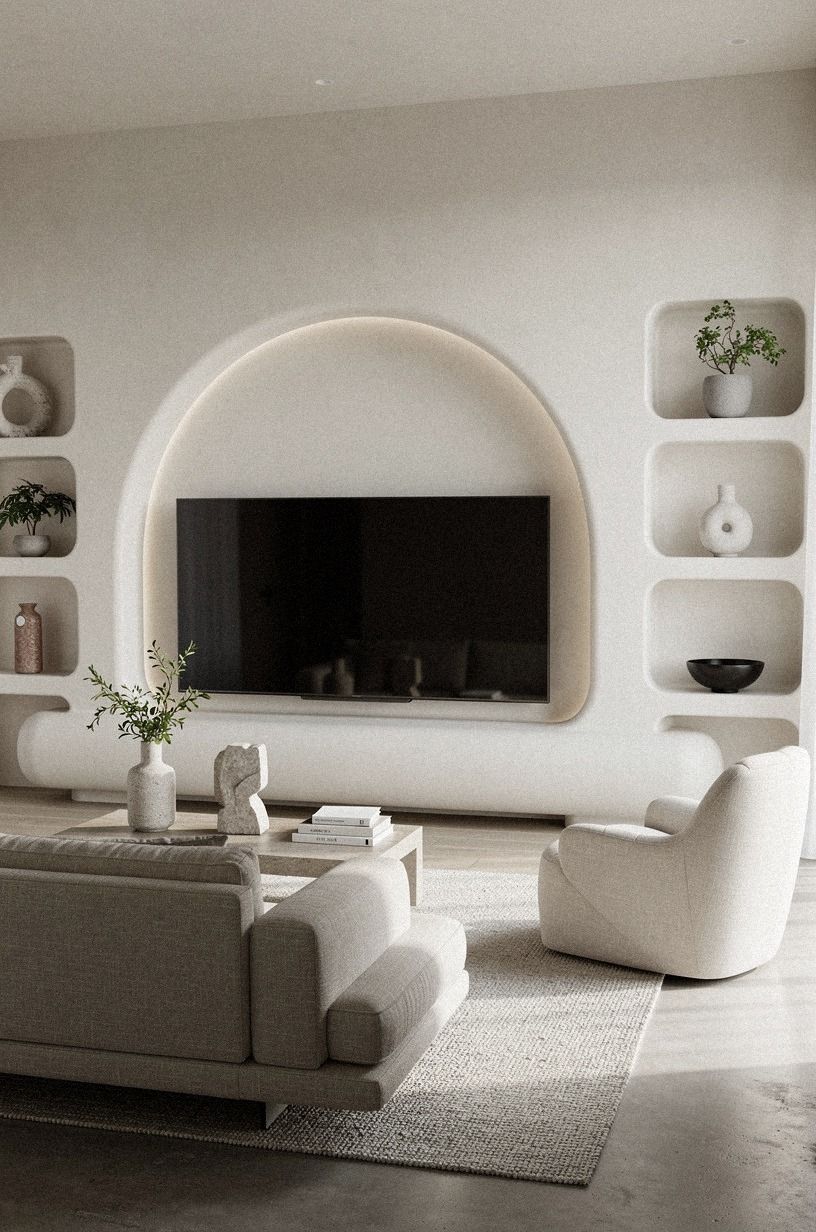
1Frame the screen with a plaster arch
A shallow plaster arch gives your television a softer architectural frame, especially when the rest of your room has square windows and clean-lined furniture. Keep the curve broad rather than tight. A 12-inch return on each side can be enough to change how your eye reads the wall, and you won't lose much floor space.
I’d choose warm white mineral plaster over glossy paint because the surface catches light unevenly. Lime plaster with a chalky finish feels calm beside a black screen, while polished Venetian plaster can look too formal.
I tested a similar finish in a narrow room, and the afternoon light moved across it like fabric. If you’re copying this look, use a low reclaimed weathered teak media console below it.
You’ll get storage without interrupting the arch.
For a more dramatic version, borrow the low-profile approach from the recessed niche idea. The result can feel architectural, graceful, and surprisingly intimate.
2What should sit beneath the curve?
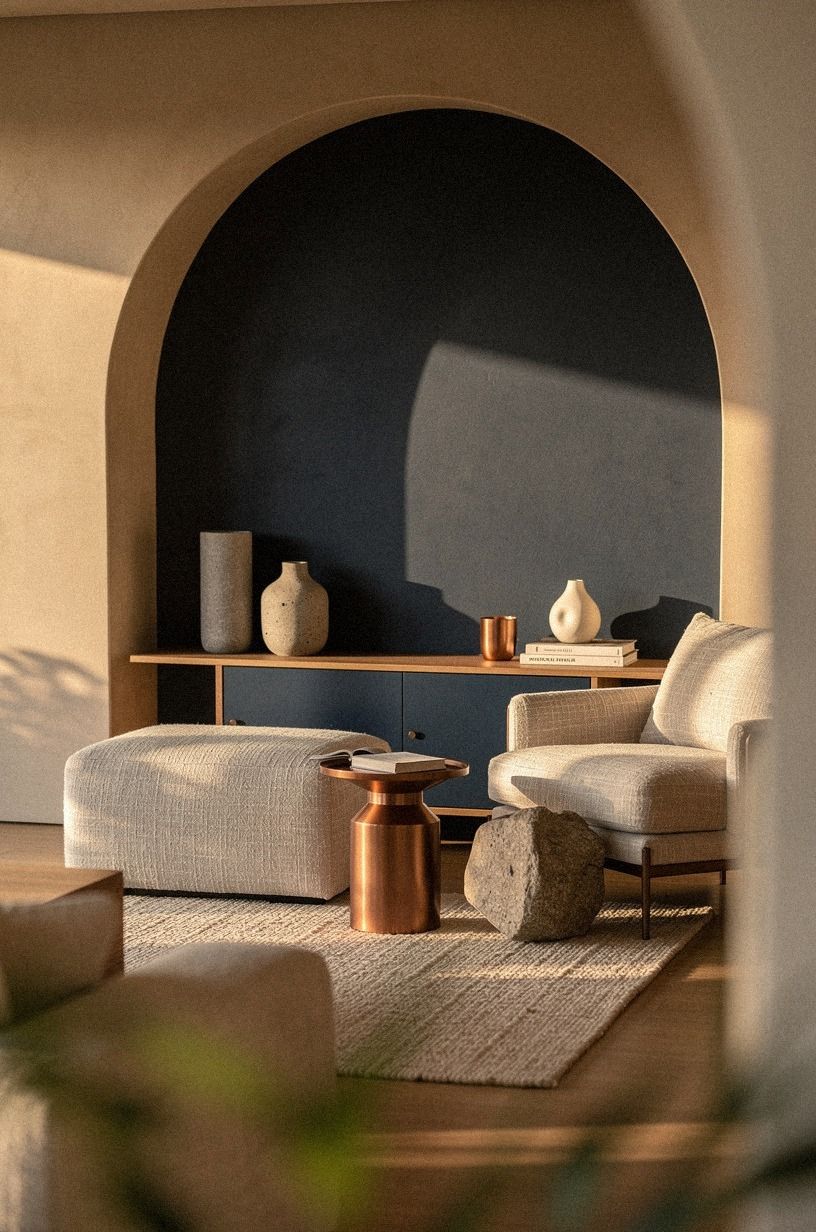
A floating console makes a curved media wall feel lighter because the floor line stays visible underneath.
3Layer vertical slats over a rounded backer
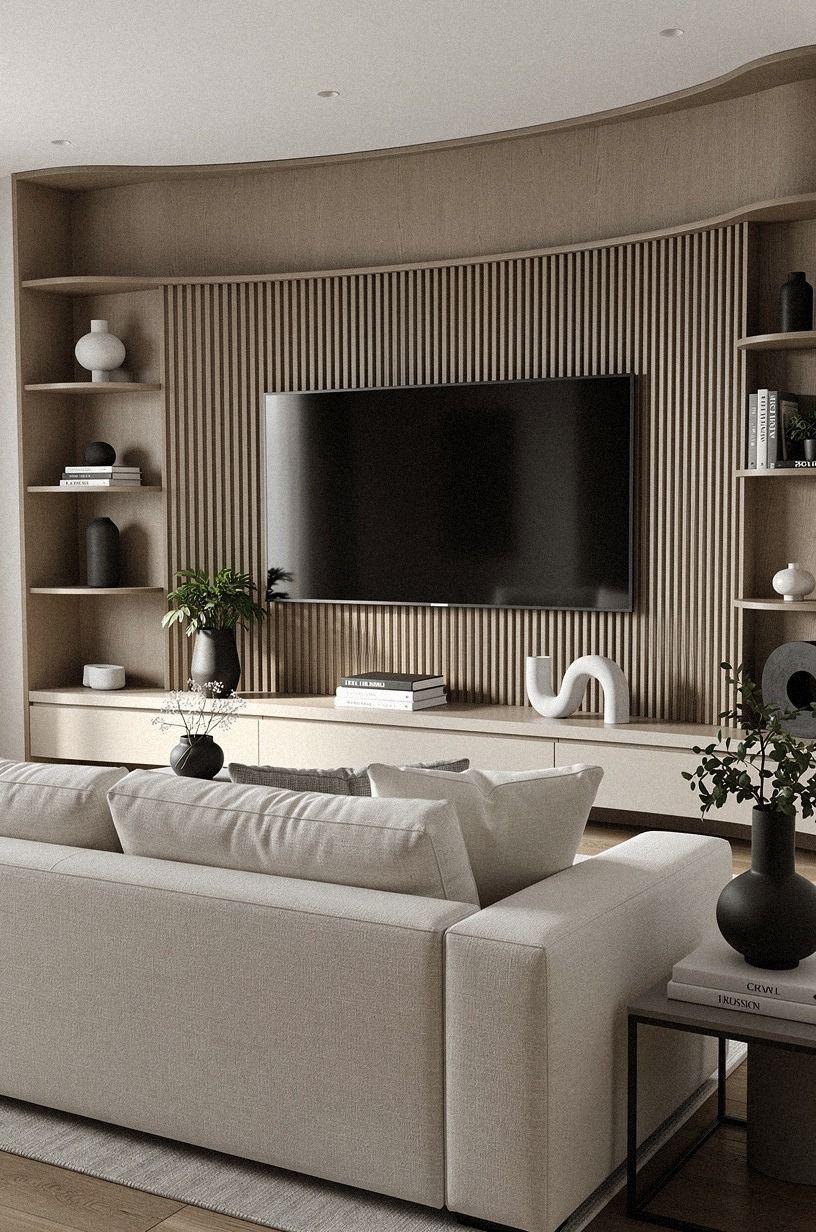
Vertical slats add rhythm without making the media wall look like a flat box. Install them over a curved backer so the grain follows the wall’s shape, then leave narrow reveals between boards. The repeated lines will pull your eye upward, which is useful when your ceiling feels low.
Use cerused white oak slats with a 3/4-inch solid profile if you want a substantial shadow line. Thin veneer strips can look delicate, but they’re less forgiving around corners. I’d avoid covering the wall in a heavy dark finish unless your room gets plenty of daylight.
It can turn dramatic into gloomy by 3 p.m. Instead, try natural wood with a matte seal, then bring in sage green and warm cream through the seating and accessories.
If you’re styling the shelves, give your eye some empty space. One ceramic vessel, two books, and a small lamp will feel more refined than a crowded row of accessories. The restraint is what makes the wall feel expensive without relying on loud finishes!
4Paint the curve in a moody blue
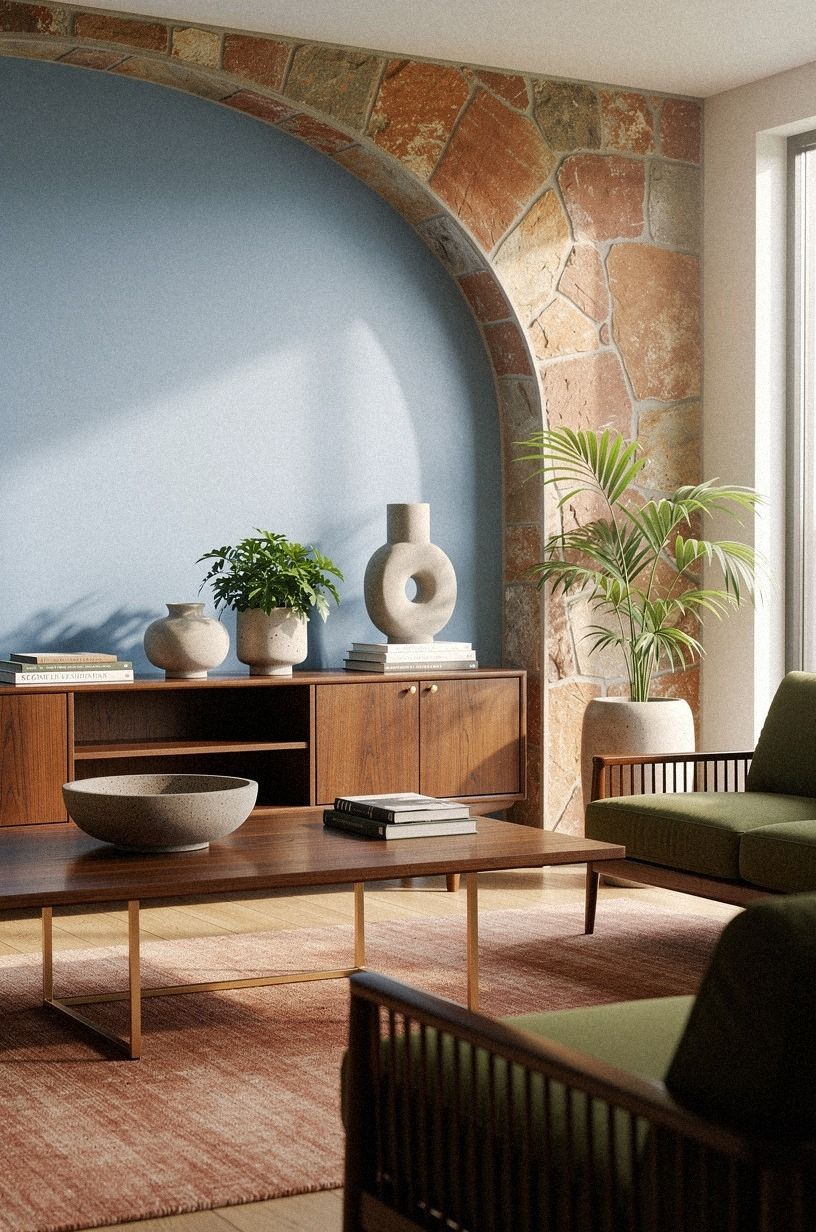
A painted curve can make your screen feel intentional instead of apologetic. For the wall shown here, I’d use a muted terracotta rather than a strong blue, then let stone and olive accents keep the color grounded. The warmer tone makes the curve feel connected to the rest of the room instead of floating by itself.
I’d use this approach in a room with pale flooring and warm upholstery. The contrast is bold, but terracotta still feels inviting when it meets shagreen accents or natural wood.
Don’t use a cool white on the surrounding wall, because that break can make the curve look pasted on. A soft stone shade will give you a gentler transition.
And if you’re nervous about the color, paint a 24-inch sample first. Your wall may look earthy in the morning and deeper after sunset, so live with it through both light conditions before you commit. The evening version can be wonderfully cinematic!
5Swap full cabinetry for a recessed niche
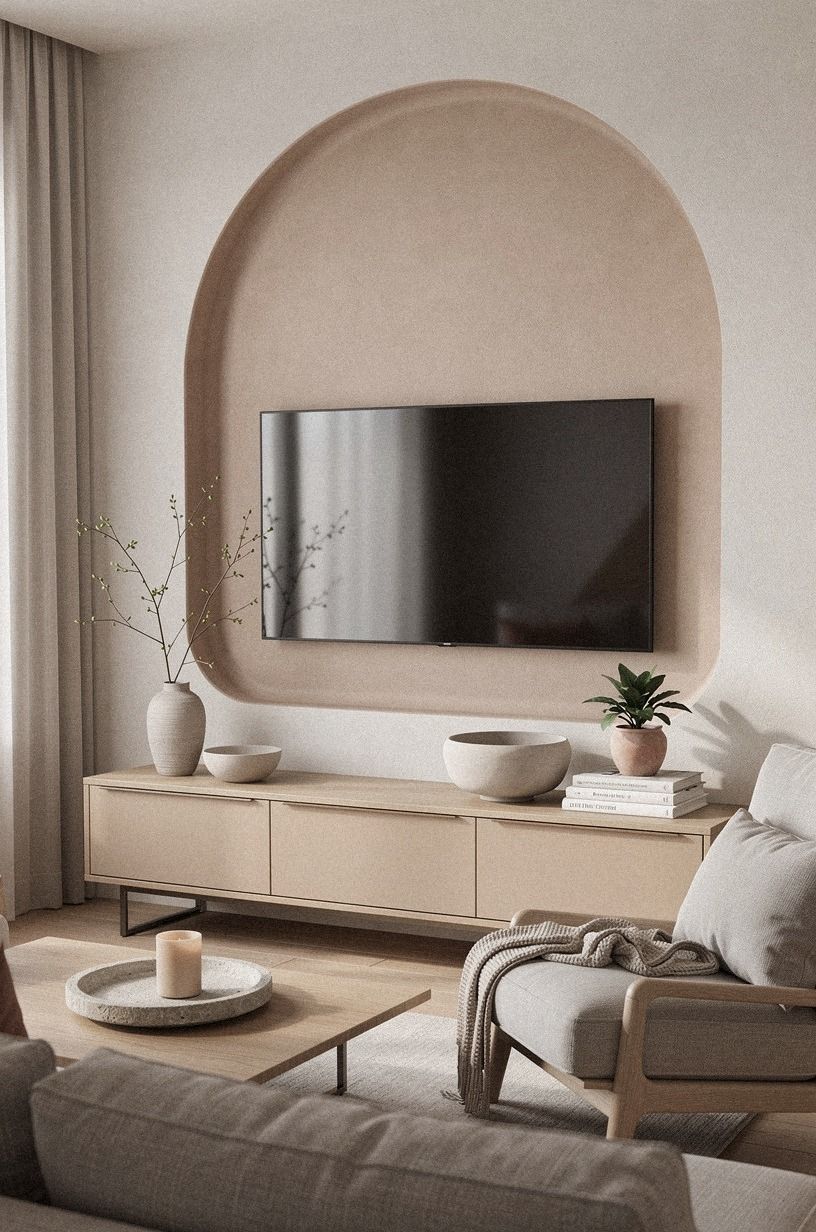
A recessed niche creates the architectural feeling of a built-in without covering the entire wall. Curve the top corners, keep the sides straight, and set the screen inside the opening. This gives your television a visual boundary while leaving the surrounding wall calm.
Use book-matched walnut on the niche floor or side returns if you want texture that doesn’t shout. I’d choose a clay-toned finish over busy marble because the screen already supplies plenty of visual activity. A slim media unit below the opening can hold equipment while the niche handles the focus.
Add a small touch of aged brass if the surrounding palette includes linen or warm neutrals.
You’ll want to plan the outlet before the drywall goes in. Your cables should exit behind the television, not dangle into the cabinet.
If you’re renovating, photograph every wire path before closing the wall. I made the mistake of trusting memory once, and the missing outlet cost me an extra afternoon.
For a softer finish, look at the warm plaster approach before choosing stone. A subtle surface may give you the same calm effect with less visual weight.
6The Three-Height Light Stack
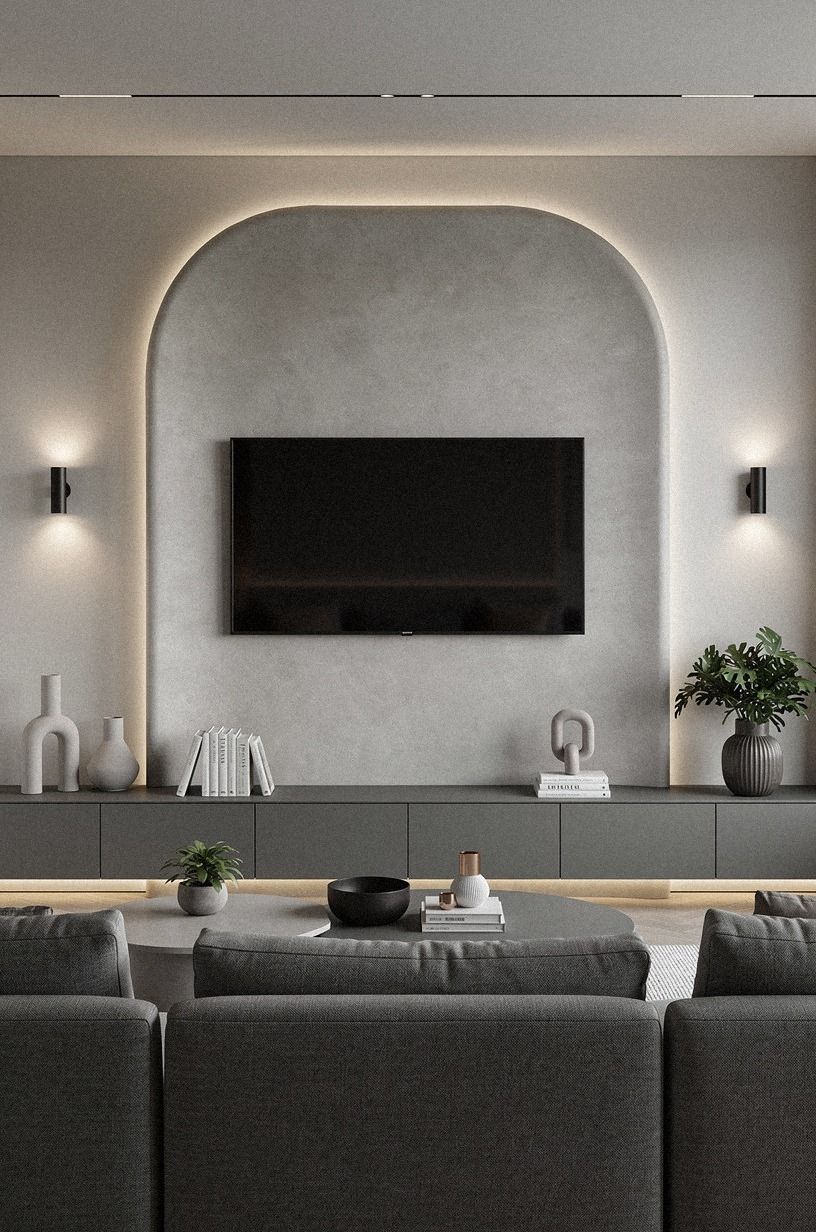
The Three-Height Light Stack uses a low lamp, a middle screen, and one taller architectural element to keep a curved media wall from feeling visually flat.
7Anchor the screen with a stone ribbon
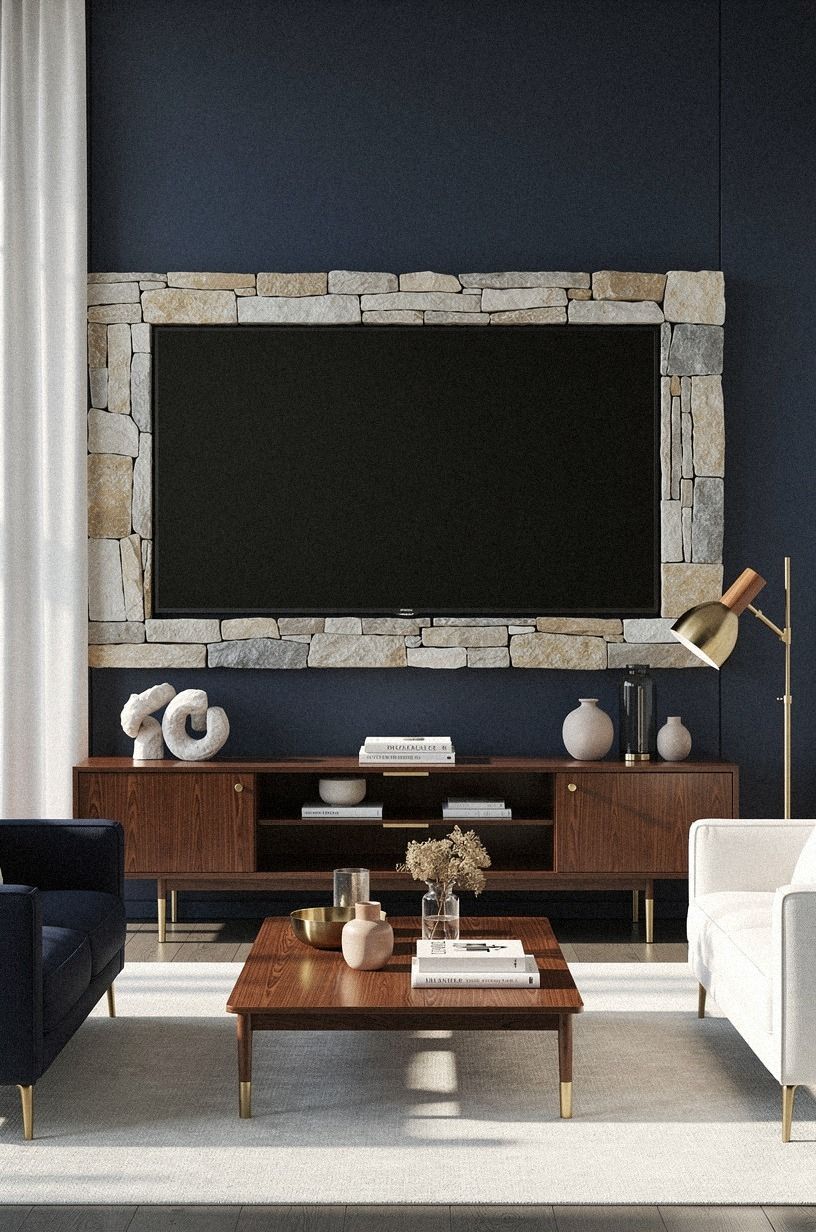
A horizontal ribbon can calm a large curved media wall because it gives the eye a grounded line. Run it behind the console or across the lower third of the wall, then let the curve rise above it in plaster or paint. This works especially well when your room has tall ceilings and the television looks undersized.
I like a narrow unlacquered brass ribbon that can develop a natural patina over time. It brings warmth to a palette of navy, white, and walnut without competing with the screen. If you prefer a stone version, keep the surface quiet and pale rather than heavily veined.
Too much pattern competes with your screen and every object on the console.
Keep the shelf 16 to 18 inches above the floor if it’s acting as a visual ledge, and make sure its depth doesn’t block your seating path. If you’re choosing between brass and wood, wood is the warmer choice. Brass wins when your room needs a firm horizontal counterpoint.
A narrow ribbon can also connect the wall to a nearby coffee table or fireplace. See how that same grounding principle appears in the quiet-object finish.
8Soften the curve with linen panels
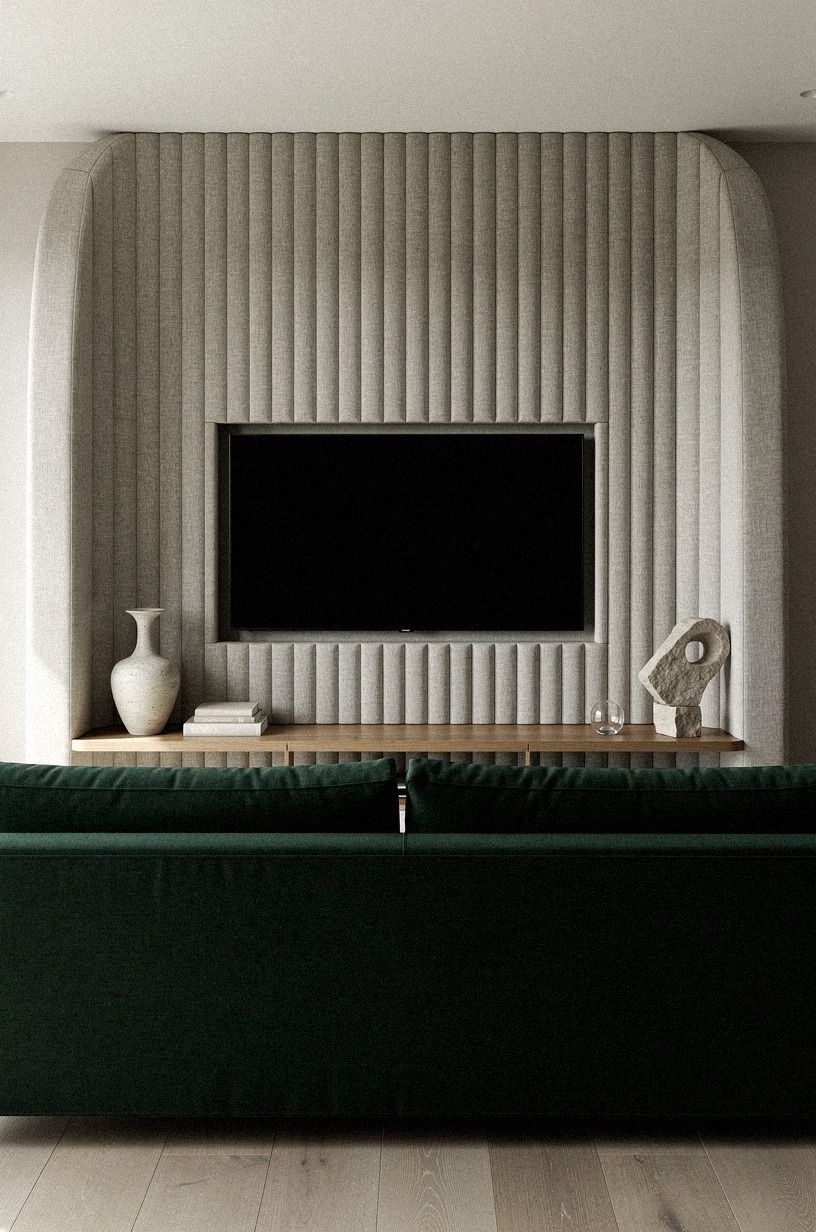
Choose panels in a deep-pile mohair velvet rather than a crisp white fabric if the room already contains warm plaster, oak, or brass. Emerald, gold, and cream make the curve feel layered without turning it sweet.
The fabric should have enough body to soften the hard rectangle of the television. Keep the folds relaxed, and let the panels stop short of the floor if you need the console to remain visually light. A restrained treatment will feel more intentional than a wall covered in competing textures.
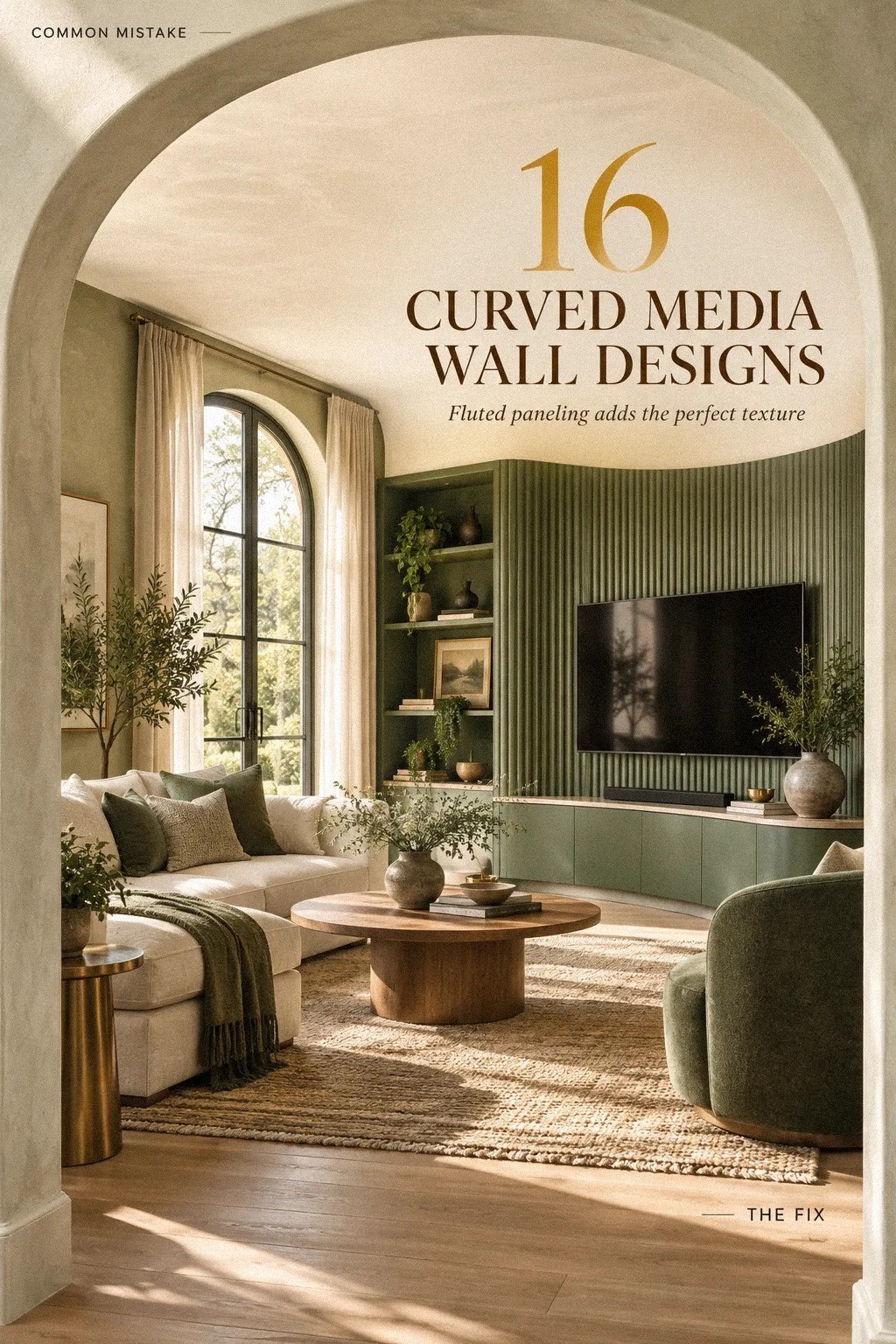
9The Two-Wood Rule
The Two-Wood Rule keeps a curved media wall from becoming a wood showroom. Choose one wood for the architectural surface and one for the furniture, then stop. A natural oak detail with hand-applied plaster can feel rich, while three competing wood tones usually look accidental.
Try natural oak on the curved backing and hand-applied Venetian plaster around it. I’d avoid pairing orange oak, red walnut, and black-stained wood in one view because the undertones will fight each other. Your eye needs one clear lead and one supporting note.
This idea is especially useful in an open-plan room where the media wall already competes with a kitchen, dining table, and flooring. If your floor is warm oak, use plaster for the curve and bring wood in through the console. The wall will still feel organic, but you won’t create a stripe of matching grain across the entire room.
10Hide the wires behind a curved panel
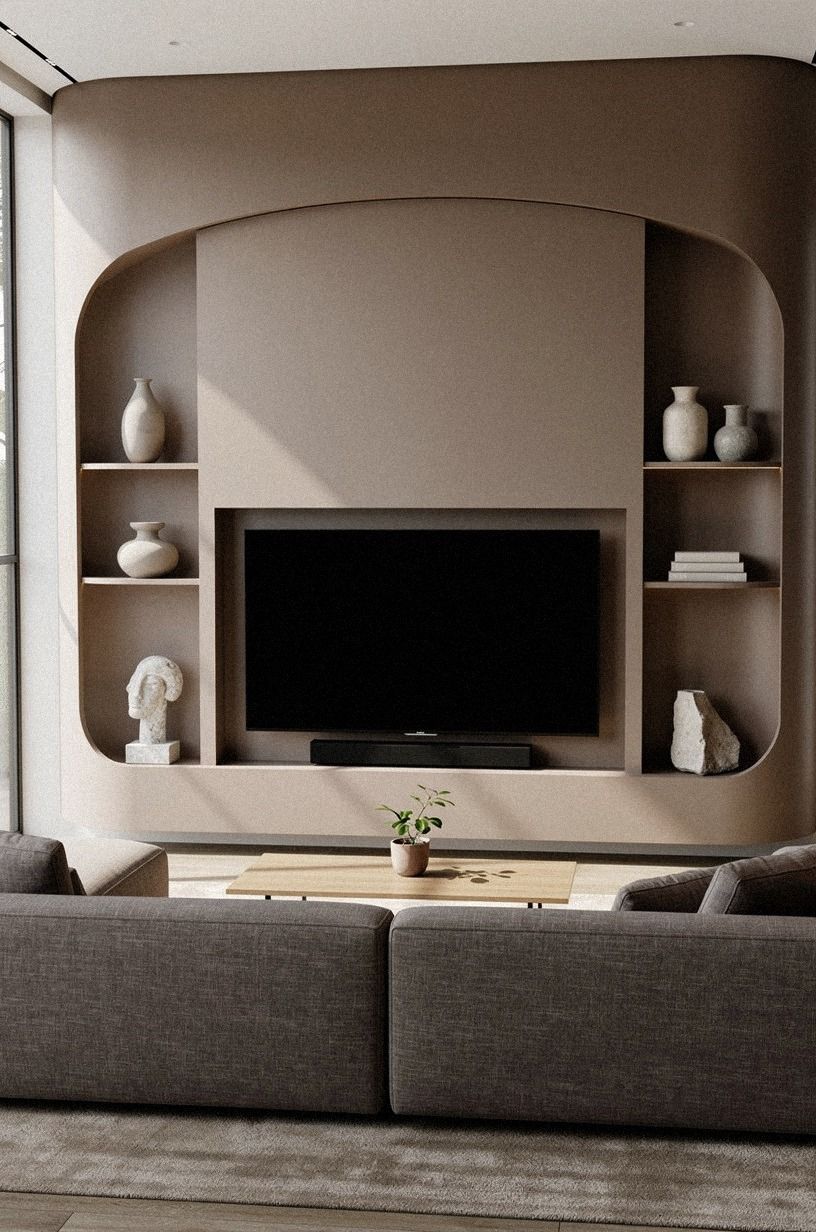
A clean curved media wall depends on what you don’t see. Run the television cables through a service cavity, then bring them into the console through a hidden opening. Your screen will look calmer, and you won’t have to decorate around a black wire hanging down the center.
Use reclaimed weathered teak for the curved panel if you want natural texture and a warmer surface. Its irregular grain works well with a palette of dusty rose, charcoal, and brass. If you’re renting, a removable raceway painted to match the wall is the safer choice.
Before you mount the screen, check your viewing distance. The common guide is about 1.5 to 2.5 times the screen diagonal, so your sofa placement matters as much as the wall design. And if you’re hiding a soundbar, leave enough clearance for its speakers to project into the room.
Cable planning may feel boring, but it protects the serene look created by the floating console. Nothing ruins a beautiful wall faster than one dangling black cord!
11Pair a black screen with warm plaster
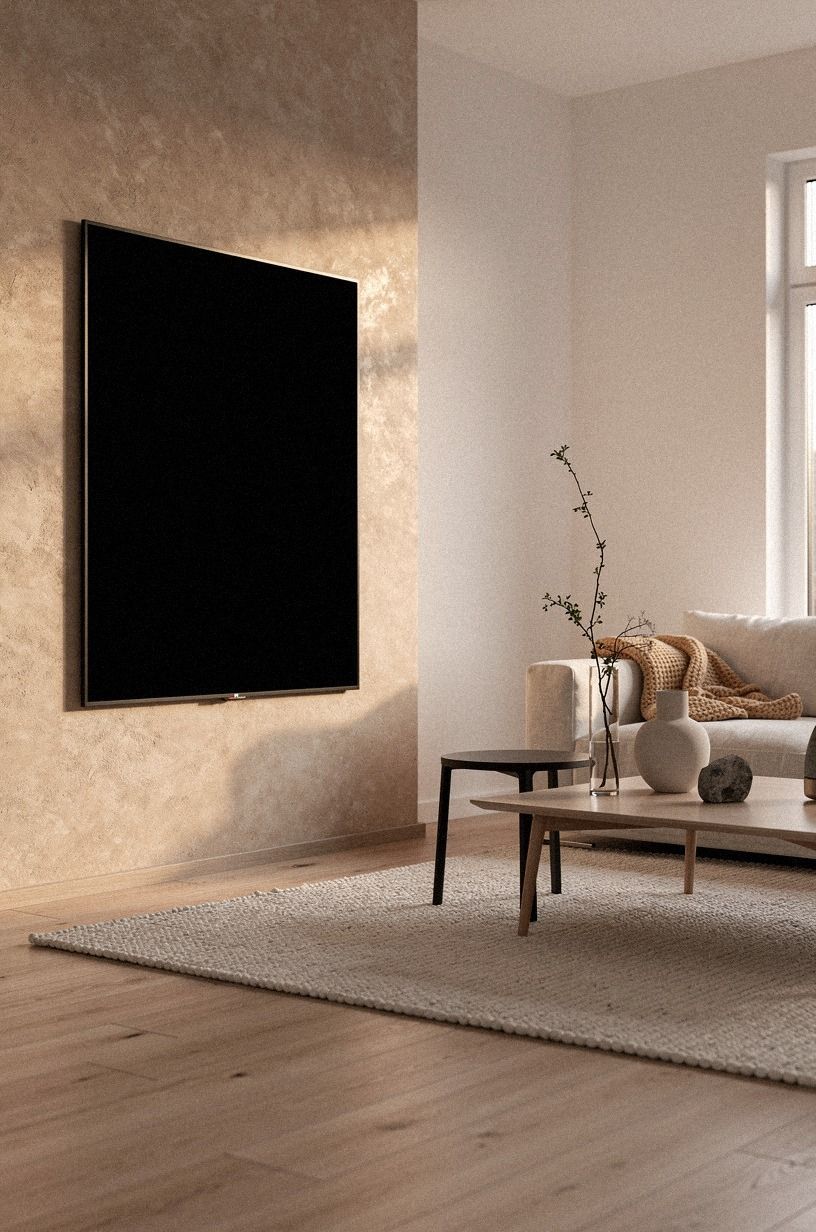
Black screens disappear more gracefully against a warm, softly textured wall than against bright white paint. Use a rounded plaster surround to reduce the hard rectangle, then place the screen slightly below eye level from your main seat. Your living room will feel less like a showroom and more like a place where people settle in.
Try Benjamin Moore White Dove OC-17 on the surrounding wall, then bring in camel upholstery and black details. A warm white background will keep the screen from looking colder than the room. A washed Belgian linen sofa or pair of panels will reinforce the softer palette.
Keep the surrounding objects quiet. One aged-bronze bowl, a stack of art books, and a branch in a ceramic vessel are enough.
If you’re tempted to add another gallery wall beside the screen, stop and look from the doorway first. The curve should be the main event.
This is also where a warmer painted curve can work beautifully. Both treatments soften the screen, but plaster gives a more tactile, earthy result.
12Create a rental-friendly removable curve
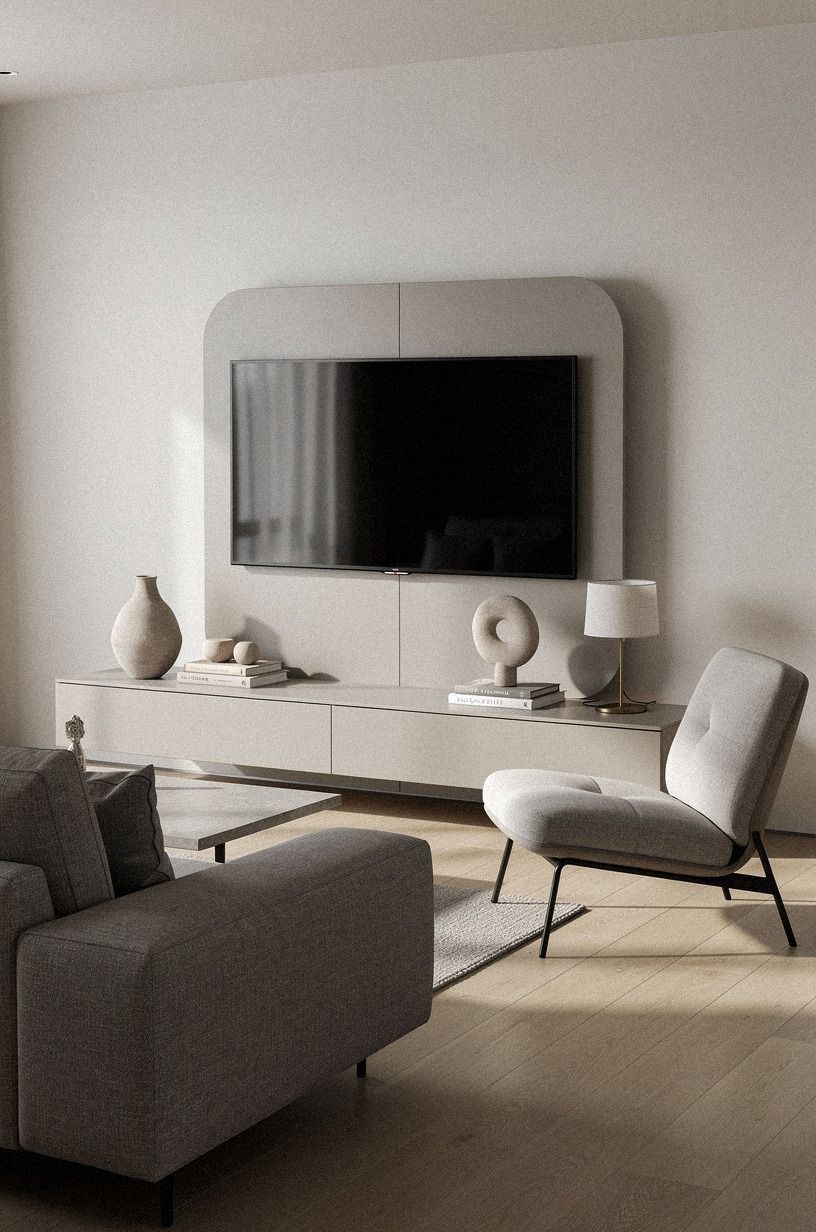
You can suggest a curved media wall without cutting drywall. Use a freestanding rounded bookcase, a curved cerused white oak screen, or removable wallpaper behind a low console. Your landlord won’t love a full built-in, but they may never know you changed the visual shape of the wall.
A rounded oak panel gives you texture while keeping the silhouette simple. Bring in midnight blue, copper, and ivory through the surrounding furniture and accessories. I’d skip heavy peel-and-stick panels on freshly painted walls because removal can pull the surface finish.
Use a tension-mounted panel or a freestanding piece instead, and secure tall furniture properly if you have children or pets.
For a small budget, look for a secondhand birch-effect unit, then add a curved top panel and finish it in a cerused oak tone. You’re not recreating custom millwork, and that’s fine.
The goal is a soft silhouette, not a construction site. Add a plug-in sconce and your rental corner will feel intentional.
That’s enough!
If you want an even simpler experiment, begin with the painted arch and test the shape before buying a panel.
13Mix asymmetry over perfect balance
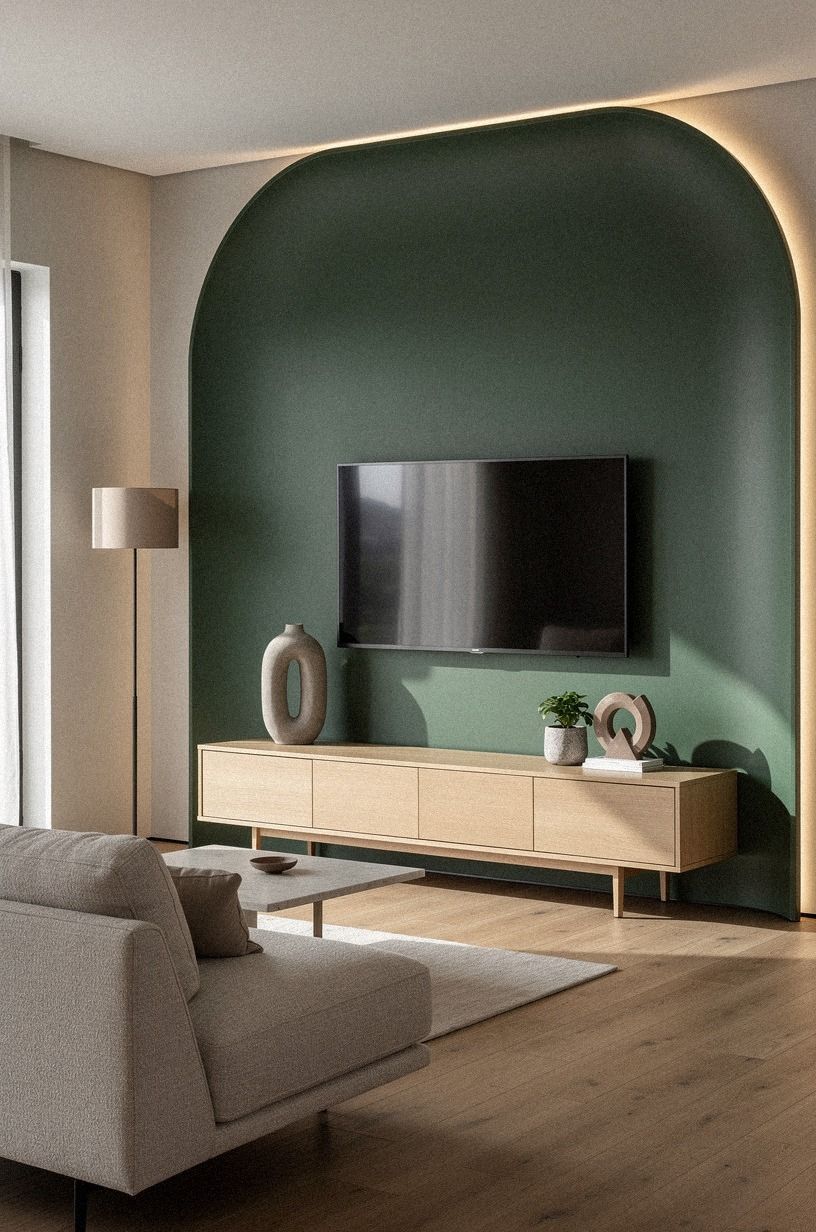
A curved media wall doesn’t need matching objects on both sides. Put the screen slightly off-center within the curve, then balance it with a tall plant, a low stack of books, or a narrow cabinet. Your room will feel collected instead of arranged with a ruler.
Use shagreen accents against a palette of sage green, warm cream, and natural wood to echo the softness of the curve, then bring in a darker object on the opposite side. I’d choose asymmetry over two identical cabinets because identical pieces can make a living room feel like a hotel lobby. The exception is a very narrow room, where symmetry may help the space feel orderly.
You’ll want to check the composition from several seats. The wall might look balanced from the sofa and lopsided from the dining table. Move the tall element by 6 inches, then trust the arrangement you’ll live with most.
If the asymmetry feels too loose, compare it with the transition question in section 14.
14Curve or corner: which transition fits?
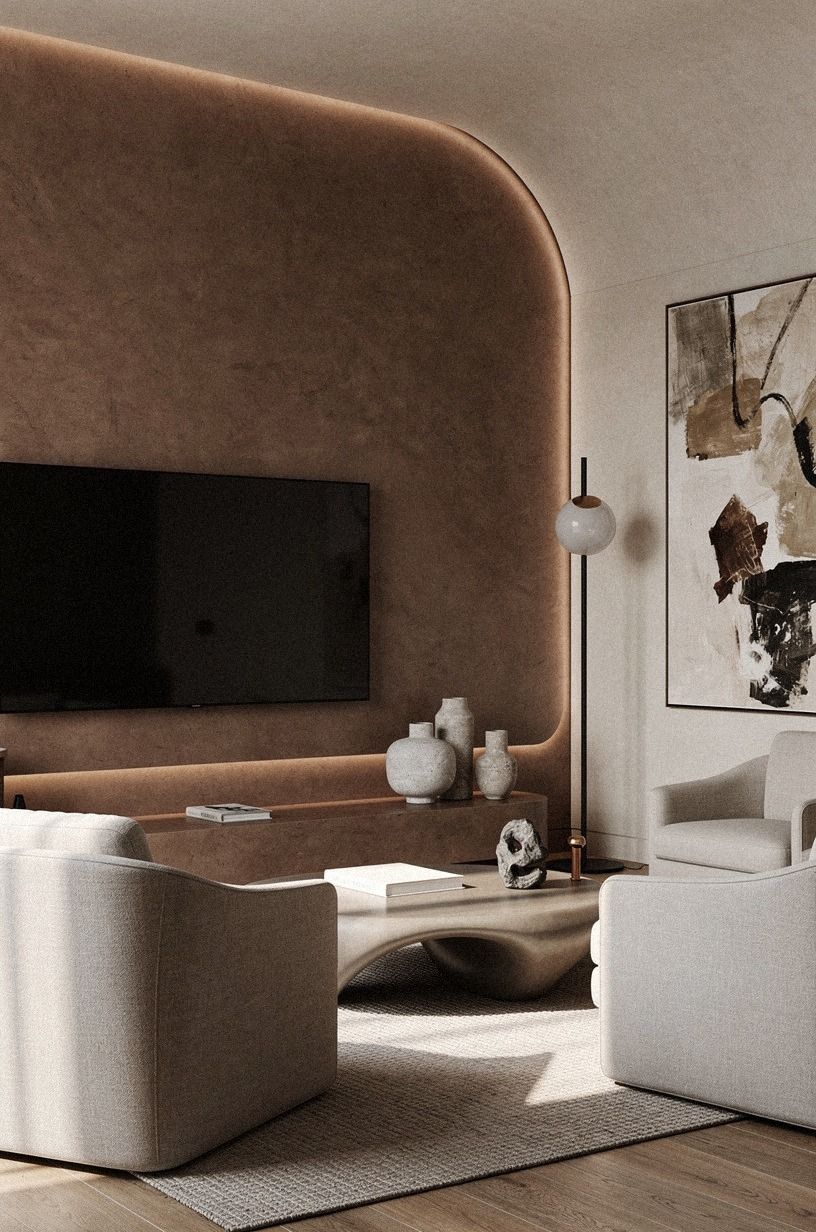
A wraparound curve can connect a media wall to an adjacent hallway or reading corner. Book-matched walnut makes the transition feel more substantial, while terracotta, stone, and olive keep the palette grounded.
15Choose the screen scale before the millwork
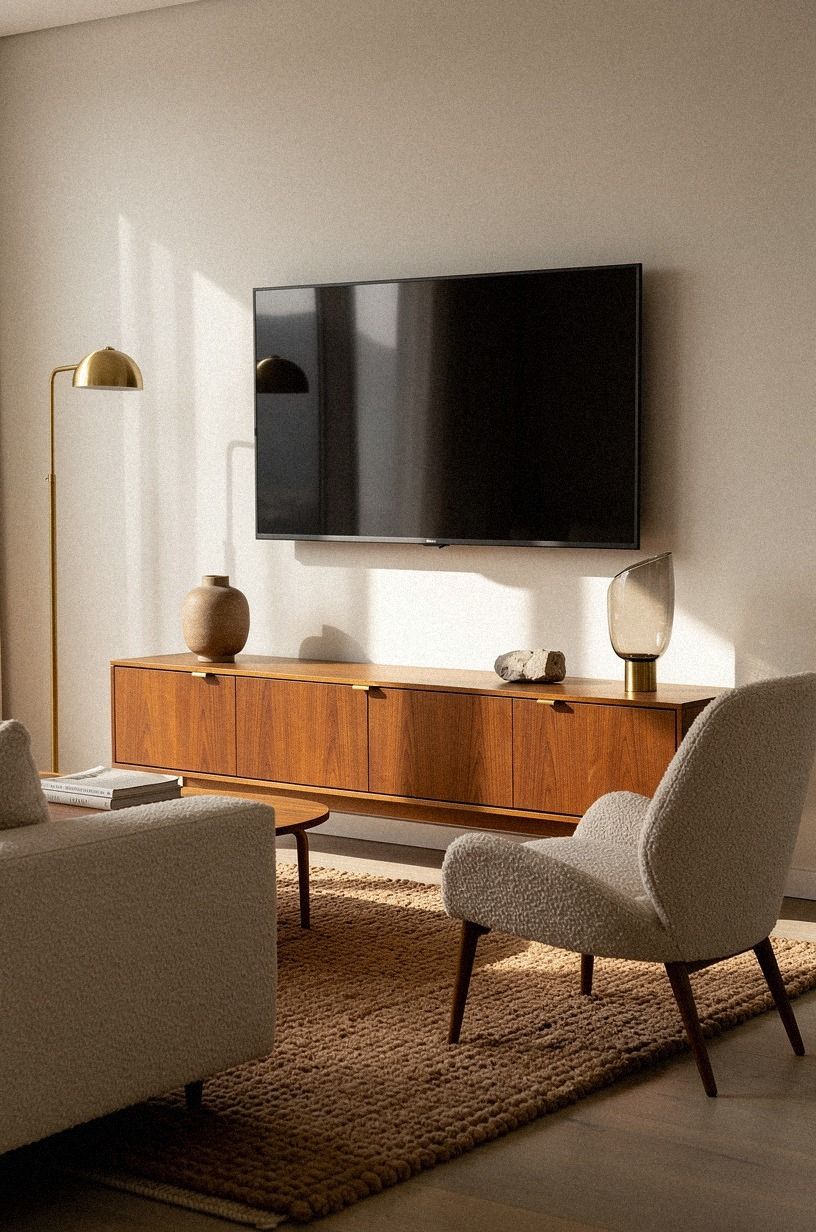
The best curved media wall design starts with the screen, not the plaster shape. Measure your television, console, sofa, and viewing distance first.
If your screen is too large for the curve, the architecture will look like a frame around a mistake. If it’s too small, the wall may overpower it.
A television viewed from about 1.5 to 2.5 times its screen diagonal usually gives you a useful starting point. Your coffee table should sit around 16 to 18 inches tall and roughly two-thirds the sofa length, so the whole seating group feels proportionate. I’d skip an oversized screen in a narrow room even if the wall can hold it.
Try a taped rectangle on the wall for two days. You’ll see how the screen competes with windows, lamps, and an organic bouclé sofa. That test costs nothing, and it can save you from building an expensive curve around the wrong scale.
Before committing, compare the screen proportions with the stone ribbon and the hidden-wire panel. Both details affect how large the television appears.
16Finish the modern classic TV wall with quiet objects
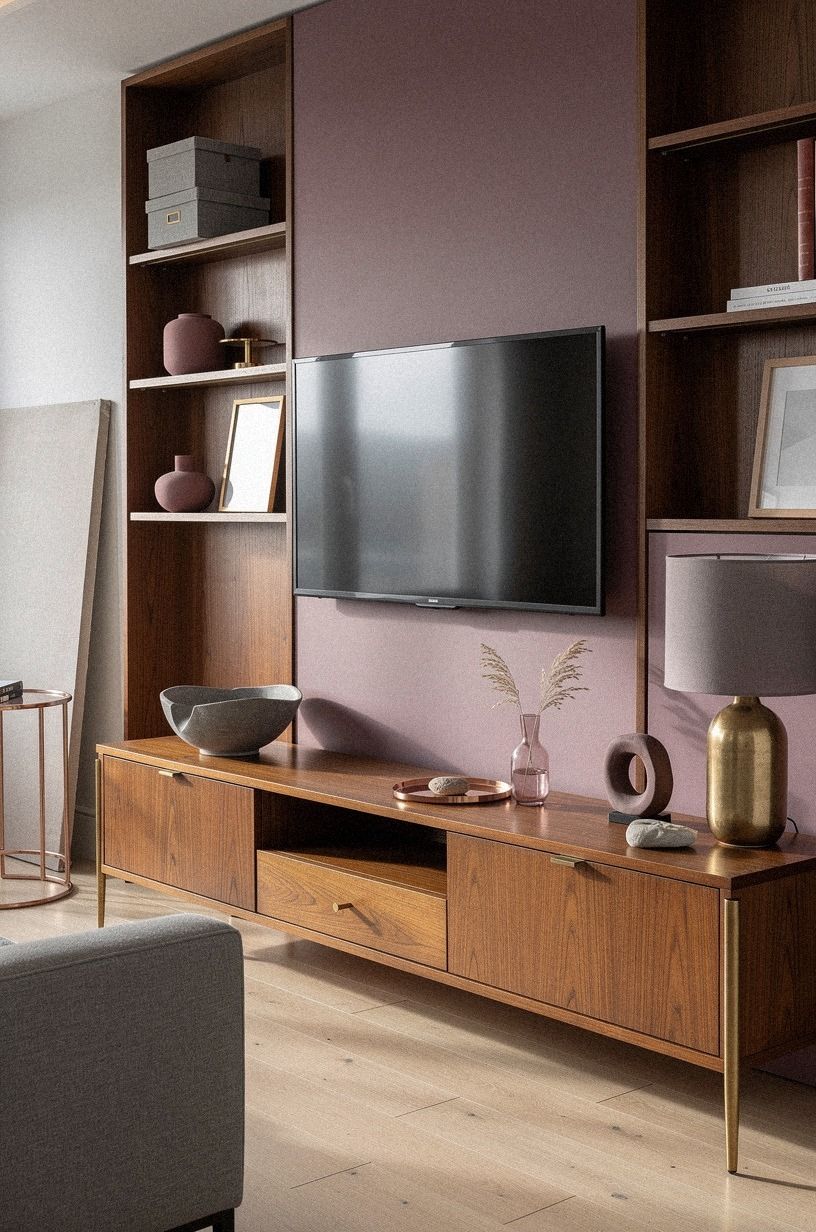
The last layer should make the media wall feel lived in without turning it into a display shelf. Add a low stack of books, one handmade bowl, a small framed print, and something with a soft edge. Your eye needs a few places to rest, especially when the television is off.
Choose plum, grey, and rose-gold accents, then add one piece of unlacquered brass that can develop a gentle patina. Keep the surrounding materials restrained so the finish feels deliberate rather than decorative. I’d skip tiny rugs because they make the curved wall feel disconnected from the furniture.
Use one muted color rather than collecting every finish you like. Benjamin Moore Revere Pewter HC-172 can bridge cool gray upholstery and warm wood if the wall needs a neutral update.
And when you’re done, turn off the overhead lights. The curve should catch a gentle side glow, not glare under a ceiling fixture.
The final styling should support the architecture rather than compete with it. For a more disciplined edit, revisit the Two-Wood Rule and remove one object you don’t truly love.
The Cost of a Curved Media Wall
The honest cost depends on whether you’re changing the wall itself or only creating the impression of a curve with paint, furniture, and lighting. A painted arch may fit inside a small refresh, while custom millwork and a fireplace surround move the project into a different category. Your room doesn’t need the most expensive version to feel architectural.
These are typical US ranges for the surrounding living room work. They’re useful planning figures, not a promise for every contractor or region.
For individual pieces, a performance-fabric sofa often runs $1,200-$4,000, a wool 9x12 rug about $600-$2,500, an oak coffee table $300-$1,200, and a pair of linen drapes $120-$400. I’d put your money into the curved surface and the rug before buying decorative objects. Your daily view will benefit more from good proportions than from another vase.
A removable panel and paint can create a remarkably elegant result at the lower end. Custom plaster, stone, concealed wiring, and integrated lighting push the project higher. See the rental-friendly version if your budget or lease rules out construction.
Why the curved media wall works now
I’ve gone back and forth on curved architecture because it can look forced when every surface bends. The version that works has a reason for the curve. It softens a screen, turns an awkward corner, or helps a hard modern room feel more inviting.
The version that fails is simply a rounded shape added because the room needed a trend.
The timing also makes sense. Living rooms are carrying more functions now, from movie nights to remote work to casual dinners, and a hard black rectangle can dominate all of them. A plaster return, warm wood, and low light give the screen a quieter role.
Your room still feels modern, but it doesn’t have to feel sharp.
My own mistake was treating the television as the entire composition. I bought a larger screen, added more storage, and wondered why the room felt colder. The better move was subtracting visual noise and letting one soft architectural gesture do the work.
If you’re deciding between more shelves and a better wall shape, I’d choose the wall shape every time.
You don’t need to copy a designer room piece by piece. Start with the problem you can see from your sofa.
Is the screen too harsh? Is the corner empty?
Is the wall too flat? Answer that question, then choose plaster, oak, paint, or fabric to solve it.
That’s how the curve feels personal instead of borrowed.
For the clearest starting point, combine the screen-scale method with the quiet-object finish. Those two decisions prevent most expensive mistakes.
The Questions I Get Asked Most
What is the best curved media wall idea for a small living room?
A shallow painted arch with a floating console is the best starting point because it uses little depth and creates a clear focal point. Try IKEA BESTÅ with a custom curved backer, then keep the console low. You’ll preserve floor space while giving the screen a softer frame.
Where can I buy curved media wall pieces on a budget?
Look at IKEA, Wayfair, and Target for low consoles, lamps, rugs, and room dividers, then check Facebook Marketplace or local thrift shops for solid wood pieces. Choose the shape secondhand and refresh the finish yourself. Compare measurements, materials, and return policies before you buy.
How much does a curved media wall makeover cost?
A small refresh can fall within the $300-$1,200 budget tier when you use paint, a rug, lighting, and existing furniture. A mid-range room with a sofa and quality rug often reaches $2,500-$8,000. Custom millwork, furniture, or a fireplace can reach $12,000-$40,000 or more.
Can I create a curved media wall on a budget?
Yes, and you can begin with paint, a removable rounded panel, and a secondhand console. A taped arch costs nothing to test, while a new paint finish and plug-in sconce can change the wall for far less than custom cabinetry. Your best saving is keeping the curve shallow.
Is a curved media wall worth it in a small space?
Yes, because a shallow curve can soften the screen without taking much floor area. Keep your console narrow, use a rug with the front sofa legs on it, and leave a clear walking path. I’d choose one strong curve over several small shelves competing for attention.
Is a curved media wall a good idea for a rental?
Yes, if you use reversible pieces rather than built-in construction. Try removable wallpaper, a tension-mounted rounded panel, a freestanding bookcase, or a plug-in sconce. Your landlord may not approve cut drywall, but you can still create a warmer silhouette with furniture and paint-safe accessories.
Where I’d Start First
If I had to pick one, I’d start with the shallow painted arch. A warm white or terracotta finish gives the screen enough depth without demanding custom millwork, and the curve can be tested with painter’s tape first. Pin the idea for later and build the rest of your room around that one calm decision.


