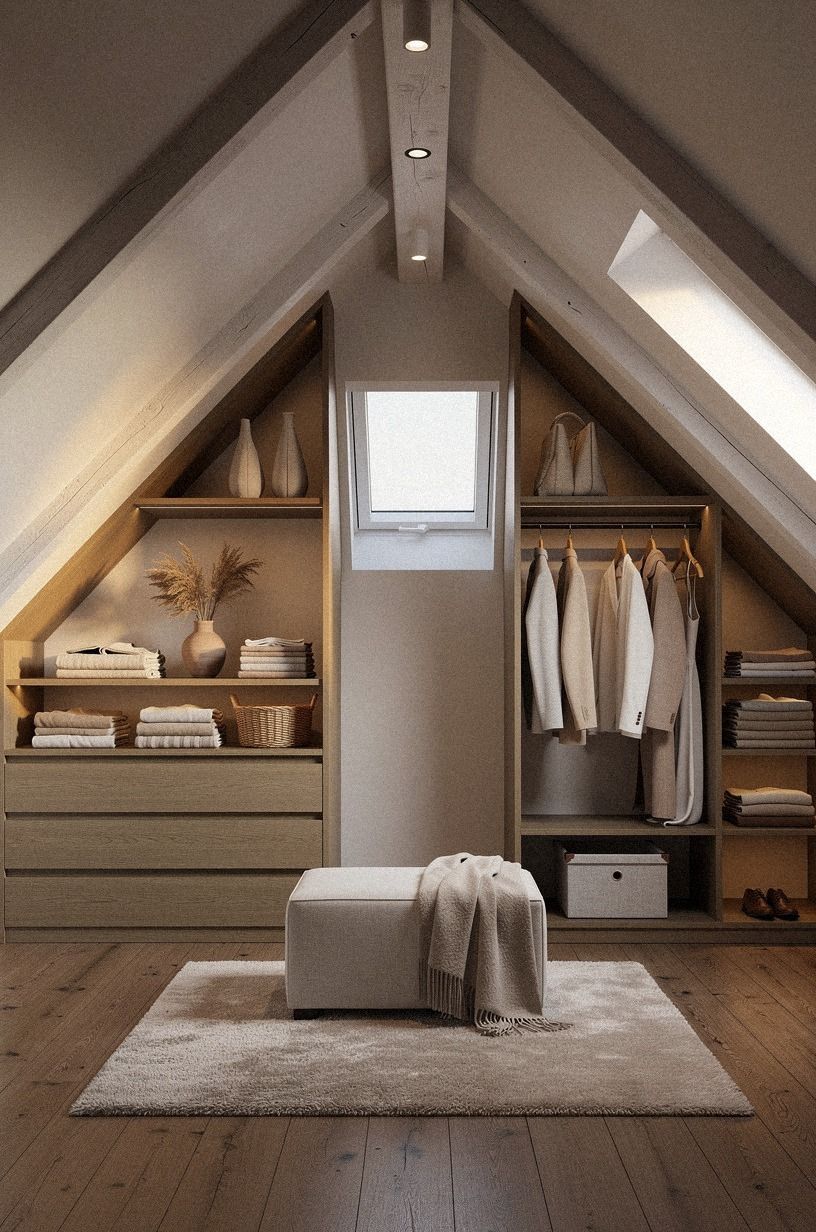
Easy Attic Dressing Rooms for Small Spaces
26 october 2026Attic dressing room ideas work best when you plan around the roofline first, not the furniture. I learned that after forcing a tall wardrobe under a low slope and losing half the usable floor. Measure the headroom, use every shallow corner, and choose warm materials that make a compact loft feel intentional. Small changes matter!
- Map the Headroom Before You Buy Anything
- Build the Two-Height Hanging Rule
- Paint the Slope With a Light, Warm Color
- Float a Narrow Vanity Under the Eave
- Frame the Room With the Three-Height Light Stack
- Choose Soft Shelves Over Bulky Cabinets
- Add a Mirror Where the Roofline Gets Tall
- What Should a Loft Closet Cost?
- Create a Shoe Wall With the Low Corners
- Mix Warm Wood With One Quiet Metal
- Style the Loft With a Calm Outfit Station
1Map the Headroom Before You Buy Anything
The best spare room dressing room ideas begin with a simple headroom map. Mark the areas where you can stand comfortably, then reserve the lower roofline for drawers, shoe shelves, and folded pieces. If your attic has a comfortable 6x8-foot footprint, you can create a real dressing zone without making the room feel crowded.
I’d skip tall freestanding wardrobes under the slope. They waste the most useful part of your room and make the ceiling feel lower. A run of soft gray shelving can follow the roofline instead, giving you storage where a standard cabinet simply won’t fit.
The muted color keeps the room calm beside plum accents and rose-gold details.
Use painter’s tape to outline the furniture footprint before ordering anything. Your body will tell you more than a floor plan can. Leave the highest area for hanging clothes and a small mirror, while the lowest section can hold woven storage baskets and soft luggage.
But don’t treat every low corner as dead space. A shallow shelf with Calacatta marble and gold veining can hold folded sweaters, perfume bottles, or a small tray for watches. You’ll gain storage without blocking the walkway, and the warm veining will keep the gray palette from feeling flat.
The mistake is buying first and measuring later. I’ve done it, and the oversized cabinet looked charming online but swallowed the sloped wall in person. Your attic deserves built-ins that respond to its shape.
For more layout ideas, compare this approach with small-space organization ideas.
2Build the Two-Height Hanging Rule
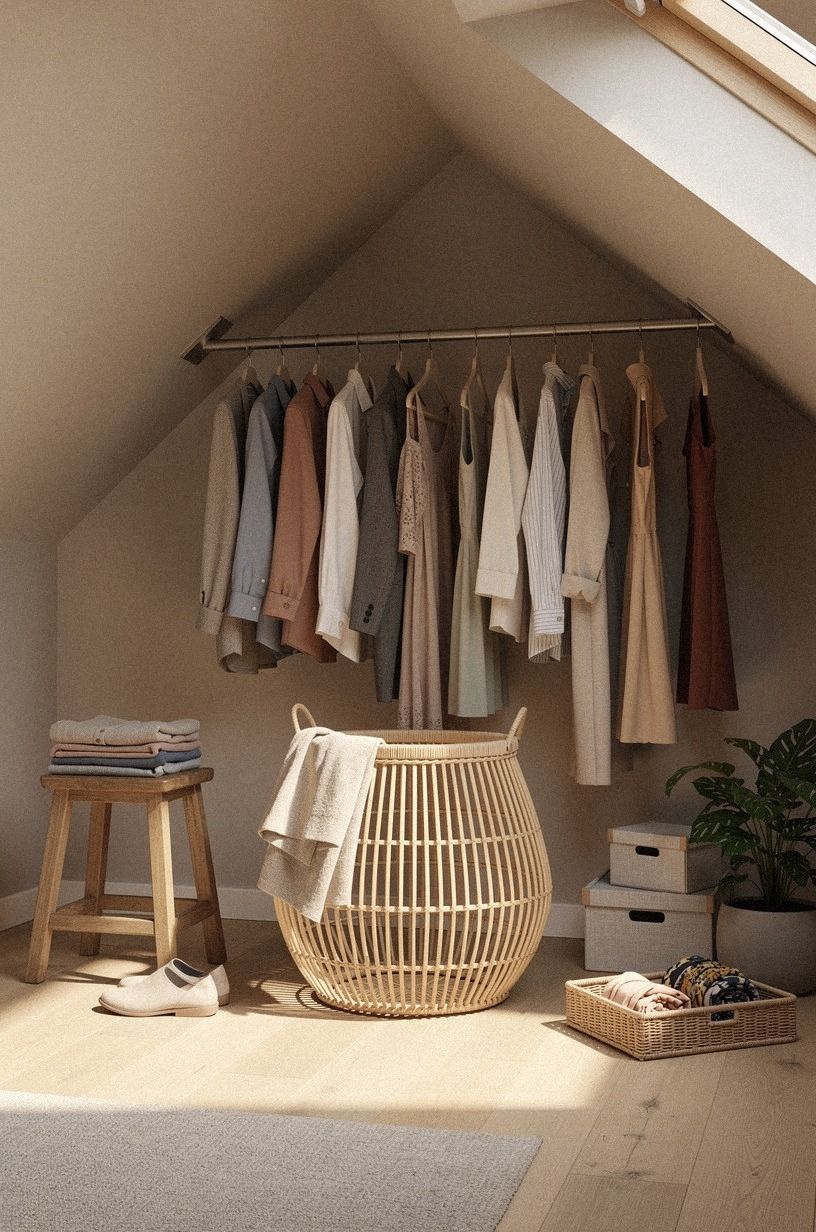
The Two-Height Hanging Rule gives your walk-in closet conversion more capacity without requiring extra floor space. Use a lower rod for shirts, skirts, and folded trousers, then place a second rod above it for jackets and dresses where the ceiling is taller.
Standard double-hang rods sit around 42 inches and 84 inches, which gives you a useful starting point. You’ll want to check the slope before installing anything, because the upper rod needs enough clearance for your clothes to hang without brushing the roof. A navy closet rod adds a deep, tailored line against white and walnut finishes.
I prefer open rods to bulky doors in a narrow attic. Doors need swing space, and you don’t have much to spare. A cerused white oak hanging rail keeps your clothing visible, which means you’re more likely to wear what you own instead of forgetting it behind a panel.
And if you’re worried about visual clutter, repeat the hanger finish. White velvet hangers will make the row feel calmer, while mixed plastic hangers can look busy fast. You don’t need a matching wardrobe system to make your clothes look considered.
Keep your most-used items between shoulder and eye level. Your winter coats can go higher, and your less-used pieces can move into covered bins. This arrangement feels simple, but it’s one of the most effective small closet organization ideas I’ve used.
3Paint the Slope With a Light, Warm Color
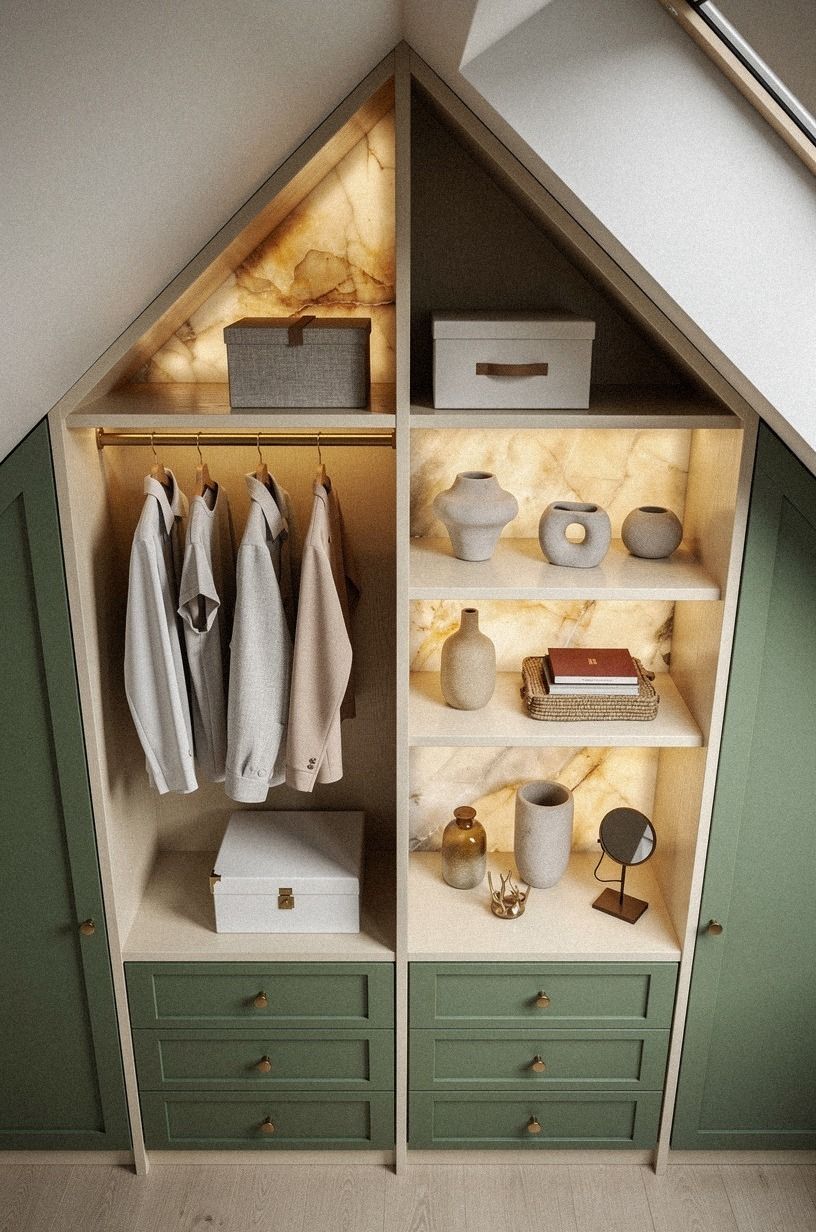
A pale ceiling can make an attic dressing room feel brighter, but stark white isn’t your only choice. Benjamin Moore White Dove OC-17 has enough warmth to soften the angled walls without turning the room yellow. I’d choose it over a cold gray because the latter can make low daylight feel flat.
Paint the ceiling and walls in the same color if you want the roofline to disappear. Your eye will read one continuous shell instead of stopping at every angle. This works especially well when your storage has a luminous finish, such as backlit translucent onyx.
For a sharper look, use Farrow & Ball Studio Green on one short wall and a warm cream across the remaining surfaces. You’ll get gentle contrast without chopping the room into small visual blocks. Add a small gold-framed mirror or brass fitting to keep the emerald tone from feeling heavy.
But a dark attic isn’t automatically a mistake. If you want a moody dressing room, use a deep emerald color only on one short wall. A warm cream ceiling can keep the rest of the room soft while the darker section gives your mirror or vanity a dramatic backdrop.
Test your sample in the morning and after sunset. Your color will change under skylight, lamps, and wardrobe shadows.
I once trusted a paint card that looked warm in the store, and the sloped wall turned lavender at night. Your eye needs the final vote.
These warm neutral paint colors are useful comparisons before you commit.
4Float a Narrow Vanity Under the Eave
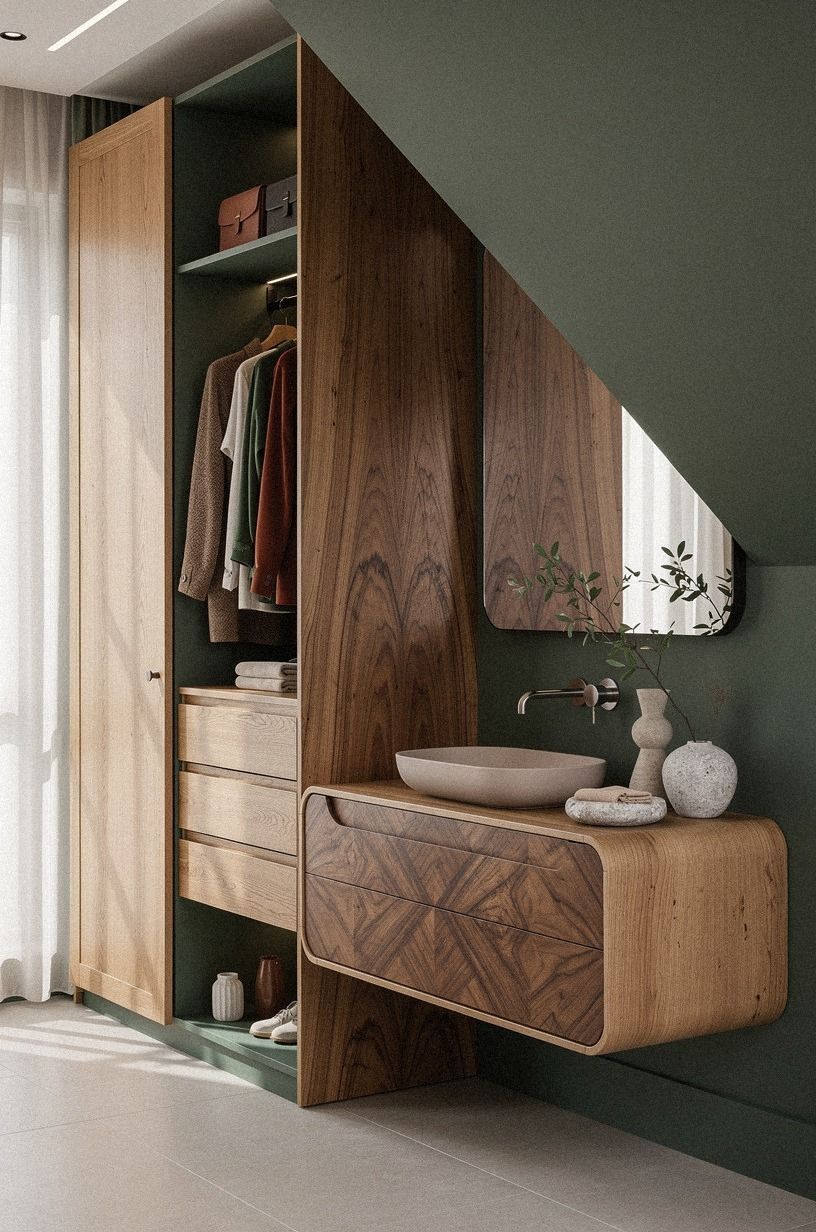
A floating vanity is ideal for a compact attic because it gives you a useful surface without adding heavy visual weight. Choose a top no deeper than the space allows, then mount it below the lowest practical section of the slope. Your floor stays visible, and the room feels more open.
A wall-mounted book-matched walnut vanity can hold a jewelry tray, a small mirror, and your daily skincare without becoming a second dresser. I’d avoid a deep desk-style piece here. You’ll lose walkway space, and the chair will become something you have to maneuver around every morning.
Use one drawer for small objects and keep the rest of the surface nearly clear. A rust-colored tray gives you a warm landing spot for rings and hair clips, while a single ceramic cup can hold brushes. You’ll still have personality without creating a pile that needs moving every day.
And if you’re renting, use a narrow console rather than drilling into the wall. A slim natural-oak console can act as a vanity when paired with a mirror and a small stool. It won’t look as built-in, but you can take it with you later.
Your vanity should serve your routine, not become a decorative obstacle. Sit down before you commit to the location.
If your knees hit the wall or your mirror catches the roof slope, you’ll stop using the space within a week. See more compact layouts in these small bedroom vanity ideas.
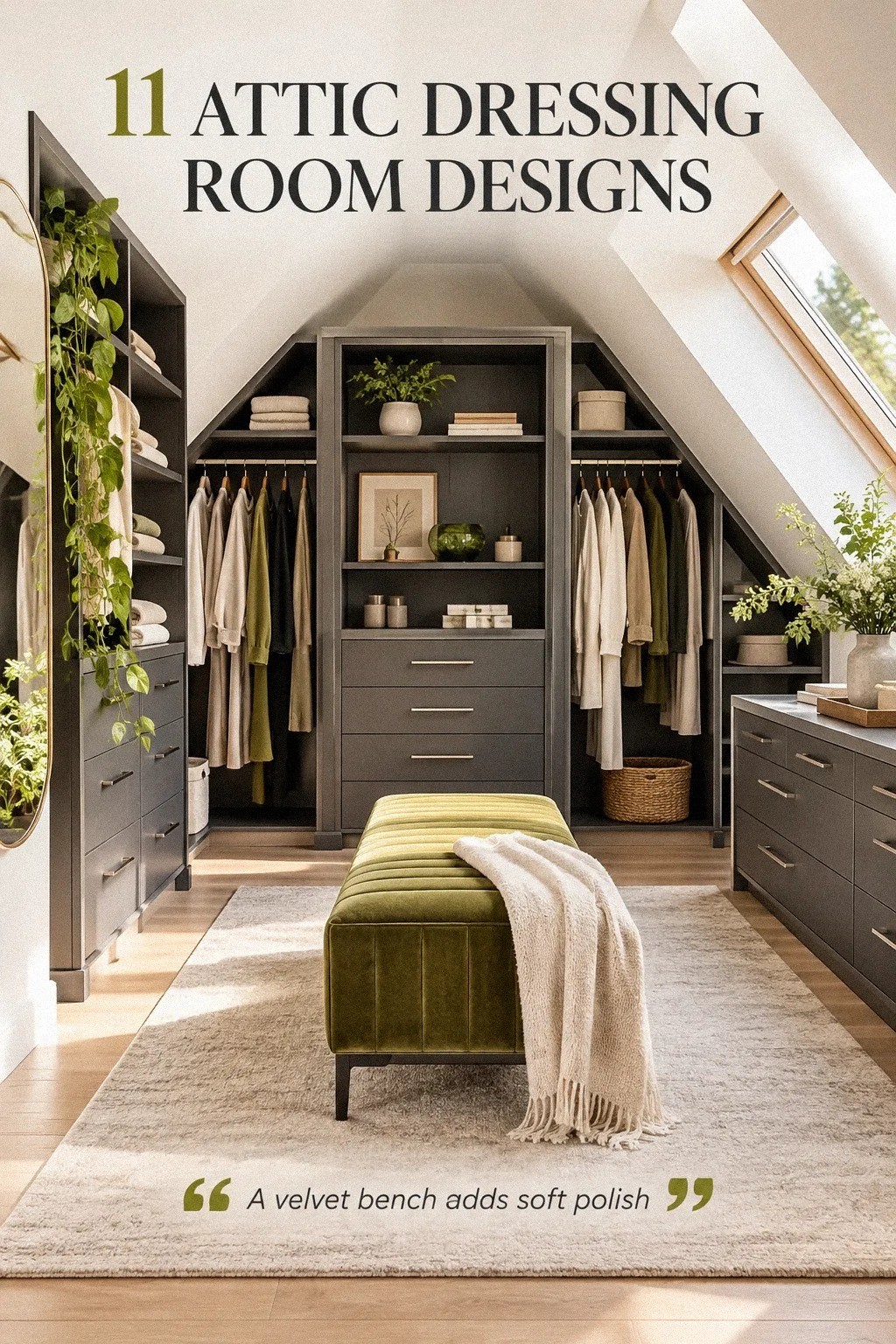
5Frame the Room With the Three-Height Light Stack
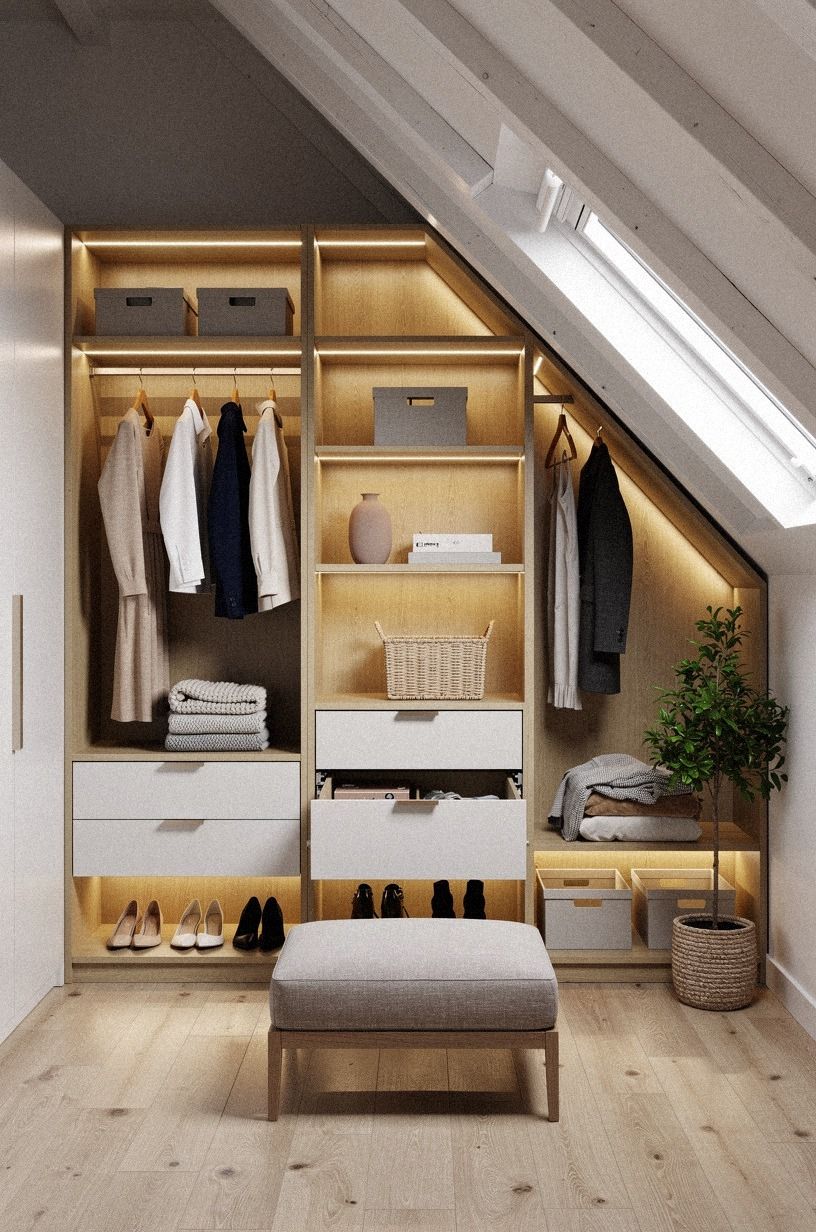
The Three-Height Light Stack makes a loft feel warm after dark. Use one ceiling source, one eye-level source, and one low glow near the floor. You’ll avoid the harsh ceiling wash that makes clothing colors look wrong and turns a welcoming attic into a utility room.
Start with a dimmable flush mount in brushed brass. It works under a low roof and spreads light without a long pendant competing with the slope. Add a small brass wall light near the mirror, then place a compact lamp on your vanity if you have room.
The lower light can be as simple as an LED strip under a shelf. Warm LED rod lighting with a brass-toned channel is especially useful because it lets you see the back of a hanging section without blasting the entire room. Your shelves will feel more luxurious, and you won’t have to leave the ceiling light on.
I’d skip bright blue bulbs. They make warm wood look gray and can make your skin look tired in the mirror. Choose a soft, amber-leaning glow instead, particularly if your attic already has warm travertine flooring.
But you don’t need five fixtures to make this work. Your goal is layered light, not a showroom.
One good ceiling fixture, one flattering mirror light, and one low accent will give your dressing room an inviting evening mood! More ideas for the same principle are in these bedroom lighting ideas.
6Choose Soft Shelves Over Bulky Cabinets
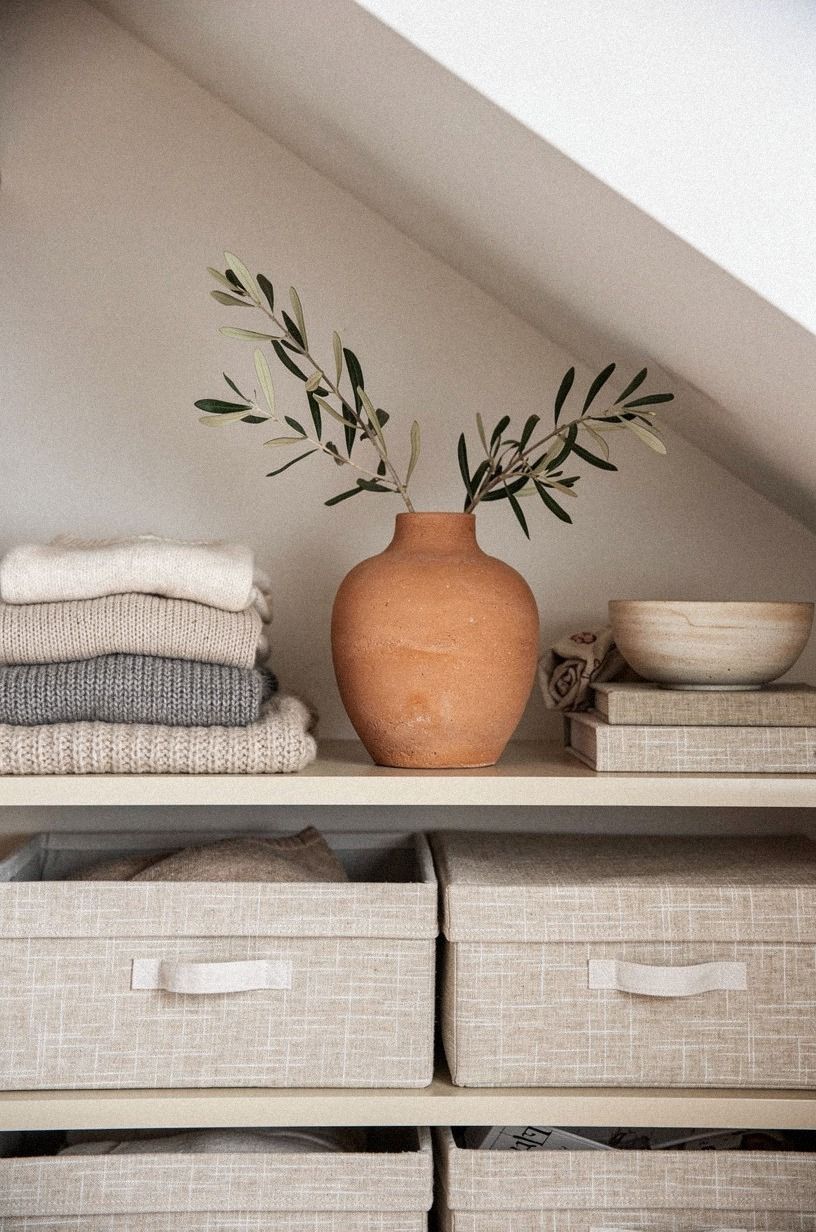
Open shelving often works better than closed cabinets in a low attic. It takes less depth, gives your clothes room to breathe, and lets you see the slope rather than hiding it behind a tall box. For walking closet small spaces, that visual openness is valuable.
Use shelves around 14 inches deep for folded clothes, handbags, and shoes. Warm-white shelving is practical and easy to wipe, but I’d choose a black edge detail so the finish doesn’t feel too office-like. The small contrast keeps the room grounded.
Soft storage belongs on the upper shelves. A camel linen bin can hold scarves, belts, or seasonal accessories without adding a hard rectangular shape everywhere. You’ll want a few covered containers, but don’t hide every item or the room will lose its personality.
Unlacquered brass hooks or label holders can add a useful detail while developing a gentle patina over time. They’ll sit comfortably beside the warm white shelves and black accents without making every finish compete.
And leave a little breathing room between stacks. Overfilled shelves look messy even when everything is technically organized. Your eye needs a quiet gap, especially beside patterned clothing or a row of colorful shoes.
I made the mistake of filling every shelf on installation day. It looked efficient for about ten minutes, then the room felt tight and noisy.
Keep a small portion open for new pieces, daily bags, and the items you reach for constantly. These open shelving ideas can help you judge the right amount of negative space.
7Add a Mirror Where the Roofline Gets Tall
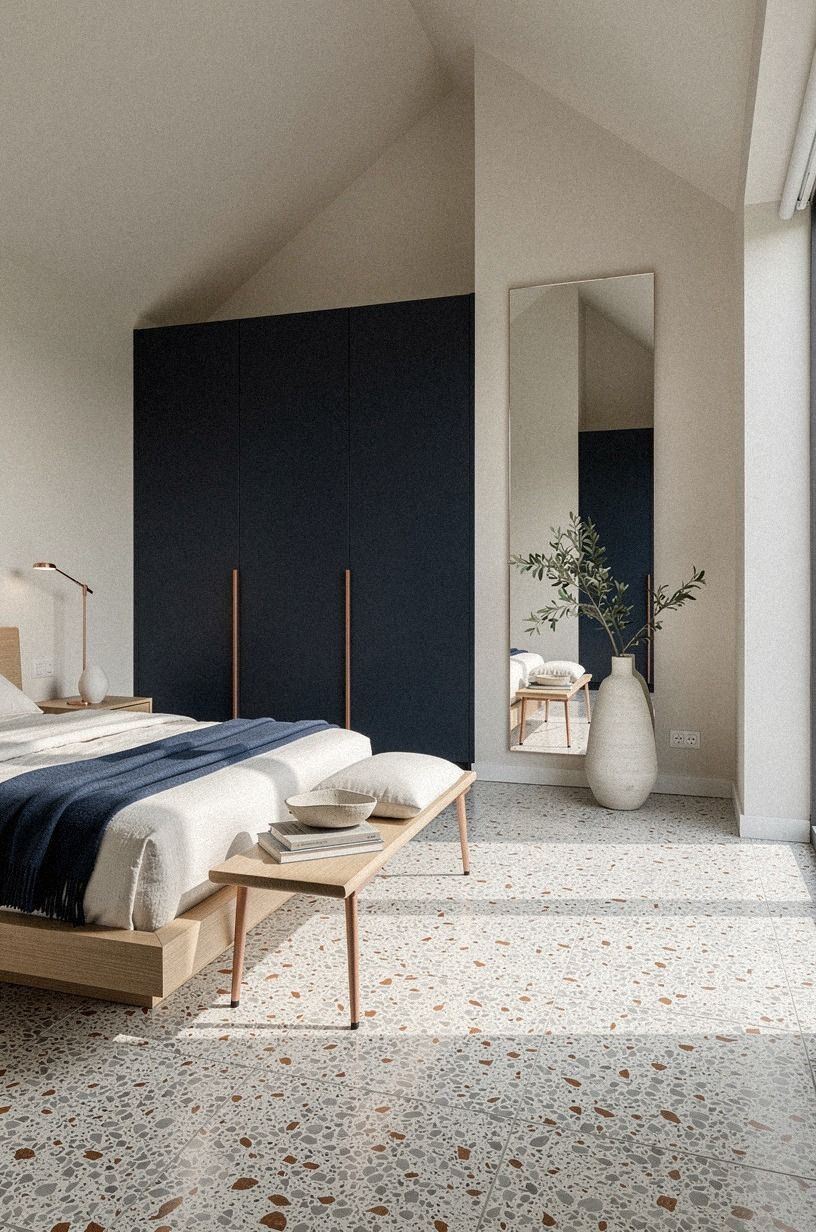
The mirror should go in the tallest comfortable part of the attic, not wherever the empty wall happens to be. A full-length mirror needs enough vertical room for you to step back and see your outfit. Your reflection will feel more useful when the placement supports the way you dress.
A mirror edged in oversized-chip terrazzo can give a modern closet system a strong focal point while bringing ivory and midnight-blue tones into the room. If you’re short on floor space, mount a slim mirror to the wall instead. I’d avoid an oversized ornate frame because it can make a narrow attic feel visually crowded.
Place a small ivory shelf beside it for the things you check before leaving. Copper hooks can hold a belt, scarf, or tomorrow’s outfit. You’ll create a practical dressing station without adding another cabinet to your floor plan.
If your attic has a window, angle the mirror so it catches daylight without reflecting glare straight into your eyes. Your room will feel brighter, and clothing colors will be easier to judge. A mirror facing a blank wall is rarely the best use of natural light.
What’s the point of a beautiful mirror if you can’t take one step back? That question saved my own layout. Give your body enough room to move, turn, and check the hem before you decide the installation is finished.
Browse these small-space mirror ideas for alternatives.
8What Should a Loft Closet Cost?
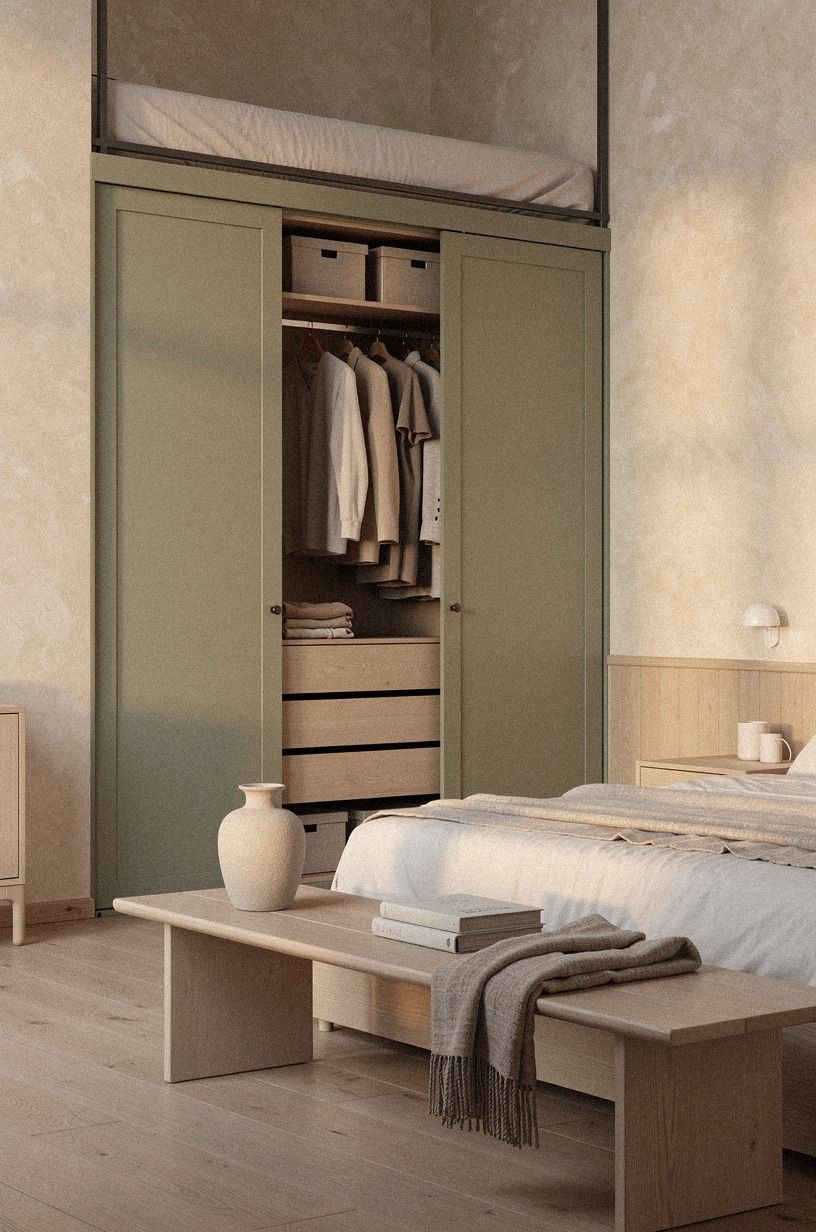
A small attic dressing room can stay in the budget range if you use rods, shelves, bins, and simple lighting. Sage green, warm cream, and natural wood keep those basics from feeling temporary.
The typical US costs below show how quickly a project changes when you move from modular pieces to custom millwork. Your roofline may make custom work worthwhile, but it isn’t always necessary.
I’d start with the parts you touch every day. Natural-wood modular closet systems can cost around $1,000-$5,000, while a simpler rod-and-shelf arrangement keeps more of your budget available for lighting and paint. Your room doesn’t need custom drawers to feel warm and refined.
A few useful reference points can help you decide where to spend.
But don’t add an island just because dressing rooms online have one. A center island usually needs 24-36 inches of clearance, and your walkway needs to remain comfortable around it. In a compact attic, a narrow drawer unit against the wall may serve you better.
Your best investment is usually the piece that solves the roofline problem. If a custom shelf makes an unusable corner practical, it may be worth the higher cost. If a standard shelf fits comfortably, keep your money for the detail you’ll notice every morning.
For broader cost-cutting ideas, see these budget bedroom ideas.
9Create a Shoe Wall With the Low Corners
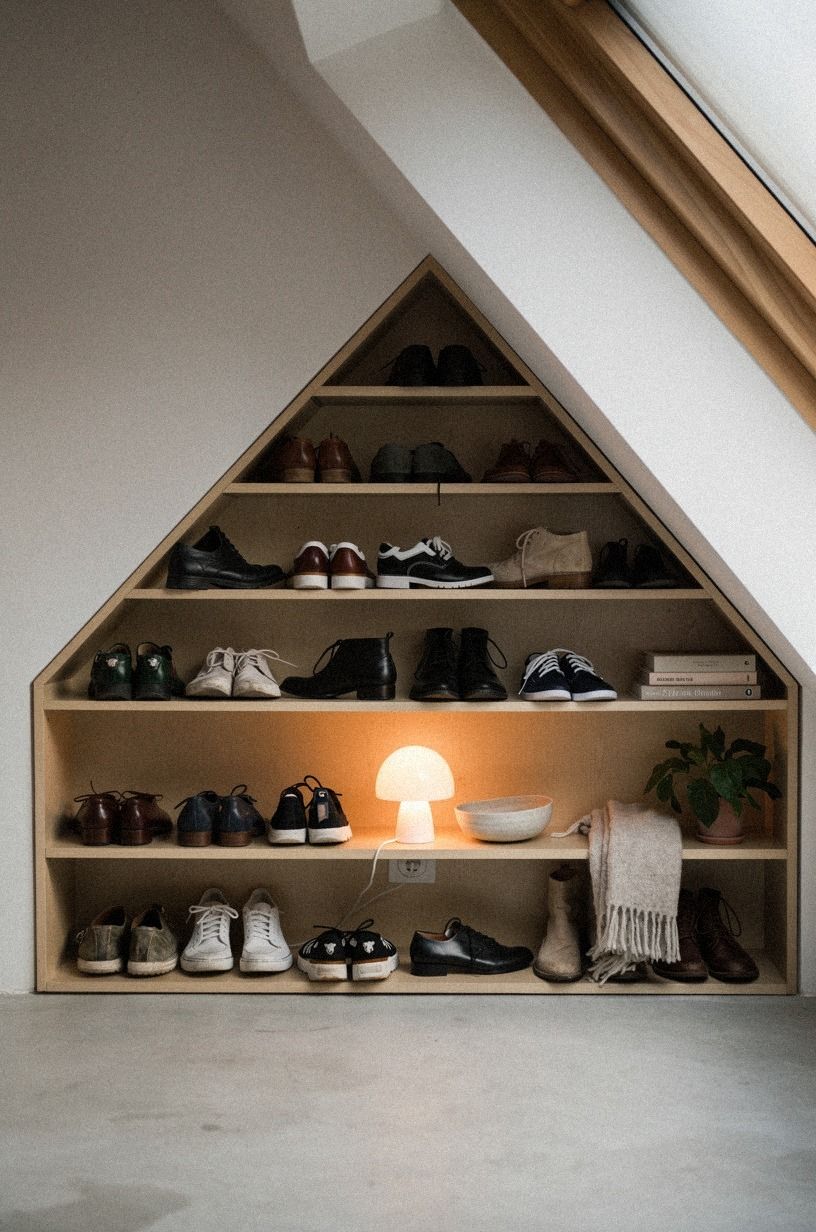
Low attic corners are excellent for shoes because footwear doesn’t need the same hanging clearance as dresses or coats. Build shallow shelves along the eaves and keep the most-used pairs within easy reach. You’ll turn an awkward zone into a clean, visible collection.
A stone-finished shoe shelf can be cut to follow the roofline, while a terracotta tone brings warmth to the wall. This makes the storage feel built in without the price of full cabinetry. I’d choose a satin finish because it wipes clean and doesn’t show every fingerprint.
Sort shoes by how often you wear them, not only by color. Your daily sneakers and boots should sit near the entry, while special occasion pairs can move higher. A row of olive shagreen-front drawers can hide sandals and small accessories without making the entire wall open.
And leave room for the pair you’re wearing. A small tray near the doorway keeps damp or dusty shoes from going straight onto the shelf. Your attic will stay cleaner, and you won’t have to carry outdoor mess through the whole room.
If you have only a 4x4-foot minimum footprint, use one wall for shoes and the opposite wall for hanging. Don’t force a central bench into the middle.
A compact stool can give you a place to sit without breaking the circulation. A nearby small entryway storage idea may solve the same landing-zone problem.
10Mix Warm Wood With One Quiet Metal
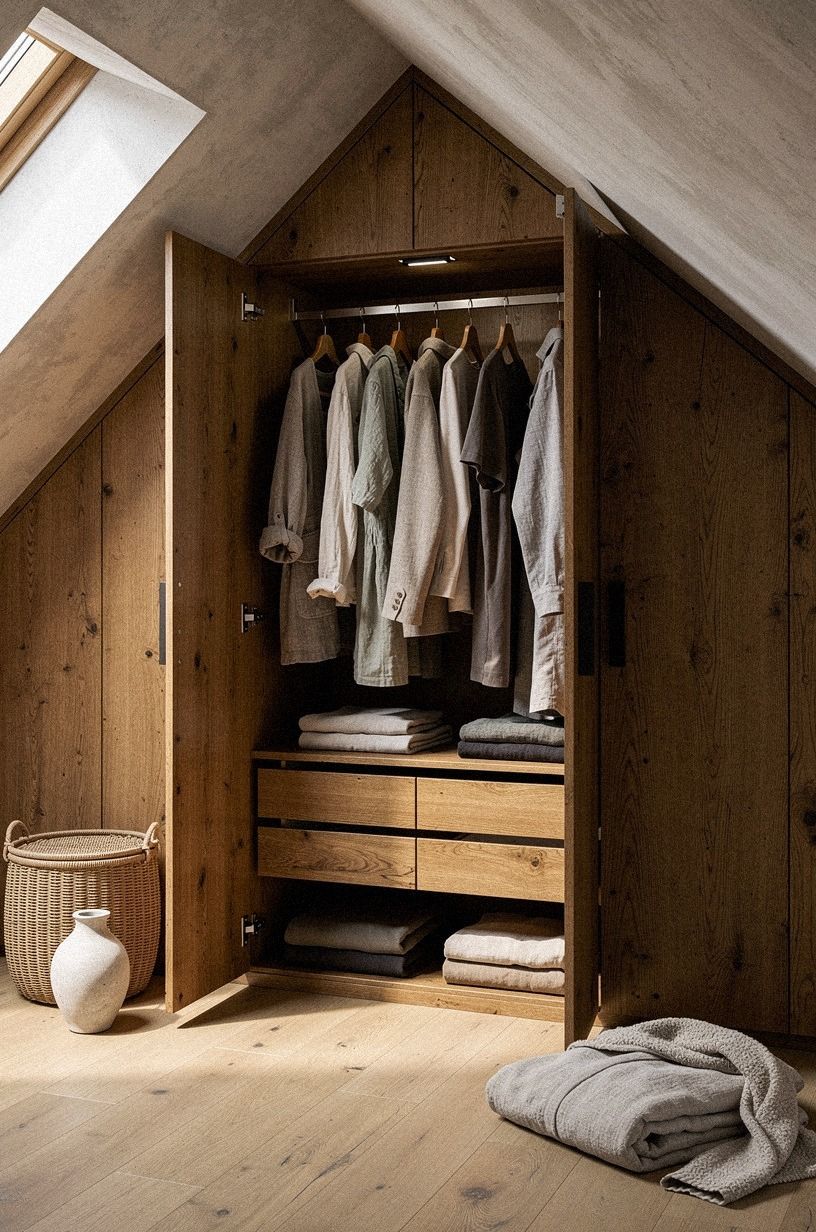
A dressing room can feel polished without matching every finish.
11Style the Loft With a Calm Outfit Station
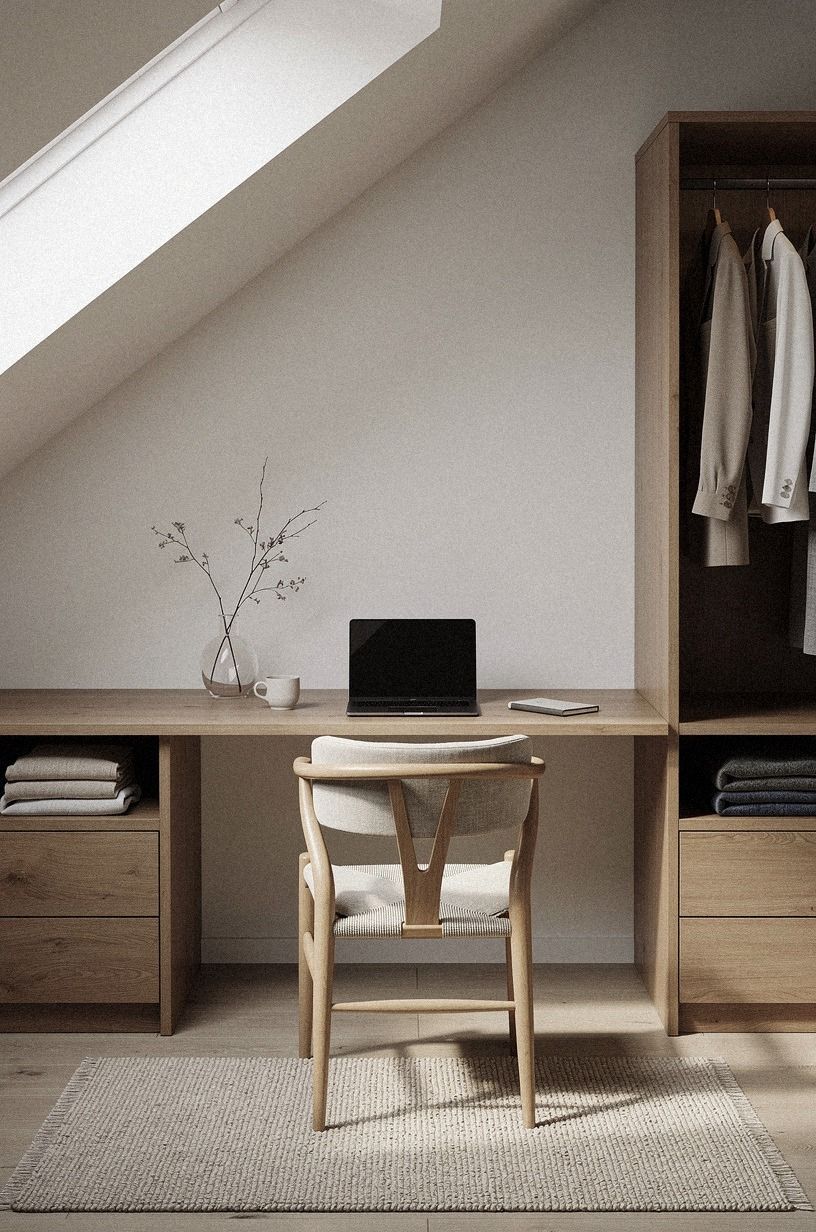
An outfit station gives your attic dressing room a reason to stay tidy. Keep one hook, one stool, and one open area where tomorrow’s clothes can wait. Your morning will move faster, and the room won’t feel like storage you happen to walk through.
Use a plum organic-bouclé bench if you have enough floor space, or choose a small upholstered stool for a tighter layout. A soft seat adds comfort and absorbs some of the hard surfaces from rods, shelves, and mirrors. You’ll notice the difference when you’re getting dressed before sunrise.
Keep the station visually light. A woven basket for laundry, a small hook for a robe, and one rose-gold tray for accessories are enough. Organic bouclé upholstery can bring a luxurious feeling without adding much furniture.
And don’t style every shelf with objects. Your clothing is already the main color and texture in the room. A single ceramic vase or framed print can make the space charming, but five decorative pieces will compete with the storage.
The final test is practical. Can you enter, choose an outfit, sit down, check the mirror, and leave without shifting three objects?
If you can, your layout is working. A calm dressing room should support your routine, not ask you to maintain a display.
For a softer palette, these cozy bedroom ideas use a similar balance of texture and restraint.
Why This Loft Works Better Than a Bigger Closet
I used to believe a dressing room needed a wide island, full cabinetry, and enough floor area to resemble a boutique. That idea made me overlook the best feature of an attic: the roofline forces you to edit. You can’t keep every storage fantasy, so you decide what your daily life actually needs.
The strongest rooms I’ve seen use the tall center for movement and the low edges for storage. That arrangement respects your body and the architecture at the same time. A modular birch-effect system can handle the practical work, while paint, lighting, and fabric make the room feel personal.
I also think a small attic makes better design decisions easier. You’ll notice if a hanger is too wide, if a shelf is too deep, or if the light is too harsh.
In a large closet, those problems can hide for months. Here, the room tells you quickly what isn’t working.
There’s a temptation to make every surface white because it feels safe. I’d rather see Benjamin Moore Pale Oak OC-20, warm wood, and a little shadow under the shelves. A dressing room should feel serene, but it shouldn’t feel sterile.
And I’ve learned to spend on the things your hands touch. Better rods, smooth drawer runners, flattering light, and a comfortable stool will matter more than a decorative feature you only notice when the room is empty. Your room should reward ordinary mornings, not just look impressive when nobody is using it.
A roofline also creates a natural sense of privacy. Clothes can sit under the slope, mirrors can stay in the center, and the whole space can feel like a small retreat. That intimate quality is hard to create in a wide, open room.
Similar principles appear in these attic bedroom ideas and rattan bedroom ideas.
A Few Things Worth Answering
What are the best attic dressing room ideas for a small closet?
The best approach is low shelving under the eaves, double-hang rods in the tallest zone, and a floating vanity or narrow stool. IKEA modular storage works well because you can adjust the layout as your wardrobe changes. Keep the center open so your room still feels airy.
Where can I buy attic dressing room pieces on a budget?
Look at IKEA, Wayfair, Target, Facebook Marketplace, and local thrift stores. Velvet hangers typically cost $20-$60 per set, while shelves and rods can keep a budget project within the $150-$800 range. You’ll often find mirrors and stools secondhand for much less.
How much does an attic dressing room makeover cost?
A budget setup with rods, shelves, bins, and lighting typically runs $150-$800 in the US. A mid-range modular system with drawers often costs $2,000-$6,000. Custom millwork, an island, and lighting can reach $8,000-$25,000, so your choices matter.
Can I create an attic dressing room on a budget?
Yes, and you can start with paint, a single hanging rail, and open shelves. LED rod lighting typically costs $30-$150, while a small collection of bins can organize low corners. Reuse a mirror, shop secondhand, and add custom work only where the roofline truly requires it.
Is an attic dressing room worth it in a small space?
Yes, because the sloped walls naturally separate hanging, folded, and shoe storage. Your compact room can feel easier to use than a larger closet with poor organization. Keep the center clear, use 14-inch shelves, and place your most-used pieces between waist and eye level.
Is an attic dressing room a good idea for a rental?
Yes, if you rely on removable and freestanding pieces. A tension rod, peel-and-stick hooks, a narrow console, and removable wallpaper can create a warm look without permanent changes. You’ll still need to check your lease before mounting shelves or installing lighting.
Where I’d Start First
If I had to pick one, I’d start with the headroom map. It prevents the expensive mistake of placing tall furniture where the roof makes it useless, and every shelf, rod, and light will work harder afterward.
Pin this attic dressing room plan for later and measure before you shop. It’s worth the effort!


