15 Built-In Breakfast Nook Designs for Custom Seating That Fits Your Space
21 october 2026Built-in breakfast nook ideas for custom seating can start around $300 when you reuse a table and focus on paint, cushions, and wall treatment. I learned that after building one too deep, so our knees hit the bench every morning. A good nook saves floor space, feels warm, and works hard. Here’s how to get the proportions right.
Editor's note: The best breakfast nook isn’t the most elaborate one. It’s the corner that makes coffee easier, keeps traffic moving, and still feels inviting when the table is covered in toast crumbs. Start with these small-space seating proportions, then let the finishes follow.
- Float a Window Bench With the Light Rule
- Build a Banquette Over a Freestanding Table
- Layer the Two-Wood Rule
- Swap a Square Table for a Round Pedestal
- Paint a Deep Green Breakfast Corner
- Frame the Banquette With Open Shelves
- Hang the Three-Height Light Stack
- What Should Your Corner Do After Breakfast?
- Anchor the Seat With a Storage Plinth
- Mix a Bench With One Statement Chair
- Float a Narrow Table Over the Seat
- Budget the Kitchen Around the Nook
- Keep the Two-Tone Palette Quiet
- Build Around the Clearance You Have
- Choose Texture Over More Furniture
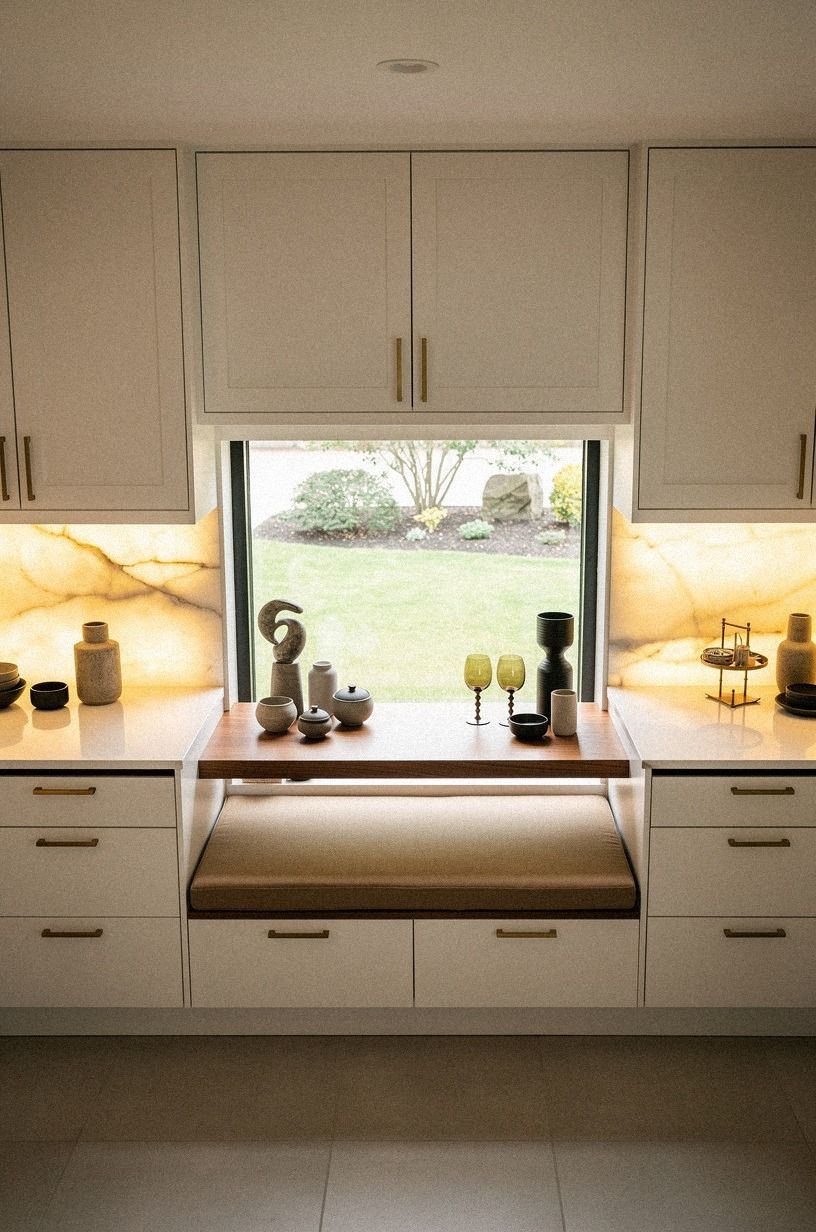
1Float a Window Bench With the Light Rule
A window bench gives your kitchen nook built-in seating a natural anchor, especially when morning light lands across the cushion. Keep the seat depth near 20 inches so you can lean back without stealing walking space. You’ll want the bench high enough for a standard dining table, and you won’t want the window trim buried behind a thick backrest.
Measure the window casing first. A bench that stops just short of the trim can look intentional, while one that crowds the frame feels awkward. Leave enough room for curtains, shades, or a small plant without forcing the cushion into the glass.
I’d use Benjamin Moore White Dove OC-17 on the bench if your kitchen already has darker cabinets. It keeps the corner bright without looking sharp. For the cushion, choose 18-ounce cotton canvas or Belgian flax linen, then add a washable cover because your breakfast nook will meet jam, coffee, and sticky fingers.
Finish the wall with a slim panel of backlit translucent onyx and one narrow shelf, not a stack of decor. You’ll get a place for a small vase and your morning mug, while the window still feels open. I tried three shelves once, and the view looked crowded before breakfast even started.
For a darker mood, compare this approach with the deep green corner treatment.
2Build a Banquette Over a Freestanding Table
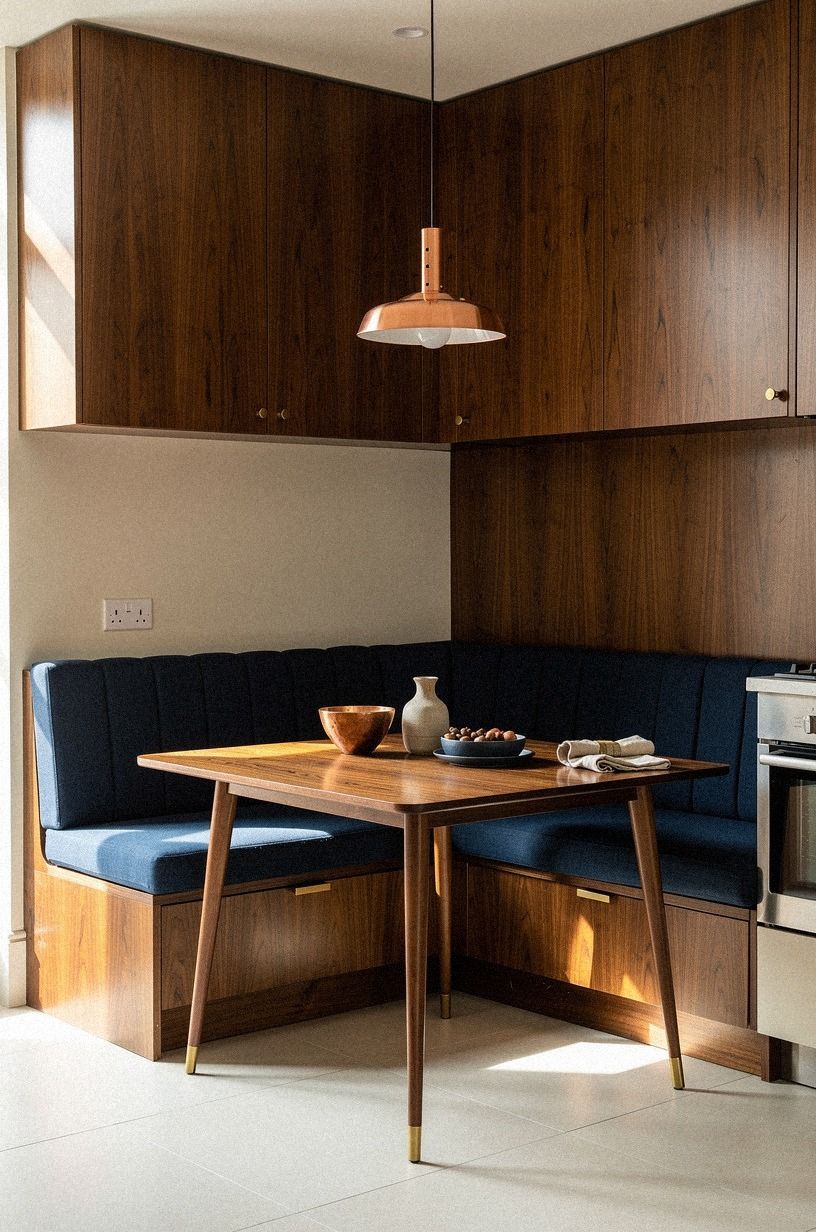
A built-in bench kitchen table arrangement doesn’t need a custom table.
3Layer the Two-Wood Rule
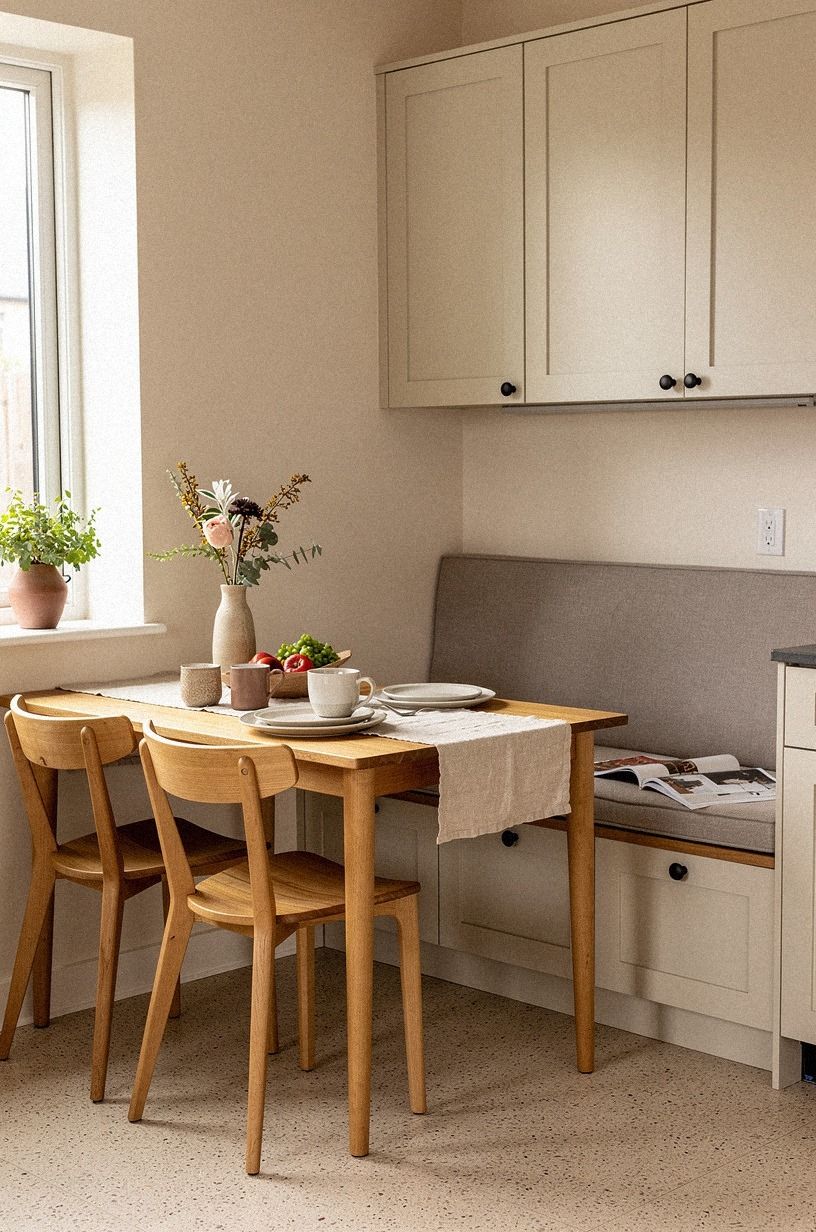
The Two-Wood Rule keeps a dining nook built-in from looking like a furniture showroom. Use one wood tone for the bench or table and a clearly different tone for a small shelf, stool, or frame. Similar but mismatched woods usually look accidental, while pale oak beside walnut feels deliberate.
I like warm travertine beside natural wood for a built-in seat because its soft variation catches the light along the front edge. Your second wood could be walnut with a low-sheen oil finish. Don’t add a third species unless you’ve got a very large kitchen, because you’ll lose the quiet rhythm that makes a compact corner feel settled.
If your floor is already warm oak, don’t automatically match it. A painted bench or darker table can give the nook a confident focal point. Matching every surface often makes the room feel flat, while a controlled contrast adds character.
The same restraint works with the quiet two-tone palette.
For the seat, use a firm 3-inch foam insert rather than a soft pillow that collapses by lunchtime. You’ll sit more comfortably, and your back won’t drift against the wall. I made that mistake in our first nook, and the cushion looked plush for one week before it became a sad, flat slab.
4Swap a Square Table for a Round Pedestal
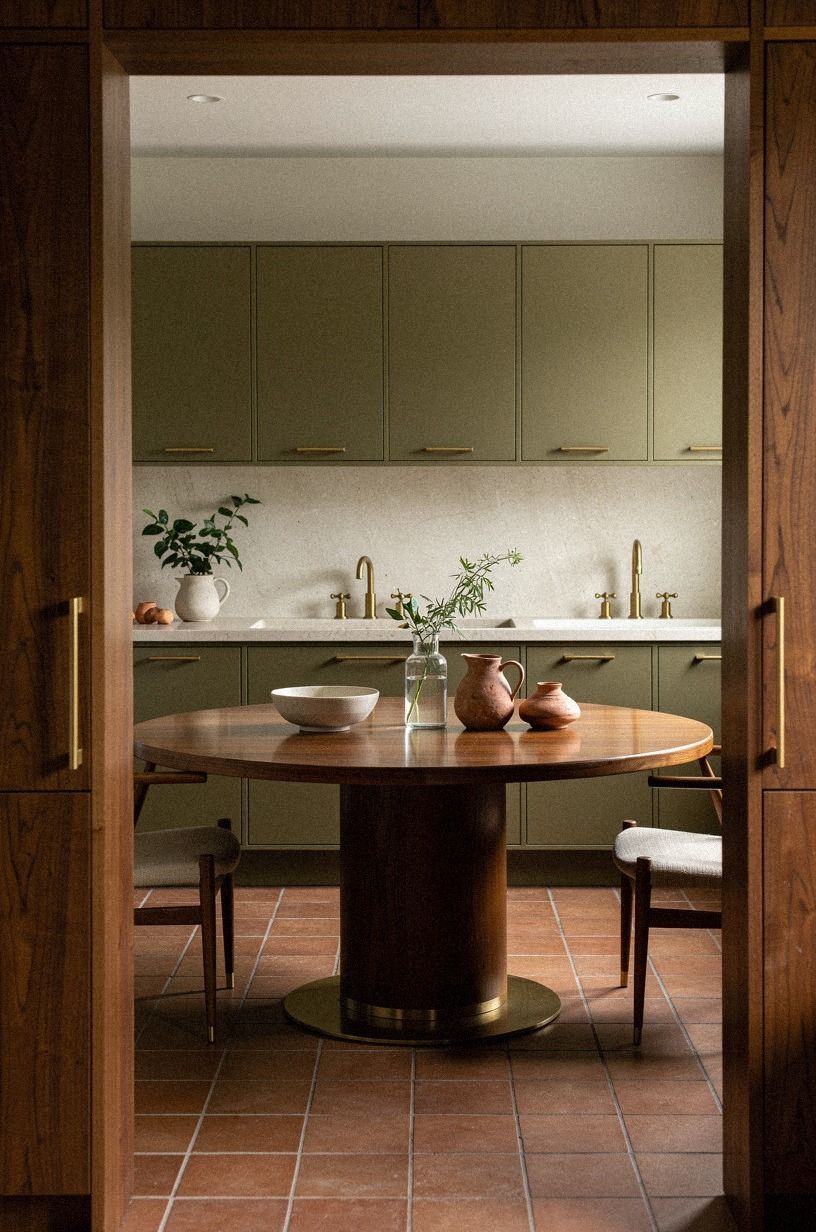
A round table is one of the easiest ways to make small-space custom seating feel less cramped. Without corners, you’ll gain a smoother path around the bench and you won’t have to twist sideways every time someone gets up. A 36-inch round top gives four people a comfortable breakfast footprint in many layouts.
Choose a simple stone-topped pedestal with an unlacquered brass base or another narrow central support. You’ll want the base to stay narrow near the floor so shoes can move freely under the table. Avoid a four-leg table if your bench already has a fixed front, because the legs will fight your knees.
Check the table height against the cushion before buying it. A thick seat can raise you several inches, making a standard table feel surprisingly low. Sit on a sample cushion if you can.
That small test can prevent an expensive, uncomfortable mistake.
I’d pair the round top with a straight bench and one loose chair. Add a small terracotta bowl and one olive branch rather than a full centerpiece. Your eye will read the curve immediately, while the spare styling keeps the corner airy.
5Paint a Deep Green Breakfast Corner
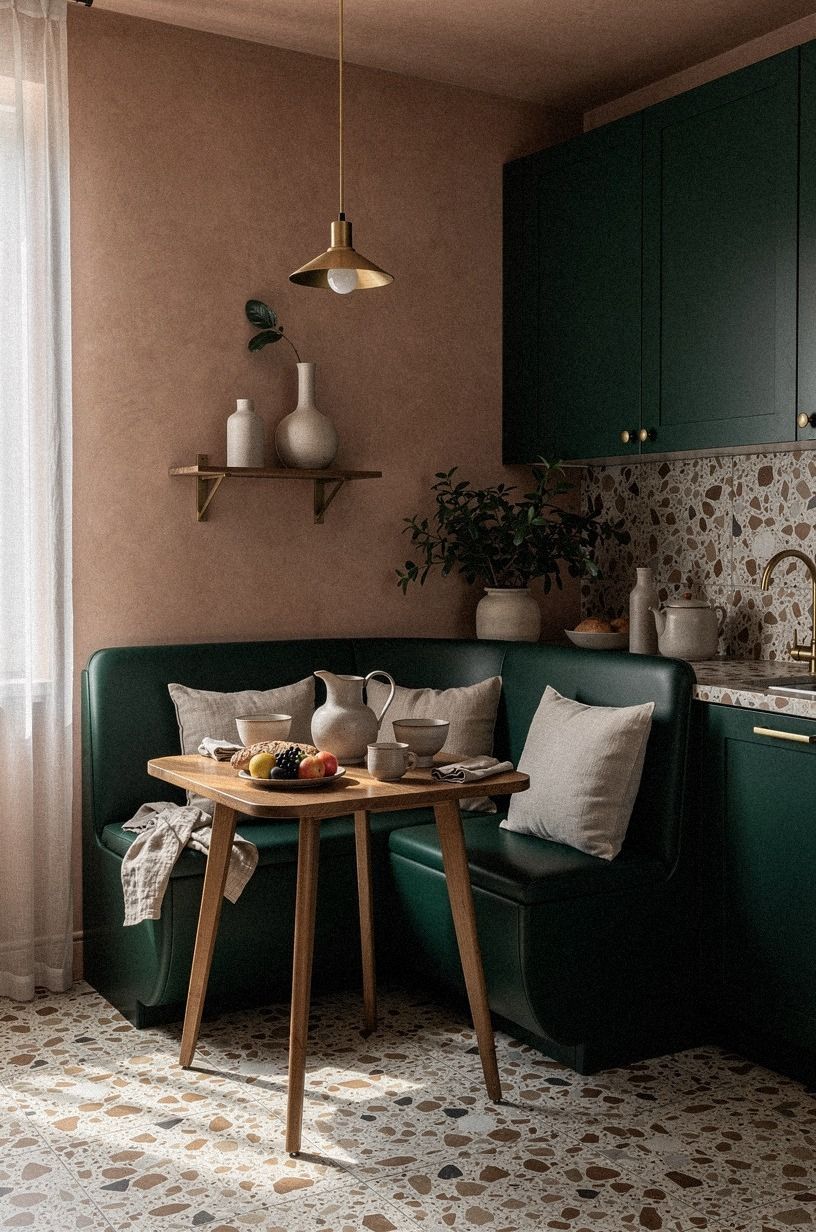
A warm clay paint color can make a breakfast nook feel intimate, but only if you repeat it in a small physical detail. Paint the wall and bench base in Farrow & Ball Red Earth No. 64, then keep the seat fabric in washed linen so your corner doesn’t turn heavy.
You’ll want the paint to continue behind the table rather than stopping at the bench edge. That uninterrupted field makes the nook feel intentional, and it can hide uneven drywall better than a hard trim line. Use warm bulbs so the clay tone doesn’t turn dull at night.
A clay-colored corner also benefits from reflective details. Try aged brass, glazed ceramic, or an oversized-chip terrazzo tabletop.
You don’t need much. One luminous accent can keep the palette rich rather than gloomy.
I’d skip a black table here. It’ll swallow the center of the nook and make your morning coffee look like it’s sitting in a cave.
Choose a light stone surface or aged brass hardware instead. The metal will soften with use, and that patina gives the space a little history.
6Frame the Banquette With Open Shelves
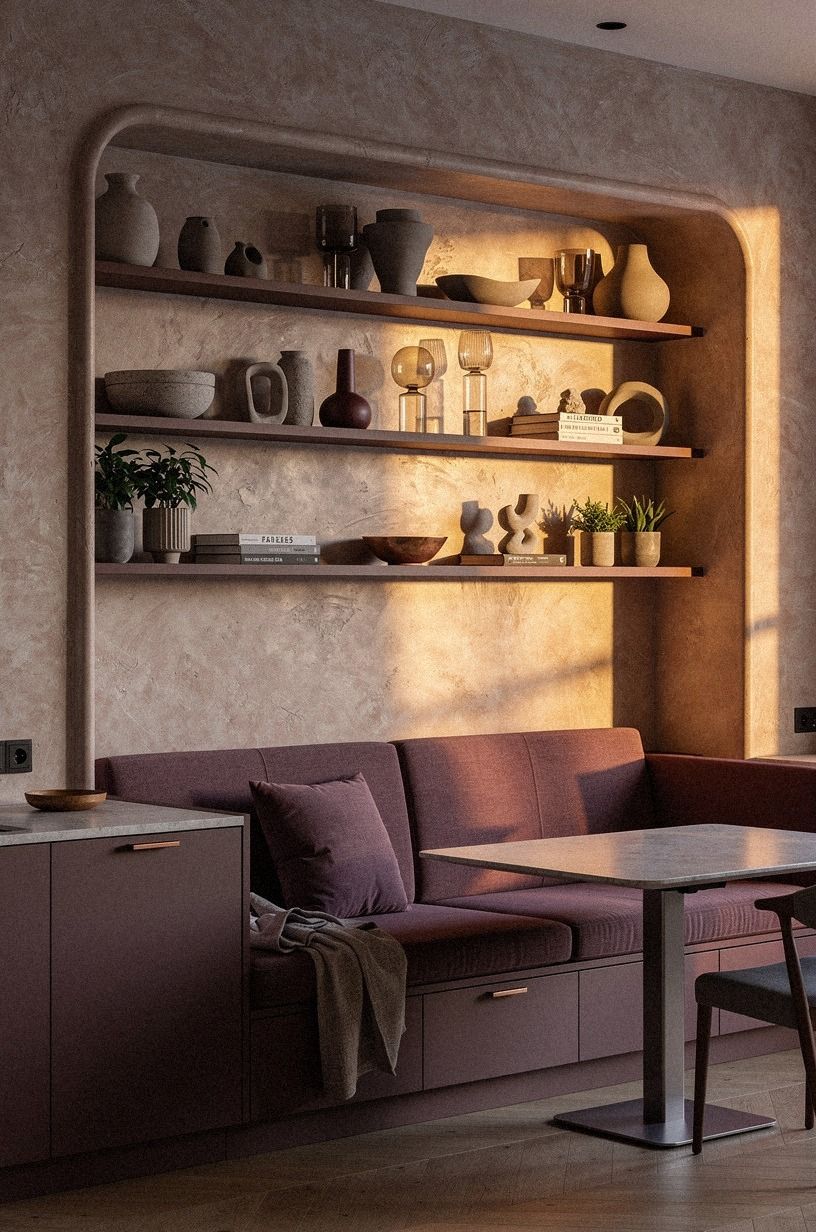
Open shelves can frame built-in banquette seating in a dining room without building tall cabinetry around your head.
7Hang the Three-Height Light Stack
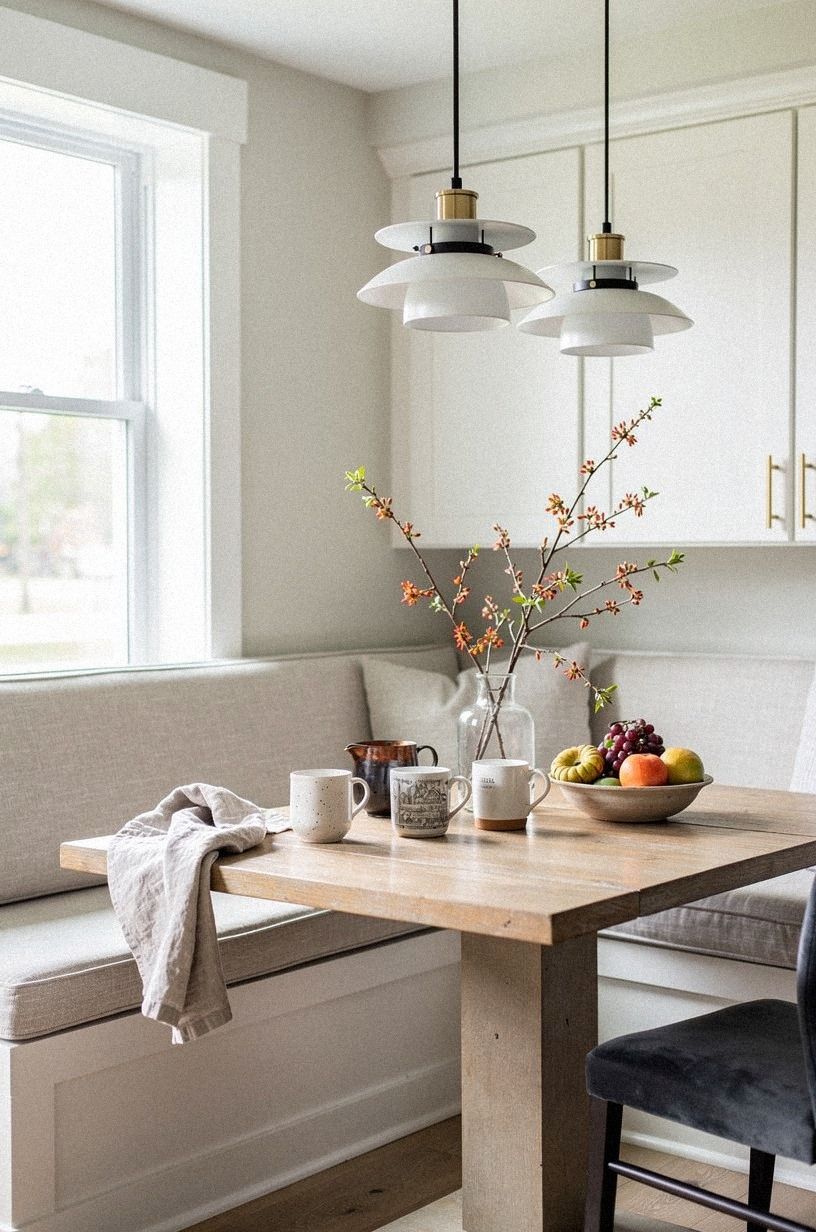
The Three-Height Light Stack gives your kitchen nook built-in seating a warm glow at different levels. Start with a pendant above the table, add a small sconce or picture light on the wall, and place a low lamp on a nearby shelf. Each source should do a different job.
Choose a Schoolhouse Luna pendant or a similar opal-glass fixture with a soft finish. You’ll want the bottom of the pendant high enough that you can see across the table, but low enough to make the nook feel separate from the kitchen. Warm bulbs matter more than a complicated fixture.
A dimmer is worth adding during the electrical planning stage. Bright light helps with homework and meal preparation, while a softer setting makes the same corner feel wonderfully calm at night. If you’re renting, a plug-in pendant or rechargeable lamp can create a similar effect without permanent work.
And don’t rely on one bright ceiling light. It flattens the bench, the table, and your face all at once!
I’d rather have three modest pools of light than one harsh overhead blast. Your nook will feel calmer, especially during early breakfasts and late homework.
8What Should Your Corner Do After Breakfast?
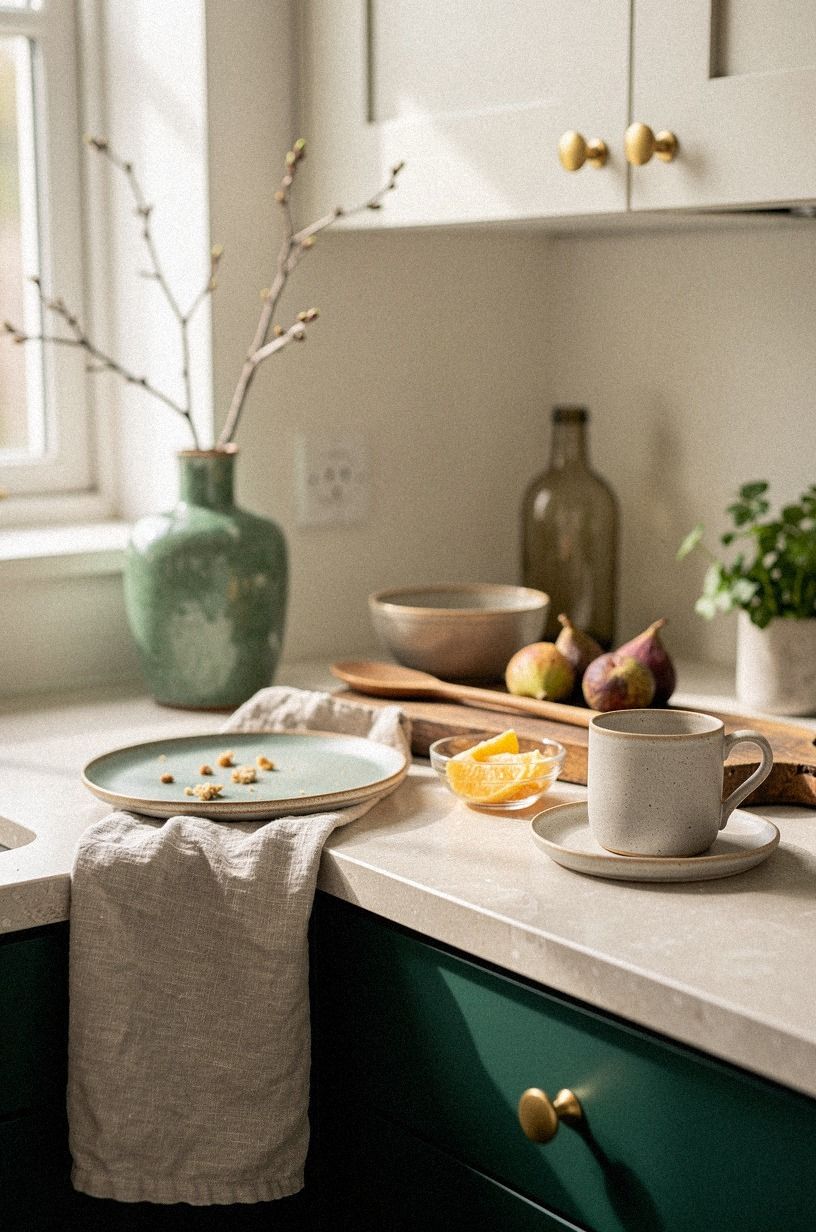
Your custom seating should earn its footprint after the toast is gone.
9Anchor the Seat With a Storage Plinth
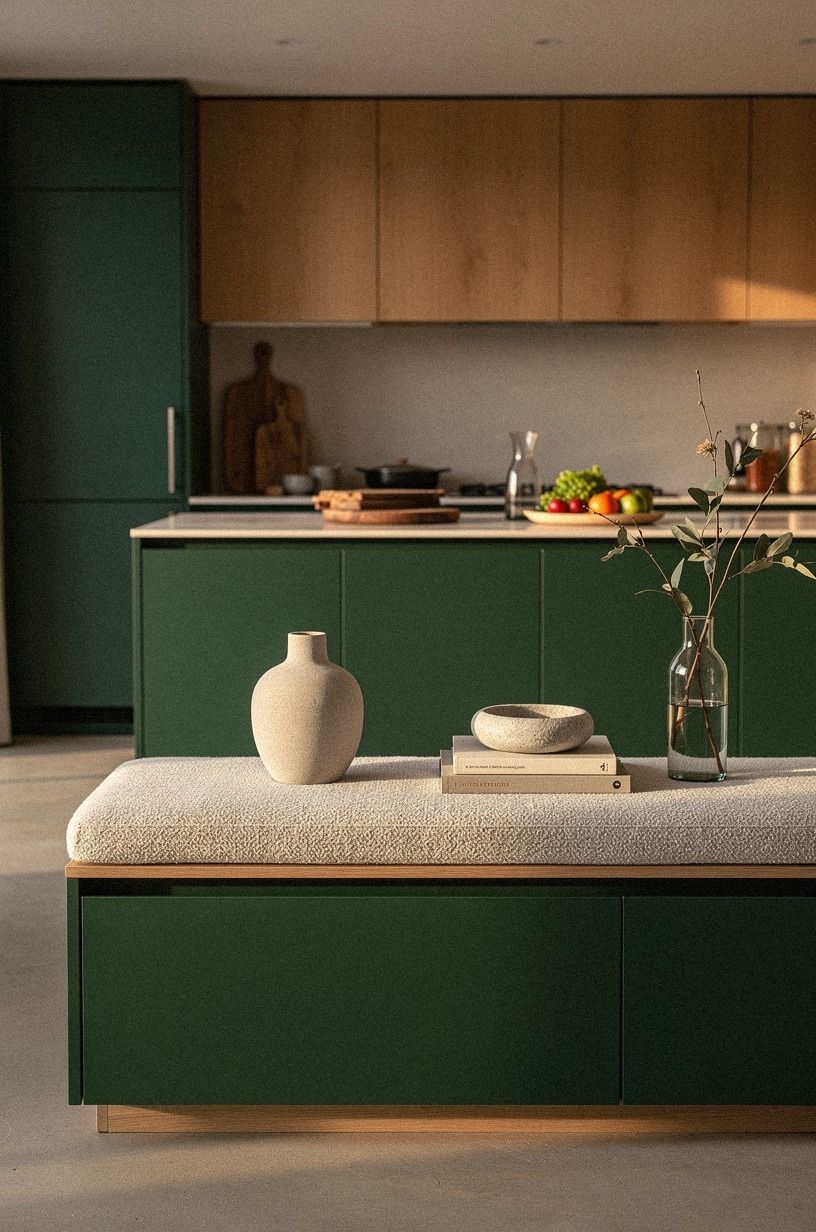
A storage plinth turns a plain bench into a useful built-in breakfast nook without adding another cabinet run. Build the base with lift-up lids or wide drawers, then keep the storage shallow enough that you can reach the back. You’ll use it more often if opening it doesn’t require moving the table.
Choose natural oak with a durable satin finish for the face, then add an organic bouclé cushion above it. Oak gives the forest-green and rust accents somewhere warm to land, while the soft upholstery keeps the base from feeling overly hard. Your knees won’t catch on splinters.
Drawers are convenient for napkins and table linens, while lift-up lids can hold larger seasonal pieces. If you choose lids, install quality hinges that keep them open safely. A lid that drops unexpectedly is frustrating, especially when children are using the bench.
Don’t use the bench as a place for every awkward kitchen item. Your storage should hold napkins, table linens, seasonal dishes, or small appliances you use occasionally.
I’d keep heavy cookware elsewhere. You’ll protect the lid hinges, and the bench won’t become impossible to lift.
10Mix a Bench With One Statement Chair
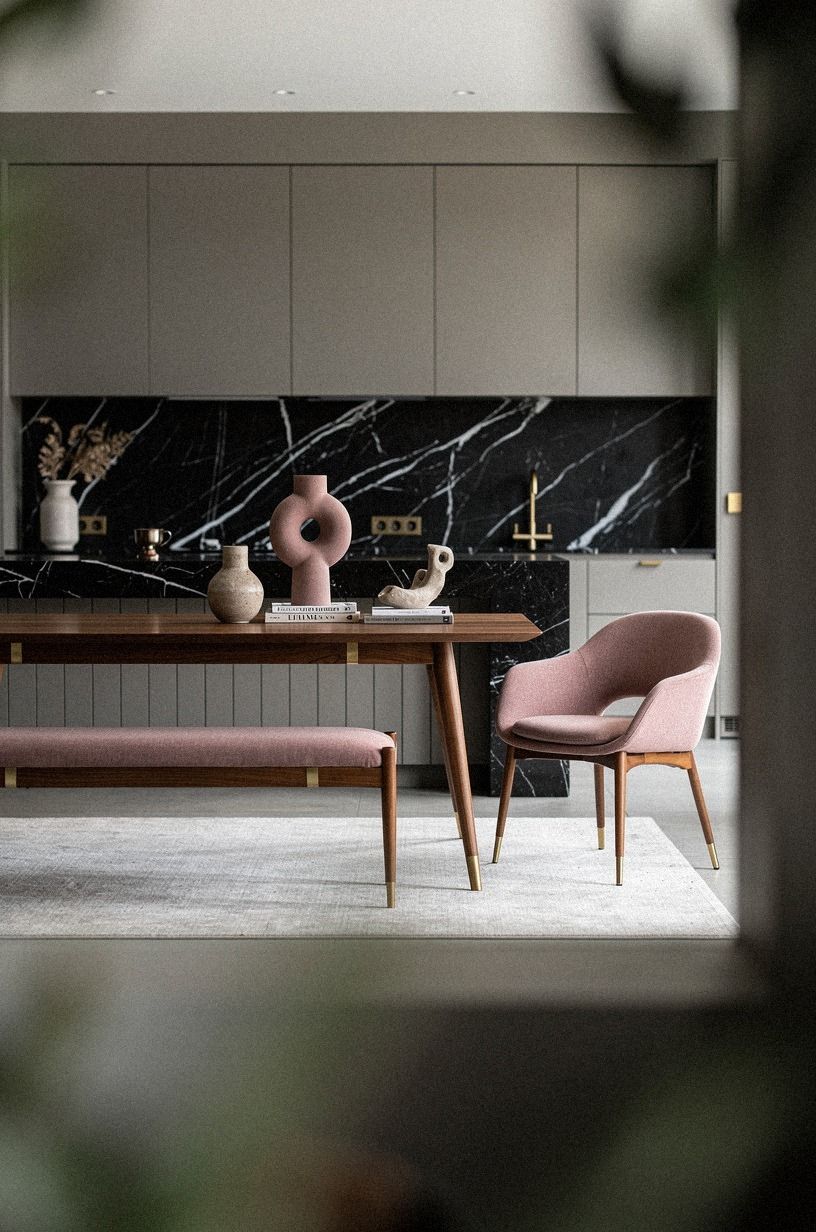
A straight bench and a single statement chair can make dining nook built-in seating feel collected instead of mass-produced.
11Float a Narrow Table Over the Seat
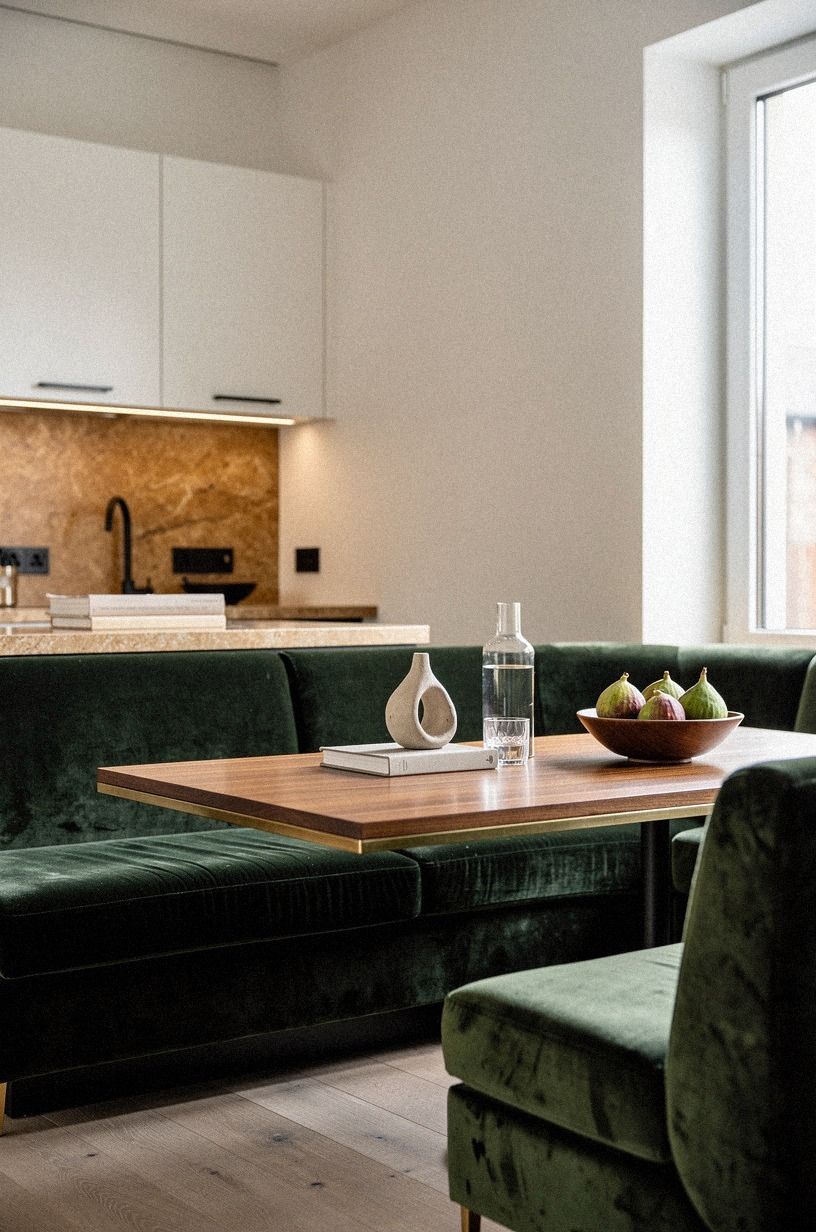
A floating table can make a small kitchen nook look wider because the floor remains visible beneath the overhang. Mount one side to the wall and support the other with a slim leg or a concealed bracket. You’ll need secure framing, so don’t attach a heavy top to drywall alone.
Use a warm-white table with camel upholstery in deep-pile mohair velvet. Keep the edge lightly rounded, especially if you’re working with a narrow walkway. A standard counter height is 36 inches, but your dining table should be lower unless you’re intentionally creating a counter-height breakfast bar.
Plan the overhang before cutting the top. You need enough room for knees, but too much projection will shrink the circulation path.
Mark the footprint with painter’s tape and walk around it at different times of day. A layout that seems generous at night can feel tight during the morning rush.
I’d skip a thick waterfall edge in a compact nook. It adds visual weight and steals knee room.
Choose a simple eased edge instead, then bring in character with a handmade ceramic bowl or camel velvet cushion. Your table will feel lighter, and the wall-mounted design will read as custom without shouting for attention.
12Budget the Kitchen Around the Nook
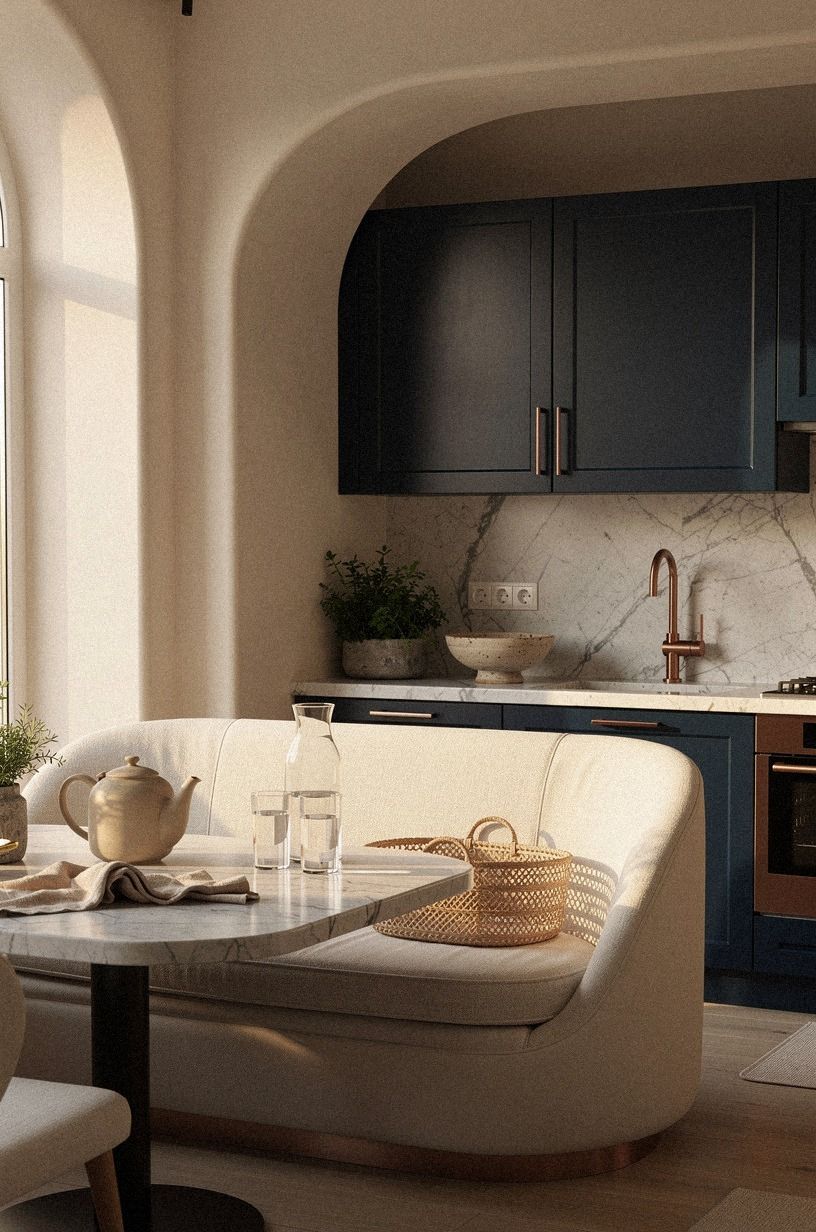
A nook renovation can stay cosmetic, or it can become part of a larger kitchen project. If you’re already repainting cabinets, replacing lighting, or changing counters, you’ll want to understand the typical US cost ranges before choosing the bench finish. The built-in seat itself isn’t always the biggest expense.
For a smaller refresh, laminate countertop runs about $10-$40 per square foot, while Carrara marble is typically more expensive. You’ll get the best value by improving the surfaces you touch every day, not by buying decorative pieces first. I’d spend on a strong seat base and good lighting before a costly backsplash.
Set aside money for the details that disappear into the walls. Electrical work, trim, brackets, drawer slides, and professional installation can change the final number quickly. A simple written list will keep the project from quietly expanding.
Compare it with the storage-plinth plan before ordering materials.
If the structure is sound, paint can do astonishing work. A fresh wall color, tailored cushion, attractive pendant, and one thoughtful shelf may create the transformation you want without a dramatic remodel. That approach is less stressful and easier to revise later.
13Keep the Two-Tone Palette Quiet
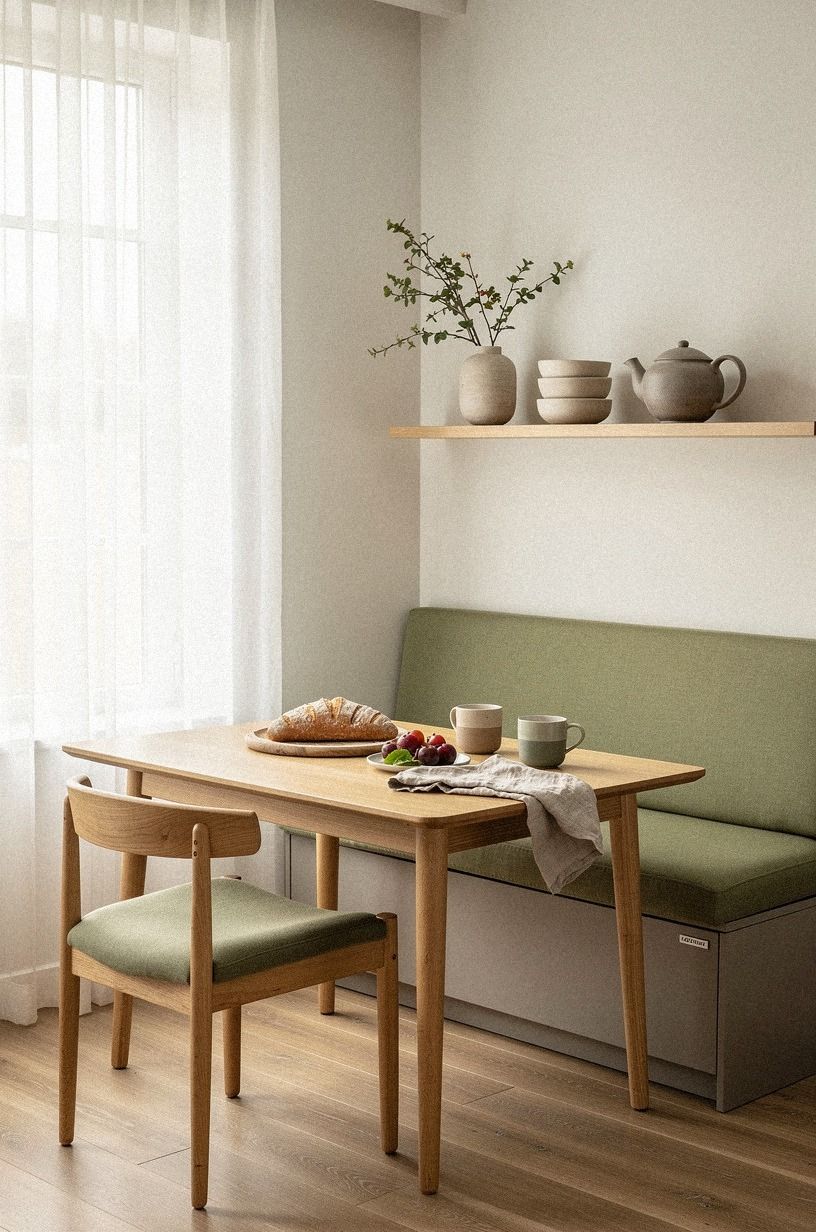
Two-tone color can make your dining nook built-in feel layered without turning it into a feature wall that competes with the kitchen. Paint the lower bench a darker shade and keep the upper wall lighter, or reverse it if your ceiling is low. You’ll create depth while keeping the proportions readable.
Try Benjamin Moore October Mist 1495 on the wall with a warm cream bench and reclaimed weathered teak table. It has enough gray to feel settled, but it won’t look cold or flat. Your textiles can bring in terracotta, olive, or faded blue without adding another paint color.
You can also create two tones through material rather than paint. Reclaimed weathered teak beside a warm cream cushion gives the same layered effect with more tactile appeal. This can feel especially elegant when the kitchen already has several finishes.
I’d avoid pairing three strong colors in a small nook. It might look energetic in a sample board, but your eye won’t know where to rest.
One darker anchor, one warm neutral, and one quieter accent will give you a more peaceful corner. And yes, simple can still feel rich!
14Build Around the Clearance You Have
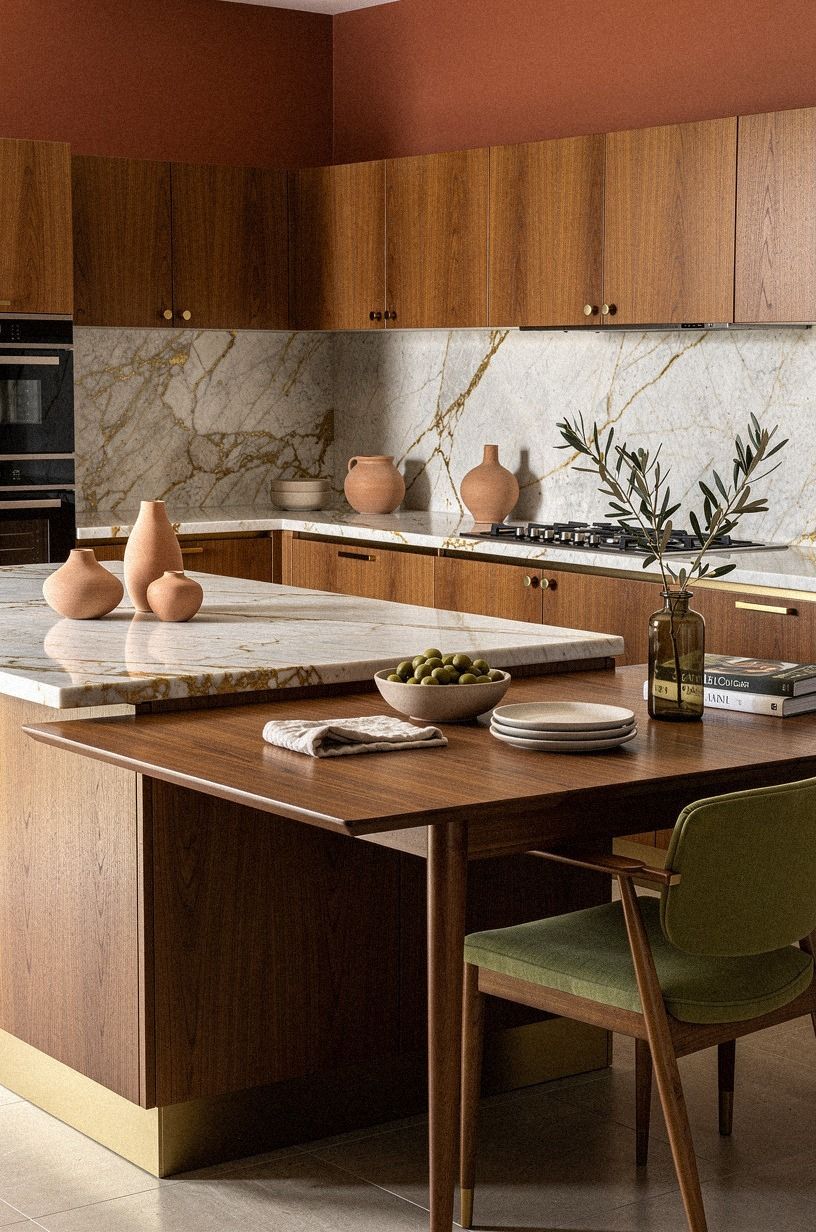
The best built-in bench kitchen table layout starts with measurements, not a mood board.
15Choose Texture Over More Furniture
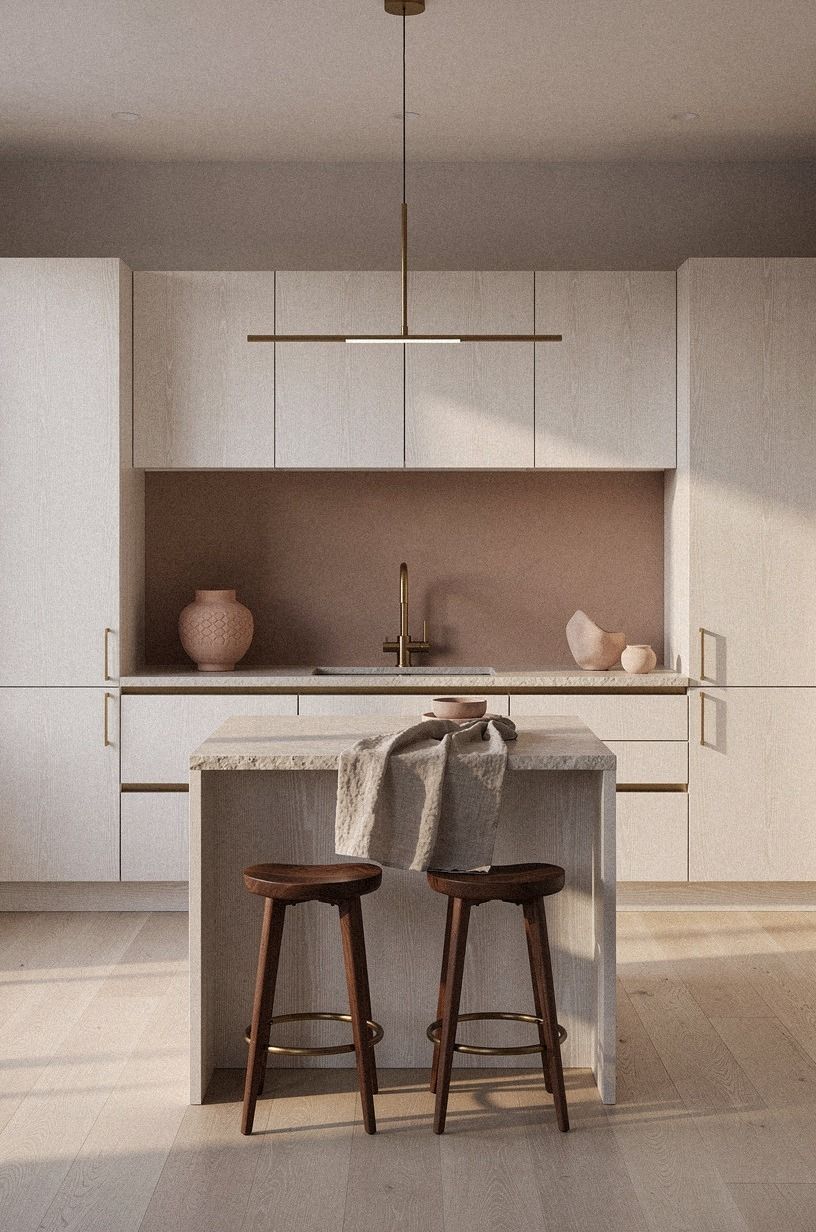
Texture does more for a small breakfast nook than another chair or cabinet. Combine washed Belgian linen on the seat, a clay-toned wall, an aged-brass pendant, and cerused white oak on a side cabinet or table. You’ll create contrast that can be felt as well as seen, without crowding the floor.
Add one compact cerused white oak cabinet if you need a place for napkins or serving pieces. Keep it near the open end of the bench so you can reach it while setting the table. Your styling should support the way you move, and it shouldn’t require a ladder or a weekly rearrangement.
Textiles are an easy way to change the mood seasonally. A washed linen cover feels breezy in summer, while a thicker wool-blend cushion can make the same nook feel snug in winter. Choose fabrics that can handle real life rather than ones that demand constant caution.
I’d skip a matching dining set. Your nook will feel warmer when the materials have slight variation, such as cerused white oak beside linen and aged brass.
And if one piece looks too polished, bring in a handmade bowl or a rumpled runner. That small imperfection keeps the space inviting.
The Design Choice I’d Defend
I’ve changed my mind about built-in breakfast nooks more than once. At first, I thought the best version was the most custom one, with deep drawers, fitted cushions, painted trim, and every inch accounted for.
Then I lived with a bench that looked impressive but made cleaning crumbs ridiculous. The lesson was simple: custom seating should fit your habits, not just your wall.
I’d spend money on the parts your body notices first. A firm cushion, a comfortable table height, and lighting that doesn’t glare into your eyes matter more than an expensive cabinet face. If you’re choosing between a fussy storage mechanism and better upholstery, take the upholstery.
You’ll touch it every morning, and you’ll notice when it feels wrong.
The same goes for style. A dark green nook can be moody and comforting, but it needs enough daylight or warm light to stay welcoming.
Pale oak can feel airy, but too much of it may wash out beside white cabinets. I like a little tension, such as aged bronze against a soft wall or a rustic table beside refined linen.
Before committing, live with a temporary version for a week. Push a table into the corner, use a firm bench cushion, and mark the edges with tape.
You’ll discover whether the table is too wide, whether the walkway is annoying, and whether the window view feels blocked. That practical test can save you from an expensive, frustrating correction.
Your corner shouldn’t look untouched. It should look ready for coffee, crumbs, and one more person squeezing in. That is where the magic is!
The Questions Worth Answering First
What is the best built-in breakfast nook design for a small kitchen?
A straight window bench with a round pedestal table usually works best because it saves circulation space and removes sharp corners. A 36-inch round table can seat four comfortably in the right layout.
You’ll get the most flexibility with a loose table and a shallow storage base. For tighter rooms, review the clearance guidelines before buying anything.
Where can I buy breakfast nook pieces on a budget?
Look at IKEA, Wayfair, and Target for tables, cushions, shelves, and lighting. Facebook Marketplace and thrift stores can also turn up solid wood tables for less. You’ll save more by buying the table secondhand and spending your budget on a properly fitted cushion.
A used table paired with a new washable cushion cover can look surprisingly finished.
How much does a built-in breakfast nook makeover cost?
A cosmetic kitchen refresh typically runs $300-$1,500 in the US, including paint, hardware, and a peel-and-stick backsplash. Your nook may cost less if you reuse a table and sew the cushion cover yourself. Cabinet, counter, and appliance work can move the project into the $3,000-$12,000 range.
The kitchen budget tiers help separate cosmetic work from structural changes.
Can I create a built-in breakfast nook on a budget?
Yes, and you can start with a freestanding bench, a round table, and wall paint. Reuse your table, add a washable cushion, and install one shelf instead of full cabinetry.
You’ll get the built-in feeling through consistent color and placement, even if the pieces can still move. A freestanding bench also lets you test the proportions before hiring a carpenter.
Is a built-in breakfast nook worth it in a small space?
Yes, because a bench uses the wall edge more efficiently than four loose chairs. You’ll gain storage and a clear walking path at the same time. Keep the seat near 20 inches deep, choose a round table, and protect at least 36 inches of comfortable circulation where the kitchen is busiest.
The window-bench layout is a strong starting point.
Is a built-in breakfast nook a good idea for a rental?
It can be, if you use removable pieces instead of permanent construction. Try a freestanding bench, peel-and-stick wallpaper, a tension-rod café curtain, and removable hooks. You’ll create a defined dining nook without drilling into cabinets or changing the floor, and you can take the whole arrangement with you.
Keep the palette consistent and let one portable pendant supply the visual focus.
Where I’d Start First
If I had to pick one, I’d start with the window bench. It uses space you already have, gives you storage, and makes an ordinary table feel intentional without a full remodel. Pin the window-bench idea for later and measure the walking path before you buy anything.