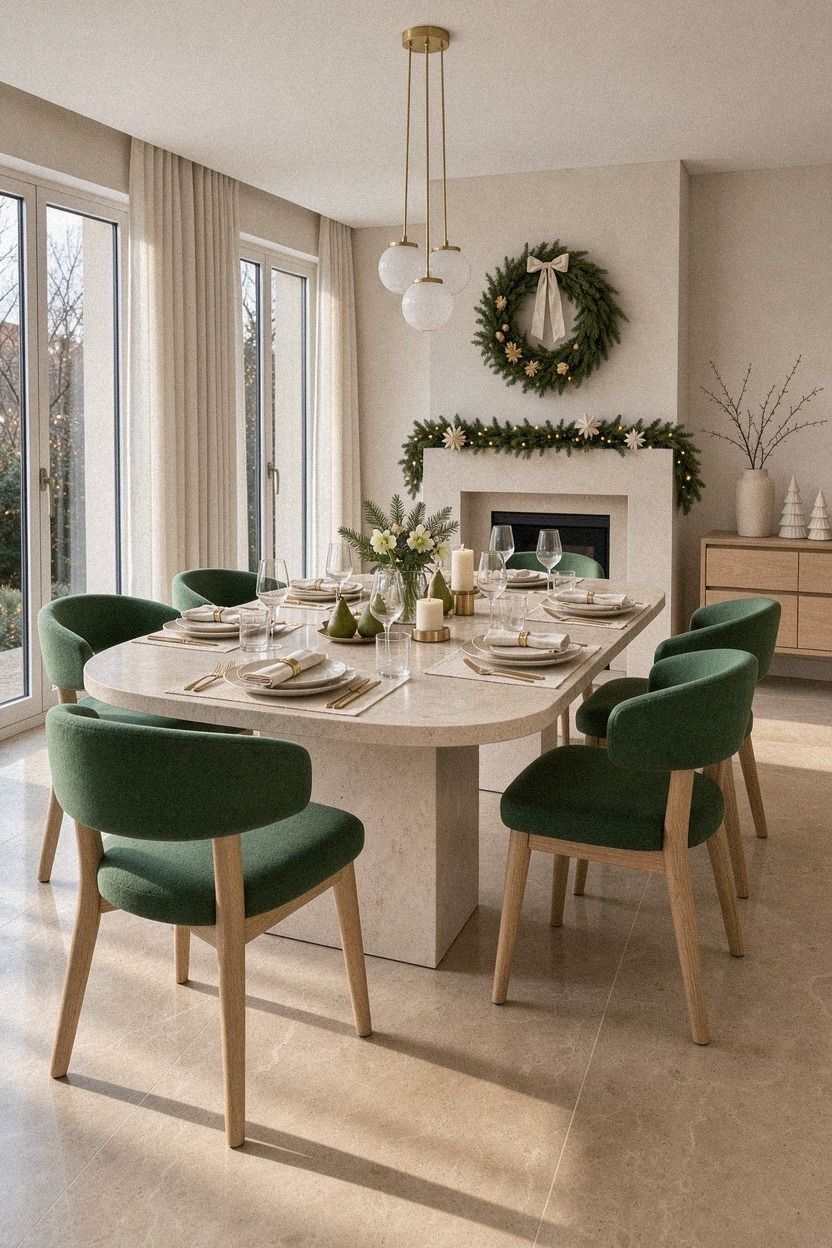
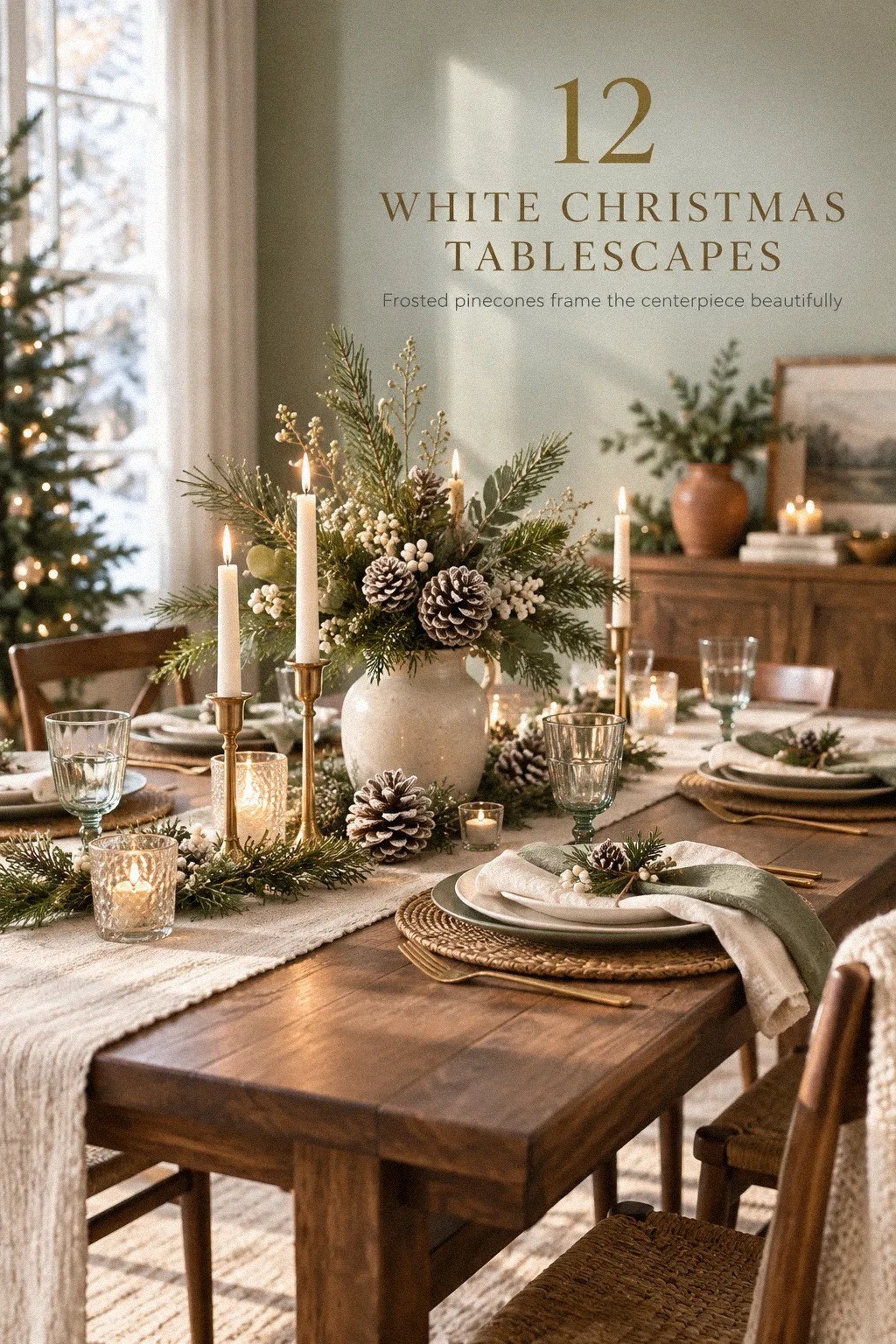
12 White Christmas Tablescapes That Still Feel Warm Without Looking Cold
21 october 2026White Christmas tablescapes feel warm when texture, candlelight, and natural materials share the work. I learned that after one icy table with glossy plates, silver ribbon, and nowhere for the eye to rest. Now I mix linen, aged metal, and soft green. The difference is immediate!
Don’t overthink: Float a Winter Branch Runner Over the Center.
Start with the two-white rule, add a winter branch runner, and let the lighting carry some of the atmosphere. You don’t need a full new dinner set, and you won’t need to spend much to make the room feel considered.
- Layer the Two-White Rule for a Softer Setting
- Float a Winter Branch Runner Over the Center
- Build the Three-Height Light Stack
- Mix White Stoneware With Aged Wood
- Hang a Soft Ribbon Detail From Every Place Setting
- What Should a White Christmas Budget Buy First?
- Pair Matte White With Unlacquered Brass
- Let Farrow & Ball Pigeon Frame the Table
- Swap the Shiny Centerpiece for Frosted Glass
- Why Does a Small Table Need One Ceramic Bowl?
- Choose Natural Linen Over Perfectly Pressed Cotton
- The Two-Wood Rule: A Quiet Finish
1Layer the Two-White Rule for a Softer Setting
Start with two different whites, not one. A chalky tablecloth beside creamy stoneware gives your eye a gentle shift, while an all-gloss setup can look more like a showroom than a Christmas table. Add touches of emerald, soft gold, and warm cream so the arrangement feels layered rather than stark.
If you're styling a narrow table, let the cloth hang close to the floor so the whole setting feels grounded. A warm travertine serving board or shallow bowl adds natural weight without making the white palette feel heavy.
I like Benjamin Moore White Dove OC-17 for nearby walls because it has enough warmth to support ivory napkins. Farrow & Ball Pigeon No. 25 works beautifully when you want a muted gray-green backdrop.
I’d skip bright optic white here. It reflects every overhead bulb and makes the food look flat.
Your centerpiece can stay simple:
- Cream cotton napkins - Ivory stoneware plates - Matte white taper holders - Soft gray ribbon - A small bowl of pears
If you're working with what you own, begin with your plates and change only the textiles. You don’t need a new dinner set to make the table feel intentional. The texture does most of the work, and the value is easy to see when one linen runner changes the whole arrangement.
Pair the setting with natural linen napkins if the plates feel too smooth. A slightly uneven fold gives the table a relaxed, generous quality. That small shift matters!
2Float a Winter Branch Runner Over the Center
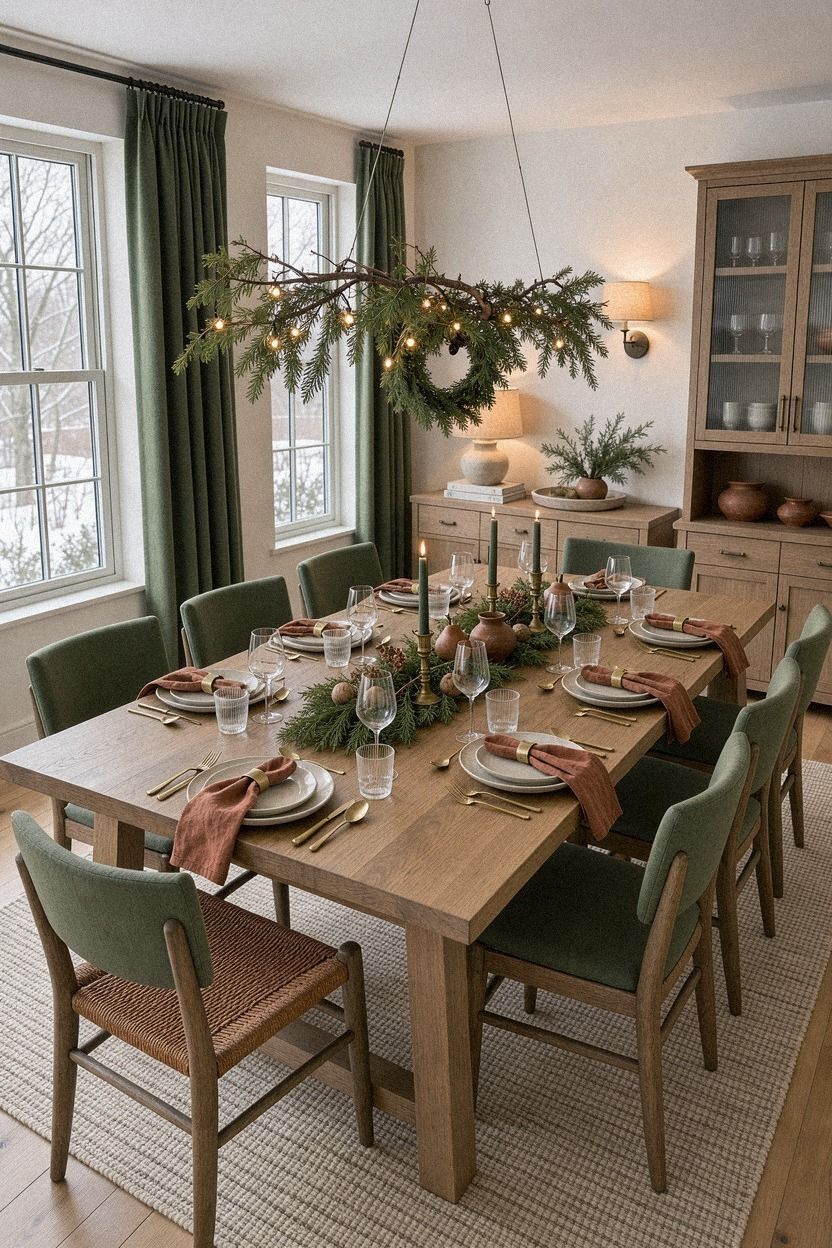
A loose branch runner brings movement to white Christmas table decor without adding visual heaviness. Choose one long branch with an irregular shape, then place it slightly off-center so the table feels collected instead of measured.
Work in forest green, rust, and natural oak for a richer winter palette. A branch with visible knots beside an oak serving board gives the arrangement warmth, while small touches of unlacquered brass can develop a beautiful patina over time.
Keep the runner low enough for conversation. If the dining table seats six, use several short branches with small gaps between them. This makes serving easier and keeps the arrangement from becoming one solid wall across the center.
I’d add only a few matte ornaments or small brass bells. Too many extras raise the cost without adding much atmosphere. A branch with visible knots and uneven needles already gives the table a beautiful focal point.
For a softer effect, repeat the green in the ribbon described in the sage detail section. The color can appear twice, while the textures remain different.
3Build the Three-Height Light Stack
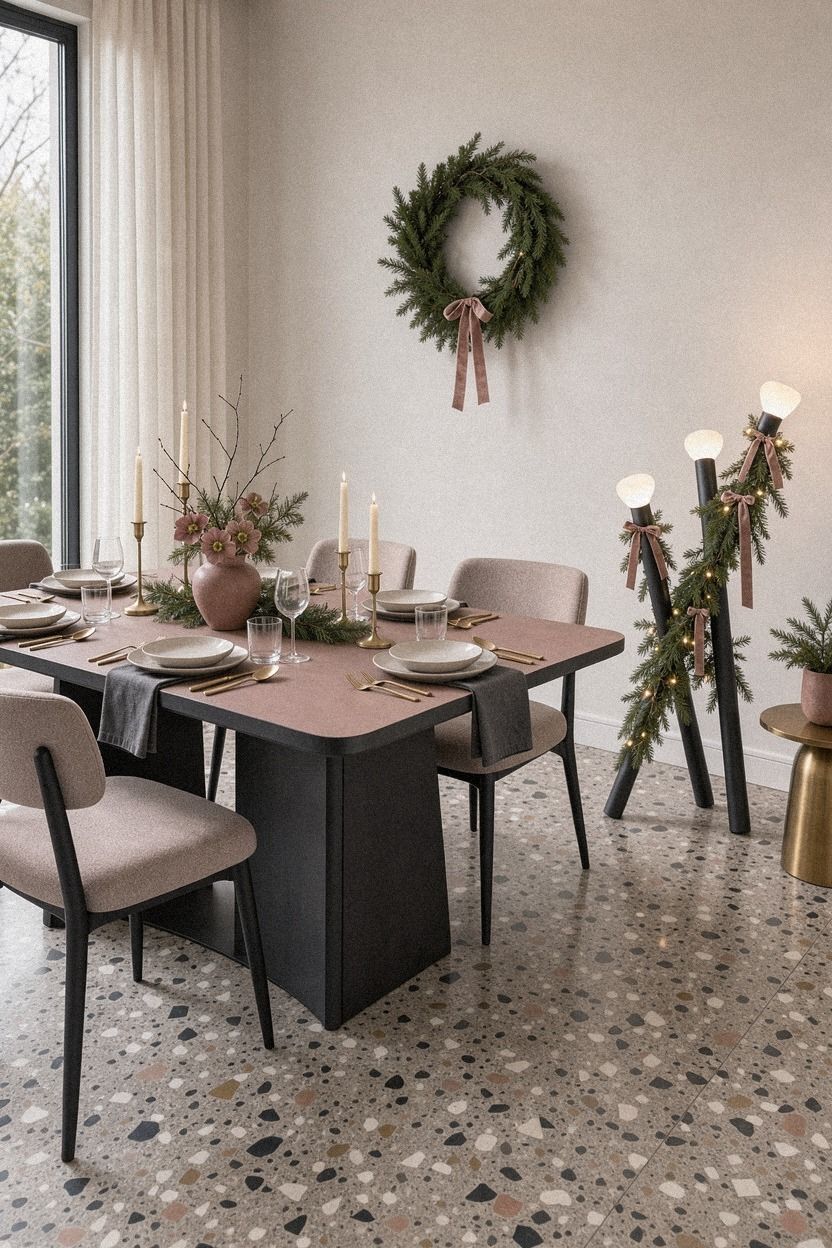
The warmest winter table usually has three light levels: overhead, candle, and a low glowing accent. Your eye needs height changes, and identical votives rarely create enough depth. The lighting budget deserves attention because it affects the entire room.
Use a low candle near each place setting, one medium lantern at the center, and the room’s ambient light turned down. Unlacquered brass catches the flame in a softer way than polished silver, while dusty rose and charcoal accents keep the arrangement from feeling too pale. An oversized-chip terrazzo tray can anchor the lowest level.
I’d skip cool white bulbs. They erase the amber edge that makes white napkins feel soft.
If you’re replacing a fixture, choose a warm bulb and keep the glow gentle. The table should look inviting from the doorway, with enough light for guests to see their plates and each other.
And yes, the candle count can stay modest. Your guests need to see the dessert, pass the vegetables, and reach the bread. A few small flames will do more than a dramatic cluster that blocks every conversation.
Battery candles can be a smart value when children or pets are nearby. Choose ones with a warm flicker and a matte finish. They’ll disappear into the arrangement while giving you more control over the evening.
The same principle works with a frosted glass centerpiece, which softens the lowest glow without making the table feel busy.
4Mix White Stoneware With Aged Wood
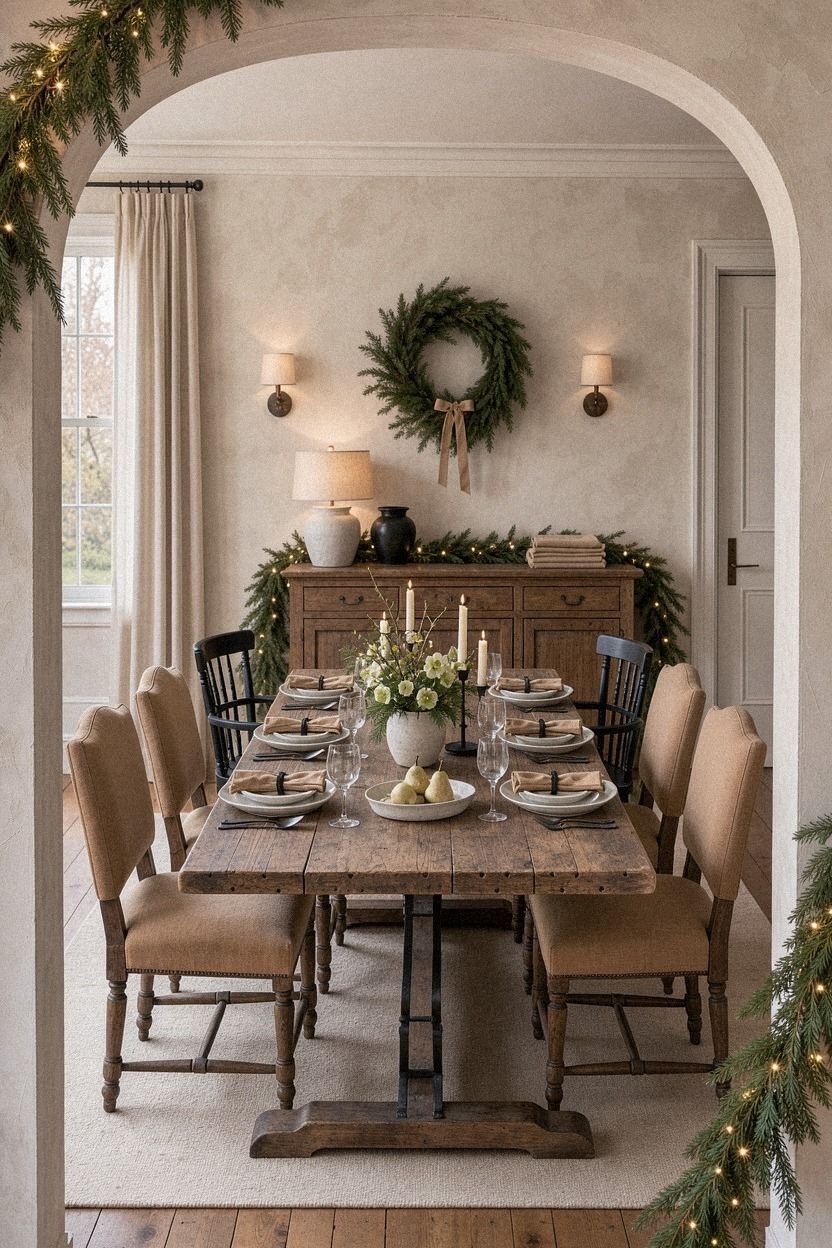
White dishes need a rougher companion. A white stoneware plate beside a surface finished in hand-applied Venetian plaster feels relaxed because the subtle variation interrupts all that smooth ceramic. Warm white, camel, and small black accents give the setting enough contrast to stay grounded.
Choose wood or plaster-toned pieces with visible character and a pale finish. A dark espresso charger can make the arrangement feel formal, while camel keeps it airy and peaceful.
I’d avoid matching pieces across every place setting. Repetition is useful, but too much of it makes the table look staged.
The place setting can stay unfussy:
- White stoneware dinner plate - Smaller cream salad plate - Light oak charger - Cotton napkin - A sprig of rosemary
If you're shopping your home, look at cutting boards, shallow serving boards, and even a clean wooden tray. Your table doesn’t need a charger labeled for dining. It needs a surface with warmth and a shape that supports the plate.
Keep the wood food-safe and free of strong fragrance. Your centerpiece shouldn’t compete with roasted vegetables or pie. If a new charger feels expensive, one serving board placed under a bowl can give you nearly the same visual value.
The two-wood finish can help if your room already contains several pale surfaces. One darker piece gives the white setting somewhere to land.
5Hang a Soft Ribbon Detail From Every Place Setting
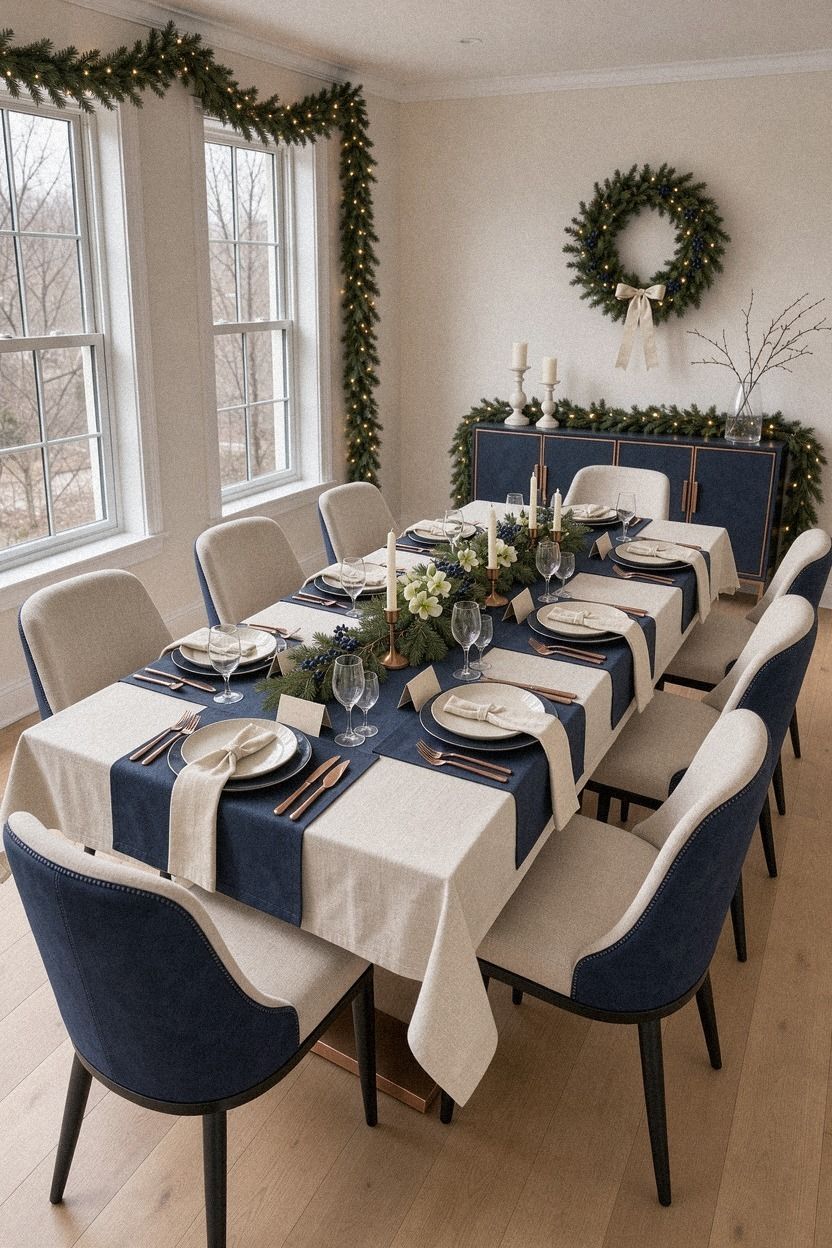
Ribbon adds a small vertical note, which is useful when your tablescape is mostly white and low. Choose midnight blue ribbon with copper edging or a warm ivory alternative when you want less contrast.
A small shagreen accent on the napkin ring or place card holder adds tactile interest without making every setting feel formal. Keep the detail narrow and repeat it consistently so the table feels intentional.
6What Should a White Christmas Budget Buy First?
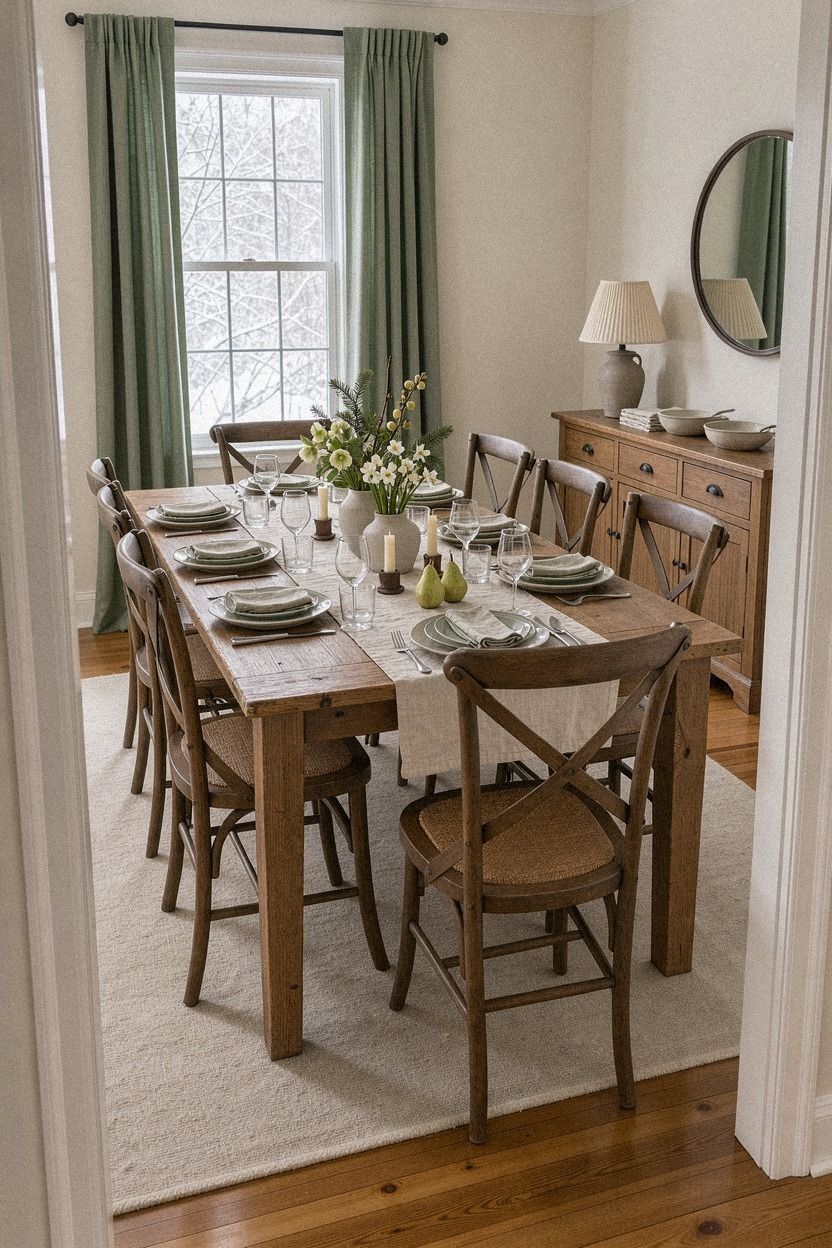
A warm table doesn’t require a full dining-room purchase. The useful money usually goes toward textiles, lighting, and one material with presence. Sage green, warm cream, and natural wood make a restrained base, while washed Belgian linen brings softness without needing many accessories.
Here are practical US room-refresh ranges. They include the surrounding space, so they’re broader than a tablescape alone:
For the table itself, start with what you own and spend on one strong textile, such as a washed Belgian linen runner or substantial napkins. I’d put money into fabric before novelty ornaments because you’ll use the textile again.
If you're refreshing the room too, remember the nearby surfaces matter. A quiet wall color, a warm bulb, and a table with natural grain will make inexpensive white plates look far more considered. That’s where the long-term value appears.
A reasonable starter budget might include one runner, six napkins, a pack of candles, and one branch or bowl. You can stay under $150 if you shop your home first. A bigger investment makes sense when the pieces will serve birthdays, dinners, and ordinary weekends too.
The two-wood rule is another low-cost way to make the room feel finished. Use one pale tone and one medium tone instead of buying a complete matching collection.
7Pair Matte White With Unlacquered Brass
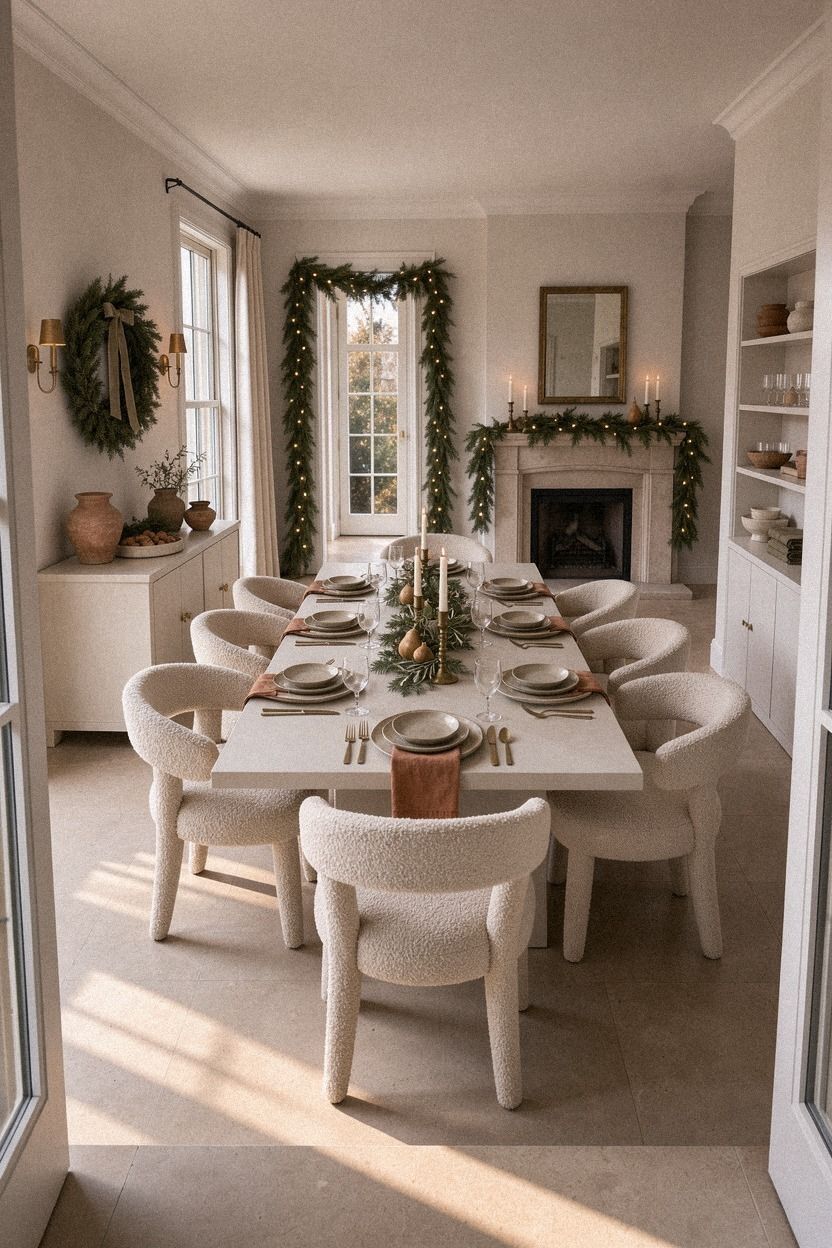
Matte white and brass work because they have opposite surfaces. Add terracotta, stone, and olive so the pairing feels earthy rather than overly polished.
A small piece of organic bouclé can soften a nearby dining chair or bench, while stoneware and brass keep the table practical. You only need one or two of these warmer materials to make the white setting feel welcoming.
8Let Farrow & Ball Pigeon Frame the Table
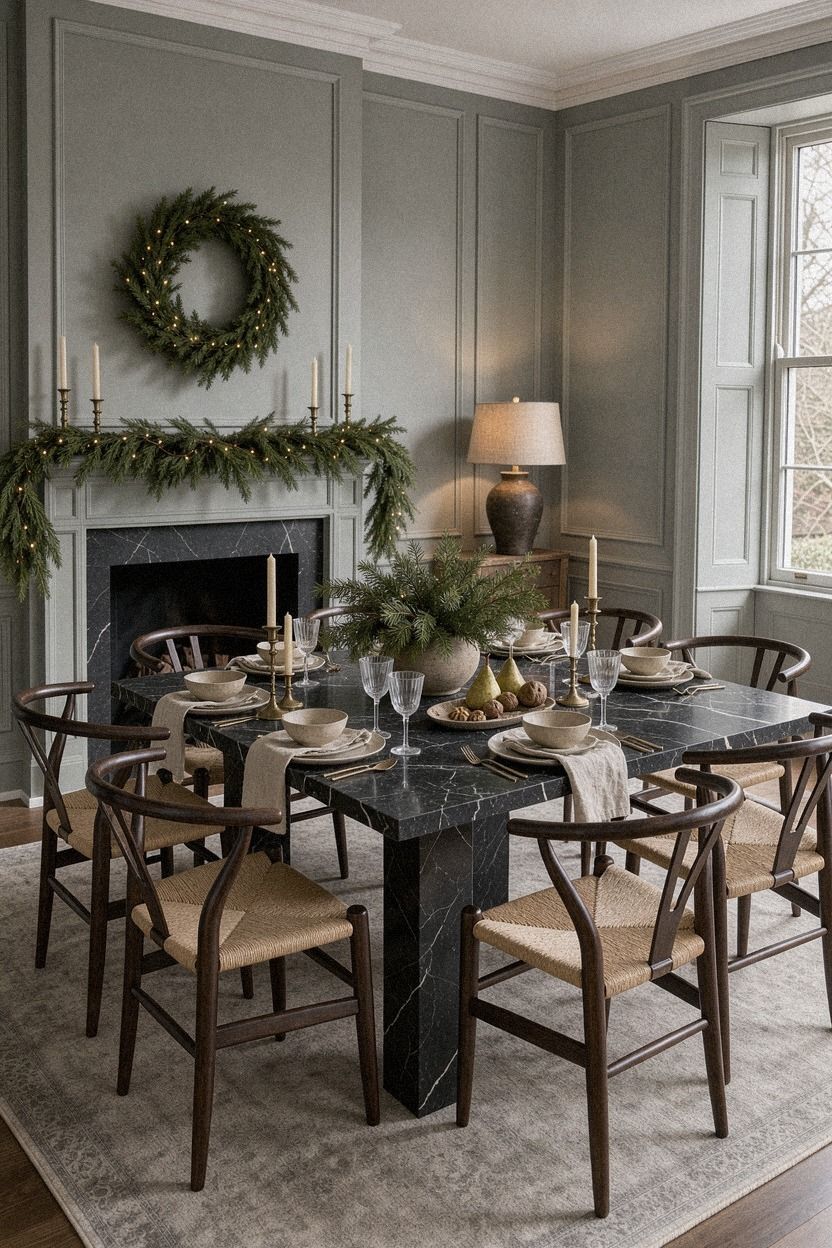
Sometimes the table isn’t the cold part. The walls are. Farrow & Ball Pigeon No. 25 gives white Christmas tablescapes a smoky green-gray frame, so the plates and linens appear brighter without becoming harsh.
For a warmer interpretation, bring in clay, natural linen, and aged brass around the table. A small Nero Marquina black marble board or bowl adds black veining and depth without overpowering the pale dishes.
You don’t need to paint the entire dining room for this idea to work. If you're renting, use the color as a visual reference in your napkins, art, or folded textile. Pigeon has enough gray to feel calm and enough green to keep white from looking sterile.
I’d choose it over a pale blue for a room with warm wood. Blue can turn chilly beside cool white dishes, especially under weak winter daylight. Your table will feel more earthy with a muted green-gray nearby.
Another named option is Benjamin Moore October Mist 1495, which brings a softer botanical quality. Test both shades on sample boards in morning light, afternoon light, and lamplight. A color that looks gentle at noon can become much deeper by evening.
If paint is part of your budget, sample first. Four small boards cost less than correcting an entire room, and the information is worth the small spend. Let the color sit beside your actual plates, flooring, and furniture before you commit.
The same two-tone idea applies to the warm white and soft-gray pairing on the table itself.
9Swap the Shiny Centerpiece for Frosted Glass
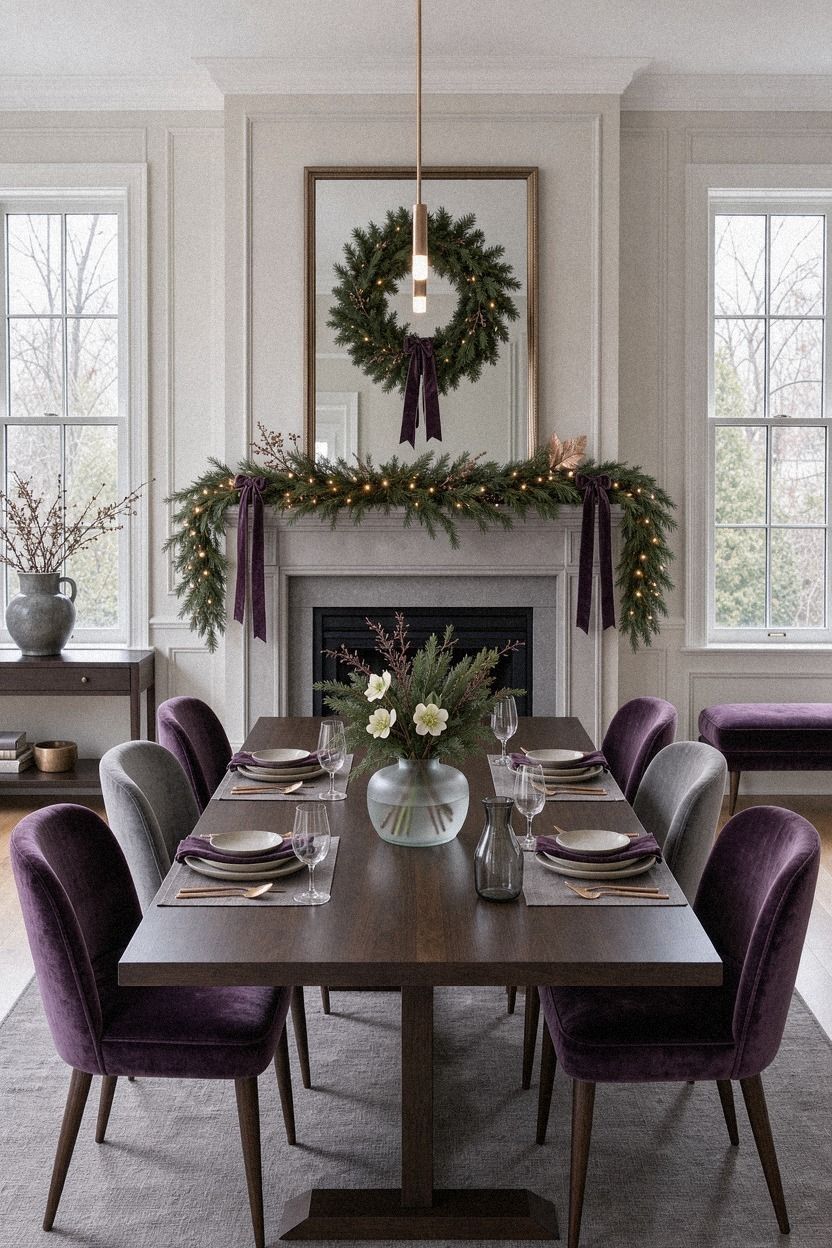
Frosted glass gives you the glow of candlelight without the hard reflection of crystal. A low frosted bowl, milk-glass compote, or translucent vase can soften the center of a bright table.
Use plum, gray, and rose gold nearby when you want the arrangement to feel moodier. A deep-pile mohair velvet runner or cushion adds softness and depth, while the cloudy glass keeps the centerpiece from becoming too glossy.
Fill the vessel with water and a few evergreen stems, or leave it empty beside a candle. The cloudy surface catches the light gently. It also works beautifully with the three-height light stack, especially when the lowest glow sits inside the glass.
Choose one substantial piece instead of several tiny vessels. A single object gives a small table visual clarity, while a cluster can make serving feel cramped. Look for a broad shape with a stable base if guests will be reaching across it.
I’d avoid heavily glittered glass. It can shed onto food and make the arrangement feel more seasonal than sophisticated. Milk glass or hand-frosted finishes have more staying power, which improves their value after the holidays.
Frosted glass also handles imperfect candle placement well. The surface diffuses the flame, so the composition can feel relaxed even when every taper isn’t exactly level.
A low bowl can also serve as the centerpiece in the small-table arrangement, especially when guests need plenty of elbow room.
10Why Does a Small Table Need One Ceramic Bowl?
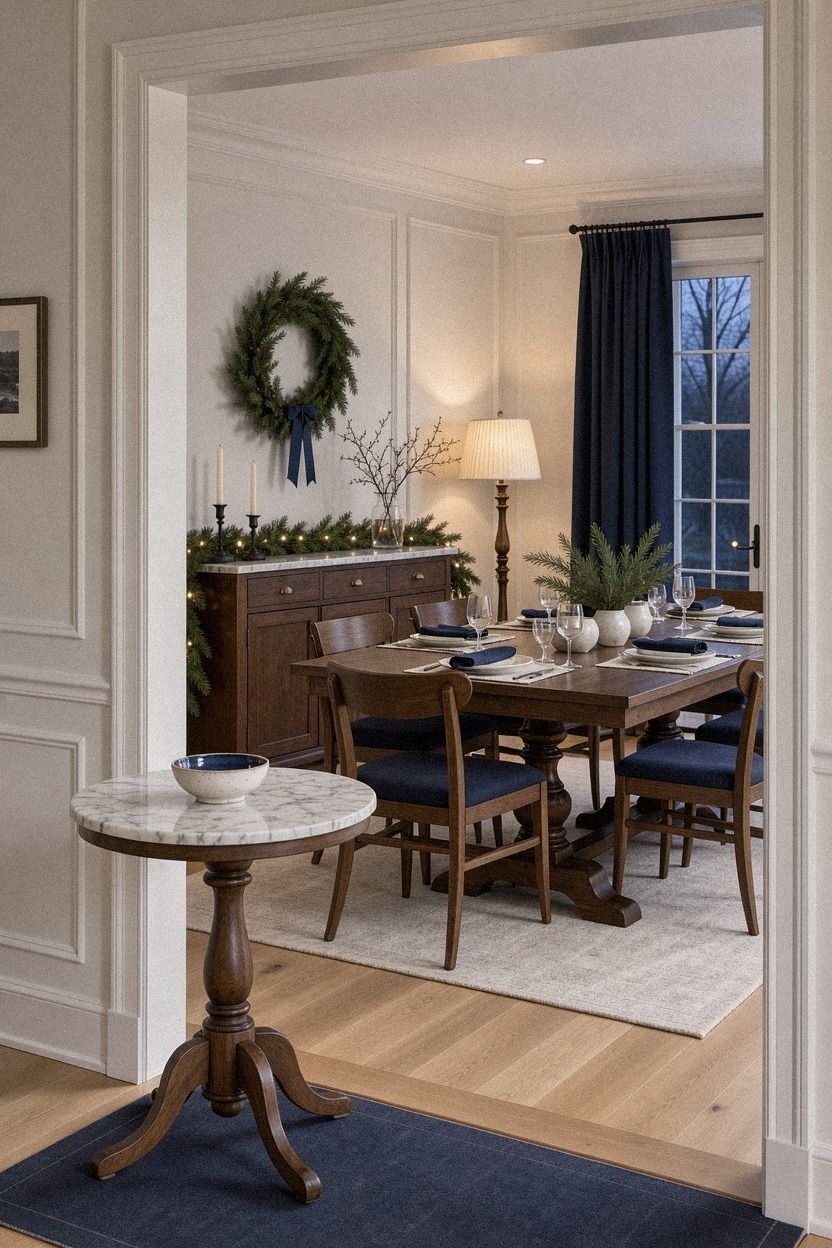
A small dining table benefits from one clear center. A wide bowl gives your eye a place to land, then the rest of the setting can stay quiet. Choose a bowl with a hand-finished surface instead of a tall vase that interrupts conversation.
I like Carrara marble with subtle gray veining for a low tray or serving accent, paired with navy napkins and walnut. The combination gives white dishes enough contrast without making the table feel crowded.
Fill the bowl with pears, pinecones, or folded linen napkins depending on the mood you want. Your centerpiece can be useful and decorative at the same time.
A bowl of fruit feels warmer than a bowl of ornaments because it brings weight and life to the table. I’d avoid a delicate all-white arrangement if your room already has pale floors and pale walls. You need one object with enough texture to keep the setting from disappearing.
Leave space around the bowl. White tablescapes need breathing room, and crowded surfaces lose the peaceful feeling you worked to create. Your guests should be able to reach the bread without moving the centerpiece.
The best size is usually wider than it is tall. Measure the table first, then leave enough room for plates, serving dishes, and elbows. A secondhand bowl can be a terrific budget find when the glaze has character and the base sits securely.
For a lower arrangement, follow the frosted glass approach and combine one bowl with one small glow. The composition will feel deliberate without becoming crowded.
11Choose Natural Linen Over Perfectly Pressed Cotton
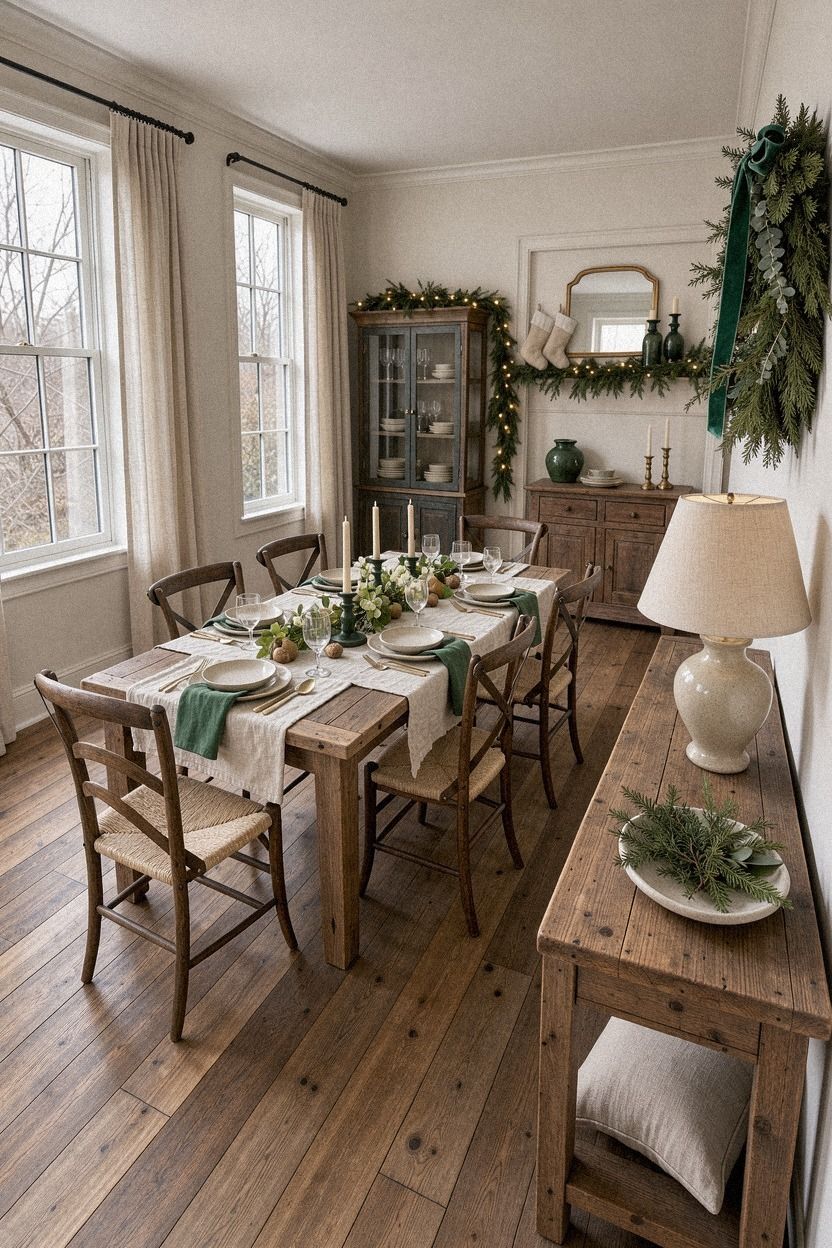
A slightly rumpled napkin makes white Christmas tablescapes feel lived-in. Belgian flax linen has a dry texture and a soft fold that keeps the setting from looking too formal. Emerald, gold, and cream accents can make the fabric feel festive without adding shine.
Fold the napkins into loose rectangles and place them beneath the fork, across the plate, or beside the setting. You don’t need an elaborate shape. The fabric itself provides enough interest, especially when paired with smooth white stoneware.
I’d skip heavily starched cotton for this look. It looks neatly pressed, but it can make a casual meal feel ceremonial. If you're hosting a formal dinner, use cotton at the sideboard and linen at the table so the room has contrast.
The palette can stay nearly monochromatic:
- Natural flax - Warm white - Soft oatmeal - Pale eucalyptus - Weathered teak
Your guests will notice the softness when they pick up the napkin. That small sensory moment matters more than a complicated fold. It’s also a practical investment because linen works beyond Christmas, from summer lunches to Sunday suppers.
Wash the napkins before styling them. The first wash softens the fibers and creates the relaxed folds that make this look appealing. You can fold them while slightly damp, then let them finish drying on the table.
12The Two-Wood Rule: A Quiet Finish
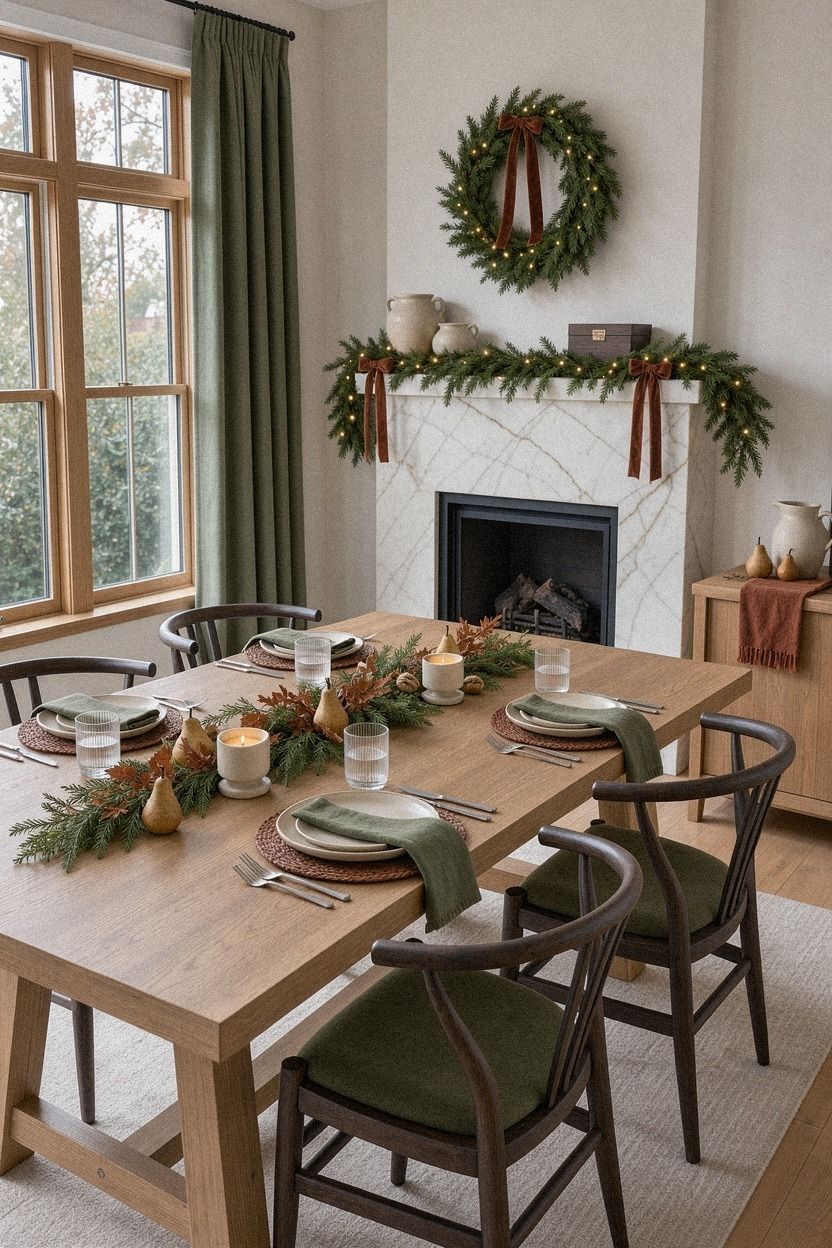
Use two wood tones and stop there. One pale wood can feel washed out against white, while many wood tones create visual noise. Forest green, rust, and natural oak give the winter table a richer finish without making it busy.
Try natural oak for chargers and a medium walnut serving board. If your dining chairs already supply dark wood, bring in light birch or ash at the table. Your room will feel balanced because the wood appears in more than one place without becoming a matching set.
A small piece of Calacatta marble with gold veining can bridge the wood tones and connect the table to brass details. It adds movement without requiring another color family.
I’d skip faux driftwood and overly distressed signs. They often compete with the clean white palette and make the setting feel themed. Real grain, even on one small board, has more authority.
If you're unsure which tone to choose, stand in the doorway and check how the table relates to the rest of the room. A warm wood edge can make the entire setting feel inviting, especially after sunset.
Keep the rest of the materials restrained. Once you have natural oak, one darker wood, and linen, you may only need a few candles to finish the setting. That restraint protects your budget and gives the natural textures room to register.
If the table still feels flat, revisit Farrow & Ball Pigeon and the matte white and brass pairing before buying anything else.
Why White Tables Need One Imperfect Material
White is not cold by itself. It becomes cold when every surface reflects the same amount of light and every object has the same polished finish.
I’ve made that mistake with glossy plates, glass candlesticks, and crisp folded napkins all in one setting. The table looked clean, but nobody wanted to linger.
The fix is texture. A rough wood grain beside smooth stoneware, a wrinkled linen napkin beside a straight-edged plate, or a branch with uneven needles gives your eye somewhere to pause. You’ll notice the table feels warmer before you can explain why.
I also think white works best when it has a little shadow. Matte ceramic, frosted glass, and aged metal create edges that bright porcelain can’t make alone. If you're choosing between another decorative object and a better light source, choose the light.
Three sources per room, overhead, task, and ambient, will change the setting more than another ornament.
My own rule is simple: every white table needs one material that looks better with age. That might be unlacquered brass, natural flax, or a scratched oak board.
I wouldn’t chase a spotless holiday table. A few signs of use make the room feel human, and your guests are more likely to settle in.
If the room still feels chilly, revisit the Pigeon wall color, the brass pairing, and the quality of the bulb. Those changes usually create more atmosphere than another decorative purchase.
The Questions I Get Asked Most
What is the best white Christmas tablescape for a small table?
A low branch runner, matte white plates, and one ceramic bowl work well because they leave room for serving dishes. White stoneware gives you a calm base, while wood or linen adds warmth. Keep the centerpiece below eye level so your table still feels open.
Where can I buy white Christmas tablescape pieces on a budget?
Look at IKEA, Target, Wayfair, Facebook Marketplace, and local thrift stores. Your best finds may be mismatched plates, linen napkins, or small brass holders. Secondhand ceramics often have more texture than new matching sets, and shopping used can improve the overall value of the project.
How much does a white Christmas tablescape makeover cost?
A simple table can use what you own plus new textiles and candles. For a broader room refresh, the typical budget range is $200-$800 for paint, textiles, art, and organization. Free greenery from your yard or a friend’s trimmings can lower the cost.
Can I create a white Christmas tablescape on a budget?
Yes. Begin with three free changes: regroup your dishes, soften the lighting, and bring in branches or wood from elsewhere in your home. Add one linen runner or a few cream napkins when you can.
Your table needs texture more than quantity, so a modest purchase can still feel worth it.
Is a white Christmas tablescape worth it in a small space?
Yes, because white surfaces keep a small table visually open. Use one low centerpiece and let your chairs overlap the surrounding space naturally. Matte white dishes will reflect light without making the room feel crowded, especially when your textiles add a warm contrast.
Is a white Christmas tablescape a good idea for a rental?
Yes. Use removable changes such as linen runners, battery candles, tension-rod curtains, and freestanding lamps. A small tray can define the centerpiece without touching the table permanently.
Your rental can feel seasonal through texture and light, with no paint or hardware required.
Which material gives the biggest improvement for the money?
Natural linen usually gives the strongest return because it changes the feel of every place setting. A warm bulb is another high-value purchase, especially when the dining room currently has cool overhead light. If you can make only one change, start with the material you’ll use throughout the year.
Where I’d Start First
If I had to pick one, I’d start with natural linen napkins. They soften glossy white dishes, hide tiny wrinkles, and make the table feel lived-in before you buy anything else. Pin the linen idea for later, then test it with your own plates tonight.


